
How To Lose Weight On A Budget Without Feeling Deprived, Overwhelmed, Or Priced Out
DAVE RAMSEY
Personal finance author & radio host
A budget is telling your money where to go instead of wondering where it went.
Summary (TL;DR)
You can lose weight on a real budget, and it doesn’t require a gym membership, supplements, or a meal-kit subscription. The CDC’s physical activity guidelines don’t require equipment or a gym at all. Brisk walking counts.
A peer-reviewed McMaster University/Mayo Clinic study found that free, equipment-free bodyweight workouts measurably improve cardiovascular fitness in as little as 11 minutes, three times a week. What actually predicts whether a budget-conscious woman succeeds isn’t how much she spends.
A 2021 study in the Journal of Behavioral Medicine found that financial stress, not lack of discipline, is what derails lower-income participants in weight-loss programs. This guide gives you the free tools, the free movement, and the mindset shift the research says actually moves the needle.
Dave Ramsey was talking about money. But swap “money” for “effort,” and it describes the exact problem most women hit when they try to lose weight on a budget: they spend real time and willpower with no plan for where it’s going, then wonder why nothing changed.
A budget, for dollars or for effort, isn’t a punishment. It’s a plan.
If you’ve felt intimidated by the price tag on a “proper” weight-loss plan, frustrated that every free trial somehow expects a credit card, or confused about which of the thousand conflicting tips actually work without spending anything, you’re not missing something obvious.
The weight-loss industry spends heavily to make simple things look complicated and free things look inadequate. This guide cuts through that: what the evidence says actually works, and what it costs (usually nothing).
Medical & Referral Disclaimer
This article is for informational and educational purposes only. It is not a substitute for professional medical advice, diagnosis, or treatment. Always consult your physician or a qualified health provider before starting any new diet or exercise program.
Key Takeaways
- Losing weight on a budget is not a compromise. The CDC’s official guidelines for adults require no equipment, gym, or subscription: just 150 minutes of moderate activity a week, and brisk walking counts.
- The average gym membership costs $65 a month, and nearly 67% of members pay under $50 (Health & Fitness Association, 2024). A membership is common, not a requirement.
- Free bodyweight cardio measurably improves fitness. A McMaster University/Mayo Clinic study found 11-minute equipment-free workouts significantly raised participants’ cardiorespiratory fitness (VO₂peak) in six weeks.
- Financial stress, not motivation, is the real barrier. A 2021 Journal of Behavioral Medicine study found income predicted weight-loss outcomes specifically because of the stress it caused, not because lower-income women tried less hard.
- Free tracking apps still work. MyFitnessPal’s free tier includes full food and exercise logging, and self-monitoring research links consistent tracking to better outcomes.
- You don’t need to choose between your grocery budget and your health. A handful of staple foods do most of the nutritional heavy lifting for a fraction of the cost of speciality diet products.
Why “I Can’t Afford To Lose Weight” Feels True (And Isn’t)
The belief that weight loss requires money is one of the most common reasons women put off getting started, and it’s not entirely your fault for believing it. Every ad in your feed is for a $200 program, a $60 supplement stack, or a boutique studio membership. None of that is what the actual evidence says you need.
If you’ve felt intimidated walking past a weight-loss aisle stacked with products you can’t justify, or frustrated that every “free” app somehow locks the one feature you needed behind a paywall, you’re reacting to something real. The weight-loss industry is a multi-billion-dollar business built on convincing you that the solution is a purchase. It usually isn’t.
Here’s what the CDC’s official physical activity guidelines for adults actually require: 150 minutes of moderate-intensity activity a week, plus two days of muscle-strengthening work. No gym is named. No equipment is listed. The CDC’s own example of qualifying activity is brisk walking. That’s it. That’s the baseline the entire fitness industry is selling you an upgrade from.
None of this means money never helps. A paid program with built-in accountability works for some women, and if you can afford one and it fits your life, that’s a legitimate choice.
But “can’t afford it” should never be the reason you don’t start. This guide is built around what’s left once you strip the price tag away: we call it the Frugal Fit Framework, three pillars with zero required spending: Move Free, Eat Smart Not Special, and Track Without Paying.
Pillar One: Move Free — The Real Cost Of Gym-Free Weight Loss
What A Gym Membership Actually Costs You
The average U.S. gym membership costs $65 a month as of 2024, up 9% from the year before.
According to the Health & Fitness Association’s 2024 U.S. Health & Fitness Consumer Report, nearly 67% of members pay under $50 a month, while premium clubs charging $100 or more are the fastest-growing segment (7.9% growth versus 5.8% overall), pulling the average upward.

| Facility Type | Typical Monthly Range | Typical Annual Range |
|---|---|---|
| Budget, no-frills chain | Under $50 | Under $600 |
| Mid-tier gym | $50–$99 | $600–$1,188 |
| Premium club or boutique studio | $100+ | $1,200+ |
| Frugal Fit Framework (Move Free pillar) | $0 | $0 |
That’s not an argument that gyms are worthless. Some women genuinely do better with the structure and equipment. It’s an argument that a gym membership is optional, not the price of entry.
Free Bodyweight Workouts That Hold Up To The Research
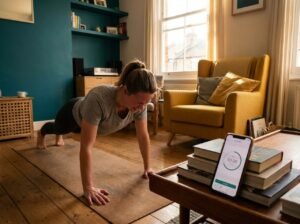
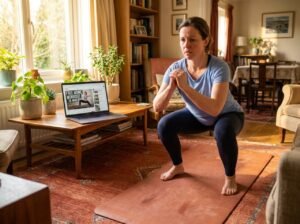
You don’t need a treadmill, a stationary bike, or any equipment at all to measurably improve your fitness. Your own bodyweight can do the job.
Researchers at McMaster University and the Mayo Clinic tested a simple bodyweight-only circuit, modelled on the classic “5BX” system, in healthy but inactive adults: burpees, high knees, split squat jumps, and squat jumps, 60 seconds each with a repeat of high knees to round out five total intervals, three times a week, 11 minutes total per session.
After six weeks, the group doing the bodyweight-only training showed a significantly higher cardiorespiratory fitness score than the non-training control group (34.2 vs. 30.3 ml/kg/min VO₂peak, a validated fitness measure), with 100% session compliance. The researchers’ own conclusion: this kind of training “requir[es] minimal time commitment and no specialized equipment” and “can enhance cardiorespiratory fitness in inactive adults.”
A rotation that costs nothing and covers the CDC’s full weekly requirement:
- Cardio (5 days a week, 30 minutes): brisk walking, star jumps, stair climbing, or a free YouTube dance or HIIT session. Any activity that raises your heart rate counts toward the CDC’s 150-minute target.
- Strength (2 days a week): push-ups, bodyweight squats, walking lunges, and planks, all doable in a living room with zero equipment.
- Mobility/recovery (as needed): a free yoga or stretching video; both build strength and flexibility without a studio fee.
| Exercise | How To Do It |
|---|---|
| Push-Ups | Plank position, hands slightly wider than shoulders. Lower your chest toward the floor, then push back up. |
| Bodyweight Squats | Feet shoulder-width apart. Lower as if sitting into a chair, weight in your heels, then stand back up. |
| Walking Lunges | Step forward, lower until your front knee hits roughly 90 degrees, push back up, alternate legs. |
| Plank | Forearm position, body in a straight line from head to heels, hold. |
| Squat Jumps | Lower into a squat, then explode upward into a jump, landing softly back into the squat. One of the moves in the McMaster/Mayo Clinic study shown to significantly raise VO₂peak in six weeks. |
Affordable Equipment Worth The One-Time Cost
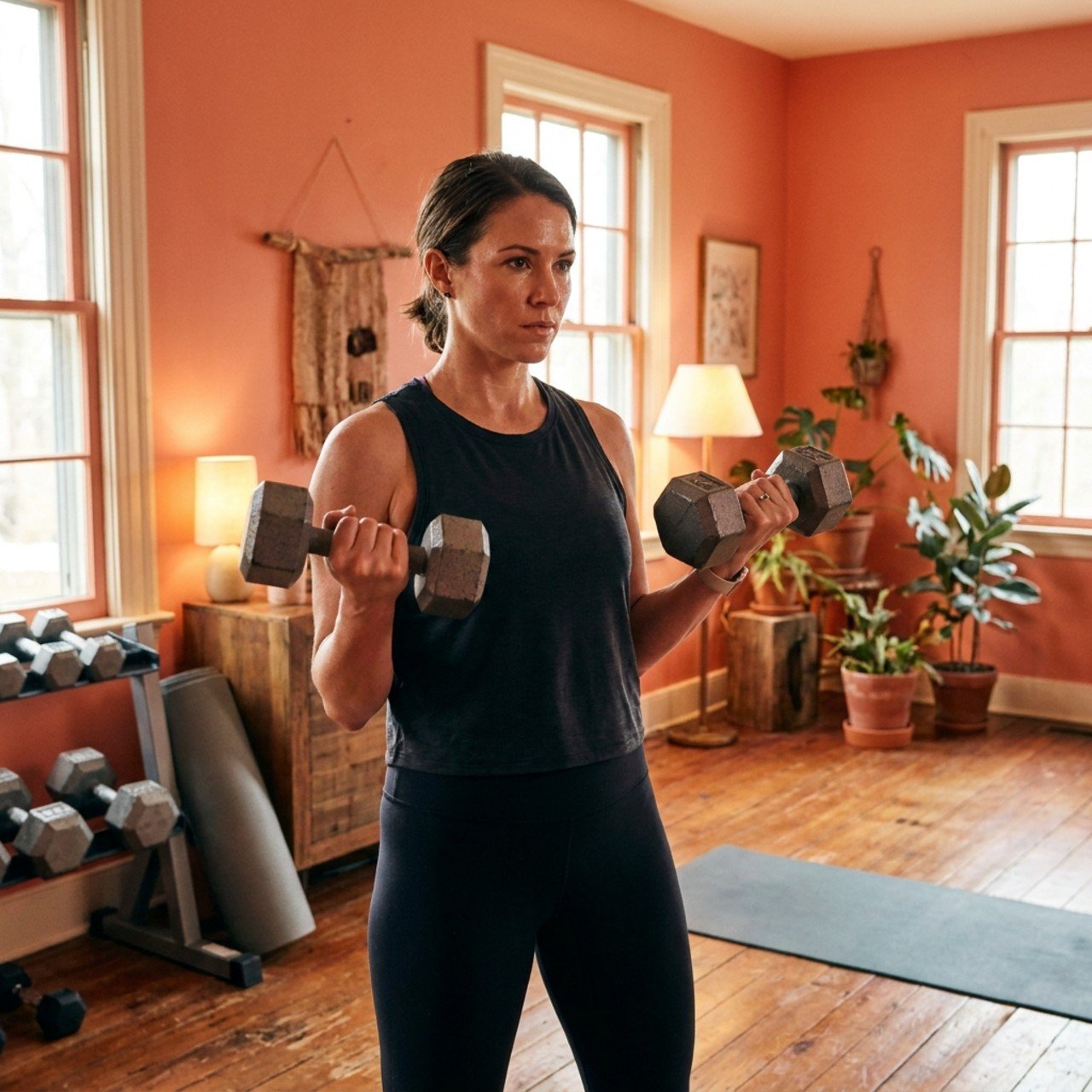
A set of resistance bands or one pair of adjustable dumbbells, usually under $30 total, is the only equipment worth considering, and even that is optional.
Unlike a membership, it’s a one-time cost that keeps paying off rather than a recurring fee. Secondhand marketplaces and end-of-season sales at sporting goods stores are worth checking before buying new.
Pillar Two: Eat Smart Not Special
You don’t need a speciality diet plan to eat well on a budget. A handful of inexpensive staples cover most of what your body needs.
This isn’t the deep dive: if food cost is your main sticking point, we’ve already built a full, sourced breakdown of exactly which foods are cheapest per gram of protein and per nutrient, with real weekly cost numbers. Here, the goal is just to connect food to the rest of your budget-first plan.
- Anchor meals around a handful of staples: eggs, dried beans and lentils, oats, frozen vegetables, and canned fish are consistently among the least expensive sources of protein and fibre available in a standard supermarket.
- Buy in bulk, but only what you’ll use. Wholesale pricing on shelf-stable staples like rice, oats, and canned goods is real savings, as long as nothing goes to waste before you get to it.
- Plan before you shop. A five-meal list built before you enter the store is one of the single most effective ways to avoid the impulse buys that quietly wreck a food budget.
- Batch-prep once, eat all week. A Sunday meal-prep session and a stock of cheap, portable snacks (hard-boiled eggs, fruit, plain yogurt) removes the decision fatigue that leads to expensive last-minute takeout.



If weight loss specifically (not just food cost) is your focus, the practical takeaway is this: spend your food budget on staples that keep you full and support your workouts, and save the deep optimization for our companion guide linked above.
Pillar Three: Track Without Paying
Why Tracking Still Matters, Even For Free
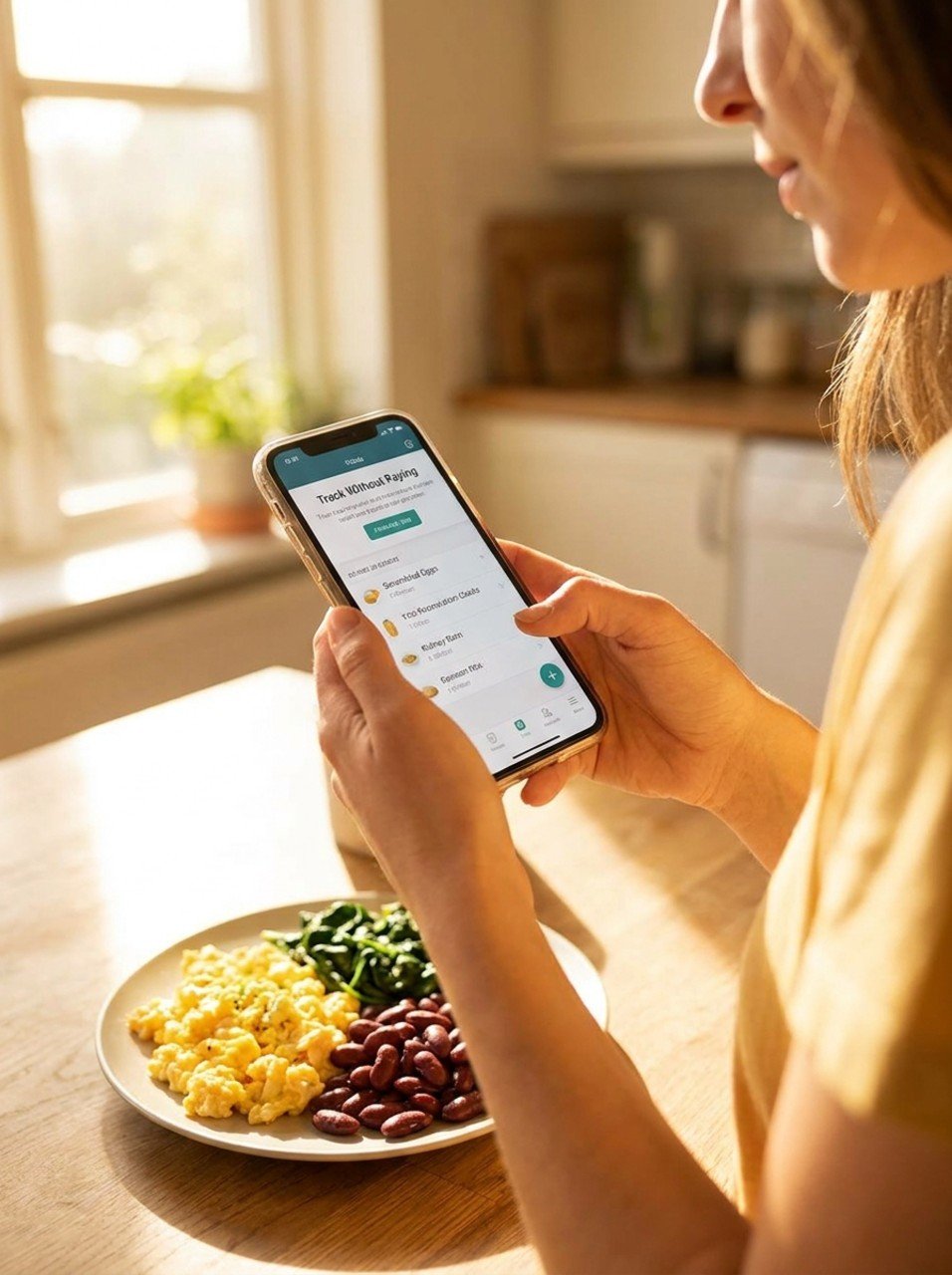
Keeping any kind of record of what you eat and how you move is one of the more consistently useful habits in weight management, and you don’t need a paid app to do it.
A 2021 systematic review in Public Health Nutrition examining 59 weight-loss studies found that the majority of both high-intensity and low-intensity self-monitoring approaches produced statistically significant weight loss compared to not tracking at all.
The review is honest that exactly how much tracking frequency matters is still being studied, but the core finding, that recording what you do beats not recording it, held up consistently.
The Free Tools That Still Deliver
Every tool in the table below is currently live and genuinely free at the core-feature level in 2026. None of them requires a trial that quietly converts to a paid plan.
One correction worth making here: if you’ve heard “Fitbit” recommended as a free tracking app, that brand no longer exists as a standalone product. Google retired the Fitbit app in May 2026 and folded its features into the Google Health app, which kept the core step, sleep, and heart-rate tracking free for existing users.
Below is what’s actually free and current right now.
| Tool | What’s Free | Best For |
|---|---|---|
| MyFitnessPal | Full food/exercise logging, weight tracking, custom recipes, macro and micronutrient breakdowns | Calorie and nutrition tracking |
| Lose It! | Personalized daily calorie budget, food/exercise logging, macro tracking, weight and progress charts | Simple daily calorie targets |
| Google Health (formerly Fitbit) | Step count, sleep, heart rate, and activity tracking for existing device users | Passive activity tracking |
| Nike Training Club | Full on-demand class library, live sessions, guided programs (free since 2020) | Structured workout programming |
| Caliber | Strength training library with progressive overload guidance | Building strength at home |
| FitOn | Unlimited workout access on the free tier | Variety and beginner-friendly classes |
Stack one tracking app with one movement app, and you’ve replicated most of what a paid program offers, for $0.
The Money Mindset Shift: What Actually Predicts Success
The biggest barrier to losing weight on a budget usually isn’t effort: it’s the stress of feeling financially stretched.
A 2021 study in the Journal of Behavioral Medicine, led by researchers at the University of Connecticut, followed 260 participants in an online behavioral weight-loss program. It found that lower income predicted worse weight-loss outcomes, but not because those participants tried less.
Perceived stress fully explained the link between income and how engaged people were with the program. In the researchers’ own words, income’s effect on engagement was “fully mediated” by stress.
That’s a meaningfully different story than “just try harder.” If money worry is eating into your bandwidth for healthy habits, that’s not a personal failing. It’s a documented, measurable effect. The practical response isn’t more willpower. It’s removing as much financial friction from the process as possible, which is exactly what the Frugal Fit Framework is built to do.
Every pillar defaults to $0, so there’s no ongoing bill quietly adding to the stress that the Leahey study found works against low-income women specifically.
There’s a useful parallel in Ramsey’s quote from the top of this article. A financial budget isn’t about deprivation. It’s about knowing exactly where your resources are going so you’re not caught off guard. Apply the same logic to your time and energy: know where your 30 minutes a day and your grocery dollars are going, and you remove the guesswork that turns into stress.
Mary James’s Take: What Actually Works On A Real Budget
I’ve talked to enough women over the years who felt like they’d failed at weight loss to notice a pattern: it’s rarely the plan that fails. It’s that the plan assumed a budget they didn’t have, and when the money ran out, so did the motivation.
Join Our Mailing List
Join thousands of women inside our community and receive our free guide, 10 Actions That Support Permanent Weight Loss — the exact behavioural shifts that make the difference between a two-week attempt and a lasting transformation.
No restriction plans. No guilt. Just what actually works — for real women with real lives.

The women who actually stick with it long-term are rarely the ones with the fanciest setup. They’re the ones who found a free version of movement they didn’t dread, and stopped treating a grocery bill or a gym fee as the price of being allowed to try.
If you take one thing from this article, let it be permission: you were never priced out of this. You just hadn’t been shown the free version yet.
Common Budget Weight-Loss Mistakes That Cost You More
- Buying a full program before testing a free version first. Try the free tier of an app or a week of bodyweight workouts before paying for anything. You may not need the upgrade at all.
- Letting a gym membership sit unused. If you haven’t used yours in a month, that’s real evidence it’s not the right format for you right now, not a reason to feel guilty.
- Chasing supplements before the basics. Whole-food protein and consistent sleep are generally considered more foundational to appetite control than any supplement aisle, at a fraction of the cost. Talk to a healthcare provider before adding any supplement.
- Shopping without a list. Unplanned grocery trips are one of the most common sources of both food waste and diet-derailing impulse buys.
- Assuming “free” app features are worse. As the table above shows, several fully free tools cover the exact features most people assume require a subscription.
Ready For The Next Step?
You’ve got the free framework. If you want the specific, sustainable habits that turn a plan like this into lasting results, join the women inside the WLBF community and grab our free guide, 10 Actions That Support Permanent Weight Loss, the exact next moves for once the price-tag myth is off the table.
No upsell buried inside it, no fine print. Just the habits the research actually supports, free, the same way this whole framework is.
The Bottom Line
Losing weight on a budget isn’t a lesser version of losing weight. It’s the version backed by the research that actually matters. The CDC doesn’t require a gym. A peer-reviewed study found free bodyweight training measurably improves cardiorespiratory fitness.
A free tracking app covers the same core features as most paid programs. And the research on what actually derails lower-income women isn’t lack of willpower. It’s financial stress, which is exactly what a $0 plan is designed to remove.
The Frugal Fit Framework isn’t a shortcut. It’s the same evidence-based approach any woman would use, minus the price tag that was never actually required in the first place.
Glossary Of Key Terms
- 5BX System: A classic exercise program (Five Basic Exercises) that served as the model for the McMaster University bodyweight circuit study.
- Bodyweight Training: Exercise that uses the individual's own weight to provide resistance against gravity, requiring no external weights or machines.
- Cardiorespiratory Fitness (VO₂peak): A validated measure of the maximum rate of oxygen consumption during incremental exercise; used to gauge heart and lung health.
- CDC Physical Activity Guidelines: Official health recommendations for adults requiring 150 minutes of moderate activity per week plus two days of strength training.
- Financial Friction: The obstacles and stress caused by program costs, which can derail motivation and engagement.
- Frugal Fit Framework: A three-pillar weight-loss strategy (Move Free, Eat Smart Not Special, Track Without Paying) that defaults to $0 in required spending.
- Google Health: The platform that replaced the standalone Fitbit app in May 2026 and houses passive activity-tracking features.
- Macro and Micronutrients: The components of food (like proteins, fats, and vitamins) that free tracking apps like MyFitnessPal help users monitor without a subscription.
- Mediated: A research term used to explain how one variable (stress) accounts for the relationship between two other variables (income and weight-loss engagement).
- Self-Monitoring: The habit of recording food intake and exercise, which research in Public Health Nutrition links to statistically significant weight loss.
FAQ
How Can I Lose Weight On A Tight Budget?
Start with what’s free: the CDC’s activity guidelines don’t require any equipment, so 30 minutes of brisk walking five days a week already meets the baseline. Pair that with a free tracking app like MyFitnessPal, and anchor your meals around inexpensive staples like eggs, beans, oats, and frozen vegetables. None of the core requirements for losing weight cost money; the spending is optional, not required.
Do I Need A Gym Membership To Lose Weight?
No. The average gym membership costs $65 a month, and nearly 67% of members pay under $50 for theirs. A McMaster University/Mayo Clinic study found that simple bodyweight-only training, done in 11-minute sessions with no equipment, significantly improved cardiorespiratory fitness in inactive adults within six weeks. A gym can help if the structure motivates you, but it isn’t a requirement for meeting physical activity guidelines.
What Are The Best Free Apps For Losing Weight On A Budget?
MyFitnessPal and Lose It! both offer free tiers covering food logging and calorie budgeting; Google Health (the rebranded Fitbit app) tracks steps and activity for free, and Nike Training Club, Caliber, and FitOn all provide substantial free workout libraries without a subscription. Stacking one tracking app with one workout app covers most of what a paid program offers.
Is It True That Financial Stress Affects Weight Loss?
Yes. A 2021 study in the Journal of Behavioral Medicine found that income predicted weight-loss outcomes in an online program specifically because of the stress associated with financial strain, not because lower-income participants tried less. Reducing the financial pressure of a weight-loss plan by choosing free tools and workouts is a legitimate, evidence-supported strategy, not a lesser one.
How Can I Eat Healthy On A Tight Food Budget While Losing Weight?
Focus your grocery budget on a small set of high-value staples: eggs, dried beans and lentils, oats, frozen vegetables, and canned fish are consistently among the cheapest, most nutrient-dense options available. Plan a five-meal list before you shop to avoid impulse purchases. For a full, deeply sourced breakdown of the cheapest genuinely healthy foods and a week-by-week budget, see our companion guide on eating healthy without overspending.
Can I Really Get A Good Workout Without Any Equipment?
Yes. Push-ups, bodyweight squats, walking lunges, planks, and jump squats together cover both the cardio and strength-training portions of the CDC’s weekly activity guidelines. A McMaster University/Mayo Clinic study found just 11 minutes of bodyweight-only training, three times a week, significantly improved cardiorespiratory fitness in six weeks, with no equipment required. Equipment can add variety later, but it isn’t what determines whether your workout “counts.”
What Happened To The Fitbit App?
Fitbit was retired as a standalone app in May 2026 and folded into the Google Health app, which kept core free features like step count, sleep, and heart-rate tracking for existing users. If you’ve seen “Fitbit” recommended as a free tracker elsewhere, that recommendation is out of date; Google Health is the current free option covering the same ground.