

Tips For Losing Weight For Women: The First 3 That Actually Move The Needle
Why The Best Tips For Losing Weight For Women Start With Three, Not Twelve

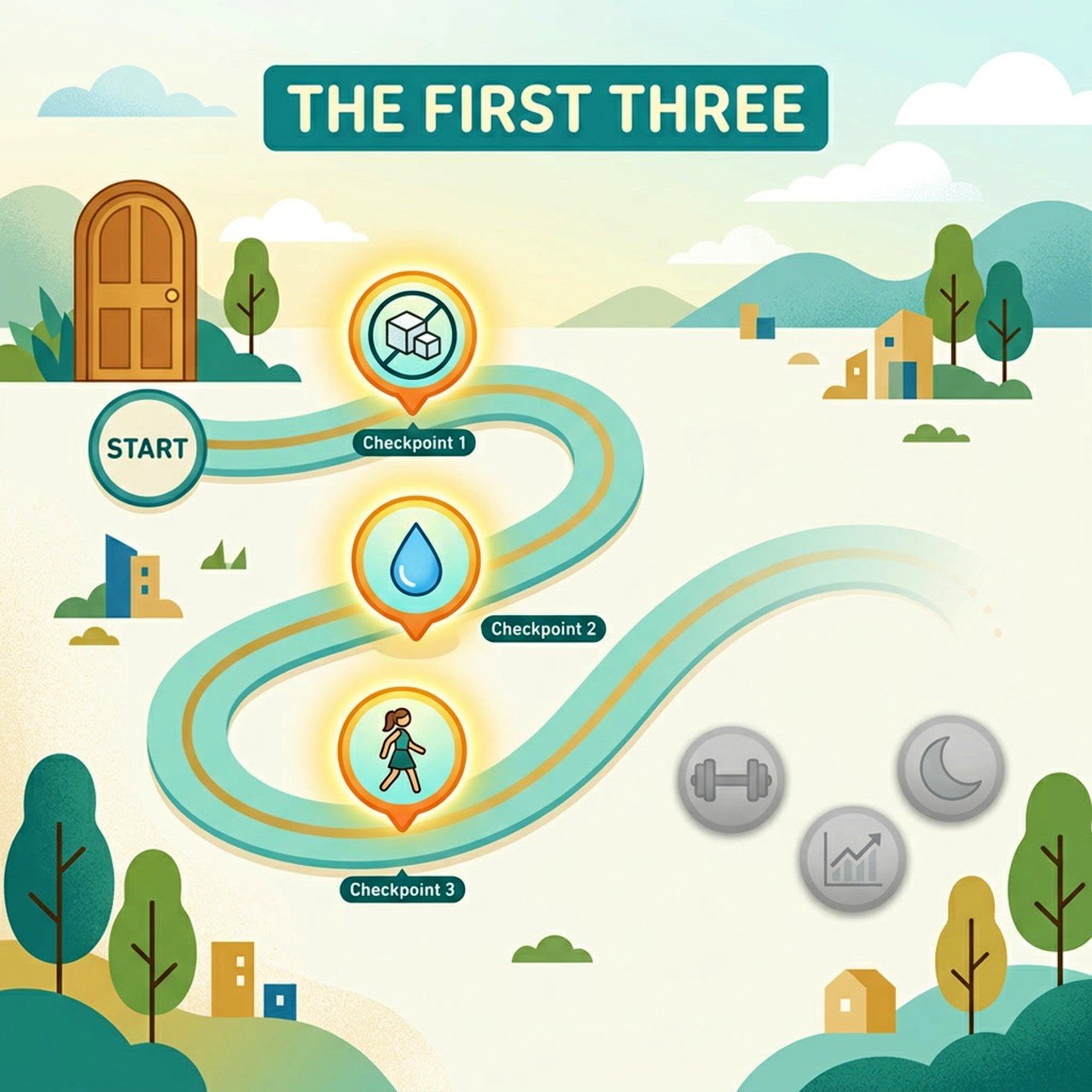
You don’t need twelve things to fix at once. You need the first three, done properly, and permission to stop there for now.
Mary James ‧ Founder, Women’s Lean Body Formula
Summary (TL;DR)
The best tips for losing weight for women aren’t a 12-item checklist — they’re the three that actually get finished. This guide gives you exactly three: cut back on added sugar (not all sugar), drink water before meals, and move most days. Each one is backed by real research, not a decade-old rule of thumb. We’ll also tell you what we deliberately left off, and why that’s the point.
If you’ve searched for tips for losing weight for women before, you’ve probably landed on a list of twelve things, or fifteen, or an entire framework with tiers and rungs and a spreadsheet you’re supposed to fill in. And if you’re starting from zero, that’s not motivating. It’s exhausting before you’ve done a single thing.
That intimidation is real, and it’s not a personal failing. When every list hands you a dozen changes at once, the honest reaction isn’t “let’s go” — it’s “where do I even start,” followed by not starting at all. We’ve watched that pattern play out for years: not a lack of willpower, but a lack of a reasonable first step.
Confusion piles on top of the intimidation, too — one source says cut carbs, another says count macros, a third says it’s all about cortisol. They’re not all wrong, but they can’t all be step one.
So this isn’t a comprehensive guide. It’s the opposite, on purpose. Three tips for losing weight, chosen because they’re the ones with the most evidence behind them and the least overhead to start today. If you finish these and want more, we’ll point you to where the rest of it lives. But you don’t need any of that yet.
Medical & Referral Disclaimer
This article is for informational and educational purposes only. It is not a substitute for professional medical advice, diagnosis, or treatment. Always consult your physician or a qualified health provider before starting any new diet or exercise program, particularly if you have an existing health condition.
Key Takeaways
- Three tips, not twelve: cutting back on added sugar, drinking water before meals, and moving most days — each individually supported by research, not folk wisdom.
- The 3,500-calorie rule is outdated. Real weight loss follows a curve, not a fixed math equation, according to research published in the International Journal of Obesity.
- Sleep and strength training matter, but they’re not on this list on purpose. Add them once the first three are automatic, not before.
- Stress and cortisol genuinely affect where women store fat — this isn’t just a willpower problem, according to research from Yale.
- Protein powder alone won’t protect your muscle. Research in postmenopausal women found it needs to be paired with movement to do that job.
What Makes These The Right Tips For Losing Weight For Women To Start With
The right starting tips are the ones you can still be doing in a month, not the ones that look most impressive on day one.
Every one of the three below meets three conditions: it’s backed by actual research, it costs you nothing to start, and you can do it today without buying anything, joining anything, or reorganizing your kitchen.
Notice what’s not on the list: no macro-tracking app, no intermittent-fasting window, no supplement stack. Those can all be useful later, but none of them is where a true beginner should spend their first ounce of effort.
Before you dive in, a 30-second self-check. You don’t need to do all three today — pick whichever one feels most doable first, and let the others follow.
| If This Sounds Like You… | Start Here |
|---|---|
| You drink soda, sweetened coffee, or juice most days | Tip One — Added Sugar |
| You rarely finish a full glass of water before a meal | Tip Two — Water Before Meals |
| Most of your day is spent sitting, and exercise feels like a separate, scary project | Tip Three — Move Most Days |
| None of the above — you’re just overwhelmed by where to begin | Start with Tip Two. It’s the easiest to do in the next five minutes. |
Tip 1. Cut Back On Added Sugar, Not All Sugar
This isn’t about cutting out fruit or dairy — it’s about the added sugar in drinks, sauces, and packaged snacks, which is linked to weight gain and obesity when consumed in excess, according to the CDC.
Added sugar is easy to miss because it hides in places that don’t taste sweet — salad dressing, bread, pasta sauce — and it’s easy to drink without noticing, which is usually the biggest lever.

You don’t need to read every label on day one. Start with liquids, since they’re the easiest source to spot and the easiest to cut without feeling deprived:
- Swap one sugary drink a day (soda, sweetened coffee, juice) for water, sparkling water, or unsweetened tea.
- Check the label on anything you pour from a bottle — dressings and sauces are common hidden sources.
- If you take sugar in coffee or tea, cut it by half for a week before cutting it out entirely. Gradual sticks better than sudden.
- Slow down at meals if you can — putting your fork down between bites and eating without your phone or the TV makes it easier to notice when you’re actually full, which does some of Tip One’s work for you without any extra effort.
Tip 2. Drink Water Before You Eat, Not Just When You’re Thirsty
Drinking water specifically before meals, not just throughout the day, is the version of this tip with real evidence behind it.
In a 12-week study of middle-aged and older adults following a reduced-calorie diet, the group who drank about two cups of water before each meal lost roughly two kilograms (around 4.5 pounds) more than the group who followed the same diet without the water habit.
That’s not water flushing out “toxins” or melting fat — the most likely mechanism is simpler: water ahead of a meal takes up room and takes the edge off appetite, so you naturally eat a bit less. If plain water isn’t appealing, that’s a real barrier worth solving on its own terms:
- Add lemon, lime, or cucumber slices — flavor without added sugar.
- Try sparkling water if you miss the texture of soda.
- Keep a glass by your plate as a visual cue before you sit down to eat, rather than relying on remembering.

Tip 3. Move Your Body Most Days, Walking Counts
You don’t need a gym membership to hit the activity level that actually supports weight management — the CDC’s standing guideline is 150 minutes of moderate activity a week, and brisk walking counts.
Spread evenly, that’s roughly 21–22 minutes a day. If a single daily block isn’t realistic, three slightly longer walks on your busiest days can cover the same weekly total — the 150 minutes is what matters, not how you slice it.
How Much Is Actually Enough?
Enough to start is whatever gets you moving most days without becoming a project you have to plan around.
A daily walk, taking the stairs, parking further away — all of it counts toward the total. The CDC guideline also recommends two days a week of muscle-strengthening activity, but that’s deliberately not one of your first three. More on why below.
The Two Things We Deliberately Left Off This List
Sleep and strength training are two of the most evidence-backed levers for weight management, and neither one is on your first-three list on purpose.
They’re real, they matter, and piling them on top of three brand-new habits is exactly the overwhelm this guide is trying to avoid. Here’s what to know about each, so you can add them when the first three feel automatic instead of optional.
Sleep Quietly Runs The Other Three
Short sleep doesn’t just leave you tired — it changes the hormones that control hunger.

In a controlled study of healthy young men, participants restricted to about four hours of sleep for two nights showed an 18% drop in leptin (the hormone that signals fullness), a 28% rise in ghrelin (the hormone that signals hunger), and a 24% increase in reported hunger, particularly for high-carbohydrate foods.
That exact study didn’t include women, but the hormones involved work the same way regardless of sex, which is why sleep is worth paying attention to. If Tip One feels harder on a specific day, a bad night’s sleep the night before is worth suspecting before you blame willpower.
Strength Training Compounds Everything Once The First Three Are Habits
Moving your body, especially against resistance, is one of the best-supported ways to protect the muscle you have while you’re in a calorie deficit — something diet changes alone can’t do as reliably.
Resistance training on its own — without even a calorie deficit — has been shown in a systematic review to reduce body fat percentage and fat mass in healthy adults, which is why it’s worth adding once the basics are steady.
One nuance worth knowing before you reach for a protein shake as a shortcut: a randomized trial in overweight postmenopausal women found that a higher-protein diet without exercise didn’t preserve muscle mass or resting energy expenditure on its own, though it did help maintain strength. Protein helps. It doesn’t replace movement.
When you’re ready to build on these three, our One Blocker Method guide walks through sleep, strength training, and systems in more depth, organized by whichever one is actually holding you back. If you want the fuller picture on nutrition and training together, our complete weight loss framework for women covers the rest.
If intermittent fasting or macro tracking is something you’re curious about further down the road, our guide to intermittent fasting for women covers that specifically. None of this is required reading before you start — it’s just there when you’re ready for it.


Why The Old Rules Don’t Hold Up
You’ve probably heard that 3,500 calories equals one pound of fat, and that sugar is “the first thing your body burns off.” Neither one is quite right, and knowing why can save you from some frustrating math.
The 3,500-calorie rule treats your body like a simple ledger: cut 500 calories a day, lose a pound a week, forever. Researchers who examined this rule found that its most serious error is failing to account for the way your body’s energy balance changes dynamically during weight loss, rather than staying fixed.
In plain terms: your metabolism adjusts as you lose weight, so the same calorie cut produces less and less weight loss over time. That’s not you doing it wrong. That’s the math itself being outdated.
As for “sugar burns off first” — there’s no real physiological ranking where your body clears sugar before fat as a matter of priority. What’s actually true and useful is simpler: added sugar is an easy source of extra calories that adds up fast without filling you up, which is the real reason cutting it back helps.
| The Old Rule | What The Research Actually Shows |
|---|---|
| 3,500 calories cut = exactly 1 pound lost, every time | Weight loss follows a dynamic curve that slows as you lose weight, not a fixed ratio |
| Sugar is “burned off first” | Added sugar simply adds calories without much fullness — that’s the actual issue |
| More tips on the list = more progress | Fewer habits, done consistently, beat a longer list done partially |

The Emotional Part Nobody Puts In A Tips List
If starting feels intimidating, frustrating, or confusing, that’s a normal response to a genuinely overwhelming amount of conflicting advice, and it says nothing about whether you’re capable of this.
You don’t need more willpower. You need a smaller, clearer starting point, which is the entire premise of this guide.
It also helps to know that some of what makes weight loss hard isn’t about food or exercise at all. Chronic stress raises cortisol, and research on women specifically has found that those carrying more fat around the midsection tend to show a stronger cortisol response to stress than women who carry weight elsewhere.
That’s a hormonal pattern showing up on its own, independent of effort. Your gut microbiome works the same way. Research in Nature Reviews Endocrinology describes how the bacteria in your gut influence metabolism, appetite, and hormone regulation. Every one of those pathways affects body weight, and none of them shows up on a scale that measures willpower.
None of that is an excuse to give up on the first three. It’s the opposite: it’s a reason to stop blaming yourself for what your body is doing on its own, and focus your actual effort on the three things you do control.
Common Mistakes That Undo The First Three
- Adding a fourth or fifth habit in week one. This is the single most common way people abandon all of it by week three. A new sugar habit, a new water habit, and a new movement habit are already three simultaneous changes for your brain to manage — give them a few weeks before adding anything else, even something as small as a supplement or a tracking app.
- Treating one bad day as proof it’s not working. One day of soda and no walk doesn’t undo a week of progress, and it definitely doesn’t mean you should scrap the plan and start over on Monday. Go back to the three the next day, no reset required.
- Waiting for motivation instead of building the habit first. Motivation tends to follow small wins, not precede them — the walk gets easier to want to do once you’ve already done it five times, not before. Start before you feel ready.
- Chasing a faster timeline than the science supports. If a plan promises rapid results, it’s usually promising water weight and muscle loss, not fat loss, and most of it comes back within days of eating normally again.
- Judging progress by the scale alone. Energy levels, sleep, how clothes fit, and whether the three habits feel automatic yet are all real signs of progress the scale won’t show you in week one.
Once you’ve got these three running on autopilot, you’re not starting from zero anymore — you’re ready for the next layer.
Our free guide, 10 Actions That Support Permanent Weight Loss, picks up exactly where this article leaves off: the ten habits worth building once your first three are automatic, including the sleep and strength-training pieces we deliberately held back here. Grab it when you’re ready for the next step, not before.
The Bottom Line
The best tips for losing weight for women aren’t the longest list — they’re the shortest one you’ll actually finish. Cut back on added sugar, drink water before meals, and move most days.
That’s it for now. Everything else, including sleep and strength training, is worth adding later, once these three are no longer something you have to think about.
Glossary Of Key Terms
- 3,500-Calorie Rule: An outdated weight loss guideline suggesting that cutting 3,500 calories results in exactly one pound of fat loss; it fails to account for dynamic metabolic changes.
- Added Sugar: Sugar added to processed foods and drinks (like soda and sauces) during preparation, as opposed to naturally occurring sugars in fruit or milk.
- Cortisol: A hormone released in response to stress that, when chronically elevated, is linked to increased fat storage around the midsection in women.
- Dynamic Curve: The physiological pattern where weight loss slows down over time as the metabolism adjusts to a lower weight and reduced calorie intake.
- Ghrelin: Known as the "hunger hormone," its levels increase during sleep deprivation, signaling the body to eat.
- Gut Microbiome: The community of bacteria in the digestive tract that influences metabolism, appetite regulation, and body weight.
- Leptin: Known as the "fullness hormone," it signals the brain that the body has had enough to eat; levels decrease when sleep is restricted.
- Moderate Activity: Physical exertion, such as brisk walking, that meets the CDC's 150-minute weekly recommendation for weight management.
- One Blocker Method: A secondary framework used to identify specific obstacles—such as sleep or strength training—once foundational habits are established.
- Resistance Training: Exercise that improves muscle strength and mass by moving the body against a weight or force; essential for protecting muscle during a calorie deficit.
FAQ
What Are The Best Tips For Losing Weight For Women To Start With?
The three with the most research behind them and the lowest barrier to starting today: cutting back on added sugar, drinking water before meals, and moving most days. Add sleep and strength training once those three are automatic.
Can I Lose Weight By Diet Alone, Without Exercise?
Yes, a calorie deficit from diet alone can produce weight loss. What it won’t do as reliably is protect your muscle along the way. As covered above, resistance training measurably reduces fat mass while supporting lean tissue, which is why Tip Three is on this list even though it’s the one most people want to skip.
Is It True You Can Lose 10 Pounds In 3 Days?
Losing 10 pounds of actual fat in 3 days isn’t realistic or healthy. What drops quickly on an extreme short-term diet is mostly water weight, not fat, and it typically returns just as fast once you eat normally again.
Does Lemon Water Actually Burn Fat?
No credible evidence shows that lemon water burns fat any better than plain water. What it can do is make water more appealing to drink, which matters, since Tip Two only works if you’re actually drinking the water.
How Is Losing Weight Different For Women Over 40?
Hormonal shifts around perimenopause and menopause can make weight loss slower and change where fat is stored, which is a real physiological factor rather than a motivation problem. The three tips here still apply as a starting point; if hormonal changes are a bigger piece of your picture, our guide to weight loss in perimenopause goes deeper on that specific angle.
Why Do I Keep Losing Motivation After A Few Days?
Usually it’s a sign the starting point was too big, and discipline was never really the missing piece. Motivation tends to follow visible small wins rather than precede them, which is exactly why this guide narrows things down to three habits instead of a dozen.
How Long Before I See Results From Just 3 Changes?
Many women report a difference in energy and how clothes fit within the first few weeks of consistently doing all three, though the scale can lag how you feel. Consistency with three habits for a month will move you further than a perfect first three days followed by giving up.