
Why Your Joints Hurt Now, And The Simple Rule That Tells You When To Push, Modify Or Stop

Exercise is king, nutrition is queen. Put them together, and you’ve got a kingdom.
Jack LaLanne ‧ Fitness pioneer & TV exercise host
Summary (TL;DR)
About 7 in 10 women get joint or muscle pain during perimenopause, and falling estrogen is linked to changes in cartilage, tendons and inflammation. For most women, exercise isn’t the cause, and stopping often makes things worse.
Keep strength training and low-impact cardio, warm up longer, and use a simple traffic-light pain rule: mild pain that settles by morning is fine, moderate pain means modify, and pain that lingers or builds means swap the exercise. See a doctor about red-flag symptoms.
If you’re searching for answers on perimenopause, joint pain and exercise, you’re in very good company. You used to finish a workout feeling strong. Now your knees complain on the stairs, your fingers feel stiff when you wake up, and your shoulder aches when you reach for the top shelf. So you wonder: is the exercise doing this?
A meta-analysis of more than 5,800 women found that 71% of perimenopausal women report musculoskeletal pain. That’s the majority, not a rare few. And it often shows up just as you’re being told to lift weights to protect your bones.
Here’s the trap. Stop moving, and your muscles weaken, your joints stiffen, and weight creeps up, which loads sore knees and hips even more. The answer is to train smarter, not less. Below you’ll find what’s behind the ache, how to tell it apart from arthritis, the best low-impact options, and a simple rule for when to push, modify or stop.
Medical & Referral Disclaimer
This article is for educational purposes only and isn’t medical advice. Joint pain can have many causes, including arthritis, injury, thyroid problems and autoimmune conditions. Please talk with your doctor or a physiotherapist before starting a new exercise program, especially if your pain is severe, getting worse or comes with swelling, redness, fever or numbness.
Key Takeaways
- A meta-analysis found 71% of perimenopausal women report muscle or joint pain, with higher odds than premenopausal women.
- Researchers now call this cluster of symptoms the musculoskeletal syndrome of menopause; it affects over 70% of women and is disabling for about 25%.
- Estrogen receptors sit in your joints, ligaments, tendons and bones, so falling estrogen can raise inflammation and slow tissue repair.
- A 2024 Cochrane review of 139 trials found exercise reduced knee osteoarthritis pain by about 13 points on a 100-point scale.
- Every pound of weight lost removed roughly 4 pounds of load from the knee in one study, so staying active protects your joints twice.
- Heavy lifting can be safe after menopause when supervised: a trial of women with low bone mass reported only one minor adverse event.
- Collagen evidence is modest and high-bias; UK guidance advises against glucosamine, and hormone therapy is a personal decision to make with your doctor.
What Causes Perimenopause Joint Pain?
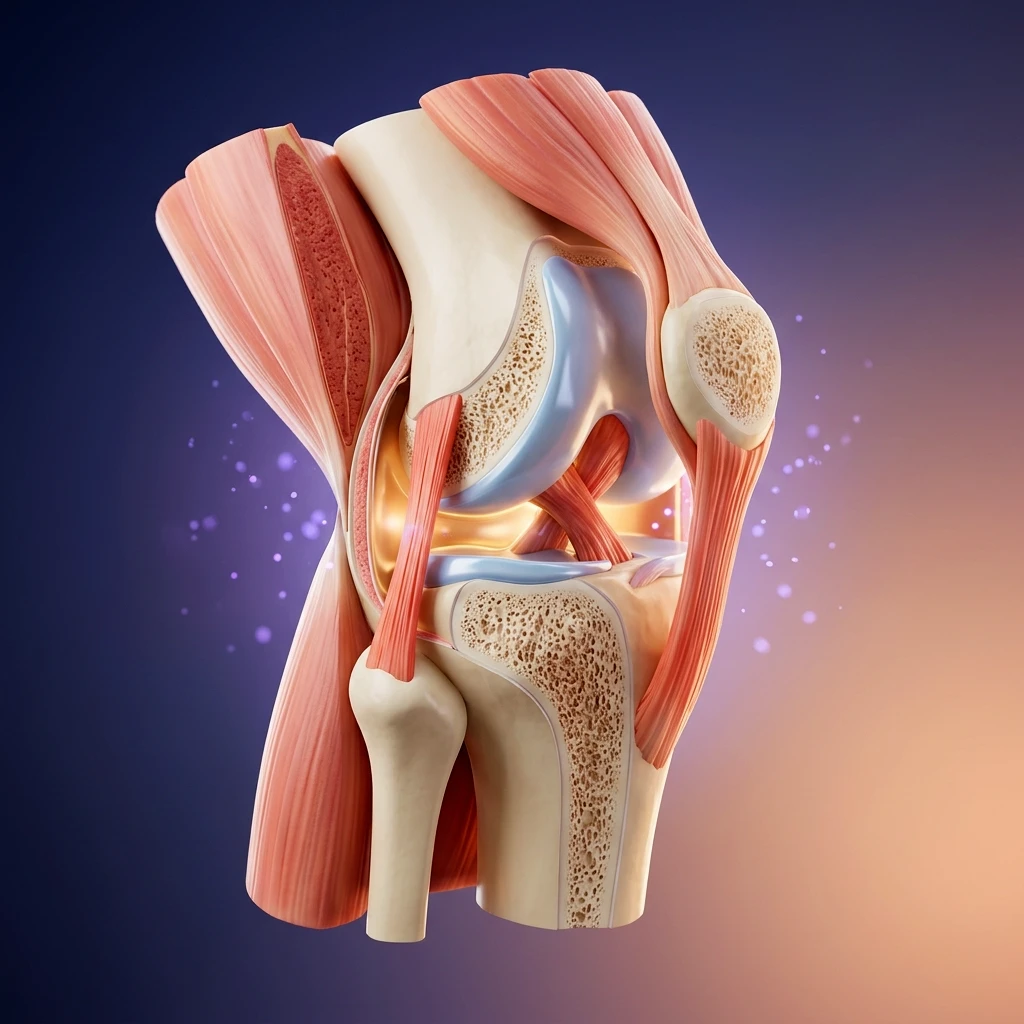
Perimenopause joint pain is strongly linked to falling and fluctuating estrogen, alongside age, training load and arthritis. Estrogen helps control inflammation and supports cartilage, tendons, ligaments, muscle and bone.
As levels drop, many women notice aching, stiffness and slower recovery, most often in the knees, hips, shoulders, hands and lower back, even without an obvious injury.
In 2024, a group of orthopaedic surgeons gave this pattern a name: the musculoskeletal syndrome of menopause. Writing in the journal Climacteric, they estimated that more than 70% of women experience musculoskeletal symptoms during the menopause transition, and about 25% become disabled by them.
The syndrome includes joint pain, muscle loss, bone loss and faster progression of osteoarthritis. Why does this happen? Harvard Health explains that estrogen receptors are found throughout your joints, ligaments, tendons and bones. When estrogen falls, those tissues lose part of their support system.
Estrogen Drop And Joint Inflammation
Estrogen has an anti-inflammatory effect. When it swings up and down, inflammatory signals can rise, and your joints may feel achy, puffy or stiff. That’s why the pain often feels widespread rather than tied to one injury.
Many women say it feels like they did a hard workout the day before, even when they didn’t. Some women also notice their joints feel “dry” or creaky. The good news? Movement itself pumps fluid through your joints, which is one reason gentle activity often eases stiffness.
Tendonitis In Perimenopause
Tendons connect muscle to bone, and they respond to estrogen too. A 2026 systematic review of 19 studies found that estrogen deficiency was linked to lower tendon elasticity and weaker healing after menopause.
That may help explain why outer hip tendon pain (gluteal tendinopathy) is so common in midlife women. The practical takeaway: tendons need steady, gradual loading. They dislike sudden spikes in volume, like going from zero to five classes a week.

Where Perimenopause Joint Pain Shows Up Most
- Knees: Aching on stairs or after sitting.
- Shoulders: Pain reaching overhead; some women develop frozen shoulder (more on that below).
- Hips: Outer hip pain, especially lying on your side at night.
- Hands And Fingers: Morning stiffness that eases once you get moving.
- Lower Back And Neck: Stiffness after sleep or long periods of sitting.
Hormonal Joint Pain vs. Osteoarthritis: How To Tell The Difference
Not every ache in your 40s is hormonal. Osteoarthritis (wear-related changes in the cartilage) becomes more common in midlife, and the two often overlap. Inflammatory conditions such as rheumatoid arthritis can start in this age range too.
The NHS notes that perimenopause can cause aching joints because of lowered estrogen. It also advises seeing a doctor if your joints stay stiff for more than 30 minutes after waking, or if pain stops normal activities or disrupts your sleep.
| Feature | Likely Hormone-Related Ache | Osteoarthritis | Inflammatory Arthritis (e.g. Rheumatoid) |
|---|---|---|---|
| Typical pattern | Widespread aches that move around; often several joints | One or a few joints, often knees, hips, hands | Often both sides of the body, small joints of hands and feet |
| Stiffness | Morning stiffness that eases with movement | Stiffness after rest or activity, usually brief | Stiffness worse after not moving, often lasting longer than 30 minutes |
| Swelling | Usually mild or none | Sometimes bony enlargement | Warm, soft, puffy swelling |
| Links to cycle or hormones | May fluctuate with cycle changes | No clear link | No clear link |
| Response to exercise | Usually feels better once warmed up | Improves with regular strengthening | Helps, but medical treatment is often needed |
| Best next step | Smart training plus a hormone conversation with your doctor | Strength training, weight management, physiotherapy | See your doctor promptly for blood tests |
This table describes common patterns, not a diagnosis. Sources: NHS joint pain guidance; Wright et al., 2024.
Get urgent help if a joint becomes hot, red and swollen, if you have a fever or feel generally unwell with joint pain, or if you can’t bear weight after a fall. These are signs that need checking quickly, not training through.
Should You Exercise With Perimenopause Joint Pain?
Yes, in most cases. Exercise is one of the best-studied treatments for joint pain, and resting usually makes stiffness, muscle loss and weight gain worse. The goal is to keep moving at a level your joints can handle, adjust when pain rises, and see a doctor for swelling, heat, fever or pain after an injury.
The research here is strong. A 2024 Cochrane review pooled 139 trials with 12,468 people with knee osteoarthritis. Exercise reduced pain by about 13 points on a 100-point scale and improved physical function by about 12.5 points, compared with no exercise.
That’s why the UK’s National Institute for Health and Care Excellence (NICE) recommends tailored therapeutic exercise for everyone with osteoarthritis, ahead of painkillers.
Hormonal joint pain hasn’t been studied as deeply as osteoarthritis. But the same principles apply: stronger muscles absorb more force, moving joints stay better nourished, and steady loading helps tendons adapt.
The Weight-Gain Spiral That Makes Joint Pain Worse
This is the part nobody warns you about. When joints hurt, it’s natural to do less. Doing less means losing muscle at a time when muscle is already dropping, and body fat tends to rise. (Here’s more on why weight loss feels harder in perimenopause.)
Extra weight then loads the very joints that hurt. In a Wake Forest study of 142 older adults with knee osteoarthritis, every pound lost took about 4 pounds of pressure off the knee. Flip that around, and a few pounds gained means more strain with every step.
What resting does to hormonal joint pain:
- Weakens support: Weaker muscles around the knees and hips leave the joint to take more load.
- Increases stiffness: Joints that don’t move get less circulation of joint fluid.
- Makes tendons less tolerant: Deloaded tendons flare faster when you return.
- Feeds the fear: The longer you avoid movement, the scarier it feels to restart.
Rest still has a place after an acute injury or during a severe flare. Keep it short, then return to movement with a plan.
The Traffic-Light Pain Rule For Training Through The Ache
Most advice stops at “listen to your body.” That’s hard when your body sends mixed signals every day. So here’s a clear rule.
The Traffic-Light Pain Rule is adapted from a pain-monitoring model tested in a randomized trial of Achilles tendon pain. In that study, people kept training as long as pain stayed at a moderate level, settled by the next morning and didn’t build from week to week.
They recovered as well as those who rested from their sport. This model hasn’t been tested specifically in perimenopause, so treat it as a practical guide rather than a medical protocol.
Rate your pain from 0 (none) to 10 (the worst you can imagine) during the session, right after it, and the next morning.
| Light | Pain During Or After | Next Morning | What To Do |
|---|---|---|---|
| Green | 0 to 3 out of 10 | Back to your usual baseline | Keep going. You can slowly progress weight, reps or time. |
| Amber | 4 to 5 out of 10 | Settled, or only slightly stiffer | Modify. Reduce load, range or speed, or switch to a joint-friendly variation. |
| Red | Above 5 out of 10, or sharp pain | Worse than baseline, or building week to week | Stop that exercise. Swap it for a pain-free option and rest the area for 48 hours. |
Adapted from Silbernagel et al., 2007. Not a substitute for an assessment by a physiotherapist.
Two checks make this rule work. First, the next-morning test: if your joint is back to its usual level, the load was fine, even if it felt uncomfortable at the time. Second, the weekly trend: if a joint feels worse each week, cut back before it flares.
How to log it in under a minute:
- Pick one joint: Track the joint that bothers you most, not every ache.
- Use three numbers: Score it during, right after and the next morning.
- Note the trigger: Write down the exercise, weight and reps that caused amber or red.
- Add your cycle: If you still have periods, jot down the cycle day. Some women spot a pattern.
- Review on Sundays: Look for the weekly trend, then adjust the next week’s plan.
When joint pain feels random, every ache feels like a warning. With three numbers per session, you can see whether Tuesday’s lunges or Thursday’s run is the real trigger.
The Best Low-Impact Exercises For Women With Achy Joints
These options build real strength and fitness while keeping jarring forces low. The CDC recommends that adults get 150 minutes of moderate activity a week and at least 2 days of muscle-strengthening, and that still applies when your joints are achy.
Strength Training During Menopause
Strength training is the cornerstone. Stronger muscles take load off your joints, and lifting helps protect bone as estrogen falls. Our guide to strength training in perimenopause covers programming in detail.
What about heavy lifting in menopause? Many women are told to stick to light weights. The LIFTMOR trial tested that idea. Postmenopausal women with low bone mass did supervised high-intensity resistance and impact training twice a week for 8 months, lifting above 85% of their maximum.
Among 101 women, only one adverse event was reported: a minor back spasm, and bone density improved. The key word is supervised: build up gradually and get coaching on technique.
Swimming For Joint Pain
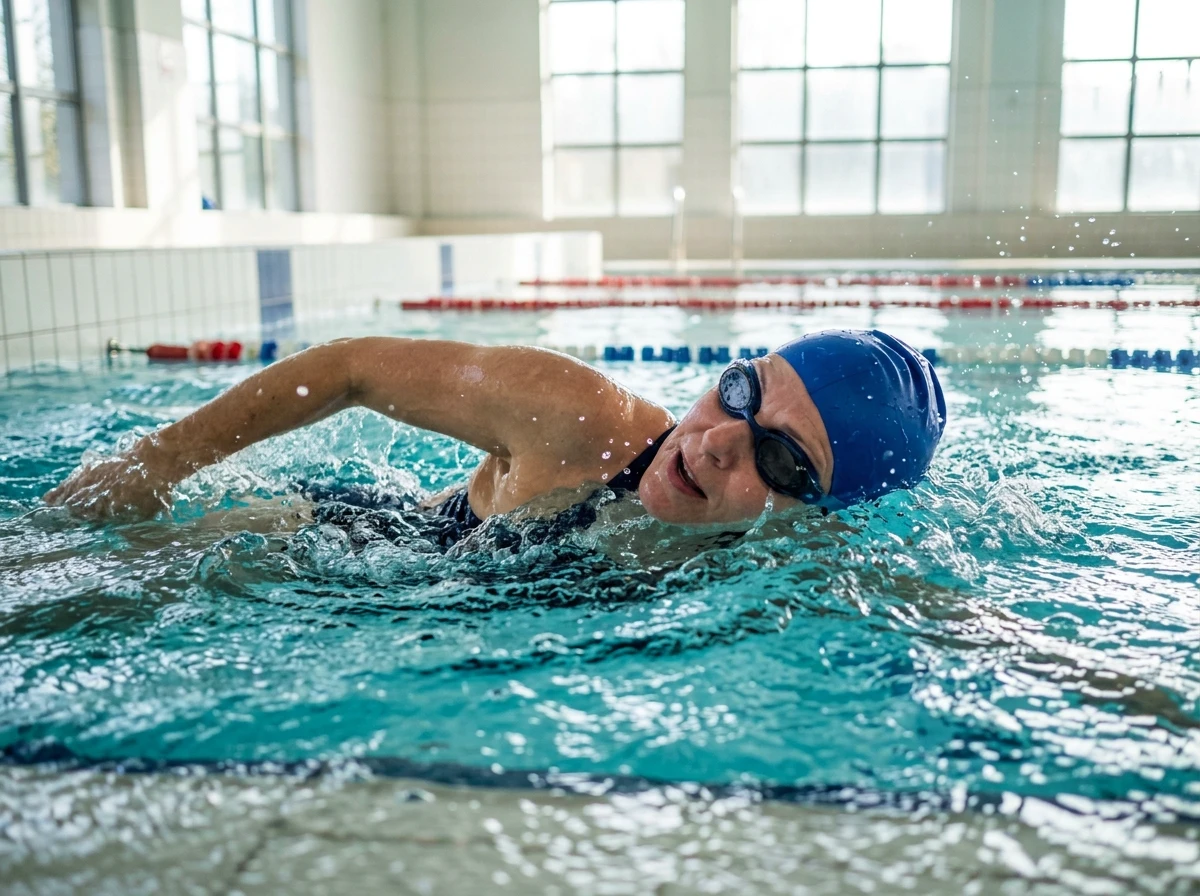
Water supports your body weight, so you can move with less load on your knees and hips. A Cochrane review of 13 trials found aquatic exercise reduced pain and disability by about 5 points on a 100-point scale in people with knee or hip osteoarthritis.
That’s a small effect, so treat swimming as a great joint-friendly cardio option rather than a replacement for strength work. Here’s more on why swimming is one of the best exercises for women.
Pilates For Perimenopause And Cycling
Pilates builds core and hip strength with controlled movement, and many moves are done lying down, which spares your knees and wrists. Our guide to the benefits of Pilates explains how to start. Cycling suits knee pain in perimenopause too: set the saddle so your knee is almost straight at the bottom of the stroke, and keep resistance moderate.
Resistance Bands Routine For Sore Days
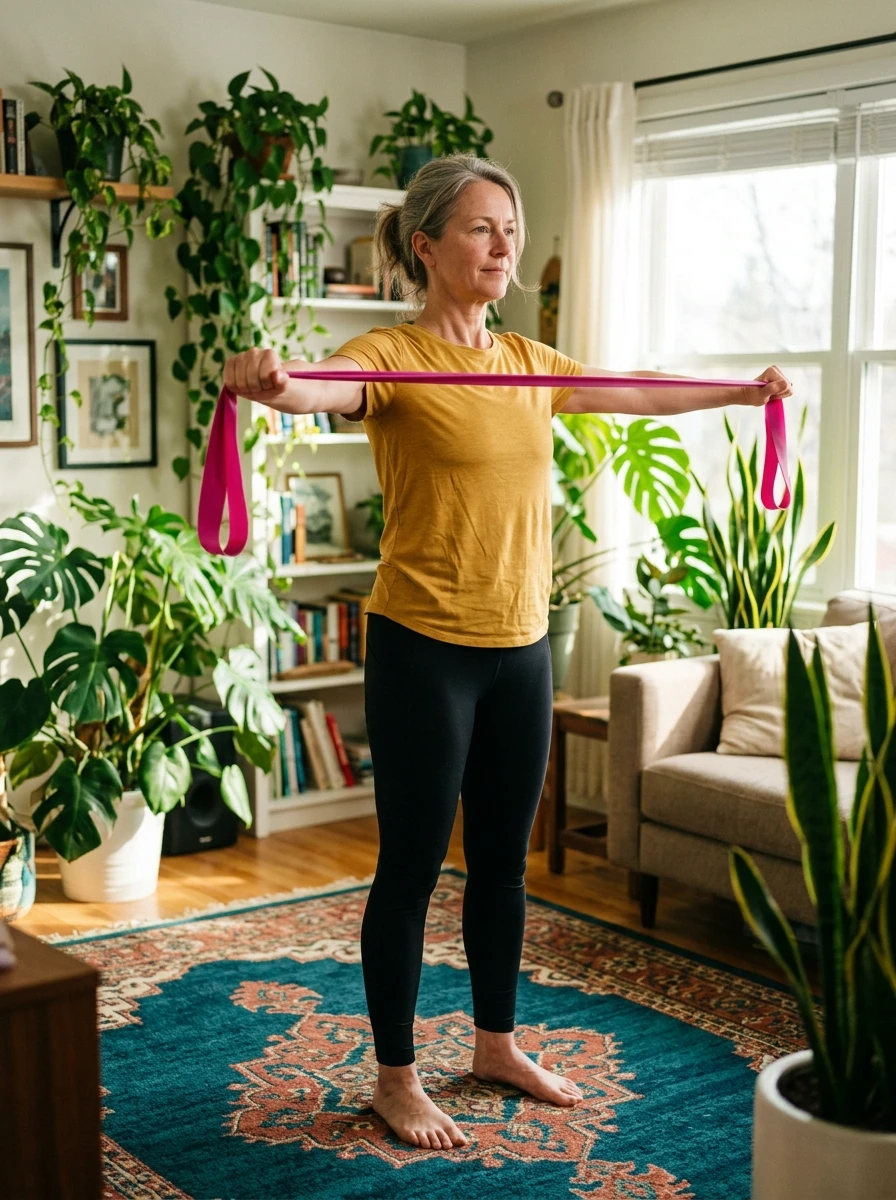
Bands suit amber-light days: the tension is smoother than free weights, and you can stay in a pain-free range. Try 2 sets of 12 to 15 reps of each:
- Banded glute bridge: Band above the knees; push them out as you lift.
- Seated band row: Squeeze your shoulder blades together.
- Side-lying clamshell: Builds the outer hip, helping with hip and knee pain.
- Band chest press: Anchor the band behind you and press slowly.
- Standing band pull-apart: Gentle work for stiff shoulders.
Sore Joints Workout Modifications
When a move hits amber or red, don’t drop the whole workout. Swap the exercise and keep training the muscle.
| Sore Area | If This Hurts | Try This Instead | Why It Helps |
|---|---|---|---|
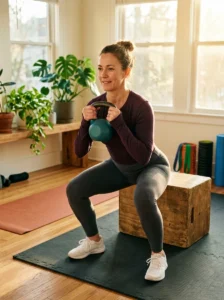
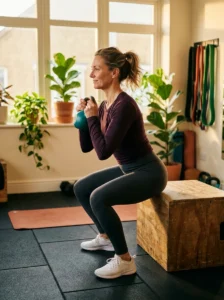
| Knees | Deep squats, lunges, jumping | Box squat to a high bench, step-ups on a low step, glute bridges | Less knee bend under load |
| Hips | Side-lying work, wide stances | Clamshells, standing hip extension, hip hinge with light dumbbells | Strengthens without compressing the outer hip |
| Shoulders | Overhead press, push-ups | Landmine press, incline push-ups, rows | Keeps the arm below shoulder height |
| Wrists and hands | Planks on hands, heavy grip work | Forearm planks, straps, neutral-grip dumbbells | Reduces bend and pressure at the wrist |
| Lower back | Heavy deadlifts from the floor | Raised deadlifts, bird dogs, dead bugs | Shorter range and more core control |
Warm Up Exercises For Joint Stiffness
Stiff joints need a longer runway. The 5-minute warm-up that worked at 30 often isn’t enough now, so give yourself about 10 minutes. Our tips on avoiding yoga injuries apply to stiff joints too.
- Minutes 1 to 3: Easy cardio, such as marching, cycling or a brisk walk, to warm the tissues.
- Minutes 4 to 6: Joint circles for ankles, knees, hips, shoulders and wrists, 10 each way.
- Minutes 7 to 8: Cat-cow and hip hinges to loosen the spine.
- Minutes 9 to 10: One or two light sets of your first exercise at half your working weight.
If mornings are stiff, train later in the day when joints feel looser. And keep active recovery days: an easy walk, swim, or stretch keeps fluid moving without adding strain.
Can Nutrition, Collagen Or Supplements Ease Hormonal Joint Pain?
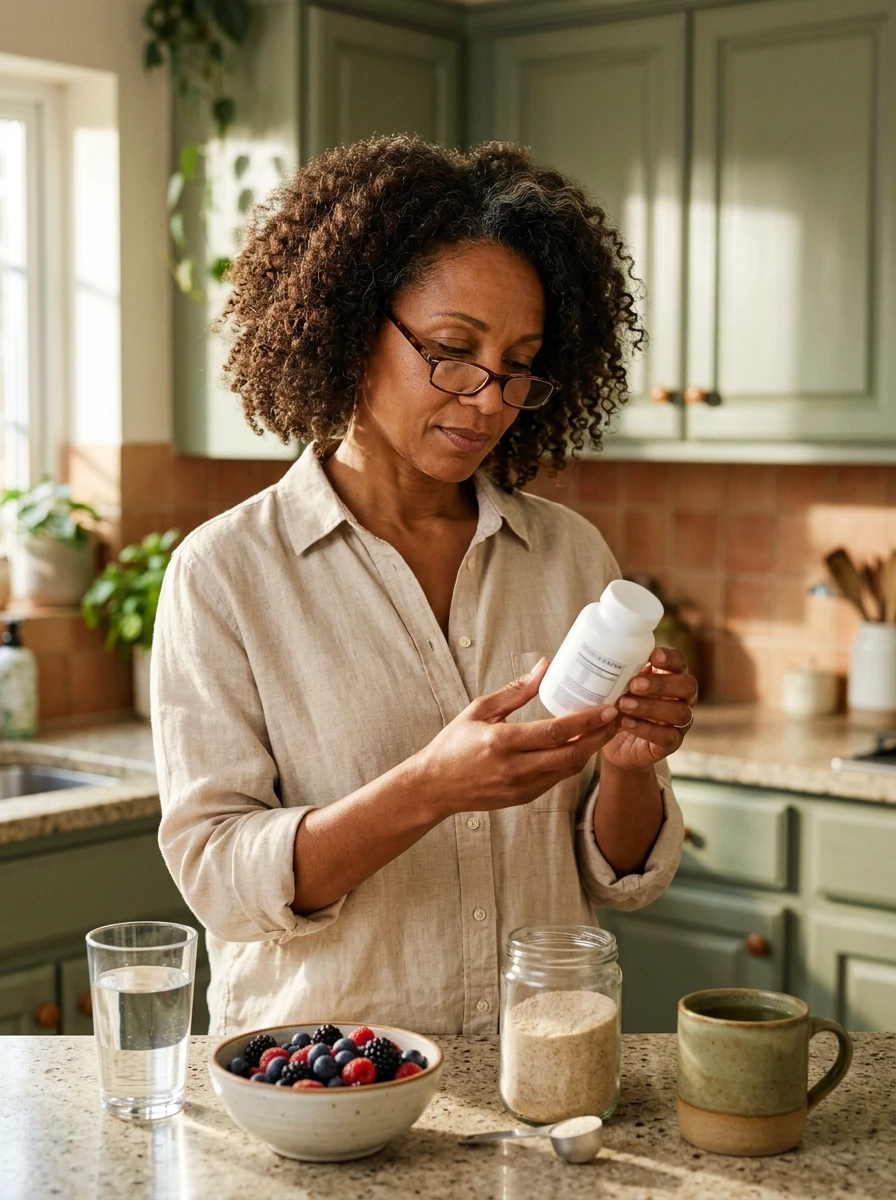
Some may help a little, but none come close to exercise. A Mediterranean-style eating pattern improved joint mobility in one trial, collagen shows modest pain relief in small and biased studies, and UK guidance advises against glucosamine. Think of nutrition as support for your training, not a replacement.
Anti-Inflammatory Diet For Menopause
In a 16-week trial of 99 people with osteoarthritis (83% of them women), those who followed a Mediterranean-type diet saw better knee and hip mobility and a 47% drop in one inflammatory marker.
Their pain scores didn’t change compared with the control group, though. So a Mediterranean-style nutrition strategy, rich in vegetables, olive oil, fish, beans and whole grains, is a sensible base, but it isn’t a quick fix.
Collagen For Joint Health And Glucosamine For Menopause
A 2023 meta-analysis of four trials found that collagen peptides reduced knee osteoarthritis pain compared with placebo. However, the authors rated all four studies as having a high risk of bias, with small sample sizes.
Glucosamine fares worse: the UK’s NICE guidance states that glucosamine should not be offered to people with osteoarthritis. For a wider look, see our review of perimenopause supplements that actually work.
| Option | Evidence Strength | What The Research Shows | Verdict |
|---|---|---|---|
| Strength and aerobic exercise | Strong | Meaningful reductions in pain and better function across 139 trials | Your first-line tool |
| Weight management | Moderate | About 4 pounds less knee load per pound lost | Worth it if you have weight to lose |
| Mediterranean-style eating | Limited | Better mobility and lower inflammation; no change in pain scores | Good foundation, not a cure |
| Collagen peptides | Weak to modest | Some pain relief in small, high-bias trials | Optional; set realistic expectations |
| Glucosamine | Weak | Not recommended in UK osteoarthritis guidance | Save your money |
| Hydration | Limited | No strong trials linking extra water to less joint pain | Drink enough for training, but don’t expect relief |
Does Hormone Replacement Therapy Help Joint Pain?
It may help some women. In a large trial, women taking estrogen reported slightly less joint pain than those on placebo, and early research hints at a lower risk of frozen shoulder. But hormone therapy has its own benefits and risks, so it’s a decision to make with your doctor, not a joint-pain treatment on its own.
In the Women’s Health Initiative, among more than 10,700 postmenopausal women, joint pain was slightly less common in the estrogen group: 76.3% versus 79.2% at one year, and 74.2% versus 79.8% at three years. That’s a real but modest difference; most women in both groups still had joint pain.
Frozen shoulder is a newer area of research. A Duke University analysis of 1,952 menopausal women aged 45 to 60 found frozen shoulder in 4.0% of those on hormone therapy versus 7.7% of those not on it. The authors were careful to say the result wasn’t statistically significant and that bigger studies are needed.
If joint pain is one of several symptoms affecting your life, raise hormone replacement therapy for joint relief with a doctor who knows menopause care, and bring your pain log. Whatever you decide, keep training: hormones may take the edge off, but muscle and movement do the heavy lifting.
Want help staying consistent while your body changes? Grab our free guide, 10 Actions That Support Permanent Weight Loss. It’s packed with simple, sustainable habits to help you keep moving and protect your muscle through the changes. Then pick one swap from the table above and try it at your next workout.
The Bottom Line
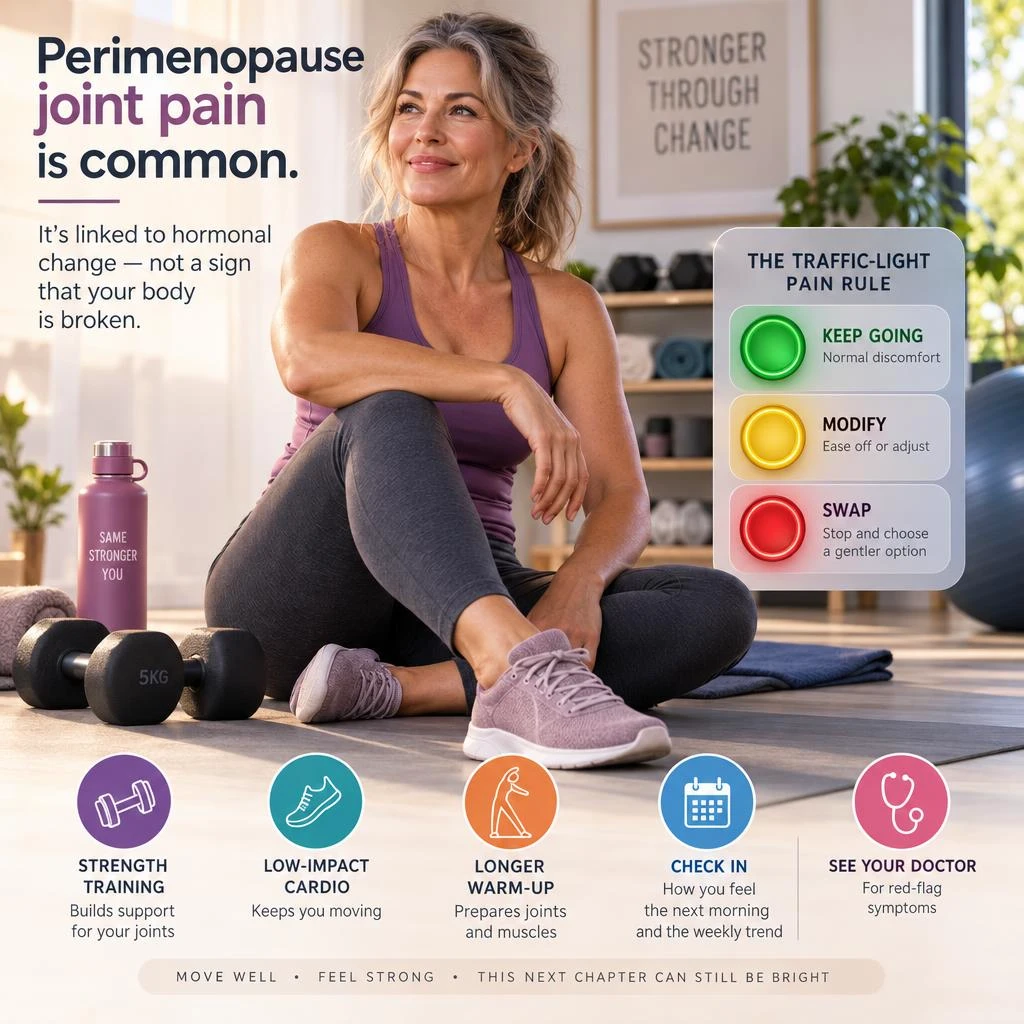
Perimenopause joint pain is common and closely linked to hormonal change. It isn’t a sign that your body is broken or that exercise is the enemy. Strength training, low-impact cardio and a longer warm-up are among the best things you can do for achy joints.
Use the Traffic-Light Pain Rule to stay in control: green means keep going, amber means modify, red means swap. Check the next morning and the weekly trend, and see your doctor for red-flag symptoms.
Glossary Of Key Terms
- Perimenopause: The transition years before menopause, when estrogen and progesterone fluctuate and periods become irregular.
- Musculoskeletal Syndrome Of Menopause: A term introduced in 2024 for the joint pain, muscle loss, bone loss and arthritis changes linked to falling estrogen.
- Osteoarthritis: A joint condition in which cartilage and the surrounding tissues change over time, causing pain and stiffness.
- Tendinopathy: Pain and reduced function in a tendon, often after a change in load.
- Adhesive Capsulitis (Frozen Shoulder): Painful stiffening of the shoulder capsule that limits movement.
- Synovial Fluid: The fluid inside your joints that cushions and nourishes cartilage.
- Pain-Monitoring Model: A rehab approach that allows exercise as long as pain stays moderate and settles by the next day.
- Hormone Replacement Therapy (HRT): Medication that replaces estrogen, often with progesterone, to ease menopause symptoms.
FAQ
Does Perimenopause Joint Pain Go Away?
For some women, joint pain eases once hormones settle, but not for everyone. A meta-analysis found pain rates after menopause were similar to those in perimenopause. Osteoarthritis also becomes more common with age, so ongoing pain deserves a check-up. Building strength now helps, whatever your timeline.
Can Low Estrogen Cause Joint Pain?
Yes, low and fluctuating estrogen is linked to joint pain. Estrogen receptors sit in your joints, tendons and bones, and estrogen helps control inflammation. Researchers now describe this as part of the musculoskeletal syndrome of menopause. Other causes are possible, so persistent pain should be checked by a doctor.
Why Are My Fingers Stiff In The Morning During Perimenopause?
Morning finger stiffness is a common perimenopause complaint, often linked to hormonal changes and inflammation. Stiffness that eases within a few minutes of moving is usually less worrying. If your fingers stay stiff for more than 30 minutes after waking, or look swollen, see your doctor, as this can point to inflammatory arthritis. Gentle hand mobility work and warm water can help in the meantime.
Should I Stop Lifting Weights If My Joints Hurt?
Usually not. Strength training supports your joints and protects bone and muscle. Use the Traffic-Light Pain Rule: mild pain that settles by the next morning is generally fine, while pain above 5 out of 10, or pain that builds week to week, means swap the exercise. Stop and get assessed if a joint is swollen, hot or unstable.
What Are The Best Exercises For Perimenopause Joint Pain?
Strength training matters most, ideally at least two days a week. Pair it with low-impact cardio such as swimming, cycling or walking. Pilates and mobility work help with stiffness, and resistance bands are useful on sore days. The best plan is the one you can repeat without flare-ups.
Do Collagen Or Glucosamine Help Menopause Joint Pain?
The evidence is weak. A 2023 meta-analysis found collagen peptides reduced knee osteoarthritis pain, but all four trials had a high risk of bias. The UK’s NICE guidance says glucosamine should not be offered for osteoarthritis. If you try collagen, treat it as optional and keep your focus on training.
Does HRT Help Perimenopause Joint Pain?
It may help some women. In the Women’s Health Initiative, joint pain was slightly less common with estrogen than with placebo. Early research also hints at lower frozen shoulder risk, though that result wasn’t statistically significant. HRT has benefits and risks, so decide with a doctor experienced in menopause care.