
Discover The Effective Benefits Of Pilates For Fat Loss And Achieve Your Fitness Goals
Physical fitness is the first requisite of happiness. Our interpretation of physical fitness is the attainment and maintenance of a uniformly developed body with a sound mind, fully capable of naturally, easily, and satisfactorily performing our many and varied daily tasks with spontaneous zest and pleasure.
Joseph Pilates ‧ Creator of the Pilates method
Summary (TL;DR)
Pilates for fat loss is real, but it’s not what the influencers are selling you. A 2021 meta-analysis of 11 randomized trials found that Pilates measurably reduces body weight, BMI, and body fat percentage, but almost every study behind that number involved adults who started overweight or obese, doing it for 8 weeks or longer.
A 2015 study of postmenopausal women aged 59 to 66 found the opposite: 12 weeks of mat Pilates built real, measurable strength, with only modest, inconclusive balance gains, and zero change in body composition.
The honest answer is that Pilates works best as a strength, adherence, and body-composition tool, not a calorie-burn tool, and it works best of all when you pair it with a calorie-aware diet and, for most women over 40, a bit of added resistance work.
You’ve probably seen the claim before: a Pilates instructor posts a before-and-after, says fifteen minutes a day “melted” her waist, and you wonder whether you’re the problem for not seeing the same thing from your own mat classes.
Or maybe you’re on the other side of it entirely: you’ve tried the calorie counting, the keto phase, the 5 am cardio, and none of it stuck, and now you’re eyeing something gentler and wondering if it’s just a consolation prize for people who’ve given up on “real” exercise.
Neither story is quite right, and we’d rather give you the messier, more useful version. We pulled the actual randomized trials on Pilates and body composition, including one most Pilates content ignores because it doesn’t flatter the sales pitch, and cross-checked it against what real Pilates practitioners are saying to each other, unprompted, on Reddit.
What we found is a form of exercise that does something real for your body, just not the thing most of the marketing promises.
Medical & Referral Disclaimer
This article is for informational and educational purposes only. It is not a substitute for professional medical advice, diagnosis, or treatment. Always consult your physician or qualified health provider before starting any new diet or exercise program.
Key Takeaways
- Pilates measurably reduces body fat percentage in adults who start overweight or obese. Still, the effect concentrates there and grows with longer, more consistent practice, according to a 2021 meta-analysis of 11 trials.
- Body composition isn’t guaranteed for everyone: a 2015 trial of postmenopausal women found 12 weeks of mat Pilates built real strength, with modest and inconclusive balance gains. Still, it produced no measurable change in body fat or lean mass.
- It burns fewer calories than you’d think: the best current estimate puts a 60-minute mat session at roughly 170 to 180 calories, light-to-moderate intensity, well below most cardio.
- Most of the visible change happens early: one 12-week study found the biggest circumference reductions in month one, then a slower, decelerating pace after that.
- Pairing beats isolation: Pilates alone rarely moves the scale much; paired with a calorie-aware diet, or with added resistance work, it consistently performs better.
- It’s a strong fit after 40 specifically because it’s low-impact and joint-friendly, which matters more once cortisol sensitivity and joint wear become part of the picture.
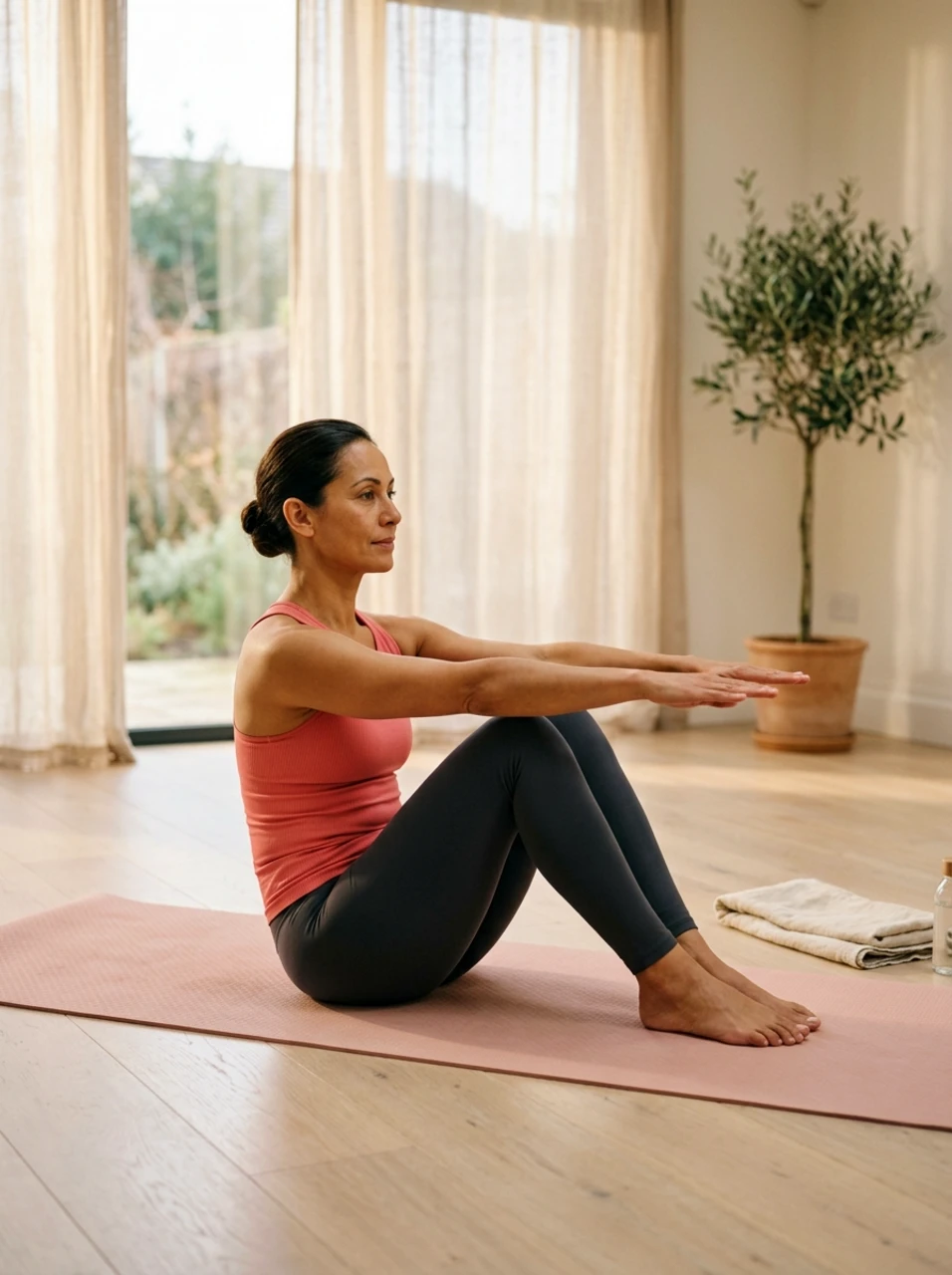
Is Pilates Actually Effective For Fat Loss? Here’s What Changes And What Doesn’t
Yes, but selectively. Pilates measurably improves body composition in people who start overweight or obese and stick with it for 8 weeks or more, and it reliably builds strength and adherence in almost everyone. What it doesn’t do is burn calories at a cardio rate, or guarantee a body-composition change for every body, every time.
The research base is small compared to something like walking or resistance training, but it’s real, and it’s more specific than the vague “can help with weight loss” language most Pilates content settles for. Here’s the actual shape of it:
- The anchor finding: a 2021 meta-analysis of 11 randomized controlled trials (393 participants) found Pilates reduced body weight by about 2.4 kg, BMI by about 1.2 points, and body fat percentage by about 4.2 percentage points versus no exercise, with the effect “more evident” the longer people practiced.
- The catch: nearly every trial in that pool studied adults with overweight or obesity. We don’t have strong evidence the same size of effect shows up in someone who’s already lean.
- The reformer-specific data: a 2025 randomized trial of 47 overweight and obese women split into a 23-woman reformer Pilates group and a 24-woman control group found that the exercise group, doing reformer Pilates 3 times a week for 8 weeks, saw significant body composition improvements alongside real gains in strength, endurance, and mood.
- The null result nobody sells you: a 2015 study of 25 postmenopausal women aged 59 to 66 found 12 weeks of twice-weekly mat Pilates produced real strength and function gains (grip strength up 8%, sit-to-stand performance up 23%) but “no changes in body composition.” Same exercise, older and hormonally different population, a genuinely different result.
Put those together, and the pattern is consistent, not contradictory: Pilates has real, measurable value; it just isn’t primarily a calorie-burn value, and how much body-composition change you personally see depends heavily on your starting point, your consistency, and possibly your hormonal stage.
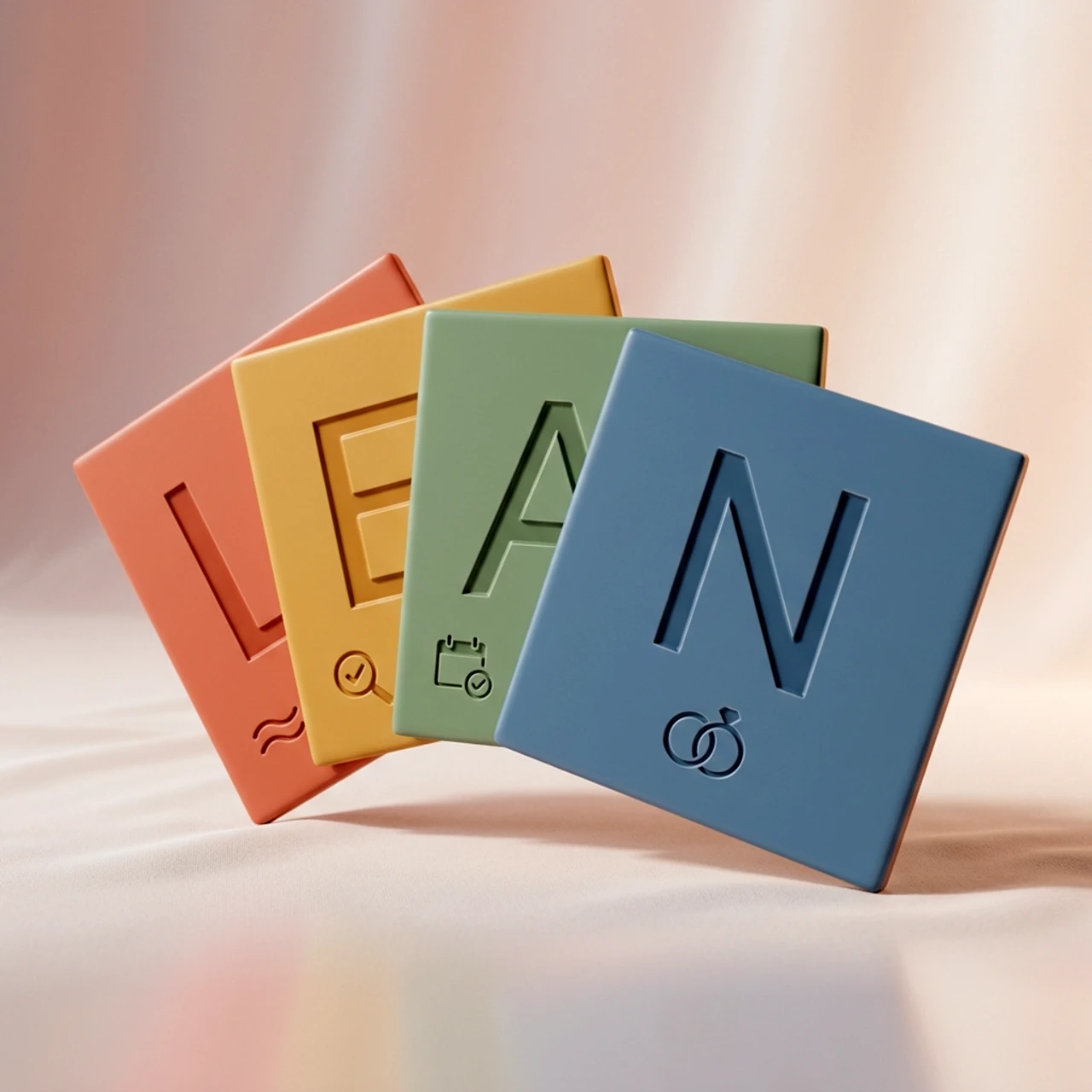
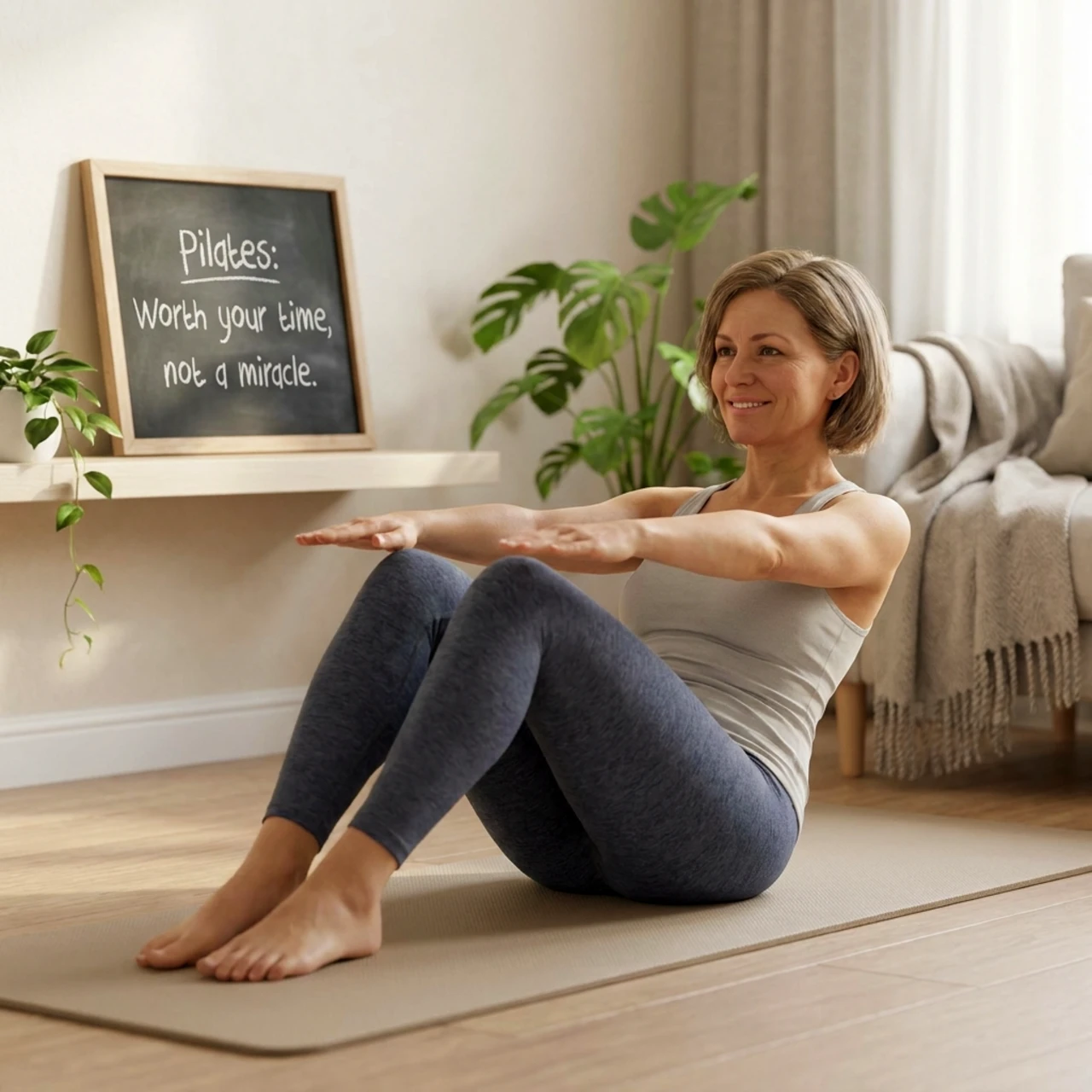
The L.E.A.N. Reality Framework: What Pilates Actually Does For Fat Loss
We built a simple way to hold all of this at once, because “it depends” isn’t useful advice on its own. This is our own framework, not a validated research instrument, a way of organizing what the studies above actually show so you can judge your own situation against it.
L: Low-Impact By Design
Pilates is built around controlled, joint-friendly movement, which is exactly why it doesn’t torch calories the way running does.
The mind-body connection at the center of the method - slow, deliberate movement paired with breath and focus - is the same feature that makes it accessible to joints that can’t handle repeated impact. That trade-off is the whole point, not a flaw to apologize for.
E: Evidence-Backed, But Concentrated
The body-composition benefit is real, but it isn’t evenly distributed. The 2021 meta-analysis, the reformer trial, and a small 2026 trial comparing Pilates against circuit training all found meaningful change, and every one of them studied adults with overweight or obesity.
The 2015 postmenopausal trial, studying a different population with a different hormonal profile, found none. Your own starting point matters more than the marketing admits.
A: Adherence Beats Intensity
The single biggest predictor of whether Pilates changes your body isn’t how hard you push in any one class; it’s whether you’re still doing it in month three.
A widely upvoted r/pilates discussion on this exact question makes the point better than any study: people who saw real change weren’t doing a gentler workout; they were doing it consistently, often several times a week, often for months, and often alongside a second habit like tracking food or adding light weights.
Pilates rewards consistency more than intensity, which is a genuinely different promise than “burn more calories per class.”
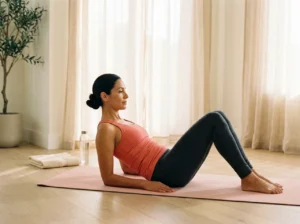
N: Needs Pairing To Move The Scale
On its own, Pilates rarely produces dramatic weight loss, and the research doesn’t pretend otherwise.
It works best paired with a calorie-aware diet, since it doesn’t create a large enough deficit by itself, or paired with added resistance or cardio work for a bigger metabolic push. Think of Pilates as the strength-and-consistency half of a fat-loss plan, not the whole plan.
| Study | Who Was Studied | Duration | Body Composition Result |
|---|---|---|---|
| 2021 meta-analysis, 11 RCTs (393 people) | Adults with overweight/obesity | Varies by trial, longer = bigger effect | Body fat down ~4.2 percentage points vs. no exercise |
| 2025 reformer Pilates RCT (47 women) | Women with overweight/obesity | 8 weeks, 3x/week | Significant body composition improvement |
| 2026 reformer Pilates study (24 women) | General adult women | 12 weeks, 3x/week | Significant circumference reduction, biggest in month 1 |
| 2026 Pilates vs. circuit training (18 women) | Obese middle-aged women | 8 weeks | Comparable to circuit training, not superior (small sample) |
| 2015 mat Pilates study (25 women) | Postmenopausal women, aged 59-66 | 12 weeks, 2x/week | No body composition change; strength up 8-31% |
Expert Commentary: What The Research Actually Shows
Strip away the marketing language and the research tells a more specific, more useful story than “Pilates helps you lose weight.” The 2021 meta-analysis is the strongest single piece of evidence we have, but its own authors flag substantial variation between the 11 trials it pooled (a statistical measure called I², which ran as high as 88% for body fat percentage).
That’s a technical way of saying: some trials showed a big effect, some showed a small one, and the honest average sits in the middle. That’s normal for exercise research and not a reason to dismiss the finding, but it’s a reason to expect your own results to vary too.
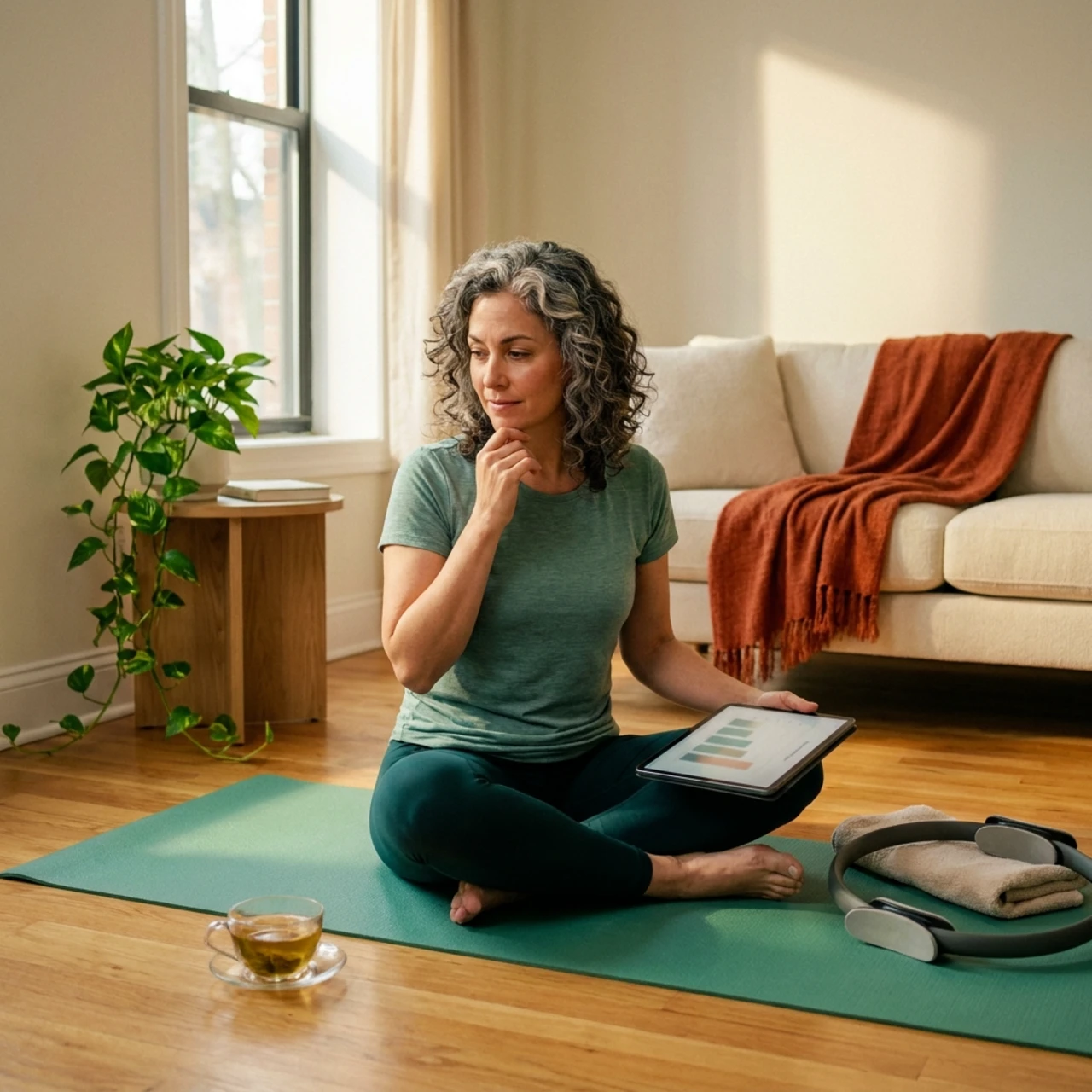
The most underused data point in this whole conversation is timing. A 2026 study tracking 24 women through 12 weeks of reformer Pilates found the biggest circumference reductions happened in the first month, then continued at a slower, decelerating pace. If your own first month looks dramatic and your second month looks flat, that’s not a sign it stopped working; it’s the expected shape of the curve.
Even when the scale or the tape measure doesn’t move, Pilates is still doing something. Watch for these instead of, or alongside, weight:
- Grip and functional strength: the 2015 postmenopausal trial found handgrip strength up 8% and sit-to-stand performance up 23% with zero body-composition change - real, measurable fitness gains the scale can’t see.
- How your clothes sit at the waist: core and postural changes often show up in how pants fit before they show up on a scale.
- Balance and everyday ease: getting up from the floor, carrying groceries, and standing from a chair without using your hands all reflect the strength Pilates builds.
- Mood and stress load: the reformer trial above also found measurable improvements in depression and anxiety scores, a real outcome even when it isn’t the one you started chasing.
The Contrarian Take: Is Pilates Just Influencer Hype?
Partly, yes, and the Pilates community itself is the loudest voice saying so. That same r/pilates thread opens with a blunt line: Pilates is not a magic weight-loss method; it’s not going to melt fat in a few 20-minute sessions a week, and any influencer claiming otherwise is overselling it.
The research agrees with that instinct. Pilates burns modest calories, and it doesn’t reliably change body composition in every population studied.
But the same thread, and the research, both push back against the opposite extreme too. Practitioners who did see real change weren’t doing anything magic; they were doing it often, for months, usually alongside a second lever: tracking food, adding light resistance work, or simply staying consistent long enough for the effect to compound.
That matches the 2021 meta-analysis’s own finding that longer practice produces a bigger effect, and it matches the small 2026 trial showing Pilates held its own against circuit training, without beating it, in a study too small to call decisive either way.
The honest version sits between the two extremes: Pilates is not a shortcut, and it’s nothing. It’s a genuinely effective strength and body-composition tool for the right starting point and the right timeline, and a genuinely modest calorie-burner for everyone. Both of those things are true at once.
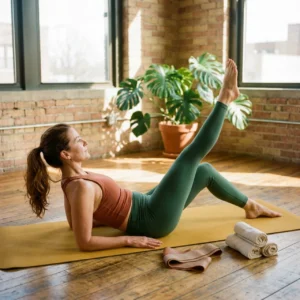
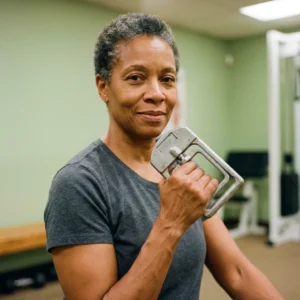
Mat vs. Reformer Pilates For Fat Loss: Which Should You Choose?
Reformer Pilates uses spring-loaded resistance and tends to produce a stronger body-composition signal in the research; mat Pilates is free, more accessible, and still builds real strength. Neither is objectively “better” for fat loss specifically; the right choice depends on your budget, your joints, and what you’ll actually keep doing.
| Factor | Mat Pilates | Reformer Pilates | Best For |
|---|---|---|---|
| Equipment | Bodyweight, a mat, sometimes a resistance band or ring | Spring-loaded reformer machine, usually studio-based | Mat: home practice. Reformer: added resistance without weights. |
| Cost | Free to low-cost (YouTube, apps, occasional class) | $25 to $40+ per studio class | Budget-conscious readers: start with mat. |
| Intensity range | Light, roughly 1.8 to 3 METs | Light-to-moderate, can run higher with resistance added | Reformer: readers wanting a harder ceiling to progress into. |
| Joint impact | Very low | Very low, with added support from the machine’s carriage | Both: excellent for joint pain, arthritis, or post-injury return to exercise. |
| Research base for body composition | Mixed: strong in some trials, null in the 2015 postmenopausal study | Consistently positive in the reformer-specific trials above | Reformer: readers prioritizing the strongest available evidence. |
If cost or access rules out a studio, mat Pilates is not a consolation prize. The 2015 postmenopausal trial that found no body-composition change was a mat program, but it still delivered real strength gains, with only modest, inconclusive balance improvements, and the 2021 meta-analysis pooling multiple formats still found a meaningful overall effect. Start with what you’ll actually do.
Pilates For Women In Perimenopause And Menopause
Pilates fits the perimenopause body better than almost any other form of exercise, and it’s not just a marketing angle. Two things change for most women in their 40s and beyond: joints get less forgiving of repeated impact, and elevated cortisol from poor sleep, stress, or overtraining can work against fat loss rather than for it. Pilates addresses both directly.
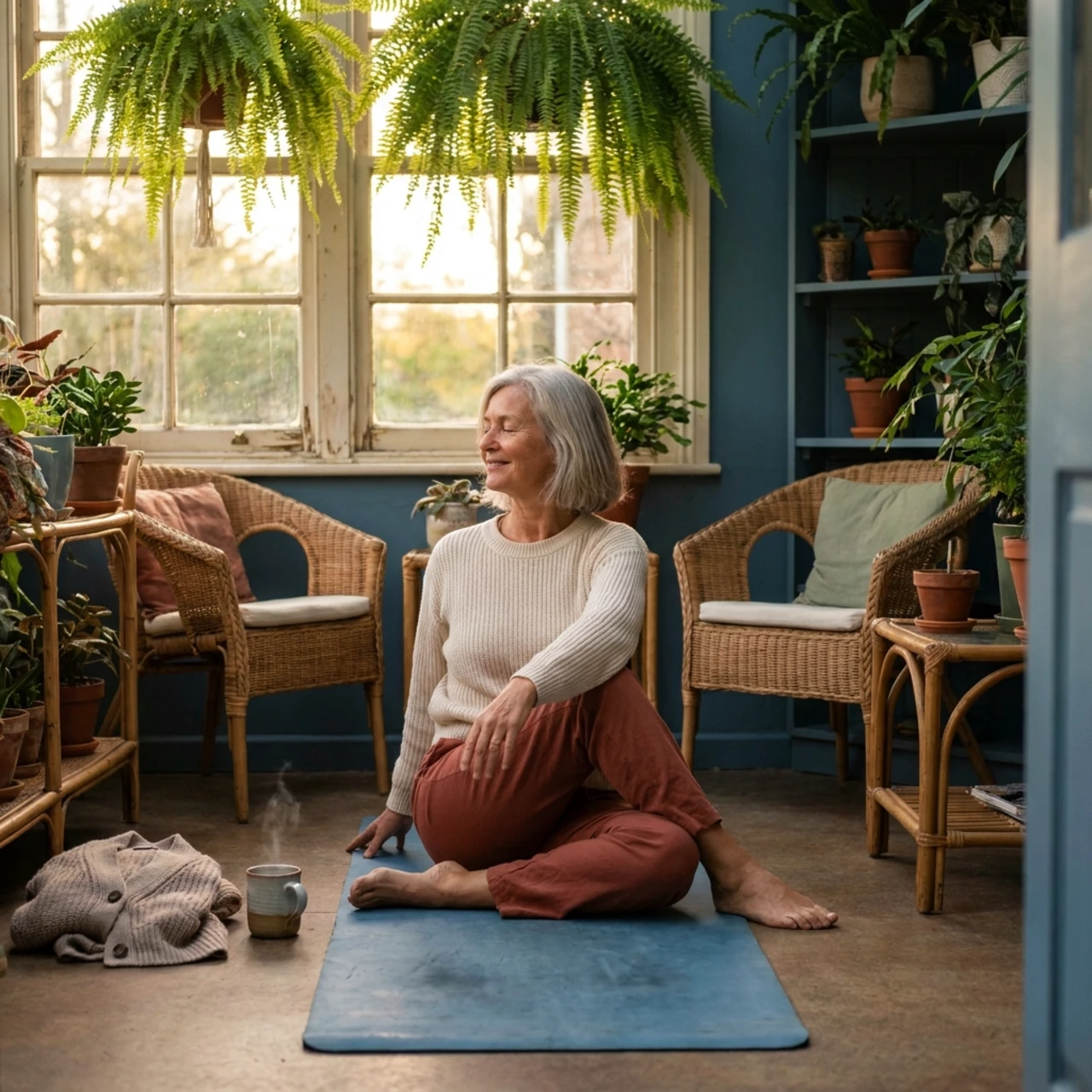
- Joint-friendly by default: the same low-impact design that makes Pilates gentle on beginners also makes it a realistic long-term option once high-impact cardio starts costing you in knee or hip pain.
- Lower cortisol load than high-intensity training: Pilates sits in the light-to-moderate intensity range, which for many women is a better fit than chronic high-intensity workouts that can keep cortisol elevated, a dynamic worth understanding if cortisol belly and hormonal belly fat feel like they’re working against you specifically.
- Strength that protects you later: the 2015 postmenopausal trial’s strength gains, even without body-composition change, matter more as we age: grip strength and sit-to-stand ability are linked to long-term independence, not just how you look.
- A realistic entry point after a break: if high-impact workouts or extreme diets have failed you before, Pilates is a genuinely different kind of hard, one built around control and consistency rather than intensity and burnout.
None of this means Pilates alone will resolve a body-composition plateau tied to hormonal changes. It means it’s a smart foundation to build the rest of a plan around, especially if your joints or your stress load have ruled out other options.
How To Pair Pilates With Diet And Other Exercise For Real Fat Loss
Pilates moves the needle furthest when it’s one part of a plan, not the whole plan. The research above is consistent on this point: Pilates alone produces modest calorie burn and inconsistent body-composition change, but Pilates plus something else performs noticeably better.
- Pair it with a calorie-aware diet: since a 60-minute Pilates session burns roughly 170 to 180 calories, diet does more of the heavy lifting for the scale than the workout does. A structured approach to meal planning closes that gap without requiring extreme restriction.
- Add resistance work on separate days: reformer Pilates already adds spring-based resistance, but mat practitioners specifically benefit from layering in dedicated strength training two or three times a week, which the research shows compounds with Pilates rather than competing with it.
- Keep one cardio session if your joints allow it: Pilates is not a calorie-burn substitute for cardio; even a single weekly walk, cycle, or swim session adds meaningfully to weekly energy expenditure without undoing the joint-friendly benefit Pilates provides elsewhere in your week.
- Track something other than the scale: waist measurement, how your clothes fit, and strength benchmarks like getting up from the floor without your hands all move before, or independently of, body weight.
Join Our Mailing List
Join thousands of women inside our community and receive our free guide, 10 Actions That Support Permanent Weight Loss — the exact behavioural shifts that make the difference between a two-week attempt and a lasting transformation.
No restriction plans. No guilt. Just what actually works — for real women with real lives.
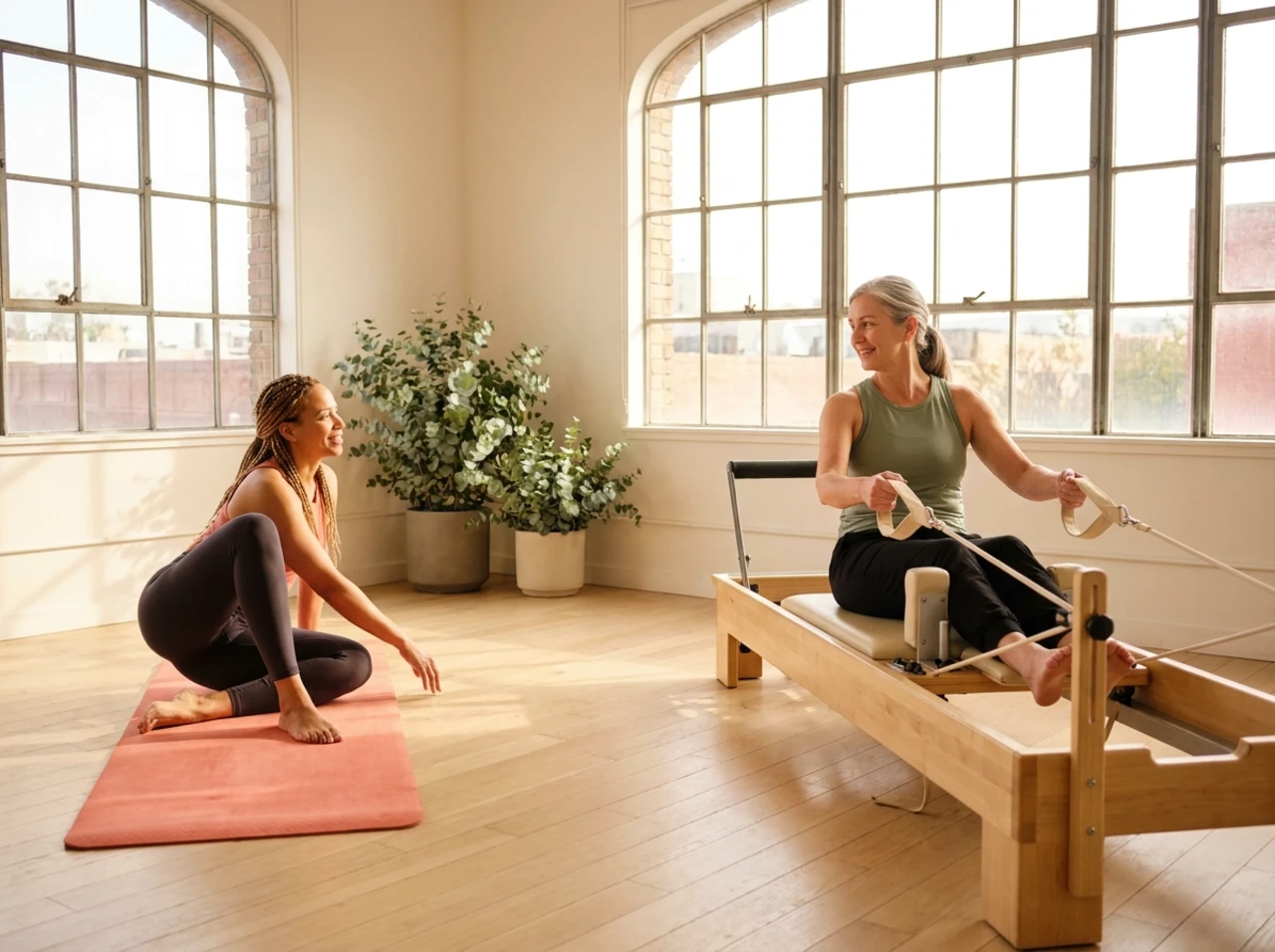
How To Get Started With Pilates For Fat Loss
Two to three sessions a week, for at least 8 to 12 weeks, is the dose that shows up across the research above. That frequency also satisfies the CDC’s muscle-strengthening guideline of at least 2 days a week covering all major muscle groups on its own, which most cardio-only routines don’t.
- Start with mat if cost or access is a barrier: free YouTube classes and low-cost apps are a legitimate starting point, not a lesser one.
- Choose reformer if you want the strongest evidence base: the reformer-specific trials above showed the most consistent body-composition results, if a studio is accessible to you.
- Expect the biggest visible change in month one: per the 12-week reformer study above, don’t be discouraged if month two feels slower; that deceleration is the expected pattern, not a sign it stopped working.
- Give it 8 to 12 weeks minimum before judging results: nearly every study showing a body-composition effect ran at least that long; anything shorter simply hasn’t given the method time to show what it can do.
- Layer in the pairing strategies above from week one: across the research and the Reddit discussion above, people who combined Pilates with diet awareness or added resistance consistently saw more than people doing Pilates in isolation.
Ready to put this into a plan you can actually stick with? Grab our free guide, 10 Actions That Support Permanent Weight Loss, the practical, sustainable habits that turn everything above into real, lasting results. No fad diets, no extreme plans, just what the research actually supports, written for real women.
The Bottom Line
Pilates for fat loss deserves a place in your routine, just not as a stand-alone miracle.
The evidence shows real, measurable body-composition benefits for people who start overweight or obese and stick with it for 8 weeks or longer, alongside strength gains and, in some trials, real mood benefits that show up even when body composition doesn’t budge, as it didn’t for the postmenopausal women in the 2015 trial.
It burns modest calories on its own, so it works best paired with a calorie-aware diet or added resistance work, not as a replacement for either. If you’ve been burned by workouts that promised more than they delivered, Pilates is a rare case where the honest, sourced version of the claim is still genuinely worth your time.
Glossary Of Key Terms
- Adherence: The steady devotion to a fitness program over time; cited as the single biggest predictor of whether Pilates will successfully change a person's body.
- Body Composition: The proportion of fat, muscle, bone, and water in the body; Pilates is noted for improving this specifically in overweight or obese populations.
- Core Strengthening: The process of building stability and power in the abdomen, back, and pelvis; the central focus of the Pilates method.
- L.E.A.N. Reality Framework: A four-part organizational tool (Low-impact, Evidence-backed, Adherence, Needs pairing) used to evaluate the actual impact of Pilates on fat loss.
- Lean Muscle Growth: The increase in fat-free muscle tissue, which boosts metabolism and contributes to higher calorie burning even when the body is at rest.
- Low-Impact Exercise: Physical activity designed to be gentle on the joints, such as Pilates, which utilizes controlled movements rather than repeated impact.
- Mat Pilates: A version of the exercise performed on a mat using bodyweight for resistance; noted for building functional strength and being highly accessible.
- Mind-Body Connection: The interaction between mental focus and physical movement; a core principle of Pilates involving deliberate breath and concentration.
- Reformer Pilates: A variation of Pilates involving a specialized machine with springs and pulleys to provide adjustable resistance and a stronger body-composition signal in research.
- Strength Training: Exercises designed to build muscle mass; often suggested as a necessary pairing for mat Pilates practitioners to enhance metabolic results.
FAQ
Is Pilates Good For Weight Loss?
It can be, especially for body composition, but it’s not a high-calorie-burn workout. A 2021 meta-analysis of 11 trials found real reductions in body weight, BMI, and body fat percentage, concentrated in people who started overweight or obese and practised for 8 weeks or longer.
Can Pilates Help You Lose Weight?
Yes, but usually as part of a broader plan. Pilates burns modest calories on its own, roughly 170 to 180 per 60-minute mat session, so pairing it with a calorie-aware diet or added resistance work produces more consistent results than Pilates alone.
What Type Of Pilates Is Best For Weight Loss, Mat Or Reformer?
Reformer Pilates has more consistent body-composition research behind it, thanks to its added spring resistance, but mat Pilates is free, accessible, and still builds real strength. The best type is the one you’ll actually do 2 to 3 times a week.
How Many Calories Does Pilates Burn?
Roughly 170 to 180 calories in a 60-minute mat-style session, according to a 2025 systematic review pooling six studies, which classified Pilates as light-to-moderate intensity. Reformer and power-Pilates formats can run higher, and individual studies in that review ranged widely.
Does Pilates Still Support Weight Loss During Perimenopause?
It supports strength and joint health reliably, and body-composition change is less certain during this life stage. A 2015 trial of postmenopausal women found that 12 weeks of mat Pilates produced no measurable body-composition change, though strength improved significantly, with only modest, inconclusive gains in balance, which still matters for long-term health even without a scale change.
Is Pilates An Effective Exercise For Weight Loss?
It’s effective for strength, posture, and, in the right population, body composition, but it’s not the most effective option purely for calorie burn. Combining it with diet awareness or another form of exercise consistently outperforms Pilates alone in the research.
How Does Pilates Help With Weight Loss?
Mainly by building lean muscle and improving adherence, not by burning large numbers of calories in the moment. Consistent practice over 8 to 12 weeks or longer is what the research links to measurable body-composition change, more than any single session’s intensity.