
Science-Backed Perimenopause Supplements To Support Hormones, Sleep, Mood, And Metabolism
Jim Rohn
Author & motivational speaker
Take care of your body. It's the only place you have to live.
Summary (TL;DR)
Perimenopause starts, on average, in the mid-40s and brings hormone-driven symptoms like hot flashes, poor sleep, mood swings, and weight changes. The right perimenopause supplements, including magnesium, vitamin D, omega-3s, and ashwagandha, have solid science behind them. Others, like black cohosh, are more of a gamble. This guide cuts through the noise, ranks supplements by evidence strength, and tells you exactly what to take, when, and why. No overwhelm required.
Up to 80% of women experience symptoms during perimenopause, and most of them suffer for years before getting real support. If you've ever stood in a health food store staring at 47 different bottles, feeling completely lost, you're not alone.
The frustrating part? Most of those supplements make big promises. Only a handful deliver.
Perimenopause is not a disease. It's a hormonal transition, and your body's needs shift significantly during it. Estrogen and progesterone fluctuate wildly before they eventually decline. Sleep gets disrupted. Cortisol spikes more easily. Bone density quietly starts to drop. Mood can wobble without warning.
Supplements won't fix all of that. But the right ones, taken strategically, can absolutely take the edge off. The keyword is "strategically." Grabbing whatever the Instagram ad recommends isn't a strategy. Understanding which nutrients your body is actually depleted in, and why. That's the strategy.
This guide gives you a clear, honest breakdown of the best perimenopause supplements backed by real evidence, along with a few that are overhyped. No fluff, no false promises.
Medical & Referral Disclaimer
This article is for informational and educational purposes only. It is not a substitute for professional medical advice, diagnosis, or treatment. Always consult your physician or qualified health provider before starting any new diet or exercise program.
Key Takeaways
- Perimenopause can begin as early as the mid-30s, though it most commonly starts between 45 and 50.
- Up to 80% of women experience symptoms, yet most don't seek treatment until their mid-50s.
- Magnesium is likely the most under-appreciated supplement for sleep, mood, and bone health in perimenopause.
- Vitamin D deficiency is extremely common in perimenopausal women because declining estrogen impairs its production and absorption.
- Omega-3 fatty acids show promising evidence for reducing hot flash frequency and supporting mood.
- Ashwagandha may reduce cortisol, anxiety, and menopausal symptom scores in clinical trials.
- Black cohosh has mixed evidence; the most rigorous trial showed no benefit over a placebo.
- Food-first nutrition remains the foundation. Supplements fill gaps; they don't replace a solid diet for women over 40.

What Is Perimenopause, And Why Do Supplements Matter?
Perimenopause is the hormonal transition phase leading up to menopause. It can last anywhere from 2 to 10 years.
It typically begins in the mid-40s, though research from the University of Virginia found that symptoms can appear in women as young as 30. Estrogen and progesterone levels fluctuate erratically before declining.
This hormonal rollercoaster drives most of the symptoms women experience: hot flashes, night sweats, poor sleep, brain fog, mood changes, and weight gain in perimenopause.
That's where supplements come in. During this transition, your nutritional needs shift in some specific ways:
- Nutrient absorption shifts: your gut absorbs less B12, calcium, and vitamin D as estrogen declines.
- Cortisol sensitivity increases: stress lands harder and lingers longer.
- Bone density begins to drop: calcium and vitamin D needs climb.
- Inflammation tends to rise: omega-3s and antioxidants become more valuable.
A supplement can't replace strength training in perimenopause or a solid nutrition strategy. But it can fill in the gaps that diet alone often can't cover in this stage of life.
The WLBF Evidence Tiers: How To Judge Any Supplement
Before we dive into the list, here's a framework for evaluating perimenopause supplements so you can apply it beyond this article.
The WLBF Evidence Tier System:
| Tier | What It Means | Examples |
|---|---|---|
| Tier 1: Strong Evidence | Multiple randomised controlled trials (RCTs) and/or meta-analyses support the claim | Magnesium (sleep), Vitamin D (bone), Omega-3s (mood) |
| Tier 2: Promising Evidence | Some RCTs, positive results, but more research needed | Ashwagandha, Maca root, B vitamins |
| Tier 3: Weak/Mixed Evidence | Small studies, conflicting results, or relies on anecdote | Black cohosh, many multi-symptom blends |
| Tier 4: Not Enough Evidence | Primarily marketed claims with no meaningful trials | Many herbal "hormone balancers" |
Use this lens every time you see a new supplement claim. Ask: what tier is this? That one question will save you a lot of money.
The 6 Best Perimenopause Supplements (Ranked By Evidence)
1. Magnesium: The Sleep And Stress Mineral You're Probably Missing
Magnesium is one of the most important supplements for perimenopause. It supports sleep quality, helps regulate stress hormones, protects bone density, and may reduce the severity of hot flashes. These are all areas directly affected by hormonal transition.
Most women don't get enough magnesium from food alone. The problem gets worse in perimenopause because stress, poor sleep, and hormonal changes all deplete it faster.
What the research shows:
- Clinical trials in older adults link magnesium to reduced insomnia severity and faster time to sleep onset. Both are issues that spike in perimenopause.
- A pilot trial found that 400mg/day of magnesium reduced hot flash frequency by up to 50% over four weeks in breast cancer patients experiencing menopausal symptoms.
- Magnesium also plays a key role in bone mineralisation, working alongside calcium and vitamin D to protect against bone loss.
Which form to take: Magnesium glycinate or magnesium bisglycinate are the best-tolerated forms. Avoid magnesium oxide; it has poor absorption and is mainly used as a laxative.
Dose: 300–400mg daily, taken in the evening. Start lower if your digestion is sensitive.
2. Vitamin D: The Hormone Your Body Needs More Of After 40
Vitamin D deficiency is extremely common in perimenopausal women. Declining estrogen directly impairs the skin's and kidneys' ability to produce vitamin D, and the gut absorbs it less efficiently. This makes supplementation almost essential for most women in this life stage.
This isn't just a bone issue (though it's definitely that). Low vitamin D is also linked to low mood, fatigue, and increased inflammation. Three things nobody needs more of during perimenopause.

What the research shows:
- A PMC-published study found a significant association between low vitamin D levels and worse menopause-related symptoms.
- A 2020 randomised controlled trial published in the Journal of Bone and Mineral Research found that postmenopausal women who supplemented with resveratrol (75 mg twice daily) for 12 months showed improvements in bone density at the lumbar spine and femoral neck, along with a reduced 10-year probability of major fracture risk — particularly in women who also supplemented with vitamin D and calcium.
- A 2015 PMC study linked low vitamin D to higher rates of depression in menopausal and postmenopausal women.
Dose: Most healthcare providers recommend 1,000–2,000 IU daily, but many perimenopausal women need more. Get your levels tested (aim for 50–80 ng/mL). Take vitamin D3 with a meal containing fat, as it's fat-soluble.
Important: Always pair vitamin D with vitamin K2 (100–200mcg). K2 directs calcium to bones rather than arteries.
3. Omega-3 Fatty Acids: For Mood, Hot Flashes, And Inflammation
Omega-3 fatty acids (EPA and DHA) may reduce hot flash frequency, ease menopausal depression, and lower the chronic inflammation that tends to rise during perimenopause. The strongest evidence is for mood, with hot flash data showing mixed but promising results.
A 2023 systematic review published in PMC analysed 9 studies and found that four detected meaningful benefits of omega-3s for hot flashes and night sweats. One standout trial found that women taking 1g of EPA daily for 8 weeks showed significantly improved mood scores, with daily hot flashes dropping by 1.6 in the omega-3 group versus 0.5 in the placebo group.
Omega-3s also reduce the low-grade chronic inflammation that contributes to joint pain, fatigue, and cortisol-driven belly fat. All of these become bigger issues in perimenopause.
What to look for:
- At least 1g EPA + DHA combined per capsule
- Third-party tested for mercury and oxidation
- Triglyceride form (better absorbed than ethyl ester)
Dose: 1–2g EPA+DHA daily, with food. If you eat oily fish (salmon, sardines, mackerel) 3+ times per week, you may need less.

4. Ashwagandha: The Adaptogen For Stress, Cortisol, And Hormonal Balance
Ashwagandha (Withania somnifera) is an adaptogenic herb that helps regulate the body's stress response. In perimenopausal women, it may reduce anxiety, lower cortisol levels, ease fatigue, and even support estradiol levels.
This is one of the most exciting supplements for perimenopause right now. And the clinical evidence is genuinely impressive.
A double-blind, placebo-controlled trial using 300mg of ashwagandha root extract twice daily for 8 weeks reported significant improvements in common menopause symptoms. Separately, an RCT found that ashwagandha increased estradiol concentrations by approximately 40% in perimenopausal women after the same duration.
A 2025 meta-analysis published in PMC confirmed that ashwagandha supplementation is associated with reductions in morning cortisol levels and improved anxiety scores compared to placebo.
If you've noticed that stress hits harder than it used to, and it takes longer to recover. Ashwagandha deserves a trial. It won't fix the root cause, but it can meaningfully reduce the load your adrenals are carrying.
Dose: 300–600mg of a standardised root extract daily. Look for KSM-66 or Sensoril on the label; these are the most researched forms.
5. B Vitamins: For Energy, Mood, And Brain Fog
B vitamins, especially B6, B12, and folate, are critical for energy production, serotonin synthesis, and cognitive function. Absorption of B12 declines with age, and B6 is a direct precursor to the mood-regulating neurotransmitters that fluctuate in perimenopause.
Brain fog is one of the most underreported perimenopause symptoms, and one of the most frustrating. It's not "just stress" or tiredness. Hormonal shifts directly affect neurotransmitter production, and B vitamins are key cofactors in that process.
Specific B vitamins and their roles in perimenopause:
| Vitamin | Key Role | Why It Matters In Perimenopause |
|---|---|---|
| B6 | Serotonin and dopamine synthesis | Declining estrogen reduces serotonin; B6 helps counteract mood dips |
| B12 | Nerve function, energy, red blood cells | Absorption declines with age; deficiency causes fatigue, brain fog, depression |
| Folate (B9) | Methylation, DNA repair | Supports cardiovascular health; important if MTHFR gene variant is present |
| B5 (Pantothenic acid) | Adrenal function | Supports cortisol regulation under chronic stress |
What to look for: A high-quality B-complex that includes methylated forms of B12 (methylcobalamin) and folate (methylfolate) for better absorption, especially if you have the MTHFR gene variant.

Dose: One B-complex capsule daily with food, typically in the morning, as B vitamins can be energising.
6. Maca Root: For Libido, Energy, And Hormonal Adaptation
Maca root does not directly raise estrogen or testosterone, but it may help the body adapt to hormonal fluctuations through its effects on the hypothalamic-pituitary-adrenal axis. The strongest evidence is for improved libido, reduced anxiety, and better energy in perimenopausal women.
A clinical pilot study published in PMC found that pre-gelatinised maca acted as a valuable non-hormonal alternative to HRT, balancing FSH, estradiol, and progesterone levels while alleviating hot flushes, night sweating, depression, and heart palpitations.
One study of postmenopausal women found that 3.5g/day of maca powder lowered measures of sexual dysfunction and decreased anxiety and depression symptoms after just 6 weeks of use.
It's worth being upfront: Maca's evidence base is promising but limited. Study samples are small, and methodology varies across trials. Think of it as a Tier 2 supplement: genuinely useful for many women, but not a guaranteed outcome.
Dose: 1.5–3g daily, ideally in pre-gelatinised form (easier to digest). Start with 1.5g and increase if well tolerated.
What About Black Cohosh? The Honest Answer
Black cohosh is probably the most famous perimenopause supplement. It's also one of the most overhyped.
Here's the honest picture: Some small studies show it reduces the severity of hot flashes. But the HALT study (the most rigorous trial to date, with 351 participants) found no benefit over placebo for vasomotor symptoms in perimenopausal women. A 2024 review in the Journal of Mid-life Health (PMC) concluded that the evidence remains too variable to make firm recommendations.
There are also legitimate safety questions for women with a history of breast cancer or liver conditions. If you want to try it, it's not dangerous for most healthy women. Go in with realistic expectations. There are better-evidenced options to try first.
What To Take First: A Starter Protocol
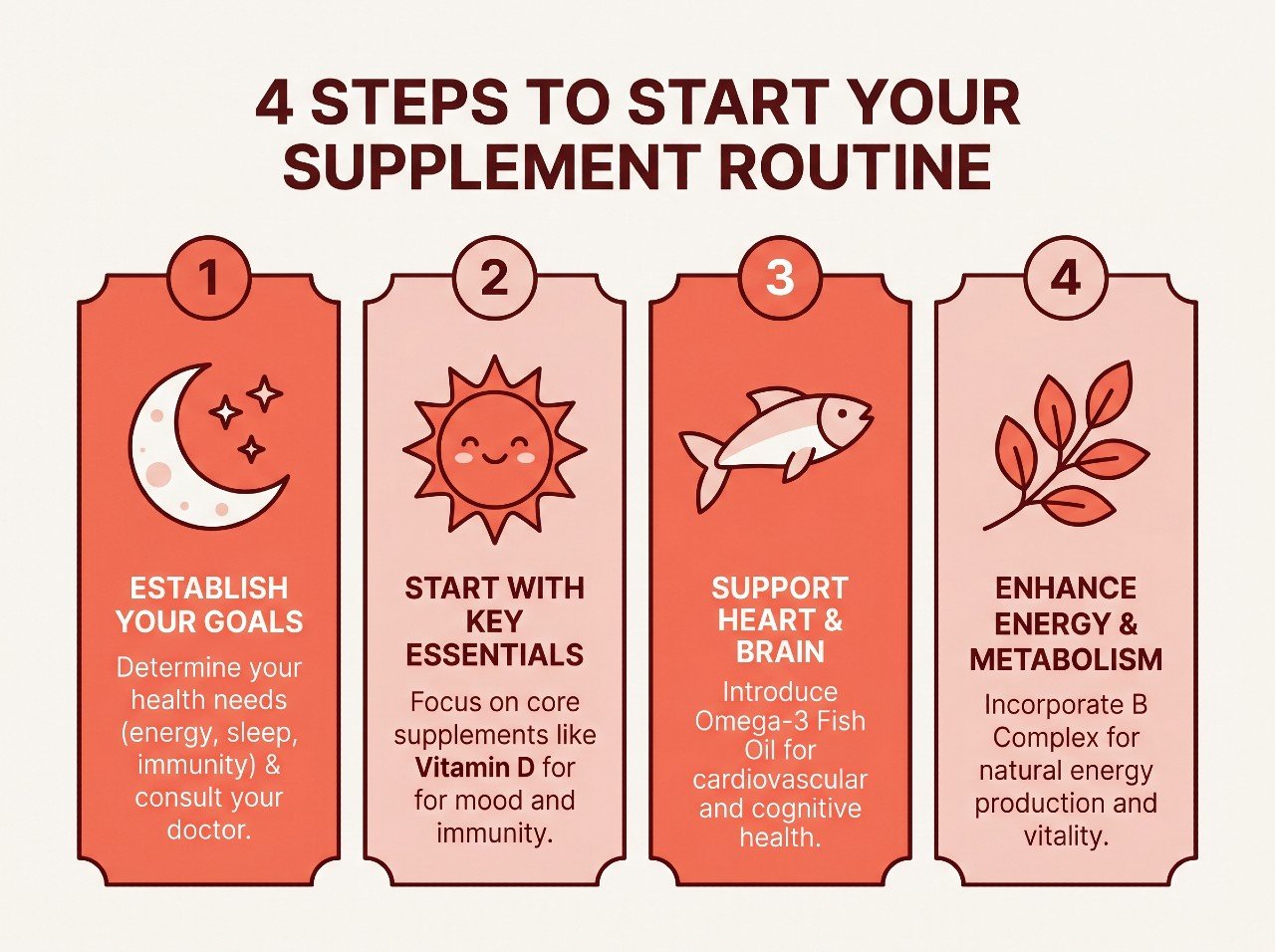
If you're new to perimenopause supplementation and you don't know where to begin, start with the "Foundation Four":
- Vitamin D3 + K2: get tested, start at 1,000–2,000 IU D3 daily
- Magnesium glycinate: 300mg at night
- Omega-3 EPA+DHA: 1–2g daily with food
- B-complex (methylated): one capsule each morning
Once you've run these for 8–12 weeks and your basics are covered, consider adding ashwagandha if stress and anxiety are major issues, or maca if libido and energy are the priority.
This is exactly what most integrative practitioners recommend: fix the deficiencies first, then layer in adaptogens and herbals once your foundation is solid.
Understanding which foods trigger belly fat during perimenopause can also complement your supplement routine by reducing the inflammatory load your body manages.
Want more evidence-based strategies for navigating perimenopause? Subscribe to our newsletter for tips on nutrition, movement, and hormonal health, delivered straight to your inbox, no jargon required.
Want The Habits Behind Lasting Weight Loss? Get the free guide: 10 research-backed habits that help women lose body fat and keep it off, with no extreme diets. Send Me The Free Guide.
The Bottom Line
Perimenopause can feel like your body has turned against you overnight. The fatigue is real. The brain fog is real. The hot flashes at 3 am are very, very real. And the supplement aisle can feel more like a minefield than a solution.
Here's what we know: magnesium, vitamin D, omega-3s, and a good B-complex are the most evidence-backed starting point for most perimenopausal women. Ashwagandha and maca add meaningful support for stress and hormonal adaptation. Black cohosh? Proceed with caution and low expectations.
The WLBF approach is simple: prioritise evidence, fix deficiencies before adding extras, and remember that supplements support your body; they don't replace a strong nutrition foundation and an active lifestyle.
You're not overreacting. Your body is navigating real biological change, and giving it targeted support is not weakness. It's wisdom.
Glossary Of Key Terms
- Adaptogen: A natural substance, such as Ashwagandha, that helps the body adapt to stress and exerts a normalizing or balancing effect on bodily processes.
- Cortisol: A primary stress hormone that often spikes or becomes more sensitive during perimenopause, contributing to anxiety and abdominal fat storage.
- Estradiol: The strongest form of estrogen in the body; its levels fluctuate and eventually decline during the transition to menopause.
- Magnesium Glycinate: A highly absorbable form of magnesium bound to the amino acid glycine, preferred for its high tolerability and effectiveness for sleep and stress.
- Methylation: A biochemical process involved in nutrient absorption; "methylated" supplements (like methylfolate) are pre-converted forms that the body can use more easily.
- Omega-3 Fatty Acids (EPA/DHA): Essential fats found in fish oil that support heart health, reduce inflammation, and improve mood and vasomotor symptoms.
- Perimenopause: The transitional phase preceding menopause characterized by erratic hormonal changes and a variety of physical and emotional symptoms.
- Triglyceride Form: A specific molecular structure of fish oil that is better absorbed by the human body compared to the synthetic ethyl ester form.
- Vasomotor Symptoms: Symptoms related to the constriction and dilation of blood vessels, most commonly manifesting as hot flashes and night sweats.
- WLBF Evidence Tier System: A four-tier ranking used to categorize supplements based on the reliability and volume of clinical research supporting their claims.
FAQ
What Are The Most Effective Perimenopause Supplements?
The most evidence-backed supplements for perimenopause are magnesium glycinate, vitamin D3 with K2, omega-3 fatty acids (EPA+DHA), and a methylated B-complex. These four address the most common deficiencies and biological changes that occur during hormonal transition: disrupted sleep, bone density loss, mood changes, and declining nutrient absorption. Ashwagandha and maca root add meaningful support for cortisol regulation and libido, respectively, though the evidence base is slightly less robust. Always talk to your GP or a registered nutritionist before starting a new supplement regimen, as individual needs vary significantly.
When Should I Start Taking Perimenopause Supplements?
There's no single "right" age, but many women begin noticing perimenopausal symptoms in their early-to-mid 40s, and some as early as their late 30s. If you're experiencing irregular periods, poor sleep, mood changes, or brain fog, it's worth having a conversation with your healthcare provider about testing nutrient levels (especially vitamin D, B12, and iron) before reaching for supplements. Deficiency-focused supplementation tends to produce the most noticeable results.
Can Perimenopause Supplements Help With Weight Gain?
No supplement directly causes fat loss. But they can support the conditions that make maintaining a healthy weight harder during perimenopause. Magnesium supports better sleep, and poor sleep is directly linked to increased hunger and fat storage. Omega-3s reduce inflammation, which is associated with insulin resistance. Ashwagandha may lower cortisol, reducing stress-driven fat accumulation around the abdomen. Combined with a good fat-loss supplement strategy and a solid nutrition plan, the right core supplements can make a meaningful difference.
Is It Safe To Take Multiple Perimenopause Supplements At The Same Time?
Generally, yes, but there are interactions to be aware of. Vitamin D and K2 should always be taken together. High-dose zinc can deplete copper, so if you supplement zinc, consider a multi that includes copper. Ashwagandha can affect thyroid medication and immunosuppressants. Always review your full supplement stack with a healthcare provider, especially if you're taking prescription medications.
Do Perimenopause Supplements Work Without Hormone Replacement Therapy (HRT)?
Yes, for many women, targeted supplementation significantly reduces symptom severity without HRT. However, it's important to be honest: for severe vasomotor symptoms (frequent, intense hot flashes) or significant quality-of-life disruption, HRT remains the most effective evidence-based treatment. Supplements and HRT are not mutually exclusive. Many women use both. The goal is finding what works for your body and your life.
How Long Do Perimenopause Supplements Take To Work?
This varies by supplement and symptom. Magnesium can improve sleep quality within 1–2 weeks. Vitamin D deficiency correction typically takes 2–3 months to fully reflect in blood levels. Omega-3 studies typically run for 8–12 weeks before measuring outcomes. Ashwagandha trials consistently show benefits at 8 weeks. Give any new supplement at least 8 weeks before evaluating its effect. Track your symptoms in a journal to see genuine change rather than relying on memory.
What Should I Look For On A Supplement Label?
Third-party testing certification (NSF, USP, or Informed Sport) confirms that what's on the label is actually in the capsule. Look for specific extract names (KSM-66 for ashwagandha, methylcobalamin for B12, triglyceride-form for omega-3). Avoid proprietary blends where individual doses aren't disclosed. Capsules are generally better than tablets for absorption. For women concerned about quality, it's worth spending a bit more on a reputable brand rather than buying the cheapest option on the shelf.