
Menopause Diet 5-Day Plan: A Realistic, Science-Backed Reset That Cuts Bloat Fast And Builds Habits That Actually Last
Pooja Mottl
Author
Healthy eating isn't about counting fat grams, dieting, cleanses and antioxidants; it's about eating food untouched from the way we find it in nature in a balanced way.
Summary (TL;DR)
A Menopause Diet 5-Day Plan won't melt belly fat in five days, and any site promising that is selling you a fantasy. What it can do is reset your eating around protein, fiber, and steady blood sugar, cut bloat fast, and build the habits that drive real fat loss of roughly half a pound to a pound a week afterwards. Here's the honest plan, the science, and what week one actually looks like.
Here's the truth no one puts in the headline: you can do everything "right" for five days and still feel cheated when the scale barely moves. If that's you, you're not failing. Your biology changed, and the old rules stopped working. A Menopause Diet 5-Day Plan is one of the smartest ways to restart, but only if you know what it's actually for.
After menopause, your body quietly rewrites where it stores fat. Visceral fat, the deep belly fat wrapped around your organs, climbs from 5 to 8 percent of total body fat before menopause to 15 to 20 percent after. That's not a willpower problem. That's a hormone problem.
So let's reframe the whole thing. Five days is a primer, not a finish line. It's the on-ramp that gets protein, fiber, and stable energy back into your day, calms the bloat, and proves to you that progress is still possible. This guide walks you through the plan day by day, shows you what real results look like, and gives you a simple system to keep them going.
Medical & Referral Disclaimer
This article is for educational and informational purposes only. It is not medical advice and is not a substitute for guidance from a qualified healthcare professional. Every woman's body, health history, and menopause experience are different. Before starting any new eating plan, supplement, or exercise routine, please talk with your doctor or a registered dietitian, especially if you have a medical condition or take medication.
Key Takeaways
- A 5-day plan is best used as a metabolic reset and habit primer, not a fat-loss sprint. Real, lasting fat loss runs about 0.5 to 1 pound per week afterward.
- Most women notice reduced bloating and water weight in the first week, which is encouraging but not the same as fat loss.
- After menopause, visceral belly fat rises from 5 to 8 percent up to 15 to 20 percent of total body fat as estrogen drops.
- Women lose muscle at 3 to 8 percent per decade after age 30, which is why protein is the anchor of any menopause plan.
- Research suggests women in this stage aim for roughly 1.1 to 1.5 grams of protein per kilogram of body weight daily to protect lean mass.
- Most women eat only 10 to 15 grams of fiber a day, well short of the 25-gram target linked to better metabolic health.
- Our Plate Reset method (Protein-anchor, Fiber-fill, Sugar-steady) keeps the plan simple enough to repeat for life.

What Is The Menopause Diet 5-Day Plan?
The Menopause Diet 5-Day Plan is a short, structured eating reset built around protein, fiber, and steady blood sugar to help women manage menopausal weight gain. It is not a crash diet. Think of it as a five-day primer that reduces bloat, stabilises energy, and installs the habits that drive real fat loss afterward.
Most plans you'll find online hand you five days of meals and imply the pounds will follow. The food advice is usually fine. The promise is where they lose you.
Here's the honest version. Five days is long enough to change how you feel, calm digestion, and break the sugar-crash cycle. It's not long enough to lose meaningful body fat, and that's by design. The point is to give your body a clean, repeatable template you can run again and again.
A registered dietitian speaking to TODAY explained that a menopause-focused plan works by stabilising hormones with nutrient-dense whole foods, not by slashing calories to nothing. That distinction matters. Starvation backfires in menopause, because it accelerates the very muscle loss you're trying to prevent.
So if you came here hoping to lose ten pounds by Friday, take a breath. You're about to get something better: a plan that works with your changed body instead of against it.
Why Does Menopause Change How Your Body Stores Fat?
As estrogen declines, fat migrates from your hips and thighs to your belly. Estrogen normally helps store fat in subcutaneous areas and limits deep visceral fat. When it drops, that protection fades, so more fat lands around your midsection even if your weight barely changes.
This is the part most diets skip, and it's the part that finally makes things make sense.

Estrogen does quiet metabolic work behind the scenes. Research shows it helps expand safer subcutaneous fat while inhibiting the growth of visceral fat depots. As levels fall through perimenopause and beyond, that brake comes off. The result is the stubborn belly fat so many women describe appearing "out of nowhere."
There's a second force at play: muscle. Women naturally lose muscle mass at a rate of 3 to 8 percent per decade after age 30, and menopause speeds that decline. Less muscle means a slower resting metabolism, so the calories that used to vanish now linger.
Then there's appetite. Scientists describe a "protein leverage" effect, where the body's rising need for protein can quietly push you to eat more food overall until that protein need is met. In plain terms: under-eat protein, and your hunger stays switched on.
Put it together, and you get a clear picture. This isn't about trying harder. It's about understanding why weight loss feels harder now and then choosing food that targets the real levers: protein to protect muscle, fiber to steady blood sugar, and whole foods to calm the system.
| What Changes In Menopause | Why It Drives Weight Gain | What Your Plan Should Do |
|---|---|---|
| Estrogen declines | Fat shifts to the belly (visceral) | Prioritise whole foods, reduce added sugar |
| Muscle mass drops 3–8% per decade | Resting metabolism slows | Anchor every meal with protein |
| Protein need rises | Appetite stays elevated | Hit a real daily protein target |
| Cortisol tends to climb | More belly-fat storage, more cravings | Protect sleep, manage stress |
| Insulin sensitivity falls | Blood sugar swings, more hunger | Pair carbs with fiber and protein |
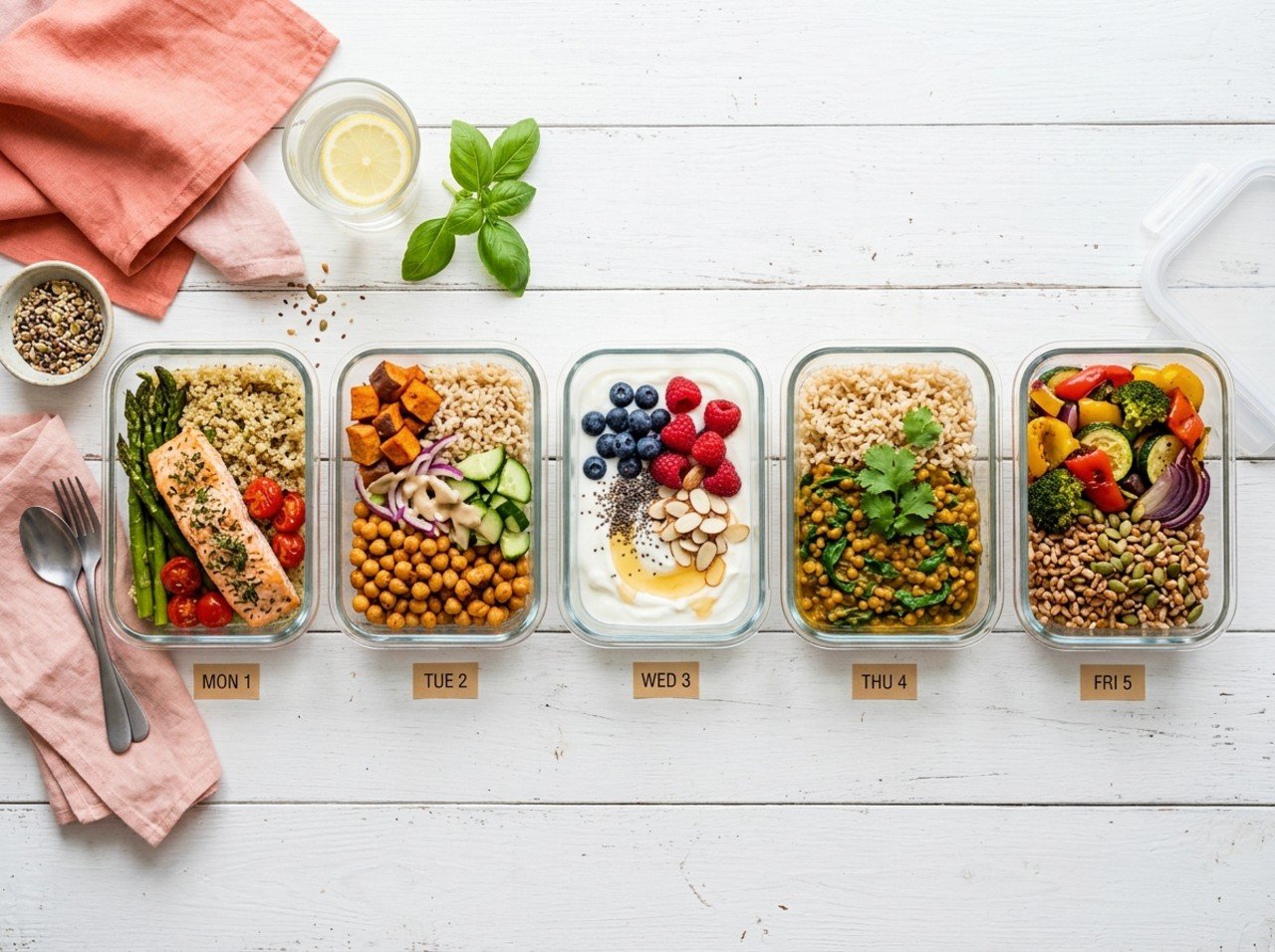
The Menopause Diet 5-Day Plan, Day By Day
Now the practical part. The whole plan runs on one simple idea we call the Plate Reset: every meal gets a Protein-anchor, a Fiber-fill, and a Sugar-steady swap. Get those three right and the rest takes care of itself.
You don't need to weigh every gram. You need a target and a template. Aim for roughly 25 to 30 grams of protein per meal to land near the 1.1 to 1.5 grams per kilogram of body weight that research links to preserved lean mass, and build toward 25 grams of fiber a day, since most women only manage 10 to 15 grams.
| Day | Breakfast (Protein-Anchor) | Lunch (Fiber-Fill) | Dinner (Sugar-Steady) | Why It Works |
|---|---|---|---|---|
| 1 | Greek yogurt, berries, chia seeds | Lentil and spinach soup, side salad | Grilled salmon, roasted broccoli, quinoa | Front-loads protein and fiber; omega-3s calm inflammation |
| 2 | Veggie omelette, avocado | Chickpea and kale grain bowl | Chicken stir-fry, mixed vegetables | Steady energy, no mid-afternoon crash |
| 3 | Cottage cheese, walnuts, sliced pear | Tuna and white bean salad | Turkey chilli with peppers and beans | High fiber supports gut and blood sugar |
| 4 | Tofu scramble, whole-grain toast | Quinoa tabbouleh, grilled chicken | Baked cod, sweet potato, green beans | Plant protein variety, slow carbs |
| 5 | Protein smoothie, spinach, flaxseed | Lentil curry, brown rice | Lean beef or tempeh, roasted vegetables | Reinforces the new habit pattern |
A few ground rules that make it stick:
- Drink water before you reach for a snack, because thirst often masquerades as hunger.
- Build meals around the plate, not the scale. Half vegetables, a quarter protein, a quarter whole-grain or starchy veg.
- And lean on a higher-protein eating plan as your default beyond these five days, not just during them.
One honest note on hunger. If you feel ravenous, eat more protein and vegetables. Being hungry is not a sign the plan is working. It's a sign you're underfeeding the body that's trying to hold onto muscle.



What Real Results Look Like On The Menopause Diet 5-Day Plan To Lose Weight
In five days, expect to feel lighter, not dramatically thinner. Most women see reduced bloating and water weight in week one, which is real and motivating but is not fat loss. Genuine fat loss begins after two to three weeks of consistent eating and runs about half a pound to one pound per week.
This is the section the listicles won't give you straight, so here it is.
Week one is mostly about water and digestion. When you cut ultra-processed food and added sugar and load up on fiber, your body sheds retained water, and your gut calms down. The scale may dip two or three pounds. That feels fantastic. It's also not yet body fat, and knowing that protects you from the crushing disappointment of regaining it when you eat a salty meal.
Real fat loss is slower and steadier. A sustainable rate during menopause is up to about one pound per week, and that's a good number, not a disappointing one. Slow fat loss is what protects your muscle and keeps the weight off.
For context, when women followed a menopause-friendly approach for longer, results compounded. In one study pairing a Mediterranean-style diet with light activity, postmenopausal women lost an average of 2.3 kilograms of fat mass while preserving muscle. That's the prize, and it comes from weeks, not days.
So here's the mindset that wins: treat day five as a graduation, not an ending. You've reset your plate and proven you can do it. Now you repeat it. The honest math says even a half-pound week, held for a few months, reshapes your year. Seventy percent consistency still moves you forward. Perfect is not the goal. Repeatable is.
| Timeframe | What's Realistic | What It Actually Is |
|---|---|---|
| Days 1–5 | Less bloating, more energy, scale down 1–3 lb | Mostly water and reduced inflammation |
| Weeks 2–3 | Fat loss begins, clothes fit better | Early, genuine body-fat reduction |
| Weeks 4–12 | ~0.5–1 lb fat loss per week, visible change | Sustainable, muscle-sparing fat loss |
| 3 months + | Meaningful body recomposition | Lasting change from repeated habits |
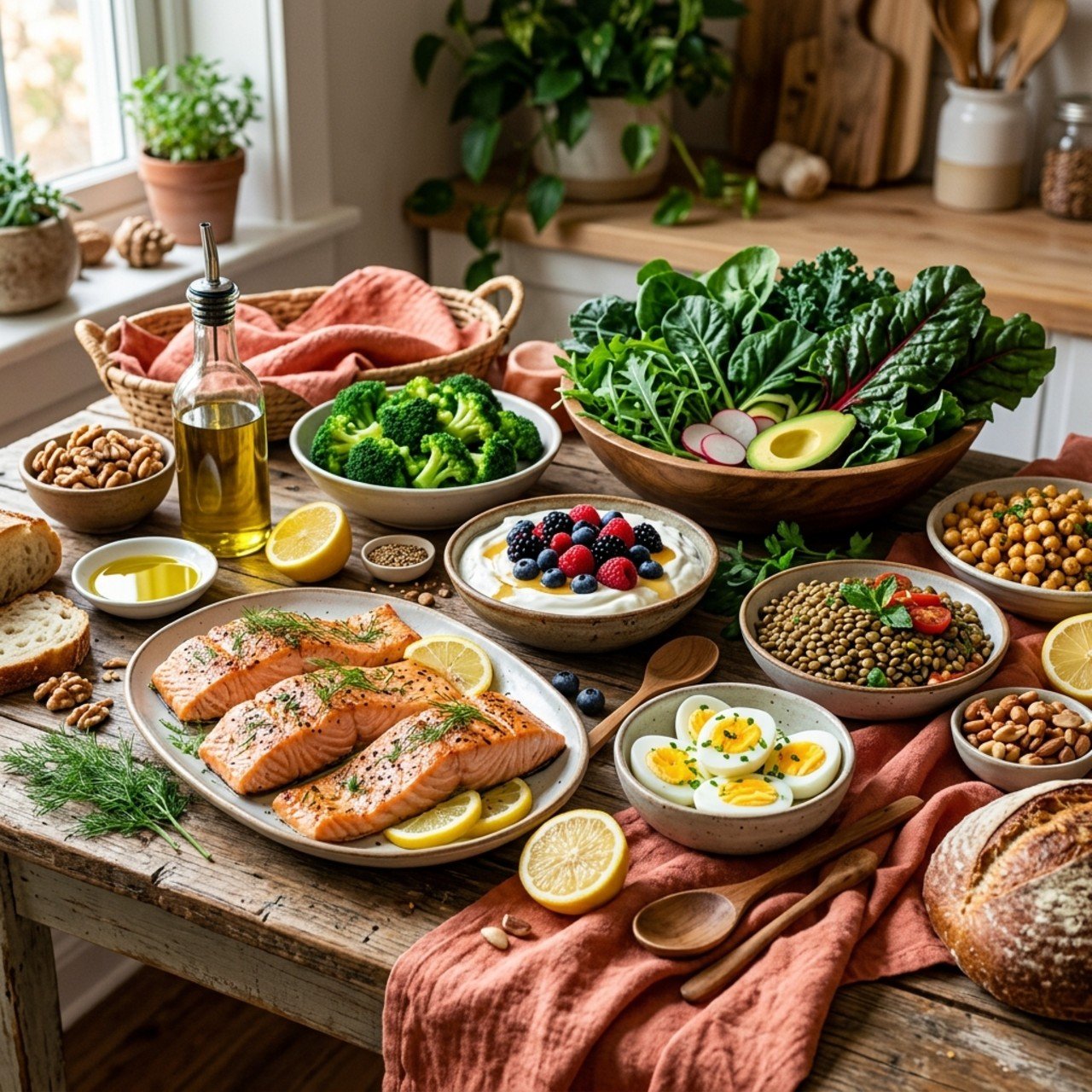
Which Foods Actually Move The Needle?
Not all "healthy" foods pull equal weight in menopause. A few categories do the heavy lifting, and a few quietly work against you.
The strongest evidence points to a Mediterranean-style pattern. A systematic review of intervention studies found it improved weight, blood pressure, triglycerides, and cholesterol in menopausal women. It's not a fad. It's the most studied eating pattern for women your age.
Protein quality matters too, not just quantity. A 2025 analysis noted that plant-protein-rich diets were linked with lower body weight, so mixing sources like lentils, tofu, beans, fish, and lean meat is a smart hedge. Fiber is the unsung hero: women who eat the most of it tend to have a better overall metabolic profile and lower risk of metabolic syndrome.
For everyday swaps, this perimenopause food guidance from Healthline lines up well with the plan. And if you want the deeper list of culprits, see our breakdown of foods that drive belly fat.
| Foods That Move The Needle | Why They Help | Ease Off On | Why It Hurts |
|---|---|---|---|
| Fish, eggs, Greek yogurt | Protein to protect muscle | Sugary drinks and juice | Spikes blood sugar, fuels cravings |
| Lentils, beans, chickpeas | Plant protein plus fiber | Refined white carbs | Fast crash, more hunger |
| Leafy greens, broccoli | Fiber, low calorie, filling | Ultra-processed snacks | Easy to overeat, low satiety |
| Olive oil, nuts, seeds | Healthy fats, satiety | Alcohol (more than occasional) | Empty calories, disrupts sleep |
| Berries, pears, apples | Fiber-rich natural sweetness | Packaged "diet" treats | Often high in added sugar |
If you'd like a fuller framework beyond these five days, our guide to the best diet for women over 40 expands the same principles into a long-term plan.
Join Our Mailing List
Join thousands of women inside our community and receive our free guide, 10 Actions That Support Permanent Weight Loss — the exact behavioural shifts that make the difference between a two-week attempt and a lasting transformation.
No restriction plans. No guilt. Just what actually works — for real women with real lives.
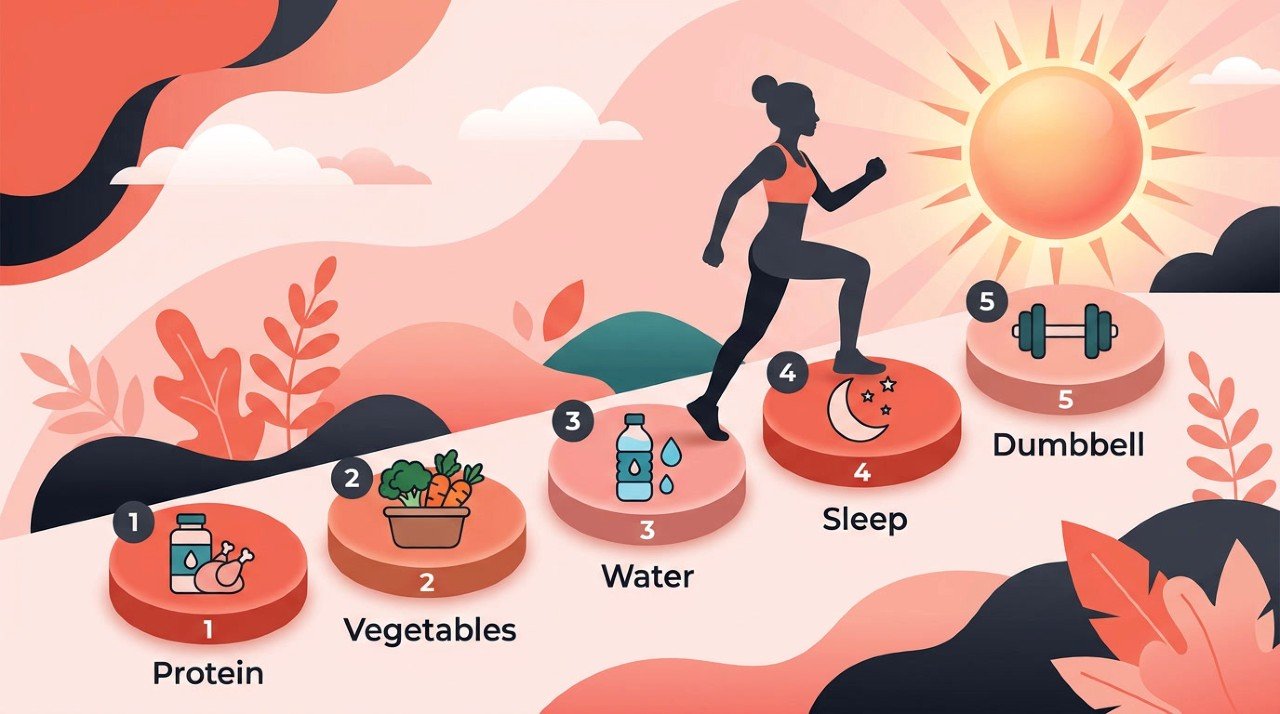
How Do You Keep The Results After Day 5?
Keep your results by treating the 5-day plan as a repeatable template and supporting it with sleep, stress management, and strength training. Diet alone fades. The women who hold their progress protect their muscle and their cortisol, not just their plate.
This is where short plans usually fall apart, so let's build the bridge:
- First, sleep. It's not a luxury here; it's a fat-loss tool. Poor sleep raises hunger hormones and keeps cortisol elevated, and visceral fat cells carry more cortisol receptors than fat elsewhere, which is exactly why stress lands on your belly. Our guide on how stress fuels belly fat goes deeper on breaking that loop.
- Second, muscle. Food protects the muscle you have; resistance training builds more. Even two short sessions a week pay off. Start with our beginner-friendly approach to strength training in perimenopause, because more muscle means a faster metabolism that works for you around the clock.
- Third, repeat the plate, don't restart from zero. The Plate Reset isn't a five-day event. It's your new normal. Run it loosely on busy weeks, tightly when you want a reset, and forgive the off days. You don't need willpower. You need a system you can come back to.
You don't have to figure it out alone. Get our free menopause-friendly meal guide and tips sent straight to your inbox, and turn these five days into a strategy that actually sticks. Grab your free copy here and start building the leaner, stronger, more energised version of you that's already on her way.
The Bottom Line
A Menopause Diet 5-Day Plan is a brilliant beginning and a terrible ending. In five days, you'll cut bloat, steady your energy, and prove to yourself that your body still responds.
The real wins - fat loss of half a pound to a pound a week - come when you repeat the plate, protect your muscle, and guard your sleep. This isn't about doing more. It's about doing the right things, consistently, with a body you finally understand.
Glossary Of Key Terms
- Visceral Fat: Deep belly fat that wraps around internal organs; its percentage of total body fat significantly increases following the decline of estrogen.
- Subcutaneous Fat: Fat stored just under the skin, typically in the hips and thighs, which estrogen helps maintain before the onset of menopause.
- Protein-anchor: A core component of the Plate Reset method that involves including 25–30 grams of protein per meal to protect muscle and manage appetite.
- Fiber-fill: A strategy of using high-fiber foods (like lentils and leafy greens) to support gut health, stabilize blood sugar, and reduce the risk of metabolic syndrome.
- Sugar-steady: The practice of choosing slow-digesting carbohydrates and avoiding refined sugars to prevent insulin spikes and subsequent hunger crashes.
- Protein Leverage Effect: A biological mechanism where the body remains hungry and continues to drive food intake until its specific daily protein needs are satisfied.
- Metabolic Reset: A short-term dietary shift (like the 5-day plan) designed to break sugar cycles, reduce inflammation, and establish healthy habits rather than achieve immediate fat loss.
- Mediterranean-style Pattern: A studied eating habit rich in fish, healthy fats, and plant proteins that is linked to improved cholesterol and reduced menopausal symptom severity.
- Body Recomposition: The process of losing body fat while simultaneously preserving or building lean muscle mass for a stronger, more energized physique.
- Cortisol: A stress hormone that, when elevated due to lack of sleep or high stress, encourages the body to store fat specifically in the abdominal region.
FAQ
How Much Weight Can You Realistically Lose In 5 Days On A Menopause Diet?
Realistically, expect to lose one to three pounds in five days, and most of that is water weight and reduced bloating rather than body fat. That's still a genuine, encouraging result, because it shows your body is responding. True fat loss begins after about two to three weeks of consistent eating and runs around half a pound to one pound per week. The 5-day plan is best seen as a reset that launches that slower, lasting process.
Is The Menopause Diet 5-Day Plan Safe?
For most healthy women, an eating plan built on whole foods, lean protein, vegetables, and fiber is very safe and nutritious. It avoids extreme restriction, which is the dangerous part of crash diets. That said, if you have diabetes, heart disease, kidney issues, or take medication, check with your doctor or a registered dietitian first. The goal is to nourish your body, not starve it, so the plan should leave you satisfied, not depleted.
What Should You Eat For Breakfast On A Menopause Diet?
Build breakfast around 25 to 30 grams of protein plus fiber to steady your blood sugar for hours. Good options include Greek yogurt with berries and chia seeds, a veggie omelette with avocado, or cottage cheese with walnuts and fruit. Protein at breakfast curbs the mid-morning crash and the cravings that follow. Starting your day this way also helps you hit the daily protein target that protects your muscle during menopause.
Do You Have To Cut Out Carbs To Lose Menopause Belly Fat?
No, you don't need to cut carbs out; you need to choose better ones and pair them well. Refined carbs and added sugar spike blood sugar and fuel cravings, so those are worth reducing. Fiber-rich carbs like beans, lentils, quinoa, and vegetables actually support weight loss and gut health. The smart move is to pair any carb with protein and fiber, which slows digestion and keeps your energy steady.
How Much Protein Do Women In Menopause Actually Need?
Research suggests women in and after menopause aim for roughly 1.1 to 1.5 grams of protein per kilogram of body weight daily to help preserve lean muscle. For many women that lands near 25 to 30 grams per meal. This is higher than the old general guideline because menopause accelerates muscle loss. Spreading protein across the day, rather than loading it all at dinner, helps your body use it most effectively.
Will The Menopause Diet Help With Hot Flashes Too?
It may. Beyond weight, fiber-rich eating has been linked with fewer menopausal symptoms. In one large study, women eating the most fiber, at least 25 grams a day, had about a 20 percent lower risk of moderate to severe hot flashes than those eating the least. A Mediterranean-style pattern has also been associated with lower symptom severity. So the same plan that supports your waistline may ease other parts of the transition.
Why Am I Not Losing Weight In Menopause Even When I Eat Well?
This is one of the most common and most frustrating experiences, and it's usually not your fault. Declining estrogen, muscle loss, elevated cortisol, and poor sleep can all stall the scale even when your diet looks perfect. Often the fix isn't eating less; it's eating more protein, building muscle, and protecting sleep. If you'd like a deeper dive, see our guide to losing weight without starving yourself during this stage.