
The Hormone Science Behind Stress Belly, And The Practical Protocol To Finally Shift It
Lou Holtz
Football Coach and Author
It's not the load that breaks you down, it's the way you carry it.
Summary (TL;DR)
Chronic stress raises cortisol, and cortisol tells your body to store fat — specifically in your belly. Visceral fat carries four times more cortisol receptors than fat anywhere else, making your midsection the first target.
For women, hormonal fluctuations during the menstrual cycle and perimenopause make this significantly worse. This post explains the exact biology, why women are hit harder, and a seven-step cortisol-lowering protocol backed by research.
You've cleaned up your nutrition. You're showing up to your workouts. So why is your belly getting rounder, not smaller?
Here's something most fitness content skips right over: if you're carrying chronic stress, cortisol and belly fat may be more connected than anything on your plate. Cortisol, your body's primary stress hormone, doesn't just make you feel anxious. It actively instructs your body to store fat, and it has a particular preference for your midsection.
This isn't about eating more than you should. It's about what's happening inside your body every time your nervous system stays stuck in "threat mode." And for women, the hormonal landscape makes the cortisol-fat connection uniquely powerful.
Your estrogen, progesterone, and cortisol don't operate in isolation. They interact in ways that can dramatically amplify the belly fat problem, especially as you move through your 30s, 40s, and beyond.
The good news is that this is biology. And biology has solutions. Once you understand what's happening, you can work with your body instead of endlessly fighting it.
Medical & Referral Disclaimer
The information in this article is for educational purposes only and does not constitute medical advice. Cortisol levels, hormonal health, and weight management are complex and individual. If you suspect a hormonal imbalance or have been diagnosed with a condition such as Cushing's syndrome, PCOS, or adrenal dysfunction, please consult a qualified healthcare provider before making changes to your routine.
Key Takeaways
- Cortisol is your primary stress hormone, and chronic elevation directly triggers fat storage in your belly.
- Visceral fat (deep abdominal fat) has 4x more cortisol receptors than subcutaneous fat, making it the primary target for stress-driven weight gain.
- Women report higher average stress levels than men (5.3 vs. 4.8 out of 10, per the APA 2025 Stress in America survey).
- High-stress adults are twice as likely to develop metabolic syndrome, which includes excess belly fat, elevated blood sugar, and high blood pressure.
- Cortisol raises blood sugar, then crashes it, triggering cravings for high-fat, high-sugar foods — especially in the premenstrual phase of your cycle
- In perimenopause, declining estrogen removes the hormonal buffer that normally counteracts cortisol's fat-storage effects.
- Moderate-intensity exercise lowers cortisol; high-intensity training above 60% effort can spike it further if you're already chronically stressed.
- A consistent sleep schedule, blood sugar stability, and daily stress recovery practices are the three highest-impact changes you can make.
Why Stress Belly Is Real, And Why Women Get It More
Let's start with the evidence, because "stress belly" isn't a wellness myth. It's measurable biology.
Research conducted at Yale University found that non-overweight women who were more vulnerable to stress had significantly more belly fat and measurably higher cortisol levels than their less-stressed peers. Not women who overate. Not women who were sedentary. Women who, by every conventional measure, looked like they "should" have flat stomachs. The only meaningful difference was their cortisol.
According to the American Psychological Association's 2025 Stress in America survey, nearly three in four US adults report physical or emotional symptoms of chronic stress. Women average a stress score of 5.3 out of 10 compared to 4.8 for men. That gap sounds small. Its biological consequences are not.
A 2022 study published in JAMA Psychiatry found that people living under sustained high stress were twice as likely to develop metabolic syndrome, a cluster of conditions that includes excess abdominal fat, elevated blood sugar, and high blood pressure.
You don't have to be clinically stressed to feel these effects. Everyday modern life, work deadlines, family demands, financial pressure, and poor sleep are enough to keep cortisol chronically elevated for millions of women.
Part of why women are hit harder comes down to hormonal architecture. Estrogen normally buffers some of cortisol's fat-storage effects, particularly around the midsection. When cortisol rises, it interacts with estrogen and progesterone in ways that can amplify the metabolic damage beyond what men experience. Add in the monthly hormonal fluctuations of the menstrual cycle, and the cortisol picture becomes even more complex for women.

What Does Cortisol Actually Do To Your Body?
Cortisol is your body's primary stress hormone, produced by your adrenal glands in response to any perceived threat.
When it rises, your body raises blood sugar for quick energy, slows digestion, suppresses reproduction, increases heart rate, and shifts fat storage toward the abdomen. It's a brilliant short-term survival system. The problem is that modern stress keeps it chronically elevated, turning a short-term emergency response into a long-term fat-storage signal.
Here's how the system is supposed to work. You face a stressor (a deadline, a conflict, a near-miss on the motorway). Your hypothalamus signals your adrenal glands. Cortisol floods your bloodstream. Your body redirects resources toward immediate survival: blood sugar spikes to fuel your muscles, heart rate increases, and non-essential functions like digestion and reproduction are temporarily shut down. Once the threat passes, cortisol drops, and you recover.
That whole sequence is supposed to last minutes. Maybe hours.
But when stress becomes chronic — when the threat never fully goes away — cortisol stays elevated day after day. A comprehensive 2025 review published in Clinical Obesity confirmed that prolonged glucocorticoid exposure, cortisol being the primary one, is increasingly and robustly linked to obesity development. The review places the HPA axis (the hormonal pathway that produces cortisol) at the centre of how chronic stress disrupts metabolism and fat distribution.
At the same time, chronically elevated cortisol disrupts your sleep, suppresses your immune system, impairs your mood, and reduces your motivation to exercise. It's not that stressed women are making bad choices. It's that their biology is actively working against them.

Why Does Cortisol Target Your Belly Specifically?
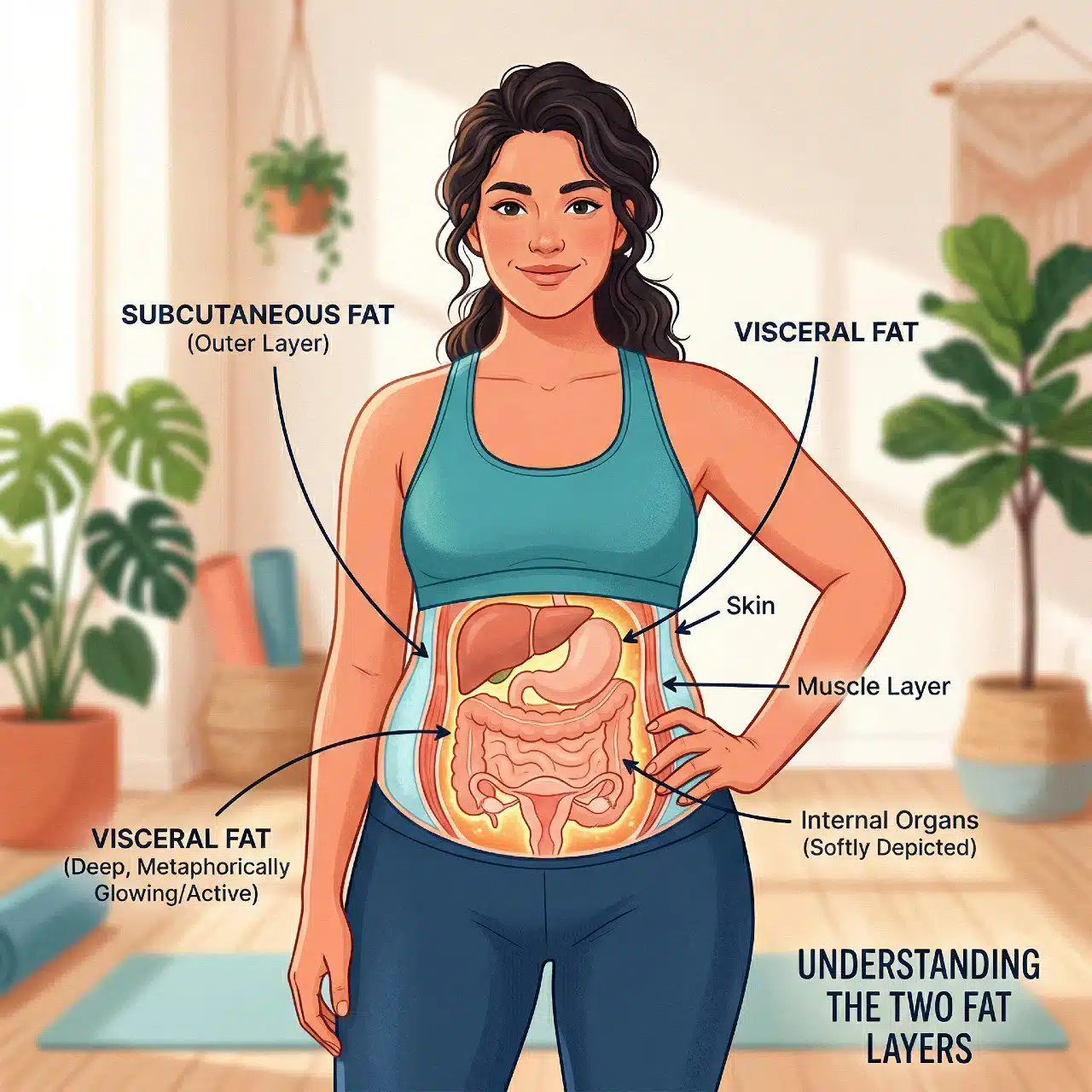
Visceral fat, the deep abdominal fat surrounding your internal organs, carries approximately four times more cortisol receptors than the fat stored just under your skin.
When cortisol levels rise, it binds directly to those receptors and signals those fat cells to grow and retain fat. This is why your waistline becomes the primary destination for stress-driven fat storage, regardless of where else on your body you might typically gain weight.
This is the detail that changes everything for most women.
All fat cells have cortisol receptors. But visceral adipose tissue has a dramatically higher receptor density than subcutaneous fat (the fat you can pinch). When cortisol rises, it floods those receptors. The message it sends is unambiguous: store fat here, and protect it.
The mechanism goes deeper than receptor density. Cortisol activates an enzyme called lipoprotein lipase specifically in visceral fat cells. Lipoprotein lipase is essentially a fat-storage enzyme, and cortisol cranks it up precisely where you least want it.
Visceral fat is also the most metabolically dangerous kind. Unlike subcutaneous fat, which sits passively under the skin, visceral fat is biologically active. It releases inflammatory compounds and hormones that worsen insulin resistance, disrupt cholesterol balance, and increase the risk of heart disease and type 2 diabetes. So cortisol belly isn't just a cosmetic issue. It's a health issue.
If you've been working hard to reduce belly fat and are hitting a wall, this is the science that explains why standard approaches often fall short for chronically stressed women.
Visceral Vs. Subcutaneous Fat: What Makes Cortisol Belly Different
| Feature | Visceral Fat | Subcutaneous Fat |
|---|---|---|
| Location | Deep, surrounding organs | Under the skin |
| Cortisol receptors | ~4x higher density | Lower density |
| Response to stress | Grows and holds on aggressively | Less cortisol-sensitive |
| Metabolic impact | High — drives inflammation, insulin resistance | Lower metabolic activity |
| Visibility | Causes abdominal protrusion | Can be felt, pinched |
| Primary driver | Hormonal (cortisol, insulin) | Caloric surplus |
The Stress-Eating Cycle That's Keeping You Stuck
Elevated cortisol raises your blood sugar, which then crashes quickly — triggering cravings for high-fat, high-sugar comfort foods. Cortisol also suppresses your satiety signals and increases ghrelin, the hunger hormone.
The result is a biological pull toward the exact foods that worsen belly fat, and this pull is strongest during the luteal phase of your menstrual cycle, when cortisol is already elevated, and stress resilience is at its lowest.
This is not a willpower problem. It's a hormone problem.
Here's the sequence. Cortisol rises and pushes glucose into your bloodstream (your body preparing for fight or flight). You're not actually running from a threat, so that glucose doesn't get used. Insulin spikes to manage the blood sugar. Then, blood sugar crashes. Your brain, sensing low fuel, demands fast energy. Cue: the 3 pm biscuit craving, the late-night snack raid, the decision you couldn't explain in the morning.
A prospective PMC study tracking food cravings and cortisol levels over six months found that higher cortisol levels directly predicted greater food cravings and weight gain. This isn't a correlation they found by accident. Cortisol binds to receptors in the hypothalamus, the brain's appetite control centre, directly increasing the drive to eat.
For women, this effect is amplified during the luteal phase (roughly days 15-28 of your cycle). During this window, resting cortisol rises naturally, and your brain becomes less resilient to additional stressors. If something goes wrong at work on day 23 of your cycle, you'll feel it harder. And the craving for carbohydrates and comfort foods will be biologically stronger.
This isn't a weakness. It's biology. And if it's costing you weight loss motivation, knowing it's hormonal can help you stop blaming yourself and start building systems instead.
How Chronic Cortisol Affects Hunger And Cravings
| Effect | Mechanism | Result |
|---|---|---|
| Blood sugar spike | Cortisol releases glucose into bloodstream | Short-term energy, followed by crash |
| Blood sugar crash | Insulin overreacts to cortisol-driven glucose | Intense cravings for sugar and fat |
| Ghrelin increase | Cortisol upregulates hunger hormone | Feeling hungry soon after eating |
| Satiety suppression | Cortisol interferes with leptin signalling | Fullness signals arrive late or not at all |
| Reward-seeking | Cortisol activates brain's dopamine system | Strong pull toward high-calorie comfort foods |
| Luteal phase amplification | Rising baseline cortisol pre-period | Cravings and stress reactivity both heightened |
How Perimenopause Makes The Cortisol Problem Worse
If you're in your 40s and feel like stress is hitting your belly harder than it used to, you're not imagining it. The hormonal shift of perimenopause removes a critical buffer.
Estrogen normally counteracts some of cortisol's fat-storage effects, particularly around the midsection. When estrogen interacts with insulin receptors in a balanced way, it helps maintain insulin sensitivity and keeps fat from accumulating preferentially in the visceral zone. As estrogen declines during perimenopause, that buffer disappears. Cortisol's effects become more pronounced and more persistent.
The progesterone piece matters too. Progesterone has natural calming, anti-anxiety properties. It helps counterbalance cortisol and supports restful sleep. When progesterone drops (often before estrogen during perimenopause), many women experience increased anxiety, disrupted sleep, and a heightened stress response. All of which elevates cortisol further. All of which pushes more fat to the abdomen.
Postmenopausal women show greater increases in visceral fat in response to stress than premenopausal women of the same age and weight. It's a compounding effect. Lower estrogen slows your resting metabolic rate. Lower progesterone increases your cortisol reactivity. Chronic stress keeps cortisol elevated. And visceral fat, with its four times higher receptor density, absorbs it all.
This explains why so many women in perimenopause feel like their bodies have suddenly changed the rules. They have. The hormonal context is genuinely different, and the strategies that worked in your 30s may need to be updated.
Cortisol And Weight Gain In Menopause: What Changes After Your Periods Stop
Cortisol does measurably rise during menopause — but not evenly, and not when most women expect it to. It climbs during the late stage of the transition, not around your final period. In the research, that rise tracked women’s hormone levels far more closely than how stressed they said they felt.
That second finding is the one worth sitting with, because it quietly contradicts most of what gets written about cortisol and menopause. In a long-running study of women moving through the transition, overnight urinary cortisol rose from 7 to 12 months before the late transition stage to 7 to 12 months after it began.
There was no equivalent change around the middle stage of the transition, and none around the final menstrual period itself. The rise was specific to the late stage—the window when menstrual irregularity is most unpredictable (Woods et al., Menopause, 2006).
Then came the part that should change how you read your own experience. The women whose cortisol rose did have more severe hot flashes and night sweats than the women whose cortisol stayed flat. But the two groups did not differ in age, body mass index, exercise habits, health practices, mood, sleep, cognition — or in their reported stress levels.
| Stage | What Happens To Cortisol | What It Means |
|---|---|---|
| Middle transition | No measurable stage-linked change | Cortisol is still driven mainly by your life, not your ovaries |
| Late transition | Rises across roughly a two-year window | The stretch where the hormonal contribution is largest |
| Around the final period | No distinct change at this point | The last period is not the trigger most women assume it is |
A follow-up analysis of 132 women, drawing on more than 5,000 individual observations, pointed in the same direction. Overnight cortisol was significantly associated with estrogen, FSH and testosterone levels, and with adrenaline and noradrenaline.

Transition stage, symptoms, social circumstances and self-reported stress had little relationship to cortisol once those biological markers were accounted for (Woods et al., Menopause, 2009).
Why This Is Good News, Not Bad
If you have been quietly blaming yourself for a cortisol problem you cannot seem to fix, this research permits you to stop.
A woman can be sleeping reasonably, exercising sensibly and managing her life competently, and still show a measurable rise in cortisol through the late transition. That is not a failure of stress management. It is a shift in the biological baseline she is managing against.
What it is not, though, is a reason to stop trying. Two things are true at once here, and holding both is the whole skill:
- The baseline moved without your permission. Falling estrogen and rising FSH are not lifestyle variables. You cannot out-discipline them, and the self-criticism that follows from trying is wasted energy.
- The daily inputs still move the needle. Cortisol in that same research tracked closely with adrenaline and noradrenaline — and those are responsive to sleep, caffeine timing, meal spacing and the intensity of your training. The seven steps below act precisely there.
- The hardest stretch is a stretch, not a destination. The rise was specific to the late transition window. It is not a permanent one-way setting that switches on at menopause and stays on.
There is a version of this conversation that tells women their hormones have taken the wheel and nothing they do matters. That version is not supported by the evidence, and it is not useful.
The accurate version is narrower and far more workable: for a defined period, the same effort produces less visible return — so the answer is to keep the inputs steady and stop grading yourself against a body that is mid-renovation.

What Kind Of Exercise Actually Helps (vs Makes It Worse)?
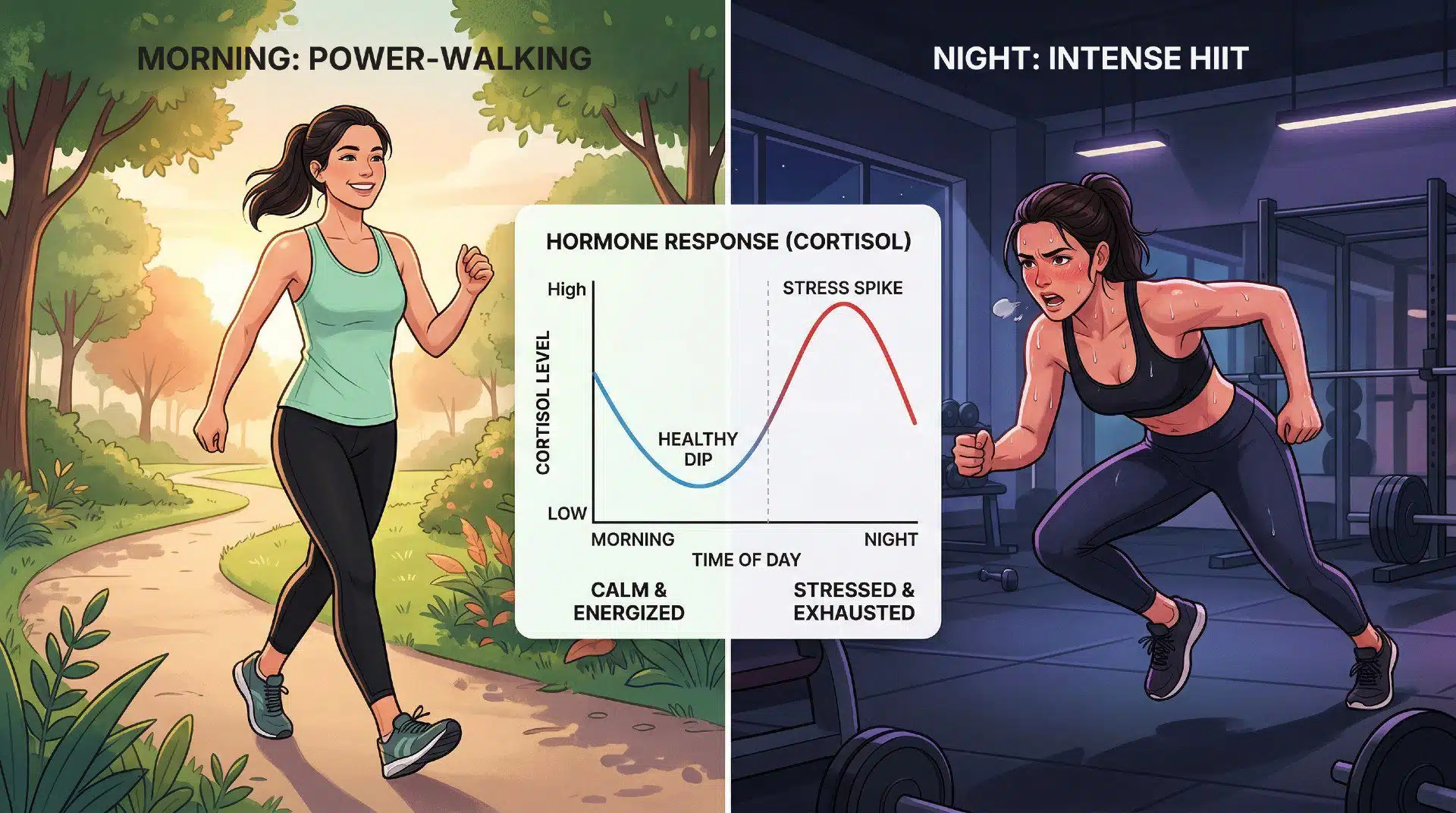
Moderate-intensity exercise, things like brisk walking, swimming, and easy cycling, reliably lowers cortisol over time. High-intensity training above roughly 60% of your maximum effort significantly spikes cortisol during and after the session.
For women already living under chronic stress, doing intense exercise every day can worsen cortisol belly rather than fix it. The evidence-backed prescription is 30-minute moderate sessions most days, strength training two to three times a week, and intense cardio limited to once or twice a week at most.
Research identifies a clear exercise intensity threshold for cortisol: once effort exceeds roughly 50-60% of maximum oxygen uptake (VO2 max), cortisol rises in proportion to how hard you push. Below that threshold, moderate exercise actually reduces circulating cortisol.
Stanford Lifestyle Medicine research confirms that cardio exercises at a conversational pace — where you can speak in full sentences — are the most reliable for cortisol reduction. Over time, regular moderate exercise also improves your HPA axis regulation, meaning your body becomes less reactive to stress hormones overall.
For women dealing with cortisol belly, this means the instinct to "exercise more and harder" can backfire. If your body is already flooded with cortisol from life stress, adding daily intense training is another stressor on top of existing ones. The cumulative cortisol load stays high, recovery suffers, sleep worsens, and belly fat persists.
The best exercises for women to support cortisol reduction are resistance training (which builds insulin-sensitive muscle without the cortisol spike of intense cardio), and steady moderate-intensity movement you can sustain consistently. Walks, yoga, swimming, and cycling all count.
Timing matters too. Morning exercise, done at moderate intensity, tends to improve the natural cortisol awakening response and improve sleep quality at night. Late-night high-intensity sessions can delay sleep and keep evening cortisol elevated, compounding the cycle.
Your 7-Step Cortisol-Lowering Protocol
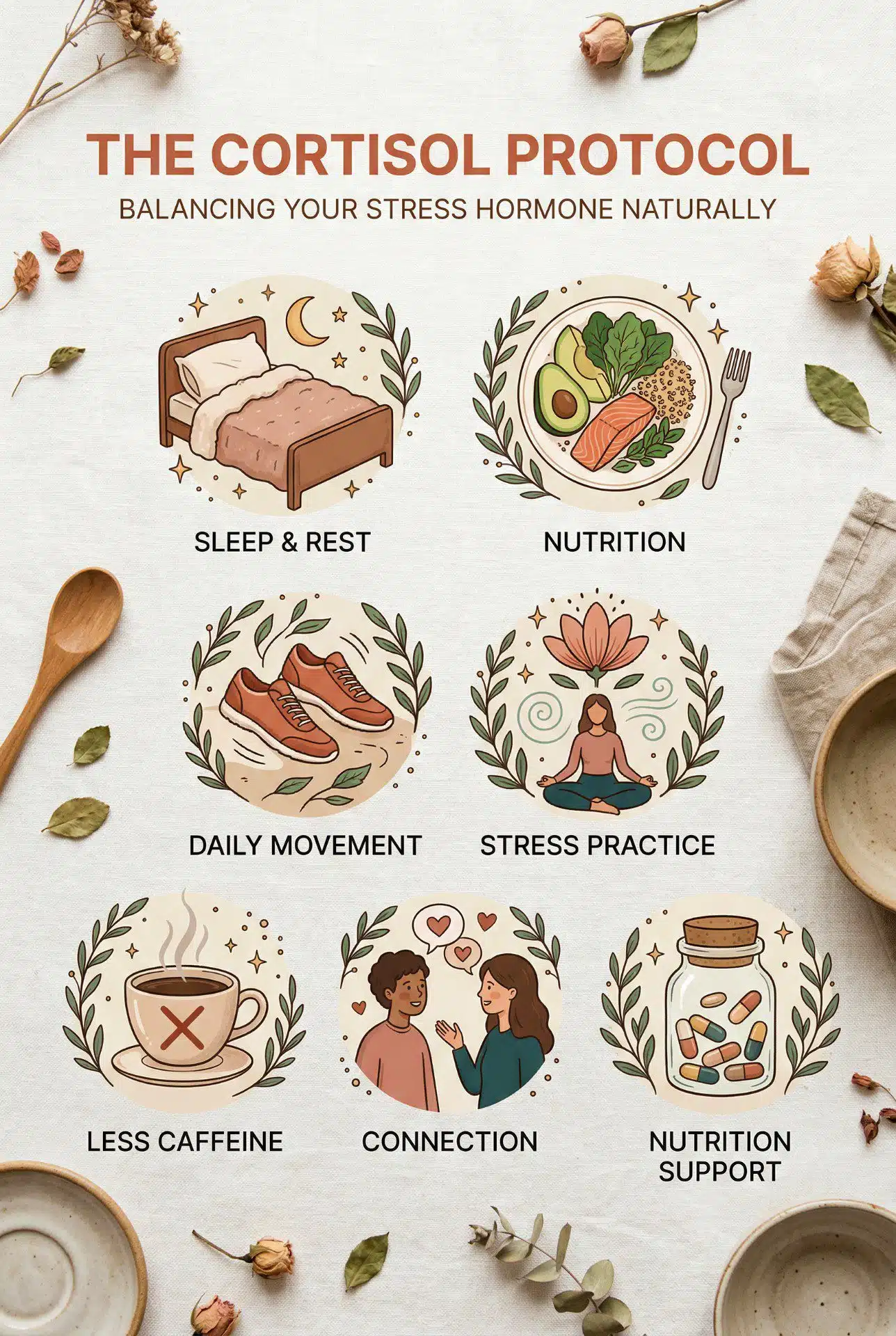
You don't need to overhaul your life. The highest-impact changes are consistent, daily behaviours that signal safety to your nervous system. Here are seven steps backed by the evidence.
Step 1: Protect Your Sleep Like It's Non-Negotiable
Cortisol follows a natural daily rhythm: high in the morning (to wake you up), gradually declining through the day, and lowest at night. Chronic sleep disruption breaks this rhythm and keeps evening cortisol elevated. Aim for 7-9 hours. Keep a consistent sleep and wake time, including weekends. A dark, cool bedroom and a 60-minute screen cutoff before bed are the highest-leverage changes you can make.
Step 2: Eat To Stabilise Blood Sugar, Not To Restrict It
Aggressive caloric restriction is itself a stressor that raises cortisol. Instead, focus on meals built around protein, healthy fats, and fibre-rich carbohydrates. This slows glucose absorption, prevents the blood sugar crashes that drive cortisol-fuelled cravings, and keeps insulin stable.
Eating every 4-5 hours, rather than skipping meals, helps maintain this balance. Some women find that intermittent fasting for fat loss works well, but a longer daily fast can worsen cortisol in women who are already running on stress.
Step 3: Prioritise Moderate Movement Daily
Thirty minutes of moderate-intensity exercise most days — brisk walking, swimming, cycling, or yoga — lowers cortisol and improves HPA axis regulation over time. Keep intense sessions to one or two per week. Think of vigorous exercise as a tool you deploy strategically, not the default setting for every workout.
Join Our Mailing List
Join thousands of women inside our community and receive our free guide, 10 Actions That Support Permanent Weight Loss — the exact behavioural shifts that make the difference between a two-week attempt and a lasting transformation.
No restriction plans. No guilt. Just what actually works — for real women with real lives.
Step 4: Build A Daily Stress Recovery Practice
Your nervous system needs a daily "all clear" signal. Even 10 minutes counts. Slow, controlled breathing (inhale 4 counts, hold 4, exhale 6) directly lowers cortisol by activating the parasympathetic nervous system. Mindfulness practice, progressive muscle relaxation, and time in nature all have documented cortisol-reducing effects. This isn't soft wellness advice. It's a physiological intervention.
Step 5: Limit Caffeine After 12 pm
Caffeine stimulates cortisol release. A morning coffee is fine and even beneficial for most people. But caffeine consumed in the afternoon extends the cortisol curve into the evening, disrupts sleep onset, and keeps the cortisol cycle running longer than it should. If you're currently having a 3 pm coffee to push through the afternoon energy dip, that dip itself is a cortisol signal worth addressing at the source.
Step 6: Invest In Social Connection
This one is backed by solid research and consistently underrated. Time with people who make you feel safe, seen, and supported measurably reduces cortisol. It doesn't need to be a long session. A genuine 20-minute conversation with a friend, a shared meal, a quick call. Social isolation chronically elevates cortisol. Connection buffers it.
Step 7: Consider Targeted Nutritional Support
Several nutrients have solid evidence for supporting cortisol regulation. Magnesium glycinate (200-400mg) — most women are deficient, and it directly supports adrenal function and sleep quality. Omega-3 fatty acids from oily fish, flaxseed, or a quality supplement — shown to reduce cortisol responses to stress. Ashwagandha — an adaptogenic herb with multiple controlled trials showing it reduces cortisol and perceived stress in adults. Always consult your doctor before adding supplements.
Building sustainable, healthy habits around these seven steps won't happen overnight. Start with the two that feel most achievable and build from there.
Want The Habits Behind Lasting Weight Loss? Get the free guide: 10 research-backed habits that help women lose body fat and keep it off, with no extreme diets. Send Me The Free Guide.
The Bottom Line
Cortisol belly is real, it's specific to women in its hormonal dynamics, and it will not respond fully to a calorie deficit or a harder workout routine if the root cause is chronic stress.
The three things to remember: visceral fat is biologically primed to respond to cortisol. Modern life keeps cortisol chronically elevated, especially for women. And the solution isn't more restrictions or more intensity. It's working with your nervous system, your hormonal cycle, and your biology.
Start with sleep. Stabilise your blood sugar. Move your body in ways that calm your system rather than spike it further. And give your nervous system a daily moment of genuine recovery. These aren't soft extras. They're the foundation.
Glossary Of Key Terms
- Cortisol: The body’s primary stress hormone, produced by the adrenal glands, which regulates blood sugar, metabolism, and the inflammatory response.
- Visceral Fat: Deep abdominal fat that surrounds internal organs; it is metabolically active and possesses a high density of cortisol receptors.
- HPA Axis: The Hypothalamic-Pituitary-Adrenal axis; the complex hormonal signaling pathway that controls the body's response to stress.
- Metabolic Syndrome: A cluster of conditions—including increased blood pressure, high blood sugar, and excess body fat around the waist—that occur together, increasing the risk of heart disease and diabetes.
- Ghrelin: A hormone produced in the gut that sends signals to the brain to stimulate appetite and increase food intake.
- Leptin: A hormone that signals the brain that the body has sufficient energy stores, thereby suppressing hunger.
- Perimenopause: The transitional phase leading up to menopause characterized by declining estrogen and progesterone, which can amplify the body's sensitivity to cortisol.
- Luteal Phase: The latter half of the menstrual cycle (post-ovulation), during which resting cortisol is naturally higher, and stress resilience is typically lower.
- Subcutaneous Fat: Fat stored directly under the skin that can be felt or pinched; it is less metabolically active and less sensitive to cortisol than visceral fat.
- Lipoprotein Lipase: A fat-storage enzyme that is activated by cortisol, specifically within visceral fat cells, encouraging the accumulation of abdominal fat.
FAQ
Is Cortisol Belly Fat Different From Regular Belly Fat?
Yes, in important ways. Cortisol belly is driven primarily by visceral fat, the deep fat surrounding your organs, rather than subcutaneous fat stored just under the skin. Visceral fat has far more cortisol receptors, making it uniquely responsive to the hormone. It also behaves differently: it's metabolically active, producing inflammatory compounds that worsen insulin resistance and increase the risk of cardiovascular disease. Standard calorie-focused approaches often don't move cortisol belly effectively because they don't address the hormonal driver. Reducing stress, improving sleep, and stabilising blood sugar are as important as nutrition and exercise when visceral fat is the primary issue.
Can I Lose Cortisol Belly Fat Without Changing My Exercise Routine?
Yes, to a meaningful degree. Exercise is important, but when cortisol is the primary driver, lifestyle factors outside the gym often have the greater impact. Improving sleep quality, reducing daily stressors, stabilising blood sugar through consistent meals, and adding a daily stress recovery practice can all lower cortisol without touching your workout schedule. That said, the type of exercise matters: if you're currently doing intense training daily, scaling back to moderate intensity may actually accelerate results if your cortisol is chronically elevated. Research shows that moderate exercise lowers cortisol while high-intensity training above a certain threshold raises it.
How Do I Know If Cortisol Is Causing My Weight Gain?
There's no single definitive home test, but there are patterns worth paying attention to. Cortisol-driven weight gain tends to be centred around the abdomen specifically, even if the rest of your body hasn't changed much. It's often accompanied by poor sleep, persistent fatigue, difficulty managing stress, intense cravings for sugary or salty foods (especially in the afternoon and evening), and a sense that diet and exercise aren't working as they should. If you suspect your cortisol is chronically elevated, a GP or endocrinologist can order a 24-hour urinary cortisol test or a diurnal saliva cortisol profile for a clearer picture.
Does Cortisol Affect Women Differently Than Men?
Yes, and the research supports this clearly. Women report higher baseline stress levels on population surveys and show more pronounced cortisol-driven fat storage around the midsection due to the interaction between cortisol and female sex hormones. Estrogen normally modulates some of cortisol's fat-storage effects, meaning when estrogen declines during perimenopause, cortisol's influence on belly fat becomes significantly stronger. Women also experience hormonally driven windows of heightened cortisol sensitivity (the luteal phase) that men don't have. This is not a disadvantage without a solution, but it does mean that women benefit from strategies specifically designed around this biology.
Will Cutting Calories Make Cortisol Belly Worse?
Aggressive caloric restriction can worsen cortisol belly, yes. Severe energy restriction is itself a physiological stressor that activates the HPA axis and raises cortisol. This is one reason extreme dieting can lead to more belly fat despite a caloric deficit. A moderate, consistent nutrition strategy built around protein, healthy fats, and fibre-rich carbohydrates stabilises blood sugar and keeps cortisol lower than a restrictive approach would. Think of eating to nourish your adrenals, not to punish your body into thinness. Your body will hold on tighter to visceral fat when it's in perceived scarcity mode.
How Long Does It Take To See Results When You Lower Cortisol?
Some benefits appear quickly. Better sleep often improves within days of consistent sleep hygiene. Reduced cravings can follow within a week of stabilised blood sugar. Cortisol-driven abdominal fat typically takes longer to shift, as the hormonal system needs sustained change to recalibrate. Most women implementing the full protocol (sleep, nutrition, moderate exercise, and daily recovery practice consistently) report noticeable changes in abdominal fullness and bloating within 4-6 weeks, with meaningful body composition shifts over 3-6 months. The timeline depends on the degree of chronic stress, how long it's been sustained, and whether perimenopause or other hormonal factors are compounding the issue.
What Foods Specifically Help Reduce Cortisol Levels?
Several foods have evidence behind them. Magnesium-rich foods, including dark leafy greens, avocado, dark chocolate (70%+), and pumpkin seeds, support adrenal function and cortisol regulation. Omega-3-rich foods, such as salmon, sardines, chia seeds, and walnuts, have been shown to blunt the cortisol response to stress. Foods high in vitamin C, including bell peppers, kiwi, and citrus, support adrenal recovery. On the avoidance side, high-sugar, highly processed foods worsen the blood sugar crash-cortisol spike cycle, and excessive caffeine prolongs cortisol elevation through the day. A diet rich in whole foods, eaten at regular intervals, is one of the most effective and underrated cortisol management tools available.