
The Best Diet For Cortisol-Related Weight Gain: What To Eat To Lower Cortisol And Lose Belly Fat
Sara Gottfried, MD
Harvard-trained integrative gynaecologist
The female body responds far better to the coax than the shove.
Summary (TL;DR)
Cortisol-related weight gain is real; it affects women differently than men, and calorie-cutting alone rarely fixes it. Here's what you actually need to know: Chronically elevated cortisol tells your body to store fat in your abdomen, crave sugar and carbs, break down muscle, and disrupt sleep — regardless of how carefully you eat. Women are especially vulnerable because declining estrogen (hello, perimenopause) removes a natural buffer against the stress hormone.
You've cleaned up your eating, cut back on sugar, and stopped skipping the gym. And your waistline still isn't responding. Sound familiar?
If stress, exhaustion, and constant carb cravings all seem connected to the weight sitting around your middle, you're not reading too much into it. They are. A nutrition approach built for cortisol-related weight gain looks nothing like a standard calorie-cut. It works with your hormones, not against them. And for a lot of women, that's the piece that's been missing all along.
This guide breaks down exactly what's happening in your body, what the research shows about the best foods and eating patterns for cortisol balance, and gives you a clear, evidence-based framework to start with this week.
Medical & Referral Disclaimer
This article is for informational and educational purposes only and does not constitute medical or nutritional advice. Always consult a qualified healthcare professional before making changes to your diet, supplement routine, or exercise program — especially if you have an underlying health condition or take prescription medication. Individual results vary.
Key Takeaways
- Chronic cortisol elevation drives abdominal fat storage, muscle loss, and intense carb cravings — often independently of calorie intake.
- Women are disproportionately affected due to hormonal interactions with estrogen, progesterone, and the menstrual cycle — effects that intensify during perimenopause.
- The highest-impact dietary shifts: high-protein breakfast, daily omega-3s, magnesium-rich dark leafy greens, fermented foods, and blood sugar stability through complex carbohydrates.
- Meal timing matters as much as food choices: align eating with your body's natural cortisol rhythm.
- The 4-R Cortisol Reset (Remove, Replace, Repair, Regulate) is a structured, phased approach designed for women's hormonal biology.
- More intense cardio without adequate recovery can worsen cortisol-driven weight gain.
- Physical changes typically take 6–12 weeks to appear, but energy and sleep improvements often come within 2–4 weeks.
- Ashwagandha KSM-66, magnesium glycinate, omega-3s, and vitamin C have the strongest clinical evidence supporting cortisol.

What Is Cortisol-Related Weight Gain?
Cortisol is your primary stress hormone, produced by the adrenal glands. In the short term, it's genuinely useful — it mobilizes energy, sharpens alertness, and prepares your body to respond to a threat. The problem is that your brain can't distinguish between physical danger and three years of poor sleep, a demanding job, and the low-grade hum of constantly being behind.
When cortisol stays chronically high, your body stops cooperating with your fat-loss goals in ways that no amount of willpower can fix.
It stores fat preferentially in your abdomen. Visceral fat tissue contains a higher density of glucocorticoid receptors than anywhere else in the body, which means cortisol signals your belly to hold on — and grow. A landmark study from Yale University found that stress-reactive women (those who produced more cortisol in response to lab stressors) had significantly more abdominal fat than women with lower cortisol reactivity — regardless of their overall body weight. Read the Yale study →
It triggers hard-to-ignore carbohydrate and sugar cravings. Not as a character flaw — as a direct hormonal command. Research published in PNAS by Dallman et al. confirmed that chronically elevated glucocorticoids increase the brain's drive toward calorie-dense, high-sugar "comfort foods," and that eating these foods temporarily quiets the stress response — creating a self-reinforcing cycle. Read the PNAS paper →
It spikes your blood sugar, crashes it, then repeats all day. Cortisol releases stored glucose for emergency energy. Repeat this process day after day, and you're looking at increasing insulin resistance, which makes fat loss significantly harder regardless of what you're eating.
It breaks down muscle for fuel. Cortisol is catabolic. Under chronic stress, it breaks down muscle tissue for fast energy, slowing your resting metabolism in the process.
It wrecks your sleep, which pushes cortisol higher. Poor sleep elevates cortisol. Elevated cortisol disrupts sleep. This loop runs entirely below the level of "just try harder."
Why Women Are Hit Harder
The interaction between cortisol and female sex hormones creates a dynamic that men simply don't experience in the same way — and it's important to understand if you've been doing everything right and still not seeing results.
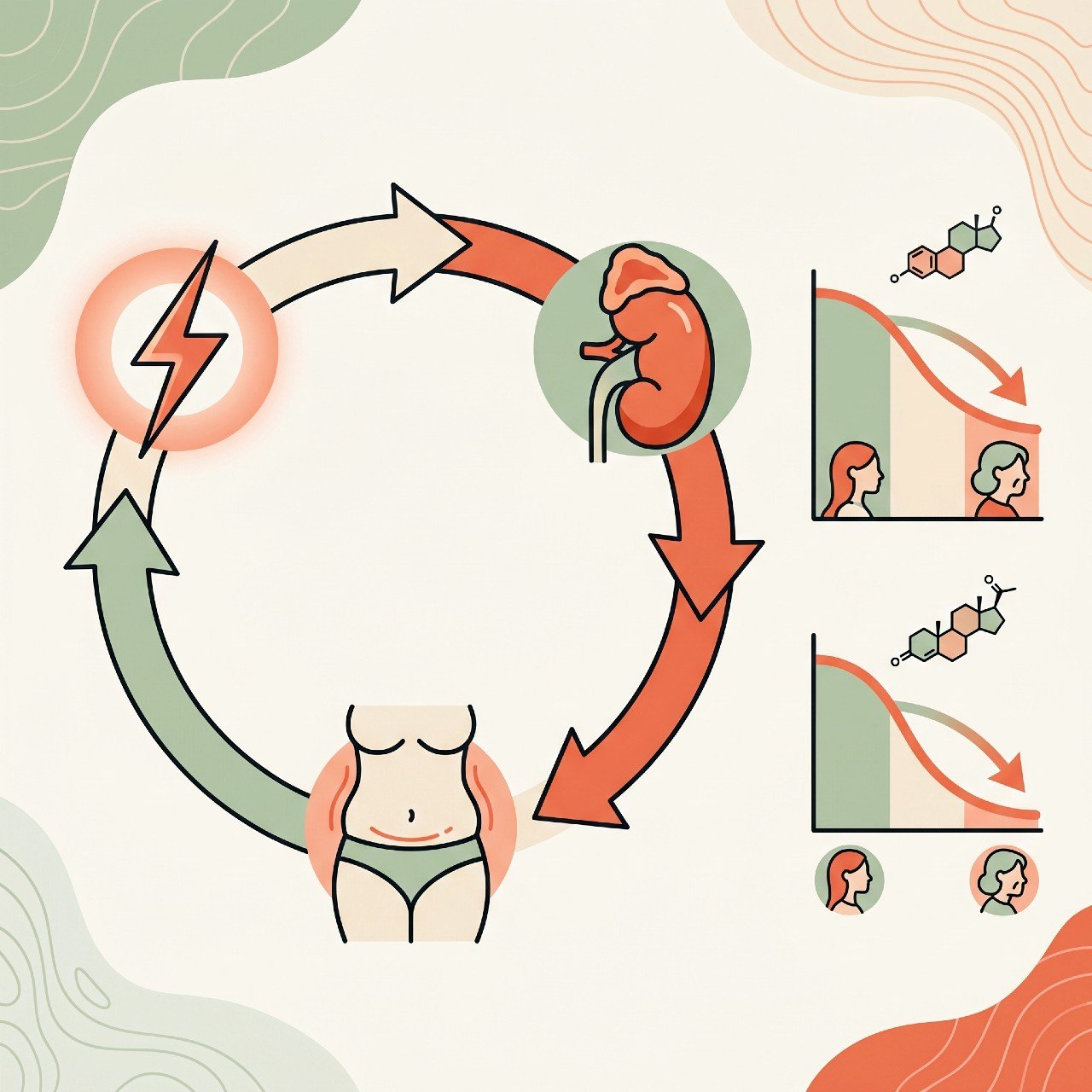
Estrogen acts as a natural buffer for your stress system. It helps regulate the hypothalamic-pituitary-adrenal (HPA) axis — your body's central stress command centre.
A randomised study published in The Journal of Clinical Endocrinology & Metabolism found that postmenopausal women who received estradiol therapy for nearly five years showed a blunted cortisol response to physical stress and were better protected against stress-induced working memory impairment compared to those on placebo. (Herrera et al., 2017)
Full paper at Oxford Academic → As estrogen declines during perimenopause (often starting in the early to mid-40s), that buffering effect weakens — sometimes dramatically.
Progesterone and cortisol are biochemically linked. Both hormones are synthesized from the same precursor molecule, pregnenolone. When your body is under sustained demand for cortisol production, progesterone output can be compromised. This is why many women in high-stress periods notice worsening PMS, irregular cycles, and deeper hormonal disruption — even before perimenopause begins.
Your cortisol sensitivity shifts throughout your cycle. During the luteal phase (roughly days 15–28), women show increased sensitivity to stress hormones. Stressors that feel manageable during your follicular phase can hit harder in the two weeks before your period. This isn't weakness — it's documented biology, and your nutrition approach needs to account for it.
Perimenopause removes multiple buffers at once. Declining estrogen and progesterone together mean fewer hormonal stabilizers against cortisol, compromised sleep quality, increased cortisol sensitivity, and weight that relocates specifically to the abdomen. This is why so many women in their 40s notice their body "stops responding" even when nothing in their lifestyle has dramatically changed.

Is Cortisol Driving Your Weight Gain? Signs To Watch For
Not all unexplained weight gain is cortisol-related, but these are the patterns worth paying attention to:
- Weight gain centered in the abdomen and upper back — not evenly distributed
- Intense sugar and carbohydrate cravings, especially mid-afternoon or after 8 PM
- An energy crash at 3–4 PM, followed by a second wind in the evening
- The "wired but tired" feeling — mentally on edge, physically depleted
- Weight that doesn't respond to calorie restriction the way it once did
- Appetite that spikes specifically on your most stressful days
- Puffiness or bloating that seems stress-related
- Waking at 2–3 AM and struggling to fall back asleep
- Low mood, brain fog, or feeling easily overwhelmed
If three or more of these land for you, your cortisol picture is worth addressing — and nutrition is one of the most powerful levers you have.
The Cortisol-Diet Trap: What's Working Against You
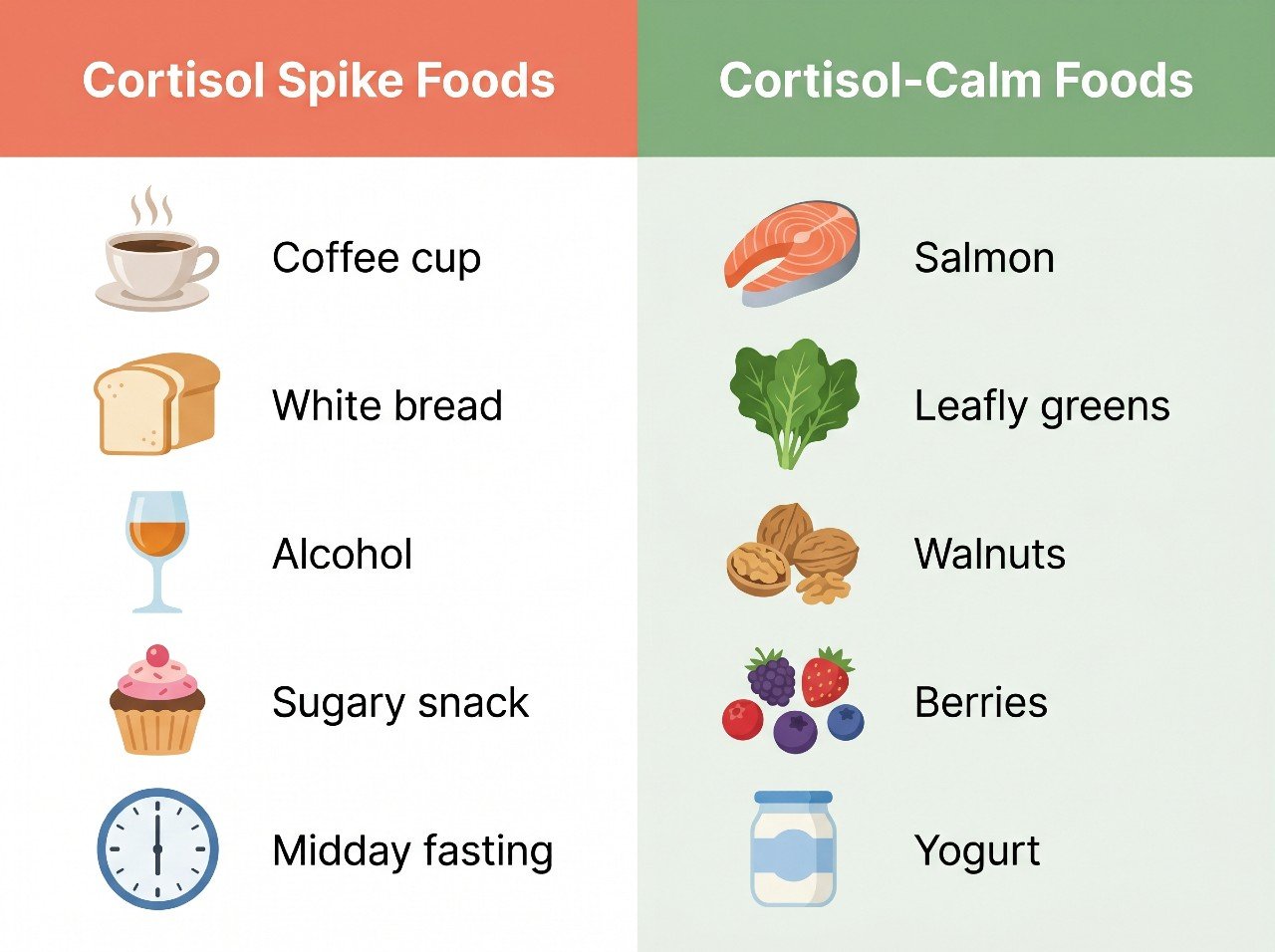
Before we get into what helps, let's be honest about what actively makes cortisol-related weight gain worse — including patterns sometimes marketed as healthy.
Refined Carbohydrates And Ultra-Processed Foods
Every blood sugar spike from white bread, pastries, chips, and sweetened cereals triggers a physiological stress response. Yale research confirmed that hypoglycemia — the crash after a blood sugar spike — activates the same HPA axis response as a real external threat. You're essentially stress-dosing your system multiple times a day.

Too Much Caffeine, Too Late In The Day
Coffee isn't the enemy. But research published in Psychoneuroendocrinology confirms that caffeine significantly elevates cortisol, particularly when consumed during already-stressful periods, and most acutely when consumed after noon, when your body should be on the cortisol downswing. Read the study →
Two cups before noon is a reasonable boundary for women managing cortisol. More than that, or any caffeine in the afternoon, keeps the stress system running when it should be winding down.
Alcohol
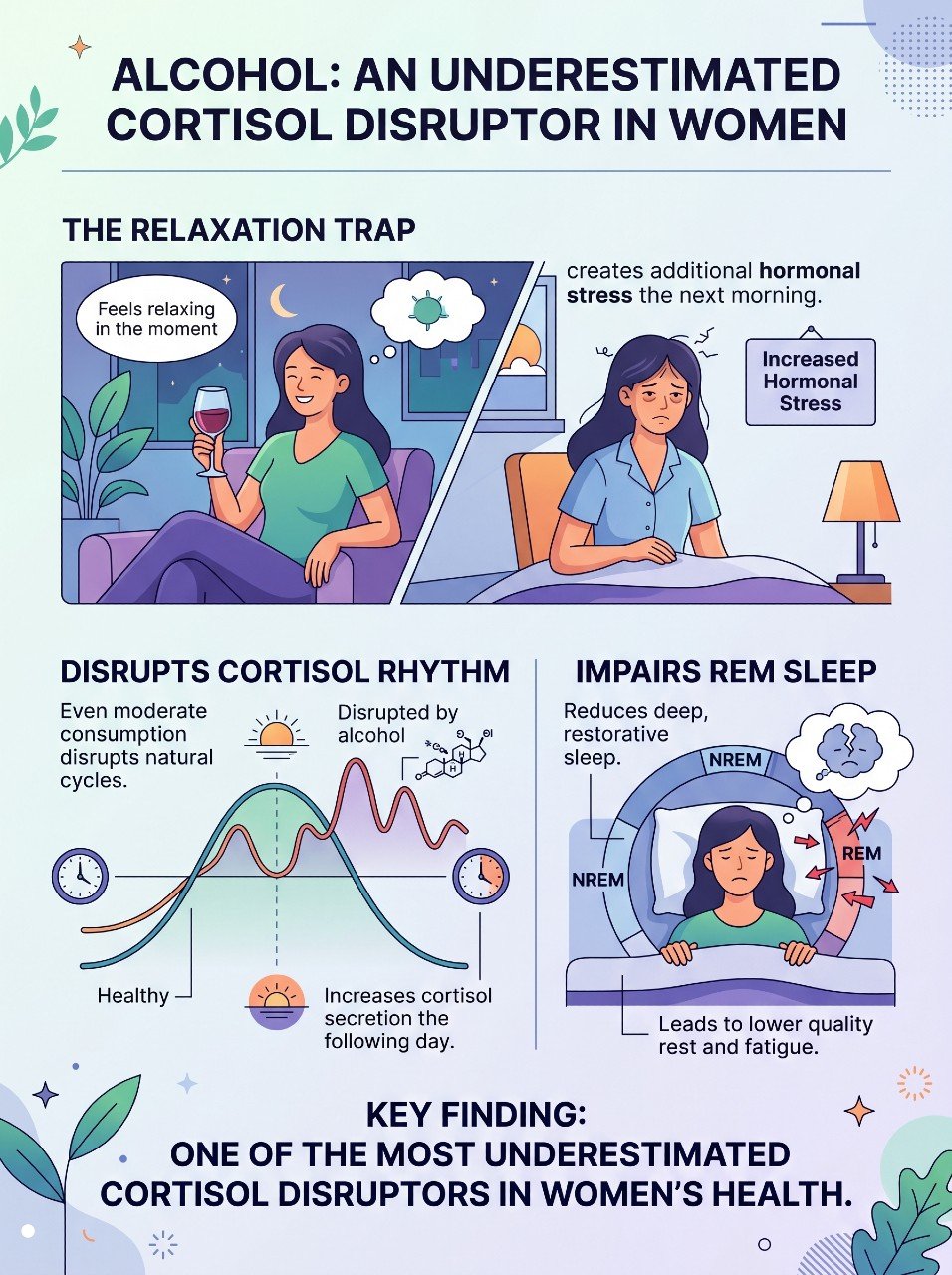
Even moderate alcohol consumption disrupts your cortisol rhythm, impairs REM sleep, and increases cortisol secretion the following day. It's one of the most underestimated cortisol disruptors in women's health — partly because a glass of wine feels stress-reducing in the moment while creating additional hormonal stress the next morning.
Skipping Meals Or Pushing Breakfast Past 10 AM
Going too long without eating drops blood sugar, which triggers cortisol to compensate. For women with elevated baseline cortisol, skipping breakfast often makes the afternoon cortisol pattern significantly worse. The body reads fasting as a stressor, particularly under conditions of already-elevated stress.
The Sustained Calorie Deficit
Here's the contrarian truth the fitness industry rarely says out loud: if you've been eating very little and exercising hard for months while your belly fat holds firm, cortisol is likely part of the reason.
Sustained energy restriction is a genuine physiological stressor that elevates cortisol. Your body, sensing threat, prioritizes survival (holding fat) over the change you're aiming for (losing it). Breaking the cycle requires nourishing your body before you can effectively lean it.
The Cortisol-Calming Diet: What The Research Actually Shows
The right nutritional pattern consistently lowers cortisol, reduces inflammation, stabilises blood sugar, and shifts your metabolism from survival mode to fat-burning mode. Here's what the evidence shows.
1. High Protein At Every Meal — Especially Breakfast
Protein is your most powerful blood sugar stabiliser. It slows glucose absorption, promotes satiety hormones, and reduces cortisol-driven cravings throughout the day. Aim for 25–35g of protein at your first meal — not a bowl of oatmeal with a splash of milk, but something with real protein substance.
Think: Greek yogurt with eggs, a protein smoothie with cottage cheese, smoked salmon with eggs on sourdough, or a turkey and vegetable frittata. This one change tends to have the most downstream impact on cortisol management of almost any other nutritional shift you could make.
2. Omega-3 Rich Fats Daily
Omega-3 fatty acids have solid evidence behind them for reducing cortisol response and systemic inflammation. A randomised, controlled trial from Ohio State University found that omega-3 supplementation at 2.5g per day reduced cortisol levels by 19% and the inflammatory marker IL-6 by 33% compared to placebo. Read the OSU press release →
Separately, research published in Psychoneuroendocrinology found that omega-3 supplementation reduced morning cortisol (cortisol awakening response) in people with occupational burnout over 8 weeks. Read the study →
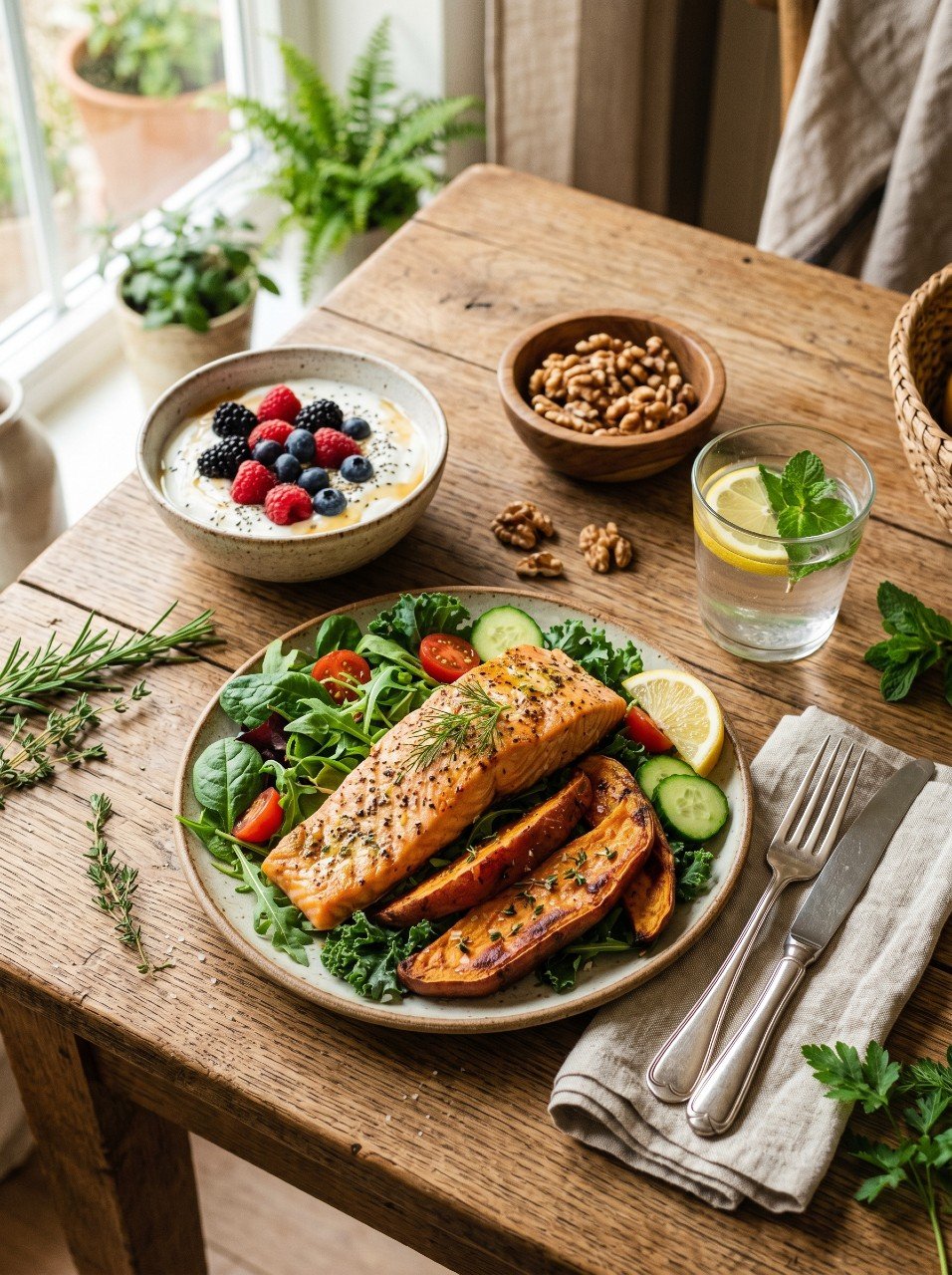
Prioritise daily: fatty fish (salmon, mackerel, sardines) at least 3x per week; walnuts; ground flaxseed; chia seeds; extra-virgin olive oil.
3. Dark Leafy Greens And Magnesium-Rich Foods
Magnesium plays a direct regulatory role in the HPA axis — it suppresses ACTH (the hormone that instructs your adrenal glands to produce cortisol) and reduces adrenal sensitivity to stress signals.
Animal research published in Neuropharmacology confirmed that dietary magnesium deficiency leads to measurable HPA axis dysregulation and anxiety-like behaviour, and that the dysregulation was reversed by magnesium restoration. Read the study →
Many women consistently fall short of the daily recommended magnesium intake through diet alone.
Eat daily: spinach, kale, Swiss chard, pumpkin seeds, almonds, avocado, dark chocolate (70%+), black beans, oats.
4. Complex Carbohydrates At The Right Times
This is not a low-carb prescription — and that distinction matters. Complex carbohydrates support cortisol regulation by maintaining stable blood sugar and driving serotonin production (your calming neurotransmitter). Dramatically cutting carbohydrates can raise cortisol further, particularly in women. The goal is not fewer carbs overall; it's choosing the right kind and eating them when your body can use them best.
Choose: sweet potato, oats, quinoa, lentils, chickpeas, brown rice, root vegetables.
Minimise: white bread, white rice, sugary cereals, pastries, sweetened snacks.
5. Fermented Foods And Gut Support
The gut-brain axis is a two-way communication system. Chronic stress disrupts gut microbiome diversity, and a disrupted microbiome amplifies the stress response.
A 2024 systematic review and meta-analysis of 46 randomised controlled trials (3,516 participants) found that probiotic supplementation was associated with lower cortisol levels compared to control, though the certainty of this evidence was rated as low, and more research is needed. Read the meta-analysis →
Specific strains — including Lactobacillus plantarum 299v and Lactobacillus casei Shirota — have individual trial evidence for cortisol attenuation under stress. Read the gut-brain axis research →
Include daily: plain Greek yogurt, kefir, kimchi, sauerkraut, or miso. Pair with prebiotic fiber (garlic, onion, asparagus, oats, leeks) to feed beneficial bacteria.
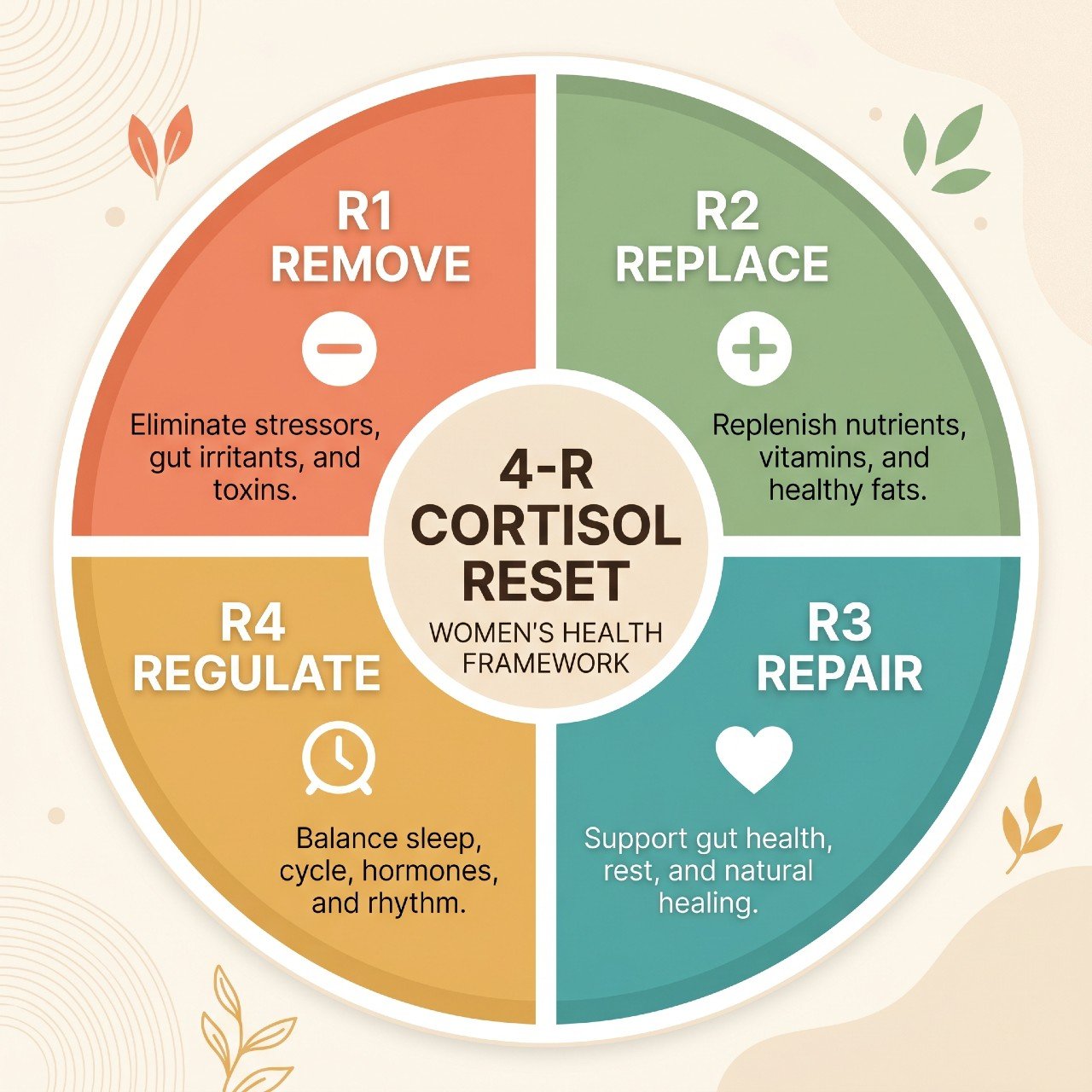
The 4-R Cortisol Reset: A Women-Specific Nutrition Framework
Rather than following a generic anti-stress food list, here is a structured, four-phase approach built specifically for women managing cortisol-driven weight gain. I call it the 4-R Cortisol Reset. Each phase builds on the last, and together they address cortisol dysregulation at the root — not just its surface symptoms.
R1: REMOVE — Eliminate the cortisol accelerators
Weeks 1–3
For a minimum of three weeks, significantly reduce or eliminate:
- Refined sugar and ultra-processed carbohydrates
- Caffeine after 12 PM
- Alcohol, or reduce to a maximum of one drink on non-consecutive days
- Skipped meals or the first meal pushed past 10 AM
- Calorie deficits deeper than 300–400 calories below maintenance
What this does: interrupts the blood sugar chaos that is repeatedly triggering your cortisol response throughout the day.
R2: REPLACE — Build in the stabilising nutrients
Weeks 1–4, running concurrently with R1
Introduce consistently:
- 25–35g protein at every meal
- Omega-3-rich foods daily (salmon, walnuts, flaxseed, chia)
- 2+ cups of dark leafy greens per day
- One serving of fermented food per day
- Berries 4–5 times per week
- Magnesium-rich foods: pumpkin seeds, almonds, spinach, dark chocolate
What this does: fills the nutritional gaps that keep your stress system hyperreactive.
Join Our Mailing List
Join thousands of women inside our community and receive our free guide, 10 Actions That Support Permanent Weight Loss — the exact behavioural shifts that make the difference between a two-week attempt and a lasting transformation.
No restriction plans. No guilt. Just what actually works — for real women with real lives.

R3: REPAIR — Address deeper inflammation and gut health
Weeks 4–8
Focus on:
- Identifying personal food sensitivities (individually variable — not a universal list)
- Adding prebiotic fibre to every meal
- Staying adequately hydrated (mild dehydration is a measurable cortisol stressor)
- Considering bone broth or collagen peptides for gut lining integrity
What this does: addresses the inflammatory layer that sustains elevated cortisol even when surface stressors ease.
R4: REGULATE — Align eating with your cortisol rhythm
Week 3 onward, ongoing
- Eat within 90 minutes of waking
- Keep meals spaced every 3–4 hours
- Make dinner your lightest meal
- Finish eating 2–3 hours before bed to protect sleep quality and overnight hormonal repair
What this does: uses meal timing to reinforce your body's natural cortisol curve, rather than inadvertently working against it.
Meal Timing: Working With Your Cortisol Rhythm
Cortisol follows a natural circadian pattern: it peaks in the morning (this is healthy — it's your wake-up signal) and should gradually decline through the day, reaching its lowest point around midnight.
For many chronically stressed women, this rhythm gets inverted. Cortisol is low in the morning (you need three coffees to function), spikes unpredictably through the day, and is still elevated at 10 PM when it should be at its lowest — sabotaging sleep and resetting the cycle.
Aligning your meals with this natural pattern:
| Time | Meal focus | Why |
|---|---|---|
| 6–9 AM | High protein + moderate complex carbs | Leverage the natural morning cortisol peak; stabilise blood sugar before the first crash |
| 12–1 PM | Your largest, most balanced meal | Cortisol is declining; complex carbs here support serotonin production for the afternoon |
| 3–4 PM | Protein + fat-based snack (if needed) | Prevents the mid-afternoon cortisol dip from triggering sugar cravings |
| 6–7 PM | Lighter meal: protein + non-starchy vegetables | Cortisol should be low; lighter eating avoids blood sugar spikes that disrupt sleep |

Supplements Worth Knowing About
Food comes first, always. But specific micronutrients and well-researched supplements can meaningfully support cortisol regulation, especially in women dealing with the depletion effects of chronic stress.
Magnesium glycinate (200–400mg at night)
Well-absorbed form that supports HPA axis regulation and significantly improves sleep quality. One of the most evidence-supported supplements for stress response in women, and affordable enough to be genuinely accessible.
Ashwagandha — KSM-66 extract (300mg twice daily)
A well-studied adaptogen. A 2012 double-blind, placebo-controlled trial published in the Indian Journal of Psychological Medicine found that 300mg twice daily of high-concentration ashwagandha root extract produced a 27.9% reduction in serum cortisol levels over 60 days, alongside significant reductions in perceived stress and anxiety.
Read the trial → The KSM-66 standardised extract has the most rigorous clinical data.
Vitamin C (500–1,000mg daily)
Your adrenal glands contain one of the highest concentrations of vitamin C in the body — it's directly involved in the cortisol synthesis process. Research suggests vitamin C can blunt the cortisol response to acute stress. One of the simplest, most affordable interventions available.
Phosphatidylserine (100–300mg daily)
A phospholipid with specific evidence for reducing cortisol response to exercise stress — worth knowing about if you train hard and suspect poor recovery is part of your pattern.
Always consult your healthcare provider before starting supplements, especially if you take medications or have underlying health conditions.
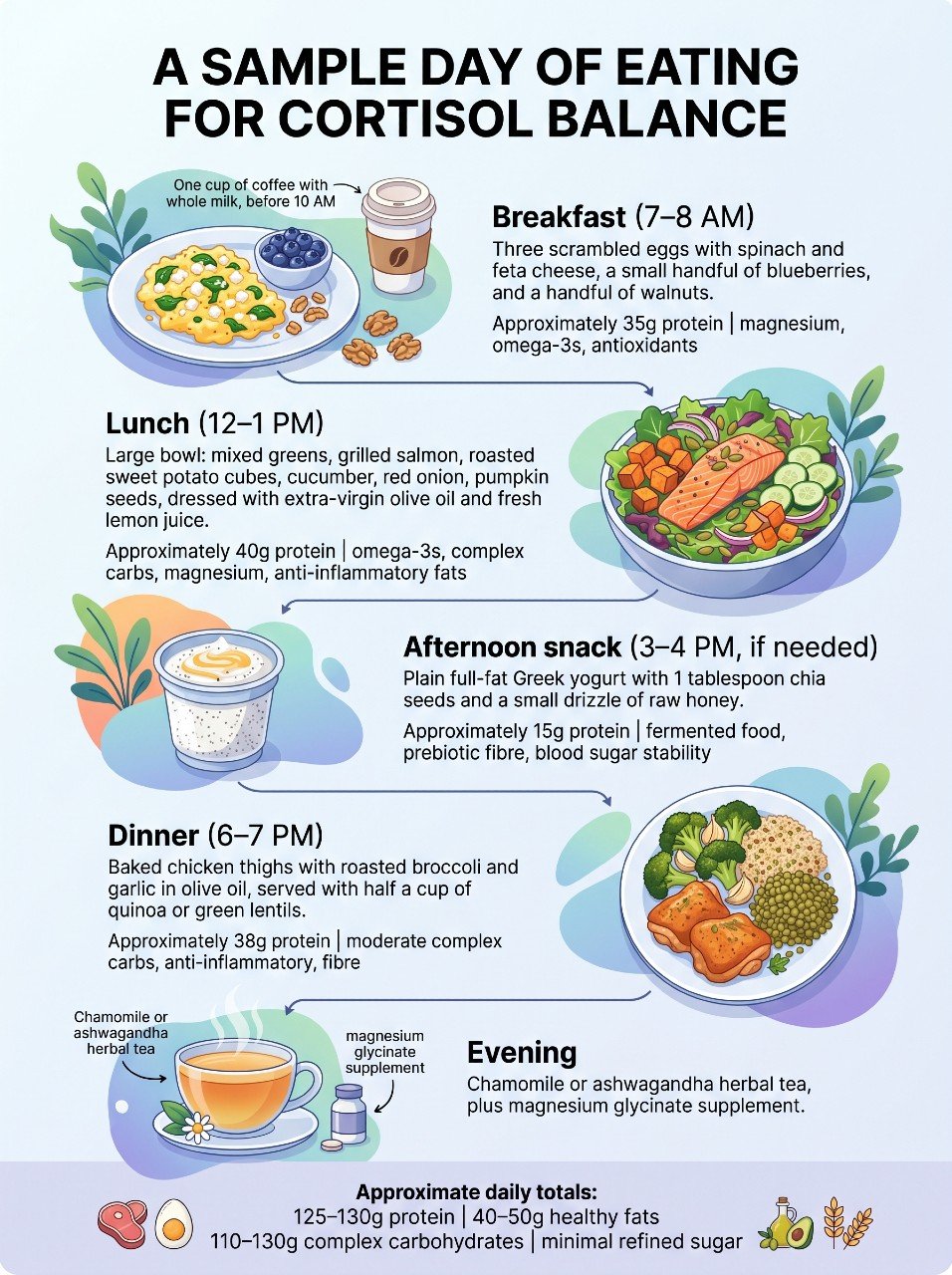
A Sample Day Of Eating For Cortisol Balance
Breakfast (7–8 AM)
- Three scrambled eggs with spinach and feta cheese, a small handful of blueberries, and a handful of walnuts. One cup of coffee with whole milk, before 10 AM.
- Approximately 35g protein | magnesium, omega-3s, antioxidants
Lunch (12–1 PM)
- Large bowl: mixed greens, grilled salmon, roasted sweet potato cubes, cucumber, red onion, pumpkin seeds, dressed with extra-virgin olive oil and fresh lemon juice.
- Approximately 40g protein | omega-3s, complex carbs, magnesium, anti-inflammatory fats
Afternoon snack (3–4 PM, if needed)
- Plain full-fat Greek yogurt with 1 tablespoon chia seeds and a small drizzle of raw honey.
- Approximately 15g protein | fermented food, prebiotic fibre, blood sugar stability
Dinner (6–7 PM)
- Baked chicken thighs with roasted broccoli and garlic in olive oil, served with half a cup of quinoa or green lentils.
- Approximately 38g protein | moderate complex carbs, anti-inflammatory, fibre
Evening
- Chamomile or ashwagandha herbal tea, plus magnesium glycinate supplement.
- Approximate daily totals: 125–130g protein | 40–50g healthy fats | 110–130g complex carbohydrates | minimal refined sugar

The Exercise Question: What Research Actually Shows
Most fitness content's prescription for belly fat is more cardio. For women with elevated cortisol, that advice can backfire.
Exercise does raise cortisol acutely — during and right after a workout. For women who are sleeping well, eating enough protein, and not running on empty between sessions, cortisol bounces back to baseline within a few hours. That's the normal, healthy pattern.
But if your baseline cortisol is already elevated and you're stacking intense training on top of poor sleep, under-eating, and a high-stress life, five-days-a-week cardio sessions add to your physiological stress load rather than relieving it. Research confirms that both exercise intensity and duration determine cortisol output, with longer, more intense sessions producing greater and more sustained elevation. Read the research here.
The evidence-based recommendation for women with high cortisol:
- Prioritise strength training 3x per week — builds cortisol-protective muscle with a lower cortisol cost than sustained cardio.
- Emphasise daily low-intensity movement — 30–45 minute walks have direct evidence for HPA axis downregulation.
- Include restorative practices — yoga, stretching, and breathing exercises have measurable cortisol-lowering effects.
- Limit sustained high-intensity cardio to 1–2 sessions per week, always paired with adequate protein and recovery.
This isn't about doing less. It's about choosing the types of movement that help your stress system recover rather than adding to its load.
Want The Habits Behind Lasting Weight Loss? Get the free guide: 10 research-backed habits that help women lose body fat and keep it off, with no extreme diets. Send Me The Free Guide.
The Bottom Line
If you've been eating carefully, training consistently, and still watching your waistline inch outward, cortisol is worth taking seriously.
The best diet for cortisol-related weight gain isn't another restriction plan. It's eating in a way that keeps blood sugar stable, reduces inflammation, supports your gut, and signals to your nervous system that you're not in danger. When your body gets that signal consistently — through protein-anchored meals, omega-3 fats, magnesium-rich vegetables, and aligned meal timing — everything shifts.
You're not broken. You're not failing. Your body is doing exactly what a chronically stressed body is supposed to do — protecting you. Feed it the right way, and it knows how to find its way back.
Your action steps this week:
- Audit your breakfast. If it has fewer than 25g of protein, this is your single highest-leverage change. Start here.
- Add one omega-3 source daily — a handful of walnuts, a serving of salmon, a tablespoon of ground flaxseed in your yogurt.
- Set a noon caffeine cutoff. Give it one week and observe the shift in your afternoon energy and evening sleep quality.
- Add one fermented food to your daily routine — plain Greek yogurt, kefir, or kimchi as a side.
- Finish eating 2 hours before bed. This single habit supports overnight cortisol repair more than most supplements.
Start with one. Build from there. The version of you who feels energised, clear-headed, and at home in her body isn't out of reach — she's waiting on the right hormonal conditions.
Glossary Of Key Terms
- Ashwagandha KSM-66: A standardized root extract and adaptogen clinically shown to reduce serum cortisol levels and perceived stress.
- Catabolic: A metabolic process, often triggered by chronic cortisol elevation, that involves the breakdown of complex molecules—such as muscle tissue—into simpler ones for energy.
- Cortisol: The primary stress hormone produced by the adrenal glands that mobilizes energy but can drive abdominal fat storage when chronically elevated.
- Glucocorticoid Receptors: Specific protein receptors, found in high density in abdominal visceral fat, that bind to cortisol and signal fat storage.
- HPA Axis: The Hypothalamic-Pituitary-Adrenal axis; the complex set of direct influences and feedback interactions among three endocrine glands that control the body's reaction to stress.
- Magnesium Glycinate: A highly absorbable form of magnesium that supports HPA axis regulation and improves sleep quality by reducing adrenal sensitivity.
- Omega-3 Fatty Acids: Essential fats found in fish and seeds that have been shown to reduce cortisol levels and systemic inflammatory markers like IL-6.
- Perimenopause: The transitional period before menopause characterized by declining estrogen and progesterone, which reduces the body's natural buffers against stress.
- Pregnenolone: A precursor molecule from which both progesterone and cortisol are synthesized; high demand for cortisol can compromise the production of progesterone.
- Visceral Fat: Deep abdominal fat that surrounds internal organs and is highly reactive to cortisol, often leading to increased waist circumference.
FAQ
How Long Until I See Results From A Cortisol-Calming Nutrition Approach?
Most women notice improved energy, better sleep, and reduced cravings within 2–4 weeks of consistent dietary changes. Changes in body composition typically become visible at 6–12 weeks, as cortisol normalisation and metabolic recovery take time to reflect on the scale. The most common mistake is giving up at week three — right before the hormonal shift begins to show.
Can I Still Do Intermittent Fasting If I Have High Cortisol?
For women with elevated cortisol, extended fasting — particularly skipping breakfast — often worsens the cortisol response. A compressed eating window that starts with a morning meal (rather than a traditional 16:8 that pushes the first meal to noon) tends to work much better. Pay attention to your afternoon cortisol symptoms — the 3 PM crash and sugar craving pattern — to gauge your personal response.
Is The Mediterranean Diet Good For Cortisol-Related Weight Gain?
Yes — the Mediterranean eating pattern aligns closely with cortisol-calming principles: fatty fish, olive oil, legumes, vegetables, fruit, and limited processed foods. Multiple studies have linked it to lower inflammatory markers and improved HPA axis function. It's one of the most research-supported frameworks for women navigating hormonal weight challenges.
Do I Need To Go Low-Carb To Address Cortisol Belly Fat?
No — and this matters. Severely restricting carbohydrates can raise cortisol further, particularly in women. The goal is choosing complex, fibre-rich, lower-glycemic carbohydrates and timing them to support blood sugar stability and serotonin production. Moderate carbohydrate intake at the right times actively aids cortisol regulation.
What Tests Can Confirm Elevated Cortisol?
A four-point salivary cortisol test (taken at waking, midday, afternoon, and evening) shows your cortisol rhythm across the full day, which is far more useful than a single blood cortisol measurement. A 24-hour urinary free cortisol test is also used clinically. If you suspect adrenal dysregulation, a functional medicine practitioner or integrative endocrinologist can order appropriate testing and interpret the pattern in context.
How Long Has Cortisol Been Linked To Abdominal Weight Gain In Women?
The cortisol-belly fat connection in women has been documented in research since at least 2000, when the Epel et al. The Yale study was published in Psychosomatic Medicine. Since then, the evidence has only deepened — particularly regarding the role of estrogen loss in amplifying cortisol's metabolic effects during perimenopause.
Does Caffeine Raise Cortisol, And Should I Cut It?
Yes, it can. Research shows caffeine raises cortisol, particularly when you're already stressed and when you have it after noon, when cortisol should be winding down. You don't have to quit, though. Two cups before noon is a reasonable boundary for most women managing cortisol, with no caffeine in the afternoon. Have your coffee with a protein-rich breakfast rather than instead of one, then watch your afternoon energy and sleep for a week to see how your own body responds.