
The Science Behind What Foods Cause Belly Fat In Perimenopause — Hormones, Insulin, And Fat Storage Explained

The food you eat can be either the safest and most powerful form of medicine or the slowest form of poison.
Ann Wigmore ‧ Natural Health Advocate | Let Food Be Your Medicine
Summary (TL;DR)
What foods cause belly fat in perimenopause? The biggest offenders are refined carbohydrates, added sugar, alcohol, and ultra-processed foods. All of them worsen insulin resistance and raise cortisol at a time when your hormones are already in flux. The reason these foods hit harder now than they did at 35 comes down to three simultaneous biological shifts: falling estrogen, declining insulin sensitivity, and elevated cortisol response. Changing what you eat addresses all three levers at once.
You haven't changed what you eat. Your exercise routine is the same. But your waistline is different, and the usual rules don't seem to apply anymore.
That isn't in your head. Perimenopause genuinely changes how your body handles food.
The erratic decline of estrogen and the accompanying rise in cortisol sensitivity rewire fat storage at a cellular level. A bowl of pasta that caused zero problems at 35 can now directly fuel visceral fat accumulation at 45. A nightly glass of wine that helps you decompress actively disrupts your hormones. The problem is not your discipline. Your metabolic context has changed.
This article covers exactly which foods cause belly fat in perimenopause, explains why each one is now more damaging than before, and shows you what to swap in instead. The evidence comes from the SWAN (Study of Women's Health Across the Nation) study — the most comprehensive longitudinal research on women's metabolic changes through the menopausal transition — plus peer-reviewed research on hormonal fat storage mechanisms.
If you've been wondering why weight loss feels so different now, the guide on why it's so hard to lose weight in perimenopause covers the full picture. Diet is the biggest lever you can pull, so that's where we start.
Medical & Referral Disclaimer
The information in this article is for educational purposes only and does not constitute medical advice, diagnosis, or treatment. Perimenopause affects women differently, and individual hormonal profiles vary significantly. If you are experiencing significant weight changes, symptoms, or have underlying health conditions, consult your healthcare provider before making dietary changes. This article does not recommend any specific supplement, medication, or hormone therapy.
Key Takeaways
- The SWAN study found visceral fat begins increasing three to four years before menopause onset — earlier than most women expect.
- Three simultaneous biological shifts drive perimenopause belly fat: falling estrogen, declining insulin sensitivity, and elevated cortisol sensitivity.
- Visceral fat cells have approximately four times more cortisol receptors than subcutaneous fat cells. This makes cortisol management a direct belly fat lever.
- The 10 highest-risk foods in perimenopause are refined carbohydrates, added sugar, alcohol, ultra-processed foods, artificial sweeteners, industrial seed oils, salty packaged snacks, sugary beverages, trans fats, and excessive caffeine.
- Fat oxidation drops 32% in postmenopausal women — making dietary quality more important, not less, as you move through perimenopause.
- Calorie restriction alone is not the right approach. It raises cortisol, which drives visceral fat storage. Blood sugar stability, inflammation reduction, and cortisol management are the primary levers.
- Protein and fiber intake naturally decline around menopause onset. Intentionally reversing this decline is one of the most effective dietary interventions available.

Why Perimenopause Rewires How You Store Fat
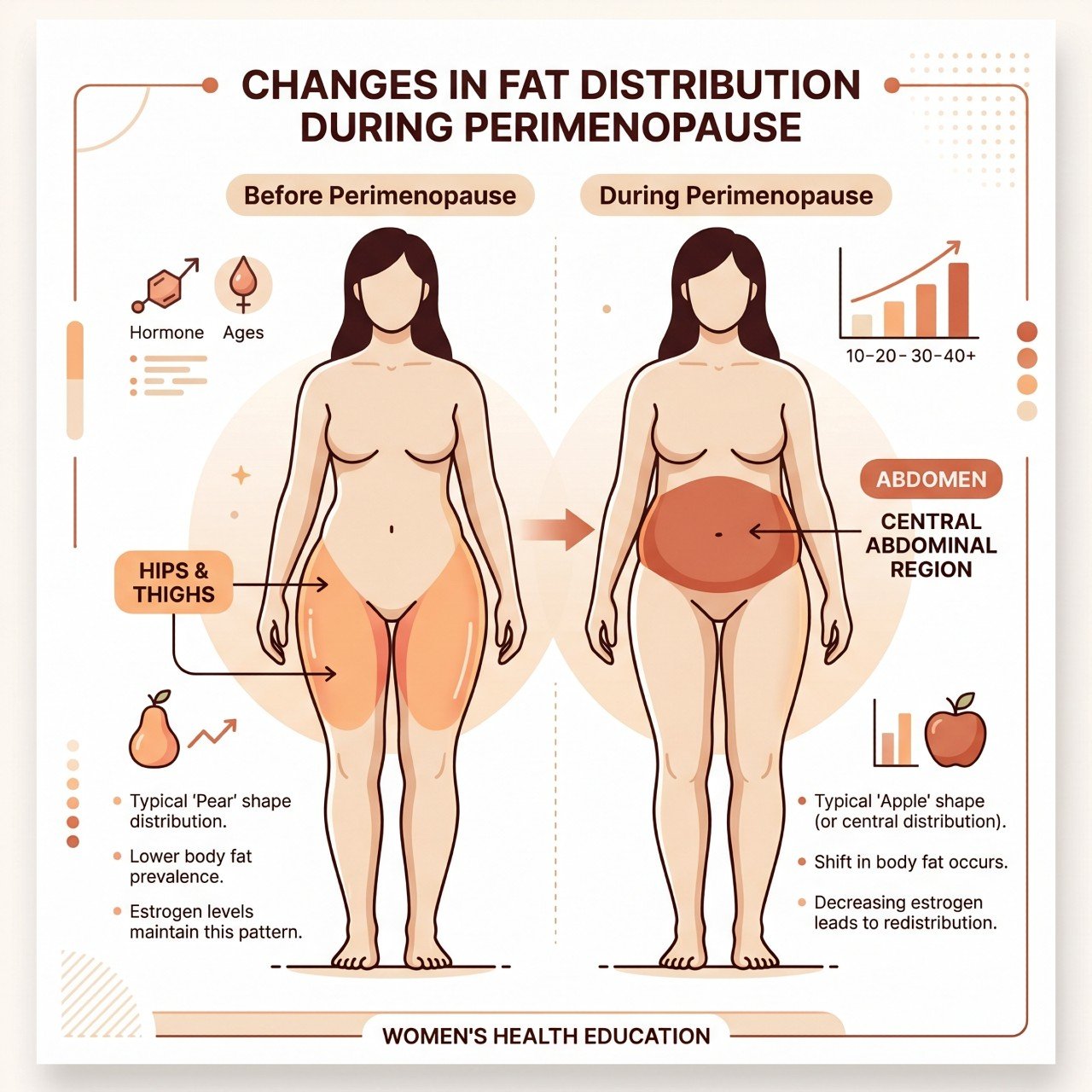
During perimenopause, declining estrogen redirects fat storage from the hips and thighs to the abdomen. Insulin sensitivity drops, making blood sugar harder to regulate. Cortisol response intensifies. Diet affects all three of these shifts — which is why what you eat matters more now, not less.
This is not weight gain from eating more. A four-year study that followed 156 women through the menopause transition found that only the women who actually crossed into postmenopause gained significant visceral fat. Every woman in the cohort added subcutaneous fat as she aged — but the deep abdominal fat tracked ovarian status, not the calendar. In the same group, sleeping metabolic rate fell about one and a half times faster in the women who became postmenopausal than in those who did not, and fat oxidation dropped by roughly a third (Lovejoy et al., International Journal of Obesity, 2008). The mechanism is hormonal, not arithmetic.
The Estrogen-Visceral Fat Connection
When estrogen falls, your body stops preferentially storing fat in the hips and thighs and begins directing it to the abdomen instead. This is a direct hormonal mechanism, not a calorie problem.
During reproductive years, estrogen promotes subcutaneous fat storage in the lower body. This fat is metabolically different from the visceral fat that accumulates around your organs in the midsection. As estrogen declines, Dr. Toni Golen of Harvard Women's Health Watch explains, "the body shifts fat storage patterns from the hips and thighs to the abdominal area."
The SWAN study measured this shift precisely. Visceral fat increased significantly starting three to four years before menopause onset. Fat oxidation — the body's ability to burn fat for fuel — dropped by 32% in women who became postmenopausal. Sleeping energy expenditure fell 1.5 times faster in women transitioning through menopause versus those who stayed premenopausal (-7.9% compared to -5.3%).
These are not marginal changes. You are burning fewer calories at rest, burning less fat for fuel, and storing more of what you eat in your midsection — simultaneously.
The Cortisol Amplifier Effect
Visceral fat cells have approximately four times more glucocorticoid (cortisol) receptors than subcutaneous fat cells. That receptor density is why elevated cortisol during perimenopause deposits fat specifically in the belly, not in the arms or legs.
When cortisol rises — from poor sleep, daily stress, blood sugar crashes, or alcohol — it finds a willing target in those visceral fat cells. The research on glucocorticoid receptor density confirms that omental (abdominal) fat has roughly four times the receptor density of subcutaneous fat.
The same stress response that was manageable before perimenopause now produces measurable changes to your waistline. The full mechanism is covered in the breakdown of cortisol and belly fat in women.
The Insulin Resistance Trap
Estrogen helps regulate insulin sensitivity. As estrogen falls in perimenopause, insulin resistance increases — meaning more glucose stays in the bloodstream longer, and more of it gets converted to fat, particularly in the abdomen.
This is the mechanism that makes refined carbohydrates and sugars so much more damaging now. The same blood sugar spike from a slice of white bread triggers a larger, longer insulin response when insulin sensitivity is already compromised. Insulin signals fat cells to store — and in perimenopause, those fat cells are increasingly concentrated in your midsection.
This is not weight gain from eating more. A four-year study that followed 156 women through the menopause transition found that only the women who actually crossed into postmenopause gained significant visceral fat. Every woman in the cohort added subcutaneous fat as she aged — but the deep abdominal fat tracked ovarian status, not the calendar.
In the same group, sleeping metabolic rate fell about one and a half times faster in the women who became postmenopausal than in those who did not, and fat oxidation dropped by roughly a third (Lovejoy et al., International Journal of Obesity, 2008). The mechanism is hormonal, not arithmetic.
Foods To Avoid For Menopause Belly Fat: What Changes After Your Last Period
The list of foods to avoid does not change after menopause. What changes is the speed you are working against. Visceral fat accumulates fastest during the transition itself and then slows sharply once you are postmenopausal — which means the same choices that felt like they were barely holding the line start to compound in your favour.
This is one of the most useful things to understand about menopause belly fat, and almost nobody explains it properly. Most women assume the abdominal gain is a permanent new setting on their body. The evidence says something more hopeful, and more specific: it is a phase with a beginning and an end.
Researchers on the Study of Women’s Health Across the Nation tracked regional fat distribution by DEXA scan in 380 women over a median of almost 12 years. Android fat — the fat carried around your midsection — grew at 1.21% a year before the transition began.

During the transition, it grew at 5.54% a year. After menopause, that rate fell back to 0.90% a year. Visceral fat, the deep fat around your organs, followed the same shape: it only started climbing once the transition began, rose at 6.24% a year through it, then decelerated to 1.47% a year (Greendale et al., Journal of Clinical Endocrinology & Metabolism, 2021).
| Phase | Android (Midsection) Fat | Visceral Fat | What It Means For You |
|---|---|---|---|
| Before the transition | +1.21% per year | Not yet rising | Gradual, age-related change |
| During the transition | +5.54% per year | +6.24% per year | The steep stretch — roughly 4–5x faster |
| After menopause | +0.90% per year | +1.47% per year | Decelerates sharply, but does not reverse |
Read that table again, because it answers a question most women ask with real dread: does this ever stop? The honest answer is that the steepest part does. The rates stay above zero, so the accumulation does not undo itself — but the transition years are the hardest stretch you will face, not your new permanent baseline.
Why Your Tape Measure Misses All Of This
Waist circumference is a poor instrument for tracking this particular change. In that same analysis, waist girth grew at 0.55% a year before the transition, 0.96% during it and 0.55% after — three numbers that were not statistically different from one another. The researchers concluded that waist and hip measurements are simply less sensitive to changes in fat distribution than a scan is.
A separate analysis of 1,246 women in the same cohort found something even more disorienting. Weight climbed in a straight line across the whole period, with no acceleration at the transition at all.
Underneath that flat line, fat mass roughly doubled its rate of gain — from about 1% to 1.7% a year — while lean mass began to fall for the first time. One went up as the other came down, so the number on the scale barely moved (Greendale et al., JCI Insight, 2019).
So if you have been tracking your progress with a tape measure and a set of bathroom scales and concluding that nothing you do makes any difference — those two instruments are genuinely the wrong tools for this specific job. That is a measurement problem. It is not a discipline problem, and it is not evidence that your effort is wasted.
What This Actually Means For Your Plate
Every food on the list above stays on the list after menopause. The reasons they cause trouble — blood sugar volatility, inflammatory load, and the way alcohol and refined carbohydrate behave in a lower-estrogen environment — do not switch off when your periods do. What changes is the return you get on consistency.
- If you are in the transition now: You are working against the steepest rate of change you will ever face. Holding steady is a real result, even when the scale refuses to reward you for it.
- If you are postmenopausal: The underlying rate of accumulation has dropped by roughly three-quarters. The same dietary changes now push against far less resistance than they would have five years ago.
- Either way: The lean mass you protect matters more than the fat you chase. Fat gain decelerates on its own after the transition. Muscle loss does not.
- And alongside all of it: The same late-transition window brings a measurable rise in cortisol, which pushes fat toward the abdomen through a separate mechanism — covered in detail in the guide to cortisol and belly fat in women.
There is no separate menopause food list waiting to be discovered. There is one list, and a window in which it is harder to follow. Knowing which side of that window you are standing on changes what you should expect from yourself — not what you should eat.
What Foods Cause Belly Fat In Perimenopause? The 10 Worst Offenders
The foods that cause belly fat in perimenopause are those that worsen insulin resistance, raise cortisol, increase inflammation, or disrupt estrogen and progesterone metabolism. These 10 categories hit hardest during this hormonal transition.
1. Refined Carbohydrates And White Flour Products
Refined carbs — white bread, pasta, white rice, bagels, most commercial crackers — strip away the fiber that slows glucose absorption. The result is a rapid blood sugar spike followed by an insulin surge. In perimenopause, reduced insulin sensitivity means that the surge lingers, and more of that circulating glucose gets stored as visceral fat rather than used for energy.
Before perimenopause, your body processed a quick insulin spike and moved on. Now the response is prolonged. Chronically elevated insulin tells fat cells to store, not release. Pair that with a metabolic slowdown (sleeping energy expenditure drops nearly 8% during the menopausal transition per the SWAN study), and you have ideal conditions for abdominal fat accumulation.
The worst offenders: white sandwich bread, instant oatmeal with added sugar, most commercial breakfast cereals, plain pasta eaten without protein or fat to slow absorption. Sourdough and sprouted grain breads digest somewhat more slowly — not ideal, but better than their refined counterparts.

2. Added Sugar And High-Fructose Corn Syrup
Fructose, the form of sugar found in high-fructose corn syrup and standard table sugar, bypasses normal glucose regulation and goes directly to the liver. There it gets converted to triglycerides and stored as fat — including visceral fat — with no insulin signal acting as a brake.
Glucose triggers insulin, which at least attempts to shuttle energy to cells. Fructose skips this step entirely. When the liver is saturated with fructose (which happens faster in perimenopause when metabolic rate is lower), it converts the excess to fat. This is why high sugar consumption drives fatty liver, and why fatty liver is tightly associated with visceral fat.
The obvious culprits: soda, candy, baked goods. The less obvious ones: commercially flavored yogurt, most store-bought salad dressings, "healthy" granola, protein bars, and virtually any product marketed as "low-fat" (where fat is replaced by sugar to maintain palatability).
3. Alcohol — Even "Just A Glass Of Wine"
Alcohol raises cortisol, disrupts hormone metabolism, and adds calories that get processed by the liver before fat, which pushes more dietary fat into storage. In perimenopause, these effects are amplified because hormones are already fluctuating.
This is hard to hear. "A glass of wine to unwind" has become cultural shorthand for self-care, and there's genuine social meaning in it. But the perimenopausal body handles alcohol differently than it did at 35.
Alcohol raises cortisol. Cortisol drives visceral fat storage through those glucocorticoid receptors in abdominal fat cells. Alcohol also disrupts sleep architecture, and poor sleep independently drives weight gain by further elevating cortisol and ghrelin (the hunger hormone). The hormonal impact compounds.
This doesn't require zero alcohol forever. But "just one glass most evenings" adds up to more hormonal disruption than most women realize — and the perimenopausal body is less tolerant of it than it was a decade ago.
4. Ultra-Processed Foods
Ultra-processed foods are engineered to override satiety signals. They combine refined carbs, industrial seed oils, salt, and sugar in ratios that maximize continued eating — and many contain additives that disrupt the gut microbiome, which plays a direct role in estrogen metabolism.
The gut microbiome influences estrogen levels through a group of bacteria called the estrobolome, which regulates how estrogen is recirculated versus excreted. Diets high in ultra-processed foods reduce gut bacteria diversity, which may impair estrogen metabolism and worsen the hormonal disruption already happening in perimenopause.
Beyond the microbiome: ultra-processed foods are simply very difficult to eat moderately. They're designed not to be. A handful of almonds signals fullness. A bag of chips doesn't. The appetite-signaling architecture is deliberately broken.
5. Artificial Sweeteners And Diet Products
Some artificial sweeteners — specifically saccharin, sucralose, and aspartame — appear to alter gut bacteria and impair glucose tolerance in ways that worsen insulin resistance. The evidence is emerging rather than definitive, but it's strong enough to warrant caution during perimenopause.
A 2024 review published in PMC's journal on microbiome research found that saccharin altered gut microbiota composition and was associated with impaired glucose tolerance. Sucralose and aspartame showed effects on insulin signalling in some subjects. The proposed mechanism involves disruption of short-chain fatty acid production — the same fatty acids that support insulin sensitivity.
The practical implication: diet sodas and "sugar-free" products are not neutral swaps for the real thing. Sparkling water, herbal tea, and water with citrus or cucumber are better choices.
6. Industrial Seed Oils
Soybean, corn, sunflower, and canola oils are high in omega-6 fatty acids. When omega-6 fats significantly outpace omega-3 fats in the diet, they drive systemic inflammation. Chronic inflammation is directly associated with visceral fat accumulation and worsened insulin resistance.
The ratio of omega-6 to omega-3 fats in the body matters. A ratio above 4:1 is associated with increased inflammatory markers. The typical Western diet runs somewhere between 15:1 and 20:1. Industrial seed oils are the primary driver of that gap because they appear in virtually all processed food, packaged food, and restaurant-prepared food.
Inflammation doesn't cause belly fat through a single direct pathway. It creates a hormonal environment — elevated inflammatory cytokines, cortisol, and insulin dysregulation — that makes fat loss harder and fat storage easier. Switching to olive oil, avocado oil, butter, or ghee for cooking is one of the simplest dietary changes with the broadest anti-inflammatory impact.
7. Salty Packaged Snacks
High-sodium foods cause the body to retain water, which creates the bloated, puffy belly appearance that often gets mistaken for visceral fat. While sodium itself doesn't directly increase visceral fat, it consistently masks progress and keeps women anchored to high-processed-food dietary patterns.
More practically, salty packaged snacks almost always combine sodium with refined carbs and seed oils. The salt alone is not the issue; the food matrix it comes in is. And that craving cycle — refined carbs create a blood sugar drop, salt drives thirst and more snacking, the cycle repeats — is genuinely hard to interrupt without removing the trigger foods entirely.
Join Our Mailing List
Join thousands of women inside our community and receive our free guide, 10 Actions That Support Permanent Weight Loss — the exact behavioural shifts that make the difference between a two-week attempt and a lasting transformation.
No restriction plans. No guilt. Just what actually works — for real women with real lives.
8. Sugary Beverages And Fruit Juices
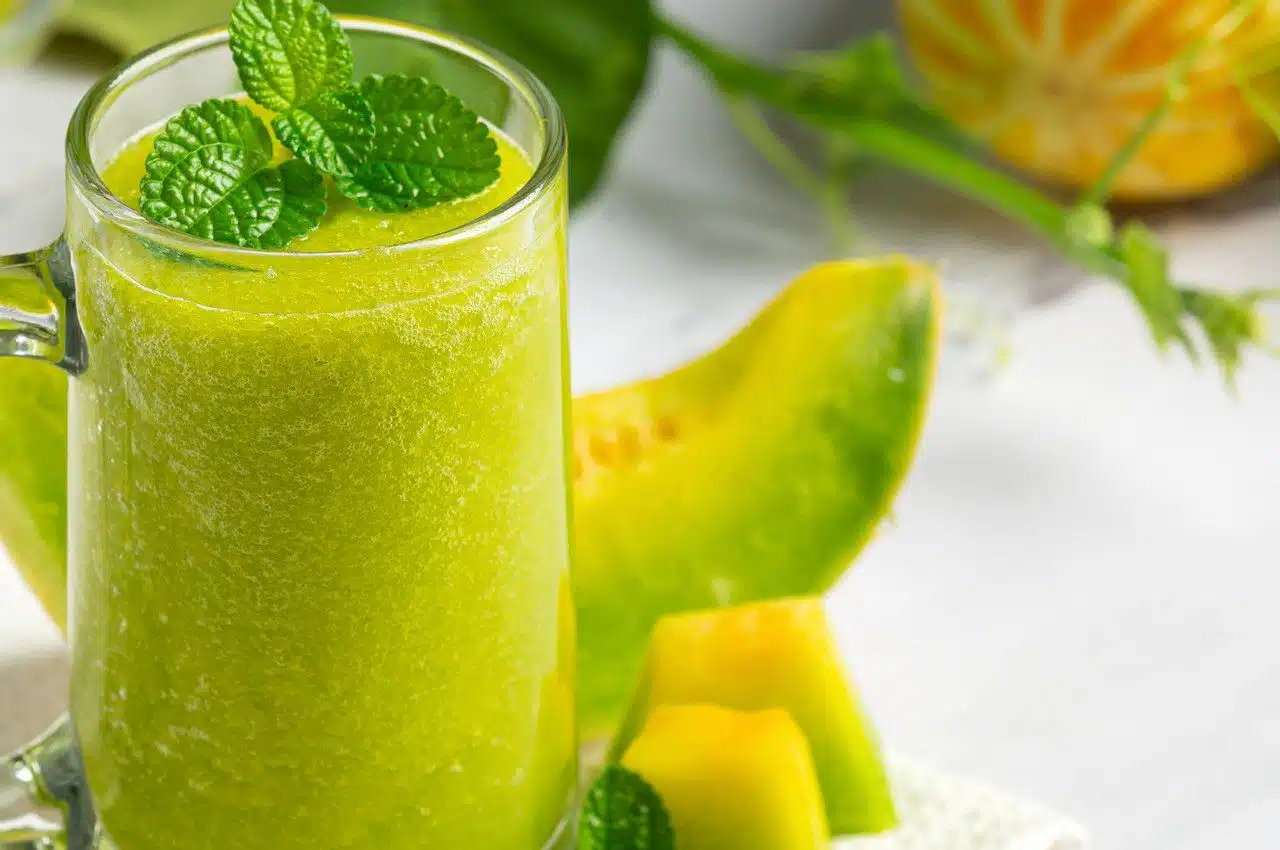
Liquid calories don't trigger the satiety signals that solid food does. Sugary beverages — fruit juice, sports drinks, sweetened coffee drinks, flavored lattes — deliver high fructose loads with none of the fiber that would slow absorption or signal fullness.
A glass of orange juice contains roughly the same sugar as a can of cola, with only trace fiber. Without fiber, all that fructose hits the liver at once. The liver converts the excess to triglycerides, which can be stored as visceral fat.
Whole fruit is genuinely different from juice — the fiber slows absorption, the volume fills you up, and the polyphenols carry anti-inflammatory effects. Juice is what happens when you remove all of that and concentrate what remains. A 20-ounce flavored café latte adds 40-60g of sugar before you've taken the first sip.
9. Trans Fats And Partially Hydrogenated Oils
Trans fats raise LDL cholesterol, trigger systemic inflammation, and in several peer-reviewed analyses have been associated with increased visceral fat independent of total calorie intake. The FDA banned partially hydrogenated oils in the U.S. in 2018, and most major food manufacturers reformulated before that.
But trans fats still appear in some imported products, some small chain fast food, and any product that lists "partially hydrogenated" anywhere in the ingredient list. Check labels on stick margarine, commercial baked goods, and fried fast food from smaller chains.
10. Excessive Caffeine And Energy Drinks
Caffeine above roughly 400mg daily — about four standard cups of coffee — activates the cortisol stress response. In perimenopause, where cortisol sensitivity is already elevated, regular high-caffeine intake contributes to visceral fat accumulation through the same cortisol-receptor pathway as chronic stress.
This is not an argument against coffee. Two to three cups daily carries its own metabolic benefits and is generally well-tolerated. The problem is large-format energy drinks (some deliver 300mg per can), afternoon venti lattes stacked on top of a morning coffee habit, or pre-workout supplements combined with caffeinated coffee. Watch for added sugar in coffee drinks as well — a flavored latte at most chains contains 40-60g of sugar.
TABLE 1: The 10 Belly Fat Foods — Hormonal Belly Fat Trigger (H.B.T.) Risk Assessment for Perimenopause
| Food Category | H: Hormonal Disruption | B: Blood Sugar Impact | T: Inflammation Load | Overall H.B.T. Risk |
|---|---|---|---|---|
| Refined Carbohydrates | Medium | High | Medium | High |
| Added Sugar / HFCS | High | High | Medium | Very High |
| Alcohol | High | Medium | High | Very High |
| Ultra-Processed Foods | High | High | High | Very High |
| Artificial Sweeteners | Medium | Medium | Medium | Moderate |
| Industrial Seed Oils | Low | Low | High | Moderate |
| Salty Packaged Snacks | Low | Medium | Medium | Moderate |
| Sugary Beverages | Medium | High | Low | High |
| Trans Fats | Low | Low | High | Moderate-High |
| Excessive Caffeine | High | Low | Low | Moderate |
H.B.T. Risk is assessed relative to the perimenopause hormonal context. The same foods carry different risk levels in different hormonal environments.
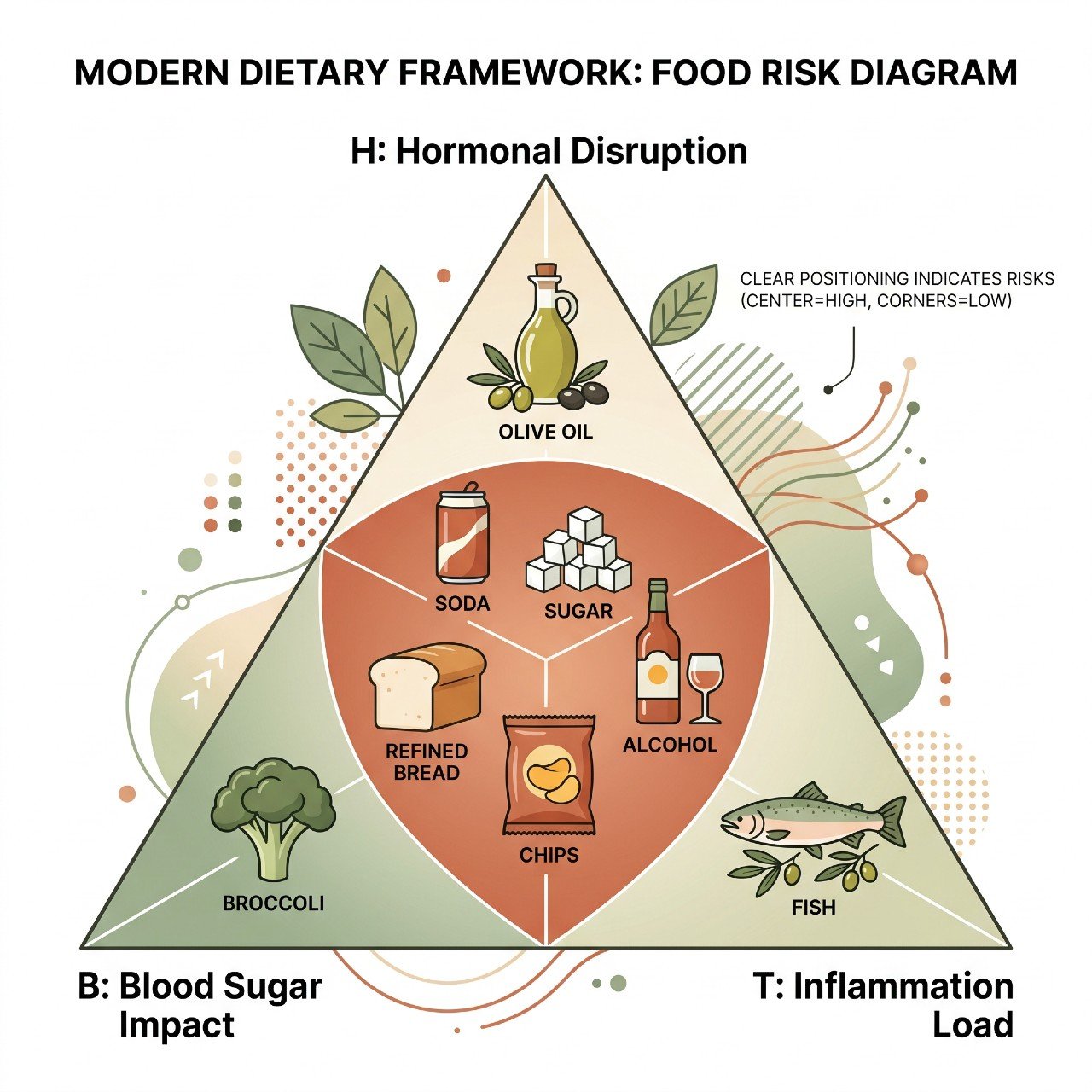
The Hormonal Belly Fat Trigger (H.B.T.) Framework
The H.B.T. Framework assesses any food across three axes: Hormonal Disruption (H), Blood Sugar Impact (B), and Inflammation Load (T). Foods that score high on two or more axes are the ones to prioritize removing first.
This framework emerged from working with women in perimenopause who felt overwhelmed by contradictory food advice. Every food on every platform seems to be either "a superfood" or "toxic." The goal was a practical filter that didn't require calorie counting or macro tracking but still gave clear, mechanistic guidance on which foods to address first.
H — Hormonal Disruption: Does this food raise cortisol, disrupt estrogen metabolism, interfere with insulin signaling, or affect the gut microbiome's estrogen regulation?
B — Blood Sugar Impact: Does this food spike blood glucose rapidly, triggering a large insulin response that promotes fat storage in the cells most sensitive to insulin, which in perimenopause are increasingly abdominal cells?
T — Inflammation Load: Does this food contain pro-inflammatory compounds — omega-6 dominant oils, advanced glycation end products (AGEs), or food additives — that worsen the inflammatory environment associated with visceral fat?
A food that scores high on all three axes (a commercially fried snack cooked in soybean oil, seasoned with salt and sugar) is a priority target. A food that scores high on only one axis — say, a sweet potato (high B score, low H and T) — is a smaller concern and is easily managed by pairing it with protein to blunt the blood sugar effect.
This three-axis model makes dietary choices clearer without collapsing everything into calorie math — which, as the contrarian section below explains, is the wrong primary metric for perimenopause belly fat.
Is Perimenopause Belly Fat Different From Regular Belly Fat?
Yes. Perimenopause belly fat is primarily visceral — stored around organs, not just under the skin — and it accumulates through hormonal mechanisms, not simply caloric surplus. This is why standard calorie-cutting advice often fails to address it.
Not all belly fat is the same type. Subcutaneous fat sits just below the skin and is the kind you can pinch. Visceral fat surrounds the organs deeper in the abdominal cavity. Visceral fat is metabolically active in ways subcutaneous fat isn't — it releases inflammatory cytokines, disrupts insulin signaling, and raises cardiovascular risk.
Perimenopause drives an increase primarily in visceral fat. The SWAN study documented this specifically: visceral fat increased starting three to four years before menopause onset, while subcutaneous fat accumulation was less pronounced.

Visceral vs. Subcutaneous Fat: Why Location Matters
Visceral fat is not just a cosmetic issue. Because it surrounds metabolically active organs — the liver, intestines, and pancreas — it releases compounds that worsen insulin resistance, drive systemic inflammation, and raise cardiovascular risk. This is why perimenopausal belly fat carries health consequences beyond waist circumference.
Subcutaneous fat, by comparison, is metabolically quieter. It's not ideal in excess, but it doesn't disrupt insulin signaling in the same way. When researchers and clinicians talk about the health risks of belly fat, they mean visceral fat specifically.
Why "Eat Less, Move More" Often Backfires In Perimenopause
Caloric restriction raises cortisol. Cortisol drives visceral fat storage. This is one reason the standard advice can actively work against perimenopausal women: you eat less, stress hormones rise, and more of what you do eat gets directed to your abdomen.
The more effective approach targets the hormonal environment first — blood sugar stability, cortisol reduction, and inflammation — rather than raw caloric deficit. This principle is detailed in the guide on how to lose weight during perimenopause without starving yourself.
What Foods Actually Fight Perimenopause Belly Fat?
The foods that fight perimenopause belly fat work by stabilizing blood sugar, reducing inflammation, preserving muscle mass, and supporting estrogen metabolism. They score low on the H.B.T. Framework across all three axes.
This is not a list of superfoods. It's a targeted set of foods that address the specific hormonal mechanisms driving belly fat in perimenopause.
Anti-Inflammatory Foods That Target Hormonal Fat
Fatty fish (salmon, sardines, mackerel): High in omega-3s, which counter the omega-6 dominance of industrial seed oils and reduce the inflammatory markers associated with visceral fat accumulation.
Cruciferous vegetables (broccoli, cauliflower, Brussels sprouts, kale): Contain indole-3-carbinol, which supports liver estrogen detoxification. When estrogen is metabolized efficiently, it circulates in less problematic forms and is less likely to disrupt the hormonal balance.
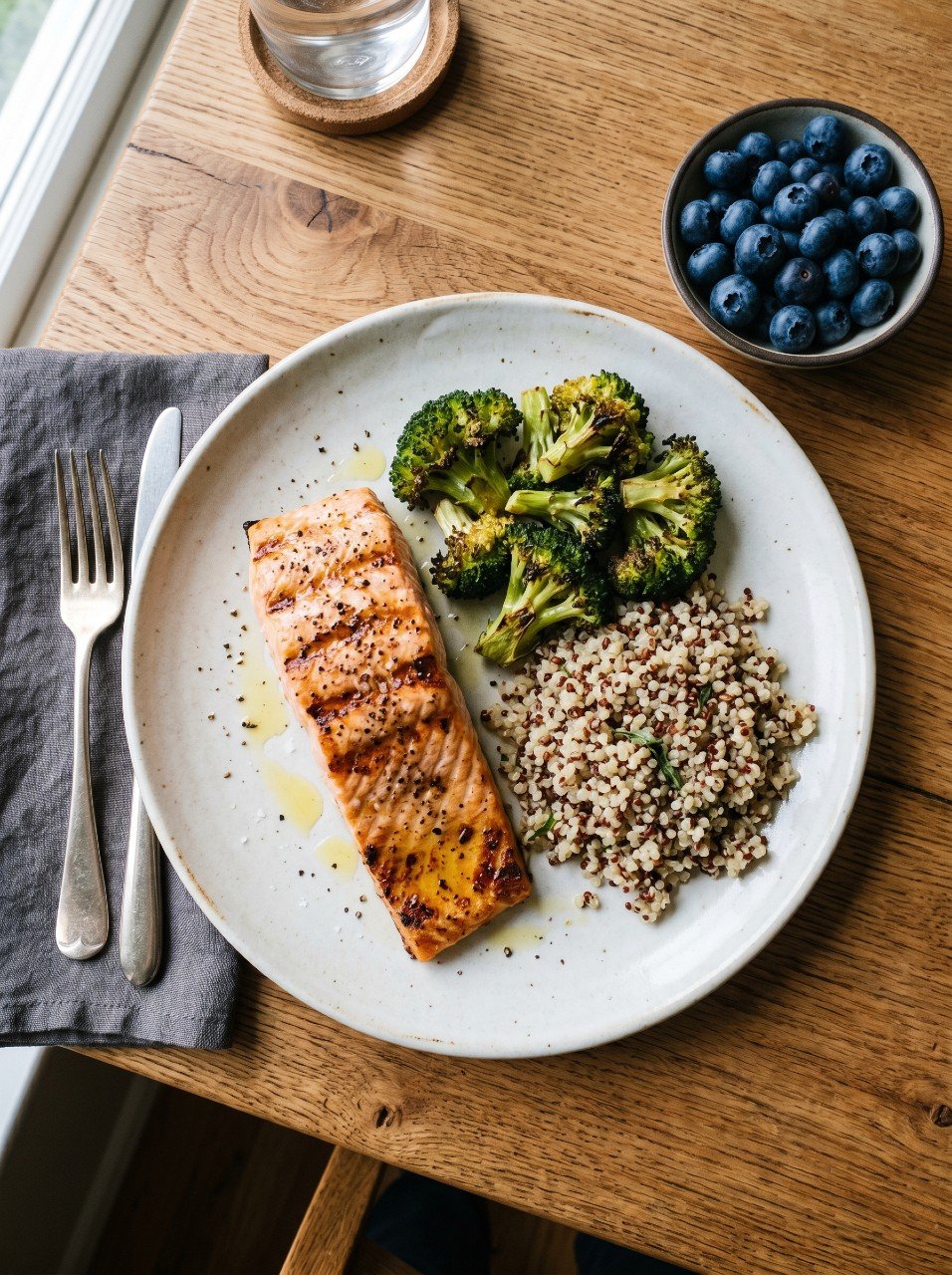
Berries: High in polyphenols that reduce oxidative stress and inflammation. Blueberries have been linked to improved insulin sensitivity in several small studies and feed the beneficial gut bacteria involved in estrogen regulation.
Olive oil: Contains oleocanthal, a natural anti-inflammatory compound. Also supports gut microbiome diversity — including the estrobolome bacteria that regulate estrogen recirculation.
Protein: The Metabolism Defender
Adequate protein intake is probably the single most important dietary change for perimenopausal women. Here's why: the SWAN study found that protein intake declines naturally around the time of menopause onset, right when metabolic vulnerability is highest.
Protein preserves muscle mass (the engine of resting metabolic rate), creates satiety that refined carbs and fat don't, and requires more energy to digest than either carbs or fat — a metabolic advantage called the thermic effect of food. Less muscle means a slower metabolism, which compounds the calorie-burning decline documented in the SWAN data.
The high-protein diet guide for sustainable weight loss covers this in detail. The baseline: 1.2-1.6g of protein per kilogram of body weight daily, spread across meals rather than concentrated at dinner. Good sources include eggs, plain Greek yogurt, cottage cheese, fish, chicken, legumes, tofu, and tempeh.
Fiber: The Blood Sugar Stabilizer
Fiber slows glucose absorption, feeds beneficial gut bacteria, and reduces the post-meal insulin spike that drives fat storage. The SWAN study documented that fiber intake declines around menopause onset — at exactly the time you need it most.
Target 25-35g of fiber daily. Most women get about half that. The gap is filled more practically by adding more vegetables, legumes, and whole grains to existing meals than by supplementing with fiber powders.
Practical entries: add a handful of beans to salads and soups. Swap white rice for cauliflower rice plus a small amount of brown rice. Choose whole fruit over juice. Eat the skin on vegetables where possible.
See the guide on what women should eat in the morning for hormone balance and fat loss for a practical breakdown of how to front-load fiber and protein early in the day.
TABLE 2: 7-Day Belly Fat Food Swap Plan for Perimenopause
| Day | High-H.B.T. Food to Remove | Lower-H.B.T. Swap | Why This Swap Works |
|---|---|---|---|
| Monday | Flavored sweetened yogurt | Plain Greek yogurt + fresh berries | Removes 20-30g added sugar; adds 15-20g protein and polyphenol antioxidants |
| Tuesday | White toast + jam at breakfast | 2 eggs + avocado on sourdough | Protein and healthy fat slow glucose absorption and reduce insulin spike |
| Wednesday | Afternoon diet soda | Sparkling water + fresh lemon | Removes artificial sweeteners linked to gut microbiome disruption |
| Thursday | White pasta with jarred tomato sauce | Half portion pasta + extra roasted vegetables + olive oil | Fiber from vegetables blunts the glucose spike; reduces total refined carb load |
| Friday | Glass of wine with dinner | Kombucha or herbal tea | Removes cortisol trigger and liver processing load; supports gut microbiome |
| Saturday | Packaged chips as snack | Celery + almond butter or hummus | Removes seed oils; adds fiber and healthy fat that trigger satiety signals |
| Sunday | Flavored coffee drink with syrup | Americano with a splash of milk | Removes 40-60g added sugar common in flavored café drinks |
This plan is not about restriction. It's about substitution. Each swap targets a specific hormonal mechanism driving perimenopause belly fat.

Expert Commentary: What The Research Actually Shows
The SWAN study findings have shifted how researchers approach perimenopausal weight management. The key finding — underplayed in most mainstream health content — is that the most significant metabolic changes don't happen at menopause. They begin three to four years before it.
Dr. Toni Golen of Harvard Women's Health Watch underlines that muscle mass decline compounds the estrogen-driven fat shift: "Muscle mass also begins to decline, meaning we're burning fewer calories at rest than we were before." This is the combination that catches most women off guard — they're not eating more, but they're burning less and storing it differently at the same time.
The SWAN data on protein and fiber intake declining naturally around menopause onset is particularly striking from a clinical nutrition standpoint. Women are nutritionally sliding in exactly the wrong direction at exactly the wrong time. The cultural pattern — busier midlife schedules, less cooking at home, more convenience food — often accelerates this slide without anyone noticing.
The most common misconception women bring to conversations about perimenopause weight gain: "I just need to eat less." The data doesn't support this as the primary lever. Hormonal environment — specifically blood sugar stability, cortisol levels, and gut health — determines where fat is stored more than total calories do. Eating less without addressing these factors often makes the underlying problem worse.
The Contrarian Take: Perimenopause Belly Fat Is Not Primarily A Calorie Problem
Most diet advice for weight loss starts from a calorie deficit as the primary mechanism. For perimenopausal belly fat specifically, this starting point is wrong — or at least badly incomplete.
Here's the evidence: The SWAN study found that visceral fat increased even as physical activity and dietary intake declined in women approaching menopause. Women were eating less, moving less, and gaining visceral fat anyway. The mechanism was hormonal redistribution — not caloric excess.
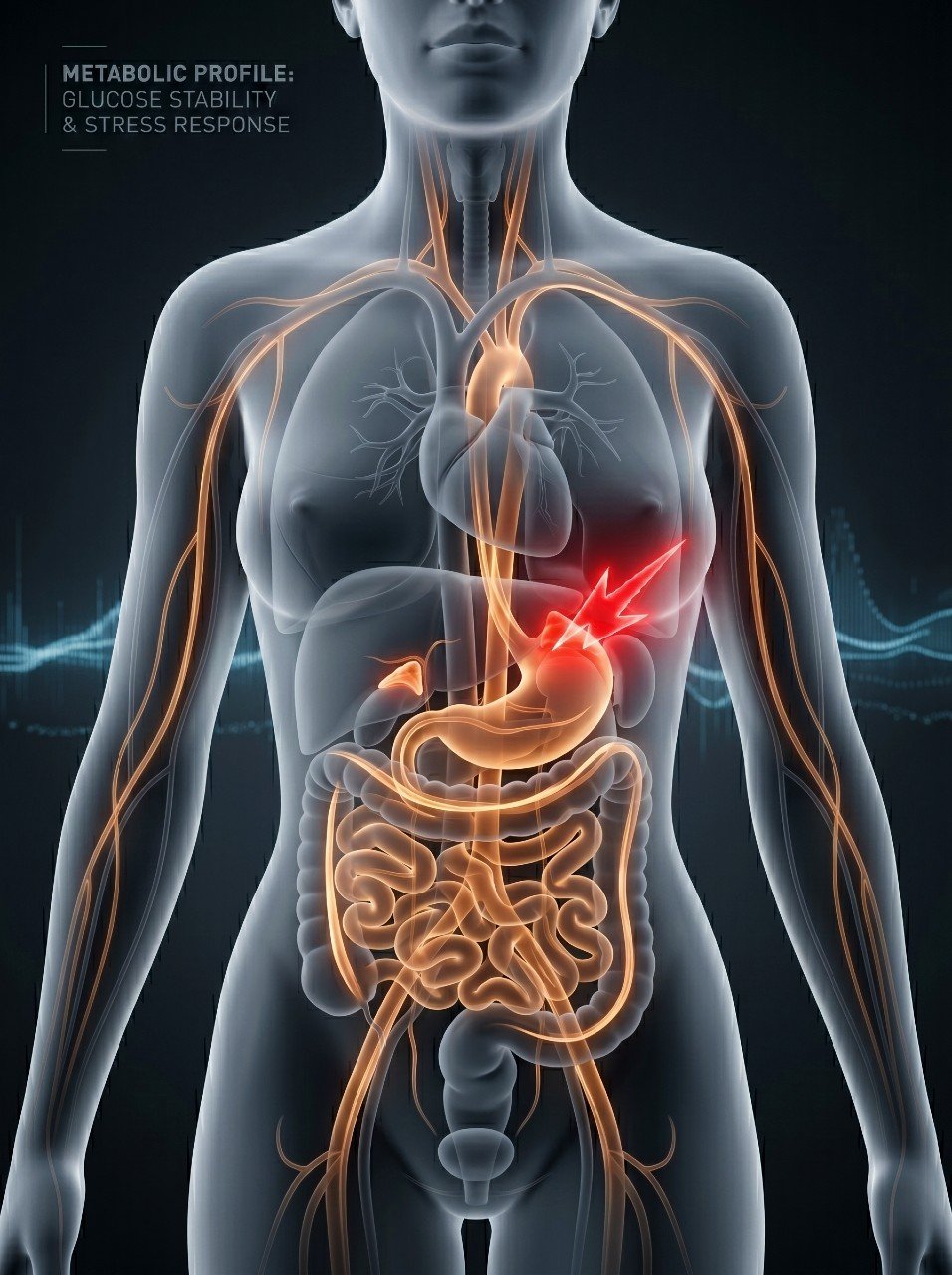
Caloric restriction, particularly aggressive restriction, raises cortisol. Cortisol has a direct pathway to visceral fat accumulation through those four-times-denser glucocorticoid receptors in abdominal fat cells. This is why perimenopausal women who significantly cut calories often find their waistlines don't respond as expected. The restriction itself triggers a hormonal response that works against the deficit.
What the evidence supports instead:
- Stable blood sugar: Eating protein and fiber at every meal to prevent the glucose spikes that drive insulin surges and subsequent fat storage. The guide on what women should eat in the morning for hormone balance shows how to start the day in a way that keeps blood sugar steady for hours.
- Lower cortisol load: Reducing alcohol, excessive caffeine, poor sleep, and overtraining. The piece on the best diet for cortisol-related weight gain covers the dietary side of this. Sleep, which most women in perimenopause treat as optional, is actually a primary lever for cortisol and weight management.
- Gut microbiome support: Removing ultra-processed foods and artificial sweeteners while adding fiber, fermented foods, and polyphenol-rich vegetables to support the estrobolome — the gut bacteria that regulate estrogen recirculation and significantly affect fat storage patterns.
- Adequate protein: To preserve muscle mass and sustain metabolic rate, as documented in the lean body formula for women over 40.
This approach doesn't ignore calories. It simply doesn't treat them as the primary mechanism driving perimenopause belly fat — because the evidence says they're not.
For the broader picture of perimenopause weight management, the guide on the best diet for women over 40 is a strong next read. If stress and cortisol feel like the bigger factor in your specific situation, why does stress make women gain weight goes deeper into that mechanism. And if emotional eating is part of the picture, the piece on whether diet can help with emotional eating is worth reading.
Want The Habits Behind Lasting Weight Loss? Get the free guide: 10 research-backed habits that help women lose body fat and keep it off, with no extreme diets. Send Me The Free Guide.
The Bottom Line
What foods cause belly fat in perimenopause? The same foods that were always problematic are now working through hormonal mechanisms that either didn't exist before or didn't matter as much.
Refined carbs, sugar, alcohol, and ultra-processed foods aren't the main problem because of their calorie content. They're the problem because of what they do to insulin sensitivity, cortisol levels, and the gut microbiome at a time when your hormonal buffer zone has shrunk considerably.
The 7-day swap plan in Table 2 doesn't require perfection. One swap this week, one on the next. The goal is a dietary pattern that works with your hormonal environment rather than against it.
Glossary Of Key Terms
- Visceral Fat: Metabolically active fat stored deep within the abdominal cavity, surrounding internal organs such as the liver and intestines.
- Subcutaneous Fat: Fat stored directly under the skin, typically found in the hips and thighs, which is metabolically "quieter" than visceral fat.
- SWAN Study: The Study of Women's Health Across the Nation, a comprehensive longitudinal research project tracking women's metabolic and hormonal changes through the menopausal transition.
- H.B.T. Framework: A diagnostic tool used to evaluate food based on its Hormonal Disruption, Blood Sugar Impact, and Inflammation Load.
- Estrobolome: A specific collection of bacteria in the gut microbiome dedicated to metabolizing and regulating the body's estrogen levels.
- Insulin Resistance: A condition in which cells become less responsive to insulin, leading to elevated blood sugar and increased fat storage, particularly in the abdomen.
- Glucocorticoid Receptors: Cellular receptors that bind to cortisol; they are four times more concentrated in visceral fat cells than in subcutaneous fat cells.
- Fat Oxidation: The biological process by which the body burns fat for fuel, which is documented to drop by approximately 32% in postmenopausal women.
- Inflammation Load: The degree to which a food or substance triggers systemic inflammation, often driven by a high ratio of omega-6 to omega-3 fatty acids.
- Refined Carbohydrates: Processed grain products (like white flour) that have been stripped of fiber, leading to rapid spikes in blood glucose and insulin.
FAQ
What Is The Single Worst Food For Perimenopause Belly Fat?
Ultra-processed food scores highest on the H.B.T. Framework because it combines refined carbs (blood sugar spike), industrial seed oils (inflammation), and additives that disrupt the gut bacteria involved in estrogen metabolism. If you can make only one dietary change, reducing ultra-processed food consistently has the broadest impact across all three hormonal mechanisms.
Does Alcohol Really Cause Belly Fat During Perimenopause?
Yes, through two documented mechanisms. Alcohol raises cortisol, which drives fat storage in the visceral fat cells that have four times the cortisol receptor density of subcutaneous fat cells. Alcohol also disrupts sleep architecture, and poor sleep independently raises cortisol and drives weight gain. The two mechanisms compound each other.
Why Am I Gaining Belly Fat Even Though I Haven't Changed My Diet?
Because your body has changed how it processes the same foods. Declining estrogen shifts fat storage from the hips and thighs to the abdomen. Falling insulin sensitivity means more glucose gets stored as fat rather than used for energy. Sleeping energy expenditure drops nearly 8% during the menopausal transition per the SWAN study data. The same diet produces different metabolic outcomes in a different hormonal environment.
Are Refined Carbs Or Sugar Worse For Perimenopause Belly Fat?
They work through overlapping mechanisms — both spike insulin — but fructose has an additional pathway to visceral fat through direct liver conversion that glucose doesn't have. Sugar is arguably worse. Eliminating both is more effective than choosing between them.
Do Artificial Sweeteners Cause Belly Fat In Perimenopause?
The evidence is emerging. A 2024 PMC review found saccharin, sucralose, and aspartame alter gut bacteria and impair glucose tolerance — the same pathways that drive visceral fat accumulation. They're not as damaging as regular sugar, but they're not metabolically neutral either. Sparkling water, herbal tea, and water with citrus are reliably better choices.
How Long Does It Take To Lose Perimenopause Belly Fat With Dietary Changes?
Most women see a measurable reduction in bloating and water retention within two to three weeks of removing the highest-H.B.T. foods. Actual visceral fat reduction is slower — typically three to six months of consistent dietary change before visible changes appear. Visceral fat responds to dietary intervention, but it requires patience and consistency that most mainstream weight loss timelines don't account for.
Can Stress Alone Cause Perimenopause Belly Fat Without Any Dietary Changes?
Yes. The cortisol pathway to visceral fat is direct and doesn't require dietary triggers to activate. Chronic high stress during perimenopause, even with a genuinely clean diet, can drive visceral fat accumulation through elevated cortisol and its amplified effect on abdominal fat cell receptors. Diet is a major lever, but stress management, sleep quality, and exercise intensity all contribute to the same cortisol equation. The guide on emotional eating and stress-related weight gain covers how these factors interact.