
Why Strength Training For Fat Loss Is A Dose Question, Not A Cardio Contest

You didn’t gain all your weight in one day; you won’t lose it in one day. Be patient with yourself.
Jenna Wolfe
Summary (TL;DR)
Strength training for fat loss works: it protects fat-free mass while you lose fat and lowers fat mass modestly, but it doesn't out-burn cardio. In trials lasting 10 weeks or more, aerobic training beat lifting alone on fat mass by about 1 kg, and percent body fat didn't differ. Adding lifting to a diet increased fat loss and protected fat-free mass.
So the lifting-versus-cardio fight is the wrong one. What you can control is the dose: at least two full-body sessions a week, built up slowly, and given 10 weeks or more before you judge it. After 40, protecting muscle while you lose fat matters even more.
Strength training for fat loss is something everyone has an opinion on. One camp says muscle burns fat around the clock, so lift heavy and stop worrying. The other says cardio burns more, so keep running. In one r/fit thread, the cardio-versus-weights debate runs past 250 comments.
That confusion is fair, because both camps are half right. Older versions of this article claimed lifting beats cardio for fat loss. The best recent evidence doesn't back that up, so we rebuilt the page around what the trials actually measured.
Below you'll find what lifting does and doesn't do to fat and muscle, the calorie math at its real size, and the Dose Dial, our own three-setting framework for deciding how much to do.
This guide is about fat loss. For the wider reasons to lift in midlife (muscle, bone and mood), see our guide to strength training for women in perimenopause and over 40.
Medical & Referral Disclaimer
This article is for educational purposes only and does not constitute medical or personalized fitness advice. Individual results from weight training vary based on age, hormonal status, health history, nutrition, and consistency of practice. Consult a qualified healthcare provider or certified fitness professional before starting a new exercise program, particularly if you have a pre-existing medical condition, injury, or are pregnant or postpartum.
Key Takeaways
- Adding lifting to a diet increased fat loss and protected fat-free mass in a 2025 review of 25 diet trials.
- Aerobic training beat lifting alone on fat mass in trials of 10 weeks or more, though percent body fat didn't differ.
- Adding lifting to cardio neither helped nor hurt fat loss, so you don't have to pick a side.
- The calorie math is small: afterburn and extra muscle add a little, not a lot.
- Two sessions a week covering every major muscle group is the guideline floor. About 10 weekly sets per muscle group is the ACSM figure for muscle growth. The Dose Dial fills in the middle.
- Judge any plan after 10 weeks or more, and track your waist, strength and clothes fit, because the scale can stay flat while your body composition changes.

What Strength Training Does For Fat Loss And What It Doesn't
Strength training protects fat-free mass while you lose fat, and on its own it lowers fat mass only modestly. It doesn’t burn calories at the rate cardio does.
That’s less thrilling than “muscle burns fat while you sleep,” but it’s better news than it sounds. Losing fat while keeping fat-free mass (everything that isn’t fat, mostly muscle) is the outcome most of us actually want, and the scale can’t tell the difference.
Here’s what the research supports, and where it stops.
- It lowers body fat, modestly, on its own: across 54 trials of healthy adults, lifting cut body fat by about 1.5 percentage points and fat mass by about 0.55 kg compared with no exercise, according to a 2022 meta-analysis. The effect didn’t differ by sex.
- It trims visceral fat: the same review found lower visceral fat, the deep abdominal kind that surrounds your organs. It’s a modest visceral fat reduction.
- It protects fat-free mass during a diet: in a 2025 review of 25 diet trials in adults with overweight or obesity, adding lifting to a diet protected fat-free mass (moderate certainty) and increased fat loss (high certainty).
- It may improve insulin sensitivity: a 2023 meta-analysis of 27 studies found lifting lowered fasting insulin and HOMA-IR, two markers of insulin resistance, in adults with overweight or obesity and no diabetes. The effect was smaller in women and in people 40 and over.
- It doesn’t move the scale much: in that same diet review, lifting made no significant difference to body weight (about 0.3 kg). The change shows up in what you lose.
- It doesn’t out-burn cardio: the next two sections cover that in detail.
These effects build over weeks of training, so any “fat burning workout” that promises results from a single session deserves a raised eyebrow.
Strength vs. Cardio: What The Meta-Analyses Say
In trials lasting 10 weeks or more, aerobic training beat lifting alone by about 1 kg of fat mass. Percent body fat didn't differ, and lifting kept more fat-free mass. Plenty of fitness content, including older versions of this page, claimed the opposite.
The 2025 Lafontant analysis behind it reviewed 36 randomized trials and 1,564 healthy adults, with 31 trials in the pooled analysis. Here’s how it lines up against three other studies, all linked so you can check them.
| Study | Who And How Long | What It Compared | What It Found About Fat |
|---|---|---|---|
| Wewege et al., 2022 | 58 trials in the review (54 pooled), healthy adults, at least 4 weeks | Lifting vs no exercise | Body fat down about 1.5 points, fat mass down about 0.55 kg, visceral fat lower. Sex didn’t change the effect. |
| Lafontant et al., 2025 | 36 trials, 1,564 healthy adults, 10 weeks or more subgroup | Aerobic vs lifting vs both | Aerobic beat lifting alone on fat mass by about 1.06 kg but lost about 0.88 kg more fat-free mass. Percent body fat was similar. Cardio plus lifting beat lifting alone by about 1.09 kg. |
| Willis et al., 2012 | 119 sedentary adults with overweight or obesity, 8 months | Aerobic vs lifting vs both | Aerobic and combined training lost more fat mass than lifting alone. Combined wasn’t better than aerobic alone, at double the time. Lifting and combined gained more lean mass. |
| Binmahfoz et al., 2025 | 25 trials, adults 18 to 65 with a BMI of 25 or higher, all dieting | Diet plus lifting vs diet alone | No significant difference in weight lost, but more fat lost (high certainty) and less fat-free mass lost (moderate certainty). |
Read down the last column and a pattern shows up. Aerobic training is better at reducing fat mass, lifting is better at keeping fat-free mass, and doing both gets you the second without giving up the first.
What doing both doesn’t get you is more fat loss than cardio alone. Willis and colleagues concluded that aerobic training is the optimal mode for reducing fat mass, and that a program including lifting is needed to increase lean mass.
Does Lifting Weights Burn Fat? The Calorie Math
Yes, but not fast. A standard weights session costs fewer calories per hour than jogging, and the extras people hype, afterburn and extra muscle, are small. Here's a sourced comparison.
A MET is a multiple of your resting energy use, so 3.5 METs means about three and a half times what you’d spend sitting still. The 2024 Adult Compendium, built for adults 19 to 59, lists these standard values.
| Activity | METs | Compared With A Standard Weights Session |
|---|---|---|
| Weights, multiple exercises, 8 to 15 reps | 3.5 | Baseline |
| Brisk walking, 3.5 to 3.9 mph | 4.8 | About 1.4 times |
| Circuit training, moderate effort | 5.0 | About 1.4 times |
| Heavy lifting, vigorous effort | 6.0 | About 1.7 times |
| Jogging, general pace | 7.5 | About 2.1 times |
| Running, 6 to 6.3 mph | 9.3 | About 2.7 times |
Per hour, a standard weights session costs less than half of what jogging does.
Three Numbers People Quote, At Real Size
Session cost, afterburn, and muscle upkeep are all real, and all small.
Session Cost
In a lab study of ten older adults (average age 73), the sessions were matched at roughly 125 kcal. The resistance session took about 61 minutes and the aerobic session about 27. It’s a small, older group, so treat it as direction, not your exact numbers.
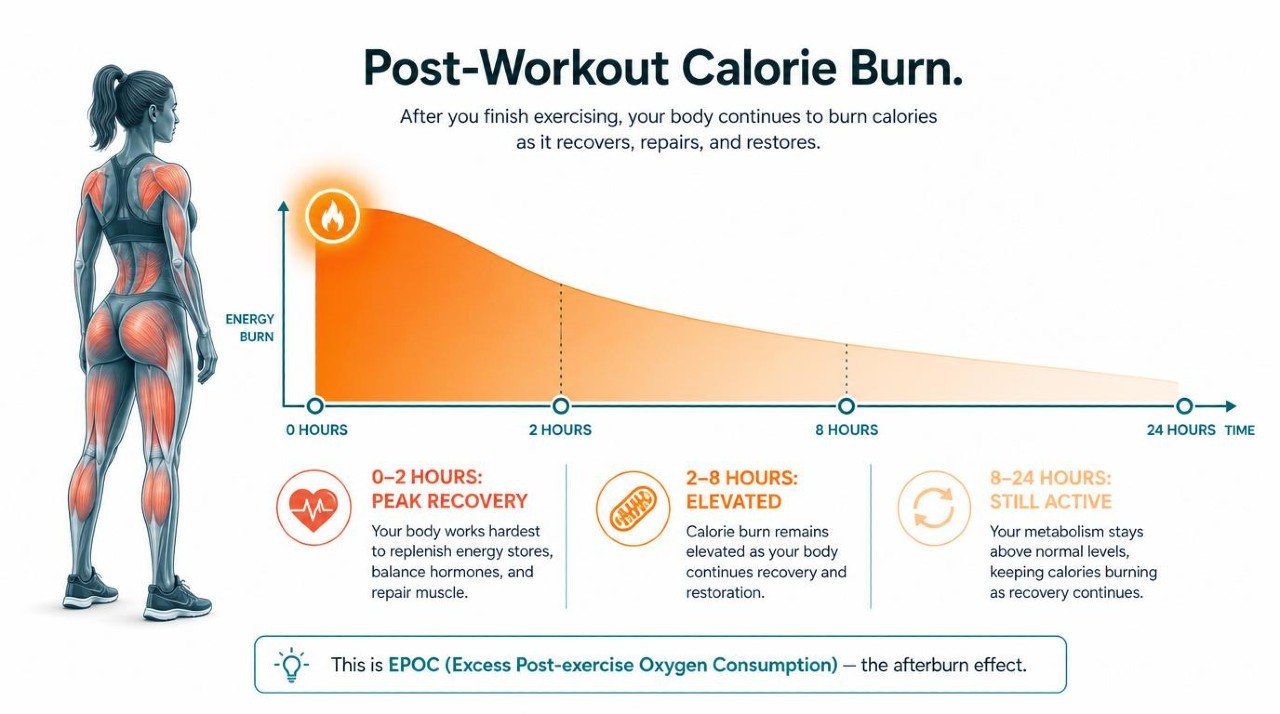
Afterburn (EPOC)
In that same study, the 30 minutes after the matched sessions added about 28 kcal after lifting and about 40 kcal after aerobic exercise. Real, but small, and larger after cardio.
ACE Fitness puts the afterburn from high-intensity resistance training at roughly 6 to 15% of the session's energy cost. For a 300-calorie session, that's about 18 to 45 extra calories: worth having, but not a reason to lift instead of eating sensibly.
Muscle Upkeep
At rest, skeletal muscle uses about 13 kcal per kg per day and fat about 4.5 (reference values checked in 106 adults aged 20 to 49 who weren’t obese). That’s the whole story behind the “higher basal metabolic rate” promise: by our arithmetic, swapping a kilogram of fat for a kilogram of muscle raises your daily calorie burn by about 8.5 kcal.
Add those up and lifting contributes a little to your daily calorie burn through every route. The bigger payoff, according to the diet trials above, is what it does to the makeup of the weight you lose. For the wider picture on how exercise fits into weight management, see our guide to the role of exercise in weight management.
The Dose Dial: A Simple Framework For Strength Training For Fat Loss
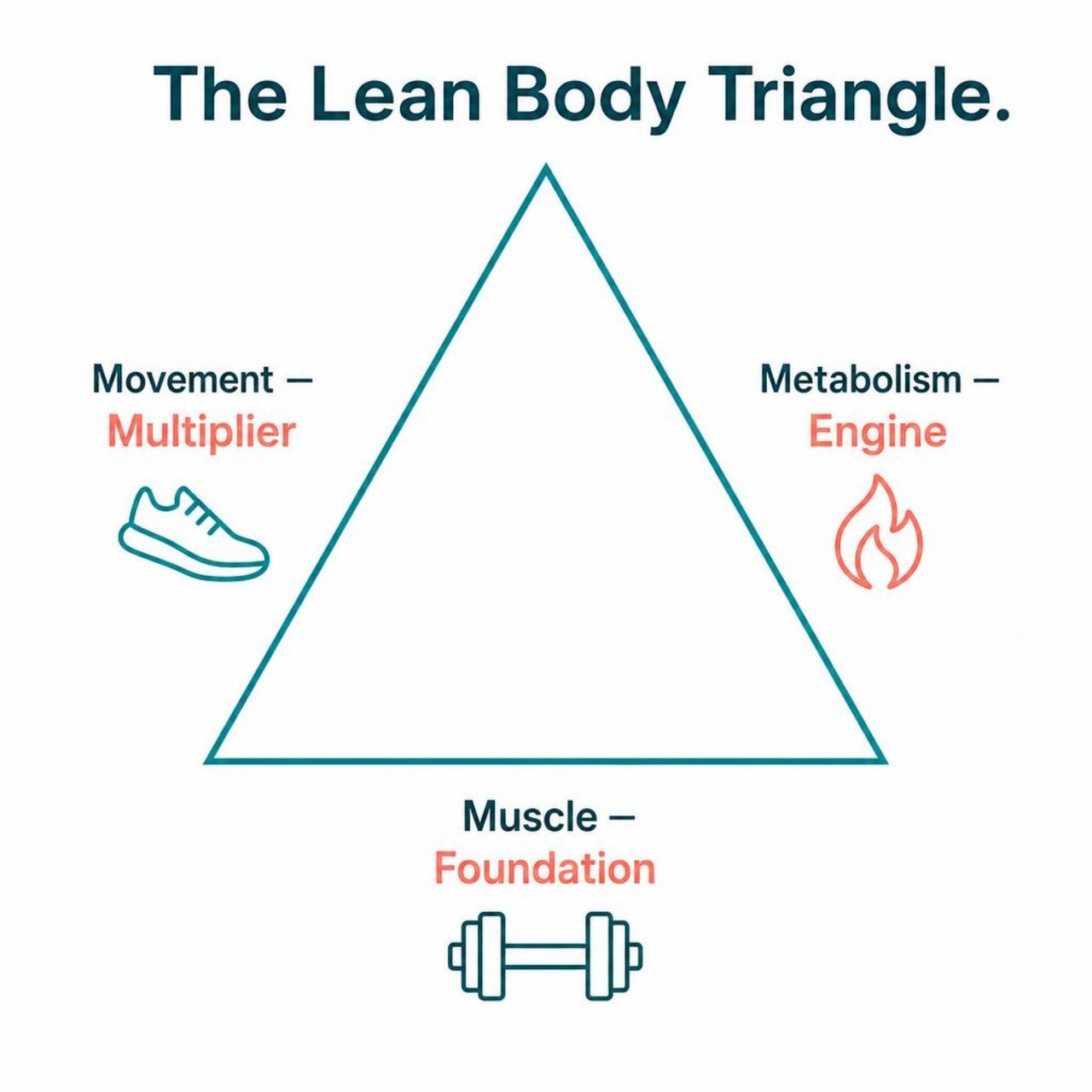
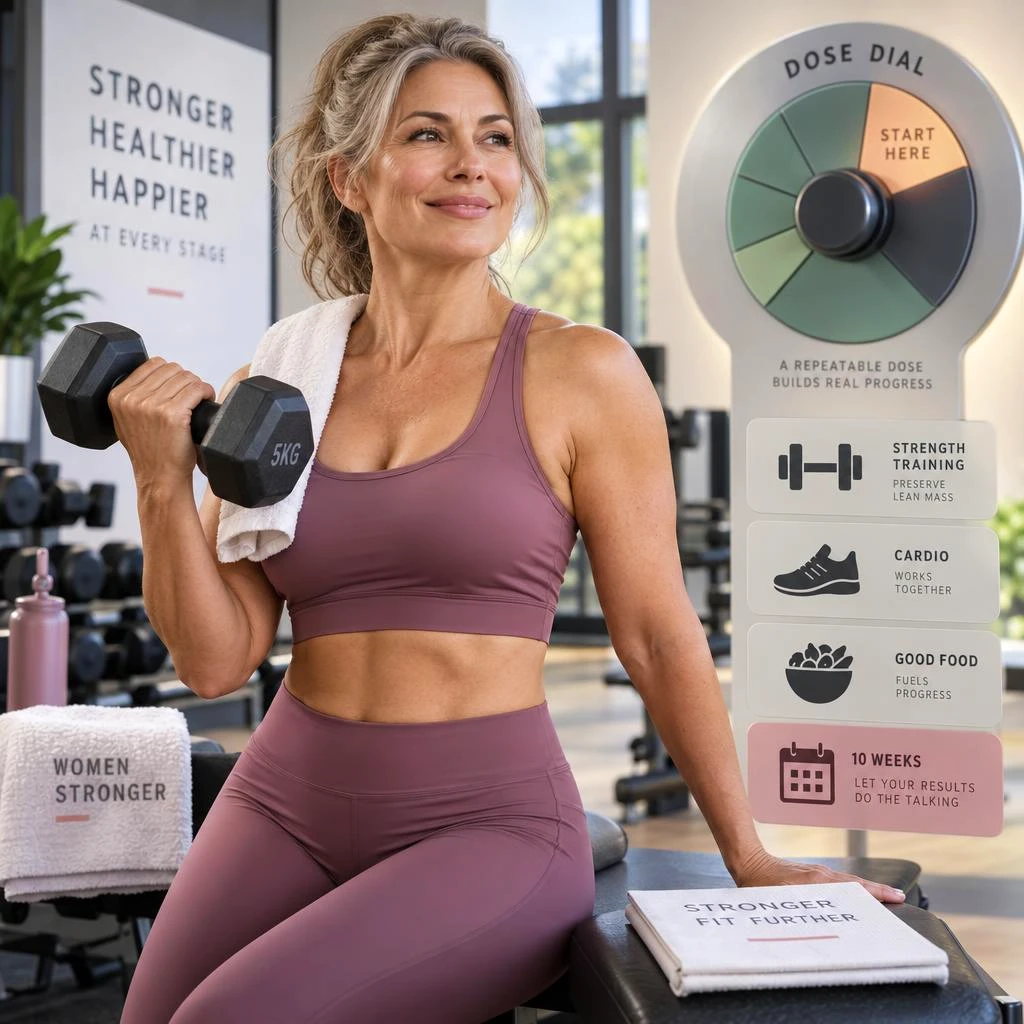
The Dose Dial is our own three-setting framework for choosing how much to lift: Starter, Steady, or Stretch. Pick the setting you can repeat every week, and move up only after three or four weeks of manageable sessions. It isn’t a validated tool. It turns published anchors into a decision you can make in thirty seconds.
Two anchors come straight from guidelines. The CDC says adults need muscle-strengthening on at least 2 days a week, and the 2026 ACSM guidance gives about 10 weekly sets per muscle group for muscle growth. Steady is our own middle point.
| Setting | Sessions Per Week | Sets Per Major Muscle Group Per Week | Where It Comes From | Best For |
|---|---|---|---|---|
| Starter | 2 full-body | About 4 | The guideline floor (all major muscle groups at least twice a week). The set count is ours | Beginners, restarting after a break, or a heavy-stress week |
| Steady | 3 full-body | About 6 to 8 | Our midpoint between the two anchors | Most weeks |
| Stretch | 3 to 4 | About 10 | The ACSM figure for muscle growth | After three or four weeks of manageable Steady sessions |
How To Move The Dial
Move up one setting after three or four weeks of manageable sessions, and move down, not off, on a bad week. That’s our rule of thumb, not a trial result. A Starter week beats a skipped week, every time.
Then give it time. In the 2025 Lafontant analysis, trials shorter than 10 weeks found no difference between exercise types. That’s a finding about comparing modes, not a rule about when fat loss starts, but it’s our reason for suggesting you give any setting 10 weeks before you judge it.
If heavy barbells aren’t your thing, the ACSM page says the most meaningful gain comes from moving from no resistance training to any form of it. One woman in an r/xxfitness thread feels guilty at 46 for preferring Pilates to heavy lifting. There’s no guilt to carry here: the setting you’ll actually repeat is the right one.
How Much Strength Training Do You Need Each Week?
At least two days a week, working all major muscle groups. That’s the floor in both the CDC’s adult guidelines and the 2026 ACSM guidance. The CDC’s muscle group list is your checklist: legs, hips, back, abdomen, chest, shoulders, and arms.
ACSM adds the fine print. For strength, lift at about 80 percent of your one-repetition maximum for 2 to 3 sets per exercise. For muscle growth, aim for about 10 weekly sets per muscle group. The McMaster summary of the same work says training all major muscle groups at least twice a week matters far more than chasing a complex plan.
Progressive overload is what keeps a plan working. It just means asking a little more over time: one more rep, a slightly heavier weight, or an extra set. It’s the reason a routine that felt hard in week one stops feeling hard by week ten.
What Counts As Resistance Training?
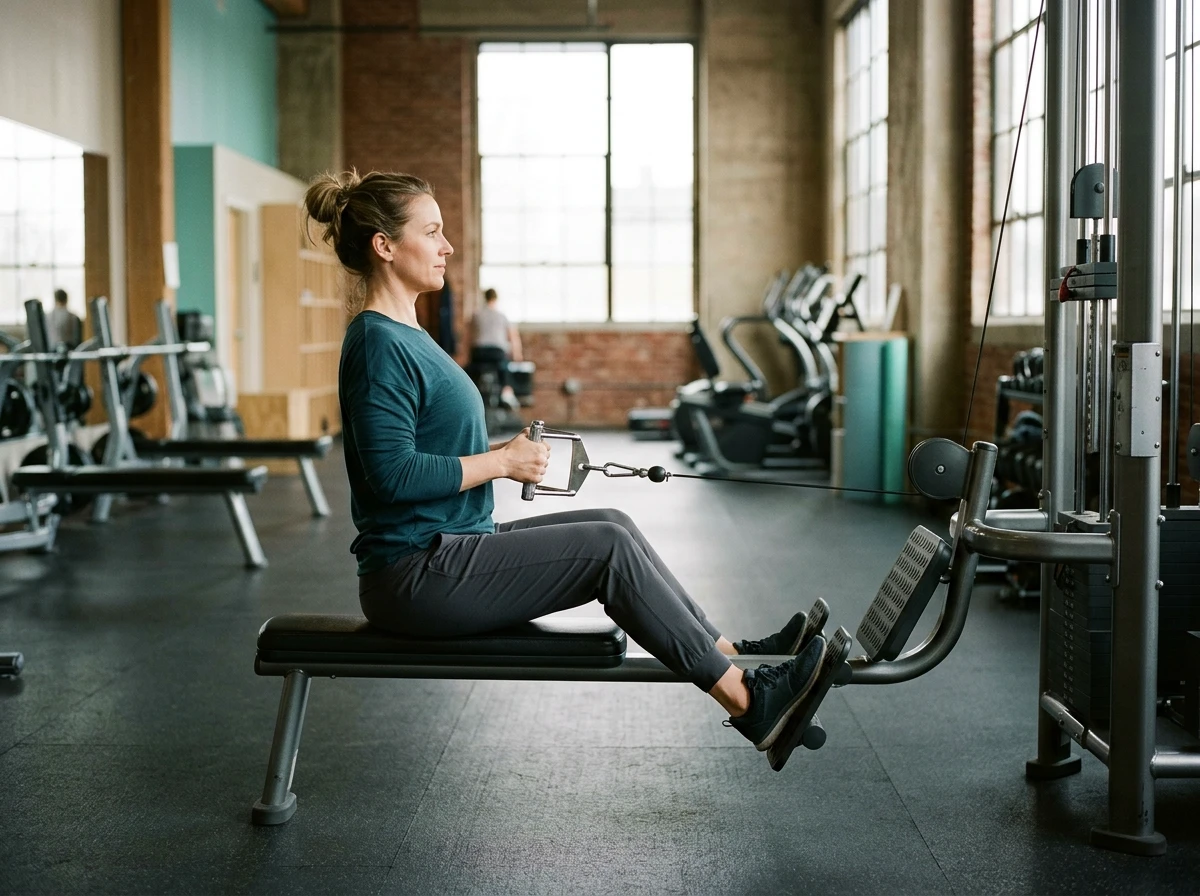
Any form counts: dumbbells, bands, body weight, and machines are all resistance training. You don’t need a gym to get the benefits of lifting.
- Dumbbell workouts: one pair of adjustable dumbbells covers legs, back, chest, shoulders, and arms, and makes adding weight easy.
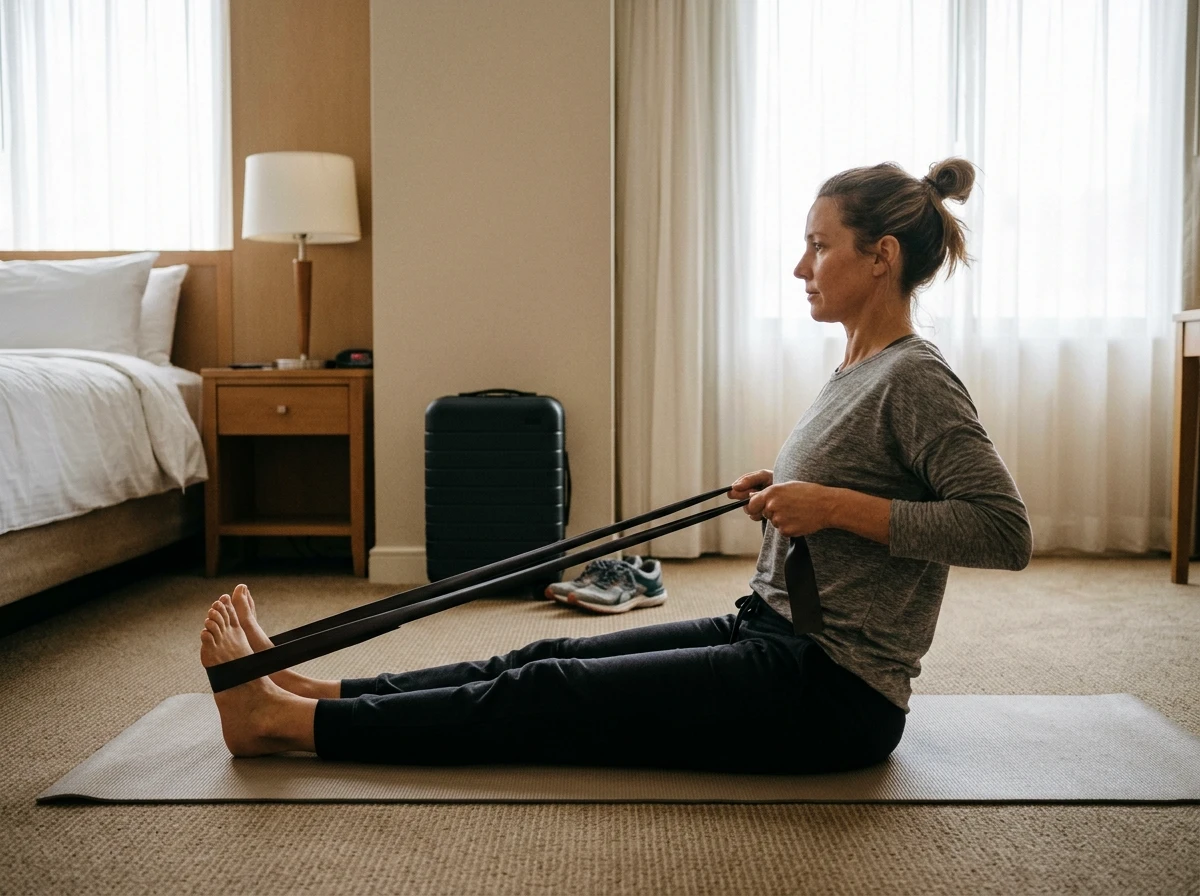
- Resistance bands training: cheap, light, and easy to take on a trip. A thicker band raises the demand.
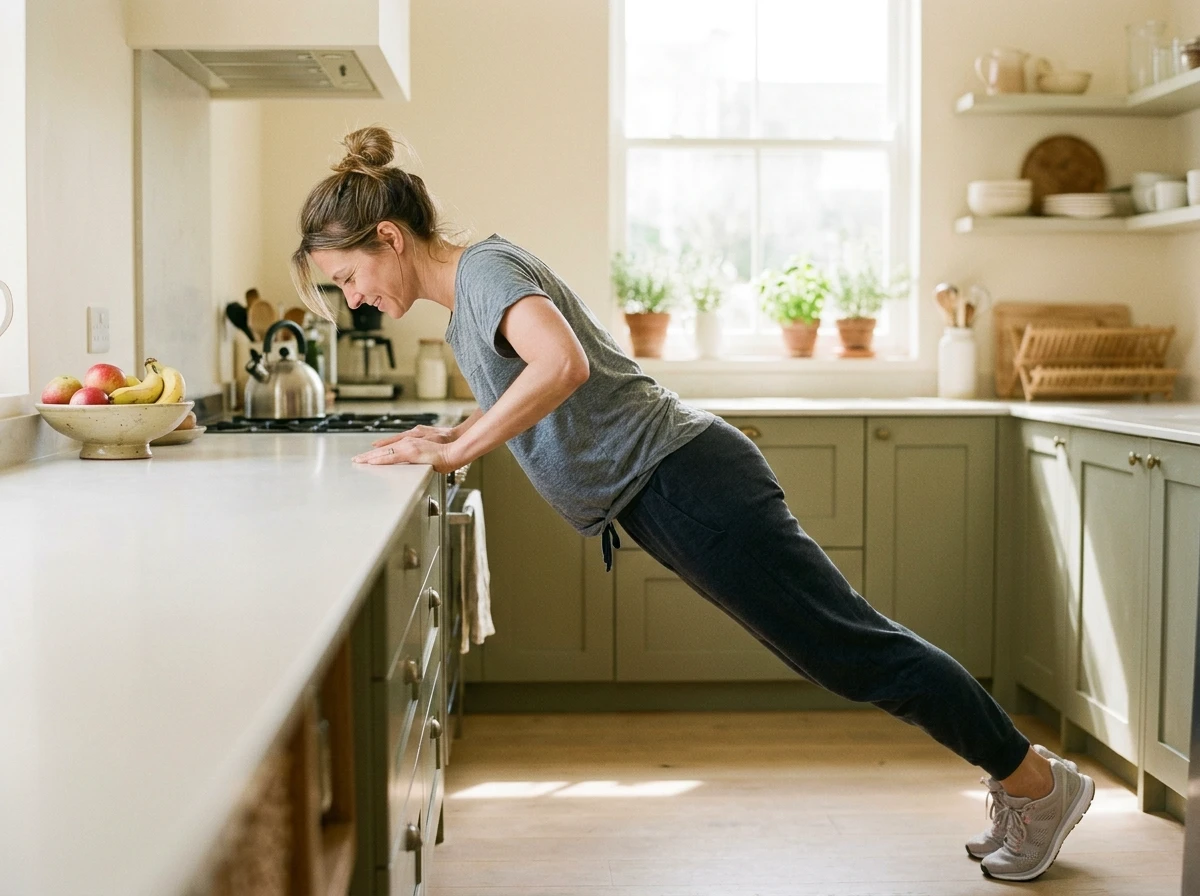
- Body weight: squats, step-ups, and push-ups against a counter are a fair place to start from zero.
- Machines: they guide the movement path, which some beginners find less intimidating.
Want a ready-made session to start with? The sample session below covers every major muscle group, and our fat loss workouts for beginners give you a full plan.
Strength Training For Fat Loss After 40: What Changes And What Doesn't
Body composition can shift around the menopause transition even when the scale doesn’t, which is a good reason to protect fat-free mass. In SWAN, a study that followed women over time, the rate of fat gain doubled and lean mass declined, with no acceleration in weight.
The SWAN analysis tracked women with DEXA body-composition scans. The changes continued until about two years after the final period, then levelled off. It’s observational, so it describes what happens; it doesn’t show what lifting would change.
The reviews above study adults broadly, and their abstracts don’t break out perimenopausal women, so they can’t tell us how exercise science for women in midlife plays out for you specifically. Treat the mechanism as a reason to lift, not a promise.
- The scale is a weaker scoreboard: if weight stays flat while fat rises and lean mass falls, the number hides the very thing you’re trying to change.
- Insulin benefits may be smaller: the 2023 meta-analysis of insulin markers found a smaller effect in women and in people 40 and over. Consider better insulin sensitivity a possible bonus.
- The dose stays the same: ACSM’s 2026 summary lists no separate prescription for women, so the Dose Dial uses the same anchors for everyone.
Bone is the other reason to lift after 40. Harvard Health notes that strength training can help slow age-related bone loss. That isn't a fat-loss benefit, but it's a good reason to keep lifting once the fat-loss phase is over.
For perimenopause-specific programming, including bone, protein and recovery, see our guide to strength training for women in perimenopause. For the bigger picture on changing composition, see what body recomposition really means.
A Sample Beginner Full-Body Session
This is a Starter setting session: do it twice a week. Use 2 to 3 sets of 8 to 12 reps per exercise, at a weight that makes the last 2 reps genuinely difficult.
The Session (30 To 40 Minutes)
- Goblet Squat, 3 sets × 10 reps
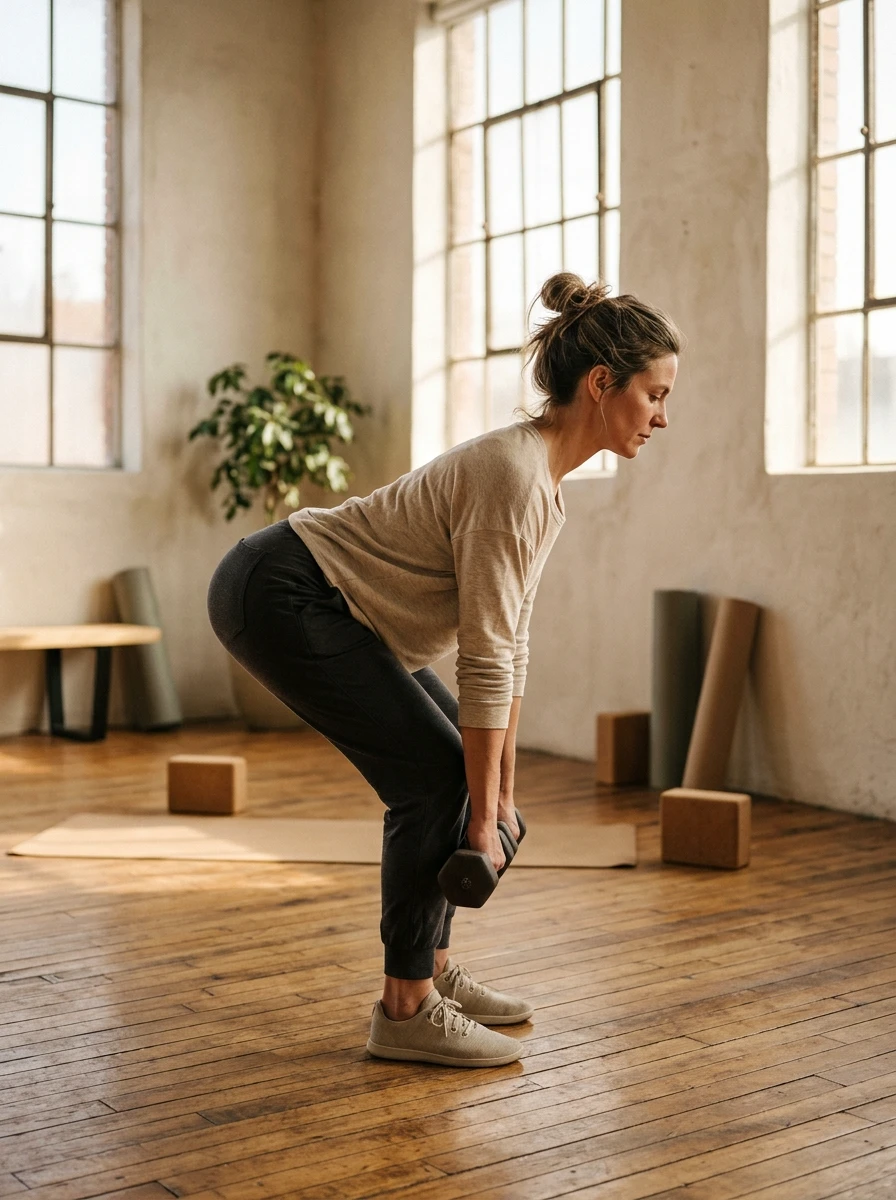
- Dumbbell Romanian Deadlift, 3 sets × 10 reps
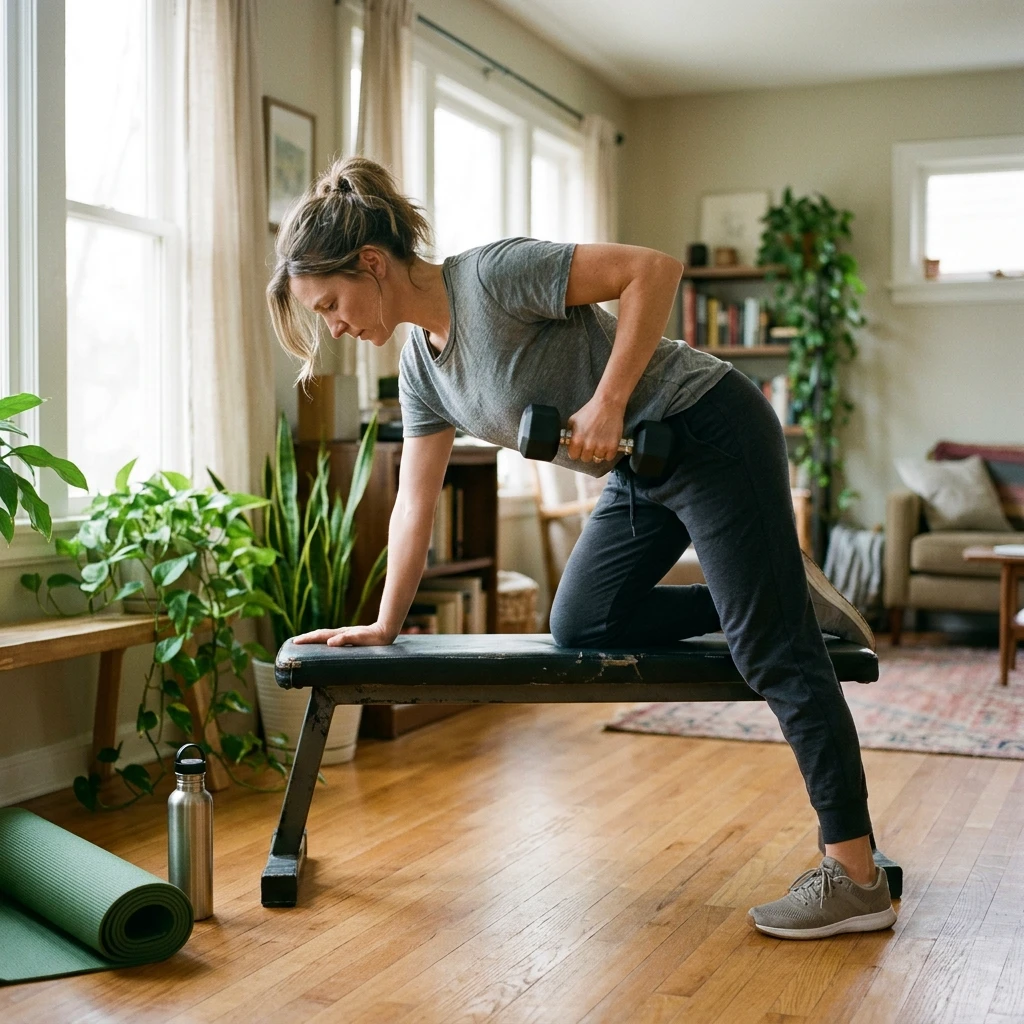
- Dumbbell Bent-Over Row (each arm), 3 sets × 10 reps
- Incline or Knee Push-Up, 3 sets × 8 to 12 reps
- Dumbbell Shoulder Press, 2 sets × 10 reps
- Plank or Dead Bug, 3 × 30 seconds
The One Technique Variable That Matters Most
Lower the weight slowly, over 3 to 4 seconds. This is called controlling the eccentric. It increases time under tension and helps you keep good form, which matters most for beginners who haven't built joint stability yet.
You don't need heavy weights to see results. You need consistent mechanical tension with controlled movement.
For a full structured program, see fat loss workouts for beginners.
How To Track Progress When You Lift
The scale is a weak scoreboard for strength training, because it can't separate fat from muscle. As your body changes, the scale can sit flat while your waist shrinks. Many women quit too early because they're measuring the wrong thing.
More useful tracking signals:
- Body measurements: Tape measure your waist, hips, thighs, and upper arms weekly or bi-weekly. Body recomposition that doesn't show on the scale shows clearly in these numbers.
- Progress photos: Same time of day, same lighting, same angles. Review monthly, not weekly.
- Clothing fit: How your jeans sit on your waist is often the first thing that changes after a few weeks of consistent lifting.
- Strength progression: Log the weights and reps you're using. Consistent improvement over weeks is your body responding.
- Energy and sleep quality: Most women notice a meaningful shift in daily energy within 4 to 6 weeks of consistent training, often before any visible physical change appears.

For a full system, read how to track your weight loss progress, and for the difference between the two goals, see weight loss vs fat loss.
Where Cardio And Food Fit In
Cardio adds calories and supports fat loss, and lifting keeps the muscle. Keep both in the week rather than picking a side. The CDC’s adult guidelines pair 150 minutes of moderate activity, or 75 minutes of vigorous activity, with those two muscle-strengthening days.
For how to fit both into the same week, read our guide to balancing cardio and strength training. Food matters too. In the diet trials, lifting didn’t change how much weight people lost, but it changed how much of that weight was fat. In our view, that’s the strongest case for lifting: fat loss that keeps more of your fat-free mass.
To sort out weight, fat, and muscle on your own numbers, use the 3-Dial Check in weight loss vs fat loss. For the food side, our guide to shedding body fat for women is the place to start.
When The Scale Stalls: Weight Loss Plateaus And Strength Training
A flat scale doesn’t always mean a flat body. In diet trials, adding lifting didn’t change the weight lost, yet it protected fat-free mass and increased fat loss. So a plateau on the scale is worth checking against other measures before you change anything drastic.
If you've been stuck for a while, our guide to overcoming a weight loss plateau covers the food side too.
Run through this list first:
- Track what the scale can’t see: measure your waist monthly, note reps at a given weight, and pay attention to how a waistband fits. That’s our suggestion, not a study result.
- Check the dose: did you actually complete your Starter or Steady sessions? Honest answers beat perfect plans.
- Give it 10 weeks: that’s our suggestion, based on trials shorter than that finding no difference between exercise types.
- Use active recovery days: an easy walk between lifting days keeps you moving without adding a hard session. That’s our practical suggestion, not a studied requirement.

If “more isn’t working” sounds familiar, you’re in good company. One r/xxfitness thread collects stories about doing less for better results. It’s anecdote, not evidence, but it shows how common the feeling is.
Expert Commentary: What The Researchers Conclude
The researchers behind these trials are unusually clear. In the 8-month Willis trial, the authors concluded that aerobic training is the better mode for reducing fat mass, and that a program including resistance training is needed to increase lean mass.
The 2025 Lafontant analysis supports combining both, with the emphasis on total workload and duration. On dose, the McMaster summary of the 2026 ACSM guidance makes the same point: training all major muscle groups at least twice a week matters far more than chasing a complex plan.
For women over 40, that's the message to take away. Pick a dose you can repeat, keep cardio and good food in the week, and let the lifting protect your muscle while the fat comes off.
The Contrarian Take: Why We Call This The Wrong Fight
In the 2025 Lafontant analysis, matching workloads across aerobic, lifting and combined training produced similar results. That hints that total effort may matter more than exercise type.
Cardio vs weights for fat loss makes a great argument and a poor plan. The same authors say their results support combining aerobic and resistance exercise for fat mass reduction, with the emphasis on workload and duration.
Two caveats. These are averages across broad adult groups, and none of the abstracts breaks out women in their forties or fifties. And the two styles do different jobs: steady cardio is aerobic exercise, while lifting is usually short, hard effort. They stress your body differently, so it makes sense that they don't replace each other.
Once you’ve picked your setting, you’ll want a place to start. Subscribe to the newsletter and get the free guide, 10 Actions That Support PERMANENT Weight Loss, which includes six starter workouts to pair with whichever setting you choose.
The Bottom Line
Strength training for fat loss is worth doing, just for a different reason than most advice gives. It protects fat-free mass, lowers fat modestly on its own, and works alongside cardio and food instead of replacing them.
In our view, sustainable fat loss starts with a dose you can repeat, so set the Dose Dial there, give it 10 weeks, and let your waist, your strength, and your clothes do the scoring.
Glossary Of Key Terms
- Aerobic Training: Often called "cardio," this exercise involves repetitive movements of large muscle groups to improve heart and lung endurance.
- Basal Metabolic Rate (BMR): The number of calories the body burns at rest to maintain basic physiological functions like breathing and circulation.
- Body Composition: The ratio of fat mass to fat-free mass in the body, which provides a more accurate picture of health than total body weight.
- Body Recomposition: The process of simultaneously losing body fat and gaining lean muscle mass, which changes body shape even if total weight remains stable.
- DOMS (Delayed Onset Muscle Soreness): Muscle soreness that typically occurs 24 to 48 hours after a workout as the body adapts to new movements or loads.
- Eccentric Phase: The lowering portion of a weightlifting movement where the muscle lengthens under tension.
- EPOC (Excess Post-Exercise Oxygen Consumption): A state of increased oxygen intake and calorie burning that occurs after exercise as the body recovers and repairs tissue.
- Fat-Free Mass: Everything in the body that is not fat, primarily consisting of skeletal muscle, bone, and water.
- Metabolic Equivalent of Task (MET): A unit used to estimate the energy cost of physical activities; 1 MET is roughly equivalent to the energy spent sitting quietly.
- Progressive Overload: The practice of gradually increasing the intensity, weight, or volume of exercise to keep challenging the body as it becomes stronger.
FAQ
Does Strength Training Burn Fat?
Yes, modestly. Across 54 trials, lifting alone lowered fat mass by about 0.55 kg and body fat percentage by about 1.5 points versus no exercise. Lifting on top of a diet increased fat loss and protected fat-free mass. It doesn’t burn fat as fast as cardio does.
Is Strength Training Better Than Cardio For Fat Loss?
Not on absolute fat mass. In trials of 10 weeks or more, aerobic training beat lifting alone by about 1 kg of fat mass, though percent body fat didn’t differ. Adding lifting to cardio neither helped nor hurt fat loss, so it isn’t either-or.
How Many Days A Week Should I Do Strength Training For Weight Loss?
At least two, covering every major muscle group, per the CDC and ACSM. In our Dose Dial, that’s Starter. Steady is three sessions, and Stretch is three to four. Pick the one you can repeat every week.
How Long Does Strength Training Take To Change Body Fat?
Our suggestion is to give any plan at least 10 weeks before you judge it. In the 36-trial 2025 analysis, trials shorter than 10 weeks found no difference between exercise types, so early comparisons tell you little. Track waist, strength, and clothes fit along the way.
Why Isn’t The Scale Moving When I Lift?
Because the scale weighs everything in your body, fat included. In diet trials, adding lifting made no significant difference in weight lost, but it protected fat-free mass and increased fat loss. Waist measurements and strength numbers show what the scale can’t.
Is It Normal To Feel Sore After Every Weight Training Session?
Soreness, known as DOMS (delayed onset muscle soreness), is common in the first 2 to 4 weeks as your body adapts to new movements and loads. After that, heavy soreness after every session usually means recovery is falling short, not that training is working. Well-managed training should leave you recovered within a day or two.
Will Strength Training Make My Thighs Bigger?
Not in the way most women fear. Lifting builds firmer muscle, and if your thighs feel bigger in the first weeks, it's often temporary fluid as muscles adapt. Over time, lifting combined with a modest calorie deficit tends to change shape more than size. Our guide to strength training without making your thighs bigger covers it in depth.