The Exact Rep Ranges, Exercises To Use (And Avoid), And The Science Behind Lean Legs — Not Bulky Ones
JAMES CLEAR
American author & speaker
Every action you take is a vote for the type of person you wish to become.
Summary (TL;DR)
To strength train without making your thighs bigger, use rep ranges outside the 8–12 hypertrophy zone for quad exercises (go heavy at 3–6 reps, or light at 15–20+), prioritise glute and hamstring work over quad-dominant movements, and cap direct quad volume at 6–10 sets per week. If your thighs got temporarily bigger when you started lifting, it is almost certainly water retention and glycogen — not new muscle. That resolves in 4–6 weeks. Here's exactly how to train for lean legs, not bulk.
When I first started lifting weights, I had the same fear you might have right now: "What if strength training makes my thighs huge?" After working with hundreds of women who shared this concern, I've discovered the truth is far more nuanced than the fitness industry wants you to believe.
If you're worried about bulking up your lower body while trying to get stronger, you're not alone — and more importantly, there's a proven strategy that builds strength without adding unwanted size.
The fear is real. You want the toned, athletic look of a fitness model, but you're terrified that one heavy squat session will turn your favourite skinny jeans into a memory.
Here is the hard truth that most "influencer" workouts won't tell you: muscle doesn't just "bulk" by accident. Bulking requires a specific cocktail of high-volume quad isolation, a massive caloric surplus, and specific genetic predispositions.
In this guide, we are busting the "bulky thigh" myth once and for all. You'll learn exactly how to leverage Posterior Chain Dominance to lift heavy, get strong, and actually shrink the circumference of your thighs by replacing soft tissue with dense, compact lean muscle.
Medical & Referral Disclaimer
The information in this article is for educational purposes only and is not a substitute for professional medical or fitness advice. Always consult a qualified healthcare provider before starting a new exercise programme, especially if you have any pre-existing health conditions or injuries.
Key Takeaways
- Temporary swelling isn't permanent growth — your thighs may appear larger in the first 2–6 weeks due to inflammation, water retention, and glycogen storage, not actual hypertrophy. Give your body 6–8 weeks before judging.
- Rep ranges are the real lever — 15–20+ reps build endurance and lean tone; 3–6 reps heavy build dense strength. The 8–12 "hypertrophy zone" for quad-dominant exercises is what you're avoiding.
- Prioritise glutes over quads — hip thrusts, Romanian deadlifts, and glute bridges build lower-body strength without adding quad bulk.
- Volume matters more than weight alone — limit direct quad work to 6–10 sets per week; keep glute/hamstring volume at 10–16 sets.
- Some cardio adds bulk; some doesn't — incline walking and swimming slim legs; HIIT sprints and heavy stair climbing can add calf and thigh mass if overdone.
- Nutrition determines size; training determines strength — a slight caloric deficit with 0.8–1g protein per pound of bodyweight is the nutritional framework for lean legs.

Understanding Why Your Thighs Might Be Getting Bigger
Before we dive into solutions, let's address the elephant in the room: are your thighs actually getting bigger from muscle growth, or is something else happening?
Here's what most people don't realise. When you first start strength training, your legs might temporarily appear larger due to inflammation, increased blood flow, and glycogen storage in the muscles. This isn't permanent bulk — it's your body adapting to new stimulus. Real muscle hypertrophy takes consistent training over months, not weeks.
"Why Did My Thighs Get Bigger When I Started Lifting?"
If you're asking this question, you're not alone — it's the most common panic message I get from women in their first month of training. One client texted me in week 3, panicking that her jeans were tighter. Six weeks later, she was asking why her legs looked so much leaner. Here's what was happening: no page in the top 10 explains this honestly, so let me do it now.
When you begin resistance training, your muscles experience microscopic damage during the eccentric (lowering) phase of exercises. Your body responds with localised inflammation and fluid retention — a protective, temporary process that can make muscles look and feel fuller.
Simultaneously, your muscles begin storing more glycogen (carbohydrate fuel) to meet the new energy demands, which adds water volume inside the muscle cell itself (muscle glycogen binds roughly 3–4g of water per gram of glycogen stored).
This temporary swelling typically peaks in weeks 2–4 and resolves on its own as your body adapts. It is not new muscle tissue. Real hypertrophy — structural growth in muscle fibre size — takes a consistent training stimulus over 8–12+ weeks to become measurable.
Bottom line: if your thighs are bigger in weeks 1–4, wait. It's water and inflammation, not bulk.
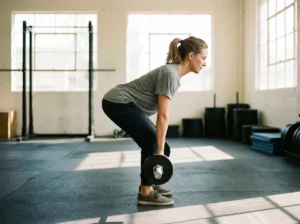
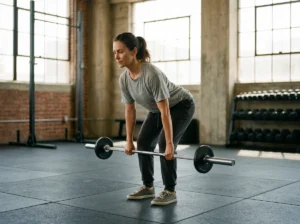
The 3 Main Reasons Thighs Genuinely Increase In Size
- Quad dominance — overworking your quadriceps while neglecting glutes and hamstrings.
- Progressive overload with volume in the hypertrophy range — high-rep, high-weight training specifically designed for muscle growth (8–12 reps, multiple sets, short rest).
- Caloric surplus — eating more than you burn, which supports muscle building and fat storage.
The good news? You can strength train strategically to build lean muscle, increase strength and endurance, and help you lose weight without creating bulky thighs.
The Rep Range Science: The Lever Nobody Explains
Most articles on this topic tell women, "don't worry, you won't bulk." That's not enough — it doesn't explain the mechanism, and it doesn't give you anything actionable to do differently. Here's the actual science, and what it means for your training.
Research on resistance training adaptations consistently shows that muscle hypertrophy (size increase) can be achieved across a broad spectrum of loading ranges — but the type of adaptation differs significantly based on rep range and load:
| Rep Range | Load | Primary Adaptation | Thigh Effect |
|---|---|---|---|
| 1–5 reps | Very heavy (85–95% 1RM) | Neural strength, dense myofibrillar growth | Minimal size increase — dense, compact muscle |
| 8–12 reps | Moderate (65–80% 1RM) | Sarcoplasmic hypertrophy — maximum size increase | Avoid for quad-dominant exercises |
| 15–20+ reps | Light–moderate (40–60% 1RM) | Muscular endurance, lean tone | Minimal size increase — keeps legs lean |
What this means in practice: for any quad-dominant exercise (squats, leg press, lunges), train either in the strength zone (3–6 reps heavy) or the endurance zone (15–20+ reps light). The 8–12 rep range is reserved for glute and hamstring work, where size actually creates shape rather than bulk.
The hypertrophy zone drives sarcoplasmic growth — the "pumped" or "inflated" look that comes from increased fluid and energy stores within the muscle cell. That's the mechanism Schoenfeld's foundational research identifies as most driven by moderate loads with short rest periods. Avoid it for your quads; use it strategically for your glutes.
The Science Behind Lean Legs vs Muscular Thighs
Let's get real about muscle tone for a second. "Toning" isn't a biological process — what you're actually after is muscle definition with lower body fat percentage. You want to see the natural shape of your leg muscles without excess size or fat covering them.
2 Critical Factors Determine Leg Appearance
- Body composition matters more than size. You could have relatively large leg muscles that look lean and defined at 20% body fat, or smaller muscles that look "thick" at 28% body fat. Fat loss results often matter more than muscle size when it comes to achieving slim legs.
- Muscle fibre recruitment patterns differ. Training with heavy weight lifting (85–95% of your max) for low reps (3–6) primarily builds strength through neural adaptations and dense, compact muscle. Training with moderate weights for 8–12 reps maximises muscle hypertrophy. Light weights with high reps (15–20+) build endurance without significant size increases.
Here's what this means practically: lifting heavy weights doesn't automatically bulk up your legs — the total training volume, rep ranges, and your nutrition determine whether you gain muscle size.
Exercises To Avoid If You Want Leaner Thighs
Here's the section most competitors don't publish — because it's counter-intuitive and feels like bad news. But it's actually the most liberating information you can have, because it gives you precise control.
These are the exercises most likely to drive quad hypertrophy. They're not "bad" exercises in general — they're just not aligned with the lean-leg goal if you use them in the hypertrophy rep range with progressively heavier loads:
- Heavy barbell back squats — high mechanical tension on the quadriceps, especially the vastus lateralis. The deeper the squat, the greater the quad involvement. If you love squats, use goblet squats or bodyweight squats at 20+ reps instead.
- Leg press at high load — isolates the quads with significant load and a long range of motion. High quad-activation EMG output makes this a reliable hypertrophy driver for the thighs if used at moderate loads and reps.
- Deep heavy lunges — particularly forward lunges with a long stride. The quad is under load through a long range of motion — exactly the stimulus that drives size. Walking lunges with zero added weight at 20 reps per leg is a completely different stimulus.
- Leg extensions — pure quad isolation, the highest quad EMG of common leg exercises. Keep these out of your programme entirely, or use them for rehabilitation purposes only at very light loads.
The rule of thumb: if an exercise loads your quads through a long range of motion at moderate-heavy weight, it belongs in a muscle-building programme, not a lean-leg one.
Exercises That Tone Without Adding Bulk
These moves build lower-body strength and shape without the quad hypertrophy stimulus:
| Exercise | Rep Range | Effect |
|---|---|---|
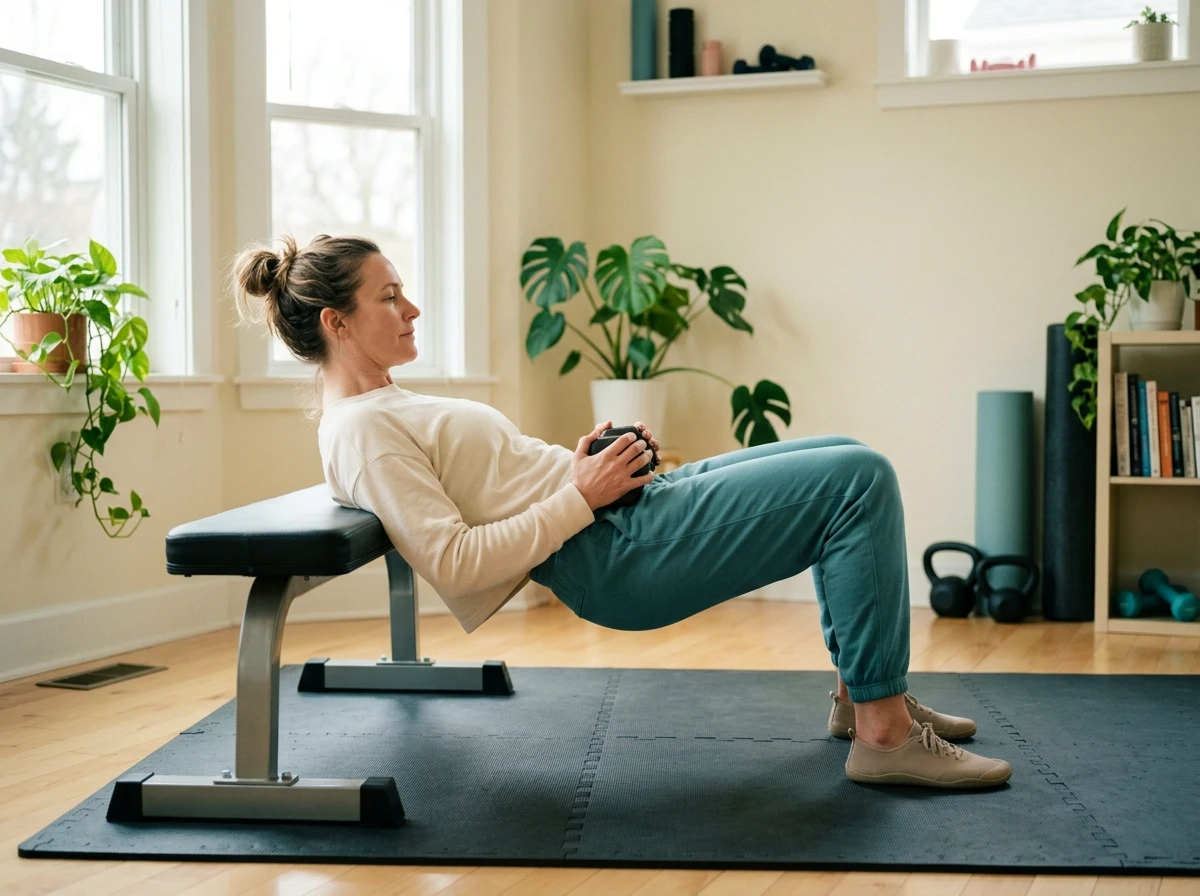
| Hip thrusts | 8–12 | Glute size and shape — not thigh bulk |
| Romanian deadlifts | 8–12 | Hamstring strength and tone |
| Glute bridges | 15–20 | Glute activation, minimal quad involvement |
| Lateral band walks | 15–20 | Outer glute, hip abductor tone |
| Sumo squats (light) | 15–20 | Inner thigh and glute without quad overload |
| Step-ups with light weight | 15–20 | Glute-led movement, push through the heel |
| Single-leg deadlifts | 10–12 | Balance, hamstring and glute — minimal quad |
| Side-lying leg lifts | 15–20 | Hip abductor tone |
| Pilates-style leg circles | 15–20 | Inner/outer thigh endurance — no bulk |
| Walking lunges (bodyweight) | 20+ per leg | Endurance, calorie burn, lean tone |
The through-line: posterior chain emphasis, endurance-range reps for anything touching the quads, hypertrophy range only for glutes and hamstrings.
The Science Behind Lean Legs vs Muscular Thighs
Focus On Glute Isolation Over Quad-Dominant Movements
The problem: traditional leg day exercises like squats and lunges often make your thighs bigger because they're quad-dominant — especially if you have certain biomechanics or don't activate your glutes properly.
The solution: prioritise exercises that target your glutes and hamstrings while minimising quad involvement. Research comparing gluteus maximus activation consistently shows that hip thrusts maximise glute activation while minimising quad involvement — they're the gold standard for glute development without thigh bulk.
When you do include squats, use a wider stance with toes slightly turned out, and focus on sitting back into your hips rather than driving your knees forward. This shifts emphasis from quads to glutes and hamstrings.

Adjust Your Rep Ranges Strategically
For lower-body exercises where you want to minimise growth:
- Strength-focused: 3–6 reps with heavier weight
- Endurance-focused: 15–20+ reps with lighter resistance
- Avoid: 8–12 reps for quad-dominant movements
For glute and hamstring exercises:
- Use 8–12 reps to build shape (these muscles create shape without making legs look bulky)
- These muscles respond well to both heavy lifting and higher-volume training
Control Your Training Volume
Here's something fitness influencers rarely mention: volume (total sets × reps × weight) drives muscle growth more than just lifting heavy weights alone.
Volume guidelines for lean leg training:
- Limit direct quad work to 6–10 sets per week total
- Keep glute and hamstring volume at 10–16 sets per week
- Include 1–2 lower body strength sessions weekly, not 3–4
Compare this to a typical muscle-building leg programme that might include 15–20+ sets of quad work weekly. See the difference?
Incorporate Bodyweight Exercises And Pilates Principles
You don't need to lift heavy every session. Bodyweight exercises and Pilates-inspired movements build strength and endurance without adding bulk:
- Walking lunges with no weight (great for endurance and calorie burn)
- Single-leg deadlifts for balance and hamstring work
- Pilates leg circles and side-lying leg lifts for inner and outer thighs
- Isometric holds as wall sits (builds strength without size)

Determine Your Body Type: Why This Actually Matters
I know, I know — body type discussions can feel limiting. But understanding your natural tendencies helps you work with your body, not against it.
The 3 main body types and leg training:
- Ectomorphs (naturally lean, difficulty building muscle) can lift heavy and train legs frequently without bulking concerns. If you have naturally slim legs and want strength, progressive overload is your friend.
- Mesomorphs (naturally athletic, build muscle easily) need the most strategic approach. You'll build leg muscle quickly, so glute isolation, moderate volume, and a slight caloric deficit for body recomposition become essential.
- Endomorphs (naturally store fat more easily) benefit most from combining resistance training with caloric control. Your leg training should prioritise fat loss while maintaining muscle, using a mix of strength work and steady-state cardio.
Cardio's Role: Which Types Slim Legs, Which Can Bulk Them
Here's the nuance no one in the top 10 is being honest about: not all cardio slims your legs. Some types actively work against your goal of leaner thighs, especially when overdone.
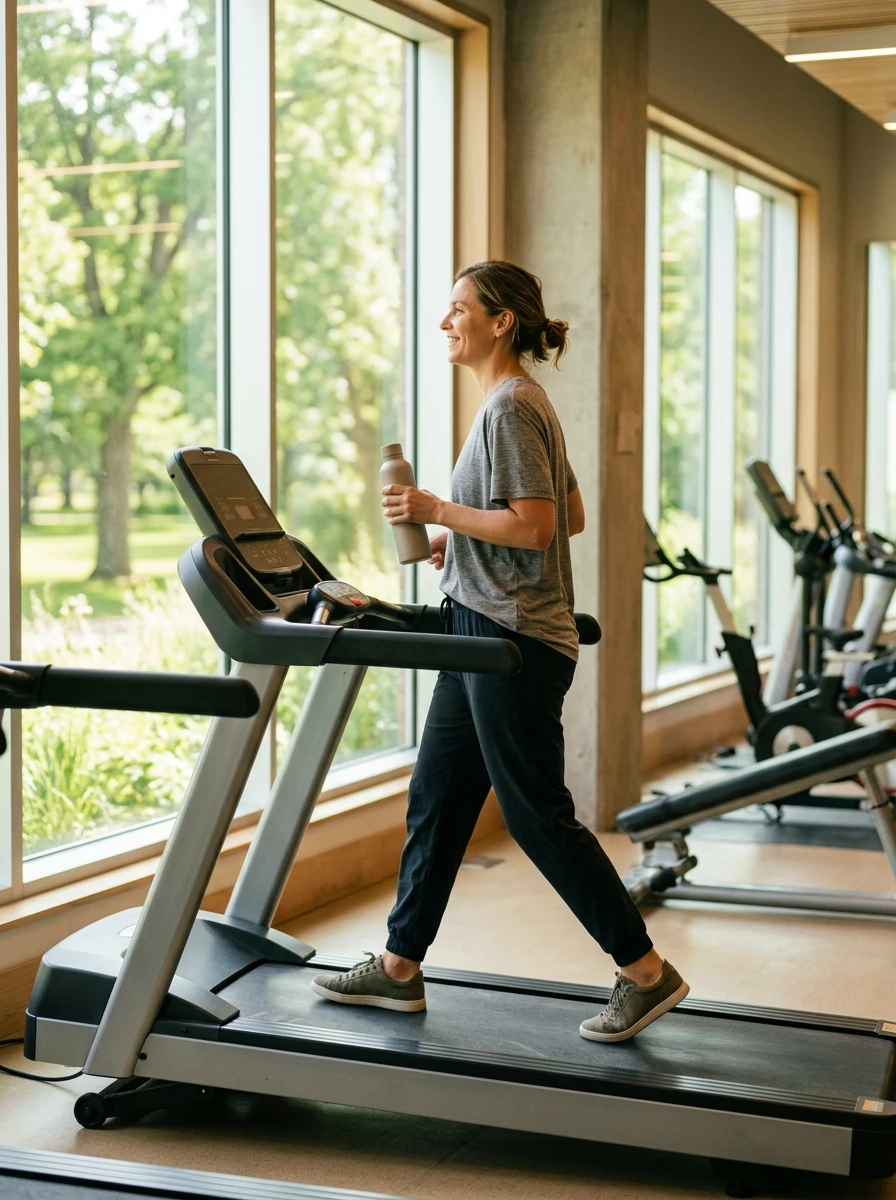
Cardio That Supports Lean Legs
- Incline walking — low-impact, burns calories without high mechanical tension on the quads or calves. Steady-state pace at 10–15% incline for 30–45 minutes is one of the best tools for overall fat loss while protecting leg proportions.
- Swimming — full-body resistance against water. Low leg-specific hypertrophy stimulus; high calorie burn. Excellent for women who want to protect their lower body proportions.
- Flat walking and light cycling at low resistance — same principle: elevated heart rate, low mechanical tension on the legs.
Cardio That Can Add Leg Bulk (If Overdone)
- HIIT sprints — explosive power output drives fast-twitch muscle fibre recruitment in the quads and calves. Done frequently at high intensity, this can add visible muscle to the legs over time.
- Stair climbing at high resistance — similar to a step-up exercise performed repeatedly. High quad and calf activation with significant load. Keep resistance low if you use stair climbers.
- Cycling with heavy resistance — particularly in spin classes where you're pushing hard against resistance. This is effectively a quad-dominant resistance exercise disguised as cardio.
The sweet spot: prioritise incline walking and swimming for fat loss cardio. If you love HIIT, choose full-body movements (burpees, mountain climbers, battle ropes) over leg-dominant ones (cycling, sprinting, stair climbing).
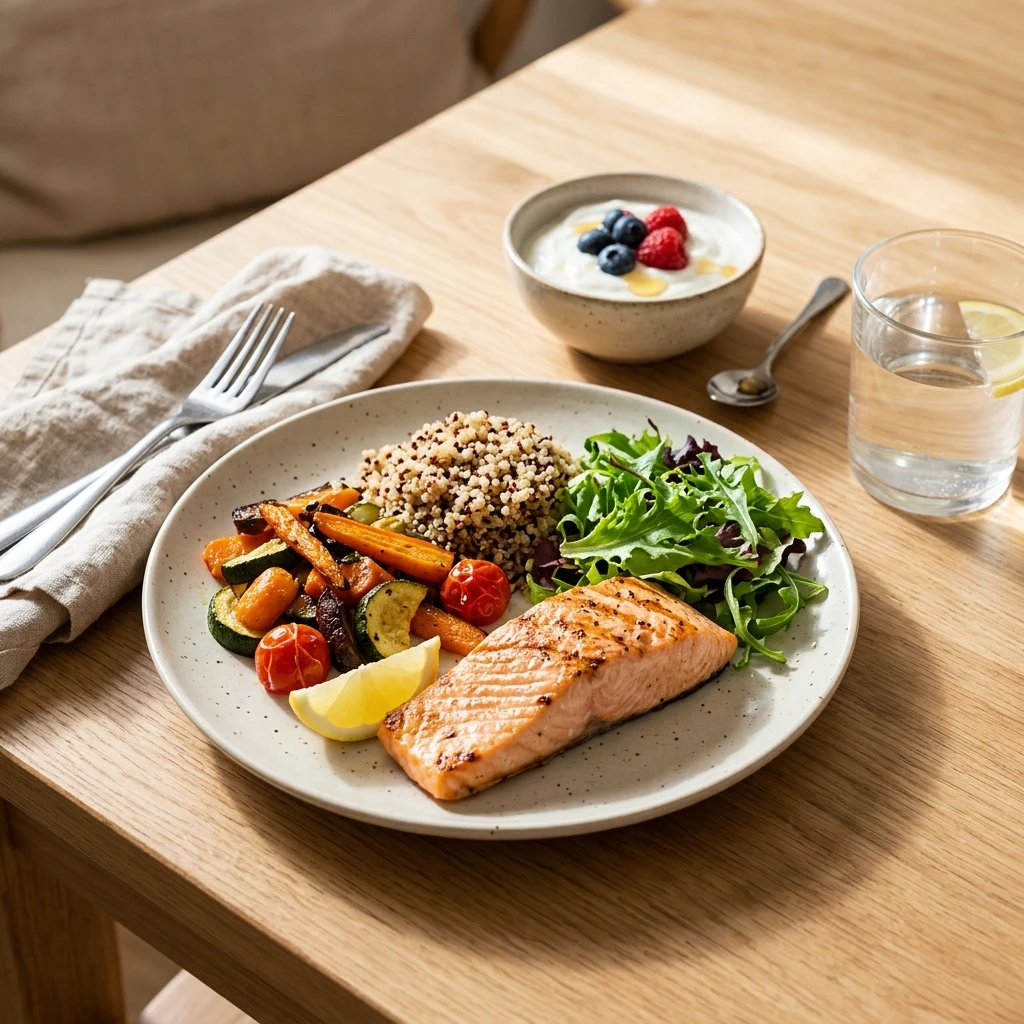
Nutrition: The Missing Piece Nobody Talks About
You can have the perfect leg workout plan, but if your nutrition doesn't align with your goals, you're fighting an uphill battle.
For slimmer legs and muscle definition:
- Maintain a slight caloric deficit if you need to reduce body fat percentage. You can build strength and even some muscle as a beginner while losing weight, especially if you're new to resistance training.
- Prioritise protein: 0.8–1g per pound of body weight, according to sports nutrition research, to maintain muscle while in a deficit. This ensures your body burns fat rather than breaking down muscle tissue.
- Don't fear carbs, but time them strategically. Eating most of your carbs around your workouts supports performance and recovery without excess storage.
- If you're getting bigger despite training correctly, you're likely eating too much. Even clean food in excess can prevent fat loss and support muscle growth you don't want.
The "My Thighs Are Still Getting Bigger" Troubleshooting Guide
If you've implemented everything and your thighs are still growing, let's troubleshoot:
- Problem: your thighs are getting bigger in the first 2–4 weeks. Solution: This is almost certainly temporary inflammation and glycogen storage. Give it 6–8 weeks before judging results.
- Problem: Your legs are bigger after every leg day that lasts for days. Solution: Reduce your training volume. You're doing too many sets or too much quad-focused work.
- Problem: getting stronger, but your pants are getting tighter in the thighs. Solution: check your nutrition — you might be in a caloric surplus. Also assess whether you're doing too much hypertrophy-range training (8–12 reps) on quad exercises.
- Problem: inner thighs and outer thighs are both increasing in size. Solution: This is often body fat, not muscle. You can't spot-reduce fat, so focus on overall fat loss through caloric deficit and full-body training.
- Problem: Upper body results are great, but the lower body won't lean out. Solution: Genetics play a role — women typically store fat in their hips and thighs. This requires patience. Consider whether your expectations align with your natural anatomy. Learn more about hormones and weight loss for women.
Sample Lean Legs Training Split
Here's a practical weekly workout routine that builds strength without adding bulk:
Monday: Lower Body Strength (Glute Focus)
- Hip thrusts: 4 sets × 5 reps (heavy)
- Romanian deadlifts: 3 sets × 6 reps
- Single-leg deadlifts: 3 sets × 8 reps per leg
- Glute bridges: 2 sets × 15 reps
Tuesday: Upper Body Strength
- Compound movements: rows, pull-ups, presses
- Building your upper body creates balanced proportions that make your legs look leaner
Wednesday: Active Recovery or Cardio
- 30–45 minute incline walk, OR
- Swimming, yoga, or Pilates
Thursday: Upper Body Hypertrophy
- Higher volume upper body work
- Creating width in the shoulders and back through proportion makes the lower body look leaner — without touching your legs at all
Friday: Lower Body Endurance
- Walking lunges: 3 sets × 20 reps per leg (bodyweight)
- Sumo squats: 3 sets × 20 reps (light)
- Side-lying leg lifts: 3 sets × 15 reps per side
- Hamstring curls: 3 sets × 15 reps
Weekend: Rest or Low-Intensity Cardio
- Flat walk, swim, or full rest
Notice how this prioritises glutes over quads, uses different stimuli on two lower body days (strength on Monday, endurance on Friday), and totals well under 10 sets of direct quad work per week.
The Science: Why You Won't "Accidentally" Get Huge
To understand how to stay lean, we have to look at the two types of hypertrophy:
- Myofibrillar hypertrophy: "functional" strength. Increases the density of muscle fibres themselves, making muscles harder and stronger without significant volume increases. Achieved through lower rep ranges (1–5) and heavy weights.
- Sarcoplasmic hypertrophy: increases the fluid (sarcoplasm) within the muscle, leading to that "pumped" or "inflated" look. This is the bodybuilding range of 8–12 reps with short rest periods.
Expert tip: research on female physiological response to resistance training confirms that women have significantly lower testosterone levels than men, making the "sudden bulk" physically impossible for the vast majority without a dedicated high-calorie, high-volume programme sustained over many months.
Common Mistakes That Make Thighs Bigger
Let me save you months of frustration:
- Avoiding all leg training: skipping leg day entirely won't give you toned legs without bulk. You need resistance training to build the muscle definition that creates shape. Without it, you'll just have less muscle and potentially more body fat — not the lean look you want.
- Only doing cardio: endless cardio without strength work leads to a "skinny fat" physique where you might get slim legs, but they lack definition and shape. You'll also miss the metabolic benefits of muscle tissue.
- Following bodybuilding programmes: if your programme is designed for maximum muscle growth, you'll get maximum muscle growth. Make sure your programme aligns with your goals.
- Doing the wrong type of cardio: heavy-resistance cycling, stair climbers on high, and sprint intervals all build leg muscle. If that's not your goal, swap them for incline walking or swimming.
- Not tracking your progress properly: measure your thighs at the same time of day (morning, before training) in the same spot. Take progress photos in consistent lighting. Don't judge results day-to-day.
- Expecting immediate spot-reduction: you can't do inner thigh exercises to spot-reduce fat from that area. Your body determines where fat comes off — for most women, the legs and thighs are last. This requires overall body fat reduction through diet and training.
Advanced Strategies: Taking It Further
Once you've mastered the basics:
- Periodisation for lean legs: alternate between 4–6 week blocks of strength training (low reps, heavy weights) and endurance training (high reps, lighter loads) to build strength without a consistent hypertrophy stimulus.
- Muscle tension vs muscle damage: exercises that create high tension with less damage (like isometric holds and eccentric-focused training) build strength with less inflammation and swelling.
- Intra-set rest for isolation: if you must do quad isolation, try rest-pause training — 5 reps, rest 15 seconds, repeat. This builds strength without the metabolic stress that triggers growth.
- Strategic deloading: every 4–5 weeks, reduce your leg training volume by 40–50% to prevent cumulative fatigue that can cause chronic swelling.
What About Already Muscular Thighs?
If you already have naturally muscular legs or have built more muscle than you wanted, can you make them smaller? The uncomfortable truth: losing muscle is harder to control than preventing growth. However:
- Reduce training volume dramatically — drop to maintenance-only training (one light leg session weekly).
- Create a caloric deficit — your body will break down some muscle along with fat.
- Prioritise steady-state cardio over resistance — this shifts your body's adaptation away from strength.
- Be patient — muscle loss takes time, and you'll lose some strength along with size.
Most women who think they want smaller thigh muscles actually want lower body fat with the muscle they have. Assess honestly whether your concern is muscle size or body composition before pursuing muscle loss.

Putting It All Together: Your Action Plan
Week 1–2: Assessment Phase
- Measure your thighs and take progress photos
- Track your current training — exercises, sets, reps, and weights
- Calculate your current calorie intake
- Identify whether you're quad-dominant in your movement patterns
Week 3–6: Implementation Phase
- Shift to the lean legs training split above
- Adjust calories to a slight deficit if body fat reduction is needed
- Focus on glute activation before every lower-body workout
- Limit quad-focused exercises to 6–10 total sets weekly
- Swap any heavy-resistance cardio for incline walking or swimming
Week 7–8: Evaluation Phase
- Remeasure and compare photos (same conditions, same time of day)
- Assess strength levels — you should be maintaining or increasing
- Evaluate recovery — you shouldn't be constantly sore or inflamed
- Adjust based on results
Month 3+: Refinement Phase
- Fine-tune exercise selection based on your body's response
- Adjust volume if needed (some people need even less leg volume)
- Continue strength progression on glute and hamstring exercises
- Maintain your nutrition strategy

Strength Without Size Is Possible
Here's what I wish someone had told me years ago: you don't have to choose between having strong legs and having lean legs. The key isn't avoiding strength training — it's training strategically with the right exercises, rep ranges, volume, and the right type of cardio for your goals.
The core principles to remember:
- Your thighs won't explode from a few squats. Muscle growth requires consistent stimulus over time. If something isn't working, you have the power to adjust.
- Focus on what you're building (strength, glute development, definition) rather than only what you're trying to avoid (quad growth). This positive focus leads to better adherence and results.
- Body recomposition takes time. Give any new training approach at least 8–12 weeks before making major changes. Your body needs time to adapt, shed fat, and reveal the lean muscle underneath.
- Choose cardio that works with your goal — incline walking and swimming are your friends; heavy sprint intervals and stair climbers at resistance are not.
- You're not trying to get bulky, and with smart programming, you won't.
Your legs are getting stronger, not necessarily bigger. And that's exactly what you're after.
Join thousands of women inside our community and get the practical, science-backed habits that translate everything you just read into real, lasting results — no fad diets, no extreme plans.
Related Resources
Want The Habits Behind Lasting Weight Loss? Get the free guide: 10 research-backed habits that help women lose body fat and keep it off, with no extreme diets. Send Me The Free Guide.
The Bottom Line
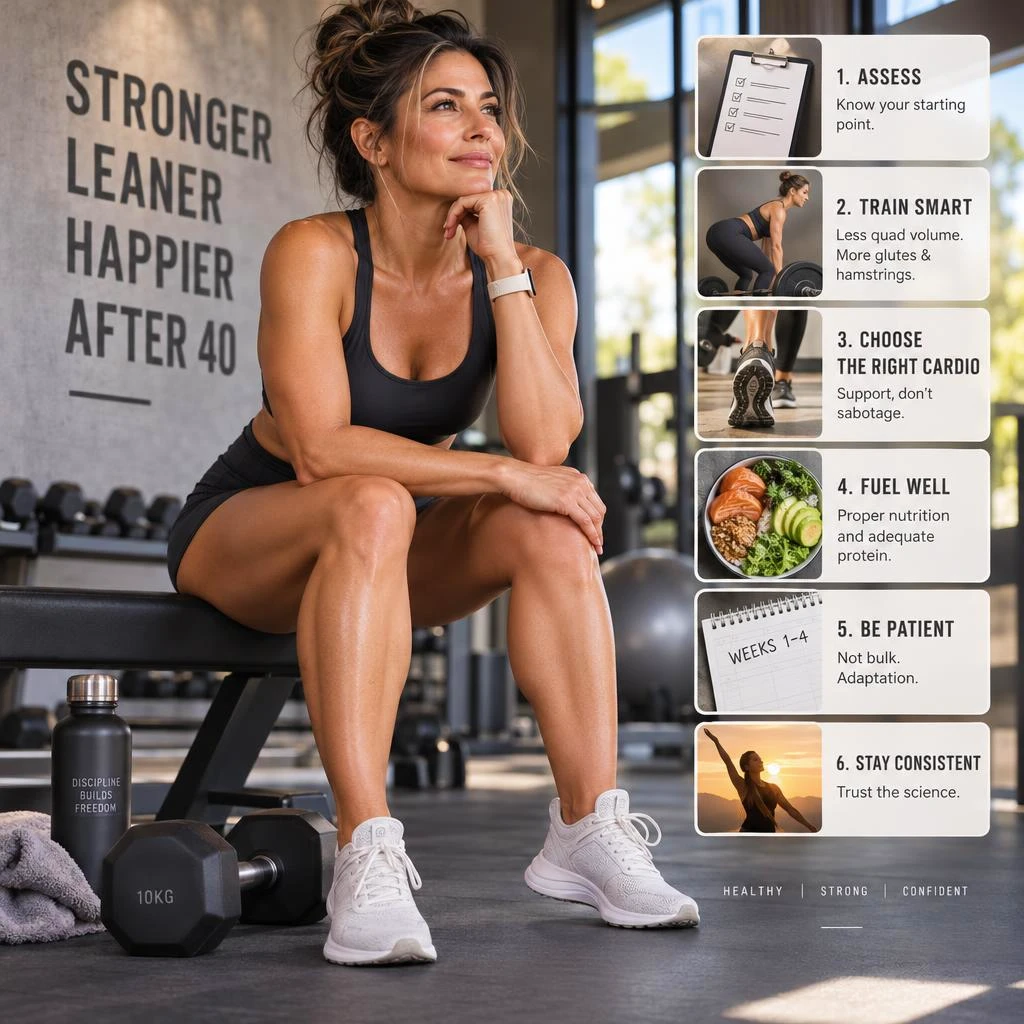
The lean, defined legs you want aren't about avoiding strength training — they're about being precise with how you train. Stay outside the hypertrophy rep range for quads, keep your quad volume low, prioritise your glutes and hamstrings, pick the right cardio, and give your body time to do what you're asking it to do.
Start with the assessment phase, implement the training split, support your efforts with proper nutrition and adequate protein, and — most importantly — be patient with the temporary changes in weeks 1–4. They're not bulk. They're adaptation.
Trust the science. Stay consistent. And the next time someone in a spin class tells you that lifting makes you bulky, you'll have the actual mechanism to explain why that's not how it works.
Glossary Of Key Terms
- Body Recomposition: The process of simultaneously losing body fat and maintaining or building lean muscle to change the body's appearance.
- Caloric Deficit: A state where an individual consumes fewer calories than they burn, which is necessary for reducing overall body fat.
- Ectomorph: A body type characterized by a naturally lean frame and difficulty building muscle.
- Endomorph: A body type that tends to store fat more easily and requires a combination of resistance training and caloric control for leaning.
- Glute Isolation: Exercises designed to specifically target the gluteus muscles while minimizing the involvement of the quadriceps.
- Glycogen Storage: The way muscles store carbohydrates for energy; increased storage can cause temporary muscle fullness or "swelling" when starting a new program.
- Hypertrophy: The enlargement of an organ or tissue from the increase in size of its cells, specifically referring to muscle growth in the 8–12 rep range.
- Mesomorph: A naturally athletic body type that builds muscle easily and requires strategic training to avoid unwanted bulk.
- Neural Adaptation: Strength gains achieved through the nervous system's improved ability to recruit muscle fibers, rather than through increasing the size of the fibers themselves.
- Progressive Overload: The gradual increase of stress placed upon the body during exercise, typically through increased weight or volume, to drive adaptation.
FAQ
How Long Will It Take To See Results From This Lean Legs Approach?
Most women notice visible changes in 8–12 weeks, with strength improvements appearing in 3–4 weeks. The key is to push through the first 4–6 weeks when temporary swelling can make it look like nothing is changing. It is changing — underneath.
Can I Do Yoga Or Swimming On My Rest Days?
Absolutely. Swimming is one of the best choices for this goal, specifically, it burns calories and improves cardiovascular fitness without adding leg hypertrophy stimulus. Yoga enhances recovery and flexibility. Keep intensity moderate to allow proper recovery.
What If I Enjoy Cycling Or Running – Do I Have To Give Them Up?
No, but adjust how you do them. Keep cycling resistance low (don't push against heavy resistance in spin classes). For running, steady-state running at a comfortable pace is fine — but limit high-intensity sprinting sessions if your thighs are responding with size. Monitor your legs and adjust accordingly.
Should I Get A Personal Trainer To Help With This?
If you're struggling with form or need accountability, a trainer can be genuinely valuable — especially for learning proper glute activation in hip thrusts and Romanian deadlifts, where technique determines whether you're actually targeting your glutes or compensating with your quads.
Will Lifting Weights Automatically Make My Legs Bulky?
No. Gaining significant muscle mass requires a sustained combination of training in the hypertrophy rep range, a consistent calorie surplus, and specific genetic predispositions. For most women, resistance training with the rep ranges and volume guidelines in this article will produce the opposite effect: leaner, more defined legs with improved body composition.
What Exercises Should I Avoid To Keep My Thighs Lean?
Heavy barbell squats, leg press at high load, deep weighted lunges, and leg extensions in the 8–12 rep range are the primary exercises to minimise. These load the quads through a long range of motion with significant mechanical tension — exactly the stimulus that drives quad hypertrophy. Swap them for glute-dominant posterior chain work and bodyweight or light-load endurance alternatives.
Is Cardio Better Than Weight Training For Slimming Thighs?
Neither alone is optimal — it's the combination that works. Incline walking and swimming help with fat loss without adding leg muscle. Strategic resistance training builds the posterior chain shape underneath the fat and keeps your metabolism elevated. Remove one or the other, and you either lose shape or lose the fat-burning stimulus. You need both.