
The Most Effective Weight Loss Tips For Women Over 40, In The Order They Matter
TONY ROBBINS
Motivational speaker & author
No matter how many mistakes you make or how slow you progress, you are still way ahead of everyone who isn't trying.
Summary (TL;DR)
The most effective weight loss tips for women over 40 combine a moderate calorie deficit (about 300 to 500 calories a day) with high-protein meals and consistent strength training, built on a foundation of sleep and stress management. Generic "eat less, move more" advice often fails women because it ignores female biology: hormones, the menstrual cycle, perimenopause and the cortisol response to restriction.
This guide gives you 15 strategies in the order they actually matter, using a framework we call The Lean Body Ladder, plus a quick self-check to find the rung that is holding you back. Consistency beats perfection.
You've been here before. You set the goal, cleaned out the fridge, downloaded the app, and two weeks later you were back where you started, wondering what went wrong.
Here's what rarely gets said: it's usually not your effort that fails. It's the strategy. Much of the weight loss advice out there was built around a physiology that isn't yours, ignoring your hormones, your menstrual cycle, perimenopause and your cortisol response to restriction.
The turnaround usually comes not from trying harder but from a different order of operations, which is what this guide gives you.
Fifteen evidence-based weight loss tips for women, grounded in how the female body actually works. Not what sounds motivating. What the research supports. If your main goal is losing body fat after 40, our sustainable fat loss guide goes deeper on that side.
Medical & Referral Disclaimer
The information in this article is intended for educational and informational purposes only and does not constitute medical advice. Individual results vary based on physiology, health history, medications, and lifestyle. Always consult your healthcare provider or a registered dietitian before beginning a new nutrition or exercise program, particularly if you are pregnant, breastfeeding, managing a hormonal condition, or have a history of disordered eating.
Key Takeaways
- Female fat loss is hormonal as well as caloric, so strategies need to address both.
- Order matters more than effort. The Lean Body Ladder fixes sleep and stress before layering on deficit and training, and a quick self-check shows which rung needs work first.
- A 300 to 500 calorie daily deficit is a sustainable range for most women. Dropping to a 1,200-calorie "floor" usually backfires.
- High-protein meals (25 to 40 g per sitting) are one of the most effective nutrition levers for fullness and muscle preservation.
- Strength training 2 to 3 times a week preserves the muscle that protects your metabolism in a deficit, especially after 40.
- Sleep and stress are metabolic levers, not lifestyle extras.
- Small, stacked habits and an identity you can live with outlast willpower. Consistency beats perfection.
What Are The Best Weight Loss Tips For Women?
The most effective weight loss tips for women combine a moderate calorie deficit with high-protein nutrition, strength training, stress management, and adequate sleep, applied in the right order. Addressing all five together outperforms any single tactic, because female fat loss is hormonal, not just mathematical.
Generic advice ("eat less, move more") misses the biology. Women's bodies respond differently to caloric restriction, exercise stress, and sleep deprivation than men's do. A strategy that ignores that reality produces the frustrating result so many women know too well: working hard, getting little back.
The 15 tips below address the full picture, and they're organized by a framework that tells you what to fix first.
Why Is Losing Weight Harder For Women Than Men?
Women lose weight differently from men because of hormonal fluctuations across the menstrual cycle, pregnancy, and menopause. These biological rhythms directly affect metabolism, fat distribution, and hunger signals, making generic advice insufficient for the female body.
This isn’t an excuse. It’s essential context.
Your hormones are not your enemy; they are messengers. When you understand what they are telling you, you stop fighting your body and start working with it. Here’s what the science actually shows:
- Estrogen promotes fat storage around the hips and thighs as an energy reserve for pregnancy and nursing.
- Progesterone fluctuations in the luteal phase (roughly days 15 to 28) can increase carbohydrate cravings and disrupt sleep quality.
- Cortisol, the primary stress hormone, signals your body to store fat, especially in the abdominal area.
Understanding these hormonal realities lets you plan smarter: timing your most intense workouts for the follicular phase, choosing gentler movement in the luteal phase, and treating sleep as a genuine fat-loss tool, not a luxury.
After 40, perimenopause adds another layer. Estrogen becomes less predictable and then declines, which shifts fat toward the abdomen and makes muscle harder to keep. For more on that stage, read why it's so hard to lose weight in perimenopause.

The Lean Body Ladder: An Original Framework For Female Fat Loss
The Lean Body Ladder is a four-rung priority order for women: fix the bottom rung before climbing to the next. Most women fail because they start at the top, slashing calories and adding cardio, while the foundation rungs (sleep, stress) are still broken.
Think of fat loss as a ladder you climb from the bottom up. Skip a rung and the whole thing wobbles.
| Rung | Layer | What It Covers | Why It Comes First |
|---|---|---|---|
| 1 (bottom) | Foundation | Sleep, cortisol/stress | Broken sleep and chronic stress sabotage every layer above them. Fix this, and everything else gets easier. |
| 2 | Fuel | Protein, whole foods, moderate deficit, hydration | Nutrition is the biggest lever, but only works when the foundation is stable. |
| 3 | Force | Strength training, strategic cardio, NEAT | Movement preserves muscle and metabolism, once you're fed and rested enough to recover. |
| 4 (top) | Flow | Cycle syncing, mindful eating, consistency systems | The fine-tuning that turns results into a lifestyle. |
The contrarian point baked into the Ladder: the women who "can't lose weight" are rarely lazy; they're climbing in the wrong order. They begin at Rung 3 or 4 (punishing workouts, aggressive restriction) while Rung 1 is in pieces. No amount of force fixes a broken foundation.
The 15 tips below map onto these rungs.
Start Here: Find Your Blocker
The Ladder tells you the order. This quick self-check tells you which rung is weakest for you right now. Read the four rows below; whichever one makes you think "that's me" is where to focus first.
| Blocker | Sign It's Yours | Start With |
|---|---|---|
| Recovery | You're doing everything right and still not seeing results | Rung 1: Foundation (tips 1 to 2) |
| Plate | You're "eating fine" but always hungry or snacking by 4 pm | Rung 2: Fuel (tips 3 to 9) |
| Movement | You exercise, but the scale and the mirror aren't moving | Rung 3: Force (tips 10 to 12) |
| Systems | You do well for a few days, then it all falls apart | Rung 4: Flow (tips 13 to 15) |
Fixing a Systems blocker with more Plate advice (another meal plan, another macro target) rarely works, because the plan was never the problem; the follow-through was. And no workout outruns five hours of sleep.
If Rung 1 is shaky, start there, whatever else is going on. Then give your weakest rung two to three weeks before adding anything else. Not all four. One.
Understanding The Calorie Deficit: The Foundation Of Fuel
A calorie deficit, burning more energy than you consume, is the non-negotiable basis of fat loss. Without it, no combination of superfoods, supplements, or training styles moves the scale consistently. But the size and method of that deficit matter enormously for women.
How Many Calories Should Women Actually Eat?
Most women lose fat effectively on a deficit of 300 to 500 calories below their Total Daily Energy Expenditure (TDEE), about 0.5 to 1 lb of fat loss per week. That pace is slow enough to protect lean muscle and hormonal function and fast enough to show visible change within a couple of months.
Estimate your starting point with the NIH Body Weight Planner, then adjust based on three to four weeks of real results. For a fuller breakdown, read how many calories you should be eating.
Calorie Deficit By Goal
| Goal | Daily Deficit | Weekly Fat Loss | Muscle Risk | Sustainability |
|---|---|---|---|---|
| Very aggressive (crash diet) | 1,000+ cal/day | 2+ lbs | High, muscle loss likely | Low, metabolic adaptation, rebound |
| Aggressive | 750 cal/day | ~1.5 lbs | Moderate with protein | Low-moderate |
| Moderate (recommended) | 500 cal/day | ~1 lb | Low with protein + training | High |
| Conservative | 250-300 cal/day | 0.5 lb | Very low | Very high, ideal for maintenance phase |
| Maintenance | 0 | 0 | None | Permanent |
The moderate row is where most women do best. Faster rows cost more muscle and are harder to sustain, which is why the next section matters.

The Contrarian Take: The 1,200-Calorie Floor Is Sabotage, Not Discipline
The popular 1,200-calorie target is not a safe "low" for most women; it sits at or below the resting metabolic rate of the average adult woman, which means you're starving basic bodily functions to lose weight. It backfires more often than it works.
This is the take most diet culture won't say out loud. A 1,200-calorie ceiling feels virtuous. Physiologically, it's closer to a slow emergency. Here's the mechanism:
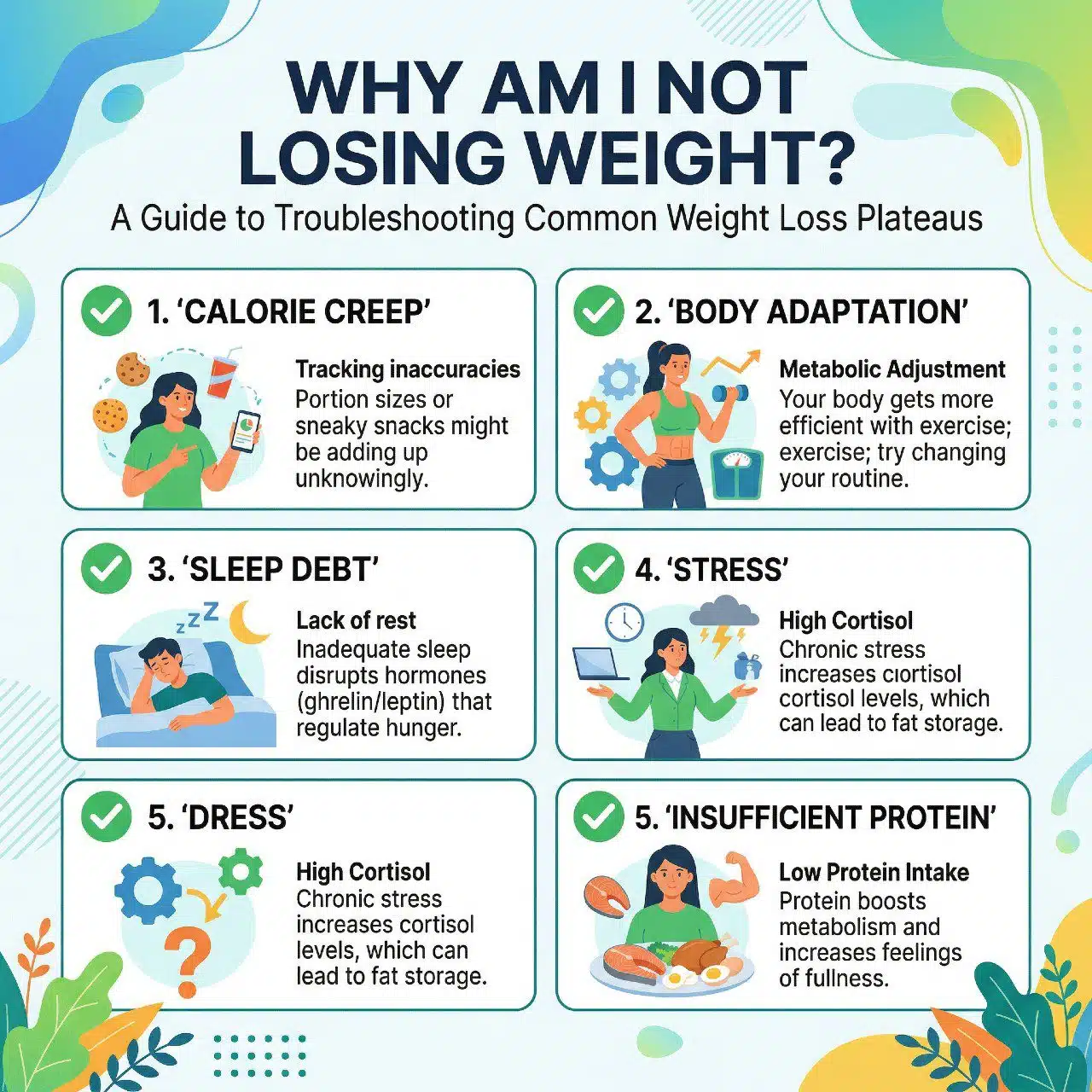
- Adaptive thermogenesis. Read severe restriction as famine, and the body protects itself; it lowers resting metabolic rate, reduces spontaneous movement (NEAT), and gets more efficient at storing fat. The harder you cut, the more your body resists.
- Hormonal shutdown. Sustained low energy availability disrupts the menstrual cycle. The Endocrine Society's clinical practice guideline on functional hypothalamic amenorrhea identifies weight loss and energy imbalance as primary drivers of lost periods, and notes the fix is correcting the energy deficit, often with weight gain. Your body will trade your reproductive function for survival long before it gives up its fat stores willingly.
This is exactly why so many women plateau weeks into a diet that seemed to be working, then regain everything the moment they "stop." The deficit wasn't too small. It was too aggressive. Moderate deficit + patience + the tips below = results your body won't fight.
15 Weight Loss Tips For Women That Actually Work
The tips run from the bottom of the Ladder up: Foundation first, then Fuel, Force and Flow.
Rung 1 (Foundation): The Layer Most Women Skip
For women, fat loss is not pure arithmetic. Cortisol, estrogen, insulin, leptin and thyroid hormones have a big say in where fat is stored, how readily it's released, and how well any strategy works. This is the bottom of the Ladder, and the rung most diets ignore entirely.

1. Fix Your Sleep First
Sleep is not optional for fat loss; it decides whether your hunger hormones work for you or against you. Poor sleep (under 7 hours) elevates ghrelin (hunger), suppresses leptin (fullness), raises cortisol, and reduces insulin sensitivity, a hormonal setup for storing fat.
The numbers are striking. In a small controlled study of healthy young men in the Annals of Internal Medicine, just two nights of short sleep cut leptin by 18%, raised ghrelin by 28% and increased hunger by 24%.
The upside runs the other way: a 2022 randomized trial in JAMA Internal Medicine found adults who extended their sleep cut intake by an average of 270 calories a day, with no dietary instruction.
You cannot out-train or out-diet sleep deprivation. Fix sleep first, then optimize everything else. See: Why You Should Stop Being Tired All the Time.
2. Manage Cortisol And Stress-Driven Weight Gain
Chronic stress is a major, underrecognized driver of stubborn belly fat in women: elevated cortisol signals the body to store fat centrally as an emergency reserve. The women who exercise hard, sleep poorly, eat imperfectly, and never fully recover are often locked in a cortisol loop that makes fat loss feel impossible despite genuine effort.
Practical cortisol management:
- Prioritize sleep (the fastest cortisol reducer).
- Reduce exercise intensity temporarily if you're overtraining and under-recovering.
- Walk daily: moderate movement lowers cortisol; extreme activity raises it.
- Practice 10-minute breathwork or meditation: evidence-based, equipment-free.
In a small randomized controlled trial in the Journal of Obesity, women completed a four-month mindfulness program aimed at stress eating. Among the participants with obesity, those who reduced their stress and cortisol the most also saw the biggest reductions in abdominal fat.
Emotional health belongs on this rung too. Stress, low mood and hormonal shifts can drive eating that has little to do with hunger.
Trigger journaling (noting what you ate, when, and how you felt beforehand), yoga or Pilates, and professional support when you need it all help break that cycle. Read more on the role of emotions in weight loss and using mindfulness to break the cycle of emotional eating.
See: Can Diet Really Help with Stress-Related Weight Gain in Women?
Rung 2 (Fuel): Eat For Your Hormones
3. Prioritize High-Protein Meals At Every Sitting
Protein is the most important macronutrient for female fat loss, and most women eat far too little of it. It works on three fronts at once:
- Satiety hormones: Protein raises GLP-1 and CCK (fullness signals) while suppressing ghrelin (hunger), cutting overall intake without deliberate restriction.
- Thermic effect of food: Your body uses more energy digesting protein than carbs or fat.
- Lean-muscle preservation: Adequate protein helps prevent muscle loss during a deficit, which protects your metabolism.
Aim for 25 to 40g per meal, roughly a palm-sized portion of chicken, fish, eggs, or Greek yogurt. The difference in hunger and energy is noticeable within days. For a structured plan: High-Protein Diet Plan for Sustainable Weight Loss for Women.
Protein targets for women's weight loss.
| Body Weight | Daily Protein At 0.7 g Per lb | Daily Protein At 1.0 g Per lb | Example Day |
|---|---|---|---|
| 130 lb (59 kg) | 91 g | 130 g | Eggs, chicken breast, Greek yogurt and lentils |
| 150 lb (68 kg) | 105 g | 150 g | Eggs, salmon, cottage cheese and edamame |
| 170 lb (77 kg) | 119 g | 170 g | Two chicken breasts, eggs and protein-rich snacks |
| 190 lb (86 kg) | 133 g | 190 g | Larger protein portions at every meal |
| 210 lb (95 kg) | 147 g | 210 g | A protein-first approach at every meal and snack |
These targets work out to roughly 1.6 to 2.2 g per kg, within the 1.4 to 2.2 g per kg range the International Society of Sports Nutrition recommends for exercising women. If you have kidney disease or another medical condition, check your target with your doctor.
4. Build Every Meal Around Whole Foods
Whole foods work with your hunger hormones; processed foods are engineered to override them. Refined carbs, added sugar, and industrial oils spike blood sugar and surge insulin, which can bring hunger back quickly.
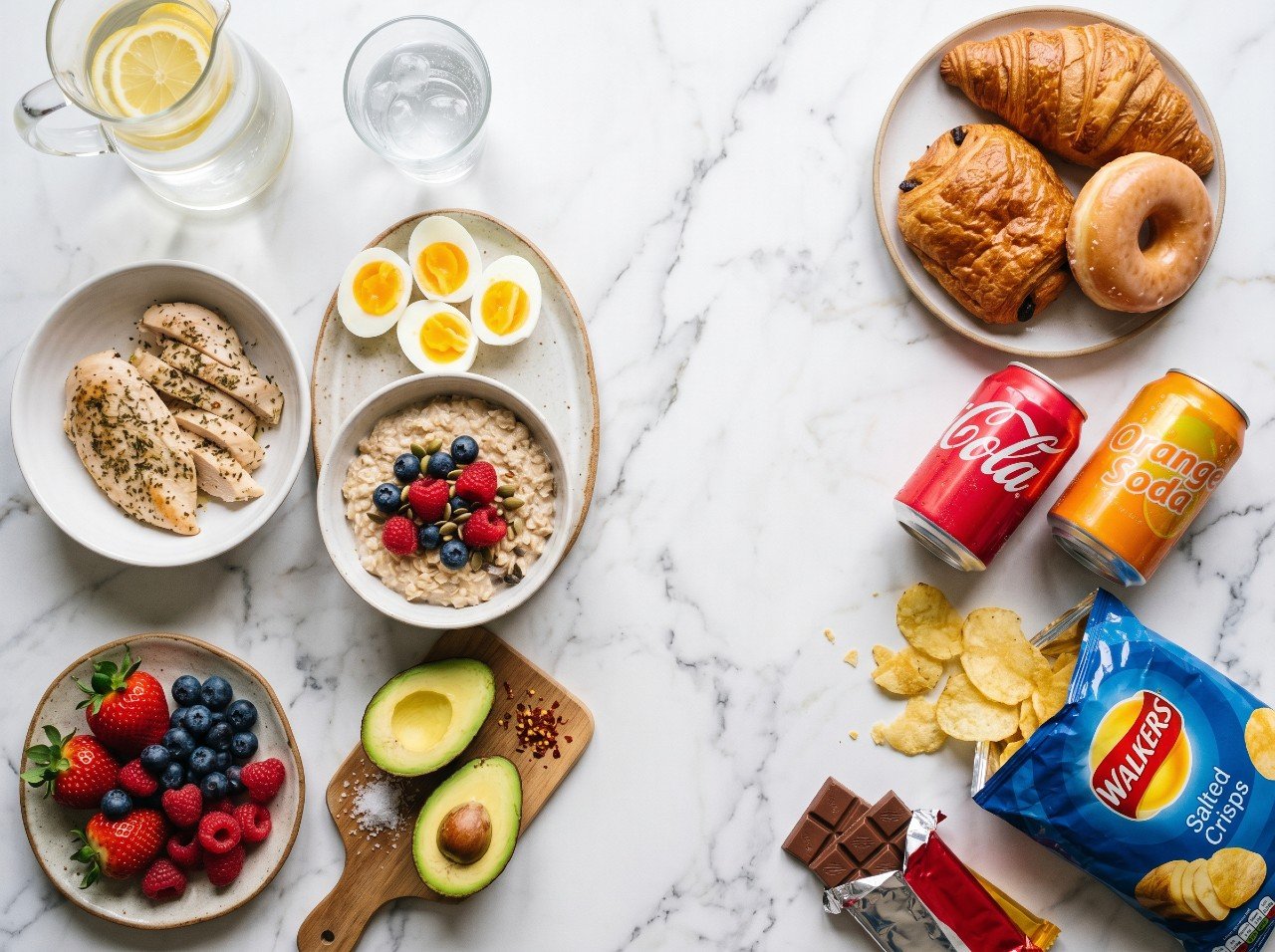
Vegetables, fruit, lean proteins, nuts, legumes, and whole grains naturally control intake without tracking every bite. One rule: if it has more than five ingredients, or you can't picture what it looked like before processing, eat it rarely.
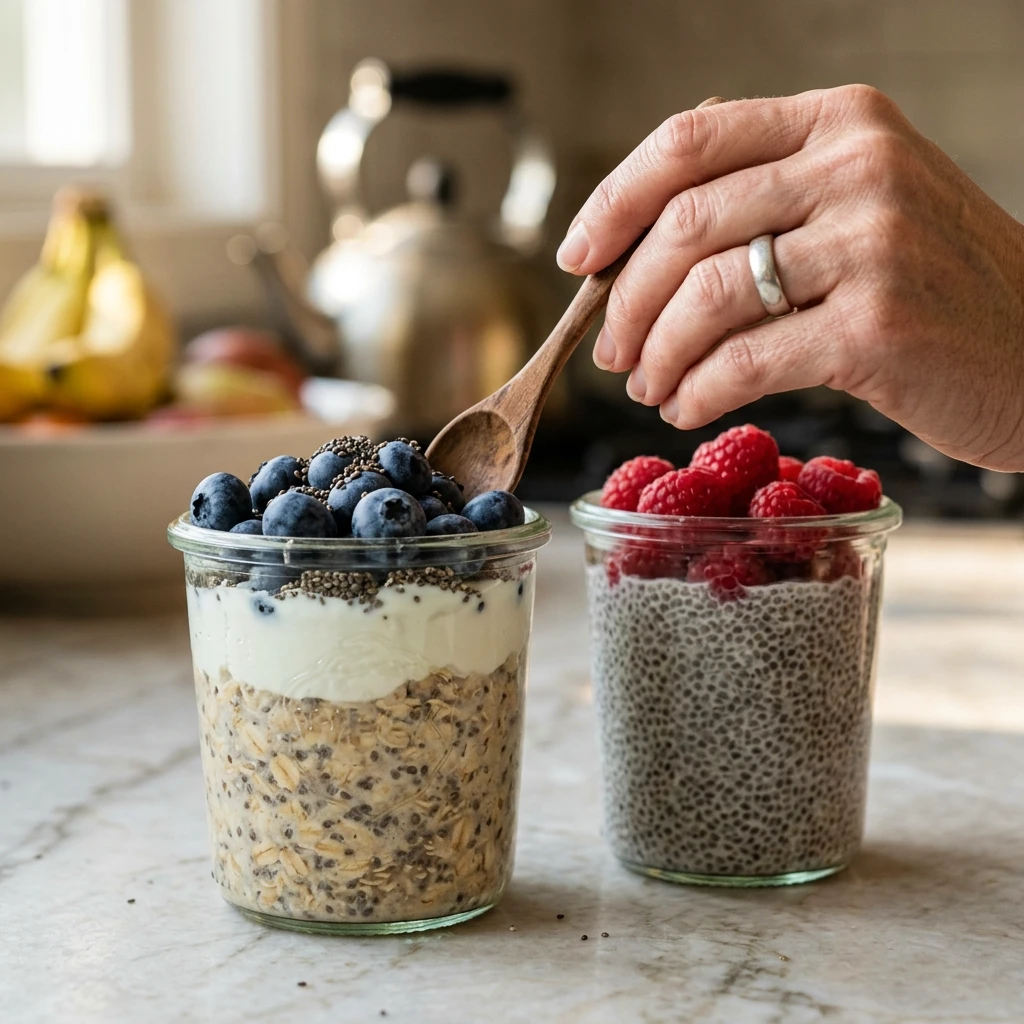
The insulin-friendly eating pattern. Low-glycemic foods raise blood sugar slowly and steadily, which tends to mean smaller insulin responses, steadier energy and better hunger control.
Eat more of:
- Non-starchy vegetables (minimal glycemic impact, plenty of fiber and micronutrients)
- Legumes (lentils, chickpeas, black beans)
- Whole grains (oats, brown rice, quinoa, barley)
- Lean proteins
- Healthy fats (avocado, olive oil, nuts)
Cut back on:
- Refined grains (white bread, white rice, white pasta)
- Added sugars
- Ultra-processed foods engineered to be overeaten
- Sweetened drinks
This matters more in perimenopause, when insulin sensitivity tends to fall as estrogen declines. Read more on insulin resistance in perimenopause.
Add fiber to every meal. Fiber slows digestion, blunts blood sugar spikes and helps you feel full on fewer calories. A simple habit stack: after you start cooking dinner, add one high-fiber ingredient (beans, lentils or an extra vegetable) to the pot.
5. Cut Added Sugar, Not All Carbs
Added sugar is the carbohydrate problem, not the sweet potato on your plate. Added sugar in drinks, sauces, and "healthy" snacks spikes insulin and fuels the hunger cycle that derails diets. Complex carbs from oats, beans, and fruit don't, to the same degree.
The American Heart Association recommends women keep added sugar to about 6 teaspoons (25 g) a day, far below what many people get from sweetened drinks, sauces and "healthy" snacks. Cutting this one category is a simple place to start, and you don't have to give up carbohydrates to do it.
Watch labels for cane sugar, fructose, maltose, dextrose, high-fructose corn syrup, brown rice syrup, and agave, all added sugars under different names.
6. Master Portion Control Without Counting Every Calorie
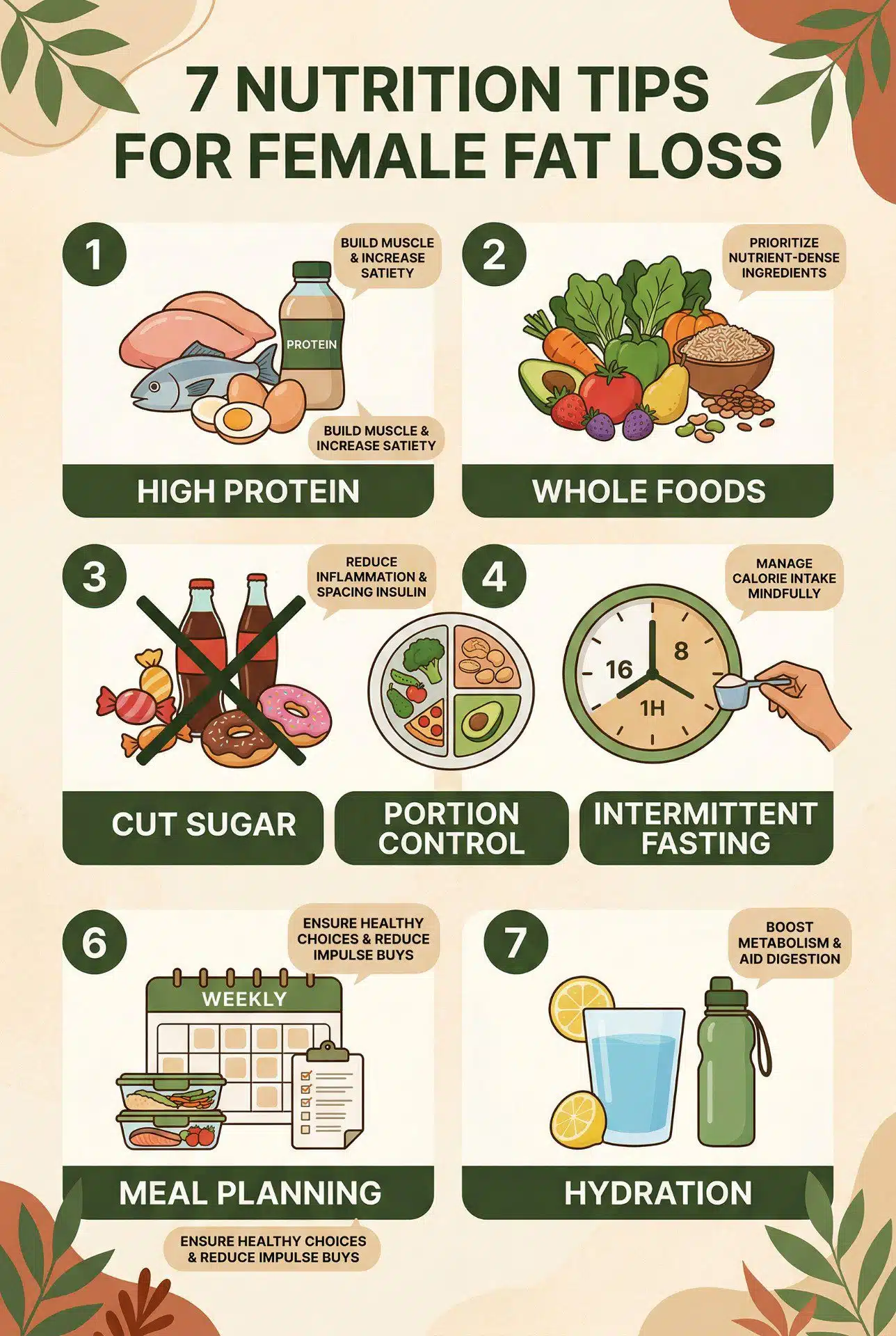
The hand method gets you close to calorie counting's accuracy with a fraction of the effort. Counting works, but it's tiring and rarely sustainable. Instead, per meal:
- Protein: 1 to 2 palms
- Vegetables: 1 fist
- Complex carbs: 1 cupped hand
- Healthy fats: 1 thumb
This calibrates to your body size, scales with hunger on active days, and needs no apps or scales.
7. Try Intermittent Fasting The Gentler Way
Intermittent fasting can help some women eat less, but the timing itself isn't special. In the 12-week TREAT trial, a 16:8 eating window wasn't more effective for weight loss than eating three meals a day.
If you like the structure, a gentler 14:10 window (fast 14 hours, eat within 10) is easier for many women to sustain, and it's fine to loosen it in the days before your period if hunger climbs.
Key rule: break your fast with protein, rather than stretching a coffee-only morning into the afternoon, which often leads to overeating later.
8. Plan Your Meals Weekly, Even Roughly
Meal planning is one of the highest-leverage, lowest-effort fuel habits for busy women, because the decision is already made. A study of over 40,000 adults found people who planned meals had healthier weight status and better diet quality.
You don't need a spreadsheet: a rough Sunday plan ("Monday: chicken and rice, Tuesday: salmon and veg") removes the 6 pm collapse into takeaway. More: Weight Loss Meal Prep Ideas for Women.
9. Hydrate Strategically Before Meals
Drinking 500ml of water before meals measurably increases fat loss, and dehydration is routinely mistaken for hunger. In a 12-week randomized trial published in Obesity, dieters who drank 500ml of water before each meal lost about 44% more weight than those who dieted alone. That's a meaningful edge from a habit that costs nothing.
Build a water habit, not a water goal. Rather than tracking ounces all day (which most people abandon within a week), stack it onto something you already do: after you sit down at the table, drink one full glass of water before you pick up your fork.

Aim for roughly 2 to 3 liters daily, front-loaded in the morning when the habit is easiest to build. Here's a practical comparison to guide your choices:
| Category | Supports Fat Loss | Hinders Fat Loss |
|---|---|---|
| Protein sources | Chicken, salmon, eggs, Greek yogurt, lentils | Processed deli meats, sugar-added protein bars |
| Carbohydrate sources | Sweet potato, oats, brown rice, legumes, fruit | White bread, pasta, pastries, sugary cereals |
| Fat sources | Avocado, olive oil, walnuts, fatty fish | Heavily processed oils, trans fats |
| Drinks | Water, green tea, black coffee, herbal tea | Juice, fizzy drinks, alcohol, flavored lattes |
| Snacks | Boiled eggs, apple + almond butter, mixed nuts | Crisps, biscuits, sugary granola bars |
| Cooking methods | Grilling, baking, steaming, air frying | Deep frying, heavy cream sauces |
| Meal timing | Protein-first meals, consistent eating windows | Skipping breakfast, then overeating at night |
Rung 3 (Force): Move To Protect Your Metabolism
10. Add Strength Training 2 To 3 Times Per Week
Strength training is the most underused fat loss tool in most women's routines. Its real value is protecting the muscle that protects your metabolism in a deficit. A myth worth correcting: lean muscle is not a calorie furnace. Each kilogram burns only about 13 calories per day at rest.
The payoff isn't a big resting burn; it's that lifting preserves muscle while you diet (so your metabolism doesn't crater), plus the energy cost of training and the leaner shape you build.
And no, without pharmaceutical help, women's testosterone is far too low to produce "bulky" bodybuilder mass. Start with 2 sessions a week, 30 to 45 minutes, on compound movements: squats, deadlifts, rows, presses. See: Strength Training for Women Over 40: Build Lean Muscle Without Bulking.
If weights intimidate you, you're not alone. Start at home or in a quiet corner with bodyweight squats and dumbbells. Competence builds confidence faster than waiting to feel ready.
11. Use Cardio Strategically, Not Excessively
Cardio accelerates fat loss but can't replace strength training, and chronic high-intensity cardio can stall it. The best mix for women: 2 to 3x strength training as the foundation, plus 2 to 3x moderate cardio (brisk walking, cycling, swimming) for extra burn and heart health.



Avoid daily high-intensity cardio on top of poor sleep, which keeps the stress response switched on. Walking is underrated: a brisk walk adds real energy use with almost no recovery cost. For how to combine the two, read balancing cardio and strength training, and for ready-made sessions see Fat Loss Workouts for Beginners.
12. Increase NEAT (Non-Exercise Activity Thermogenesis)
NEAT, the calories you burn outside formal exercise, can vary by up to 2,000 calories a day between similar-sized people, making it one of the biggest hidden levers in fat loss. That figure comes from the foundational work of researcher James Levine, published in the Journal of Internal Medicine.
Simple upgrades:
- Take calls while walking
- Use stairs instead of lifts
- Stand or pace during TV
- Park further away on purpose
- Stand every 45 minutes
Steps also help you keep weight off. A 2026 meta-analysis of 14 randomized trials found adults who raised their daily steps to around 8,500 during a weight-loss program, and held that level afterward, maintained significantly more of their weight loss. Closing the gap toward 8,000 to 8,500 steps costs nothing.
Rung 4 (Flow): Fine-Tune And Sustain
13. Understand How Your Hormones Affect Fat Loss
Your menstrual cycle creates predictable windows where fat loss is easier or harder, and almost no generic advice accounts for it.
| Cycle Phase | Days (Approx.) | Hormonal State | What It Means For Fat Loss |
|---|---|---|---|
| Menstrual | 1 to 5 | Low estrogen & progesterone | Energy may be lower; favor gentle movement |
| Follicular | 6 to 13 | Rising estrogen | Best window for intense training and a firmer deficit |
| Ovulatory | 14 | Estrogen peak | High energy, strong performance |
| Luteal | 15 to 28 | High progesterone, dropping estrogen | Increased hunger; ease the deficit |
Training harder in your follicular phase and eating at maintenance in your luteal phase isn't indulgence; it's cycle syncing that heads off the hormonal chaos derailing so many women. Deep-dive: Hormones and Weight Loss for Women.

14. Practice Mindful Eating To Break The Craving Cycle
Mindful eating is a behavioral strategy, not a wellness trend. It gives your fullness signals time to arrive before you've overeaten; Harvard Health notes the brain needs about 20 minutes to register fullness. It also speaks directly to the emotional eating many women name as their biggest obstacle.
The mindful eating framework.
Before eating:
- Ask: Am I physically hungry, or am I stressed, bored or tired?
- Rate your hunger from 1 to 10. Start eating around 4 to 5 (genuinely hungry) and stop around 6 to 7 (satisfied, not stuffed).
During eating:
- Put screens away entirely.
- Eat slowly and put your fork down between bites.
- Notice flavors, textures and satisfaction, so your brain registers the meal.
See: Using Mindfulness to Break the Cycle of Emotional Eating.
15. Shift Your Mindset: Systems Beat Willpower
The biggest obstacle to consistent weight loss isn't lack of information. It's the belief that slipping reflects your character rather than your system design. Willpower runs low at the end of a long day, so build an environment where the right choices need almost none of it:
- Healthy food at eye level in the fridge
- Workout clothes set out the night before
- Meals decided Sunday, not at 6 pm Monday when you're starving
- A fixed morning walk, not a "whenever I feel motivated" walk
You don't have a consistency problem. You have a system design problem. Change the system, and consistency follows. See: How to Unlock Lasting Weight Loss.
Identity-based habits. Behavior change research, popularized by James Clear in Atomic Habits, suggests habits tied to identity ("I am someone who...") last longer than habits tied to an outcome ("I want to...").
Swap "I want to lose 30 lbs" for "I am becoming a woman who takes care of her body every day," and every workout, meal and glass of water becomes a small vote for that identity. A missed workout isn't failure; the pattern over months is what counts.
The habit-stack method. Habit stacking means attaching one small, specific action to a habit you already do automatically. As Clear explains, the formula is: "After [current habit], I will [new habit]." Your existing routine becomes the reminder. For example:
- After I pour my morning coffee, I will drink one full glass of water first.
- After I sit down for lunch, I will add one serving of vegetables before I eat anything else.
- After I finish a work call, I will stand up and walk for two minutes.
Small, stacked habits don't give you a single point of failure. Miss one day, and the stack is still there tomorrow. For the thinking side of this, read more on building a weight loss mindset.
When It’s More Than A Habit: Emotional And Binge Eating
Occasional stress-eating is human; binge eating disorder (BED) is a diagnosable medical condition, and the difference matters. BED involves recurring episodes of eating a large amount of food while feeling a loss of control, often followed by shame, and it is not something you can simply out-willpower. Watch for these signs:
- Eating much faster than usual, or past the point of physical fullness, regularly.
- Eating alone specifically because of embarrassment about how much you’re eating.
- Strong feelings of disgust, guilt, or depression after overeating episodes.
- These episodes happening at least once a week for several months.
If any of this sounds familiar, please know it’s treatable, and you don’t have to figure it out alone. The National Alliance for Eating Disorders offers free referrals to specialized treatment and a helpline staffed by licensed therapists. Reaching out is a sign of strength, not a step backward on your weight loss journey.
A weight loss plan that ignores your emotional relationship with food isn't complete. For the everyday end of the spectrum, our guide to using mindfulness to break the cycle of emotional eating is a good next step.

Where GLP-1 Medications Fit
GLP-1 receptor agonists such as semaglutide and tirzepatide are prescription medications that act on appetite pathways in the brain. They are not a shortcut around the habits above, and they are not right for everyone.
At its June 2026 Annual Meeting, the American Medical Association adopted policy encouraging GLP-1 use "within comprehensive care plans that include behavioral and lifestyle interventions," and directing physicians to screen for eating disorders and body-image concerns before prescribing.
Whether a medication belongs in your plan is a conversation for you and your doctor. Nothing here is advice to start, stop or change any medication. Either way, the protein, strength, sleep and habit tips in this guide still apply.
How To Break A Weight Loss Plateau
A plateau, where the scale stalls despite consistent effort, is a normal sign your body has adapted, not a sign you've failed. Re-check portions for a week, change your training stimulus, recommit to protein and give sleep priority before cutting food further. For a step-by-step approach, read our tips to overcome a weight loss plateau.
Weight Loss Tips Specifically For Women Over 40
After 40, declining estrogen lowers resting metabolic rate, shifts fat toward the abdomen, and accelerates muscle loss, so the execution changes even though the principles don't.
Protein needs rise (the International Society of Sports Nutrition recommends 1.4 to 2.2 g per kg for exercising women), strength training becomes non-negotiable for muscle preservation, sleep quality matters more (estrogen shapes sleep architecture), and stress management matters more as estrogen falls.
If the usual tips have stopped working, read why it's so hard to lose weight in perimenopause.
See: How to Lose Weight During Perimenopause Without Starving Yourself.
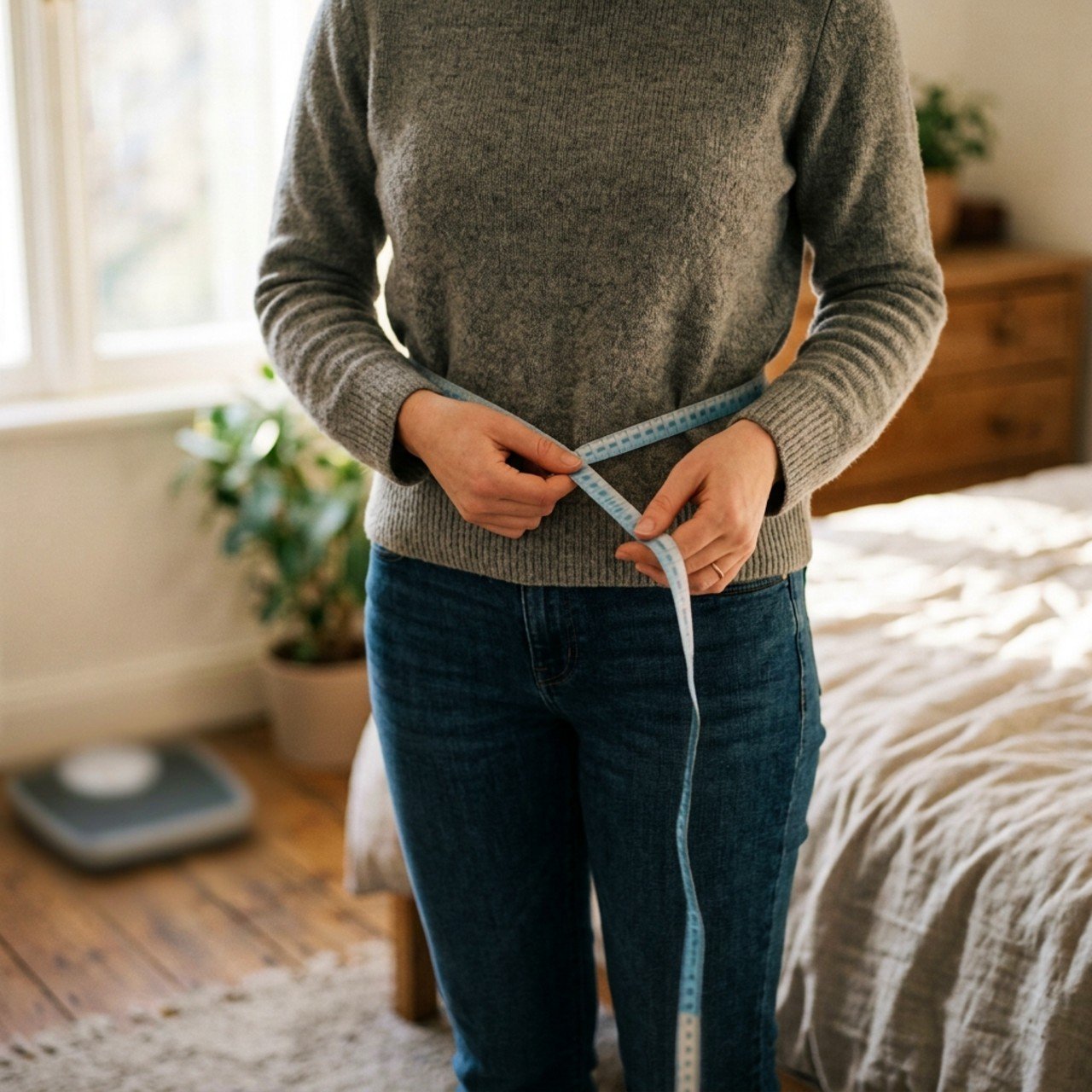
How To Stay Consistent With Weight Loss
Consistency isn't a personality trait; it's the output of a well-designed system applied to a realistic goal. The women who keep fat off long-term share one habit: they defined "good enough" and stopped demanding perfection. An 80% adherent week is a successful week.
Three practices that drive consistency for women specifically:
- Weekly check-ins, not daily weigh-ins. Daily weight swings by a few pounds due to water and hormones, which create false alarms. Weigh weekly at the same time (for example, Friday morning, before breakfast).
- Build the identity first. "I'm someone who exercises" outlasts "I want to lose 15 lbs." Identity-level habits don't need constant willpower.
- Celebrate process wins. Drank your water? Win. Took the stairs? Win. A record of small wins builds the momentum that carries you when motivation dips.
If you keep restarting, check the worst weight loss mistakes we all make and the common reasons diets fail. And if you're at the very beginning, start with these tips for getting your weight loss journey started.
Expert Commentary: What The Research Actually Shows
Sleep researchers have been unusually direct about how much rest matters. In the 2022 JAMA Internal Medicine trial, adults who extended their sleep ate about 270 fewer calories a day without any dietary instruction.
The study's lead author, Dr. Esra Tasali, Director of the UChicago Sleep Center, put it plainly: "Many people are working hard to find ways to decrease their caloric intake to lose weight... just by sleeping more, you may be able to reduce it substantially." (UChicago Medicine)
On restriction, the Endocrine Society's clinical practice guideline on functional hypothalamic amenorrhea is a sober reminder for women: it names weight loss and energy imbalance as primary drivers of lost periods, and treats correcting the energy deficit as the fix.
On speed, the long-term follow-up of contestants from The Biggest Loser (Fothergill et al., Obesity) found resting metabolism was still suppressed six years after rapid, extreme weight loss.
Read together, the research points the same way as the Ladder: moderate deficits, protected sleep, enough protein, regular strength work and habits you can repeat beat speed and severity.
Want a step-by-step version? Get our free guide, 10 Actions That Support Permanent Weight Loss, for a structured way to put these tips into action. Get your free guide here.

The Bottom Line
You are not failing at weight loss. You may be following advice that was never designed for your body, and climbing the ladder in the wrong order.
These 15 tips address what generic content ignores: the hormonal reality of being a woman, the foundational role of sleep and stress, the outsized importance of protein and strength, and the truth that a 1,200-calorie floor is sabotage dressed up as discipline. Start at the bottom rung. Fix sleep and stress first. Then fuel, then force, then flow.
Pick two or three tips, not all fifteen. Build the habits before adding more. Give your body four weeks before judging results. Sustainable progress over six months beats two impressive weeks followed by the same exhausting restart.
You don't have a motivation problem. You have a system that was built for someone else. This is your system now.
Glossary Of Key Terms
- Adaptive Thermogenesis: A metabolic process where the body reduces its energy expenditure in response to severe calorie restriction to protect fat stores.
- Cortisol: A stress hormone that, when chronically elevated, promotes the storage of visceral (belly) fat and can hinder fat loss.
- Cycle Syncing: The practice of adjusting nutritional intake and exercise intensity to match the hormonal shifts of the menstrual cycle phases.
- Follicular Phase: The phase of the menstrual cycle (approx. days 6 to 13) characterized by rising estrogen, often considered the best window for intense training.
- Ghrelin: A hormone produced in the gut that signals hunger to the brain; levels typically rise when sleep is restricted.
- Leptin: A hormone that signals satiety (fullness) to the brain; levels often drop during periods of sleep deprivation or extreme dieting.
- Luteal Phase: The phase of the menstrual cycle (approx. days 15 to 28) when progesterone is high, and hunger often increases.
- NEAT (Non-Exercise Activity Thermogenesis): Energy expended for everything we do that is not sleeping, eating, or sports-like exercise.
- Satiety: The state of feeling full or satisfied after eating, largely regulated by hormones like GLP-1 and protein intake.
- TDEE (Total Daily Energy Expenditure): The total number of calories a person burns in a day, including resting metabolism, digestion, and all movement.
FAQ
What Are The Best Weight Loss Tips For Women?
The best weight loss tips for women are to create a moderate calorie deficit, prioritize protein at every meal, strength train at least twice a week, protect your sleep, manage stress and build small habits you can repeat. They work because they work with female biology, applied in order, foundation first. See: How to Unlock Lasting Weight Loss.
Is 1,200 Calories A Day Too Low For Women?
For most women, yes. A 1,200-calorie target often sits at or below resting metabolic rate, which triggers adaptive thermogenesis and can disrupt the menstrual cycle; the Endocrine Society links energy imbalance to lost periods. A moderate 300 to 500 calorie deficit produces more sustainable fat loss without the metabolic backlash.
How Do I Know Which Weight Loss Tip To Start With?
Use the self-check under Start Here: Find Your Blocker. If you're doing everything right and still stuck, start with Rung 1 (sleep and stress). If you're always hungry, start with Rung 2 (fuel). If you exercise but don't see results, look at Rung 3 (movement). If you start well and fall off within days, it's a Rung 4 systems problem, not a discipline one.
Are Weight Loss Tips Different For Women Over 40?
The principles hold, but the execution changes. Declining estrogen shifts fat toward the abdomen and makes muscle harder to keep, so women over 40 benefit from more protein (1.4 to 2.2 g per kg for exercising women), regular strength training, better sleep habits and more attention to stress. Read: How to Lose Weight During Perimenopause Without Starving Yourself.
Why Is Weight Loss Often Different For Women Compared To Men?
Women experience more hormonal variation, from monthly menstrual cycles to pregnancy and perimenopause, which affects appetite, fat storage patterns and sleep. Estrogen promotes fat storage around the hips and thighs, and the drop in estrogen after 40 shifts more fat toward the abdomen. That is why generic advice often needs adjusting for women.
What Role Does Sleep Play In Weight Loss For Women?
Poor sleep raises ghrelin, lowers leptin, increases cortisol, and worsens food decisions. A 2022 JAMA Internal Medicine study found sleep extension alone cut intake by about 270 calories. Seven to nine hours is one of the highest-leverage changes you can make.
How Do I Know If It’s Emotional Eating Or Something More Serious?
Occasional stress-eating is common and not a disorder. If you notice regular episodes of eating past fullness with a sense of loss of control, eating in secret out of shame, or intense guilt afterward happening at least weekly for months, that pattern may indicate binge eating disorder, and support from the National Alliance for Eating Disorders can help.