
Revitalise Your Energy: Discover 9 Reasons To Stop Being Tired And Exhausted
Ralph Waldo Emerson
American essayist and philosopher
The first wealth is health
Summary (TL;DR)
Discover why you are always tired with these evidence-based fixes designed for women. Constant tiredness is often due to poor sleep quality, hormonal fluctuations, or iron deficiency.
Undiagnosed sleep disorders like sleep apnoea and mental health issues, including chronic stress and anxiety, also drain energy. Improve sleep by setting a consistent bedtime, darkening your room, and reducing caffeine. Prioritize your well-being to revitalize your energy and combat fatigue.
The alarm goes off. You hit snooze — again. By the time your feet hit the floor, you already feel like you need a nap.
If that sounds familiar, you are not broken, and you are not lazy. But your body is sending you a message — and it deserves a real answer.
Chronic tiredness in women is one of the most common complaints that doctors hear from women aged 25–55. The frustrating part? The real causes are often hiding in plain sight: in your hormones, your diet, your sleep quality, and even in how you breathe at night.
This guide uncovers the 9 most common reasons why you cannot stop being tired — and gives you the evidence-based tools to finally fix them, without expensive supplements, punishing routines, or advice that was written for men.
Medical & Referral Disclaimer
This article is for informational purposes only. It is not a substitute for professional medical advice, diagnosis, or treatment. Always consult a qualified healthcare provider for concerns about your health.
Key Takeaways
- Eight hours in bed does not equal eight hours of restorative sleep — quality matters more than quantity.
- Hidden physical conditions — sleep apnoea, iron deficiency, and thyroid dysfunction — are frequent causes of chronic fatigue in women that are frequently missed.
- Hormonal fluctuations from the menstrual cycle to perimenopause directly regulate your energy levels.
- Nutritional gaps in iron, B12, magnesium, and vitamin D are among the most correctable causes of fatigue.
- Chronic stress, anxiety, and depression are physical energy drains — not just emotional ones.
- Persistent fatigue lasting more than three weeks without a clear cause warrants medical evaluation.
What Causes Constant Tiredness in Women?
Poor sleep quality, iron deficiency, hormonal fluctuations, thyroid dysfunction, chronic stress, or an undiagnosed sleep disorder most often cause constant tiredness in women.
Persistent exhaustion that does not resolve with a good night's sleep is not "just stress" or "just getting older." It is your body signalling that something is off. Research found that women are significantly more likely than men to report fatigue as a primary complaint — and significantly less likely to have the cause thoroughly investigated.
The good news: most causes of chronic fatigue in women are identifiable and treatable. Here are the nine you need to know.
1. You Are Sleeping, But Not Actually Resting
Spending 8 hours in bed while waking frequently or staying in light sleep stages means you are not getting the deep, restorative sleep your body needs to recharge.
The number of hours you spend in bed is not the same as the number of hours of restorative sleep you receive. Deep sleep — specifically slow-wave sleep — is where your body repairs tissue, consolidates memory, and restores energy reserves. If you are disrupting those cycles, no amount of "more sleep" will fix the problem.
What Disrupts Sleep Quality in Women
- Restless Legs Syndrome (RLS): An uncomfortable crawling sensation in the legs that peaks at night, delaying sleep onset and fragmenting deep sleep
- Chronic insomnia: Difficulty falling or staying asleep, often linked to cortisol dysregulation or anxiety
- Irregular sleep timing: Variable bedtimes confuse your circadian rhythm and reduce sleep efficiency — even if total hours are the same
- Light exposure: Even low-level light from screens or streetlights suppresses melatonin production and shortens deep sleep stages
Actionable Tips For Better Rest
Good sleep hygiene is the single most impactful and lowest-cost intervention for chronic fatigue. Before assuming a medical cause, spend one week here:
- Set a consistent bedtime — even on weekends. Your circadian rhythm depends on regularity.
- Darken your room completely. Blackout curtains significantly reduce cortisol disruption caused by light exposure at night.
- Cut caffeine after 2 pm. Caffeine has a half-life of 5–6 hours — a 4 pm coffee is still affecting your brain at midnight.
- Lower your room temperature to 65–68°F (18–20°C). Core body temperature drops are the physiological trigger for deep sleep.
- Wind down for 20–30 minutes. Slow breathing, light stretching, or a short walk signals your nervous system to shift out of alertness mode.

2. Your Breathing Is Quietly Sabotaging Your Energy
Sleep apnoea causes repeated breathing interruptions throughout the night, depriving your body of oxygen and fragmenting sleep, leaving you exhausted regardless of how many hours you slept.
Sleep apnoea is one of the most underdiagnosed causes of chronic fatigue in women — partly because its symptoms look different from the classic male presentation. While men typically present with loud snoring and obvious gasping, women more commonly experience:
- Persistent morning headaches
- Waking completely unrefreshed despite a full night's sleep
- Brain fog and difficulty concentrating during the day
- Mood changes, irritability, and low motivation
- Frequent unexplained night-time waking
This matters because sleep apnoea does not just steal your energy — it poses real cardiovascular risk. Each apnoea episode deprives your heart of oxygen. If you are overweight, perimenopausal, or have sinus problems, the risk is elevated.
What to do: Speak to your GP about a sleep study — either in a clinic or via a home sleep apnoea test. Treatment options, including CPAP therapy and positional therapy, are highly effective.
TIP: If you sleep alone, a free recording app on your phone can capture snoring or gasping sounds for your doctor to review.

3. Your Mental Health Is Draining Your Physical Battery
Chronic stress, anxiety, and depression keep cortisol elevated and the nervous system activated — creating a physical energy drain that feels identical to physical exhaustion, because biologically, it is.
The mind-body connection is not a metaphor — it is physiology. Psychological stress activates the hypothalamic-pituitary-adrenal (HPA) axis, flooding your system with cortisol. In short bursts, cortisol sharpens focus. Chronically elevated, it depletes your reserves and fragments your sleep architecture.
Depression — particularly in women — deserves special mention. It does not always present as sadness. It commonly presents as:
- Waking up exhausted regardless of sleep duration
- A heavy, unmotivated heaviness that does not lift through the day
- Difficulty concentrating or finishing tasks you used to manage easily
- Emotional flatness — going through the motions without feeling present
Practical steps to reduce mental energy drain:
- 30-minute digital sunset before bed. No screens, no social media, no email. This measurably reduces cortisol and improves sleep onset.
- 5-minute morning grounding. Two minutes of slow diaphragmatic breathing followed by identifying three things you are looking forward to. Simple — and evidence-backed.
- Move your body. Even a 15-minute walk triggers endorphin release and reduces cortisol. The effect is immediate.
If stress, anxiety, or depression may be behind your fatigue, please speak to a healthcare professional. You do not have to navigate this alone.
Understanding how emotional state affects your physical wellbeing — including your body weight — is explored in depth in our article on How Depression Causes Weight Gain in Women.
4. Nutritional Deficiencies Are Draining Your Energy
The four nutrients most commonly linked to chronic fatigue in women are iron, vitamin B12, magnesium, and vitamin D — all detectable with a standard blood panel and correctable through diet or supplementation.
| Nutrient | Role in Energy Production | Signs of Deficiency in Women | Best Dietary Sources |
|---|---|---|---|
| Iron | Carries oxygen in red blood cells to muscles and organs | Exhaustion, pale skin, shortness of breath, cold hands | Red meat, spinach, lentils, pumpkin seeds |
| Vitamin B12 | Nerve function and red blood cell formation | Fatigue, brain fog, tingling in hands/feet | Eggs, oily fish, dairy, fortified cereals |
| Magnesium | Powers 300+ enzymatic reactions; regulates sleep | Fatigue, muscle cramps, poor sleep quality | Almonds, leafy greens, dark chocolate, whole grains |
| Vitamin D | Immune function, mood regulation, muscle strength | Fatigue, low mood, muscle weakness | Sunlight, salmon, eggs, fortified milk |
| Folate (B9) | Red blood cell production; particularly important in reproductive years | Fatigue, shortness of breath | Leafy greens, avocado, legumes, fortified grains |
Women are particularly vulnerable to iron deficiency due to menstrual blood loss. Research from the National Institutes of Health estimates that up to 20% of women of reproductive age have iron-deficiency anaemia, and far more have sub-optimal iron stores that do not yet meet clinical criteria but still cause significant daily fatigue.

Foods That Fight Fatigue Every Day
Rather than overhauling your entire diet, focus on adding these energy-supporting foods consistently:
- Oats — slow-release complex carbohydrates that prevent mid-morning energy crashes.
- Spinach and kale — iron, folate, and magnesium in a single food.
- Eggs — vitamin B12, protein, and vitamin D in one of the most bioavailable packages available.
- Almonds — magnesium, healthy fats, and protein; a handful as an afternoon snack outperforms most "energy drinks".
- Salmon — omega-3 fatty acids and vitamin D, both linked to improved energy and mood.
- Bananas — natural glucose, potassium, and a small amount of B6 for quick, sustained energy.
For a deeper look at foods that actively support your energy and metabolism, see our guide to 5 Superfoods to Kick-Start Your Metabolism.
Best Supplements for Energy in Women
If dietary sources are not closing the gap — or if a blood test identifies a deficiency — supplementation can help:
- Iron — only supplement if deficient (excess iron is harmful; always test before supplementing).
- Vitamin B12 — particularly relevant for women eating plant-based diets.
- Magnesium glycinate — highly bioavailable and gentle on digestion; take before bed.
- Vitamin D3 + K2 — K2 works synergistically with D3 to direct calcium to bones rather than arteries.
- Coenzyme Q10 — supports mitochondrial energy production; particularly relevant for women over 40.
Always consult a healthcare provider before starting iron or high-dose vitamin supplementation. For a comprehensive breakdown of supplements that support fat loss and energy, see our article on Fat Loss Supplements for Faster Results.

5. Your Hormones Are Working Against Your Energy
Oestrogen, progesterone, cortisol, and thyroid hormones all directly regulate energy production — and their natural fluctuations through the menstrual cycle, perimenopause, and menopause create predictable, addressable fatigue patterns.
Hormonal fatigue is real, specific to women, and rarely discussed in mainstream health content. Here is what is actually happening:
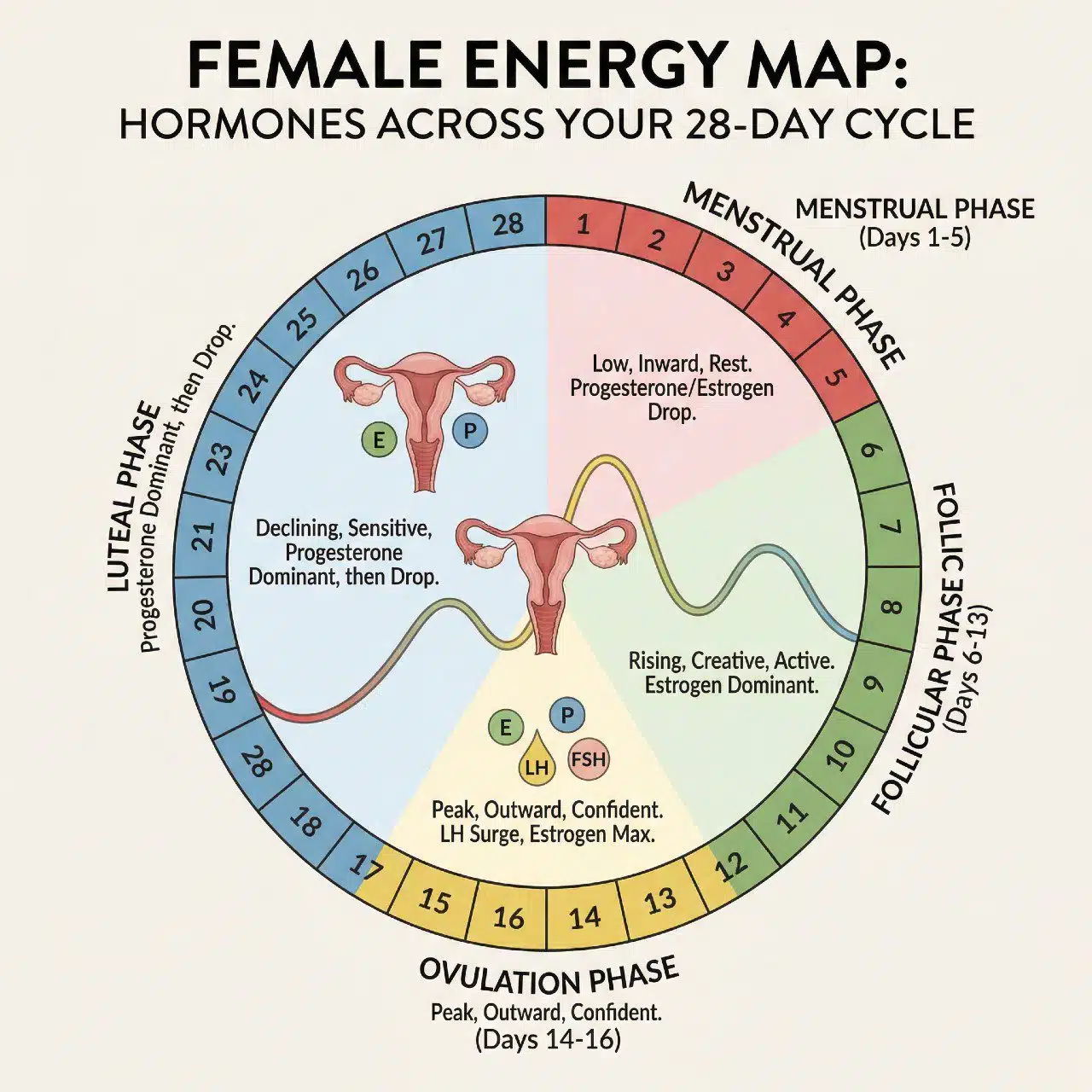
- Luteal phase fatigue (days 15–28 of your cycle): After ovulation, progesterone rises. It has a sedating effect. Serotonin drops. This is not a weakness — it is biology. Understanding this pattern lets you schedule demanding tasks for your follicular phase (days 1–14) when oestrogen peaks and energy is naturally higher.
- Perimenopause and menopause: Declining oestrogen disrupts sleep architecture, increases cortisol sensitivity, and depletes overall energy reserves. This is one of the most commonly dismissed causes of fatigue in women over 40.
- Adrenal/HPA dysregulation: Chronic stress causes dysregulated cortisol output — the "wired but tired" feeling that many high-achieving women recognise: exhausted but unable to switch off.
Understanding how hormones affect your body at every level — including fat storage and metabolism — is covered in full in our guide on Hormones and Weight Loss for Women.
6. An Underactive Thyroid Could Be Behind Your Fatigue
Hypothyroidism — an underactive thyroid — is seven times more common in women than in men and causes persistent fatigue, weight gain, and cold intolerance that no amount of extra sleep will fix.
Your thyroid is the master regulator of your metabolic rate. When it underperforms, everything slows — including your cellular energy production.
Classic signs of hypothyroidism in women include:
- Persistent fatigue that does not respond to more sleep
- Unexplained weight gain (particularly around the midsection)
- Cold hands and feet, or feeling cold when others are comfortable
- Thinning hair and dry skin
- Brain fog, slowed thinking, and difficulty concentrating
- Low mood or depression
A standard TSH (thyroid-stimulating hormone) blood test can identify thyroid dysfunction. It is quick, inexpensive, and frequently omitted from routine panels. If you have unexplained fatigue alongside any of the symptoms above, request this test by name from your doctor.
7. Exercise Is the Counter-Intuitive Energy Booster
Regular moderate exercise reduces fatigue by improving cardiovascular efficiency, increasing mitochondrial density in muscle cells, and regulating the cortisol curve — making your entire body more energy-efficient.
When you are exhausted, exercise feels like the last thing you need. But the research is unambiguous. A systematic review found that regular exercise increased energy levels and reduced fatigue in the majority of participants, more effectively than stimulants or cognitive interventions alone.
The mechanism is real:
- Mitochondrial biogenesis: Exercise stimulates the creation of new mitochondria — your cells' energy factories. More mitochondria means more capacity to generate cellular energy (ATP).
- Cardiovascular efficiency: A stronger heart and lungs deliver oxygen to tissues more effectively, reducing the effort required for everyday activities.
- Cortisol regulation: Consistent movement helps normalise the cortisol curve, directly reducing the afternoon energy crashes that affect so many women.
- Sleep quality improvement: Exercise increases time spent in deep slow-wave sleep — creating a positive energy cycle.
Start where you are — not where you think you should be:
- Begin with 15–20 minutes of walking three times per week
- Add two sessions of light resistance training per week as stamina builds
- Progress gradually — the goal is to feel energised after a session, not depleted
For a structured, beginner-friendly plan, see our Fat Loss Workouts for Beginners guide.

8. Cortisol and the Stress–Fatigue Cycle
Chronic stress keeps cortisol elevated, which prevents deep sleep, depletes adrenal function, and creates a self-reinforcing exhaustion cycle that requires active intervention — not just rest — to break.
Stress and fatigue do not just correlate — they create each other. Elevated cortisol prevents deep sleep → poor sleep increases stress sensitivity → heightened stress keeps cortisol elevated → the cycle continues.
Breaking it requires targeting both ends simultaneously
Reduce stress inputs:
- Identify your three highest-stress points in the week and address one at a time.
- Create a clear end-of-workday shutdown ritual — a walk, a consistent closing task, or a written brain dump.
- Reduce decision fatigue through batching: weekly meal prep, laying out workout clothes the night before, and setting a consistent morning sequence.
Support your nervous system directly:
- Magnesium glycinate (200–400mg before bed) calms the nervous system and supports sleep quality.
- Ashwagandha (KSM-66 extract) has clinical evidence for reducing morning cortisol in chronically stressed adults.
- Consistent morning movement — even 10 minutes — resets the cortisol curve for the rest of the day.

9. When Fatigue Is a Warning Sign You Should Not Ignore
Fatigue accompanied by unexplained weight loss, blood in stool, shortness of breath, or chest pain requires immediate medical evaluation — these are red flag symptoms, not ordinary tiredness.
Most chronic fatigue has a lifestyle or hormonal cause — but some is an early signal of a medical condition that requires prompt attention.
See a doctor immediately if fatigue is accompanied by:
- Unexplained weight loss (without dieting or increased exercise)
- Blood in stool or a significant change in bowel habits
- Shortness of breath or chest tightness at rest or with minimal exertion
- Progressively worsening fatigue over several weeks without a clear cause
- Severe, unexplained anaemia unresponsive to iron supplementation
Conditions that can present primarily as fatigue include iron-deficiency anaemia, hypothyroidism, type 2 diabetes, coeliac disease, inflammatory conditions, and — rarely — cancer. Getting checked is not catastrophising. It is taking your health seriously.
Your Natural Energy Reset: A 5-Step Action Plan
To stop being tired all the time, address sleep quality first, identify and correct any nutrient deficiencies with a blood test, add daily movement, manage your cortisol load, and rule out hormonal causes.
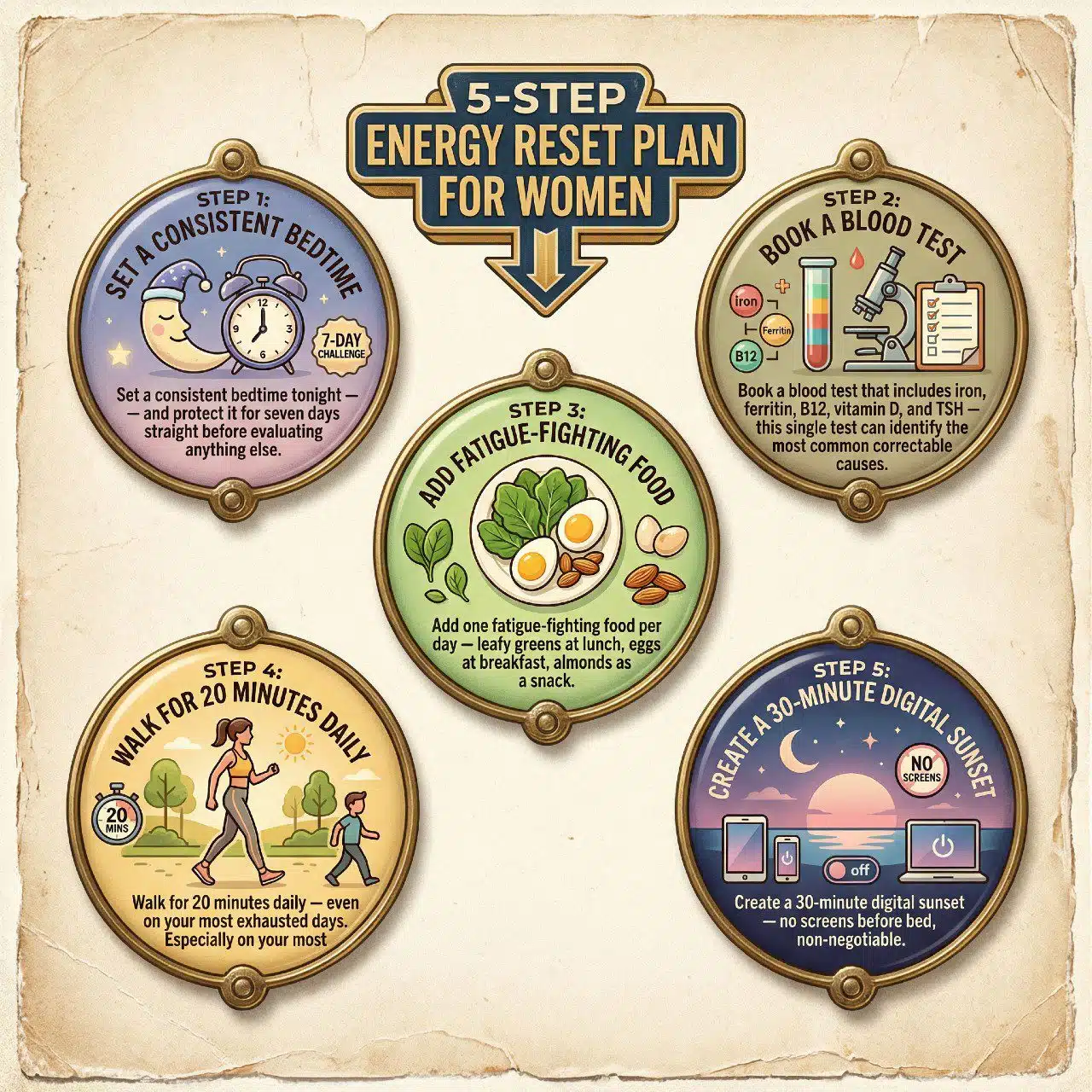
You do not have to overhaul everything at once. Start with these five actions this week:
- Set a consistent bedtime tonight — and protect it for seven days straight before evaluating anything else.
- Book a blood test that includes iron, ferritin, B12, vitamin D, and TSH — this single test can identify the most common correctable causes.
- Add one fatigue-fighting food per day — leafy greens at lunch, eggs at breakfast, almonds as a snack.
- Walk for 20 minutes daily — even on your most exhausted days. Especially on your most exhausted days.
- Create a 30-minute digital sunset — no screens before bed, non-negotiable.
Small, consistent actions beat dramatic overhauls every time. For the foundational healthy habits that support sustained energy, see our Healthy Lifestyle Tips for Beginners guide.
For a women-specific approach to how nutrition and hormones interact throughout the day, read What Women Should Eat in the Morning for Hormone Balance and Fat Loss.
When Should You See a Doctor About Fatigue?
See a doctor if fatigue has persisted for more than 3 weeks despite lifestyle improvements, significantly impacts daily functioning, or is accompanied by any physical red flag symptoms.
Book an appointment if:
- Fatigue has lasted more than three weeks without a clear cause.
- You consistently struggle to fall or stay asleep.
- You wake completely unrefreshed despite sleeping for 7–9 hours.
- A partner has noticed breathing pauses during your sleep.
- You have symptoms of thyroid dysfunction, iron deficiency, or hormonal imbalance.
- Your energy levels are significantly affecting your work, relationships, and quality of life.
You do not have to accept constant tiredness as your new normal. It is not a character flaw — it is a signal. And you deserve a real answer.
Want The Habits Behind Lasting Weight Loss? Get the free guide: 10 research-backed habits that help women lose body fat and keep it off, with no extreme diets. Send Me The Free Guide.
The Bottom Line
Chronic tiredness is not inevitable, and it is rarely fixed by simply sleeping more. For women, the real causes — hormonal fluctuations, nutritional deficiencies, sleep disorders, thyroid dysfunction, and chronic mental health load — are specific to the female body, identifiable with a standard blood panel, and largely addressable.
Start with sleep quality. Add nutrient-dense foods. Move your body even when it feels counterintuitive. Understand your hormonal cycle. And if your fatigue persists beyond three weeks despite these changes, request a full blood panel from your GP. Name the tests you want: iron, ferritin, B12, vitamin D, TSH, and full blood count. Your body is communicating with you. It deserves to be heard.
Glossary Of Key Terms
- Cortisol: A hormone produced by the adrenal glands in response to stress; while it aids focus, chronic elevation can disrupt sleep and deplete energy.
- Digital Sunset: A behavioral intervention involving the cessation of screen use 30 minutes before bed to reduce cortisol and support melatonin production.
- HPA Axis (Hypothalamic-Pituitary-Adrenal Axis): The complex interaction between these three glands that controls the body's response to stress and regulates energy balance.
- Hypothyroidism: A condition where the thyroid gland is underactive, leading to a slowed metabolism and persistent physical exhaustion.
- Luteal Phase: The stage of the menstrual cycle occurring after ovulation (days 15–28), characterized by rising progesterone and a natural dip in energy.
- Mitochondrial Biogenesis: The biological process by which cells increase their number of mitochondria, thereby increasing the body's capacity to generate energy (ATP).
- Restless Legs Syndrome (RLS): A condition characterized by uncomfortable sensations in the legs at night, which can fragment deep sleep and prevent restorative rest.
- Slow-Wave Sleep: A stage of deep sleep essential for physical repair and memory consolidation; it is the most restorative phase of the sleep cycle.
- TSH (Thyroid-Stimulating Hormone): A blood marker used to measure thyroid function; high levels often indicate the thyroid is struggling to regulate metabolism.
- Vitamin D3 + K2: A synergistic nutrient combination where K2 helps direct the calcium regulated by Vitamin D to the bones rather than the arteries.
FAQ
Why Am I Always Tired Even After A Full Night's Sleep?
Sleeping 8 hours but still waking exhausted usually signals poor sleep quality — caused by sleep apnoea, restless legs, elevated cortisol, or a deficiency in iron, B12, thyroid function, or vitamin D. Feeling unrefreshed after adequate sleep is one of the most common presentations of women's fatigue. The most frequent causes include sleep disorders that disrupt deep sleep stages (particularly sleep apnoea, which presents differently in women than men), nutritional deficiencies that impair cellular energy production, and chronically elevated cortisol from stress that prevents the body from reaching restorative slow-wave sleep. A good starting point is requesting a blood panel from your doctor — iron, ferritin, B12, vitamin D, and TSH — alongside asking your GP about a home sleep study if you frequently wake feeling unrested.
What Are The Main Causes Of Chronic Fatigue In Women?
The most common causes of chronic fatigue in women are iron deficiency anaemia, hypothyroidism, sleep apnoea, luteal-phase or perimenopausal hormonal shifts, B12 deficiency, chronic stress, and depression. Unlike in men, hormonal factors play a central role in women's chronic fatigue. The luteal phase of the menstrual cycle, perimenopause-related oestrogen decline, and cortisol dysregulation from sustained stress are uniquely female contributors that are frequently dismissed in clinical settings. Women are also significantly more likely than men to have undiagnosed iron deficiency or hypothyroidism. A comprehensive blood panel including iron, ferritin, TSH, B12, and vitamin D is the most efficient first diagnostic step — and you can request it by name from your GP.
How Can I Boost My Energy Levels Naturally?
The most evidence-based natural energy boosters are consistent sleep timing, daily moderate movement, iron-rich and B-vitamin-rich foods, magnesium supplementation, and active stress management. Natural energy recovery follows a clear hierarchy. Start with sleep quality — consistent bedtimes, a dark, cool room, and a caffeine cut-off at 2 pm will produce measurable changes within a week. Next, assess nutrition for the four most common deficiency culprits: iron, B12, magnesium, and vitamin D. Then add daily movement — even 20-minute walks increase mitochondrial density and reset the cortisol curve. Finally, address the stress load. Many women find that improving just two of these four factors produces a significant energy improvement within 2–4 weeks.
Does Perimenopause Cause Fatigue?
Yes. Declining oestrogen during perimenopause disrupts sleep architecture, increases cortisol sensitivity, and reduces serotonin and dopamine — making fatigue one of the most common and least-addressed symptoms of this phase. Perimenopausal fatigue is often dismissed or attributed to "getting older" — but it has clear physiological mechanisms that are not inevitable and not untreatable. Oestrogen supports serotonin and dopamine production, regulates the cortisol response, and directly affects the quality of deep sleep. As levels decline during perimenopause (typically the mid-40s to early 50s), many women experience worsening fatigue, frequent night waking, and afternoon energy crashes. Request a hormone panel from your GP if you are in this age range — and do not accept persistent fatigue as simply part of "the change."
What Foods Fight Fatigue And Boost Energy In Women?
The best energy-boosting foods for women are leafy greens (iron and folate), eggs (B12 and vitamin D), oats (slow-release carbohydrates), almonds (magnesium and protein), salmon (omega-3s and vitamin D), and bananas (potassium and natural glucose). Rather than reaching for caffeine — which temporarily masks fatigue without addressing its cause — focus on foods that correct the nutritional deficiencies most commonly linked to women's low energy. Iron-rich leafy greens and legumes reduce anaemia risk; B12-dense eggs and fish support nerve function and red blood cell formation; magnesium-rich almonds improve both sleep quality and cellular energy production; complex carbohydrates from oats prevent the blood sugar spikes and crashes that create mid-morning and mid-afternoon slumps. Aim to include at least two of these categories at every main meal.
When Should I See A Doctor About Constant Tiredness?
See a doctor if fatigue has persisted for more than 3 weeks, does not improve with lifestyle changes, significantly affects your daily life, or is accompanied by unexplained weight loss, breathlessness, or chest pain. Persistent fatigue warrants medical attention for two reasons: it is frequently caused by treatable conditions (thyroid disease, iron deficiency anaemia, sleep apnoea, depression) that respond well to treatment when caught early, and, in rarer cases, it can indicate something more serious. If your GP dismisses your fatigue concern without testing, ask specifically to be tested for TSH, ferritin, B12, vitamin D, and full blood count. You have the right to advocate for a proper investigation.
What Should I Check First If I Am Tired All The Time?
Start with sleep duration/quality, iron and thyroid labs with a clinician if indicated, caffeine timing, and whether you are under-eating relative to activity. Fixing recovery basics often helps more than another stimulant or supplement.