
Healthy Recipes For All Preferences That Feed The Whole Table Without Cooking Twice
Julia Child
Chef, cookbook author & television presenter
The only real stumbling block is fear of failure. In cooking, you’ve got to have a what-the-hell attitude.
Summary (TL;DR)
Healthy eating isn’t the same for everyone. One person at your table avoids gluten. Someone else won’t touch meat. You’re trying to get more protein in after 40, and you’re tired of chicken and eggs.
Food allergies alone are common: in 2021, 6.2% of US adults had a food allergy, and women (7.8%) were more likely to have one than men (4.6%).
Most recipe roundups hand you 30 dishes and leave you to sort out who can eat what. This guide does it the other way round: 14 breakfast, lunch and dinner recipes, each built so one pan can feed different diets with a few small swaps.
You won’t have to eat bland food anymore, either. Every recipe has a flavour step built in.
Medical & Referral Disclaimer
This article is for informational and educational purposes only. It is not a substitute for professional medical advice, diagnosis, or treatment. If you have diabetes, coeliac disease, a food allergy or another medical condition, check any change to your diet with your doctor or a registered dietitian first.
Key Takeaways
- Cook one base and let each person finish their own plate.
- Aim for protein at every meal. The 2025–2030 Dietary Guidelines for Americans say to “prioritize protein foods at every meal”.
- Fibre was the strongest predictor of weight loss in one large diet trial, ahead of the diet’s fat or carb split.
- Every recipe here lands between 230 and 430 calories per serving, and 10 of the 14 deliver 18 to 39 g of protein as written.
What Makes A Recipe Work For All Preferences?
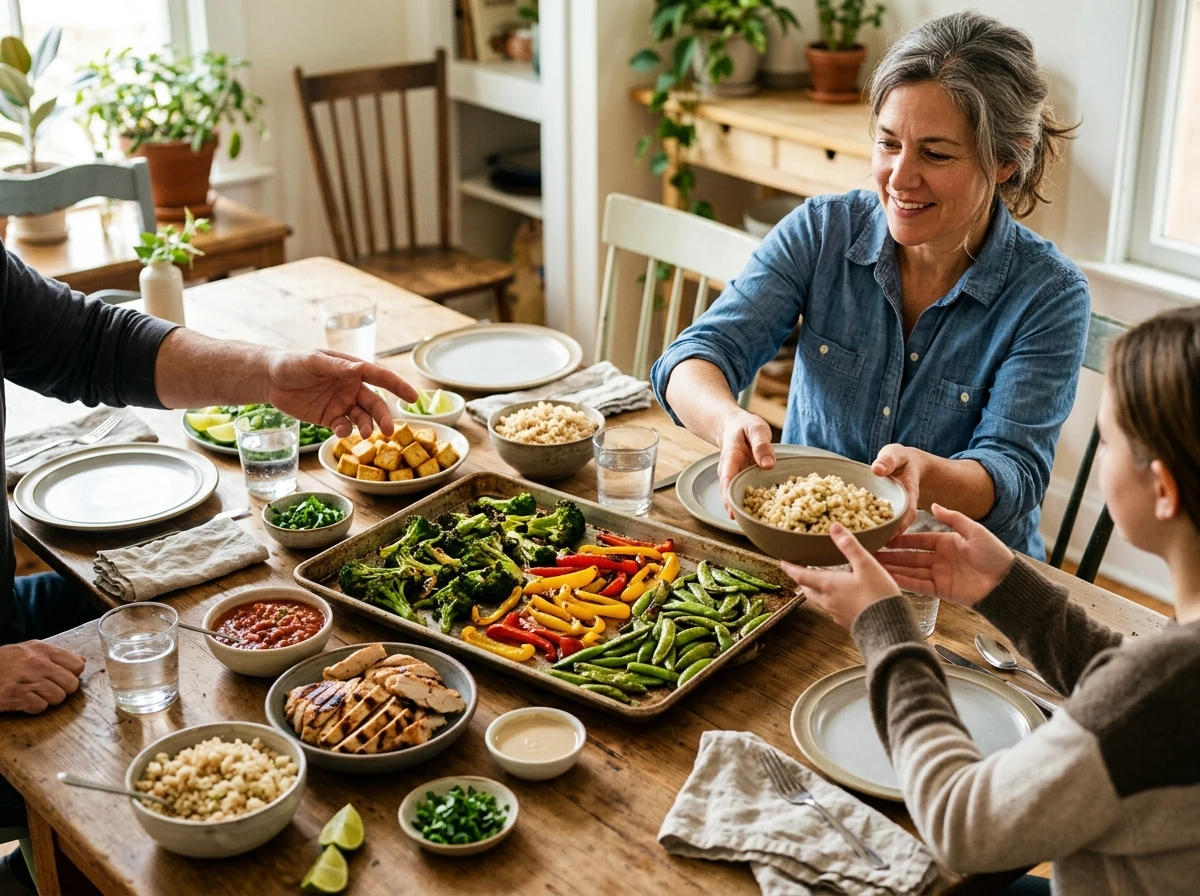
A recipe works for all preferences when its core is free of the usual sticking points (gluten, dairy, meat) and the divisive parts get added at the end. Think taco night: vegetables, beans and sauce in the middle, proteins and toppings on the side.
The pattern I see most often is a cook making a “healthy” version for herself and a regular one for everyone else. That doubles the work, and it rarely lasts. A little meal planning helps too.
The B.A.S.E. Plate: How One Recipe Feeds Different Diets
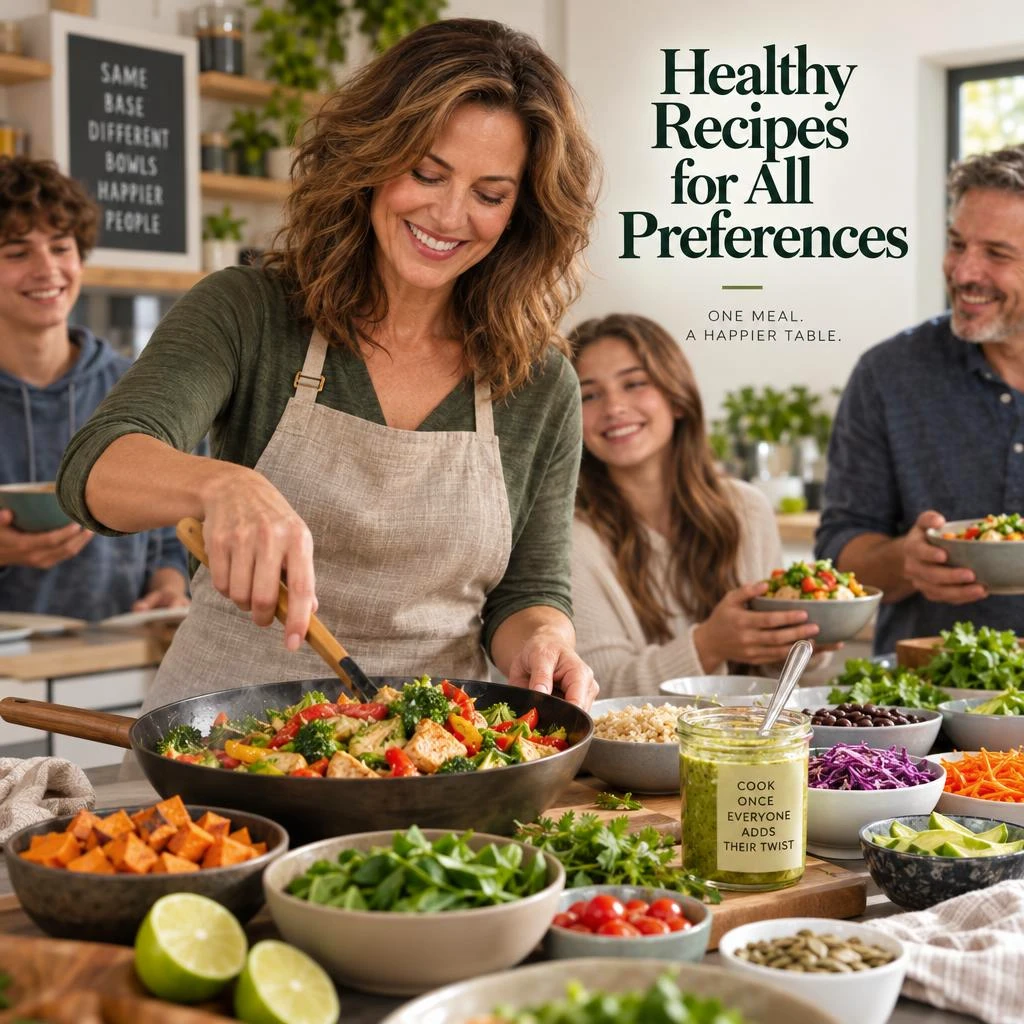
The B.A.S.E. Plate is a four-step way to turn one recipe into several diet-friendly plates: Build a shared base, Add a protein per person, Swap the carb, Elevate with a sauce. It’s our own kitchen method, not a clinically tested tool.
- Build: A shared base everyone can eat, such as roasted vegetables, a bean sauce or a soup.
- Add: Two proteins side by side, like chicken and tofu. Each person picks one.
- Swap: The carb goes on the side, so rice, pasta or tortillas can go in or out.
- Elevate: A sauce or topping (salsa, tahini, yoghurt, herbs). That’s where the flavour lives.
The plate shape follows the Harvard Healthy Eating Plate: “Make most of your meal vegetables and fruits – ½ of your plate,” with whole grains and protein making up a quarter each. That gives you balanced macros without counting.
| B.A.S.E. Step | What It Solves | Tuesday Stir-Fry Example |
|---|---|---|
| Build | One pan for everyone | Broccoli, snap peas and peppers |
| Add | Meat-eaters and plant-based eaters | Chicken in one pan, tofu in another |
| Swap | Lower-carb and blood-sugar goals | Brown rice or cauliflower rice on the side |
| Elevate | Flavour and gluten-free needs | Tamari instead of soy sauce, plus spring onion and sesame |
The Contrarian Take: The Diet Label Matters Less Than The Plate
A keto, vegan or low-fat label tells you less than what’s actually on the plate. Head-to-head trials find similar weight loss across diet types, while fibre and sticking with it keep showing up as what matters.
In the DIETFITS trial of 609 adults, weight change at 12 months was −5.3 kg on a healthy low-fat diet and −6.0 kg on a healthy low-carb diet, with “no significant difference” between them. In a JAMA trial of Atkins, Zone, Weight Watchers and Ornish, weight loss tracked how well people stuck to the plan, not which plan it was.
In the POUNDS Lost analysis of 345 adults on calorie-reduced diets, fibre was “the most influential predictor” of weight loss, whatever the fat or carb split.
So skip the label and check three things: a palm-sized protein, half the plate plants, and a dish you’d happily eat again next week.
Healthy Breakfast Options For Every Preference
The best healthy breakfast for a mixed household pairs a protein with a fibre source and takes under ten minutes or is made ahead. All five reach 18 to 25 g of protein, and three can be made the night before.
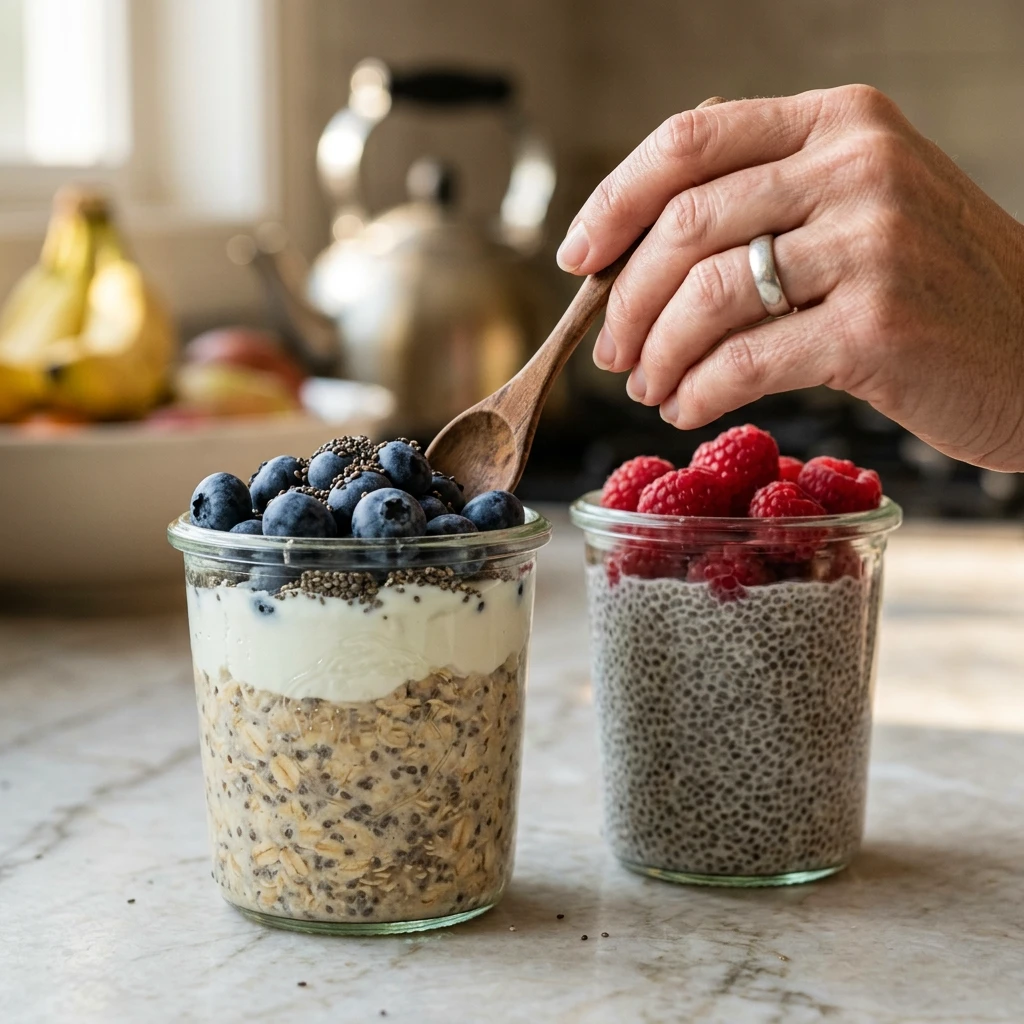
Overnight Oats: A Fibre-Rich Start
Overnight oats give you about 22 g of protein and 11 g of fibre for 375 calories when made with soy milk, Greek yoghurt and chia. They take five minutes to stir together the night before.
Serves 1. You need 40 g rolled oats, 150 ml unsweetened soy milk, 100 g plain Greek yoghurt, 1 tbsp chia seeds and 75 g blueberries. Stir everything except the berries in a jar, chill overnight, then top with the berries in the morning.
Swaps: Gluten-free oats for gluten-free. Soy yoghurt for dairy-free or vegan. Half the oats plus 2 tbsp hemp seeds for lower-carb.
Avocado Toast With Eggs
Avocado toast is not just a trend; it’s healthy too, especially with two eggs on top: 427 calories, 22 g protein and 9 g fibre.
Serves 1. Toast 2 slices wholegrain bread (about 64 g). Mash half an avocado (70 g) with lemon, salt and chilli flakes, spread it on, and top with 2 fried or poached eggs and sliced tomato.
Swaps: Gluten-free bread if needed. Crumbled firm tofu fried with turmeric instead of eggs for vegan. One slice, or grilled portobello mushrooms, for lower-carb.
Protein-Packed Veggie Frittata
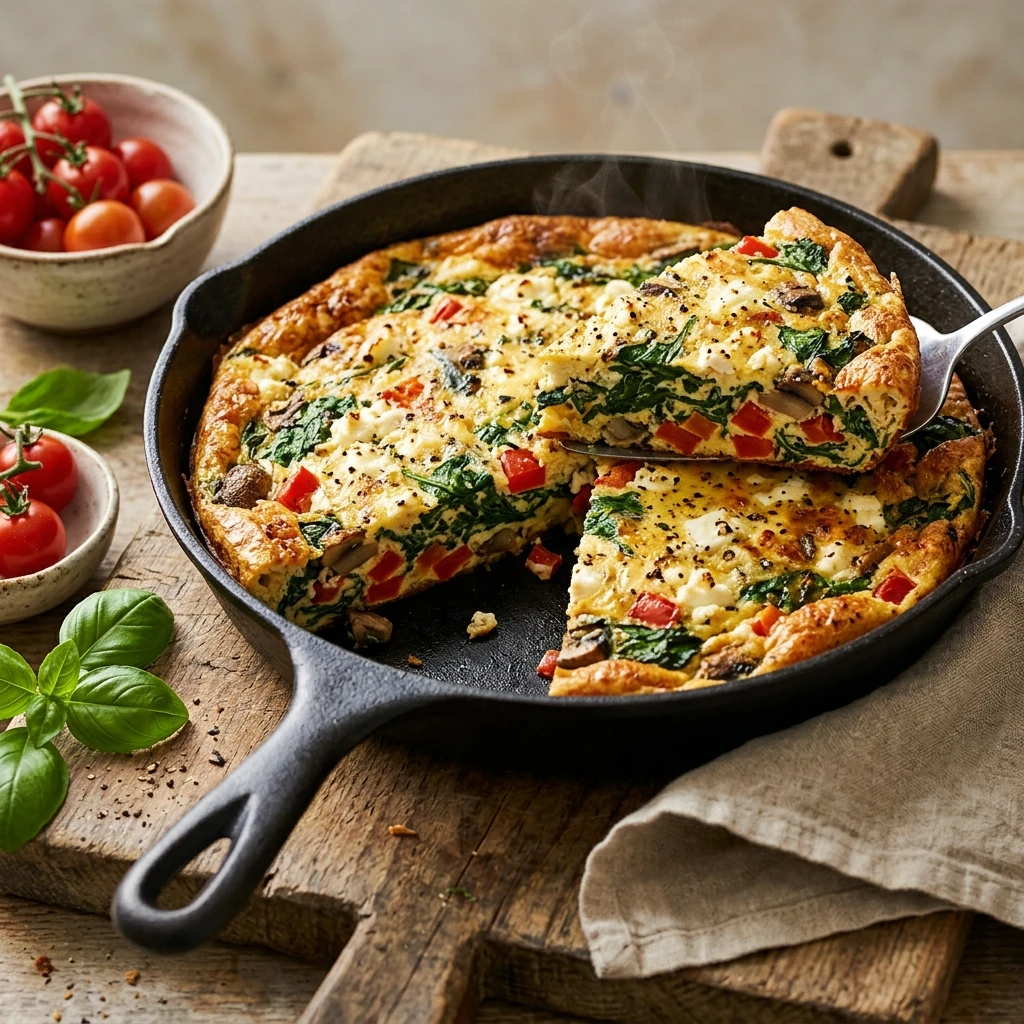
A veggie frittata is the easiest make-ahead breakfast for a crowd: one pan gives four servings of 263 calories and 18 g protein each. It’s naturally gluten-free and lower-carb, and it reheats well.
Serves 4. Soften 150 g sliced mushrooms and 1 diced red pepper in 1 tbsp olive oil, then wilt in 120 g spinach. Pour over 8 beaten eggs, crumble in 100 g feta, and bake at 180°C (350°F) for 18 to 20 minutes until just set. Cooked leftovers keep 3 to 4 days in the fridge.
Swaps: Olives instead of feta for dairy-free.
Greek Yoghurt And Berry Parfait: A Calcium Boost
A Greek yoghurt parfait delivers 25 g protein and 8 g fibre for 257 calories, the highest protein of any breakfast here.
Serves 1. Layer 200 g plain nonfat Greek yoghurt with 100 g raspberries and 15 g chopped almonds. Calcium needs rise from 1,000 mg a day for women 19 to 50 to 1,200 mg for women 51 to 70.
Swaps: Calcium-fortified soy yoghurt for dairy-free. Pumpkin seeds for nut-free.
Chia Pudding With Raspberries
Chia pudding is the fibre champion of the breakfasts, with about 16 g per bowl. Stirring in Greek yoghurt takes it to roughly 310 calories and 22 g protein, so it actually keeps you full.
Serves 1. Whisk 30 g chia seeds into 200 ml unsweetened soy milk, rest 10 minutes, whisk again and chill overnight. In the morning, fold in 100 g Greek yoghurt and top with 75 g raspberries.
Swaps: Soy yoghurt for vegan. No added sweetener for blood-sugar-friendly.
Healthy Lunch Ideas That Travel Well
A good healthy lunch survives a lunchbox and keeps you full until dinner. These four batch-cook on Sunday and cover vegan, vegetarian, gluten-free and kid-friendly needs.
Italian Pasta Salad With Healthy Fats
This Italian pasta salad gives you 33 g protein and 394 calories per serving, with olive oil for the healthy fats.
Serves 4. Cook 160 g wholewheat pasta and cool it. Toss with 300 g cooked chicken breast, 250 g cherry tomatoes, 150 g cucumber, 50 g olives and 60 g torn mozzarella. Dress with 2 tbsp olive oil, 1 tbsp balsamic vinegar, oregano, salt and pepper.
Swaps: A can of chickpeas instead of chicken for vegetarian (drop the mozzarella for vegan). Chickpea or lentil pasta for gluten-free.
Plant-Based Meal Prep: Sweet Potato And Black Bean Bowls
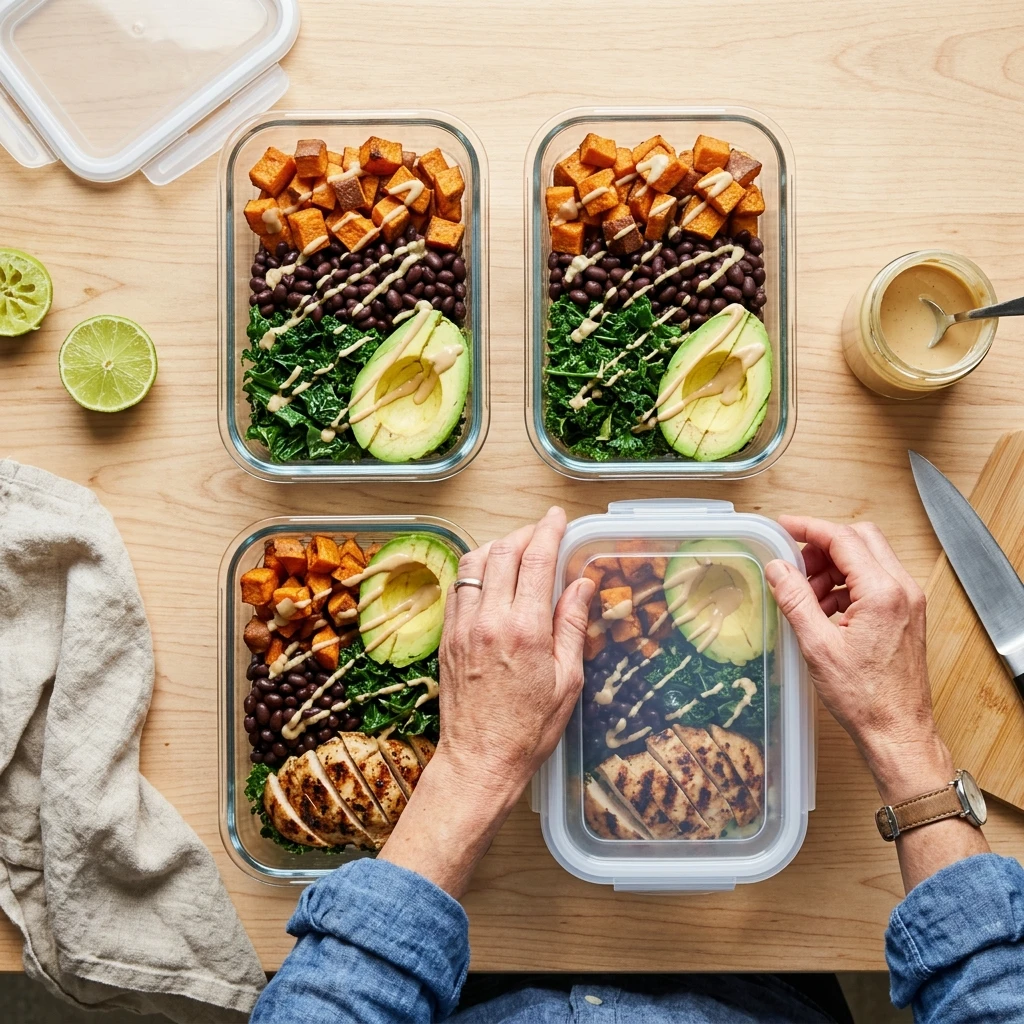
Sweet potato and black bean bowls show the method in action: a vegan base with 18 g fibre and 14 g protein, plus an optional 100 g of chicken that takes a bowl to 45 g protein.
Serves 4. Roast 700 g cubed sweet potato at 200°C (400°F) for 25 minutes. Warm 480 g drained black beans with cumin and smoked paprika. Pile onto 120 g shredded kale, add sliced avocado (140 g total), and drizzle with 3 tbsp tahini thinned with lemon and water.
Swaps: Half the sweet potato plus roasted cauliflower for lower-carb. Yoghurt-lime dressing for sesame-free.
Kid-Friendly Peanut Butter And Banana Roll-Ups
Parents, try these easy peanut butter and banana roll-ups: 289 calories, 9 g protein and 7 g fibre, ready in two minutes. Think lunchbox snack, not a full adult lunch.
Makes 1. Spread 1 tbsp (16 g) peanut butter on a small wholewheat tortilla, lay half a banana along one edge, roll up and slice into pinwheels. Kids will find them delicious.
Swaps: Sunflower seed butter for nut-free schools. A gluten-free wrap if needed.
Lentil Soup: A Budget-Friendly Fibre Staple
Lentil soup is a low-cost, allergy-friendly staple: vegan, gluten-free and dairy-free as written, with 8 g fibre and 13 g protein for just 230 calories a bowl. It also freezes well.
Serves 6. Soften 1 onion, 2 carrots and 2 celery sticks (all diced) in 1 tbsp olive oil. Add 300 g rinsed red lentils, a 400 g can of chopped tomatoes, 1 tsp cumin and 1.5 litres low-sodium vegetable stock. Simmer for 20 to 25 minutes, then blend half. Soups keep 2 to 3 months in the freezer for best quality.
Add step: Shredded chicken or a boiled egg pushes a bowl past 20 g protein.
Easy Dinner Ideas For Family-Friendly Healthy Meals
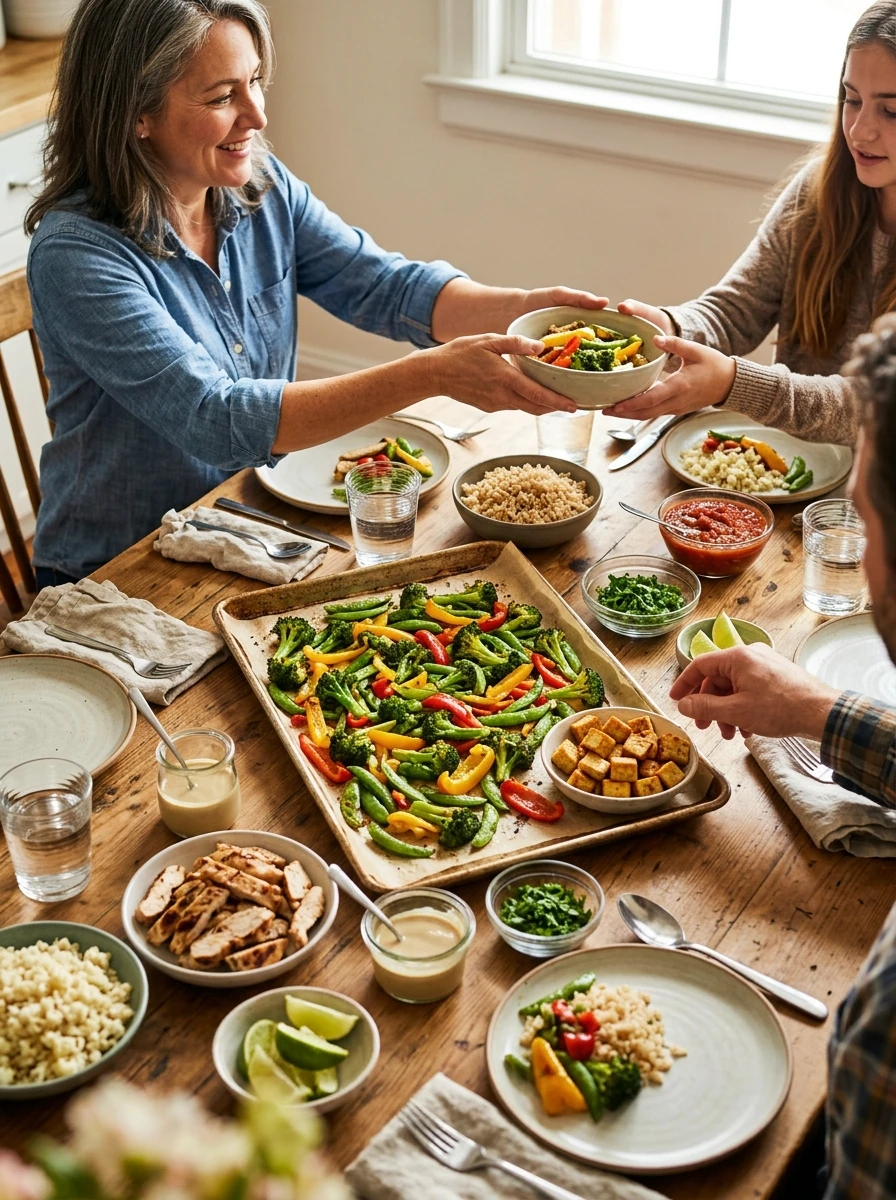
Family-friendly healthy dinners work when everyone eats from the same pan but finishes their own plate. Each dinner below is one main cook with a protein or carb choice at the end.
Make family dinners fun by getting everyone involved. Set out the sauces and toppings, and let everyone pick their favourite combinations.
Grilled Salmon With Roasted Vegetables
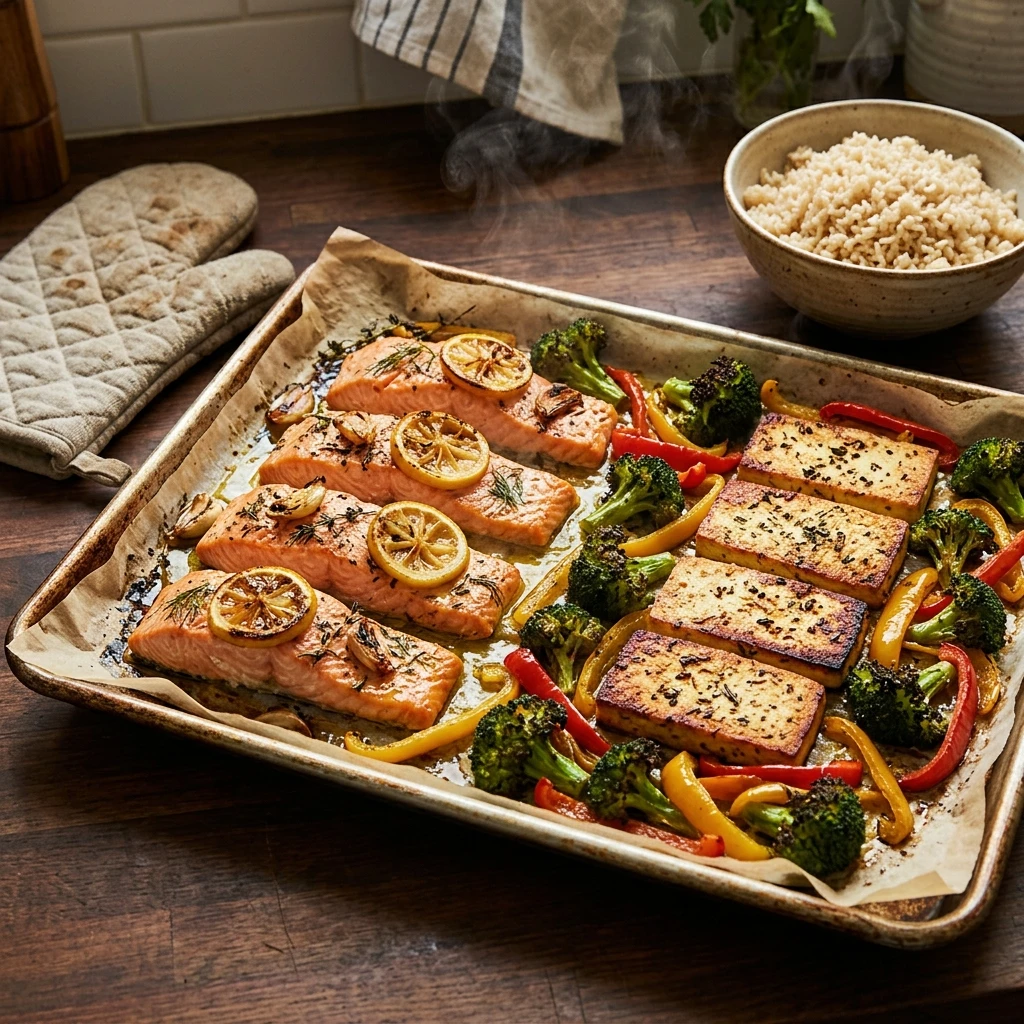
Salmon tray bake gives you 32 g protein for 404 calories before any rice, and it cooks on one tray in about 20 minutes.
Serves 4. Toss 400 g broccoli florets and 300 g sliced peppers in 1 tbsp olive oil and roast at 200°C (400°F) for 10 minutes. Add 4 salmon fillets (about 140 g each), brushed with the remaining oil, lemon and garlic, and roast for 10 to 12 minutes more.
Swaps: Tofu on half the tray for vegetarians. Brown rice on the side (100 g adds 123 calories), or skip it for lower-carb.
Quinoa Stuffed Bell Peppers
Quinoa stuffed peppers are a vegetarian, gluten-free dinner with 11 g fibre and 294 calories per pepper. Adding 75 g of turkey to a meat-eater’s pepper doubles its protein to 28 g.
Serves 4. Cook 150 g quinoa. Mix it with 240 g black beans, 200 g diced tomatoes, cumin and garlic. Halve 4 peppers, fill them, crumble 80 g feta over the top and bake at 190°C (375°F) for 25 minutes.
Swaps: Avocado and salsa instead of feta for vegan. 75 g browned lean turkey in each meat-eater’s pepper.
Chicken Or Tofu Stir-Fry
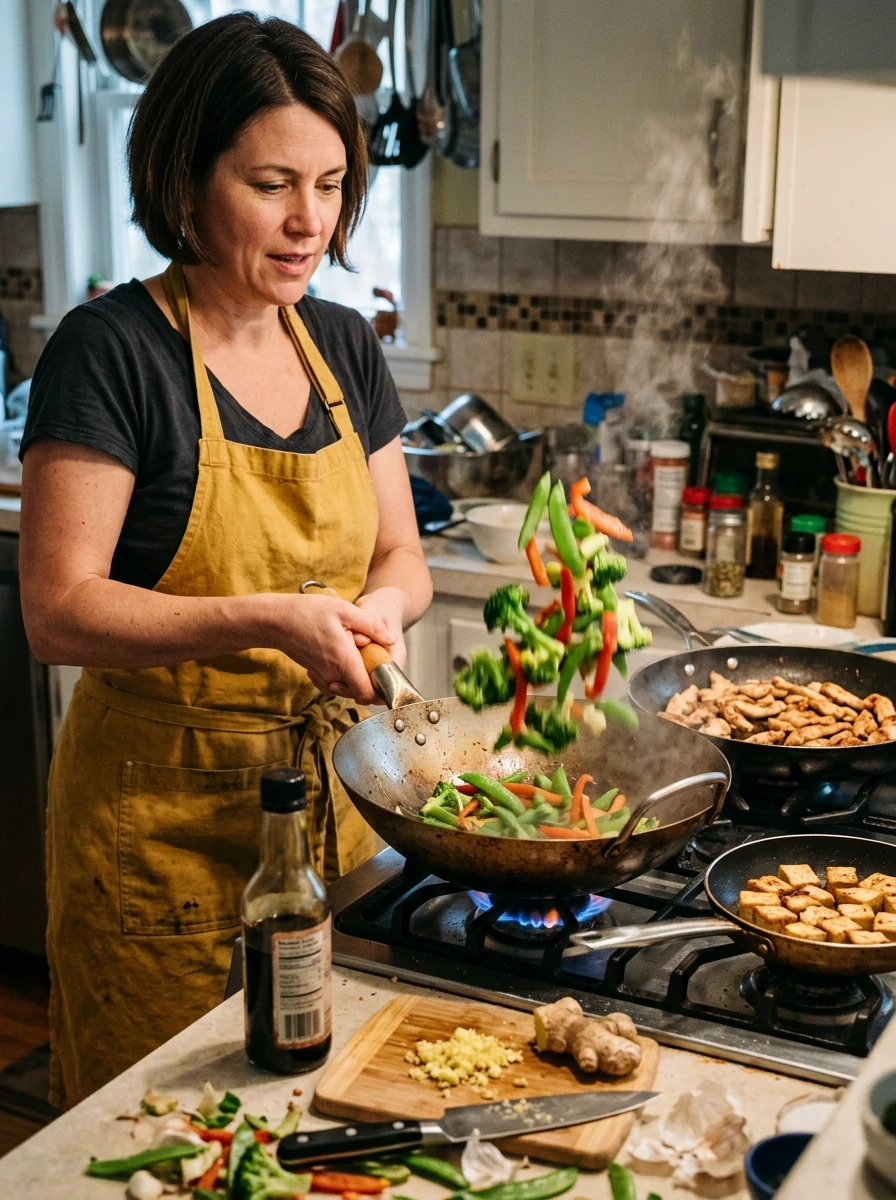
A stir-fry is the fastest all-preferences dinner here, ready in about 20 minutes. With rice, the chicken version gives 39 g protein for 383 calories and the tofu version 32 g for 420, from the same vegetables and sauce.
Serves 4. Stir-fry 300 g broccoli, 200 g snap peas and 200 g peppers in 1 tbsp oil. Cook 400 g sliced cooked chicken or 560 g pressed firm tofu in a second pan. Toss each with 2 tbsp tamari, grated ginger and garlic. Serve over 400 g cooked brown rice.
Swaps: Tamari labelled gluten-free, as many soy sauces contain wheat. Cauliflower rice for lower-carb.
Spaghetti Squash With Turkey Bolognese
Spaghetti squash Bolognese gives you 28 g protein and 23 g carbs for 335 calories, a lower-carb take on a family classic. Anyone who wants pasta can have the same sauce over wholewheat spaghetti.
Serves 4. Roast a halved spaghetti squash, cut-side down, at 200°C (400°F) for 35 to 40 minutes. Brown 500 g lean ground turkey with 1 diced onion and 1 grated carrot in 1 tbsp olive oil. Add a 400 g can of tomatoes and herbs and simmer for 15 minutes. Scrape the squash into strands and top with sauce and 20 g grated parmesan.
Swaps: Cooked green lentils instead of turkey for vegetarian. Nutritional yeast for dairy-free.
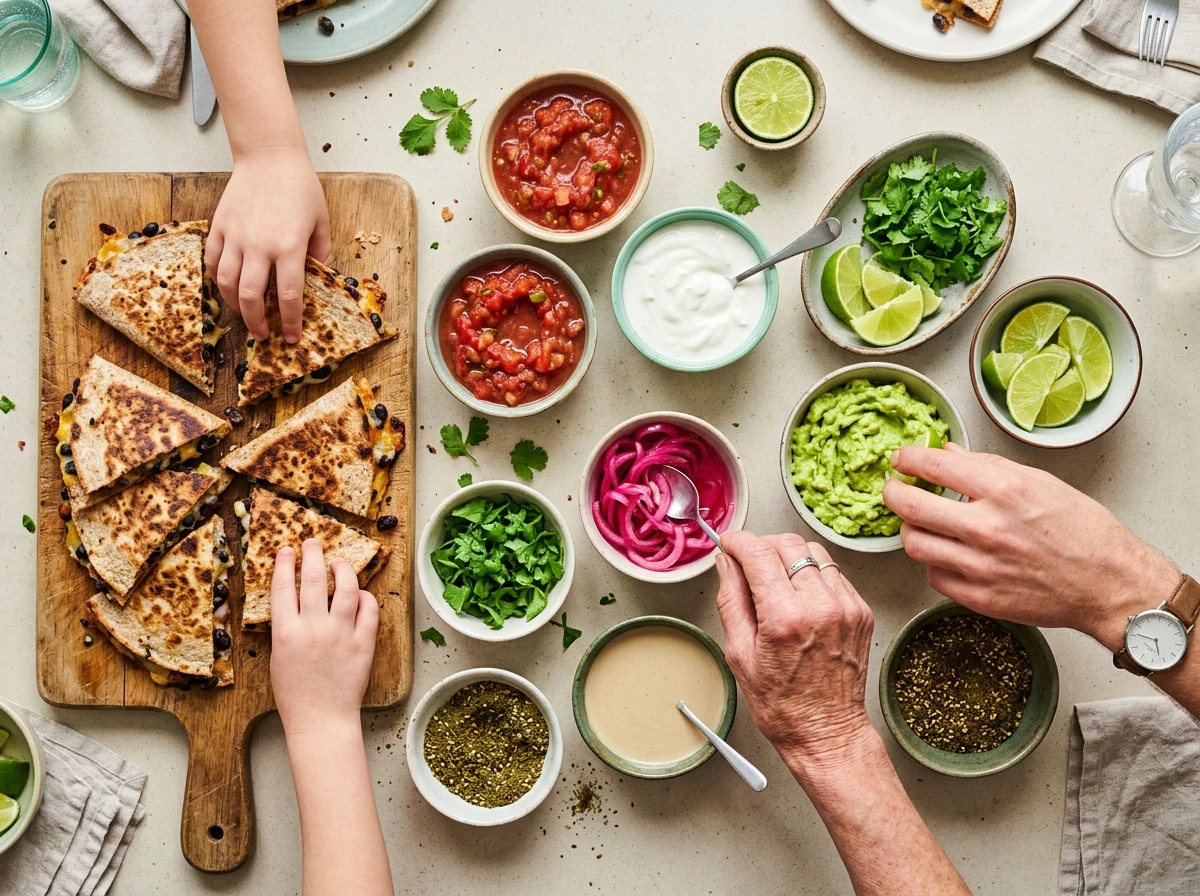
Black Bean And Veggie Quesadillas
Black bean quesadillas are fun and healthy: 23 g protein and 15 g fibre for 386 calories per serving, with Greek yoghurt standing in for sour cream.
Serves 4. Mash 480 g black beans with cumin. Spread onto 4 wholewheat tortillas with 150 g diced peppers, 100 g sweetcorn and 100 g reduced-fat cheddar. Fold and toast in a dry pan for 3 minutes on each side. Serve with 120 g Greek yoghurt and 120 g salsa.
Swaps: Corn tortillas for gluten-free. Avocado instead of cheese and yoghurt for dairy-free.
Recipe Nutrition At A Glance
Every recipe here falls between 230 and 430 calories per serving, and 10 of the 14 deliver at least 18 g of protein as written. Figures are per serving, calculated from USDA FoodData Central values.
| Recipe | Calories | Protein (g) | Fibre (g) | Carbs (g) |
|---|---|---|---|---|
| Overnight oats | 375 | 22 | 11 | 50 |
| Avocado toast with 2 eggs | 427 | 22 | 9 | 36 |
| Veggie frittata (¼ pan) | 263 | 18 | 2 | 6 |
| Greek yoghurt parfait | 257 | 25 | 8 | 22 |
| Chia pudding with yoghurt | 310 | 22 | 16 | 29 |
| Italian pasta salad | 394 | 33 | 5 | 34 |
| Sweet potato bowl (vegan base) | 393 | 14 | 18 | 62 |
| PB-banana roll-up | 289 | 9 | 7 | 38 |
| Lentil soup | 230 | 13 | 8 | 39 |
| Salmon tray bake (no rice) | 404 | 32 | 4 | 11 |
| Quinoa stuffed pepper (veg) | 294 | 14 | 11 | 46 |
| Chicken stir-fry with rice | 383 | 39 | 6 | 38 |
| Spaghetti squash Bolognese | 335 | 28 | 6 | 23 |
| Black bean quesadillas | 386 | 23 | 15 | 52 |
Women aged 31 to 50 need about 25 g of fibre a day, and women 51 to 70 about 21 g. Brands vary, so treat these as close estimates.
The Swap Matrix: Adapting Every Recipe To Your Diet
The swap matrix shows which recipes fit each diet as written (✓) and which need one small change. Eight of the 14 are gluten-free as written, and every one can go vegetarian with a single swap.
| Recipe | Vegetarian | Vegan | Gluten-Free | Dairy-Free | Lower-Carb |
|---|---|---|---|---|---|
| Overnight oats | ✓ | Swap | Swap | Swap | Swap |
| Avocado toast | ✓ | Swap | Swap | ✓ | Swap |
| Frittata | ✓ | Swap | ✓ | Swap | ✓ |
| Parfait | ✓ | Swap | ✓ | Swap | ✓ |
| Chia pudding | ✓ | Swap | ✓ | Swap | ✓ |
| Pasta salad | Swap | Swap | Swap | Swap | Swap |
| Sweet potato bowl | ✓ | ✓ | ✓ | ✓ | Swap |
| PB roll-up | ✓ | ✓ | Swap | ✓ | Swap |
| Lentil soup | ✓ | ✓ | ✓ | ✓ | Swap |
| Salmon tray bake | Swap | Swap | ✓ | ✓ | ✓ |
| Stuffed peppers | ✓ | Swap | ✓ | Swap | Swap |
| Stir-fry | Swap | Swap | ✓* | ✓ | Swap |
| Squash Bolognese | Swap | Swap | ✓ | Swap | ✓ |
| Quesadillas | ✓ | Swap | Swap | Swap | Swap |
*With a tamari labelled gluten-free.
Gluten-Free Dishes: Who Actually Needs Them
Gluten-free dishes are essential for people with coeliac disease and anyone a doctor has told to avoid gluten. If you don’t need them, naturally gluten-free whole foods beat processed gluten-free swaps.
The NHS describes coeliac disease as “a condition where your immune system attacks your own tissues when you eat gluten.” If that’s someone at your table, use a separate toaster, colander and spreads. More ideas: delicious gluten-free diet choices.
Plant-Based And Vegetarian Meal Prep
Plant-based eaters do well on these recipes as long as each meal has a solid protein, like tofu, lentils or beans, and vitamin B12 is covered.
- Protein: Double the beans or add tofu to reach 20 g per plate (more in our vegan diet tips for fitness).
- Vitamin B12: The NIH notes that vegetarians and vegans “might not get enough vitamin B12 from their diets”, so use fortified foods or ask your doctor about a supplement.
- Calcium: Choose calcium-fortified soy milk and yoghurt.
Lower-Carb, Keto-Friendly And Diabetic-Friendly Meals
For lower-carb or blood-sugar-friendly plates, keep the shared base and shrink the carb instead of cooking a separate “keto” meal. The CDC’s plate method maps directly onto B.A.S.E.
The CDC’s diabetes meal planning guide says to “fill half with nonstarchy veggies” and a quarter with lean protein such as “chicken, beans, tofu, or eggs.” Agree on your carb target with your doctor or dietitian. For midlife blood sugar, see our guide to insulin resistance in perimenopause.
How To Beat Same-Meal Boredom Without Learning New Recipes
The fix for recipe boredom is usually a new sauce, not a new recipe. Keep the same structure and rotate the Elevate step, and the same chicken and vegetables taste like a different dinner.
Protein boredom is real: women in menopause forums ask for ideas beyond chicken and eggs. Try these rotations first:
- Mexican: Cumin, lime, salsa and avocado.
- Mediterranean: Lemon, oregano, olives and tzatziki.
- Asian-style: Tamari, ginger, garlic, sesame and spring onion.
- Middle Eastern: Tahini, za’atar, pomegranate and parsley.
Want a ready-made week? Try our healthy diet meal plans for busy lives, or pick an eating style with healthy meal plans for every lifestyle.
Expert Commentary: What The Research Actually Shows
The strongest evidence supports the plate principles behind these recipes (protein at meals, plenty of fibre, a diet you can stick to) rather than any diet label. Here’s how strong each piece is.
- Strong (randomised trials): Low-fat and low-carb diets give similar 12-month weight loss (DIETFITS), and adherence predicts results (the Atkins, Zone, Weight Watchers and Ornish trial).
- Moderate (secondary analysis of a trial): Fibre intake predicted weight loss and adherence on calorie-reduced diets (POUNDS Lost).
- Guideline-level: Protein at every meal, 1.2 to 1.6 g per kg of body weight a day (2025–2030 Dietary Guidelines for Americans).
- Observational: In the Women’s Health Study of 25,994 US women, higher Mediterranean diet intake was linked with up to 28% lower relative risk of cardiovascular events. The lentil soup, salmon and pasta salad echo that pattern.
For daily protein targets in detail, see our high-protein diet plan for women.
The Bottom Line
Healthy recipes for all preferences don’t need to be a separate cookbook for each person at your table. Cook one shared base, let everyone add their protein and carb, and finish with a sauce that makes it worth eating.
Start with the stir-fry or the sweet potato bowls this week. Healthy cooking is also about the experience: it brings people closer, and nobody has to eat “diet food” on their own.
Your recipes are sorted. The habits that make them stick are next. Our free guide, 10 Actions That Support Permanent Weight Loss, covers the daily habits that help women lose body fat and keep it off. No restriction plans and no guilt. Get the free guide here.
Glossary Of Key Terms
- B.A.S.E. Plate: Our four-step method (Build, Add, Swap, Elevate) for turning one recipe into plates that suit different diets.
- Balanced Macros: A mix of protein, carbohydrate and fat on the plate, with none pushed to an extreme.
- Coeliac Disease: An autoimmune condition in which eating gluten damages the gut. It requires a strict gluten-free diet.
- Cross-Contact: When gluten or an allergen transfers to safe food via shared utensils.
- Fibre: The undigested part of plant foods like beans, oats and chia. It helps with fullness and digestion.
- Plate Method: Filling half the plate with non-starchy vegetables, a quarter with protein and a quarter with carbs.
- Portion Control: Managing how much you serve, for example by keeping carbs to a quarter of the plate.
- Tamari: A Japanese-style soy sauce. Choose one labelled gluten-free if you need it.
- Whole Foods Nutrition: Eating foods close to how they grow rather than heavily processed products.
FAQ
What Are Healthy Recipes For All Preferences?
They’re recipes built on a base most diets can share (vegetables, beans, grains, sauce), with proteins and carbs added per person. One pan then serves vegetarian, gluten-free, dairy-free and lower-carb eaters.
How Do I Cook One Meal For Family Members With Different Diets?
Use the B.A.S.E. Plate method: a shared vegetable base, two protein options, the carb on the side and a sauce to finish. Stir-fries, tray bakes and bowls work especially well.
What Are Some Healthy Breakfast Options That Are High In Protein?
A Greek yoghurt parfait (25 g protein), overnight oats with soy milk and yoghurt (22 g), avocado toast with two eggs (22 g) and chia pudding with yoghurt (22 g) all work.
Are Gluten-Free Recipes Healthier For Weight Loss?
Not automatically. Gluten-free eating is essential for coeliac disease. If you don’t need it, choose naturally gluten-free whole foods like lentils, rice and quinoa over processed substitutes.
Which Of These Recipes Are Best For A Calorie Deficit?
Among the full meals, lentil soup (230 calories), the Greek yoghurt parfait (257), the frittata (263) and the quinoa stuffed peppers (294) are the lightest, and all are high in protein or fibre.
Are These Recipes Suitable For Diabetic-Friendly Meals?
Many can be, especially the lower-carb frittata, salmon tray bake and squash Bolognese. Keep carbs to a quarter of the plate and agree your carb target with your doctor or dietitian.
How Do I Meal Prep Healthy Recipes For The Week Without Spending All Day Cooking?
Batch-cook proteins and grains once or twice a week, chop vegetables in advance and keep sauces in jars. An hour or so of prep can cover most of the week’s dinners and lunches; then reheat and remix.