A Healthy Diet For Weight Loss Is Built Meal By Meal, Not Bought In A Box
ANNE WILSON SCHAEF
Psychotherapist & author
Good health is not something we can buy. However, it can be an extremely valuable savings account.
Summary (TL;DR)
A healthy diet for weight loss gets you eating a little less without leaving you hungry. You build it on protein, fibre-rich plants, measured healthy fats, calorie-free drinks and fewer energy-dense foods.
After 40, the protein and fibre parts matter even more, because the menopause transition shifts body composition toward fat gain and lean mass loss.
- Quality and quantity are two separate levers. Whole foods help, but they don’t guarantee a deficit on their own.
- The B.U.I.L.D. Method turns the research into five steps: Base on protein, Up the fibre, Include healthy fats, Lose the liquid calories, Downsize the dense stuff.
- Healthy eating habits beat perfection. Meal planning, slower eating and a weekly check-in keep it going.
You’re eating salads. You swapped white bread for sourdough. There’s a jar of almonds on your desk and a bottle of olive oil you actually use. And the scale hasn’t moved in months.
That isn’t in your head, and it isn’t a willpower problem. “Eating healthy” and “eating for weight loss” overlap, but they aren’t the same thing. Add conflicting advice (keto one week, intermittent fasting the next) and a friend who dropped two dress sizes on a weekly injection, and no wonder you feel stuck.
This guide skips the diet of the month. You’ll learn why it feels harder after 40 and how to build your own plan with the B.U.I.L.D. Method, with the research linked throughout.
Medical & Referral Disclaimer
This article is for informational and educational purposes only. It is not a substitute for professional medical advice, diagnosis, or treatment. Always consult your physician or qualified health provider before starting any new diet or exercise program, especially if you have a medical condition, take medication (including weight-loss medication), or have a history of disordered eating.
Key Takeaways
- A healthy diet for weight loss combines nutrient density with a modest, sustainable energy deficit. One without the other usually stalls.
- Protein at every meal helps protect lean mass, which starts to decline during the menopause transition.
- Fibre was the strongest predictor of weight loss in a large calorie-restricted diet trial, and it also predicted how well people stuck to their diet.
- Drinks are the easiest win. Swap sugary drinks and juices for water or calorie-free options first.
What Makes A Diet Healthy For Weight Loss?
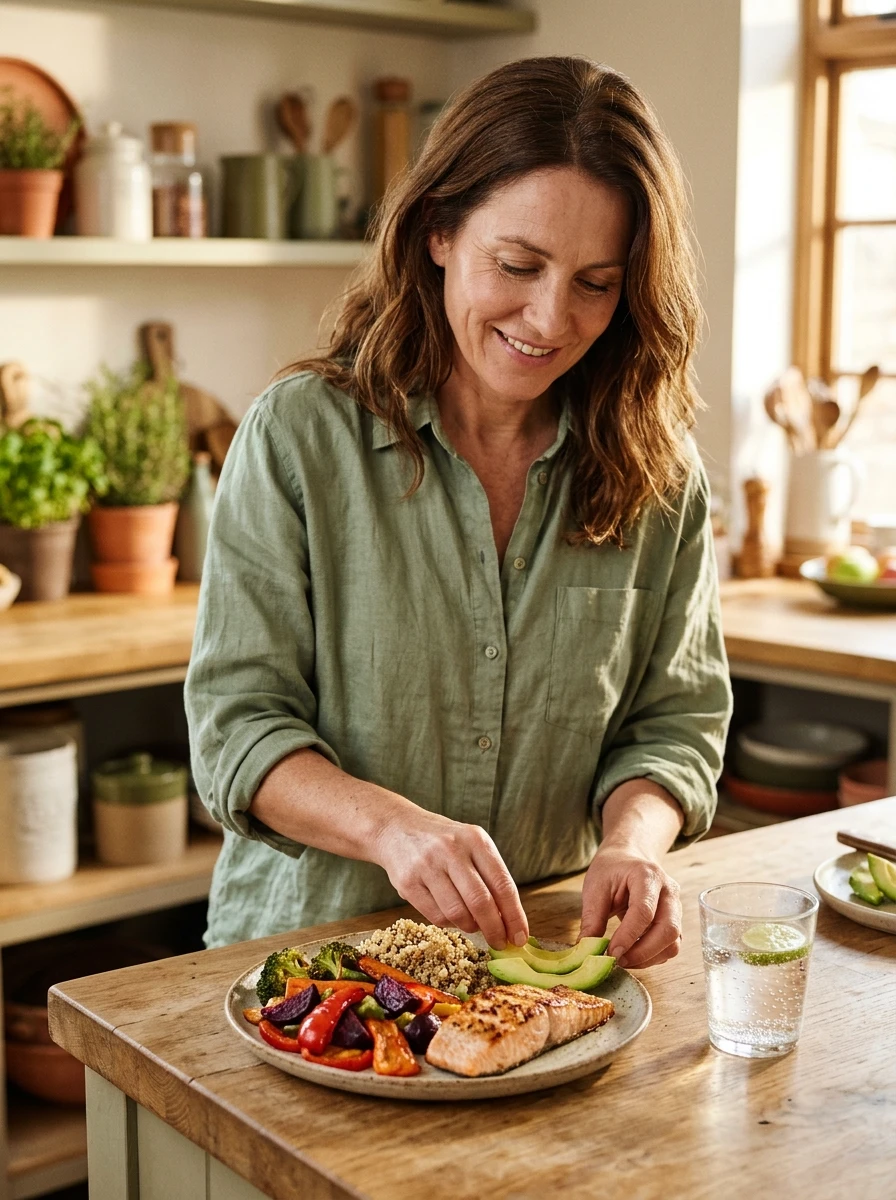
A diet is healthy for weight loss when it gives your body the nutrients it needs while making it easy to eat slightly less than you burn. In practice, that means meals built mostly from vegetables, fruit, whole grains, lean protein and healthy fats, in portions that keep you full rather than stuffed.
Most healthy-eating advice covers the first half of that sentence and forgets the second. The Harvard Healthy Eating Plate is a good starting template: half your plate vegetables and fruit, a quarter whole grains, a quarter protein, healthy plant oils in moderation, and water, coffee or tea to drink. It tells you what to eat.
For weight loss, how much of the energy-dense parts lands on the plate matters too. You don’t have to count anything, but you do need a structure that makes the right amount happen by default. For the full no-tracking approach, see our guide to weight loss without counting calories.
Why Does A Healthy Diet Feel Harder After 40?
Because your body composition is changing, even if your weight isn’t. In the long-running SWAN (Study of Women’s Health Across the Nation) cohort, the rate of fat gain doubled, and lean mass began to decline at the start of the menopause transition, and those changes continued until about two years after the final period.
Here’s the part that surprises most women: the same study found no sudden jump in the rate of weight gain at that point. The scale can tell you nothing has changed while the mix underneath is shifting from muscle toward fat.
That’s why the breakfast that worked at 35 can feel useless at 47, and why protein and fibre get top billing below. Your metabolism isn’t broken. The plan just has to fit the body you have now.
The B.U.I.L.D. Method: 5 Steps To A Healthy Diet For Weight Loss
The B.U.I.L.D. Method is a five-step plate system: Base it on protein, Up the fibre, Include healthy fats in measured amounts, Lose the liquid calories, and Downsize the energy-dense extras. Each step is tied to a specific piece of research, and none of them needs a calorie number.
| Step | What It Looks Like | Simple Portion Cue | Why It Works |
|---|---|---|---|
| Base On Protein | Eggs, Greek yoghurt, fish, chicken, tofu, beans or lentils at every meal | A palm-sized portion (or a heaped cupped hand of beans) | Helps you feel full and limits muscle loss while you lose weight |
| Up The Fibre | Vegetables, fruit, oats, whole grains, beans | Half your plate from plants | Fibre predicted weight loss and diet adherence in a major trial |
| Include Healthy Fats | Olive oil, avocado, nuts, seeds, oily fish | About a thumb of oil or nut butter, a small handful of nuts | Supports flavour and fullness while keeping dense calories in check |
| Lose The Liquid Calories | Water, sparkling water, tea, black coffee | Make calorie-free drinks the default | Drinks add energy without making you feel full |
| Downsize The Dense Stuff | Fewer ultra-processed snacks, smaller servings of granola, cheese, pastries | Serve it on a plate, never from the packet | Energy-dense and ultra-processed foods make overeating easy |
B: Base Every Meal On Protein
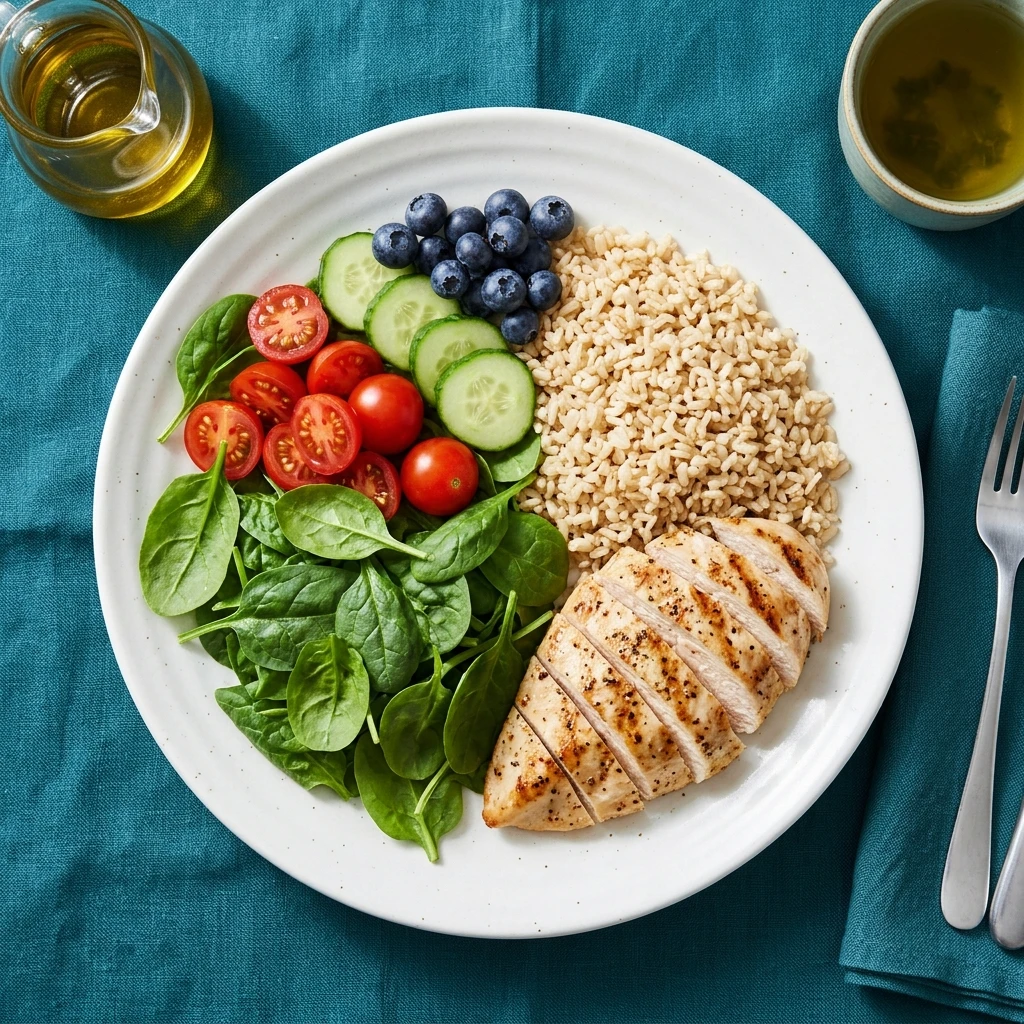
Start every meal by choosing your protein first, because protein is the nutrient most likely to keep you full and help you hold on to muscle while you lose fat. A palm-sized portion per meal is a practical target for most women.
A meta-analysis of 24 trials found that higher-protein, reduced-energy diets led to slightly more weight and fat loss than standard-protein versions, and better protected fat-free mass and resting energy expenditure. A separate review adds that protein generally increases satiety more than carbohydrate or fat.
Easy lean protein sources to rotate:
- Breakfast: Eggs, plain Greek yoghurt, cottage cheese, smoked salmon.
- Lunch: Chicken, tinned tuna or salmon, chickpeas, lentils, tofu.
- Dinner: White fish, salmon, turkey, lean beef, tempeh, beans.
- Snacks: Skyr, edamame, a boiled egg, a glass of milk or soya milk.
For a full plan, see our high-protein diet plan for women. If you have kidney disease, check your protein needs with your doctor first.
U: Up The Fibre
Fill half your plate with vegetables and fruit, and choose whole grains and beans over refined starches, because fibre helps you feel full and helps you stick with your plan. A Lancet review found the biggest health benefits at 25 to 29 grams a day.
In the POUNDS Lost trial, adults with an average age of 52 followed calorie-restricted diets for six months, and fibre intake was the most influential predictor of weight loss. It mattered whatever the diet’s fat, carb or protein mix, and it was strongly linked to how well people stuck to their plan.
A series of Lancet meta-analyses adds that trials of higher fibre intakes showed significantly lower bodyweight.
Simple ways to add fibre-rich foods:
- Add, don’t replace: Stir a handful of spinach into eggs or a soup.
- Bean up: Swap half the mince in a chilli or bolognese for lentils or kidney beans.
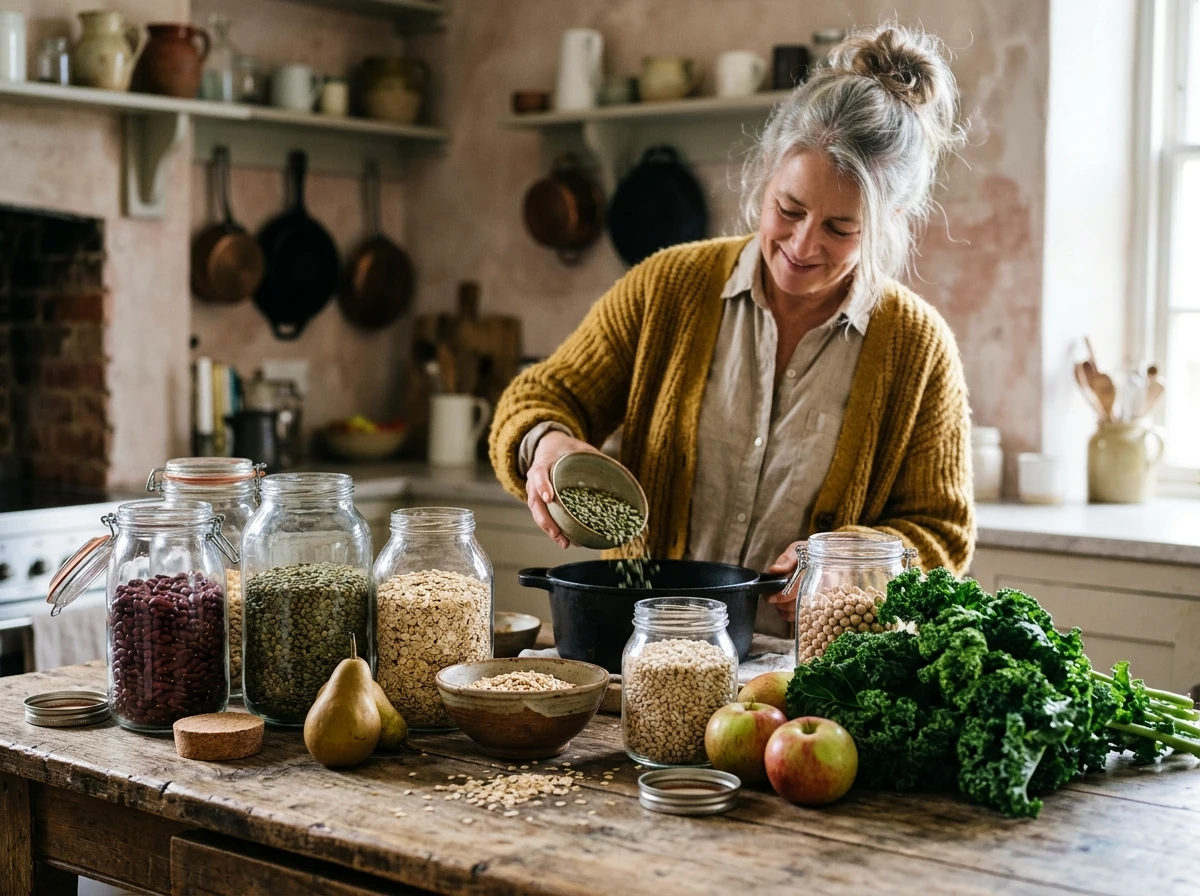
- Go whole: Porridge oats, wholegrain bread, brown rice, quinoa and barley instead of white versions.
- Eat the fruit, skip the juice: Whole berries, apples and pears keep their fibre and take longer to eat than a glass of juice.
Build up gradually and drink plenty of water as you go.
I: Include Healthy Fats, Measured
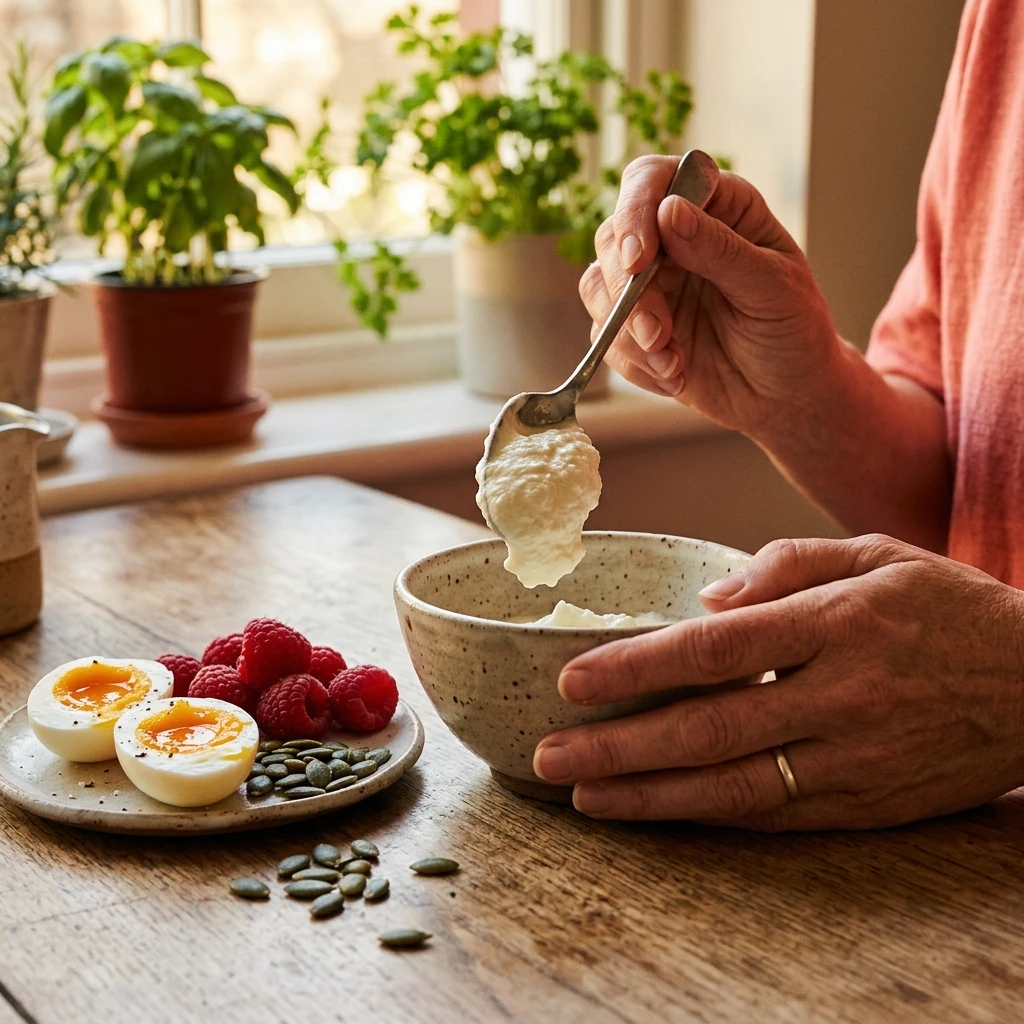
Keep healthy fats in your diet, but measure them, because olive oil, nuts and avocado are nutritious and also the most energy-dense foods on your plate. A thumb-sized pour of oil or a small handful of nuts per meal is plenty for most women.
Cutting fats out isn’t the goal; free-pouring is the problem. Harvard’s nutrition team recommends healthy plant oils in moderation, and the same team’s review of the Mediterranean diet warns of a risk of excess calorie intake because portion sizes are not emphasised. In plain terms, the healthiest oil in the world still counts.
Cook with a teaspoon or spray, measure your dressing, and serve nuts in a small bowl, not from the bag.
L: Lose The Liquid Calories
Replacing fizzy drinks, sugary juices and alcohol with water or calorie-free drinks is one of the simplest changes you can make, because drinks add energy without filling you up. It’s a good place to start.
The research backs this up. In the CHOICE trial, 318 adults (84% of them women, average age 42) replaced caloric drinks with water or diet drinks for six months and lost an average of 2 to 2.5% of their body weight. The comparison group lost weight too, but drink-swappers had about twice the odds of reaching a 5% loss.
In a 12-week trial of adults aged 55 to 75 on a reduced-calorie diet, drinking 500 ml of water before each main meal led to about 2 kg more weight loss than the diet alone.
Easy swaps to make this week:
- Fizzy drinks: Sparkling water with lemon, lime or a few frozen berries.
- Fruit juice and smoothies: Whole fruit plus a glass of water.
- Sweet coffee drinks: A plain latte or black coffee with a splash of milk.
- Evening wine: Alcohol-free alternatives, herbal tea, or a “weekends only” rule.
D: Downsize The Dense Stuff
Make energy-dense and ultra-processed foods smaller, rarer side players rather than cutting them out, because they make it easy to overeat without noticing. Plate them next to protein and vegetables.
In a controlled NIH trial, people ate about 500 more calories a day on an ultra-processed diet than on an unprocessed one, with meals matched for sugar, fat and fibre.
In a year-long trial of 97 women with obesity, those who were taught to lower their diet’s energy density by eating more water-rich fruit and vegetables lost more weight and reported less hunger.
They were never given a calorie target. Nothing is banned. A square of dark chocolate after dinner fits; a family-size bag on the sofa is a different story. Our list of eating habits that work against your metabolism covers more of the everyday traps.
Nutrients Women Over 40 Can’t Shortchange
When you eat a little less, protein, fibre, calcium, vitamin D and iron are the nutrients most worth protecting, because your needs for some of them change around menopause. Nutrient-dense foods let you cover them without extra calories.
A smaller plate can quietly squeeze these out. Use the table as a quick weekly check.
| Nutrient | Daily Target For Women | Why It Matters During Weight Loss | Nutrient-Dense Sources |
|---|---|---|---|
| Protein | A palm-sized portion at each meal | Helps protect lean mass and keeps you full | Eggs, fish, poultry, Greek yoghurt, tofu, lentils |
| Fibre | 25 to 29 g, a general health benchmark (Lancet review) | Fullness, diet adherence, lower bodyweight in trials | Beans, oats, berries, vegetables, whole grains |
| Calcium | 1,000 mg (19 to 50); 1,200 mg (women 51 to 70) (NIH ODS) | Easy to fall short on if you cut back on dairy | Milk, yoghurt, cheese, calcium-set tofu, fortified plant milks |
| Vitamin D | 15 mcg (600 IU) up to age 70 (NIH ODS) | Works with calcium; few foods supply much | Oily fish, eggs, fortified milk and cereals |
| Iron | 18 mg (19 to 50); 8 mg (51 and older) (NIH ODS) | Needs drop after periods stop | Lean red meat, lentils, beans, spinach, fortified cereals |
Unsure about any of these? Ask your doctor before reaching for supplements. Our guide to the best diet for women over 40 covers the wider nutrition picture for this stage of life.
What Does A Balanced Day Of Eating Look Like?
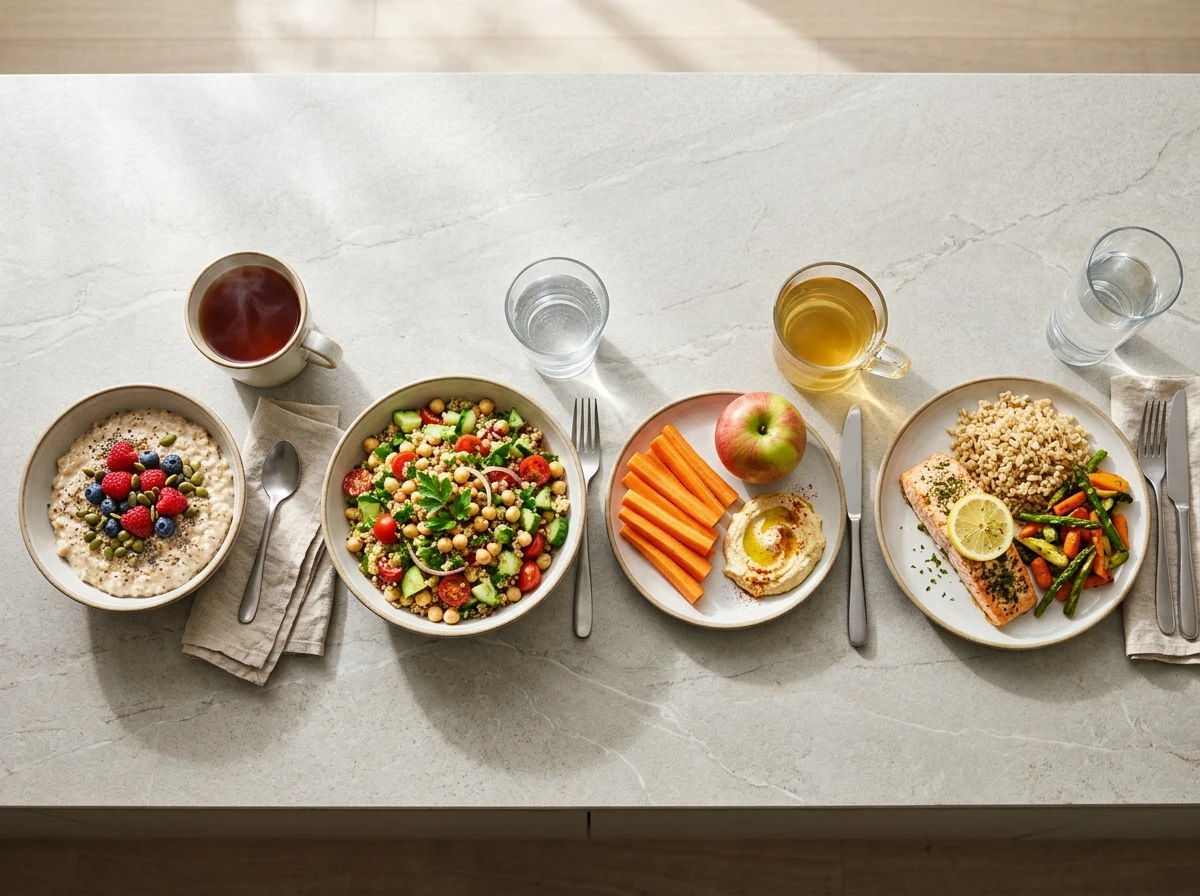
A balanced day for weight loss is three B.U.I.L.D. plates, plus a protein-based snack if you’re genuinely hungry, and calorie-free drinks in between. Portions follow the plate, not a calorie number.
Swap any item for something similar you enjoy.
| Meal | Protein (B) | Fibre (U) | Healthy Fat (I) | Drink (L) |
|---|---|---|---|---|
| Breakfast | Greek yoghurt or two eggs | Porridge oats or wholegrain toast, berries | A sprinkle of seeds | Tea or coffee |
| Lunch | Chicken, tuna or chickpeas | Big salad or vegetable soup, quinoa | A spoonful of olive oil dressing | Water or sparkling water |
| Snack (optional) | Cottage cheese or a boiled egg | Carrot sticks or an apple | Hummus | Herbal tea |
| Dinner | Salmon, tofu or turkey | Roasted vegetables, brown rice or lentils | Avocado or oil used in cooking | Water |
Need more variety? Our collection of healthy meal plans for every lifestyle has full weekly options, and the 5-day menopause diet plan is built specifically for this life stage.

Mediterranean, DASH, Or Your Own Plan: Which Eating Pattern Fits?
Any well-built eating pattern can support weight loss, and the well-studied Mediterranean and DASH diets both fit inside the B.U.I.L.D. Method. Choose the one that matches how you already like to eat.
- Mediterranean: A primarily plant-based eating plan with daily whole grains, olive oil, fruit and vegetables, fish as the main animal protein, and red meat only a few times a month. Harvard notes it may support weight loss when combined with eating less.
- DASH: Designed to lower blood pressure, with vegetables, fruits and whole grains as its basis and a sodium goal of under 2,300 mg a day.
- Your own plate rules: If you don’t want a named diet, the five B.U.I.L.D. steps are your plan.
What doesn’t fit is anything that bans whole food groups, promises several pounds by a date, or needs special products. Our guide to the differences between a fad diet and a real diet that works shows you how to spot them.
Expert Commentary: What The Research Actually Shows
After more than 10 years of researching women’s weight loss, the WLBF team’s position is simple: a healthy diet for weight loss rests on sustainable calorie restriction, nutrient density and behaviour change.
The single most practical first move is replacing fizzy drinks, sugary juices and alcohol with water or calorie-free alternatives.
The research above lines up behind all three. Sustainable fat loss works best when restriction isn’t punishing: the women in the energy-density trial lost weight with less hunger.
Nutrient density, through fibre and protein, predicted both weight loss and adherence. And behaviour change, from swapping drinks to planning meals, is what keeps it going.
Notice what’s missing: a magic food, a perfect macro ratio or a carb curfew. The evidence keeps pointing back to unglamorous basics, done consistently.
The Contrarian Take: Healthy Is Not The Same As Less
Eating healthily and eating less are two different levers, and many women only pull the first one. You can fill your week with whole, unprocessed food and still eat at maintenance, especially with generous oils, nuts, granola and smoothies.
You may recognise this one: “I eat clean, and nothing moves.” The food is healthy, but the amount hasn’t changed. Whole foods make a deficit easier, not automatic.
The flip side matters just as much. A diet that’s low in calories but poor in nutrients (living on diet bars and crackers, say) can leave you short on the protein and fibre that protect muscle and keep you full, which is the last thing you want during the menopause transition.
B.U.I.L.D. pairs quality (protein, fibre) with quantity (drinks, dense foods) for that reason.
For the full argument, see our guide to losing weight without counting calories.
How To Make Your Healthy Diet Stick
A healthy diet for weight loss sticks when you plan meals, eat more slowly, and review your week instead of judging every day. Habits carry you through busy weeks.
Plan And Prep Ahead
Planning your meals a few days ahead is linked to better diet quality and healthier body weight, especially in women. It also ends the 6 p.m. takeaway panic.
In a study of more than 40,000 adults, women who planned meals had lower odds of being overweight or obese and ate a more varied diet. It shows an association, not proof of cause.
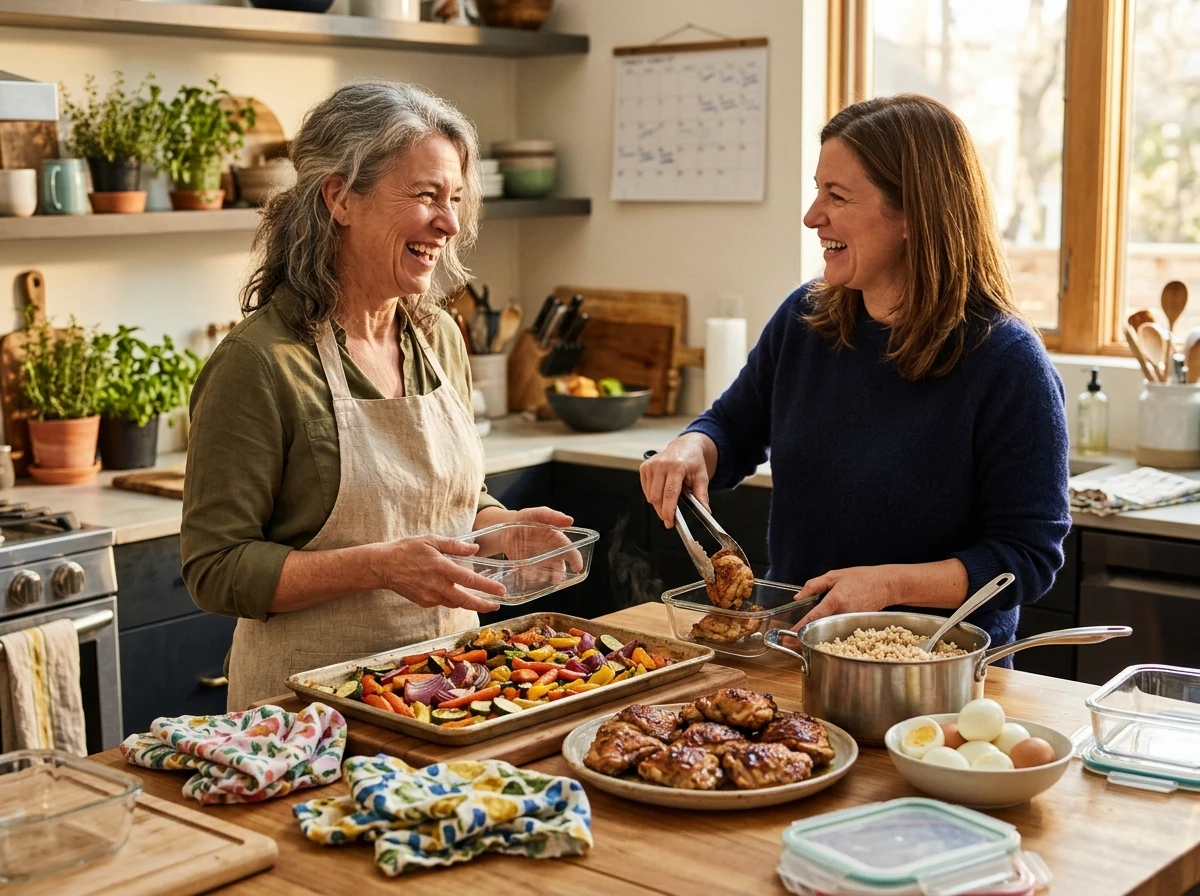
- Batch one protein: Roast a tray of chicken thighs or cook a pot of lentils on Sunday.
- Prep one vegetable base: Chop salad veg or roast a big tray of mixed vegetables.
- Cook one grain: A pot of brown rice or quinoa covers three or four meals.
- Stock snacks: Boiled eggs, yoghurt pots, washed fruit, portioned nuts.
For more, see our guides to the benefits of meal planning and eating well when you don’t have time to cook.
Eat More Slowly And Mindfully
Slowing down helps you eat less at a meal without feeling hungrier afterwards. Put your fork down between bites and give each meal a little more time.
A meta-analysis of 22 studies found that a slower eating rate led to lower energy intake than eating quickly, with no difference in hunger up to three and a half hours later. Our article on using mindfulness to break the cycle of emotional eating shows how mindful eating helps with stress eating.
Review Your Week, Not Your Day
Judge your progress weekly with your waist, how your clothes fit and your average weight, because daily numbers swing with water, salt and hormones. One heavy meal or one high reading doesn’t undo a good week.
Every Sunday, ask: Did most meals follow the B.U.I.L.D. plate, where did drinks or dense extras creep in, and what’s one thing to adjust? If nothing has changed after six to eight consistent weeks, our guide to how many calories you should be eating can help you check your portions with more precision.
What If Everyone Around You Is On GLP-1 Medication?
GLP-1 medication, such as weekly semaglutide injections, is a medical decision for you and your doctor, and it doesn’t replace a healthy diet. In the major semaglutide trial, the drug was given alongside a lifestyle programme. Food quality and protein still matter, with or without medication.
In the STEP 1 trial, adults on weekly semaglutide lost an average of 14.9% of their body weight over 68 weeks, compared with 2.4% for placebo, and both groups received lifestyle intervention.
If you take it, B.U.I.L.D. (especially protein and fibre) is still the foundation, because a smaller appetite makes every bite count. If you don’t, your progress is no less real for being slower.
Ready to turn B.U.I.L.D. into a routine? Grab our free guide, 10 Actions That Support Permanent Weight Loss, and get the everyday habits that pair with your new plate. No restriction plans, no guilt, just what works for real women with real lives.
The Bottom Line
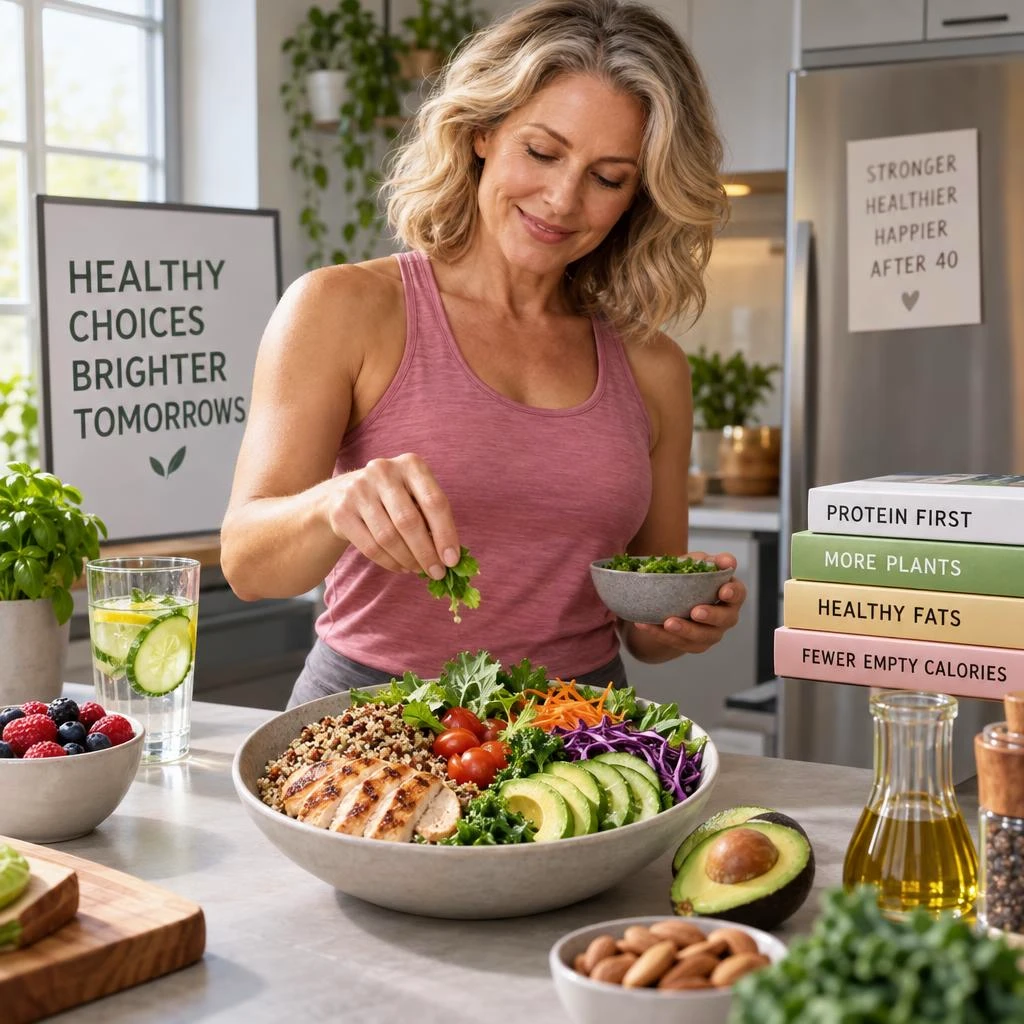
A healthy diet for weight loss isn’t a list of superfoods or a plan you endure until the holidays. It’s a set of choices at every meal: protein first, plenty of fibre, measured fats, calorie-free drinks and less of the dense stuff. After 40, those choices also help protect your muscle.
Start small: swap your sugary drinks this week and add protein to breakfast, then fill half your plate with plants next week. Steady, repeatable healthy eating habits are what drive long-term weight loss.
Glossary Of Key Terms
- Daily Calorie Deficit: Taking in slightly less energy from food and drink than your body uses, which is the basic condition for fat loss.
- Energy Density: Calories per gram of food. Vegetables are low; nuts, oils and pastries are high.
- Nutrient-Dense Foods: Foods rich in vitamins, minerals, fibre or protein for their calories.
- Macronutrient Balance: The mix of protein, carbohydrate and fat in your diet.
- Lean Protein Sources: Protein foods relatively low in fat, such as poultry, white fish, tofu and legumes.
- Fibre-Rich Foods: Vegetables, fruit, oats, whole grains, beans and lentils.
- Ultra-Processed Foods: Industrially made foods with ingredients you wouldn’t use at home, such as many packaged snacks.
- Low Glycemic Index: Describes carbohydrate foods that raise blood sugar more slowly, such as beans, lentils and barley.
- Menopause Transition: The years of changing hormone levels before and around the final menstrual period, also called perimenopause.
- Mindful Eating: Paying full attention to hunger, fullness and the experience of eating, rather than eating on autopilot.
FAQ
What Is The Healthiest Diet For Weight Loss For Women Over 40?
There’s no single best diet. The most effective approach combines protein at every meal, plenty of fibre-rich plants, measured healthy fats and calorie-free drinks, in amounts that create a modest deficit. Mediterranean and DASH patterns both fit this well. Choose the one you can follow for years, not weeks.
Can You Lose Weight Just By Eating Healthy?
Often, but not always. Whole foods make it easier to eat less because they’re more filling, but healthy foods like nuts, oils, granola and smoothies are still energy-dense. If you’re eating well and not losing weight, check your portions of those foods and your liquid calories first.
How Do I Start A Healthy Diet For Weight Loss?
Start with one or two changes rather than a full overhaul. Replacing sugary drinks and juices with water, tea or sparkling water, and adding a palm-sized portion of protein to breakfast are two simple first steps. Add one new habit each week.
Do I Need To Count Calories On A Healthy Diet?
No. Building meals around protein and vegetables, measuring fats and cutting liquid calories can create a deficit without tracking. In one year-long trial, women who ate more water-rich foods lost weight without being given any calorie target.
How Much Fibre Should I Eat To Lose Weight?
A major Lancet review found the biggest health benefits at 25 to 29 grams of fibre a day. A simple way to get there is to fill half your plate with vegetables and fruit, choose whole grains, and add beans or lentils to a few meals each week. Increase fibre gradually and drink plenty of water.
How Fast Should I Expect To Lose Weight On A Healthy Diet?
Expect gradual progress. In the drink-swap trial, people lost about 2 to 2.5% of their body weight over six months. Judge progress over six to eight weeks using your waist, how your clothes fit and your average weight, rather than daily readings.