
Healthy Meal Plans For Women Over 40 Start With The F.I.T. Plan Test, Not The Trendiest Diet
Virginia Woolf
Novelist & essayist, A Room of One’s Own
One cannot think well, love well, sleep well, if one has not dined well.
Summary (TL;DR)
The healthiest meal plan for a woman over 40 is the one that covers your nutrient needs and still fits your week months from now. In head-to-head trials, popular diets end up close together on weight loss at 12 months, and results track how consistently people stick with them.
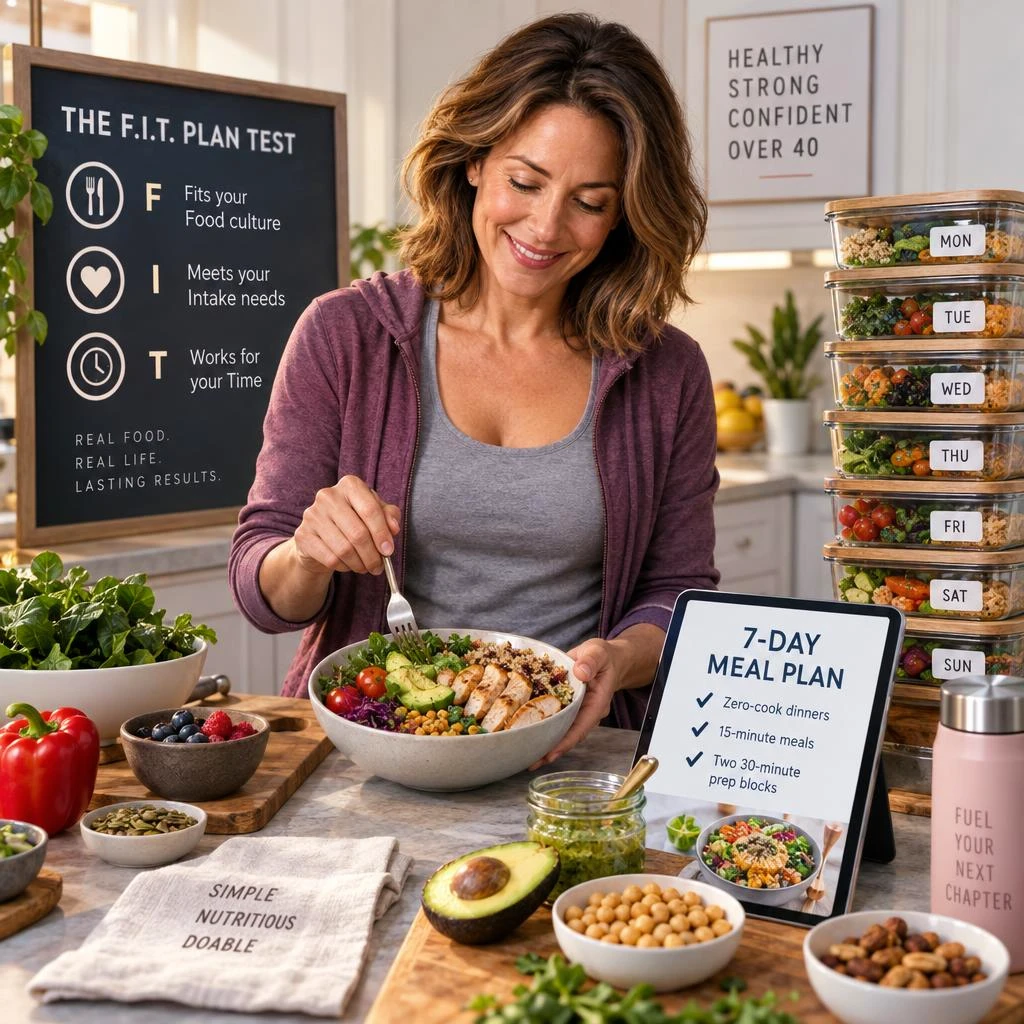
The F.I.T. Plan Test helps you choose: does a plan fit your Food culture, your Intake needs and your Time? Then the 7-day plan below turns your choice into real meals with about 60 minutes of prep a week.
- No single plan wins. In the DIETFITS trial of 609 adults, 12-month weight change was -5.3 kg on a healthy low-fat diet and -6.0 kg on a healthy low-carb diet, a difference that wasn't significant.
- Planning is linked with better eating. In a French study of 40,554 adults, people who planned meals had higher diet quality, and women who planned had lower odds of obesity.
- Protein at every meal. The 2025-2030 Dietary Guidelines for Americans set protein at 1.2 to 1.6 g per kilogram of body weight a day.
- Your numbers shift after 50. Iron needs drop from 18 mg to 8 mg a day, while calcium rises from 1,000 mg to 1,200 mg.
- Prep in two short blocks. Cooked leftovers keep 3 to 4 days in the fridge, so two 30-minute sessions work better than one Sunday marathon.
You've tried keto. Then you read that the Mediterranean diet is the one to follow. Then a friend went plant-based and swears by it. Each time, you buy new groceries, start strong and lose steam by week three.
If that sounds familiar, you're not short on willpower. You're short on a way to choose, and on a plan that survives a busy Wednesday.
Your needs in your 40s and 50s aren't the same as they were at 28. Perimenopause can change your hunger, sleep and energy, and your iron and calcium needs shift around menopause. Meanwhile, your week doesn't get any less full.
This guide does two jobs. First, it compares the five healthy meal plans women ask about most and gives you a three-question test for picking yours. Then it hands you a 7-day plan, a grocery list and a timed prep schedule, so the plan you choose actually makes it onto your plate.
Medical & Referral Disclaimer
This article is for informational and educational purposes only. It isn’t medical advice and doesn’t replace guidance from your doctor, a registered dietitian or another qualified health professional. If you’re pregnant, breastfeeding, managing a medical condition or taking medication, talk to your care team before changing how you eat.
Key Takeaways
- The best healthy meal plan is the one you can still follow on an ordinary Tuesday, months from now.
- Every plan in this guide shares the same base: half a plate of vegetables and fruit, protein at each meal, fiber-rich carbs and mostly unsaturated fats.
- Aim for 1.2 to 1.6 g of protein per kilogram of body weight a day, spread across your meals.
- After 50, your iron needs drop and your calcium needs rise. Plant-based plans need a plan for vitamin B12 and iron.
- Sort meals by time: keep at least two zero-cook dinners a week and do your prep in two 30-minute blocks.
- Diabetes, celiac disease and other medical conditions call for a plan built with your doctor or a registered dietitian.
What Makes A Healthy Meal Plan Work For Women Over 40?
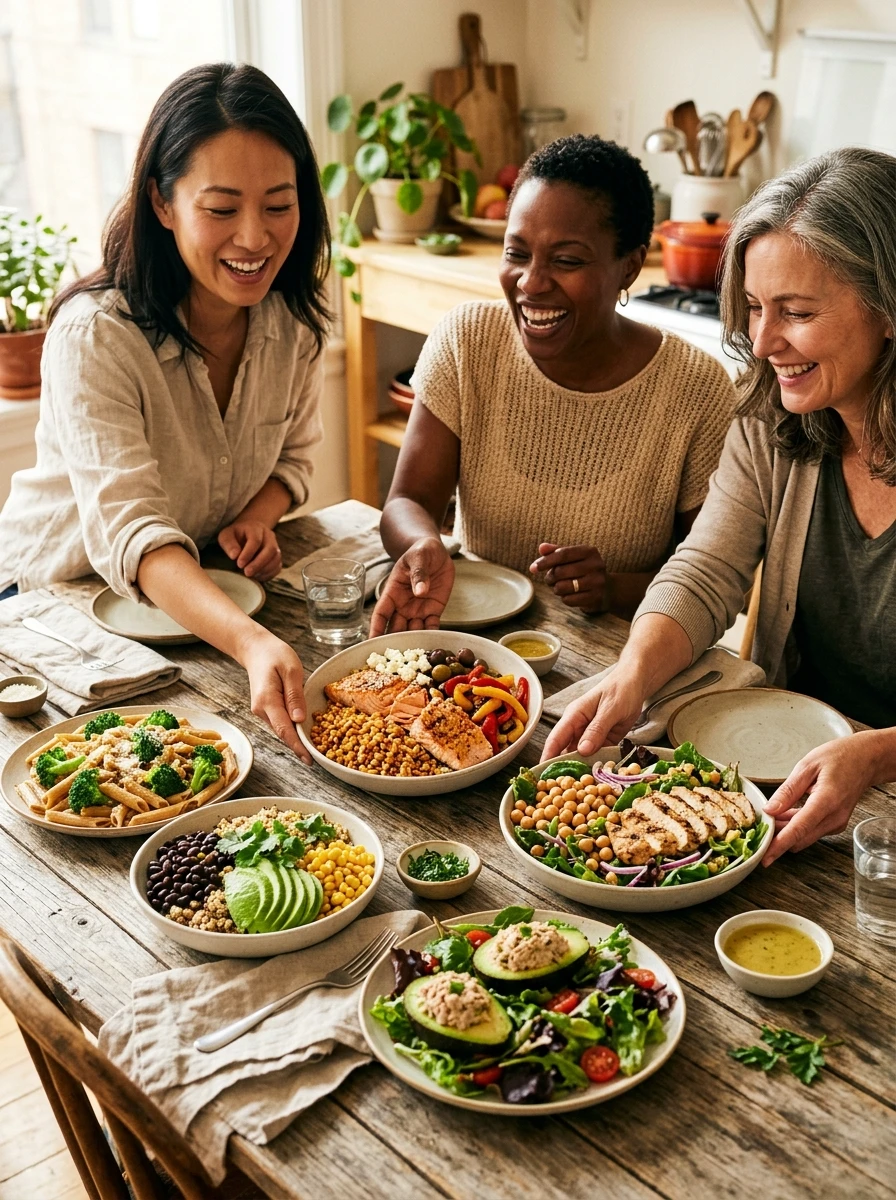
A healthy meal plan works when it covers your nutrient needs, keeps you full, and fits your real week. The diet label matters far less than whether you can repeat it. Think of the plan type as the flavor, and the plate underneath as the recipe.
The research behind planning is encouraging. A French study of 40,554 adults found that people who planned their meals were more likely to have higher diet quality and more food variety.
In women, planning was linked with about 8% lower odds of being overweight and 21% lower odds of being obese.
In U.S. survey data from more than 9,000 adults, Johns Hopkins researchers found that people in households that cooked dinner six or seven times a week ate about 2,164 calories a day, compared with 2,301 for those in households that cooked dinner once a week or less.
Both studies are observational, so they show a link, not proof that planning or cooking causes weight loss. Those calorie numbers are averages from the study, not targets for you.
The Plate Every Plan Is Built On
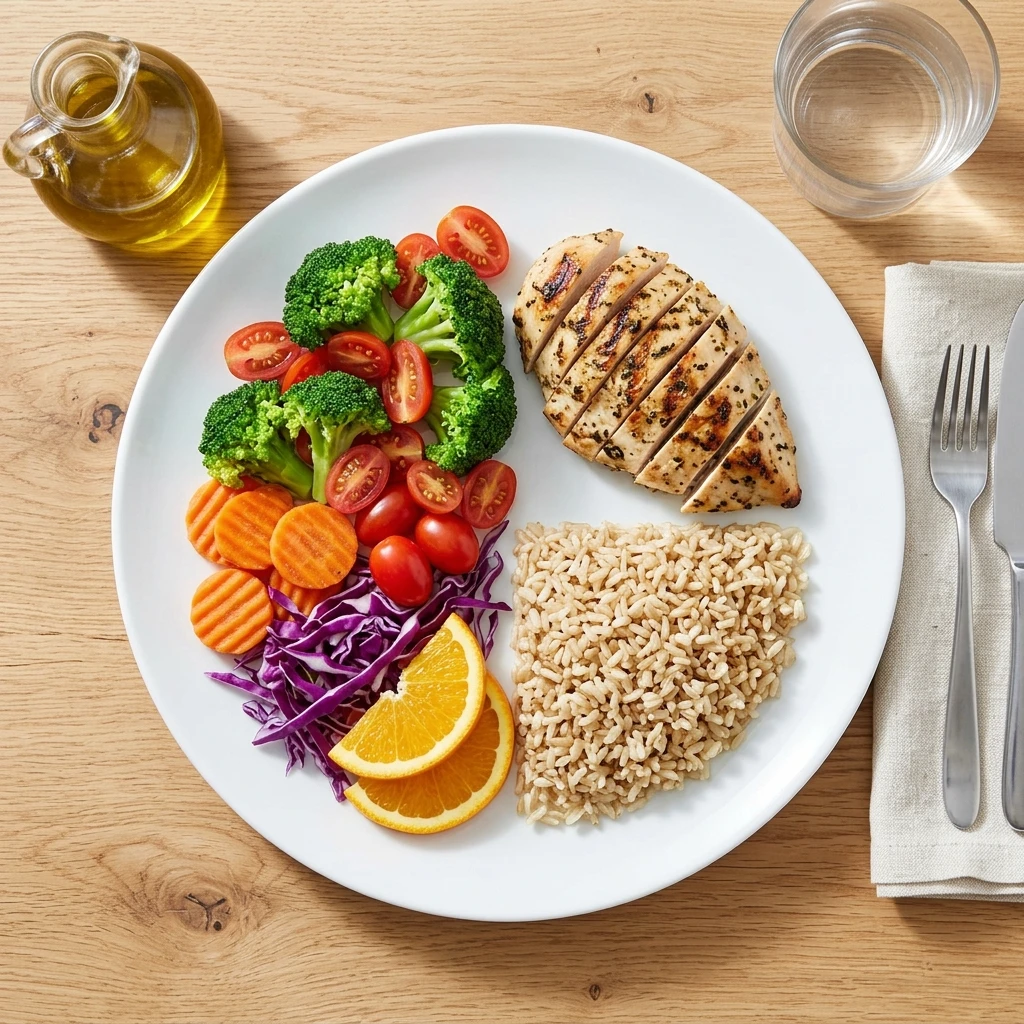
Most healthy meal plans share one shape: half your plate vegetables and fruit, a quarter protein and a quarter whole grains or other carbs, plus some healthy oil. That’s the Harvard Healthy Eating Plate, and you’ll see it again in every sample day below.
Portion control gets easier with this model, because the plate does the measuring for you. You don’t need a food scale to know that half your plate should be vegetables.
Protein, Fiber, And Healthy Fats: The Non-Negotiables
Whatever plan you choose, build each meal around protein, add fiber, and use mostly unsaturated fats. These three keep you full longer and protect muscle as you age.
- Protein: The Dietary Guidelines for Americans 2025-2030 set a goal of 1.2 to 1.6 grams per kilogram of body weight per day. For a 70 kg (154 lb) woman, that’s roughly 84 to 112 grams, spread across your meals.
- Fiber: The U.S. Administration for Community Living lists 25 grams a day for women 31 to 50 and 21 grams for women 51 to 70. Beans, oats, berries, vegetables and whole grains get you there.
- Healthy fats: Olive oil, avocado, nuts, seeds and oily fish. Our guide to good fats vs bad fats covers which ones to limit.
- Whole foods first: Minimally processed foods make every one of these targets easier to hit.
Here's what the guideline range works out to per day and per meal. If you have kidney disease, check your protein target with your doctor first.
| Body Weight | Daily Protein (1.2 to 1.6 g/kg) | Per Meal (3 Meals) |
|---|---|---|
| 130 lb (59 kg) | 71 to 94 g | About 24 to 31 g |
| 150 lb (68 kg) | 82 to 109 g | About 27 to 36 g |
| 170 lb (77 kg) | 92 to 123 g | About 31 to 41 g |
| 190 lb (86 kg) | 103 to 138 g | About 34 to 46 g |
To hit those numbers without a tracking app, build each meal around one or two protein anchors. These amounts come from USDA FoodData Central.
| Food | Portion | Protein |
|---|---|---|
| Chicken breast, roasted | 3 oz cooked | About 26 g |
| Ground turkey, 93% lean, cooked | 3 oz cooked | About 23 g |
| Chicken thigh, roasted (meat only) | 3 oz cooked | About 21 g |
| Shrimp, cooked | 3 oz | About 20 g |
| Salmon, Atlantic, farmed, cooked | 3 oz cooked | About 19 g |
| Plain nonfat Greek yogurt | 6 oz container | About 17 g |
| Light tuna, canned in water, drained | 3 oz | About 16 g |
| Eggs, hard-boiled | 2 large | About 13 g |
| Cottage cheese, 2% | 1/2 cup | About 12 g |
| Firm tofu | 1/2 cup | About 11 g |
| Lentils, cooked | 1/2 cup | About 9 g (plus about 8 g fiber) |
| Black beans, cooked | 1/2 cup | About 8 g (plus about 7 g fiber) |
Spreading protein across the day may also help your muscles. In a small study of 8 adults, eating about 30 g of protein at each of three meals led to 25% higher muscle protein synthesis over 24 hours than eating most of it at dinner. Not every trial agrees, so think of it as a sensible habit, not a rule.
Fiber is the other easy miss. According to the U.S. Administration for Community Living, 95% of adults don’t eat enough fiber. Half a cup of cooked lentils gives you about 8 g, and an ounce of chia seeds about 10 g. Add fiber gradually and drink water with it if your current intake is low.
The F.I.T. Plan Test: How To Choose Your Healthy Meal Plan
The F.I.T. Plan Test is our three-question filter for picking a plan: does it fit your Food culture, your Intake needs and your Time? A plan that passes all three is one you’re likely to keep. It’s our own framework, built from the research below, not a clinical tool.
A common pattern goes like this: a woman picks a plan because it’s popular, then quits because it clashes with how she actually eats. The F.I.T. test flips that order.
F: Food Culture
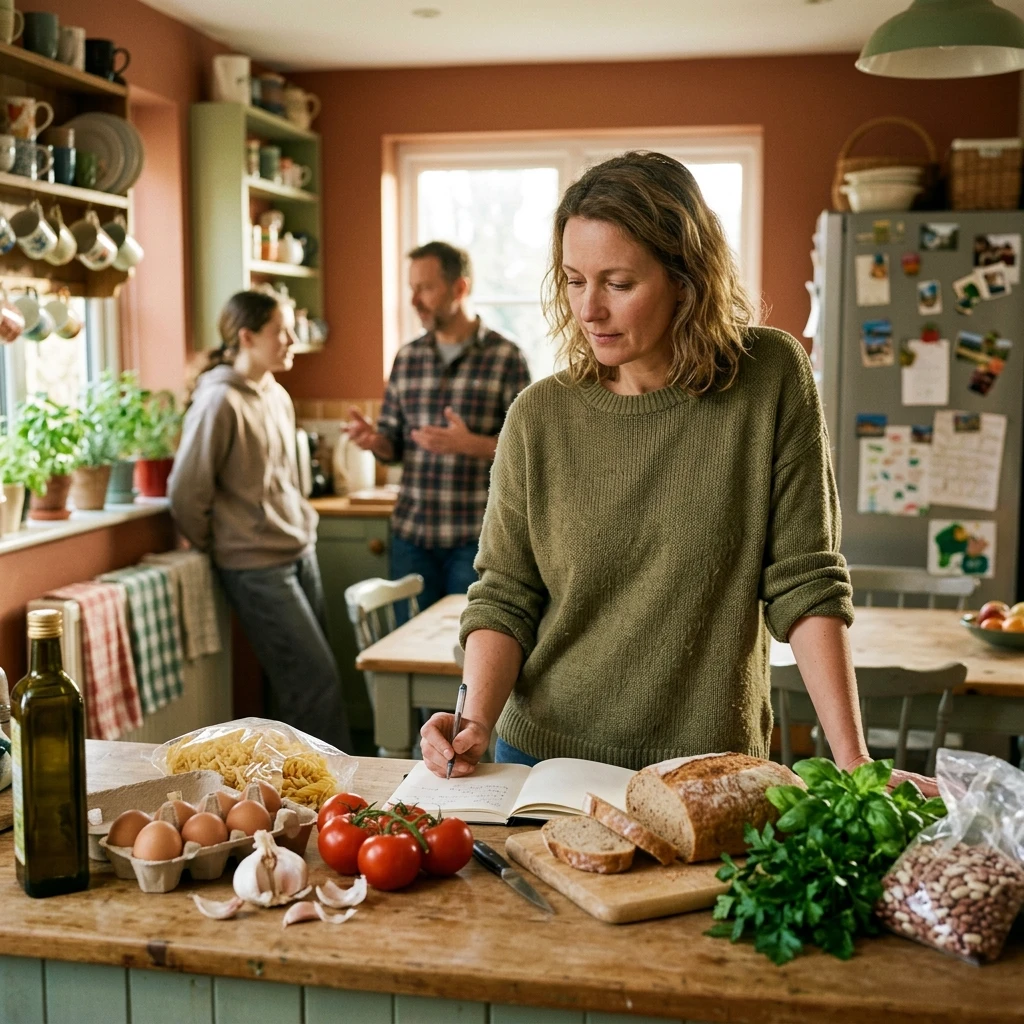
Your plan should look like food you already enjoy, cook and share. If your family eats pasta on Fridays, a plan that bans pasta will lose. Ask yourself:
- Which cuisines do I cook without a recipe?
- Who else eats what I make, and what will they refuse? (Our guide to a healthy diet for picky eaters helps here.)
- Which foods would I genuinely miss after a month?
I: Intake Needs
Your plan has to cover what your body needs right now, which changes with life stage, activity and health conditions. A plan that’s low in iron might be fine at 55 and a problem at 30. A plan that’s low in calcium matters more after 50. The life-stage table further down gives you the numbers.
T: Time
Your plan has to fit the minutes you really have for shopping, cooking and cleaning up. A plan that needs an hour a night will fail in a 15-minute week.
To test the Time step, sort the plan's meals into our 0-15-60 tiers: 0 minutes for assembly meals, 15 minutes for one-pan cooking and 60 minutes a week for batch prep. If a plan can fill all three tiers with food you like, it can survive your busiest week.
| Tier | Hands-On Time | What It Looks Like | Use It When |
|---|---|---|---|
| 0 | 0 to 5 minutes | Assemble ready foods: rotisserie chicken, canned fish, bagged salad, Greek yogurt, prepped grains | You're home late, worn out or eating at your desk |
| 15 | 10 to 15 minutes | One pan or the microwave: stir-fry with frozen vegetables, salmon with a rice pouch, a veggie omelet | A normal weeknight with a little energy left |
| 60 | 60 minutes a week, as two 30-minute blocks | Batch a protein, a grain, a tray of roasted vegetables, a pot of chili | Twice a week, for example Sunday and Wednesday |
Keep at least two 0-tier dinners in every week. They're your insurance policy, and they stop a late meeting from turning into takeout by default. Stock these and a zero-cook dinner is always a few minutes away:
- Protein anchors: rotisserie chicken, canned tuna or salmon, hard-boiled eggs, Greek yogurt, cottage cheese, deli turkey, canned beans.
- Vegetables with no chopping: bagged salad, baby carrots, cherry tomatoes, snap peas, pre-cut slaw mix.
- Filling extras: whole-grain wraps, microwave rice pouches, prepped quinoa, hummus, avocado.
- Flavor in seconds: pesto, salsa, tahini, lemon, everything bagel seasoning.
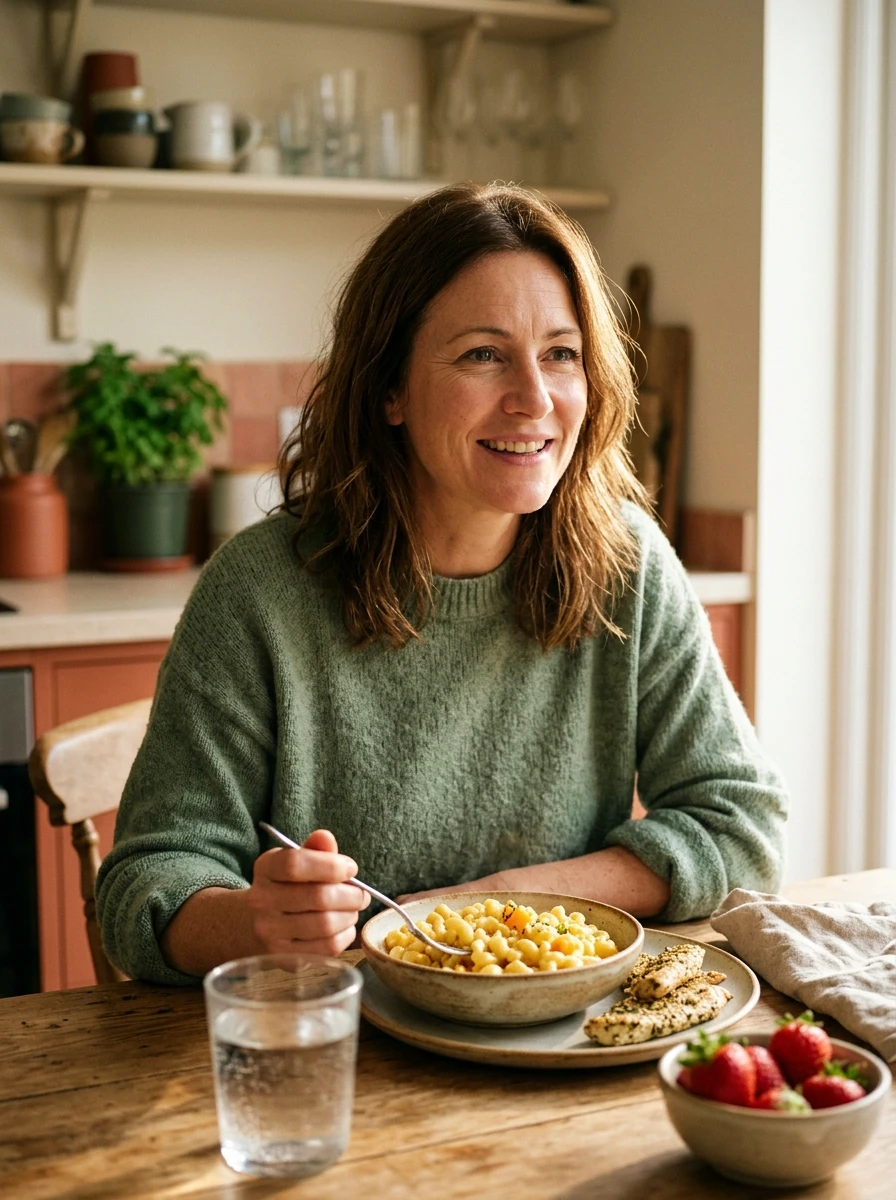
For 15-minute nights, shrimp, eggs, salmon fillets, tofu and thin chicken cutlets all cook in under 15 minutes.
Pair them with a bag of frozen stir-fry vegetables and a microwave grain, and you have a balanced plate with one pan to wash. Frozen vegetables count toward your vegetables for the day, and they skip the chopping board entirely.
Healthy Meal Plans For Every Lifestyle, Compared
Five healthy meal plans cover most women’s needs: Mediterranean, plant-based, higher-protein, lower-carb or keto, and the flexible plate. Each can support weight loss and good health. They differ in what they emphasize and who finds them easy to keep.
| Meal Plan | Tends To Fit Women Who... | What The Evidence Says | Watch-Outs |
|---|---|---|---|
| Mediterranean | Love olive oil, fish, vegetables and shared meals | Linked with about a quarter lower cardiovascular risk in an observational study of 25,994 women followed up to 12 years | Oil and nut portions add up quickly |
| Plant-Based Or Vegetarian | Prefer beans, tofu and grains, or avoid meat for ethical reasons | Fiber-rich and flexible; nutrient planning matters | Vitamin B12 and iron need a plan |
| Higher-Protein | Lift weights, feel hungry often, or are over 40 | Matches the Dietary Guidelines goal of 1.2 to 1.6 g/kg per day | Don’t crowd out vegetables and fiber |
| Lower-Carb Or Keto | Enjoy eggs, meat, cheese and vegetables, and dislike counting | Slightly more weight loss than low-fat at 12+ months (about 0.9 kg) | LDL (“bad”) cholesterol can rise; fiber drops |
| Flexible Plate | Want no rules, no banned foods, and family-friendly meals | Built on the Harvard Healthy Eating Plate model | Needs some structure so it doesn’t drift |
Mediterranean Diet Plans
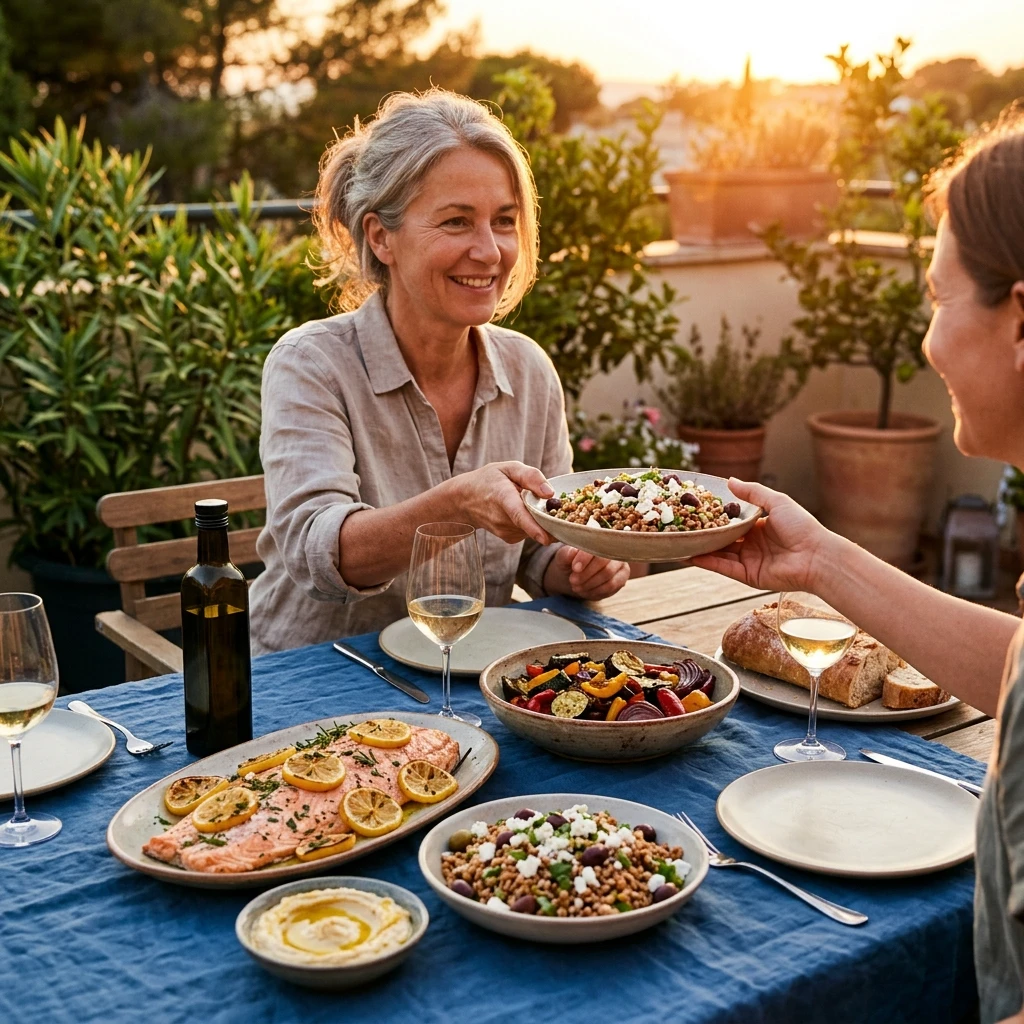
The Mediterranean plan centers on vegetables, legumes, whole grains, fish, olive oil and nuts. It's supported by a large, long women-specific study.
In the Women’s Health Study, women with higher Mediterranean intake had up to 28% lower risk of cardiovascular events when followed for up to 12 years. That’s an observational finding, so it shows a link rather than proof, but it’s a large, long-term study.
Plant-Based Nutrition
A plant-based plan builds meals around beans, lentils, tofu, whole grains, nuts and vegetables, with little or no meat. It’s easy to make high in fiber, but you’ll need to plan for two nutrients.
The NIH notes that only animal foods contain vitamin B12 naturally, so vegans usually need fortified foods or a supplement. And the iron requirement is 1.8 times higher for vegetarians, because plant iron is absorbed less well. Our plant-based diet guide and vegan tips for active women go deeper.
High Protein Meals
A higher-protein plan puts a serving of protein at every meal, and often at snacks too. It suits women who strength train, feel hungry between meals, or want to protect muscle after 40.
The 2025-2030 Dietary Guidelines now tell all adults to “prioritize protein foods at every meal”. For a full week of menus, see our high-protein diet plan for women.
Low Carb Diets And Keto Meal Prep
Lower-carb plans cut back on bread, pasta, rice and sugar. Keto goes further, to 50 grams of carbs a day or fewer. Both work for some women, but the edge over other diets is small.
A meta-analysis of 13 trials lasting a year or more found keto dieters lost about 0.9 kg more than low-fat dieters, while their LDL cholesterol rose slightly. If keto suits how you like to eat, our ketogenic diet guide covers the basics.
The Flexible Plate (Balanced Nutrition)
The flexible plate has no banned foods. You fill half your plate with vegetables, a quarter with protein and a quarter with carbs, then repeat. It’s the easiest plan to share with a family.
If you’ve bounced between strict diets, this is often the one that finally sticks. Our guide to a balanced diet for optimal health shows how to build it out.
What Does A Day On Each Healthy Meal Plan Look Like?
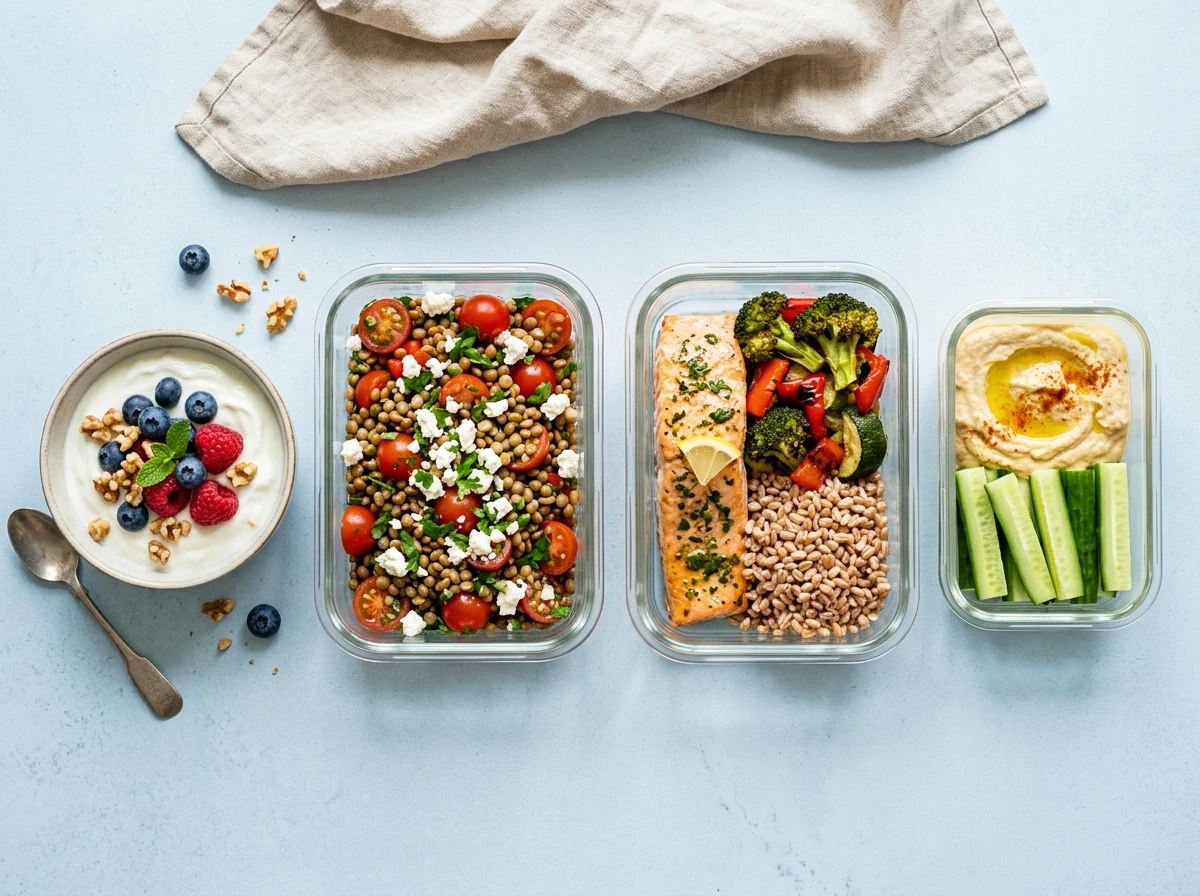
Here’s one sample day for each plan. They show how differently five plans can look while still following the same plate. Swap in foods you like, as long as you keep the protein and vegetables.
| Meal Plan | Breakfast | Lunch | Dinner | Snack |
|---|---|---|---|---|
| Mediterranean | Greek yogurt, berries, walnuts | Lentil and tomato salad with feta and whole-grain pita | Baked salmon, roasted vegetables, farro, olive oil | Hummus with cucumber |
| Plant-Based | Oats with soy milk, chia and banana | Black bean and quinoa bowl with salsa and avocado | Tofu and vegetable stir-fry with brown rice | Edamame |
| Higher-Protein | Three-egg omelet with spinach and whole-grain toast | Chicken, chickpea and leafy green salad | Lean beef or turkey chili with beans | Cottage cheese and pear |
| Lower-Carb | Eggs with sautéed peppers and mushrooms | Tuna-stuffed avocado with side salad | Roast chicken thighs with cauliflower and green beans | Almonds and cheese |
| Flexible Plate | Whole-grain toast, peanut butter, apple | Turkey and vegetable wrap with soup | Whole-wheat pasta with chicken, broccoli and tomato sauce | Yogurt and fruit |
Need snack ideas beyond these? Our list of healthy snacks for weight management has plenty.
Want the habits that make any meal plan stick? Get our free PDF, 10 Actions That Support Permanent Weight Loss: small, repeatable habits for women with full lives, with no extreme diets and no guilt. Send Me The Free Guide.
Your 7-Day Healthy Meal Plan With 60 Minutes Of Prep
This 7-day plan uses two 30-minute prep blocks, at least two zero-cook dinners and a protein source at every meal. It follows the flexible plate, and you can swap in meals from any plan above, as long as each swap comes from the same time tier.
| Day | Breakfast | Lunch | Dinner (Tier) | Snack |
|---|---|---|---|---|
| Monday | Greek yogurt, berries, walnuts | Quinoa bowl with roasted chicken, vegetables, feta | Salmon, microwave green beans, rice pouch (15) | Apple and cheese |
| Tuesday | Overnight oats | Bagged salad with chicken, chickpeas, a hard-boiled egg | Shrimp stir-fry with frozen vegetables (15) | Hummus and baby carrots |
| Wednesday | 2 hard-boiled eggs, whole-grain toast, tomato | Leftover quinoa bowl | Turkey and bean chili, made in prep block 2 (60) | Cottage cheese and pineapple |
| Thursday | Overnight oats | Chili leftovers | Rotisserie chicken wraps with slaw mix, chicken bought that day (0) | A small handful of almonds |
| Friday | Greek yogurt bowl | Tuna and white bean salad (0) | Veggie omelet with spinach and peppers (15) | Edamame |
| Saturday | Greek yogurt, banana, a spoonful of nut butter | Baked potato topped with chili (microwave) | Canned salmon, white beans, and bagged greens with lemon, or eat out (0) | Fruit |
| Sunday | Eggs and avocado on whole-grain toast | Snack plate: deli turkey, crackers, vegetables, hummus (0) | Sheet-pan tofu or chicken with vegetables, roasted during prep block 1 (60) | Greek yogurt |
Notice what's missing: calorie counts and macro tracking. You don't need either to follow this plan.
Portion control comes from the plate itself: a palm or two of protein, half the plate as vegetables and a fist-sized portion of grains or potatoes. If your doctor or dietitian has given you a calorie target for a medical reason, follow their advice.
Your Two 30-Minute Prep Blocks
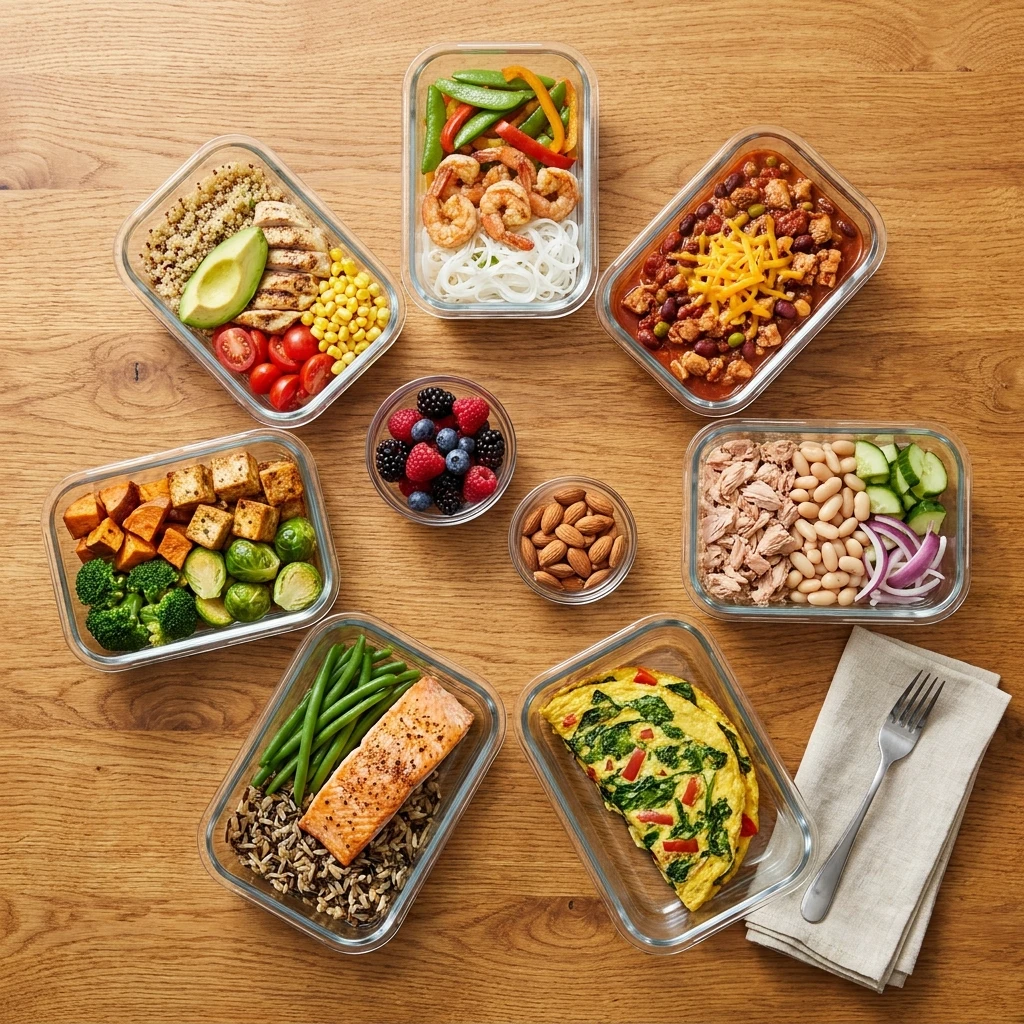
Your whole week of prep takes 60 minutes, split into two 30-minute blocks. The Sunday block feeds that night's dinner plus Monday to Wednesday, and the Wednesday block covers that night's dinner plus Thursday to Saturday, so nothing sits in the fridge longer than a few days.
Here's how the Sunday block runs. Most of the time is oven time, not effort.
- Minutes 0 to 5: Heat the oven. Put chicken thighs on one tray and chopped peppers, onion and broccoli on a second. Sunday's dinner (tofu or chicken with extra vegetables) goes on a third. Toss everything in olive oil and salt.
- Minutes 5 to 8: All three trays go in the oven. Start a pot of quinoa.
- Minutes 8 to 12: Put 6 eggs on to boil.
- Minutes 12 to 20: Make 2 jars of overnight oats with milk or yogurt, chia and berries.
- Minutes 20 to 30: Cool the eggs, take out the trays, portion everything into containers, and label them.
The Wednesday block is even simpler: a big pot of turkey and bean chili, with half portioned for lunches and half frozen.
Two short blocks are also easier to repeat than one long session, and that matters more than any recipe. In a well-known UCL study of how habits form, missing one chance to do a new behavior didn't materially affect habit formation.
So if you skip Wednesday's block, the week isn't lost. Lean on your 0-tier meals and pick up again on Sunday.
Your Grocery List For The Week
One shop covers the whole plan if you buy by store section. Most items do double duty across meals, which keeps the list short and cuts down on waste.
- Protein: chicken thighs (about 2 lb), 1 rotisserie chicken (buy it on Thursday), frozen salmon fillets, firm tofu, 1 bag of frozen shrimp, 1 lb lean ground turkey, 2 cans of tuna, deli turkey.
- Dairy and eggs: 18 eggs, a large tub of plain Greek yogurt, cottage cheese, feta, cheese for snacks, milk.
- Produce: bagged salad, spinach, peppers, onion, broccoli, cherry tomatoes, baby carrots, slaw mix, avocados, apples, berries, lemons, potatoes.
- Pantry: quinoa, rolled oats, chia seeds, canned kidney and white beans, chickpeas, crushed tomatoes, whole-grain bread and wraps, crackers, walnuts, almonds, hummus, salsa.
- Freezer: stir-fry vegetables, green beans, edamame, microwave rice pouches.

If cost is a worry, our guide to eating healthy on a budget shows how to build a cheaper weekly cart. For more recipes, try our weight loss meal prep ideas for women.
For the daily habits that hold any plan together, see healthy eating habits for lifelong wellbeing, and for why planning helps in the first place, read the benefits of meal planning.
How Long Does Meal Prep Last In The Fridge And Freezer?
Most cooked meal prep lasts 3 to 4 days in the fridge, and hard-cooked eggs last about a week, according to FoodSafety.gov. Frozen food kept at 0°F stays safe indefinitely, although its quality slowly drops.
| Food | Refrigerator | Freezer |
|---|---|---|
| Cooked meat or poultry leftovers | 3 to 4 days | 2 to 6 months |
| Soups, stews, and chili | 3 to 4 days | 2 to 3 months |
| Hard-cooked eggs | 1 week | Do not freeze |
| Chicken, tuna, or egg salad | 3 to 4 days | Does not freeze well |
These times come from the FoodSafety.gov cold food storage chart, which notes that freezer times are for quality only. Label every container with the date you cooked it, and you’ll never have to guess.
How Do You Stop Getting Bored Of Eating The Same Meal Prep?
Keep the base and change the flavor. Cook one plain protein and grain, then finish each portion with a different sauce, topping, or format, so Tuesday’s chicken bowl and Thursday’s chicken wrap feel like different meals.
Boredom is where a lot of meal prep quietly ends. By day three, the fifth identical container of chicken and rice can make takeout feel like the only option left. The fix is more variety on top of the same base, and it takes no extra recipes.
- Rotate three sauces: pesto on Monday, salsa and lime on Tuesday, tahini and lemon on Thursday.
- Change the format: the same roasted chicken becomes a grain bowl, a salad topper, a wrap, and an omelet filling.
- Add one fresh thing at serving: avocado, herbs, a squeeze of citrus, or a handful of crunchy seeds.
- Swap one tier meal each week: trade the omelet for a frittata or the shrimp for tofu, and keep the rest of the plan the same.

Healthy Meal Plans For Special Dietary Needs
Vegetarian, vegan, gluten-free and diabetes-friendly plans each need one extra layer of care on top of the basic plate. Pick the focus that matches your situation, and get professional input for any medical condition.
| Dietary Requirement | Meal Planning Focus | Nutrient Or Step To Watch |
|---|---|---|
| Vegetarian | Eggs, dairy, beans and tofu as protein anchors | Iron (pair plant iron with vitamin C foods) |
| Vegan | Legumes, soy, whole grains, nuts and seeds | Vitamin B12 from fortified foods or a supplement |
| Gluten-Free | Naturally gluten-free grains such as rice, quinoa and certified oats | Fiber, since many swaps are refined |
| Diabetes | The plate method: half nonstarchy vegetables, a quarter protein, a quarter carbs | Carb amounts set with your doctor or dietitian |
| Personalized | Your preferences, budget, schedule and health goals | The F.I.T. Plan Test above |
A few notes on the table. Celiac disease is a chronic digestive and immune disorder that damages the small intestine, and it's triggered by eating gluten, so strict gluten-free eating is a medical need there, managed with your doctor.
Our gluten-free diet guide has meal ideas. For diabetes, the CDC’s diabetes meal planning page advises working with your doctor or a registered dietitian to set your carb target.
How Your Nutrient Needs Change In Your 40s And 50s
Your meal plan should shift as you move through perimenopause and into your 50s. The biggest changes are in iron and calcium, while protein matters at every age.
| Life Stage | Iron (Daily) | Calcium (Daily) | Extra Focus |
|---|---|---|---|
| Women 19 to 50 | 18 mg | 1,000 mg | 400 mcg folic acid daily if you could become pregnant |
| Women 51 and over | 8 mg | 1,200 mg | Protein at every meal to protect muscle |
Iron and calcium figures come from the NIH Office of Dietary Supplements fact sheets on iron and calcium. If you could still become pregnant, the CDC advises 400 mcg of folic acid daily, and if you're pregnant or breastfeeding, your needs are different, so follow your prenatal care team.

Perimenopause
In perimenopause, many women say their old eating habits stop working the way they used to. Protein, fiber and steady meals are a better bet than cutting food hard.
Hormones are part of the picture, but they’re not the whole story, and your plan still has plenty of power. Our guide to losing weight in perimenopause without starving yourself covers this stage in detail.
Your 50s And Beyond
After 50, calcium needs rise to 1,200 mg a day while iron drops to 8 mg. Protein becomes your main tool for holding on to muscle.
Dairy, fortified plant milks, canned salmon with bones and leafy greens all add calcium. For a ready-made menu, try our 5-day menopause diet plan or the best diet for women over 40.
What To Do When The Week Falls Apart
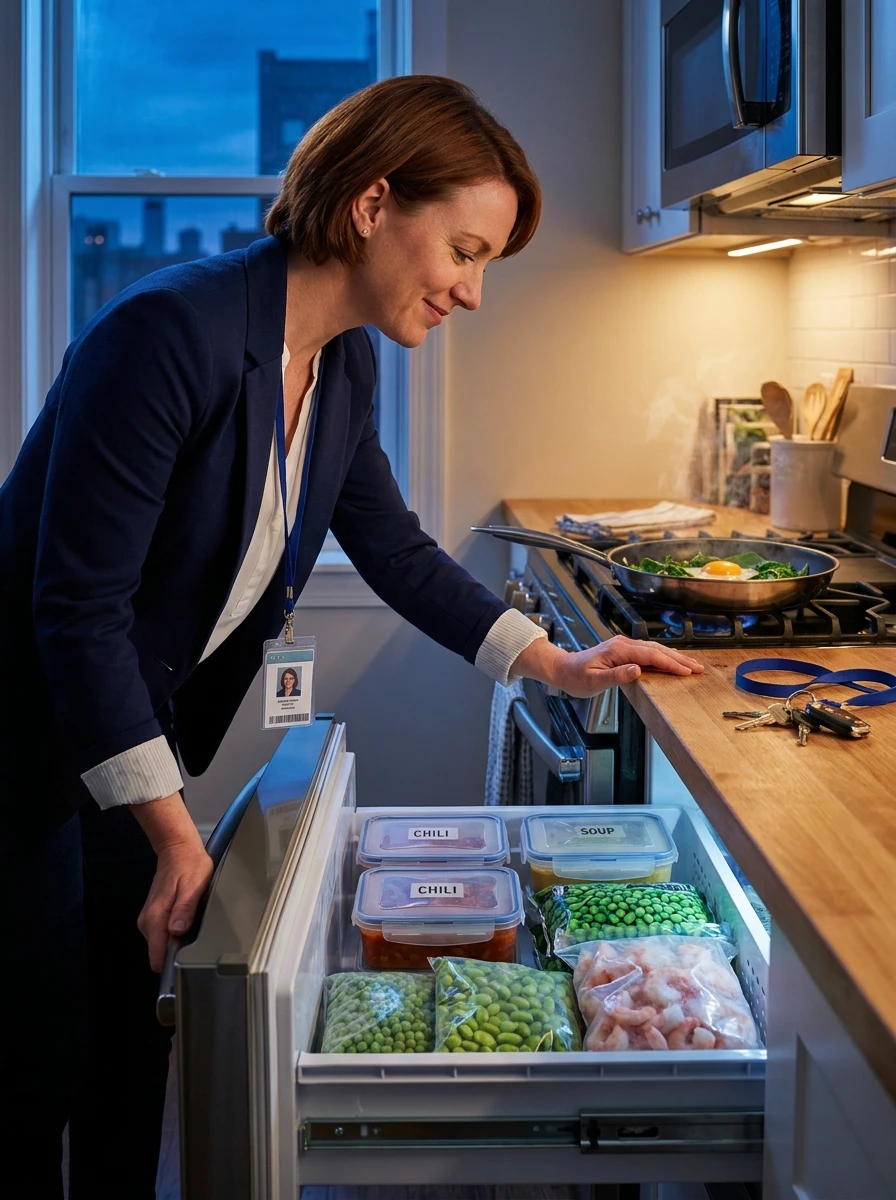
Have a Plan B ready before you need it: two or three freezer backup meals, one zero-cook dinner you can always make and a short list of decent takeout orders. Missing a prep block costs you a meal or two, and the rest of the week still holds.
- Freezer backups: double the chili on a good week and freeze it in single portions. Frozen soups and stews keep 2 to 3 months for best quality.
- The always-there dinner: eggs, a bag of salad and whole-grain toast. It takes 10 minutes, and you almost always have the ingredients.
- Your takeout shortlist: pick 2 or 3 local orders built around grilled protein and vegetables, and save them on your phone so you're not deciding while hungry.
If you're in perimenopause and want a ready-made sample menu, try our menopause diet 5-day plan.
Expert Commentary: What The Research Actually Shows
The evidence supports several healthy meal plans for women, not one. The strongest findings concern nutrient targets, food safety and sticking with a plan. The weakest concern is any single “best” diet for weight loss and precise protein timing.
Julia A. Wolfson, lead author of the Johns Hopkins home-cooking study, said that people who cook most of their meals at home “consume fewer carbohydrates, less sugar and less fat than those who cook less or not at all,” and that this held “even if they are not trying to lose weight.”
That last part matters if you're tired of dieting. Neither that study nor the French planning study proves cause and effect, because people who plan and cook may differ in other ways too.
- Strong: Iron, calcium, vitamin B12 and folic acid targets from the NIH and CDC, and the FoodSafety.gov storage times. These are established reference values.
- Moderate: Two randomized trials found little difference in 12-month weight loss between diet types. One also linked weight loss to self-reported adherence.
- Moderate: Meal planning and home cooking are linked with better diet quality in large observational studies (40,554 French adults; more than 9,000 U.S. adults). That's a link, not proof.
- Moderate: The Mediterranean pattern and heart health in women. The study was large and long (25,994 women, up to 12 years), but observational.
- Modest: The keto advantage for weight loss, which is real but small (about 0.9 kg) and comes with an LDL trade-off.
- Still emerging: Protein timing. The 25% muscle-synthesis result came from 8 people, and a 16-week trial in 43 women aged 20 to 44 found that protein distribution didn't change body composition during weight loss when total protein was the same. The daily target is the safer number to plan around.
- Still emerging: Claims that one diet suits your “type” based on genes or metabolism. DIETFITS tested two such markers and found neither predicted success.
The Contrarian Take: The Best Diet Is The One You’d Still Eat In Six Months
Choosing the “right” diet matters less than most diet books suggest. In trials comparing popular plans, results end up close together, and weight loss tracks how consistently people follow their plan.
In a 2005 JAMA trial, 160 adults with overweight or obesity and at least one heart-risk factor were randomly assigned to Atkins, Zone, Weight Watchers or Ornish. After a year, average weight loss ranged from 2.1 to 3.3 kg across the four groups.
The researchers found that weight loss was associated with how closely people said they followed their diet, whichever diet it was. Only 50% to 65% of each group completed the year.
The larger DIETFITS trial found the same pattern. It assigned 609 adults to a healthy low-fat or healthy low-carb diet, and weight change at 12 months was -5.3 kg versus -6.0 kg, a difference that wasn't significant. Neither genetics nor insulin levels predicted who would do better on which diet.
So if you've been diet-hopping, the more likely problem is a string of plans you couldn't live with, not a body that refuses to respond. That's a far easier problem to fix. It's why we steer clear of fad diets that don’t last, and why the 7-day plan above is built to bend instead of break.
Tired of starting a new diet every few weeks? Our free guide, 10 Actions That Support Permanent Weight Loss, covers the habits that make any healthy meal plan stick, with no restriction rules and no guilt. Get your free guide here and start building a plan you can keep.
The Bottom Line
Healthy meal plans for women over 40 don't have to look like a magazine spread. They have to cover your nutrient needs and still work at 7:40 p.m. on a Wednesday when you're tired and hungry.
Start by running your options through the F.I.T. Plan Test: does the plan fit your Food culture, your Intake needs for this stage of life and your Time? Then make it real with the 7-day plan: two zero-cook dinners, a few 15-minute meals and two 30-minute prep blocks.
Anchor every meal with protein, lean on beans, oats and vegetables for fiber, and change the sauces when the containers start to feel repetitive. Give your choice a fair few months before you judge it. The plan you'll still follow in six months is worth more than the one that looks best on paper.
Glossary Of Key Terms
- F.I.T. Plan Test: Our three-question filter for choosing a meal plan: does it fit your Food culture, your Intake needs and your Time? It's our own framework, not a clinical tool.
- 0-15-60 Tiers: A way to sort meals by hands-on time: zero-cook assembly meals, 15-minute one-pan meals and a 60-minute weekly prep budget split into two blocks.
- Healthy Eating Plate: Harvard's visual guide: half vegetables and fruit, a quarter whole grains, a quarter protein, plus healthy oils.
- Protein Anchor: The main protein food a meal is built around, such as eggs, fish, chicken, tofu, beans or Greek yogurt.
- Protein Distribution: How your daily protein is spread across meals, for example evenly over breakfast, lunch and dinner.
- Dietary Fiber: The part of plant foods your body doesn't digest. It supports fullness and digestion and is found in beans, oats, vegetables and fruit.
- Mediterranean Diet: An eating pattern based on vegetables, legumes, whole grains, fish, olive oil and nuts.
- Ketogenic (Keto) Diet: A very low-carb diet, usually 50 grams of carbs a day or fewer.
- Adherence: How closely and consistently you follow an eating plan over time.
- Perimenopause: The years leading up to menopause, when hormone levels rise and fall unevenly.
FAQ
What Is The Healthiest Meal Plan For Women Over 40?
There isn't one healthiest plan for every woman. Mediterranean, plant-based, higher-protein, lower-carb and flexible-plate plans can all be healthy. The best one covers your nutrient needs for this stage of life, includes protein at every meal and is one you can follow for months.
How Do I Choose A Healthy Meal Plan That Fits My Lifestyle?
Use the F.I.T. Plan Test. Check that the plan fits your Food culture, meets your Intake needs for your age and health, and suits the Time you have to shop and cook. If it fails any one of the three, pick another.
What Are Balanced Meals For A Healthy Lifestyle?
A balanced meal fills half your plate with vegetables and fruit, a quarter with protein and a quarter with whole grains or other carbs, plus a little healthy oil. This model works with almost every eating style, including the 7-day plan in this guide.
What Is An Easy Healthy Meal Plan For A Busy Week?
Sort meals by time. Keep two or three zero-cook dinners, such as rotisserie chicken wraps or a tuna and white bean salad, add a few 15-minute one-pan meals, and do two 30-minute prep blocks for lunches and breakfasts. That's about 60 minutes of prep for the whole week.
How Much Protein Should A Woman Over 40 Eat Per Meal?
The 2025-2030 Dietary Guidelines for Americans recommend 1.2 to 1.6 g of protein per kilogram of body weight a day. Spread over three meals, that's roughly 24 to 31 g per meal for a 130 lb woman and 31 to 41 g for a 170 lb woman. Check with your doctor first if you have kidney disease.
How Long Does Meal Prep Last In The Fridge?
Most cooked meat, poultry, soups and stews last 3 to 4 days in the refrigerator, according to FoodSafety.gov. Hard-cooked eggs last about a week. Freeze anything you won't eat within that window.
How Should My Meal Plan Change After 50?
After 50, women need more calcium (1,200 mg a day) and less iron (8 mg a day). Protein at every meal helps protect muscle. Many women also find that more fiber and steady meal times help with hunger.