Workout Nutrition Strategies For Women Who Want Real Results
Looking good and feeling good go hand in hand. If you have a healthy lifestyle, your diet and nutrition are set, and you're working out, you're going to feel good.
JASON STATHAM
Summary (TL;DR)
Workout nutrition comes down to two plates: a small carbohydrate-plus-protein plate 30–90 minutes before you train, and a protein-forward plate within about an hour after. Before your workout, favour easy-to-digest carbs (banana, oats, toast) with a little protein. After, aim for roughly 20–40g of high-quality protein: think Greek yogurt, eggs, chicken, tofu, or a whey shake, paired with carbs to refill what you burned.
In an informal survey of our WLBF newsletter community, 34% of respondents said they skip eating before a workout because they're afraid it will undo their calorie deficit. It won't. Under-fuelling usually backfires instead. This guide gives you the exact foods, portions, and swaps to stop guessing and start fuelling with confidence.
Want the science on WHEN to eat and how your menstrual cycle changes the answer? Read our companion piece: Should I Eat Before Or After Working Out As A Woman? This article focuses on the part that trips women up most: exactly WHAT to put on the plate.
What should women actually eat before and after exercise? The honest answer depends on your workout's intensity, your training goals, and how your body individually processes fuel, but the confusion most women feel standing in front of the fridge before a 6 am workout isn't a personal failing.
It's the result of a decade of generic, unisex fitness advice that never accounted for how women's bodies actually use food.
We built this guide to cut through that noise. Instead of vague "eat something healthy" advice, you'll get specific food lists, portion guides, and a simple framework (The Fuel Plate Method) that takes the decision-making out of workout nutrition entirely.
Medical & Referral Disclaimer
This article is for informational and educational purposes only. It is not a substitute for professional medical advice, diagnosis, or treatment. Always consult your physician or a qualified healthcare provider before starting any new diet or exercise program, particularly if you have a history of disordered eating, amenorrhea, diabetes, or another chronic health condition.
Key Takeaways
- Eat a small carb-plus-protein snack 30–90 minutes before training. Skip the high-fat, high-fibre foods that slow digestion.
- Prioritise 20–40g of protein within about an hour after your workout to support muscle recovery and lean muscle mass.
- Undereating before a workout doesn't protect your calorie deficit. It more often leads to a bigger appetite and lower-quality food choices later in the day.
- Hydration is part of workout nutrition, not separate from it. Aim to drink consistently before, during, and after exercise.
- Your fuel needs shift with the workout: a 20-minute walk and a 90-minute strength session are not the same nutritional event.
- Whole-food sources work as well as (or better than) supplements for the vast majority of women who aren't training for competition.
The Fuel Plate Method: A Simpler Way To Think About Workout Nutrition
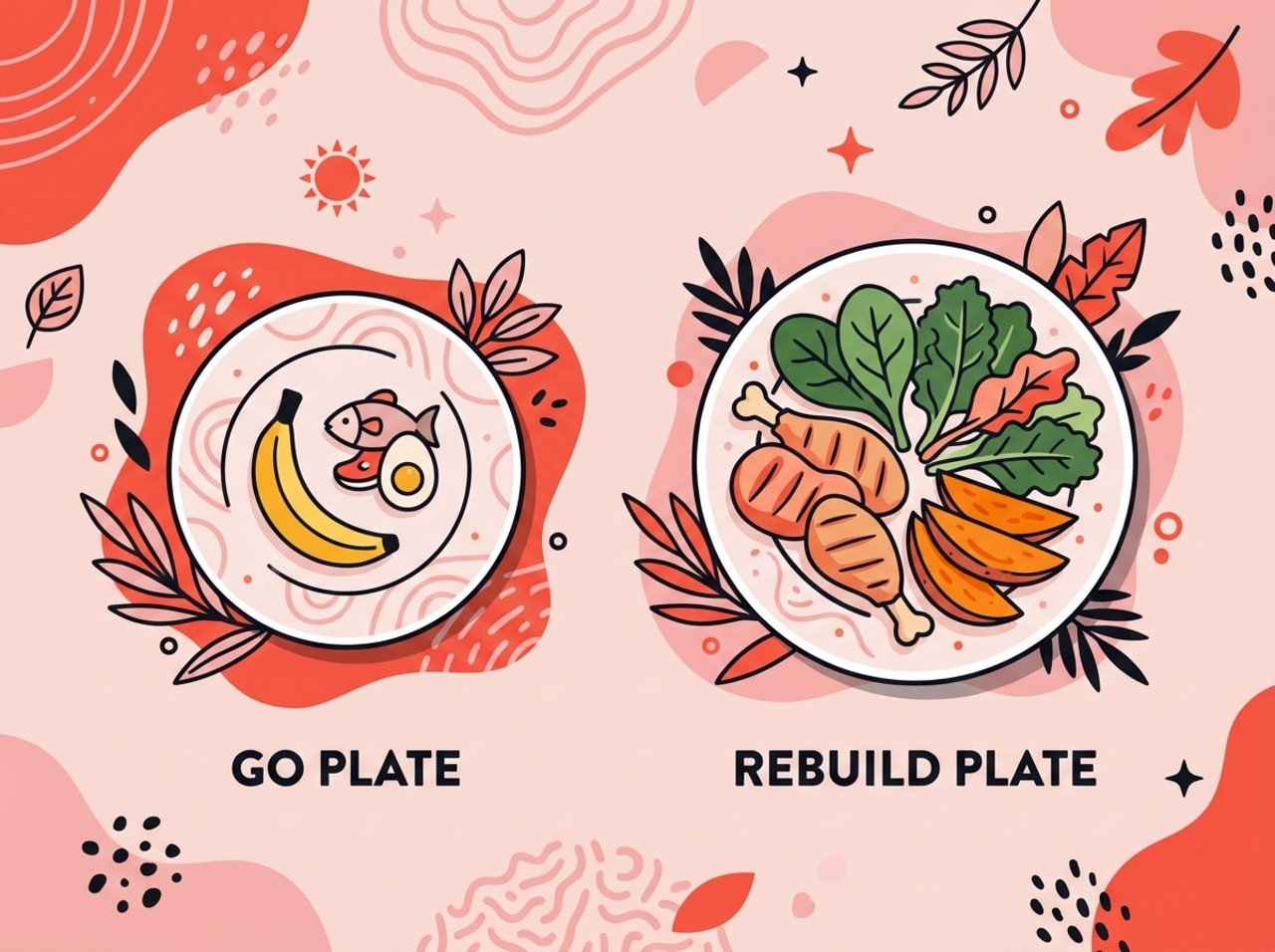
The Fuel Plate Method is a two-plate framework: a small "Go Plate" before your workout, and a fuller "Rebuild Plate" after it. Instead of memorising grams and timing windows, you build each plate from three simple food categories: a fast carbohydrate, a protein source, and (for the Rebuild Plate only) a slower carbohydrate to refill what you burned.
Most workout nutrition advice fails women for one of two reasons: it's either too vague ("eat balanced meals") to actually act on, or it's borrowed wholesale from male athlete research and dropped into a listicle with no context for a woman doing a 45-minute strength session around a full-time job and a household to run.
The Fuel Plate Method exists to close that gap. It's built around the foods and portions that fit real schedules, not lab conditions.
Do You Need To Track Macros For This To Work?
No. For most women, whole-food portion guides work just as well as precise macro tracking. Macro tracking has its place if you're training for a specific event or competition, but for everyday fitness nutrition, weighing every gram often creates more anxiety around food than it solves.
If you already track macros and enjoy it, every number in this guide translates directly into grams and totals. If you don't, treat each table here as a portion guide, not a homework assignment.
This matters because one of the most common reasons women abandon workout nutrition altogether is that it starts to feel like a second job stacked on top of an already full life. A banana is still a good pre-workout snack whether or not you've logged its exact carbohydrate count.
Pre-Workout Nutrition: What To Eat Before You Train
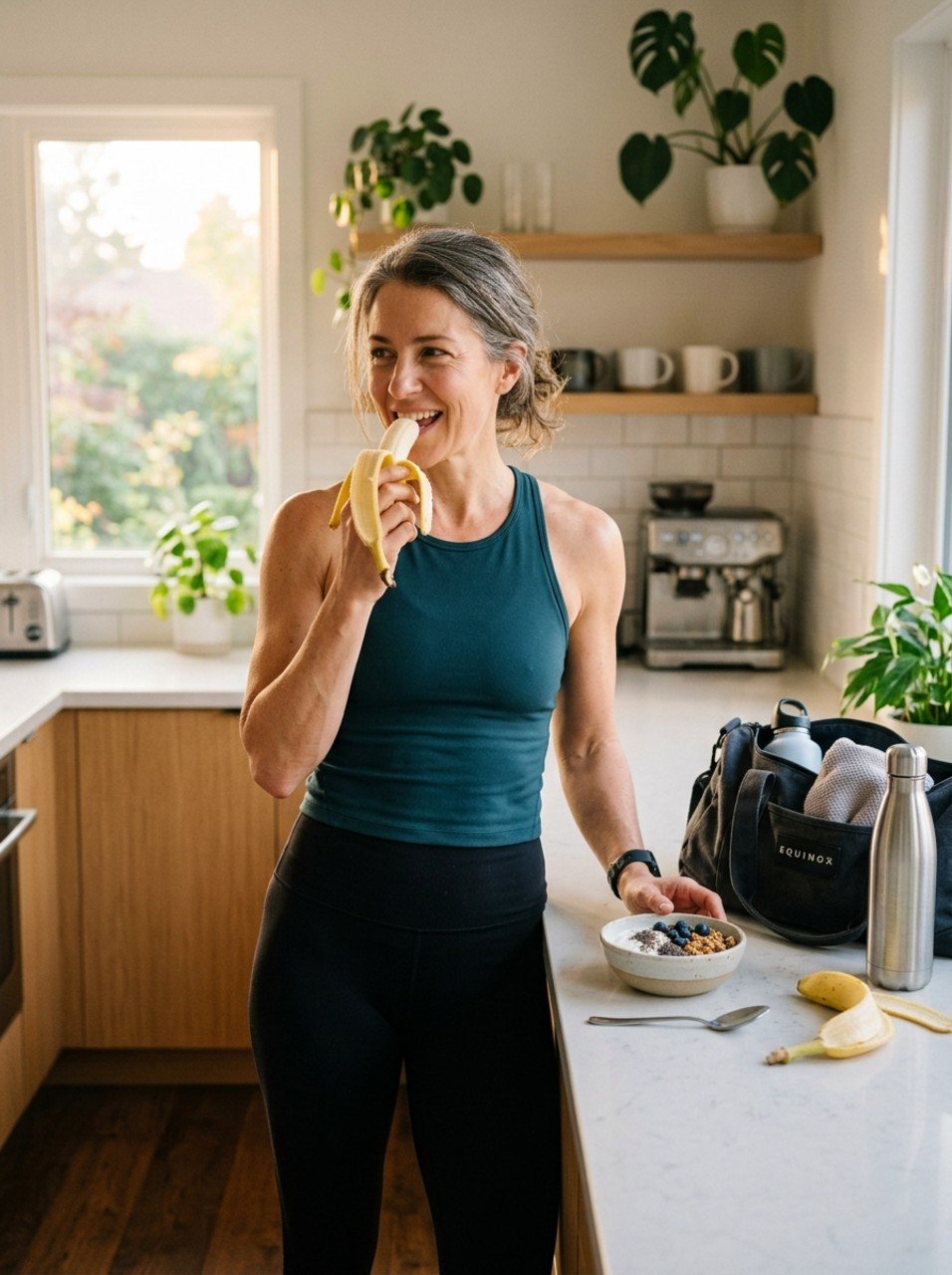
Before you train, your goal is simple: top up your blood sugar without weighing yourself down. The Mayo Clinic's exercise nutrition guidelines recommend eating one to three hours before a workout, even ahead of sustained, high-intensity sessions, and favouring easily digestible carbohydrates the closer you get to your start time.
Build Your Pre-Workout Plate
Use this table to build your Go Plate (the Fuel Plate Method's pre-workout plate): pick one option from each relevant column based on how much time you have before training.
| Food Category | Great Options | Portion Guide | Why It Works |
|---|---|---|---|
| Fast Carbohydrate | Banana, applesauce, a few dates, rice cakes | ~15–25g carbohydrate | Digests quickly, tops up muscle glycogen without causing a mid-workout stomach ache |
| Light Protein | Greek yogurt, a hard-boiled egg, a small scoop of whey | 10–15g protein | Gets amino acids circulating before you even start moving |
| Foods To Limit Beforehand | Fried food, large amounts of fibre, heavy cream sauces | N/A | High fat and fibre slow digestion, which can cause bloating or nausea mid-session |
Quick Grab-And-Go Pre-Workout Snacks
If you have 30–60 minutes before training, any of these combos deliver the carb-plus-light-protein balance your muscles want:
- Half a banana with a tablespoon of nut butter.
- A small cup of Greek yogurt with a handful of berries.
- Two rice cakes with a thin layer of honey.
- A slice of wholemeal toast with a scraping of jam.
- A small handful of dried fruit and a few almonds.
For a plant-based version of every option above, see our full vegan diet tips for fitness guide, which covers plant-based pre- and post-workout swaps in more depth.
What If You're Not Hungry Before A Workout?
If you're not hungry, a few sips of water and a small piece of fruit are enough. You don't need a full meal to train safely.
But if you're consistently skipping food before training because you're worried it will "undo" your calorie deficit, it's worth pausing on that belief specifically, because it's one of the most common, and most counterproductive, patterns we see.
Post-Workout Nutrition: What To Eat After You Train
After training, your body is primed to use protein and carbohydrates for repair and recovery. This is the single highest-leverage meal of your workout nutrition plan.
The International Society of Sports Nutrition's position stand on nutrient timing found that ingesting a 20–40g dose of high-quality protein every three to four hours most favourably supports muscle protein synthesis and improved body composition outcomes.
The Protein-Carb Refuel Table
This is your Rebuild Plate. Use a rough 3:1 carbohydrate-to-protein ratio after training, as recommended by sports nutritionists interviewed by Women's Fitness UK. Use more carbs after longer or harder sessions, less after a short walk.
| Protein Source | Approx. Protein Per Serving | Carbohydrate Source | Approx. Carbs Per Serving |
|---|---|---|---|
| Chicken breast (100g) | ~30g | Sweet potato (medium, baked) | ~24g |
| Greek yogurt (170g) | ~15–18g | Banana (medium) | ~27g |
| Two large eggs | ~12g | Cooked oats (1/2 cup dry) | ~27g |
| Cottage cheese (1/2 cup) | ~14–15g | Cooked brown rice (1 cup) | ~45g |
| Whey or plant protein shake (1 scoop) | ~20–25g | Berries (1 cup) | ~15g |
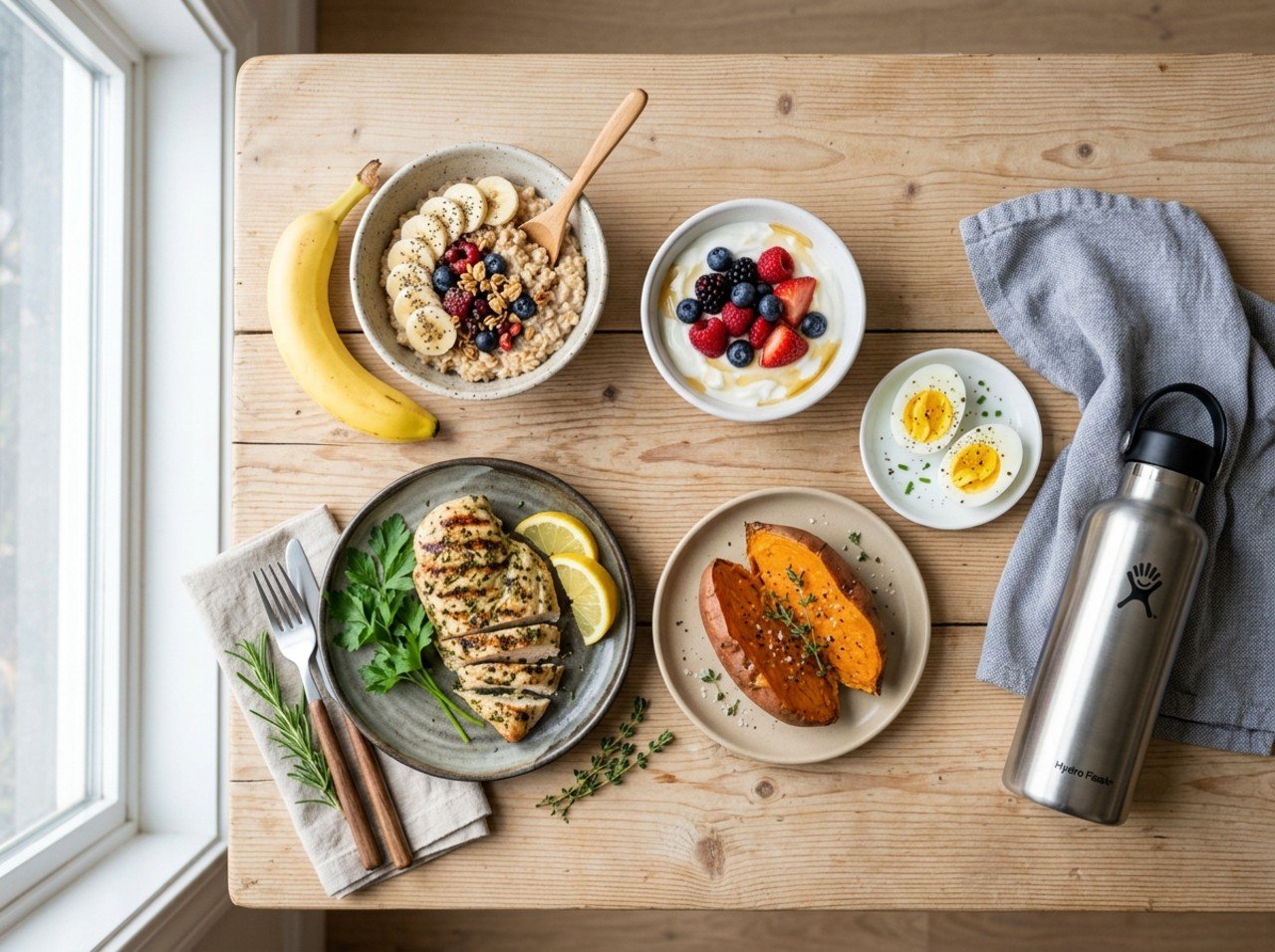
Post-Workout Meals And Snacks For Real Life
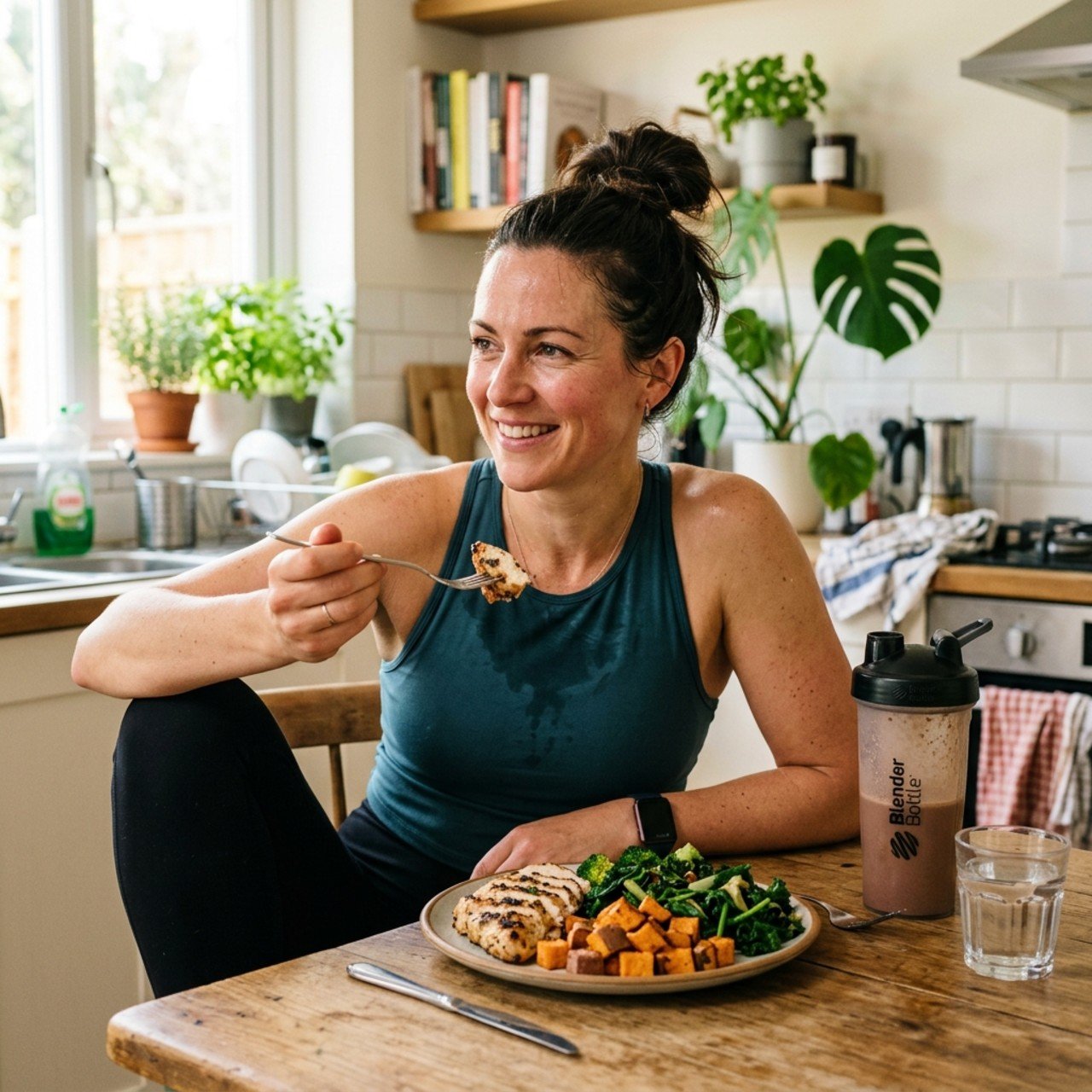
- Grilled chicken with roasted sweet potato and greens.
- A protein smoothie with banana, spinach, and whey or pea protein.
- Greek yogurt with berries and a drizzle of honey.
- A whole-grain wrap with turkey, hummus, and vegetables.
- Tofu stir-fry with brown rice, for a plant-based option (see our vegan fitness nutrition guide for more).
How Much Protein Do You Actually Need?
Most active women benefit from roughly 1.2–2.0g of protein per kilogram of bodyweight per day, according to the Mayo Clinic, which says most research suggests very active people need noticeably more than the 0.8g/kg minimum that's designed for sedentary adults, not women actively building or preserving lean muscle mass.
A 2024 narrative review published in the peer-reviewed journal Physiologia looked specifically at post-menopausal women and found evidence is still limited, but suggests these women should aim for at least the standard RDA of 0.8g/kg/day, and that how protein is distributed across meals may matter as much as the daily total, supporting the case for a dedicated protein dose after training rather than saving it all for dinner (Matkin-Hussey, 2024).
Hydration: The Most Overlooked Piece Of Workout Nutrition
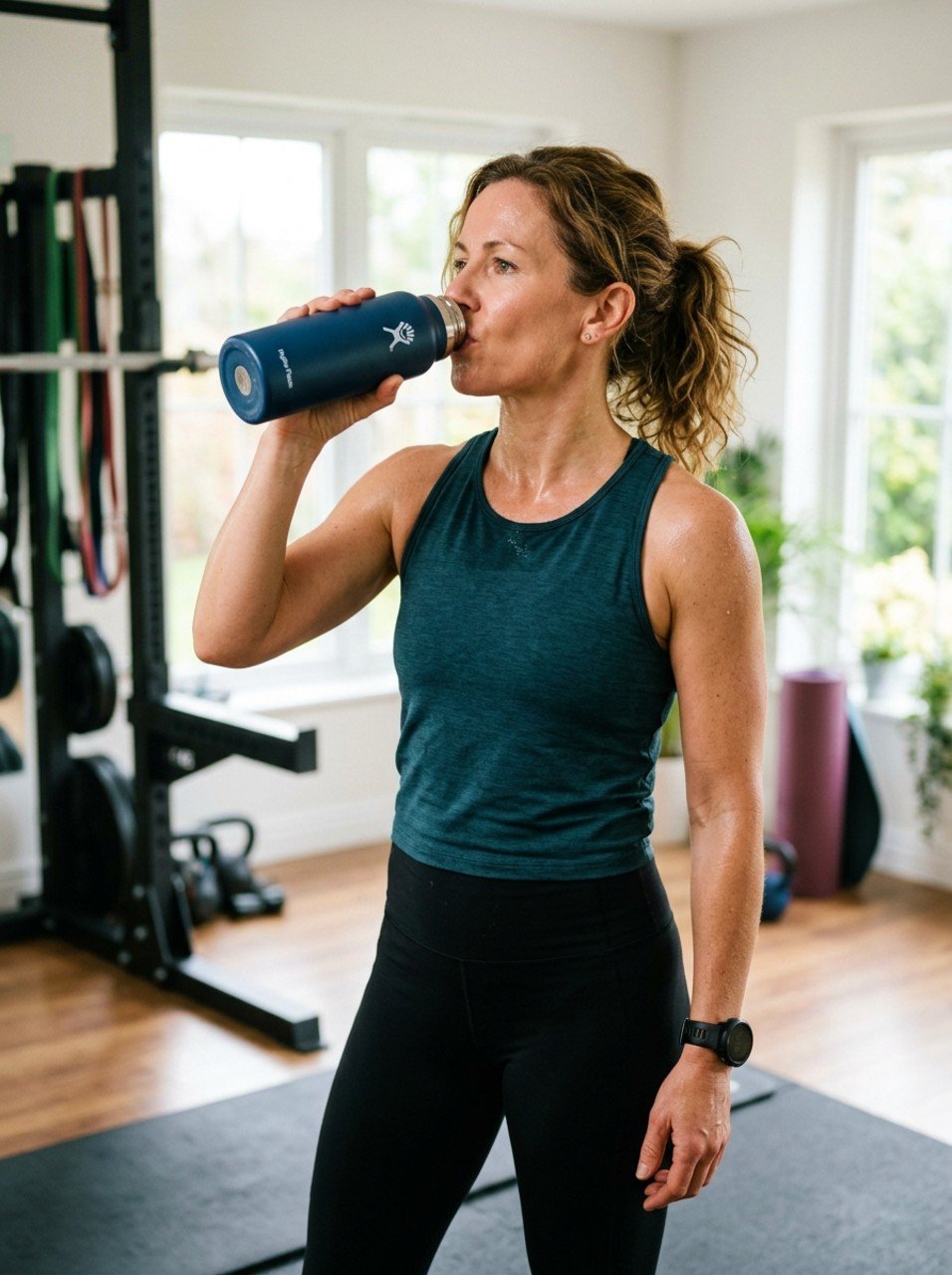
Hydration isn't separate from workout nutrition. It's the delivery system for everything else you eat. The Mayo Clinic notes it's important to drink water before, during, and after a workout, and to increase intake further in hot or humid conditions.
- Drink water consistently throughout the day, not just around your workout. By the time you feel thirsty, you're already mildly dehydrated.
- For workouts under an hour, water alone is usually sufficient.
- For sessions longer than 60–70 minutes at high intensity, the ISSN nutrient timing position stand recommends consuming carbohydrate at roughly 30–60g per hour in a 6–8% carbohydrate-electrolyte solution, taken every 10–15 minutes throughout the session.
- See our full guide on how much water you should drink for a daily hydration breakdown beyond exercise days.
Fueling By Workout Type: One Size Doesn't Fit All
A 20-minute walk and a 90-minute strength session are two different nutritional events, and your plate should reflect that. Use this table as a quick reference for adjusting the Fuel Plate Method to what you're actually doing that day.
| Workout Type | Pre-Workout Focus | Post-Workout Focus |
|---|---|---|
| Short, easy (walk, light yoga, under 30 min) | Optional. Water is often enough | Your next regular meal is fine |
| Strength training | Light carb + protein, 30–90 min prior | 20–40g protein within an hour to support muscle repair |
| HIIT / high-intensity intervals | Fast carb, minimal fat or fibre | Protein plus a moderate carb to replenish glycogen |
| Long endurance (over 60 min) | Full balanced meal 2–3 hours prior | Higher carb ratio (closer to 3:1 or 4:1 carb-to-protein) plus electrolytes |
Why Eating Enough Isn't "Cheating" On Your Diet
Skipping food before a workout to "save" calories almost always backfires. It doesn't protect your deficit; it just moves the eating (and often overeating) later in the day.
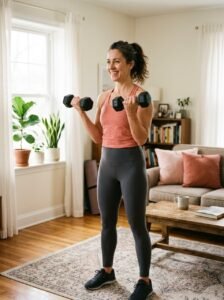
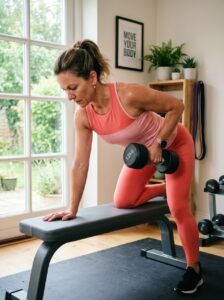
In an informal survey of our WLBF newsletter subscribers, 34% told us they don't eat before working out specifically because they're afraid it will undo their calorie deficit. It's an understandable fear, but it's built on a misunderstanding of how energy balance actually works over a full day, not a single hour.
Chronic under-fuelling around exercise is also a documented physical risk, not just a psychological one. Hospital for Special Surgery's Women's Sports Medicine Center describes what happens when energy intake is consistently too low relative to activity, a pattern called Relative Energy Deficiency in Sport, or RED-S, which can disrupt hormones, menstrual cycles, and bone density over time.
If you've ever felt intimidated walking into the gym without eating, then felt shaky, foggy, or unusually hungry for the rest of the day, that's your body telling you the "skip it" strategy isn't working in your favour.
The confusion here is real, and it's not your fault. Fitness culture has spent years treating food as something to earn or apologise for around a workout. Reframing food as the input that lets your workout actually produce results is often the single biggest mindset shift that unlocks consistent progress.
There's also a practical energy-levels argument for eating properly around exercise, separate from the psychology. Training on an empty tank tends to show up as a workout that feels harder than it should, a slower recovery the next day, and a nagging fatigue that follows you into the rest of your afternoon.
None of that supports a metabolism boost. If anything, chronic under-fuelling is one of the more reliable ways to feel like your metabolism has stalled, because your body starts prioritising energy conservation over performance. Eating enough, at the right times, is what allows your body to treat exercise as a signal to adapt and get stronger, rather than a threat to guard against.
If you've been putting off a workout because you're not sure what to eat first, or you've cut your portions so small before training that you're running on fumes by the second set, that's a solvable problem, not a discipline problem. Start with one plate from the tables below, and build from there.
Join Our Mailing List
Join thousands of women inside our community and receive our free guide, 10 Actions That Support Permanent Weight Loss — the exact behavioural shifts that make the difference between a two-week attempt and a lasting transformation.
No restriction plans. No guilt. Just what actually works — for real women with real lives.
Ready to put this into practice without second-guessing every meal? Grab our free guide, 10 Actions That Support Permanent Weight Loss. It turns everything in this article into a simple daily checklist, so you're never standing in the kitchen at 6 am wondering if the banana is a good idea.
Related Articles
The Bottom Line
Workout nutrition for women doesn't need to be complicated: a small carbohydrate-and-protein snack before training, and a protein-forward meal or shake within about an hour after, covers the vast majority of what your body needs.
Adjust the size of each plate based on the workout type and length, stay ahead of your hydration rather than reacting to thirst, and let go of the idea that eating before exercise works against your goals.
The research, and the 34% of our own community who've felt this fear, both point the same direction: fuel the work, and the results follow.
Glossary Of Key Terms
FAQ
A small snack combining a fast carbohydrate (like half a banana) with a little protein (like a spoonful of Greek yogurt) is enough. Eating before your workout doesn't undo a calorie deficit. It helps you train harder and preserve muscle, which supports fat loss more effectively than training on empty. Women trying to lose weight often assume skipping this snack saves calories, but it more commonly leads to overeating later in the day once hunger catches up.
Greek yogurt with fruit, a protein shake, hard-boiled eggs, cottage cheese, or grilled chicken with vegetables all deliver the 20–40g protein range that supports muscle recovery after exercise. Choose whichever option is easiest to have ready within about an hour of finishing your session, since consistency matters more than finding the "perfect" post-workout food.
Yes. Carbohydrates before exercise fuel your muscles and brain so you can train at the intensity needed to see results; total daily calorie balance, not the presence of carbs around your workout, determines weight loss. Cutting carbs specifically around training tends to reduce workout quality without meaningfully changing your overall calorie intake for the day.
Fresh fruit with nut butter, oatmeal with plant milk and chia seeds, or a rice cake with mashed avocado all provide the fast-digesting carbohydrate your muscles want. See our full vegan fitness nutrition guide for more options, including plant-based post-workout protein sources like tofu, tempeh, and lentils.
For most sessions under an hour, drinking water consistently before, during, and after is enough. For longer or more intense sessions, consider a carbohydrate-electrolyte drink to replace what you're sweating out, particularly in hot or humid conditions where fluid losses climb faster than usual.
It's better to eat a larger, balanced meal two to three hours before training, then keep anything closer to your start time small and easy to digest, to avoid bloating or discomfort mid-session. A heavy, high-fat meal eaten right before exercise is one of the most common causes of sluggish, uncomfortable workouts.
Keep simple staples on hand: bananas, individual Greek yogurt cups, and a protein shaker with your preferred powder. None of them requires prep, and all of them cover the basics of the Fuel Plate Method, so a busy week doesn't have to mean skipping workout nutrition altogether.
You Know Why. Now Learn Exactly How
Join thousands of women inside our community and receive our free guide: 10 Actions That Support Permanent Weight Loss — the practical, sustainable habits that translate everything you just read into real, lasting results.
No fad diets. No extreme plans. Just what the research actually supports — written for real women.