
Achieve Your Goals With The Fitness Trends For Women Actually Worth Your Time

The mind is the most important part of achieving any fitness goal. Mental change always comes before physical change.
MATT MCGORRY
Summary (TL;DR)
The fitness trends for women that actually matter in 2026 have moved away from novelty and toward substance: wearable technology that tracks recovery instead of just steps, hormone-aware strength training for perimenopause and menopause, interval walking backed by a real clinical study, and HIIT-style boxing. Two of our original 2023 predictions, metaverse wellness and VR workouts, never became mainstream, and we’ve replaced them below with what the data actually shows women are doing instead.
We first published this list in 2023, when metaverse fitness and VR workouts were being pitched everywhere as “the future.” They weren’t.
Rather than quietly deleting the evidence, we’re showing you exactly what happened, and replacing those predictions with what the 20th annual American College of Sports Medicine (ACSM) Worldwide Fitness Trends Survey, ACE Fitness’s 2026 report, and real Google search data confirm women are actually doing right now.
If you’ve felt a flicker of intimidation or confusion every time a new “must-try” workout trend crosses your feed, you’re not alone, and you’re not behind. Most fitness trends are noise. A handful are signal. This guide separates the two.
This isn’t a list of everything trending. It’s a shorter list of what’s trending, backed by real research and survey data from thousands of exercise professionals, and what actually fits a woman’s changing body in her 30s, 40s, 50s, and beyond.
Medical & Referral Disclaimer
This article is for informational and educational purposes only. It is not a substitute for professional medical advice, diagnosis, or treatment. Always consult your physician or a qualified healthcare provider before starting any new exercise program, especially if you are pregnant, managing a chronic condition, or navigating perimenopause or menopause.
Key Takeaways
- Wearable technology is the #1 fitness trend worldwide for the 20th year running, according to a survey of 2,000+ exercise professionals, and in 2026 it’s tracking recovery and hormone patterns, not just steps.
- Two of our 2023 predictions (metaverse wellness, VR workouts) never went mainstream. We show you exactly what replaced them and why.
- Interval walking, alternating fast and slow paces on foot, is backed by a real clinical study on 246 midlife and older adults, the majority of them women, and searches for it grew nearly 3,000% in a single year.
- Menopause- and hormone-aware strength training is now a named priority for major fitness organizations, not a niche request.
- Every trend below includes what it actually costs you in time and gear so that you can choose based on your life, not FOMO.
What Actually Happened To Our 2023 Predictions
Of our original seven 2023 predictions, five held up: e-bikes, boxing, the 12-3-30 workout, wearable technology, and Pilates fusion are all still current in 2026. Two didn’t: metaverse wellness and VR workouts never reached mainstream adoption and don’t appear on a single major 2026 trend report we checked.
| 2023 Prediction | Status In 2026 | What Replaced It | Why |
|---|---|---|---|
| Metaverse Wellness | Did not materialize | Menopause- & Hormone-Aware Strength Training | Neither the American College of Sports Medicine (ACSM) nor ACE Fitness lists metaverse fitness anywhere in their 2026 reports; women’s health and hormone-informed programming is named explicitly in both. |
| VR Workouts | Niche, not mainstream | Interval (“Japanese”) Walking | VR fitness never cracked ACSM’s top 10; interval walking searches grew nearly 3,000% in a year and rest on an actual clinical study. |
| E-Bikes | Still current | – | Remains a legitimate low-impact cardio option, though no longer a “hot new” trend. |
| Boxing | Still current | – | Confirmed by continued high search interest and its overlap with HIIT, still a top-ranked trend category. |
| The 12-3-30 Workout | Still current | – | Endorsed by Cleveland Clinic as a legitimate, if intense, cardio option in 2026. |
| Wearable Technology | Still current, and now #1 | – | Ranked the top fitness trend worldwide for 20 consecutive years by the ACSM survey. |
| Pilates Fusion | Still current | – | Confirmed by Cleveland Clinic and the broader 2026 shift toward built-in recovery work. |
We’re showing you this full table on purpose. It would be easy to quietly swap the two dead predictions and pretend we always knew. We didn’t. Fitness trend forecasting is not a perfect science, and honesty about what missed is part of what makes the rest of this list worth trusting.
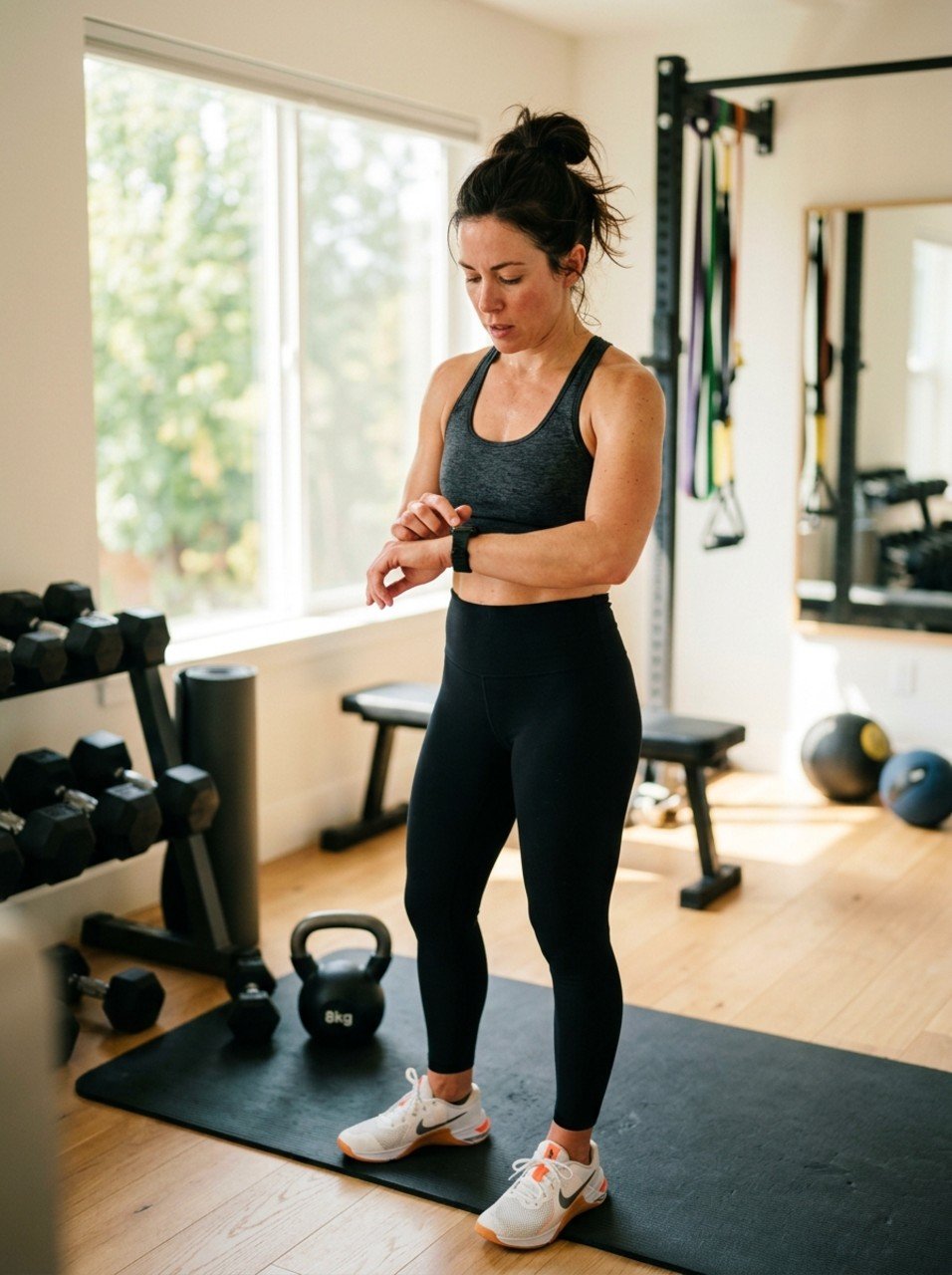
The 7 Fitness Trends For Women Actually Worth Your Time In 2026
The seven fitness trends for women with real 2026 evidence behind them, in order of current relevance, are wearable technology, menopause-aware strength training, interval walking, boxing, the 12-3-30 workout, Pilates fusion, and e-bikes.
1. Wearable Technology & AI-Powered Coaching
Wearable technology is the #1 fitness trend in the world for the 20th year running, according to the 2026 ACSM Worldwide Fitness Trends Survey of over 2,000 clinicians, researchers, and exercise professionals. In 2026, devices have moved past step-counting into tracking heart rate variability, sleep quality, and recovery scores, and AI is starting to adjust your workout in real time based on that data.
This is a two-decade trend, not a new hype cycle, now backed by genuinely useful data. For women in particular, tracking metrics beyond weight and steps, like resting heart rate trends across a cycle, or sleep disruption during perimenopause, turns a vague feeling of “something’s off” into something you can actually see and act on.
Wearables have also pulled exercise apps and virtual, on-demand class platforms into the same ecosystem. The AI layer handles the programming; a growing number of women are pairing that with real human coaches for the sessions where a person, not an algorithm, makes the difference. That combination, often called a hybrid fitness program, is quietly becoming the norm rather than the exception.
From Mary: I started wearing a fitness tracker a few years ago mostly out of curiosity. I wanted to know what was actually happening to my sleep and energy, not just what the scale said. What surprised me wasn’t the step count. It was noticing that the days I felt most “off” almost always followed a night my resting heart rate never fully settled. That’s not a willpower problem. It’s data you can plan around.
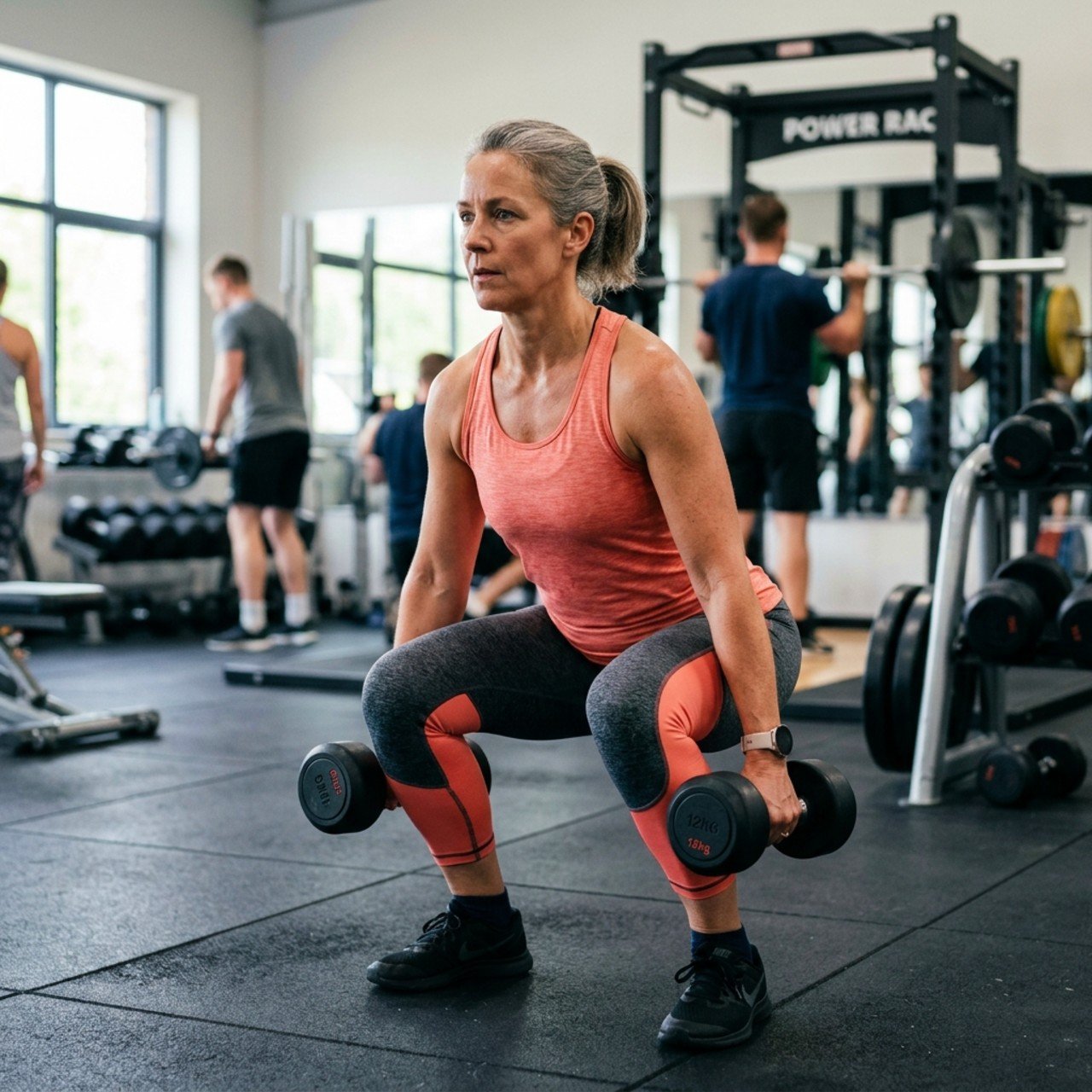
If data overwhelm is part of what’s held you back from a wearable, you don’t need to track everything at once. Start with one metric, sleep or resting heart rate, and ignore the rest of the dashboard for the first month.
2. Menopause- & Hormone-Aware Strength Training
Hormone-aware strength programming, workouts designed around perimenopause and menopause rather than a generic 25-year-old’s routine, is named as a top 2026 trend by ACE Fitness’s 2026 expert advisory board, which points to bone health, muscle preservation, and hormone-informed programming as a mainstream priority rather than a niche request.
This is the trend we’re proudest to see finally get named. For years, “women’s fitness” content was just men’s fitness content with a pink logo. Strength needs, recovery time, and injury risk genuinely change through perimenopause and menopause. Training that ignores those changes works against your biology, not with it.
From Mary: The single most common message I hear inside our community isn’t “how do I lose weight faster.” It’s some version of “why doesn’t anything work the way it used to.” That question isn’t a discipline failure. It’s hormones changing the rules mid-game. If you’ve felt that frustration, our full guide to strength training for women in perimenopause walks through exactly how to adjust.
If you’re also navigating supplement claims aimed at this life stage, we’ve separately broken down what actually works and what’s a waste of money.
3. Interval Walking (The “Japanese Walking” Method)
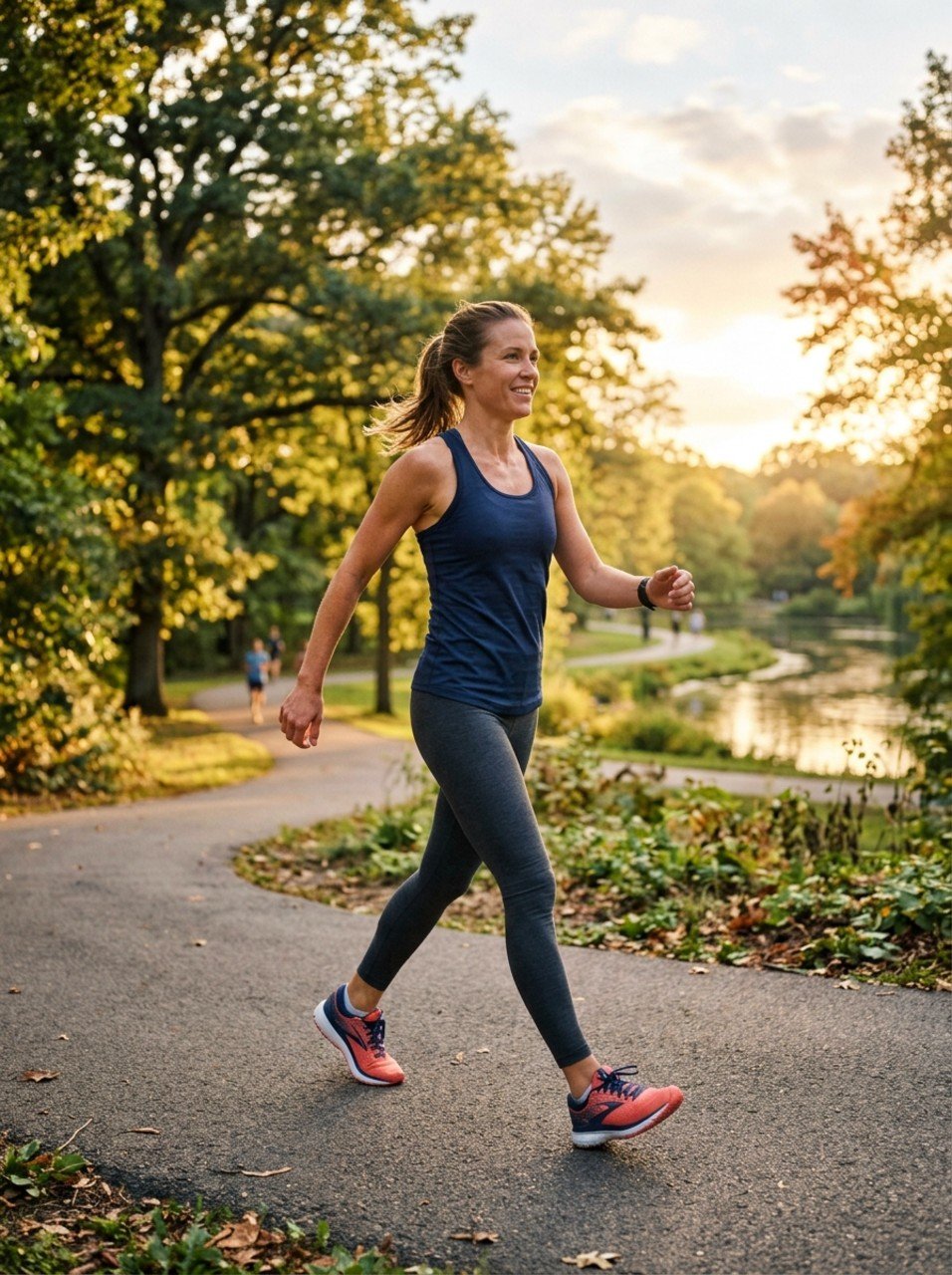
Interval walking, three minutes of brisk walking followed by three minutes of easy walking, repeated for about 30 minutes, is one of the fastest-growing fitness trends of the decade, with search interest up nearly 3,000% in a single year according to Google search data from PureGym’s UK Fitness Report, reported by Athletech News. It’s built on a real clinical study, not a TikTok invention.
Japanese researchers first tested this exact protocol in a trial of 246 middle-aged and older adults, the majority of them women, and published the results in a peer-reviewed 2007 study on interval walking training. The high-intensity interval walking group saw meaningfully greater gains in leg strength and aerobic capacity, and a larger drop in blood pressure, than the group who walked at a steady, moderate pace.
From Mary: When interval walking started showing up everywhere, my first instinct was scepticism. I’ve watched enough fitness fads blow up and vanish to be cautious of anything that spreads that fast on social media. But the format itself is worth doing regardless of the trend cycle: you don’t need a new workout, just a change in the intensity of the walk you’re already taking.
This is one of the simplest entries on this list to try, and it directly answers a real concern: no equipment beyond good shoes, no gym intimidation, and a study population that actually reflects women in midlife rather than 20-something athletes.
4. The Boxing Revolution (HIIT, Without The Gym Intimidation)
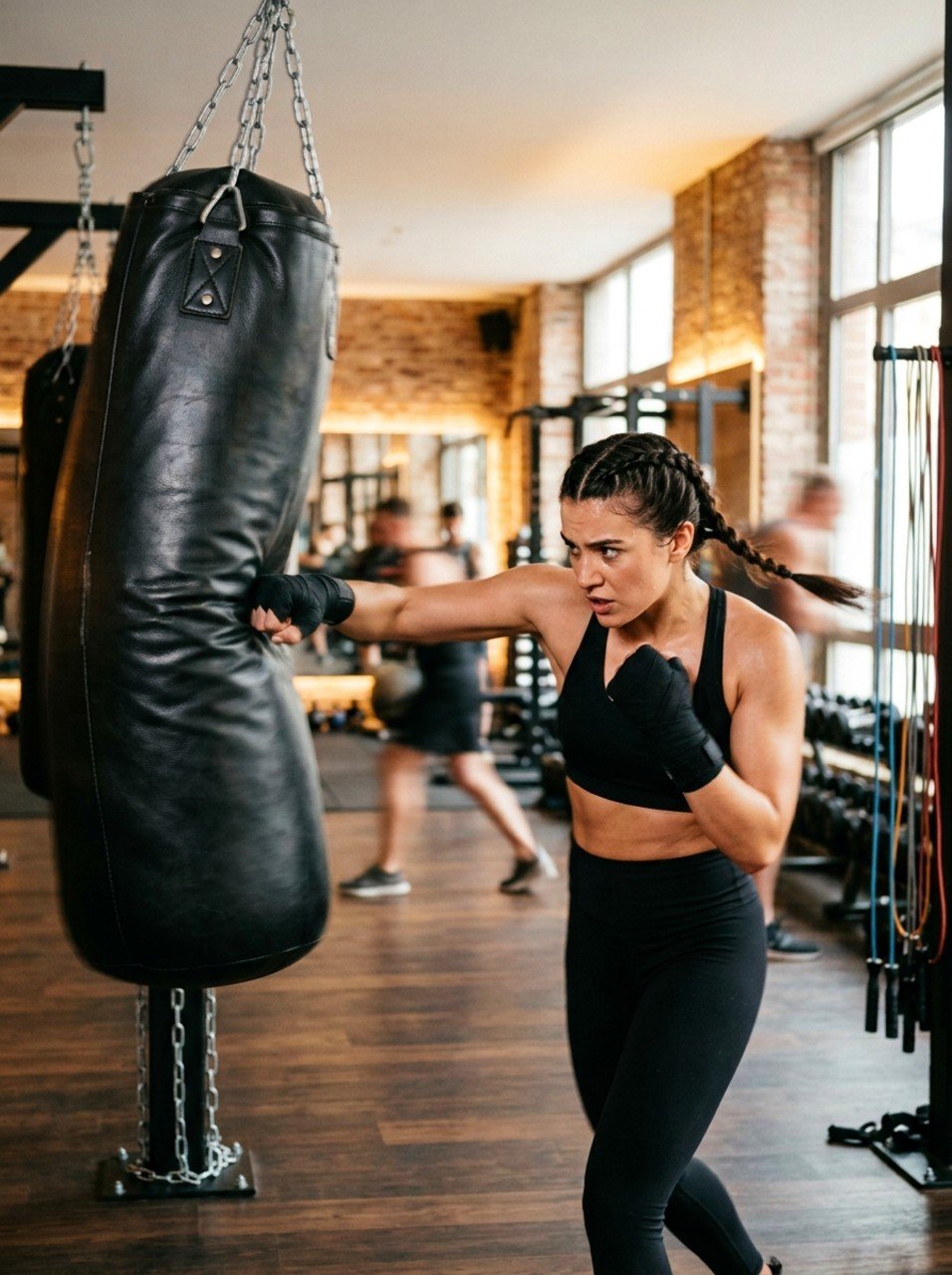
Boxing-based workouts remain one of the most effective and popular ways women access high-intensity interval training (HIIT) without stepping into a traditional weights area, combining cardiovascular conditioning, full-body strength work, and stress relief in one session.
If the phrase “HIIT class” brings up a flash of dread - the crowded gym floor, feeling like everyone else already knows what they’re doing - boxing formats tend to sidestep that.
The format is structured around rounds, combinations, and a bag, which means less improvisation and less of the self-consciousness that keeps a lot of women out of open-floor HIIT classes altogether.
Most women also try boxing in a group class setting, and that shared energy, other women pushing through the same round, matters as much as the workout itself for actually sticking with it.
This is also where functional strength training shows up on this list without needing its own separate slot: a boxing combination is a compound, multi-joint movement that mirrors real-life pushing, twisting, and bracing. Many boxing programs also weave in callisthenics between rounds: bodyweight squats, push-ups, planks, and the upright, guarded stance the sport demands do double duty for posture.
5. The 12-3-30 Walking Workout
The 12-3-30 workout, a treadmill set to a 12% incline, 3 mph, for 30 minutes, remains a legitimate, if demanding, cardio option in 2026, according to Cleveland Clinic, which notes the incline nearly doubles the calorie burn of flat-surface walking.
It’s low-impact on the joints but genuinely demanding on the lungs and legs. Cleveland Clinic’s own exercise physiologist calls it “on the harder side” and recommends starting at a lower incline and building up rather than attempting the full 12-3-30 on day one. That’s a useful permission slip if you’ve tried it once, found it brutal, and assumed you were doing it wrong.
6. Pilates Fusion & Recovery-Focused Movement
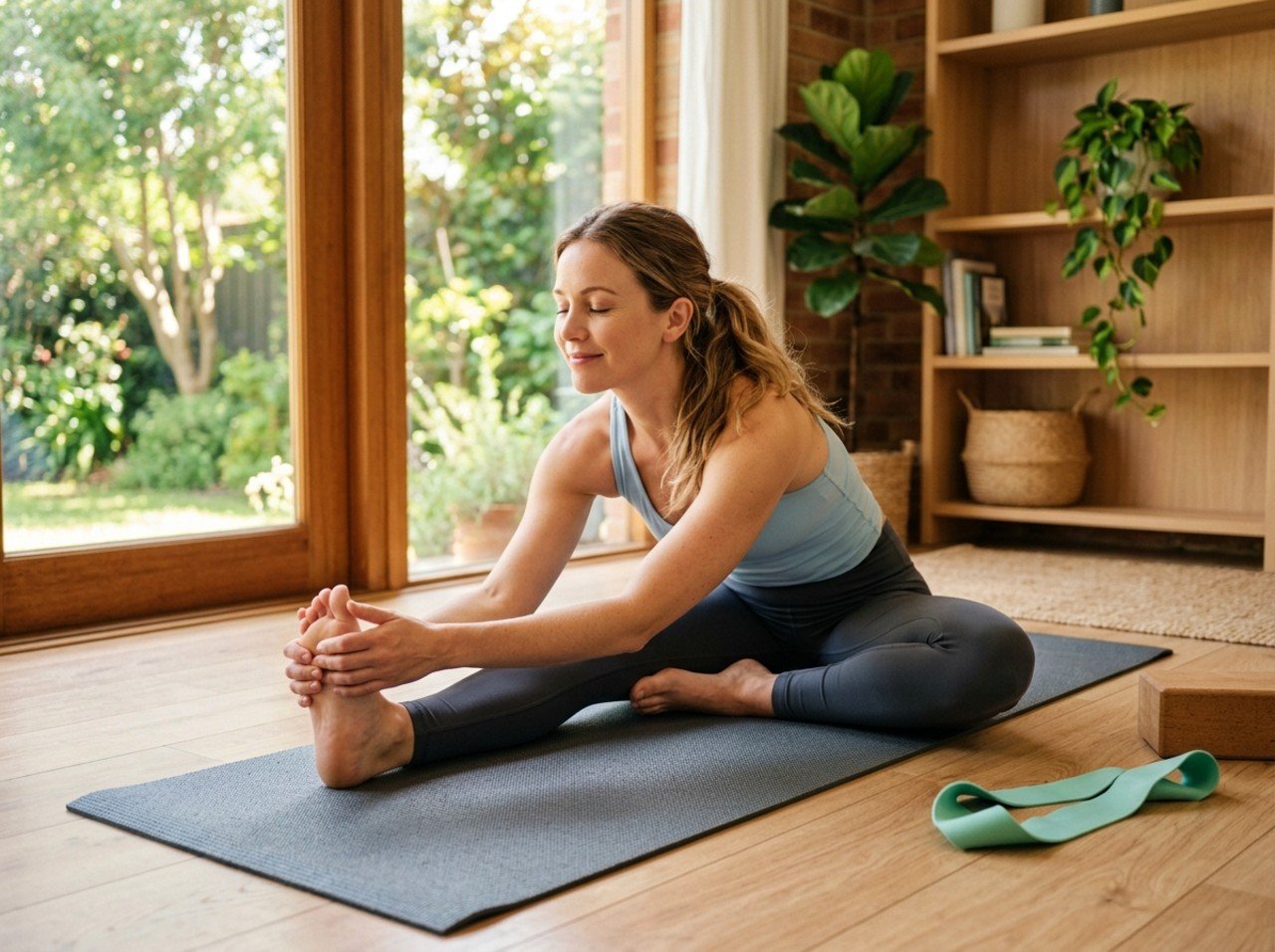
Pilates fusion, blending Pilates with light strength work, yoga, or mobility drills, continues to grow alongside a broader 2026 shift toward built-in recovery, with Cleveland Clinic highlighting its core-strengthening, posture-improving, low-impact benefits for people returning to fitness after injury or a long break.
What’s new for 2026 isn’t Pilates itself. It’s the growing understanding that recovery isn’t optional. Both major 2026 trend reports we reviewed named recovery (sleep, stretching, mobility work) as a required part of a training plan, not an afterthought squeezed in if time allows.
Pilates fusion’s slow, breath-led pacing also makes it a natural entry point into a more holistic wellness routine, one that treats sleep, stress, and movement as one connected system instead of three separate boxes to check. It’s also one of the easiest trends to build into a home gym: a mat, a light resistance band, and a couple of hand weights cover most fusion routines, no studio membership required.
7. E-Bikes & Low-Impact Cardio Commuting
E-bikes remain a practical way to combine transportation with low-impact cardiovascular exercise, particularly appealing to women who want consistent movement without the joint strain of running or the time cost of a dedicated gym session.
This is the one 2023 prediction that’s aged into “quietly useful” rather than “exciting new trend.” It no longer tops anyone’s buzziest-trend list, but it’s still a legitimate way to fold movement into a day that doesn’t have room for anything labeled “workout.”

Fitness Trends For Women At A Glance
| Trend | Best For | Time Commitment | Equipment Needed |
|---|---|---|---|
| Wearable Tech & AI Coaching | Women who want data before changing habits | Ongoing, passive | Tracker, smartwatch, or fitness app |
| Menopause-Aware Strength Training | Women in perimenopause or menopause | 2 to 3 times per week | Dumbbells or gym access |
| Interval Walking | Beginners and time-crunched women | 30 minutes, 4 times per week | Supportive walking shoes only |
| Boxing | Women who want structured HIIT and community | 45 to 60 minutes, 2 to 3 times per week | Gloves, wraps, bag access |
| 12-3-30 Workout | Women who enjoy a clear, measurable challenge | 30 minutes, 3 to 5 times per week | Treadmill |
| Pilates Fusion | Recovery, injury return, core strength, posture | 2 to 4 times per week | Mat, light home gym equipment optional |
| E-Bikes | Commuting and cardio combined | Daily, as transport | E-bike |
Trends come and go, but the habits that actually change how you look and feel don’t depend on which one you pick this year.
Join thousands of women inside our community and grab our free guide, 10 Actions That Support Permanent Weight Loss: the practical, sustainable habits that translate everything above into real, lasting results, whether you try one trend on this list or none of them. Click Here To Get Your Free Guide.
The Bottom Line
You don’t need all seven of these. You need the one or two that fit the life you actually have, not the life an influencer has. If you’re short on time, interval walking asks almost nothing of your schedule or your wallet.
If you’re navigating perimenopause and feel like your old routine has stopped working, hormone-aware strength training addresses the actual cause, not just the symptom.
And if a trend feels intimidating, treat that as useful information about fit, not a verdict on your fitness level: pick the option that removes the intimidation rather than pushing through it. The right supportive shoes or sports bra will do more for your consistency than any piece of activewear marketed as “motivating.”
The larger lesson from our own 2023-to-2026 track record: trends that solve a real problem, recovery, hormone changes, accessible cardio - tend to stick. Trends that solve a marketing problem, like metaverse fitness or VR workouts, tend to fade. Filter every new “must-try” through that question, and you’ll waste a lot less time chasing fads.
Glossary Of Key Terms
- 12-3-30 Workout: A specific treadmill routine involving a 12% incline, a speed of 3 mph, for 30 minutes, designed for high-intensity, low-impact cardio.
- ACSM (American College of Sports Medicine): A professional organization that conducts a widely cited annual survey of fitness professionals to identify global exercise trends.
- Hormone-Aware Strength Training: Exercise programming specifically designed to account for changes in bone density, muscle retention, and recovery times during perimenopause and menopause.
- Hybrid Fitness Program: A training model that integrates wearable technology and AI-driven data with human coaching to create a personalized exercise experience.
- Interval Walking: A protocol, also known as the "Japanese Walking Method," that alternates between three-minute bursts of fast and slow walking to improve aerobic capacity.
- Metaverse Wellness: A failed fitness trend that attempted to move exercise into virtual reality environments; it was replaced by more substance-based, physical health priorities.
- Pilates Fusion: A workout modality that combines traditional Pilates core work with elements of yoga, light strength training, or mobility drills to emphasize recovery.
- Recovery Scores: Data points provided by wearable technology that measure how well a body has rested, often based on heart rate variability and sleep quality.
- Resting Heart Rate (RHR): A metric used by fitness trackers to monitor cardiovascular health and stress levels; patterns in RHR can indicate when a workout should be adjusted.
- Wearable Technology: Smart devices like watches or rings that track physiological data, ranked as the top fitness trend for twenty consecutive years as of 2026.
FAQ
What Are The Hottest Fitness Trends For Women Right Now?
The fitness trends for women with the strongest 2026 evidence behind them are wearable technology, hormone-aware strength training for perimenopause and menopause, interval walking, and HIIT-style boxing. All four appear on major 2026 industry trend reports and are backed by real usage or clinical data, not just social media buzz.
Why Is Wearable Technology The #1 Fitness Trend Among Professionals?
Wearable technology has topped the ACSM Worldwide Fitness Trends Survey for 20 consecutive years because it gives women concrete, personal data, sleep quality, heart rate trends, and recovery scores, instead of generic advice, making it easier to adjust training to what your body needs on a given day.
What Is Interval (“Japanese”) Walking, And Does It Actually Work?
Interval walking alternates three minutes of brisk walking with three minutes of easy walking for about 30 minutes. It’s backed by a peer-reviewed study of 246 middle-aged and older adults that found greater improvements in leg strength, aerobic capacity, and blood pressure compared with steady-paced walking.
Why Are Menopause- And Hormone-Aware Strength Programs Gaining Traction?
Menopause-aware strength programs are gaining traction because hormonal changes during perimenopause and menopause directly affect muscle retention, bone density, and recovery time, and generic strength programs built for younger bodies often don’t account for those differences.
Whatever Happened To VR And Metaverse Fitness Trends?
VR and metaverse fitness never reached mainstream adoption. Neither appears in the 2026 ACSM or ACE Fitness trend reports, and cost, equipment friction, and motion discomfort kept adoption niche rather than widespread, a pattern worth remembering the next time a heavily marketed trend claims to be “the future of fitness.”
Is HIIT Still Effective, And How Does Boxing Fit In?
Yes. HIIT remains one of the most time-efficient ways to improve cardiovascular fitness and metabolic health. Boxing-based workouts deliver a HIIT-style structure, rounds of intense effort with short rests, while also building functional, full-body strength, which is why it remains a consistently popular format for women.
How Do I Choose Which Fitness Trend Is Actually Right For Me?
Start with the problem you actually have, not the trend that’s loudest online: choose interval walking or e-bikes if time and simplicity matter most, hormone-aware strength training if you’re navigating perimenopause or menopause, and boxing or the 12-3-30 workout if you want a structured, measurable challenge.