
The Real Benefits Of Outdoor Workouts, According To The Research

No, we don’t need more sleep. It’s our souls that are tired, not our bodies. We need nature. We need magic. We need adventure. We need freedom.
Brooke Hampton ‧ Author of Bleeding Ink
Summary (TL;DR)
The benefits of outdoor workouts go well beyond fresh air. A 2024 study found people rate the same workout intensity as noticeably easier when they do it outdoors instead of on a machine indoors – which may explain why outdoor exercise feels more sustainable, not just more scenic.
A 143-study meta-analysis links time in green space to lower cortisol, lower blood pressure, and reduced disease risk, while a separate dose-response study found mood and self-esteem improve regardless of how long the session runs – even a short walk counts.
Add a free vitamin D top-up from sunlight and a documented immune-function boost from moderate outdoor activity, and the case for training outside is stronger than most fitness content gives it credit for.
Have you ever laced up your shoes for an outdoor workout, stepped outside, and then quietly gone back in? Maybe it was the thought of neighbours watching you attempt lunges in the driveway.
Maybe it was not knowing where to even start – a park, a trail, your own street – or the nagging worry that without air conditioning and a mirror, you’d somehow do it “wrong.” That hesitation is common, and it is not a sign that outdoor exercise isn’t for you. It is usually a sign that no one has actually explained how to start.
Here is what the research shows, and it runs counter to a lot of fitness folklore: outdoor exercise does not just add scenery to your workout – it appears to change how hard that workout feels, independent of how hard your body is actually working.
A 2024 study published in PLOS ONE found that cyclists rated identical physiological effort as meaningfully easier when performed outdoors versus on an indoor ergometer at the same heart rate. That is not a placebo dressed up as science – it is a measured shift in perceived exertion, and it may be one of the most underrated reasons outdoor workouts tend to stick when gym memberships don’t.
We will walk through the physical and mental health benefits of green exercise, how much you actually need, an original framework for easing in without the intimidation, how to adapt your routine through every season, and which outdoor workouts are worth your time depending on your goals.
Medical & Referral Disclaimer
This article is for informational and educational purposes only. It is not a substitute for professional medical advice, diagnosis, or treatment. Always consult your physician or qualified health provider before starting any new diet or exercise program.
Key Takeaways
- Outdoor exercise can feel easier at the same real effort. A 2024 PLOS ONE study found perceived exertion was lower outdoors than indoors at matched physiological intensity – measured intensity outdoors was actually 19–30% higher than what participants predicted based on how hard it felt.
- Green space lowers cortisol and blood pressure. A 2018 meta-analysis of 143 studies linked greater greenspace exposure to lower salivary cortisol, lower heart rate, lower diastolic blood pressure, and reduced all-cause mortality risk.
- You don’t need a long session to feel a mood benefit. Research on green exercise “dose” found mood and self-esteem improvements occurred regardless of session length, with exercise near water producing an even bigger lift.
- Sunlight delivers a free vitamin D top-up. The NIH notes roughly 5 to 30 minutes of midday sun exposure, several times a week, is typically enough for most people to support vitamin D synthesis.
- Moderate outdoor activity supports immune function. 150 to 300 minutes of weekly moderate activity is linked to stronger infection defences – though exhaustive, prolonged exercise can temporarily do the opposite.
- The barrier is rarely fitness – it’s intimidation. Starting smaller and more privately than feels necessary is usually the actual fix, not finding more willpower.

What Are The Real Benefits Of Outdoor Workouts?
The real benefits of outdoor workouts are physiological and psychological: lower perceived effort, lower stress hormones, better mood regulation, a free vitamin D source, and stronger immune function.
Together, they make outdoor exercise easier to sustain than most indoor alternatives – not just more scenic.
Why Outdoor Exercise Feels Easier Even When It Isn’t
Outdoor exercise often feels less demanding than indoor exercise at the same physiological intensity, according to a 2024 study published in PLOS ONE.
Researchers had cyclists exercise both outdoors and on an indoor ergometer at matched heart rate and oxygen consumption. At 67% heart rate reserve, participants’ perceived breathing effort dropped from 14.0–14.2 indoors to 12.6 outdoors, and perceived leg effort dropped even more, from 14.0–14.2 indoors to 11.5 outdoors.
When the researchers compared what intensity people predicted based on how hard the workout felt against what they were actually doing, the real outdoor intensity was 19 to 30% higher than perceived. The study authors attribute this to the “higher degree of external stimuli in the field” – scenery, sounds, and changing terrain – that appears to distract from internal fatigue signals.
This matters more than it sounds. Sustainable fat loss outdoors isn’t about a workout that burns marginally more calories once – it’s about one you’ll actually repeat. A workout that feels easier for the same real effort is one you're more likely to do again next week.
Green Exercise Lowers Cortisol And Blood Pressure
Green exercise – physical activity in natural settings – is linked to measurably lower stress hormones and better cardiovascular markers than exercise indoors.
A 2018 systematic review and meta-analysis in Environmental Research, pooling 143 studies on greenspace exposure across roughly 100 health outcomes, found greater greenspace exposure was linked to lower salivary cortisol, reduced heart rate, lower diastolic blood pressure, improved heart rate variability, and meaningfully lower all-cause and cardiovascular mortality risk, along with a lower incidence of type 2 diabetes.
A related, more specific line of research on “forest bathing” (shinrin-yoku) – structured, mindful time in wooded environments – found in a 2019 meta-analysis in the International Journal of Biometeorology that salivary cortisol dropped significantly in forest settings compared with urban ones, both before and after the intervention (p < 0.01) – though the authors are honest that some of this effect likely reflects relaxation and placebo response alongside the physiological one, not a single isolated mechanism.
If cortisol-related weight gain is already something you’re managing through diet, pairing that work with a genuinely lower-cortisol form of movement is a logical complement, not a coincidence. For the fuller picture of how movement affects brain chemistry beyond cortisol alone, our guide to the mental health benefits of exercise covers the endorphin and serotonin side of this equation in more depth.
Sunshine Delivers A Free Vitamin D And Energy Boost
Outdoor exercise comes with a built-in nutritional bonus: sunlight exposure on skin triggers vitamin D synthesis, no supplement bottle required.
The National Institutes of Health notes that roughly 5 to 30 minutes of midday sun exposure to the arms, legs, or back, a couple of times a week, is typically enough for most people to support adequate levels – though the NIH is also clear that individual needs vary by skin tone, latitude, season, and age, and that sun protection still matters given UV radiation’s role in skin cancer risk.
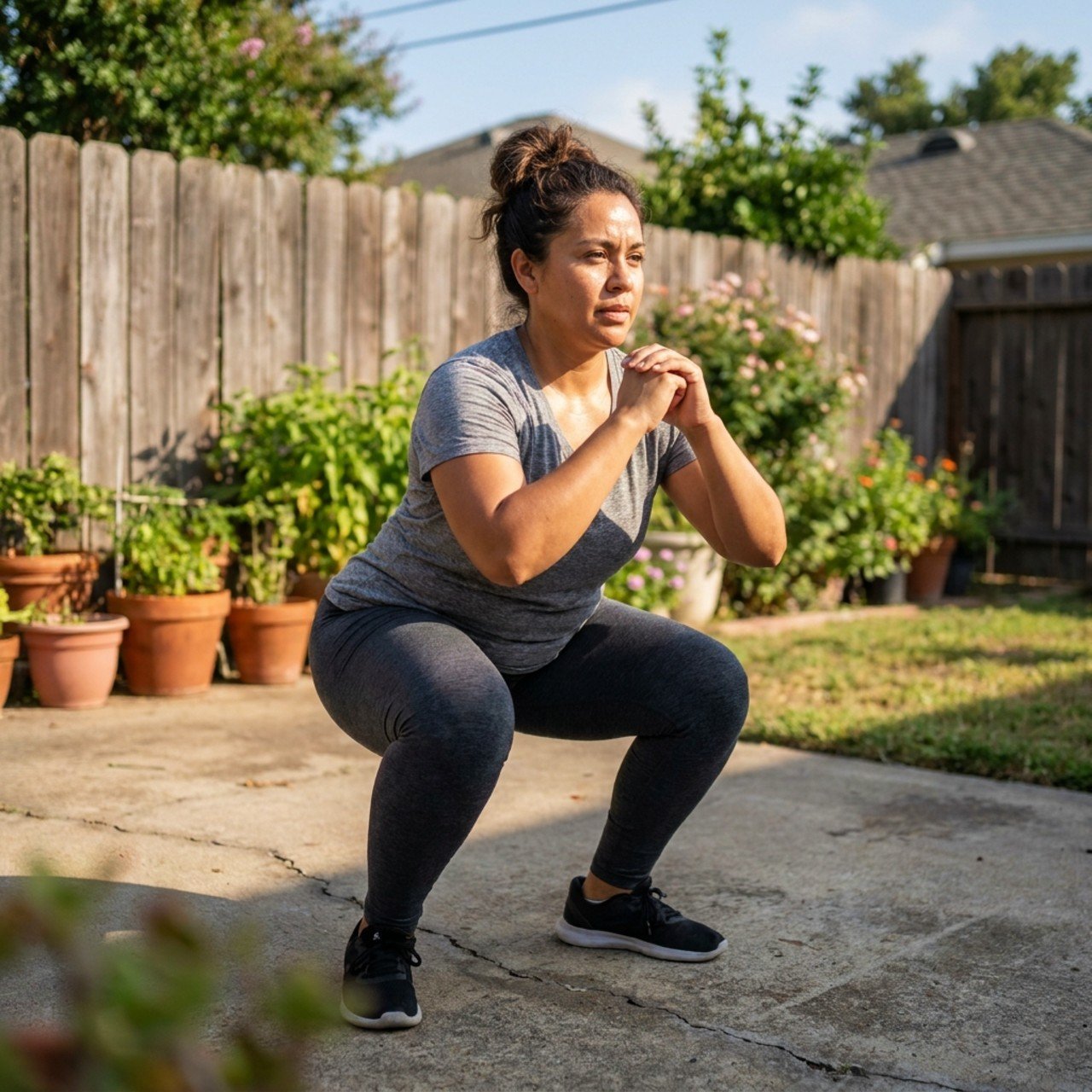
A brisk outdoor walk or workout during daylight hours is a genuinely efficient way to get both movement and that vitamin D top-up in the same 20 minutes.
Outdoor Movement Strengthens Your Immune System
Regular, moderate-intensity outdoor activity supports immune function rather than suppressing it – a distinction that matters, because not all exercise affects immunity the same way.
A 2025 narrative review in Frontiers in Immunology found that 150 to 300 minutes of weekly moderate-intensity activity enhances immune cell function, strengthens anti-infection capacity, and improves natural killer cell activity and antibody production – and is linked to a lower risk of upper respiratory tract infections.
The flip side is worth knowing too: exhaustive, prolonged exercise can trigger temporary immunosuppression lasting 3 to 72 hours, which is one more reason a moderate, consistent outdoor fitness routine tends to outperform occasional all-out efforts.
| Factor | Typical Indoor Gym Session | Outdoor Workout |
|---|---|---|
| Perceived effort at matched intensity | Higher (per 2024 PLOS ONE data) | Meaningfully lower – same work, feels easier |
| Cortisol / stress hormone impact | Neutral to mildly reduced | Measurably reduced, per green-space meta-analysis |
| Vitamin D exposure | None | Free with 5–30 minutes of midday sun |
| Mood and self-esteem boost | Present, well documented | Present, amplified further near water |
| Cost / accessibility | Membership or equipment required | Free – sidewalk, park, or backyard |
| Weather dependency | None | Requires seasonal adaptation (see below) |

How Much Green Exercise Do You Actually Need?
You do not need a long session outdoors to see a mental health benefit – the research suggests mood and self-esteem improvements show up regardless of how long you stay out there.
A 2010 multi-study analysis in Environmental Science & Technology examining green exercise “dose” found that mood improved across both light and vigorous activity levels, with no single duration required before the benefit showed up – even a short session counts.
Two findings from that same analysis are worth building into your outdoor fitness routine on purpose:
- Exercising near water amplifies the effect. The presence of water – a lake, river, coastline – produced greater improvements in mood and self-esteem than green space alone, across all participants studied.
- The self-esteem boost is strongest early, but real for everyone. Younger participants showed the largest self-esteem gains, with the effect gradually diminishing with age – but people managing existing mental health challenges showed some of the biggest improvements of anyone in the analysis.
- Consistency, not duration, is the lever worth pulling. If you only have 10 minutes, a short outdoor session is not a consolation prize – it is a legitimate, evidence-backed dose.
The Outdoor Confidence Ladder: A Framework For Starting Without The Intimidation
Most outdoor-workout content assumes you already feel comfortable moving in public. If the actual barrier is intimidation – not fitness – the fix is not a harder workout plan; it’s a lower-visibility entry point that builds confidence before it asks for exposure.
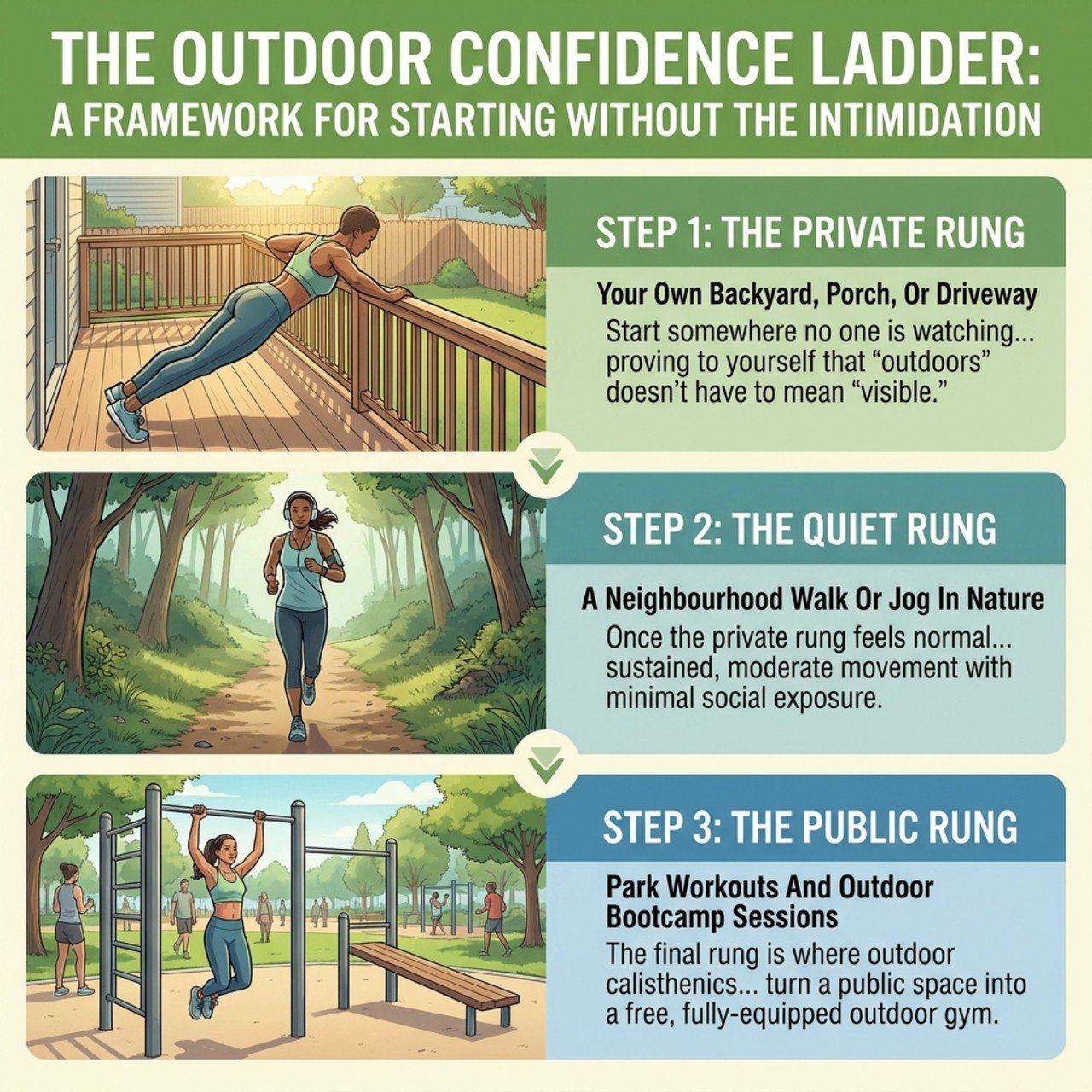
We call this the Outdoor Confidence Ladder, and it works because each step only asks for slightly more than the one before it – a small-commitment approach that behavioural psychology research consistently finds outperforms an all-or-nothing plan you’ll want to quit.
Step 1: The Private Rung – Your Own Backyard, Porch, Or Driveway
Start somewhere no one is watching. A driveway, a backyard, or even a balcony is a legitimate place for a 10-minute bodyweight circuit – squats, step-ups, incline push-ups against a wall or railing. The goal here isn’t the workout itself; it’s proving to yourself that “outdoors” doesn’t have to mean “visible.”
Step 2: The Quiet Rung – A Neighbourhood Walk Or Jog In Nature
Once the private rung feels normal, move to a low-traffic street, a quiet trail, or an early-morning jog in nature before the neighbourhood is fully awake. This is where fresh air cardio starts doing real work – sustained, moderate movement with minimal social exposure, building both fitness and the habit of simply being outside.
Step 3: The Public Rung – Park Workouts And Outdoor Bootcamp Sessions
The final rung is where outdoor callisthenics, a bodyweight park workout on public equipment, or a group outdoor bootcamp session come in.
By this point you’ve already proven the workout itself to your own body twice over – this step is only asking you to do the same movements somewhere less private, which is a far smaller leap than starting here would have been.
Park workouts for women have grown for a reason: pull-up bars, benches, and open grass turn a public space into a free, fully-equipped outdoor gym.

Getting Past The Excuses That Keep You Indoors
If the reasons you haven’t started sound less like “I don’t have time” and more like a quiet sense of dread, that is worth naming honestly – because the fix is different depending on which one it actually is.
- “I’m worried people will watch me.” Start at Step 1 of the Confidence Ladder above. Nobody builds outdoor exercise motivation by starting at the hardest, most visible version of it.
- “I don’t know where to even go.” Your own street counts. So does a school track after hours, or the parking lot loop at a local park. You’re not choosing wrong – you’re overthinking the entry point.
- “The weather ruins my plans constantly.” This is a real, solvable problem, not a character flaw – see the seasonal breakdown below for exactly how to plan around it instead of being derailed by it.
- “I’m not fit enough for outdoor terrain.” Uneven ground is more forgiving than it sounds – walking counts, and slower is still outdoor exercise. If gym intimidation is part of what’s driving you outdoors in the first place, that instinct is a reasonable one to follow.
- “I lose motivation without someone else involved.” You’re not the only one – our guide on staying consistent without a workout partner covers this exact gap.
Outdoor Workouts Through Every Season
I’ll be honest about something most outdoor-fitness content skips entirely: the season is usually what actually derails an outdoor workout routine, not motivation. I’ve seen it happen the same way over and over – someone starts strong in spring, a single freezing or scorching session catches them unprepared, and the whole habit quietly stops rather than adapts.
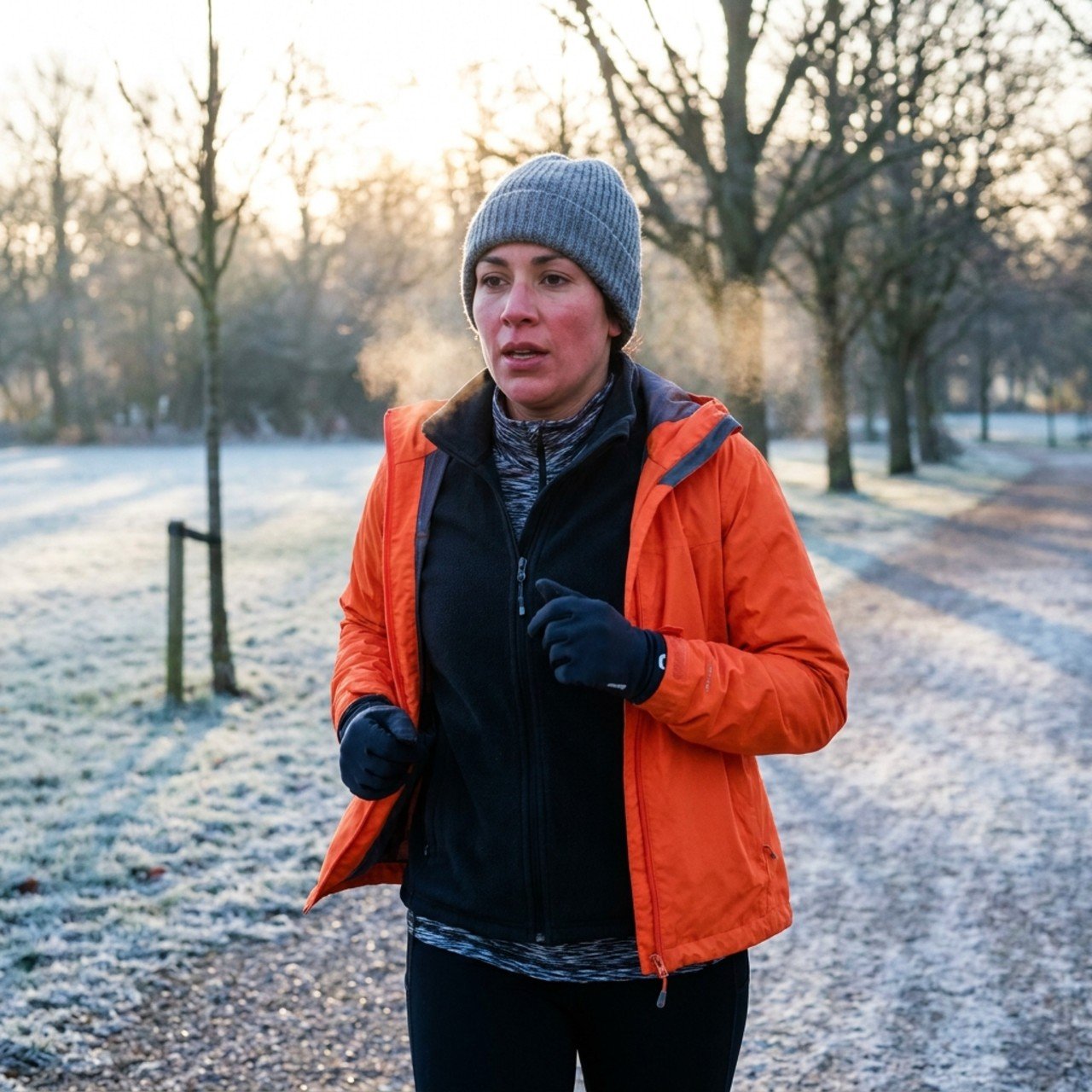
The fix isn’t more willpower for the next attempt. It’s treating the season as a variable you plan around from the start, the same way you’d plan around your schedule or your fitness level.
In practice, that means layering for cold instead of dressing like it’s a mild day and hoping for the best, and it means respecting heat instead of pushing through it because a session was already on the calendar.
Neither of those is complicated once you know the actual guidance – the problem is that most people never see it until after a bad outdoor session has already put them off the whole idea.
| Season | What To Adapt | Safety Signal To Know |
|---|---|---|
| Winter / Cold | Three-layer system per Mayo Clinic Sports Medicine: moisture-wicking base (skip cotton), insulating mid-layer, waterproof outer shell. Size shoes up for thicker socks; don’t skip a hat. | Frostbite can set in within 30 minutes at wind chills below −18°C (0°F) – numbness or stinging on skin means it’s time to go inside. |
| Summer / Heat | Move sessions to early morning or evening; hydrate before, during, and after – per the CDC, sip water frequently rather than waiting until you’re thirsty. | Headache, nausea, or dizziness signals heat exhaustion; confusion or slurred speech is heat stroke – stop immediately and cool down. |
| Spring / Fall | The most forgiving window – use it to build the outdoor habit and bank confidence before the next temperature extreme arrives. | Variable weather still means checking conditions daily rather than assuming yesterday’s forecast holds. |
| Rain / Wet Conditions | A genuinely wet session isn’t worth the fall risk on slick pavement or trail – this is one of the few honest cases for a planned indoor backup, not a failure of commitment. | Visibility and traction both drop – reflective gear and traction-appropriate shoes matter more than usual. |
Can Outdoor Workouts Replace The Gym?
Outdoor workouts can replace a large share of a typical gym routine, but not all of it – and treating the question as either/or misses the better answer, which is a hybrid approach built around natural terrain training.

Treadmill vs Trail Running: What Actually Changes
The honest answer is that the science here is less settled than fitness content usually implies. Some lab research on treadmill calibration has found certain treadmill models actually produce higher, not lower, cardiorespiratory demand than outdoor running at the same pace – which cuts against the popular assumption that indoor running is automatically easier.
What is consistently true is that outdoor trail running adds variables a treadmill belt never will: changing incline, uneven footing, and wind, all of which recruit stabiliser muscles a flat belt doesn’t ask much of.
If your goal includes functional outdoor fitness – strength and balance that transfers to real life, not just a number on a machine – trail time earns its place in the routine on those grounds alone, not just calorie math.
Outdoor Strength Training And Functional Fitness
Outdoor strength training doesn’t require a rack of dumbbells – bodyweight squats, step-ups on a park bench, resistance bands looped around a sturdy railing, and suspension-trainer straps hung from a solid branch all deliver real strength stimulus outdoors.
If you’re already building a structured lifting routine, our complete guide to strength training for women in perimenopause pairs well with an outdoor cardio day – alternating environments tends to keep both the body and the motivation fresher than repeating the same four walls.

Types Of Outdoor Workouts For Every Fitness Level And Goal
The best outdoor workout is the one that matches your current fitness level and the goal you actually care about – not the most Instagram-friendly option. A few honest starting points:
- Walking or jogging in nature – the lowest barrier to entry, genuinely effective for weight loss outdoors when done consistently, and the easiest way to bank the cortisol and mood benefits covered above.
- Bodyweight park workouts – using benches, steps, and open grass for circuits of squats, lunges, push-ups, and planks; zero equipment cost, real strength stimulus.
- Outdoor callisthenics on park equipment – pull-up bars and parallel bars turn a public park into functional strength training, once you’ve climbed the Confidence Ladder to that point.
- Cycling – low-impact, genuinely efficient cardio, and the exact activity studied in the 2024 perceived-exertion research above.
- Hiking on natural terrain – combines cardio, functional strength from uneven footing, and the strongest green-space exposure of any option on this list.
- Outdoor bootcamp classes – built-in accountability and social contact, useful if motivation without a workout partner (covered above) is your specific sticking point.
Ready To Build A Routine That Actually Fits Your Life?
Knowing that outdoor exercise lowers cortisol and feels easier than the gym is one thing. Building a routine flexible enough to survive a heatwave week, a housebound-with-rain week, or a week where a 10-minute driveway circuit is genuinely all you have left in you is another.
Our free guide, 10 Actions That Support Permanent Weight Loss, was built around that exact kind of realistic consistency – the same principle that makes a short outdoor walk count just as much as an hour-long session.
No punishing plans, no all-or-nothing rules that quietly set you up to quit the first time the weather doesn't cooperate – just research-backed habits real women have used to build something that actually lasts.
The Bottom Line
The benefits of outdoor workouts hold up under real scrutiny: exercise feels meaningfully easier outdoors at the same physical intensity, green space is linked to lower cortisol and better cardiovascular markers, mood and self-esteem improve regardless of session length, sunlight adds a free vitamin D top-up, and moderate outdoor activity strengthens immune defences rather than draining them.
None of that requires perfect weather or an audience. It requires starting smaller and more privately than feels necessary, planning around the season instead of being derailed by it, and treating a 10-minute walk as the legitimate dose it actually is – not a lesser version of a "real" workout.
If intimidation, bad weather, or one too many abandoned attempts have kept you inside, that's not a motivation problem to white-knuckle through. It's a plan that hasn't accounted for the real barriers yet – and now it has.
Glossary Of Key Terms
- Green Exercise: Physical activity performed in natural, outdoor settings, which provides combined physical and mental health benefits.
- Perceived Exertion: A subjective measure of how hard a person feels their body is working, which is often lower during outdoor exercise despite high physiological intensity.
- Cortisol: A stress hormone found in saliva; research shows its levels are significantly reduced through exposure to green spaces and wooded environments.
- Shinrin-yoku: Also known as "forest bathing," this is a practice of mindful time spent in wooded areas to achieve physiological relaxation and stress reduction.
- Vitamin D Synthesis: The process by which the body produces vitamin D following exposure of the skin to UV radiation from sunlight.
- Immunosuppression: A temporary reduction in the body's immune defenses, which can be triggered by prolonged, exhaustive exercise as opposed to moderate activity.
- Outdoor Confidence Ladder: A three-step psychological framework (Private, Quiet, and Public rungs) used to transition from home-based exercise to public outdoor workouts.
- Functional Outdoor Fitness: A type of physical training that utilizes natural terrain and variables (like wind and uneven ground) to build strength and balance applicable to daily life.
- Ergometer: An indoor exercise machine, such as a stationary cycle, used in research to measure work and match physiological intensity against outdoor conditions.
- Heart Rate Variability (HRV): A cardiovascular marker linked to stress and health; greater exposure to green space is associated with improved HRV.
FAQ
What Are The Benefits Of Outdoor Workouts?
The main benefits of outdoor workouts are a lower perceived effort at the same real intensity, reduced cortisol and blood pressure from green-space exposure, a free vitamin D boost from sunlight, improved mood and self-esteem, and stronger immune function from moderate, consistent activity.
Do Outdoor Workouts Really Burn More Calories Than Indoor Workouts?
The evidence here is more nuanced than fitness folklore suggests – some research even found certain treadmills demand more effort than outdoor running at the same pace. The clearer, better-supported benefit isn’t a guaranteed calorie edge; it’s that outdoor exercise consistently feels easier at matched effort, which tends to matter more for long-term weight loss outdoors than a small per-session calorie difference.
How Much Time Outdoors Do I Need To See A Mood Benefit?
Research on green exercise dose found mood and self-esteem improvements occurred regardless of session length, so a short 10–15 minute outdoor session is a legitimate, evidence-backed dose – not a lesser version of a longer workout.
Are Outdoor Workouts Better For Mental Health Than The Gym?
Outdoor exercise adds a documented cortisol-lowering, mood-elevating effect tied specifically to green space and sunlight that indoor exercise doesn’t replicate – on top of, not instead of, the general mental health benefits exercise provides in any setting.
What If I Feel Too Self-Conscious To Work Out Outside?
Start at the private rung of the Outdoor Confidence Ladder – a backyard, porch, or driveway session with zero audience – and only move to a park or trail once that feels normal. Confidence tends to follow small repeated action, not the other way around.
Can I Still Get A Good Outdoor Workout In Winter Or Extreme Heat?
Yes, with adaptation rather than avoidance: layer properly and watch for frostbite warning signs in cold weather, and shift sessions to cooler parts of the day with frequent hydration in heat – the season is a variable to plan around, not a reason to stop.
What Type Of Outdoor Exercise Is Best For Weight Loss?
Consistent walking or jogging in nature is the most sustainable outdoor option for weight loss for most women, precisely because it has the lowest barrier to entry and the research shows it feels easier to sustain than equivalent indoor cardio – consistency beats intensity for outdoor exercise the same way it does everywhere else.