
Rapid Weight Loss After 40: How Fast Is Safe, And What Actually Works

Not having time or energy for weight loss makes no sense. Does it take more time or energy to eat fish than prime rib? No.
Martha Beck
Summary (TL;DR)
Safe rapid weight loss after 40 has a ceiling: a deficit of about 500 to 750 calories a day, protein kept high, and both strength training and short interval sessions in your week. Most "fast" diets fail not from a lack of willpower but because they under-eat protein, which costs muscle, drives hunger and sets up the rebound.
The line not to cross is a very low-calorie diet (under 800 calories a day) without medical supervision, which is where gallstones, nutrient gaps and serious muscle loss start. For women in perimenopause, protecting muscle matters even more than speed.
If you've searched for rapid weight loss, you've probably tried the slow way and felt frustrated with how little happened. Or you have an event or a moment coming up, and "give it a year" isn't an answer that helps right now. That impatience isn't a character flaw.
Most content on losing weight quickly either shames you for wanting it fast or sells you something reckless (juice cleanses, 500-calorie "resets," fat-burning teas) that strips water and muscle, not fat, and comes back within weeks.
There is an evidence-based middle path: a faster-than-average rate of fat loss that doesn't require starving yourself, doesn't sacrifice your muscle and doesn't set you up for the rebound.
This guide covers where the safe line sits, what rapid weight loss does to muscle and metabolism, why the risks rise after 40, and what actually speeds up fat loss safely.
Medical & Referral Disclaimer
This article is for informational and educational purposes only. It is not a substitute for professional medical advice, diagnosis, or treatment. Always consult your physician or qualified health provider before starting any new diet or exercise program.
Key Takeaways
- "Rapid" has a number. Losing more than about 1 to 2 pounds a week for more than a couple of weeks usually means losing water and muscle, not just fat.
- A 500 to 750 calorie daily deficit is a practical ceiling for faster but safer fat loss, producing roughly 1 to 1.5 lbs a week.
- Protein is the lever most fast diets get backwards. Too little protein in a deficit costs muscle and drives the hunger behind the rebound.
- Very low-calorie diets (under 800 calories a day) carry real medical risks, including gallstones, and belong under medical supervision.
- Losing weight too fast can slow your metabolism for years, and women over 40 have more muscle and bone to lose.
- Strength training protects muscle; short interval sessions add a modest extra burn. Water, sleep and fiber make a larger deficit easier to live with.
- The scale is the worst way to judge speed. Measurements, strength and energy tell you more.

What Counts As Rapid Weight Loss?
Rapid weight loss generally means losing more than about 1 to 2 pounds a week. That's the line health authorities draw, and crossing it consistently is where trouble starts. A structured, faster-than-average plan usually lands at 1 to 1.5 lbs a week, and up to around 2 lbs a week for women starting with significantly more weight to lose.
Anything faster than that, sustained for more than a couple of weeks, usually means you're losing water and muscle, not just fat.
The confusion starts because "fast" gets used for wildly different things: a structured six-week push with a dietitian's oversight, and a three-day juice cleanse. Both get called rapid weight loss. Only one is describing something safe.
The Three-Bucket Test
Here's a simple lens we use to cut through the noise. Every pound you lose comes out of one of three buckets, and only one of them is the goal:
| The bucket | What it really is | Does it stay gone? |
|---|---|---|
| Water | Glycogen-bound fluid lost in the first 1 to 2 weeks of restriction | No, returns the moment you eat and drink normally |
| Muscle | Lean tissue your body burns for fuel when calories crash | No, and losing it slows your metabolism further |
| Fat | The stored energy you’re actually trying to lose | Yes, if you lose it slowly enough to protect the other two |
The faster you lose, the more your results come from the first two buckets. The Three-Bucket Test reframes the whole question. The goal was never “lose weight fast.” It was “empty the fat bucket without draining the others.” And that simply can’t be rushed.
Why The Scale Lies In Week One
That dramatic first-week drop is mostly water, not fat. When you sharply cut calories, especially carbs, your body burns through its glycogen stores, and glycogen holds onto water. Lose the glycogen, lose the water, watch the scale plummet. It feels like winning. It isn’t.
Here's why it happens, in plain terms. Your muscles and liver store carbohydrate as glycogen, and glycogen holds onto water. Slash carbs hard, and you burn through that glycogen fast, releasing the water it was holding.
On the scale, that can look like several pounds "lost" in a week while your body fat has barely budged. Refill the glycogen (which happens as soon as you eat normally), and the water comes back. Nothing went wrong. The number was never measuring fat in the first place.

Many of the most extreme “quick results” plans lean even harder on this trick, pushing practices that cause dehydration. You’ll drop pounds fast, but it’s borrowed, not earned, and you’ll regain every ounce the moment you start drinking normally again. Worse, real dehydration can genuinely harm your body, not just your numbers.
This is exactly where so many women get hooked, then discouraged. The fast start feels like proof the diet works. The rebound feels like proof you don't. Neither is true. You were just watching water move.
How To Build A Faster, Safer Calorie Deficit
A faster-than-standard but still safe calorie deficit sits between 500 and 750 calories below your maintenance (TDEE), producing roughly 1-1.5 lbs of fat loss per week without the muscle loss and metabolic slowdown that come with more extreme cuts.
Below that range, results feel slow; go well past it, and you cross into medically risky territory. Use the table below to see where a given deficit falls, and what it costs in exchange for extra speed.
| Daily Deficit (Below Maintenance) | Approx. Weekly Loss | Muscle-Loss Risk | Sustainability |
|---|---|---|---|
| 250-350 kcal | 0.3-0.5 lb | Low | Very high, easiest to maintain indefinitely |
| 500-600 kcal | 0.5-1 lb | Low, with adequate protein | High |
| 650-750 kcal | 1-1.5 lb | Moderate. Protein and strength training become essential, not optional | Moderate, needs real structure |
| 1,000+ kcal deficit | 2+ lb | High | Low, typically unsustainable past a few weeks |
Separately, regardless of your calculated deficit: any plan that has you eating under 800 total calories per day is a very low-calorie diet (VLCD) by definition, and that comes with its own medical risks covered below, no matter how the deficit math works out.
For most women who want faster but safe results, the 650 to 750 calorie range is the practical ceiling. Find your maintenance number first with our guide to how many calories you should be eating, then subtract from there rather than guessing.
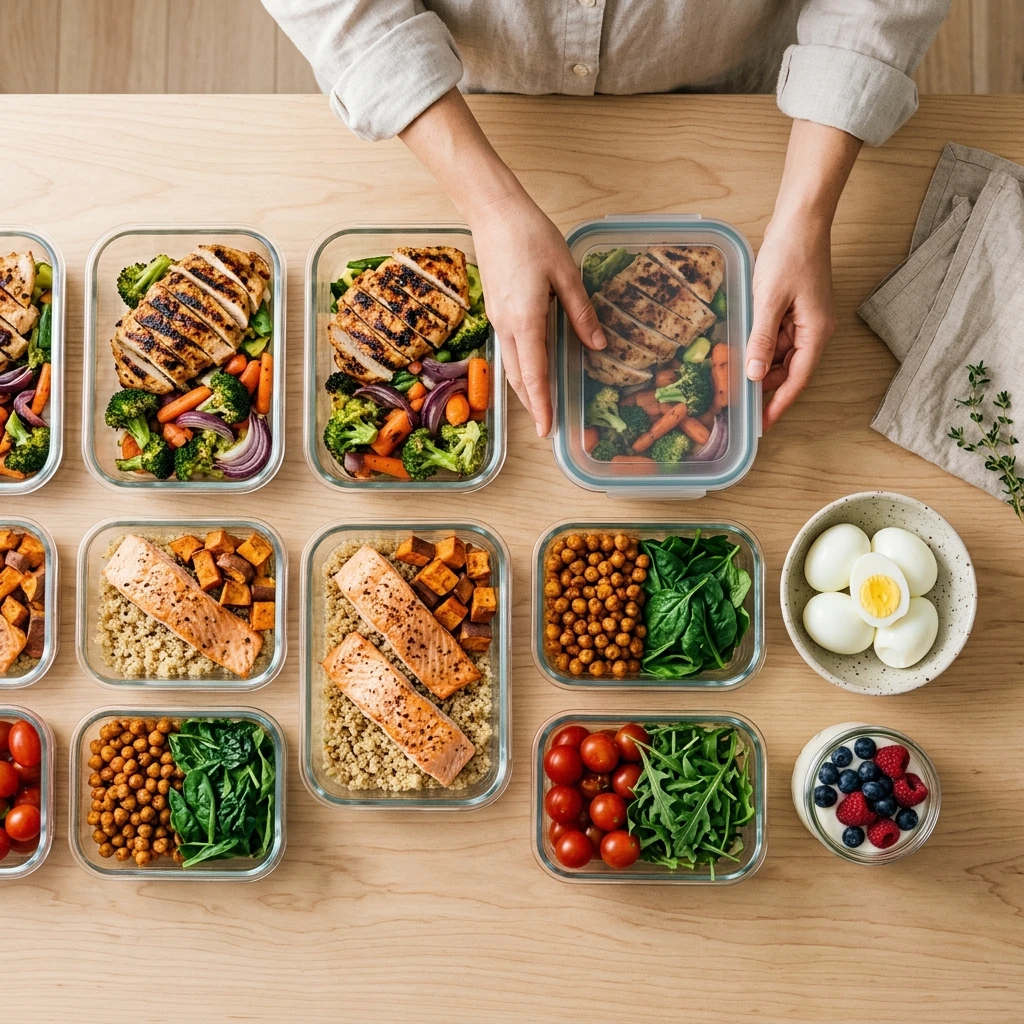
Why Protein Is The Lever Most Fast Diets Get Backwards
Protein needs go up, not down, the faster you're trying to lose weight. Most fast diets under-eat it, and that, more than willpower, is why they fail.
Cut calories aggressively without raising protein, and your body pulls a larger share of that deficit from muscle instead of fat, which slows your metabolism and leaves you hungrier.
This is the piece many "fast" weight loss articles skip. A randomized controlled trial in the American Journal of Clinical Nutrition found that a higher-protein diet (roughly 2.4 g per kg of body weight) during an aggressive calorie deficit with intense training produced greater fat loss and lean mass gain than a lower-protein version of the same deficit.
Separately, research in overweight and obese women published in Obesity (Silver Spring) found that higher protein intake during weight loss preserved significantly more lean mass and improved satiety compared to a standard-protein diet at the same calorie level.
Worth noting: the randomized trial above was conducted in young men doing intense training, so the exact numbers may not translate one-to-one to every woman's body, but the direction of the effect, protein sparing muscle during a deficit, is consistent across both studies.
Put plainly: two women can eat the same number of calories and get different results, because one is eating enough protein to protect her muscle and hunger signals and the other isn't. The willpower story is a distraction, and the fix often starts with a single grocery trip.
A meta-analysis of 49 randomized trials in the British Journal of Sports Medicine found that protein intakes up to about 1.6 g per kg of body weight a day (with an upper range of 2.2 g per kg) boosted the muscle gains people got from resistance training. When you're eating less, sitting toward the top of that range is a sensible way to protect muscle.
Protein also has the highest thermic cost of any macronutrient, and a 2024 systematic review and meta-analysis confirmed that higher-protein meals and diets produce greater diet-induced thermogenesis and total daily energy expenditure than lower-protein versions of the same calorie intake.
Practical targets at roughly 0.9 to 1.0 g per pound of body weight:
- 130 lbs: 117- 130 g protein/day
- 150 lbs: 135- 150 g protein/day
- 170 lbs: 153- 170 g protein/day
- 190 lbs: 171-190 g protein/day
Spread this across three to four meals, and lean on the high-protein food sources and meal structure that make these numbers realistic on a busy week. If you have kidney disease or another medical condition, check your target with your doctor.
The Line You Should Never Cross: Very Low-Calorie Diets
A very low-calorie diet, generally defined as under 800 calories per day, should never be attempted without direct medical supervision, because the risk of gallstones alone increases roughly threefold compared to a standard low-calorie diet.
This is the fast-weight-loss line that separates "aggressive but safe" from "genuinely dangerous."
A matched cohort study following over 3,000 participants in a commercial weight-loss program found that the risk of symptomatic gallstones requiring hospitalization or surgery was roughly three times higher on a VLCD than on a standard low-calorie diet, with gallstone-related events occurring in a small but meaningful share of VLCD participants over the following year.
VLCDs can also bring fatigue, hair loss, feeling cold and, without careful protein intake, substantial muscle loss.
If a plan promises more than 2-2.5 lbs per week for multiple weeks running, or asks you to eat under 1,000 calories without a doctor's involvement, that's not an aggressive version of what this article recommends. That's a different, riskier category entirely.
Beyond the rebound, rapid weight loss carries genuine health risks. These aren't scare tactics; they're documented by major health institutions.
Gallstones
One of the best-documented dangers is gallstones. According to the National Institute of Diabetes and Digestive and Kidney Diseases (NIDDK), when you lose weight quickly, your liver releases extra cholesterol into your bile, and your gallbladder may stop emptying properly, a recipe for stones.
NIDDK also notes women are already more prone to gallstones, so the extreme route stacks risk on top of risk.
The agency's safer-loss guidance is telling: it recommends aiming for 5 to 10 percent of your body weight over about six months, the gradual pace that keeps your gallbladder out of trouble in the first place.

Muscle Loss
Crash dieting doesn’t politely take fat and leave the rest. Severe calorie restriction without enough protein and strength training burns through lean muscle alongside fat. A review of caloric restriction research shows that resistance training is what protects lean mass during a deficit, the very thing crash plans skip.
Lose muscle, and you don’t just get weaker; you lower your resting metabolism, making future loss harder. It’s the metabolic-slowdown problem all over again, from a different door.
The Daily Toll
Then there’s how extreme restriction actually feels, day to day. Pushing too far in the opposite direction with food, toward outright starvation, leaves the body malnourished, and important functions can slow or shut down.
The familiar side effects of going too fast read like a warning label: fatigue, irritability, feeling cold all the time, muscle cramps, dizziness, nutrient deficiencies, and a frayed, anxious relationship with food.
How Rapid Weight Loss Slows Your Metabolism
Lose weight too fast and your body fights back by burning fewer calories, sometimes for years. This is a survival mechanism called adaptive thermogenesis, and the evidence for it is sobering.
The most striking example comes from reality-TV contestants on The Biggest Loser. A 2016 study published in the journal Obesity followed 14 Biggest Loser participants for six years after the show. As Harvard Health summarized the findings, the contestants’ metabolism slowed dramatically, and crucially, it never recovered.
Six years on, most had regained much of the weight, yet their bodies were still burning hundreds of calories a day fewer than expected for their size. The more weight someone had lost on the show, the worse their metabolic slowdown became.
You won’t replicate a TV crash camp at home. But the principle scales down to your kitchen: the harder and faster you restrict, the more your body dials down its own engine to protect you.
A systematic review in the British Journal of Nutrition confirms this adaptive drop in energy expenditure shows up after weight loss in adults. Translation: extreme dieting can make the next ten pounds harder than the last.
Think of it from your body’s point of view. It can’t tell the difference between a self-imposed crash diet and an actual famine. When the calories suddenly collapse, it does the sensible thing for survival: it turns down the thermostat. It burns fewer calories at rest, makes you feel colder, drops your energy, and ramps up hunger hormones to push you toward food.

Every one of those "side effects" you push through on an extreme plan is your body succeeding at protecting you. That's why willpower is the wrong frame entirely: you're not fighting weakness, you're fighting a survival system far older than your motivation. A gentler deficit barely trips that alarm, which is why it keeps working when crash plans stall.
Why “Too Fast” Is Riskier For Women Over 40
If you’re in your 40s or navigating perimenopause, extreme weight loss is a worse bet than ever. Not because your body is broken, but because it’s changing, and crash dieting attacks exactly the systems already under pressure.
As estrogen shifts, holding onto muscle gets harder, and bone density needs more protection, not less. A crash plan that strips muscle and skimps on nutrients hits a 45-year-old body far harder than it hit her at 25.
The same deficit that felt “motivating” a decade ago can now leave you exhausted, foggy, and somehow softer despite eating less. That’s not weakness. It’s biology, and it means the gentle, muscle-protecting approach isn’t optional anymore. It’s the whole game.
The research point that should reshape how you diet after 40 is this: muscle isn't just about how you look. It's your metabolic engine and your insurance against frailty later. The caloric-restriction research is clear that resistance training is what protects lean mass during a deficit, not cutting calories harder.
So the worst move at this stage is the classic crash combo: eat far too little, skip the weights, and watch the scale "win" while your body loses the very tissue that keeps your metabolism up.
Slower loss plus strength training isn't a nice-to-have after 40. It's the difference between losing fat and losing function. For more on this stage, read why it's so hard to lose weight in perimenopause.
Does HIIT Actually Speed Up Fat Loss?
High-intensity interval training does modestly speed up fat loss compared with steady-state cardio of the same duration, mainly through extra calorie burn that continues for a while after the workout ends, not through some unique fat-burning mechanism.
It's a real edge. It's a smaller one than the marketing suggests. Research comparing interval running to continuous running in adults with obesity found greater excess post-exercise oxygen consumption (EPOC) and lipid oxidation following interval sessions than after an isocaloric continuous session.
In practical terms: two 20-minute HIIT sessions per week, layered on top of your strength training, is a reasonable addition, not a replacement for the calorie deficit and protein intake doing the actual heavy lifting.

For most women running a faster but safe plan, two short HIIT sessions plus two to three strength sessions a week work better than daily hard cardio, which tends to drive appetite and raise injury and burnout risk exactly when consistency matters most.
Lift Weights To Protect Your Muscle
Strength training is the non-negotiable half of the training picture. Lifting weights or using resistance bands burns calories, but its real job in a deficit is protecting the muscle that keeps your metabolism up.
Two to three sessions a week built on compound moves (squats, hinges, presses and rows) are enough. Read why weight training is important for weight loss.
Short Sessions Count
You don't need marathon workouts. One long, punishing session tends to leave you depleted and hungrier, while shorter sessions spread through the day (a brisk morning walk, a lunchtime strength circuit) are easier to repeat. See what time of day is best for exercise if you're working around a busy schedule.
The Overlooked Multipliers: Water, Sleep, And Fiber
Water, sleep and fiber don't directly burn fat, but each one changes how tolerable a larger deficit feels, which is often the real reason fast diets get abandoned.
Why Water Before Meals Works
Drinking roughly 500ml of water 30 minutes before meals reduces the amount you eat at that meal.
A randomized controlled trial in middle-aged and older adults found that participants who drank water before each meal lost about 2kg more over 12 weeks than a matched group on the identical diet without the water habit, a 44% greater rate of weight loss from one free, five-second habit.
Swapping sugary drinks for water is the easiest calorie cut you'll make. Aim for steady intake through the day rather than forcing huge amounts.
Why Sleep Debt Sabotages Speed
Cutting sleep to "find more time" is one of the fastest ways to sabotage a fast-loss protocol. A 2022 study published in JAMA Internal Medicine found that adults who extended their sleep to roughly 8.5 hours reduced their daily calorie intake by an average of 270 calories, without any deliberate dietary change.
Under-sleeping while running a larger deficit stacks two hunger-driving factors on top of each other.

Fiber's Quiet Role In Appetite Control
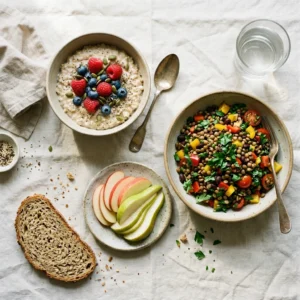
Fiber slows digestion and stimulates the release of satiety hormones like GLP-1 and PYY, chemical signals your gut sends to your brain to say you're full.
A review of dietary fiber's role in appetite regulation found consistent reductions in hunger and food intake with adequate fiber intake, making it one of the simplest tools for keeping a larger deficit tolerable, particularly during the exact week most fast diets fall apart.
Choose Lower-GI Carbohydrates
Low-glycemic carbohydrates (oats, beans, lentils, most fruit and vegetables, and whole grains) raise blood sugar more slowly than refined ones, which helps with steadier energy and fewer cravings while you're eating less. You don't need to cut carbs out; choose slower ones. For a structured example, see this 7-day low-GI plan.
Go Easy On Alcohol While You're Cutting
Alcohol isn't off-limits, but it's worth knowing what it does during a faster cut. It's calorie-dense without much nutrition, it tends to loosen decisions around food, and it disrupts sleep, which you've just seen is one of the multipliers that makes a deficit tolerable.
A practical approach: decide ahead of time when you'll drink and how much, alternate with water, and keep it to occasions you'll actually enjoy. No guilt required. It's simply one of the easier levers to pull when time matters.
How To Spot An Extreme Plan Before You Start
Most crash diets wave the same red flags. Before you commit to any plan, run it past this quick list. If it ticks two or more, it's steering you toward extreme weight loss, however wellness-branded the packaging looks:
- It promises a specific big number fast: “lose 10 pounds in 7 days.” Honest plans can’t promise a rate, because fat loss isn’t that predictable.
- It cuts a whole food group entirely with no medical reason, or drops you below roughly 1,200 calories without supervision.
- It leans on “detox,” “cleanse,” or liquid-only phases: usually code for the water-weight trick.
- It says nothing about strength or protein: a sign it doesn’t care whether you keep your muscle.
- It makes you dread food or social meals. If a plan damages your relationship with eating, it’s already failing you.

A plan that passes this test will feel almost boringly reasonable. That’s exactly the feeling you’re after. For a look at where these ideas go wrong, see our rundown of the worst crash diets ever and the common reasons diets fail.
Rapid Weight Loss Do's And Don'ts At A Glance
The difference between a faster but safe plan and a reckless one usually comes down to five specific decisions, not overall intensity. Use this table as a quick gut-check against any plan you're considering.
| Category | Do This (Safe & Effective) | Don't Do This (Fast But Risky) |
|---|---|---|
| Calorie deficit | 500-750 kcal/day below maintenance | Dropping below 1,200 kcal, or under 800 kcal (VLCD) without medical supervision |
| Protein | 0.9- 1.0 g per lb of bodyweight | Under 60- 70 g total per day |
| Training | 2-3 strength sessions + 2 short HIIT sessions weekly | Daily maximal-intensity cardio with no resistance training |
| Hydration | 500ml of water 30 minutes before meals | Relying on thirst cues alone |
| Sleep | 7-9 hours nightly | Cutting sleep short to "find time" for extra workouts |
Is Faster Weight Loss Right For You?
Faster weight loss, done the way this guide describes, can be reasonable for many healthy adults for a defined stretch of a few weeks. It is not the right approach if you have a history of disordered eating, are pregnant or breastfeeding, or have a diagnosed metabolic or hormonal condition without your doctor's input.
Speed is a tool for a specific window, not a permanent operating mode. If you fall into one of those exception categories, the moderate approach in our guide to how to lose body fat after 40 is the safer starting point. The biology is the same; the timeline is just longer and gentler.
Expert Commentary: What The Research Actually Shows
Harvard Health's review of the Biggest Loser follow-up is the clearest warning: six years after the show, contestants' bodies were still burning hundreds of calories a day fewer than expected for their size, and those who lost the most had the biggest slowdown.
That isn't a one-off. A systematic review in the British Journal of Nutrition found that adaptive drops in energy expenditure show up after weight loss in adults more generally.
On safety, the National Institute of Diabetes and Digestive and Kidney Diseases links rapid weight loss to a higher risk of gallstones, and its guidance favors losing 5 to 10 percent of body weight over about six months.
Read together, the message is consistent: you can speed things up a little with a structured deficit, high protein and strength training, but pushing much past that trades fat loss for muscle loss, medical risk and a slower metabolism.

The Contrarian Take: The Scale Is The Worst Way To Judge Speed
The whole premise of extreme weight loss (that a fast-dropping scale means success) is the problem. The scale can't tell fat, water and muscle apart. It rewards you most loudly for the changes that help you least: the water you'll regain within days and the muscle that takes far longer to rebuild.
The Biggest Loser data showed exactly this: contestants whose scales said "success" while their metabolisms slowed for years.
The honest reframe most extreme dieters never hear: a slower scale moving down by a pound a week, with your strength intact and your energy steady, is a better result than a fast scale moving down on borrowed water: same direction, completely different outcome.
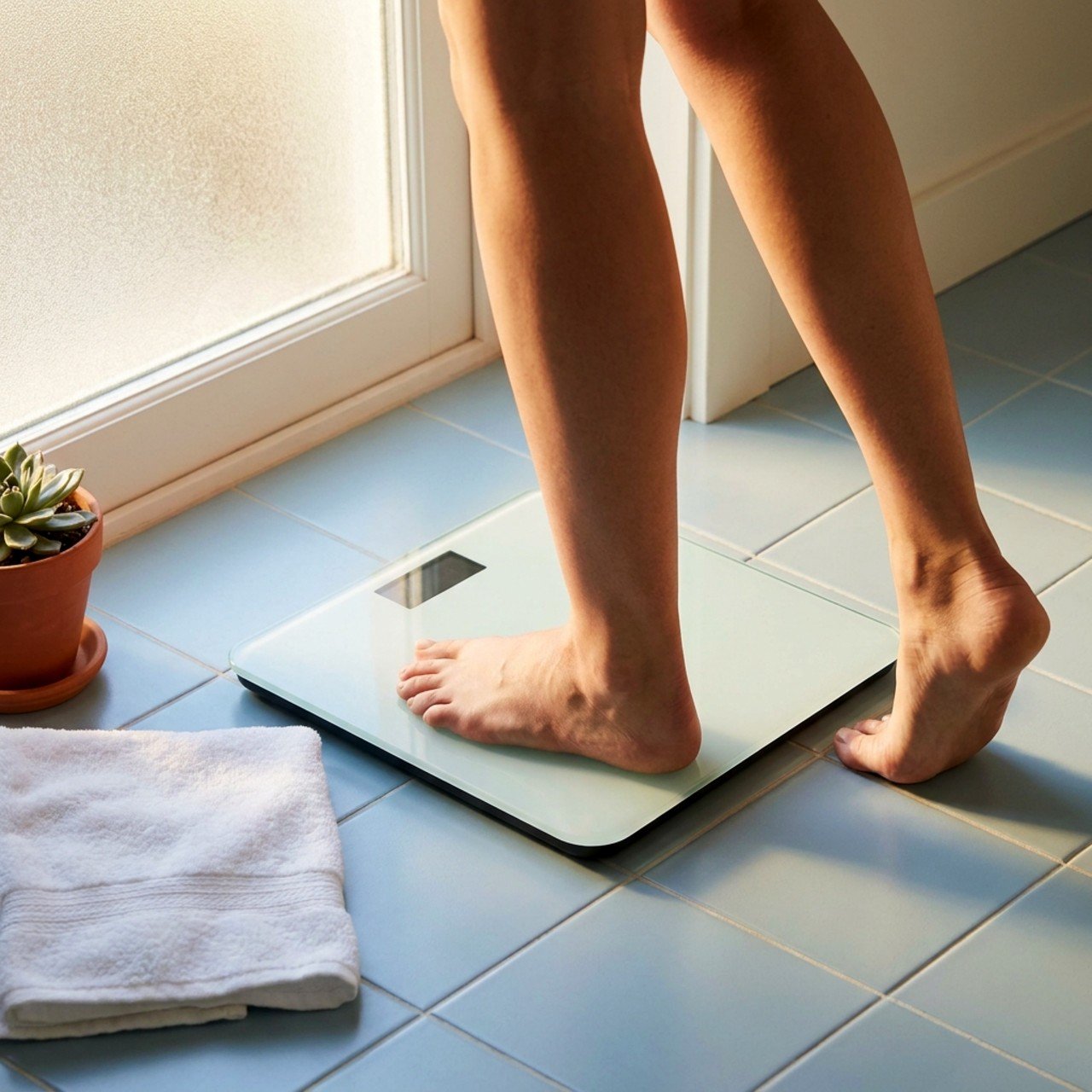
If you want a real scoreboard, watch how your clothes fit, whether you’re getting stronger in your workouts, and how you feel at 4 p.m. Those tell you what the scale can’t.
Ready to turn this into habits that stick? Get our free guide, 10 Actions That Support Permanent Weight Loss: practical, sustainable steps that turn everything you just read into lasting results. Get your free guide here.
The Bottom Line
Rapid weight loss isn't automatically reckless, but most "fast" plans make the same mistakes: starving instead of prioritizing protein, cutting sleep instead of protecting it, and chasing extreme deficits instead of a range your body can tolerate.
If you take one thing from this guide: whatever deficit you choose, raise your protein first and keep lifting. That is the difference between faster fat loss and faster muscle loss that slows your metabolism and brings the weight back.
After 40, the case for a steady pace is even stronger. Aim for a pace your body can keep, protect your muscle, eat enough to function, and let the fat bucket empty on its own schedule. Slow isn't the compromise. It's the version that's still working two years from now.
Glossary Of Key Terms
- Adaptive Thermogenesis: A survival mechanism where the body slows its metabolism and energy expenditure in response to perceived famine or extreme calorie restriction.
- Calorie Deficit: A state where the number of calories consumed is lower than the number of calories burned, forcing the body to use stored energy (fat or muscle).
- Crash Diet: An extreme weight loss plan characterized by severe calorie restriction or the elimination of food groups to achieve rapid results.
- EPOC (Excess Post-exercise Oxygen Consumption): The measurably increased rate of oxygen intake and calorie burning that occurs following intense exercise as the body returns to its resting state.
- Gallstones: Hardened deposits of digestive fluid that can form in the gallbladder; a known medical risk of rapid weight loss.
- GLP-1 and PYY: Satiety hormones released by the gut in response to fiber and food intake that signal fullness to the brain.
- Glycogen: The form in which the muscles and liver store carbohydrates; it is chemically bound to water, which is released when glycogen is burned for fuel.
- HIIT (High-Intensity Interval Training): A training protocol involving short bursts of intense exercise followed by brief recovery periods, used to maximize calorie burn and EPOC.
- Lean Mass: The weight of the body excluding fat, primarily consisting of muscle and bone; protecting this is vital for maintaining a healthy metabolism.
- Muscle-Sparing: Dietary or training strategies, such as high protein intake and resistance training, designed to prevent the body from breaking down muscle tissue for energy during a weight loss phase.
FAQ
Is It Safe To Lose Weight Fast After 40?
It can be, within limits. A deficit of about 500 to 750 calories a day, high protein, strength training and 7 to 9 hours of sleep can produce 1 to 1.5 lbs of loss a week for many women. What isn't safe is a very low-calorie diet (under 800 calories a day) without medical supervision, which carries a documented risk of gallstones and significant muscle loss.
How Much Weight Can You Safely Lose In A Week?
The broadly cited safe range is 1 to 2 lbs a week for most healthy adults. A faster but safe plan targets around 1 to 1.5 lbs using a 650 to 750 calorie deficit built around adequate protein. Losses well beyond 2 lbs a week for more than a couple of weeks are usually water and muscle rather than fat.
Is The First Week Weight Loss Real?
Mostly, no. That dramatic week-one drop is largely water released as your body burns through glycogen, not fat. It returns as soon as you eat and drink normally, which is why the fast start so often ends in a discouraging bounce-back.
Can Losing Weight Too Quickly Slow My Metabolism?
Yes. When you crash your calorie intake, your body adapts by burning fewer calories to conserve energy. As the six-year Biggest Loser follow-up showed, that slowdown can persist long after the diet ends, making weight easier to regain and harder to lose next time.
Is Rapid Weight Loss Riskier For Women Over 40?
Yes. Shifting hormones in perimenopause already make muscle and bone harder to hold onto. Crash dieting, which strips muscle and skimps on nutrients, hits a body over 40 harder, so a gentler, muscle-protecting approach matters more at this stage.
Are Very Low-Calorie Diets Ever Recommended By Doctors?
Yes, in specific medical contexts, such as pre-bariatric surgery preparation or under a physician's direct supervision for significant obesity-related health risk. In those cases, VLCDs are structured with high protein intake and full micronutrient supplementation, and closely monitored. They are not designed or intended for unsupervised home use.
How Do I Know If My Weight Loss Plan Is Too Extreme?
Check three markers: does it ask you to eat under 1,200 calories (or under 800 without medical supervision), does it skip protein guidance entirely, and does it promise more than 2 to 2.5 lbs a week for several weeks running? Two or more of those signals mean the plan is putting speed ahead of your muscle, metabolism and long-term results.
Great tips Mary. Very easy to follow tips. Nowadays people are trying difficult methods for weight loss but they have forgotten that the result can also be achieved if they stick to this easy tips mentioned by you. Following your tips like drinking plenty of water, taking a low GI diet, exercise with weights is very easy to follow in routine. I appreciate you for sharing such beneficial tips with us. keep it up.
Thank you Adity. I hope it helps!
that the result can also be achieved if they stick to this easy tips mentioned by you. Following your tips like drinking plenty of water, taking a low GI diet, exercise with weights is very easy to follow in routine. I appreciate you for sharing such beneficial tips with us. keep it up.
Thanks, it’s very kind of you!
Amazing article, loves the concept & easy tips. Please share more information like these, I would love to read. Thank you for sharing.
Thanks for telling me that I should eat more food with protein for my meals. I’m trying to achieve a rapid weight loss before the wedding so the gown I chose will look better on me. Aside from changing my eating options, it might also be a good idea to look for some herbal supplements for sale that I can take to achieve my goal.
Thanks for sharing this awesome post and I’m trying to achieve a rapid weight loss before the wedding so the gown I chose will look better on me.
Great blog. Losing weight is really hard. Today, there are methods of losing weight, but it is still a constant struggle. If you want to make the best of what your body can offer, then I really suggest that you start losing weight and exercising. Most people do not know this, but losing weight is really essential in having a core body. It is impossible to make a great body if you are not even making an effort to keep your weight in check. Thanks for sharing!
Thank you for sharing 10 weight loss tips with us. Enjoyed your article. Keep it up.
Thank you for a good word.
Nice tips, these are helpful and the best to burn fat in genuine & most healthy way. Thank you for sharing.
You are welcome and thank you for comment Aaron.
Wow! Your website is really cool!
Wow!!! I really like your weight loss tips. Thank you so much for sharing this post.
Really a great article, gonna inspire so many people.
Thank you, I hope it helps!
Thank you for sharing this article
Thanks for sharing this valuable post here!
Loved the article, thanks for sharing this amazing information.
You are very welcome, Julia. I am glad you like it!