
Why Dietitian-Approved Healthy Eating Advice Is Different From Everything Else You've Read
Michael Pollan
Journalist and author
Eat food. Not too much. Mostly plants.
Summary (TL;DR)
This article explores healthy eating advice from registered dietitians, contrasting it with popular trends. It emphasizes evidence-based guidance over fleeting fads. Registered Dietitians' (RDs) advice is rooted in nutritional science, unlike that of unregulated "nutritionists."
Key tips include prioritizing protein and fiber at each meal for satiety and metabolic health. Also, home cooking and avoiding ultra-processed foods are beneficial. Sustainable habits, not willpower, are crucial for long-term success.
Everyone has nutrition advice. Your colleague swears by intermittent fasting. Your Instagram feed alternates between carnivore and vegan. Your GP mentioned something about fibre. Your aunt is convinced that cutting gluten changed her life.
Registered dietitians hear all of it. They also spend their working days cutting through it — separating what the evidence actually supports from what sells books and supplements.
So what do they do themselves? Not the advice they give in consultations. The real habits, the practical choices, the things they default to on a Tuesday evening when they're tired and haven't planned anything.
That's what this article covers. Fifteen evidence-based healthy eating tips grounded in nutritional science — the kind of guidance a registered dietitian would give you if they had time to sit down and be completely honest.
Medical & Referral Disclaimer
This article is for informational purposes only. It does not constitute medical or nutritional advice. If you have a diagnosed health condition, eating disorder, or specific dietary requirement, please consult a registered dietitian or your GP before making significant changes to your diet.
Key Takeaways
- No single food, supplement, or eating pattern is a silver bullet. Consistent, varied, whole-food eating outperforms every dietary trend in long-term health outcomes.
- Protein and fibre at every meal are the two dietary levers with the strongest evidence for satiety, weight management, and metabolic health in women.
- Cooking at home five or more days per week is one of the most reliable predictors of better diet quality across all research demographics — regardless of what you cook.
- Ultra-processed food is the main driver of excess calorie intake in the UK and USA, not fat, carbohydrates, or any specific macronutrient.
- Most popular nutrition myths — including "carbs make you fat", "breakfast is essential", and "detoxing is necessary" — are not supported by the current evidence.
- Sustainable healthy eating is built from habits, not willpower. Environmental design (what's in your fridge, how your kitchen is set up) predicts behaviour more reliably than motivation.
What Is A Registered Dietitian, And Why Does It Matter?
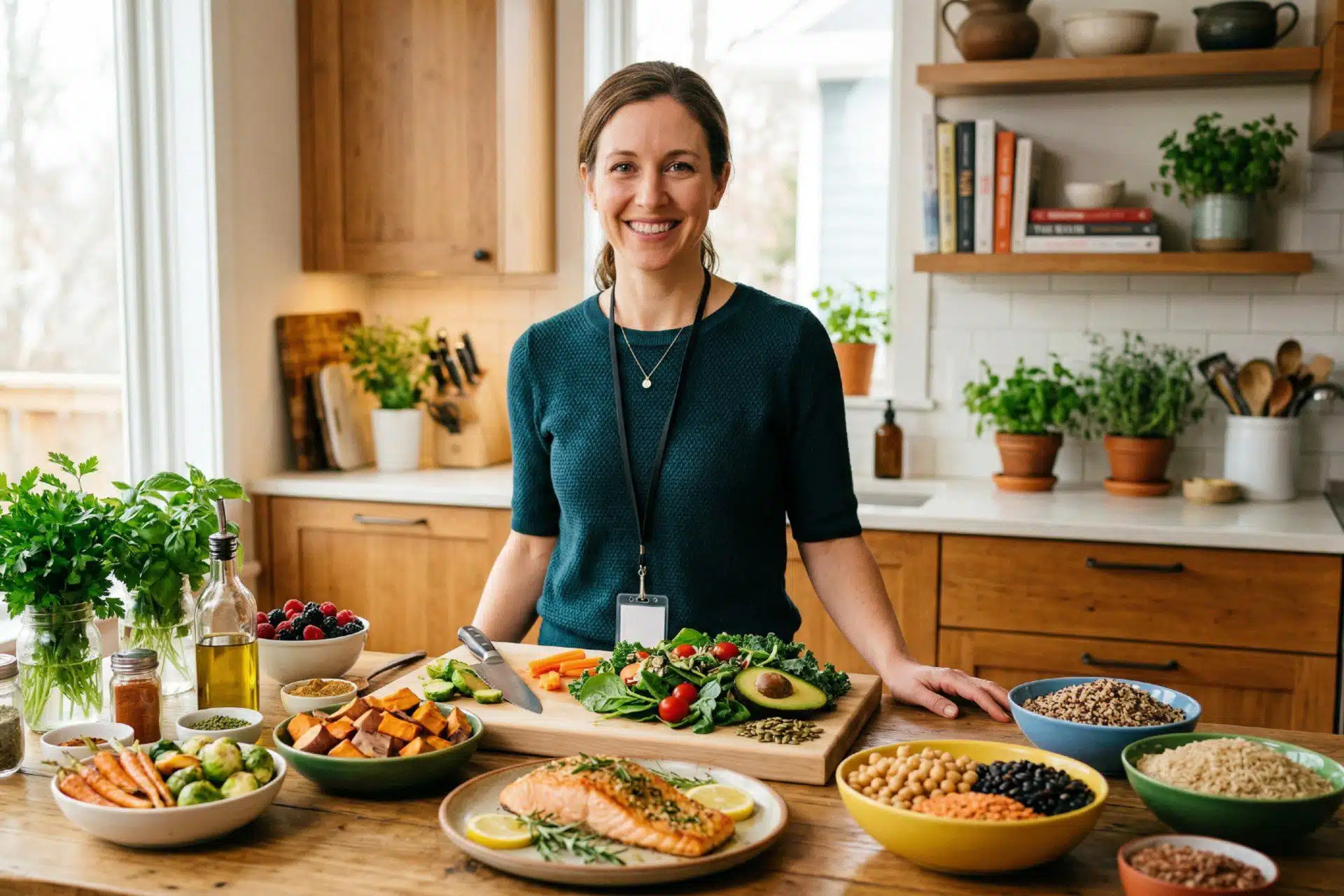
The title "nutritionist" is unprotected in the UK and most of the US — anyone can use it. "Registered Dietitian" (RD or RDN) is a legally protected credential requiring a university degree in dietetics, clinical training, and registration with a professional body such as the British Dietetic Association or the US Academy of Nutrition and Dietetics.
That distinction matters when you're evaluating advice. An RD's recommendations are required to be grounded in peer-reviewed evidence. A "nutrition coach" on social media has no such obligation.
This article draws on the approaches and research that registered dietitians consistently cite in clinical practice and peer-reviewed literature — not brand partnerships or product recommendations.
What The Evidence Base Actually Looks Like
Before the 15 tips: a brief note on what "evidence-based" means in nutrition.
Nutrition research is genuinely difficult. Randomised controlled trials — the gold standard in medicine — are hard to run for dietary interventions over years or decades. Most of what we know comes from large cohort studies, systematic reviews, and meta-analyses. These aren't perfect, but they're far more reliable than individual case studies, influencer testimonials, or single-study headlines.
The tips below come from this evidence tier. Where specific studies are referenced, links are provided.
15 Healthy Eating Tips Registered Dietitians Actually Follow
Build Your Plate Smarter
Tip 1: Lead with Protein and Fibre at Every Meal
These two nutrients do more consistent work for satiety and metabolic health than any other dietary variable.
Protein has the highest thermic effect of any macronutrient — the body burns 20–30% of protein calories in the digestion process itself. It also preserves muscle mass during weight loss, which protects metabolic rate. Current evidence supports around 1.6–2.2 g of protein per kg of body weight per day for women actively managing weight.
Fibre slows gastric emptying, stabilises blood sugar, feeds the gut microbiome, and reduces post-meal hunger hormones. Most adults in the UK consume around 18 g of fibre per day; the NHS recommendation is 30 g. The gap is significant.
A high-protein eating plan tailored for women is a practical starting point if you want a structured framework.
Tip 2: Fill Half Your Plate With Vegetables Before Adding Anything Else
The NHS Eatwell Guide and Harvard's Healthy Eating Plate both recommend that vegetables and fruit fill at least half the plate at each meal. This is not a metaphor — it's a physical displacement strategy. More vegetables means less room for ultra-processed food, more fibre and micronutrients, and lower overall caloric density per bite.
The practical version: put your vegetables on the plate first. Then add everything else.
Tip 3: Stop Demonising Food Groups
Blanket restrictions — no carbs, no fat, no dairy — rarely hold up in practice and tend to create a disordered relationship with food over time. No single food group causes weight gain in isolation. Caloric balance and overall diet quality drive outcomes, not specific macronutrients.
Dietitians who counsel patients with a history of restrictive eating consistently note that permission to eat all foods reduces the psychological pressure that drives bingeing. Why fad diets don't work covers the biological mechanism in detail.
Habits And Timing
Tip 4: Eat a Protein-Rich Breakfast Within Two Hours of Waking
The debate about whether breakfast is universally essential is unresolved. But for women managing blood sugar, hormonal balance, and appetite throughout the day, a protein-rich morning meal has consistent support.
A 2020 review in Advances in Nutrition found that high-protein breakfasts (25–30 g protein) reduced appetite and caloric intake at lunch compared to low-protein or skipped breakfasts. Specific hormonal benefits for women — including cortisol regulation and oestrogen support — are covered in detail in what women should eat in the morning for hormone balance and fat loss.
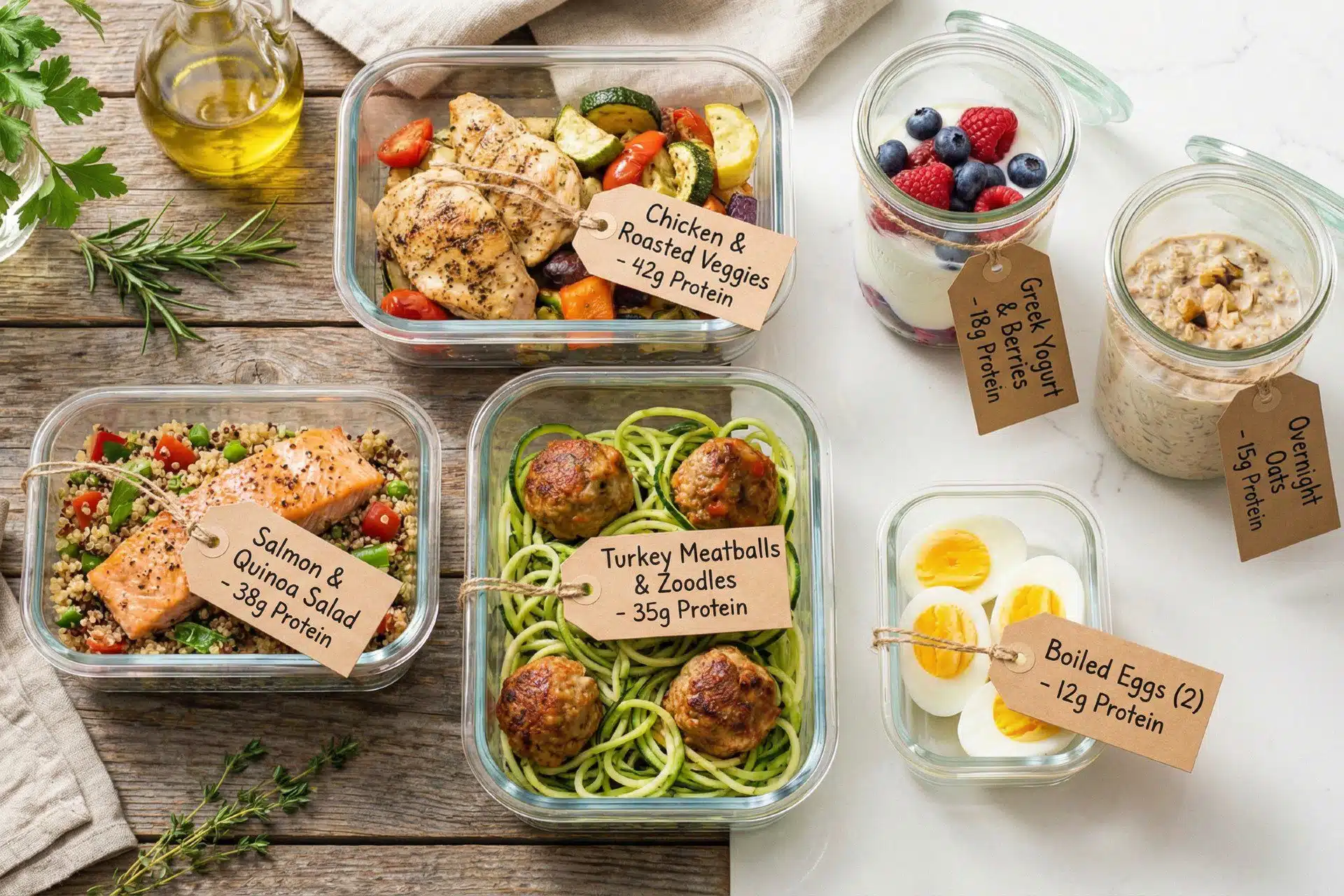
Good morning, protein sources: eggs, Greek yoghurt, cottage cheese, smoked salmon, protein-fortified oats, legume-based breakfast dishes.
Tip 5: Don't Skip Meals to "Compensate" for Overeating
Skipping lunch because you ate a larger dinner is an extremely common pattern — and it predictably backfires. Meal skipping elevates ghrelin (the hunger hormone), reduces blood sugar, and typically results in overeating at the next opportunity. The compensation strategy creates the exact cycle it was meant to prevent.
Dietitians tend not to skip meals. They eat when hungry and don't apply penalties for eating more than intended.
Tip 6: Slow Down and Check In at the Midpoint of Each Meal
The stomach takes approximately 20 minutes to signal fullness to the brain. Eating at the pace most people eat, that signal arrives after the plate is already empty. A simple habit: pause at the halfway point of each meal, put your utensils down for 30 seconds, and assess your hunger level. This sounds trivial. It works.
Using mindfulness to break the cycle of emotional eating explores the fuller practice if the mid-meal check-in resonates.
Practical Daily Strategies
Tip 7: Prep for the Week, Not the Day
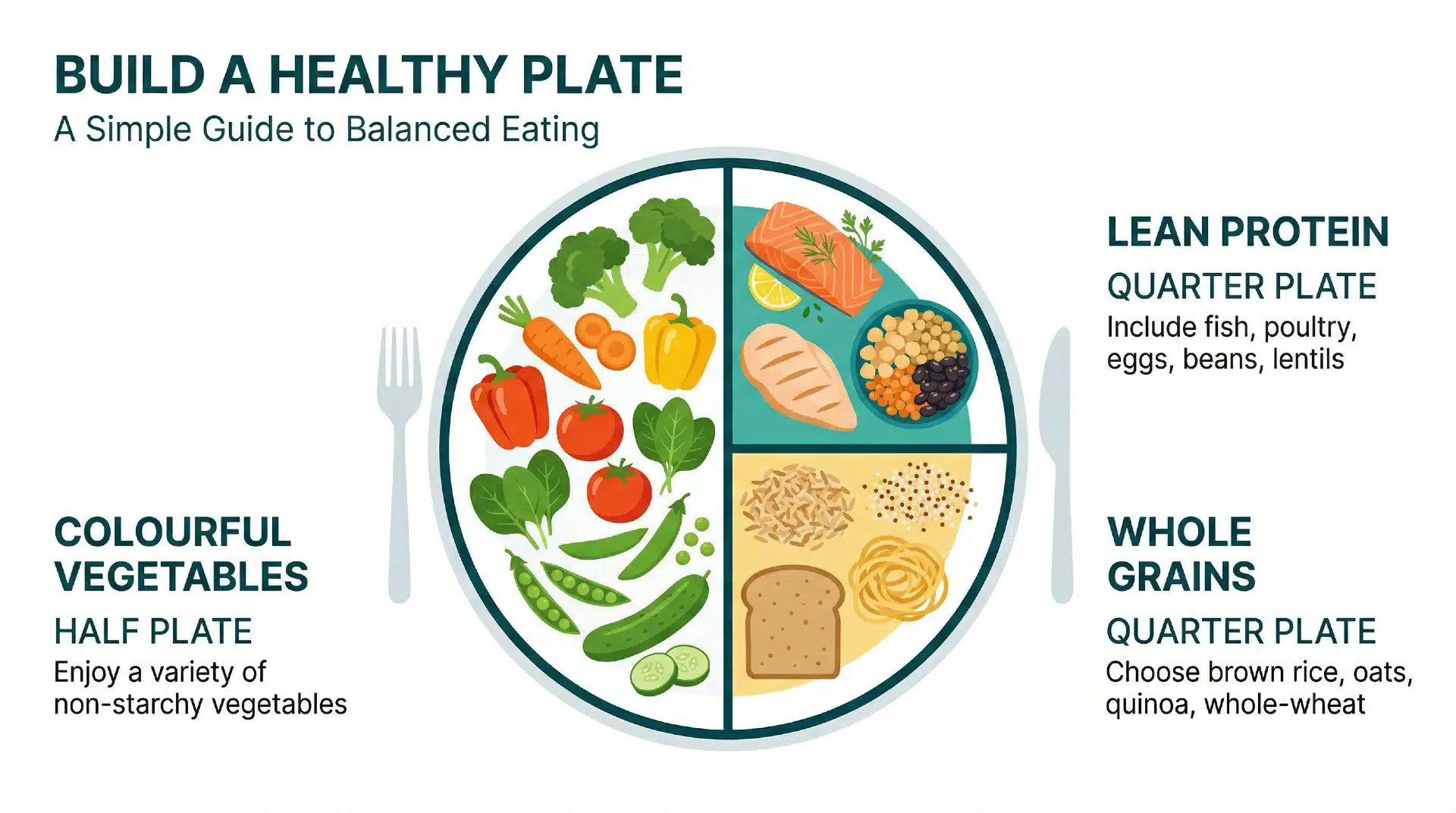
Meal preparation is the single most effective environmental change for improving diet quality. When healthy food is ready to eat, it gets eaten. When it requires effort under conditions of hunger or fatigue, it doesn't.
Dietitians don't prep elaborate meals every day — they batch-cook a few proteins and grains on Sunday, wash and chop vegetables, and keep a supply of quick-assembly options. This reduces decision fatigue and removes the daily friction that leads to takeaway orders.
Weight loss meal prep ideas for women offer a structured weekly approach that doesn't require half a Sunday in the kitchen.
Tip 8: Learn to Read a Food Label — Focus on These Three Numbers
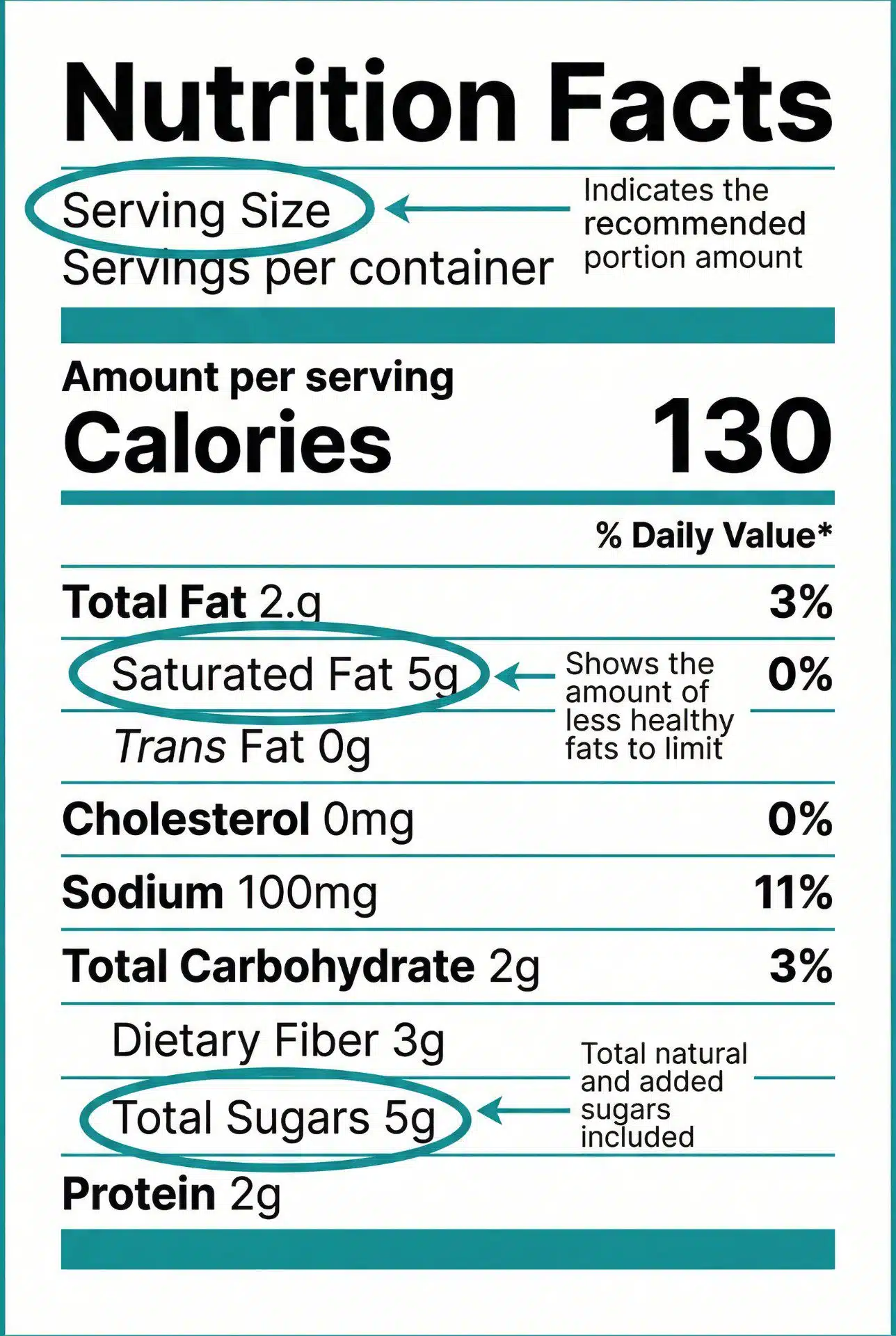
Food labels contain a lot of information. Most of it is marketing. The three numbers that actually matter:
- Calories per serving — and crucially, the serving size. Many products show calories per 100 g but are sold in 250 g portions.
- Total sugar — the NHS recommends no more than 30 g of free sugars per day for adults. Check added sugar, not just total sugars.
- Saturated fat — high is more than 5 g per 100 g. Look for this in processed foods specifically.
Everything else — traffic light labels, health claims, "low fat" designations — is secondary to these three.
Tip 9: Cook at Home Five or More Days Per Week
A 2017 systematic review in the International Journal of Behavioral Nutrition and Physical Activity found that people who cook at home more frequently have significantly better diet quality, lower caloric intake, and lower odds of obesity — regardless of what they cook.
Cooking at home gives you control over ingredients, portion sizes, and preparation methods. Restaurant and takeaway food is typically higher in sodium, saturated fat, and total calories than equivalent home-prepared meals. This doesn't mean cooking every meal is realistic — but the five-days-per-week threshold appears consistently in the research as where meaningful benefit begins.

Tip 10: Distinguish Between Processed and Ultra-Processed Food
"Processed food" is not a useful category — almost everything we eat has been processed in some way. The distinction that matters is ultra-processed food (UPF): industrially manufactured products containing ingredients not typically found in domestic kitchens (emulsifiers, flavour enhancers, modified starches, colourings).
A 2019 randomised controlled trial in Cell Metabolism found that participants eating ultra-processed diets consumed 508 more calories per day than those eating unprocessed diets, even when both groups had unrestricted access to food. The appetite-regulation system simply doesn't work as well on ultra-processed food.
The practical rule: if you can't recognise the majority of ingredients on the label, it's probably ultra-processed.
What To Drink
Tip 11: Hydrate Before You Feel Thirsty
Mild dehydration — as little as 1–2% body water loss — impairs cognitive function, increases fatigue, and is frequently misread as hunger. By the time you feel thirsty, you're already mildly dehydrated.
The NHS recommends 6–8 glasses (roughly 1.5–2 litres) of fluid per day, more in hot weather or during exercise. Registered dietitians typically keep a water bottle visible at all times — the visual cue is a more reliable prompt than waiting for the physical sensation.
Water, herbal teas, and milk all count. Fruit juice counts but should be limited to 150 ml per day due to the free sugar content. Caffeinated drinks can contribute to hydration in moderate amounts, contrary to the popular belief that coffee dehydrates you — the diuretic effect is mild and offset by the water content.
Tip 12: Diet Soda Is Not a Neutral Choice
One or two cans of diet soda per day is unlikely to cause acute harm in healthy adults — the artificial sweeteners approved for use in the UK and EU have been assessed as safe at normal consumption levels. That's not the same as "beneficial" or even "neutral."
Research published in JAMA Internal Medicine (2019) found that higher consumption of artificially sweetened beverages was associated with increased all-cause mortality in a cohort of over 450,000 Europeans. The mechanism is debated — the association may partly reflect the broader dietary patterns of heavy diet soda consumers — but the idea that diet soda is a harmless dietary tool doesn't hold up in the population data.
More practically, artificially sweetened drinks maintain the preference for intense sweetness and make whole, less-sweet food taste less appealing over time. Reducing sugar intake gradually is more effective than substituting it with artificial sweeteners.
Tip 13: Treat Alcohol as a Discretionary Calorie
Alcohol contains 7 kcal per gram — more than protein or carbohydrates, and nearly as much as fat. It also suppresses fat oxidation (the body prioritises metabolising alcohol over stored fat) and impairs sleep quality, which affects hunger hormones the following day.
No registered dietitian recommends eliminating alcohol categorically for most people — the social and psychological dimensions of drinking are real. But treating alcohol as a discretionary calorie — like a treat food rather than a dietary staple — tends to align better with both evidence and practice.
The UK Chief Medical Officers recommend no more than 14 units per week, spread over at least three days, with several alcohol-free days.
Mind, Gut, And Stress
Tip 14: Feed Your Gut Microbiome Deliberately
The gut microbiome — the community of trillions of bacteria in your digestive tract — influences everything from immune function to mood to weight regulation. It's fed primarily by dietary fibre, and it responds measurably to dietary changes within days.
The most evidence-backed strategies for microbiome diversity:
- Eat 30 or more different plant-based foods per week (the American Gut Project found this threshold associated with significantly greater microbial diversity)
- Include fermented foods: natural yoghurt, kefir, sauerkraut, kimchi, miso
- Limit ultra-processed food, which is associated with reduced microbial diversity
- Include prebiotic foods: garlic, onions, leeks, asparagus, bananas, oats
Tip 15: Manage Stress Before It Manages Your Eating
Cortisol — the primary stress hormone — directly increases appetite and drives cravings for high-fat, high-sugar foods. For women managing the combination of professional demands, family responsibilities, and limited sleep, chronically elevated cortisol is a real and underaddressed driver of weight gain.
No dietary strategy fully compensates for a chronically stressed nervous system. Dietitians who work in women's health consistently flag stress management — sleep, movement, social connection, boundaries around work — as a genuine nutrition variable, not a lifestyle add-on. The relationship between hormones and weight loss for women covers the cortisol-weight connection in detail.
Join Our Mailing List
Join thousands of women inside our community and receive our free guide, 10 Actions That Support Permanent Weight Loss — the exact behavioural shifts that make the difference between a two-week attempt and a lasting transformation.
No restriction plans. No guilt. Just what actually works — for real women with real lives.

15 Healthy Eating Tips: Quick Reference
| Tip | Core Action | Why It Works | Difficulty |
|---|---|---|---|
| 1. Lead with protein and fibre | Include both at every meal | Satiety, muscle retention, blood sugar | Low |
| 2. Vegetables first | Fill half your plate before other foods | Displaces lower-quality calories | Low |
| 3. No food group bans | Eat all foods — adjust quantities | Reduces restriction-binge cycle | Medium |
| 4. Protein breakfast | 25–30 g protein within 2 hours of waking | Appetite control, hormonal balance | Low |
| 5. Don't skip to compensate | Eat regular meals regardless | Prevents hunger-driven overeating | Medium |
| 6. Slow down mid-meal | Pause halfway through each meal | Allows satiety signals to register | Low |
| 7. Weekly meal prep | Batch-cook proteins and grains | Removes daily decision fatigue | Medium |
| 8. Read 3 label numbers | Calories, sugar, saturated fat | Informed food choices | Low |
| 9. Cook at home 5+ days | Prepare most meals yourself | Better quality, lower calories | Medium |
| 10. Reduce ultra-processed food | Prioritise recognisable ingredients | Improves natural appetite regulation | Medium |
| 11. Hydrate proactively | Drink before thirst arrives | Prevents misreading dehydration as hunger | Low |
| 12. Limit diet soda | No more than 1 per day | Maintains sensitivity to sweetness | Medium |
| 13. Alcohol as discretionary | Track alcohol like treat food | Prevents hidden caloric surplus | Medium |
| 14. Feed your microbiome | 30 plant varieties per week, fermented foods | Gut diversity = better health outcomes | Medium |
| 15. Manage stress | Prioritise sleep and stress reduction | Reduces cortisol-driven eating | High |
Healthy Eating Myths Debunked by Registered Dietitians
| Myth | What the Evidence Actually Shows |
|---|---|
| "Carbs make you fat" | Excess calories cause weight gain. Whole-food carbohydrates are associated with better, not worse, metabolic health in most population studies |
| "Eating fat makes you fat" | Dietary fat is calorie-dense but essential. Low-fat products often replace fat with sugar. Healthy fats (olive oil, nuts, avocado) are associated with reduced cardiovascular risk |
| "You need to detox regularly" | The liver and kidneys detoxify continuously. No dietary supplement or juice cleanse has been shown to enhance this process |
| "Breakfast is the most important meal of the day" | Meal timing matters less than total diet quality. Some people function well without breakfast. The claim originated partly from cereal advertising in the early 20th century |
| "Fresh is always better than frozen" | Frozen vegetables and fish are typically frozen within hours of harvest, preserving more nutrients than fresh produce transported over several days |
| "Superfoods are uniquely powerful" | No single food has clinically demonstrated disease-preventing properties in isolation. Dietary variety and overall pattern matter far more than any individual food |
How To Read A Food Label In 60 Seconds
Food labels are designed to highlight the most marketable information — not the most useful. Here's a practical approach that takes under a minute.
Step 1: Check The Serving Size First
Always. The calorie count means nothing if you don't know what quantity it refers to. Many products show figures per 100 g, but the actual serving is 150–200 g.
Step 2: Look At Total Sugar (Not Just "Sugars")
Find "of which sugars" in the carbohydrate section. The NHS recommends no more than 30 g of free sugars per day for adults. High is defined as more than 22.5 g per 100 g; low is 5 g or less per 100 g.
Step 3: Check Saturated Fat
High is more than 5 g per 100 g; low is 1.5 g or less. This matters most in processed meats, pastries, full-fat dairy, and convenience meals.
Step 4: Scan The Ingredients List
Ingredients are listed in descending order of weight. If sugar (under any name: glucose, dextrose, fructose, maltose, corn syrup) appears in the first three ingredients, the product is high in added sugar.
The NHS food labelling guide provides a clear visual reference for traffic light labelling.
Want The Habits Behind Lasting Weight Loss? Get the free guide: 10 research-backed habits that help women lose body fat and keep it off, with no extreme diets. Send Me The Free Guide.
The Bottom Line
There's no shortage of nutrition advice. There is a shortage of nutrition advice that holds up when you check the research, fits into real life, and doesn't require you to buy anything.
The fifteen tips in this article aren't discoveries. Most of them have been supported by evidence for decades. The reason they're worth restating is that the noise around nutrition — the diet books, the supplement ads, the social media posts about miracle foods — drowns out the basics with remarkable efficiency.
What registered dietitians do is remarkably consistent across the profession: they eat mostly whole foods, they include protein and vegetables at most meals, they cook at home frequently, and they don't apply moral significance to individual food choices. They don't follow detox protocols or ban food groups. They manage stress because they know cortisol affects appetite. They drink water.
None of this is dramatic. That's the point.
Start with one tip. Cook at home more this week. Add a handful of vegetables to dinner tonight. Put your fork down halfway through your next meal. The gap between knowing what to do and actually doing it closes one habit at a time — not all at once.
Glossary Of Key Terms
- Free Sugars: Any sugar added to foods or drinks, or found naturally in honey, syrups, and unsweetened fruit juices, should be limited to 30g daily.
- Ghrelin: The primary "hunger hormone" that increases when meals are skipped, often leading to overeating.
- Gut Microbiome: The community of trillions of bacteria in the digestive tract that responds to dietary fiber and influences overall health.
- Metabolic Rate: The rate at which the body burns calories; protected by maintaining muscle mass through adequate protein intake.
- Prebiotics: Specific foods like garlic, onions, and leeks that serve as fuel for beneficial gut bacteria.
- Registered Dietitian (RD/RDN): A regulated health professional whose advice must be grounded in peer-reviewed evidence and clinical training.
- Satiety: The physical feeling of fullness and satisfaction after eating, primarily driven by fiber and protein intake.
- Thermic Effect of Food: The energy expenditure required by the body to process and digest nutrients.
- Ultra-Processed Food (UPF): Industrially manufactured food products containing additives and ingredients not typically used in home cooking, which can lead to excess calorie consumption.
- Units (Alcohol): A standard measure of alcohol consumption; health guidelines recommend no more than 14 units per week spread over several days.
FAQ
What Are The Most Important Healthy Eating Tips For Women?
The evidence consistently points to five fundamentals: adequate protein (1.6–2.2 g per kg body weight per day), 30 g of dietary fibre per day, at least five portions of vegetables and fruit, cooking at home the majority of the time, and limiting ultra-processed food. These five habits, applied consistently, account for the majority of the measurable difference between healthful and poor dietary patterns in women's health research. No supplement, superfood, or dietary trend has been shown to substitute for them.
How Do Registered Dietitians Differ From Nutritionists?
Registered Dietitian (RD or RDN) is a legally protected credential requiring a university degree in dietetics, supervised clinical placement, and registration with a professional body such as the British Dietetic Association or the US Academy of Nutrition and Dietetics. "Nutritionist" is an unprotected title in the UK and most US states — anyone can use it regardless of training. When seeking professional dietary advice, particularly for a health condition, this distinction matters significantly.
What Should I Eat Every Day For Good Health?
A varied, whole-food diet covering all major food groups provides the best foundation. Daily targets that registered dietitians commonly recommend: 5+ portions of vegetables and fruit, adequate protein at every meal, 30 g of dietary fibre, 6–8 glasses of water, and minimal ultra-processed food. The NHS Eatwell Guide provides a visual framework that broadly reflects the current evidence base.
Is It Possible To Eat Healthily On A Budget?
Yes — and it's more achievable than most people assume. Tinned legumes, frozen vegetables, oats, eggs, and frozen fish are among the most nutrient-dense and cost-effective foods available. The main barrier is not access to healthy food but familiarity with preparing it. Eating healthily on a budget covers practical strategies, including how to batch-cook cheaply and reduce food waste.
How Can I Stop Emotional Eating?
Emotional eating is a learnt coping mechanism, not a character flaw. Dietitians address it by first helping clients distinguish between physical and emotional hunger — the physical kind builds gradually and can be satisfied by various foods; emotional hunger arrives suddenly and typically craves specific foods. The gap between noticing the urge and acting on it is where change happens. Mindfulness-based approaches have the strongest evidence base for this. Breaking the cycle of emotional eating is a practical starting point.
How Do I Reduce Sugar Intake Without Feeling Deprived?
Gradual reduction rather than elimination. The taste preference for sweetness adapts over two to four weeks of reduced sugar intake — foods that previously tasted normal begin to taste overly sweet. Starting with the highest-sugar drinks (juice, soft drinks, flavoured coffee) rather than food tends to produce the largest reduction for the least perceived sacrifice. Practical strategies to reduce daily sugar intake covers this step-by-step.
What Is The Best Meal Timing For Weight Management?
Current evidence suggests meal timing matters less than total diet quality and caloric balance. Eating earlier in the day may have modest metabolic advantages (earlier meals align better with circadian rhythm), but skipping breakfast or eating late is not the primary driver of weight gain for most people. Consistent meal timing — eating at roughly the same times each day — helps regulate hunger hormones and reduces the ad hoc snacking that tends to add untracked calories.