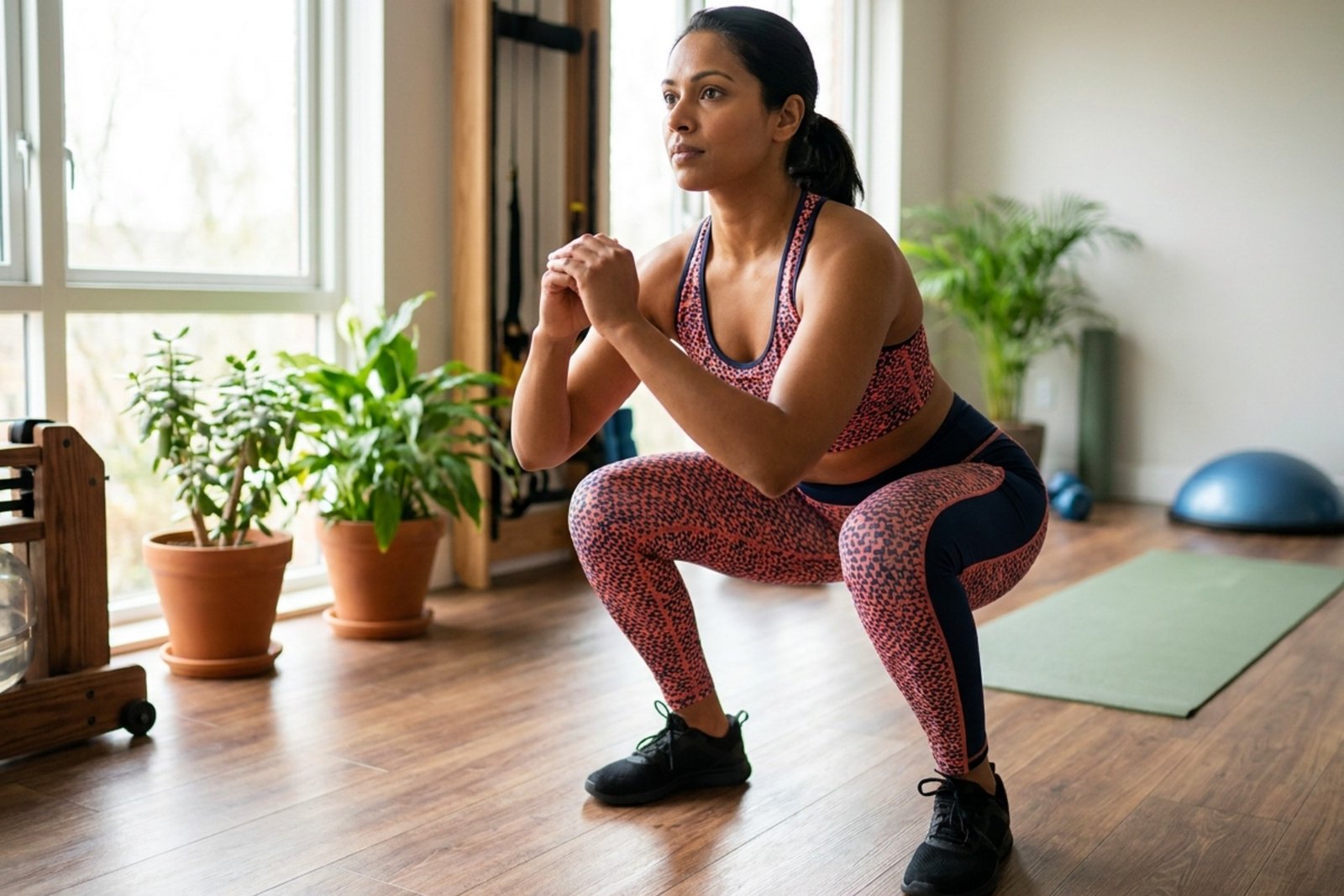
Perfect Exercises For Women: A Correct-Form Guide
Perfect Exercises For Women: The Correct-Form Movement Library That Actually Works

Women don’t need a longer list of exercises. They need to stop guessing whether they’re doing the ones that matter correctly.
Mary James ‧ Founder, Women’s Lean Body Formula
Summary (TL;DR)
The perfect exercises for women aren’t a secret list — they’re eight proven movements (squat, lunge, single-leg deadlift, glute bridge, push-up, row, plank, and interval cardio) done with correct form at least twice a week.
That’s the frequency baseline the American College of Sports Medicine confirmed in its newly updated 2026 resistance training guidelines — its first revision in 17 years. This guide breaks down exactly how to do each one safely, why it works, and how to build a realistic weekly routine around it.
If you are a woman ready to stop guessing and start training with real technique, these are the perfect exercises to build your routine around — and how to combine them with smart weight-loss habits for results that actually stick.
Somewhere between the fortieth “10 Best Exercises” listicle and the gym floor, most women hit the same wall: too many options, not enough clarity on whether they’re actually doing any of it right. That confusion isn’t a personal failing — it’s a content problem.
Exercise lists are everywhere. Correct-form instruction, the thing that actually determines whether a movement builds strength or builds an injury, is rare, and staying motivated is hard when you’re not sure the moves you’re doing are even the right ones.
It matters more than most fitness content admits. Starting around age 30, the female body naturally loses about 3 to 5 percent of its muscle mass per decade, according to the U.S. Office on Women’s Health — a process called sarcopenia that becomes more noticeable by age 60.
Resistance training is the single most effective tool for slowing that curve, and the payoff reaches far beyond the number on the scale (see the workout benefits for females that have nothing to do with weight loss for the fuller picture).
That’s exactly why this guide takes the opposite approach of a ranked “best exercises” list: it’s a working library of eight movements that cover your entire body, explained with the technique cues that keep you safe and backed by research instead of guesswork. If you want a shorter, ranked starting point instead, our 4 best exercises for weight loss is the quicker read. This is the deeper one.
Medical & Referral Disclaimer
This article is for informational and educational purposes only. It is not a substitute for professional medical advice, diagnosis, or treatment. Always consult your physician or qualified health provider before starting any new diet or exercise program.
Key Takeaways
- There is no single “perfect” exercise — there’s a perfect short list, done correctly. Eight movements cover every major muscle group women need for strength, fat loss, and functional independence.
- Twice a week is the real minimum. ACSM’s 2026 guidelines and the CDC’s physical activity guidelines both confirm that training each major muscle group at least two days a week is enough to see results — you don’t need to live at the gym.
- Lifting weights will not make you “bulky.” Research on resistance training in women shows testosterone actually drops during training blocks, not rises — the opposite of what most women fear.
- Deep squats are not bad for your knees when the form is right — a 2024 scoping review found no credible evidence that full-depth squatting damages healthy knee joints.
- Form beats intensity every time. The self-check framework in this guide (the S.E.T. Check) takes 10 seconds and lowers your odds of the form breakdowns that cause most beginner strength-training injuries.
Why “Perfect” Is About Form, Not A Secret Exercise List
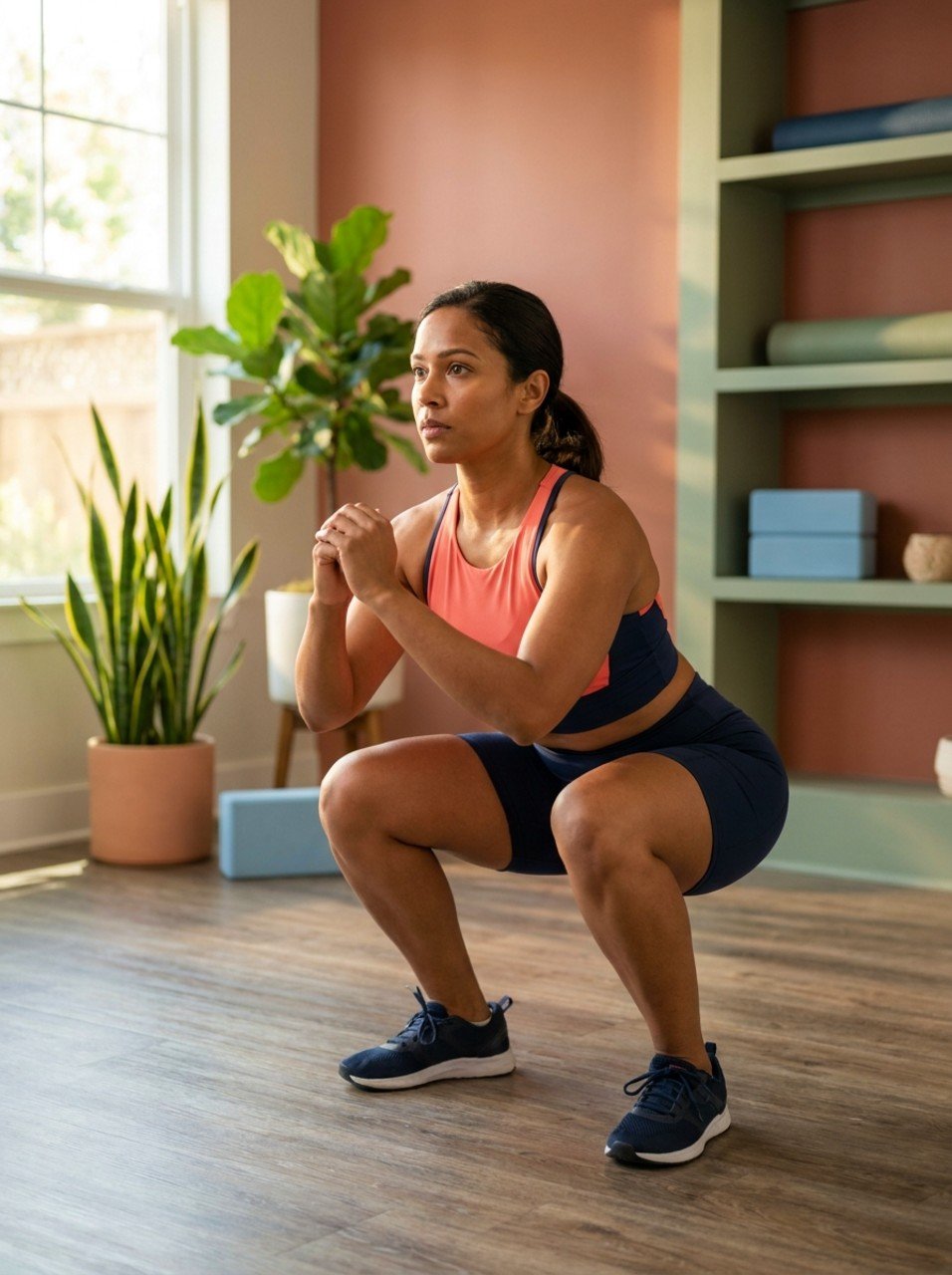
The exercise doesn’t decide whether your workout works — your form does. The same squat can build strong glutes and knees, or wreck them, depending entirely on execution.
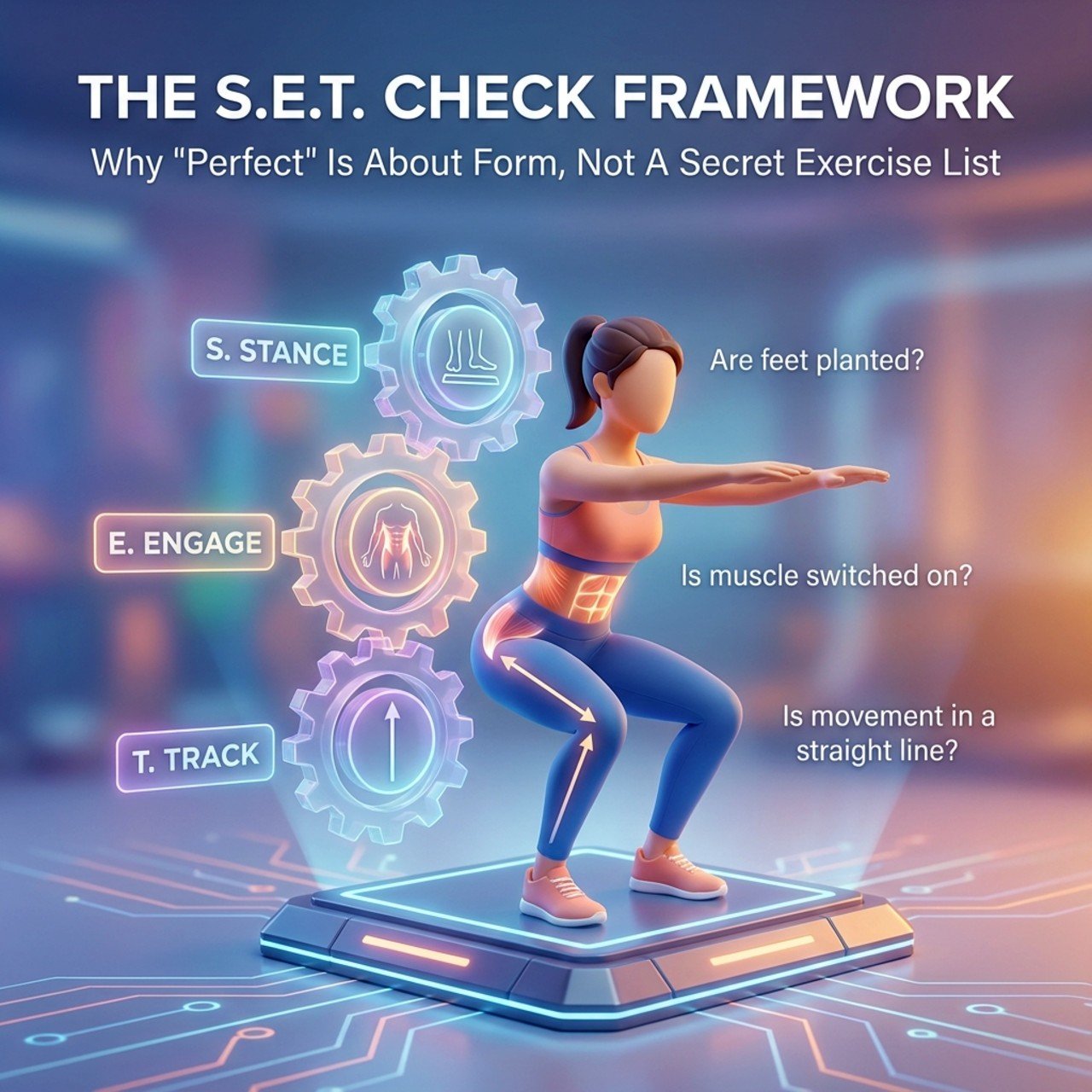
This is where the S.E.T. Check comes in — a 10-second self-audit to run before every set, on every exercise in this guide:
- Stance: Are your feet, hands, or base of support planted where they should be before you move?
- Engage: Is the muscle you’re supposed to be working actually switched on — core braced, glutes squeezed, shoulders set — before the rep starts?
- Track: Are your knees, spine, or shoulders moving in a straight, controlled line, instead of caving, arching, or twisting?
Three questions, ten seconds, every set. It’s the difference between a squat that builds your body and one that breaks it down — and it’s the framework behind every technique cue below.
The Lower-Body & Glute Foundation
Four movements build the lower-body foundation every woman needs: the squat, the reverse lunge, the single-leg Romanian deadlift, and the glute bridge or hip thrust. Together they cover every major lower-body muscle group without needing a single piece of equipment beyond dumbbells.
Squat
The squat is the foundation move of this entire library — master it first, since its form cues carry over to the lunge and both deadlift variations.
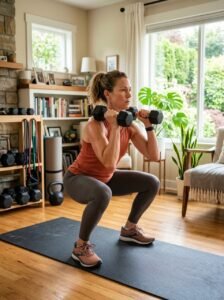
Stand with feet shoulder-width apart, toes turned slightly out. Push your hips back and bend your knees as if sitting into a chair, keeping your chest lifted and your weight in your heels. Lower until your thighs are roughly parallel to the floor — or deeper, if it’s comfortable — then drive back up through your heels.
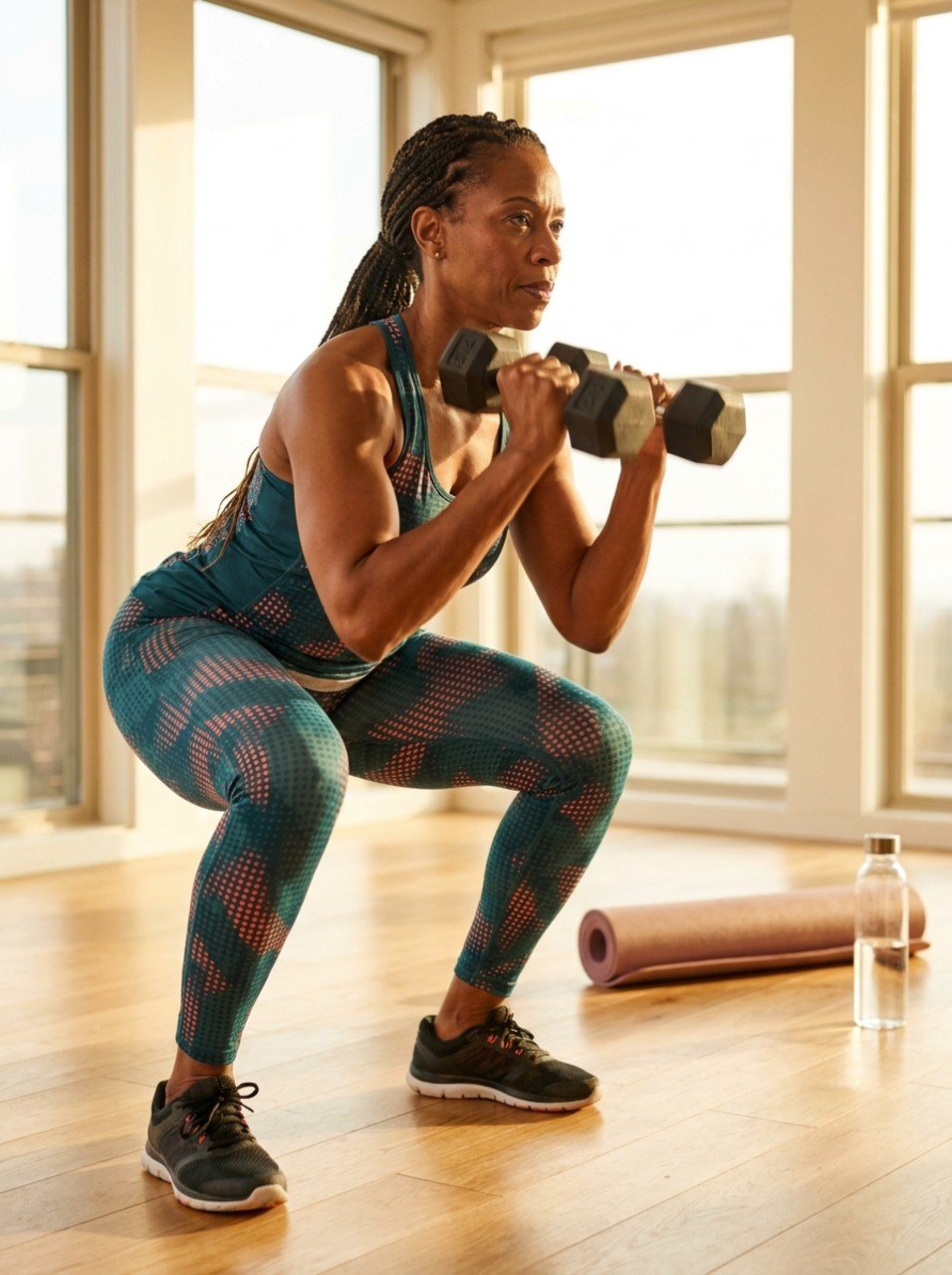
A 2024 scoping review in Frontiers in Sports and Active Living examined 15 studies on deep squatting and knee health. It concluded the deep squat is a safe exercise for knee joint health that can be included in resistance training programs without added risk, provided proper technique is maintained — 87% of the studies reviewed supported this.
The reviewers also noted two separate, encouraging findings: knee discomfort was actually reported more often with partial-range squats than with full-depth ones, and knee cartilage appears to adapt to deep squatting over time by thickening.
S.E.T. Check for the squat: Stance shoulder-width, toes tracking over toes. Engage your core and glutes before you descend. Track your knees in line with your second toe — not caving inward.
Reverse Lunge
Step one foot backward into a lunge, lowering your back knee toward the floor while keeping your front shin close to vertical. Push through your front heel to return to standing, then repeat on the other side.
Because it trains one leg at a time, the lunge is what exercise scientists call a unilateral movement — and unilateral work does something bilateral squats can’t: it exposes and corrects side-to-side strength imbalances while demanding real balance and core control.
A cross-sectional study on 42 amateur athletes published in the journal Sensors and indexed on PubMed Central found that your trunk muscles work hardest on the side opposite the load — carrying a single dumbbell in your right hand activates the erector spinae and oblique muscles on your left side more than a matched bilateral or same-side setup would.
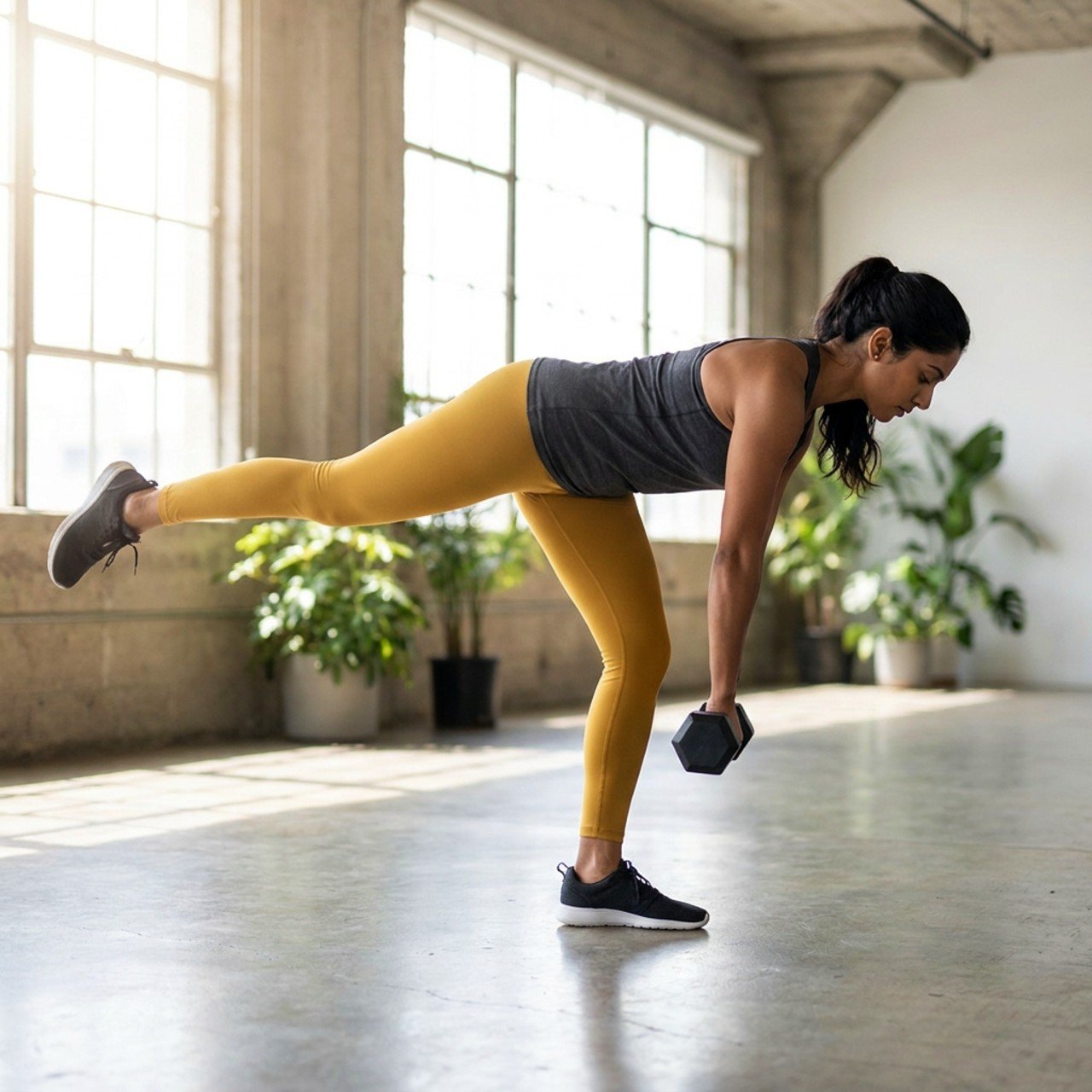
Single-Leg Romanian Deadlift
This is the one WLBF readers already know — and it earns its place. Grab a dumbbell in one hand and stand on the opposite foot. Hinge forward at the hips, letting your free leg extend behind you for balance, until your torso is roughly parallel to the floor. Squeeze your glutes and hamstrings to return to standing.
Research on single-leg Romanian deadlifts published in Frontiers in Physiology found very high glute and hamstring activation across every loading variation tested, and that holding the weight on the side opposite your standing leg (contralateral loading) produced the biggest increase in glute and trunk-stabilizer engagement.
Practical translation: if you’re standing on your right leg, hold the dumbbell in your left hand for a bigger training effect.
Glute Bridge & Hip Thrust
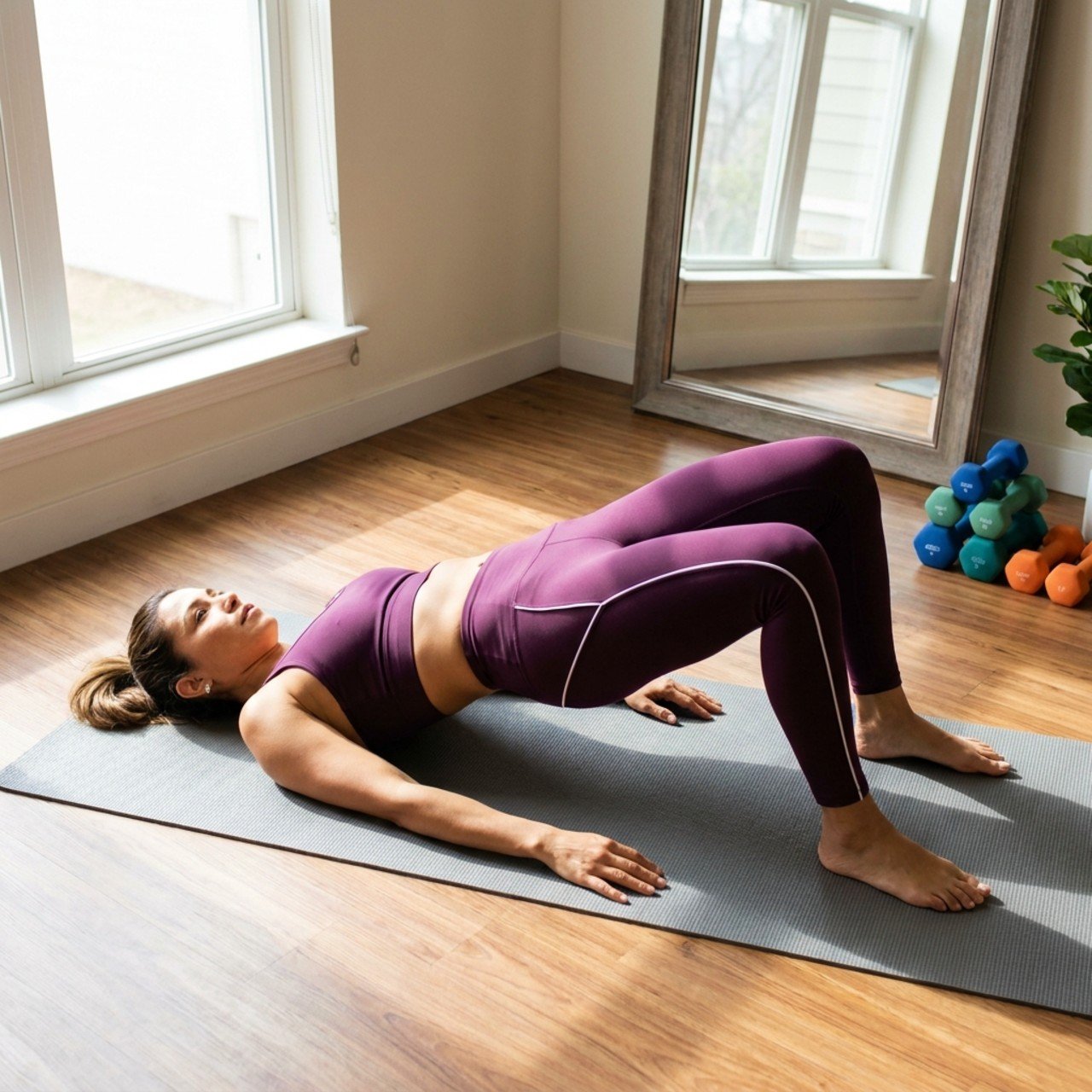
Lie on your back with knees bent, feet flat on the floor. Drive through your heels to lift your hips until your body forms a straight line from shoulders to knees, squeezing your glutes hard at the top before lowering with control. The hip thrust is the same movement performed with your upper back braced against a bench for a longer range of motion.
Electromyography research from strength coach and researcher Bret Contreras, comparing muscle activation in squats versus hip thrusts among trained women, found that hip thrusts produce greater glute and hamstring activation than squats, particularly at full hip extension — exactly the position most lower-body exercises never reach. That makes the bridge and hip thrust a genuine complement to squats, not a redundant add-on.
- Knees caving inward on squats or lunges: a sign your glutes aren’t engaging before the descent — slow down and re-run the S.E.T. Check.
- Rounding your lower back on the single-leg RDL: means you’re hinging from your spine instead of your hips — stop the descent the moment your back starts to round.
- Feeling glute bridges only in your lower back: usually means your feet are too far from your hips, or you’re arching instead of squeezing at the top.
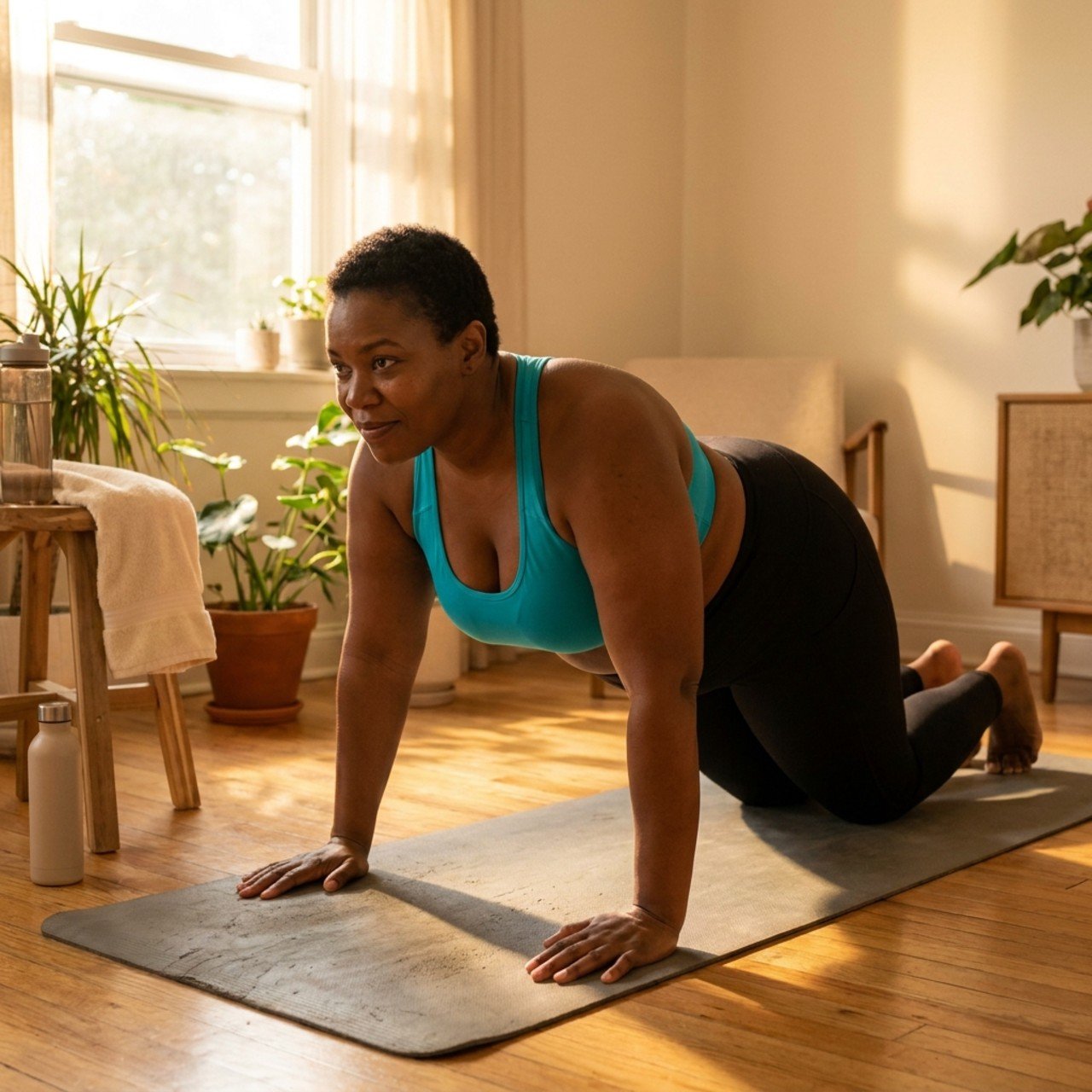
The Upper-Body & Core Layer
Three movements cover upper-body pressing, pulling, and core stability: the push-up, the bent-over row, and the plank. Most women’s routines lean heavily on lower-body work and skip this layer entirely — which is exactly why so many report feeling strong in their legs but weak carrying groceries or holding a plank.
Push-Up (Modified & Standard)
The modified push-up is a real exercise in its own right, not a lesser version of the “real” one — it’s where nearly every beginner should start.
For the modified version, start in a plank with knees on the ground and hands slightly wider than shoulder-width. Keep a straight line from knees to head as you lower your chest toward the floor, elbows at roughly 45 degrees from your body, then press back up.
According to the National Academy of Sports Medicine, the modified push-up is a genuine entry point for novice exercisers and anyone returning from injury — not a lesser version of the “real” exercise. NASM’s own progression benchmark: once you can perform 12 to 15 modified push-ups with perfect form, you’re ready to progress to the standard version.
A study on push-up muscle activation in female collegiate athletes, published in the International Journal of Exercise Science, found meaningfully higher triceps activation when the surface underneath the hands was less stable — useful context for why push-up variations keep challenging you even after you’ve mastered the basic version.
Bent-Over Row
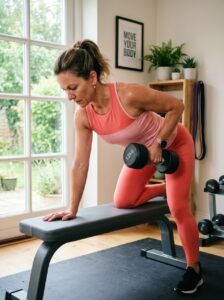
Hold a dumbbell in each hand, hinge forward from the hips with a flat back until your torso is close to parallel with the floor, and let your arms hang straight down. Pull the weights toward your ribcage, squeezing your shoulder blades together, then lower with control.
This is the movement most “perfect exercise” lists skip entirely — and it’s the one that balances out every pressing movement (push-ups included) by training the muscles along your upper back. Neglecting pulling work in favor of pushing work is one of the more common imbalances in beginner routines, and it shows up over time as rounded shoulders and upper-back fatigue.
Side Plank & Forearm Plank
For the side plank, lie on your side, stack your feet, and prop yourself up on one forearm so your body forms a straight line from head to ankles, hips lifted off the floor. For the standard forearm plank, do the same from a face-down position, resting on both forearms.
Planks are genuinely useful — but they’re not a complete core program on their own. A reality-check analysis from the American Council on Exercise found that planks excel at training your core to resist unwanted spinal movement, but static holds beyond about 30 seconds add little further training benefit.
ACE also flags that certain populations shouldn’t rely heavily on prolonged isometric holds, given the blood-pressure and lumbar-spine demands involved. The practical takeaway: use planks as one piece of your core work, hold each one for 20 to 30 quality seconds, and let squats, deadlifts, and rows do the rest of the core-strengthening work through their own bracing demands.
- Sagging hips during a plank: your glutes and core have switched off — squeeze both and shorten the hold rather than let your form break.
- Shrugging your shoulders up around your ears during rows: pull with your back, not your traps — think “elbows,” not “hands.”
- Flaring your elbows out to 90 degrees on push-ups: increases shoulder strain — keep them closer to 45 degrees from your torso.
Cardio & Conditioning: Interval Cardio
Interval cardio — alternating short bursts of hard effort with easier recovery periods — burns more calories after your workout ends than steady-paced cardio does, for the same time invested.
That’s the phenomenon exercise scientists call EPOC (excess post-exercise oxygen consumption), or the “afterburn effect.”

According to the American Council on Exercise, high-intensity interval training is the most effective way to trigger EPOC because it depletes your body’s anaerobic energy systems quickly, requiring an extended aerobic recovery afterward — and that recovery period can add roughly 6 to 15 percent to the total energy cost of your workout.
Critically, ACE notes that EPOC is driven by intensity, not duration: short, hard efforts trigger a bigger afterburn than longer, moderate-paced ones, which is genuinely good news if your biggest barrier to exercise is time.
To do it: pick any equipment you have access to — walking, a bike, a rowing machine, or just open floor space — alternate 30 to 60 seconds of hard effort with 60 to 90 seconds of easier recovery, and repeat for 15 to 20 minutes. Two to three sessions a week is enough to see the benefit; you don’t need it daily.
Flexibility & Mobility: The Piece Everyone Skips
A dedicated stretching routine measurably improves flexibility, strength, and how fast you move — not just how far you can reach. It’s the most commonly skipped part of a “perfect exercises” routine, and the research suggests that’s a mistake.
A study on active stretching in older women, published via PubMed, found that a structured stretching program increased knee-flexor flexibility by 41.5%, improved knee flexor and extensor torque (strength through the joint’s range of motion) by roughly 10 to 11%, and improved Timed Up & Go test performance — a standard measure of functional mobility — by 14.3%.
In plain terms: the women in the study didn’t just get more flexible, they got measurably faster and stronger through their full range of motion.
Aim for at least one dedicated 10-to-15-minute session a week focused on your hips, hamstrings, and shoulders — Thursday in the weekly blueprint below — and tack on a shorter 5-minute stretch after any other workout day when you have the time, since stretching works best when your muscles are already warm.
How To Build Your Weekly Routine
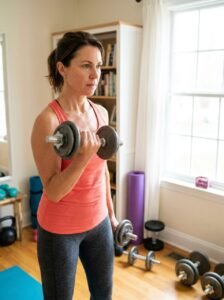
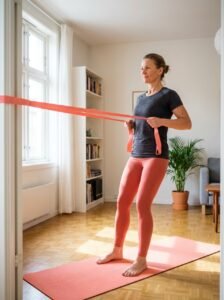
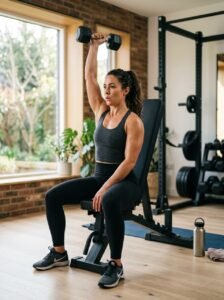
A realistic weekly routine needs three lower/upper-body strength sessions, two to three interval cardio sessions, and dedicated flexibility time — spread across a week you can actually stick to. Below is a starting template; adjust the days to fit your schedule, not the other way around.
| Day | Focus | What To Do | Why It Works |
|---|---|---|---|
| Monday | Lower Body & Glutes | Squat, reverse lunge, single-leg RDL — 2–3 sets each | Meets ACSM’s twice-weekly minimum for every major muscle group |
| Tuesday | Interval Cardio | 15–20 minutes of interval cardio | Triggers the EPOC afterburn effect |
| Wednesday | Upper Body & Core | Push-up, bent-over row, plank — 2–3 sets each | Balances pushing, pulling, and core bracing |
| Thursday | Flexibility & Recovery | 10–15 minutes of stretching, hips/hamstrings/shoulders | Restores range of motion; supports the next lower-body day |
| Friday | Lower Body & Glutes | Squat, glute bridge/hip thrust, lunge — add a little weight from Monday | Second weekly session; progressive overload |
| Saturday | Interval Cardio (optional) | Second 15–20 minute session, or an easy walk | Extra conditioning without adding strength-training fatigue |
| Sunday | Rest | Full recovery, or a gentle walk | Muscle repair happens on rest days, not just training days |
- Weeks 1–2: Learn the movements bodyweight-only, or with light dumbbells. Run the S.E.T. Check on every set. Two sets per exercise is plenty.
- Weeks 3–5: Add a third set, and add light resistance (dumbbells, a resistance band) to the squat, lunge, RDL, and row.
- Weeks 6–8: Increase weight on the moves that feel easy for 10–12 reps. Per ACSM’s 2026 guidelines, strength gains respond best to loads around 80% of your one-rep max for 2–3 sets, while muscle-toning goals respond better to higher weekly volume — roughly 10 sets per muscle group across the week.
Exercise-At-A-Glance Reference Table
Use this table to build your own routine once you’ve learned the form cues above. Every exercise in this guide, its primary muscles, equipment, and beginner-friendliness, at a glance.
| Exercise | Primary Muscles | Equipment | Difficulty |
|---|---|---|---|
| Squat | Quads, glutes, core | Bodyweight or dumbbell | Beginner |
| Reverse Lunge | Glutes, quads, hamstrings, balance | Bodyweight or dumbbell | Beginner–Intermediate |
| Single-Leg Romanian Deadlift | Hamstrings, glutes, core | Dumbbell | Intermediate |
| Glute Bridge / Hip Thrust | Glutes, hamstrings | Bodyweight or barbell | Beginner–Intermediate |
| Push-Up (Modified/Standard) | Chest, shoulders, triceps, core | Bodyweight | Beginner–Intermediate |
| Bent-Over Row | Back, biceps, rear shoulders | Dumbbell | Beginner–Intermediate |
| Side Plank / Forearm Plank | Obliques, core, shoulders | Bodyweight | Beginner |
| Interval Cardio / HIIT | Heart, lungs, full body | None, or any cardio equipment | All levels (adjust intensity) |
Debunking The “Perfect Exercise” Myths
The two biggest myths keeping women from strength training are that heavy lifting makes you “bulky,” and that deep squats damage your knees. Neither holds up against the research.
On the bulk myth: a 10-week intervention study comparing HIIT and traditional resistance training in young women, published in PubMed Central, found that testosterone levels actually decreased significantly in both groups — down 58% in the HIIT group and 49% in the resistance-training group — while estrogen rose.
That’s the opposite hormonal direction of what would be needed to build the kind of muscle mass most women picture when they hear “bulky.” Combined with the squat-safety research already covered above, both of the excuses that keep women away from the weight rack don’t survive contact with the evidence.
If your next step is pairing this routine with a smarter eating plan built specifically for female physiology — not a generic calorie chart — that’s exactly what we built the Women’s Lean Body Formula freebie for.
It walks you through the other half of the equation these eight exercises can’t cover on their own: the food side. Grab your free copy here and start pairing correct-form training with a nutrition plan that actually works with your body, not against it.
The Bottom Line
There is no single perfect exercise for women — there’s a short, well-chosen list of eight, done with real attention to form, at a frequency you can sustain. Squat, lunge, hinge, bridge, push, pull, brace, and get your heart rate up: that combination, run through the S.E.T. Check every time, covers what your body actually needs.
The newest sports-medicine guidance backs up what this guide recommends — twice a week, consistently, beats an ambitious routine you abandon in three weeks. Start with the weekly blueprint above, run the S.E.T. Check on every set, and give it eight weeks before you judge the results.
Glossary Of Key Terms
- S.E.T. Check: A 10-second self-audit framework focusing on Stance, Engagement, and Tracking to ensure correct exercise form.
- Sarcopenia: The natural loss of muscle mass and strength that occurs with aging, typically beginning around age 30 at a rate of 3–5% per decade.
- EPOC (Excess Post-exercise Oxygen Consumption): Also known as the "afterburn effect," this is the increased rate of oxygen intake following strenuous activity to erase the body's oxygen deficit.
- Unilateral Movement: An exercise that works one side of the body at a time (e.g., a reverse lunge) to correct imbalances and improve stability.
- Bilateral Movement: An exercise where both sides of the body work together simultaneously, such as a standard squat.
- Contralateral Loading: Holding a weight on the side of the body opposite to the working limb to increase engagement of the glutes and trunk stabilizers.
- Isometric Hold: A type of exercise, such as a plank, where the muscle length and joint angle do not change during contraction.
- Progressive Overload: The practice of gradually increasing the weight, frequency, or number of repetitions in a strength training routine to challenge the body.
- Electromyography (EMG): A research technique used to measure the electrical activity and muscle activation produced during specific exercises.
- Functional Mobility: The ability to move through a full range of motion with strength and control, often measured by tests like the "Timed Up & Go."
FAQ
What Makes An Exercise “Perfect” For Women?
There isn’t one universally perfect exercise — what makes a routine effective is covering every major movement pattern with correct form. Squat, hinge, lunge, push, pull, and core bracing, at a frequency that matches ACSM’s 2026 guidance of at least twice weekly per muscle group, while staying enjoyable enough to sustain long-term.
What Are Some Effective Cardio Exercises Specifically For Women?
Walking, cycling, swimming, and interval training are all effective — the CDC’s baseline is showing up consistently, not picking one “correct” cardio type. Adding short bursts of high-intensity intervals provides an extra calorie-burning boost through the EPOC afterburn effect described above.
Can Strength Training Be Considered A Perfect Exercise For Women?
Yes, strength training builds lean muscle, which supports metabolism and slows age-related muscle loss. Contrary to popular concern, research shows resistance training actually lowers testosterone in women during training blocks rather than raising it — the opposite of what “bulking up” would require.
Should Flexibility And Balance Exercises Be Included In A Woman's Regimen?
Yes, stretching and balance work are two of the most skipped parts of a routine, and the research backs including them. A study on active stretching in women found measurable gains in flexibility, joint strength, and functional mobility after a structured program, not just a bigger range of motion.
How Should A Workout Be Structured To Maximise Effectiveness For Women?
A well-rounded weekly structure includes three days of strength training covering the full body, two to three days of cardio, and dedicated flexibility time. Ideally with at least one interval cardio session included — the weekly blueprint table above gives a realistic starting template.
How Do Women Adapt Exercises To Fit Busy Lifestyles?
Choose movements that need little to no equipment, and lean on interval cardio for its time efficiency. Every exercise in this guide can be done bodyweight-only or with a single pair of dumbbells, and interval cardio’s afterburn effect means a shorter, harder session can outperform a longer, easier one for time invested.
I Feel Intimidated Even Reading Exercise Lists, Where Do I Actually Start?
Start with one movement, not eight — pick the squat, run the S.E.T. Check, and do two sets of eight bodyweight reps today. That intimidation almost always comes from information overload, not from the exercises themselves; narrowing your focus to one movement at a time, done correctly, is what actually builds confidence. If you’d rather follow a structured first month instead of building your own routine right away, our beginner workout routine for your real first four weeks lays it out day by day.