
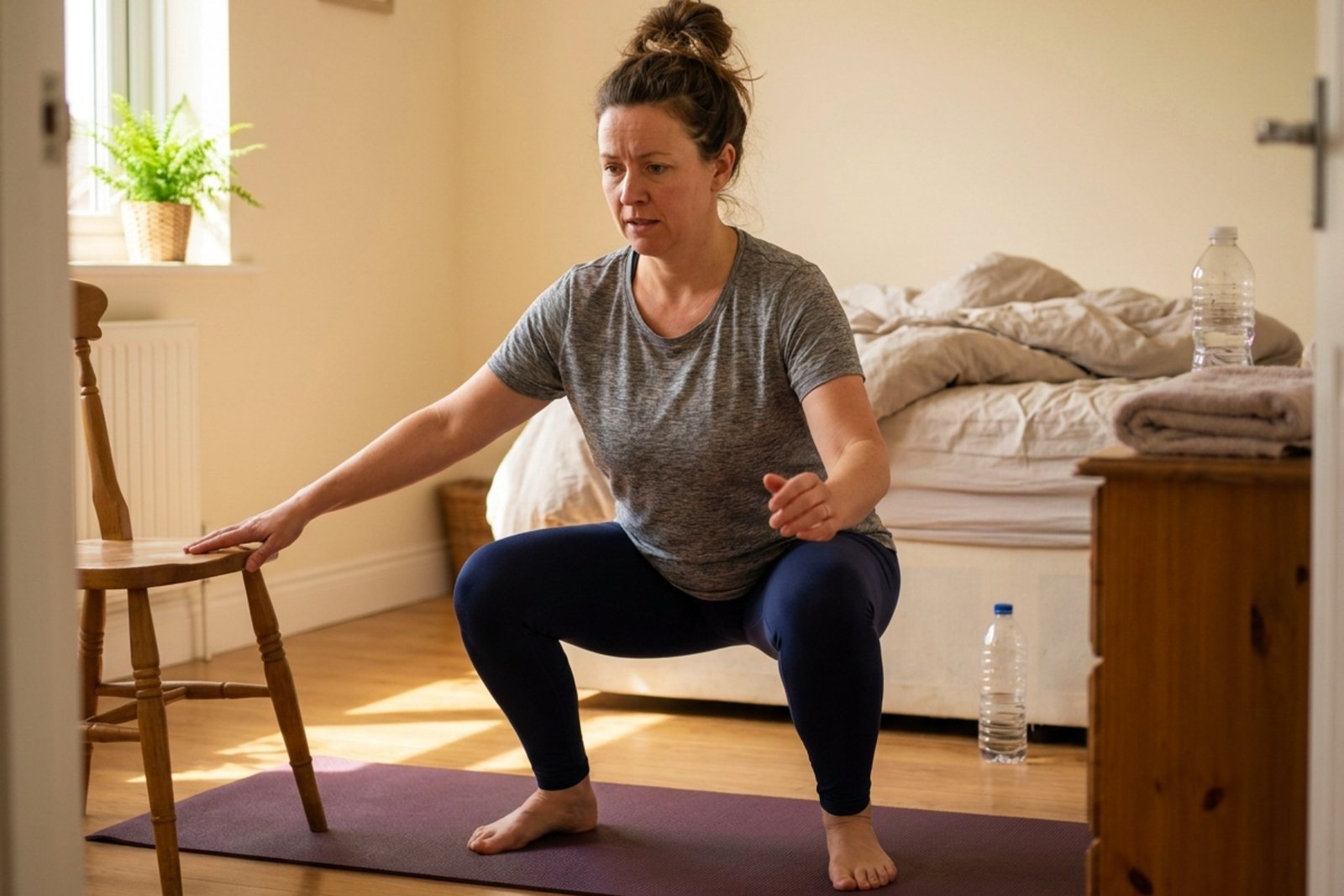
Beginner Workout Routines For Women: Your Real First 4 Weeks
Beginner Workout Routines For Women Who Have Never Set Foot In A Gym

Today I will do what others won’t, so tomorrow I can accomplish what others can’t.
Jerry Rice ‧ NFL Hall of Fame Wide Receiver
Summary (TL;DR)
The most effective beginner workout routines for women combine two to three days of full-body strength training with light cardio and one full rest day, built around consistency rather than intensity. Most people quit not because the workouts are too hard, but because the routine was never realistic for their actual week. Below is a real four-week starting routine, the research behind why it works, and what to do when motivation runs out — because it will.
Starting a fitness routine for the first time is rarely just a scheduling problem. It’s usually the fear of walking into a gym and not knowing what a single machine does. It’s the mental math of “I don’t have an hour, so why bother.” It’s having tried three times before and quit by week two, and wondering if this time will be any different.
This guide isn’t another list of generic tips. It’s a specific, four-week beginner workout routine for women built around what actually gets people to keep showing up — not what looks impressive on a fitness influencer’s feed.
It leans on real behavioral research about habit formation, real data on why women specifically avoid strength training, and a routine you can start this week with nothing more than a floor and a set of stairs.
If you’ve started and stopped before, that’s not a character flaw — it’s usually a routine-design problem, and it’s fixable.
Medical & Referral Disclaimer
This article is for informational and educational purposes only and is not a substitute for professional medical advice, diagnosis, or treatment. Always consult your physician or a qualified health provider before starting any new exercise program, especially if you have an existing health condition, injury, or are pregnant or postpartum.
Key Takeaways
- Strength training matters more than most beginner advice admits: only about a quarter of U.S. adults meet both the aerobic and muscle-strengthening activity guidelines, and women are consistently the ones skipping the weights, not the cardio.
- Consistency beats intensity in the first month: research on habit formation found real behaviors like exercise took a median of 91 days to become automatic — showing up matters more than how hard each session is.
- Short sessions count: reviewed adherence data on brief bouts of activity found compliance rates of 92% or higher, meaning a realistic 20-minute routine beats an ambitious 60-minute one you skip.
- Gym intimidation is a documented, researched barrier — not something you’re imagining or being too sensitive about.
- A missed day doesn’t reset your progress — the research shows occasional lapses barely dent habit formation as long as you return to it.
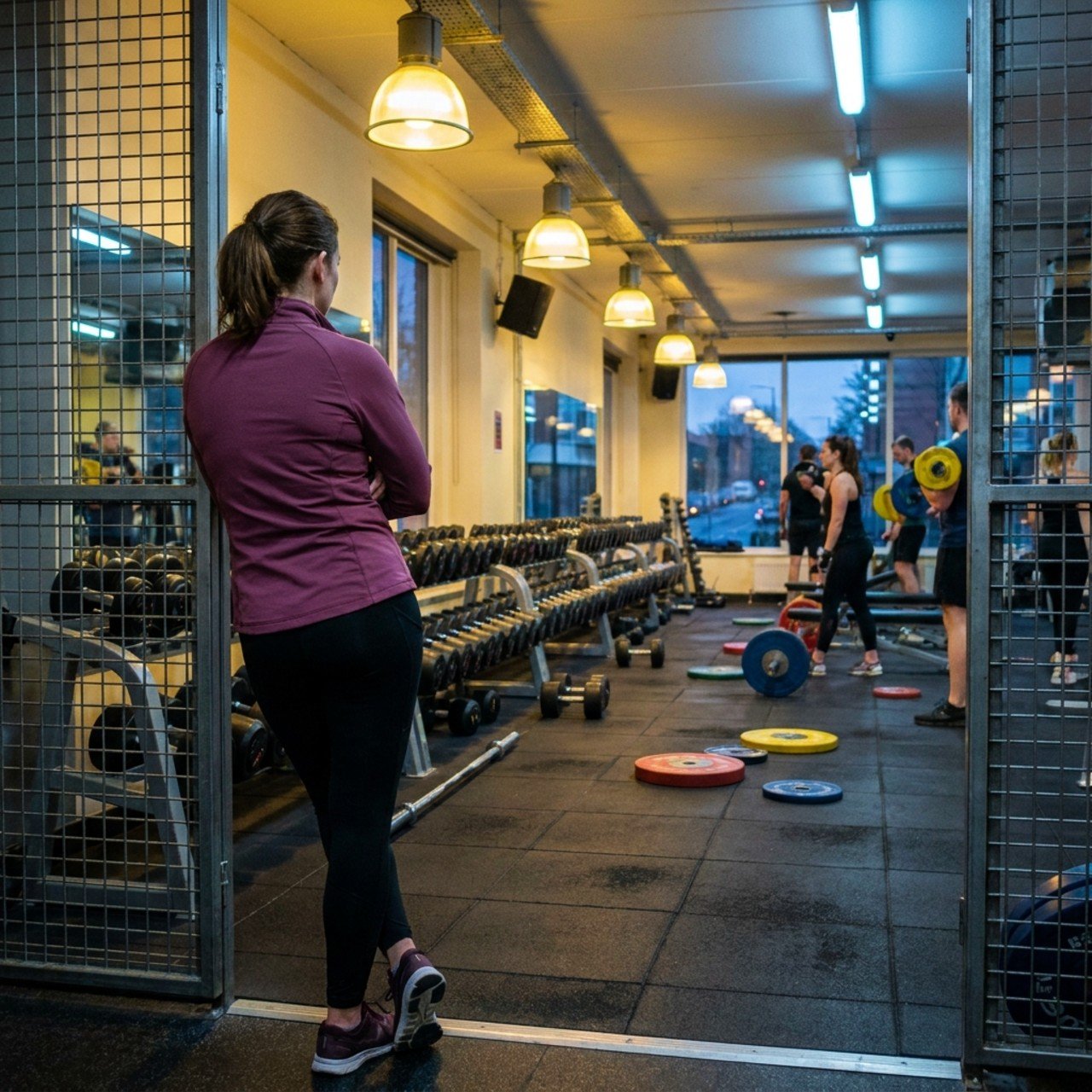
Why Most Beginner Workout Routines Fail Before Week Two
Most beginner workout routines fail because they’re designed around motivation, and motivation is unreliable by week two. The routine that survives is the one designed around your actual schedule, not your best-case-scenario schedule.
The scale of the problem is bigger than most people realize. According to the National Health Interview Survey, only 26.4% of U.S. adults aged 18 and over met both the recommended aerobic activity guideline and the muscle-strengthening activity guideline in 2024, and that share drops with age — from 32.1% among 18–44-year-olds down to 15.5% among adults 65 and older, according to CDC/NCHS data reported by Healthy People 2030.
A separate systematic review in the American Journal of Lifestyle Medicine put it more bluntly: the majority of adults, an estimated 75% or more, simply don’t adhere to the standard activity guidelines at all, according to a 2024 review published in the National Library of Medicine’s PMC archive.
That’s not a motivation problem shared by a weak-willed minority. That’s the default outcome of routines that ask too much, too soon, of people with real jobs, real families, and real fatigue. The fix isn’t willpower. It’s a routine sized to fit an ordinary week — which is exactly what the four-week plan further down is built to do.
What The Research Says About Starting As A Woman
Why The Weight Room Can Feel Like It Wasn’t Built For You
If the weight section of a gym feels unwelcoming, that reaction is backed by actual research, not just nerves.
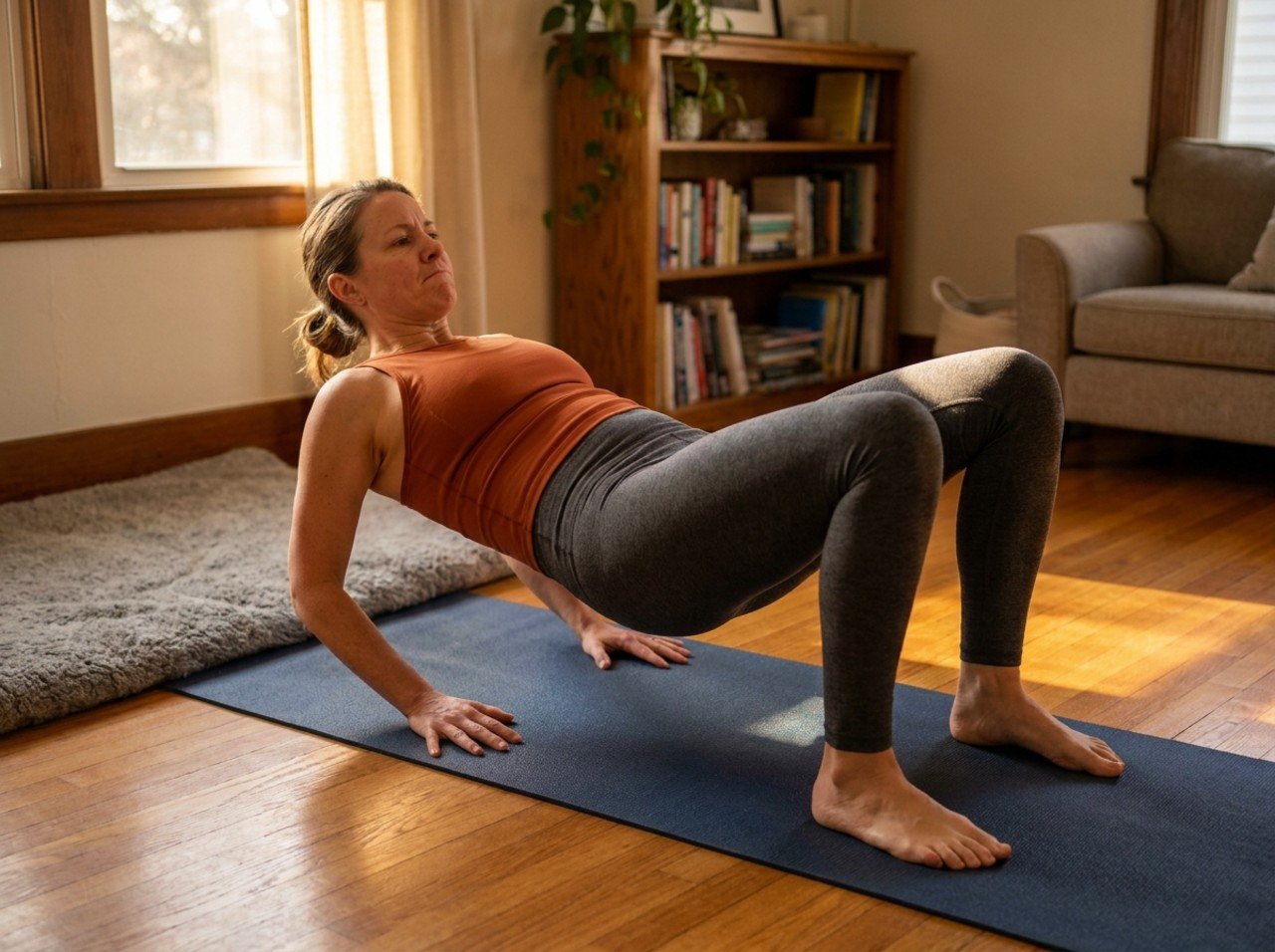
A 2020 study of 319 college students, led by Penn State kinesiology researcher Melissa Bopp and published in the Journal of American College Health, found that women reported significantly less muscle-strengthening activity and lower frequency of weight use than men.
When asked why, participants pointed to the presence and behavior of men in weight areas, low confidence about how to use the equipment, and a self-conscious sense that the space was “a room full of guys,” according to the Penn State research summary.
That study matters here for a practical reason: if part of what’s held you back from strength training specifically is that feeling, you’re not imagining a problem that isn’t there.
It’s well-documented enough that it has a name in exercise psychology — and it’s exactly why the routine below starts at home or in a quiet corner with a mat, not in the free-weight section on day one.
If gym anxiety specifically is what’s stopping you, our full guide on getting started at the gym without feeling intimidated walks through exactly how to handle that first visit.
The Confidence Fix Behavior Science Actually Recommends
Small, repeatable wins build exercise confidence faster than one impressive workout does.
This is the basic idea behind self-efficacy in exercise psychology: confidence to keep exercising comes less from how hard a single session was and more from a track record of showing up and completing what you set out to do.
A routine that’s easy enough to finish — and finish feeling capable, not wrecked — builds more long-term consistency than a punishing one that leaves you sore and dreading the next session.
That’s the entire design logic behind the routine below: it’s intentionally conservative in week one, on purpose.
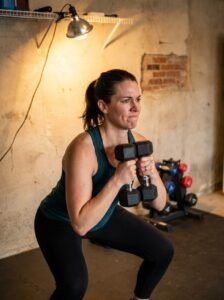
The Beginner Workout Routine For Women: Your Real First 4 Weeks
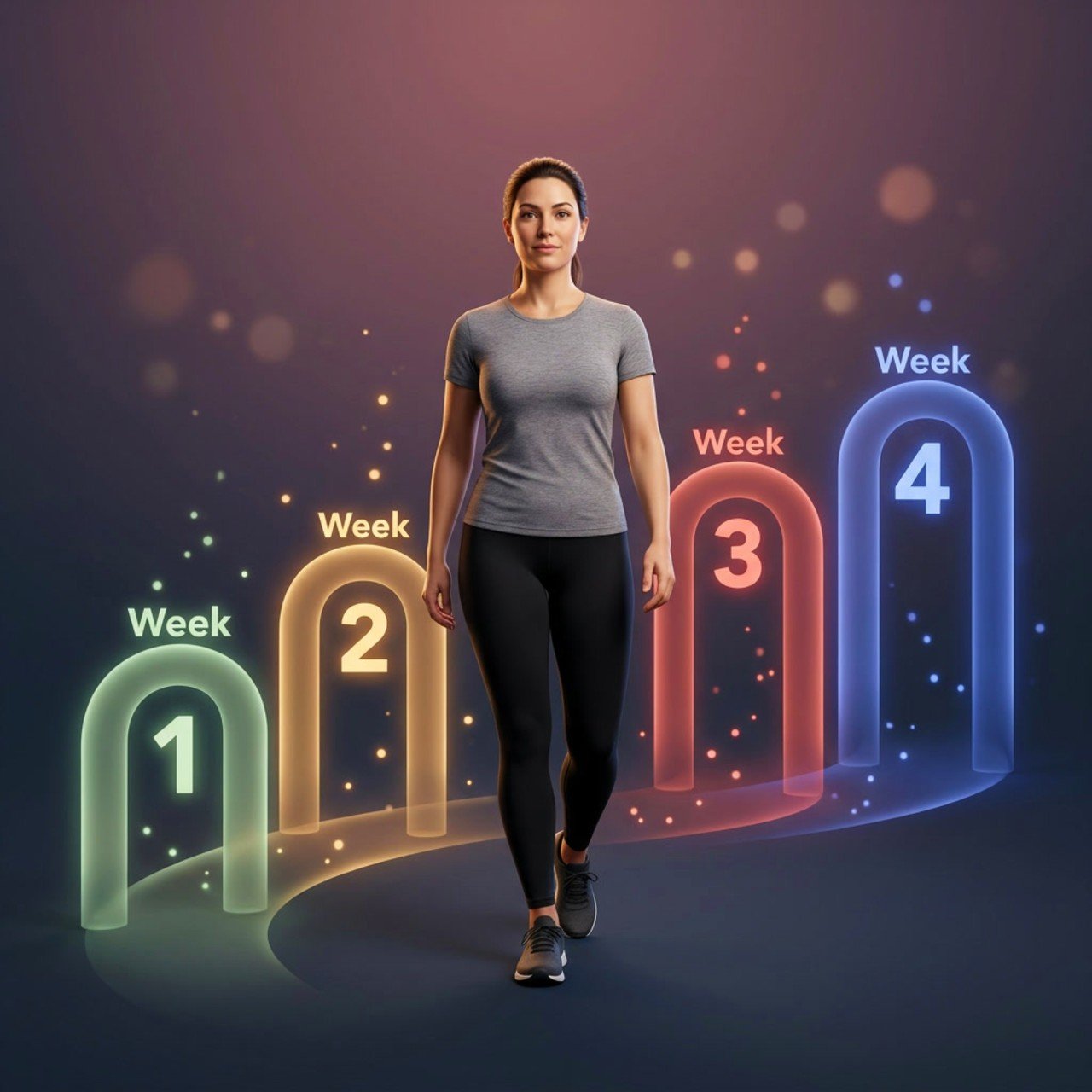
The most sustainable beginner workout routine for women runs three non-consecutive days a week, mixes bodyweight strength work with light cardio, and adds difficulty gradually over four weeks — not four days. Here’s exactly what that looks like.
Weeks 1–2: Building The Habit, Not The Muscle
The first two weeks aren’t about results. They’re about proving to yourself that the routine fits your life, which is the entire battle. Keep sessions to 20–25 minutes.
| Day | Focus | What It Looks Like |
|---|---|---|
| Day 1 | Full-Body Bodyweight Strength | Squats, wall or incline push-ups, glute bridges, standing rows with a resistance band — 2 sets of 10–12 reps each |
| Day 2 | Rest Or Gentle Movement | A 15–20 minute walk, stretching, or nothing at all — genuine rest counts as progress |
| Day 3 | Light Cardio | Brisk walking, a beginner cycling session, or a low-impact cardio video — 20 minutes at a conversational pace |
| Day 4 | Rest | Full rest day |
| Day 5 | Full-Body Bodyweight Strength | Repeat Day 1’s circuit, adding 1–2 reps per set if it felt manageable |
| Day 6–7 | Rest / Optional Walk | Whatever your week allows — consistency over the next two weeks matters more than these two days |
Weeks 3–4: Adding Real Strength Training
Once the schedule itself feels normal — not necessarily easy, just normal — it’s time to add progressive overload: gradually increasing the demand on your muscles so they keep adapting, rather than repeating the same workout indefinitely.
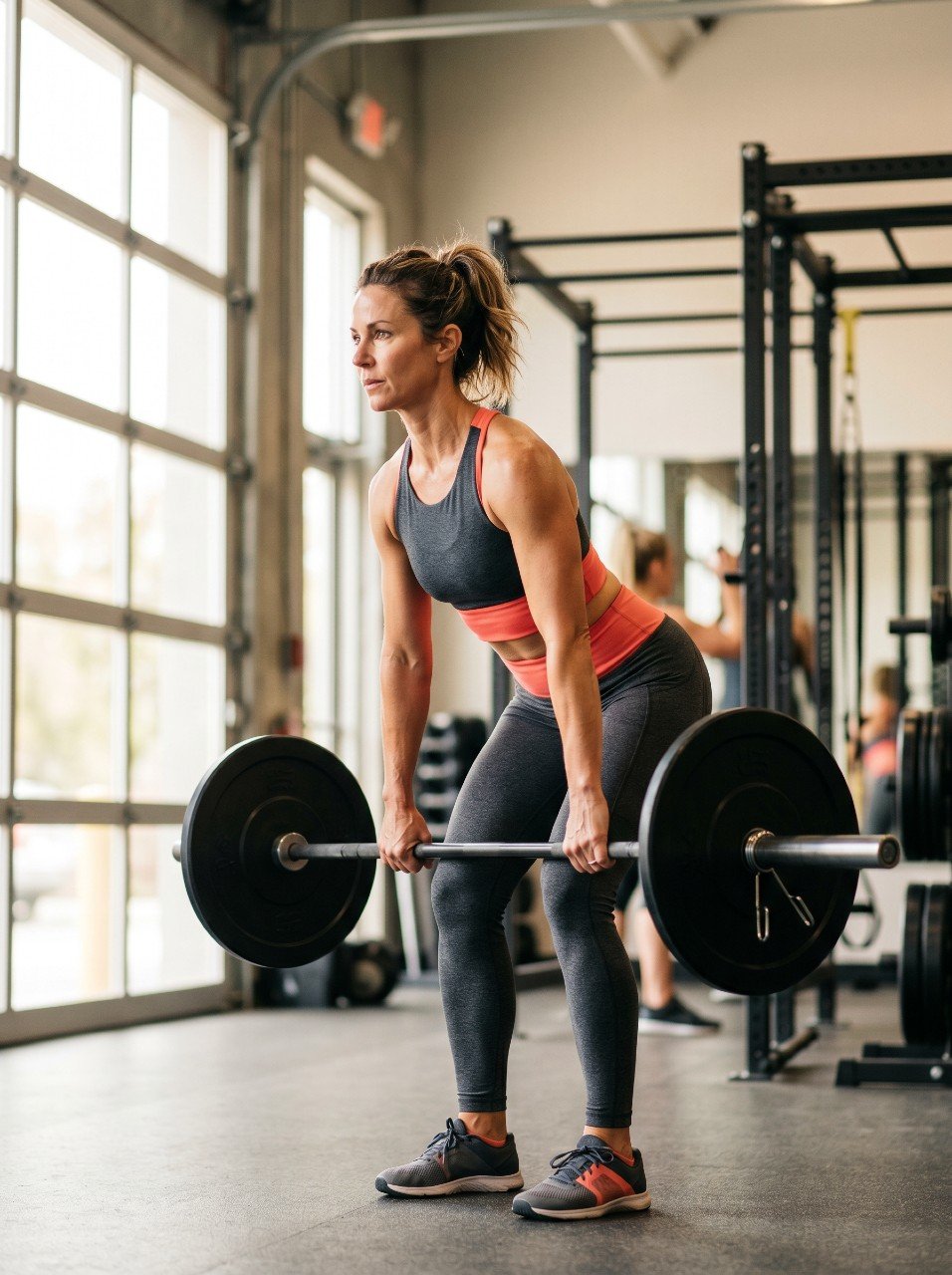
This is the step most beginner routines skip entirely, and it’s the difference between a routine that maintains your current fitness and one that actually builds strength.
How Progressive Overload Fits Into Your Same Three Days A Week
- Add resistance: introduce light dumbbells (or filled water bottles/a backpack with books) to squats, rows, and presses.
- Add a third strength session by swapping in your light-cardio day: your Day 3 cardio session becomes a second strength session, so the week still totals three focused workouts — just two of them now include resistance instead of one.
- Add compound movements: exercises that work multiple muscle groups at once — squats, lunges, push-ups, and rows — give you more strength benefit per minute than isolation moves, which matters when time is tight.
- Track your reps or weight, even loosely. Seeing 8 reps become 12, or a 5-pound dumbbell become an 8-pound one, is the single most motivating thing in a beginner routine.
For the full range of physical, mental, and long-term benefits this kind of routine builds toward, see our deeper breakdown of the real benefits of working out for women and the science of exercise and mental health.
Cardio, Strength, Or Both? What The Guidelines Actually Say
Both, but not in equal amounts — and strength training is the piece most beginner routines under-deliver.
The Centers for Disease Control and Prevention lays out clear, specific weekly targets for adults, and the routine above is built to work toward them without overwhelming week one.
| Activity Type | Weekly Target | Source |
|---|---|---|
| Moderate-Intensity Aerobic Activity | 150 minutes per week | CDC Physical Activity Basics |
| Vigorous-Intensity Aerobic Activity | 75 minutes per week (or an equivalent combination of the two) | |
| Muscle-Strengthening Activity | At least 2 days per week, working all major muscle groups — legs, hips, back, chest, abdomen, shoulders, and arms | CDC Physical Activity Basics |
Notice what’s not on that list: an hour a day, every day. The actual federal guideline is more achievable than most beginner fitness content implies — which is exactly why the four-week routine above starts at three sessions a week rather than the five or six days that make so many people quit by day nine.
How To Actually Stick With It
The single biggest lever for sticking with a new workout routine is lowering the bar for what counts as a session, not raising your willpower. Two pieces of research back this up directly, and both cut against the usual “push through it” advice.
First, a widely cited 2010 study on habit formation, led by researcher Phillippa Lally, found that real-world exercise habits took a median of 91 days to become automatic — a much longer runway than the popular “21 days” myth suggests. Critically, missing a single day barely affected the overall trend, with habit strength recovering quickly afterward, according to a research summary of the Lally et al. habit-formation study.
The original paper sits behind a journal paywall; this summary reports its published findings. Translation: three months of imperfect consistency will get you further than one perfect month followed by burnout.
Second, a 2024 systematic review in the American Journal of Lifestyle Medicine looking specifically at short bouts of activity — sessions under 10 minutes, sometimes called “exercise snacks” — found adherence rates of 92% or higher across the studies reviewed, far outpacing typical adherence to longer, traditional workout blocks, according to the PMC-published review.
If a full 25-minute session isn’t happening on a given day, a 10-minute version is not a failure — it’s the version of the routine most likely to actually get done.
- Put it on the calendar like an appointment, not a hope. Unscheduled workouts are the first thing a busy week eliminates.
- Prepare a 10-minute backup version of each session for the days a full workout isn’t realistic.
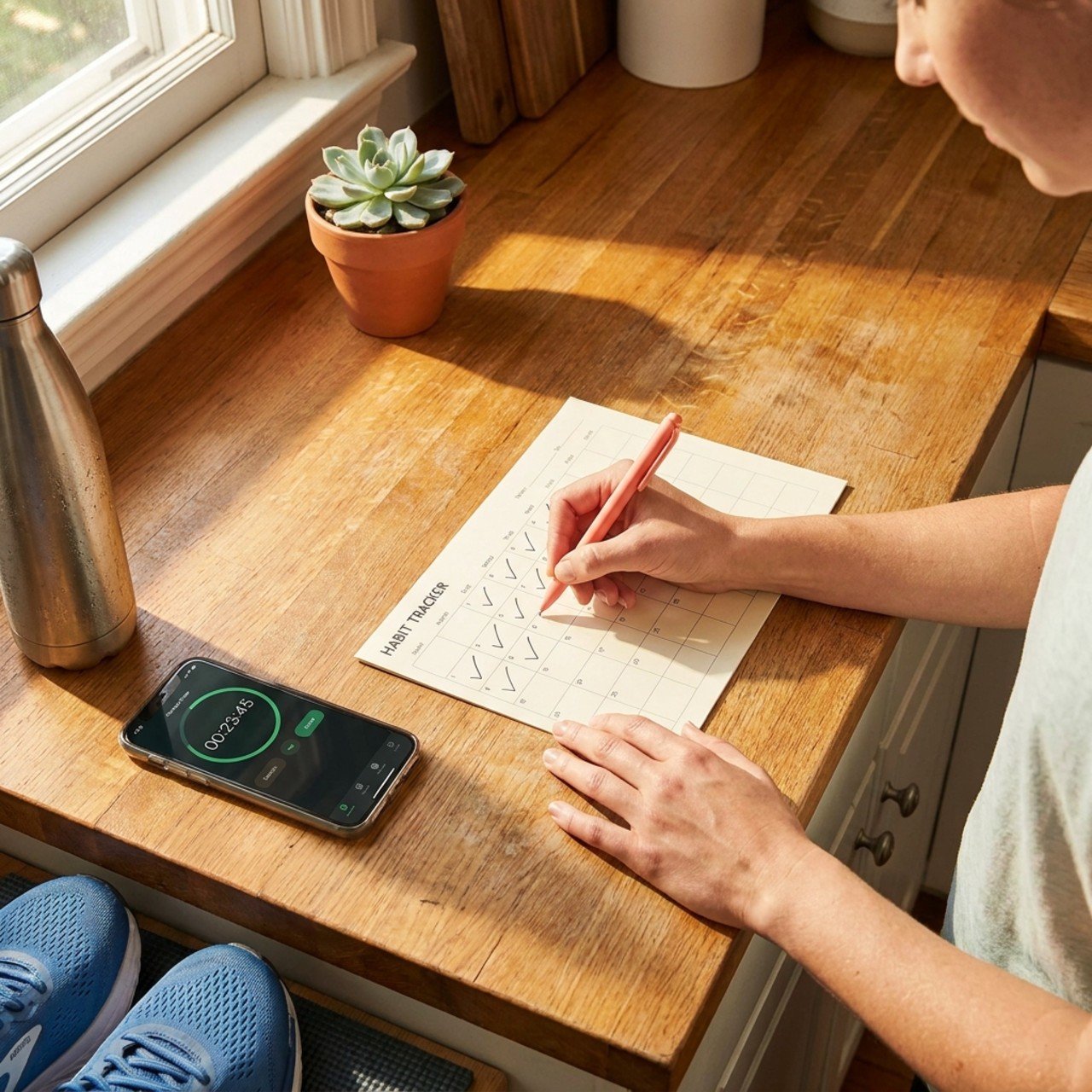
- Track completion, not performance, for the first month. A simple checkmark for “I showed up” builds the habit faster than tracking weight lifted or calories burned.
- Plan for the missed day in advance. Deciding now that a skipped session doesn’t mean starting over removes the all-or-nothing thinking that ends most routines by week three.
For more on building the mental side of this habit, see our guide to fitness motivation tips for beginners.
How Long Until You See Results
Most beginners notice how they feel — better sleep, more energy, less bloating — within two to three weeks, well before visible changes show up.
Visible strength and body-composition changes typically take longer, and the exact timeline depends on your starting point, nutrition, and consistency far more than the specific exercises chosen.
Because this question deserves a real, detailed answer rather than a one-paragraph guess, we’ve covered the full week-by-week timeline — including what changes first, what takes months, and how to judge progress without a scale — in how long it takes to see results from working out as a beginner woman.
Choosing Exercises You’ll Actually Enjoy
A workout routine you enjoy is a workout routine you’ll repeat — enjoyment is a legitimate design criterion, not a bonus.
The routine above is a template, not a mandate. Swapping the specific movements for ones you don’t dread is one of the most effective changes you can make to your own adherence.
- Dislike bodyweight squats? Sit-to-stands from a chair build the same muscles with less knee strain while you build confidence in the movement.
- Hate steady-state cardio? Swap the walk for a dance-based video, a beginner kickboxing class, or intervals of stair climbing.
- Bored doing this alone? A free beginner class, a walking group, or simply texting a friend your workout photo afterward adds the accountability that solo routines often lack.
If cardio-specific fat-loss framing is more your focus than general strength building, our dedicated fat loss workouts for beginners guide covers that angle in more depth. And for the full case on why this consistent, moderate approach outperforms extreme routines long-term, see the critical role of exercise in weight management.
Ready For More Personalized Guidance?
A general routine is a starting point — but your body, your schedule, and your goals aren’t generic.
If you want the next step broken down for your specific situation — how to progress past week four, what to eat around these workouts, and how to keep results going once the beginner phase ends — join our newsletter and grab our free guide. You’ll get ongoing, practical strategies in your inbox built around how women’s bodies actually work, not a generic one-size-fits-all routine.
The Bottom Line
A beginner workout routine for women doesn’t need to be impressive to work — it needs to be repeatable. The research is consistent on this point: consistency beats intensity, short sessions still count, and the intimidation many women feel walking into a gym is a documented, addressable barrier, not a personal failing.
Start with the four-week routine above, expect it to feel easy in week one on purpose, and let progressive overload do the rest in weeks three and four. The version of this routine that works isn’t the hardest one available — it’s the one still happening in month three.
Glossary Of Key Terms
- Bodyweight Exercises: Strength training movements that use the individual's own weight to provide resistance against gravity, such as squats or push-ups.
- Compound Movements: Exercises that involve the use of multiple joints and muscle groups at the same time, maximizing efficiency and functional strength.
- Consistency: The act of regularly showing up for scheduled sessions; in beginner routines, this is prioritized over the difficulty or intensity of the workout.
- Exercise Snacks: Brief sessions of physical activity, typically under 10 minutes, designed to increase adherence and fit into busy schedules.
- Gym Intimidation: A documented psychological barrier, particularly for women, involving self-consciousness or lack of confidence when using equipment in male-dominated weight areas.
- Habit Formation: The process by which a behavior becomes automatic; for exercise, this typically requires a median of 91 days of repeated activity.
- Moderate-Intensity Aerobic Activity: Physical movement that increases heart rate and breathing but still allows for conversation, such as brisk walking.
- Muscle-Strengthening Activity: Exercises designed to increase the strength, power, and endurance of major muscle groups, recommended at least twice weekly.
- Progressive Overload: The practice of gradually increasing the weight, frequency, or number of repetitions in a strength training routine to challenge the body.
- Self-Efficacy: A person's belief in their ability to succeed in a specific situation; in fitness, it is built through a track record of completed sessions.
FAQ
What Is The Best Beginner Workout Routine For Women?
The most sustainable option combines two to three days of full-body strength training with light cardio and built-in rest days, starting conservatively and adding resistance gradually over four weeks rather than jumping straight into an intense program.
How Many Days A Week Should A Beginner Woman Work Out?
Three non-consecutive days a week is enough to see real progress as a true beginner. This meets the CDC’s minimum muscle-strengthening guideline of at least twice a week while leaving recovery time, which matters more in the first month than most people expect.
Should Beginners Do Cardio Or Strength Training First?
Strength training first, cardio second, is generally the better default for beginners — women in particular are statistically less likely to strength train than men, and the earlier a beginner routine builds the habit, the less intimidating it becomes over time.
How Long Before I See Results From A Beginner Workout Routine?
Energy and sleep improvements are often noticeable within two to three weeks; visible strength and body composition changes usually take longer and depend heavily on consistency and nutrition. See our full timeline breakdown linked above for specifics.
What If I Don’t Have Gym Equipment At Home?
Bodyweight exercises — squats, push-ups, glute bridges, and lunges — build real strength with zero equipment, and household items like filled water bottles or a loaded backpack work as substitute weights once bodyweight versions feel too easy.
Is It Normal To Feel Intimidated Starting A Workout Routine?
Yes, research on gym environments has specifically documented this as a common barrier for women, tied to unfamiliarity with equipment and discomfort in male-dominated weight areas, not a personal shortcoming.
How Do I Stay Consistent With A New Workout Routine?
Schedule workouts like fixed appointments, keep a shorter backup version ready for busy days, track completion rather than performance at first, and decide in advance that one missed day doesn’t mean starting over. Research shows a single lapse barely affects habit formation.