Weight Loss Exercises To Transform Your Body Work Best When They Fit Your Joints, Your Schedule And Your Season Of Life
STEPHEN KING
Novelist & author of On Writing
You can, you should, and if you're brave enough to start, you will.
Summary (TL;DR)
The best weight loss exercises to transform your body are the ones that fit your life right now. Research shows that aerobic, resistance and combined training all reduce body fat percentage by a similar amount, so the right mix depends on your joints, your schedule and your life stage, not on a single “best” workout.
This guide gives you the Transformation Stack, our four-layer model (daily movement, strength, cardio and optional HIIT), plus a selector for beginners, women over 40, new mums, sore joints, home training and 20-minute days.
Tired of hearing that one workout is the secret? Have you tried the “best” plan from social media, only to quit three weeks later because it hurt your knees or swallowed your evenings? It can be really frustrating, I know.
Here’s the deal: there’s no magic move. A large 2025 review found that when workload was matched, aerobic, resistance, and combined training produced similar changes in fat mass, body mass, and body fat percentage. That means the exercise you’ll actually keep doing beats the one that looks best on paper.
So instead of another “top 10 fat burners” list, this guide helps you build your own mix, then hands you a sample week you can start on Monday.
Medical & Referral Disclaimer
This article is for informational and educational purposes only. It is not a substitute for professional medical advice, diagnosis, or treatment. Always consult your physician or qualified health provider before starting any new diet or exercise program.
Key Takeaways
- Exercise alone moves the scale modestly: 150 to 250 minutes a week gives only modest weight loss, but it shapes what that weight is made of.
- Strength training protects your results: adding it to a diet keeps more lean muscle and increases fat loss, even when the scale shows the same number.
- Cardio and HIIT trim fat in similar amounts: HIIT simply needs about 40% less time.
- Daily movement adds up: walking, stairs, and chores make up a big share of the calories you burn outside the gym.
- Your life stage changes the mix: perimenopause, postpartum recovery and sore joints each call for a different starting point.
- Workout consistency is the real transformation tool: the plan you repeat for 12 weeks wins.
What Do Weight Loss Exercises Actually Do For Your Body?
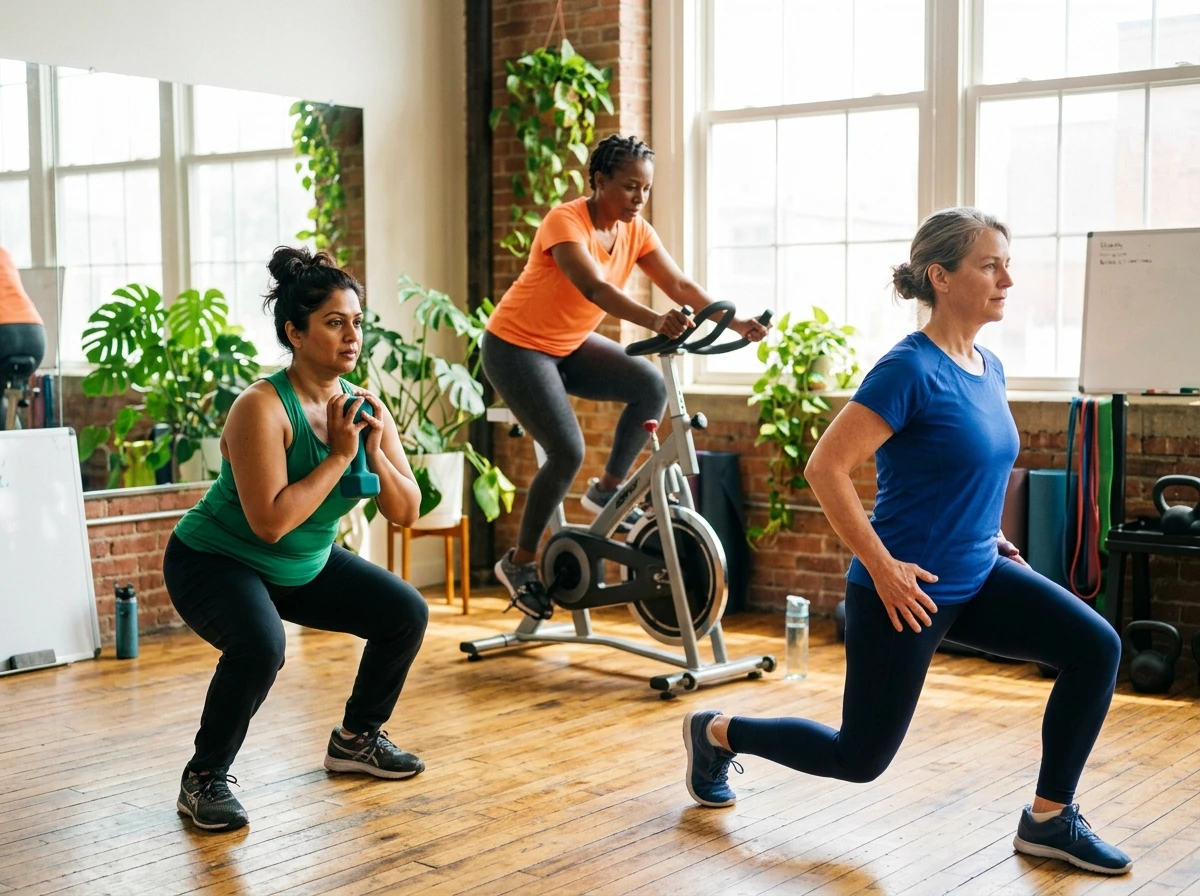
Weight loss exercises burn extra calories, but their bigger job is changing your body composition: less fat, more or better-kept muscle, a stronger heart. On its own, exercise usually takes off a modest amount of weight. Paired with sensible eating, it decides whether the weight you lose is fat or muscle.
The American College of Sports Medicine’s position stand found that 150 to 250 minutes a week of moderate activity prevents weight gain but gives only modest weight loss. More than 250 minutes a week was linked with clinically significant loss. That activity also helped most alongside moderate, not severe, diet restriction.
That’s why the word “transform” matters more than “lose.” When adults lifted weights during a diet, a 2025 meta-analysis of 25 trials found the scale moved about the same, yet resistance exercise protected against the loss of lean mass and increased fat loss. Same weight, different body. That’s the change you see in the mirror and feel in your jeans.
Why The Scale Is A Poor Judge Of Your Transformation
The scale can’t tell fat from muscle, so it often hides real progress in the first months. A review of HIIT and steady cardio found both improved body composition without accompanying body-weight changes. Your waist and your strength often move before your weight does.
The Four Weight Loss Exercises That Transform Your Body
Four exercise types do most of the work: resistance training, high-intensity interval training, steady cardio and low-impact water exercise. Each has a different strength, so the smartest plans use two or three of them together rather than betting on one.
Resistance Training: Building Muscle To Burn Fat
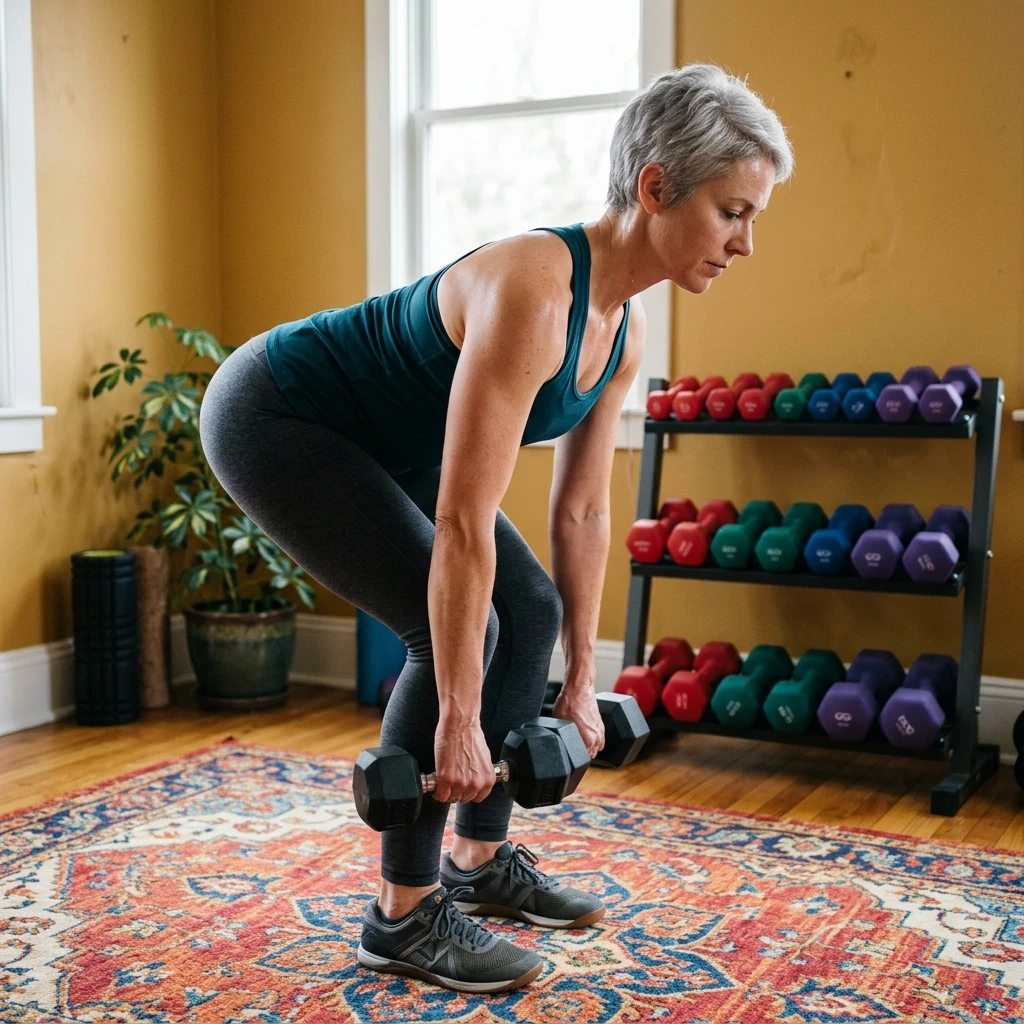
Resistance training reduces body fat on its own, and researchers describe it as the gold standard for building lean muscle mass. A meta-analysis of 58 studies found full-body resistance training cut body fat by about 1.5 percentage points and reduced visceral fat, with no difference between men and women.
Squats, deadlifts, rows, presses and lunges are the backbone of fitness for women who want lasting change. They work several big muscles at once, so you get more done in less time.
You don’t need a barbell to start; dumbbells, kettlebells or even your bodyweight will do the job. If you’re worried about getting “bulky,” our guide on weight loss vs body toning clears that up.
High-Intensity Interval Training: Maximising Calorie Burn
HIIT alternates short, hard efforts with recovery, and it trims fat about as well as steady cardio in roughly 40% less time. Across 13 trials, HIIT and moderate cardio produced no significant difference in body composition, but HIIT needed far less training time.
Another review of 39 studies, about half of the participants women, found HIIT reduced total, abdominal and visceral fat with no difference between the sexes. Sprint intervals on a bike, fast stair climbs, kettlebell swings and jump squats make simple HIIT routines. Keep HIIT to one or two sessions a week; it’s a spice, not the main meal.
Cardiovascular Activities: Sustaining Heart Rate And Fitness
Steady cardio, such as brisk walking, cycling, swimming or dancing, builds cardiovascular health and, in longer trials, trimmed more fat mass than lifting alone. In trials of ten weeks or longer, aerobic training reduced about 1 kg more fat mass than resistance training alone, though it kept less lean mass.
That trade-off is exactly why cardio and strength belong together. Choose something you enjoy and can keep doing for 30 minutes or more. If you’re unsure how to split your week, our guide to balancing cardio and strength training goes deeper.
Water Aerobics: Low-Impact Exercise For High Results
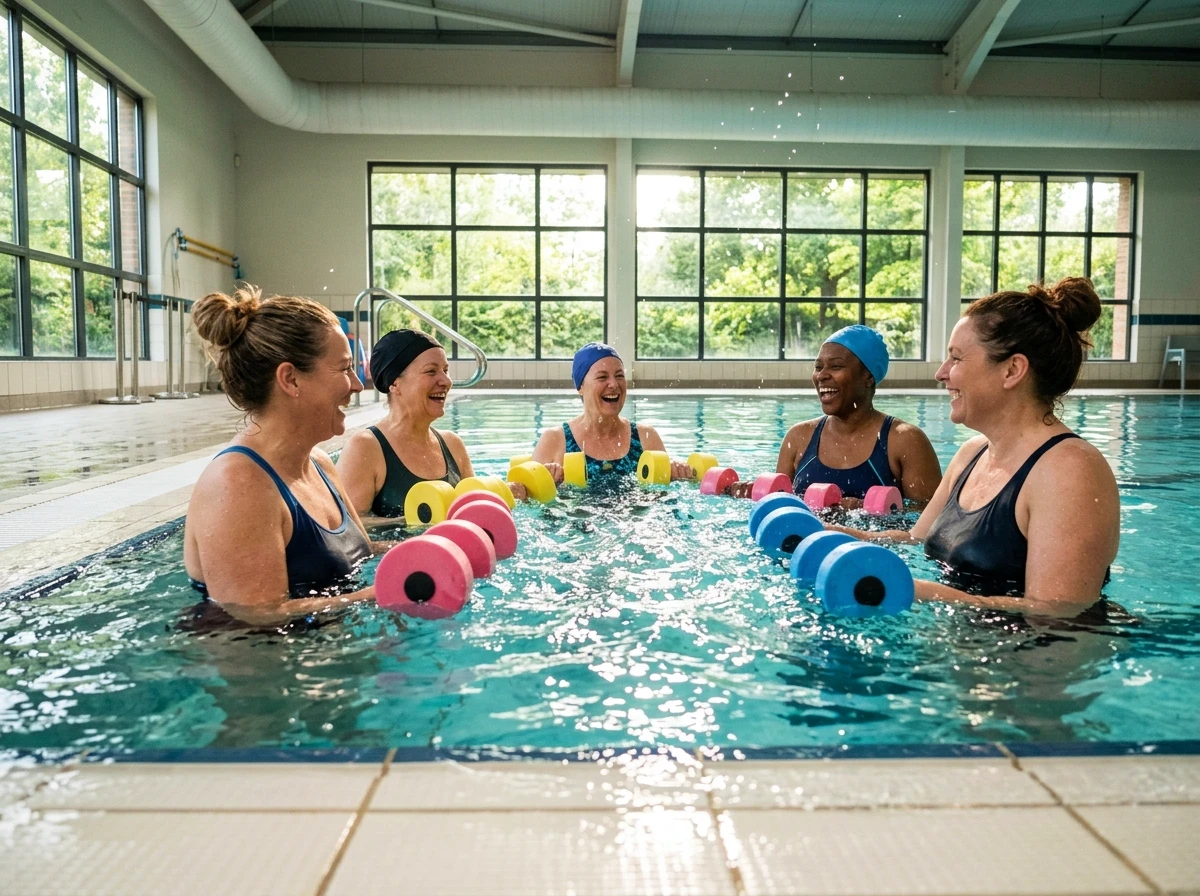
Water aerobics uses the water’s resistance to work your muscles while the water supports part of your bodyweight, so it often suits sore knees, hips or backs. A 2025 meta-analysis of 19 trials in older adults found aquatic exercise improved muscle strength, flexibility, mobility and body fat percentage.
The same review found no significant change in body weight or BMI, so think of water exercise as a body-composition and joint-friendly fitness tool rather than a quick scale fix. Aqua classes and lap swimming all count toward your weekly cardio.
| Exercise Type | What It Does Best | What The Research Shows | Best Suited To |
|---|---|---|---|
| Resistance training | Builds and protects lean muscle | About 1.5 point drop in body fat percentage vs no exercise; less muscle lost while dieting | Everyone, especially women 40+ |
| HIIT | Time-efficient fat loss | Similar fat loss to steady cardio in about 40% less time | Busy women with healthy joints |
| Steady cardio | Fat-mass loss and cardiovascular health | About 1 kg more fat mass lost than lifting alone in 10+ week trials | Beginners and walkers |
| Water aerobics | Strength and mobility with low joint load | Better strength, mobility and body fat percentage; no change in body weight | Sore joints and older women |
The Transformation Stack: Our Four-Layer Model
The Transformation Stack is our own way of building a weekly plan in four layers: daily movement at the base, then strength, then cardio, with HIIT as an optional top layer and recovery running through all of them. It’s a planning tool we created, not a validated clinical program.
Here’s how the layers fit together:
- Layer 1, Daily Movement: steps, stairs, chores and standing breaks most days, ideally every day. This is your base, and it never switches off.
- Layer 2, Strength: two or three full-body workouts a week, matching the Centers for Disease Control and Prevention (CDC) advice of at least 2 days of muscle-strengthening activity.
- Layer 3, Cardio: enough steady aerobic exercise to reach 150 minutes of moderate activity (or 75 minutes of vigorous activity) across the week, counting brisk walks.
- Layer 4, HIIT (optional): one or two short interval sessions once Layers 1 to 3 feel routine.
- Running through it all, Recovery: sleep, rest days and active recovery such as easy walks, stretching or gentle yoga.
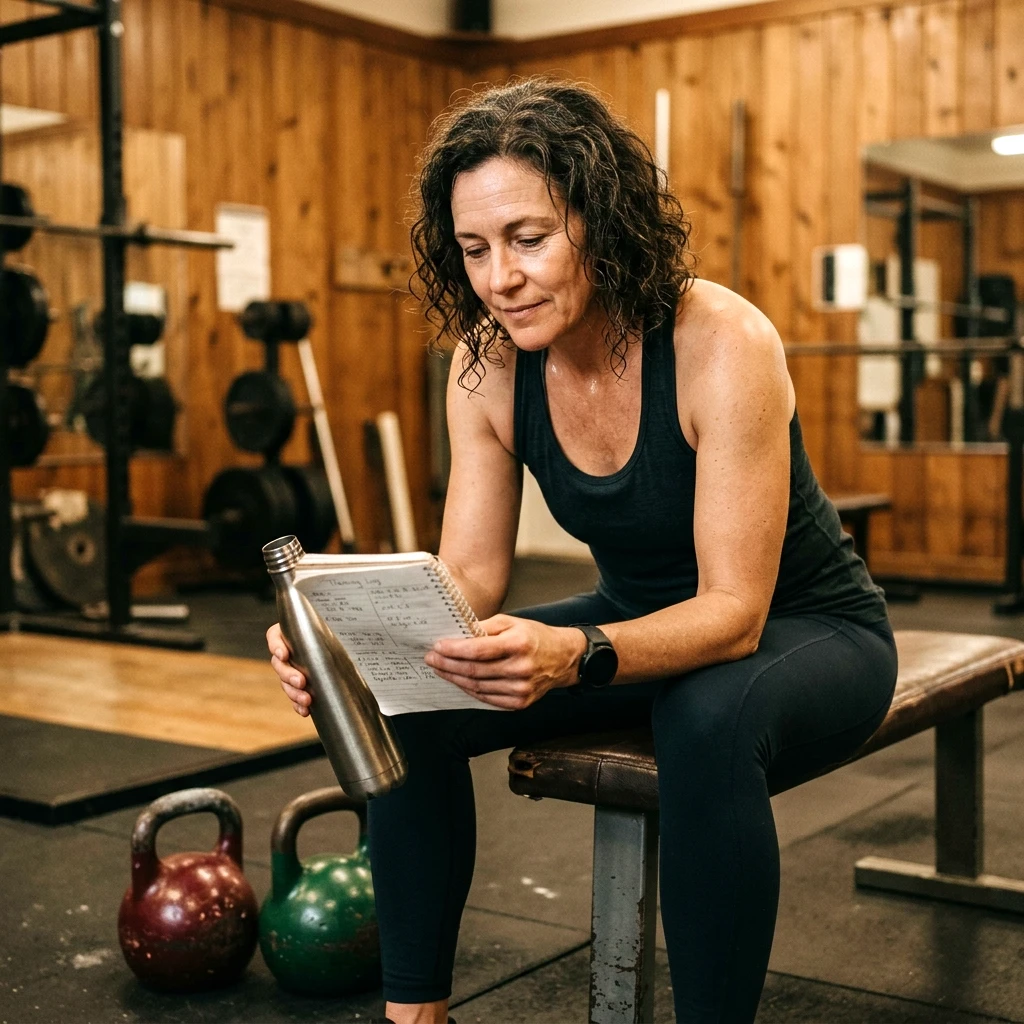
The order matters. Start at the top with daily HIIT, and you’ll likely burn out. Build from the bottom, and each layer makes the next one easier.
Why The Best Exercise Is The One That Fits
No single exercise is “best” for weight loss, because when the workload is matched, the main types produce similar fat loss. What separates success from quitting is fit: whether the workout suits your joints, your schedule, your energy and your enjoyment.
The 2025 review behind this point found that under matched workloads, aerobic, resistance and combined training gave similar changes in fat mass and body fat percentage.
Real women say the same thing in their own words. On Reddit, one woman says she’ll happily do an hour of cycling but has to force herself to lift. Another, at 41, loves weights and dreads cardio. A 46-year-old feels guilty for wanting Pilates over heavy lifting. None of them needs a “better” exercise. They need a mix they’ll repeat.
So, don’t force yourself into a plan you hate. Use the layers, then fill each one with the version you actually like and that serves your personal fitness goals.
Find Your Mix: Weight Loss Exercises Matched To Your Life Stage
Your best starting mix depends on where you are right now: new to exercise, in perimenopause, recovering from a birth, managing sore joints, training at home or short on time. Find your situation below, start there, and adjust as your fitness grows.
If You’re A Complete Beginner
Start with daily walking and two short full-body strength sessions a week, and leave HIIT for later. This builds the base layers without the soreness that makes beginners quit in week two.
Strength training for beginners can be simple. Aim for two 20- to 30-minute sessions of squats to a chair, wall push-ups, rows with a band and glute bridges. Add walking most days. Our beginner workout routines for women and fat loss workouts for beginners give you ready-made sessions.

If You’re Over 40 Or In Perimenopause
Make strength training your priority layer, because the menopause transition speeds up fat gain and muscle loss. The Study of Women’s Health Across the Nation (SWAN) found that at the start of the transition, the rate of fat gain doubled and lean mass declined, continuing until about two years after the final period.
The same study found no jump in the rate of weight gain, which is why your shape can change while the scale barely moves. Two to three strength sessions, daily walking, and plenty of recovery fit this stage well. If you’ve noticed slower recovery and stalled progress, you’re not imagining it; build in an extra rest day rather than pushing harder.
Our guide to strength training for women in perimenopause covers the details, and body recomposition for women over 40 explains why this stage is about composition, not just weight.
If You’re Postpartum
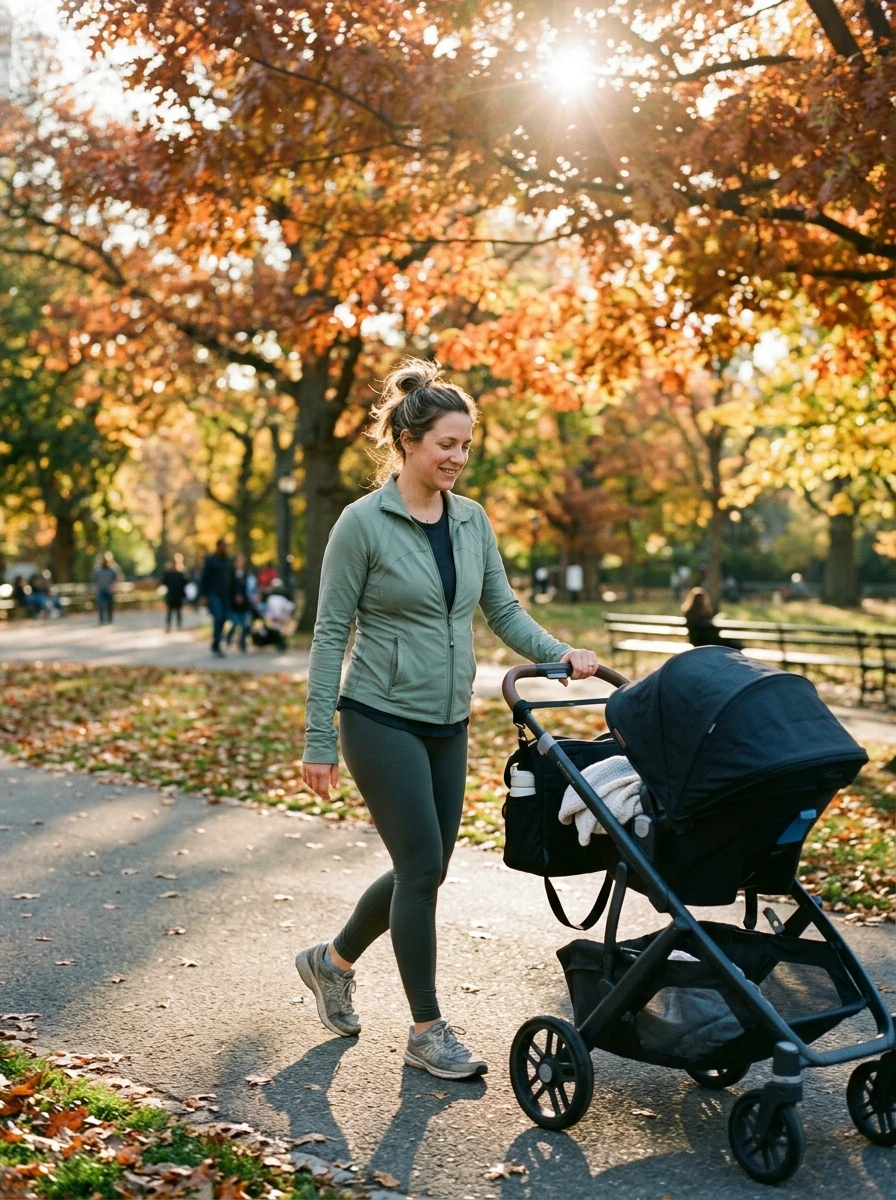
Postpartum fitness starts gently with walking and pelvic floor work, and builds toward 150 minutes of moderate activity a week once your provider agrees. The American College of Obstetricians and Gynecologists (ACOG) says that after a healthy pregnancy and vaginal birth, it’s usually safe to begin exercising a few days after giving birth, or as soon as you feel ready.
After a caesarean birth or complications, ask your ob-gyn when to begin. ACOG suggests Kegel exercises for the pelvic floor, strength work at least 2 days a week, and even three 10-minute walks a day. Stop if you feel pain. If stepping on the scale feels too hard right now, you’re far from alone; track walks and energy instead for a while.
If Your Joints Complain
Choose low-impact options such as water aerobics, cycling, swimming and controlled strength work, and skip jumping intervals for now. Aquatic exercise in particular improved strength and mobility in older adults, and the water cushions every step.
Slow tempo squats to a box, step-ups and band rows build strength without pounding. Our tips to avoid common workout injuries help you stay on track.
If You Train At Home With Dumbbells Or Bands
At-home workouts with resistance bands build similar strength to dumbbells and machines, so you don’t need a gym. A meta-analysis of eight studies found elastic resistance training produced similar strength gains to weight machines and dumbbells.
A pair of adjustable dumbbells and two or three bands cover every main movement, and these dumbbell exercises also build core strength: goblet squats, Romanian deadlifts, rows, overhead presses and split squats. For no-equipment ideas, see our at-home exercises for weight loss guide.
If You Only Have 20 Minutes
On short days, pick a 20-minute strength circuit or a short interval session, and let daily walking cover the rest. HIIT’s time savings were the clearest advantage in the research, at about 40% less training time for similar body composition changes.
If time is your biggest obstacle, our article on what to do when you don’t have time to exercise has more ideas.
| Your Situation | Priority Layer | Suggested Weekly Mix | Hold Off On |
|---|---|---|---|
| Complete beginner | Daily movement | Walking most days + 2 short strength sessions | HIIT until week 6 or later |
| Over 40 or perimenopause | Strength | 2 to 3 strength sessions + walking + 1 cardio session | Back-to-back hard days |
| Postpartum (cleared by provider) | Daily movement + pelvic floor | Daily walks + Kegels + 2 gentle strength sessions | Jumping and heavy lifting until cleared |
| Sore joints | Low-impact cardio | 2 water or bike sessions + 2 controlled strength sessions | Jump squats and running intervals |
| Home with dumbbells or bands | Strength | 3 full body sessions + walking | Nothing; add HIIT when ready |
| Only 20 minutes | Strength or HIIT | 3 short circuits or 2 circuits + 1 interval session | Long sessions you won’t repeat |

A Sample Week Of Full Body Workouts
A balanced week for most women includes two or three full-body strength sessions, two steady cardio sessions, optional HIIT, and daily walking, with at least one easier day. This lines up with the CDC’s 150 minutes of moderate activity and 2 strength days.
| Day | Session | Time | Stack Layer |
|---|---|---|---|
| Monday | Full body strength: goblet squat, row, push-up, glute bridge | 30 to 40 min | Strength |
| Tuesday | Brisk walk or bike ride | 30 to 45 min | Cardio |
| Wednesday | Full body strength: Romanian deadlift, overhead press, split squat, plank | 30 to 40 min | Strength |
| Thursday | Active recovery: easy walk, stretching or yoga | 20 to 30 min | Recovery |
| Friday | HIIT: 6 rounds of 30 seconds hard, 90 seconds easy (optional) | 20 min | HIIT |
| Saturday | Full body strength or a swim, dance class or long walk | 30 to 60 min | Strength or cardio |
| Sunday | Rest, with daily movement | All day | Daily movement |
How To Progress Without Burning Out
Progress one thing at a time and only when the current week feels manageable.
- Add reps first: when you can finish every set with two reps to spare, add a rep or two.
- Then add weight: once reps feel easy, go up to the next dumbbell or a stronger band.
- Add time to cardio slowly: five extra minutes a week is plenty.
- Layer in HIIT last: only once strength and cardio feel routine.
- Protect your easy day: active recovery isn’t lazy; it’s what lets you show up again.
For more on building a plan from scratch, read our five ways to create a new exercise regimen. Want ready-made sessions? Our fat-burning workouts library has six of them.
Incorporating Lifestyle Activities For Continuous Caloric Burn
Everyday movement outside your workouts is a major part of the calories you burn, so it’s the foundation of the Transformation Stack. Simple lifestyle tweaks can jack up your energy use without adding a single extra workout.
The Role Of NEAT In Weight Management
NEAT stands for non-exercise activity thermogenesis, the energy you burn through everything that isn’t sleeping, eating or sports-like exercise. Research describes it as explaining the vast majority of a person’s non-resting energy needs.
Did you know simple actions like fidgeting, walking up stairs, or taking the long route contribute to calorie burn? The same research notes that NEAT tends to drop when you eat less. That’s why many dieters may move less without noticing, and why keeping your steps up matters most when you’re in a calorie deficit.
Steps help your long-term health, too. A study of more than 47,000 adults linked more daily steps with a lower risk of death, levelling off around 6,000 to 8,000 steps for people 60 and older and 8,000 to 10,000 for younger adults.
Integrating Physical Activity Into Daily Life
The easiest way to raise daily movement is to attach it to things you already do. Here are some ideas:
- Walking or cycling to work instead of driving.
- Taking regular breaks to stretch and move around if you have a sedentary job.
- Opting for the stairs instead of the elevator.
- Doing household chores actively, such as vacuuming or gardening.
- Scheduling walking meetings or phone calls.
- Taking active breaks during TV commercial breaks.
All these little changes support your weight loss mission, and they’re easier to keep than any workout.
How To Tell Your Body Is Transforming
Track strength, measurements, energy and how your clothes fit alongside the scale, because these markers often change first. Research on HIIT and cardio showed body composition improving without changes in body weight, so the scale alone can make you quit just before the results show.
- Strength log: heavier dumbbells or more reps than four weeks ago.
- Waist measurement: once a month, same time of day.
- Clothes fit: one pair of jeans you check every few weeks.
- Energy and sleep: a quick note at the end of each week.
- Everyday ease: stairs, carrying shopping, getting up off the floor.
If you need a reality check on how much to eat while you train, our guide on how many calories you should be eating helps you avoid cutting too hard.
The Bottom Line
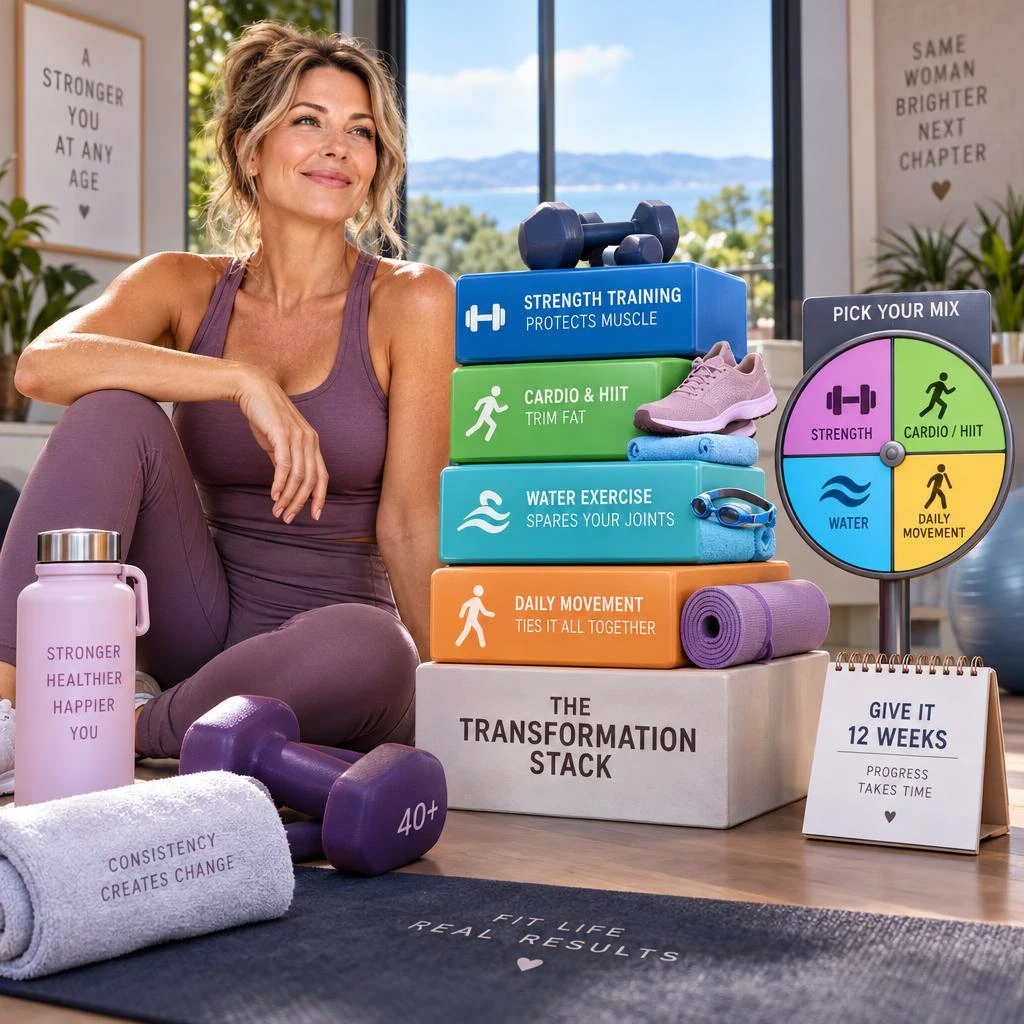
The weight loss exercises that transform your body are the ones that fit your life and that you’ll still be doing in three months. Strength training protects muscle, cardio and HIIT trim fat, water exercise spares your joints, and daily movement ties it all together.
Every weight loss journey looks different, so start at the bottom of the Transformation Stack, pick your mix from the selector, and give it 12 weeks before you judge it. Your body is changing even on the weeks the number doesn’t.
Ready to make the habits stick? Your workouts are only as strong as the routine around them. Grab our free guide with 10 research-backed habits that help women lose body fat and keep it off, with no extreme diets, and pair those healthy habits with the mix you just chose. Send Me The Free Guide.
Glossary Of Key Terms
- Active Recovery: Light movement on easier days, such as walking, stretching or gentle yoga, that supports recovery without adding much fatigue.
- Body Recomposition: Losing fat while building or keeping muscle, so your shape changes even if your weight stays similar.
- Calorie Deficit: Burning more calories than you eat, which leads your body to use stored energy, including fat.
- Cardiovascular Activities: Exercises that raise your heart rate for a sustained period, such as brisk walking, cycling or swimming, improving heart and lung fitness.
- Full Body Workout: A strength session that trains the legs, hips, back, chest, arms and core in one workout.
- High-Intensity Interval Training (HIIT): Short bursts of hard effort followed by recovery periods, repeated several times.
- Lean Muscle Mass: The muscle part of your fat-free mass, which supports strength, movement and daily energy use.
- Non-Exercise Activity Thermogenesis (NEAT): The energy used for everything that isn’t sleeping, eating or sports-like exercise, such as walking, chores and fidgeting.
- Resistance Training: Working your muscles against weights, bands or bodyweight to build strength and muscle.
- Water Aerobics: A low-impact exercise class done in water, using its natural resistance to work muscles while easing joint load.
FAQ
What Are The Most Effective Weight Loss Exercises To Transform Your Body?
The most effective mix combines resistance training, steady cardio and daily movement, with HIIT as an optional extra. When the workload is matched, these types produce similar fat loss, so the best choice is the one you’ll keep doing.
How Does Exercise Impact Weight Loss?
Exercise burns extra calories, but on its own, 150 to 250 minutes a week usually gives only modest weight loss. Its bigger effects are protecting muscle, reducing body fat and helping prevent weight gain.
What Is Resistance Training And How Does It Help With Weight Loss?
Resistance training means working your muscles against weights, bands or your bodyweight. Research shows it lowers body fat percentage and visceral fat, and when added to a diet, it protects lean muscle and increases fat loss, even when the scale shows the same weight.
How Does High-Intensity Interval Training (HIIT) Maximise Calorie Burn?
HIIT packs hard effort into short intervals, so you get a similar fat-loss effect to steady cardio in about 40% less training time. One or two sessions a week is enough for most women.
Why Are Cardiovascular Activities Important For Weight Loss?
Steady cardio strengthens your heart and lungs and, in trials of ten weeks or longer, reduced more fat mass than resistance training alone. Because it keeps less muscle than lifting, it works best paired with two or three strength sessions a week.
What Are The Benefits Of Water Aerobics For Weight Loss?
Water aerobics builds strength, flexibility and mobility while taking pressure off your joints, and research in older adults found it lowered body fat percentage. It didn’t change body weight on its own.
How Can I Create A Balanced Routine For Optimal Weight Loss?
Build it in layers: daily movement first, then two or three full-body strength sessions, then enough cardio to reach 150 minutes a week, and HIIT last. Match the mix to your life stage and protect at least one easier day.