
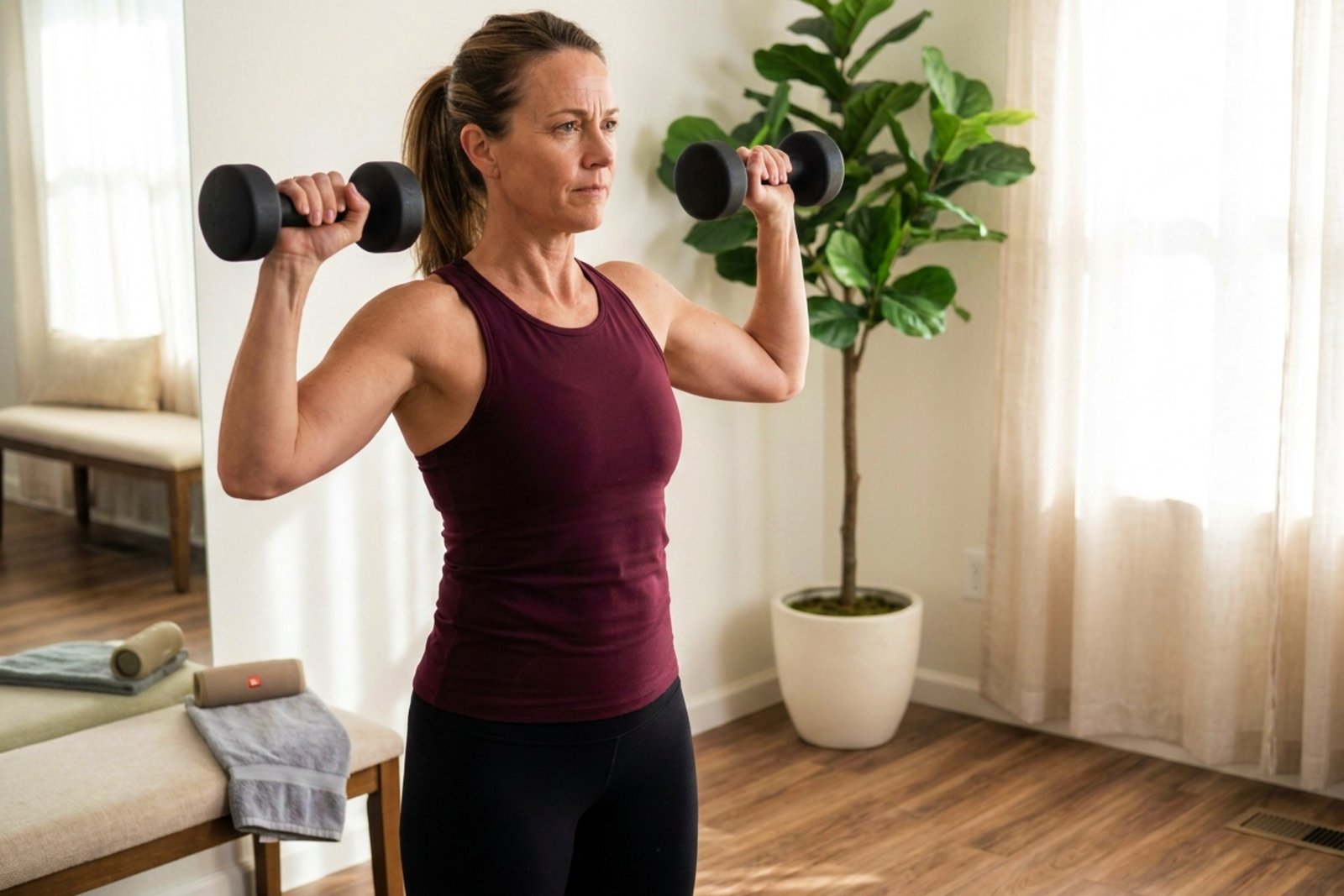
5 Ways To Create A New Exercise Regimen That Actually Sticks
A Science-Backed Approach To Designing Your New Exercise Regimen When Motivation Alone Keeps Failing You
James Clear
Author, Atomic Habits
You do not rise to the level of your goals. You fall to the level of your systems.
Summary (TL;DR)
The best new exercise regimen isn’t the hardest one — it’s the one you’re still doing in month three. Research on habit formation shows real exercise habits take a median of 59–66 days to feel automatic, not the popular “21 days” myth, and a year-long trial found that planning your workout logistics (a preparation habit) beats relying on motivation alone. This guide walks you through the P.I.E. Method — Prepare, Instigate, Expect — plus five practical building blocks for designing a routine around your real week, not your best-case-scenario week.
Getting back into an exercise routine, or building a new one from scratch, is rarely a scheduling problem. It’s the mental math of looking at a packed week and deciding it isn’t worth trying. It’s the frustration of starting strong on a Monday and quietly giving up by the following weekend, again. It’s the low-grade embarrassment of announcing a “new me” three times this year already.
None of that means something is wrong with you. It means the regimen was designed around motivation, and motivation is the least reliable ingredient in the entire process. You’ve probably noticed how many people post their first workout online and ask total strangers to keep them accountable — that instinct isn’t vanity, it’s a (correct) recognition that willpower alone rarely survives a busy Tuesday.
This guide isn’t another list of vague encouragement. It combines the original, practical building blocks women have used to start working out and restart their fitness for years with a genuinely evidence-backed framework — the P.I.E. Method — for why some new exercise regimens survive past week two and most don’t.
Medical & Referral Disclaimer
This article is for informational and educational purposes only and is not a substitute for professional medical advice, diagnosis, or treatment. Always consult your physician or a qualified health provider before starting any new exercise program, especially if you have an existing health condition, injury, or are pregnant or postpartum.
Key Takeaways
- The “21-day habit” myth is false: a 2024 meta-analysis of 20 studies and 2,601 participants found real health habits take a median of 59–66 days, and sometimes months longer, to become automatic.
- Preparation beats motivation: a year-long trial of 751 new exercisers found that planning your workout logistics did more for long-term adherence than intervention components focused on motivation alone.
- The cue matters more than the routine: research on exercise habits found that having a consistent trigger to start — not a fixed set of exercises — predicts how often people actually work out.
- Enjoyment isn’t optional: a systematic review of 66 studies found intrinsic motivation, i.e. genuinely enjoying the activity, is the strongest predictor of exercise adherence over the long term.
- A missed session doesn’t reset the clock: the habit-formation research above found occasional lapses have a limited effect on overall habit strength, as long as you return to the behavior.
- This is a process problem, not a character problem: a new exercise regimen that’s designed around your actual week, not an idealized one, is the single biggest lever for sticking with it.
Why Most New Exercise Regimens Fail Before Week Three
Most new exercise regimens fail because they’re built around finding motivation, and motivation is the least dependable resource you have. The regimen that survives is the one engineered around your actual schedule and actual preferences — not the version of your life you wish you had.
A large part of the problem is a myth: the idea that any new habit, including exercise, becomes automatic after 21 days. A 2024 systematic review and meta-analysis in the journal Healthcare, led by researchers at the University of South Australia, pooled 20 studies and 2,601 participants and found that health-related habits took a median of 59–66 days to reach automaticity, with means of 106–154 days and individual variability stretching from 4 days to nearly a year.
Expecting a new exercise regimen to feel effortless after three weeks sets you up to quit right around the point real change usually starts.
That’s not a motivation problem. It’s a mismatched-expectations problem, and it’s fixable with a better process — which is exactly what the P.I.E. Method below is built to give you. It’s also worth remembering why this is worth the effort in the first place: see our top reasons every woman should stay fit for the fuller case.
The P.I.E. Method: A Framework For A New Exercise Regimen That Sticks
The P.I.E. Method — Prepare, Instigate, Expect — is a three-part, evidence-grounded framework for designing any new exercise regimen so it survives contact with a real week. Each letter maps to a specific finding from behavioral-exercise research, not a motivational slogan.

Prepare: Design Your Environment Before You Rely On Willpower
Deciding your workout logistics in advance does more for a new exercise regimen than any amount of motivation.
A year-long, fully factorial trial of 751 new exercisers (91% women) on an online exercise platform, published in Applied Psychology: Health and Well-Being, tested several intervention components against each other.
The component with the strongest effect on both starting and sustaining exercise, outperforming anything built around intrinsic motivation alone, was building an exercise “preparation habit” — deciding in advance when, where, and how you’ll exercise, then rehearsing that plan.
- Lay out your gear the night before: shoes by the door, clothes on the chair, water bottle filled. Every decision you remove in the morning is one less excuse available to you.
- Decide the exact time and place now, not later: “I’ll work out sometime today” is a plan with no trigger. “I walk for 20 minutes at 7am before the house wakes up” is a plan your brain can execute automatically.
- Write down your backup plan for a bad day: a 10-minute version of your workout, decided in advance, beats skipping entirely and beats a mid-crisis decision to quit for the week.
Instigate: Attach Your New Exercise Regimen To A Cue You Already Have
What actually predicts whether you exercise isn’t the specific routine you do — it’s whether you have a reliable cue that triggers you to start.
Iowa State University psychologist Alison Phillips, publishing in the journal Health Psychology, found that an “instigation habit” — an automatic cue that prompts you to begin, like the end of the workday or a morning alarm — increased exercise frequency more than a fixed execution routine did.

Practically, this is good news: it means the original advice to switch up your exercises so you don’t get bored (see Building Block #2 below) isn’t working against your consistency, as long as the trigger that gets you moving stays the same.
Attach your new exercise regimen to something you already do every day without thinking — right after your coffee, right after you drop the kids off, right after you close your laptop — and let the specific exercise vary underneath that fixed cue. That’s what incorporating exercise into daily life actually looks like: not a heroic extra task, but something stitched into a routine you already run on autopilot.
Expect: Give Your New Exercise Regimen A Realistic Timeline
Plan for two to five months before a new exercise regimen feels automatic, not three weeks. That range comes directly from the habit-formation research cited above, and knowing it in advance changes how you interpret a hard week three: it’s not a sign you’ve failed, it’s the middle of a normal process.
| Phase | What’s Actually Happening | What To Expect |
|---|---|---|
| Weeks 1–3 | Deliberate effort; every session still requires a conscious decision | This feels hardest — it’s supposed to. Missing a day here is normal, not a failure. |
| Weeks 8–10 (median ~59–66 days) | The cue-to-behavior link starts to strengthen | Sessions start requiring less internal negotiation. Some weeks will still feel effortful. |
| Months 3–5 (mean ~106–154 days) | Automaticity for most people, per the meta-analysis above | Skipping now should feel more unusual than showing up. |
| Beyond month 5 | Individual variability is real — some habits take up to a year | If you’re still building the habit, that’s within normal range, not a personal failure. |
The Five Practical Building Blocks Of Your New Exercise Regimen
The P.I.E. Method explains why a new exercise regimen sticks; these five building blocks are how you actually assemble one. Each addresses a specific, common reason women abandon a new routine.

1. Figure Out Your Real Availability, Not Your Ideal Availability
Build your new exercise regimen around the week you actually have, not the week you wish you had.
Between work, kids, and everything else, most women don’t have a blank two-hour block sitting open. Look at your actual calendar from the last two weeks — not next week’s hopeful version — and find the real 20–45 minute windows that already exist three or four days a week.
Two to three sessions a week is a legitimate starting point for a consistent workout schedule. A daily exercise plan sounds impressive; a realistic one you’ll actually follow beats it every time. If “I genuinely don’t have time” is the honest barrier, our guide on what to do when you don’t have time to exercise tackles that specific problem.
2. Rotate Your Exercises On Purpose
Boredom, not laziness, is one of the most common reasons a new exercise regimen gets abandoned.
Doing the same three exercises every week for a month is a fast route to quitting. Pick a handful of activities you don’t hate, rotate them deliberately across the week, and let variety work different muscle groups while keeping the routine interesting.
As the Instigate section above explains, this variety doesn’t undermine your habit as long as the trigger that gets you started — the same time, the same cue — stays consistent underneath it.
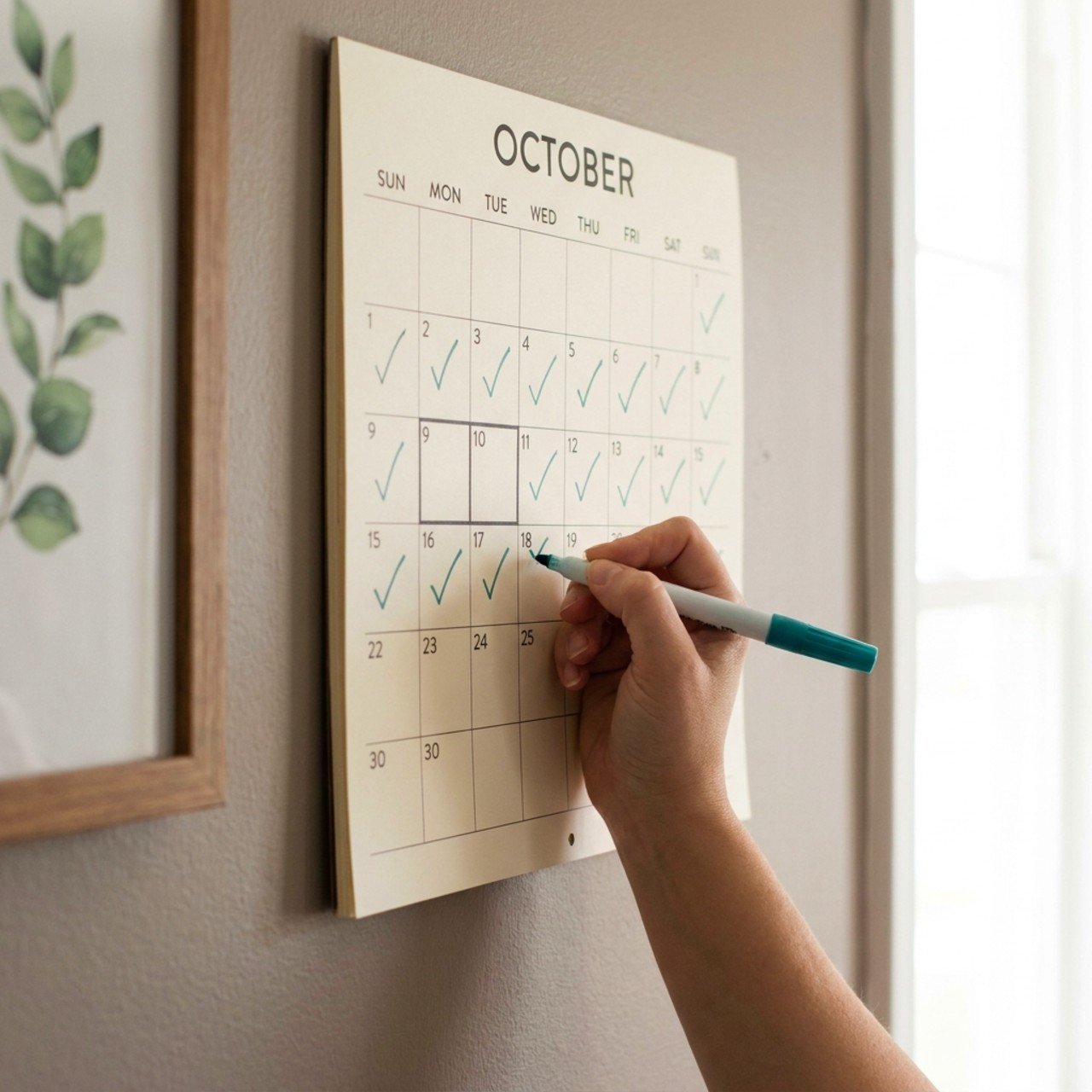
3. Put It On A Calendar Like Any Other Appointment
An exercise routine that only exists in your head is the first thing a busy week deletes. Write your sessions into the same calendar you use for work meetings and family commitments, in a space big enough to actually see. Treating your training schedule as a fixed commitment — not a hope for spare time — is one of the simplest, most reliable ways to protect a consistent workout schedule.
4. Choose Exercises You Actually Enjoy
Nothing kills a new exercise regimen faster than forcing yourself through activities you dread.
A systematic review of 66 studies on self-determination theory and exercise, published in the International Journal of Behavioral Nutrition and Physical Activity, found that intrinsic motivation — genuinely enjoying the activity itself — was the strongest predictor of long-term exercise adherence, more so than motivation driven by guilt or obligation.
If you can’t stand running, don’t build a new exercise regimen around running. Dance, hiking, swimming, resistance bands, a beginner strength routine — the “best” workout for weight loss is the one you’ll actually repeat, not the one that looks most impressive. For a starting menu of options, see our roundup of the best exercises for women to lose weight.
5. Set Goals You Can Actually Reach This Month
Realistic, near-term goals protect a new exercise regimen better than ambitious long-term ones do. You won’t transform your body in a week, and expecting to is a setup for quitting when it doesn’t happen.
Set a goal you can hit this month — three sessions a week for four weeks, for example — and track your fitness progress against that single number, not a mirror. Let bigger fitness goals for women build on that foundation once the habit itself is established. Our guide to mastering weight loss goal setting walks through exactly how to size those goals correctly.
Old Advice vs. What The Evidence Actually Says
Most of the advice that circulates about starting a new exercise regimen sounds reasonable and doesn’t hold up against the research. Here’s where the common wisdom and the evidence diverge.
| Common Advice | What The Evidence Actually Shows |
|---|---|
| “It takes 21 days to build a habit” | Real health habits take a median of 59–66 days, often 3–5 months, per a 2024 meta-analysis of 2,601 participants. |
| “Just find your motivation” | Planning your workout logistics (a preparation habit) outperformed motivation-focused strategies in a 751-person trial. |
| “Stick to the same routine” | The consistent trigger that gets you started matters more than repeating the same exercises. |
| “Push through workouts you hate” | Genuinely enjoying the activity is the strongest known predictor of sticking with it long-term. |
| “One missed day means starting over” | Occasional lapses have a limited effect on overall habit strength as long as you return to the behavior. |
Building A New Exercise Regimen At Home, At The Gym, Or Anywhere In Between
A new exercise regimen doesn’t require a gym membership — it requires a setting you’ll actually return to. Where you exercise matters less than whether the location removes or adds friction to your Prepare and Instigate steps above.
- An at-home workout plan: lowest friction, no commute, no childcare logistics — ideal for the first few weeks while you’re building the habit itself, using bodyweight moves, resistance bands, or online classes.
- A gym-based routine: access to more equipment and structured classes, at the cost of travel time and, for some women, gym intimidation as an added barrier worth planning around.
- A hybrid approach: home sessions on tight days, the gym when your schedule allows — often the most realistic option for a genuinely consistent workout schedule.

Safe Exercise Practices As You Build Momentum
A new exercise regimen should build up gradually, not launch at full intensity.
The Centers for Disease Control and Prevention recommends adults aim for 150 minutes of moderate-intensity aerobic activity a week, plus muscle-strengthening activity at least two days a week covering all major muscle groups — and explicitly notes that some activity is better than none, and that it doesn’t need to happen all at once.
- Warm up and cool down every session: five minutes of easy movement on each end lowers injury risk and helps you associate the routine with feeling good, not just effort.
- Build cardiovascular health gradually: start with brisk walking or light cycling before adding intensity; a conversational pace is a reasonable early benchmark.
- Add strength training for beginners early, not last: two sessions a week targeting major muscle groups builds muscle tone and supports the aerobic side of a new exercise regimen, not just the scale — see why you should lift weights for the fuller case.
- Include flexibility exercises: a few minutes of stretching after each session supports mobility and recovery as the rest of your regimen ramps up.
- Stop and check in if something hurts: soreness from new movement is normal; sharp or persistent pain is your body asking you to scale back or check with a health provider.
Building A New Exercise Regimen During Perimenopause Or Menopause
If you’re building a new exercise regimen in your 40s or 50s, the generic advice genuinely is built for someone else’s body.
Most workout content assumes a stable hormonal baseline, steady energy, and predictable recovery — and none of those is guaranteed once perimenopause starts. Struggling with consistency here isn’t a personal failing; it’s a mismatch between the plan and the body actually doing it.

Two pieces of the P.I.E. Method above matter even more in this life stage. The Instigate step — anchoring your workout to a fixed daily cue rather than to how motivated you feel — carries more weight when energy and mood can swing day to day for hormonal reasons that have nothing to do with effort.
And declining estrogen can accelerate muscle loss by up to 3% per year during perimenopause, which is exactly why Building Block #4’s reminder to add strength training early, not last, matters more now than it did a decade ago — it’s about protecting the strength you already have, not just muscle tone.
None of this calls for overhauling everything at once. The same Prepare, Instigate, Expect framework still applies — it just deserves a longer, more forgiving timeline and a heavier lean on strength work than a generic routine built for a 20-something would call for.
Talk to your healthcare provider about how your own hormonal picture should shape your exercise intensity and recovery.
Restarting After A Break, Postpartum, Or A Long Plateau
A new exercise regimen after time off isn’t a restart from zero — it’s a redesign, and it deserves its own timeline. Whether you’re coming back after an injury, a busy season of life, or a postpartum recovery, the same P.I.E. principles apply, with a few adjustments.
If you’re postpartum specifically, Mayo Clinic notes it’s generally safe to begin light activity a few days after an uncomplicated vaginal delivery, while a C-section or complicated birth calls for your provider’s specific go-ahead first — either way, start with a gentler version of your new postpartum fitness routine and build up gradually rather than returning to your pre-pregnancy intensity on day one.
If you’re coming back after a long plateau instead, the goal isn’t to overcome fitness plateaus with a dramatic overhaul. It’s the same Prepare and Instigate steps, applied again, because the habit itself has genuinely reset even if your underlying fitness hasn’t dropped as far as it feels like it has.
Join Our Mailing List
Join thousands of women inside our community and receive our free guide, 10 Actions That Support Permanent Weight Loss — the exact behavioural shifts that make the difference between a two-week attempt and a lasting transformation.
No restriction plans. No guilt. Just what actually works — for real women with real lives.
When Motivation Runs Out, Because It Will
Every new exercise regimen hits a week where motivation disappears entirely — that’s the point the system, not the feeling, needs to carry you.
One pattern I’ve noticed, watching women rebuild a routine after years away from regular exercise, is that the ones who stick with it aren’t the ones who never lose motivation. They’re the ones who built a system specific enough that a low-motivation day still resulted in showing up, even in a smaller way than planned.
If motivation to exercise is the piece you’re struggling with most, our fitness motivation tips for beginners guide goes deeper on that specific challenge, and if you’re balancing this alongside a demanding job or family schedule, our guide to building sustainable workout motivation as a working mom tackles that exact overlap.
And if you’re a complete beginner looking for the specific day-by-day plan rather than the underlying framework, our beginner workout routine for your real first four weeks lays that out in detail.
If you want the behavioral shifts that turn a new exercise regimen into a lasting lifestyle change, join our free newsletter for 10 Actions That Support PERMANENT Weight Loss — practical strategies for women building a routine around real life, not a fantasy version of it. Get your free guide here.
The Bottom Line
Creating a new exercise regimen that lasts isn’t about finding more motivation or more willpower — it’s about building a process that doesn’t depend on either. Prepare your logistics in advance, attach your routine to a cue you already have, and expect two to five months before it feels automatic, not three weeks.
Layer the five practical building blocks on top of that framework — realistic availability, deliberate variety, a real calendar slot, exercises you enjoy, and goals sized to this month — and you have a new exercise regimen built to survive an ordinary, imperfect week. That’s the only kind that actually gets you anywhere.
Glossary Of Key Terms
- Automaticity: The point at which a behavior, such as exercise, requires little to no conscious effort or deliberate decision-making to perform.
- Execution Habit: The specific set of movements or the routine performed once an exercise session has begun.
- Instigation Habit: An automatic cue or trigger—such as a specific time of day or a preceding activity—that prompts the start of a behavior.
- Intrinsic Motivation: The drive to engage in an activity because it is inherently enjoyable or satisfying, rather than for external rewards or to avoid guilt.
- Moderate-intensity Aerobic Activity: Physical movement, such as brisk walking or light cycling, performed at a pace where one can still maintain a conversation.
- P.I.E. Method: A three-part framework consisting of Prepare (logistics), Instigate (cues), and Expect (realistic timelines) designed to build lasting habits.
- Perimenopause: The transitional phase leading up to menopause, characterized by hormonal shifts that can impact energy, mood, and muscle retention.
- Preparation Habit: The act of planning logistics (time, place, gear) to reduce the mental effort required to start a workout.
- Self-Determination Theory: A psychological framework used in research to explain how different types of motivation (intrinsic vs. extrinsic) affect long-term behavioral adherence.
- Systematic Review/Meta-analysis: A type of research study that pools and analyzes data from multiple individual studies to identify broad, evidence-based trends.
FAQ
How Long Does It Take For A New Exercise Regimen To Become A Habit?
Research points to a median of 59–66 days, with averages closer to 106–154 days depending on the person and the behavior. Expect two to five months, not three weeks, before a new exercise regimen feels automatic rather than effortful.
What Is The Best Way To Start A New Exercise Regimen As A Beginner?
Start by preparing your logistics in advance, attach the routine to a cue you already have (like right after breakfast), and choose two to three sessions a week you can realistically keep. Consistency at a lower intensity beats an ambitious plan you abandon by week two.
How Often Should I Change My Exercise Routine?
Rotating exercises to prevent boredom is fine and even encouraged, as long as the cue that triggers you to start stays consistent. Change the specific movements as often as it keeps you engaged; keep the trigger — the time, the place, the habit stack — fixed.
What Should I Do If I Fall Off My New Exercise Regimen?
Return to it as soon as you can, without treating the lapse as a reset. The research on habit formation shows that occasional missed days have a limited effect on overall habit strength, so a bad week doesn’t erase the progress you’ve already built.
Is It Safe To Start A New Exercise Regimen After Having A Baby?
Generally yes, with light activity often possible within days of an uncomplicated vaginal delivery, though a C-section or complications call for your provider’s clearance first. Always confirm your specific timeline with your own healthcare provider before starting.
How Do I Stay Motivated When Starting A New Workout Routine?
Rely less on motivation and more on a system: prepare your gear and schedule in advance, choose exercises you genuinely enjoy, and set goals sized to this month rather than a distant transformation. Motivation will come and go; a well-designed system keeps working anyway.
What Is The Difference Between An Instigation Habit And An Execution Habit?
An instigation habit is the automatic cue that gets you to start exercising, such as a morning alarm. An execution habit is the specific routine you perform once you’ve started. Research suggests the instigation habit matters more for how often you actually exercise.