
How To Get In Shape For Women And Enjoy A Healthy Lifestyle
Kelly Starrett
Physical therapist, author, & fitness coach
Before you show me heroic, show me consistency.
Summary (TL;DR)
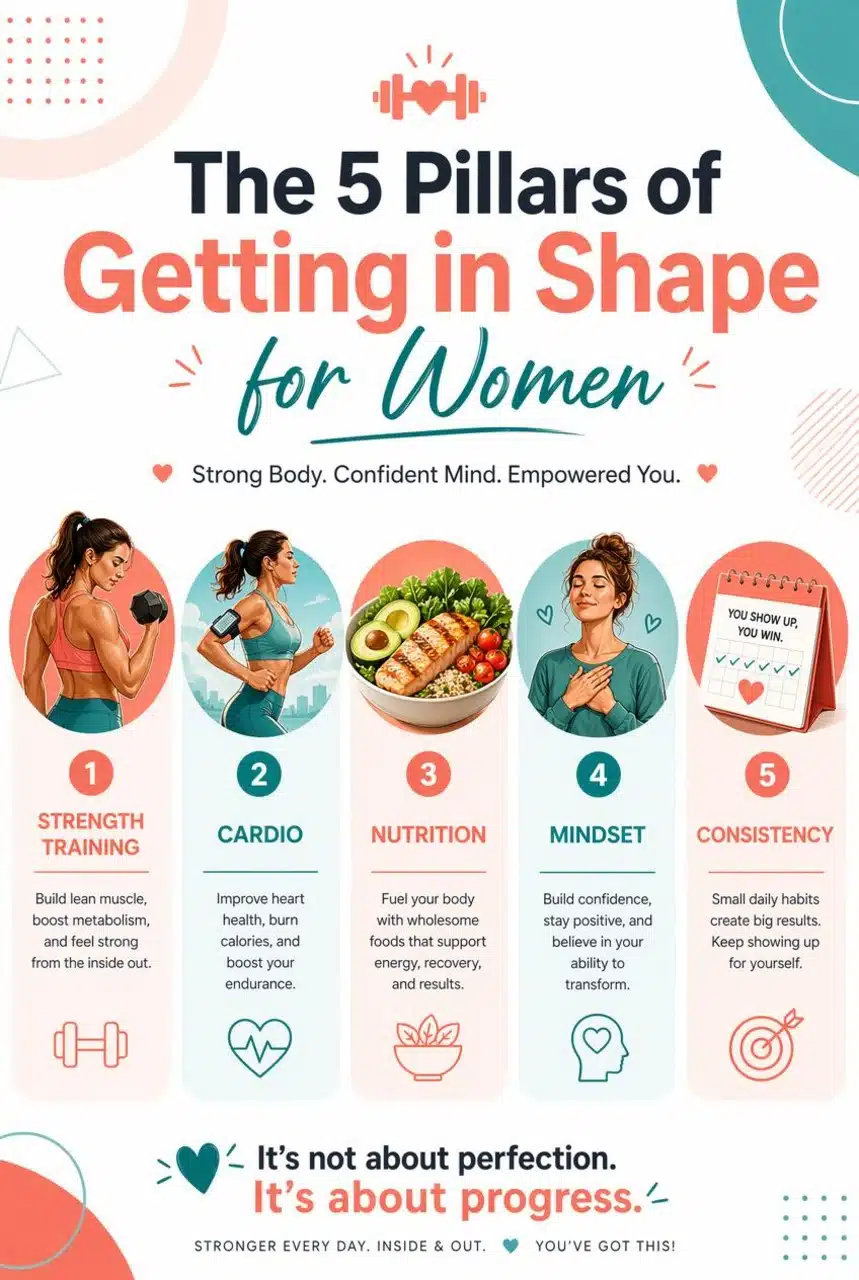
Many women don't meet activity guidelines due to ill-fitting fitness advice. This guide offers a roadmap to get in shape by mastering core principles. The "Lean Body Formula" includes phases that match real progress. Strength training and consistent nutrition, not restriction, are key. The best cardio is what you enjoy, and consistency beats intensity. Age is an advantage. The right program matters more than a harder one.
Only 23% of women in the UK meet the recommended physical activity guidelines — not because women lack motivation, but because most fitness advice is built around men, contradicts itself every six months, and ignores how female physiology, hormones, and real life actually work.
After more than ten years of researching women's fitness, testing dozens of approaches on myself, and hearing from thousands of women who've followed my formula, one truth stands above every trend: sustainable results come from mastering a handful of core principles — not from chasing the perfect program.
This guide brings those principles together in one place. Whether you're starting from zero or restarting after years away from exercise, you'll leave with a clear, practical roadmap to get in shape — and stay that way.
Medical & Referral Disclaimer
This article is for informational and educational purposes only. It is not a substitute for professional medical advice, diagnosis, or treatment. Always consult your physician or a qualified healthcare provider before beginning any new diet, exercise program, or health regimen — especially if you have a pre-existing medical condition, are pregnant, or are recovering from injury or illness. Individual results vary. The strategies described in this article are general wellness guidance, not personalized medical recommendations.
Key Takeaways
- Only 23% of UK women meet physical activity guidelines — the barrier isn't willpower, it's misdirection.
- Strength training is the single highest-return investment for women's long-term fitness, metabolism, and bone health.
- Sustainable results require consistent nutrition — not restriction.
- The best cardio is the cardio you'll actually do; enjoyment predicts consistency better than intensity.
- Age is a strength, not a disadvantage. Women over 40 who exercise regularly outperform sedentary 30-year-olds on most health markers.
- Consistency always beats location, duration, or intensity.
Why Most Women Struggle To Get In Shape (And What Really Works)
The Real Problem Isn't A Lack Of Effort
Most women who struggle to get in shape aren't lazy — they're following advice designed for someone else. Programs built for 25-year-old male athletes, "quick fix" cleanses, and calorie-slashing diets all ignore the hormonal and physiological reality of the female body.
The result? Women push hard, see minimal results, conclude their bodies are "broken," and quit. This cycle repeats itself millions of times a year. Research increasingly suggests that women can respond differently to exercise programming than men — particularly around recovery time, hormonal fluctuations, and muscle-protein synthesis rates. Yet most mainstream fitness content still presents one-size-fits-all advice.
The fix isn't a harder program. It's the right program.
My Contrarian Take: Stop Optimizing, Start Showing Up
Here's something most fitness coaches won't say: the "optimal" workout doesn't matter nearly as much as the workout you actually do. I've watched women follow scientifically perfect programs for two weeks, burn out, and abandon them entirely. I've also watched women walk 30 minutes a day, add two resistance sessions a week, and transform their bodies and health in six months.
Research published in PLOS ONE found that exercise adherence — whether you keep showing up — predicts long-term results far more reliably than exercise intensity. That's the foundation on which everything in this guide is built on.
The 3-Phase "Lean Body Formula" Framework
This is the original framework I've developed after a decade of research and direct application. Rather than prescribing a rigid 12-week program, it maps the journey in phases that match how real fitness progress actually works.
| Phase | Focus | Duration | Goal |
|---|---|---|---|
| Phase 1: Foundation | Movement habits, basic nutrition, injury prevention | Weeks 1–4 | Build consistency, eliminate fear |
| Phase 2: Build | Progressive strength, structured cardio, macro awareness | Weeks 5–12 | Develop strength, improve body composition |
| Phase 3: Sustain | Lifestyle integration, advanced programming, maintenance nutrition | Week 13+ | Make fitness permanent, not periodic |
Most programs skip Phase 1 entirely — and that's why most people quit. If you've tried and failed before, you probably started at Phase 2 or 3 before your habits, mindset, and body were ready.
What Does "Getting In Shape" Actually Mean For Women?
Getting in shape means building a body that is strong, energetic, functional, and resilient — not conforming to an aesthetic defined by someone else. For most women, this means increasing lean muscle mass, reducing excess body fat, improving cardiovascular endurance, and building the mental and physical stamina to handle daily life with energy to spare.
It does not mean reaching a specific number on the scale, fitting into a dress size, or looking like a fitness influencer. The NHS physical activity guidelines recommend at least 150 minutes of moderate aerobic activity per week plus two strength sessions — a bar achievable by almost any woman, regardless of starting point.
How To Set Realistic Fitness Goals That Stick
The SMART-W Goal Method For Women
Standard SMART goals (Specific, Measurable, Achievable, Relevant, Time-bound) are a good starting point, but I've added a fifth element for women: W for Well-being-Aligned. A goal that conflicts with your energy, hormones, sleep, or stress levels will fail no matter how SMART it is.
Example:
- "Lose 10 pounds in 6 weeks" — ignores hormonal cycles and encourages restriction.
- "Complete three 30-minute strength sessions per week for 8 weeks, progressing weight each session" — measurable, sustainable, well-being aligned.
Set process goals (actions you control) rather than outcome goals (results you don't fully control). Process goals build the habits; the results follow.
How To Build A Nutrition Foundation That Fuels Results
What Should Women Eat To Get In Shape?
Women getting in shape need a diet built on three macronutrients — protein, carbohydrates, and healthy fats — eaten in appropriate proportions to support muscle growth, hormonal health, and sustained energy. Restriction diets fail because they treat food as the enemy rather than the fuel.
Sustainable fitness is built on consistent nutrition, not short-term calorie slashing. Research from the National Institutes of Health confirms that chronic caloric restriction increases cortisol, disrupts leptin and ghrelin (hunger hormones), and ultimately slows the metabolism — the exact opposite of what women want.
Understanding Macronutrients For Women's Bodies
Carbohydrates: Your Energy Currency
Carbohydrates are your body's preferred fuel for both physical activity and brain function. The key is choosing complex carbohydrates — whole grains, oats, sweet potatoes, fruits, and vegetables — which digest slowly, provide sustained energy, and are packed with fiber, vitamins, and minerals.
Simple carbohydrates (white bread, sugar, processed snacks) spike blood sugar rapidly, leading to energy crashes and cravings. They aren't forbidden — they're just not efficient fuel for a woman trying to get in shape. As part of a balanced diet for optimal health, complex carbs should make up roughly 40–50% of total calories for active women.
Protein: Your Muscle Builder and Metabolism Booster
Protein is arguably the most important macronutrient for women getting in shape. It repairs muscle tissue broken down during exercise, keeps you full between meals, and has a high "thermic effect" — meaning your body burns more calories just digesting it.
Recommended intake: The American College of Sports Medicine suggests 1.2–2.0g of protein per kilogram of body weight for active women — significantly more than the often-quoted 0.8g, which is a minimum for sedentary individuals, not an active woman building lean muscle.
Top protein sources for women:
- Chicken breast, turkey, and lean beef
- Salmon and tuna (double benefit: omega-3 fatty acids included)
- Eggs and Greek yogurt
- Lentils, chickpeas, black beans
- Tofu and tempeh (excellent plant-based options)
For a deeper dive into fueling your workouts properly, read: What to Eat Before and After a Workout.
Fats: Your Hormonal Foundation
Healthy dietary fats are non-negotiable for women. They regulate estrogen, progesterone, and cortisol — the hormonal trio that governs metabolism, mood, recovery, and body composition. Cutting fat too low is one of the most common mistakes women make when trying to get in shape, and it backfires spectacularly: hormonal disruption, increased food cravings, poor sleep, and impaired fat burning.
Prioritize:
- Avocados — monounsaturated fats, potassium, fiber
- Extra-virgin olive oil — oleocanthal, an anti-inflammatory compound
- Nuts and seeds — omega-3s, magnesium, zinc
- Fatty fish (salmon, mackerel) — EPA and DHA for inflammation reduction
Portion Control Without Counting Every Calorie
You don't need to log every bite to manage portions effectively. These practical strategies work in real life:
- Use the plate method: Fill half your plate with vegetables, a quarter with lean protein, a quarter with complex carbs, and add a thumb-sized serving of healthy fat.
- Eat slowly and stop at 80% full — it takes ~20 minutes for satiety signals to reach your brain.
- Avoid distracted eating — screens, phones, and TV while eating are linked to consuming 20–30% more calories per meal.
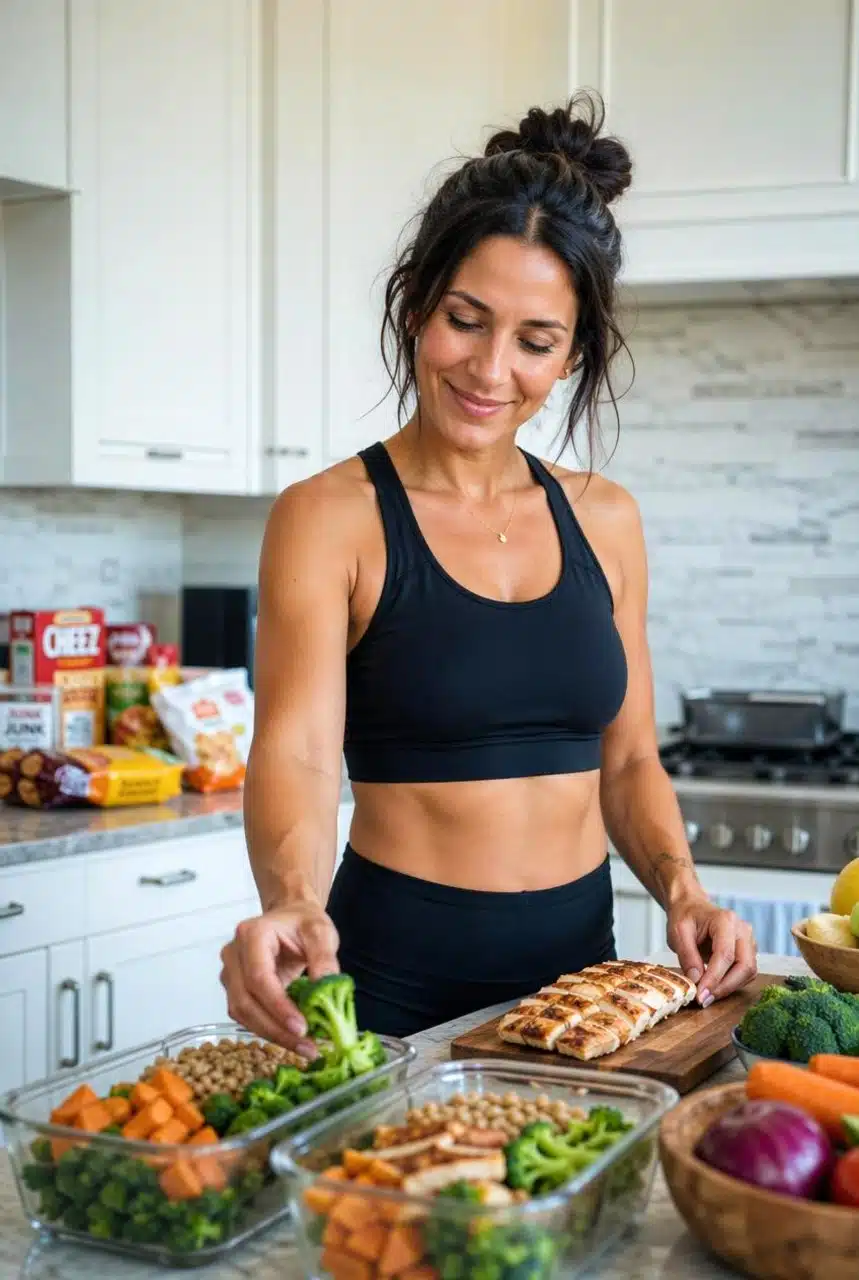
- Prep one batch of protein weekly — having cooked chicken, boiled eggs, or lentils ready eliminates the "there's nothing healthy to eat" decision that derails most diets.
For women who want to manage weight without obsessive tracking, see: Weight Loss Without Counting Calories.
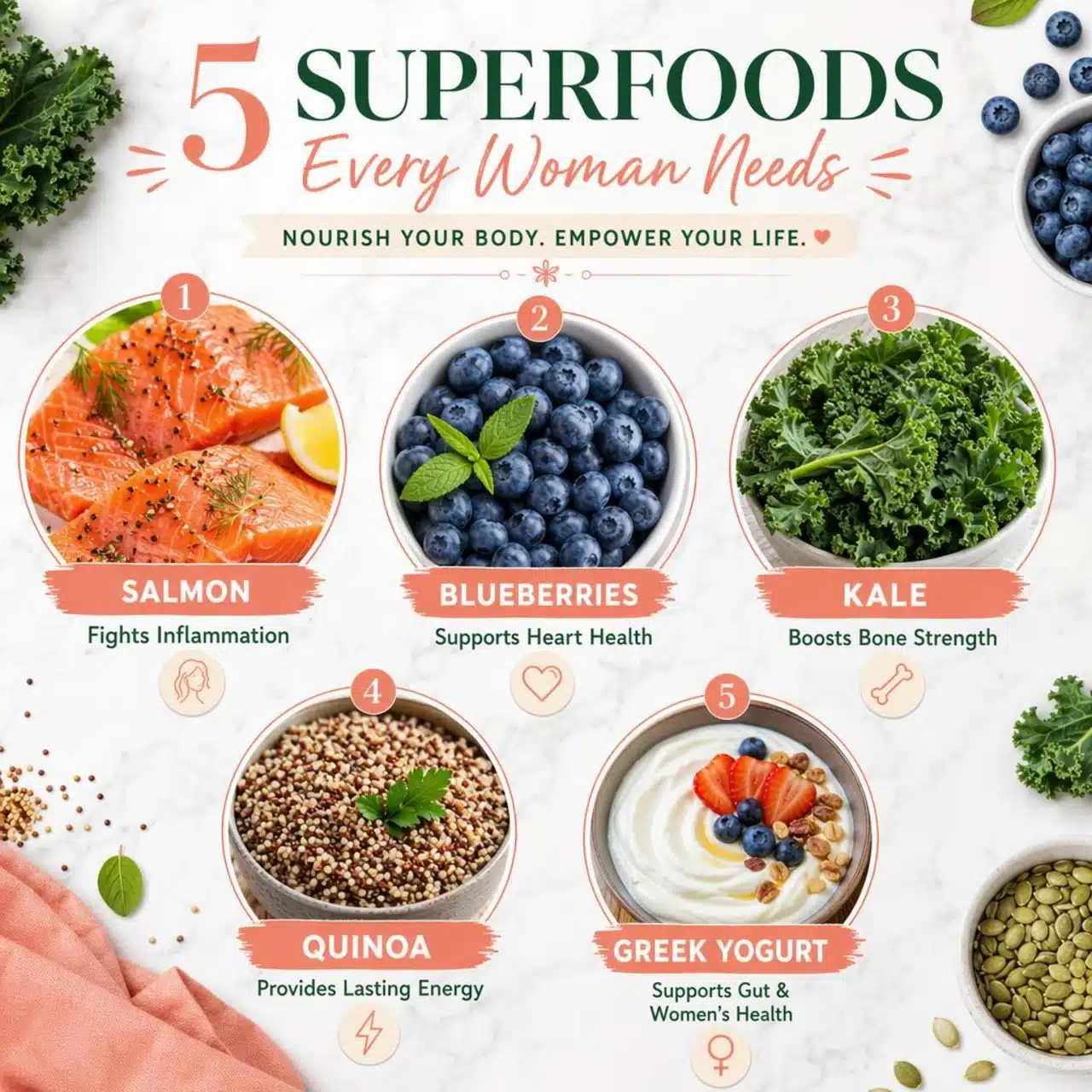
The 5 Superfoods That Accelerate Women's Results
These aren't exotic or expensive — they're proven, accessible, and remarkably effective when eaten consistently. For a complete list, see our guide to superfoods women need for weight loss.
| Superfood | Key Nutrients | Primary Benefit for Women |
|---|---|---|
| Salmon | Omega-3 fatty acids, protein, vitamin D | Reduces inflammation, supports muscle recovery, regulates hormones |
| Blueberries | Anthocyanins, vitamin C, fiber | Fights oxidative stress, improves brain function, reduces post-workout soreness |
| Kale | Calcium, vitamin K, iron, vitamin C | Supports bone density, immune function, and iron absorption |
| Quinoa | Complete protein (all 9 amino acids), magnesium, fiber | Muscle repair, blood sugar stability, gluten-free energy source |
| Greek Yogurt | Protein, probiotics, calcium | Gut health, muscle recovery, bone support, hunger management |
Strength Training For Women: The Most Misunderstood Tool In Fitness
Does Strength Training Make Women Bulky?
No. Strength training does not make women bulky. Women have approximately 15–20 times less testosterone than men, making it physiologically very difficult to build large muscle mass. What strength training does produce in women is a lean, defined, metabolically active physique — plus stronger bones, better posture, and a metabolism that burns more calories at rest.
This is the most persistent myth in women's fitness, and it costs women enormously. Women who avoid weights in fear of "bulking" miss out on the single most effective tool for long-term fat loss, bone density preservation, and age-related metabolic decline prevention.
A landmark study from Harvard School of Public Health found that 20 minutes of daily weight training was more effective at reducing age-related abdominal fat gain in women than 20 minutes of cardio. Let that sink in.
For the full case on why strength training beats cardio for fat loss, read: Strength Training Burns Fat Better Than Cardio.
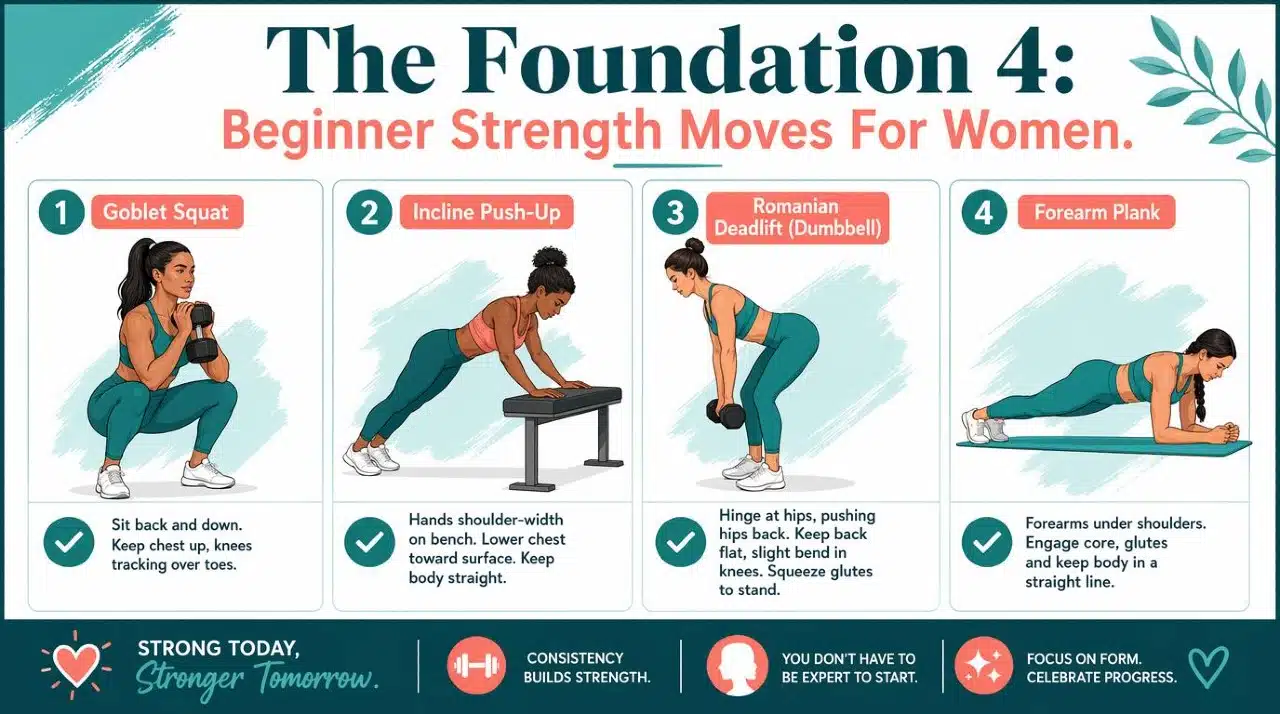
Beginner Strength Routine For Women: The Foundation Four
Start with these four compound movements. They work multiple muscle groups simultaneously, maximize calorie burn, and build functional, real-world strength.
| Exercise | Sets × Reps | Primary Muscles | Form Key |
|---|---|---|---|
| Bodyweight / Goblet Squat | 3 × 10–12 | Quads, glutes, hamstrings, core | Chest up, knees tracking over toes |
| Push-Up (incline to start) | 3 × 8–10 | Chest, shoulders, triceps, core | Straight line from head to heels |
| Romanian Deadlift (light dumbbell) | 3 × 10 | Hamstrings, glutes, lower back | Hinge at hips, not waist; back flat |
| Plank (progress duration weekly) | 3 × 20–45 sec | Full core, shoulders, glutes | Neutral spine; don't let hips sag |
Progression rule: When you can complete all reps with clean form, and the last two reps feel manageable, increase weight by the smallest available increment. Never sacrifice form to lift more.
How To Avoid Injury When Starting Out
The Three Non-Negotiables
- Dynamic warm-up (5–8 minutes): Leg swings, arm circles, hip rotations, and bodyweight squats raise core temperature, increase joint range of motion, and activate stabilizing muscles before load is applied. Static stretching before lifting actually reduces power output — save it for after.
- Master form before adding weight: Ego lifts cause injury; consistent, progressed lifts build real strength. If you're unsure of your form, record yourself from the side or book a single session with a qualified personal trainer.
- Rest days are part of the program: Muscle is built during recovery, not during the workout itself. Beginners should take at least 48 hours between strength sessions targeting the same muscle groups.
For detailed injury prevention guidance, see: 4 Ways to Avoid Common Workout Injuries.
Cardio Workouts For Women: What Burns Fat And Builds Heart Health
What Is The Best Cardio For Women To Get In Shape?
The best cardio for women is the form they enjoy enough to do consistently. Running burns the most calories per hour, but a woman who hates running will skip it. Cycling, swimming, dancing, jump rope, and walking all deliver meaningful cardiovascular and fat-burning benefits when performed regularly. Enjoyment is the strongest predictor of long-term cardio adherence.
That said, not all cardio is created equal for body composition goals. Here's how the most popular options compare:
| Cardio Type | Est. Calories/Hour* | Impact Level | Ideal For |
|---|---|---|---|
| Running (8 mph) | 861 | High | Cardiovascular endurance, calorie burn |
| HIIT | 500–700 (+ afterburn) | High | Fat loss, time efficiency |
| Cycling (moderate) | 509 | Low–Medium | Joint-friendly endurance, beginners |
| Swimming (vigorous) | 704 | None | Full body, joint conditions, recovery |
| Jump Rope | 718 | High | Bone density, coordination, portability |
| Brisk Walking | 314 | Low | Beginners, active recovery, daily movement |
| Aerobic Dance / Zumba | 450–600 | Medium | Fun, community, stress relief |
Estimates based on a 155 lb (70 kg) woman. Actual burn varies by weight, fitness level, and intensity.
For more on which cardio approach actually moves the needle, read: The Hidden Truth About Cardio and Balancing Cardio and Strength Training.
HIIT vs. Steady-State Cardio: Which Is Better For Women?
What HIIT Does That Steady-State Doesn't
High-Intensity Interval Training (HIIT) alternates short bursts of maximum effort (20–40 seconds) with brief recovery periods (10–20 seconds). Its most significant advantage for busy women is the EPOC effect — Excess Post-exercise Oxygen Consumption, commonly called "afterburn." Your metabolism stays elevated for up to 24 hours post-HIIT session, burning additional calories while you rest.
HIIT is most effective when:
- You have 20–30 minutes, not 60
- You're in Phase 2+ of fitness (not a beginner — high impact requires a base level of fitness)
- You want to break a plateau
Steady-state cardio (walking, cycling, swimming) is most effective when:
- You're in Phase 1 — building the habit without overloading your joints
- You're in a high-stress period (HIIT spikes cortisol; so does chronic stress — the combination can impair fat loss)
- You need active recovery between strength sessions
- You want the mental health benefits of sustained, meditative movement
The verdict? Both. Alternate them. See Fat Burning Workouts: How to Melt Stubborn Fat for a structured approach.
At-Home Workouts vs. Gym Sessions: Which Is Right For You?
Can You Get In Shape Working Out At Home?
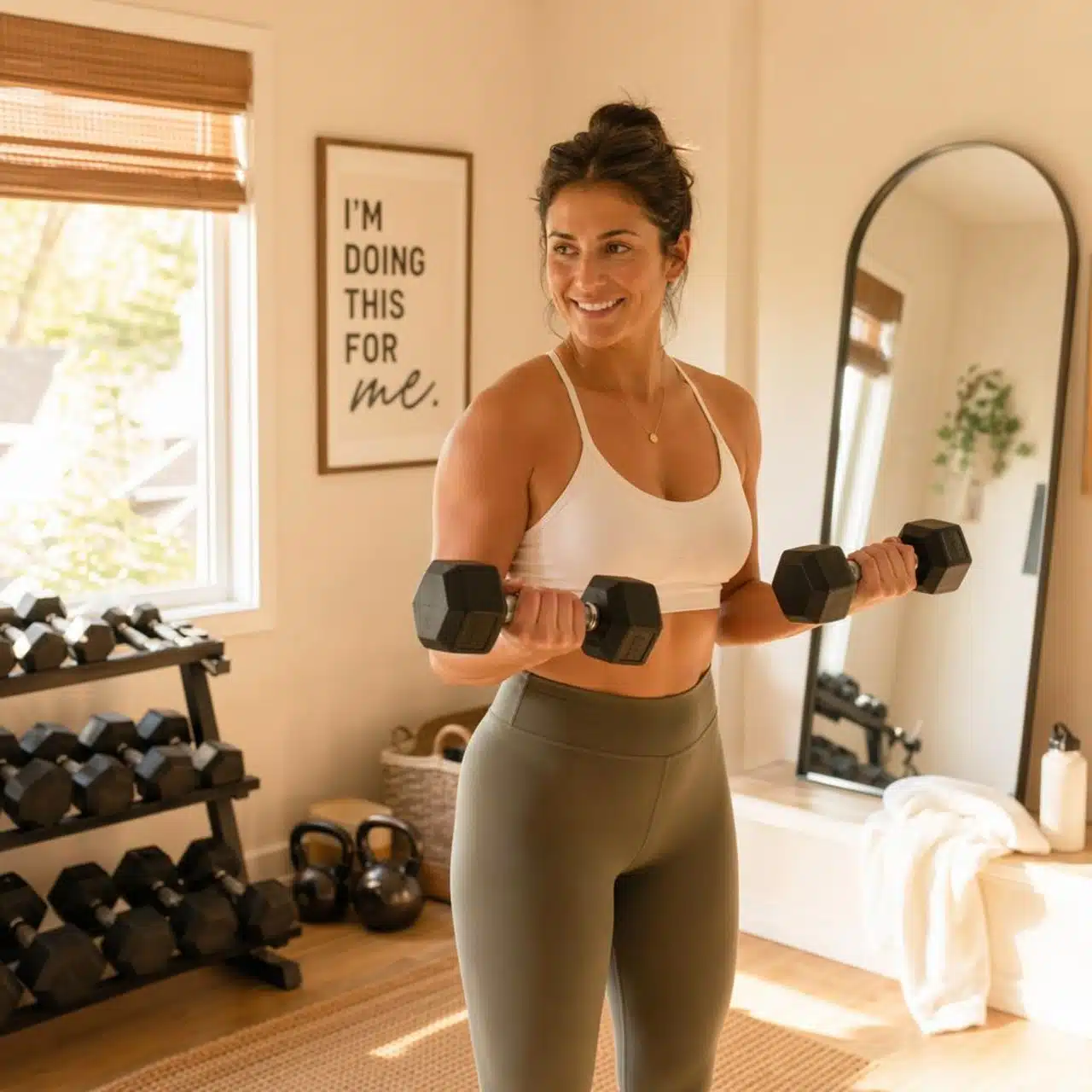
Yes. You can achieve significant, lasting fitness results by training exclusively at home with minimal equipment. A yoga mat, a pair of adjustable dumbbells (5–25 lb), and resistance bands cover 90% of what a beginner needs. Home training removes commute time, gym anxiety, and scheduling friction — three of the most common barriers to consistency.
The most important thing isn't whether you're home or at the gym. It's whether you show up, follow a progression, and stay consistent over months and years. See our guide to simple at-home exercises for weight loss for a ready-to-use home program.
At-Home vs. Gym: Honest Comparison
| Factor | At-Home Training | Gym Training |
|---|---|---|
| Cost | Low (one-time equipment) | Monthly membership fee |
| Convenience | Very high — train anytime | Requires commute and scheduling |
| Equipment variety | Limited without investment | Extensive |
| Expert guidance | None unless online | Available (personal trainers) |
| Accountability | Requires self-motivation | Social/community element helps |
| Privacy | Complete | Limited |
| Progression potential | Good (bands + dumbbells go far) | Excellent (incremental weight increases) |
| Best for | Beginners, busy schedules, gym anxiety | Intermediate–advanced, variety-seekers |
Bottom line on location: A hybrid approach — training at home 2–3x per week and at the gym 1–2x — combines the best of both. If gym anxiety is your barrier, read: How to Build Fitness Confidence When You Hate the Gym.
Navigating The Gym As A Beginner: A Practical Guide
Your First Week In The Gym, Simplified
- Visit during off-peak hours (typically 10 am–12 pm or 2–4 pm weekdays) to get comfortable with the space without crowds.
- Take the facility tour most gyms offer — know where the free weights, resistance machines, cardio equipment, and bathrooms are before your first real session.
- Start with machines, not free weights — resistance machines guide your movement pattern and reduce injury risk while you're learning.
- Book one session with a personal trainer — even one session is enough to learn proper form on the four foundational exercises listed earlier in this guide.
- Bring a program, not a mood — going to the gym without a plan leads to wandering, wasted time, and inconsistent results.
DR. EMILY THOMPSON
A renowned fitness expert
Age should never be a barrier to staying fit and healthy. It's about finding the right approach that suits your body and lifestyle.
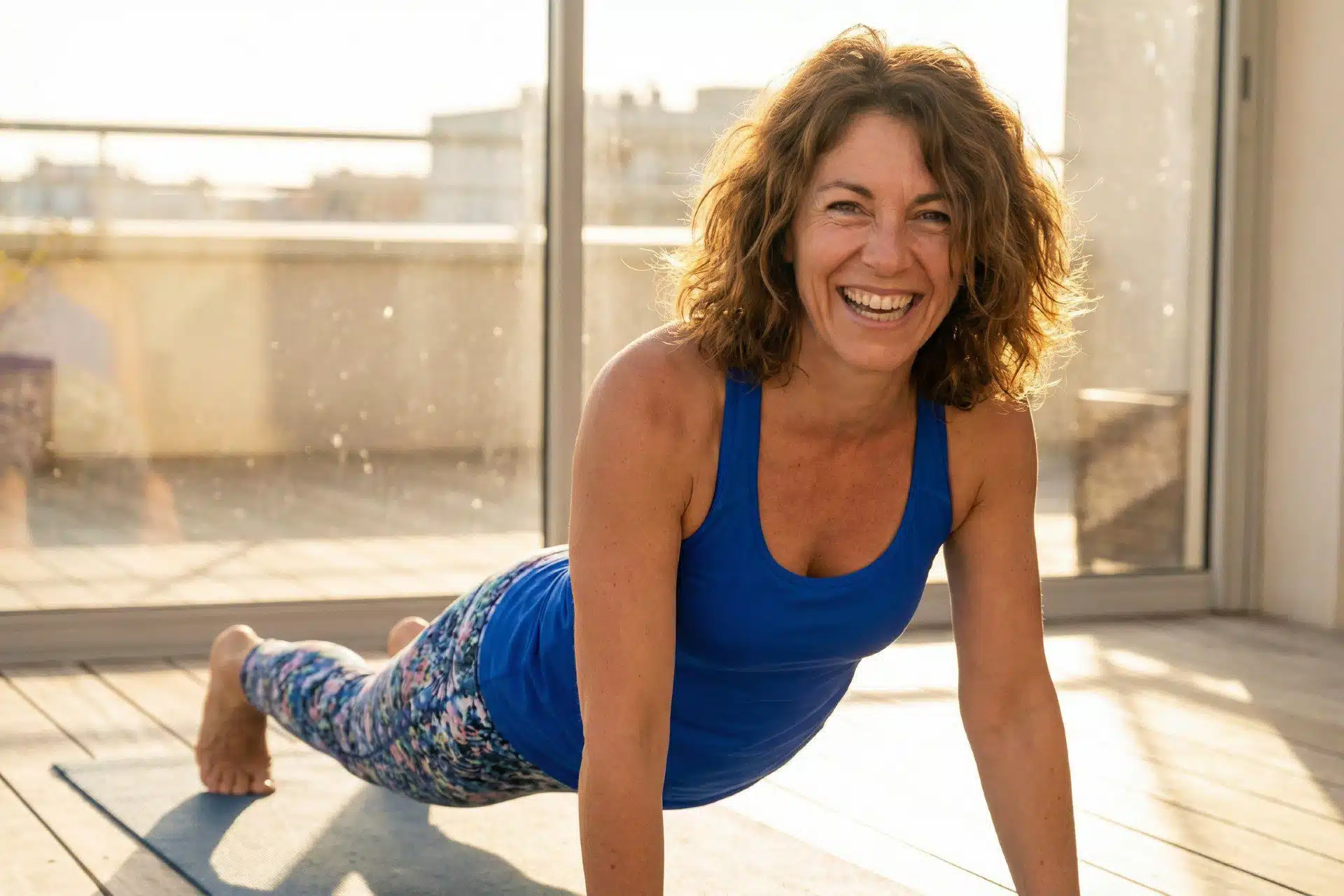
Getting In Shape After 40: The Age-Defying Truth
Is It Harder To Get In Shape After 40?
Getting in shape after 40 is different — not harder. Women over 40 face hormonal shifts (declining estrogen and progesterone), a gradual reduction in muscle mass (sarcopenia), and slower recovery times. But research shows that women who begin structured exercise after 40 experience more dramatic health improvements than younger women with the same protocol, because the baseline gap they're closing is larger.
Starting resistance training in midlife is associated with improvements in insulin sensitivity, bone density and muscle mass — outcomes measurable enough to impact disease risk.
Age is not a reason to wait. It's a reason to start now. For more on fitness at every life stage, see: Fitness Habits for Women to Stay Young.
The Bone Density Factor: Why Strength Training Is Non-Negotiable For Older Women
Women lose approximately 1% of bone density per year after age 35, accelerating to 2–3% per year after menopause. This isn't inevitable — it's preventable. Weight-bearing exercise (strength training, impact cardio, dancing) directly stimulates bone formation by applying mechanical load to the skeleton.
The International Osteoporosis Foundation recommends weight-bearing exercise at least three times per week for bone health maintenance. This alone — independent of aesthetic goals — is reason enough for every woman over 40 to prioritize resistance training.
Key adjustments for women over 40:
- Extend warm-up to 10 minutes
- Allow 72 hours (not 48) between strength sessions targeting the same muscles
- Prioritize sleep (7–9 hours) — HGH release during sleep accelerates overnight recovery
- Consider adding yoga or Pilates for joint mobility and stress cortisol management. See: Benefits of Pilates for Fat Loss

The Mental Health Benefits Of Getting In Shape
Exercise isn't only about how your body looks — it fundamentally changes how you feel. Physical activity triggers the release of endorphins, serotonin, and dopamine, producing what researchers call the "runner's high" — a state of well-being that persists well beyond the workout itself.
A landmark meta-analysis in JAMA Psychiatry found that exercise was as effective as antidepressants for mild-to-moderate depression. It also dramatically reduces anxiety, improves sleep quality, and builds the kind of mental resilience that carries over into every area of life.
For women, the mental health benefits of exercise are often the first thing they notice — before any physical changes appear. Energy improves in days. Mood lifts within a week. Sleep deepens in two weeks. These early wins are the fuel that keeps the habit going. Read more: Mental Health Benefits of Exercise for Women.
Your next step: Download the free guide — 10 Actions That Support Permanent Weight Loss — for the practical habits behind every principle in this article. Built for real women. Grounded in research. No fad diets. No extreme plans.
The Bottom Line
Getting in shape isn't about finding the perfect program, the right gym, or the ideal time to start. It's about understanding your body, committing to consistent action, and building habits that compound over months and years.
The five truths that matter most:
- Your nutrition fuels everything. No workout outworks a consistently poor diet — and no "clean eating" plan compensates for the metabolic damage of chronic restriction.
- Strength training is your highest-return investment. It builds the lean, strong body most women want while delivering bone, hormonal, and metabolic benefits that nothing else replicates.
- Cardio works best when you enjoy it. Pick something you'll show up for. Consistency beats intensity every time.
- Age is an asset, not a barrier. The women getting the most dramatic results from fitness are often those starting in their 40s and 50s — because the gap they close is larger.
- The best workout is the one you actually do. Start where you are. Progress from there. Never stop.
Glossary Of Key Terms
- Complex Carbohydrates: Slow-digesting fuels like oats, sweet potatoes, and whole grains that provide sustained energy and fiber without rapid blood sugar spikes.
- Compound Movements: Exercises, such as the "Foundation Four," that engage multiple muscle groups and joints simultaneously to maximize efficiency and functional strength.
- EPOC (Excess Post-exercise Oxygen Consumption): Also known as the "afterburn" effect, it is a state of elevated metabolism following intense exercise, such as HIIT, that continues to burn calories after the session ends.
- HIIT (High-Intensity Interval Training): A cardiovascular strategy involving short bursts of maximum effort followed by brief recovery periods, designed to improve efficiency and fat loss.
- Lean Body Formula: A 3-phase framework (Foundation, Build, Sustain) designed to transition women from establishing basic habits to permanent lifestyle integration.
- Process Goals: Action-based objectives that an individual can control (e.g., "completing three workouts a week") rather than outcome-based results they cannot fully control (e.g., "losing 5 pounds").
- Progressive Overload: The practice of gradually increasing weight, reps, or intensity in a strength routine to ensure continued physical improvement and adaptation.
- Sarcopenia: The gradual, age-related loss of muscle mass and strength, which can be mitigated through consistent resistance training.
- SMART-W: A goal-setting framework that adds "Well-being-Aligned" to the traditional criteria of Specific, Measurable, Achievable, Relevant, and Time-bound.
- Thermic Effect of Food: The amount of energy/calories the body expends to digest, absorb, and process nutrients; protein has the highest thermic effect among macronutrients.
FAQ
How Do I Get In Shape As A Woman With No Prior Fitness Experience?
Start with three 30-minute sessions per week, combining bodyweight strength exercises (squats, push-ups, planks) and 20 minutes of walking. Focus entirely on building the habit in weeks 1–4 before increasing intensity. Nutrition matters from day one: prioritize protein, reduce processed food, and eat balanced meals. Beginners don't need complex programs — they need consistent action. Choose two or three exercises you can do without intimidation, do them three times a week, and add difficulty gradually every two weeks.
How Long Does It Take To Get In Shape?
Most women notice meaningful changes in energy, strength, and mood within 2–4 weeks of consistent training. Visible body composition changes typically appear at 6–12 weeks. Significant fitness transformation occurs at 3–6 months with regular exercise and nutrition. "Getting in shape" is not a destination — it's a standard you maintain indefinitely. Expect early wins in energy and sleep (weeks 1–2), strength gains (weeks 3–6), and visible physical changes (weeks 6–12). The timeline varies by starting point, training frequency, nutrition quality, and sleep.
What Is The Best Exercise To Get In Shape Fast?
Strength training combined with HIIT cardio produces the fastest body composition changes for most women. Strength training builds lean muscle (which burns more calories at rest), while HIIT creates an afterburn effect that elevates metabolism for up to 24 hours post-workout. However, "fast" is relative. The fastest route is the one you'll sustain — a program you hate will produce zero results because you'll quit it. Start with what you'll actually do, then progressively challenge yourself.
How Many Days A Week Should I Work Out To Get In Shape?
Three to five days of structured exercise per week is optimal for most women getting in shape. A practical starting split: 2–3 strength sessions + 2 cardio sessions per week, with at least one full rest day. Balancing cardio and strength training is key — both types are necessary for full-body results. More is not always better. Overtraining without adequate recovery leads to fatigue, injury, hormonal disruption, and plateau — the opposite of progress.
Can I Get In Shape Without A Gym Membership?
Yes, completely. Bodyweight exercises (squats, lunges, push-ups, planks) combined with resistance bands and a pair of dumbbells can produce significant, lasting results at home. Walking and cycling provide effective cardiovascular training without any equipment at all. The gym offers equipment variety and expert access, but the habit, consistency, and nutrition principles that determine results are entirely independent of location.
Why Am I Not Getting In Shape Despite Working Out?
The most common reasons women plateau despite consistent workouts are insufficient protein intake (muscle repair stalls), poor sleep (hormonal and recovery disruption), training the same way every session (no progressive overload), chronic stress (elevated cortisol promotes fat retention), and inconsistent nutrition. See: 4 Tips to Overcome a Weight Loss Plateau. If you've been training consistently for more than 8 weeks with no change, evaluate sleep, stress, and whether you're progressively increasing workout difficulty. Plateau = signal; not failure.
Can I Get In Shape If I Only Have 20 Minutes A Day?
Yes. Use short strength circuits (squats, hinges, pushes, rows) plus a brisk walk most days. Twenty focused minutes, done most days of the week, beats a perfect 60-minute plan you skip.