

Ways Women Lose Weight Faster Than The Old Rules Say
The Real Reasons It’s Harder, And The Ways Women Lose Weight Faster Once They Know Them

Your metabolism isn’t working against you — it’s working exactly the way biology built it. Learn how it actually works, and ‘faster’ stops being a fight.
Mary James ‧ Founder, Women’s Lean Body Formula
Summary (TL;DR)
Weight loss really is slower for most women than the generic advice admits — but not because your willpower is weaker. Lower resting metabolic rate, hormonal shifts in insulin sensitivity, and stress-driven cortisol all play a measurable role.
The three ways women lose weight faster aren’t a new diet: they’re strength training (not cardio alone), fixing the sugar-insulin loop instead of just “cutting sugar,” and protecting sleep like it’s part of the plan. This piece also retires the 3,500-calorie rule your last diet plan was probably built on, and shows you exactly where the old advice breaks down.
If you’ve ever done everything “right” — eaten less, moved more, tracked every bite — and watched a male partner, friend, or coworker lose the same ten pounds in half the time doing half the work, you’re not imagining it.
It’s also not a character flaw. There’s a real, measurable, physiological gap between how quickly men’s and women’s bodies respond to a calorie deficit, and almost nobody explains it to you before handing you another 12-step tips list.
That gap is exactly what makes generic weight loss advice so quietly demoralizing. You follow the steps, the scale barely moves, and the implied message is that you didn’t try hard enough. It’s a specific kind of frustration — equal parts confusion and self-doubt — and it deserves a real answer, not another list of tips copied from a men’s fitness magazine.
So this is not a 12-tip listicle. It’s three things, chosen because each one directly targets a mechanism that’s actually working against you — not generically, but specifically as a woman’s body handles fat loss.
We’ll also walk through why the “just eat less” math you were taught is outdated, and where the old rules quietly set you up to feel like you failed when the model was wrong, not you.
Medical & Referral Disclaimer
This article is for general informational and educational purposes only and is not a substitute for professional medical advice, diagnosis, or treatment. Always consult your physician or a qualified healthcare provider before starting any new diet, exercise program, or supplement routine, particularly if you have an existing health condition, are pregnant or nursing, or are taking medication. Women’s Lean Body Formula may earn a commission from qualifying purchases made through some links on this site, at no additional cost to you, per our FTC Disclosure.
Key Takeaways
- It’s not just in your head. Resting metabolic rate differences between women and men are largely explained by body composition — specifically less fat-free (lean) mass on average — not a broken metabolism, per Mayo Clinic Proceedings research on resting metabolic requirements.
- Strength training moves the needle measurably. Nine months of resistance training raised resting metabolic rate by roughly 5% on average in a controlled study published in the European Journal of Clinical Nutrition.
- The 3,500-calorie rule is outdated. A 2012 consensus statement from the American Society for Nutrition formally challenged it, because it ignores how metabolism slows as you lose weight, per Today’s Dietitian.
- Estrogen protects insulin sensitivity before menopause — and that protection fades after it, according to a research review in Nature Reviews Endocrinology, which helps explain why the same effort can produce different results at different life stages.
- Sleep loss isn’t a minor factor. Research summarized by Stanford Lifestyle Medicine shows sleep deprivation can raise ghrelin and lower leptin, the hormones that regulate hunger and fullness, leaving you hungrier even when nothing about your diet has changed.

Why Losing Weight Really Is Slower For Women
Women typically have a lower resting metabolic rate than men, but the gap is mostly explained by body composition, not a slower metabolism itself.
When researchers adjust resting metabolic rate for fat-free (lean) mass, the sex difference largely disappears — the apparent gap comes from women carrying proportionally more fat tissue relative to lean tissue at a given body weight, and fat tissue burns fewer calories at rest than muscle does, according to the classic analysis published in Mayo Clinic Proceedings.
That distinction matters more than it sounds like it should. It reframes the problem from “your metabolism is broken” to “you’re carrying less of the tissue that burns calories at rest, and that’s a fixable ratio, not a fixed sentence.”
The Hormone Factor Nobody Explains Well
Before menopause, estrogen appears to directly protect insulin sensitivity, and that protection fades once estrogen declines.
A research review in Nature Reviews Endocrinology found that before menopause, women have a lower incidence of insulin resistance than men of a similar age — but this protective effect disappears after menopause, with researchers pointing to estrogen’s role in shielding specific insulin-signaling pathways in the brain.
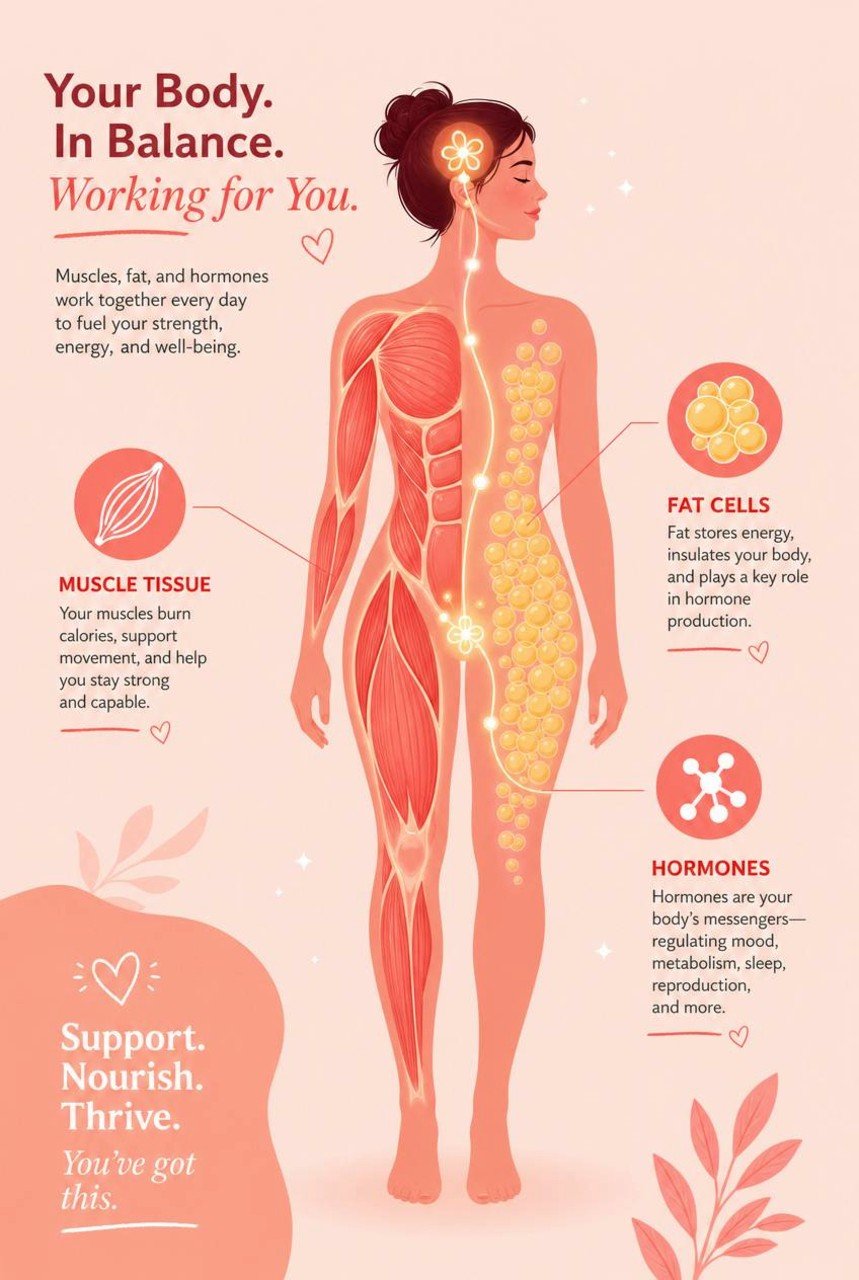
This is one reason the same eating and exercise pattern can produce different results for the same woman at different points in her life, and it’s also why perimenopause and menopause deserve their own deeper conversation — which we cover fully in our guide to weight loss in perimenopause.
Visceral fat — the metabolically active fat around your organs, not just under your skin — also shifts location as estrogen drops.
Postmenopausal women carried 123% more visceral fat mass than premenopausal women in one 2021 study published in Scientific Reports, whose authors propose estrogen withdrawal as a likely driver, changing how fat tissue stores and processes lipids — though they’re clear the full mechanism isn’t settled science yet.
This doesn’t mean the fight is unwinnable. The fight changes shape, and the strategy has to change with it.
The Emotional Weight Of Being Told To “Just Try Harder”
The frustration and self-doubt that show up around weight loss aren’t just emotional noise — stress itself measurably affects where your body stores fat.
In a study conducted at Yale, lean women who were vulnerable to stress showed exaggerated cortisol responses and were more likely to carry excess abdominal fat than women who stored fat elsewhere.
The researchers say it’s possible that greater lifetime exposure to stress led these women to overreact to it, though they note genetics and body shape likely play a role too, according to Yale News.
In plain terms: the stress of feeling like you’re failing at weight loss can, quite literally, work against your weight loss. Treat sleep, recovery, and stress management as real levers in this process. They aren’t soft extras you get to once the “real” work is done.





3 Ways Women Lose Weight Faster When They Work With Their Biology
These are deliberately three, not twelve, and each one targets a mechanism explained above. None of it is generic advice borrowed from a program built for a 25-year-old man’s physiology.
Way #1. Trade Cardio-Only For Strength Training
Resistance training builds the lean muscle mass that raises your resting metabolic rate, directly closing part of the gap described above.
In a controlled study, nine months of resistance training raised resting metabolic rate by roughly 4–5% on average, with resting energy expenditure climbing from about 1,653 to 1,726 kilocalories per day, according to research published in the European Journal of Clinical Nutrition.
Cardio workouts still matter for heart health and daily movement, but they don’t build the metabolically active tissue that keeps burning calories after you’ve stopped exercising. A practical starting point, not a strict prescription:
- 2–3 full-body resistance sessions per week, prioritizing compound movements (squats, hip hinges, presses, rows) over isolation exercises.
- Progressive overload — small, steady increases in weight or reps over weeks, not months of plateaued effort.
- 1–2 active recovery days with walking or light mobility work, since recovery is part of the muscle-building process, not a break from it.
- Daily movement (NEAT) outside of formal workouts — the walking, standing, and fidgeting that adds up across a day.
If you want a full breakdown of which specific exercises deliver the most return for women, our guide to the best exercises for women to lose weight goes deeper on programming.

Way #2. Fix The Sugar-Insulin Loop, Not Just “Cut Sugar”
Added sugar, particularly fructose from sucrose and high-fructose corn syrup, is linked to insulin resistance through several proposed mechanisms, including fat buildup in the liver and muscle tissue.
A review in Mayo Clinic Proceedings points to fructose specifically, via increased liver fat accumulation, muscle-level lipid buildup, and inflammation that impairs insulin signaling — though the exact weight fructose carries in driving insulin resistance is still debated among researchers, with some arguing total excess calories matter more than fructose specifically.
What isn’t in serious dispute: it’s in roughly 75% of processed foods, often in places you wouldn’t expect. Mindful eating, in the most literal sense, starts with noticing where added sugar is hiding:
- Sauces and dressings — even savory ones often carry added sugar as a flavor balancer.
- “Healthy” granola and cereal bars — frequently among the highest-sugar items in a grocery cart.
- Flavored yogurt — can carry as much added sugar as a dessert
- Coffee add-ins and bottled drinks — easy to lose track of since they’re liquid, not a plated food.
Swap enough of it that your insulin response has room to recover, without chasing an all-or-nothing “clean eating” ideal that’s impossible to sustain.
Pairing meals with adequate protein also blunts the blood-sugar spike that drives the insulin response in the first place, and simple meal prep strategies, like cooking protein in batches and keeping cut vegetables on hand, make that pairing automatic instead of a daily decision.
Some women also use intermittent fasting to support insulin sensitivity; if that’s a direction you want to explore, our guide to intermittent fasting for women covers how to align it with your cycle rather than a generic daily window.

Way #3. Protect Sleep Like It’s Part Of The Plan
Poor sleep can raise ghrelin and lower leptin — your hunger and fullness hormones — leaving you hungrier even when you’re eating the same amount of food.
Research summarized by Stanford Lifestyle Medicine links consistent short sleep (under 7 hours a night) to disrupted appetite hormones, increased food cravings, and a meaningfully higher rate of obesity in adults.
In practice, that means treating a consistent sleep and wind-down routine with the same seriousness as a workout schedule. It’s appetite control at the hormonal level, and it’s one of the few weight-loss levers that costs nothing and requires no willpower to execute, only planning.
What The Old Rules Get Wrong
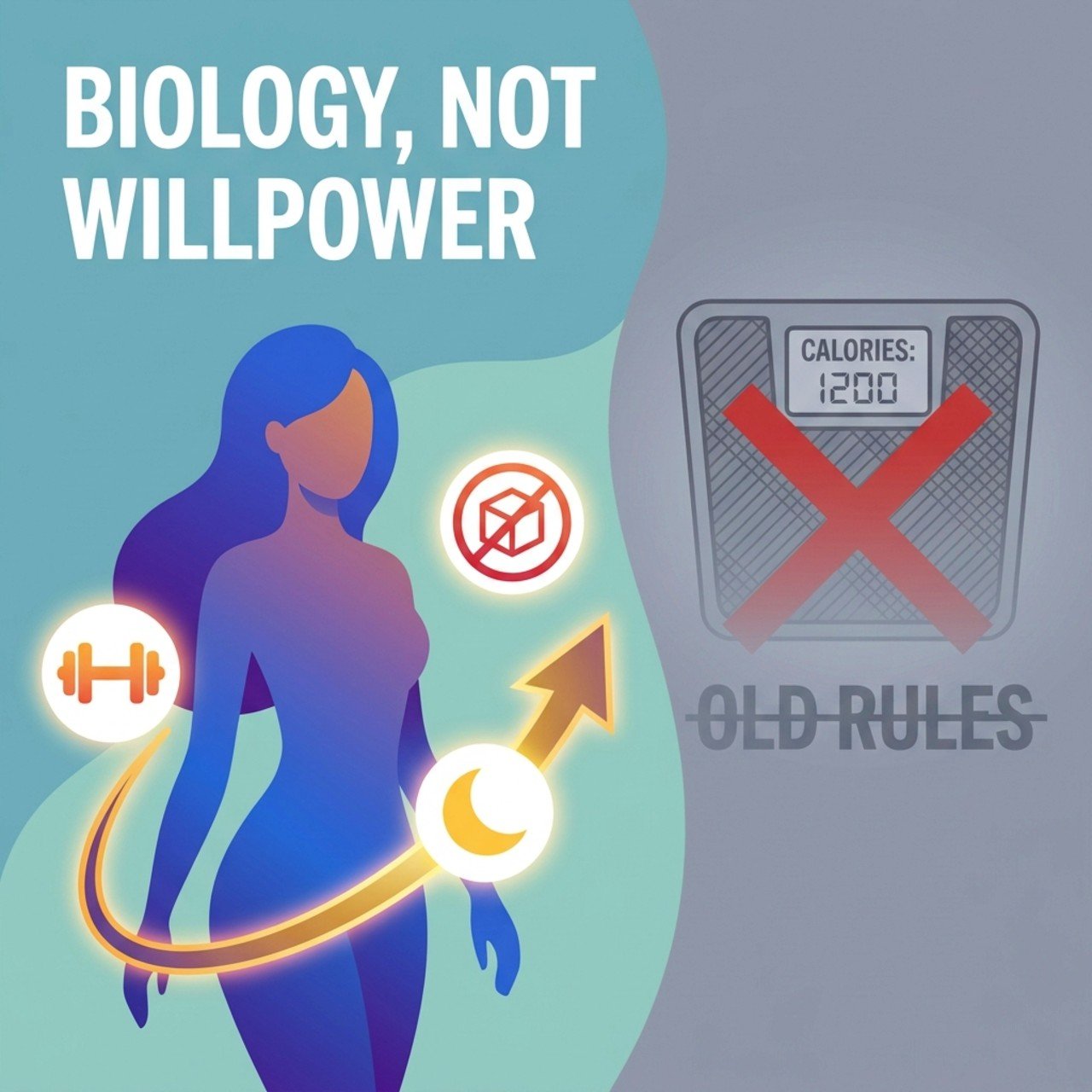
The 3,500-calorie-per-pound rule, the one most of us were taught, significantly overestimates weight loss because it treats the body as a fixed math equation instead of a system that adapts.
A 2012 consensus statement from the American Society for Nutrition and the International Life Sciences Institute formally challenged the rule because it fails to account for the fact that resting metabolic rate drops as you lose weight, according to Today’s Dietitian.
Weight loss isn’t linear, and a plan built on the assumption that it is will make you feel like you’re failing when your body is actually just adapting the way bodies do.
| The Old Rule | What The Research Actually Shows |
|---|---|
| Cut 500 calories a day and lose a steady pound a week, forever | Metabolic rate drops as you lose weight, so the same deficit produces less loss over time — plateaus are physiological, not a sign you’ve failed |
| Cardio is the fastest way to lose weight | Cardio burns calories during the session; resistance training builds the lean mass that raises your metabolic rate around the clock |
| Just eat less and the weight comes off at the same rate for everyone | Body composition, hormonal status (especially around menopause), sleep quality, and stress levels all measurably change how a given deficit performs |
| Any sugar in moderation is fine, calories are all that matter | Added fructose specifically drives insulin resistance through liver and muscle-level mechanisms, independent of total calorie count |
Common Mistakes That Undo These Three
Most setbacks come from abandoning one of the three levers the moment results slow down, not from doing them wrong. Watch for these specifically:
- Dropping strength training when the scale stalls — a stall is often water retention or muscle gain masking fat loss, not a sign to switch strategies.
- Treating “cutting sugar” as all-or-nothing — a rigid ban tends to backfire into a binge; consistent reduction beats a short, unsustainable purge.
- Sacrificing sleep to fit in an earlier workout — this trades one lever for another instead of protecting both.
- Restarting the 3,500-calorie math after a plateau — slashing calories further usually deepens the metabolic slowdown instead of fixing it.
- Skipping protein at meals to “save calories” — this removes the thermic effect of food and satiety benefit that make the whole plan easier to sustain.
Where To Start: Match The Adjustment To The Factor
Different symptoms point to different levers — use this as a starting checklist, not a diagnosis.
| What You’re Noticing | Likely Factor | Where To Start |
|---|---|---|
| Constant hunger even after eating | Low protein intake, disrupted appetite hormones | Add a protein source to every meal; prioritize consistent sleep |
| Weight loss stalled despite consistent effort | Metabolic adaptation, possible water retention from stress or training | Reassess deficit size; don’t cut further, add resistance training instead |
| Stubborn fat around the midsection | Cortisol/stress response, or menopausal fat redistribution | Prioritize sleep and stress recovery alongside training, not instead of it |
| Energy crashes and sugar cravings | Blood sugar swings from added sugar/refined carbs | Pair carbohydrates with protein and fiber at each meal |

Ready For The Next 10 Actions?
These three shifts are the ones that address the mechanisms working against you specifically as a woman — not the only things that matter, but the ones worth mastering first. When strength training, blood sugar, and sleep start feeling automatic, that’s exactly the point to build on them.
Our free guide, 10 Actions That Support Permanent Weight Loss, picks up right where this article leaves off, with the next layer of practical, science-backed steps — no extreme dieting, no generic advice designed for someone else’s body. It’s free, and it’s the natural next step once these three are second nature.
The Bottom Line
The ways women lose weight faster were never really about finding a twelfth trick nobody else knew.
They’re about three specific, evidence-grounded adjustments — strength training, fixing the sugar-insulin loop, and protecting sleep — that work with a woman’s actual physiology instead of a generic model built around someone else’s biology.
The 3,500-calorie rule you were taught oversimplified the math. The “just try harder” advice ignored the hormones. Neither was your failure. A healthy lifestyle built on these three fundamentals, not a crash diet, is what makes belly fat loss and sustainable weight loss actually stick.
Glossary Of Key Terms
- Resting Metabolic Rate (RMR): The number of calories the body burns at rest to maintain basic physiological functions like breathing and circulation.
- Insulin Sensitivity: The effectiveness with which the body uses insulin to reduce blood glucose levels; it is often protected by estrogen in premenopausal women.
- Visceral Fat: Metabolically active fat stored deep within the abdominal cavity around internal organs, which tends to increase following estrogen withdrawal.
- Cortisol: A stress hormone that, when released in exaggerated amounts, is measurably linked to the storage of excess abdominal fat.
- Ghrelin: A hormone often referred to as the "hunger hormone" because it signals the brain to increase appetite; levels rise during sleep deprivation.
- Leptin: The "fullness hormone" that signals satiety to the brain; levels typically drop when an individual is sleep-deprived.
- Resistance Training: Physical exercises, such as weightlifting, designed to improve strength and increase lean muscle mass to boost metabolism.
- Progressive Overload: The practice of making small, steady increases in weight or repetitions during exercise to ensure continued physiological adaptation.
- NEAT (Non-Exercise Activity Thermogenesis): Energy expended for everything we do that is not sleeping, eating, or sports-like exercise, such as walking or fidgeting.
- Fructose: A simple sugar found in many processed foods that can drive insulin resistance by increasing liver fat accumulation and inflammation.
FAQ
Why Do Women Lose Weight Slower Than Men?
Largely because of body composition: women typically carry less fat-free (lean) mass relative to body weight, and lean tissue burns more calories at rest than fat tissue, according to Mayo Clinic Proceedings research on resting metabolic rate. Hormonal factors, including insulin sensitivity changes around menopause, also play a measurable role.
What Are The Fastest, Safest Ways Women Lose Weight Faster?
The three most evidence-backed levers are resistance training (to raise resting metabolic rate), correcting the sugar-insulin loop through diet, and protecting consistent sleep — not extreme calorie cutting, which tends to backfire as metabolism adapts.
Does The 3,500-Calorie Rule Still Apply?
Not reliably. A 2012 consensus statement challenged the rule because it doesn’t account for metabolic rate dropping as you lose weight, per Today’s Dietitian, which is a major reason plateaus happen even when you’re doing everything “right.”
Is Cardio Or Strength Training Better For Women Trying To Lose Weight Faster?
Both have a role, but strength training builds the lean muscle mass that raises your resting metabolic rate long-term, while cardio primarily burns calories during the workout itself, per research in the European Journal of Clinical Nutrition.
How Does Sleep Actually Affect Weight Loss?
Poor sleep can raise ghrelin and lower leptin, the hormones that regulate hunger and fullness, which leaves you hungrier even when your diet hasn’t changed — research summarized by Stanford Lifestyle Medicine links consistent short sleep to disrupted appetite hormones and a meaningfully higher rate of obesity.
Does Menopause Make It Harder To Lose Weight Faster?
Yes, measurably. Estrogen decline reduces its protective effect on insulin sensitivity and shifts fat storage toward the abdomen, with one study finding postmenopausal women carried 123% more visceral fat than premenopausal women, per Scientific Reports. Our perimenopause weight loss guide covers this stage specifically.
Can Stress Alone Stall Weight Loss?
It can meaningfully slow it. Research from Yale found that stress-prone women showed exaggerated cortisol responses linked to increased abdominal fat storage, independent of overall body weight, according to Yale News.