A Science-Backed Sustainable Fat Loss Plan For Women Who Are Tired Of Starting Over
Lea Michele
American actress, singer, and songwriter
Working out for me is something I do when I feel like it. But it’s really about feeling good and taking care of my body rather than having to fit into any sort of model or anything like that. I try to eat well, and everything I do is really just to make me feel my best so that I can come to my job or my personal life and just feel really good.
Summary (TL;DR)
You’ve probably done this before. You found a plan, followed it, and watched the scale move. Then life got busy, the plan got harder, and the weight crept back. Maybe it brought friends.
That isn’t a willpower problem. Your body actively pushes back after weight loss, and after 40 it also starts storing fat differently. Most fat loss advice ignores both of those facts, which is why you’re drowning in conflicting rules about fasting, macros, carbs, and cardio while nothing seems to stick.
This guide cuts through that noise, from how fat actually leaves your body to what a fat loss day of eating looks like. Everything here is checked against the original research, drawn from more than 10 years of researching women’s weight loss. You’ll learn what makes fat loss sustainable, why “doing everything right” can stall in your 40s, and the exact habits that the women who keep it off actually use.
Medical & Referral Disclaimer
This article is for informational and educational purposes only. It is not a substitute for professional medical advice, diagnosis, or treatment. Always talk to your doctor or a qualified health provider before starting a new diet or exercise program, especially if you have a medical condition, take medication, or are in perimenopause or menopause.
Key Takeaways
- A steady pace of about 1 to 2 pounds a week beats crash dieting for keeping weight off. Aim for fat loss, not just weight loss.
- Fat is mostly exhaled as carbon dioxide. You can't sweat it out or "detox" it away.
- Protein at every meal plus strength training at least twice a week helps you keep the muscle that holds your metabolism up.
- Your appetite rises more than your calorie burn falls after weight loss, which helps explain many plateaus and much of the regain.
- HIIT is a useful tool, not a shortcut. Walking and lifting carry more of the load, especially in stressful weeks.
- Short sleep can shift the weight you lose away from fat and toward lean tissue, and ultra-processed foods make it easier to overeat.
- Keeping fat off gets easier over time. Long-term success becomes much more likely after you've maintained for 2 to 5 years.

What Is Sustainable Fat Loss?
Sustainable fat loss is losing body fat slowly enough that you keep your muscle and can keep the habits going once the “diet” ends. The goal isn’t the fastest drop on the scale; it’s still being leaner in five years.
Most plans are built for the first 12 weeks. Sustainable plans are built for week 52 and beyond, which changes everything from your calorie deficit to how hard you train.
Fat Loss Vs Weight Loss: Why The Difference Matters After 40
Weight loss counts everything you lose, including water and muscle, while fat loss counts only the fat. After 40, protecting your muscle keeps your metabolism up and the results easier to maintain.
When you diet hard without lifting or eating enough protein, a real share of what you lose can be lean tissue. A 2017 review on preserving muscle during weight loss found that higher protein intake and both endurance and resistance exercise help protect muscle mass while you lose weight.
For the full breakdown, read our guide to weight loss vs fat loss.
| Factor | Crash Diet | Sustainable Fat Loss |
|---|---|---|
| Weekly pace | Faster than 2 pounds | About 1 to 2 pounds |
| Calorie deficit | Large, hard to repeat | Modest, adjusted as you go |
| Protein and strength work | Often missing | Built in from day one |
| What you lose | Fat, with more risk of losing muscle | Mostly fat, muscle protected |
| Plan for after the diet | None | Maintenance habits practiced early |
How Fast Should You Lose Fat?
For most women, about 1 to 2 pounds a week is the sustainable range. The CDC notes that people who lose at this gradual pace are more likely to keep the weight off than people who lose faster.
Even small losses count. The CDC points out that losing 5% of your body weight (10 pounds for someone who weighs 200) can improve blood pressure, cholesterol, and blood sugar. Here’s what a steady pace looks like, using the conservative end of that range.

| Starting Weight | 5% Goal | Weeks At 1 lb/Week | 10% Goal | Weeks At 1 lb/Week |
|---|---|---|---|---|
| 150 lb | 7.5 lb | About 8 | 15 lb | About 15 |
| 175 lb | 8.75 lb | About 9 | 17.5 lb | About 18 |
| 200 lb | 10 lb | About 10 | 20 lb | About 20 |
| 225 lb | 11.25 lb | About 11 | 22.5 lb | About 23 |
Real progress isn’t a straight line. Water, hormones, and salt can hide fat loss for a week or two, so judge your pace over a month, not a morning.
How Does Fat Actually Leave Your Body?
Fat leaves your body primarily as carbon dioxide that you exhale through your lungs. When fat is oxidized for fuel, it breaks down into CO₂ and water. Research shows that 84% of every unit of fat metabolized exits as exhaled carbon dioxide, with the remaining 16% leaving as water through breath moisture, urine, and sweat.
This comes from a landmark study published in the BMJ by biochemist Ruben Meerman and Professor Andrew Brown at the University of New South Wales. Using precise stoichiometric calculations, they showed that the lungs are the main route out for fat mass during weight loss, not sweat glands and not the digestive system.
This changes how you should think about fat loss. You can't sweat fat out or flush it with a detox. The job is to create conditions that keep your body using stored fat for fuel day after day: enough movement, enough muscle, and a deficit you can hold. Every breath out is part of that work, which is why consistency beats intensity.
Why “Doing Everything Right” Stops Working After 40
Your body resists weight loss through rising appetite, and the menopause transition shifts how fast you store fat. Neither means your metabolism is broken, or your hormonal balance is beyond help, but both mean the old approach needs updating.
If you’re eating well, exercising, and the scale won’t move, you’re not imagining it. The long-running Study of Women’s Health Across the Nation (SWAN) tracked women’s body composition with DXA scans, which separate fat from lean mass.
It found that at the start of the menopause transition, the rate of fat gain doubled and lean mass began to decline, continuing until about two years after the final period. Total weight, though, didn’t speed up. The scale looked the same while body composition quietly shifted.
That’s why “I weigh the same, but my clothes fit differently” is such a common midlife complaint, and why a scale-only plan can mislead you. For a deeper look at the hormonal side, see why it’s so hard to lose weight in perimenopause.

What Your Metabolism Is Really Doing
Your basal metabolic rate is the energy you burn at rest, and it falls a little as you lose weight because there’s less of you to fuel. The bigger shift is in appetite, which climbs more than your calorie burn drops.
According to a 2018 review of weight maintenance by Kevin Hall and Scott Kahan, for each kilogram (2.2 pounds) you lose, daily calorie burn drops by about 20 to 30 calories, while appetite rises by about 100 calories a day above where it was. That gap helps explain why so many plateaus happen. It’s biology, not laziness, and you can plan around it.
Waist Size: The Health Check Your Scale Misses
Where you carry fat matters, not just how much. The National Heart, Lung, and Blood Institute says a waist measurement of more than 35 inches raises a woman’s risk of heart disease and type 2 diabetes.
You can't choose where fat comes off first, as our guides to targeted fat loss and spot reduction explain, but you can track it. Measure just above your hip bones once a month. If your waist is shrinking while the scale barely moves, that’s often fat loss with muscle held steady, which is exactly what you want.
Track it alongside your other markers using our guide on how to track your weight loss progress. If your midsection is the main concern, read how to get rid of belly fat naturally.
How Do Cortisol And Other Hormones Affect Fat Loss In Women?
Chronically elevated cortisol, your primary stress hormone, is associated with increased storage of visceral fat around the abdomen, independent of how much you're eating, because abdominal fat cells carry more cortisol receptors than fat stored elsewhere on the body.
A review published in Panminerva Medica describes how sustained HPA-axis activation and cortisol production preferentially affect abdominal fat tissue, driven partly by the higher blood flow abdominal fat receives compared with fat stored elsewhere.
This is where "eat less, move more" quietly falls apart for a lot of women. If your nervous system is stuck in a stress response, whether from work, sleep debt, undereating, or over-exercising, cortisol keeps signaling your body to hold onto fat around your midsection, no matter how disciplined your food log looks.

Perimenopause adds another layer. According to the National Institute on Aging, the menopausal transition changes how the body uses energy and redistributes fat storage, which is why many women notice results slowing down in their 40s even when nothing about their routine has changed.
We go deeper on the specific hormonal mechanisms, including insulin, ghrelin, and estrogen, in our full breakdown of hormones and weight loss for women. The practical takeaway isn't to fear stress. It's to treat recovery as part of the fat-loss plan, not a reward for finishing it.
If stress feels like the bigger driver for you, compare cortisol belly vs hormonal belly, read why stress makes women gain weight, and see how insulin resistance in perimenopause changes the picture. For eating in this stage without extreme restriction, read how to lose weight during perimenopause without starving yourself.
The P.A.C.E. Method: A Sustainable Fat Loss Framework
The P.A.C.E. Method turns sustainable fat loss into four levers you can actually manage: Protein and muscle first, A modest deficit, Consistent daily movement, and Ease stress and sleep. Pull all four a little rather than one of them hard.
Most conflicting advice argues about a single lever. P.A.C.E. puts all four in order, so you know what to fix first.
| Lever | What It Protects | Starting Point |
|---|---|---|
| P: Protein and muscle first | Lean muscle mass and metabolic health | Protein at every meal, strength training 2+ days a week |
| A: A modest deficit | Energy, hunger control, and adherence | A deficit that targets about 1 lb a week |
| C: Consistent daily movement | Calorie burn and long-term maintenance | 150 to 300 minutes of moderate activity a week |
| E: Ease stress and sleep | Fat-to-muscle ratio of what you lose, appetite | A regular 7+ hour sleep window |
P: Protein And Muscle First
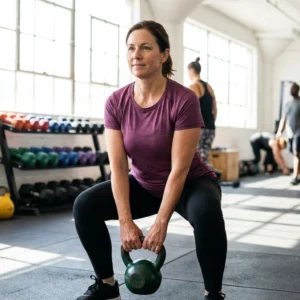
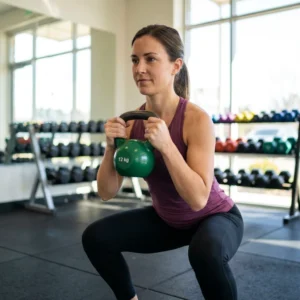
Eat protein at every meal and lift something heavy at least twice a week. Together, they tell your body to hold onto muscle while it gives up fat, which keeps your metabolism higher and makes the result easier to keep.
How much protein? A 2018 meta-analysis of 49 trials found that muscle gains from strength training leveled off at around 1.6 grams of protein per kilogram of body weight per day, and the benefit of extra protein shrank with age.
For a 160-pound woman (about 73 kg), that ceiling is roughly 115 grams a day. Treat it as an upper guide and build your protein intake up gradually.
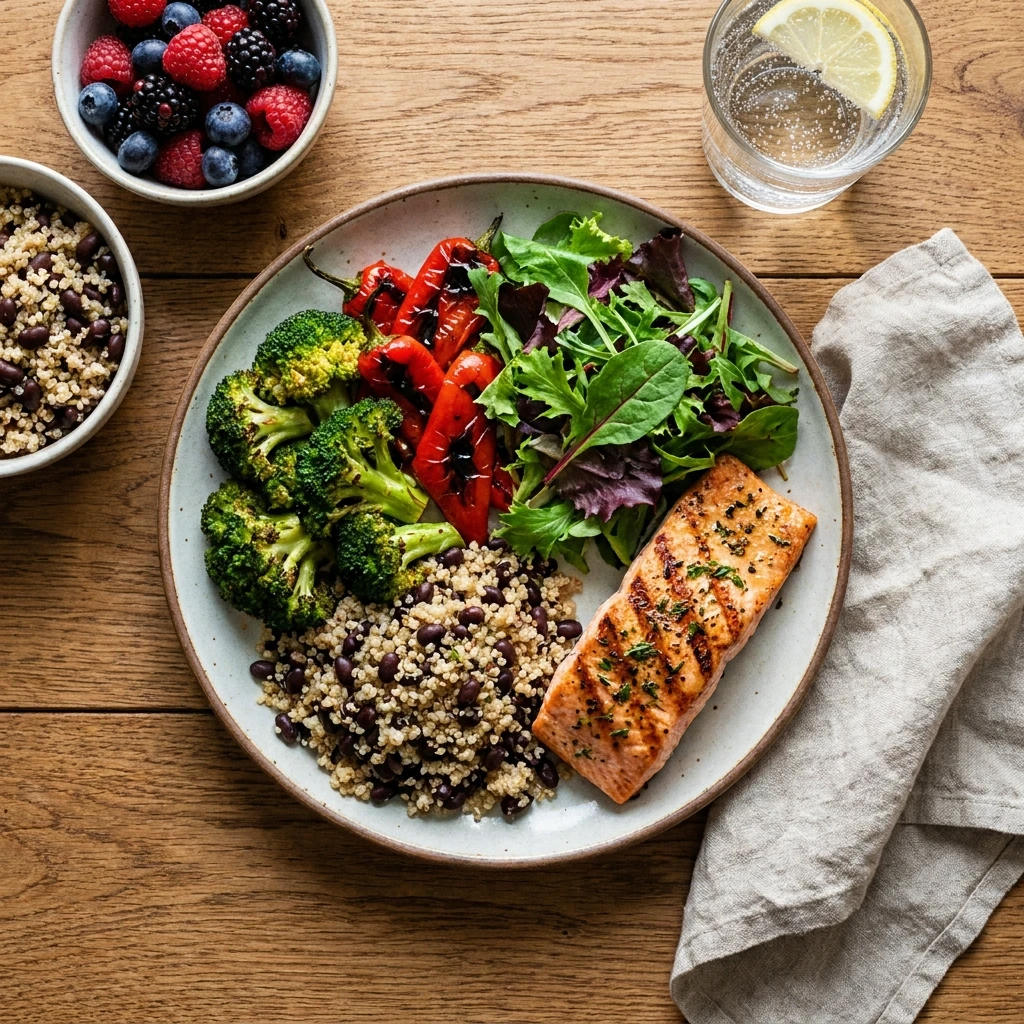
A practical way to hit that is to build every meal around a protein source first, then add vegetables, carbs and fats. Protein is the nutrient most directly tied to fullness, muscle preservation and sticking with a plan.
The newly released 2025 to 2030 Dietary Guidelines for Americans, published by USDA and HHS in January 2026, now points toward roughly 1.2 to 1.6 grams of protein per kilogram of body weight per day for most adults, a meaningful step up from the old 0.8g/kg baseline, and closer to what emerging research on midlife and postmenopausal women has been showing for several years.
| Body Weight | Daily Protein Target (1.2 to 1.6g/kg) | Example Per-Meal Split (4 meals) |
|---|---|---|
| 54kg (120lb) | 65 to 87g | ~16 to 22g per meal |
| 63kg (140lb) | 76 to 102g | ~19 to 26g per meal |
| 72kg (160lb) | 87 to 116g | ~22 to 29g per meal |
| 82kg (180lb) | 98 to 131g | ~25 to 33g per meal |
Lifting also protects your metabolic rate. A review in Current Sports Medicine Reports found that ten weeks of resistance training increased resting metabolic rate by an average of 7% and reduced fat mass by 1.8 kg (Westcott, 2012). That benefit builds as your lean mass grows, which is why lifting keeps paying off after the session ends.
- Anchor each meal: Start with a palm-sized portion of eggs, Greek yogurt, fish, chicken, tofu, or beans.
- Lift with intent: The US Physical Activity Guidelines recommend muscle-strengthening activity at least 2 days a week.
- Progress slowly: Add a few reps or a little weight every week or two. That’s progressive overload, and it’s what keeps resistance training working.
- Track strength, not just weight: A heavier squat or deadlift is proof of body recomposition (losing fat while keeping muscle) even when the scale is quiet.
Here’s how the three macronutrients fit together on a sustainable plan.
| Macronutrient | Role In Fat Loss | Healthy Sources |
|---|---|---|
| Protein | Protects lean muscle, keeps you full longer | Eggs, fish, poultry, Greek yogurt, cottage cheese, tofu, lentils |
| Carbohydrates | Fuels training, brings fiber when you choose whole foods | Oats, beans, potatoes, fruit, vegetables, whole grains |
| Fats | Supports hormone production and absorbing vitamins A, D, E, and K | Olive oil, avocado, nuts, seeds, oily fish |
New to lifting? Start with our guide to strength training for women in perimenopause, then read what body recomposition really means for women over 40.
A: A Modest Calorie Deficit
You still need a calorie deficit to lose fat. A sustainable one is small enough that you can eat it for months without constant hunger, fatigue, or an off-plan evening that undoes the week.
Use the calorie deficit calculator on this page as a starting estimate, or try the NIH Body Weight Planner, which models how your needs change as you lose. Then watch real results for three to four weeks and adjust. If you’re on the smaller side, our guide on how many calories a petite woman should eat will help you avoid setting the target too low.
Fiber-rich foods help here. In the POUNDS Lost trial, where adults averaged 52 years old, fiber intake predicted both weight loss and sticking to the diet, independent of calories and macronutrients. They add volume and nutrient density without filling the calorie budget.
How big should the deficit be? Moderate beats aggressive. Cutting too hard tends to backfire: hunger climbs, energy drops, and more of what you lose can be muscle. Three things matter more than the exact number:
- Consistency beats precision. A deficit you can sustain for months outperforms a perfect deficit you abandon after two weeks.
- Protein protects your results. Research reviewed in the International Society of Sports Nutrition's position stand on protein and exercise shows that higher protein intake during a calorie deficit, especially when paired with resistance training, helps preserve lean mass while fat comes off.
- Weekly trends matter more than daily numbers. Water retention, hormones, and sodium can shift the scale by several pounds day to day. Track the trend, not the daily reading, a principle we cover in more depth in our guide to breaking through a weight loss plateau.
- Portion control without scales: Fill half your plate with vegetables, a quarter with protein, and a quarter with fiber-rich carbs.
- Macro tracking, if it helps you: Track for two to four weeks to learn your portions, then switch to spot checks.
- Mindful eating: Eat sitting down, without a screen, and pause halfway to check your hunger.
- Plan ahead: A weekly menu takes decisions off your plate. Our meal planning guide shows how.
For a full sample day, see the day of eating section below.

Does Intermittent Fasting Make Fat Loss More Sustainable?
Not on its own. In controlled trials, time-restricted eating produced about the same fat loss as eating fewer calories spread across the day. Choose it only if the eating window makes your deficit easier.
In the 12-week TREAT trial, a 16:8 eating window wasn’t more effective for weight loss than eating three meals a day. A 12-month trial in the New England Journal of Medicine compared calorie restriction with and without an 8-hour eating window and found no significant difference in weight, waist size, or body fat.
If skipping breakfast suits you, fine. If it leaves you starving at 9 p.m., it isn’t sustainable for you. More on this in our article on intermittent fasting for women over 50.
C: Consistent Daily Movement
Daily movement shows up again and again in people who keep weight off. Aim for 150 to 300 minutes of moderate activity a week, such as brisk walking, and treat your daily step count as a habit, not a punishment.
Cardiovascular exercise improves heart health and adds to your calorie burn, but on its own it’s a modest fat loss tool. Where it shines is maintenance, which you’ll see in the research below.
High-intensity interval training (HIIT) can save time, but it isn’t a shortcut, and it adds recovery demands on top of your strength sessions. Use it once or twice a week, if you enjoy it, on top of walking and lifting.
- Walk after meals for 10 minutes. It adds up fast and is easy to repeat.
- Pick cardio you actually like, such as cycling, dancing, or swimming. Enjoyment drives fitness consistency.
- Stack movement onto existing habits. Habit stacking means “after I pour my coffee, I walk around the block.”
Why HIIT Alone Will Not Get You There
High-Intensity Interval Training earned its reputation for a reason. Short bursts of intense effort followed by recovery genuinely do trigger a real physiological response: Excess Post-Exercise Oxygen Consumption, or EPOC, sometimes called the afterburn effect.
A 2024 study published in Scientific Reports found that interval-style training produced greater post-exercise oxygen consumption and fat oxidation than steady, continuous exercise of the same total effort. That's real, and it's worth using.

Here's the part most single-tactic guides leave out: EPOC alone typically accounts for a relatively small number of extra calories per session, not a dramatic fat-loss shortcut. And when researchers compare total fat loss between HIIT and moderate-intensity continuous training over weeks, the picture gets more nuanced than "HIIT wins."
A study of HIIT protocols in middle-aged and older adults with overweight, published in the International Journal of Medical Sciences, found meaningful improvements in body composition and metabolic markers, but the researchers were clear that protocol design, consistency, and total training volume mattered as much as the interval format itself.
Treating one exercise as "the" answer to shedding body fat sets up the same letdown so many women already know: you do the thing perfectly, and your body still doesn't cooperate, because the rest of the system (nutrition, strength training, sleep and stress) was never addressed.
For a full breakdown of how to combine the two without overtraining, see our guide on balancing cardio and strength training.
| Training Type | Calorie Burn During Session | Afterburn (EPOC) Effect | Muscle Preservation | Best Used For |
|---|---|---|---|---|
| Steady-State Cardio (walking, cycling) | Moderate, sustained | Low | Low to moderate | Cardiovascular health, recovery days, cortisol management |
| HIIT | High, but shorter duration | Higher than steady-state | Moderate | Time-efficient sessions, metabolic conditioning |
| Strength Training | Moderate during session | Present, session-dependent | High | Building and preserving lean muscle, long-term metabolic rate |
What Happens To Fat Cells During Exercise?
Exercise does more than burn calories during the session. Working muscles release signaling molecules, and one of them, irisin, has drawn a lot of attention.
In the 2012 study that first identified irisin, published in Nature, researchers found it pushed white fat toward a more heat-producing "beige" state. That finding came mainly from animal research in mice, and how much it matters for fat loss in women is not yet clear.
So treat it as a mechanism, not a promise. The practical message holds either way: regular movement and strength work keep your body using fat for fuel, and the benefits extend beyond the hour you spend training.
Short on ideas? Try our fat loss workouts for beginners.

E: Ease Stress And Protect Sleep
Sleep may shape what kind of weight you lose. In one small controlled study, cutting sleep while dieting meant far less of the lost weight came from fat and more came from lean tissue, alongside stronger hunger.
In that 2010 study in the Annals of Internal Medicine, adults on the same calorie-reduced diet slept either 8.5 or 5.5 hours. Short sleep decreased the share of weight lost as fat by 55% and increased the loss of fat-free mass by 60%. The study was small and short, but it suggests sleep quality belongs in your fat loss plan.
Why Does Sleep Deprivation Cause Fat Gain In Women?
The long view matters too. One large study followed 68,183 women over 16 years. The findings, published in the American Journal of Epidemiology, showed that women sleeping five hours or less gained approximately 1.14 kg more than those sleeping seven hours, even after accounting for diet and exercise (Patel et al., 2006).
Women sleeping six hours also gained more weight than the seven-hour group. The effect was independent of what they were eating.
| Sleep Duration | Additional Weight Gained vs. 7-Hour Sleepers | Risk Level |
|---|---|---|
| 5 hours or less per night | +1.14 kg over 16 years | Highest weight gain risk |
| 6 hours per night | +0.71 kg over 16 years | Moderate weight gain risk |
| 7 hours per night | Baseline reference group | Optimal for weight management |
Source: Patel SR et al., American Journal of Epidemiology, 2006. Study of 68,183 nurses followed for 16 years.
Stress management matters too. Chronic stress is linked with higher cortisol and comfort eating, which is why we cover it in depth in cortisol and belly fat and how sleep affects weight loss in women. Keep it simple: a consistent wake-up time, a screen-free last hour, and one daily stress valve, whether that’s a walk, breathing practice, or journaling.
What A Fat Loss Day Of Eating Looks Like After 40
A fat loss day of eating after 40 looks like four protein-anchored meals spread across the day, not three large meals plus grazing. Adjust portions to your own calorie and protein targets from the sections above. This is a structural template, not a fixed prescription.

| Meal | Example | Protein Anchor |
|---|---|---|
| Breakfast | Greek yogurt, berries, chia seeds, a scoop of protein powder | ~30g |
| Lunch | Grilled chicken, quinoa, mixed greens, olive oil dressing | ~35g |
| Snack | Apple with 2 tbsp natural peanut butter, or a hard-boiled egg | ~7 to 12g |
| Dinner | Baked salmon, roasted vegetables, small portion of brown rice | ~30g |
Meal Planning And Prep That Survives Real Life
Meal prep survives real life when it’s built around your actual schedule, not an idealized one where you cook fresh every night. A plan that assumes a free evening five days a week isn’t a sustainable fat loss diet. It’s a plan for a life you don’t currently have.
- Plan one weekly anchor session: batch-cook two or three proteins and one starch on a single day, then mix and match them into meals all week.
- Keep a standing snack list: three or four grab-and-go, protein-forward snacks you default to, so a hungry moment never becomes a drive-through decision.
- Use the 80/20 rule for flexibility: eat close to plan roughly 80% of the time and allow social meals and treats the other 20%, so one dinner out doesn’t feel like “starting over Monday.”
For more structure, see our hormone-smart eating guide for women over 40, the high-protein diet plan for sustainable weight loss, and the flat stomach diet for women over 40. If structured eating windows suit you, our guide to intermittent fasting for women over 50 covers whether that fits.
Why Ultra-Processed Foods Make Fat Loss Harder
Ultra-processed foods make it easier to eat more than you need without noticing. They are usually soft, fast to eat and low in fiber and protein, so they deliver a lot of energy before fullness signals catch up.
The clearest evidence comes from a tightly controlled study at the US National Institutes of Health. In this randomized inpatient trial published in Cell Metabolism, participants eating an ultra-processed diet consumed roughly 500 more calories per day and gained weight, compared with weight loss on an unprocessed diet matched for calories, sugar, fat and fiber, even though they could eat as much as they wanted on both.
Researchers also study how these foods might affect the brain's appetite center, the hypothalamus, but much of that work is early or in animals, so it is best treated as a possible mechanism.
You don't need to wait for it to settle. Building most meals around protein, vegetables, beans, whole grains and fruit naturally crowds out the foods that are easiest to overeat, and it doesn't mean banning anything.

How Do You Build Muscle While Losing Fat?
Building muscle while losing fat, sometimes called body recomposition, requires resistance training at least twice a week combined with enough protein to support muscle repair, and it remains achievable at any adult age, not only for athletes or people in their twenties.
The American College of Sports Medicine's 2026 resistance training guidelines, its first major update in 17 years, reinforce that consistent resistance training is central to preserving and building muscle throughout adulthood.
According to the Office on Women's Health, women typically begin losing 3 to 5% of muscle mass per decade starting around age 30, a process called sarcopenia that accelerates without resistance training.
What this looks like in practice:
- Train major muscle groups at least twice a week, using compound movements like squats, hinges, presses, and rows.
- Prioritize protein at every meal, spacing it across the day rather than loading it all at dinner.
- Don't fear a small deficit while lifting. A modest calorie deficit paired with resistance training and adequate protein supports simultaneous fat loss and muscle maintenance far better than cardio alone.
- Expect a slower scale, faster mirror. Because you're building something while losing something else, the scale is often the last place progress shows up.
This is why most women over 40 do well to aim for body recomposition rather than weight loss alone: it protects the muscle you already have while you lose fat.
If you're navigating this during perimenopause specifically, our guide to strength training for women in perimenopause goes deeper on programming around hormonal recovery windows.
Do You Need Supplements For Fat Loss?
Most women don't. The calorie deficit and the protein target do the work most fat-burning supplements claim to do. Evidence reviews on two popular options are unimpressive: CLA does not seem to help with weight loss and may lower HDL cholesterol in some people, and forskolin trials show mixed results at best.
If you are curious, our guide to fat loss supplements and our review of perimenopause supplements that actually work go through the evidence. Talk to your doctor before starting any supplement, especially alongside medication.

How To Keep Fat Off For Good
The people who keep weight off long term do a few unglamorous things on repeat: they stay active about an hour a day, weigh themselves regularly, eat breakfast, and eat the same way on weekdays and weekends.
Those habits come from the National Weight Control Registry (NWCR), which tracks people who have lost at least 30 pounds and kept it off for at least a year. Members have lost an average of 33 kg (about 73 pounds) and kept it off for more than five years.
The registry matters for this audience: a 10-year follow-up of 2,886 members was 78% women with an average age of 48.
| What Long-Term Maintainers Do | How To Start This Week |
|---|---|
| About one hour of physical activity a day | Add a 20-minute walk to your current routine, then build up |
| Weigh themselves regularly | Weigh at the same time once or twice a week and look at the monthly trend |
| Eat breakfast regularly | Make it protein-led: eggs, yogurt, or a protein smoothie |
| Keep weekdays and weekends similar | Plan one flexible meal, not a free-for-all weekend |
| Keep up their dietary habits over time | Choose habits you’d still do on a bad week |
The same follow-up found that people who let their activity, dietary restraint, and self-weighing slip regained more weight. And there’s good news: Wing and Phelan report that after people have maintained their loss for 2 to 5 years, the chance of longer-term success greatly increases. It gets easier. For more practical steps, read 5 actions that support permanent weight loss.
Maintaining fat loss long-term means gradually raising your intake back toward maintenance calories while keeping the protein-first structure and strength training in place, not returning to how you ate before. The habits that got you the result are the habits that keep it; the diet was never meant to end at the goal weight.
For the full framework for setting realistic timelines and tracking progress beyond the scale, our Weight Loss Goals guide walks through exactly what a realistic 90-day-and-beyond timeline looks like for women navigating this life stage.
Expert Commentary: What The Research Actually Shows
Weight regain isn’t a personal failure. Researchers who study it describe a typical pattern of early loss, a plateau, and gradual regain, shaped by biological, behavioral, and environmental factors rather than a lack of willpower.

In their review, Kevin Hall of the National Institutes of Health and Scott Kahan write that obesity treatments “typically result in early rapid weight loss followed by a weight plateau and progressive regain.”
They also note that when weight comes back, patients tend to blame themselves as lazy or lacking willpower, even though appetite changes are predictable. They conclude that people need maintenance-specific support, not just a weight loss plan.
Rena Wing and Suzanne Phelan, writing about the National Weight Control Registry, push back on the idea that almost nobody succeeds. Their review estimates that roughly 20% of people with overweight manage long-term weight loss, defined as losing at least 10% of body weight and keeping it off for a year or more.
That’s far from no one, and the registry shows what those people do. Together, these findings say your body defends against loss, so your plan has to keep going after the loss ends.
The Contrarian Take: Keeping Fat Off Is A Different Skill From Losing It
Most advice treats maintenance as “stop dieting.” The research suggests the opposite. Losing fat mostly comes down to eating less, while long-term maintainers report staying active, monitoring their weight, and keeping a stable eating pattern.
Think about the Hall and Kahan numbers again. By that estimate, losing 10 kg (22 pounds) could leave your appetite running roughly 1,000 calories a day above your old baseline, while your calorie burn drops by only 200 to 300. A plan that only teaches you to restrict leaves you with no tools once the restriction ends.
That’s why NWCR maintainers look so different from dieters. Alongside careful eating, their standout habit is about an hour of activity a day. So start practicing maintenance early. Hold your weight steady for a few weeks every time you lose 5% to 10%.
You’ll learn what your maintenance eating looks like before you need it, and you’ll prove to yourself that the new weight is livable. The same "less can be more" logic applies to exercise.
A 2025 study on walking and low-impact exercise found that regular walking measurably lowered stress hormone levels in women over a 12-week period, something intense training doesn't reliably do, because hard training is itself a physical stressor.
So in a high-stress stretch, swapping a HIIT session for a brisk walk while keeping your strength work is a legitimate maintenance-friendly choice, not a step backward. Fat loss isn't only a math problem of calories burned.
What To Do When Sustainable Fat Loss Stalls
A weight loss plateau usually means your appetite and lower body weight have caught up with your deficit. Before cutting more food, check your tracking, your movement, your sleep, and your measurements.
Sleep deserves more attention than it usually gets. According to the Sleep Foundation, insufficient sleep disrupts the hormones ghrelin and leptin in ways that increase hunger and reduce feelings of fullness, which can quietly sabotage even a well-designed nutrition plan.
- Re-check your portions: Track honestly for one week. Small extras add up as your needs fall.
- Check your waist: If inches are dropping, fat loss is still happening.
- Raise your daily movement: Add 10 to 15 minutes of walking before you cut calories.
- Look at your sleep: Short sleep was linked to stronger hunger in a controlled dieting study.
- Add strength, not more cardio: One extra strength session a week usually helps more than another cardio class.
- Take a planned maintenance break: Two to four weeks at maintenance may help you reset mentally before your next push.
A quiet scale can also hide fat loss, which is why weight loss vs fat loss is worth reading before you change anything. Still stuck after a month? Our deep dive on weight loss plateaus walks through the next steps, and it’s worth checking in with your doctor about thyroid function, medications, or hormone therapy.
Want The Habits Behind Lasting Weight Loss? Get the free guide: 10 research-backed habits that help women lose body fat and keep it off, with no extreme diets. Send Me The Free Guide.
The Bottom Line
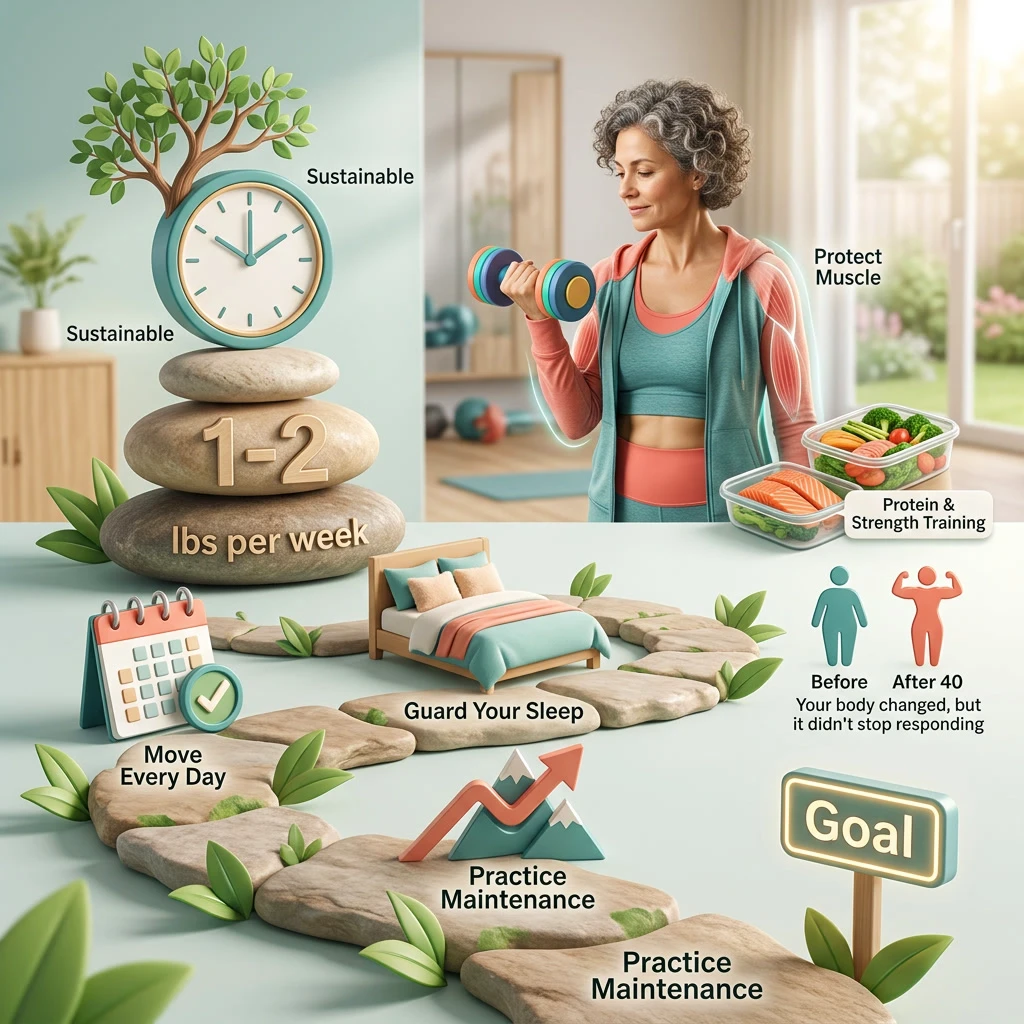
Sustainable fat loss isn’t the fast version of fat loss. It’s the version that lasts. Lose about 1 to 2 pounds a week, protect your muscle with protein and strength training, move every day, keep ultra-processed foods from crowding your plate, and guard your sleep. Then practice maintenance long before you reach your goal.
Your body changed after 40, but it didn’t stop responding. It just needs a plan built for how women in midlife actually live, with fewer extremes and more consistency. That’s sustainable dieting within a healthy lifestyle, not a 12-week sprint.
Ready to stop starting over? Get our free guide, 10 Actions That Support Permanent Weight Loss. No restriction plans. No guilt. Just the habits that help real women keep the results they work for. Get your free 10 Actions guide here.
Glossary Of Key Terms
- Sustainable Fat Loss: Losing body fat at a steady pace while protecting muscle, using habits you can keep long term.
- Calorie Deficit: Eating fewer calories than your body burns, which is required to lose body fat.
- Basal Metabolic Rate (BMR): The calories your body burns at rest to keep basic functions running.
- Total Daily Energy Expenditure (TDEE): Your BMR plus the calories you burn through movement, exercise, and digestion.
- Lean Muscle Mass: The muscle tissue in your body, which supports strength, metabolic health, and daily function.
- Body Recomposition: Losing fat and keeping or building muscle at the same time, so your shape changes more than your weight.
- Resistance Training: Exercise that works your muscles against a load, such as weights, bands, or your own body weight.
- Visceral Fat: Fat stored deep in the abdomen around the organs, linked to higher heart disease and diabetes risk.
- Weight Loss Plateau: A period when weight stops dropping despite following your plan, often because appetite and needs have shifted.
- Habit Stacking: Attaching a new habit to one you already do, such as a walk after your morning coffee.
FAQ
What Is The Most Sustainable Way To Lose Fat?
The most sustainable way to lose fat is a modest calorie deficit, protein at every meal, strength training at least twice a week, regular daily movement, and enough sleep. Aim for about 1 to 2 pounds a week, which the CDC links to better long-term success.
How Much Fat Can A Woman Lose In A Month Sustainably?
Most women can sustainably lose about 4 to 8 pounds a month, based on the CDC’s guidance of 1 to 2 pounds a week. Smaller women and those close to their goal will usually land at the lower end.
How Does Perimenopause Change The Approach To Losing Body Fat?
During the menopause transition, research from the SWAN study found the rate of fat gain doubles and lean mass starts to decline, even when total weight changes little. The adjustments with the best evidence are consistent strength training, enough protein, protected sleep and stress, and patience with a steadier pace.
How Much Protein Do I Need To Keep Muscle While Losing Fat?
Research on strength training found muscle gains leveled off at about 1.6 grams of protein per kilogram of body weight per day, a useful upper guide. For a 160-pound woman, that’s roughly 115 grams. Higher protein plus resistance training helps protect muscle during weight loss, so build up gradually and spread it across meals.
Does HIIT Really Burn More Fat Than Other Exercise?
HIIT does create a small afterburn effect, but studies comparing it with steady cardio for total fat loss show mixed results, not a clear winner. It is a time-efficient tool that works best alongside strength training, walking and a sensible diet, not as a stand-alone plan.
How Does Fat Actually Leave My Body?
Mostly through your lungs. A study in the BMJ calculated that about 84% of the fat you metabolize leaves as exhaled carbon dioxide and the remaining 16% as water. That is why fat loss depends on steady habits that keep your body using stored fat, not on sweating or detoxes.
How Do I Keep Fat Off After I Lose It?
Long-term maintainers in the National Weight Control Registry stay active about an hour a day, weigh themselves regularly, eat breakfast, and keep weekday and weekend eating similar. Maintenance gets easier after 2 to 5 years.