
Intermittent Fasting In Perimenopause: What The Science Shows For Women Over 40
Mark Mattson, Ph.D.
Neuroscientist, Johns Hopkins University
Fasting prolongs the period where your body exhausts sugar stores and begins burning stored fat for fuel, and the benefits extend well beyond weight loss.
Summary (TL;DR)
Intermittent fasting (IF) can help some women in perimenopause lose fat and improve insulin sensitivity, mostly because a shorter eating window makes it easier to eat a little less. In human trials, fat loss is real but modest and about the same as ordinary calorie reduction.
For women over 40, how you fast matters more than which method you pick: start with a 12- to 14-hour overnight fast, eat enough protein, keep lifting, and avoid stacking long fasts on top of a big calorie deficit, which raises cortisol. This guide grades each claimed benefit by the strength of the human evidence and explains how to adapt your window when your cycle becomes irregular.
Most intermittent fasting guides are built on research done mainly with men, then handed to women with a quiet assumption that it applies equally. In perimenopause, when sleep, stress hormones, and cycles are all shifting, that assumption breaks down even further.
Here's what's actually true: IF can work well for women over 40, but it isn't a shortcut. The best human evidence supports modest fat loss and better insulin sensitivity. Some of the most repeated claims, like big autophagy and brain benefits, come mainly from animal studies.
This guide covers the main methods, what the research shows (graded honestly), what fasting does to women's hormones, how to adjust your window when your cycle is irregular, and who shouldn't fast at all. If you're past menopause, our guide to intermittent fasting for women over 50 covers that stage in detail.
Medical & Referral Disclaimer
The content in this article is for educational purposes only and does not constitute medical advice. Intermittent fasting affects individuals differently based on hormonal status, health history, age, and lifestyle factors. Women who are pregnant, breastfeeding, under 18, diabetic, underweight, or have a history of eating disorders should not practice intermittent fasting without direct medical supervision. If you experience irregular periods, significant fatigue, hair loss, or worsening mood while fasting, stop the protocol and consult your healthcare provider. Always seek professional medical guidance before starting any new dietary practice, especially if you are managing a hormonal condition, thyroid disorder, or taking prescription medication.
Key Takeaways
- Intermittent fasting is an eating pattern, not a diet. It focuses on when you eat, not what.
- In human trials, IF produces weight loss comparable to ordinary calorie reduction, not more. Its advantage is that many women find it easier to stick to.
- The strongest evidence is for weight loss and insulin sensitivity. Autophagy and brain benefits are real mechanisms but mostly shown in animals.
- Short-term time-restricted eating did not meaningfully change estrogen or progesterone in a small controlled study of women.
- Long fasts on top of a large calorie deficit can raise cortisol, which matters more in perimenopause, when sleep and stress are already under pressure.
- Start with a 12 to 14 hour overnight fast, eat protein first and keep strength training. Extend only if you feel well.
- Women who are pregnant, breastfeeding, under 18, diabetic or have a history of eating disorders should not fast without medical supervision.

What Is Intermittent Fasting?
Intermittent fasting is an eating pattern that cycles between defined periods of fasting and eating. It does not restrict what you eat, only when. The most common approach, the 16/8 method, involves fasting for 16 hours and eating within an 8-hour window each day.
This distinction matters. IF is not a diet in the traditional sense. It doesn't require calorie counting, food elimination, or special products. What it does require is managing eating timing consistently, which turns out to have real metabolic consequences independent of food choices, though food quality inside the eating window matters a great deal.
Several protocols fall under the intermittent fasting umbrella. They range from daily time-restricted eating to multi-day or weekly fasting approaches, and the evidence behind each varies significantly.
The 4 Main Intermittent Fasting Methods
| Method | Fasting Window | Eating Window | Difficulty | Best Fit |
|---|---|---|---|---|
| 16/8 (Time-Restricted Eating) | 16 hours daily | 8 hours daily | Moderate | Beginners, daily practice |
| 5:2 Protocol | 500 to 600 cal, 2 days/week | Normal eating 5 days/week | Moderate | Weekly flexibility preference |
| Alternate-Day Fasting | Every other day | Every other day | High | Advanced practitioners |
| 24-Hour Fast | Full 24 hours | Normal eating other days | High | Experienced fasters only |
The 16/8 Method
The 16/8 method is the most researched intermittent fasting protocol and the easiest to maintain long-term. Eat within an 8-hour window, say, noon to 8 pm, and fast for the remaining 16 hours. Skipping breakfast extends the natural overnight fast without adding much deliberate restriction, which makes this feel less like a diet and more like a schedule shift.
For women starting with IF, this is the logical entry point. It's conservative enough to respect hormonal stability while still giving you a long overnight fast.
The 5:2 Protocol
Two days per week, intake is limited to 500 to 600 calories. The other five days are unrestricted. Research documented in a 2024 PMC review on IF and hormonal regulation shows the 5:2 approach produced a 50% reduction in insulin levels and measurably decreased insulin resistance (HOMA-IR). That's a significant metabolic result, particularly for women managing PCOS or metabolic syndrome.

The catch: energy needs and hunger shift across the menstrual cycle, and in perimenopause those shifts become less predictable. A 500-calorie day on a day you're already exhausted or sleeping badly is more likely to backfire. If you try 5:2, schedule the low days for weeks when you feel well.
Alternate-Day Fasting
This protocol alternates normal eating days with restricted days (500 to 600 calories or full fasting). The metabolic effects are similar to 5:2, but the day-to-day demands are harder to manage, particularly around workouts, social eating, and cycle-related energy shifts. Most women find daily 16/8 more sustainable than alternate-day fasting for the same results.
24-Hour Fasts
Complete fasting once or twice weekly (the "Eat Stop Eat" approach). The hormonal risk is higher: extended fasting can suppress GnRH (gonadotropin-releasing hormone), the signal that regulates estrogen and progesterone production, and long fasts raise cortisol. Frequent 24-hour fasts are not a good match for most women in perimenopause.
Which Method Should You Start With After 40?
Most of the research behind the benefits below used 16:8 or alternate-day protocols. For most women in perimenopause, the best start is gentler than either: a 12-hour overnight fast (say, 8 pm to 8 am), extended by about 30 minutes a week toward 14 hours if you feel well.
One caution from Mayo Clinic: some evidence suggests a 16-hour window may carry a higher cardiovascular risk signal than other time-restricted patterns, and long-term heart effects aren't established. That's another reason not to treat longer as automatically better.
How Intermittent Fasting Works: The Metabolic Switch
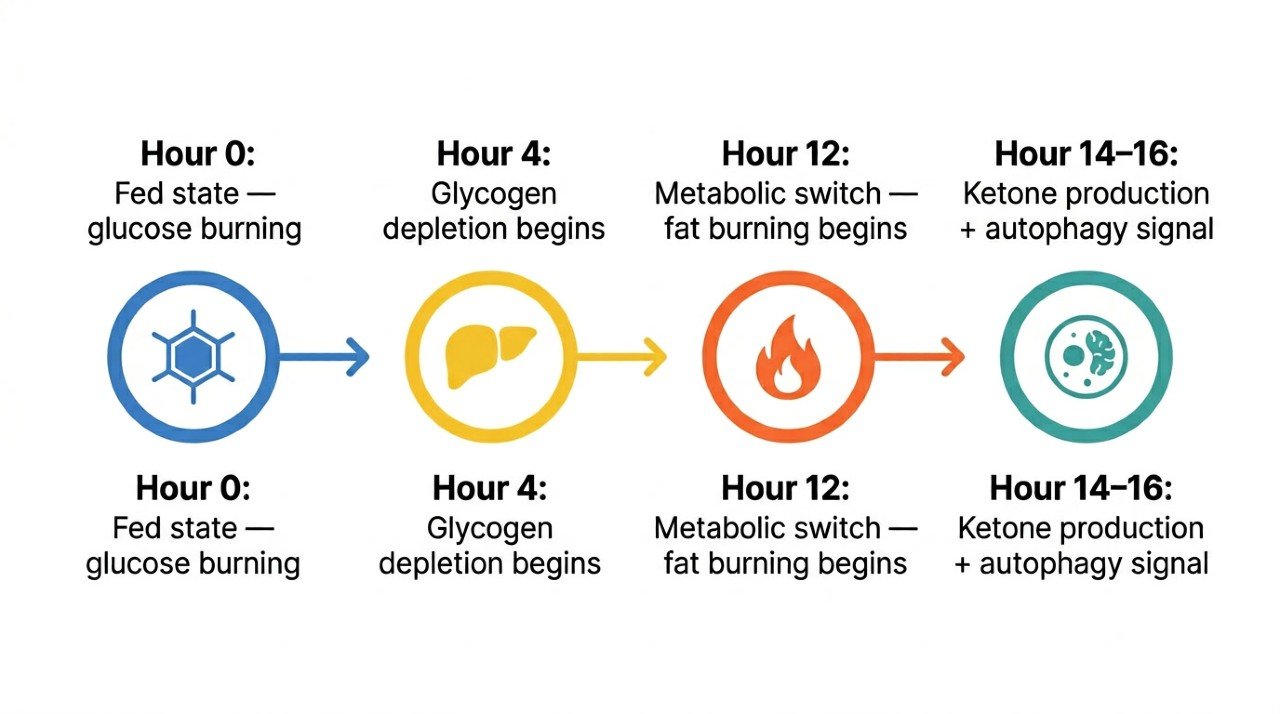
When you stop eating, your body burns through glucose stores first. After roughly 12 hours without food, liver glycogen is depleted, and your metabolism shifts to burning stored fat for energy. This is the metabolic switch.
That switch produces ketones, primarily beta-hydroxybutyrate, which the brain uses readily as an alternative to glucose. According to Mark Mattson, Ph.D., a neuroscientist at Johns Hopkins, "fasting prolongs the period where your body exhausts these sugar stores and begins burning stored fat for fuel." The metabolic benefits compound with fasting duration, up to a point.
For women, that "up to a point" matters. The benefits don't keep climbing with longer fasts, and the hormonal costs of prolonged fasting are real.
What Are The Real Benefits Of Intermittent Fasting? Graded By Evidence
Instead of presenting every benefit as equally proven, here's an honest rating of how strong the human evidence is behind each one.
| Benefit | Evidence Strength | Why |
|---|---|---|
| Weight Loss | Strong | Consistent across multiple RCTs and meta-analyses |
| Blood Sugar & Insulin Sensitivity | Strong | Repeatedly confirmed, larger effects with longer adherence |
| Heart Health | Moderate | Short-term markers improve; long-term data and window-specific risk still unclear |
| Fat Burning (Mechanism) | Moderate | Physiologically well-understood, but doesn’t guarantee net fat loss |
| Anti-Inflammatory Effects | Moderate, Mode-Dependent | Time-restricted eating outperforms other fasting styles |
| Autophagy Activation | Limited (Emerging) | Shown in a small human study; modest and slower than animal studies suggest |
| Brain Function & BDNF | Limited, Mixed | Roughly equal split of studies showing increase, decrease, or no change |
| Mental Focus & Energy | Anecdotal | Commonly reported by women; limited formal trials |
| Slowed Ageing (Direct) | Limited In Humans | Largely extrapolated from animal lifespan studies |
Weight Loss: Real, But Not Better Than Calorie Reduction
Intermittent fasting supports weight loss about as effectively as traditional calorie restriction, not more, but reliably.
A 2025 systematic review and meta-analysis comparing intermittent fasting to continuous calorie restriction found the two approaches produced comparable weight loss and cardiometabolic improvements, so fasting isn't a special fat-burning shortcut.
The real advantage is that eating in a shorter window makes it easier for many women to eat less without counting anything. Results tend to be better when fasting is paired with adequate protein and resistance training. See what happens to body composition at this stage in our guide to body recomposition after 40.

Blood Sugar And Insulin Sensitivity: The Best-Supported Benefit
This is one of the best-supported benefits on this list. A meta-analysis of 23 randomized trials covering 1,280 participants found 16:8 time-restricted eating produced measurable reductions in fasting glucose, HOMA-IR (a standard lab measure of insulin resistance), and insulin levels, with the biggest HbA1c improvements showing up in trials lasting longer than six months.
Separate research specific to type 2 diabetes management backs this up. If you’re on any glucose-lowering medication, this is a benefit worth discussing with your doctor before you start, since improved insulin sensitivity can change your dosing needs.
That matters in perimenopause, when falling estrogen tends to reduce insulin sensitivity. Read more on insulin resistance in perimenopause.
Heart Health: Promising Markers, Open Questions
Intermittent fasting can improve several heart-health markers in the short term, but the picture is more nuanced than most articles let on.
Research shows time-restricted eating can reduce blood pressure, LDL cholesterol, and fasting glucose over weeks to months. Here’s the honest caveat: Mayo Clinic notes that some evidence suggests a 16-hour fasting window specifically may carry a higher cardiovascular risk signal compared with other time-restricted patterns, and that long-term heart effects still aren’t fully established.
The takeaway isn’t “avoid it.” It’s “don’t assume every fasting window is equally heart-protective,” and to loop in your doctor if you have existing cardiovascular risk factors.
Inflammation: Depends On The Method
Fasting’s anti-inflammatory reputation is real, but it depends heavily on which method you use. A 2025 network meta-analysis of 21 studies found that time-restricted eating ranked best among fasting modes for lowering several pro-inflammatory markers, while other fasting styles showed weaker or inconsistent effects.
Chronic inflammation is linked to heart disease, insulin resistance, and metabolic decline, so a mode-dependent benefit is still a meaningful one. Just don’t expect every fasting schedule to deliver it equally.
Autophagy: What Human Studies Actually Show
Autophagy is the body's cellular recycling process. Yoshinori Ohsumi won the 2016 Nobel Prize in Physiology or Medicine for discovering the genetic mechanisms that control it, working in yeast. The prize recognized the biology, not any proven health benefit of fasting in people.
Autophagy, your cells’ process for clearing out damaged components and recycling them, is the most overstated benefit in intermittent fasting content, so it’s worth being precise.
Autophagy is real, well-documented in animal studies, and fasting does appear to trigger it. But a 2025 exploratory study that measured autophagic flux directly in humans found effects that were more modest and tissue-specific than the mouse literature suggests, with meaningful change detectable at 6 months but not as dramatic as a short-term switch.
If an article promises fasting will “detox your cells” overnight, that’s marketing outrunning the data. The honest version: fasting nudges a real, beneficial process in the right direction, gradually.
Brain Health: Mostly Animal Data So Far
Fasting shifts some of the brain's fuel toward ketones, and in animal studies it raises BDNF, a protein involved in maintaining neurons. In humans, a systematic review of BDNF and cognition found roughly equal numbers of studies showing increases, decreases or no change.
Many women report clearer thinking once they adapt, but treat brain benefits as promising rather than proven.
What Intermittent Fasting Does To A Woman's Hormones
The research on IF and women's hormones is more nuanced than most sources acknowledge. Here's what the current human evidence shows.
| Hormone | Short-Term Fasting Effect | Sustained Effect | Clinical Significance |
|---|---|---|---|
| Insulin | Large drops reported with 5:2 and alternate-day fasting | Improved sensitivity | High benefit |
| Estrogen / Progesterone | Minimal change with moderate TRE | Can disrupt with aggressive/calorie-restricted fasting | Moderate risk |
| Testosterone / FAI | Lower in small PCOS trials (especially with early eating) | Beneficial for androgen excess | High benefit for PCOS |
| DHEA | ↓ 13 to 14% in 8 weeks | Remains within normal range | Low risk, monitor long-term |
| Cortisol | ↓ with non-restrictive TRE; ↑ with caloric restriction | Elevated with prolonged aggressive fasting | Moderate risk |
| Thyroid (T3) | ↓ up to 55% during 24-hour fasts | Returns to normal after refeeding | Low risk with short fasts; monitor with extended |
| BDNF | Raised in animal studies | Mixed in human studies | Unclear |
Sources: PMC12330278, PMC9182756, PMC9877115.

Estrogen And Progesterone: What Short-Term TRE Actually Does
The good news: an 8-week controlled study of 23 women on a 4 to 6 hour eating window found that estradiol, estrone, and progesterone remained essentially unchanged. Short-term time-restricted eating, producing 3 to 4% body weight reduction, has little effect on sex steroid levels in most women.
DHEA decreased by 13 to 14% in both premenopausal and postmenopausal groups in that study. DHEA is a precursor to estrogen and testosterone. Levels stayed within normal ranges, but longer-term effects in women over 40 haven't been studied.
The real risk to reproductive hormones isn't moderate time-restricted eating. It's aggressive, calorie-restricted fasting. GnRH, the hormone that starts the estrogen and progesterone cascade, is sensitive to energy deficit and stress. If your periods change after starting IF, ease off the protocol and talk to your doctor.
For a broader look at how the female metabolism responds to dietary changes, see Understanding the Female Metabolism.
Testosterone And Androgens: The PCOS Evidence
A 2022 review of three human trials found that intermittent fasting significantly decreases androgen markers in premenopausal women and those with PCOS, with the strongest effects when calories are consumed earlier in the day:
- Li et al. (n=18, 5 weeks): 9% decrease in total testosterone, 26% decrease in Free Androgen Index (FAI)
- Jakubowicz et al. (n=60, 12 weeks): 50% decrease in free testosterone when more than 50% of calories were consumed at breakfast vs. dinner
- Harvie et al. (n=107, 24 weeks): 6 to 10% decrease in FAI
Sex hormone-binding globulin (SHBG) increased by 2 to 14% across the three studies. SHBG binds free testosterone and reduces its activity, which may help with symptoms of androgen excess.
The authors are clear about limitations: sample sizes are small, study durations are short, and strong conclusions aren't yet warranted. But the direction of the evidence is consistent and meaningful for women managing PCOS.
Cortisol: The Risk Most Guides Skip
Cortisol is the most underreported hormone story in women's IF research. According to the 2024 PMC review on hormonal regulation:
- Extended fasting (72 hours) significantly elevated cortisol, ACTH, adrenaline, and noradrenaline
- Time-restricted eating without caloric restriction lowered cortisol
- Isocaloric TRE (same calories, just restricted timing) raised cortisol
- Older women experience greater cortisol increases from fasting than younger women
Chronically elevated cortisol is linked to abdominal fat gain and poorer sleep, and it can blunt the results you're fasting for. If you're fasting hard and gaining belly fat, cortisol is the first place to look. The full cortisol and belly fat connection is covered here, and cortisol belly vs hormonal belly helps you tell the two apart.

The practical rule: fasting without meaningful caloric restriction (i.e., eating normally within your window) lowers cortisol. Fasting on top of an already large caloric deficit pushes cortisol up. This is why undereating in the eating window is counterproductive, not just for hormones but for results.
Thyroid Hormones
A 24-hour fast can lower serum T3 substantially with no change in TSH. This is a short-term energy-saving response, not thyroid disease, and levels return to normal after refeeding. Occasional longer fasts are unlikely to affect thyroid function long term.
But if you're doing frequent 24-hour fasts and noticing fatigue, cold sensitivity, hair thinning, or constipation, the thyroid suppression pattern is worth discussing with your doctor. The keyword is frequent: once-monthly 24-hour fasts in healthy women are a different category from weekly extended fasting.
What Changes When You Fast In Perimenopause
Perimenopause changes the context fasting works in. Three things matter most:
- Sleep. Night sweats and broken sleep raise next-day hunger and reduce insulin sensitivity. On a bad-sleep day, a shorter fast is the smarter choice. See how sleep affects weight loss in women.
- Cortisol. The research above suggests older women show larger cortisol increases from fasting than younger women. Fasting with a moderate deficit, not a large one, keeps that in check.
- Muscle. Muscle becomes harder to keep after 40. Long fasts with too little protein speed up its loss. Protein in every meal and two or three strength sessions a week matter more than the length of your window.
The research aimed at this stage is encouraging but early. A 2025 randomized controlled trial in women aged 40 to 60 with overweight or obesity found that flexible time-restricted eating combined with exercise produced the greatest fat-mass reduction of the groups studied, and a clinical trial, NCT07378787, is studying time-restricted eating in peri- and postmenopausal women specifically.
For the broader approach to this stage, read why it's so hard to lose weight in perimenopause and how to lose weight during perimenopause without starving yourself. If you're past menopause, see intermittent fasting for women over 50.
Cycle-Syncing Your Intermittent Fasting Window
This is the piece most IF guides leave out, and it's one reason many women give up on fasting that could work for them.
Your cycle shifts hunger, insulin sensitivity and stress tolerance. The day counts below assume a regular cycle. In perimenopause, cycles often become shorter, longer or unpredictable, so use them as a rough guide and let your symptoms lead: more hunger, poorer sleep or PMS-type symptoms mean a shorter window that day.
Cycle-syncing your fasting window means adjusting fasting length and meal timing based on where you are in your cycle. You're still getting the benefits of IF, just matched to your biology.
See the companion article on cycle syncing for weight loss for the full nutrition and workout approach.

Follicular Phase (Roughly Days 1 To 10): Your Most Flexible Window
Estrogen is rising, and insulin sensitivity is higher than at any other phase. Energy tends to be good. This is when 16- to 18-hour fasting windows are best tolerated and most metabolically effective.
If you want to try a slightly longer window, this is the time to do it, as long as you're sleeping reasonably well. In perimenopause, many women find 14 to 16 hours is plenty even in this phase.
Ovulatory Phase (Roughly Days 11 To 15): Slight Adjustment
Estrogen peaks and then LH surges to trigger ovulation. Energy is high, but many women notice a spike in hunger around ovulation. A 14- to 16-hour window is appropriate. Fighting intense mid-cycle hunger with a full 18-hour window is one of those places where the rigid approach raises cortisol more than it burns fat. Ease off by 1 to 2 hours.
Luteal Phase (Roughly Days 16 To 24): Ease Up
Progesterone rises after ovulation, which slightly raises energy needs and appetite, and insulin sensitivity tends to dip compared with the follicular phase.
Aggressive fasting in the luteal phase is where women most commonly run into trouble. Cortisol climbs more easily. Hunger is more intense and more biologically legitimate. The energy deficit created by a 16-hour fast on top of elevated progesterone-driven metabolic needs can suppress GnRH and trigger the hormonal disruption discussed earlier.
A 12- to 14-hour fasting window during this phase is the right balance, roughly the overnight fast that most people do naturally. You're still capturing metabolic benefits without fighting your own hormones.
Premenstrual Days: Trust Your Signals
If you're exhausted, experiencing significant PMS symptoms, or your hunger is noticeably higher than usual, breaking the fast earlier is not a failure. The physiological stress of forcing a fast you're not recovering from outweighs the benefit.
A 12-hour window - stop eating at 8 pm, eat again at 8 am - is entirely sufficient. The goal during this phase is to preserve the habit without adding hormonal stress.
The W.T.R. Fasting Framework: Window, Timing, Recovery
Most IF protocols give you a rule. The W.T.R. Fasting Framework gives you a system that adjusts three variables, whether your cycle is regular or not:
- Window length: how many hours you fast
- Meal timing: whether you front-load or back-load calories within the eating window
- Recovery flexibility: permission to modify on high-stress, premenstrual, or low-energy days
| Cycle Phase | Window Length | Meal Timing | Flexibility Rule |
|---|---|---|---|
| Follicular (Days 1 to 10) | 16 to 18 hours | Standard (noon-8 pm) | Extend if energy supports it |
| Ovulatory (Days 11 to 15) | 14 to 16 hours | Front-load when possible | Adjust by hunger |
| Luteal (Days 16 to 24) | 12 to 14 hours | Front-load (larger meals before 3 pm) | Shorten if cortisol signs appear |
| Premenstrual (Days 25 to 28) | 12 hours or less | Flexible | Break earlier if needed, no penalty |
On front-loading: in the PCOS trials above, eating more than half of daily calories earlier in the day produced better androgen and insulin results than evening-weighted eating. Early eating is a lever many women never adjust, whatever their window.
No regular cycle? Use the same table by feel: on good-sleep, good-energy days, use the follicular row; on tired, hungry or high-stress days, drop to the premenstrual row.
Who Should Not Fast (And Who Should Be Cautious)
Do not practice intermittent fasting if you:
- Are under 18 years old
- Are pregnant or breastfeeding
- Have Type 1 diabetes or are insulin-dependent
- Have a current or past history of an eating disorder (anorexia, bulimia, binge eating disorder, ARFID)
- Are experiencing amenorrhea (loss of menstrual cycle) unrelated to menopause
- Are currently underweight (BMI below 18.5)
- Take medication that requires food at specific intervals
If you are perimenopausal or postmenopausal, have thyroid or adrenal conditions, or have been diagnosed with PCOS, IF can still be appropriate, but start with a shorter window and discuss it with your healthcare provider first.
For perimenopause-specific strategies, see How to Lose Weight During Perimenopause Without Starving Yourself. Talk to a healthcare provider first, or consider a different approach, if any of these apply:
- You have a current or past eating disorder, or a complicated relationship with food.
- You are pregnant, trying to conceive, or breastfeeding.
- You are at elevated risk of bone loss or falls.
- You take medication for diabetes or another condition where blood sugar swings carry real risk.
- You notice your menstrual cycle becoming irregular after starting a fasting routine.
Feeling intimidated by fasting isn’t a personal failing. Going 12 to 16 hours without food genuinely does feel strange the first few times, especially if you’ve spent years being told to eat every three hours.
That discomfort usually eases within one to two weeks as your body adapts. If it doesn’t, or if fasting leaves you feeling unwell rather than just hungry, that’s useful information, not a reason to push through.
Common Mistakes Women Make With Intermittent Fasting
Starting Too Aggressively
Going from no fasting to a strict 16-hour window on day one sets you up for a cortisol spike, hunger misery, and abandonment by week two, which gives IF a bad reputation. Start with 12 hours, which most people already do overnight, and add 30 minutes each week. Your results will not be slower. They'll be better because you'll actually sustain it.
Undereating During The Eating Window
IF is not a license for drastic caloric restriction. If you're eating 1,000 calories in an 8-hour window when your body needs 1,800, you're in a significant deficit, and your hormonal axis will respond accordingly.
Focus on protein-first eating during your eating window. Aim for 0.7 to 1g of protein per pound of lean body mass. This is the single biggest factor in preserving muscle mass while fasting.
Treating Every Day As Identical
Rigid daily fasting without adjusting for your cycle, sleep or stress is how many women burn out on IF within a couple of months. The W.T.R. Framework is built to avoid this.

Neglecting Sleep Quality
Your fasting window is mostly overnight, which means sleep directly affects your fasting outcomes. Poor sleep raises ghrelin the next morning and reduces insulin sensitivity, both undercutting the work the overnight fast is doing. Sleep and weight loss in women are more tightly linked than most people realize, treat sleep as part of the fasting strategy.
Breaking The Fast With Ultra-Processed Foods
What you eat in your eating window determines whether IF is a metabolic health strategy or just restricted-window calorie consumption. Breaking your fast with high-sugar foods spikes insulin sharply and negates much of the insulin-sensitivity benefit the fasting period produced.
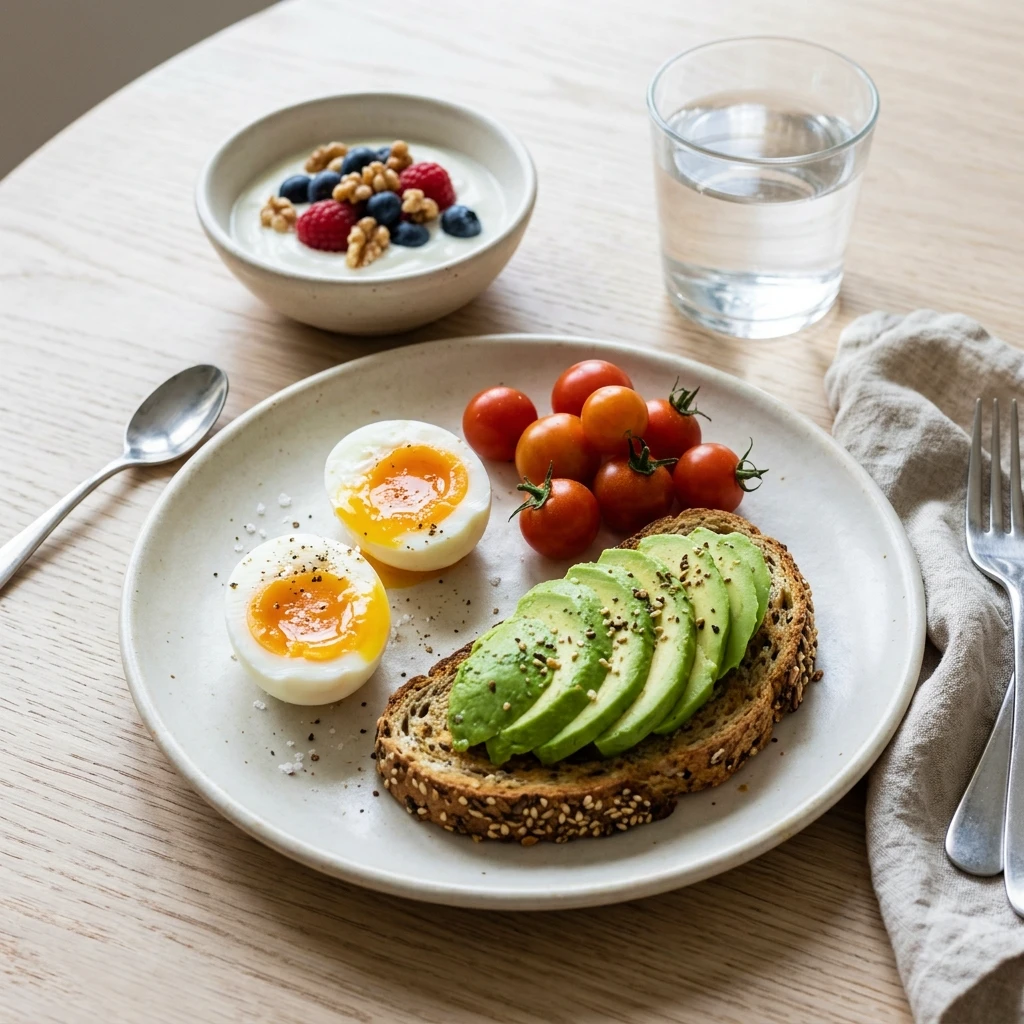
Break your fast with protein and healthy fats, eggs, Greek yogurt, avocado, or a high-protein smoothie. For specific morning meal guidance, see What Should Women Eat in the Morning for Hormone Balance and Fat Loss.
What To Eat During Your Intermittent Fasting Window
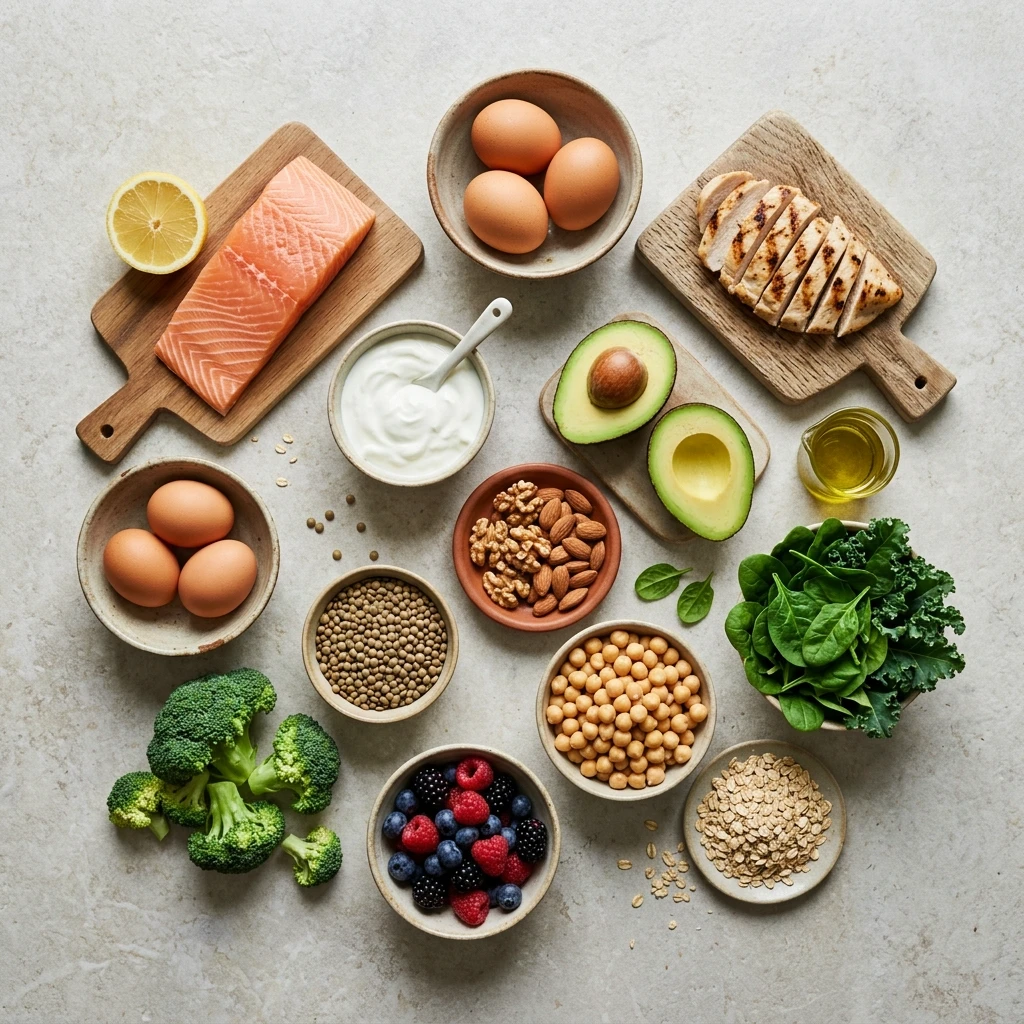
Protein comes first. Aim for 0.7 to 1g per pound of lean body mass, spread across your eating window. Protein preserves muscle during periods of caloric restriction, supports satiety through the fasting hours, and has a higher thermic effect than carbohydrates or fat. If you consistently undereat protein while fasting, muscle loss is the predictable result.
- Healthy fats (avocado, olive oil, nuts, fatty fish) slow digestion and keep you full for longer after you break your fast.
- Fiber-rich carbohydrates (vegetables, legumes, whole grains) slow digestion, feed beneficial gut bacteria and support steadier blood sugar.
- What breaks a fast: Technically, any caloric intake. Practically, black coffee and plain tea do not meaningfully interrupt the metabolic state of fasting. Water is always fine. Adding cream, sugar, or any food ends the fast. For the purposes of most health goals, some flexibility here is fine, consistency over the long run matters more than perfection on any given day.
For a complete approach to eating for sustainable results, see Weight Loss Without Counting Calories and the Ultimate Guide to Sustainable Fat Loss.

Expert Commentary: What The Research Actually Shows
Mark Mattson, a neuroscientist at Johns Hopkins who has studied fasting for decades, describes the core mechanism in a Johns Hopkins Medicine explainer: fasting "prolongs the period where your body exhausts these sugar stores and begins burning stored fat for fuel."
That mechanism is solid. The question is how much it changes outcomes. Here the best human data is sobering in a useful way. A 2025 systematic review and meta-analysis found intermittent fasting and continuous calorie restriction produce comparable weight loss.
A meta-analysis of 23 randomized trials found 16:8 eating improved fasting glucose and insulin resistance. And the 2024 review on fasting and hormonal regulation flagged that long fasts raise cortisol, with larger increases in older women.
Read together: IF is a reasonable, evidence-based tool for women over 40, especially for insulin sensitivity, as long as it is moderate, paired with enough protein and strength training, and adjusted when sleep or stress are poor.
The Contrarian Take: The Window Matters Less Than You Think
Most fasting content obsesses over the window: 16:8 or 18:6, 5:2 or OMAD. For women in perimenopause, the window is one of the least important variables. The trials show fasting works about as well as eating a bit less in any other way, which means what drives your results is the same as always: total intake, protein, strength training, sleep and stress.
That's freeing. If a 12-hour overnight fast is all that fits your life, you're not missing out on some hidden metabolic bonus that starts at hour 16. And if fasting makes you irritable, sleepless or obsessed with the clock, you can drop it and lose nothing that a well-built eating pattern can't give you.
Want The Habits Behind Lasting Weight Loss? Get the free guide: 10 research-backed habits that help women lose body fat and keep it off, with no extreme diets. Send Me The Free Guide.

The Bottom Line
Intermittent fasting can work for women in perimenopause, but not by following the same playbook as men, and not by fasting as long and as hard as possible.
The evidence is strongest for modest fat loss and better insulin sensitivity. Autophagy and brain benefits are real mechanisms that have been oversold well past what human studies show. And fasting too aggressively, too rigidly or on too little food raises cortisol and can disrupt hormones, the opposite of what you're fasting for.
The W.T.R. Fasting Framework covered in this guide (start short, front-load calories, adjust by how you feel) is built for how women's bodies work after 40. Pair it with protein and strength training, and judge it by how you feel after a month, not by the scale after a week.
Glossary Of Key Terms
- 16:8 Method: A form of time-restricted eating where an individual consumes all daily calories within an 8-hour window and fasts for the remaining 16 hours.
- Autophagy: A Nobel Prize-winning cellular process involving the breakdown and recycling of damaged cellular components and proteins.
- BDNF (Brain-Derived Neurotrophic Factor): A protein increased by fasting that supports neuron maintenance and growth, contributing to cognitive health.
- Cycle-Syncing: The practice of adjusting fasting durations and meal timing to align with the different phases of the 28-day menstrual cycle.
- Follicular Phase: The first 10 days of the menstrual cycle, characterized by rising estrogen and high insulin sensitivity, often considered the "fasting sweet spot."
- GnRH (Gonadotropin-Releasing Hormone): A signaling hormone sensitive to energy deficits that regulates the production of estrogen and progesterone.
- HOMA-IR: A standard laboratory measure used to determine the level of insulin resistance in a patient.
- Insulin Sensitivity: The effectiveness with which the body uses insulin to reduce blood glucose levels; improving this is one of the most strongly supported benefits of fasting.
- Intermittent Fasting: An eating pattern that cycles between specific periods of fasting and eating, prioritizing timing over food restriction.
- Ketone Bodies: Alternative fuel sources produced by the liver from fat; they are associated with steadier cognitive energy during fasting periods.
- Ketones: Alternative fuel sources, primarily beta-hydroxybutyrate, produced by the liver when glucose stores are depleted.
FAQ
Does Intermittent Fasting Cause Muscle Loss In Women?
Intermittent fasting can cause muscle loss, but it doesn't have to. The primary driver is insufficient protein intake, not the fasting itself. Studies show that time-restricted eating combined with adequate protein (0.7 to 1g per pound of lean mass) and resistance training preserves lean mass effectively. If you're fasting without either, muscle loss is a real risk. Strength training for women over 40 covers the resistance training side of this equation.
Can You Exercise While Intermittent Fasting?
Yes, with adjustments. Low-to-moderate cardio works well in the fasted state and may enhance fat oxidation. Heavy strength training fully fasted is harder; most women notice performance decrements, and muscle protein synthesis needs available amino acids. A practical approach: schedule workouts near the end of your fasting window, then break your fast immediately after. This captures the metabolic benefits of fasted training while supporting recovery with protein.
How Long Until Intermittent Fasting Shows Results?
Most women notice changes in energy levels and hunger patterns within 1 to 2 weeks. Visible body composition changes typically appear at 4 to 8 weeks of consistency. The deeper metabolic adaptations, improved insulin sensitivity, and more efficient fat oxidation continue developing over months. Expecting big results in two weeks and quitting when they don't appear is the most common reason IF "doesn't work."
Does Intermittent Fasting Help With Perimenopause Weight Gain?
It can, because perimenopausal weight gain is strongly linked to insulin resistance, and IF has documented effects on insulin sensitivity at multiple timescales. The best dietary approaches for women over 40 include IF as one tool among several. It works better when combined with adequate protein, resistance training, and attention to cortisol management. Postmenopausal women should note that the cortisol response to fasting is greater in older women; shorter windows (12 to 14 hours) may be the better starting point than jumping to 16/8.
What Is The Difference Between Intermittent Fasting And A Calorie Deficit?
A calorie deficit means eating fewer calories than you burn. Intermittent fasting is a timing pattern that may or may not create a deficit, depending on what you eat in your window. In human trials, most of IF's weight loss comes from the fact that many people naturally eat less in a shorter window, which is why its results look similar to ordinary calorie reduction.
Will Intermittent Fasting Affect My Menstrual Cycle?
It can, particularly with aggressive protocols in premenopausal women. Research links fasting to changes in androgen markers and, in some cases, menstrual irregularity. If your cycle changes after starting, that’s a signal to ease off the fasting window or talk to your doctor, not something to push through.
Can Intermittent Fasting Help With Emotional Eating?
Some women find that structured eating windows reduce the opportunity for mindless or stress-driven eating. That can help, but it's structural, not psychological. For the emotional eating side, there's a different toolkit. How mindfulness can break the cycle of emotional eating is worth reading alongside any fasting protocol, and the connection between diet and stress-related weight gain in women is covered in more depth separately.