
How To Cut Sugar After 40: What Actually Works When Cravings Hit Harder

People really have to start being a smarter consumer, read labels, and understand what hidden sugars are.
Jackie Warner
Summary (TL;DR)
Sugar isn't officially classified as an addictive substance, but the cravings, crashes and withdrawal-like symptoms are real, and for many women, they get stronger after 40 as declining estrogen reduces insulin sensitivity.
The American Heart Association suggests no more than 25 grams (6 teaspoons) of added sugar a day for women, and most women eat well above that, mostly from foods sold as healthy.
This guide explains why cravings change in perimenopause using the H.P.H. Craving Framework (Hormonal, Physiological, Habitual), then gives you 9 science-backed tips, an in-the-moment plan for when a craving hits, and an honest look at sugar alternatives.
You're tired, edgy and cranky in the morning until you get your sweet coffee drink. If black coffee doesn't do it for your caffeine fix, maybe your real problem is sugar. And if you're over 40, there's a decent chance it feels harder to cut back than it used to.
That isn't in your head, and it isn't a willpower problem. Your hormones changed the rules. Afternoon sugar spirals usually follow a pattern: blood sugar crashes, stress, short sleep. Once you can see the pattern, the cravings stop looking random and start looking like signals.
This guide brings together how much sugar is enough, where it hides, why cravings hit harder in perimenopause, and the practical steps that make cutting back stick, without white-knuckling every afternoon.
Medical & Referral Disclaimer
This article is for informational and educational purposes only. It is not a substitute for professional medical advice, diagnosis, or treatment. Always consult your physician or qualified health provider before starting any new diet or exercise program, especially if you are managing blood sugar conditions, are in perimenopause or menopause, or are considering hormone therapy.
Key Takeaways
- Sugar cravings are not purely psychological. Declining estrogen in perimenopause reduces insulin sensitivity, which can make cravings stronger.
- The American Heart Association suggests women keep added sugar to about 25 grams (6 teaspoons) a day. CDC survey data shows most women eat roughly double.
- Cold turkey is not the recommended starting point. Cutting about 10 grams a week protects blood sugar stability and is easier to sustain.
- Stress and short sleep both raise appetite for sweet, high-fat foods, so they belong in any plan to cut sugar.
- Protein first at every meal, fiber, water and regular movement are the most practical everyday tools.
- Much of the evidence for true sugar "addiction" comes from animal studies. In humans, the picture is real cravings and habit, not a clinical addiction.
- Withdrawal-like symptoms are real but time-limited for most people, typically easing within 1 to 2 weeks.

Can You Really Be Addicted To Sugar?
Sugar is not officially classified as an addictive substance the way alcohol, nicotine, or opioids are, but the cravings and withdrawal-like symptoms it produces are real.
According to Frank Hu, Chair of Nutrition at the Harvard T.H. Chan School of Public Health, sugar “has some addictive qualities, but it’s not officially classified as an addictive substance like alcohol, nicotine, or drugs.” The difference is one of degree, not kind.
Ultra-processed, sugar-heavy foods are highly palatable and accessible, which drives habitual consumption; stopping suddenly can trigger headaches, dizziness, and anxiety, though these symptoms are far milder and shorter-lived than true substance withdrawal.
One honest caveat: much of the research behind the "sugar is as addictive as drugs" headlines was done in rats, not people. Those animal studies show bingeing and withdrawal-like behavior under specific feeding schedules.
In humans, the evidence points to strong cravings and well-learned habits rather than a clinical addiction, which is good news, because habits respond to the right strategy.
That nuance matters for how you approach cutting back. The Rutgers Center of Alcohol & Substance Use Studies notes the World Health Organization advises adults to cap added sugar at around 25 grams a day, while the average American consumes roughly 71 grams.
That gap is where the cravings live, and it’s also why an all-or-nothing detox so often backfires: your body has been calibrated to a much higher baseline, and yanking it away overnight is a shock, not a fix.
What Is A Healthy Daily Sugar Intake For Women?
The American Heart Association recommends women keep added sugar to no more than 25 grams (6 teaspoons) a day.
The World Health Organization recommends keeping free sugars under 10% of daily energy and suggests that under 5%, roughly 25 grams, brings extra benefit. Natural sugars in whole fruit, vegetables and plain dairy do not count toward this limit.
To put 25 grams into everyday terms (typical label values; check your own brands):
- One 12-ounce can of regular soda: approximately 39 grams of added sugar
- One serving of flavored low-fat yogurt: 15 to 22 grams
- One tablespoon of ketchup: 4 grams
- One commercial "healthy" granola bar: 10 to 15 grams
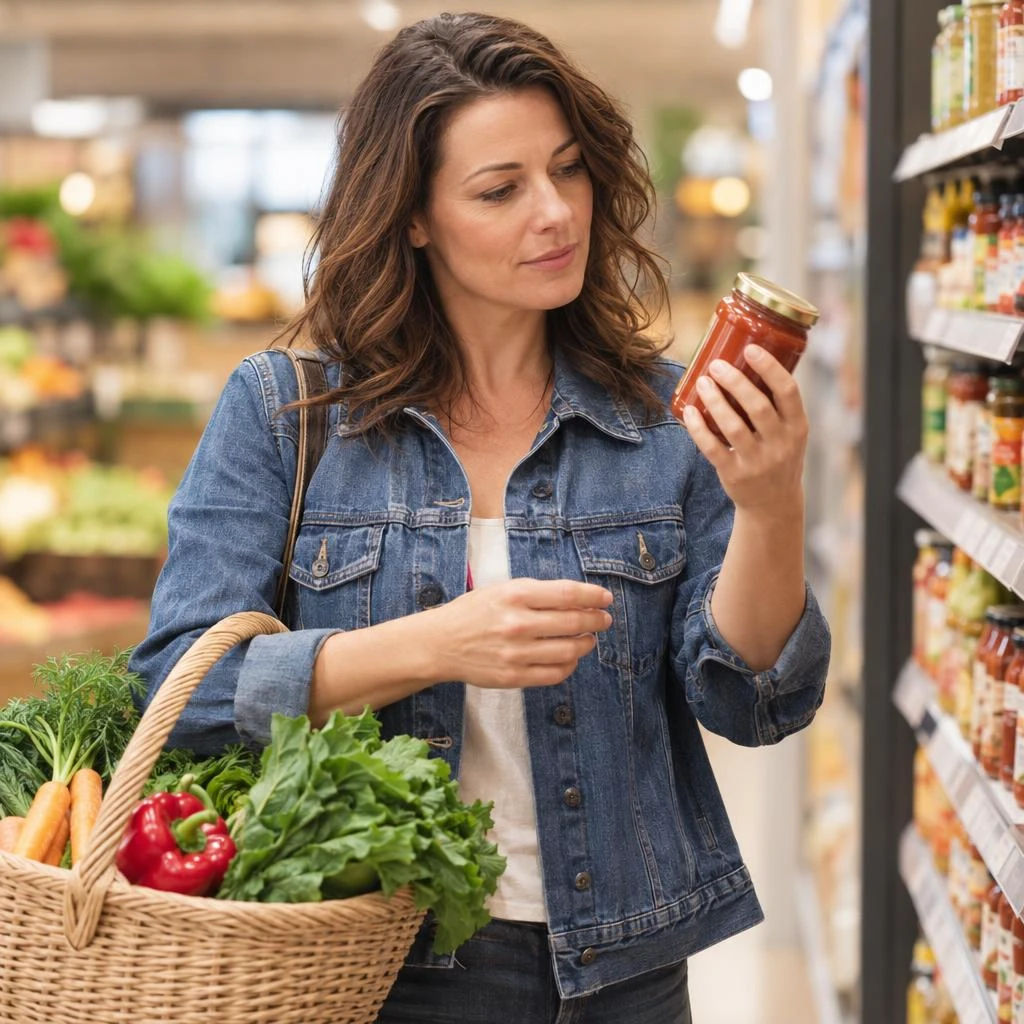
The CDC's National Health and Nutrition Examination Survey data show American women consume far more added sugar than the recommended amount, often close to double. Most of it isn't coming from obvious sources like candy. It's coming from foods that look healthy.
How Much Added Sugar Is Hiding In Your Food?
Most added sugar doesn't come from candy or dessert. It comes from processed foods marketed as healthy choices: flavored yogurts, granola bars, pasta sauces, salad dressings and breakfast cereals. Sugar also hides under dozens of different names on ingredient labels, so learning to find it is one of the most practical skills you can build.
Typical Added Sugar In Common "Healthy" Foods (Label Ranges)
| Food Item | Serving Size | Added Sugar (g) | Teaspoons | Against 25g Daily Limit |
|---|---|---|---|---|
| Flavored low-fat yogurt | 170g / 6oz | 15 to 22g | 3.75 to 5.5 tsp | 60 to 88% of daily limit |
| Commercial protein bar | 1 bar (60g) | 12 to 20g | 3 to 5 tsp | 48 to 80% |
| Store-bought tomato sauce | ½ cup (125ml) | 8 to 12g | 2 to 3 tsp | 32 to 48% |
| Flavored instant oatmeal | 1 packet (43g) | 10 to 13g | 2.5 to 3.25 tsp | 40 to 52% |
| Commercial smoothie (medium) | 16oz / 475ml | 40 to 60g | 10 to 15 tsp | 160 to 240% |
| Bottled salad dressing | 2 tbsp | 4 to 8g | 1 to 2 tsp | 16 to 32% |
| Sports drink | 12oz / 355ml | 21g | 5.25 tsp | 84% |
| Granola (popular brand) | ½ cup (59g) | 12g | 3 tsp | 48% |
The most common sugar aliases to recognize: high-fructose corn syrup, dextrose, maltose, agave nectar, evaporated cane juice, cane crystals, and anything ending in "-ose." If any of these appear in the first three ingredients, the product is high in sugar regardless of how it's marketed.
The worst foods to eat for weight loss covers the full breakdown of which processed foods quietly undermine fat loss, and the sugar content behind their labels.
If cravings tend to pull you toward packaged snacks, our guide to eating less junk food covers the environment side, and what foods cause belly fat in perimenopause explains where added sugar fits in the bigger picture.
Why Sugar Cravings Hit Harder After 40: The H.P.H. Craving Framework
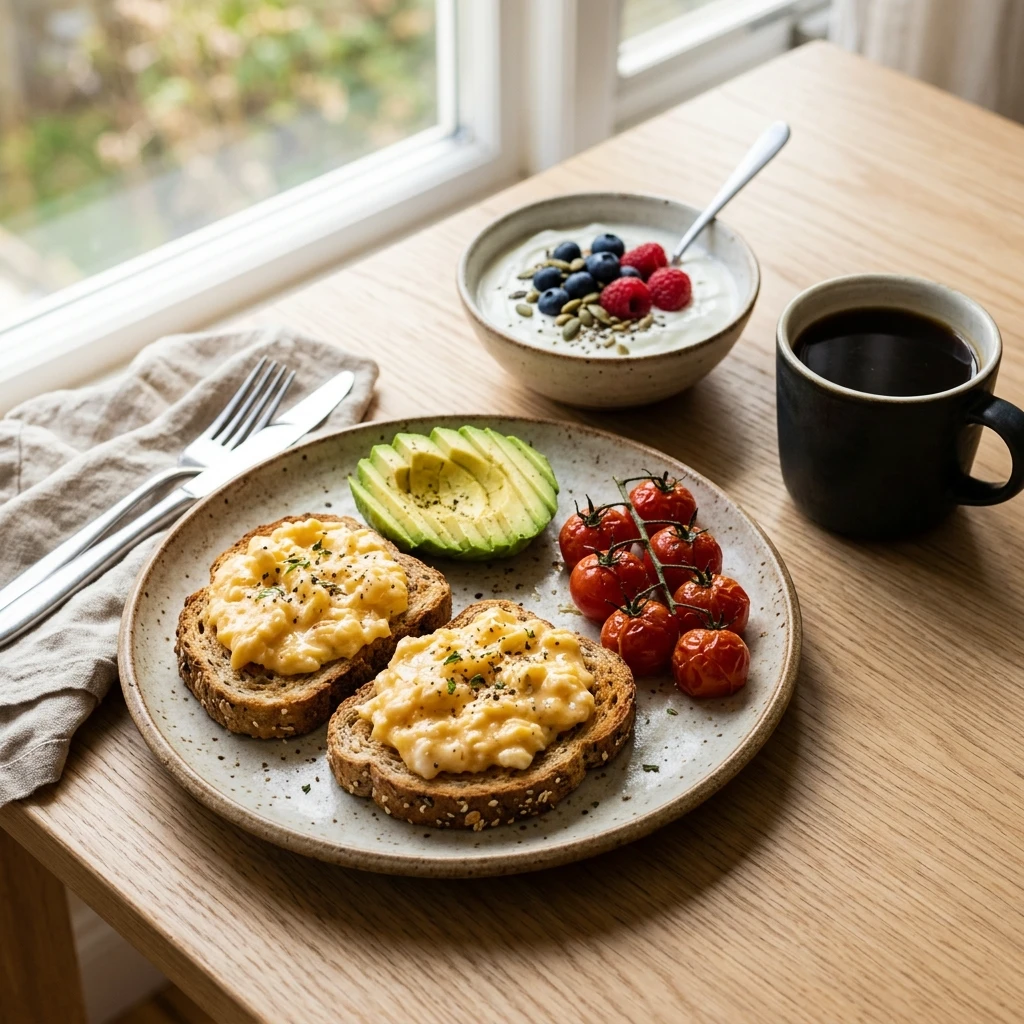
Sugar cravings come from three overlapping sources working at once. We call it the H.P.H. Craving Framework: the Hormonal layer (estrogen and insulin), the Physiological layer (blood sugar swings, cortisol and sleep) and the Habitual layer (taste, routine and gut bacteria).
Knowing which one is driving a craving in the moment makes it far easier to respond to it instead of fighting it. Perimenopause tends to hit two of these layers at once. Declining estrogen reduces insulin sensitivity (hormonal), while the transition itself acts as a physiological stressor that raises cortisol.
That double hit is why advice written for a 25-year-old metabolism, "just have more discipline," can feel insulting when your body is working differently than it did five years ago.
The Hormonal Layer: Estrogen, Insulin, And Perimenopause
Declining estrogen during perimenopause directly reduces insulin sensitivity, which intensifies sugar cravings, independent of diet or exercise habits. Estrogen has an insulin-sensitizing effect: it helps muscle cells absorb glucose efficiently.
As estrogen drops, that efficiency drops with it, according to Harvard Health, which reports that the menopause transition shifts fat storage toward the abdomen, a pattern directly associated with insulin resistance and a self-reinforcing cycle of rising insulin and rising cravings.
If you're in your 40s and sugar suddenly feels harder to resist than it did in your 20s, this is very likely a real physiological shift, not a discipline problem. For a deeper look at the insulin side, read insulin resistance in perimenopause.
Your cycle adds another layer. In the luteal phase (the days between ovulation and your period), estrogen falls, and serotonin tends to fall with it, and many women notice stronger cravings for sweet, fast-energy foods. In perimenopause, cycles become irregular, so that window becomes harder to predict.
Tracking your cravings alongside your cycle, even loosely, helps you see when to plan for them. Our guide to cycle syncing for weight loss explains how to adjust food and training across the month.
Keeping added sugar low also helps on the hormone side. High sugar intake keeps insulin elevated for longer, and persistently high insulin is linked to stronger hunger signals and, in women with PCOS, to higher androgen levels. Cutting back supports steadier insulin, which is one reason it matters more, not less, as estrogen declines.
The Physiological Layer: Blood Sugar Swings And Cortisol
Chronic stress raises cortisol, and elevated cortisol directly increases appetite and cravings for high-sugar, high-fat foods. Harvard Health explains that once a stress response gets “stuck in the on position,” cortisol stays elevated and, combined with insulin, drives cravings for exactly the foods that feel most comforting in the moment.
This is a two-way trap in midlife: perimenopause itself is a physiological stressor, which raises baseline cortisol, which then compounds the insulin-sensitivity problem from the hormonal layer. If this sounds familiar, read how cortisol drives belly fat and cortisol belly vs hormonal belly.
Sleep is part of this layer. Sleep deprivation raises ghrelin (the hunger hormone), suppresses leptin (the fullness hormone) and reduces insulin sensitivity, all of which push you toward sugar the next day.
Dr. Jolene Brighten summarizes research showing the body becomes more insulin-resistant after even a single night of poor sleep. Aim for 7 to 9 hours, keep a consistent wake time and cut screens 30 to 60 minutes before bed. See how sleep affects weight loss in women.
Stress works through the same loop. As Five Journeys explains, elevated cortisol increases appetite, specifically for high-sugar and high-fat foods. Regular meals (rather than skipping and then grazing), a 10-minute walk after meals and slow breathing all help break it.
The Habitual Layer: Taste Retraining And Gut Microbiome Health
Your gut bacteria may influence how strongly you crave sugar, and that balance shifts based on what you regularly eat.
Separately, research reported by ScienceDaily in January 2024 mapped gut-to-brain circuits in mice that respond to sugar and fat independently of taste. In practical terms, the human-friendly steps are simple: more fermented foods (plain yogurt, kefir, kimchi), more prebiotic fiber (oats, onions, garlic, asparagus, bananas) and fewer ultra-processed foods.
A 2024 study in Nature Microbiology found that a specific gut bacterium produced a metabolite that triggered hormone release and suppressed sugar preference. That work was done in mice, so treat it as a promising mechanism rather than proof for humans, but it fits with what we know about diet shaping the gut.
This is also where taste-bud retraining lives: the more consistently you reduce added sugar, the more your baseline sweetness threshold resets, and the less you need to hit that threshold with a candy bar instead of a berry.

| Layer | What’s Actually Happening | Why It Feels Like A Willpower Problem | What Helps |
|---|---|---|---|
| Hormonal | Declining estrogen reduces insulin sensitivity, especially in perimenopause | Cravings feel stronger and more frequent for no obvious reason | Protein-forward meals, fiber, consistent meal timing, talk to your doctor about hormone-related options |
| Physiological | Blood sugar spikes and crashes; cortisol rises under stress | Cravings hit hardest during stress or hours after a high-carb meal | Stabilize carbs, hydrate, manage stress, prioritize sleep |
| Habitual | Taste buds are calibrated to high sweetness; gut bacteria reinforce the loop | Cravings feel automatic, tied to routine or mood, not hunger | Gradual reduction, whole foods diet, bitter/spiced foods to retrain taste |
If this is where you are, pair this guide with our deeper dives on perimenopause supplements that actually work and what body recomposition really means after 40.
9 Science-Backed Tips To Cut Sugar After 40
The tips below target different layers of the H.P.H. Craving Framework, so the ones that help most will depend on which layer is driving your cravings. Start with one or two, not all nine.
#1. Spot Hidden Sugars On Every Label (Habitual Layer)
Before you can cut back, you have to be able to find it. Check the "Added Sugars" line on US nutrition labels, which has been mandatory since 2020. Total sugars include naturally occurring sugars from dairy and fruit; added sugars are the ones you're managing.
- Target: 25 grams of added sugar or fewer per day across all foods and drinks
- First three ingredients rule: If sugar appears in any form in the first three ingredients, the product is high in sugar by definition
- "No added sugar" warning: This label doesn't mean low sugar; fruit juice concentrate, dried fruit, and similar ingredients still spike blood glucose and count as free sugars
- Serving size trap: Check the serving size carefully. A product showing "8g added sugar" per serving may have 2.5 servings per container
- Natural sweeteners still count: Honey, maple syrup, coconut sugar, and agave nectar are free sugars and contribute to your daily limit
Spend one week just observing. Don't change anything yet. Log the added sugar in your three most common daily foods. Most women are genuinely surprised by what the data shows, and that awareness alone begins changing choices.

#2. Wean Down Gradually, Not Cold Turkey (Physiological Layer)
Don’t go ‘cold turkey’ on carbs; a gradual reduction protects your blood sugar from the very crashes that trigger cravings. Some detox and diet plans suggest eliminating all carbs at once, from whole grains to green vegetables.
The sheer misery, and the inconvenience of not being able to eat anything like a normal person, sets these plans up for failure. Instead, cut the worst offenders first: sugary snacks obviously go, but starchy items like white pasta and boiled potatoes spike blood sugar too.
If you eat potatoes, favor a healthy-fat cooking method to slow the sugar absorption and keep levels steadier.
A practical pace: reduce your added sugar by about 10 grams a week until you reach your target. Identify your single largest daily source (usually a sweetened drink, flavored yogurt or packaged snack), swap it or shrink the portion, hold that change for a week, then move to the next one.
Abrupt restriction often brings headaches, irritability and fatigue in the first few days, which is exactly when most attempts end. Going gradually gives your taste receptors time to recalibrate. Around weeks 2 to 3, foods you once found normal start tasting noticeably sweeter, which is a sign it's working.
#3. Eat Protein First At Every Meal (Physiological Layer)
Protein slows digestion, blunts the blood glucose rise after a meal and increases fullness hormones while lowering ghrelin. Eating protein and vegetables before the carbohydrates on your plate lowers the glucose response to the whole meal, which means fewer crashes that trigger cravings.
A randomized trial in young women who usually skipped breakfast found that a high-protein breakfast reduced evening cravings for sweet foods. Aim for 25 to 35 grams of protein at breakfast, the meal where many women are most sugar-vulnerable.
For ideas, see what women should eat in the morning for hormone balance and the high-protein diet plan for women.
#4. Eat More Fiber (Physiological Layer)
Fiber slows sugar absorption into your bloodstream, which blunts the spike-and-crash cycle that triggers cravings in the first place.
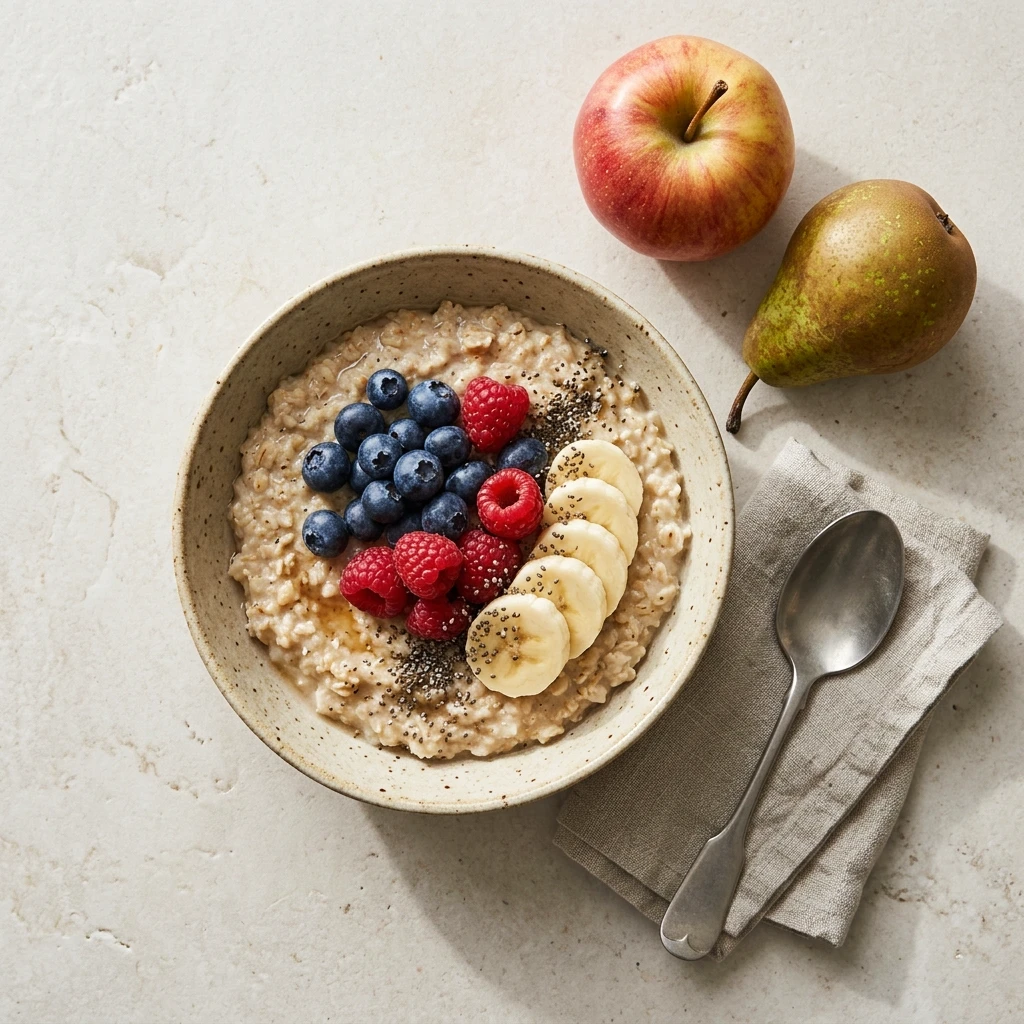
The British Nutrition Foundation recommends building fiber into meals precisely for this blood-sugar-steadying effect. If you’re craving something sweet, reach for fruit and a fiber source, like a hearty bowl of oatmeal with berries, instead of straight sugar.
Gradually reducing the sugar in your coffee or baking retrains your palate over time; once you adjust to less sweetness, over-sweetened baked goods and coffee drinks start tasting cloying rather than appealing.

#5. Drink Plenty Of Water (Physiological Layer)
Dehydration is commonly mistaken for hunger or a sugar craving, so drinking water first is a fast, free way to check whether you’re actually craving sugar or just thirsty. High-protein foods help with genuine fullness too. A lot of what feels like “hunger” is your body misreading a hydration signal, and plain water also helps you relearn to enjoy non-sweet tastes.
#6. Lean On Leafy Greens And Spices (Habitual Layer)
Bitter, fiber-rich greens like kale, mustard greens, and turnip tops help retrain your palate away from needing intense sweetness to feel satisfied.
Claims that greens “detox” sugar out of your system are overstated, but the fiber, chlorophyll, vitamins, and minerals in leafy greens make them a genuinely useful substitute for sugary snacks, and the more you eat slightly bitter foods, the more your palate adjusts, the same way it does for coffee or wine.
Hot pepper sauces and other spices release endorphins, which can partially replace the mood-lift you used to get from sugar. On top of retraining your taste buds, spicy and richly seasoned foods add a genuine flavor payoff to meals with minimal added calories, a direct, edible way to interrupt the “I need something sweet for a lift” loop.
#7. Choose Black Coffee (Habitual Layer)
Drinking your coffee black removes a hidden, habitual source of added sugar and helps you re-learn to enjoy non-sweet flavors. It also has no calories and a small amount of antioxidants, and it’s one of the easiest daily swaps because it doesn’t require you to change a whole meal, just one drink, once or twice a day.
#8. Move Regularly, Especially After Meals (Hormonal And Physiological Layers)
Regular movement burns excess sugar in your bloodstream, improves insulin sensitivity over time, and releases endorphins that ease the stress driving physiological cravings.
You may feel sluggish starting, but the more consistently you move, the better your blood sugar regulation gets, which hits both the hormonal and physiological layers at once. A sedentary lifestyle is associated with a higher risk of insulin resistance, obesity, and related conditions, while regular activity measurably reduces that risk.
Timing helps. If afternoon cravings are your biggest challenge, try a 15-minute walk around 2:30 to 3 pm, before the craving peaks rather than after. You're interrupting the cycle, not trying to resist it.
#9. Track What You Eat With A Food Diary (Habitual Layer)
You can't manage what you don't measure. A food diary, digital or paper, creates what behavioral scientists call an "implementation intention": the act of planning and recording a behavior increases follow-through significantly.
Most nutrition tracking apps can track added sugar specifically. Set your target (25 grams a day) and review the data weekly, not daily. Daily tracking can slide into obsession; a weekly review keeps you informed without the stress.
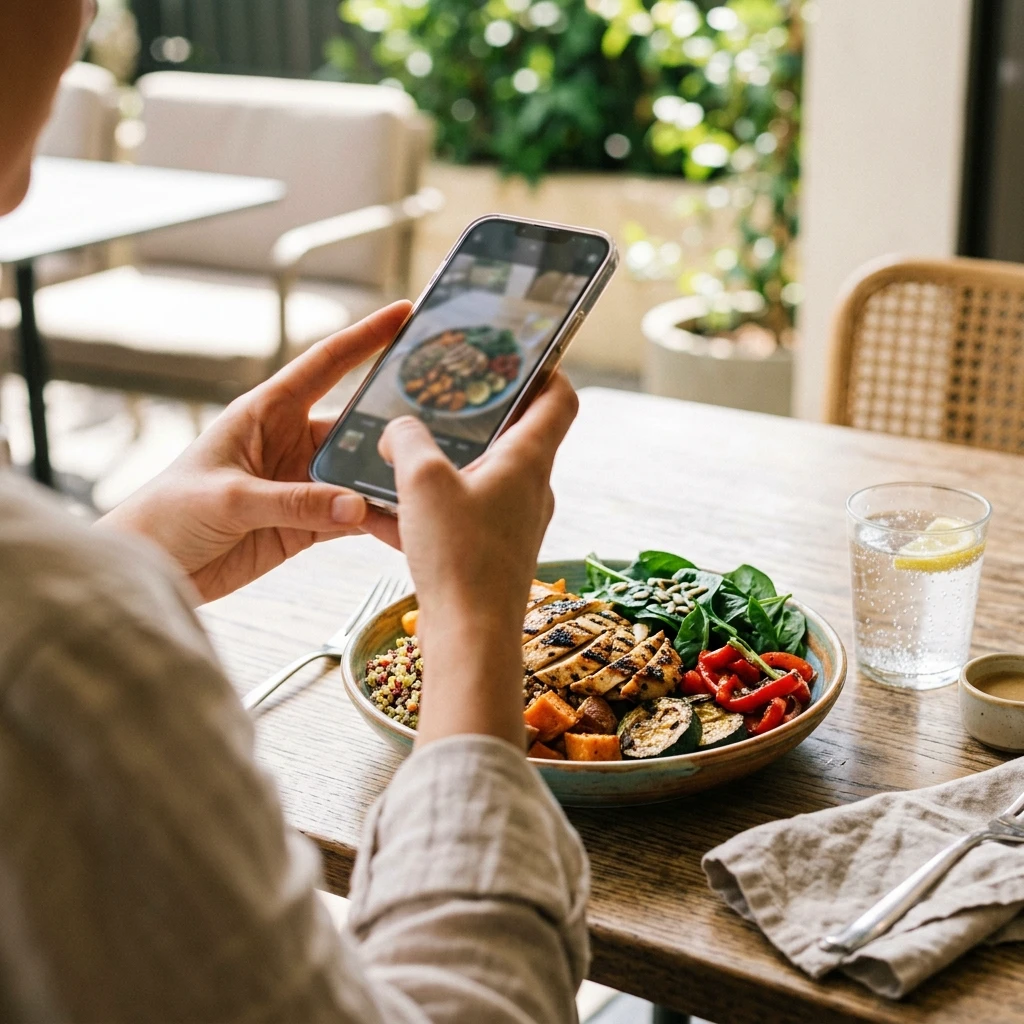
If full tracking feels stressful, use the photo method instead: photograph every meal without logging, then review once a week. Some awareness is far better than none. Perfection is not the goal. Information is.
What To Do When A Craving Hits Right Now
The tips above lower how often cravings show up. These four steps are for the moment one arrives, so you have a plan instead of a fight.
- Name the cue. Is it 3 pm? After a stressful meeting? Boredom at your desk? Cravings follow patterns. Spend three days noticing when and why you reach for sugar: time of day, mood and how long since you last ate.
- Eat an anchor, not a fix. If you're genuinely hungry, reach for protein and fiber first: Greek yogurt with berries, an egg, a small handful of nuts. This slows glucose absorption and keeps reward signals satisfied for longer.
- Check sleep and stress. If you slept badly or the day has been tense, expect stronger cravings and plan a small, satisfying option (a square of dark chocolate, a date with nut butter) rather than trying to white-knuckle it.
- Pause for 10 minutes. Drink a glass of water, take five slow breaths or step outside. Many cravings lose intensity in that window. This isn't about suppression; it's about creating space between the trigger and the response.
Curious which craving type you are? Try our food craving quiz for women.
Are Natural Sugars And Fruit OK?
Natural sugars in whole fruit, plain dairy and vegetables do not count toward added sugar limits and are generally fine in reasonable amounts. The fiber in whole fruit slows glucose absorption. Fruit juice removes most of that fiber and behaves much more like added sugar.
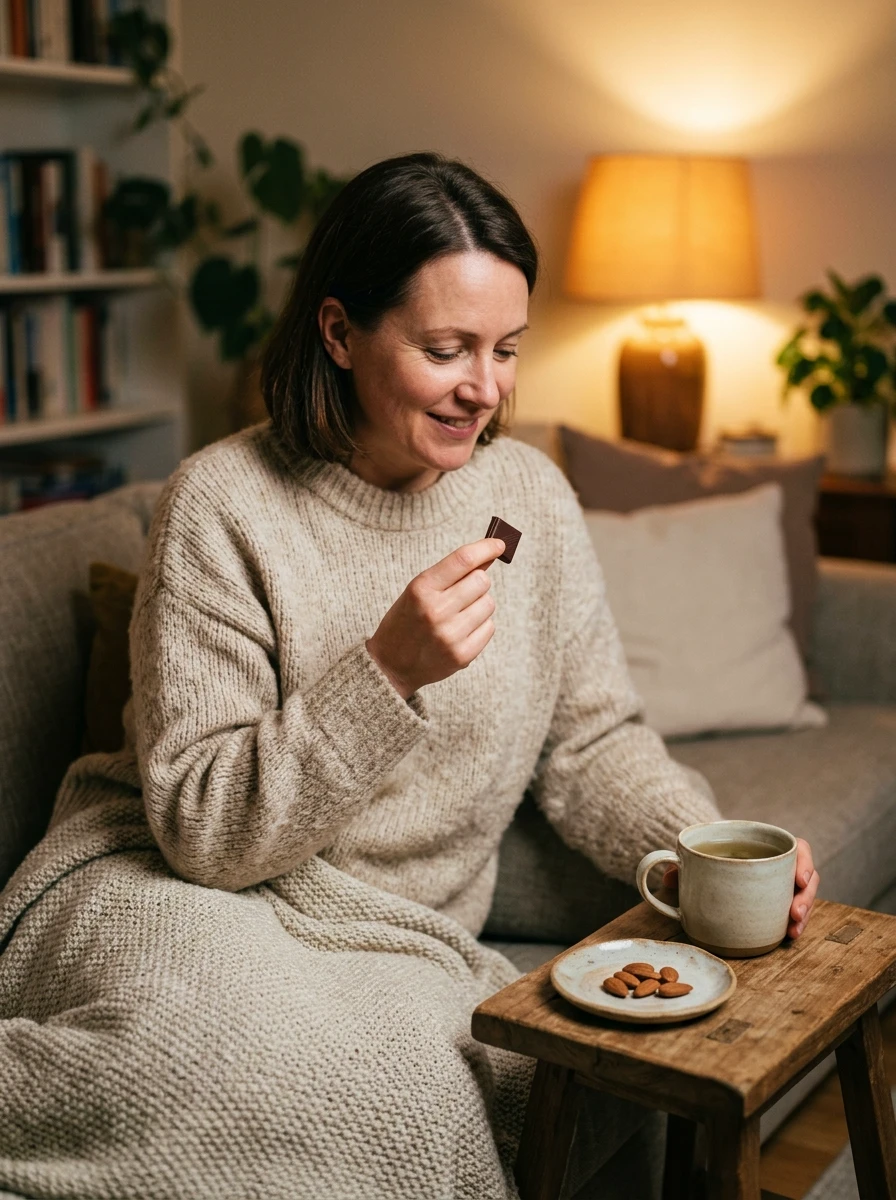
The practical rule: eat fruit, don't drink it.
One to two pieces of whole fruit per day is appropriate for most women managing daily sugar intake. The fiber, antioxidants, and phytonutrients in whole fruit provide genuine metabolic benefits that isolated fructose, as found in high-fructose corn syrup, doesn't.
Where women get tripped up is with fruit-flavored processed products: yogurts, smoothies, bars, and cereals that use fruit juice concentrate as a sweetener. These count as added sugars, regardless of the "real fruit" marketing claim on the front of the package.
What Happens When You Cut Back On Sugar?
When you bring added sugar down gradually, most women go through a fairly predictable adjustment. Timelines vary with how much you were eating and how fast you cut back, so treat this as a rough guide, not a schedule.
| Timeframe | What You Might Feel | Why | What Helps |
|---|---|---|---|
| Days 1 to 3 | Strong cravings, irritability, mild headache | Blood sugar adjusting to a lower baseline | Protein-forward meals, hydration, gradual (not cold-turkey) reduction |
| Days 4 to 7 | Energy dips, fatigue, mood swings | Dopamine and cortisol recalibrating | Sleep, light exercise, fiber-rich whole foods diet |
| Days 8 to 14 | Cravings become less frequent and less urgent | Taste buds and gut bacteria beginning to rebalance | Consistency, spices and bitter greens to reinforce taste retraining |
| Beyond 2 weeks | Occasional cravings, but manageable | New baseline established | Maintenance, not perfection, occasional treats without relapse into old patterns |
The first three days are the hardest for most women. That's not failure; it's adjustment. If you know this going in, you can prepare for it instead of reading it as evidence that cutting sugar doesn't work.
Sugar Alternatives: What To Use And What To Limit
Sweeteners work best as a bridge, not a destination. Stevia and monk fruit add sweetness without raising blood glucose, which can make the first weeks of cutting back easier.
The trade-off is that relying on any intense sweetener long-term can keep your palate tuned to high sweetness, which is the habit you're trying to change.
Lower-impact options:
- Stevia: Zero calories, zero glycemic impact. Derived from the stevia plant. Well-tolerated by most women. Available as drops, powder, or packets. Works cold or hot.
- Monk fruit sweetener: Zero calories, zero glycemic impact, 150 to 250× sweeter than sugar. Heat-stable, which makes it practical for baking.
- Allulose: A rare sugar found naturally in figs and jackfruit. Minimal caloric impact, does not raise blood glucose meaningfully in most research to date.
- Erythritol: Sugar alcohol with very low glycemic impact. Well-tolerated at moderate amounts; higher amounts may cause digestive discomfort in some women.
- Xylitol: Sugar alcohol with low glycemic impact. Important note: toxic to dogs. Keep away from pets.
Use with caution as primary sweeteners:
- Agave nectar: Marketed as a "natural" low-GI alternative, but it contains 70 to 90% fructose, a higher fructose concentration than high-fructose corn syrup. Most of it is processed by the liver, so it is no better a choice than ordinary sugar.
- Coconut sugar: Has a marginally lower glycemic index than white sugar, but it's metabolically similar and still counts as a free sugar.
- Honey and maple syrup: Contain trace minerals and antioxidants, but are still free sugars that count toward your daily limit.
According to the NHS, sweeteners are generally considered safe within guideline amounts. Some people find they feel hungrier after diet drinks, so notice how they affect you.
The practical approach: use them to replace sugar while you wean down, then gradually reduce overall sweetness so you need less of either. For snack ideas that keep sugar low, see healthy snacks for weight management.
Expert Commentary: What The Research Actually Shows
Frank Hu, Chair of Nutrition at the Harvard T.H. Chan School of Public Health, puts it plainly in the Harvard Gazette: sugar "has some addictive qualities, but it's not officially classified as an addictive substance."
That matches the wider evidence. The striking addiction findings come mainly from rodents; in people, cravings are real but behave more like a strong habit.
On the hormone side, Harvard Health links the menopause transition to a shift in fat storage toward the abdomen and to rising insulin resistance, which helps explain why cravings and blood sugar swings can feel stronger in your 40s and 50s.
The most practical evidence is also the least glamorous. A high-protein breakfast reduced evening sweet cravings in a randomized trial in young women, and the American Heart Association 25-gram guideline gives you a clear, measurable target.
Read together: lower added sugar gradually, eat protein first and protect sleep, and the cravings usually follow.

The Contrarian Take: Sugar Isn't The Enemy, The Pattern Is
Most sugar advice treats sugar itself as the villain and asks you to banish it. That framing is why so many attempts end on day four.
A square of dark chocolate after dinner is not the problem. The problem is the pattern around it: skipped breakfast, a 3 pm crash, short sleep, a stressful week and a palate tuned to intense sweetness.
Fix the pattern, and the amount of sugar you want falls on its own. That's why this guide starts with your hormones, blood sugar and habits rather than a list of banned foods. You're not trying to win a fight with sugar. You're trying to stop setting up the fight in the first place.
If you want the broader view of why weight behaves differently at this stage, read why it's so hard to lose weight in perimenopause.
Join thousands of women inside our community and receive our free guide: 10 Actions That Support Permanent Weight Loss: the practical, sustainable habits that translate everything you just read into real, lasting results. Click Here To Join.
The Bottom Line
Sugar addiction remains a genuine struggle for a lot of women, and it is not simply a matter of insufficient willpower, especially after 40, when declining estrogen and rising cortisol stack the deck against you.
Understanding whether a craving is coming from your hormones, your blood sugar physiology, or your habits makes it far easier to respond with the right tool instead of white-knuckling through it.
Cutting sugar after 40 takes a little time and a gradual approach, not a cold-turkey reset. Start with the label, put protein first, protect your sleep, and give it two weeks. It is genuinely achievable.
Glossary Of Key Terms
- Added Sugars: Sugars and syrups put into foods during preparation or processing, or added at the table; distinct from naturally occurring sugars in plain dairy and whole fruit.
- Cortisol: A stress hormone that, when chronically elevated, increases appetite and drives cravings for high-sugar, high-fat foods.
- Dopamine: A neurotransmitter associated with the brain's reward system that recalibrates as one reduces habitual sugar intake.
- Dopamine Reward System: The brain circuitry that records pleasurable experiences; sugar hijacks this system like addictive substances.
- Endorphins: Chemicals released by the body during exercise or when eating spicy foods that provide a natural mood boost and can interrupt the sugar-seeking loop.
- Free Sugars: A category including added sugars plus those naturally present in honey, syrups, and fruit juice concentrates.
- Fructose: A simple sugar found in fruit and many sweeteners; when isolated (as in high-fructose corn syrup), it is metabolized primarily by the liver.
- Ghrelin: The "hunger hormone" that increases in the body following poor sleep, driving the urge to eat high-energy foods.
- Glycemic Impact: The effect a food or sweetener has on blood sugar levels after consumption.
- Gut Microbiome: The community of bacteria living in the digestive tract that can influence sugar preferences through the production of specific metabolites.
FAQ
Should I Go Cold Turkey To Break Sugar Addiction?
Going cold turkey is not the recommended approach for most people, because a sudden drop in sugar destabilizes blood sugar and tends to intensify cravings rather than resolve them. A gradual reduction, cutting the worst offenders first, adding fiber and protein, and easing off slowly, is generally more sustainable and produces fewer withdrawal symptoms.
Does Perimenopause Make Sugar Cravings Worse?
Yes, declining estrogen during perimenopause measurably reduces insulin sensitivity, which intensifies sugar cravings independent of diet or willpower. This is a documented physiological shift, not a personal failing, and it’s why generic sugar-cutting advice often falls short for women in their 40s and 50s.
How Long Does Sugar Withdrawal Typically Last?
Most people experience the sharpest cravings and irritability in the first three days, with symptoms generally easing significantly within one to two weeks. Individual timelines vary based on how much added sugar you were consuming and how gradually you reduce it.
Why Do I Crave Sugar After Every Meal?
Post-meal sugar cravings are usually driven by habit, blood sugar fluctuation, or an insufficient protein intake at that meal. If your meal was carbohydrate-heavy but low in protein or fiber, blood sugar may spike and drop quickly, triggering the brain's reward system to seek more energy. There's also a habitual component: if you've ended meals with something sweet for years, your brain has built a strong associative loop around that pattern.
Is Craving Sugar A Sign Of A Nutrient Deficiency?
It can be one factor. Low magnesium, zinc and chromium are all associated with poorer blood sugar regulation, which may make cravings stronger. Cravings are multifactorial, though, and sleep, stress, protein intake and habit are far more common drivers. If you suspect a deficiency, ask your doctor about testing rather than guessing with supplements.
Is Dark Chocolate A Healthy Way To Satisfy A Sugar Craving?
For many women, yes. Dark chocolate at 70% cacao or above has much less sugar than milk chocolate and a richer flavor, so a small portion (20 to 30 grams) often satisfies a craving. It does contain caffeine, so keep it earlier in the day if you are sensitive. Read more in our guide to dark chocolate benefits.
Does Cutting Sugar Help With Weight Loss In Women?
It can support it. Cutting added sugar removes easy calories, steadies blood sugar and tends to reduce the crash-and-crave cycle that leads to grazing. Combined with protein-first meals, it often makes a calorie deficit easier to live with. It works best as part of an overall eating pattern rather than on its own.