
The Healthy Living Milestones That Matter More Than The Number On Your Scale, From Your 20s To Your 60s And Beyond
Leigh Hunt
English essayist & poet
The groundwork of all happiness is health.
Summary (TL;DR)
Healthy living milestones are the strength, fitness, screening and habit markers that show your body is ready for the next stage of life. They change by decade.
In your 20s, you build bone and muscle; through pregnancy and postpartum, you rebuild; in your 40s, you protect what you built; in your 50s, you add balance work; and from your 60s, you protect your independence.
The scale is the weakest milestone of the lot.
Better ones are strength or balance tests you can repeat at home, the screenings your doctor recommends for your age, and a few daily habits you keep even when life gets messy.
This guide gives you the Milestone Ladder, a three-rung method (Foundation, Markers, Momentum) for each stage.
No matter how old you are, you will go through different stages in your life. Each one brings new problems, good things and chances. It’s important to enjoy healthy living and all the stages of life, even though this means getting older.
Many people fear reaching certain milestones of life, but there’s nothing to fear about growing older and wiser. What helps is knowing what “on track” actually looks like at 25, 42 or 63, because most of us were only ever given one milestone: a goal weight.
And when that number stalls in perimenopause, it can feel like you’re falling behind, even when your body is quietly getting stronger. So let’s swap the scale for markers that really mean something. Your best years are still to come, and you will enjoy every journey, whether you walk with your head held high or stumble along the way.
Medical & Referral Disclaimer
This article is for informational and educational purposes only. It is not a substitute for professional medical advice, diagnosis, or treatment. Screening ages here follow US Preventive Services Task Force guidance, and your own schedule may differ based on your history and where you live. Always consult your physician or qualified health provider before starting any new diet or exercise program.
Key Takeaways
- Milestones change by stage: Build bone and muscle in your 20s, protect it in your 40s, and keep balance and independence from your 60s.
- The scale isn’t the milestone: Strength, energy, sleep, balance and how your clothes fit say far more about your health after 40.
- Consistency beats age targets: Hitting “the right number for your age” matters less than never fully stopping. Habits take around two months to form, and some take much longer.
- The guideline baseline is the same from 18 onward: 150 minutes of moderate activity plus 2 days of muscle-strengthening every week, with balance work added at 65.
- Screenings are milestones too: Blood pressure from 18, cervical screening from 21, mammograms from 40, colorectal screening from 45, and bone density from 65 (sooner if you’re at higher risk).
- Use the Milestone Ladder: At every stage, lock in a Foundation habit, check your Markers, then set one Momentum goal for the next stage.

What Are Healthy Living Milestones?
Healthy living milestones are measurable checkpoints, like a strength test, a screening or a habit you’ve kept for months, that show your body is in good shape for the stage of life you’re in. They’re less about where you “should” be and more about what keeps you strong next.
Think of them as signposts on your wellness journey rather than finish lines. A 28-year-old and a 58-year-old can both be doing beautifully, but their signposts look completely different.
Researchers who studied strength and balance across the whole life course picked out three ages where the payoff is biggest: 18 to 24 to maximise bone and muscle gains, 40 to 50 to maintain strength, and over 65 to preserve balance and strength.
The same review flagged the life events where women tend to sit more and lose muscle: pregnancy, menopause, a new diagnosis, retirement and becoming a carer. Those are the real milestones of life, and the moments when one small, steady habit does the most good.
Why The Scale Is The Wrong Milestone
The scale can’t see muscle, bone, balance, blood pressure or sleep, and those are the things that decide how well you age. After 40 especially, a stubborn number can hide real progress, so it makes a frustrating milestone and a poor one.
If you’ve done everything “right” all summer and watched the scale refuse to budge, you’re in good company. In one popular perimenopause forum thread, a woman in her late 40s asked whether anyone else was giving up on weight loss and “just hoping for better body shape”. Dozens of women replied that they felt the same.
Here’s the reframe. A body that’s gaining muscle while losing a little fat can weigh exactly the same, and that’s a win. (We explain how it works in what body recomposition really means for women over 40.) Non-scale milestones worth celebrating include:
- Strength: Lifting a heavier suitcase into the overhead bin without asking for help.
- Stamina: Walking up three flights of stairs and still holding a conversation at the top.
- Balance: Standing on one leg to put your socks on without grabbing the wall.
- Sleep: Getting seven hours most nights instead of three bad ones and a nap.
- Energy: Getting through the 3 p.m. slump without reaching for something sweet.
- Fit: Your jeans buttoning comfortably while the scale says exactly what it said in March.
If you like numbers (most of us do), fitness tracking for women doesn’t have to start with a scale. Our guide to tracking your progress without letting the scale wreck your motivation shows you what to measure instead.

The Milestone Ladder: A Simple Method For Every Stage Of Life
The Milestone Ladder is a three-rung way to plan any life stage: lock in a Foundation habit, check your Markers, then choose one Momentum goal that sets up the next stage. You climb it again each time life changes, whether that’s a baby, a new job or menopause.
Most “health goals by age” lists hand you twenty things at once, which is how habit fatigue sets in. The Ladder asks for three.
Rung 1: Foundation (The Habit You Never Fully Drop)
Your Foundation is the one habit you keep even in your messiest weeks, like a daily walk, two strength sessions or a protein-forward breakfast. It’s small on purpose, because consistency beats intensity across decades.
On a hard week, it shrinks rather than disappears. A 40-minute workout becomes 10 minutes of squats and push-ups in the kitchen. That still counts.
Rung 2: Markers (What You Measure)
Markers are the two or three things you check to see whether your Foundation is working, such as a balance test, your step count, your blood pressure or the screenings due for your age. You check them every few months, not every morning.
Rung 3: Momentum (Your Next-Stage Goal)
Momentum is one goal aimed at the stage ahead, like learning to deadlift in your 30s or holding a steady 10-second one-leg stand on each side in your 50s. It keeps you building, not just maintaining.
Healthy Living Milestones By Decade At A Glance
Each decade has a different main job: build in your 20s, rebuild after pregnancy, protect in your 40s, adapt through menopause in your 50s and stay independent from 60. The table below gives you one Foundation, one Marker and one Momentum goal for each.
| Life Stage | Main Job | Foundation Habit | Key Markers | Momentum Goal |
|---|---|---|---|---|
| 20s & Early 30s | Build bone and muscle | 150 min activity + 2 strength days a week | Blood pressure; cervical screening from 21 | Learn the basic lifts with good form |
| Pregnancy & Postpartum | Rebuild gently | Moderate activity you can talk through | Postpartum check-ups; sleep; energy | Return to strength work once cleared |
| Late 30s & 40s | Protect what you built | Strength training twice a week, no exceptions | Mammogram from 40; steps; strength log | Get stronger than you were at 35 |
| 50s | Adapt through menopause | Strength + daily walking + 7 hours’ sleep | Colorectal screening; one-leg stand; calcium | A 10-second one-leg stand on each side, then longer |
| 60s & Beyond | Stay strong and independent | Aerobic + strength + balance work weekly | Bone density from 65; balance; steps | Carry your own shopping, every time |

Your 20s And Early 30s: Build The Bank
Your 20s and early 30s are when you build the bone and muscle “bank” you’ll draw on for the rest of your life. The milestone is simple: regular activity and strength training as a normal part of your week, set up before life gets busy.
The baseline is the same one you’ll keep for decades. The CDC says adults need at least 150 minutes of moderate-intensity activity a week, plus 2 days of muscle-strengthening activity. That can be 30 minutes, five days a week, broken into smaller chunks if you need to.
It’s also the decade of trial, error and the odd crash diet. To reset, start with our list of foods you should never cut from your diet and the real benefits of healthy eating.
Your screening milestones start here too. Blood pressure checks are recommended for all adults from age 18, and cervical screening begins at 21.
Postpartum Health Milestones: Rebuilding After A Baby
Postpartum health milestones are about rebuilding, not bouncing back. Healthy women can do moderate activity through pregnancy and the first year after delivery, and the realistic milestone is returning to regular movement gently, with your doctor’s go-ahead.
Having a little bundle of joy in your life is a milestone no parent forgets. It also flips your health priorities overnight: sleep goes, routines go, and your own needs drop to the bottom of the list.
The CDC recommends at least 150 minutes of moderate-intensity aerobic activity a week during pregnancy and the postpartum period, and it is clear that some activity is better than none. A stroller walk counts.
Food matters just as much when you’re running on four hours of sleep. Our guide to postpartum meal prep while managing newborn exhaustion keeps it realistic.
Parenthood is also when you start setting the example: regular movement and balanced meals become family activities, and your approach to health sets a precedent for the whole household.
Turning 40: The Milestone That Changes The Rules
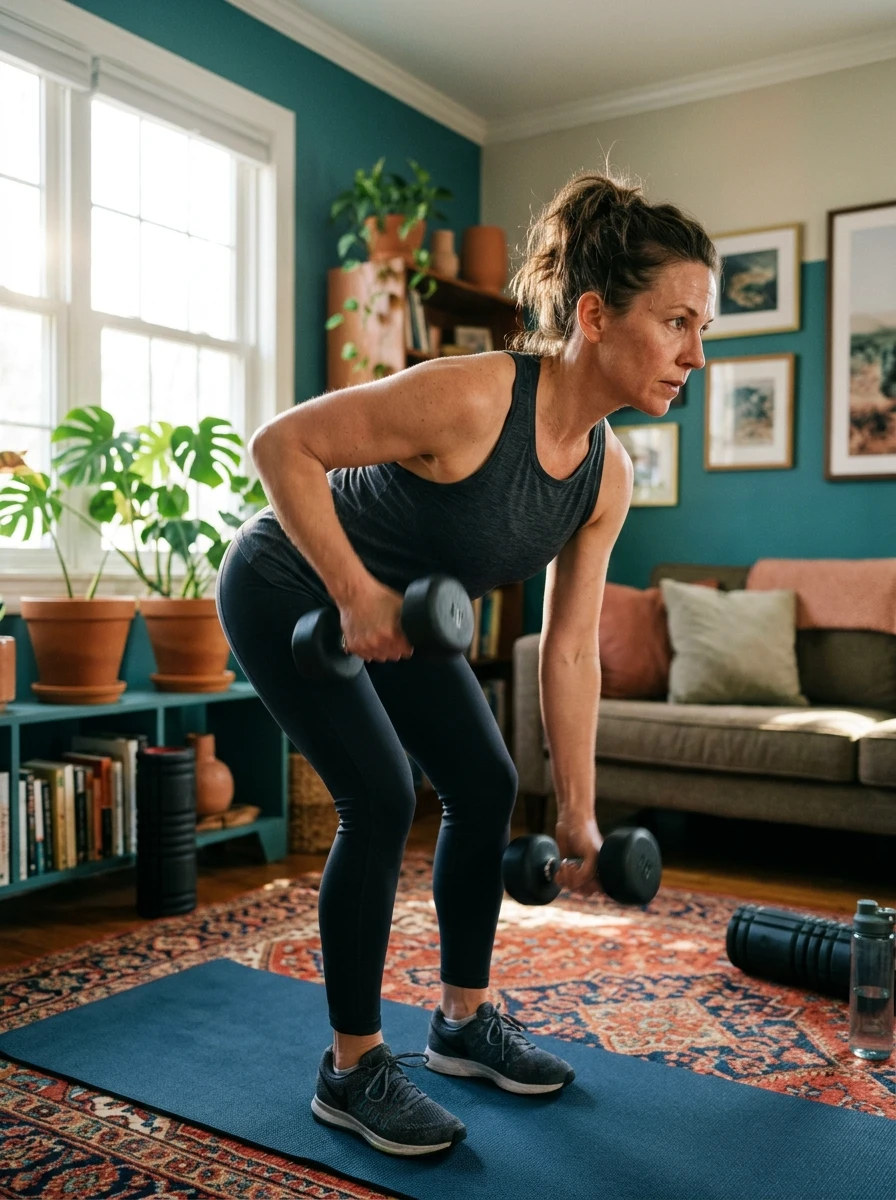
Turning 40 is the milestone where protecting muscle moves to the top of the list. From around 40, you begin losing roughly 1% of muscle mass a year, so twice-weekly strength training becomes the single habit most worth keeping.
Turning 40 is a huge milestone for many people, and many women suddenly find themselves focusing more on their health. That instinct is a good one.
Stanford Medicine notes that starting around age 40, you begin losing about 1% of your muscle mass every year, and the rate increases in your 50s. Muscle loss affects strength, balance, metabolism and independence.
The good news: Stanford’s experts note that even very inactive people gain function with strength training that fits their abilities, so you haven’t missed the window.
If you’re starting from zero, the key workout benefits for women are a nice reminder of why it’s worth it, and our weekly longevity routine for women over 40 gives you a plan.
Your 40s bring a new preventive health tracking milestone, too. The US Preventive Services Task Force recommends mammograms every two years for women aged 40 to 74.
Perimenopause: The Milestone Nobody Warns You About
The menopause transition is the milestone where falling oestrogen starts to affect muscle, bone and where you store fat. Strength training and a mix of strength, balance and aerobic exercise can help prevent the muscle and bone loss linked to this transition.
The life-course review we mentioned earlier explains that the decline in muscle mass follows the drop in oestrogen during menopause, contributing to lower bone density, fat shifting toward the waist and a higher cardiovascular risk.
It also found that multicomponent exercise can build muscle and bone, or at least prevent their loss, during this stage.
That’s why “eat less, do more cardio” often backfires here. If your blood sugar is acting up, read about insulin resistance in perimenopause. If your joints are complaining, perimenopause joint pain and exercise shows you how to keep training without making it worse.

Your 50s: Menopause, Midlife Fitness Goals And Balance
In your 50s, the key milestones are keeping your strength, adding balance work and staying on top of screenings. Balance tends to decline quickly after the mid-50s, so a one-leg stand is one of the most useful self-checks you can add this decade.
In a study of 1,702 adults aged 51 to 75, researchers noted that balance quickly diminishes after the mid-50s, and people who couldn’t hold a 10-second one-legged stand had a higher risk of death over about seven years (hazard ratio 1.84), even after adjusting for age, sex, body mass index and other conditions.
One in five couldn’t do it.
Treat that as motivation, not a verdict. Practise by standing on one leg while you brush your teeth.
Your 50s also bring a calcium milestone. The NIH recommends 1,000 mg a day for adults up to 50, rising to 1,200 mg for women aged 51 to 70. Colorectal cancer screening should already be underway, as it’s recommended from 45 to 75.
Your 60s And Beyond: Healthy Ageing For Women
From 65, the milestones are aerobic activity, strength training and balance work every week, plus bone density screening. The goal is independence: carrying your shopping, climbing stairs and getting up off the floor without help, for as long as possible.
Eating well and working out are essential to keeping your heart healthy, and plenty of women find they move more once they retire, simply because they finally have the time.
The CDC’s guidance for adults 65 and older is 150 minutes of moderate aerobic activity, at least 2 days of muscle-strengthening and activities to improve balance each week. If that feels like a lot, do what your body allows.
Bone density screening is the big milestone here. The USPSTF recommends osteoporosis screening for all women 65 and older, and earlier for postmenopausal women at increased risk. Staying sociable and mentally busy matters too.

Simple Self-Checks To Track Fitness Milestones At Home
You can track your fitness milestones at home with five quick checks: a talk test for cardio, a daily step count, a one-leg balance stand, a simple strength log and your sleep hours. Repeat them every three months and compare against your own last result, not anyone else’s.
That last part is the whole point. “Normal for your age” is useful for researchers, but it can leave you feeling behind. Your milestone is beating your own number from last season.
| Self-Check | How To Do It | What It Tells You | A Useful Benchmark |
|---|---|---|---|
| Talk Test | Walk briskly and try to talk | Whether your cardio is at moderate intensity | Moderate effort means you can talk but not sing |
| Daily Steps | Weekly average from your phone or watch | Overall everyday movement | Mortality benefits levelled off around 8,000-10,000 steps under 60 and 6,000-8,000 from 60 |
| One-Leg Stand | Stand on one leg, arms at your sides; time each side | Balance and fall risk | At least 10 seconds each side from your 50s |
| Strength Log | Note the weight and reps for 2-3 key moves | Whether you’re keeping or building muscle | Small increases every 4-8 weeks |
| Sleep | Average hours over a typical week | Recovery, appetite and energy | 7 or more hours for adults up to 60 |
Test at the same time of day and write the result down. Keep a wall or chair nearby for the balance test.
Screening Milestones Women Shouldn’t Skip
Your key screening milestones are blood pressure from 18, cervical screening from 21, mammograms from 40, colorectal screening from 45 and bone density from 65. They’re easy to forget because they don’t feel like fitness, but they’re among the most valuable milestones on this list.
| Screening | When It Starts | How Often (General Guidance) |
|---|---|---|
| Blood pressure | 18 | Recommended for all adults 18 and older; your doctor sets the interval |
| Cervical cancer | 21 | Every 3 years from 21 to 29; every 3 or 5 years from 30 to 65, depending on the test |
| Breast cancer (mammogram) | 40 | Every 2 years, ages 40 to 74 |
| Colorectal cancer | 45 | Ages 45 to 75; interval depends on the test used |
| Bone density | 65 (earlier if at higher risk) | As advised by your doctor |
These are US guidelines and programmes differ elsewhere, so use the table to start a conversation with your doctor.
Nutrition Milestones That Travel With You
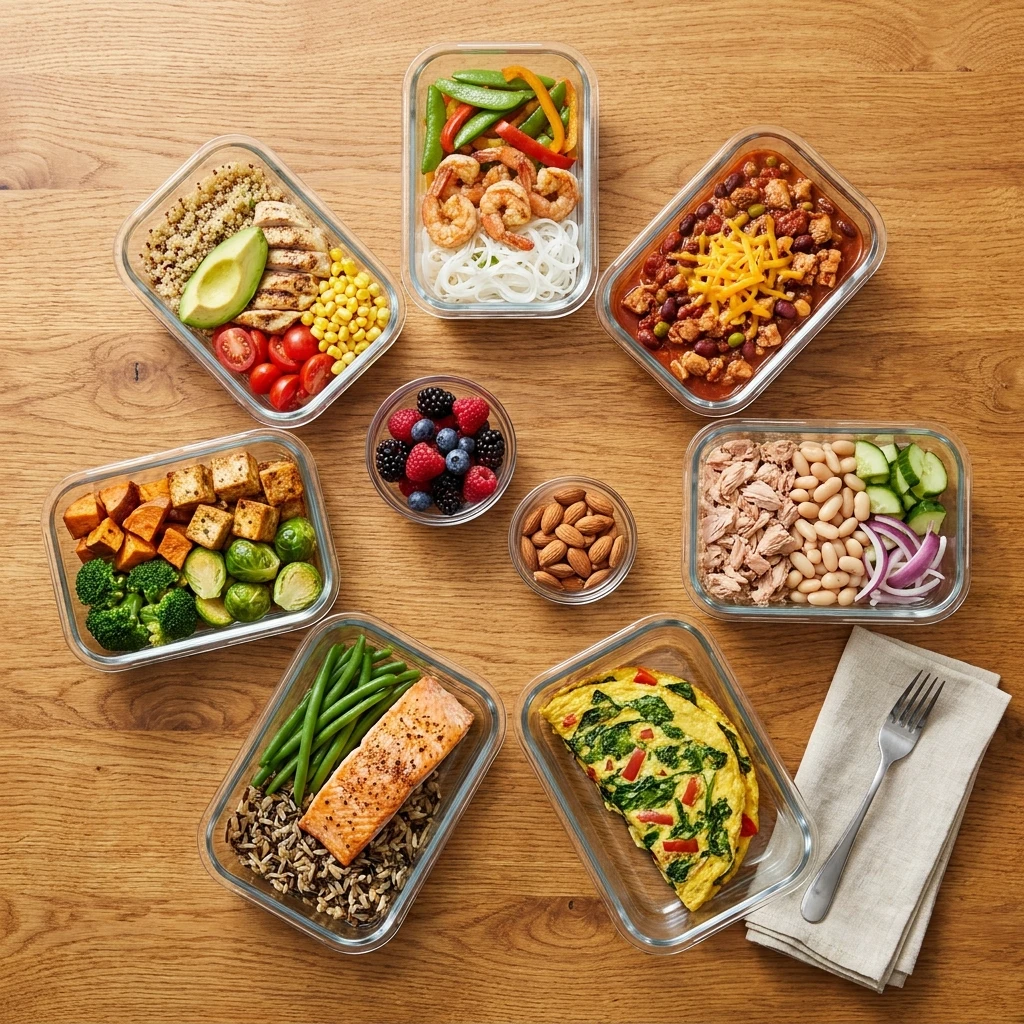
Nutrition milestones barely change by decade: protein at every meal, plenty of plants and fibre, and enough calcium, which rises to 1,200 mg a day for women after 50. What changes is how much each one matters.
Aim for habits you can carry through every move, job change and hormone shift:
- Protein at every meal: It supports the muscle you’re working to keep after 40.
- Half your plate as plants: Vegetables, fruit, beans and whole grains for fibre and steady energy.
- Calcium-rich foods daily: Dairy, fortified plant milks, tinned fish or leafy greens.
- Mindful eating habits: Eating sitting down, without a screen, at least once a day.
- No cutting whole food groups: That’s one of the common reasons diets fail.
If you want help building a balanced plate, our tips for balancing your diet and healthy meal plans for every lifestyle take the guesswork out.
How To Stay Consistent When Life Changes Fast
Exercise consistency comes from shrinking your habits during big life changes instead of dropping them. A new habit takes about two months to form on average, and sometimes much longer, so “never fully stopping” matters far more than any milestone you hit on time.
One of the top posts in a large menopause community asked, simply: “is this sustainable? for THIRTY MORE YEARS?” If you’ve felt that, you’re not lazy. You’re tired, and you’re being asked to do too much at once.
The research on sustainable habit building is reassuring. A 2024 systematic review found that the median time to form a health habit was 59 to 66 days, with individual times ranging from 4 to 335 days.
It also found that habits you choose yourself, and those done in the morning, tend to stick better. So pick your Foundation habit yourself, and give it a full season before you judge it.
When life gets busy (and it will), use these rules:
- Shrink, don’t skip: Ten minutes still keeps the habit alive.
- Anchor it: Attach your habit to something that already happens every day, like your morning coffee.
- Plan the restart: After illness or holidays, decide in advance which day you’ll begin again.
- Drop the comparison: Your 50-year-old self doesn’t need to match anyone’s 30-year-old self, including your own.
For more on this, see what to do when busy life gets in the way and how to set realistic goals you can actually keep after 40.

The Bottom Line
There are many important milestones in life, and this isn’t even the full list. The ones worth chasing are the ones you can feel: carrying your own shopping, sleeping through the night, holding that one-leg stand a little longer, and booking the screening you’ve been putting off.
Climb the Milestone Ladder at every stage. Keep one Foundation habit, check a few Markers, and set one Momentum goal. And take the time to exercise, eat well and look after yourself, so you can live a long and fruitful life.
Ready for your next milestone? Sign up for our free newsletter and get simple, research-backed strength, nutrition and habit tips made for women at every stage of life, straight to your inbox. Pick your first rung today, and we’ll help you climb the next one.
Glossary Of Key Terms
- Healthy Living Milestones: Measurable health, fitness and habit checkpoints suited to a particular life stage.
- Milestone Ladder: WLBF’s three-rung method (Foundation, Markers, Momentum) for planning health at any stage.
- Non-Scale Victory: A sign of progress that has nothing to do with body weight, such as better sleep or more strength.
- Sarcopenia: Age-related loss of skeletal muscle mass and strength.
- Perimenopause: The transition years before menopause, when hormone levels fluctuate and periods become irregular.
- Talk Test: A simple intensity check: at moderate effort, you can talk but not sing.
- Strength Training Milestones: Measurable strength gains, such as lifting more weight or doing more reps than last season.
- Body Recomposition: Gaining muscle while losing fat, often with little change on the scale.
FAQ
What Are The Most Important Healthy Living Milestones For Women?
The most important ones are meeting the weekly activity guideline (150 minutes plus 2 strength days), keeping up strength training from 40, adding balance work in your 50s and 60s, and staying on schedule with screenings like mammograms, colorectal tests and bone density checks.
Why Is It Important To Adapt Healthy Living Practices Through Different Life Milestones?
Your body’s needs change. Your 20s are for building bone and muscle, pregnancy and postpartum call for gentle rebuilding, menopause speeds up muscle and bone loss, and later life puts balance and independence first. Adapting your habits to each stage helps you get the most benefit and lowers your health risks.
What Is A Good Fitness Milestone For A Woman Over 40?
A good one is training for strength twice a week for a full three months and logging steady increases in the weight you lift. From your 50s, being able to stand on one leg for at least 10 seconds on each side is another useful balance milestone.
How Do I Track Healthy Living Milestones Without A Scale?
Track a strength log, your weekly step average, a one-leg balance test, your sleep hours and how your clothes fit. Recheck every three months and compare against your own last result rather than an age chart.
How Do I Stay Consistent With Healthy Habits When Life Stages Change Quickly?
Anchor one non-negotiable habit to something that already happens every day, like a protein-forward breakfast, a 10-minute walk after lunch or lights-out at a set time. Then rebuild the rest around it. Consistency comes from small routines that travel with you, not from overhauling everything the week your life changes.
Great article! I really enjoyed reading it.
Keep sharing!