
The Fitness Habits For Women To Stay Young That Research Actually Supports (And The One Thing Exercise Can’t Do)
If you don’t find the time, if you don’t do the work, you don’t get the results.
Arnold Schwarzenegger
Summary (TL;DR)
You’re still doing the walks. Maybe you’ve got a Pilates class on Thursdays. And yet somewhere in your 40s, your body started to feel older than the number on your birthday cake. Stairs feel steeper. Your knees have opinions. The mirror and the scale seem to have teamed up against you.
That isn’t in your head, and it isn’t a personal failing. The menopause transition genuinely changes body composition, and some physical abilities fade quietly long before you notice them. The good news is that the parts of ageing you can influence respond remarkably well to the right habits, and “right” is more specific than most fitness advice for women admits.
In this guide, you’ll get a clear, science-backed longevity fitness routine built around five habits, a sample week you can copy, and an honest look at what exercise can and can’t do for you after 40. No miracle promises. Just what actually works.
Medical & Referral Disclaimer
This article is for informational and educational purposes only. It is not a substitute for professional medical advice, diagnosis or treatment. Always consult your physician or a qualified health provider before starting any new exercise programme, especially if you have osteoporosis, a heart condition, joint problems or any other pre-existing medical condition.
Key Takeaways
- Strength training at least 2 days a week is a foundational habit; research links 30 to 60 minutes of muscle-strengthening work per week with a lower risk of early death.
- Lifting heavier than you think is safe and effective when it’s coached and progressed: it outperformed low-intensity home exercise for bone density in the LIFTMOR trial of postmenopausal women with low bone mass.
- Power and balance training is easy to overlook, yet it’s closely tied to staying independent and avoiding falls.
- Cardiorespiratory fitness is one of the strongest predictors of how long you live; aim for 150 to 300 minutes of moderate activity each week.
- Recovery, including 7 or more hours of sleep, is part of the training plan, not a reward for finishing it.
- Your daily steps count: benefits keep climbing up to roughly 6,000 to 10,000 steps a day, depending on age.
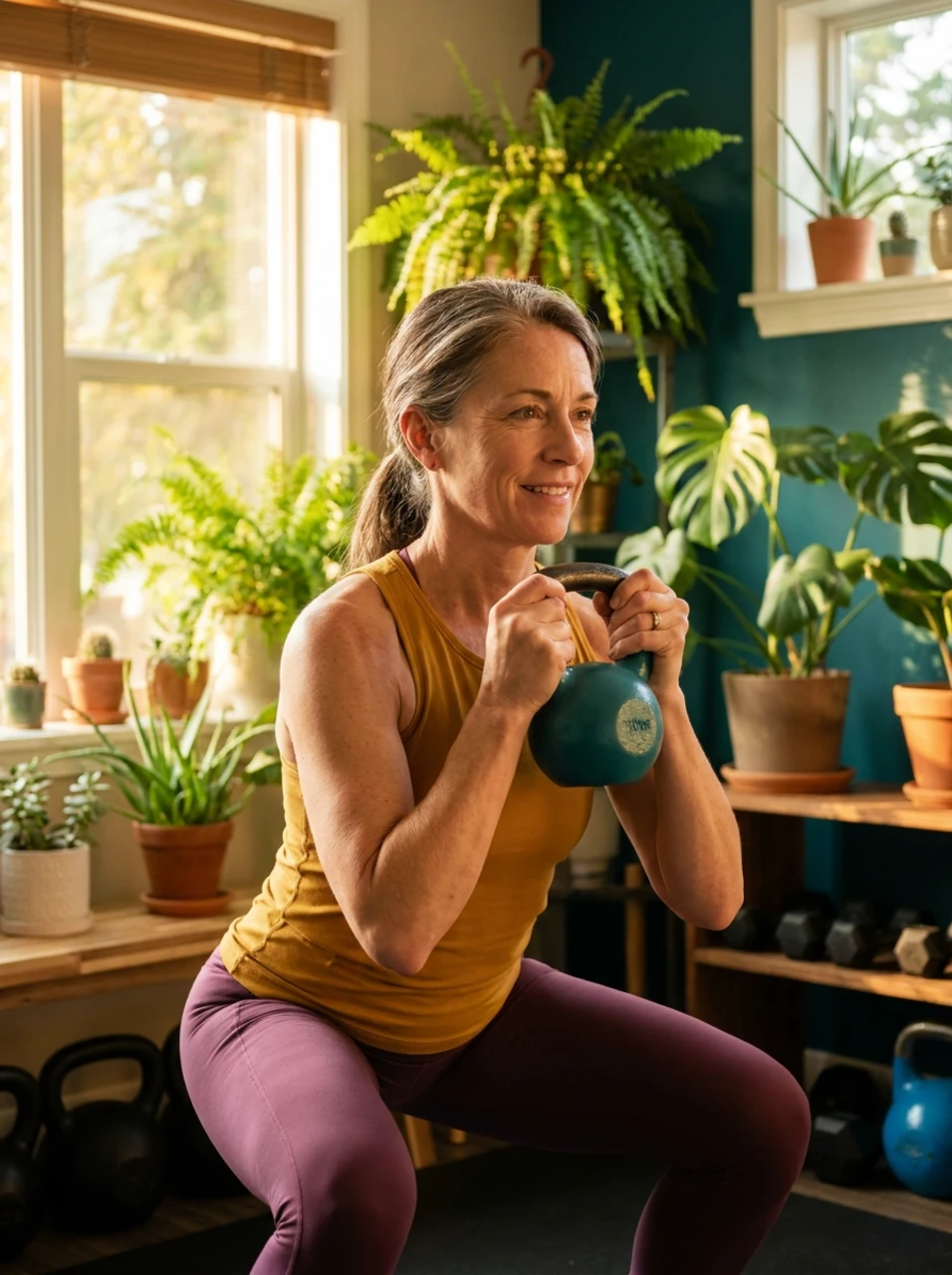
What Are The Best Fitness Habits For Women To Stay Young?
The best fitness habits for women to stay young are regular strength training, power and balance work, aerobic exercise, deliberate recovery and plenty of daily movement. Together, they protect the muscle, bone, heart fitness and mobility that decide how young your body feels and functions after 40.
Notice what’s missing from that list: a magic workout, a specific class or a “toning” routine. Staying young, in fitness terms, means holding on to capacities that naturally decline with age. Each habit below targets one of them.
| What Tends To Fade After 40 | The Habit That Protects It | What The Research Shows |
|---|---|---|
| Muscle mass and strength | Strength training, 2 or more days a week | Biggest mortality benefit (about 10 to 20% lower risk) at 30 to 60 minutes a week |
| Bone density | Progressive, heavier lifting plus impact | Lumbar spine bone density rose 2.9% vs a 1.2% loss with low-intensity exercise |
| Muscle power and balance | Fast-intent moves and balance drills | Exercise programmes cut the rate of falls by 23% |
| Heart and lung fitness | 150 to 300 minutes of moderate cardio a week | Low fitness carried a mortality risk comparable to or greater than smoking or diabetes |
| Sleep and mood | Combined exercise, recovery and sleep habits | Combined exercise ranked highest for sleep quality in peri- and postmenopausal women |
| Everyday energy | Daily steps and less sitting | Mortality risk kept falling up to 6,000 to 10,000 steps a day |
Why Your Body Feels Older After 40 (And Why It Isn’t All Hormones)
Your body changes after 40 because lean mass starts declining at the menopause transition while fat gain speeds up, and muscle power fades even faster than strength. Hormones play a part, but training gives you a real way to push back.
The long-running Study of Women’s Health Across the Nation (SWAN) tracked women’s body composition with DEXA (dual-energy X-ray absorptiometry) scans through the transition.
It found that at the start of the menopause transition, the rate of fat gain doubled and lean mass began to decline, with those changes continuing until about two years after the final period. Interestingly, overall weight didn’t speed up. The shift was in what that weight was made of.
There’s a second, quieter change. Researchers at Tufts found that muscle power declines earlier and more steeply with age than muscle strength, and peak power has emerged as an important predictor of functional limitations in older adults. Power is what gets you up from a low sofa, catches you when you trip and carries shopping up the stairs.
So here’s the honest picture. Your hormones are changing, and that shifts your starting point. But they don’t decide the outcome on their own. The habits below are how you tilt the odds back in your favour.
The S.P.A.R.K. Week: A Longevity Fitness Routine For Women Over 40
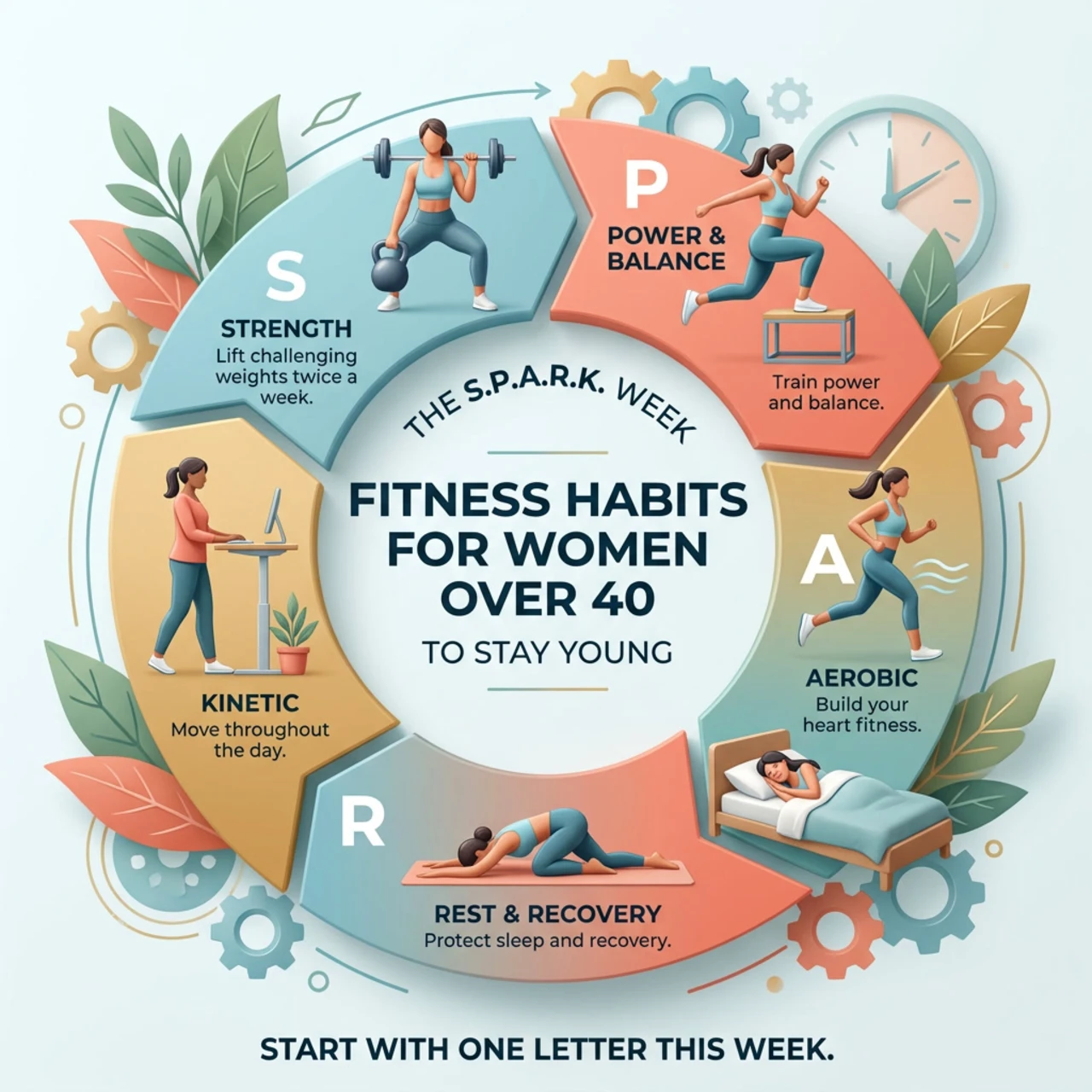
The S.P.A.R.K. Week is our five-habit framework for a longevity fitness routine: Strength, Power & Balance, Aerobic Base, Recovery and Keep Moving Daily. Each letter targets a specific decline that research links to ageing in women.
You don’t need five separate programmes. Most habits stack inside the same sessions, and the whole week fits into about four hours of planned exercise plus everyday movement. Start with S and K if you’re new, then layer in the rest.
S Is For Strength: Lift Heavier Than You Think
Strength training is arguably the most important fitness habit for women to stay young, because it most directly targets the muscle and bone you lose with age. Aim for at least 2 sessions a week, working every major muscle group.
That’s also the official baseline: the US Physical Activity Guidelines say adults need muscle-strengthening activity at least 2 days each week. And the payoff goes well beyond looking toned.
A meta-analysis of 16 studies found muscle-strengthening activity was linked to a 10 to 17% lower risk of all-cause mortality, heart disease, cancer and diabetes, with the biggest benefit at around 30 to 60 minutes a week. More wasn’t clearly better, which is good news if you’re short on time.
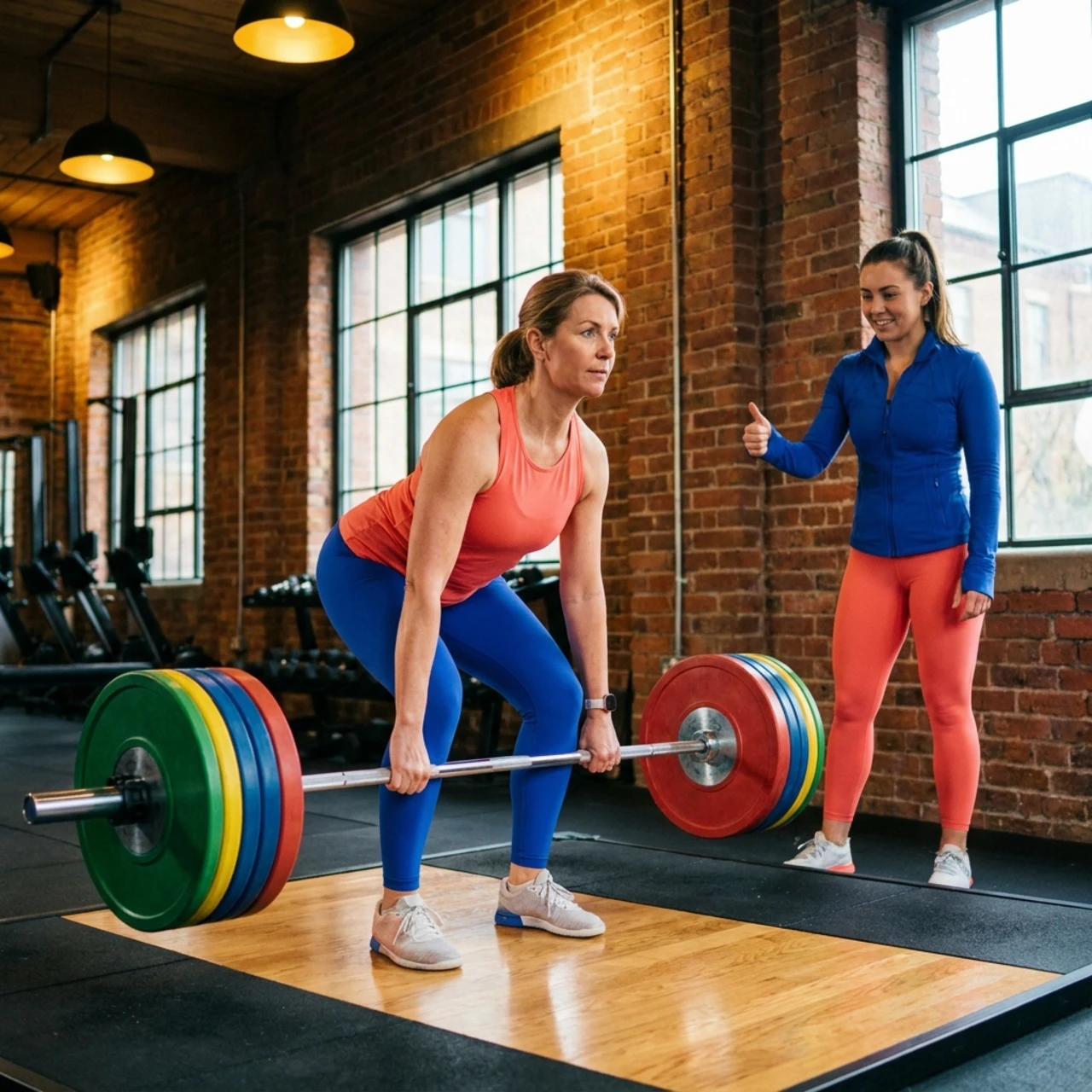
Many women hold back because they’re afraid of bulking up. The reality is that when men and women follow the same programme, women gain muscle at a similar relative rate and actually make larger relative gains in upper-body strength.
You’ll get firmer. Getting “bulky” is unlikely without years of very deliberate training and eating to match. For a deeper plan, see our guide to strength training for women over 40.
How to build the habit:
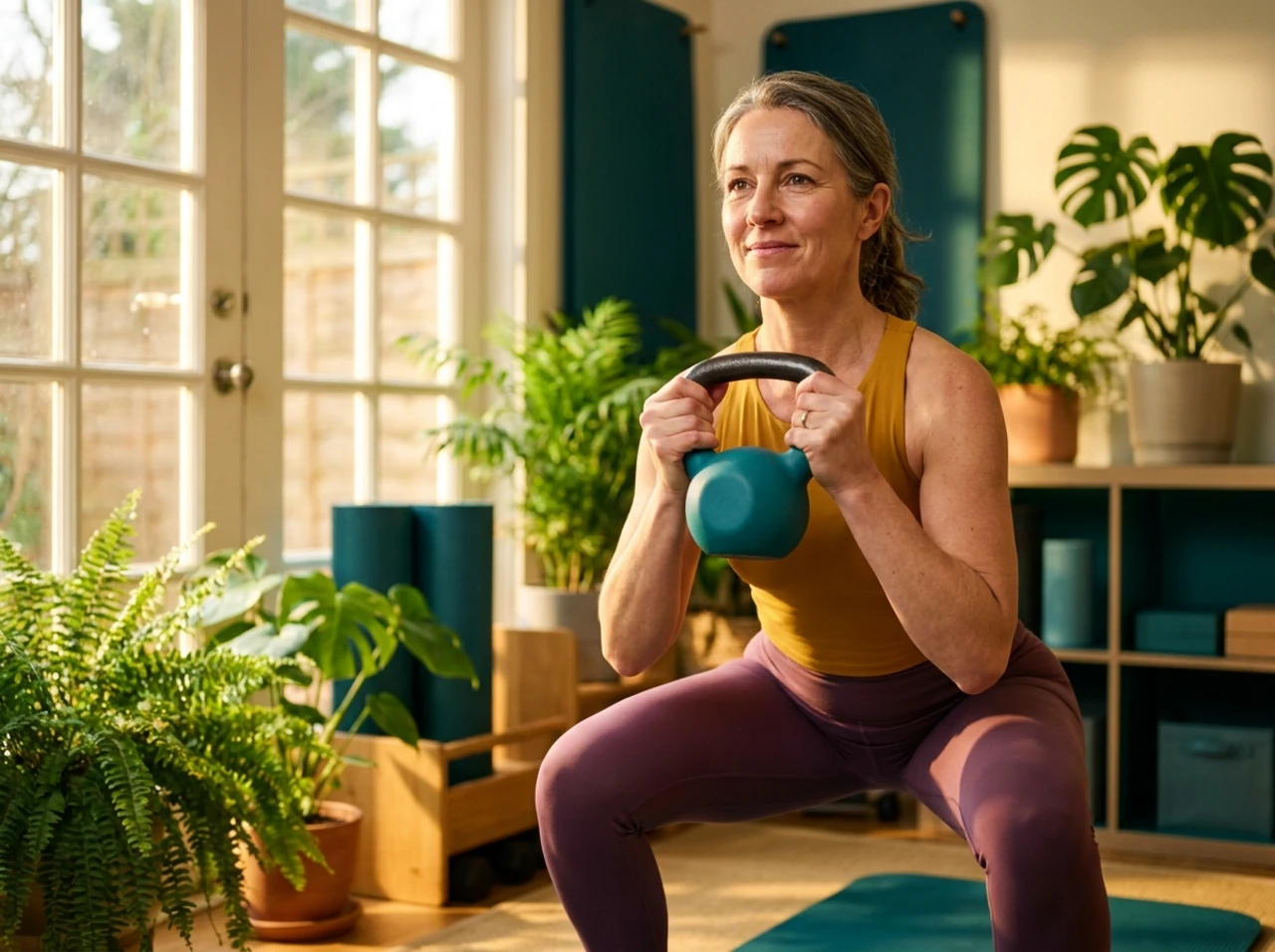
- Pick compound moves: squats (or sit-to-stands), hip hinges like deadlifts, lunges, rows, presses and carries.
- Train close to your limit: finish each set with 1 to 3 reps left in the tank. If 15 reps feel easy, the weight is too light.
- Progress slowly: add a little weight or a rep or two every week or two.
- Use what you have: dumbbells, kettlebells and resistance band workouts all count. The muscle responds to effort, not to the equipment.
- Get coaching for heavy lifts: especially if you have low bone density. Form matters more than the number on the plate.
For more on why this matters for your shape as well as your health, read why you should lift weights and how strength training compares with cardio for fat loss.
P Is For Power And Balance: The Habit That’s Easy To Skip
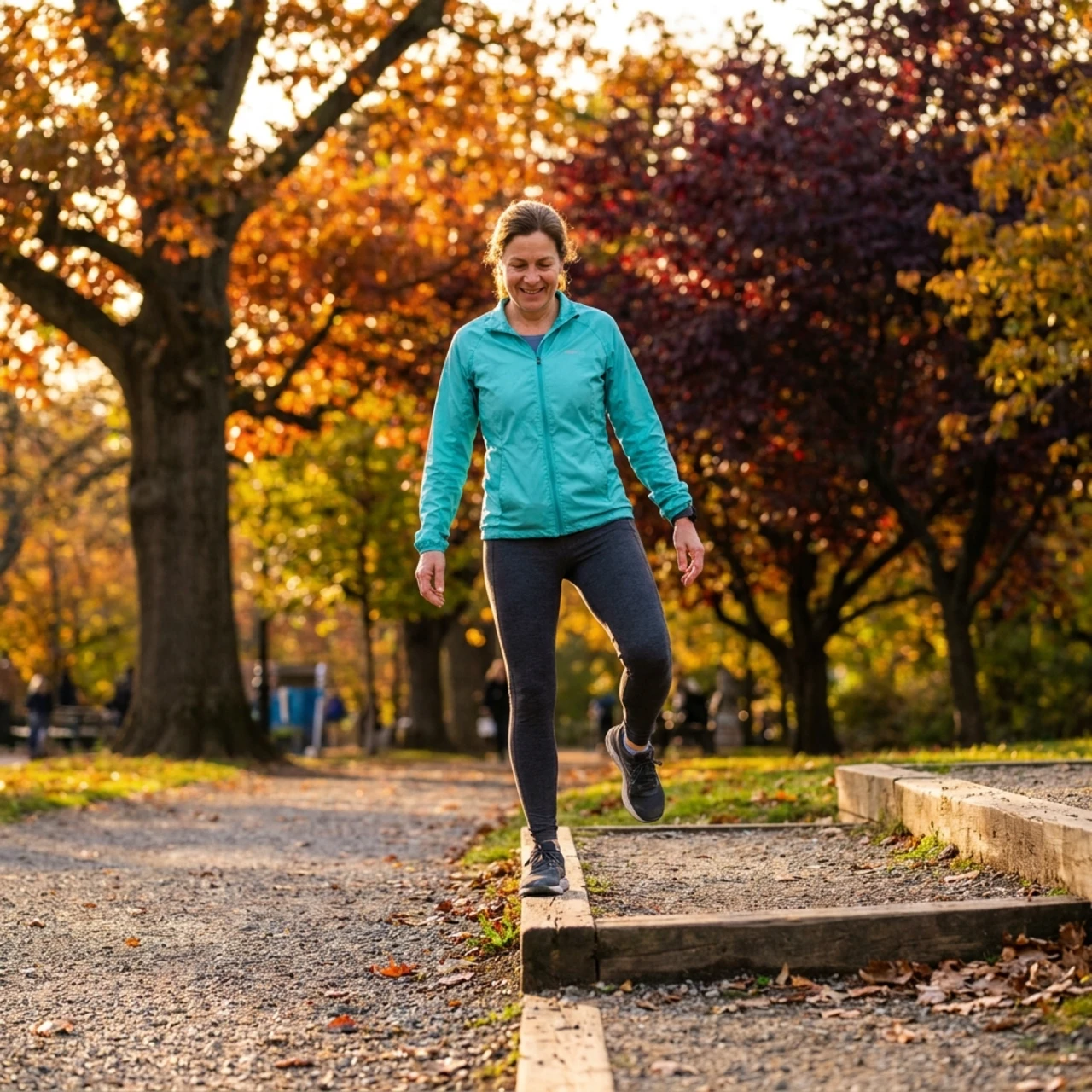
Power and balance training means moving with speed and practising stability, and it protects the abilities that keep you independent. It matters because power fades faster than strength, and good balance work measurably reduces falls.
The strongest evidence here comes from a Cochrane review of 108 trials, where most participants were women. It concluded that exercise programmes reduce the rate of falls by 23%, and the programmes that worked best focused on balance and functional exercises.
Those trials involved people in their 70s, but the capacity they protect is built (or lost) in your 40s and 50s. Add 10 minutes of these to two of your sessions:
- Fast sit-to-stands: lower slowly, then stand up as quickly as you safely can.
- Step-ups or low box step-ups: drive up with intent.
- Single-leg balance: stand on one leg while brushing your teeth, then progress to eyes closed next to a counter.
- Medicine ball throws or band punches: quick, controlled, upper-body power.
- Tai chi or dance: both train balance and coordination in a way that doesn’t feel like a workout.
A Is For Aerobic Base: Your Heart’s Longevity Habit
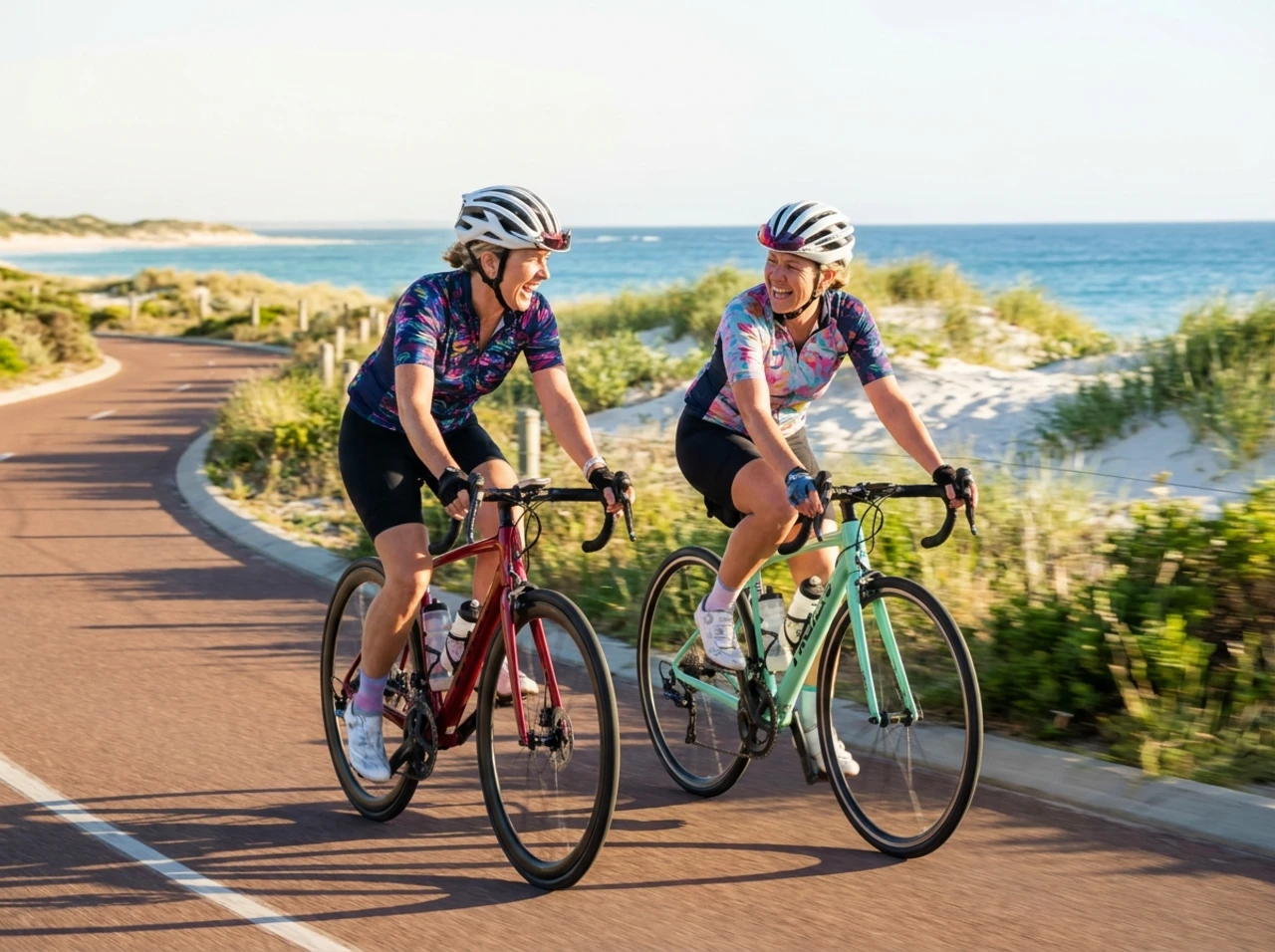
An aerobic base means doing enough cardio to raise your heart and lung fitness, typically 150 to 300 minutes of moderate activity each week. Cardiorespiratory fitness is strongly linked to how long you live, and it’s something you can change.
The US guidelines recommend 150 to 300 minutes of moderate-intensity aerobic activity a week, such as brisk walking, cycling, swimming or dancing. Why take it seriously? In a Cleveland Clinic study of more than 122,000 adults, below-average fitness carried a mortality risk comparable to or greater than smoking or diabetes.
Most of your cardio can be comfortable, at a pace where you can talk in full sentences. Once or twice a week, add a few harder intervals where talking gets difficult. Those harder efforts are what push fitness up over time.
If you’re trying to fit both cardio and weights into a busy week, our guide to balancing cardio and strength training walks you through it. Cycling fans can also dig into the health benefits of regular cycling.
R Is For Recovery: Sleep, Stress And Mobility
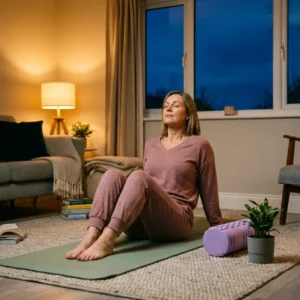
Recovery is the habit that lets the other four work: quality sleep, stress relief and mobility work. For women in perimenopause, combined exercise ranked highest for better sleep in a review of 31 trials, so training and recovery support each other.
The CDC advises that adults up to age 60 need 7 or more hours of sleep. If night sweats and 3 a.m. wake-ups make that feel impossible, exercise can help. A network meta-analysis of 31 trials in peri- and postmenopausal women found combined exercise ranked highest for improving sleep quality, followed by flexibility exercise.
The mental side counts too. An overview covering more than 1,000 trials found that physical activity had medium-sized benefits for depression, anxiety and psychological distress. That’s why a hard session can feel like a reset button on a stressful day. There’s more on this in our piece on the mental health benefits of exercise.
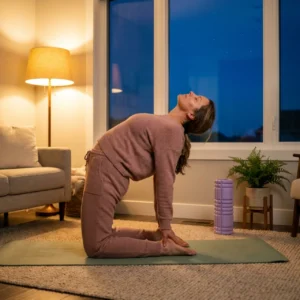
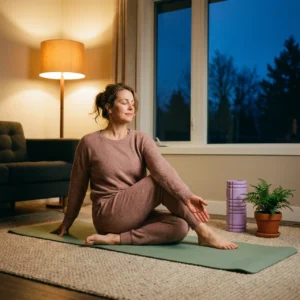
Mobility is the third piece. Pilates remains a solid foundation for posture and core control, and stretching or foam rolling after sessions can ease stiffness. If you enjoy Pilates, keep it, and read about the benefits of Pilates. Just pair it with loaded strength work rather than using it as a replacement, for reasons you’ll see in the contrarian section below.
K Is For Keep Moving Daily
Keeping moving daily means building steady, low-effort activity into your day, such as walking, stairs and standing breaks. It matters because higher daily step counts are linked to lower mortality.
A meta-analysis of 15 cohorts and more than 47,000 adults found that mortality risk kept falling with more steps, levelling off at about 6,000 to 8,000 steps a day for adults 60 and over, and 8,000 to 10,000 for those under 60. The US guidelines put it simply: move more and sit less.
Daily movement habits that add up:
- Take phone calls on your feet or on a walk.
- Walk for 10 minutes after your biggest meal.
- Use the stairs, then carry the shopping as a bonus farmer’s carry.
- Set a reminder to stand up every 45 to 60 minutes when you’re at a desk.
A Sample S.P.A.R.K. Week You Can Copy
A S.P.A.R.K. Week needs about four hours of planned exercise, spread across two strength sessions, two to three cardio sessions and short recovery blocks, plus daily walking. Adjust the days to your life; the weekly totals are what count.
| Day | Main Session | S.P.A.R.K. Habits Covered | Time |
|---|---|---|---|
| Monday | Full-body strength plus 10 minutes of power and balance drills | S, P, K | 45 to 50 min |
| Tuesday | Brisk walk or easy cycle, conversational pace | A, K | 30 to 40 min |
| Wednesday | Pilates, yoga or mobility plus foam rolling | R, P | 30 min |
| Thursday | Full-body strength plus 10 minutes of power and balance drills | S, P, K | 45 to 50 min |
| Friday | Cardio with 4 to 6 harder intervals | A | 30 min |
| Saturday | Long walk, hike, swim or dance class | A, K, R | 45 to 60 min |
| Sunday | Rest, gentle stretching and an early night | R | 10 min |
Brand new to exercise? Start with two short strength sessions and daily walks for the first month, then add one piece at a time. Consistency beats intensity every time.
Expert Commentary: What The Research Actually Shows
The research is clear on one point that surprises many women: after menopause, heavier, well-supervised training does more for bone and function than gentle exercise, and it’s safer than its reputation.
In the LIFTMOR trial, 101 postmenopausal women with low bone mass, average age 65, did either twice-weekly 30-minute heavy lifting and impact training or a low-intensity home programme for eight months.
The heavy-lifting group gained 2.9% in lumbar spine bone density while the low-intensity group lost 1.2%, and improved on every functional test. HiRIT, in the quote below, stands for high-intensity resistance and impact training. As the researchers wrote:
“Contrary to current opinion, HiRIT was efficacious and induced no adverse events under highly supervised conditions for our sample of otherwise healthy postmenopausal women with low to very low bone mass.”
Watson et al., LIFTMOR Trial, Journal of Bone and Mineral Research (2018)
A 2026 network meta-analysis of 74 studies and more than 5,300 postmenopausal women pointed the same way. It found that combining resistance training with mind-body exercise was the most effective approach for spine and hip bone density, and that programmes lasting a year or more gave the most consistent results. In other words, Pilates or yoga plus weights, kept up for the long haul.
And on why speed matters, the Tufts team behind the power research put it plainly:
“Muscle power declines earlier and more precipitously with advancing age compared with muscle strength.”
Kieran Reid And Roger Fielding, Tufts University, Exercise and Sport Sciences Reviews (2012)
The Contrarian Take: Exercise Won’t Make You Look Younger, It Makes Your Body Act Younger
Exercise is not a reliable anti-ageing treatment for your face, and expecting it to be sets you up for disappointment. Its real gift is functional youth: strength, balance, fitness and energy that keep your body acting years younger than your age.
Browse any perimenopause forum, and you’ll find women who lift, walk and eat well, and still feel the mirror has turned on them. That frustration is valid. Much of the “anti-ageing exercise” content online overpromises on looks and underexplains what training actually changes.
Here’s what the evidence can and can’t support:
- Skin: one small 16-week study in 56 middle-aged Japanese women found both aerobic and resistance training improved skin elasticity, and resistance training also improved dermal thickness. It’s interesting, but it’s one study, and some of its authors worked for a cosmetics company. Treat it as a possible bonus, not a promise.
- Cellular ageing: in a US survey of 5,823 adults, the most active people had longer telomeres, equivalent to an estimated 9-year biological ageing advantage over sedentary adults. That’s an association from a single snapshot in time, so it can’t prove exercise caused the difference.
- Function: this is where the evidence is strongest. Muscle, bone, balance and fitness all respond to training, and all of them predict how independent and energetic you’ll be decades from now.
So judge your fitness habits by what your body can do, not only by how it looks. For more on the lifestyle side of ageing, see our five ways to slow the ageing process.
How To Tell Your Fitness Habits Are Working
You’ll know your fitness habits are working when everyday tasks get easier: rising from the floor, climbing stairs, carrying heavier bags and balancing on one leg. Retest them every six weeks, because these numbers can move before the mirror does.
Test yourself now, then again every six weeks:
- Sit-to-stand: how many times can you stand up from a chair without your hands in 30 seconds?
- Balance: how long can you stand on one leg, up to 30 seconds per side?
- Stairs: can you climb two flights without stopping to catch your breath?
- Carry: can you carry two full shopping bags from the car in one trip?
- Sleep and energy: are you falling asleep more easily and flagging less in the afternoon?
If the numbers move, you’re winning, whatever the scale says. And if you’re also working on body composition, our guide to body recomposition for women over 40 explains why the scale can stall while your shape improves.

Want The Habits Behind Lasting Weight Loss? Get the free guide: 10 research-backed habits that help women lose body fat and keep it off, with no extreme diets. Send Me The Free Guide.
The Bottom Line
The fitness habits for women to stay young aren’t secret or complicated. Lift something challenging twice a week. Train a little power and balance. Build your heart fitness. Protect your sleep and recovery. Move throughout the day. That’s the S.P.A.R.K. Week, and every piece of it draws on research into how women’s bodies age.
Your hormones will keep changing, and your face will keep ageing, as everyone’s does. But how strong, steady and energetic you feel at 50, 60 and 70 is still largely up to the habits you build now. Start with one letter this week.
Want a simple place to begin? Grab our free guide, 10 Actions That Support Permanent Weight Loss. It’s the no-guilt, no-restriction companion to your S.P.A.R.K. Week, built for real women with real schedules, so your new fitness habits have the everyday foundations they need to stick.
Glossary Of Key Terms
- Aerobic Base: A foundation of heart and lung fitness built mainly through regular moderate-intensity cardio.
- Bone Mineral Density (BMD): A measure of how much mineral is packed into bone; lower values mean weaker bones and higher fracture risk.
- Cardiorespiratory Fitness: How well your heart, lungs and muscles use oxygen during sustained exercise.
- Compound Exercise: A movement that works several joints and muscle groups at once, such as a squat or row.
- Lean Mass: Everything in your body that isn’t fat, mostly muscle, bone, organs and water.
- Menopause Transition: The years of changing cycles and hormones leading up to and just after the final menstrual period, often called perimenopause.
- Muscle Power: The ability to produce force quickly; it underpins fast, reactive movements such as catching yourself from a trip.
- Progressive Overload: Gradually increasing the weight, reps or difficulty of exercise so your body keeps adapting.
- Sarcopenia: Age-related loss of muscle mass, strength and function.
- Telomeres: Protective caps on the ends of chromosomes that shorten with age and are used as a marker of cellular ageing.
FAQ
What Is The Best Exercise For Women Over 40 To Stay Young?
Strength training is the best single exercise habit for women over 40, because it directly rebuilds the muscle and bone that decline from the menopause transition onward. For the fullest benefit, combine it with cardio, balance work and daily walking, as in the S.P.A.R.K. Week.
How Many Days A Week Should A Woman Over 40 Work Out?
Most women over 40 do well with 4 to 6 active days a week: 2 strength sessions, 2 to 3 cardio sessions and a mobility or recovery session, plus daily walking. Counting brisk daily walks, that reaches the US guideline of 150 to 300 minutes of moderate activity plus 2 days of strength work.
Can Exercise Reverse Ageing?
Exercise can’t reverse ageing, but it can help offset many age-related declines in function, such as lost muscle, weaker balance and lower fitness, and it supports bone health. Some studies link high activity to markers of younger cells, though that evidence is observational.
Is It Safe For Women Over 50 To Lift Heavy Weights?
Yes, for most women, provided the lifting is well coached and progressed gradually. In the LIFTMOR trial, postmenopausal women with low bone mass lifted heavy under supervision, improved bone density and function, and the only adverse event reported was a minor back spasm. Check with your doctor first if you have osteoporosis.
Does Walking Count As Anti-Ageing Exercise?
Walking counts as useful aerobic and daily movement, and more daily steps are linked to lower mortality up to about 6,000 to 10,000 a day. It doesn’t give muscle and bone the heavier load used in trials like LIFTMOR, though, so pair it with strength training.
Is Pilates Enough To Stay Fit After 40?
Pilates is great for posture, core control and mobility, but it isn’t enough on its own for bone and muscle after 40. Research suggests that combining mind-body exercise like Pilates with resistance training provides the strongest bone-density benefits.
How Long Does It Take To See Results From New Fitness Habits?
It varies from woman to woman, and everyday strength and balance often change before body shape does. In LIFTMOR, bone and function gains were measured after 8 months, and a 2026 review found programmes of a year or more gave the most consistent bone results.