Why Everything You Thought You Knew About How To Tone Your Body And Boost Energy Is Backwards
Sam Hope
Level 3 personal trainer & fitness editor
The truth is, you can’t ‘tone’ muscles…you can only grow, shrink, or reveal them.
Summary (TL;DR)
“Toning” isn’t a separate muscle adaptation — it’s the visible result of building lean muscle while lowering body fat, and the fastest way to tone your body and boost energy is progressive strength training paired with adequate protein, not high-rep, light-weight circuits.
The same strategy that reveals muscle definition — resistance training, steady protein intake, and consistent sleep — is also what the 2026 research links most directly to reduced fatigue in women, because low energy correlates with body composition and recovery quality far more than with willpower or caffeine.
Building muscle and boosting energy rank among the most common goals women bring to fitness — and among the most misunderstood. If you’ve spent months on a “toning” routine of light dumbbells and endless reps and seen almost nothing change, you’re not doing it wrong. You’re following advice that was wrong from the start.
That confusion breeds real frustration, and often real intimidation, too. The weight section of the gym can feel like it belongs to someone else, so the instinct is to stay in the “toning” lane where the dumbbells are lighter, and the room feels safer. The research below says that instinct is exactly backwards, and it’s quietly cost women years of results they were capable of the whole time.
This guide breaks that pattern. It walks through what “toning” actually is at the physiological level, why the fatigue so many women describe has more to do with body composition and recovery than with hustle, and how to rebuild a routine around what the current evidence — not gym folklore — actually supports.
Medical & Referral Disclaimer
This article is for informational and educational purposes only. It is not a substitute for professional medical advice, diagnosis, or treatment. Always consult your physician or qualified health provider before starting any new diet or exercise program.
Key Takeaways
- “Toning” is not a distinct muscle adaptation — it is the combined result of building lean muscle and reducing body fat, achieved through resistance training and nutrition, not a special style of workout.
- Lifting heavier, in a moderate rep range, builds visible muscle definition faster than high-rep, light-weight circuits — and does not make most women “bulky.”
- Persistent fatigue in women tracks more closely with body composition, sleep quality, and protein intake than with caffeine, willpower, or simply “pushing through.”
- A realistic plan to tone your body and boost energy combines progressive strength training, protein-forward meals, hydration, and true recovery days — not more restriction.
- The intimidation many women feel around the weight room is a documented, common experience — and it is the direct result of decades of gendered fitness marketing, not a personal shortcoming.
The Toning Myth: What The Research Actually Says About Muscle Definition
There Is No Such Thing As A “Toning Workout”
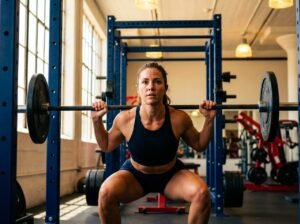
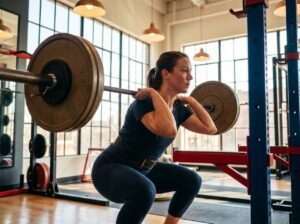
Muscle tone is not a separate training goal from muscle growth — it is what visible, lower-body-fat muscle looks like once you have built it. A February 2026 Tom’s Guide interview with personal trainer Sam Hopes put it plainly: you cannot “tone” a muscle in isolation; you can only grow it, shrink it, or reveal it by lowering the fat sitting over it.
The light-weight, high-repetition “toning circuit” that so much fitness content still recommends to women isn’t a gentler path to the same result — it is simply a slower, weaker stimulus for building the muscle that produces that result in the first place.
This isn’t a fringe opinion, and it isn’t just one trainer’s take — it shows up across 2026’s strength-training research. A June 2026 National Geographic investigation into strength-training research found that the fundamentals of building strength and muscle look remarkably similar across sexes.
That undercuts the long-standing claim that women need a fundamentally different, lighter approach because of their hormones. Reporting from the Toronto Sun on the same body of hormone research goes further: estrogen and progesterone appear to play a far smaller role in muscle-building capacity than fitness marketing has assumed for decades.
Why “I Don’t Want To Get Bulky” Is The Wrong Fear
The fear of getting “bulky” is one of the most common reasons women avoid heavier lifting — and one of the most thoroughly debunked.
MD Anderson Cancer Center’s patient-education resource on muscle toning points to a simpler, physiological reason it rarely happens by accident: women’s naturally lower circulating testosterone makes building large muscle mass far harder than fitness folklore suggests.

A 2026 roundup from Barbell Nutrition on women’s strength-training myths adds the practical side: real bulk requires a specific, deliberate combination of very high training volume, a caloric surplus, and typically years of dedicated hypertrophy-focused training — not the two or three strength sessions a week most women are considering.
The outcome most women picture when they say “toned” — visible definition, a firmer look, more shape — is the direct product of the muscle-building process they’re avoiding out of fear of overshooting it.
Naming that fear matters, because it’s rarely irrational on its face — it’s the product of years of fitness media drawing a hard line between one-size-fits-all “women’s workouts” and “real” strength training. Recognizing that the line was never physiologically necessary is often the first real unlock in a stalled toning goal.
| The Claim | What The Common Advice Says | What The Evidence Actually Shows |
|---|---|---|
| “Toning” workouts | Light weights, high reps “shape” muscle differently than heavy lifting | No separate toning adaptation exists; visible tone comes from muscle growth plus fat loss |
| Lifting heavy & bulk | Heavier weights make women bulky quickly | Significant bulk requires high volume, a caloric surplus, and years of dedicated hypertrophy training |
| Hormones & training style | Women need fundamentally different, lighter programming because of hormones | Core strength-training principles work similarly across sexes; hormonal influence on muscle-building capacity is smaller than assumed |
| Energy & effort | Low energy means you just need more willpower or caffeine | Fatigue correlates most strongly with body composition, sleep, and protein intake |
Nutrition Strategies That Fuel Toning And Energy
Nutrition doesn’t just support a training plan — it determines whether the muscle you build actually shows and whether you have the energy to build it in the first place. These three levers do most of the work.

#1. Fuel With Lean Proteins
Protein supplies the amino acids muscle tissue needs to repair and grow after training, which makes it the single most important macronutrient for anyone trying to tone their body. Lean sources like chicken, fish, tofu, and legumes deliver that raw material without excess saturated fat.
Spreading protein across each meal, rather than loading it all at dinner, keeps amino acids available for muscle repair throughout the day and helps stabilize energy between meals.
#2. Embrace Complex Carbohydrates
Complex carbohydrates are the body’s preferred fuel for resistance training, and cutting them too aggressively is one of the fastest ways to sabotage both a strength routine and your energy levels.
Whole grains such as brown rice, quinoa, oats, and wholemeal bread digest slowly, releasing glucose steadily rather than in a spike-and-crash pattern. Their fiber content also supports digestion and helps keep blood sugar — a direct driver of daily energy — on an even keel.
#3. Don’t Forget Healthy Fats
Healthy fats from avocados, nuts, seeds, and olive oil support hormone production and the absorption of fat-soluble vitamins, both of which affect recovery and long-term energy.
They also slow digestion, which helps you stay satisfied between meals instead of reaching for the sugar-heavy snacks that produce a short energy spike followed by a crash.
- Build each plate around a palm-sized portion of lean protein first, then fill in carbohydrates and fats around it.
- Keep a protein-rich snack (Greek yogurt, a handful of nuts, a hard-boiled egg) on hand for the mid-afternoon energy dip.
- Treat hydration as a nutrition habit, not an afterthought — even mild dehydration reduces measurable energy and workout performance, according to Harvard Health’s guidance on daily water intake.
| Nutrition Lever | Best Sources | Primary Job |
|---|---|---|
| Lean Proteins | Chicken, fish, tofu, legumes, Greek yogurt | Muscle repair and growth — the raw material for visible tone |
| Complex Carbohydrates | Brown rice, quinoa, oats, wholemeal bread | Steady training fuel and stable blood sugar |
| Healthy Fats | Avocados, nuts, seeds, olive oil | Hormone support, satiety, nutrient absorption |
Strength Training For Real Muscle Definition
If nutrition supplies the raw material, strength training is what actually builds the muscle that gives you the toned look you’re after — and it’s the piece most “toning” advice gets wrong.
Why Resistance Training Beats High-Rep, Light-Weight Circuits
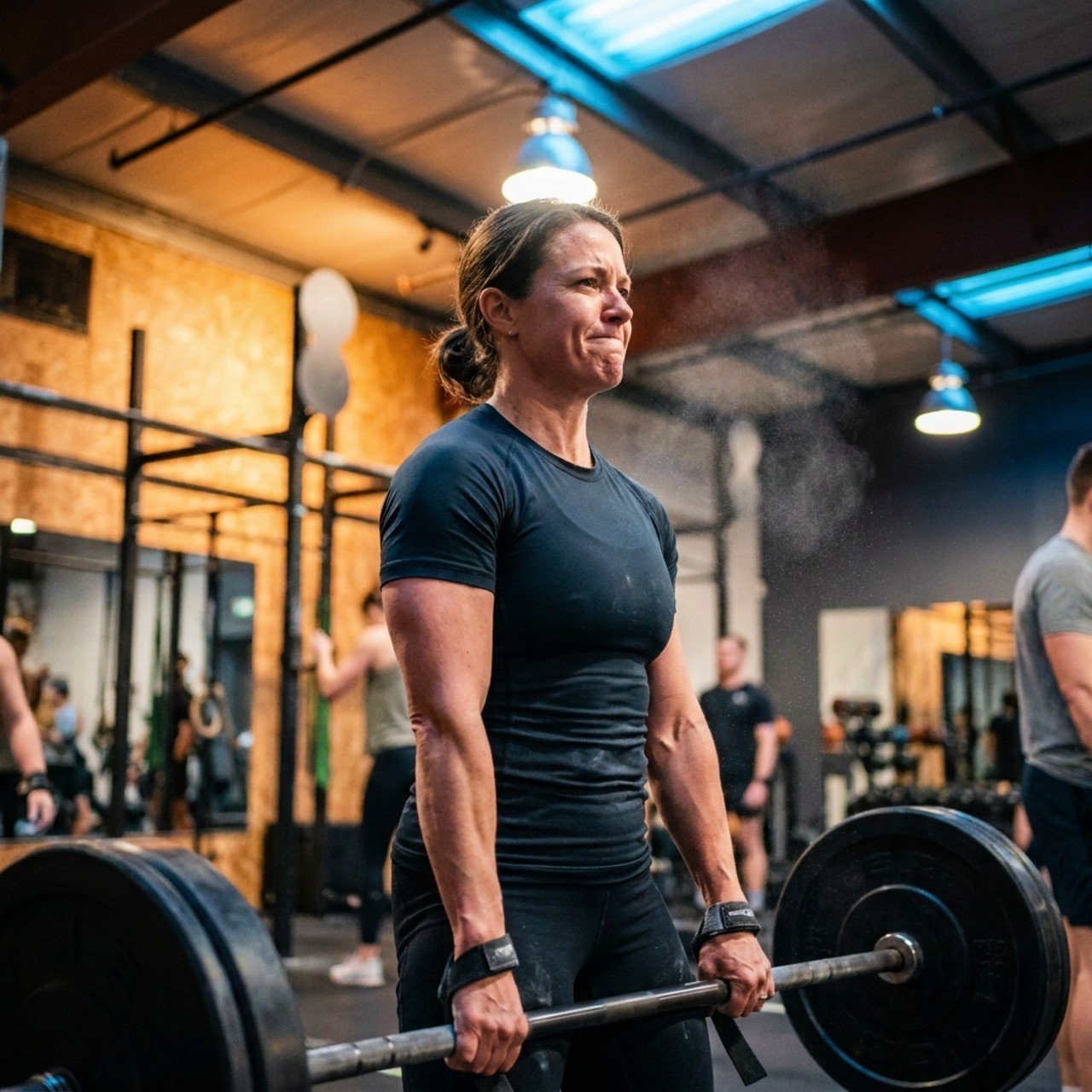
Progressive overload — gradually increasing the weight, reps, or difficulty of an exercise over time — is the mechanism that signals muscle to adapt and grow.
A moderate rep range (roughly 8 to 15 reps) with a weight that genuinely challenges you by the last two repetitions builds that stimulus far more effectively than 20-plus reps with a weight you could keep lifting almost indefinitely.
Coverage from Coach360’s 2026 research review on women and resistance training checks the “bulky,” cycle-syncing, and “too late to start” myths against the current evidence and finds all three overstated — strength is a trainable quality at any age, not a narrow window some women have already missed.
If you’re building this habit later in life, our deeper guide to strength training for women over 40 walks through age-specific programming in more detail than fits here.
A Sample Strength-Focused Toning Plan
Cardiovascular work still matters for heart health and calorie balance, but this plan puts resistance training first, since that’s the piece actually responsible for visible muscle definition.
| Day | Primary Focus | Example Work |
|---|---|---|
| Monday | Full-body strength | Squats, push-ups, rows, planks (moderate weight, 8-15 reps) |
| Tuesday | Active recovery | Brisk walk or gentle mobility work |
| Wednesday | Full-body strength | Lunges, deadlift pattern, overhead press, core work |
| Thursday | Rest day | Sleep and stretching prioritized |
| Friday | Full-body strength + conditioning | Squats, rows, short high-intensity interval finisher |
| Saturday | Cardiovascular | 30 minutes running, cycling, or swimming |
| Sunday | Rest day | Full recovery |
- Squats and lunges — build lower-body strength and are the foundation of most visible leg and glute definition.
- Push-ups, rows, and an overhead press — cover the major upper-body pushing and pulling patterns in one session.
- Planks and other core holds — support posture and protect the lower back as weights increase.
Consult a personal trainer or physical therapist for individualized form guidance, especially if you’re new to any of these movement patterns or returning after an injury — and if you’re starting from scratch, our beginner workout routines for women walk through form basics for each movement above.
The Real Science Of Boosting Energy For Women
Energy Is A Body-Composition Problem More Often Than A Motivation Problem
Persistent low energy is rarely solved by trying harder — it’s more often a signal from body composition, sleep, and nutrition than from a lack of discipline.
A July 2026 study of 392 female university students in BMC Women’s Health found body fat percentage was the strongest and most consistent predictor of physical-activity barriers, with fatigue showing a moderate association and sleep disturbance a weaker one; the authors describe these links as associative, not proof that one directly causes the other.

A September 2026 paper in Nature Scientific Reports, studying middle-aged adults aged 40 to 64, found a similar pattern — a composite score combining muscle mass, strength, tone, and stiffness tracked with fatigue outcomes in a sex-specific way. Taken together, the muscle you build through strength training isn’t just cosmetic. It’s tied to how tired you feel.
What Actually Moves The Needle On Daily Energy
A Proceedings of the Nutrition Society study, covered in July 2026 by Medical Xpress, examined several widely repeated claims about women’s exercise and hydration and found the rigid timing and quantity rules attached to those claims were overstated for most women — the basic habit of staying hydrated still matters, but consistency and adequate fueling did more work than precise timing.
Practical takeaways worth building a routine around:
- Protein intake supports more than muscle — a small crossover trial of postmenopausal women in Frontiers in Nutrition found protein beverages influenced hydration and appetite regulation, an early but suggestive link between protein habits and two other energy levers that researchers say warrants larger studies.
- Sleep quality and protein intake interact: a bad night’s sleep blunts how well the body uses that protein for repair, so a nutrition plan and a sleep routine work as one system, not two separate projects.
- Blood sugar stability, not stimulant intake, is the more sustainable energy lever — ultra-processed, high-sugar foods produce a fast rise and an equally fast crash.
Diet Matters To Boost Energy
The same lean proteins and healthy fats that support muscle — chicken, fish, nuts, avocados — also supply the steady nutrients your body needs for consistent energy.
Adequate water intake compounds these effects; even mild dehydration is a well-documented drag on measurable energy and cognitive performance. For a deeper look at specific foods and meal timing, see our full guide on how to boost energy with food.
| Energy Lever | What The Research Ties It To |
|---|---|
| Muscle mass and body composition | Directly associated with lower reported fatigue |
| Protein intake | Supports hydration regulation, satiety, and sleep quality |
| Sleep quality | One of the strongest predictors of next-day energy and training recovery |
| Blood sugar stability | Prevents the energy spikes and crashes tied to ultra-processed foods |

Rest And Recovery: The Overlooked Multiplier
Rest isn’t the absence of progress — it’s when the muscle-building and energy-restoring work of strength training and nutrition actually gets banked. Skipping it undercuts both goals at once.
Sleep Is Where Muscle Repair Actually Happens
During sleep, the body carries out the repair processes that convert a training session into visible progress. Falling short of 7 to 9 hours consistently impairs muscle recovery, blunts energy the next day, and raises injury risk during subsequent workouts — making sleep as much a training variable as the workout itself.
The Role Of Stretching And Relaxation
Dynamic stretches before training and static stretches afterward improve flexibility, reduce muscle imbalances, and support blood circulation. Relaxation practices such as yoga, meditation, or a few minutes of deep breathing lower cortisol and calm the nervous system, both of which support recovery between sessions.
- Treat one or two full rest days per week as non-negotiable, not optional.
- Keep a consistent sleep and wake time, even on rest days, to protect recovery quality.
- Add five to ten minutes of stretching after training rather than skipping it when time is short.
What surfaces again and again in questions from women working through a toning and energy goal is the same pattern: weeks of light, high-rep circuits with little visible change, followed by relief once heavier, properly programmed strength work and real recovery finally start producing results.
That pattern lines up with exactly what this research shows — it isn’t a coincidence, and it isn’t a personal failing when the old approach didn’t work.

Ready To Put This Into Practice?
Reading the science behind why “toning” works the way it does is one thing — building the daily habits that use it is another.
If you want the practical, sustainable side of this laid out step by step, our free guide, 10 Actions That Support Permanent Weight Loss, takes the exact principles in this article — strength-first training, protein-forward nutrition, real recovery — and turns them into a plan you can actually follow.
No fad diets, no lightweight busywork, and nothing here that contradicts what you just read. Get your free copy of 10 Actions That Support Permanent Weight Loss and start applying it today.
The Bottom Line
“Toning” was never a separate workout style waiting to be found — it’s the visible outcome of building real muscle and lowering body fat through resistance training, adequate protein, and genuine recovery.
The intimidation many women feel toward heavier weights is a reasonable response to decades of gendered fitness marketing, not a sign they’re on the wrong track by lifting more.
The fatigue that so often derails a fitness goal isn’t solved by pushing harder on willpower alone — the current research points squarely at body composition, sleep, and steady nutrition as the levers that actually move the needle.
Put those pieces together consistently, set a realistic goal, and both halves of the goal — a stronger, more defined body and real, sustained energy — move together, because they were always the same project.
Glossary Of Key Terms
- Amino acids: The building blocks of proteins, derived from sources like poultry, fish, and legumes, which are essential for muscle repair and development.
- Blood sugar: The concentration of glucose in the blood; maintaining its stability is vital for preventing energy crashes and persistent fatigue.
- Complex Carbohydrates: Slow-digesting carbohydrates found in whole grains like quinoa and oats that provide a steady release of energy for physical activity.
- Cortisol: A stress hormone that can be regulated through relaxation and sleep to enhance the body's recovery and repair processes.
- Dynamic stretches: Movement-based stretches performed before exercise to improve flexibility, circulation, and muscle readiness.
- Healthy Fats: Nutrients found in avocados, nuts, and olive oil that support hormone production, vitamin absorption, and long-term satiety.
- Lean Proteins: Protein sources low in saturated fat, such as tofu or chicken, which provide the raw materials for building visible muscle.
- Progressive overload: The practice of gradually increasing exercise difficulty (weight or reps) to provide the stimulus needed for muscle adaptation.
- Static stretches: Stretches held in a single position after a workout to release muscle tension and promote blood circulation during recovery.
- Ultra-processed foods: Food items high in added sugars and unhealthy fats that trigger energy instability through blood sugar spikes and crashes.
FAQ
Is “Toning” A Real, Separate Thing You Can Train For?
No. “Toning” describes the visible look of muscle with lower body fat over it — it isn’t a distinct muscle adaptation, and there is no special rep range or workout style that produces it separately from ordinary muscle growth and fat loss.
Will Lifting Heavier Weights Make Me Bulky?
For most women, no. Significant muscle bulk requires a sustained caloric surplus and years of dedicated, high-volume training — a typical strength-training routine two to three times a week produces visible definition, not bulk.
How Long Does It Take To See Visible Toning Results?
Most women notice early strength gains within a few weeks and visible changes in muscle definition between 8 and 12 weeks of consistent strength training and adequate protein intake, though this varies by starting point and consistency.
Why Am I Always Tired Even Though I’m Trying To Exercise More?
Persistent fatigue is more often linked to body composition, sleep quality, and protein intake than to a lack of effort. Addressing sleep and nutrition alongside training is usually more effective than adding more exercise on top of an already depleted routine.
Do I Need To Do Cardio, Strength Training, Or Both To Tone My Body And Boost Energy?
Both play a role, but strength training does the heavier lifting for visible muscle definition, while cardiovascular work supports heart health and calorie balance. A routine that leads with strength training and layers in moderate cardio covers both goals.
What Role Does Water Intake Play In Energy Levels?
Even mild dehydration measurably reduces energy and cognitive performance, so consistent water intake throughout the day is a simple, high-impact lever for both workout performance and everyday energy.
Are Ultra-Processed Foods Really That Bad For Energy?
Yes, foods high in added sugar and unhealthy fat cause a rapid rise in blood sugar followed by a crash, leaving you more fatigued than before you ate, whereas whole foods with protein, fiber, and healthy fats support steadier energy.