
The Real Warning Signs, Safety Systems, And Training Habits Behind Preventing Heart Attacks At The Gym
George Sheehan, MD
Cardiologist & author of running & being
Listen to your body. Do not be a blind and deaf tenant.
Summary (TL;DR)
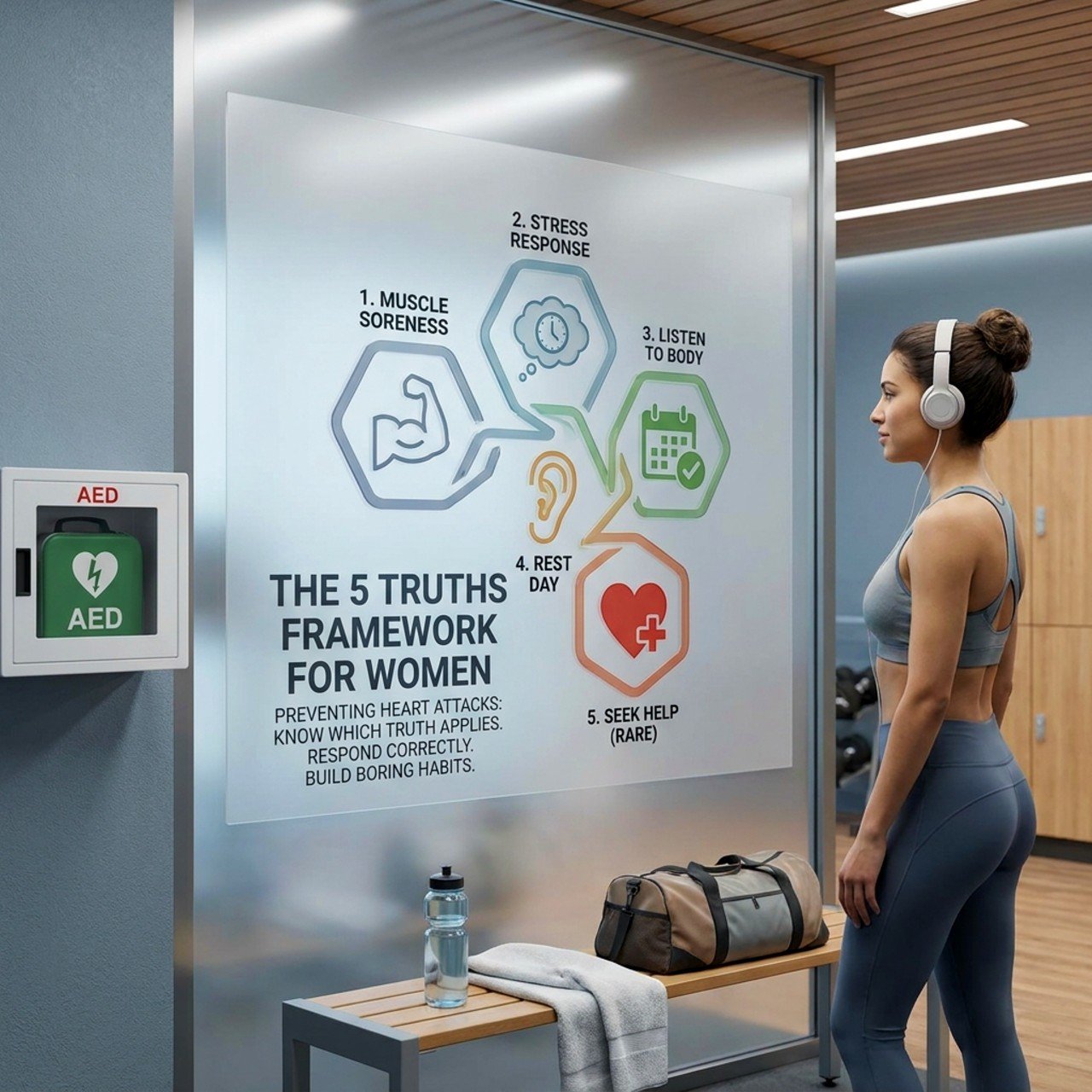
Preventing heart attacks at the gym comes down to five things most women are never taught: most chest pain during exercise is muscular or anxiety-driven, not cardiac; a heart attack and sudden cardiac arrest are different medical emergencies that need different responses; your statistical risk during exercise is real but small, and lower for women than for men; most gyms are far less AED-ready than members assume; and skipping the warm-up, water, and rest days does more to raise your risk than the workout itself. Each truth below comes with the evidence and a plain checklist for what to actually do about it.
You’re mid-set, your heart is pounding, and a sharp twinge cuts across your chest. In that half-second, every woman who has ever felt it asks the same question: is this just a hard workout, or is this the moment everything changes?
That fear is not irrational, and it is not something to push through and ignore. But it is also, in the overwhelming majority of cases, not a heart attack — and not knowing the difference is its own kind of risk, because it either sends you to the ER in a panic over a pulled muscle or, worse, talks you out of calling for help on the one occasion it actually matters.
This isn’t another generic “cardio is good for your heart” article. We pulled the actual search data on what women are searching for when they type “chest pain during workout” and “signs of overexertion” into Google at 2 am, cross-checked it against the clinical literature on exercise-related cardiac events, and built this around what that data says people actually need to know — not what sounds reassuring, and backed by cardiology research, a cardiac-arrest outcomes study, and the American Heart Association’s own guidance.
Medical & Referral Disclaimer
This article is for informational purposes only and is not a substitute for professional medical advice, diagnosis, or treatment. Always consult a physician or qualified health provider with questions about a medical condition, especially before starting a new exercise programme or if you have an underlying heart condition. Do not disregard professional medical advice or delay seeking it because of something you read here. If you believe you or someone near you is having a medical emergency, call 911 (or your local emergency number) immediately.
Key Takeaways
- Most chest discomfort during a workout is musculoskeletal or anxiety-related, not cardiac — but the guidance is still the same when you’re not sure: stop and get it checked.
- A heart attack (blocked artery) and sudden cardiac arrest (electrical malfunction) are different emergencies with different symptoms and different immediate responses.
- Sports-related sudden cardiac arrest in women is rare — roughly 13 times less frequent than in men — but survival depends heavily on how fast a defibrillator reaches you.
- A healthy baseline is at least 150 minutes of moderate-to-vigorous exercise a week, movement every hour, and roughly 5,000–8,000 steps a day — the popular “10,000 steps” target is a 1960s marketing figure, not a clinical cutoff, and consistency beats hitting any exact number.
- Warm-up, hydration, electrolytes, and rest days aren’t optional extras — skipping them is a bigger real-world risk factor than the workout itself.
The 5 Truths About Heart Safety Every Gymgoer Should Know
Most articles on this topic either scare you with worst-case statistics or bury the actual safety information under generic “exercise is good for you” filler. Here are the five things that actually change how you should train — and how you should react when something feels wrong.
Truth #1: Most Chest Pain During A Workout Isn’t Your Heart
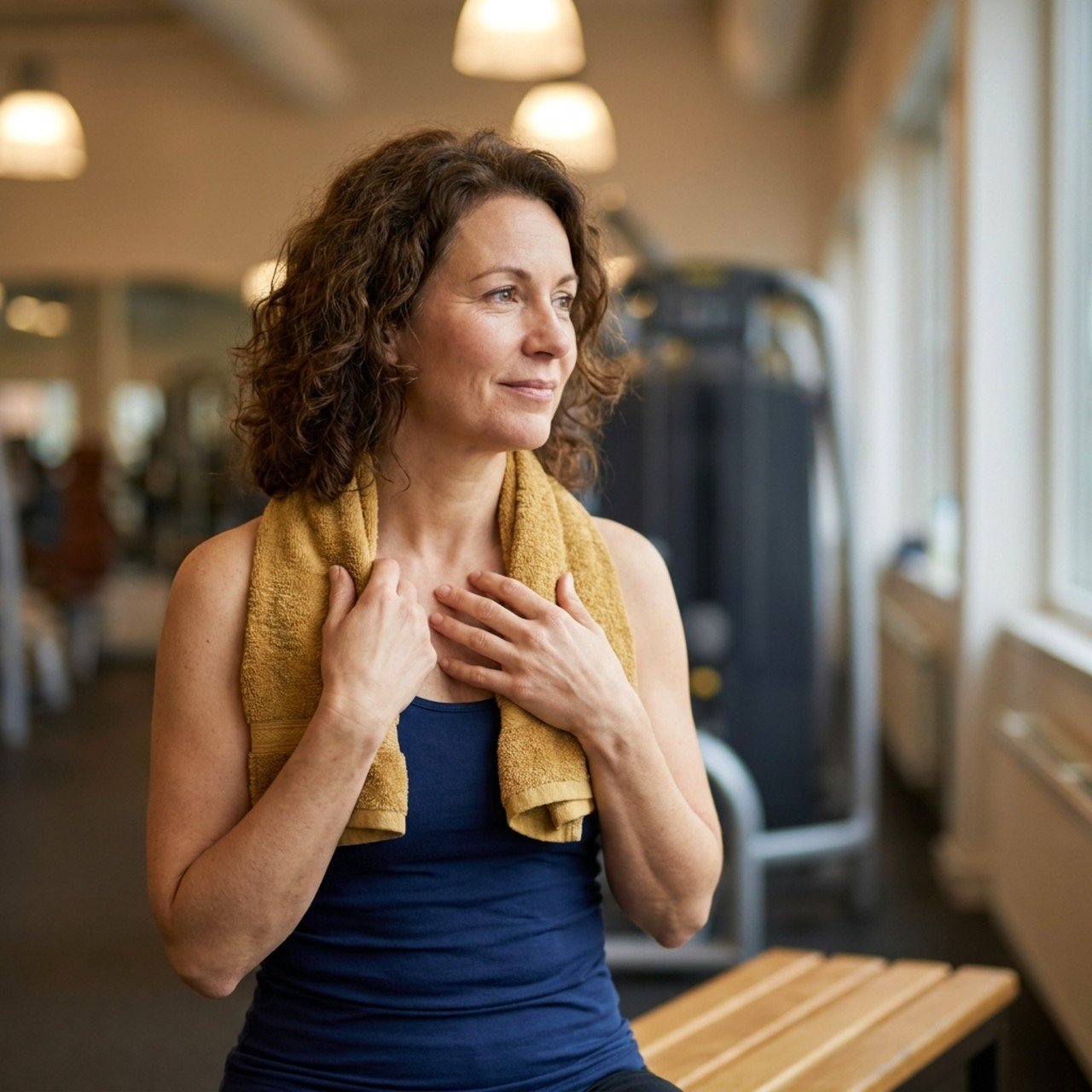
A sharp, localised pain that gets worse when you press on it, twist, or take a deep breath is almost always muscular or a rib-cartilage strain, not cardiac — but a pressure or squeezing sensation that doesn’t ease with rest deserves a call to 911, not a guess.
The two most common non-cardiac culprits are a strained chest or intercostal muscle from lifting, and a panic attack, which shares an uncomfortable number of symptoms with a heart attack: chest tightness, racing heart, shortness of breath.
The American Heart Association notes that heart attack discomfort typically “starts slowly, with mild pain or discomfort that gradually worsens over a few minutes,” while a panic attack tends to spike to its worst within about ten minutes and is defined by an overwhelming wave of fear. Both can happen at the gym.
Both can feel identical in the moment. The AHA’s own guidance, and ours, is the same either way: “if in doubt, one would want to err on the side of caution and be quickly evaluated” rather than talk yourself out of it.

Truth #2: A Heart Attack And A Cardiac Arrest Are Not The Same Emergency
A heart attack is a circulation problem — a blocked artery starving part of the heart muscle of blood, and the heart usually keeps beating throughout it. Sudden cardiac arrest is an electrical problem — the heart’s rhythm short-circuits, it stops pumping effectively, and the person collapses and loses consciousness within seconds.
That distinction matters because the response is different. Someone having a heart attack is conscious, can describe symptoms, and needs you to call 911 immediately.
Someone in cardiac arrest is unresponsive and needs CPR and a defibrillator in the next few minutes — not a description of symptoms, because there won’t be one. Confusing the two costs precious seconds in exactly the scenario where seconds are what determine the outcome.
Truth #3: Your Risk Is Real But Small — And Statistically Smaller If You’re A Woman
A large European study spanning 11 years found the average annual incidence of sports-related sudden cardiac arrest in women was 0.19 per million, compared with 2.63 per million in men — roughly a 13-fold difference.
Exercise has long been treated as a double-edged sword for the heart, but that framing overstates the danger: this is not a licence to ignore warning signs, but it is a real, evidence-based reason to worry less than the internet often encourages you to.
What the same research found didn’t differ by sex: survival. Once cardiac arrest happens, women and men had statistically similar survival-to-hospital-discharge rates (around 59%), meaning the outcome hinges far more on how fast help arrives than on anything about the person it happens to.
Truth #4: Most Gyms Aren’t As AED-Ready As You’d Assume
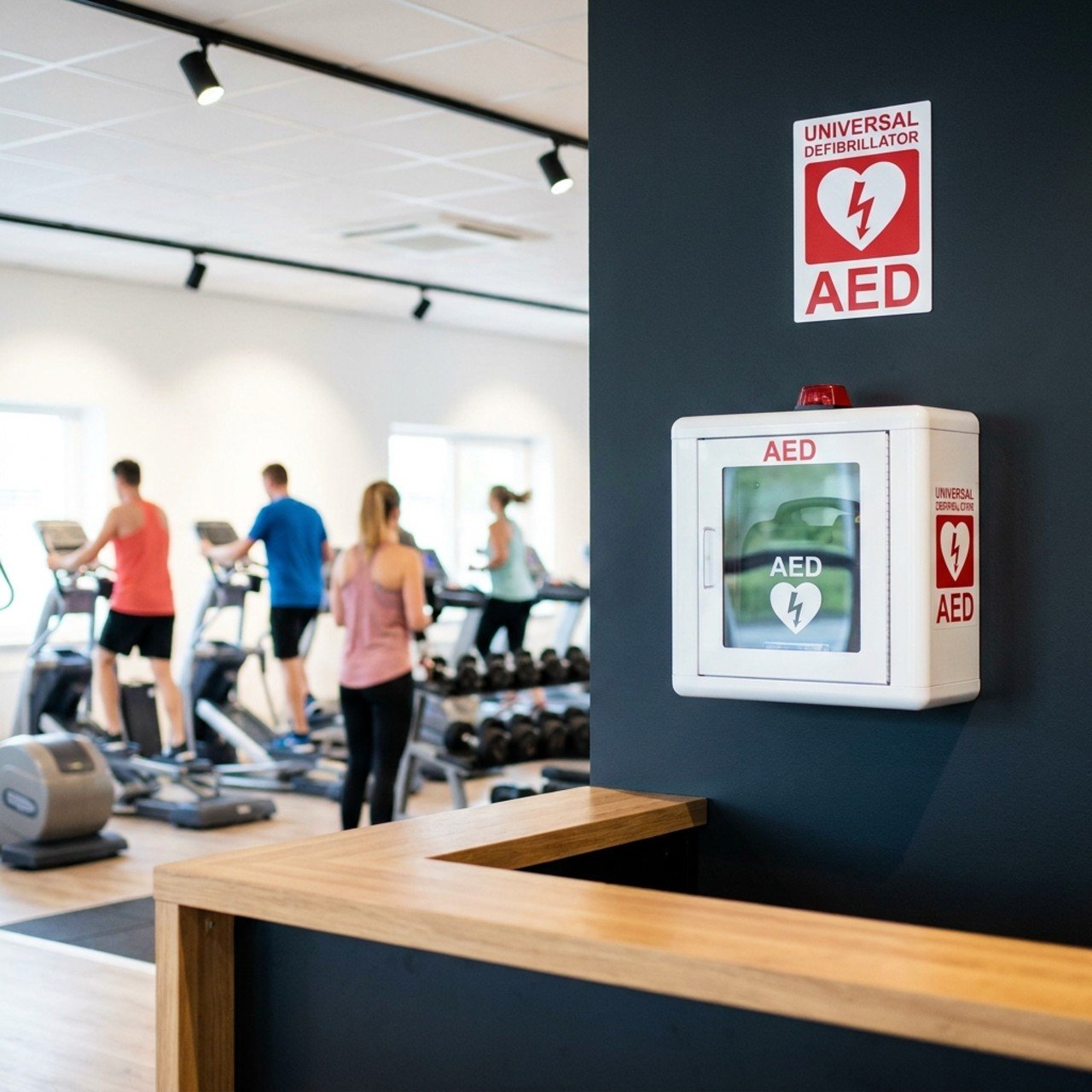
An 18-year study of cardiac arrests at sports facilities, published in the journal Heart, found neurologically intact survival was 93% when an on-site automated external defibrillator (AED) was used, versus just 9% when it wasn’t — and on-site AED use cut the time to defibrillation from roughly 7.3 minutes down to 3.3 minutes. That gap, not fitness level or age, was the single strongest predictor of who walked out of the hospital.
Most members never check. Before you need to know, find out: does your gym have a visible, clearly signed AED? Is staff trained to use it? If you don’t know the answer right now, that’s worth five minutes on your next visit — a defibrillator that’s locked in an office nobody can find in an emergency isn’t meaningfully different from not having one.
Truth #5: What Actually Raises Your Risk Is Skipping The Warm-Up, Water, And Rest
Jumping straight into high intensity from cold, training dehydrated, and stacking hard sessions without recovery do far more to raise your real-world risk of an exercise-related cardiac event than the exercise itself.
A proper warm-up gradually raises heart rate and blood flow to the heart muscle instead of shocking it; the CDC identifies thirst, dizziness, weakness, and dark, tea-coloured urine as concrete dehydration and overexertion warning signs worth stopping for, not pushing through.
The subtler risk is overtraining syndrome — not the same as ordinary muscle soreness. According to a joint sports medicine consensus definition, its early warning signs include an elevated resting heart rate (10–30 beats per minute above your normal), persistent fatigue despite adequate sleep, mood disturbances, and recurring minor illnesses — distinct from ordinary training fatigue (“overreaching”), which resolves within days to a couple of weeks rather than the weeks-to-months recovery full overtraining syndrome demands.
What Actually Protects Your Heart During Exercise
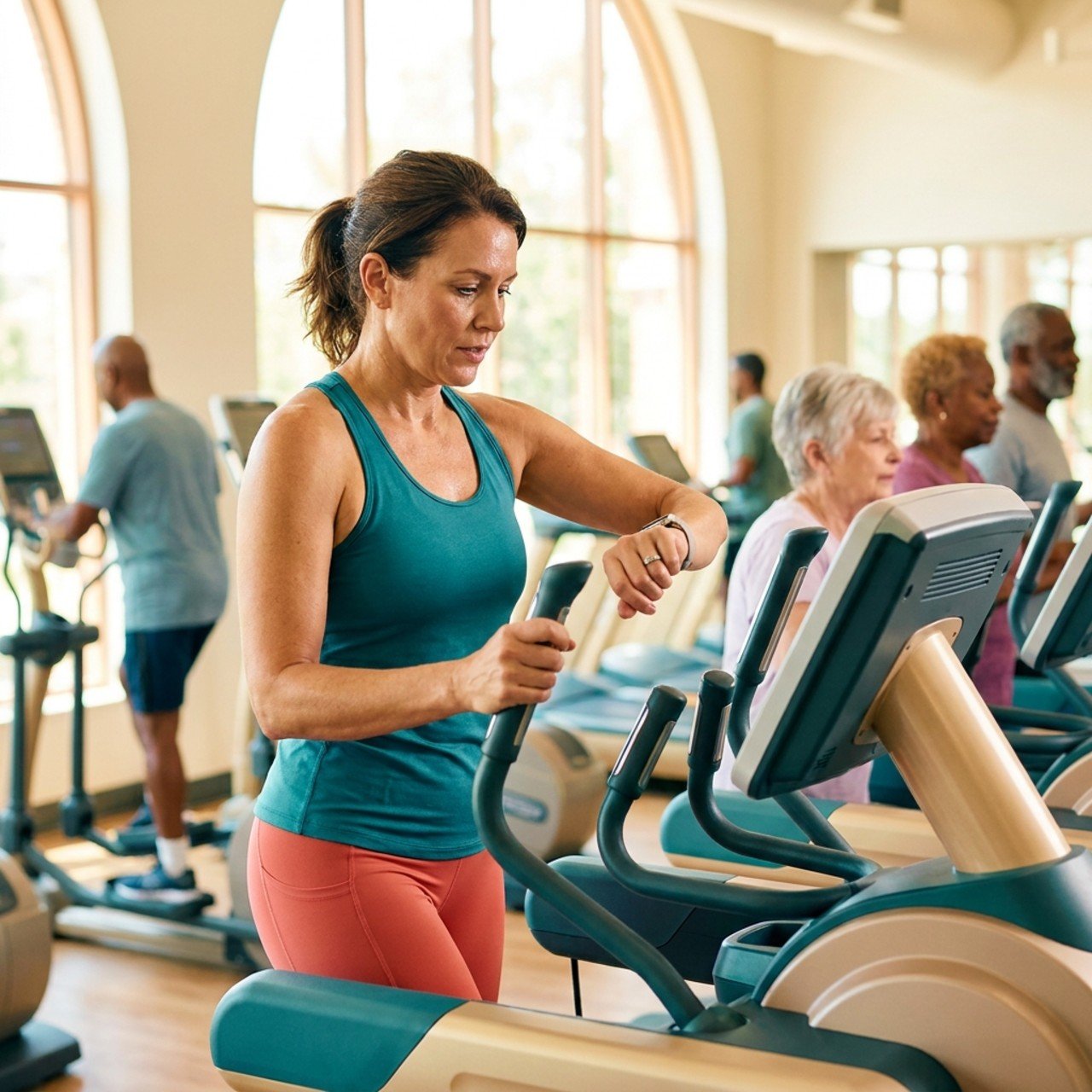
None of the above means exercise is dangerous — the opposite is true, and it’s worth being precise about why, because the mechanism is what makes the “how much and what kind” question answerable.
Regular movement lowers blood pressure, improves how efficiently your muscles pull oxygen from the blood, reduces inflammation, and raises HDL (“good”) cholesterol, which helps clear LDL (“bad”) cholesterol out of your arteries before it can build into plaque. It also reduces the risk of developing type 2 diabetes, a major independent driver of heart disease risk — part of why exercise plays such a critical role in weight management and long-term metabolic health more broadly.
| Risk Factor | How Regular Exercise Helps |
|---|---|
| High blood pressure | Helps lower blood pressure and keep it within a healthy range over time. |
| High cholesterol | Raises HDL cholesterol, which helps clear LDL cholesterol from artery walls. |
| Sedentary lifestyle | Offsets the cardiovascular cost of prolonged sitting, even on days you also exercise. |
| Insulin resistance | Improves insulin sensitivity, lowering the risk of developing type 2 diabetes. |
| Chronic stress | Reduces circulating stress hormones that otherwise strain the cardiovascular system. |
The American Heart Association and the American College of Sports Medicine both recommend combining aerobic and resistance work rather than picking one:
- Aerobic exercise (brisk walking, cycling, swimming) strengthens the heart muscle itself and directly improves cardiovascular fitness.
- Resistance training builds the muscle mass that improves your resting metabolic rate and helps regulate blood sugar, both of which indirectly protect your heart.
- Doing both, rather than either alone, is what the research consistently links to the largest reduction in cardiac event risk.

Finding Your Target Heart Rate Zone
Your target heart rate zone during moderate exercise is roughly 50–70% of your estimated maximum heart rate, and 70–85% during vigorous exercise — with maximum heart rate estimated as 220 minus your age, per the American Heart Association.
| Age | Target Zone (50–85% Of Max) | Average Max Heart Rate |
|---|---|---|
| 20 | 100–170 bpm | 200 bpm |
| 30 | 95–162 bpm | 190 bpm |
| 40 | 90–153 bpm | 180 bpm |
| 50 | 85–145 bpm | 170 bpm |
| 60 | 80–136 bpm | 160 bpm |
| 70 | 75–128 bpm | 150 bpm |
These are population averages, not a personal ceiling — if you’re on heart medication or managing a cardiac condition, ask your doctor for your actual safe range rather than relying on the chart.
Your Pre-Workout Safety Checklist
Reduce your real-world risk before you ever pick up a weight or hit the treadmill with these five habits — each one closes a gap the “five truths” above point to directly.
- Warm up for 5–10 minutes: Gradually raise your heart rate with light cardio before any high-intensity or heavy-lifting work.
- Hydrate before, not just during: Thirst, dizziness, and dark urine are your body’s early dehydration signals — don’t wait for them mid-set.
- Know your personal risk factors: Family history of early heart disease, high blood pressure, or diabetes are reasons to get medical clearance before starting a new intense programme, not reasons to avoid exercise altogether.
- Respect rest days: Recovery is where overtraining syndrome is prevented, not where progress stalls.
- Locate the AED on your first visit: Not because you’ll likely need it, but because you won’t have time to look for it if you or someone near you does.
What To Do If You Or Someone Near You Shows Warning Signs
The right response depends on which of the four scenarios below you’re looking at — and getting it right matters more than getting it fast, because the wrong response (waiting out a real heart attack, or panicking over a pulled muscle) is worse than either symptom on its own.
| What You’re Feeling Or Seeing | Most Likely Cause | What To Do |
|---|---|---|
| Sharp, localised pain that worsens when you press on it or twist | Muscle or rib-cartilage strain | Rest and gentle stretching; see a doctor if it lasts more than a few days |
| Sudden intense fear, tingling hands, symptoms peak within ~10 minutes then ease | Panic attack | Slow your breathing and step away from the activity; if there’s any doubt, treat it as an emergency |
| Pressure, squeezing, or fullness in the chest lasting several minutes, possibly with shortness of breath, nausea, or jaw/back/arm pain | Possible heart attack | Stop immediately and call 911 — don’t self-medicate first, don’t wait it out |
| Sudden collapse, no pulse, not breathing normally | Possible sudden cardiac arrest | Call 911, begin CPR immediately, send someone for the nearest AED |
One correction worth making explicitly: the American Heart Association is specific that you should call 911 before doing anything else, including taking aspirin — “don’t take an aspirin and wait for it to relieve your pain, don’t postpone calling 911.”
The 911 operator, not you, decides whether aspirin is appropriate, because it isn’t safe for everyone (it can worsen certain types of stroke and isn’t recommended if you have a bleeding risk).
Join Our Mailing List
Join thousands of women inside our community and receive our free guide, 10 Actions That Support Permanent Weight Loss — the exact behavioural shifts that make the difference between a two-week attempt and a lasting transformation.
No restriction plans. No guilt. Just what actually works — for real women with real lives.
If you’re the one responding rather than the one affected, the order of operations is simple — do these in sequence, not all at once:
- Call 911 immediately: Before anything else, even before finding the AED — most dispatchers can guide you through the next steps while help is en route.
- Check responsiveness and breathing: If the person is unresponsive and not breathing normally, begin CPR right away rather than waiting for confirmation.
- Send someone else for the AED: Don’t leave the person to go get it yourself if anyone else is nearby — delegate it.
- Stay until professional help arrives: Keep the person calm and still if they’re conscious, or continue CPR in cycles if they’re not, until paramedics take over.
If today’s workout left you with more questions than confidence about what’s safe for your body specifically, that’s exactly what the next step below is for.
Want the full, sustainable framework instead of piecing it together workout by workout? Join the women inside our community and grab our free guide, 10 Actions That Support Permanent Weight Loss — the practical habits (heart-safety included) that turn everything above into a routine you can actually stick to.
Get your free copy here. No fad diets, no extreme plans — just what the research actually supports, written for real women.
The Bottom Line
Preventing heart attacks at the gym isn’t about training scared, and it isn’t about training oblivious — it’s about knowing which of the five truths above applies to what you’re feeling, right now, so you can respond correctly instead of guessing.
Most days, that means recognising ordinary muscle soreness or a stress response for what it is and getting back to your set. On the rare day it doesn’t, it means not talking yourself out of calling for help.
Build the boring habits — the warm-up, the water bottle, the rest day, the five minutes it takes to find your gym’s AED — and let them do the quiet work of lowering your real risk, so the loud fear doesn’t have to run the show.
Consistency, not intensity, is what the evidence rewards: at least 150 minutes of moderate-to-vigorous exercise a week, a few minutes of movement every hour, and roughly 5,000–8,000 steps a day is the combination most strongly linked to long-term heart protection — more steps still helps, but there’s no cliff at 10,000, and it’s a far more sustainable target than any “no days off” extreme.
If you’re also working toward a specific number on the scale, it’s worth understanding how weight loss and fat loss actually differ so your training and your safety habits are working toward the same goal.
Glossary Of Key Terms
- Aerobic Exercise: Physical activity, such as swimming or cycling, that increases heart rate and breathing to improve cardiovascular fitness and heart strength.
- Automated External Defibrillator (AED): A medical device used to help those experiencing sudden cardiac arrest by delivering an electrical shock to restart the heart's rhythm.
- HDL (High-Density Lipoprotein) Cholesterol: Known as "good" cholesterol, it functions by removing "bad" cholesterol from the arteries to reduce plaque buildup.
- Insulin Sensitivity: The efficiency with which body cells respond to insulin; improving this through exercise lowers the risk of Type 2 diabetes.
- LDL (Low-Density Lipoprotein) Cholesterol: Known as "bad" cholesterol, high levels of this substance contribute to arterial plaque and increased heart disease risk.
- Overtraining Syndrome: A condition resulting from excessive training without adequate recovery, marked by elevated resting heart rate, chronic fatigue, and mood changes.
- Panic Attack: A sudden episode of intense fear that can manifest physical symptoms similar to a heart attack, such as chest tightness and shortness of breath.
- Resistance Training: Exercises, such as weightlifting, designed to contract muscles against external resistance to increase strength, mass, and metabolic health.
- Sudden Cardiac Arrest: An electrical emergency where the heart stops pumping effectively, leading to immediate collapse and loss of consciousness.
- Target Heart Rate Zone: A specific range of heartbeats per minute (typically 50–85% of maximum) achieved during exercise to ensure the workout is effective yet safe.
FAQ
Is Chest Pain During Exercise Always A Heart Attack?
No, most chest pain during exercise is muscular, related to rib cartilage, or a panic response, not cardiac. Sharp, localised pain that worsens when you press on it usually points to a muscle strain; pressure or squeezing that persists for several minutes and doesn’t ease is what warrants an immediate 911 call.
What Is The Difference Between A Heart Attack And A Cardiac Arrest?
A heart attack is a circulation problem caused by a blocked artery, and the heart usually keeps beating. Sudden cardiac arrest is an electrical malfunction that stops the heart from pumping, causing sudden collapse and loss of consciousness within seconds.
How Common Is A Heart Attack Or Cardiac Arrest During Exercise For Women?
Rare. European research found that sports-related sudden cardiac arrest occurs in women at roughly 0.19 per million annually, versus 2.63 per million in men — about a 13-fold lower rate for women, though survival odds are similar once it happens.
Does My Gym Actually Have A Defibrillator?
Check on your next visit rather than assume — a study of cardiac arrests at sports facilities found survival was 93% when an on-site AED was used versus 9% when it wasn’t, and an AED that staff can’t locate quickly loses most of that benefit.
What Is My Target Heart Rate Zone For Exercise?
Roughly 50–70% of your estimated maximum heart rate for moderate exercise, and 70–85% for vigorous exercise, with maximum heart rate estimated as 220 minus your age — for example, 90–153 bpm for a 40-year-old.
Should I Take Aspirin If I Think I’m Having A Heart Attack?
Call 911 first, before taking anything. The American Heart Association is explicit that you shouldn’t delay calling to take aspirin — the 911 operator will tell you if and when it’s appropriate, since it isn’t safe for everyone.
What Are The Early Warning Signs Of Overtraining Syndrome?
A resting heart rate elevated 10–30 beats per minute above your normal, persistent fatigue despite adequate sleep, mood changes, and recurring minor illnesses — distinct from the short recovery dip of a single hard training block.