
How To Lose Weight While Travelling — Your Real-World Plan With Two Anchors, Not Twenty Rules
James Clear
Author of Atomic Habits
Whenever this happens to me, I try to remind myself of a simple rule: never miss twice. If I miss one day, I try to get back into it as quickly as possible.
Summary (TL;DR)
Losing weight while travelling doesn’t require tracking every bite or skipping the trip you paid for. Most of the number you see on the scale when you get home is water, sodium, and food still moving through your system — not fat — and it settles within three to seven days once you are back on your normal schedule.
The real leverage is two protected habits: one protein-forward meal and one daily movement block, kept steady from the airport to the last day of the trip, while everything else — dessert, a late dinner, a missed workout — is genuinely allowed to flex.
If you have ever stepped on the scale a day or two after a trip and watched it jump five, ten, even fifteen pounds, you know the particular kind of panic that follows.
It is common enough that it has its own well-worn shape: the guilt, the confusion about which of a dozen conflicting travel-diet tips to trust, the ‘I ruined everything’ spiral, and the instinct to either punish yourself with an extreme cleanse or give up on the goal entirely until ‘Monday.’ Neither reaction is warranted, and neither one is based on what actually happened to your body.
Here is what usually did happen: a longer-than-usual flight, less sleep, more sodium than normal, a change in your typical bowel schedule, and a few days of eating more carbohydrate than your baseline.
Every one of those things adds real, visible weight to a scale within 24 to 48 hours — none of it is fat, and all of it reverses once you are back on your normal routine. Understanding that difference is most of the battle when it comes to losing weight while travelling.
The other half of the battle is not overhauling your life for a week. The sheer amount of travel-diet advice out there can feel intimidating on its own — a wall of rules before you have even packed. You don’t need a spreadsheet, a cooler bag, or eight rules you’ll abandon by the second day.
You need two things you can actually protect, no matter what the itinerary throws at you — which is exactly what the method below is built around.
Medical & Referral Disclaimer
This article is for informational and educational purposes only and is not a substitute for professional medical advice, diagnosis, or treatment. Always talk to your physician or a qualified health provider before starting a new diet, fasting routine, or exercise programme — especially if you are managing a health condition or are in perimenopause or menopause.
Key Takeaways
- Most post-trip scale jumps are water, sodium, and food volume —not fat— and they typically resolve within three to seven days back on routine.
- Protecting two habits (one meal, one movement block) works better on a real trip than a long checklist you will abandon by day three.
- Resistance bands and bodyweight moves can deliver strength gains comparable to gym equipment, with zero equipment required.
- Smart default choices at airports, hotels, and restaurants beat white-knuckled willpower every time.
- Alcohol, not food, usually does the most damage to a trip’s momentum — the CDC defines moderate drinking as one drink or less a day for women.
- Getting back on track quickly after a lapse matters far more than never lapsing at all.

Why The Scale Lies After A Trip
The number on the scale after a trip is rarely fat — it is water, stored carbohydrate, sodium, and food still moving through your gut, and it is temporary.
Your body stores carbohydrate as glycogen, and every gram of glycogen stored binds roughly three to four grams of water. Eat more bread, pasta, or dessert than your usual baseline for a few days — easy to do on a trip — and that alone can add several pounds of pure water weight almost overnight, before any fat is involved.
Air travel adds its own layer. Aircraft cabins are kept at just 10 to 20 percent relative humidity at cruising altitude — drier than most deserts — and when cabin humidity drops from a comfortable 60 percent to that typical 12 percent, resting water loss through breathing alone can more than double, from about 160 to 360 millilitres an hour.
Fly for six or eight hours, and you can genuinely dehydrate, then retain extra fluid over the next day or two as your body corrects for it.
Add a change in your usual bathroom schedule, and you have the third piece. Travel disrupts digestion through dehydration, unfamiliar food, long stretches of sitting, and a scrambled routine, all of which slow the gut down. A day or two of extra food still ‘in transit’ through your system shows up on the scale too — and it’s not fat either.
What A Post-Trip Scale Jump Is Actually Made Of
| Likely Cause | Typical Scale Impact | How Long It Lasts |
|---|---|---|
| Extra glycogen + bound water from more carbs than usual | 2–5 lb | 2–4 days back on routine |
| Flight dehydration, then rebound fluid retention | 1–3 lb | 1–3 days |
| Sodium from restaurant and airport food | 1–2 lb | 1–2 days |
| Slower digestion / food still in transit | 1–3 lb | 1–3 days |
These ranges are estimates that synthesise the mechanisms above — glycogen-bound water, flight dehydration, sodium, and slower digestion — not a precise breakdown of any one traveller’s number. Your own mix will vary with trip length, sodium intake, and how much your routine changes.
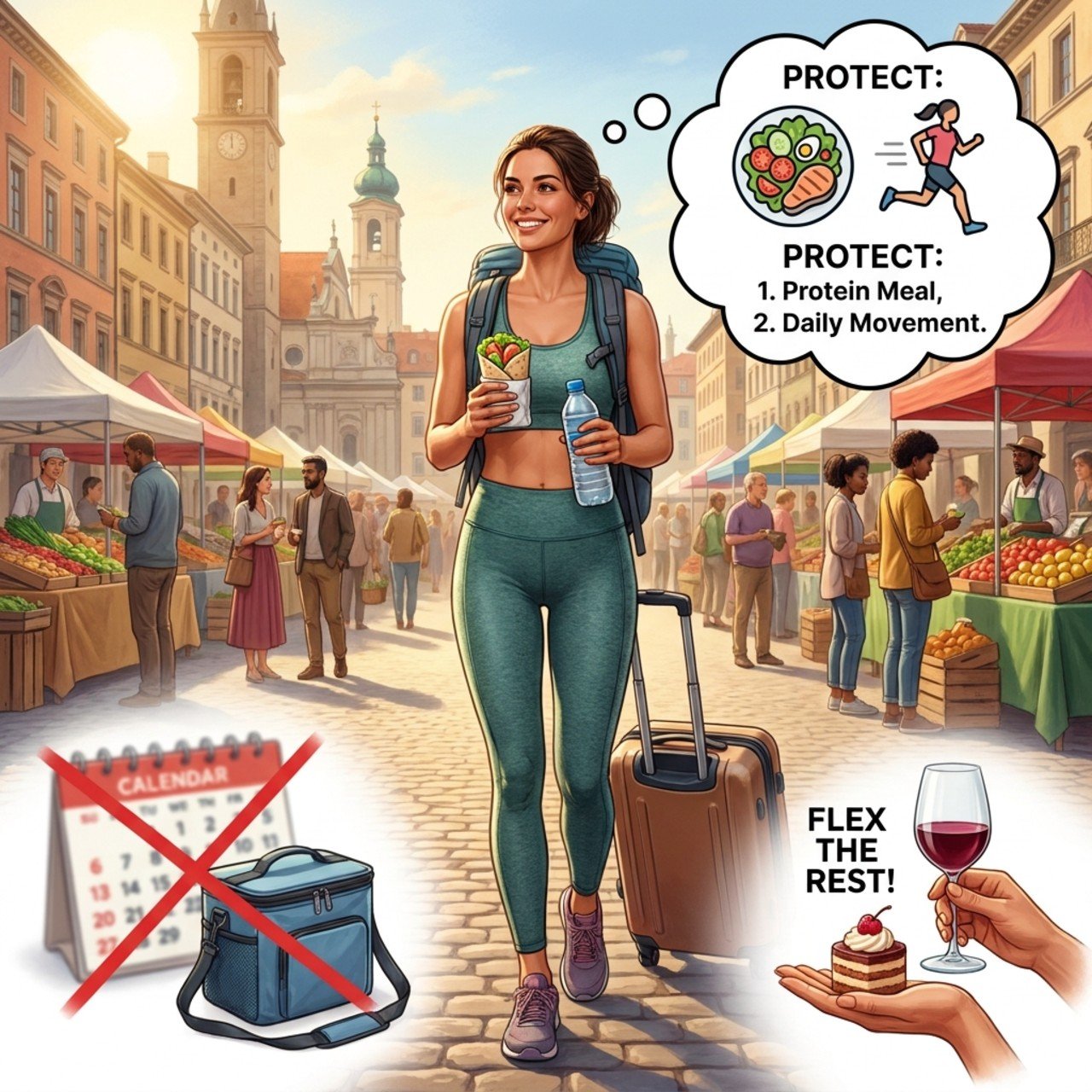
The T.W.O. Method: Travel Without Overhauling
The T.W.O. Method protects exactly two habits on a trip — one meal and one movement block — and lets everything else flex, instead of asking you to follow a long list you will not keep.
Every travel weight-loss checklist eventually runs into the same problem: it works perfectly on paper and falls apart by day two of a real trip, once jet lag, a packed itinerary, and an unfamiliar menu show up.
T.W.O. flips that around. Pick two habits you will actually protect every single day of the trip, no matter what the itinerary looks like, and let everything else — dessert, a later dinner than usual, one missed workout — be genuinely fine.
You do not need a strict calorie deficit on vacation to protect months of progress; protecting two habits does more than a deficit you would abandon by day three anyway.
Anchor One: Protect One Protein-Forward Meal
Anchor One means choosing a single meal — usually breakfast — that you build around protein every day of the trip, regardless of what the other meals look like.
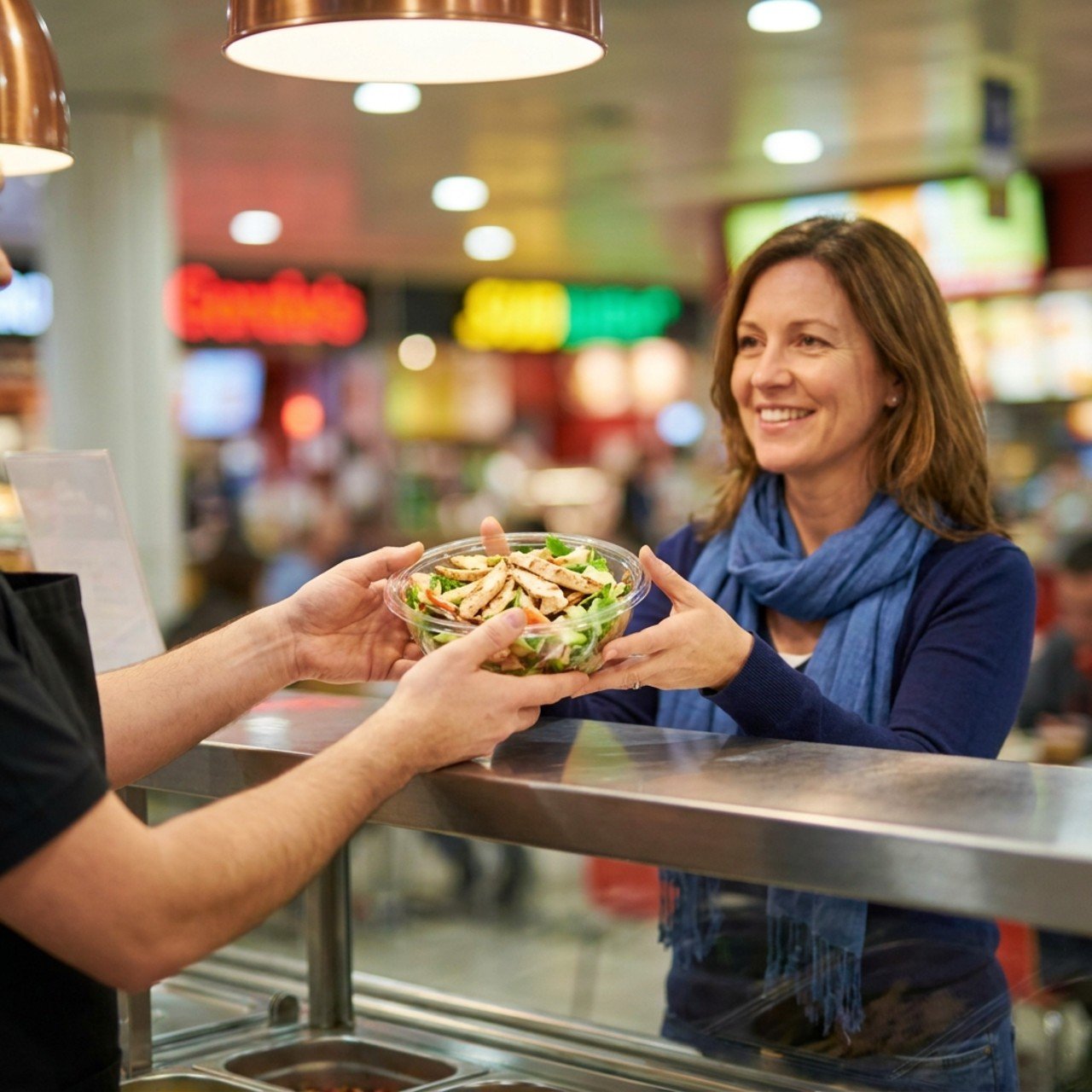
This works because it is the easiest meal to control (hotel breakfasts, airport cafes, and room service all offer eggs, yoghurt, or a protein option) and because starting the day with a solid, protein-forward meal tends to carry your appetite through to lunch, which does more to protect the rest of the day’s choices than any amount of willpower at dinner.
If dinner is a splurge because you’re travelling for the food, or an unavoidable client meal on a business trip, Anchor One still holds — you protected the one meal you control completely, and let the rest of the day flex around it.
Anchor Two: Protect One Movement Block
Anchor Two means committing to one daily movement block — typically 20 to 30 minutes — that doesn’t depend on a gym being available.
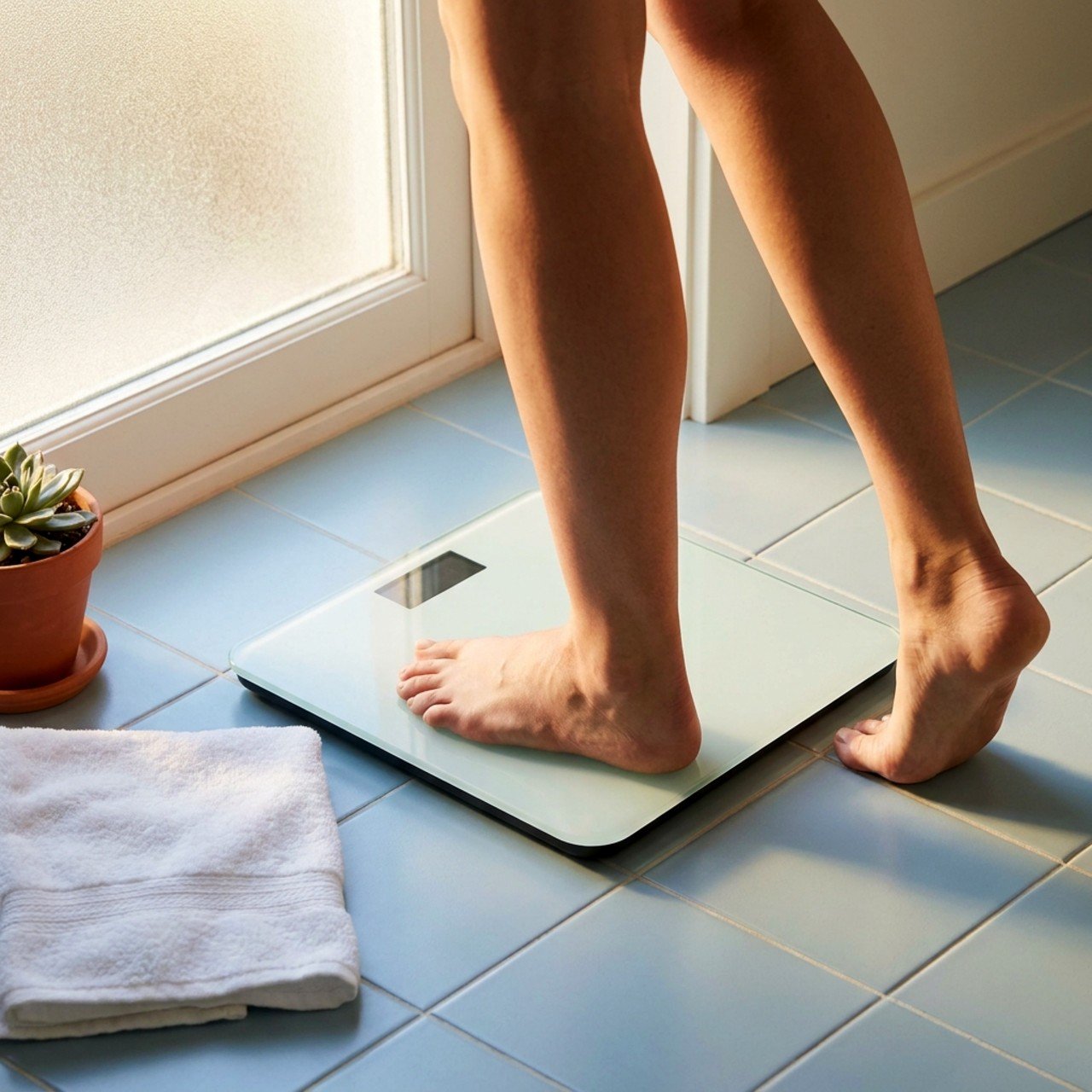
Staying active on vacation, or on a business trip, doesn’t need a hotel with a fitness centre — the same no-equipment approach that works at home works on the road, and it is the core of a real vacation fitness routine.
Resistance band training has been shown to deliver strength gains comparable to conventional gym equipment; a full set fits in a carry-on, and it clears airport security without a second look — which makes a resistance band one of the most practical travel workout tools you can pack.
Pair that with bodyweight travel exercises and a brisk walk, and the movement block travels with you everywhere — no dedicated space for hotel workouts required:
- Bodyweight squats, lunges, and glute bridges — no equipment, any hotel room.
- Push-ups against a wall, a hotel desk, or the floor.
- A resistance band set for rows, presses, and band walks.
- 10–15 minutes of stairs in a hotel stairwell.
- A brisk 20–30 minute walk through an airport concourse, hotel hallway, or the local area — daily walking travel that doubles as sightseeing.
Pick whichever combination fits the day. The rule isn’t ‘do all of these’ — it’s ‘don’t skip the block entirely,’ even if it shrinks to ten minutes on a brutal travel day. If you need the case for why the resistance piece specifically is worth protecting, not just cardio, see why you should lift weights.
Smart Food Choices On The Road
Smart travel food choices come down to a handful of repeatable defaults — a protein-forward breakfast, one plan for portion size, and a short list of backup snacks — not constant willpower or mindful-eating perfectionism on vacation.
- Packing healthy travel snacks the night before (nuts, jerky, a protein bar) so airport hunger never becomes the decision-maker for what you eat next
- For dining out, weight loss goes smoother when you decide what you’re ordering before the table talks you out of it
- Box or share half of an oversized restaurant portion before you start eating, not after
- Choose grilled, baked, or roasted over fried whenever a menu offers the choice
- Ask for dressing, sauce, and sides on the side — you can always add more, but you can’t take it back once it’s mixed in


Smart Swaps For Common Travel Food Situations
| Situation | Instead Of | Try |
|---|---|---|
| Airport before a flight | Fast food combo meal | Fast food healthy options like a grilled-protein wrap, a salad with added protein, or a packed protein bar |
| Hotel breakfast buffet | Pastries and sugary juice | Eggs, yoghurt, fruit, and black coffee or tea — a genuinely healthy hotel breakfast |
| A long dinner out | Bread basket, full entrée, and dessert | One shared starter, a protein-forward main, and a split dessert if you want one |
| Road-trip snacking | Convenience-store chips and candy | Nuts, jerky, fruit, and string cheese packed the night before |
None of these swaps requires calorie counting mid-trip, and most double as low-calorie travel meals without ever using the phrase ‘diet’ on your trip. They’re defaults you set once, before you leave, so you’re not negotiating with yourself at 30,000 feet or 9 pm at a client dinner.
Hydration And Alcohol On The Road
Staying hydrated and keeping alcohol in check matter more to a trip’s weight-loss outcome than almost anything on your plate.
The simplest flight hydration tips are the ones you set up before you board: on a flight, aim to take in roughly 100 to 300 millilitres of fluid an hour from food and drink combined — a smaller number than the total water loss above because it only has to offset part of it, not match it millilitre for millilitre.
A refillable bottle through security solves most of this. Skip or limit caffeine and alcohol in the air specifically, since both worsen the dehydration a dry cabin is already causing.
Alcohol is also where most ‘vacation damage’ actually happens, more than food. The CDC defines moderate drinking as one drink or less a day for women, where one standard drink is 12 ounces of regular beer, 5 ounces of wine, or 1.5 ounces of spirits — each containing about the same 14 grams of pure alcohol.
You don’t need to skip the wine with dinner. Deciding your limit before the trip, rather than at the table, is what keeps one holiday toast from turning into four.
Fitness On Business Trips vs. Vacations
The T.W.O. Method applies to both business trips and vacations — the difference is which anchor takes more effort to protect.
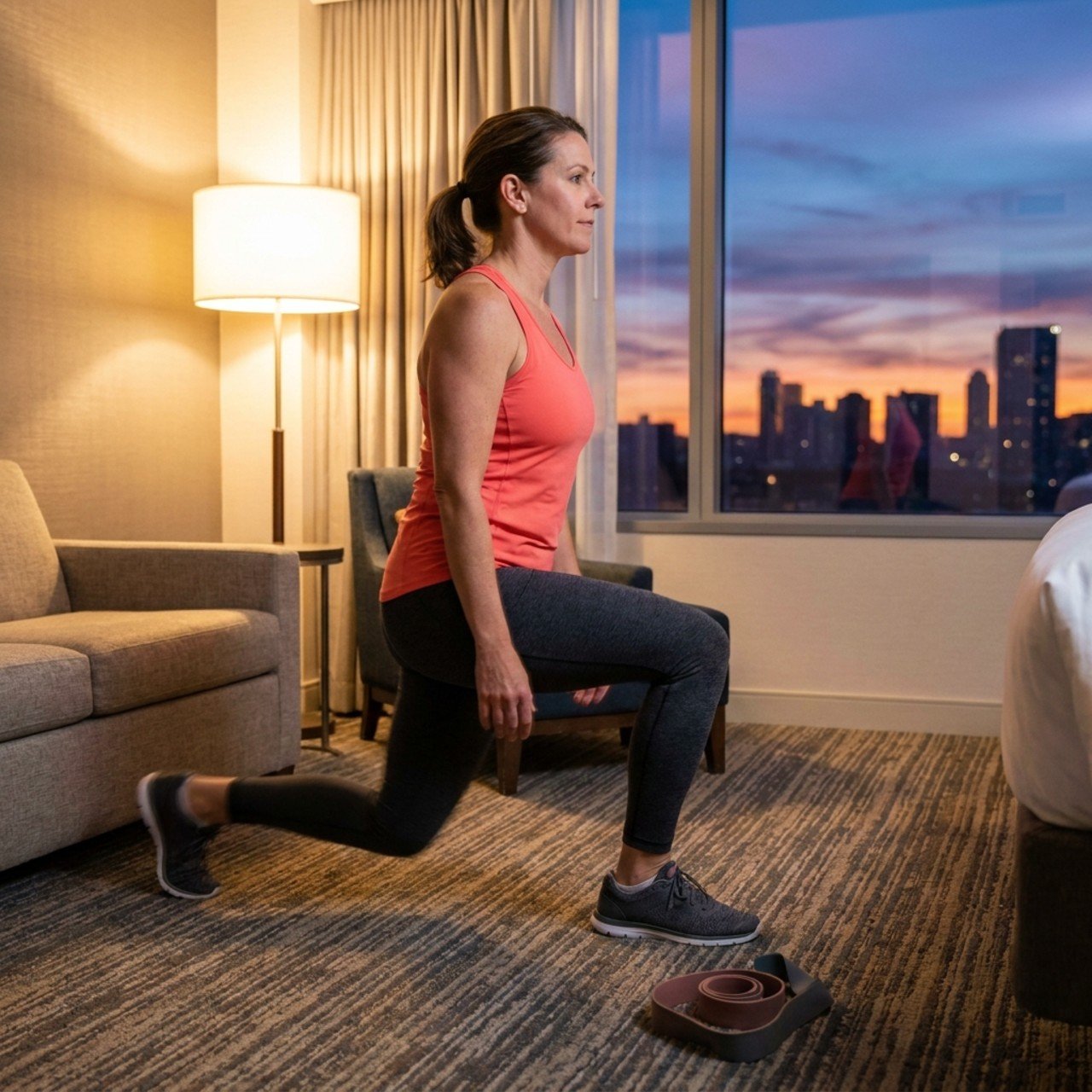
On a business trip, Anchor Two (movement) is usually the harder one: back-to-back meetings, client dinners, and a hotel gym you never see the inside of. This is exactly the ‘I don’t have time to exercise’ scenario, and the fix is the same: lean on the 10-minute floor — bodyweight squats and push-ups before your first call, or a brisk walk between meetings instead of a rideshare for anything under 15 minutes.
On a vacation, Anchor One (the protein-forward meal) is usually harder, because you’re there for the food. That’s fine — protect the movement block instead, and let the meals flex more.
One question that comes up often for both business travellers and vacationers crossing time zones is intermittent fasting. Some travellers use a fasting window — typically 12 to 16 hours — the day before and during travel as a jet-lag strategy, on the theory that it can help reset the body’s clock.
Harvard Health notes this approach has a plausible circadian mechanism but hasn’t been tested in clinical trials, and recommends checking with your doctor before trying it — particularly if you’re managing blood sugar, pregnant, or in perimenopause or menopause, when fasting windows can affect sleep and hormones differently.
If you already fast comfortably, travel days are a reasonable time to lean on that habit. If you don’t, a trip isn’t the moment to start experimenting.
Travelling Through Perimenopause Or Menopause
If you’re travelling through perimenopause or menopause, the two anchors matter even more, because sleep disruption and travel stress hit your hormones harder than they used to.
Poor sleep and travel-related stress raise cortisol, which may be part of why weight can feel stickier and hunger less predictable during perimenopause — on top of everything a trip already disrupts. Anchor One (protein at the first meal) helps steady blood sugar and appetite through a day of disrupted sleep.
Join Our Mailing List
Join thousands of women inside our community and receive our free guide, 10 Actions That Support Permanent Weight Loss — the exact behavioural shifts that make the difference between a two-week attempt and a lasting transformation.
No restriction plans. No guilt. Just what actually works — for real women with real lives.
Anchor Two (the movement block) helps offset the muscle and bone considerations that matter more during this stage of life — our guide to strength training for women in perimenopause goes deeper on why resistance work specifically, not just cardio, is worth protecting.
- Prioritise sleep over one extra activity on the itinerary — a rested day protects both anchors better than a packed one.
- Keep a protein source and water within reach on travel days, since hunger and thirst cues can both be less reliable during hormonal shifts.
- Don’t judge the scale for at least a week after a trip during this stage of life — the water-weight swings described above tend to run larger, not smaller.
Getting Back On Track When You Are Home
Getting back on track after a trip matters more than the trip itself ever did — one skipped day becomes harmless the moment you don’t let it become two.
One pattern I have noticed again and again with women who travel often, for work or otherwise: the trip itself rarely derails a goal. What derails it is the week after, when one skipped workout turns into ‘I’ll just restart Monday,’ and Monday quietly turns into next month.
The scale bump described earlier is real, but it is also temporary and mostly gone within a week of resuming your normal Anchor One and Anchor Two — there is nothing to ‘fix’ with an extreme response, only something to simply resume.
If getting back on track means resetting your goals rather than just your routine, our guide to setting attainable weight loss goals is the natural next stop — and if you are earlier in the process altogether, starting your weight loss journey covers the fundamentals this article assumes.
Want the fuller system this article draws from — the exact habits that make sustainable weight loss survive a busy, real-life schedule, not just a holiday? Grab our free guide, 10 Actions That Support PERMANENT Weight Loss, and get the practical, sustainable habits that support everything in this article — written for real women with real itineraries, not empty calendars.
The Bottom Line
Losing weight while travelling doesn’t require a spreadsheet, a cooler bag, or the willpower to say no to every dessert on the itinerary.
It requires knowing that most of what the scale shows you the day after a trip is water and food volume, not fat, and protecting exactly two travel wellness habits — one protein-forward meal and one daily movement block — while everything else is allowed to flex.
That is the whole method for weight loss away from home. Do that consistently, on business trips and vacations both, and the trip stops being something you have to recover from.
Glossary Of Key Terms
- Anchor One (Protein-Forward Meal): A daily habit of building one specific meal (typically breakfast) around high-protein foods to regulate appetite and ensure nutritional consistency.
- Anchor Two (Movement Block): A committed daily period of 20 to 30 minutes of physical activity, such as walking, bodyweight exercises, or resistance band training.
- Glycogen: The form in which the body stores carbohydrates; it is significant in travel weight because it binds three to four times its weight in water.
- Moderate Drinking: Defined by the CDC as one standard drink or less per day for women, where a standard drink is 12 oz of beer, 5 oz of wine, or 1.5 oz of spirits.
- Perimenopause/Menopause: Biological stages in women characterized by hormonal shifts that can increase cortisol and make weight management more challenging during travel.
- Resistance Band Training: A portable strength-training method using elastic bands; it is cited as an effective alternative to gym machinery for travellers.
- Relative Humidity: The amount of moisture in the air; aircraft cabins have a very low level (10-20%), which contributes significantly to traveller dehydration.
- Smart Defaults: Pre-determined food or activity choices (like packing healthy snacks or choosing grilled proteins) that remove the need for active negotiation or willpower in the moment.
- Standard Drink: A measurement of alcohol containing approximately 14 grams of pure alcohol, used to track and limit consumption.
- T.W.O. Method: "Travel Without Overhauling"; a simplified weight management strategy focused on protecting two core habits while allowing the rest of the travel experience to remain flexible.
FAQ
Will I Gain Weight On Vacation?
You’ll very likely see the scale go up temporarily. Still, most of that is water, sodium, and food volume rather than fat, and it typically resolves within three to seven days of resuming your normal eating and movement patterns.
How Do You Lose Weight While Travelling For Work?
Protect one protein-forward meal and one short daily movement block — even 10 minutes of bodyweight exercise between meetings — and let client dinners and irregular schedules flex around those two anchors instead of trying to control everything.
What Should I Eat At The Airport To Avoid Derailing My Diet?
Pack a protein-forward snack before you fly so hunger never makes the decision for you, and when buying food, favour a grilled-protein option or a salad with added protein over a fast-food combo meal.
Is Intermittent Fasting Safe While Travelling?
It can be, especially if you already fast regularly, but the evidence for using it specifically as a jet-lag strategy is still unproven in clinical trials — check with your doctor first, particularly if you are pregnant, managing blood sugar, or in perimenopause or menopause.
How Many Alcoholic Drinks Are OK On Vacation?
The CDC defines moderate drinking as one standard drink or less a day for women, with a standard drink being about 12 oz of beer, 5 oz of wine, or 1.5 oz of spirits — deciding your limit before the trip makes it far easier to hold than deciding at the table.
Do I Need A Hotel Gym To Stay Fit While Travelling?
No. Resistance bands travel light and pack flat, and paired with bodyweight exercises like squats and push-ups and a brisk daily walk, they can deliver a genuine movement block without any gym access at all.
How Long Does Post-Vacation Weight Gain Usually Last?
Most of it is water and food volume rather than fat, and it typically resolves within three to seven days once you resume your normal eating pattern, hydration, and movement.