
Can Sex Be Counted As Exercise? A Calorie, Heart, And Hormone Breakdown For Real Women
MARY JAMES
Women's Lean Body Formula
The best workout is the one you actually want to do. And if the science says it counts, you had better believe I'm counting it.
Summary (TL;DR)
Yes — sex can be counted as exercise. Peer-reviewed data puts sexual activity at a moderate intensity of 5.6 METS for women, with an average burn of around 69 calories per session. It raises your heart rate, works your core, glutes, and pelvic floor, and floods your system with cortisol-lowering hormones. It is not a substitute for strength training, but it is a real, measurable contribution to your weekly activity — and most women are not giving themselves credit for it.
A few years into my fitness journey, I had a week where everything fell apart. Work ran long, the gym sessions I had planned did not happen, and by Friday, I was convinced I had completely undone my progress. Then I looked at my activity log — and realised I had been significantly more active than I thought.
Just not in any way I had been giving myself credit for. That started me down a rabbit hole of research into what actually counts as physical activity. And one of the more surprising, well-documented answers? Sex as exercise counts.
Sound familiar — that tendency to discount any movement that does not happen in a gym or follow a scheduled programme? A lot of women do this. We hold ourselves to a narrow definition of “real” exercise and then feel like we have failed on the days we cannot meet it.
This article unpacks what the research actually shows — the calories, the cardiovascular effect, the hormones — in plain language, with sources you can check yourself. Because you deserve fitness advice that accounts for your whole life, not just the 45-minute windows the gym industry wants to sell you.
Medical & Referral Disclaimer
This article is for general educational purposes and reflects current research plus lived experience. It is not medical advice. If you have a heart condition, are recovering from surgery or childbirth, are pregnant, or have any concern about exertion or pelvic-floor symptoms, speak with your doctor or a pelvic-health physiotherapist before changing your activity. You know your body best — use this as information, not a prescription.
Key Takeaways
- Is Legitimate Moderate Activity: For women, sexual activity registers at 5.6 METS — squarely in the moderate-intensity zone, alongside brisk walking and light cycling.
- The Real Calorie Number For Women: Women burn an average of 69 calories per encounter (about 3.1 calories per minute) — not the 3.6 figure you will see repeated everywhere, which is actually the men-and-women average.
- Hormonal Stress Management: Endorphins and oxytocin released during sex help lower cortisol — a critical and often overlooked factor in stress and abdominal-fat storage in women.
- Heart And Muscle Gains: It improves circulation and engages the core, glutes, and pelvic floor — and in older women, satisfying sex is linked to lower hypertension risk.
- Essential For Healthy Ageing: Paired with pelvic-floor training, regular activity helps maintain muscle elasticity and sexual function as oestrogen declines through perimenopause.
- A Supplement, Not A Replacement: It is a welcome addition to your activity total — never a substitute for the strength training that protects your metabolism as you age.
Can Sex Be Counted As Exercise? The Direct Answer
Yes. Sexual activity qualifies as moderate-intensity physical activity. A peer-reviewed 2013 study in PLOS ONE measured women at 5.6 METS and roughly 69 calories per session — moderate intensity, comparable to a brisk walk. It is a real contribution to your activity, though not a replacement for structured training.
It raises heart rate, engages multiple muscle groups, and releases hormones that support physical and mental health. What it is not is a substitute for a structured programme — but it is a legitimate, measurable part of your daily movement that almost every fitness tracker ignores.
Calories Burned During Sex: The Number Women Are Told Is Wrong
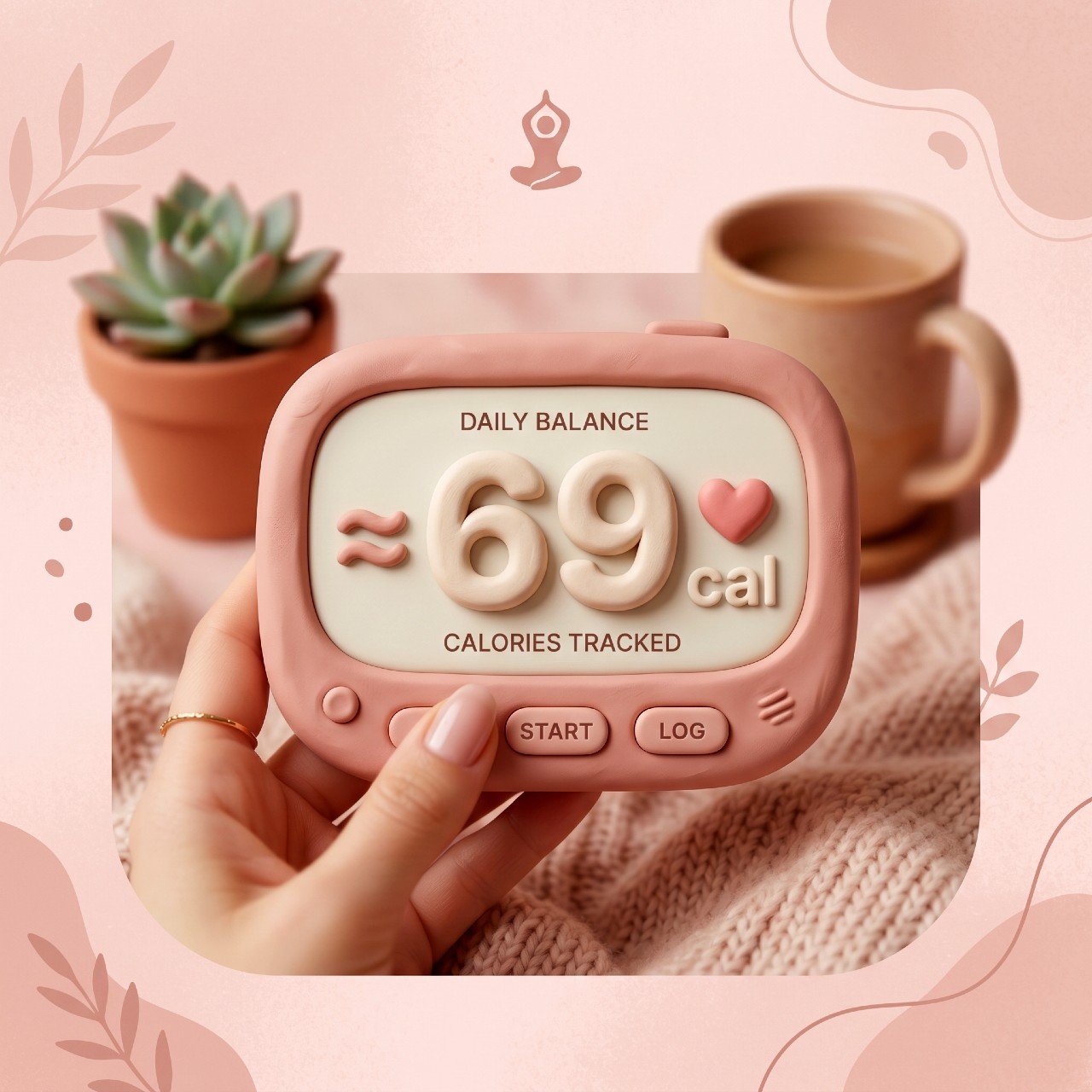
Women burn about 69 calories per sexual encounter — roughly 3.1 calories per minute, per the PLOS ONE 2013 study. The widely quoted 3.6 calories per minute is the combined men-and-women average, not the female figure.
Here is where almost every article on this topic gets it wrong, so let me be precise. That Université du Québec study measured 21 couples with portable metabolic armbands during real sex at home.
The results split by sex: men averaged 101 calories (4.2 per minute), and women averaged 69.1 calories, or 3.1 calories per minute. The famous “3.6 calories a minute” you see everywhere is the pooled average of both — quote it as a woman’s number, and you are overstating your burn by about 16%.
So count it honestly. A short encounter is not going to replace your steps for the day. But a longer, more active session sits comfortably in moderate-intensity territory, and it adds up over a week in exactly the way the gym industry trained us to ignore.
| Session Length | Approx. Calories (Women) | Everyday Equivalent |
|---|---|---|
| 6 minutes | ~19 calories | A few flights of stairs |
| 15 minutes | ~47 calories | Brisk 10-minute walk |
| 25 minutes (study average) | ~69 calories | A brisk 20-minute walk |
Calorie estimates based on 3.1 kcal/min for women from the PLOS ONE 2013 study. Individual burn varies with body weight, intensity, and duration.
How Sex Compares To Other Moderate Activities
At 5.6 METS, sex lands in the same moderate-intensity band as brisk walking and light cycling — the exact zone the CDC’s 150-weekly-minutes guideline is built around. Every session counts toward that target.
| Activity | Intensity (METS) | Counts Toward CDC 150 Min? |
|---|---|---|
| Sexual activity (women) | 5.6 | Yes — moderate |
| Brisk walking | 3.5–5.0 | Yes — moderate |
| Light cycling | ~5.0 | Yes — moderate |
| Slow jog | ~7.0 | Yes — vigorous |
| 30-min treadmill session (women, study) | 8.4 | Yes — vigorous (~213 cal) |
The honest comparison: a dedicated 30-minute cardio session burned about three times more calories than sex in the same study. So no, it does not replace your workout. But moderate intensity is moderate intensity — and the guideline that protects your heart does not ask where the minutes came from.
Sex And Heart Health: What The Research Shows For Women
For women, satisfying sex in later life is linked to lower hypertension risk. A national study in the Journal of Health and Social Behavior found women who rated sex as highly pleasurable had reduced blood-pressure risk five years on.
This is one place where the popular coverage does women a real disservice. You will read that “people who have sex twice a week have fewer heart problems”, — but that finding came from male cohorts, and in older women, the pattern is different and arguably better.
In the Liu et al. study of more than 2,200 adults, women who found sex satisfying had lower odds of developing high blood pressure later, while frequent activity carried more cardiovascular risk for older men. So when we talk about sex and your heart, we should be talking about your data, not borrowing men’s.
How Sex Functions As Moderate-Intensity Exercise
During sex, your heart rate climbs and stays elevated, your breathing deepens, and blood pressure rises temporarily — the same physiological signature as a brisk walk or a gentle cycle. Improved circulation means more oxygen delivered around the body, and over time, that moderate, repeated load is exactly the kind your cardiovascular system thrives on.
The Hormonal And Mental-Health Benefits
Sex releases endorphins and oxytocin, which lift mood and help lower cortisol — the stress hormone tied to abdominal fat storage in women. The mental-health payoff is part of the fitness payoff.
Here is the part I think matters most for women over 40. Endorphins are your body’s natural mood lifters, easing pain and leaving you genuinely happier. Oxytocin — the “bonding hormone” — builds the sense of safety and trust that lowers your stress baseline. Together, they pull cortisol down, and chronically elevated cortisol is one of the most underaddressed drivers of stubborn belly fat and stalled fat loss in women. For a deeper look at that mechanism, see our guide on hormones and weight loss for women.
Reducing Stress, Anxiety, And Low Mood
Regular sexual activity is associated with lower rates of anxiety and depression — both of which, left unmanaged, quietly sabotage sleep, motivation, and the consistency every healthy habit depends on. It is not just that you feel better in the moment; you protect the conditions that let the rest of your routine work. For more on this loop, see the mental-health benefits of exercise.
The balance of nutrition and fitness advice on Women’s Lean Body Formula is just what I needed. It’s not about dieting or pushing to extremes; it’s about sustainable health and loving your body.
— Samantha Aria Johnson, Health Enthusiast

Your Body Is Working Harder Than You Think
You have just seen that physical activity comes in more forms than the fitness industry counts. But to build a body that feels strong, lean, and energised consistently, you need the full picture — one that works with your hormones, your schedule, and your actual life.
The point of counting sex is not to swap it for training; it is to stop subtracting yourself from the equation on the days you were more active than you gave yourself credit for. The single call to action at the end of this article gives you the complete daily framework — for now, let’s build the routine that makes everything above work better.
Top 5 Exercises For Better Sex
You can use your fitness routine to actively improve your sexual experience — and vice versa. The muscles most engaged during sex are the same ones targeted by the most effective compound movements in strength training: your core, glutes, hip flexors, inner thighs, and pelvic floor.
Here is a practical daily routine — ten minutes, no equipment — designed to strengthen and mobilise the muscles that matter most. Do it alone, before bed, or with a partner as a warm-up. Perform in order, resting 20 seconds between exercises.
1. Kegel Exercises — Pelvic Floor Activation
Why it matters: The pelvic floor is the single most important muscle group for sexual function in women. Stronger pelvic-floor muscles improve sensation, arousal, and orgasm intensity. Research in the Journal of Sexual Medicine found a direct correlation between pelvic-floor strength and sexual satisfaction in women across all age groups.
How to do it: Contract the pelvic-floor muscles as if stopping the flow of urine. Hold for 5 seconds, release fully for 5 seconds — that is one rep. Perform 10 reps, three times a day, increasing the hold to 10 seconds as you get stronger.
Bonus: Kegels are invisible — do them at your desk, in a meeting, or while watching TV.
2. Glute Bridges — Hip Strength And Endurance
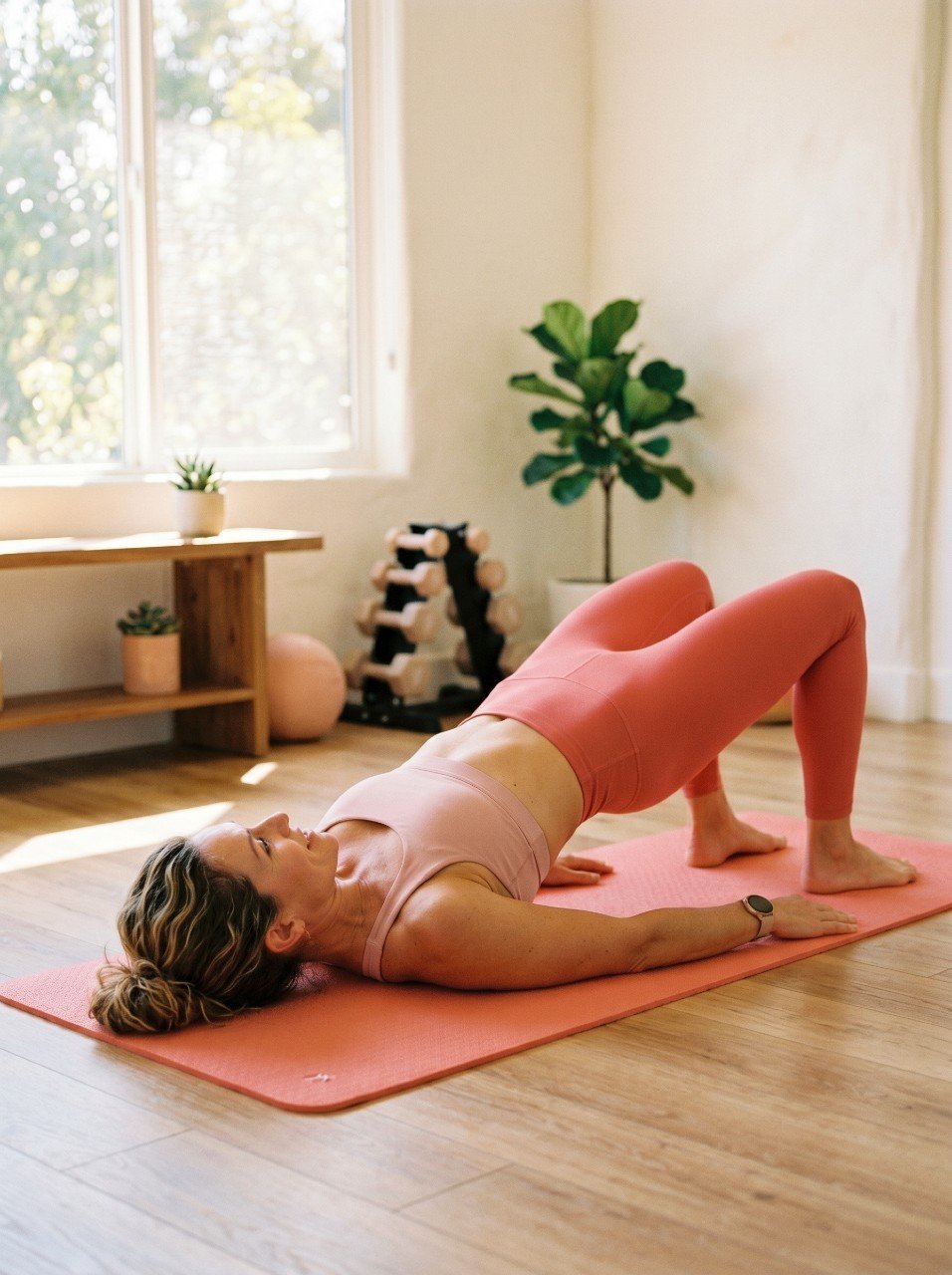
Why it matters: Hip-thrust strength and endurance directly affect sexual stamina. Glute bridges also open the hip flexors, which tighten from prolonged sitting and reduce pelvic mobility.
How to do it: Lie on your back, knees bent, feet flat and hip-width apart. Press through your heels to lift your hips, squeezing your glutes at the top. Hold 2 seconds, lower with control. Perform 3 sets of 15. For more, see our guide to squats and lower-body strength.
3. Deep Squat Hold — Hip Flexor Mobility
Why it matters: Hip mobility is one of the most overlooked components of sexual comfort and variety. Deep squats improve hip-flexor flexibility, reduce lower-back tension, and increase blood flow to the pelvic region.
How to do it: Stand with feet slightly wider than hip-width, toes turned out 30–45 degrees. Lower slowly into a deep squat, heels down, chest upright. Hold 30–60 seconds, using your elbows to gently press your knees open. Perform 3 holds. If heels lift, place a folded towel beneath them.
4. Core Plank — Stability And Sustained Effort
Why it matters: Core strength supports almost every position by letting you hold posture and apply force without straining your lower back — reducing the back pain that affects many women during or after sex.
How to do it: Forearm plank, elbows beneath shoulders, body straight from heels to crown. Hold 30 seconds, building to 60 over two to three weeks. Perform 3 sets. For a full routine, see our flat-stomach workout plan for a lean, toned core.
Join Our Mailing List
Join thousands of women inside our community and receive our free guide, 10 Actions That Support Permanent Weight Loss — the exact behavioural shifts that make the difference between a two-week attempt and a lasting transformation.
No restriction plans. No guilt. Just what actually works — for real women with real lives.
Top Exercises For Better Sex
We all want to be good in bed, don't we? Here's a quick routine you can do as often as every day to mobilise, strengthen and release your deep core muscles (including your pelvic floor). You can do it alone or with a partner.
5. Hip Flexor Stretch — Pigeon Pose Variation
Why it matters: Tight hip flexors are the most common mobility barrier for women who sit a lot. They restrict pelvic tilt, reduce comfort in extended positions, and cause referred lower-back pain. Releasing them restores range of motion where it matters.
How to do it: From a high lunge, lower your back knee to the floor. Shift your weight forward until you feel a deep stretch in the front of the back hip. Hold 45–60 seconds per side, twice each side.
| Exercise | Primary Benefit | Reps / Duration |
|---|---|---|
| Kegels | Pelvic-floor strength, sensation | 10 reps × 3x daily |
| Glute Bridges | Hip strength, endurance | 3 sets × 15 reps |
| Deep Squat Hold | Hip-flexor mobility, pelvic blood flow | 3 × 30–60 sec holds |
| Core Plank | Stability, lower-back protection | 3 × 30–60 sec holds |
| Hip Flexor Stretch (Pigeon) | Range of motion, back-pain relief | 2 × 45–60 sec per side |
A Note On Perimenopause And Pelvic-Floor Health
From your mid-30s onward, declining oestrogen causes the pelvic-floor muscles to lose elasticity and tone — the same process affecting the rest of your connective tissue. This is not an inevitable decline; it is biology you can actively counter.
The Royal College of Obstetricians and Gynaecologists confirms that regular pelvic-floor exercise maintains sexual function and reduces urinary incontinence risk well into and beyond menopause. You have a five-minute daily tool to address it.

Want The Habits Behind Lasting Weight Loss? Get the free guide: 10 research-backed habits that help women lose body fat and keep it off, with no extreme diets. Send Me The Free Guide.
The Bottom Line
So, can sex be counted as exercise? Yes — not as a replacement for structured training, but as a legitimate, research-backed contribution to your overall physical activity that most trackers and apps completely ignore. Here is what the evidence tells us, written for your body:
- Calorie burn: Women burn about 69 calories per encounter (~3.1/min), per PLOS ONE (2013) — a brisk 20-minute walk. Not the inflated 3.6/min average you will see misquoted as a woman’s figure.
- Cardiovascular effect: Heart-rate elevation sits in the moderate-intensity zone targeted by the CDC’s 150 weekly minutes, and for women, satisfying sex is linked to lower hypertension risk.
- Hormonal benefits: Endorphins and oxytocin measurably reduce cortisol, the stress hormone linked to abdominal-fat storage. See hormones and weight loss for women.
- Mental health: Regular activity is associated with lower anxiety and depression — protecting motivation, sleep, and habit consistency. See the mental-health benefits of exercise.
- Pelvic floor and ageing: Combined with the Kegel routine above, it actively maintains pelvic-floor function as oestrogen declines — one of the most practical, overlooked tools for healthy ageing.
What this does not mean: sex replaces strength training. It does not build the lean muscle that protects your metabolism, and it does not deliver progressive overload. What it does mean: stop discounting it. Stop treating the days you were active in ways that do not look like a gym session as days you did nothing. You are more active than you are giving yourself credit for.
Glossary Of Key Terms
- METS (Metabolic Equivalents): A physiological measure used to express the energy cost of physical activities; 5.6 METS is classified as moderate intensity.
- Cortisol: A stress hormone that, when chronically elevated, is linked to increased abdominal fat storage and stalled weight loss in women.
- Oxytocin: Often called the "bonding hormone," it is released during sex and helps lower stress baselines while building a sense of safety.
- Endorphins: The body's natural mood-lifting chemicals that ease pain and help reduce cortisol levels.
- Kegel Exercises: Targeted contractions used to strengthen the pelvic floor muscles, improving sensation and maintaining urinary health.
- Pelvic Floor: A critical muscle group that supports sexual function, sensation, and bladder control; it tends to lose elasticity as oestrogen declines.
- Hypertension: High blood pressure; research suggests satisfying sexual activity can lower the risk of this condition in older women.
- Moderate-Intensity Activity: Physical exertion that raises the heart rate and breathing but allows for conversation, such as brisk walking (3.5–5.0 METS).
- Progressive Overload: The gradual increase of stress placed upon the body during exercise, necessary for building muscle and metabolism; a feature lacking in sexual activity.
- Oestrogen: A primary female hormone that, when it declines during perimenopause, affects the elasticity and tone of connective tissues and muscles.
FAQ
Can Sex Be Counted As Exercise?
Yes. Research shows sexual activity is moderate-intensity physical activity — about 5.6 METs for women, similar to a brisk walk. It raises your heart rate, works multiple muscle groups, and releases beneficial hormones. It should not replace structured exercise, but it is a measurable, valid addition to your daily activity.
How Many Calories Does Sex Burn For Women?
Women burn an average of about 69 calories per encounter, or roughly 3.1 calories per minute, according to the PLOS ONE 2013 study. A six-minute session is around 19 calories; a longer, more active session burns proportionally more. Note that the commonly cited 3.6 calories per minute is the men-and-women average, not the female figure.
Is Sex Good For Your Heart If You’re A Woman?
For women, the evidence is encouraging. A national study found that women who rated sex as highly satisfying had a lower risk of developing high blood pressure five years later. Sex also elevates heart rate into the moderate-intensity zone and improves circulation — both supportive of cardiovascular health.
How Does Sex Help With Stress And Mental Health?
Sex releases endorphins and oxytocin, which lift mood and lower cortisol, the primary stress hormone. This reduces anxiety, supports better sleep, and protects the motivation and consistency that healthy habits depend on — making the mental-health benefit part of the fitness benefit.
Does Sex Replace My Workout?
No. In the same study, a dedicated 30-minute cardio session burned roughly three times more than sex, and sex provides none of the progressive overload that builds metabolism-protecting muscle. Count it as a welcome addition to your weekly activity — not the foundation of your routine.
Which Exercises Improve Sex For Women?
Kegels (pelvic-floor strength), glute bridges (hip endurance), deep squat holds (hip mobility), core planks (stability), and hip-flexor stretches (range of motion) target exactly the muscles most engaged during sex. The 10-minute daily routine in this article walks through each.
Does Sex Matter More During Perimenopause?
It becomes more valuable. As oestrogen declines from your mid-30s, the pelvic floor loses elasticity. Regular sexual activity combined with pelvic-floor exercise helps maintain sexual function and reduces incontinence risk into and beyond menopause — a practical, overlooked tool for healthy ageing.