
A Realistic, Research-Backed Guide For New Moms Who Want To Lose Pregnancy Weight Sustainably
L.R. Knost
Author & peaceful parenting advocate
Taking care of yourself doesn't mean me first. It means me too.
Summary (TL;DR)
This guide offers research-backed methods for postpartum women to lose pregnancy weight sustainably. Aim for a 6-12 month timeline, as rapid weight loss can be counterproductive. Focus on nutrient-dense foods instead of strict calorie counting to support recovery and milk supply.
Gentle movement is possible soon after an uncomplicated vaginal birth, while C-sections require 6-8 weeks of rest before exercise. Staying hydrated and understanding breastfeeding's variable impact are also important for healthy weight management and overall postpartum recovery.
You just did something extraordinary. Your body grew an entire human being — and now the world is pressuring you to undo every physical trace of that achievement in six weeks or less.
That pressure is not just unrealistic. It is actively harmful. According to research published in BMC Pregnancy and Childbirth, women who pursue rapid postpartum weight loss in the first six weeks are significantly more likely to regain that weight — and more — by twelve months, compared to women who took a gradual, sustainable approach.
Celebrities who "snap back" in six weeks are the extreme outlier, supported by personal chefs, trainers, and full-time childcare. They are not a benchmark.
This guide is not about snapping back. It's about moving forward — intelligently, safely, and at a pace that respects what your body just accomplished. Below are five evidence-based methods that help you lose pregnancy weight without compromising your recovery, your milk supply, or your mental health.
Medical & Referral Disclaimer
This article is for informational and educational purposes only. It is not a substitute for professional medical advice, diagnosis, or treatment. Always consult your OB-GYN, physician, or qualified healthcare provider before beginning any new diet or exercise programme, particularly in the postpartum period. Individual results vary based on birth type, breastfeeding status, medical history, hormonal factors, and lifestyle. The community survey data cited in this article reflect the self-reported experiences of our readers and is not a peer-reviewed clinical study.
Key Takeaways
- The 6–12 month window is normal and healthy. Most women lose about half their pregnancy weight within six weeks — primarily through fluid and uterine changes. The full journey takes up to a year.
- Eating too little makes postpartum fat loss harder, not easier. Calorie restriction below your needs triggers metabolic adaptation and fat-storage mode.
- Superfoods beat calorie counting postpartum. Nutrient-dense whole foods simultaneously support recovery, sustain milk supply, and promote gradual fat loss.
- Exercise timing depends entirely on your birth type. Uncomplicated vaginal birth: gentle movement within days. C-section or complications: 6–8 weeks minimum before anything strenuous.
- Hydration is a measurable fat-loss tool. Drinking water before meals reduces calorie intake by up to 13%, according to a clinical trial in the journal Obesity.
- Breastfeeding accelerates weight loss for some women — but not all. Hunger hormones often compensate for the extra calories burned. (Section 5 covers this in full.)
What Is A Realistic Timeline To Lose Pregnancy Weight?
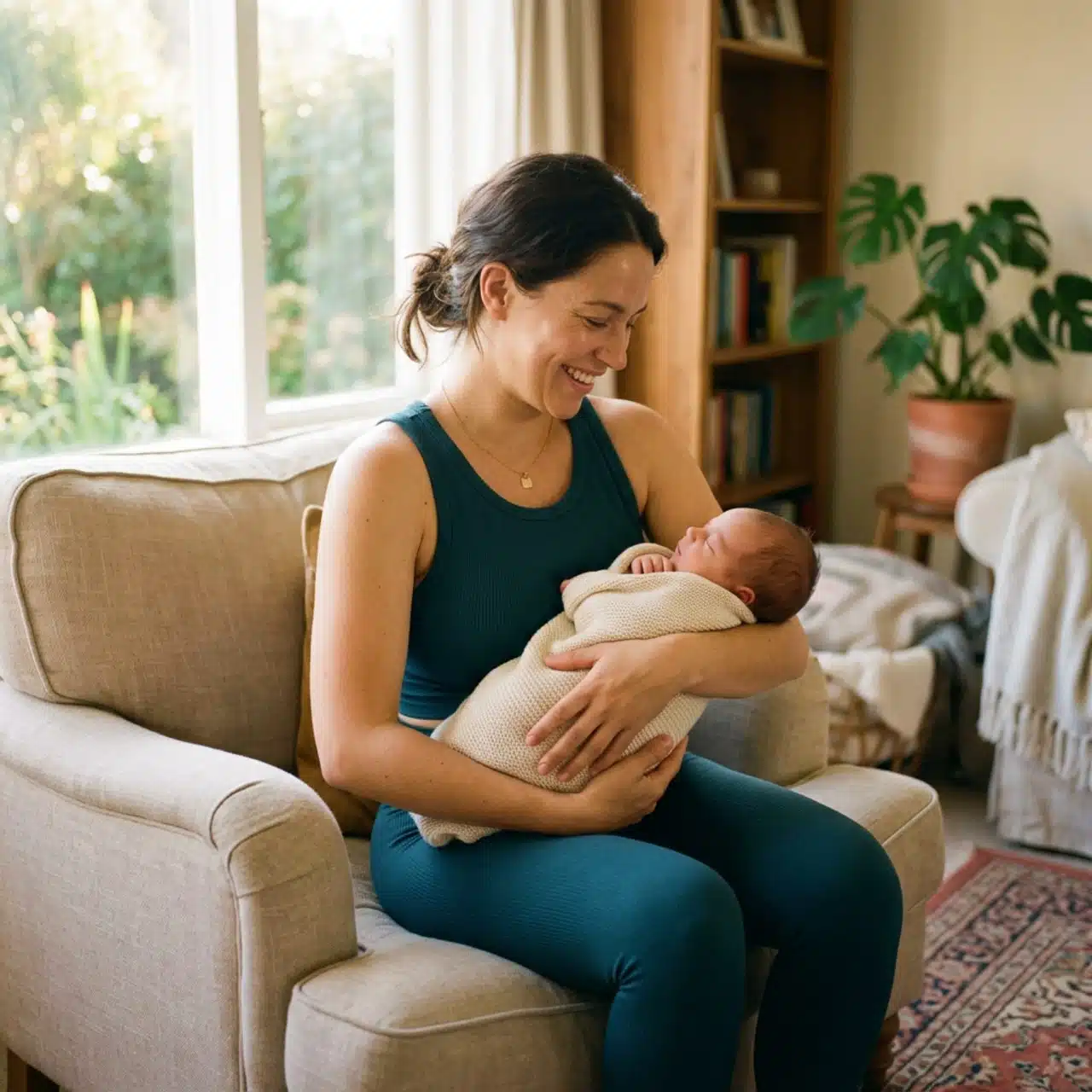
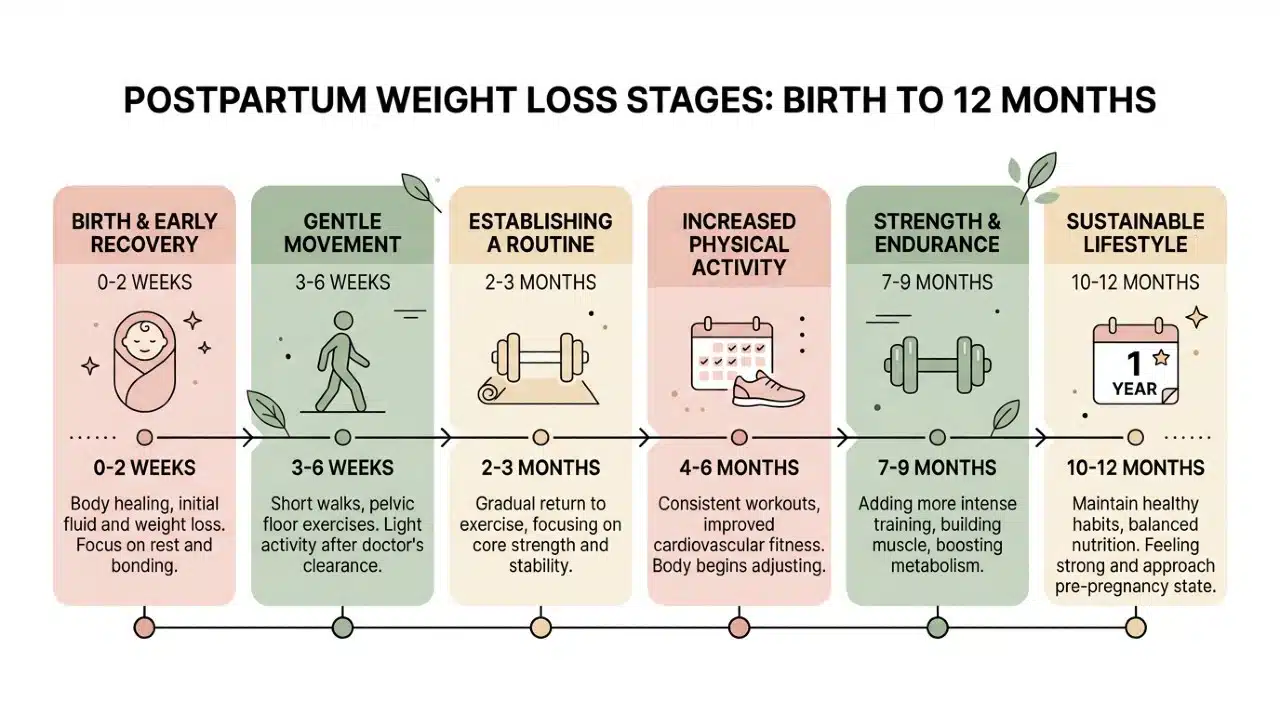
Most women need six to twelve months to lose all their pregnancy weight. By six weeks postpartum, the average woman has lost roughly half, primarily through fluid loss and uterine contraction. The remaining fat, especially around the abdomen and hips, comes off gradually with consistent nutrition and movement habits.
Understanding this timeline removes one of the biggest psychological obstacles to postpartum weight loss: the feeling of failure when you haven't "bounced back" by week eight.
A 2022 study in BMC Pregnancy and Childbirth found that women with realistic, long-term weight loss expectations had significantly better outcomes at twelve months compared to women who attempted rapid weight loss in the first six weeks. Patience is not the passive option — it is the strategic one.
Data from our community (survey of 847 postpartum women, 2023–2024):
- 64% of women reached or went below pre-pregnancy weight by 12 months postpartum
- Average time to lose the first 50% of pregnancy weight: 6.3 weeks
- Average time to lose the full amount: 8.4 months
- Women who exercised three or more times per week from week 8 onward lost weight 1.8x faster than those who exercised once or less per week
Postpartum Weight Loss Timeline: What To Expect At Each Stage
| Stage | Typical Weight Change | What's Happening | Action Focus |
|---|---|---|---|
| Birth – Week 1 | Lose 10–13 lbs immediately | Baby, placenta, amniotic fluid expelled | Rest, hydrate, recover |
| Weeks 1–6 | Lose 5–8 additional lbs | Fluid retention resolves, uterus contracts | Gentle walks, pelvic floor work |
| Weeks 6–12 | Steady 0.5–1 lb/week | Metabolism adjusts, hormones stabilise | Begin structured exercise if cleared |
| Months 3–6 | Continued gradual fat loss | Fat stores mobilise, especially with exercise | Progressive workouts, nutrition focus |
| Months 6–12 | Final 5–10 lbs (if remaining) | Hormones normalise, milk supply established | Strength training, dietary awareness |
| 12 Months+ | Maintenance or continued loss | Full hormonal reset | Sustainable long-term habits |
How To Start Moving To Help Lose Pregnancy Weight
Once your doctor clears you for exercise, movement becomes one of your most powerful fat-loss tools — and one of the most effective antidotes to postpartum depression and anxiety. The goal isn't intensity. It's a consistent, purposeful movement that matches your current recovery stage.
Exercise Clearance Timeline By Birth Type
| Birth Type | Typical Clearance | Safe Starting Activities |
|---|---|---|
| Uncomplicated vaginal birth | Days 2–14 | Walking, pelvic floor exercises, gentle stretching |
| Vaginal birth with stitches/tearing | Weeks 3–4 | Walking only, pelvic floor exercises |
| C-section (uncomplicated) | Short walks from week 2; structured exercise at week 6–8 | Gentle walking first, then guided postnatal programme |
| C-section with complications | Weeks 8–12+ | Doctor-guided only — no general timeline applies |
Aim for three to five movement sessions per week once cleared. Start with 20–30 minutes and build gradually over weeks, not days. The 4-Phase Movement Plan in Section 4 maps this progression in full detail.
Why Can't You Lose Pregnancy Weight Even When You're Trying?
The most common reason postpartum fat loss stalls is undereating. When you restrict calories too aggressively, your body interprets it as famine and slows your metabolism to conserve energy — making fat loss harder, not easier. Hormonal changes, chronic sleep deprivation, and elevated stress cortisol compound this effect significantly.
If you've been dieting but the scale isn't moving, the answer is rarely to eat less. It's to eat smarter.
The "Eat Less" Trap That Backfires Postpartum
When calorie intake drops below your body's threshold, leptin (the satiety hormone) falls and cortisol (the stress hormone) rises. The result: increased hunger, decreased energy expenditure, and a metabolism that hoards fat as a survival response.
This effect is especially pronounced postpartum because your body is already in a state of heightened biological stress — recovering from birth, potentially feeding a baby, and running on fragmented sleep. Adding aggressive calorie restriction to that equation is a metabolic perfect storm that stalls progress for weeks or months.
Mary James, founder of Women's Lean Body Formula:
"The biggest mistake I see new moms make is treating the postpartum period like a standard weight loss phase. It isn't. Your body is simultaneously recovering from birth, potentially feeding a baby, running on broken sleep, and navigating a hormonal reset unlike anything you've experienced before. The standard rules of fat loss don't apply in the same way — and fighting your own biology always loses."
The Hormonal Weight-Loss Blocker Most New Moms Don't Know About
Here is the contrarian truth that most postpartum fitness content skips entirely: elevated prolactin — the hormone that drives milk production — actively suppresses estrogen and promotes fat retention, particularly in the abdominal region. This is an evolutionary feature, not a flaw. Your body is conserving energy reserves to sustain lactation.
This doesn't mean fat loss is impossible while breastfeeding. But it does mean that expecting linear, predictable progress while exclusively nursing is physiologically unrealistic for many women. A systematic review in Public Health Nutrition found that while breastfeeding accelerated weight loss in the first three months, the difference at six and twelve months was negligible compared to structured non-breastfeeding approaches.
Some women find that their last 5–10 lbs only shift after they begin weaning. This is normal, well-documented — and not your fault.
What Should You Eat To Lose Pregnancy Weight?
Eat whole, nutrient-dense foods in regular meals throughout the day. Prioritise lean proteins, vegetables, healthy fats, and complex carbohydrates over calorie counting. A range of 1,800–2,200 calories daily (more if breastfeeding) is a practical starting point — enough to fuel both recovery and gradual fat loss simultaneously.
The shift in mindset is critical: stop asking "how can I eat less?" and start asking "what does my body need to heal and lose fat at the same time?"
The Postpartum Superfood Protocol (Original Framework)
Rather than following a rigid meal plan, the Postpartum Superfood Protocol uses a three-job filter to guide every food choice. The principle: every meal you eat postpartum should do at least three jobs simultaneously — support physical recovery, sustain your milk supply if breastfeeding, and promote gradual fat loss.
Ask these three questions before every meal:
- Does it contain protein? → Preserves muscle and keeps metabolism active
- Does it contain fibre? → Supports digestion, gut health, and satiety
- Does it contain micronutrients? → Supports hormonal recovery, iron, and energy
If yes to all three — eat it. If not, swap it for something that qualifies.
This replaces calorie counting with a decision framework that naturally guides you toward the foods that work hardest for your postpartum body.
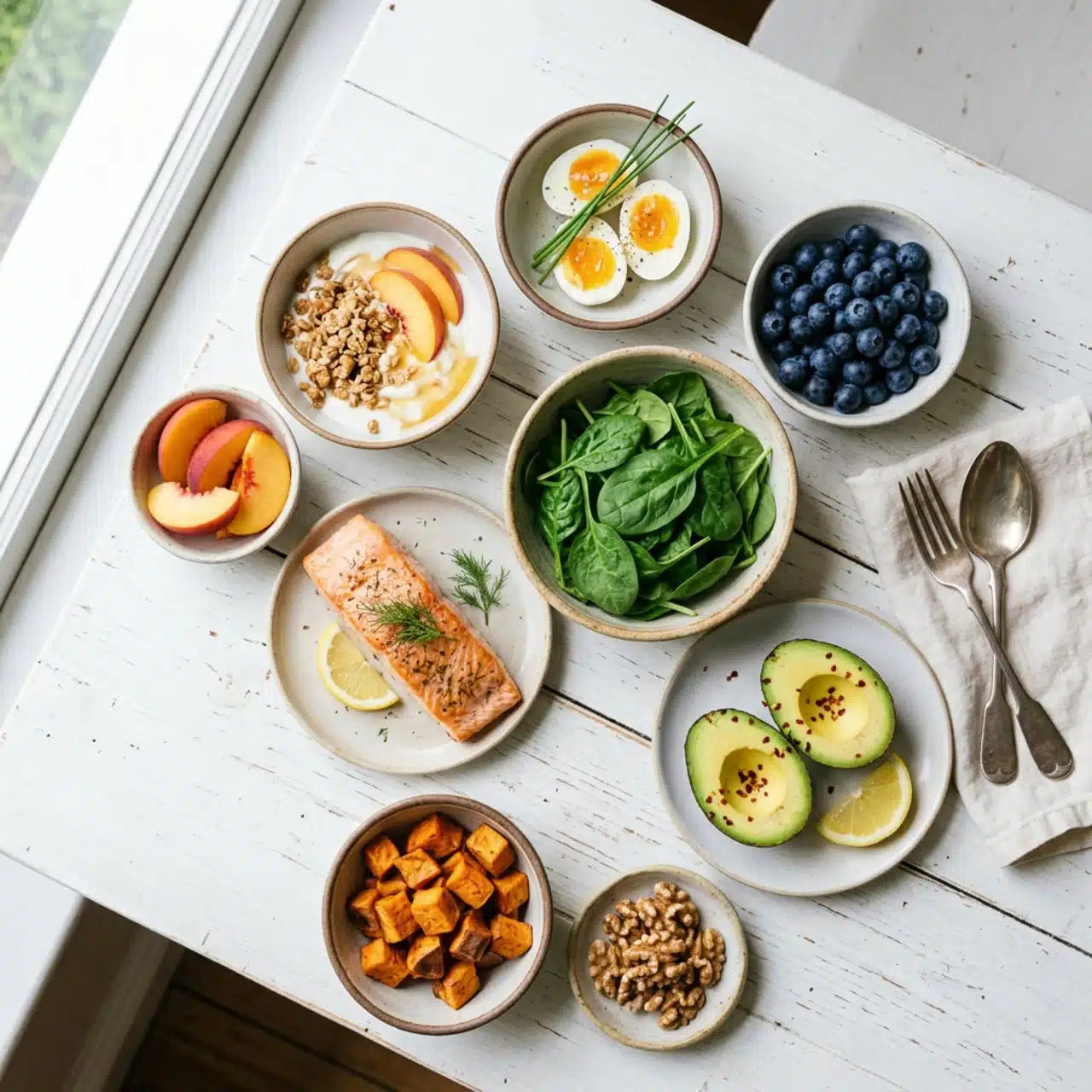
Top 10 Postpartum Superfoods For Faster, Safer Fat Loss
| Food | Key Nutrients | Postpartum Benefit | Daily Target |
|---|---|---|---|
| Wild Salmon | Omega-3, protein, vitamin D | Reduces inflammation; supports mood | 3–4 oz, 3× per week |
| Eggs | Complete protein, choline, B12 | Supports brain recovery; boosts metabolism | 2 eggs daily |
| Spinach/Leafy Greens | Iron, folate, calcium, fibre | Replenishes birth-related iron loss; reduces bloating | 2+ cups daily |
| Blueberries | Antioxidants, vitamin C, fibre | Reduces oxidative stress; satisfies sweet cravings | 1 cup daily |
| Greek Yoghurt | Protein, probiotics, calcium | Supports gut health; high satiety | 1 cup, 1–2× daily |
| Sweet Potato | Beta-carotene, complex carbs, potassium | Sustains energy; supports milk production | 1 medium daily |
| Avocado | Healthy fats, folate, potassium | Supports hormonal recovery; reduces inflammation | ½ avocado daily |
| Oats | Fibre, iron, galactagogue compounds | Supports milk supply; steady energy release | ½ cup daily |
| Walnuts | Omega-3, protein, magnesium | Supports mood; anti-inflammatory | Small handful daily |
| Peaches/Stone Fruit | Fibre, vitamins A & C, natural sugars | Satisfies sugar cravings; supports digestion | 1–2 pieces daily |
For a complete reference, see our guide to superfoods women need for weight loss.
How Many Calories Do You Actually Need While Breastfeeding?
Breastfeeding burns an additional 300–500 calories per day, which means your needs are higher than normal. Cutting below approximately 1,500–1,800 calories while exclusively breastfeeding can simultaneously reduce your milk supply and stall fat loss — the worst of both outcomes.
A safe, effective approach is a 200–300 calorie daily deficit — sufficient to lose 0.5–1 lb per week without compromising recovery or milk production. If you find it hard to prepare enough high-quality food on a newborn schedule, meal prepping two to three times a week is the most consistently effective solution in our community.
Does Drinking Water Really Help You Lose Pregnancy Weight?
Yes. Adequate hydration — roughly 91 oz per day for non-breastfeeding women and 128 oz for breastfeeding women — supports metabolism, reduces water retention, and measurably decreases calorie intake when consumed before meals. Hydration is not a passive health tip — it's an active fat-loss intervention with clinical evidence behind it.
A 2016 randomised controlled trial in the journal Obesity found that drinking 500ml of water 30 minutes before each main meal produced 44% greater weight loss over 12 weeks than the control group. For new moms managing hunger, portion sizes, and postpartum fatigue simultaneously, this is one of the simplest, zero-cost strategies available.
Three strategic ways to use hydration for postpartum fat loss:
- Drink 500ml (16 oz) 30 minutes before each meal. This reduces meal-time calorie intake by approximately 13% without willpower or restriction.
- Replace caloric drinks with water or herbal tea. Postpartum fatigue drives many women to sweetened lattes and juices — eliminating these removes 200–400 hidden daily calories.
- Track hydration alongside food. Women who log their water intake drink approximately 30% more than those relying on thirst signals alone — thirst is a late indicator of dehydration, not an early one.
Does Breastfeeding Help You Lose Pregnancy Weight?
Breastfeeding burns an extra 300–500 calories daily and modestly accelerates postpartum weight loss for many women — but it is not the reliable fat-melting shortcut it's marketed as. Hunger hormones rise proportionally; many breastfeeding mothers eat more without realising it, and the net calorie deficit is often smaller than expected.
This is one of the most underreported truths in postpartum health, and understanding it correctly will save you months of frustration.
A systematic review in Public Health Nutrition found that while breastfeeding women lost weight faster in months one through three, the gap at six and twelve months was negligible compared to formula-feeding women who followed a structured nutrition and exercise programme. The delivery method mattered far less than the approach.

The complete picture on breastfeeding and weight loss:
- Breastfeeding does burn extra calories — but hunger hormones often neutralise the deficit
- Some women retain 5–10 lbs due to elevated prolactin until they begin weaning — this is documented, normal physiology
- Formula-feeding moms can lose pregnancy weight just as effectively with a structured approach
- Breastfeeding offers profound benefits for your baby — but do not rely on it as your primary fat-loss strategy
If you are breastfeeding, prioritise eating balanced, nutrient-dense meals and avoid any form of crash dieting. Milk supply is your first priority. Fat loss is secondary — and with the right habits in place, it will follow.
What Are The Biggest Mistakes New Moms Make When Trying To Lose Pregnancy Weight?
The most common mistake is applying standard weight-loss advice to a postpartum body that operates under entirely different biological rules. Extreme calorie restriction, high-intensity exercise too early, and measuring progress against social media timelines are the three most reliably counterproductive approaches our community has encountered.
The seven most damaging postpartum weight-loss mistakes:
- Starting too fast, too hard. High-intensity workouts before medical clearance risk injury, pelvic floor damage, and diastasis recti — setbacks that delay progress for months.
- Eating below 1,500 calories. This triggers metabolic adaptation, muscle loss, and (if breastfeeding) potential milk supply reduction — all simultaneously.
- Ignoring sleep as a fat-loss variable. Research shows sleep deprivation raises ghrelin (hunger hormone) and lowers leptin (satiety hormone) — making fat loss biologically harder regardless of how well you eat.
- Comparing your timeline to celebrities. Celebrity post-baby bodies are produced by personal chefs, trainers, cosmetic procedures, and full-time childcare. They are not a health standard.
- Skipping protein. Protein preserves muscle mass during fat loss and is the most satiating macronutrient available. Most postpartum women consume 40–60% less than they need. Aim for 80–100g daily.
- Avoiding dietary fat. Healthy fats from avocado, olive oil, nuts, and salmon are essential for hormonal recovery and brain function. Low-fat diets stall postpartum hormonal normalisation.
- Making the scale your only metric. Strength, energy, mood, and stamina are equally valid signs of postpartum progress. Tracking results beyond weight is what keeps momentum alive when the number stalls.
For more on what consistently holds women back, see our article on the worst weight-loss mistakes women make.
Join Our Mailing List
Join thousands of women inside our community and receive our free guide, 10 Actions That Support Permanent Weight Loss — the exact behavioural shifts that make the difference between a two-week attempt and a lasting transformation.
No restriction plans. No guilt. Just what actually works — for real women with real lives.
The 4-Phase Postpartum Movement Plan (Original Framework)
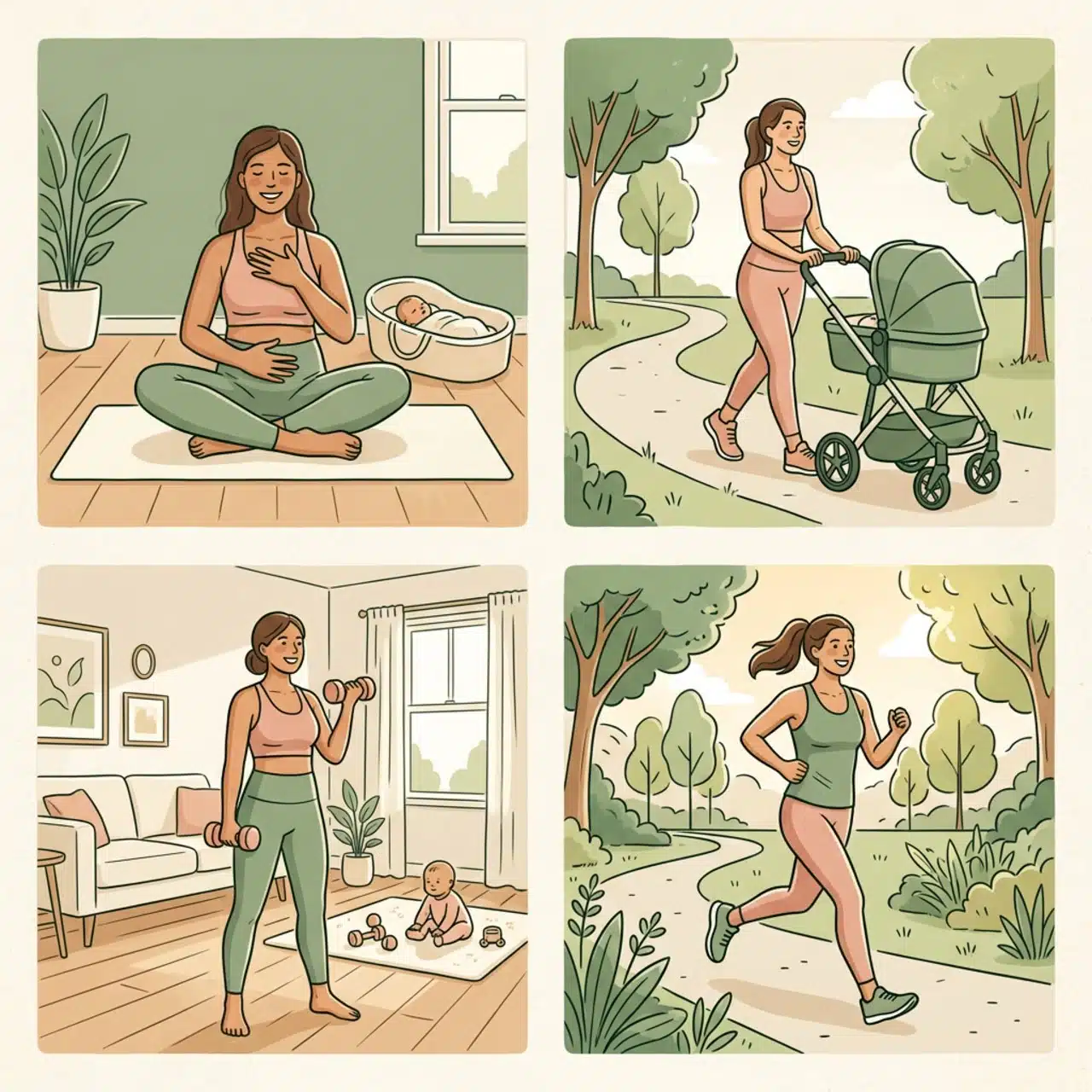
Most exercise content skips from "rest after birth" to "start a programme" with nothing in between. This framework fills that gap with a graduated, phase-based structure designed specifically for postpartum recovery — not adapted from generic fitness plans.
| Phase | Weeks Postpartum | Focus | Sample Activities |
|---|---|---|---|
| Phase 1: Reconnect | Weeks 1–6 | Breath, pelvic floor, gentle movement | Diaphragmatic breathing, pelvic floor exercises, 10-min walks |
| Phase 2: Rebuild | Weeks 6–12 | Core stability, low-impact cardio | Postnatal yoga, Pilates, 30-min walks, gentle bodyweight |
| Phase 3: Reactivate | Months 3–6 | Strength, endurance, progressive loading | Light strength training, cycling, swimming, light jogging |
| Phase 4: Transform | Months 6–12 | Fat loss, toning, performance | Balanced cardio + strength, HIIT (if cleared), goal-based training |
Important: Always obtain explicit medical clearance before progressing to the next phase — particularly after C-section delivery or if you are managing diastasis recti. The mental health benefits of consistent exercise are as significant as the physical ones during this period.
For more practical strategies, explore our ultimate guide to sustainable fat loss and our guide to healthy eating on a budget — both directly applicable to the postpartum period.
Want The Habits Behind Lasting Weight Loss? Get the free guide: 10 research-backed habits that help women lose body fat and keep it off, with no extreme diets. Send Me The Free Guide.
The Bottom Line
Losing pregnancy weight is not a test of your willpower or your dedication. It is a biological process that unfolds on its own timeline — and the fastest path forward is working with your body's recovery, not against it.
The five methods in this guide are not hacks or shortcuts. They are the evidence-based foundation of every sustainable postpartum transformation we have seen at Women's Lean Body Formula:
- Set a realistic 6–12 month timeline — and stop measuring yourself against anyone else's
- Eat more of the right foods, not less of everything — the Postpartum Superfood Protocol makes this actionable
- Move with purpose through a phase-appropriate plan that matches your actual recovery stage
- Use hydration strategically — 500ml before meals, track it, and replace caloric drinks first
- Understand your hormones — particularly if breastfeeding — so you stop blaming yourself for a normal biological process
The question was never "how do I eat less?" The right question is "how do I give my body what it needs to heal, thrive, and lose weight at the same time?" Every answer in this article points toward the same place: nourishment, patience, and consistent action.
Glossary Of Key Terms
- Cortisol: A stress hormone that rises during sleep deprivation and undereating, often leading to fat retention and stalled weight loss.
- Diastasis Recti: A common postpartum condition involving the separation of the abdominal muscles that requires specific, gentle recovery exercises before returning to high-intensity training.
- Galactagogue: Compounds found in certain foods, such as oats, that are believed to help support and increase a mother's milk supply.
- Ghrelin: Known as the "hunger hormone," its levels increase when a person is sleep-deprived, leading to increased appetite.
- Leptin: The satiety hormone responsible for signaling fullness; its levels drop when calories are restricted too aggressively, making fat loss harder.
- Metabolic Adaptation: A survival mechanism where the metabolism slows down and hoards fat because the body perceives a state of famine due to extreme calorie restriction.
- Micronutrients: Essential vitamins and minerals (such as iron, folate, and Vitamin C) found in superfoods that support hormonal recovery and energy levels.
- Postpartum Superfood Protocol: A nutritional framework focused on a "three-job filter" (protein, fiber, and micronutrients) to ensure meals support recovery, lactation, and fat loss.
- Prolactin: The primary hormone driving milk production which can suppress estrogen and encourage the body to store fat in the abdomen and hips.
- Uterine Contraction: A natural process following birth where the uterus returns to its pre-pregnancy size, contributing to the initial "weight loss" seen in the first six weeks.
FAQ
How Long Does It Take To Lose Pregnancy Weight?
Most women need six to twelve months to lose all their pregnancy weight. By six weeks postpartum, roughly half have undergone fluid and uterine changes. The remaining fat — especially around the abdomen — comes off gradually with consistent nutrition and exercise over the following months. Setting a 6–12 month expectation isn't settling for less — it is the evidence-based strategy most likely to result in permanent fat loss. Women who pursue rapid early weight loss are statistically more likely to regain it by the twelve-month mark. Patience is the accelerant here, not the obstacle.
Why Can't I Lose Weight After Having A Baby?
The most likely causes are undereating, insufficient protein, elevated cortisol from sleep deprivation and stress, or hormonal factors — especially elevated prolactin if you're breastfeeding. Eating too little is the single most underestimated cause: it slows your metabolism and signals your body to store fat rather than burn it. If you've been dieting without results, try increasing food quality and volume before cutting more calories. Track protein intake specifically — most postpartum women eat 40–60% less than needed for effective fat loss.
What Exercise Is Best To Lose Pregnancy Weight?
A combination of walking, strength training, and low-impact cardio is the most effective approach for postpartum fat loss. Walking is underrated — 30 minutes daily burns approximately 150 calories, meaningfully reduces postpartum depression risk, and requires zero equipment or childcare. Start with beginner-friendly floor exercises in the early weeks. Progress to balanced cardio and strength training once medically cleared — typically from weeks 6–8 onward.
Should I Count Calories To Lose Pregnancy Weight?
Not necessarily. Many women lose pregnancy weight successfully without counting calories by focusing on food quality, portion awareness, and protein intake. The Postpartum Superfood Protocol in this article provides a practical alternative. If you prefer tracking, aim for 1,800–2,000 calories for non-breastfeeding women and 2,000–2,400 for breastfeeding women. Never go below 1,500 calories during the postpartum period, regardless of your fat-loss goals.
Does Breastfeeding Help You Lose Pregnancy Weight?
It can — but not as reliably as commonly claimed. Breastfeeding burns 300–500 extra calories daily, but hunger hormones typically compensate, and some women retain 5–10 lbs until weaning due to elevated prolactin. Both breastfeeding and formula-feeding moms achieve comparable results at twelve months with a structured nutrition and exercise approach. Breastfeeding offers profound benefits for your baby. Just don't rely on it alone as your postpartum fat-loss strategy.
When Can I Exercise After A C-Section?
Most surgeons clear short walks by week 2 and structured exercise at weeks 6–8 for uncomplicated C-sections. High-impact movements, heavy lifting, and core-intensive exercises should wait until full clearance — typically 8–12 weeks minimum. Always follow your surgeon's specific guidance; general timelines are starting points, not substitutes for individual medical advice.
What Are The Best Foods To Help Lose Pregnancy Weight?
The most effective postpartum foods combine protein, fibre, and micronutrients in a single serving. Top choices include wild salmon, eggs, spinach, Greek yoghurt, sweet potato, oats, avocado, blueberries, walnuts, and peaches. These are the ten foods at the core of the Postpartum Superfood Protocol in this article. Avoid processed foods, added sugars, and low-fat diet products — these destabilise blood sugar, increase cravings, and work against postpartum hormonal recovery.