
The Beginner’s Guide: Why Junk Food Is One Of The Biggest Barriers To Women's Weight Loss Goals

The food you eat can be either the safest and most powerful form of medicine or the slowest form of poison.
Ann Wigmore
Summary (TL;DR)
Junk food is more than a willpower issue; it's a biology problem, as ultra-processed foods override natural fullness signals. This article explores how junk food harms women's health through synthetic chemicals, refined sugars, damaging fats, and sodium.
It introduces the "Engineered Appetite Override" framework, explaining why resisting junk food is so difficult. The J.U.N.K. Impact Matrix helps identify the most harmful categories, suggesting whole-food substitutions for sustainable change.
Junk food is not a willpower problem. It is a biology problem — and the food industry knows it.
Ultra-processed foods are carefully engineered with precise combinations of sugar, salt, and fat designed to hijack the same neurological reward pathways as addictive substances. When you reach for chips at 10 PM or can't stop after one cookie, that's not weakness. That's food science working exactly as intended.
This article breaks down the four core reasons junk food damages your body — backed by research — and introduces an original framework for understanding exactly where the harm lies. Whether your goal is sustainable fat loss, better energy, or simply understanding what's happening inside your body, this is the article to read first.
Medical & Referral Disclaimer
This article is for informational and educational purposes only and does not constitute medical advice. The information provided is not intended to diagnose, treat, cure, or prevent any disease or health condition. Individual health needs vary. Always consult a qualified healthcare provider or registered dietitian before making significant changes to your diet, especially if you have existing health conditions, take medications, or have specific nutritional needs. External links are provided for reference and do not represent endorsement of any external organization or study.
Key Takeaways
- Junk food is Group 4 ultra-processed food — engineered to override your body's natural fullness signals.
- The four primary harm mechanisms are: synthetic chemical burden, refined sugar-driven metabolic disruption, cardiovascular-damaging fats, and kidney-straining sodium overload.
- Junk food does not just affect physical health — it degrades gut microbiome function, reducing serotonin production and increasing risk of anxiety and depression.
- The "Engineered Appetite Override" framework explains why willpower alone is insufficient without addressing the neurochemical triggers.
- The J.U.N.K. Impact Matrix helps identify which harm category most directly affects your highest-priority health goal.
- Whole-food substitutions that match the same sensory profile (sweet, salty, crunchy) are far more sustainable than pure elimination strategies.
- Women are disproportionately affected by junk food's metabolic, hormonal, and emotional health consequences.
Video Overview
What Is Junk Food, And Why Is It So Hard To Resist?
Junk food refers to ultra-processed foods with high caloric density and low nutritional value — typically engineered with refined sugars, industrial fats, artificial additives, and excessive sodium. The difficulty stopping isn't personal failure; it's a predictable neurochemical response.
The NOVA Classification: How Food Scientists Define "Junk"
The NOVA food classification system, developed by Professor Carlos Monteiro at the University of São Paulo, categorizes all food into four groups based on the level and purpose of industrial processing:
| NOVA Group | Category | Examples |
|---|---|---|
| Group 1 | Unprocessed or minimally processed | Fruits, vegetables, eggs, plain meat |
| Group 2 | Processed culinary ingredients | Oils, butter, flour, salt |
| Group 3 | Processed foods | Canned fish, cheese, cured meats |
| Group 4 | Ultra-processed foods (junk food) | Chips, soda, packaged cakes, fast food |
Group 4 foods — junk food — are defined not by one "bad" ingredient but by the industrial combination of ingredients that would never appear in a home kitchen: emulsifiers, flavor enhancers, hydrogenated oils, artificial colors, and high-fructose corn syrup. Together, they produce a product engineered for overconsumption.
The Engineered Appetite Override: An Original Framework
Expert Commentary: Dr. Robert Lustig's research argues that fructose, unlike glucose, fails to trigger the insulin response that activates leptin — the brain's 'stop eating' signal — meaning high-fructose processed foods can drive continued eating even after caloric needs are met."
Here is the "Engineered Appetite Override" framework — three mechanisms that explain why junk food feels impossible to stop eating:
- Hyper-palatability engineering — The precise bliss-point ratio of sugar, salt, and fat activates dopamine release at higher-than-normal levels, training your brain to seek it again.
- Satiety signal suppression — Refined carbohydrates and fructose bypass leptin (the fullness hormone), leaving hunger signals active even after sufficient calories.
- Reward pathway conditioning — Repeated exposure to engineered flavor profiles reduces sensitivity to natural whole foods, making them taste comparatively "boring."
Understanding this framework is not an excuse to keep eating junk food — it is permission to stop blaming yourself and start addressing the actual mechanism.
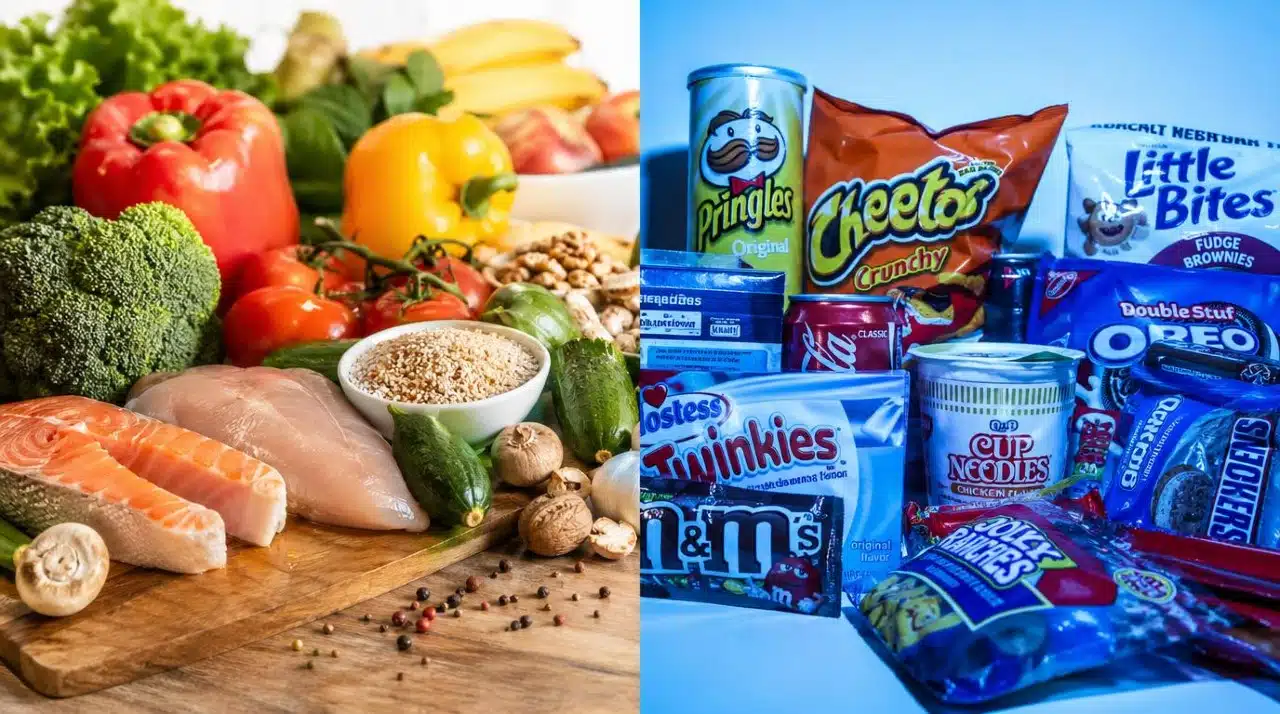
Reason #1: Junk Food Floods Your Body With Harmful Chemicals
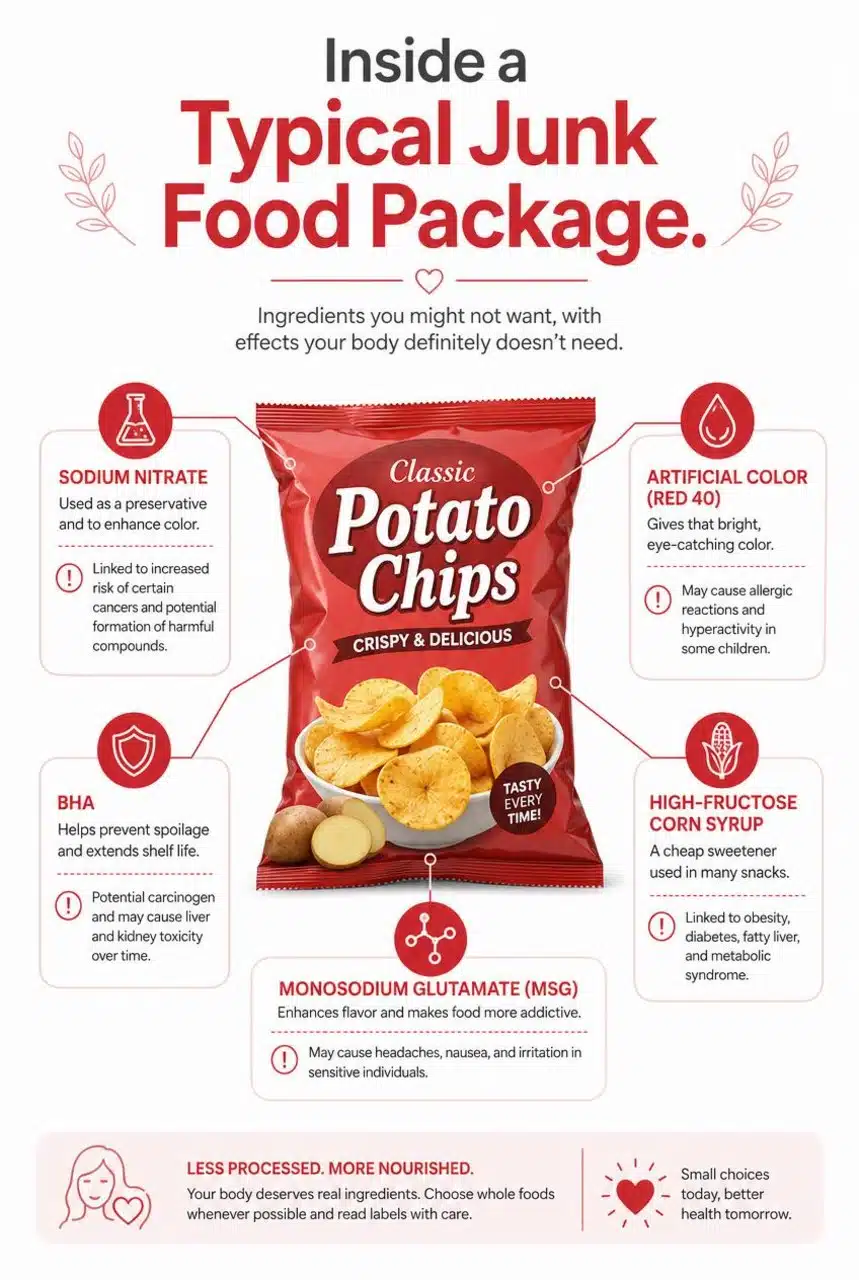
Most packaged junk foods contain dozens of synthetic preservatives, artificial colors, and flavor enhancers that have no nutritional function. Their purpose is shelf life and sensory appeal — not your health.
What Preservatives and Additives Actually Do Inside Your Body
The FDA's Substances Added to Food inventory lists thousands of substances for use in the United States. While many are considered safe in isolation at low doses, the cumulative load from a diet heavy in ultra-processed foods is a growing area of concern among researchers.
Common additives and their documented effects:
- Sodium nitrate (found in processed meats): Associated with increased colorectal cancer risk in the WHO Group 1 carcinogen classification.
- Artificial colors (Red 40, Yellow 5, Yellow 6): Linked to hyperactivity in children per the Center for Science in the Public Interest.
- BHA and BHT (preservatives): Classified as reasonably anticipated carcinogens by the National Toxicology Program.
- High-fructose corn syrup: Associated with fatty liver disease and metabolic syndrome, independent of total calorie intake.
- Artificial trans fats (partially hydrogenated oils): Banned by the FDA in 2018 after being linked to cardiovascular disease, though still present in some international markets.
First-Hand Observation: Women who shift from processed foods to a balanced, whole-food diet consistently report one shared outcome within the first two weeks: a dramatic improvement in energy levels. Not from calorie restriction — from removing chemical burden.
The Cumulative Toxin Load Problem
No single additive destroys your health in one sitting. The problem is cumulative. The average American consumes 60% of daily calories from ultra-processed foods according to research published in BMJ Open. At that ratio, the chemical exposure from additives is not occasional — it is continuous.

Reason #2: Refined Sugar In Junk Food Hijacks Your Metabolism
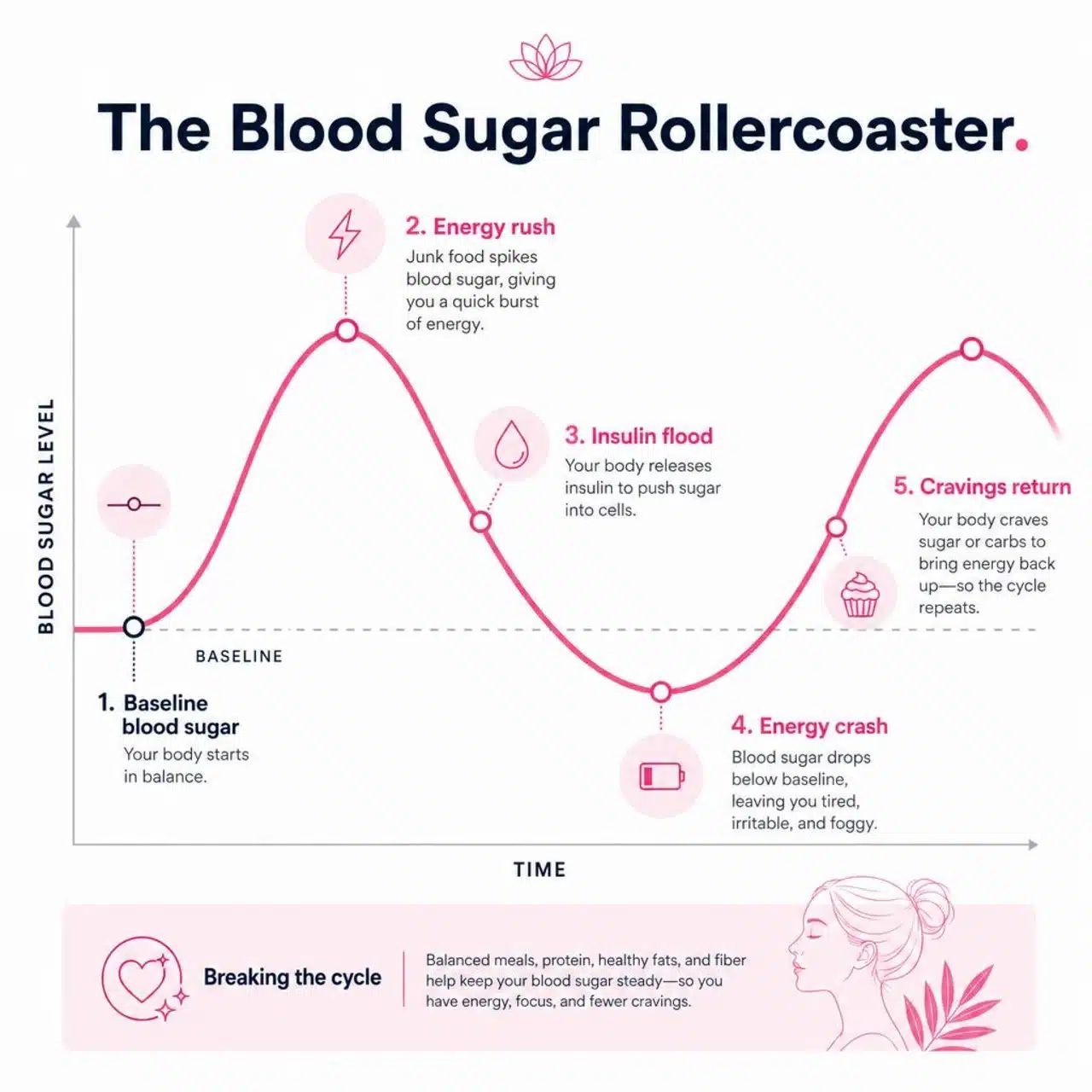
Refined sugar in junk food triggers rapid blood glucose spikes followed by crashes that disrupt metabolism, increase fat storage hormones, and leave you craving more sugar within hours — creating a cycle that is physiologically identical to a dependency loop.
The Blood Sugar Rollercoaster Effect
When you eat refined sugar — in cookies, soft drinks, flavored yogurts, or "energy" bars — your blood glucose spikes rapidly. Your pancreas responds by flooding your bloodstream with insulin to bring glucose levels back down. The problem: this correction often overshoots, dropping blood sugar below baseline and triggering:
- Intense sugar cravings (your brain demanding fast energy)
- Fatigue and brain fog (your cells starved of stable fuel)
- Mood instability (anxiety and irritability tied to blood glucose variability)
- Increased cortisol (a stress hormone that directly promotes abdominal fat storage in women)
This is not a diet failure. This is biochemistry operating exactly as expected under high-sugar dietary conditions.
How Sugar Drives Fat Storage In Women
For women specifically, the insulin response to refined sugar has a compounding effect. Elevated insulin:
- Signals fat cells to store glucose as fat rather than burn it
- Inhibits lipolysis (the breakdown of stored fat for energy)
- Promotes fat deposition preferentially in the abdominal region
- Disrupts estrogen metabolism, which can affect hormonal weight loss resistance
If you've tried reducing calories without addressing sugar intake, read our guide on what weight loss resistance actually is — because refined sugar is one of the most underappreciated contributors.
Sugar By Another Name — Hidden In "Healthy" Snacks
The food industry uses over 60 names for added sugar on ingredient labels. Common ones to watch for:
- Dextrose, maltose, sucrose, fructose
- Evaporated cane juice
- Agave nectar
- Brown rice syrup
- Corn syrup solids
- Fruit juice concentrate
If you want practical strategies to break the cycle, see 5 simple ways to manage your sugar cravings.
Reason #3: Saturated And Trans Fats In Junk Food Damage Your Heart
The saturated and trans fats concentrated in junk food raise harmful LDL cholesterol, lower protective HDL cholesterol, and contribute to arterial inflammation — a combination that significantly elevates cardiovascular disease risk, particularly in women over 40.
LDL vs. HDL: The Cholesterol Battle Junk Food Always Wins
Cholesterol is not inherently dangerous. The body needs it. The problem is the ratio, and junk food consistently shifts it in the wrong direction.
- LDL (low-density lipoprotein) — "bad" cholesterol that deposits in artery walls, forming plaque that narrows blood flow
- HDL (high-density lipoprotein) — "good" cholesterol that transports excess cholesterol back to the liver for processing
Saturated fat, found in fried foods, processed snacks, and fast food, raises LDL and may lower HDL simultaneously. Trans fats — even partially — are the worst offenders, with the American Heart Association stating clearly that there is no safe level of industrial trans fat consumption.
Junk Food Fat Content vs. Healthier Alternatives
| Food Item | Saturated Fat (per serving) | Trans Fat | Calories |
|---|---|---|---|
| Large fast food burger | 14g | 0.5–2g | 750+ |
| Movie theater popcorn (large) | 22g | 0g | 1,090 |
| Commercial glazed doughnut | 6g | 1.5g | 290 |
| Potato chips (standard bag) | 3g | 0g | 160 per oz |
| Grilled salmon (6oz) | 2g | 0g | 310 |
| Avocado (whole) | 3g | 0g | 240 |
| Mixed nuts (1oz) | 2g | 0g | 170 |
| Sweet potato (baked) | 0g | 0g | 103 |
Sources: USDA FoodData Central, American Heart Association
Cardiovascular Risk For Women Over 30
The CDC reports that heart disease is the leading cause of death for women in the United States, yet women are significantly underdiagnosed because symptoms present differently than in men. Dietary fat quality is one of the modifiable risk factors within direct control.
The worst foods for weight loss share a common thread: they are also the worst foods for heart health. The overlap is not a coincidence — the same inflammatory mechanisms that drive fat storage also drive cardiovascular damage.
Reason #4: Excessive Sodium In Junk Food Bloats You And Strains Your Heart
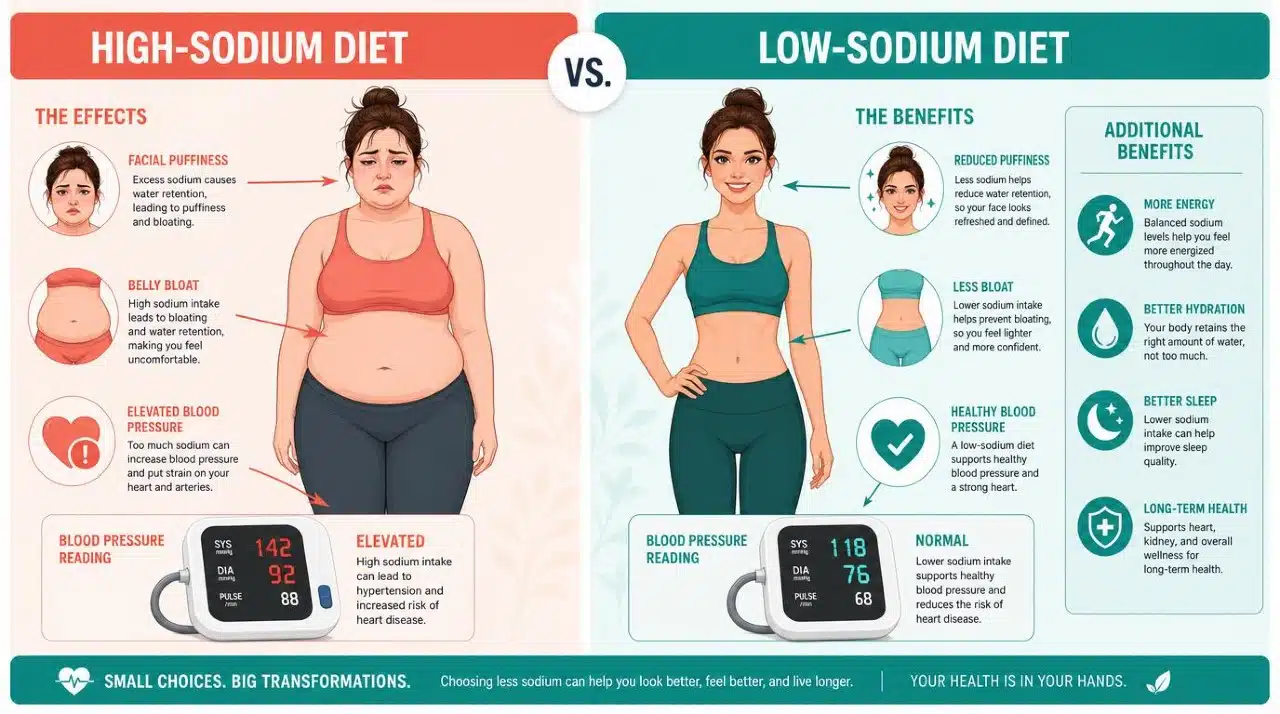
A single serving of most junk foods delivers 30–60% of the daily recommended sodium intake. Chronic overexposure causes persistent water retention, elevated blood pressure, kidney strain, and a blunted perception of natural food flavors that makes whole foods taste bland by comparison.
How Salt Causes Water Retention And Belly Bloat
Sodium pulls water into your bloodstream to maintain osmotic balance. When sodium levels are chronically elevated from a junk food diet, your body holds excess fluid throughout tissue, particularly noticeable in the face, hands, and abdomen.
This is not fat. But it is uncomfortable, it masks fat loss progress on the scale, and it creates a feedback loop: the bloat drives self-consciousness, which sometimes triggers emotional eating of the same foods causing the bloat.
- Recommended daily sodium intake: Less than 2,300mg (per American Heart Association)
- Single fast-food meal sodium load: Often 1,500–2,500mg in one sitting
- Typical ultra-processed snack food: 300–600mg per single-serve bag
The Sodium-Blood Pressure Connection
Excess sodium causes the kidneys to retain water, which increases blood volume, which raises the pressure the heart must generate to push blood through narrowed vessels. Over time, this persistent hypertension damages arterial walls, increases stroke risk, and accelerates kidney decline.
For women specifically, research published in the Journal of the American College of Cardiology shows that premenopausal women have some protection from salt-sensitive hypertension due to estrogen, but this advantage largely disappears after menopause — making dietary sodium reduction a preventive priority for women in their 30s and 40s.

The Hidden Fifth Reason Nobody Talks About — Junk Food Damages Your Mental Health
Contrarian Take: Most mental health conversations about food focus on emotional eating — using food to cope with stress. But the direction of causality may be reversed. Junk food itself may be creating the mental health conditions that then drive emotional eating.
The Gut-Brain Axis And Processed Food
Research shows that roughly 90% of the body's serotonin is produced in the gut — though this peripheral serotonin primarily regulates digestion and gut function, not mood directly. The gut-brain connection is real and actively studied, but it's more complex than serotonin simply traveling from gut to brain.
Research from University College London tracking 10,000 women found that higher ultra-processed food consumption was associated with a 22% higher risk of depression — independent of overall diet quality, socioeconomic status, and other confounders.
When you feel anxious, irritable, or low after eating junk food, it is not guilt. It is your gut microbiome signaling distress through the vagus nerve.
Why This Matters For Women Trying To Lose Weight
Emotional eating — a pattern disproportionately affecting women — is often treated as a psychological problem requiring willpower solutions. But if junk food consumption is itself a driver of the anxiety and low mood that trigger emotional eating, then willpower-based interventions miss the root cause entirely.
This is the evidence-based contrarian position: the emotional eating cycle is partly a metabolic and microbiome problem, not primarily a psychological one. The intervention that breaks the cycle is not more discipline. It is removing the dietary input that destabilizes the neurotransmitter system in the first place.
For a deeper look at the emotional dimension of weight loss, see the role of emotions in weight loss and using mindfulness to break the cycle of emotional eating.
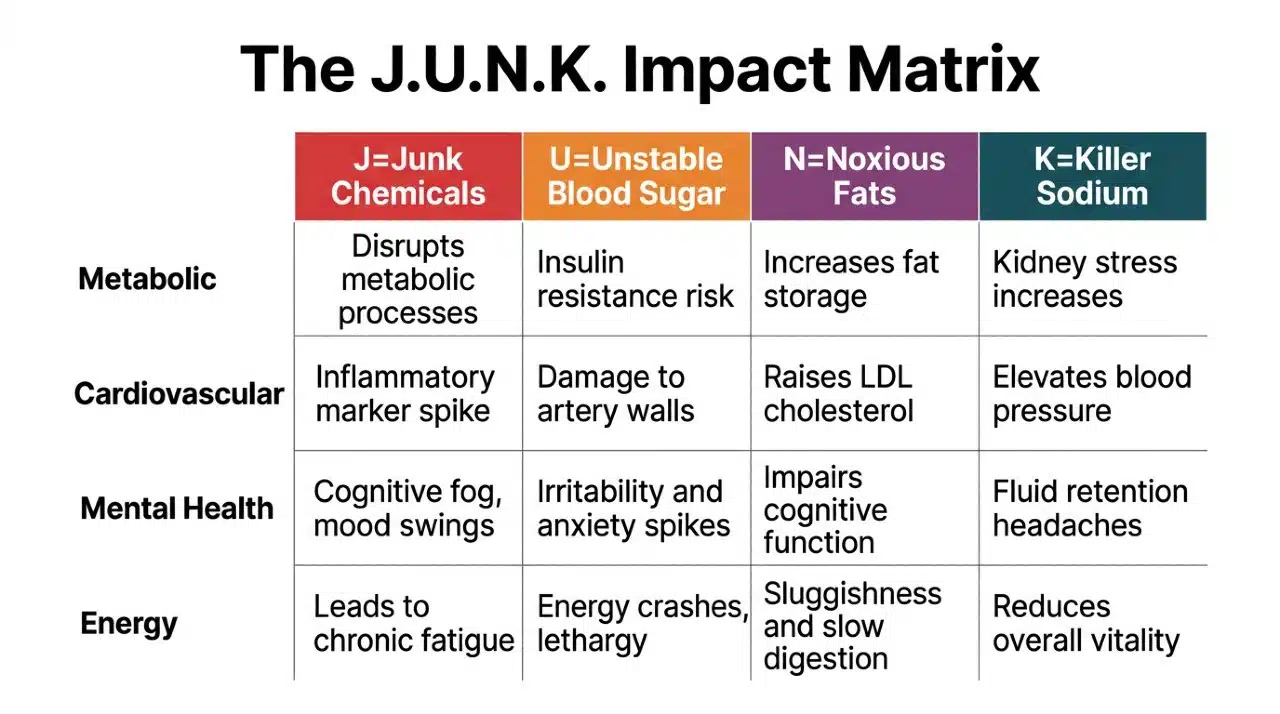
The J.U.N.K. Impact Matrix: An Original Framework
The J.U.N.K. Impact Matrix is an original framework for visualizing how the four primary harm categories of junk food affect four key body systems. Use it to identify your highest-priority area to address first.
J = Junk Chemicals (preservatives, additives, artificial colors)
U = Unstable Blood Sugar (refined sugars, refined carbohydrates)
N = Noxious Fats (saturated fats, trans fats)
K = Killer Sodium (excessive salt load)
| Body System | J — Junk Chemicals | U — Unstable Blood Sugar | N — Noxious Fats | K — Killer Sodium |
|---|---|---|---|---|
| Metabolic / Weight | Hormonal disruption, thyroid interference | Insulin resistance, fat storage | Cholesterol imbalance | Water retention, false scale readings |
| Cardiovascular | Inflammatory load on vessels | Blood pressure spikes | Arterial plaque buildup | Persistent hypertension |
| Mental Health | Neurotoxic additives | Mood crashes, brain fog | Neuroinflammation | Stress response amplification |
| Energy & Vitality | Chronic fatigue from toxic load | Energy rollercoaster | Sluggishness, low endurance | Fluid imbalance, cellular inefficiency |
Impact Key: Use this matrix to prioritize. If your primary struggle is energy, the U column (refined sugar) and J column (chemicals) are your first targets. If you're focused on avoiding the worst eating habits for metabolism, all four columns apply simultaneously.

What To Eat Instead: Practical Swaps That Actually Work
Eliminating junk food without a replacement strategy fails. The goal is not deprivation — it is substitution with foods that satisfy the same sensory triggers through whole-food sources.
Cravings-To-Clean Swap Guide
- Salty and crunchy → Air-popped popcorn, lightly salted mixed nuts, sliced cucumber with hummus.
- Sweet and creamy → Full-fat Greek yogurt with berries, a small square of dark chocolate (70%+), frozen banana blended with almond butter.
- Fast and convenient → Meal-prepped whole-food options made on Sundays, portable protein sources like hard-boiled eggs or individual nut butter packets.
- Soda and sweet drinks → Sparkling water with fresh citrus, unsweetened iced green tea, and healthy drinks are worth choosing.
Now that you know how junk food affects your body, are you ready to take the next step? Grab your free guide here to discover how it can help you reclaim your health and reach your weight loss goals.
Next Steps On This Blog
If this article has shifted your thinking, these resources are your natural next steps:
- 5 Tips to Start Eating Less Junk Food — practical action steps.
- Create a Healthy Diet for Weight Loss — how to build a sustainable eating framework.
- Superfoods Women Need for Weight Loss — what to add, not just what to remove.
- How to Boost Energy With Food — foods that fix the fatigue junk food creates.
- Healthy Recipes for All Preferences — replacing processed meals with real ones.
Want The Habits Behind Lasting Weight Loss? Get the free guide: 10 research-backed habits that help women lose body fat and keep it off, with no extreme diets. Send Me The Free Guide.
The Bottom Line
Junk food is not an occasional indulgence problem. At the consumption rates typical in a modern Western diet — where ultra-processed foods represent the majority of daily calories — it functions as a chronic, low-grade assault on metabolism, cardiovascular health, neurological function, and hormonal balance.
The evidence is clear. The mechanism is understood. The framework exists to address it. What changes the outcome is not more discipline — it is replacing the biological triggers with whole-food alternatives that meet the same needs without the systemic damage.
Start with the swap that feels easiest. Eliminate one category of junk food at a time. Track how your energy, mood, and body respond. The feedback is often faster and more motivating than any scale reading.
Glossary Of Key Terms
- NOVA Classification: A four-group system developed by Professor Carlos Monteiro that categorizes food based on the extent and purpose of industrial processing.
- Ultra-processed Food: Group 4 foods in the NOVA system; products engineered from industrial ingredients (e.g., flavor enhancers, hydrogenated oils) for high palatability and long shelf life.
- Hyper-palatability: A state where the combination of sugar, salt, and fat in food reaches a "bliss point" that triggers excessive dopamine release in the brain.
- Leptin: The "fullness hormone" responsible for signaling to the brain that the body has had enough to eat; its signals are often bypassed by refined sugars.
- Insulin Resistance: A metabolic condition, often driven by refined sugar spikes, where cells become less responsive to insulin, leading to increased fat storage.
- Gut Microbiome: The population of trillions of bacteria in the digestive tract that plays a critical role in serotonin production and mood regulation.
- J.U.N.K. Impact Matrix: A framework identifying the four primary harms of junk food: Junk chemicals, Unstable blood sugar, Noxious fats, and Killer sodium.
- Trans Fats: Industrial fats (partially hydrogenated oils) found in many processed foods that are linked to cardiovascular disease and have no safe consumption level.
- Serotonin: A primary mood-regulating neurotransmitter, the majority of which is produced in the gut, that can be depleted by a diet of ultra-processed foods.
- Sodium Nitrate: A common preservative found in processed meats classified by the WHO as a Group 1 carcinogen due to its association with colorectal cancer.
FAQ
What Is Junk Food?
Junk food refers to ultra-processed foods high in refined sugar, unhealthy fats, excessive sodium, and artificial additives, while providing little nutritional value. The NOVA classification system categorizes these as Group 4 foods — engineered for overconsumption, not nourishment.
Why Should You Avoid Junk Food?
You should avoid junk food because it systematically harms your body through four mechanisms: artificial chemicals that disrupt hormones, refined sugars that destabilize metabolism, saturated and trans fats that damage cardiovascular health, and excessive sodium that causes chronic hypertension and bloating.
Does Junk Food Affect Mental Health?
Yes. Junk food degrades gut microbiome diversity, reducing the production of serotonin and other mood-regulating neurotransmitters. Research links high ultra-processed food consumption to a 22% greater risk of depression in women, independent of other lifestyle factors.
What Happens To Your Body When You Stop Eating Junk Food?
When you stop eating junk food, most people experience improved energy within 1–2 weeks, reduced bloating within 3–5 days as sodium levels normalize, stabilized mood as blood sugar variability decreases, and gradual improvement in cholesterol markers within 4–8 weeks.
Is Junk Food Addictive?
Junk food triggers dopamine release through engineered combinations of sugar, salt, and fat — mimicking the neurological reward pathways involved in substance use. While not classified as chemically addictive in the clinical sense, the behavioral and neurochemical patterns of junk food consumption closely parallel dependency mechanisms.
Is All Processed Food Equally Bad For Health?
No. Minimally processed foods (frozen veg, plain yoghurt, canned beans) can support a healthy pattern, while ultra-processed products high in refined starch, sugar, and industrial fats are the bigger problem for appetite and health markers. Read ingredients and prioritize protein and fibre.
How Do I Handle Junk Food Cravings At Night?
Front-load protein earlier, keep an easy evening option you actually like (Greek yoghurt, cottage cheese, fruit + nuts), and change the cue—brush teeth, short walk, or screens out of the kitchen. Cravings often fade when the routine changes, not when you “try harder.”
Hey,
Your article is very impressive and informative.
Yes, I do agree with you.
Specially sodium is very dangerous for a lean body. It retains a lot of water in shape of fat in your body and all your hard word will be in vain.
Keep Up the Good Work