
Sneaky Sips: The Truth Behind The Healthy Drinks Aisle
Beth Czerwony, RD
Registered dietitian, Cleveland Clinic
A single cup of orange juice can carry basically all the added sugar you’re supposed to have in a day.
Summary (TL;DR)
Not always, and often not even close. Plenty of drinks marketed as healthy (smoothies, fruit juice, sports drinks, kombucha, even vegetable juice) carry the same sugar or sodium load as the soda they’re supposed to replace. The fix isn’t cutting all of them out. It’s knowing which ones earn their “healthy” label, in what amount, and what to check before the bottle goes in your cart. Use the 3-Second Sugar Check further down on anything marketed as healthy, and you’ll never be fooled by a green label again.
You’ve been doing everything “right.” Swapped soda for something with a green, leafy label. Started the day with a smoothie instead of a pastry. Grabbed the “healthy” energy drink before the gym instead of your usual coffee. And the scale hasn’t budged. Or worse, your jeans feel tighter around the middle than they did a year ago.
That frustration is one of the most common things we hear inside the Women’s Lean Body Formula community: women who’ve cleaned up their meals, who are moving more, and who still feel like something invisible is working against them.
More often than not, when we actually dig into what’s in the glass, the answer is sitting in plain sight: a “healthy” drink quietly delivering more sugar, sodium, or empty calories than the soda it replaced. It’s not a willpower problem. It’s a labeling problem, and the marketing is very good at its job.
This matters even more if you’re in perimenopause or beyond. As estrogen declines, the body becomes more sensitive to blood sugar swings, and fat storage shifts toward the abdomen, so the sugar hiding in a “healthy” drink does more damage now than it did a decade ago, according to menopause specialists at University Hospitals.
This isn’t about villainizing every bottle in the health food aisle. It’s about being able to walk down that aisle and actually tell the difference between what’s helping you and what’s just well-marketed.
Medical & Referral Disclaimer
This article is for informational and educational purposes only. It is not a substitute for professional medical advice, diagnosis, or treatment. Always consult your physician or qualified health provider before starting any new diet or exercise program.
Key Takeaways
- Many “healthy” drinks (fruit juice, sports drinks, energy drinks, kombucha) contain as much or more sugar than a can of soda.
- Original V8 100% Vegetable Juice carries 640mg of sodium per 8-oz glass: more than a quarter of a full day’s recommended limit in one serving.
- The American Heart Association caps added sugar at 25g (about 6 teaspoons) a day for women. A single 16-oz energy drink can blow past that in one can.
- Aspartame is FDA-approved and considered safe within its official intake limit, but the 2023 WHO/IARC classification means the science isn’t fully settled. Moderation is the reasonable middle ground.
- Liquid calories don’t trigger the same fullness signal as solid food, which is part of why sugary drinks are so easy to over-consume without noticing.
- Coconut water and V8 Low Sodium are two of the few “healthy” drinks that mostly live up to the label, once you check the serving size.
- Run the 3-Second Sugar Check on anything marketed as healthy before you buy it.
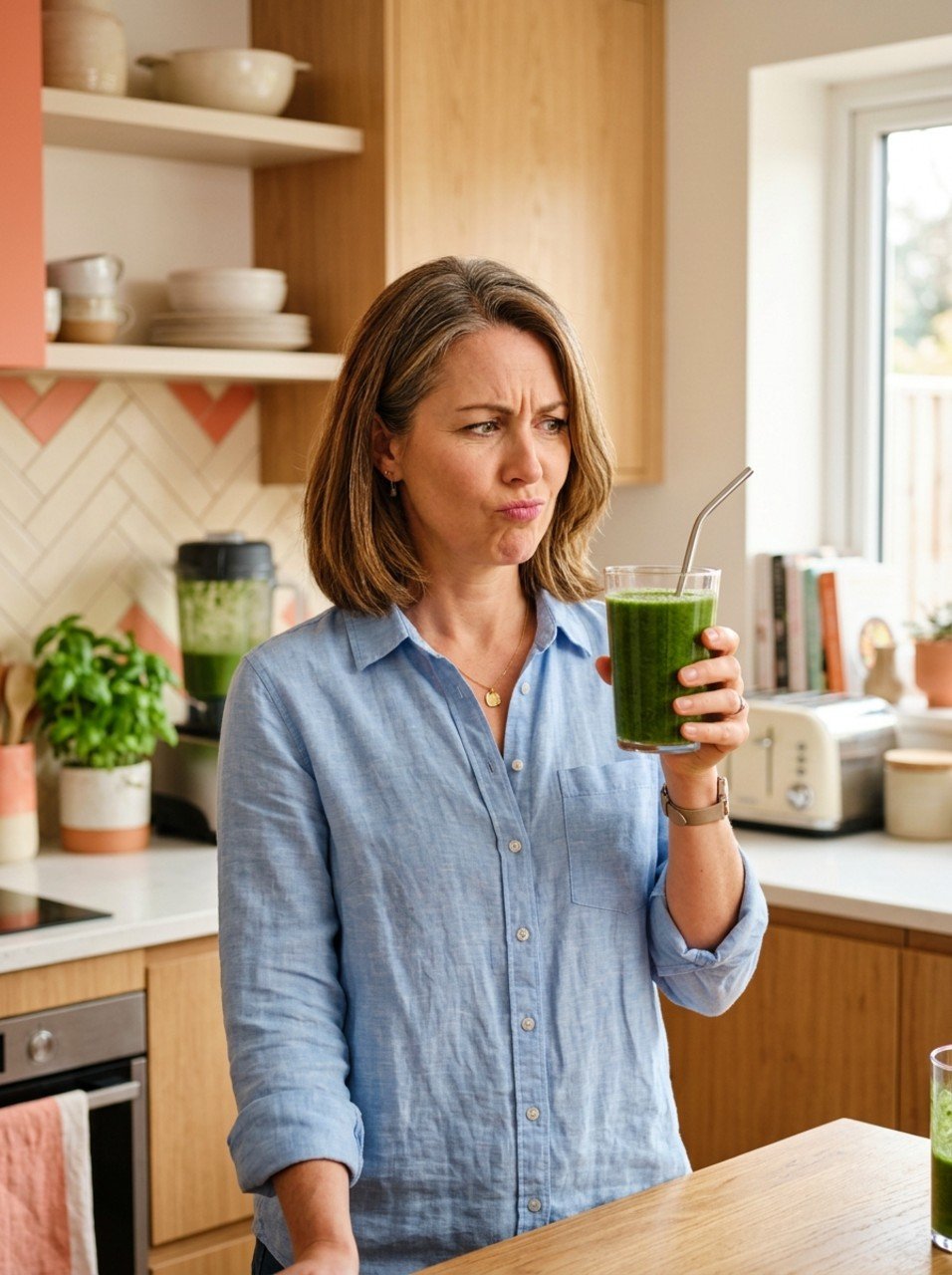
The 8 Healthy Drinks That Aren’t Actually Healthy
There are many refreshments out there that claim to be healthy drinks: that they’ll give you the nutrients you need, boost your metabolism, or help you finally lose the stubborn weight you’ve been fighting.
Some of them earn that reputation. Most of them are just very good at marketing. Here are the eight worth a second look, and what the research actually says about each one.
#1. Store-Bought Smoothies
Store-bought smoothies are usually not healthy in the way their fruit-forward label suggests. Most are blended with fruit juice concentrate and added sugar rather than whole fruit, which pushes a single bottle well past what one serving should contain.
The American Heart Association’s daily added-sugar limit for women is 25g, and a single 12-oz bottled smoothie can carry 30–40g on its own.
The Fix: Make it at home with whole fruit and an unsweetened liquid base. Break out your own smoothie recipes. You control exactly what goes in, and you keep the fiber that whole fruit provides.
#2. Sweetened Soy Milk And Almond Milk
Unsweetened plant milk fortified with vitamins and minerals is genuinely a fine choice. The problem is the vanilla, chocolate, and even “original” flavored versions.
According to a Cleveland Clinic registered dietitian, flavored or “original” plant milks can carry anywhere from 4 to more than 20 grams of added sugar per cup, while the unsweetened version of the same product has none.
The Fix: Look for “unsweetened” on the carton. Same creamy texture, a fraction of the sugar, and no need to worry about added growth hormones either way.
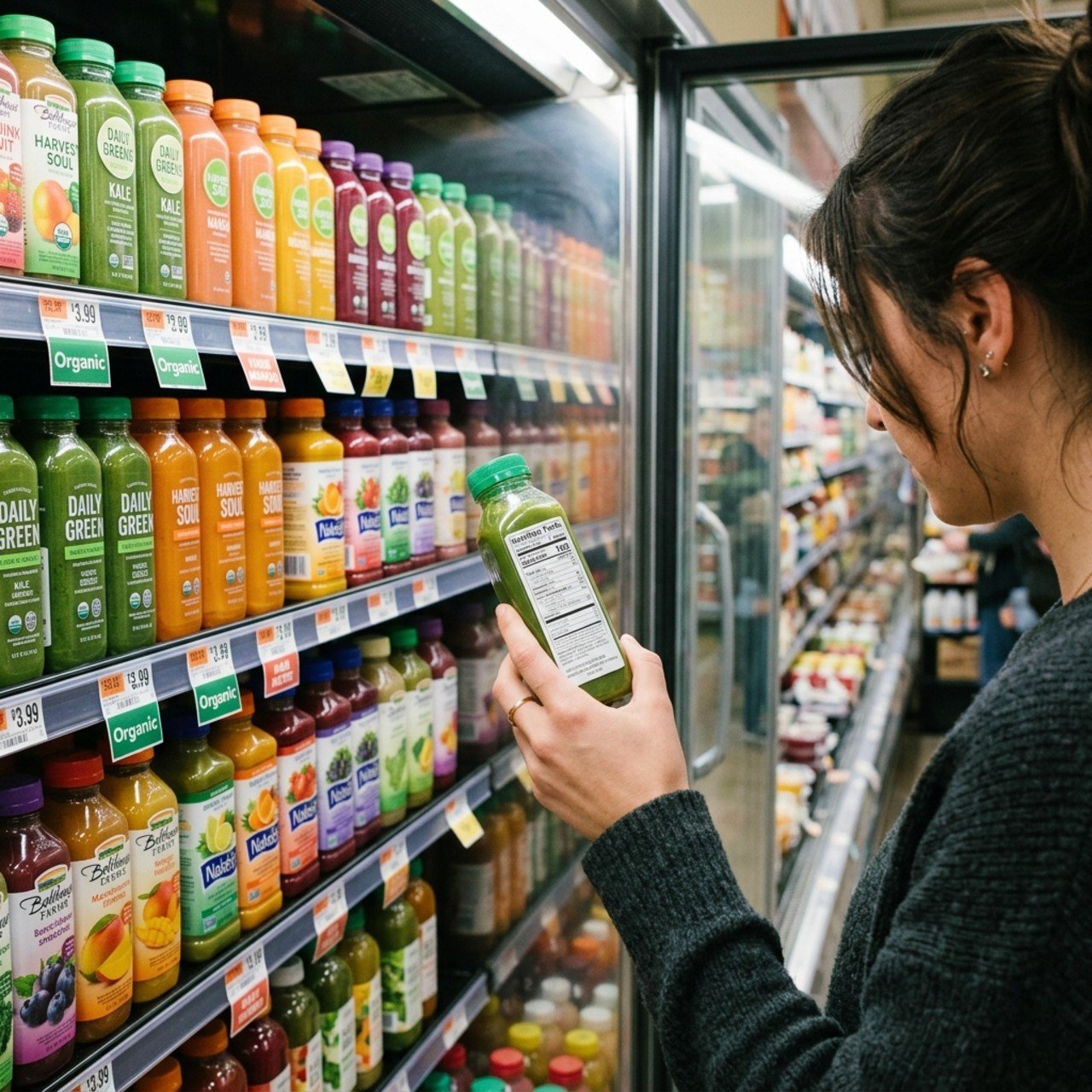
#3. Diet Drinks
Diet soda swaps sugar for a non-caloric sweetener like aspartame or sucralose. The FDA considers aspartame safe within its Acceptable Daily Intake, and stands by that after reviewing more than 100 studies.
But in July 2023, the World Health Organization’s cancer research arm classified aspartame as “possibly carcinogenic to humans” (Group 2B) based on limited evidence, even while the UN’s food safety committee kept the daily intake limit unchanged.
Separately, a widely cited study published in Nature found that artificial sweeteners altered gut bacteria and drove glucose intolerance in both mice and human subjects. None of this means diet soda is dangerous in moderation. But “diet” doesn’t mean neutral either.
The Fix: Sparkling water with a splash of real juice, or unsweetened iced tea, gives you the fizz and flavor without the open question mark.
#4. 100% Fruit Juice (Including POM And Orange Juice)
This is one of the tastiest, trendiest categories on the shelf, and one of the most misleading. A cup of 100% fruit juice can contain nearly as much sugar as a can of soda. According to Cleveland Clinic, a single glass of orange juice contains about 23 grams of naturally occurring sugar.
It isn’t “added sugar” in the technical sense. Still, the World Health Organization’s “free sugars” guidance treats juice sugar the same as added sugar, and 23 grams is close to the AHA’s entire daily added-sugar allowance for women in one glass. Pomegranate juice follows the same pattern: real nutrients, concentrated sugar.
The Fix: Treat juice as a 4-oz pour, not a full glass, or eat the whole fruit instead. The fiber slows sugar absorption in a way juice can’t.

#5. V8 And Vegetable Juice Blends
These drinks promise your daily vegetables in one can, and nutritionally, that part is mostly true. What the marketing leaves out is the sodium.
Original V8 100% Vegetable Juice contains 640mg of sodium per 8-oz glass: more than a quarter of a full day’s recommended sodium limit in a single serving. The Low Sodium version cuts that to 140mg while keeping the same vitamin A and C content.
The Fix: Reach for V8 Low Sodium, or get your servings from whole vegetables in your diet instead, which comes with fiber the juice doesn’t.
#6. Sports Drinks
Sports drinks are formulated to replace electrolytes and glucose lost during intense exercise lasting an hour or more. Outside of that window, Harvard’s Nutrition Source puts it plainly: “For the non-athlete, a sports beverage is just another sugary drink.”
A 12-oz sports drink carries roughly 21 grams of sugar, less than soda, but still a meaningful hit for a 30-minute walk or a light gym session. A multi-year study following more than 7,500 adolescents and young adults, cited by Harvard, found that more frequent sports drink consumption was associated with a higher body mass index over time, especially in boys.
The drinks are often perceived as healthy simply because they’re allowed to be sold in schools and sporting events, not because the sugar content is any different.
The Fix: Water covers nearly all real-life hydration needs. Save sports drinks for genuinely long, sweat-heavy training sessions.

#7. Energy Drinks
A single 16-oz energy drink can contain 54 to 62 grams of added sugar, according to the NIH’s National Center for Complementary and Integrative Health. That is more than double a woman’s entire daily limit in one can, on top of 70–240mg of caffeine, compared with roughly 100mg in a standard cup of coffee.
That combination is linked to elevated heart rate, blood pressure changes, and a documented rise in emergency department visits. Separately, roughly a quarter of college-age drinkers report combining energy drinks with alcohol, which the NIH notes can mask how intoxicated a person feels without reducing the actual impairment.
The Fix: Black coffee or matcha delivers the alertness without the sugar crash an hour later.
#8. Kombucha
Kombucha isn’t the guilt-free health elixir its “gut health” reputation suggests. Fermentation reduces sugar but doesn’t eliminate it, and sugar content varies widely by brand.
Cleveland Clinic dietitians advise checking the added-sugar line on the label and choosing a lower-sugar option, since research on kombucha’s broader health claims is still thin. It can absolutely be part of a healthy routine; it just isn’t automatically better than the soda it’s replacing.
The Fix: Check the added-sugar line, not just the ingredient list, and stick to the labeled serving size, not the whole bottle in one sitting.
Bonus: What About Coconut Water And Flavored Water?
Coconut water is one of the few trendy drinks that mostly earns its reputation: the Academy of Nutrition and Dietetics confirms it’s genuinely lower in sugar and calories than soda, though it isn’t proven to hydrate better than plain water, and portion size still matters since many bottles hold more than one serving.
Flavored water is the one to watch more closely: check the label for artificial sweeteners or hidden added sugar before assuming “flavored” means “free.”
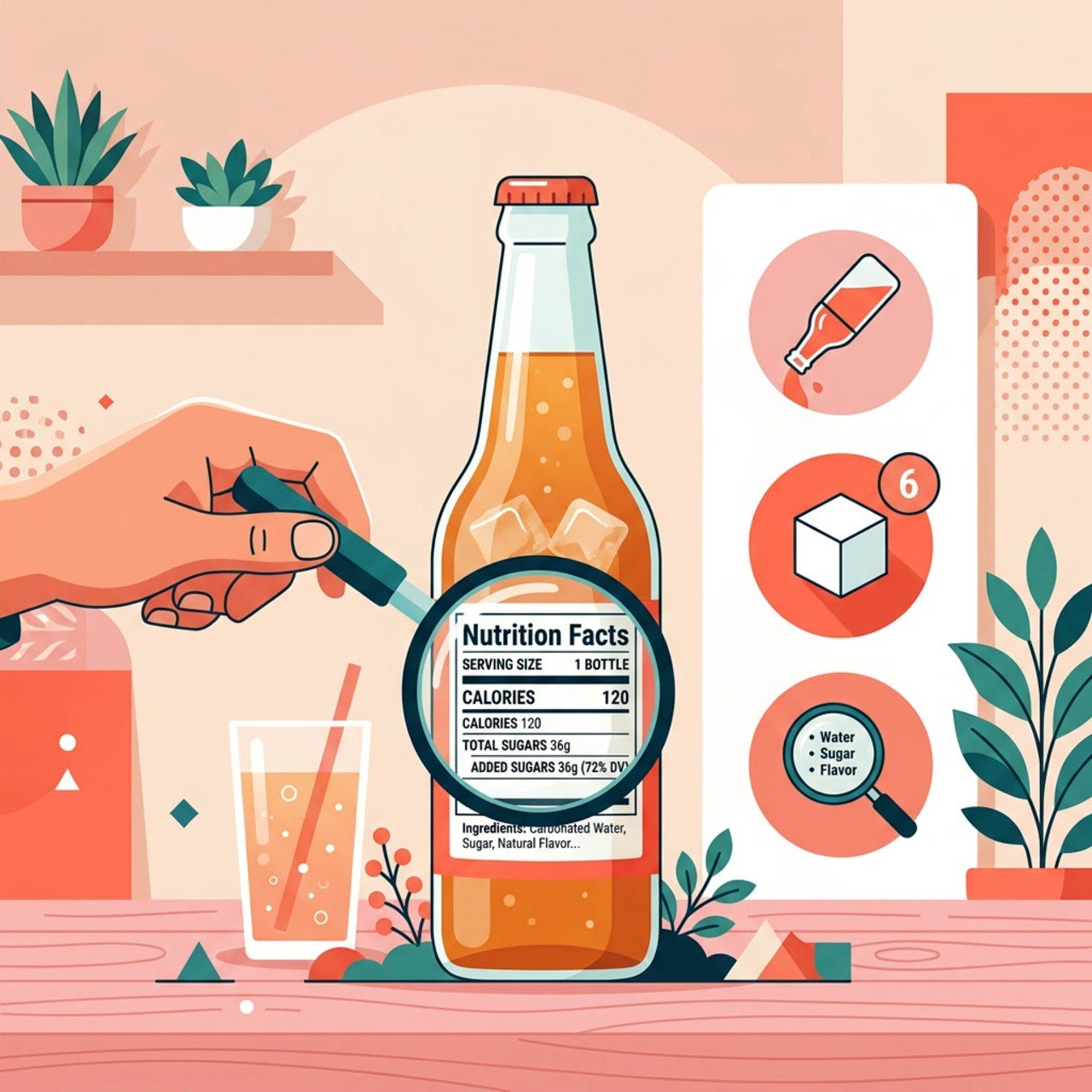
The 3-Second Sugar Check: A Quick Way To Vet Any “Healthy” Drink
Before anything labeled “healthy,” “natural,” or “light” goes in your cart, give it three seconds:
- Flip it over. Find “Added Sugars” on the nutrition label, not “Total Sugars,” which includes sugar that occurs naturally too.
- Compare it to 6 grams. That’s roughly a quarter of the AHA’s full daily added-sugar limit for women (25g). If one serving already eats a quarter of your day, it belongs in the treat column, not the hydration column.
- Scan the first five ingredients. If cane sugar, high-fructose corn syrup, or “fruit juice concentrate” shows up that early, the word “healthy” on the front label is doing more marketing than nutrition.
If a drink fails steps two and three, that’s your answer. No nutrition degree required.
Sugar & Sodium Snapshot: 8 “Healthy” Drinks Compared
| Drink | Sugar (Per Standard Serving) | Sodium | Verdict |
|---|---|---|---|
| Store-Bought Smoothie (12oz) | 30–40g | Low | Occasional treat, not a staple |
| Sweetened Almond/Soy Milk (8oz) | 7–15g added | Low | Choose unsweetened |
| Diet Soda (12oz) | 0g sugar (artificial sweetener) | Low | Fine occasionally |
| 100% Fruit Juice / OJ (8oz) | ~23g | Low | Limit to a 4oz pour |
| V8 Original (8oz) | 8g (no added sugar) | 640mg | Choose Low Sodium version |
| Sports Drink (12oz) | ~21g | Moderate | Only for 60+ min workouts |
| Energy Drink (16oz) | 54–62g | Varies | Limit sharply |
| Kombucha (8oz) | 6–20g | Low | Check label, watch serving size |
Join Our Mailing List
Join thousands of women inside our community and receive our free guide, 10 Actions That Support Permanent Weight Loss — the exact behavioural shifts that make the difference between a two-week attempt and a lasting transformation.
No restriction plans. No guilt. Just what actually works — for real women with real lives.
The Healthy Swap Table
| Instead Of | Try This | Why It Works |
|---|---|---|
| Store-bought smoothie | Homemade smoothie, whole fruit + unsweetened milk | You control the sugar |
| Sweetened almond milk | Unsweetened almond or soy milk | Cuts 7–15g of added sugar |
| Diet soda | Sparkling water + splash of 100% juice | Skips the artificial sweetener question mark |
| Full glass of fruit juice | Whole fruit, or a 4oz pour | Keeps the fiber, cuts the sugar spike |
| Original V8 | V8 Low Sodium | Cuts sodium by nearly 80% |
| Sports drink (casual workout) | Water | Covers real everyday hydration needs |
| Energy drink | Black coffee or matcha | Alertness without the sugar crash |
| Kombucha (whole bottle) | Kombucha, one labeled serving | Keeps added sugar in check |
Why This Matters More After 40
The mechanism behind that shift is worth understanding, because it explains why the same glass of juice hits differently at 45 than it did at 25.
According to University Hospitals menopause specialist Jean Marino, CNP, declining estrogen reduces leptin, the hormone that signals fullness, while disrupted sleep raises ghrelin, the hormone that signals hunger: a combination that makes it easier to reach for a “healthy” drink and harder to notice you’ve had too much of it.
At the same time, the drop in estrogen makes cells less responsive to insulin, so the same sugar spike that used to clear quickly now tends to linger and get stored as visceral fat around the midsection rather than burned off.
None of that means the situation is out of your hands. It means the 3-Second Sugar Check below is doing more work for you now than it would have a decade ago.
Join thousands of women inside our community and get our free guide, 10 Actions That Support Permanent Weight Loss: the practical, sustainable habits that turn everything you just read into real, lasting results.
The Bottom Line
None of this means swearing off smoothies forever or never touching a diet soda again. It means reading the label with the same scepticism you’d bring to a salesperson’s pitch, because that’s essentially what “healthy” on a drink label often is: marketing copy, not a nutrition fact.
Run the 3-Second Sugar Check, lean on the swap table above, and you’ll walk out of the drinks aisle with something that actually supports the work you’re already putting in everywhere else: your workouts, your meals, and your patience with yourself.
The frustration of feeling like you’re doing everything right and still not seeing results often traces back to something this small and this fixable - not a lack of discipline, just a label that was never telling you the whole story.
Glossary Of Key Terms
- Added Sugars: Sugars and syrups that are added to foods or beverages when they are processed or prepared, distinct from naturally occurring sugars.
- Aspartame: A non-caloric artificial sweetener often used in diet sodas, classified by the WHO as a Group 2B possible carcinogen.
- Electrolytes: Minerals in the body (found in sports drinks) that carry an electric charge and are essential for hydration and muscle function during intense exercise.
- Free Sugars: A term used by the WHO that includes all added sugars plus the sugars naturally present in fruit juices and concentrates.
- Ghrelin: A hormone that signals hunger to the brain; levels can rise due to disrupted sleep, often during perimenopause.
- Leptin: A hormone responsible for signaling fullness; its effectiveness can decline as estrogen levels drop.
- Satiety: The feeling of being full or satisfied after consuming food or drink, which is often not triggered by liquid calories.
- Three-Second Sugar Check: A simplified diagnostic method used to quickly vet the nutritional value of a drink by checking added sugars and the first five ingredients.
- Visceral Fat: Body fat that is stored within the abdominal cavity and around internal organs, often linked to sugar spikes and hormonal changes.
- Vitamin Fortification: The process of adding micronutrients (vitamins and minerals) back into beverages, such as plant milks, to improve their nutritional profile.
FAQ
What Makes A Drink Unhealthy?
A drink becomes unhealthy when it’s high in added sugars, artificial sweeteners, sodium, or calories relative to the nutrients it actually delivers. The label word “healthy” is not regulated the way “organic” is, so it’s worth checking the nutrition panel yourself rather than trusting the front of the bottle.
Which Seemingly Healthy Drinks Should I Watch Out For Most?
Store-bought smoothies, 100% fruit juice, and energy drinks are the biggest offenders because their sugar content routinely rivals or beats soda, even though they’re marketed as the opposite. Sports drinks carry less sugar than soda, but they’re still an unnecessary sugar hit outside of genuinely intense, hour-plus workouts.
How Can I Spot Hidden Sugar On A Label?
Use the 3-Second Sugar Check above: look for “Added Sugars” specifically, compare it to 6 grams, and scan the first five ingredients for cane sugar, high-fructose corn syrup, or juice concentrate.
What Are The Health Risks Of Drinking Too Many Sugary Drinks?
Regularly consuming sugary drinks is linked to weight gain, increased risk of type 2 diabetes, and cardiovascular strain, largely because liquid calories don’t trigger the same fullness signal as food, making them easy to overconsume.
Are Diet Or Zero-Calorie Drinks A Better Alternative?
They’re lower in calories and FDA-approved as safe within daily intake limits, but the 2023 WHO classification of aspartame as a possible carcinogen, plus research linking artificial sweeteners to gut microbiome changes, means “diet” is a reasonable occasional choice rather than an unlimited one.
What Are The Healthiest Drink Options?
Plain water, unsweetened tea, black coffee, unsweetened plant milk, and coconut water in a single serving are the choices most likely to support your goals without hidden sugar or sodium.
Is Coconut Water Actually Healthier Than Regular Water?
Not necessarily. Coconut water is genuinely lower in sugar than soda and a reasonable option, but there’s no strong evidence it hydrates better than plain water, and it’s easy to accidentally drink two servings from one bottle without noticing.