


Losing Weight Without Being Hungry: Why You Feel Starving (And How To Stop)
The Science Of Satiety: Proven Strategies For Losing Weight Without Being Hungry
![Socrates (born c. 470 bce, Athens [Greece]—died 399 bce, Athens) was an ancient Greek philosopher whose way of life, character, and thought exerted a profound influence on Classical antiquity and Western philosophy.](https://berqwp-cdn.sfo3.cdn.digitaloceanspaces.com/cache/womensleanbodyformula.com/wp-content/uploads/2026/04/Socrates-jpg.webp?bwp "Socrates, an ancient Greek philosopher")
The secret of change is to focus all of your energy not on fighting the old, but on building the new.
Socrates
Summary (TL;DR)
Feeling hungry while losing weight isn't a willpower problem. When you cut calories, your body raises ghrelin (your hunger hormone) and lowers leptin (your fullness signal). But you can push back. Eating more protein, filling your plate with high-volume foods, prioritising sleep, and drinking water before meals all blunt that biological hunger drive. The F.U.L.L. Method ties it all together in four practical steps.
You're eating less. You're trying hard. And you're absolutely miserable because you're hungry all the time.
Sound familiar? Here's what nobody tells you: that hunger isn't a sign you're doing something wrong. It's your body doing exactly what it was designed to do. When calories drop, your hormones shift in a way that makes food feel more urgent, more tempting, and harder to resist.
Losing weight without being hungry isn't about white-knuckling your way through cravings. It's about understanding why your body creates them. Use evidence-backed strategies to change the game.
This article walks you through the biology of hunger during weight loss, the foods and habits that genuinely keep you full, and a four-step method you can start today.
Medical & Referral Disclaimer
The information in this article is for educational purposes only and is not a substitute for medical advice. Weight loss results vary depending on individual health status, age, hormonal profile, and other factors. If you have a history of disordered eating or a diagnosed health condition, please consult a registered dietitian or healthcare provider before making significant changes to your eating patterns.
Key Takeaways
- When you eat less, your body raises ghrelin (hunger hormone) and lowers leptin (fullness hormone). This is biology, not a failure of willpower.
- Protein is the most filling macronutrient: increasing it to 25–30% of calories can reduce daily calorie intake by hundreds without deliberate restriction.
- High-volume, low-calorie foods like leafy greens, broth-based soups, and berries let you eat more food for fewer calories.
- Soluble fibre forms a gel in your gut that slows digestion and keeps you full for hours after eating.
- Sleeping fewer than 7 hours raises ghrelin by up to 28% and lowers leptin by 18%, making hunger much harder to manage.
- Drinking 500 ml of water 30 minutes before a meal physically triggers stretch receptors in your stomach that signal fullness.
- The F.U.L.L. Method (Fill, Upgrade, Leverage, Linger) is a practical four-step system for managing hunger while in a calorie deficit.
Video Overview
Why Losing Weight Makes You Feel Hungrier Than Ever
You're not imagining it. The hunger you feel when you're in a calorie deficit is real, measurable, and driven by biology. When your body senses fewer calories coming in, it triggers a hormonal response designed to push you back toward eating. Two hormones sit at the centre of this: ghrelin and leptin.
Ghrelin is produced in your stomach and tells your brain it's time to eat. Research published in Obesity shows that ghrelin levels rise significantly during caloric restriction, making you feel hungrier than you did before you started losing weight. Leptin, on the other hand, is released by your fat cells to signal fullness. As you lose body fat, leptin levels drop, weakening that "I'm satisfied, stop eating" signal.
The result? You eat less, but you feel hungrier. Not because your portions are too small, but because your body is actively working to pull you back to your previous weight. Researchers call this adaptive energy compensation, and it's one of the main reasons weight loss is harder to sustain than it is to start.
This isn't a willpower problem. It's a physiological problem. And once you understand that, you can start working with your biology instead of fighting it.
There's also a psychological layer. When food feels restricted or forbidden, your brain assigns it more urgency. Studies show that even the thought of dieting can increase food preoccupation and cravings. That's exactly why the most sustainable nutrition strategies focus on what you're adding to your plate, not just what you're removing.
Table 1: Hunger Hormones At A Glance: how key hormones respond to a calorie deficit, and what you can do to influence them.
| Hunger Hormone | What It Does | What Happens During A Calorie Deficit |
|---|---|---|
| Ghrelin | Signals hunger to the brain | Rises, making you feel significantly hungrier |
| Leptin | Signals fullness from fat cells | Falls as body fat decreases |
| Cortisol | Stress hormone; increases appetite | Rises with chronic stress and poor sleep |
| Peptide YY | Released after eating; reduces appetite | Boosted by protein and fibre intake |
| GLP-1 | Gut satiety hormone | Stimulated by fibre-rich and fermented foods |

Does Eating More Protein Really Help With Hunger?
Yes, and the evidence is solid. Protein is the most filling macronutrient. In a carefully designed randomised controlled trial, increasing protein to 30% of total daily calories reduced calorie intake by an average of 441 calories per day without any deliberate restriction. Participants simply felt fuller and ate less. For women trying to manage hunger while losing weight, increasing protein is one of the most impactful strategies available.
Protein works through several pathways at once. It raises Peptide YY (a gut hormone that reduces appetite) and suppresses ghrelin more effectively than carbohydrates or fat. It also takes longer to digest, so you stay satisfied for longer after each meal.
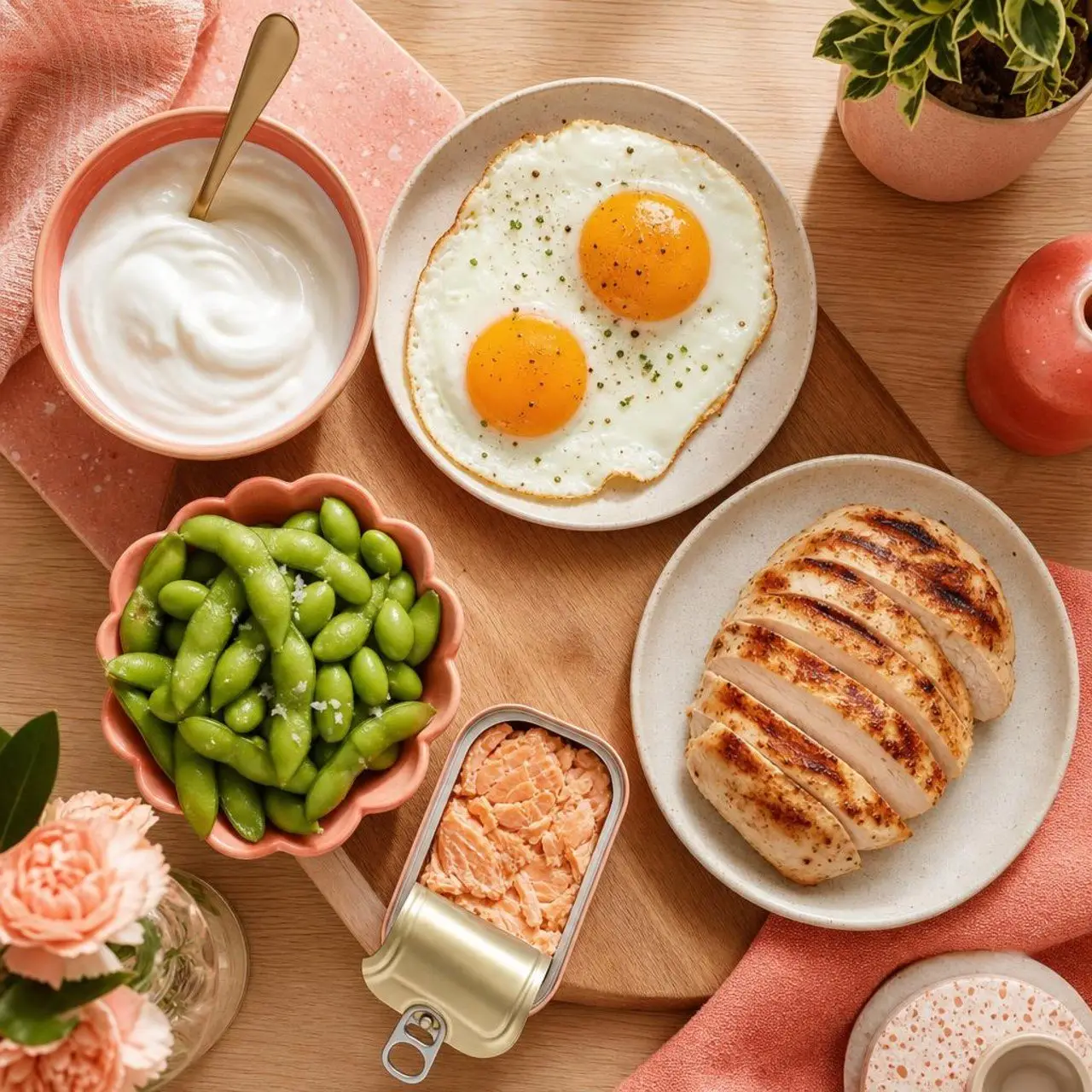
For a woman eating 1,400 calories per day, 25–30% protein means roughly 87–105 grams daily. That sounds like a stretch, but it's very achievable when spread across meals: two eggs and Greek yogurt at breakfast, canned salmon at lunch, chicken breast or lentils at dinner.
If you're in perimenopause or beyond, this matters even more. Protein needs increase with age, and lower intake accelerates the muscle loss that slows metabolism over time. A high-protein eating approach is one of the most evidence-supported tools for protecting muscle while in a deficit.
Here are practical protein targets for common foods:
- Greek yogurt (plain, full-fat): 17g per 170g serving
- Canned salmon: 22g per 85g serving
- Chicken breast: 26g per 85g serving
- Lentils (cooked): 18g per 200g serving
- Edamame: 17g per 155g serving
- Eggs: 6g per large egg
- Cottage cheese: 14g per 110g serving
What Foods Keep You Full The Longest?
The answer comes down to energy density. Foods with low energy density give you a large physical volume for very few calories. Your stomach has stretch receptors that signal fullness based on how much space food takes up, not how many calories it contains. Filling your plate with high-volume, low-calorie foods like leafy greens, broth-based soups, and whole fruits means you feel just as full on fewer calories.
The concept is called volumetrics, developed by Penn State nutrition researcher Barbara Rolls. The core idea is straightforward: eat more food by choosing foods that are mostly water and fibre. They bulk up your plate and your stomach without adding a lot of calories.
Think of it this way. A small bag of pretzels (100g) has around 380 calories and leaves most people hungry within 30 minutes. A large bowl of mixed greens, cucumber, cherry tomatoes, and grilled chicken has roughly the same calories, takes much longer to eat, and keeps you full for hours.
Starting your main meal with a broth-based soup or a large salad is one of the simplest applications of this. Research shows that eating a low-calorie soup before a main course can reduce total meal-time calorie intake by up to 20%.
Table 2: High-Volume, Low-Calorie Foods: fill your plate and your stomach without blowing your calorie target.
| Food | Serving Size | Calories | Protein (g) | Fibre (g) |
|---|---|---|---|---|
| Mixed leafy greens | 200g | 40 | 3 | 4 |
| Cucumber | 200g | 30 | 1 | 1 |
| Strawberries | 200g | 64 | 1 | 4 |
| Broth-based vegetable soup | 350ml | 80 | 4 | 2 |
| Watermelon | 200g | 60 | 1 | 1 |
| Broccoli (steamed) | 200g | 70 | 6 | 5 |
| Zucchini (cooked) | 200g | 40 | 3 | 2 |
| Cauliflower (steamed) | 200g | 50 | 4 | 4 |
| Air-popped popcorn | 30g | 110 | 3 | 4 |
How Does Fibre Help You Stay Full While Losing Weight?
Soluble fibre is one of the most effective natural hunger suppressants available. When it reaches your gut, it absorbs water and forms a thick gel that slows digestion, blunts blood sugar spikes, and signals satiety hormones for hours after you eat.
A systematic review of 44 studies confirmed that increasing fibre intake significantly improves feelings of fullness, especially when combined with adequate fluid intake.
There are two types of dietary fibre, and both play a role:
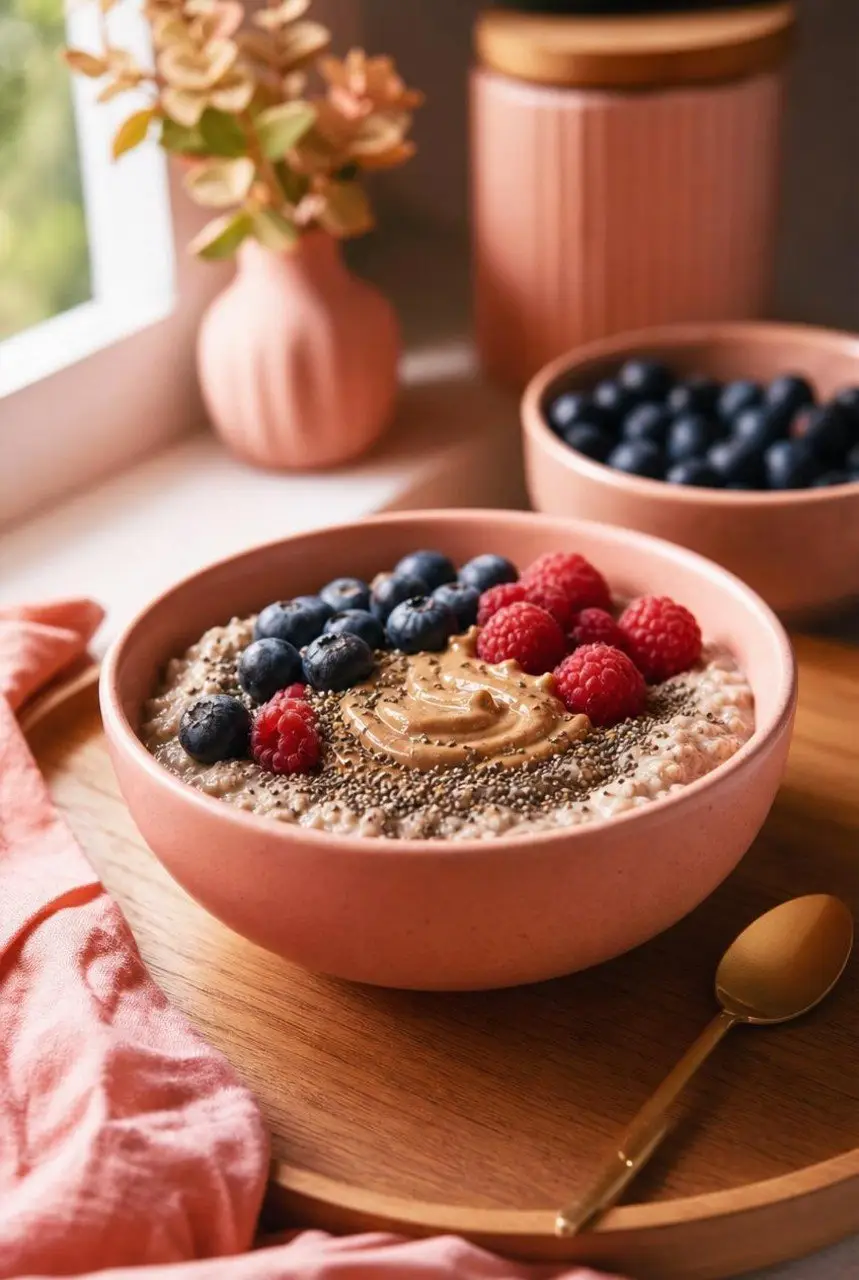
- Soluble fibre dissolves in water and becomes gel-like in your digestive tract. It slows gastric emptying (food stays in your stomach longer) and stimulates GLP-1, a gut hormone that directly reduces appetite. Strong sources include oats, chia seeds, flaxseed, apples, lentils, and black beans.
- Insoluble fibre doesn't dissolve but adds bulk to meals, making them feel more substantial. It's found in most vegetables, whole grains, and wheat bran. While it doesn't have the same hormonal satiety effect, it adds volume to your plate and supports digestive health.
Most women eat far less fibre than recommended. The general target is 25 grams per day, but research shows average intake sits closer to 15 grams. A bowl of rolled oats with chia seeds and berries at breakfast gets you to 8–10 grams before lunch. Add a portion of legumes at dinner, and some roasted broccoli, and you're close to the daily target without much effort.
One practical tip: add one fibre upgrade per meal, rather than overhauling everything at once. Swap white rice for brown rice or barley. Stir chia seeds into your yogurt. Add a handful of spinach to your scrambled eggs. Small, consistent changes compound over time.

The Hunger-Sleep Connection That Most Women Miss
Sleep and hunger are more tightly connected than most people realise, and it's one of the most overlooked factors in losing weight without being hungry.
In a landmark study published in PLOS Medicine, participants who slept just 5–6 hours per night had ghrelin levels 28% higher and leptin levels 18% lower compared to those who slept 7–9 hours. That's a significant hormonal shift that makes hunger feel much more intense, even when nothing else in your nutrition has changed.
Sleep deprivation also activates the brain's endocannabinoid system, which increases cravings for high-calorie, high-fat foods, the type that tend to show up as late-night snacking. If you've ever raided the kitchen at 11 pm despite eating a full dinner, poor sleep is almost certainly a contributing factor.
Cortisol makes things worse. Poor sleep raises cortisol (your stress hormone), and elevated cortisol further increases appetite and promotes fat storage, particularly around the midsection. For women in perimenopause, this is especially important because night sweats and disrupted sleep are already common, creating a hormonal environment that makes hunger management harder with a solid nutrition strategy.
Research published in PLOS ONE confirms that sleep restriction reduces the weight loss achieved through caloric restriction, even when total calorie intake is the same. In other words, poor sleep doesn't just make you feel hungrier. It actively undermines the results you're working toward.
Practical steps to protect your sleep:
- Keep your bedroom cool: around 18°C is considered optimal for sleep quality
- Cut caffeine off by 2 pm (it has a 5–6 hour half-life)
- Eat your last meal at least 2 hours before bed
- Reduce evening screen time to support melatonin production
- If night sweats are disrupting your sleep regularly, raise it with your doctor
Better sleep won't replace a good nutrition approach. But it will make everything else you're doing work significantly better.
Does Drinking Water Before Meals Actually Reduce Hunger?
Yes, and a randomised controlled trial backs it up clearly. Adults who drank 500 ml (about two cups) of water 30 minutes before each main meal lost 44% more weight over 12 weeks compared to those who did not, with no other changes to their eating. The mechanism is physical: water expands your stomach volume, triggering stretch receptors that send a fullness signal to your brain before you've taken your first bite.
There's also a thirst-hunger confusion factor worth knowing. The hypothalamus (the brain region that regulates basic drives, including hunger and thirst) can misinterpret mild dehydration as hunger. Drinking water before you eat helps your brain distinguish between the two.
A few simple ways to make this a consistent habit:
- Keep a full glass near where you cook or eat
- Make it a ritual: fill it before you start preparing your meal
- Add a slice of lemon or cucumber if plain water feels uninspiring
- Order water as the first thing when eating out
Water-rich foods deliver a similar effect. Cucumber, broth-based soups, watermelon, and lettuce are all more than 90% water by weight. Building them into your meals means you're getting extra hydration alongside your hunger-managing fibre and protein. As part of evidence-based weight loss strategies for women, pre-meal water is one of the simplest and most accessible tools on the list.
Putting It All Together: The F.U.L.L. Method
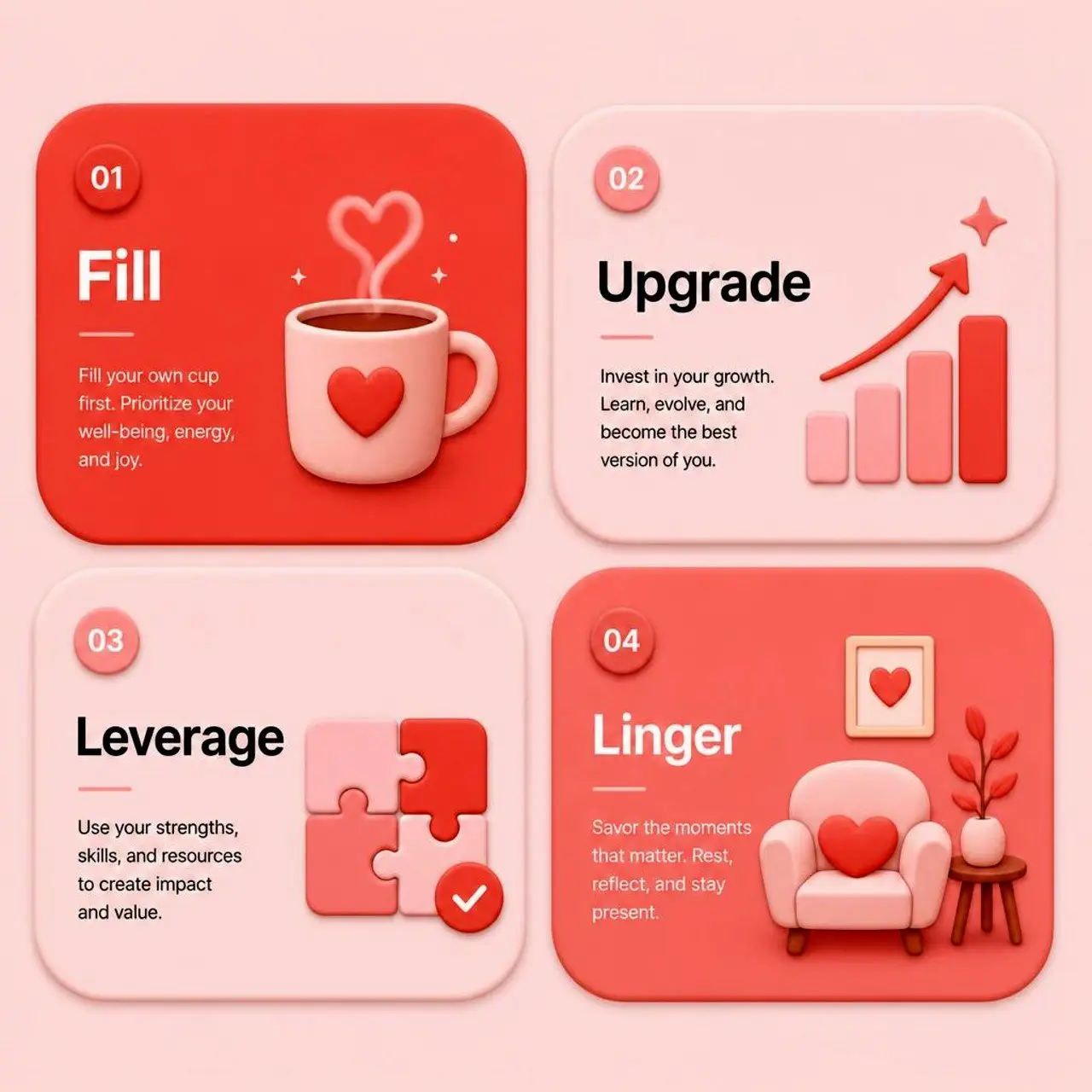
Strategy without a system is just good intentions. The F.U.L.L. Method is a practical four-step framework for managing hunger while losing weight, built around the four most consistently evidence-supported approaches covered in this article.
F: Fill Your Plate With Volume First
Start every meal with the highest-volume, lowest-calorie foods on your plate. Build your plate around a large portion of non-starchy vegetables (at least half the plate), then add your protein source, and then add your carbohydrate or healthy fat. This sequencing means you fill your stomach with the most nutrient-dense, least calorie-dense food before you get to the items that cost more calories.
U: Upgrade Your Protein At Every Meal
Aim for at least 20–30g of protein per meal. This is the single most impactful change most women can make for hunger management. If your current breakfast is toast with jam, swap it for eggs with Greek yogurt. If your lunch salad has minimal protein, add canned salmon or legumes. Small upgrades across three meals add up to a significant shift in daily satiety.
L: Leverage Sleep And Stress As Hunger Tools
This isn't optional. Poor sleep and chronic stress both push ghrelin up and leptin down, making hunger considerably harder to manage, regardless of what you eat. Protecting your sleep (7–9 hours) and managing stress through consistent daily habits isn't self-care fluff. A 10-minute walk, a few deep breaths before meals, and reducing evening screen time are all legitimate hunger management strategies.
L: Linger At The Table
It takes around 20 minutes for gut hormones to send a clear fullness signal to your brain after you start eating. If you eat quickly, you'll consume more than you need before that signal arrives. Putting your fork down between bites, chewing properly, and avoiding screens while eating reduces overall calorie intake without any sense of deprivation. It's one of the most underrated tools on this list, and one of the easiest to start today.
Join Our Mailing List
See how easily you can get fitter.
Sign up to get your free PDF report on 10 Actions That Support Weight Loss sent to your inbox!
If you're also thinking through the calorie side of this equation, understanding how many calories you actually need to lose weight safely is a useful companion to these hunger-management strategies. And if you've been making some of the common mistakes women make while losing weight (like cutting too aggressively or skipping protein) can make a meaningful difference when tackled alongside the F.U.L.L. Method.
If you want more practical, science-backed tools for women losing weight in their 40s and beyond, explore our weight loss resources for practical strategies that work with your hormones, not against them.
Related Articles
The Bottom Line
Hunger while losing weight is biological, not personal. Your body raises ghrelin, lowers leptin, and does everything it can to push you back toward eating more. That's not a weakness. That's your survival system doing its job.
But you're not powerless. Eating more protein, building high-volume plates, protecting your sleep, drinking water before meals, and slowing down at the table all make a measurable difference in how full you feel, without adding more calories or fighting yourself every hour of the day.
The F.U.L.L. Method gives you the framework: Fill your plate with volume, Upgrade your protein, Leverage sleep and stress management, and Linger at the table. Pick one step and start this week.
Glossary Of Key Terms
FAQ
Yes, and it's not a sign you're failing. When you reduce your calorie intake, your body responds by increasing ghrelin and decreasing leptin: a well-documented biological response to caloric restriction. The good news is that specific strategies can significantly reduce this biological hunger drive: increasing protein, eating high-volume foods, improving sleep quality, and drinking water before meals all make a real difference. Most women find that once they shift from "eating less" to "eating smarter," the constant hunger decreases meaningfully within one to two weeks of consistent changes.
Research supports increasing protein to about 25–30% of your total daily calories. For a woman eating 1,400 calories, that's roughly 87–105 grams of protein per day. A practical target: aim for 20–30g at each main meal and 10–15g at snacks. Greek yogurt, eggs, canned salmon, chicken breast, lentils, and cottage cheese are all solid, affordable options. If hitting your protein target is difficult from whole foods alone, a high-quality whey or plant-based protein powder can fill the gap without requiring a complete diet overhaul.
No single food wins outright, but broth-based soups and high-water-content vegetables consistently perform well in research. A bowl of vegetable soup before a meal can reduce total calorie intake by up to 20% without any deliberate effort to eat less. Foods like cucumber, zucchini, leafy greens, and berries have very low energy density, meaning you get a large physical volume for very few calories. The most effective strategy combines these high-volume foods with a protein source. That way, you get both physical fullness (volume) and hormonal satiety (from protein's effect on ghrelin and Peptide YY).
Yes. Soluble fibre, specifically, forms a gel in your digestive tract that slows gastric emptying and blunts blood sugar spikes. This creates a more gradual, sustained feeling of fullness compared to low-fibre meals. A review of 44 studies confirmed that increasing fibre intake improves satiety across a range of calorie levels. Good soluble fibre sources include oats, chia seeds, legumes, apples, and most vegetables. Aim for at least 25g per day. Since most women fall well short of this, even small, consistent increases tend to produce a noticeable difference in daily hunger levels.
Yes, particularly when you drink it before meals. A randomised controlled trial found that drinking 500 ml of water 30 minutes before each meal led to 44% greater weight loss over 12 weeks, with no other changes. Water physically expands your stomach and triggers stretch receptors that send a fullness signal before you've started eating. Beyond that, mild dehydration is often misread as hunger, so staying well hydrated throughout the day can reduce unnecessary eating. Water-rich foods like broth, cucumber, watermelon, and soups similarly contribute to this effect.
When you sleep fewer than 7 hours, ghrelin levels rise, and leptin levels fall, creating a hormonal environment that makes food feel more urgent and harder to resist. Research shows that sleep-deprived individuals experience significantly stronger cravings for high-calorie, high-fat foods. Cortisol also rises with poor sleep, and elevated cortisol further increases appetite. For women in perimenopause experiencing night sweats or broken sleep, addressing sleep quality is a direct hunger management strategy, not just a lifestyle nicety. Even one or two nights of better sleep can shift how hungry you feel the following day.
It varies, but most women notice a meaningful reduction in hunger within 2–4 weeks of applying consistent strategies: higher protein, more fibre, adequate sleep, and pre-meal water. The first 1–2 weeks of a calorie deficit tend to feel the hardest, as your body initially resists the change. As you build consistent habits and your body adjusts, hunger typically becomes more manageable. If severe hunger persists beyond 4–6 weeks despite applying these strategies, it may be worth revisiting your calorie target with a dietitian: your deficit may be too aggressive for your current needs.