Balanced Diet For Optimal Health Starts With Your Plate, Not Your Macros

Healthy does NOT mean starving yourself EVER. Healthy means eating the right food in the right amount.
KAREN SALMANSOHN
Summary (TL;DR)
A balanced diet for optimal health doesn't require an app, a macro calculator, or a food scale. In a year-long clinical trial that tracked 181 women on three completely different diets, the single biggest predictor of who lost the most weight wasn’t which diet they followed.
It was how consistently they stuck with it: simple, visual systems tend to get followed, while rigid number-tracking systems tend to get abandoned within a couple of months.
This guide walks you through the Balanced Plate Method, a proportion-based framework you build once and repeat for life, plus how your plate should shift with your hormones, your gut, and your actual schedule, not a 25-year-old's metabolism.
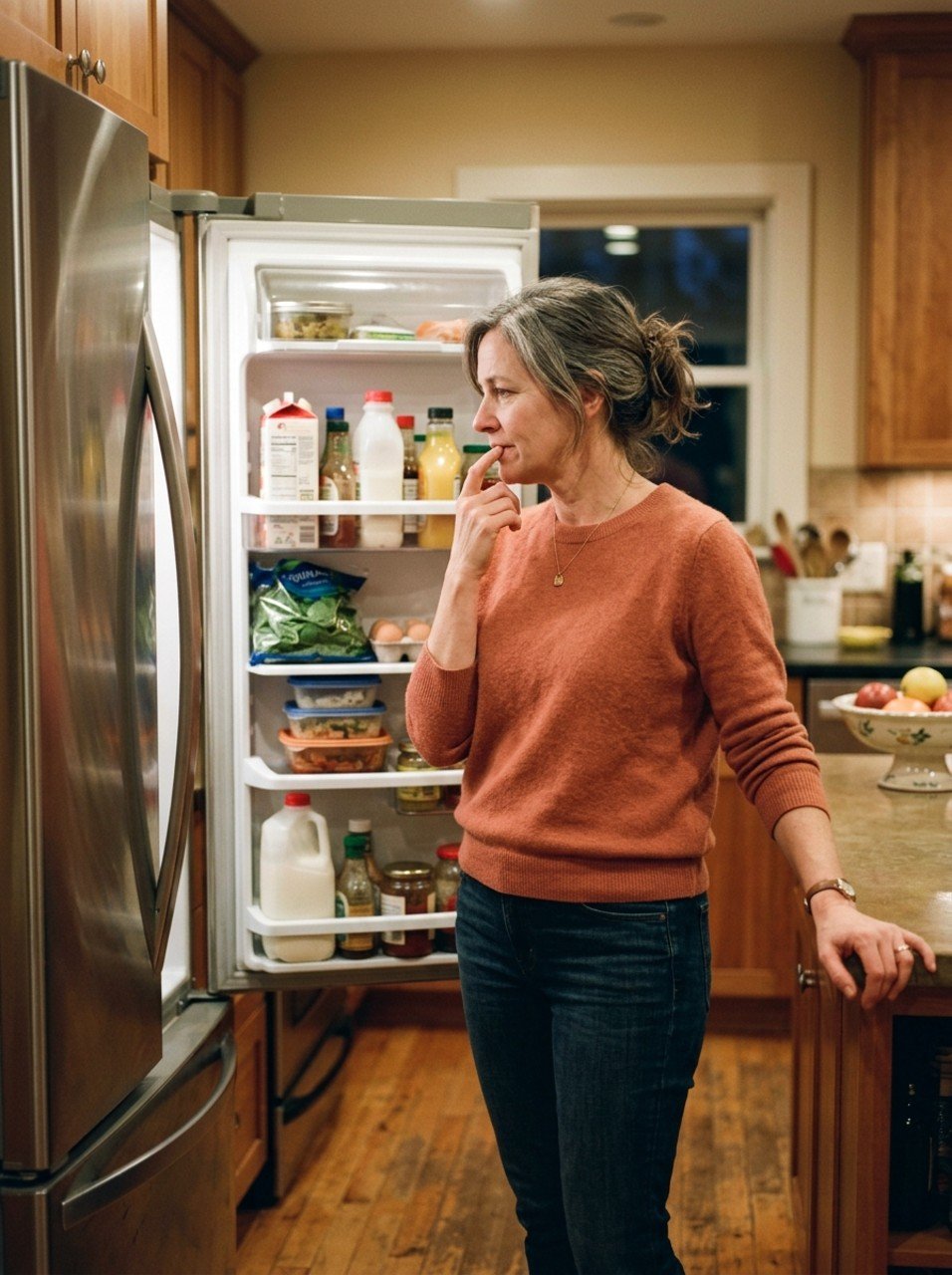
If you've ever stood in your kitchen holding a plate, genuinely unsure whether you're supposed to be counting calories, tracking macros, going low-carb, or "just eating clean," you're not alone, and you're not doing it wrong. The advice itself is the problem.
Search "balanced diet", and you'll get five different food pyramids, three conflicting macro splits, and at least one influencer telling you to fear a food that a registered dietitian would put on their own dinner plate.
That's not a knowledge gap on your part. It's what happens when an entire industry profits from making nutrition feel complicated. The frustration and decision fatigue you feel before you've even opened the fridge is a rational response to genuinely contradictory information.
Here's the part that actually simplifies things: the research on long-term success doesn't point toward more precision. It points toward whichever system you can actually sustain.
That's the entire premise of this guide: a plate-based framework, backed by real data on why it works better than counting for most women, especially once hormones start changing the rules.
Medical & Referral Disclaimer
This article is for informational and educational purposes only. It is not a substitute for professional medical advice, diagnosis, or treatment. Always consult your physician or a qualified healthcare provider before starting any new diet or exercise program, particularly if you have a history of disordered eating, diabetes, or another chronic health condition.
Key Takeaways
- Adherence beats diet type. In the landmark A TO Z Weight Loss Study, women who stuck most closely to their assigned diet lost significantly more weight over 12 months than less-adherent women on the same diet, regardless of whether that diet was Atkins, Zone, or Ornish.
- The Balanced Plate Method removes the daily decision-making that causes most people to abandon calorie or macro tracking within weeks.
- A real-world randomized trial found a non-counting, plate-based approach performed comparably to calorie counting for weight-related outcomes in adults using primary care nutrition support.
- Your balanced-diet needs change after 40. Preserving muscle mass becomes a bigger lever for metabolic health, which means protein needs typically go up, not down, with age.
- A balanced diet is a gut-health strategy, not just a calorie strategy. Fibre intake (from whole foods, not supplements) feeds the bacteria that influence digestion, inflammation, and even mood.
- You do not need to fear carbs, fat, or any single food group to eat a genuinely balanced, sustainable diet.
What Is A Balanced Diet, Really?
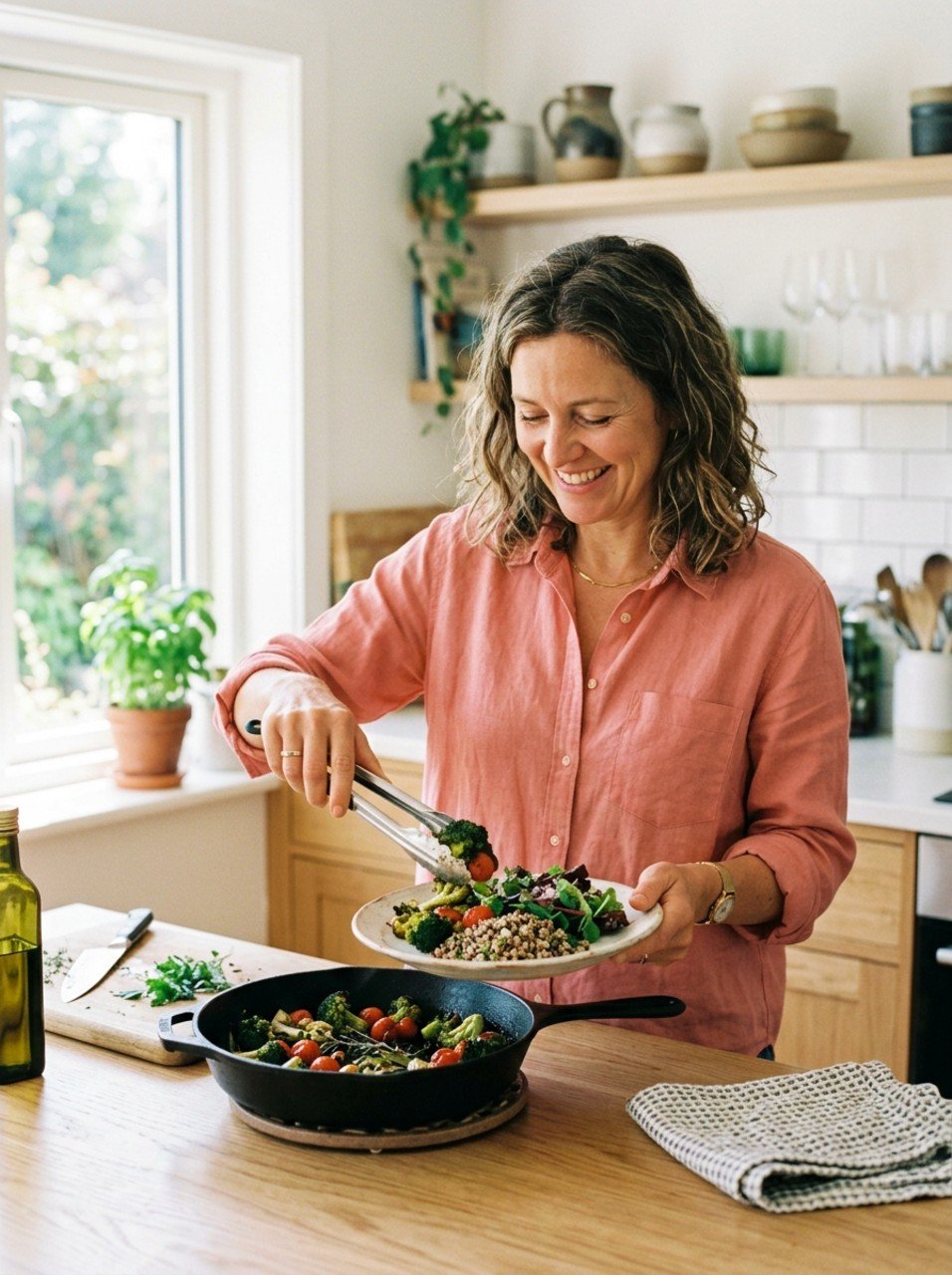
A balanced diet is a consistent pattern of eating that includes whole grains, lean protein, healthy fats, and a wide variety of fruits and vegetables in proportions that meet your body's needs. It isn't a single "perfect" meal or a strict rulebook.
The World Health Organization's healthy diet guidelines define it in almost identical terms: a variety of foods across food groups, at least 400g of fruit and vegetables daily, and limited free sugars, saturated fat, and salt.
Notice what's missing from that definition: calorie targets, macro ratios, and banned food lists. A balanced diet is a pattern you repeat most days, not a single meal you have to get perfectly right.
Why "Balanced Diet" Advice Feels So Confusing
Balanced-diet advice feels confusing because "balance" has been used to sell hundreds of contradictory diet philosophies, each claiming the others are wrong.
Low-carb programs say fruit is basically candy. High-carb programs say fat is the enemy. Somewhere in between, a genuinely simple concept (eat a variety of real food in reasonable amounts) got buried under competing sales pitches.
If you've felt intimidated opening a nutrition app, or frozen in the grocery aisle trying to remember whether today is a "carb day," that reaction makes complete sense. You're not missing a piece of knowledge everyone else has. You're reacting rationally to advice that was never internally consistent to begin with.
It's worth naming the quieter feeling beneath the confusion, too: for a lot of women, "eating healthy" has quietly become a source of guilt rather than care. A missed target on an app can feel like a personal failure, but it's actually just one data point in a system that was over-engineered from the start. You don't need a more complicated system to fix that feeling. You need a simpler one you can actually trust yourself to follow.
The Balanced Plate Method: A Framework That Skips The Macro Math
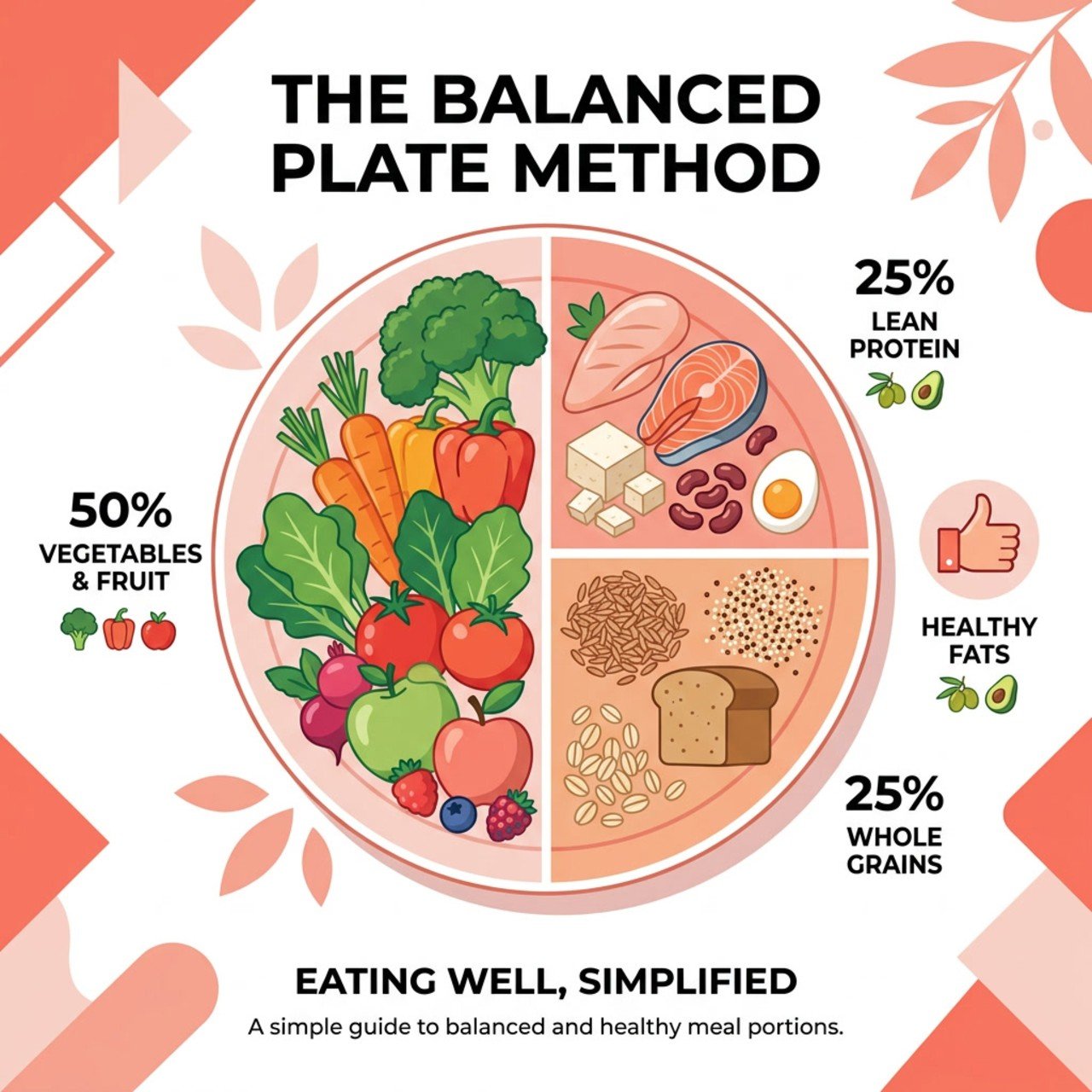
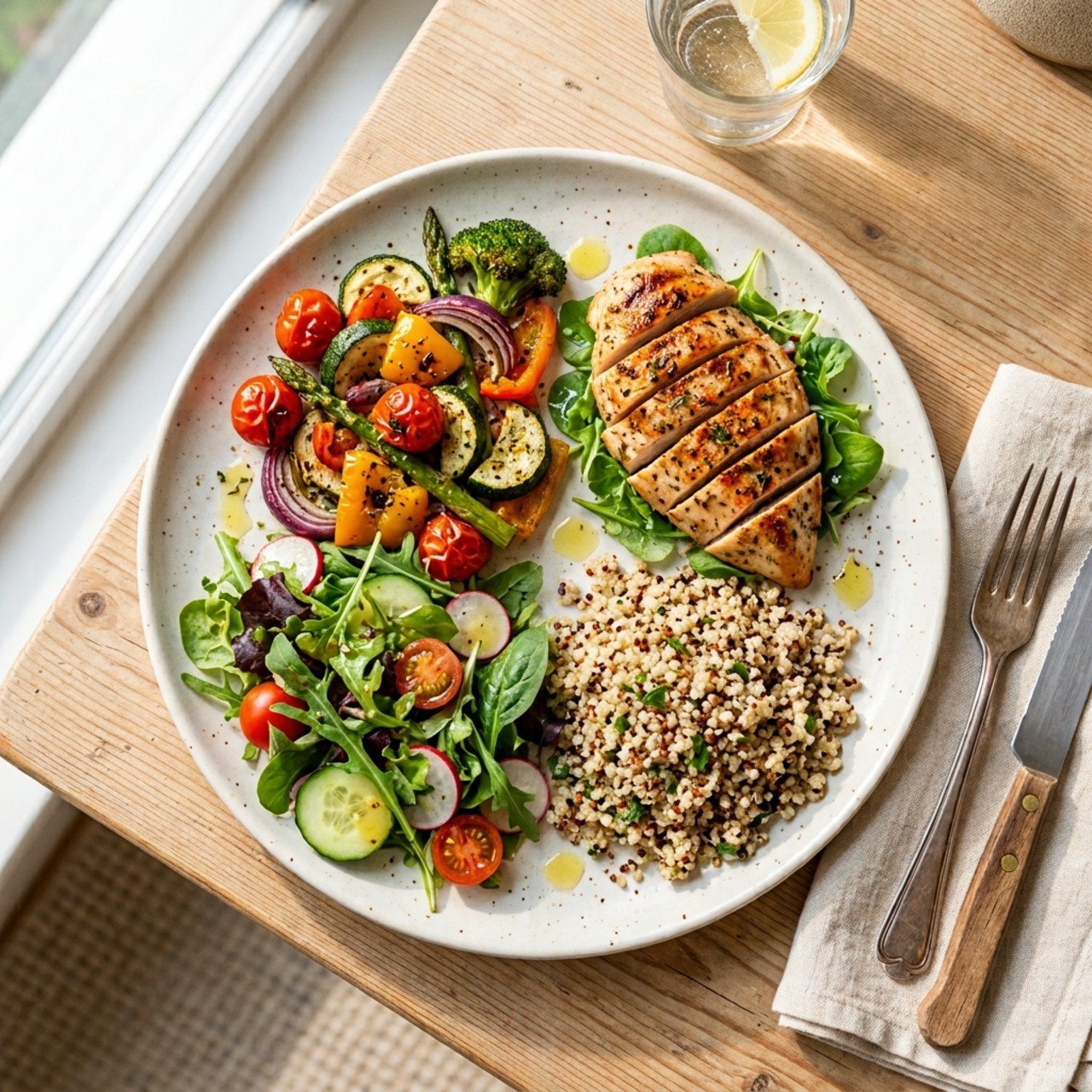
The Balanced Plate Method builds your meal by proportion, not by number: half your plate produce, one quarter lean protein, one quarter whole grains or starchy vegetables, plus a thumb-sized portion of healthy fat.
It's a simplified, WLBF-adapted version of the same visual framework used in the Harvard T.H. Chan School of Public Health's Healthy Eating Plate, built specifically so you never have to open an app to eat well.
| Plate Section | Portion | Examples |
|---|---|---|
| Vegetables & Fruit | Half the plate (mostly vegetables) | Leafy greens, broccoli, peppers, berries, an apple |
| Lean Protein | One quarter of the plate | Chicken, fish, eggs, tofu, beans, lean protein sources |
| Whole Grains / Starchy Veg | One quarter of the plate | Brown rice, quinoa, oats, sweet potato |
| Healthy Fats | A thumb-sized portion | Olive oil, avocado, nuts, seeds; see our guide to healthy fats and weight loss |
That's the entire framework. No app, no gram-weighing, no daily calorie total required to get started.
Why Adherence Beats Precision
Multiple lines of research show that how consistently you follow an eating pattern predicts your results better than which specific diet or tracking method you use.
In the A TO Z Weight Loss Study, published in the International Journal of Obesity, researchers followed 181 overweight women for a year on one of three very different diets: Atkins, Zone, or Ornish.
Within every single diet group, the women in the most-adherent third lost dramatically more weight than the least-adherent third on that same diet: an average of 8.3kg versus 1.9kg on Atkins, for example. The researchers' conclusion was blunt: strategies to improve adherence deserve more emphasis than the specific macronutrient composition of the diet itself.
That finding has since been echoed in real-world clinical care. A randomized trial published in the Annals of Family Medicine compared traditional calorie counting against a MyPlate-style, portion-based approach in 261 low-income, mostly Latina primary care patients over 12 months.
The plate-based group, who were never asked to count a single calorie, achieved comparable reductions in waist circumference to the calorie-counting group, with the plate method group also showing an improvement in systolic blood pressure at six months.
Neither approach "won" outright, but the plate method delivered similar results with a fraction of the daily mental load. Results in a different population could look somewhat different, but the core finding, that skipping calorie counting didn't cost these patients meaningfully worse outcomes, held up.
That mental load matters more than diet culture admits. A qualitative study of dieters' experiences with self-monitoring found that calorie counting is often perceived as excessively complicated and can encourage restrictive, anxious eating patterns for some dieters, while a simpler plate-based approach felt more sustainable to maintain over time.
That said, no single method suits everyone; if you have a history of disordered eating, any self-monitoring approach, plate-based or calorie-based, is worth discussing with a healthcare provider first. If you've ever quit a tracking app after a few good weeks, that wasn't a willpower failure. It's a well-documented pattern.
| Dimension | Calorie / Macro Counting | Balanced Plate Method |
|---|---|---|
| Daily time cost | Ongoing logging of every item eaten | A few seconds of visual portioning per meal |
| Tools required | App, food scale, running totals | Your own hand and a plate |
| Learning curve | Steep: food databases, serving sizes, hidden calories | Learn once, repeat for life |
| Typical long-term adherence | Tends to decline sharply within the first few months | Designed to be sustained indefinitely |
| Best for | Specific performance, medical, or physique goals | General health, sustainable weight management, most everyday eating |
Do You Need To Track Calories At All?
No. For most women pursuing general health and sustainable weight management, the Balanced Plate Method covers the fundamentals without any calorie tracking.
If you enjoy tracking, or you're working toward a specific performance or medical goal, calorie and macro data can still be a useful add-on layer. It just isn't the mandatory starting point most nutrition content assumes it is.
How Your Balanced-Diet Needs Shift With Your Hormones
As oestrogen declines through perimenopause, muscle mass becomes harder to maintain, and since muscle drives much of your daily calorie burn, your balanced plate needs more protein than it did in your 20s and 30s.
This is precisely where generic "balanced diet" content written for a general audience falls short: it doesn't account for a woman's changing physiology at all.
Shifting hormones also affect how your body handles blood sugar. Meals built around fibre, protein, and healthy fat (the exact structure of the Balanced Plate Method) blunt the blood-sugar spikes that can otherwise worsen energy crashes, cravings, and mood swings during this transition.
If you've noticed your stress and cortisol levels seem to hit your midsection harder than they used to, blood sugar stability is one of the levers you actually have some control over.
Protein: The Nutrient Most Women Under-Eat After 40
Most women need more protein, not less, as they get older, because protein intake is one of the clearest tools available for preserving muscle against age-related decline.

Research on healthy older women found that a minimum intake of around 1.17g of protein per kilogram of body mass per day was associated with maintaining a higher relative skeletal muscle mass, noticeably above the standard 0.8g/kg general adult guideline, which was never designed with muscle preservation in ageing women in mind.
For a deeper breakdown of how to hit that target without overhauling your entire diet, see our full high-protein diet plan for sustainable weight loss.
If you're exploring supplements to support this transition, it's worth reading which ones are actually backed by evidence before spending money on them. Our guide to perimenopause supplements that actually work covers exactly that.
The Balanced Diet–Gut Health Connection
A genuinely balanced diet is one of the most direct levers you have over gut health, because the fibre in whole plant foods is what feeds the beneficial bacteria living in your digestive tract.
According to the Harvard T.H. Chan School of Public Health, most adults fall well short of the recommended 25–38g of fibre per day, and that gap has real consequences for digestion, blood sugar regulation, and even the production of compounds gut bacteria use to reduce inflammation throughout the body.
The good news: the Balanced Plate Method already delivers most of this. Half a plate of vegetables and fruit, plus whole grains instead of refined ones, moves you toward that fibre target automatically. No separate "gut health protocol" required.
Foods To Prioritize On Your Plate
- Fibre-rich vegetables and legumes: broccoli, lentils, beans, and leafy greens support both digestion and satiety.
- Fatty fish and plant-based omega-3 sources: salmon, sardines, walnuts, and flaxseed support an anti-inflammatory eating pattern.
- Whole, minimally processed grains: oats, quinoa, and brown rice provide steadier energy than their refined counterparts.
- Fermented foods: plain yoghurt, kefir, and sauerkraut introduce beneficial bacteria that support a diverse gut microbiome.
- A genuine variety of colour: different plant pigments correspond to different micronutrients and antioxidants, and no single "superfood" covers them all.
Foods To Limit Or Rethink
- Ultra-processed snack foods: not because they're "bad," but because they're easy to overeat and typically displace more nutrient-dense options.
- Excess added sugar: the WHO recommends keeping free sugars under 10% of total energy intake, and ideally closer to 5% for additional benefit.
- Frequent fried and heavily processed fats: these are best treated as occasional, not default.
- Excess sodium from packaged foods: the WHO's 5g-per-day salt guideline is easy to exceed without realising it, mostly through packaged and restaurant food rather than the salt shaker at home.
- Liquid calories that don't register as "food": sugary coffee drinks, juice, and alcohol add up quickly without ever showing up on a plate.
Building Your Plate: Practical Portion Control Tips
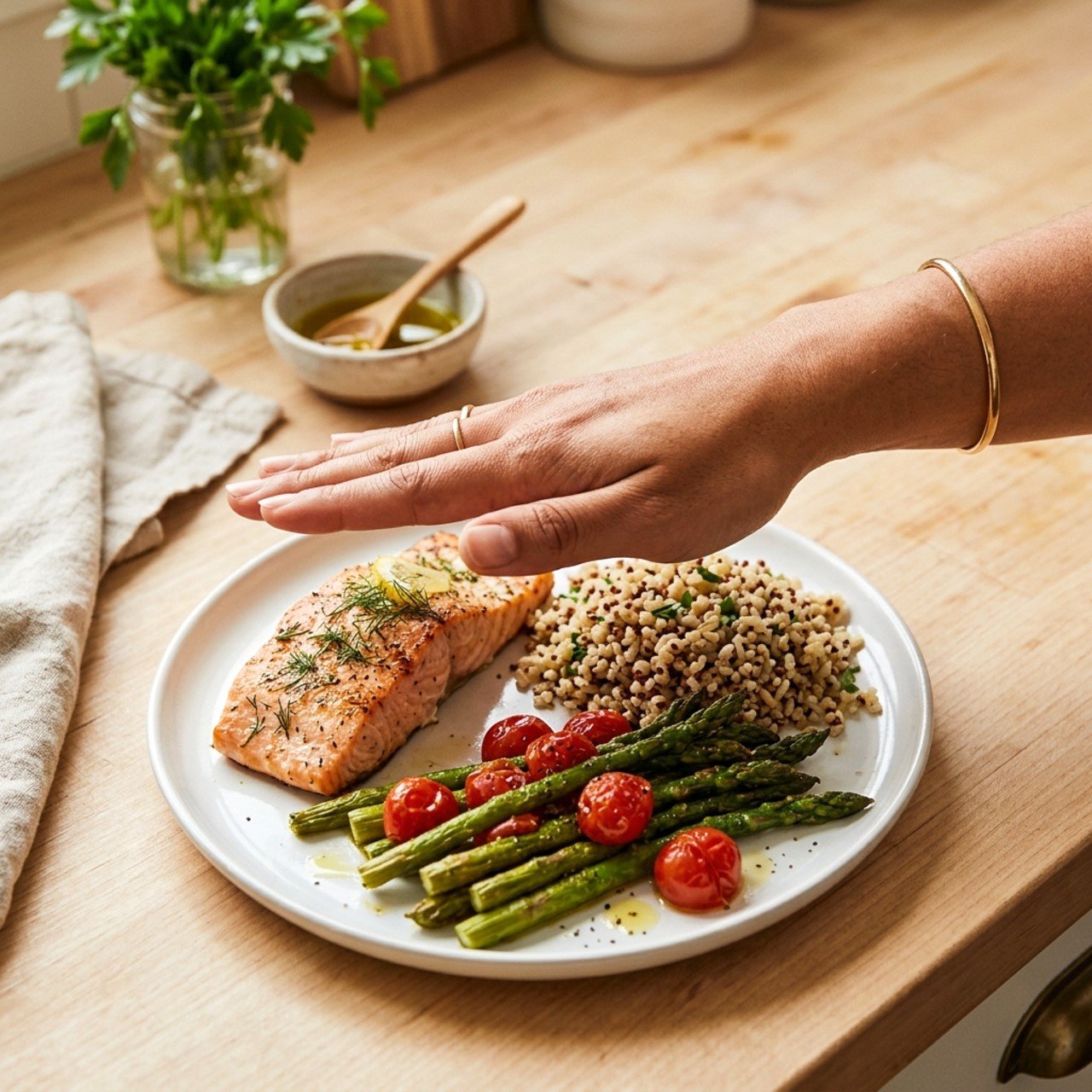
You can estimate every portion on the Balanced Plate Method using your own hand, without a food scale or an app.
A palm-sized portion of protein, a cupped handful of grains or starchy vegetables, a fist-sized portion of vegetables, and a thumb-sized portion of fat translate the plate proportions above into something you can eyeball anywhere, from your own kitchen to a restaurant table.
- Prep in batches, not daily. Cooking a base of grains, protein, and roasted vegetables once or twice a week removes the "what's for dinner" decision fatigue that derails healthy eating on busy days. Our guide to healthy diet meal plans for busy lives has a full framework for this.
- Front-load vegetables at every meal. Serving your vegetables first, while you're hungriest, naturally increases the odds you'll finish that half of the plate.
- Drink water before you decide you're hungry. Thirst and hunger cues overlap more than most people realise, and staying ahead of hydration supports both energy and digestion.
- Slow down at the start of the meal. The first few minutes of eating more slowly give your body time to register fullness signals before you've cleared the plate.
- Keep one "good enough" meal in your back pocket. A rotisserie chicken, a bagged salad kit, and a microwavable grain pouch build a compliant Balanced Plate in under five minutes on the nights nothing else gets done.
None of this requires eating "perfectly" every day. A balanced diet is judged by your pattern across weeks and months, not any single plate.
Ready to turn this plate framework into a daily habit without overthinking every meal? Grab our free guide, 10 Actions That Support Permanent Weight Loss, built to help you carry this exact approach into the rest of your routine.
The Bottom Line
A balanced diet for optimal health isn't a stricter set of rules. It's a simpler one.
Build your plate from real, varied food in the proportions above, let your protein and fibre intake do more work as your hormones shift, and stop treating a missed macro target as a failure.
The research is consistent: the eating pattern you can actually sustain will outperform the "perfect" one you abandon by week six.
Glossary Of Key Terms
- Adherence: The degree to which an individual consistently follows a specific eating pattern or dietary plan over time.
- Balanced Plate Method: A visual framework for meal composition consisting of 1/2 vegetables/fruit, 1/4 lean protein, and 1/4 whole grains/starchy vegetables, plus healthy fats.
- Free Sugars: Sugars added to foods and drinks by the manufacturer, cook, or consumer, as well as sugars naturally present in honey, syrups, and fruit juices.
- Gut Microbiome: The complex community of bacteria living in the digestive tract that is influenced by fiber intake and affects overall inflammation and digestion.
- Macro Math: The practice of calculating and tracking the specific gram amounts of carbohydrates, proteins, and fats consumed daily.
- Oestrogen: A hormone that, when declining during perimenopause, impacts a woman's ability to maintain muscle mass and regulate blood sugar.
- Perimenopause: The transitional period leading up to menopause characterized by shifting hormones that alter a woman's metabolic and nutritional needs.
- Processed Foods: Food items that have been altered from their natural state, often containing high levels of added sodium, sugar, and unhealthy fats.
- Satiety: The feeling of fullness and satisfaction after eating, which is often supported by high fiber and protein intake.
- Whole Grains: Minimally processed grains like quinoa, oats, and brown rice that retain their fiber content and provide steady energy.
FAQ
What Is A Balanced Diet For Optimal Health?
A balanced diet for optimal health is an eating pattern that includes a variety of whole foods (vegetables, fruit, lean protein, whole grains, and healthy fats) in proportions that meet your body's needs, repeated consistently over time. It isn't a single perfect meal or a strict calorie target; it's the overall pattern that matters most.
Do I Have To Count Calories To Eat A Balanced Diet?
No. The Balanced Plate Method builds meals by proportion rather than by number, and research comparing plate-based approaches to calorie counting has found comparable results for many people, without the daily tracking burden. Calorie counting can still be a useful optional layer if you enjoy it or have a specific goal in mind.
What Should A Balanced Plate Look Like?
Aim for roughly half your plate as vegetables and fruit, one quarter as lean protein, one quarter as whole grains or starchy vegetables, and a thumb-sized portion of healthy fat. This mirrors the framework used by Harvard's Healthy Eating Plate and gives you a repeatable visual template for almost any meal.
How Does A Balanced Diet Change After 40?
As oestrogen declines during perimenopause, muscle mass becomes harder to maintain, so protein needs typically increase rather than decrease. A balanced diet after 40 usually means leaning slightly more on protein and fibre-rich carbohydrates to support blood sugar stability, energy, and muscle preservation.
How Is A Balanced Diet Connected To Gut Health?
The fibre found in vegetables, fruit, legumes, and whole grains directly feeds the beneficial bacteria in your gut microbiome. A genuinely balanced diet, built around whole plant foods, is one of the most reliable ways to support digestion and a diverse gut microbiome without a separate supplement protocol.
Can A Balanced Diet Help With Sustainable Weight Loss?
Yes. A balanced, plate-based approach supports sustainable weight loss because it's easier to maintain long-term than restrictive diets, and dietary adherence, not the specific diet type, is the strongest predictor of weight-loss success in clinical research.
What's The Difference Between A Balanced Diet And A Restrictive Diet?
A balanced diet includes all major food groups in reasonable proportions and can be maintained indefinitely, while restrictive diets eliminate entire food groups or rely on strict numerical targets that are harder to sustain. Research consistently favours approaches people can stick with over approaches that are technically "optimal" but frequently abandoned.