
5 Proven Ways To Cut Junk Food From Your Diet Without Feeling Deprived
Heather Morgan, MS, NLC
Nutrition scientist and health strategist
Every time you eat or drink, you are either feeding disease or fighting it.
Summary (TL;DR)
To reduce junk food cravings, especially with hormonal changes, women can redesign their environment for healthy choices. Prioritize protein at each meal to stabilize blood sugar and address emotional triggers behind cravings. Use healthy substitutions and get enough sleep to manage stress. Remember, an 80/20 approach allows for flexibility, making consistency achievable for long-term success.
You promised yourself this week would be different. Then 3 p.m. hit, the stress piled up, and the chocolate bar in the drawer called your name.
Sound familiar? You're not weak. You're not undisciplined. You're human — and your brain is wired to reach for junk food under stress, boredom, fatigue, and hormonal shifts. For women especially, these biological triggers are real, powerful, and poorly understood.
The problem isn't your character. It's your environment, your habits, and a food industry that has spent billions engineering products to override your natural fullness signals.
This guide gives you 5 practical, science-backed strategies to eat less junk food — not by relying on willpower alone, but by rewiring the conditions that make junk food feel irresistible in the first place.
Medical & Referral Disclaimer
This article is for informational and educational purposes only and does not constitute medical, nutritional, or psychological advice. Individual responses to dietary changes vary. If you have a history of disordered eating, please consult a registered dietitian or qualified healthcare professional before making significant dietary changes.
Key Takeaways
- Willpower is the wrong tool — environment design, protein intake, and sleep quality are far more effective long-term strategies.
- Redesign your kitchen and shopping habits so healthy foods are always the easiest reach.
- Protein at every meal and snack stabilizes blood sugar and directly suppresses junk food cravings for hours.
- Emotional eating drives the majority of junk food consumption — identify the emotion first, then address the real need.
- Substitution beats elimination — match the sensory profile of your craving with a healthier alternative.
- Sleep deprivation and chronic stress are the hidden architects of junk food habits — address both for lasting change.
- The 80/20 approach is sustainable — perfection breaks; consistency wins.
- Your food environment is more powerful than your willpower — design it intentionally.
What Is Junk Food, And Why Does It Hit Differently For Women?
What counts as junk food?
Junk food refers to ultra-processed foods high in added sugar, refined carbohydrates, artificial flavors, unhealthy fats, and sodium — with low nutritional value. This includes fast food, packaged snacks, candy, sugary drinks, white-flour baked goods, and heavily processed convenience meals. These foods are engineered to be hyper-palatable, triggering dopamine responses that override satiety signals.
Women face a unique biological challenge with junk food cravings. Hormonal fluctuations across the menstrual cycle, perimenopause, and post-menopause directly influence appetite, mood, and food preference — particularly cravings for sugar and fat. A 2016 study in Physiology & Behavior found that women experience stronger food cravings than men at baseline, with significant spikes in the luteal phase (the week before menstruation).
The Real Cost Of Regular Junk Food Consumption For Women
- Weight gain: Ultra-processed foods are linked to higher calorie intake — an average of 500 extra calories per day — in controlled clinical studies.
- Hormonal disruption: Excess sugar elevates insulin and cortisol, worsening PMS, fatigue, and abdominal fat storage.
- Energy crashes: The blood sugar spike-and-crash cycle from refined carbs leaves you more tired — and craving more junk food within 1–2 hours.
- Gut health damage: Artificial additives, emulsifiers, and low fiber intake disrupt the gut microbiome, impairing mood and immunity.
- Mental health: Research from University College London found a 22% higher risk of depression and anxiety in women with high ultra-processed food intake.
Understanding these consequences makes the strategies below feel less like restrictions and more like self-protection.

The 5 Best Tips To Eat Less Junk Food For Women
Tip #1: Redesign Your Environment — Make Healthy The Easy Choice
How does your environment affect junk food eating?
Research from Cornell University's Food and Brand Lab shows that people make over 200 food decisions per day — most of them unconsciously, driven by what's visible and convenient. If junk food is within reach, you will eat it. Environmental design removes the need for willpower by changing your surroundings so that healthy choices require less effort than unhealthy ones.
This is the single most powerful tip to eat less junk food because it works even when you're tired, stressed, or not thinking clearly.
Practical Environment Redesign Strategies
In your kitchen:
- Keep fruit, cut vegetables, nuts, and Greek yogurt at eye level in the fridge.
- Store junk food in opaque containers at the back of high shelves — out of sight, out of mind.
- Remove the candy dish from your desk or countertop (studies show this alone reduces consumption by up to 70 calories per day).
- Keep a large bowl of fruit visibly displayed on the counter.
TIP: Keep writing your menu plan for or keeping track of what you eat in a food journal. That may tackle many health problems in your life.
In your shopping habits:
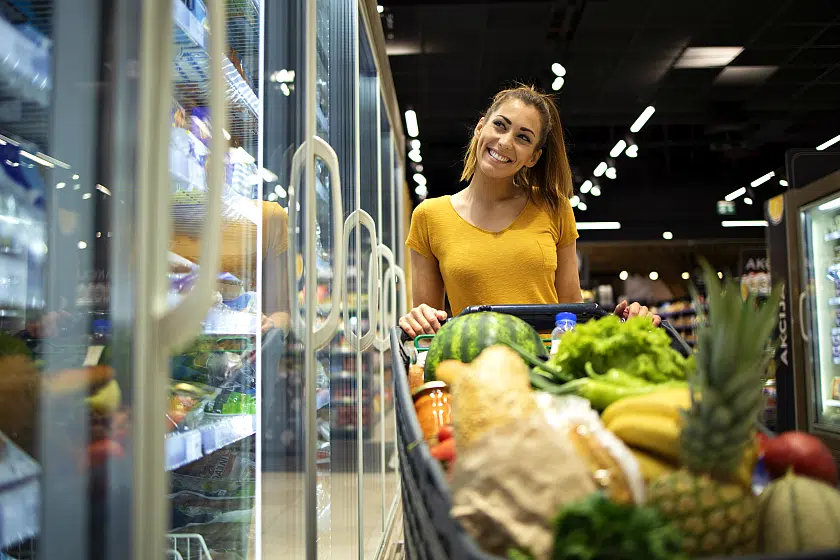
- Never grocery shop when hungry — blood sugar dips increase impulsive junk food purchases.
- Write a specific meal plan before shopping and stick to the list.
- Shop the perimeter of the supermarket where whole foods live to minimise time in processed-food aisles.
- Use grocery delivery to remove the temptation of in-store impulse buys.
At work:
- Keep a healthy snack drawer stocked with nuts, protein bars, rice cakes, or dark chocolate.
- Move away from shared snack areas during low-willpower moments (mid-afternoon energy dips).
- Drink a glass of water before visiting the break room.
You don't need more discipline — you need a smarter setup. When the healthy choice is the easy choice, your behavior changes automatically. Explore the top 5 clean eating habits that simplify healthy living.
Tip #2: Eat More Protein To Crush Junk Food Cravings At The Source
Why does protein reduce junk food cravings?
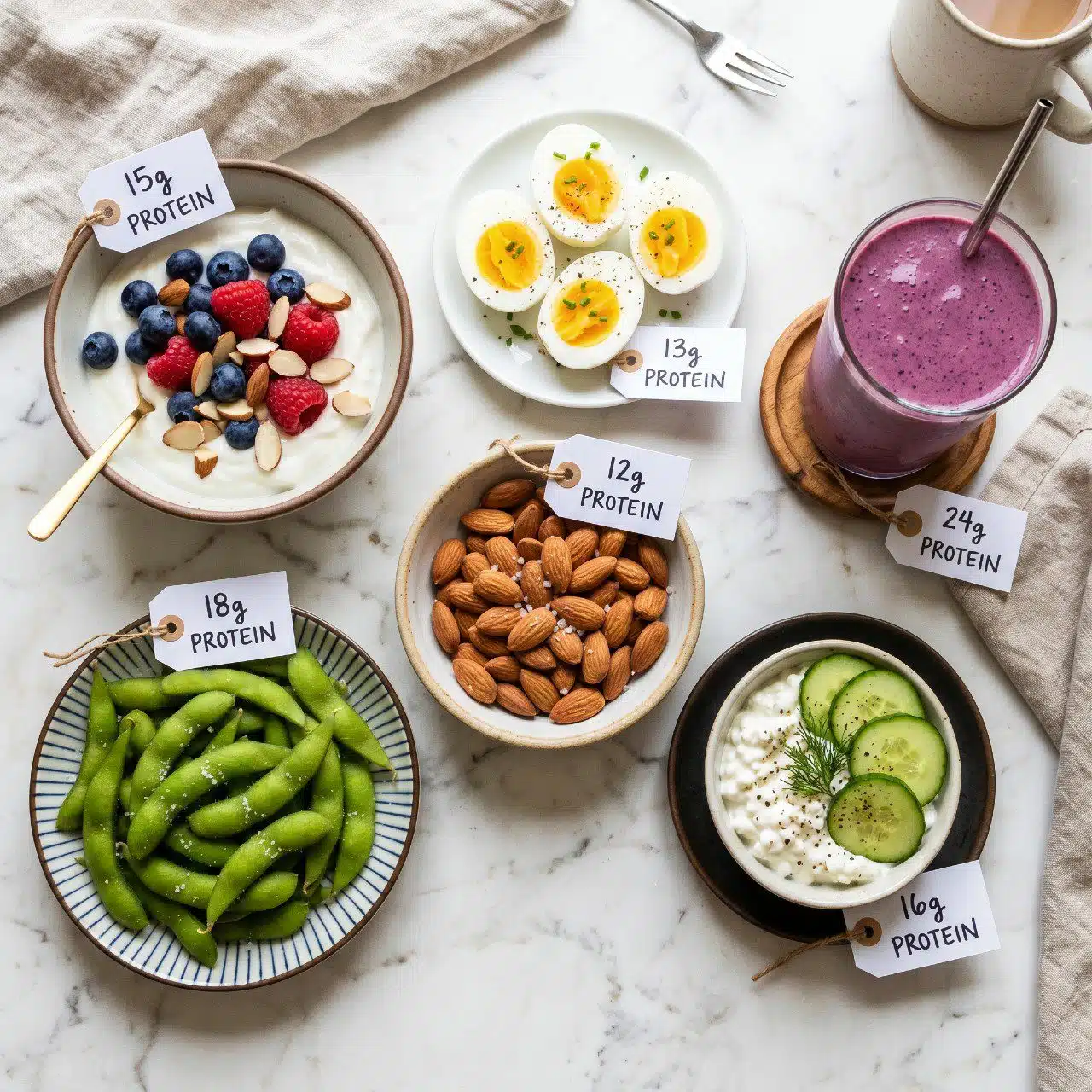
Protein is the most satiating macronutrient. It suppresses ghrelin (the hunger hormone), raises peptide YY (a fullness hormone), stabilizes blood sugar, and reduces the reward signal that junk food triggers in the brain. Women who increase protein intake to 25–30% of daily calories report significant reductions in late-night snacking and cravings for sweet, salty, and fatty foods.
A 2005 study in the American Journal of Clinical Nutrition found that raising protein from 15% to 30% of calories, while keeping carbohydrates the same, led participants to eat about 441 fewer calories a day — without being told to cut back. They simply felt fuller and wanted less food.
High-Protein Foods That Kill Junk Food Cravings
| Food | Protein Per Serving | Satiety Rating | Best Used As |
|---|---|---|---|
| Greek yogurt (plain) | 17g per 170g | Very high | Morning snack |
| Cottage cheese | 14g per 113g | Very high | Afternoon snack |
| Boiled eggs | 6g per egg | High | Any time |
| Chicken breast | 31g per 100g | Very high | Meals |
| Edamame | 11g per 100g | High | Snack |
| Canned tuna | 25g per 100g | High | Meals/snacks |
| Lentils | 9g per 100g | High | Meals |
| Protein shake | 20–25g per serve | High | Post-workout |
The practical rule: Eat at least 25–30g of protein at every meal and 10–15g with every snack. This keeps blood sugar stable between meals — the #1 biological trigger for junk food cravings. See the full high-protein diet plan for sustainable fat loss for women.
Tip #3: Tackle Emotional Eating — The Hidden Driver Of Junk Food Habits
What is emotional eating, and how does it drive junk food consumption?
Emotional eating is the pattern of using food — particularly high-sugar, high-fat junk food — to soothe uncomfortable emotions rather than to satisfy physical hunger. Studies show that up to 75% of overeating is emotionally driven. Women are disproportionately affected due to higher rates of stress, anxiety, and the biological link between cortisol, comfort-food cravings, and estrogen fluctuation.
This isn't a character flaw. It's a learned coping mechanism — and it can be unlearned.
The Difference Between Emotional Hunger and Physical Hunger
| Signal | Emotional Hunger | Physical Hunger |
|---|---|---|
| Onset | Sudden and urgent | Gradual |
| What you crave | Specific junk food (chips, chocolate, ice cream) | Many foods satisfy |
| Location | "In your head" / mouth | Physical stomach growl |
| Eating behavior | Mindless, fast, past fullness | Slows as satisfied |
| Feeling after | Guilt, shame | Satisfaction, energy |
| Linked to | Emotions (stress, boredom, sadness) | Time since last meal |
4 Strategies To Break The Emotional Eating–Junk Food Cycle
- Name the emotion first. Before eating, pause and ask: "Am I physically hungry right now?" If the honest answer is no, identify what you're actually feeling — stressed, bored, anxious, lonely. Naming the emotion breaks the automatic reach for food.
- Create a 10-minute delay rule. When a craving hits, set a 10-minute timer and do something else — walk, drink water, call someone. Research shows cravings peak and pass within 10–15 minutes when not acted on.
- Build non-food coping tools. List 5 things that genuinely comfort or soothe you that don't involve eating — a short walk, a hot shower, journaling, music, or a breathing exercise. Keep the list visible.
- Understand your junk food triggers. Track what you were doing, feeling, and thinking the last three times you reached for junk food. Patterns emerge quickly — and patterns can be interrupted.
Discover how mindfulness breaks the cycle of emotional eating for women. | Can diet really help with stress-related weight gain?
Tip #4: Master The Art Of Healthy Substitution (So You Never Feel Deprived)
What is the best way to replace junk food cravings with healthier options?
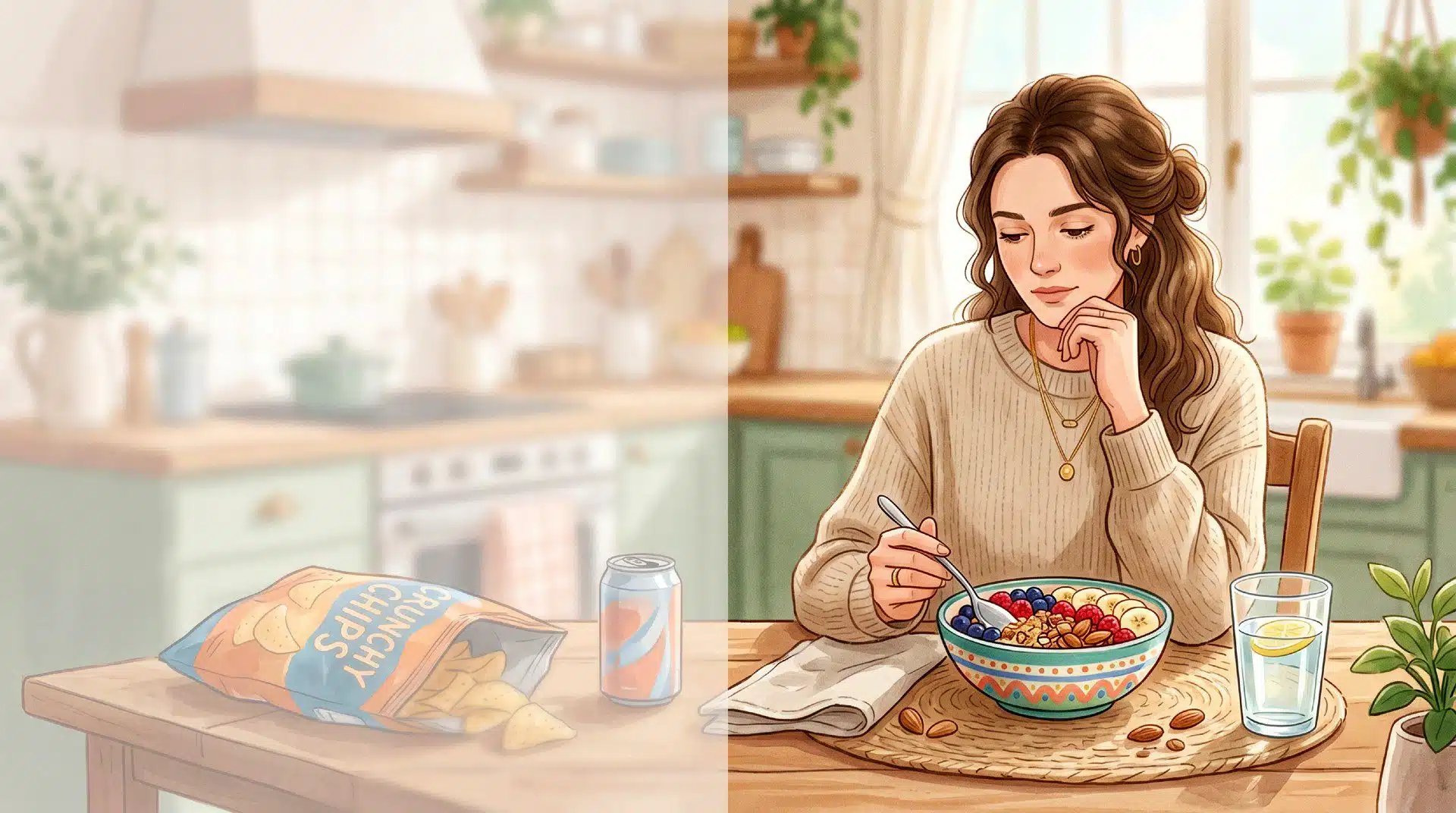
The most effective long-term strategy for eating less junk food is not elimination — it's substitution. Trying to white-knuckle through a craving using willpower alone has a failure rate above 80%. Replacing specific junk foods with satisfying, similarly textured or flavored alternatives allows you to meet the craving's emotional and sensory needs without the metabolic damage.
The Junk Food Substitution Blueprint
The key is matching the sensory profile of your craving — salty, crunchy, sweet, creamy — with a healthier alternative that delivers the same sensory satisfaction.
For salty/crunchy cravings (chips, crackers):
- Air-popped popcorn with nutritional yeast
- Rice cakes with almond butter
- Roasted chickpeas (seasoned with paprika or chilli)
- Celery with hummus
- Kale chips or seaweed snacks
For sweet cravings (chocolate, candy, baked goods):
- Dark chocolate (70%+) — 1–2 squares
- Frozen banana "nice cream"
- Medjool dates with nut butter
- Greek yogurt with honey and berries
- Chia pudding with fruit
For creamy/fatty cravings (ice cream, fast food):
- Avocado on wholegrain toast
- Full-fat Greek yogurt with granola
- Coconut-based frozen desserts (in moderation)
- Smoothies with banana, almond butter, and oat milk
For fast food cravings (burgers, pizza, fries):
- Homemade turkey burger in a lettuce wrap
- Whole-grain pita pizza with vegetables
- Baked sweet potato fries with seasoning
- Cauliflower "wings" with hot sauce
The 80/20 rule for real women: Aim for nutritious, whole-food choices 80% of the time. The other 20% — enjoy your favorites without guilt. Sustainable healthy eating isn't about perfection; it's about consistency. Rigidity always breaks. Flexibility lasts.
Tip #5: Fix Your Sleep And Stress — The Overlooked Junk Food Drivers
How does poor sleep cause junk food cravings?
Sleep deprivation is one of the most powerful triggers for junk food consumption. When you sleep less than 7 hours, ghrelin (hunger hormone) rises by up to 24%, leptin (fullness hormone) drops by 18%, and the brain's reward center becomes hypersensitive to high-calorie foods. A 2013 study in Nature Communications found that sleep-deprived participants chose foods with 600 more calories than well-rested peers — overwhelmingly choosing junk food.
Chronically elevated cortisol from stress produces identical cravings: high-sugar, high-fat, hyperpalatable foods that temporarily blunt the cortisol response. Understand exactly how hormones drive weight gain in women and how to work with your biology instead of fighting it.
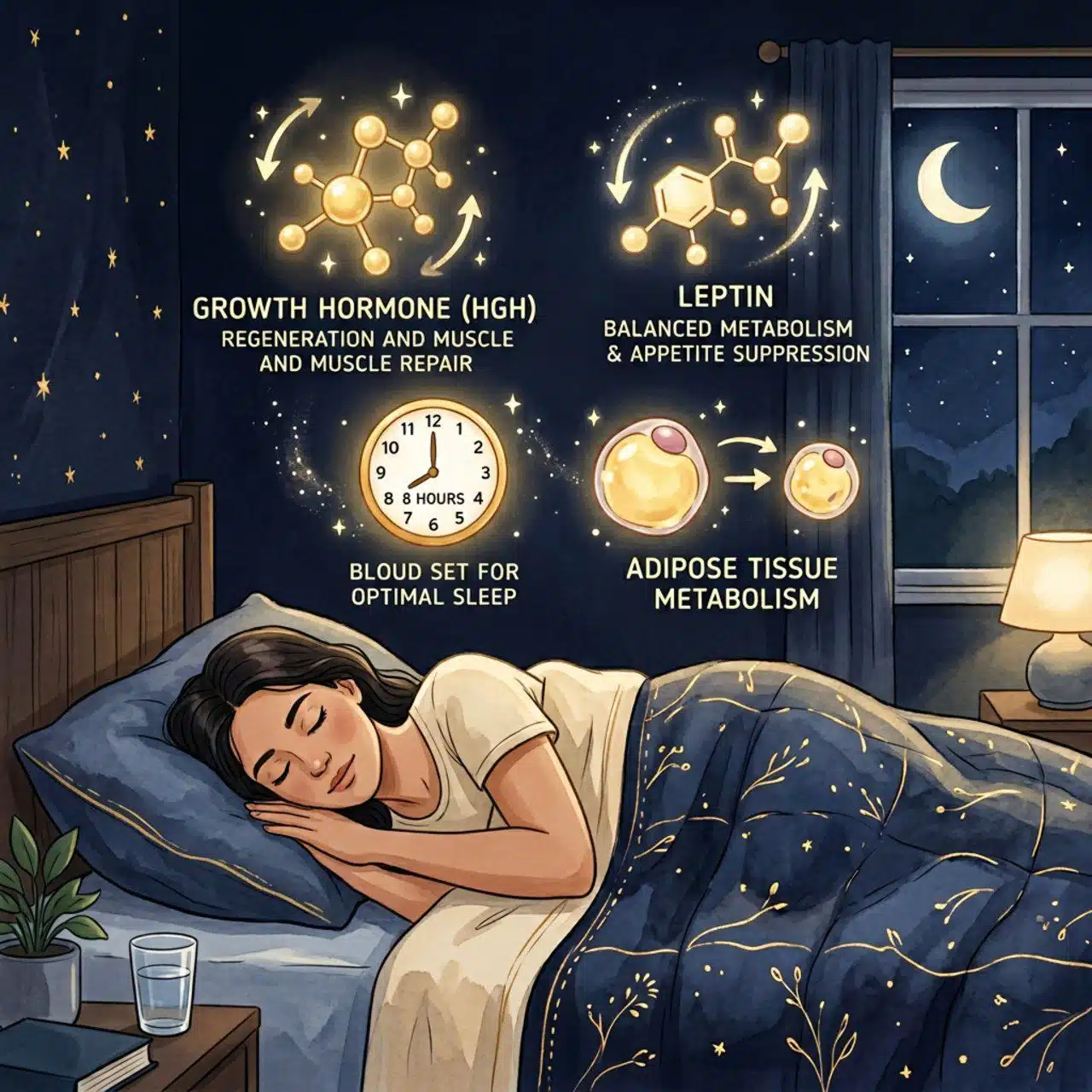
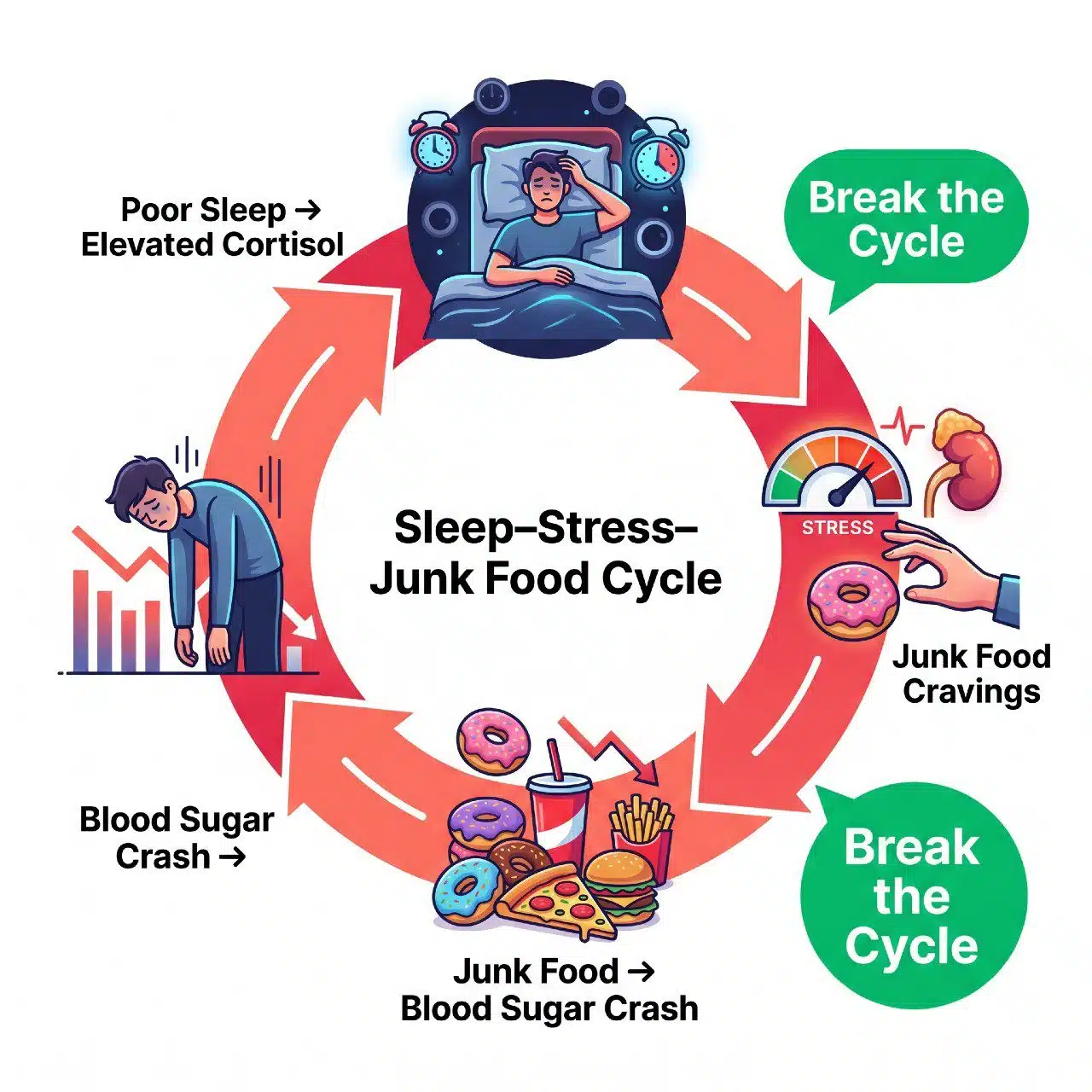
The Sleep–Stress–Junk Food Triangle
Poor sleep → elevated cortisol and ghrelin → intense junk food cravings → blood sugar spike and crash → disrupted sleep → repeat.
Breaking any link in this cycle interrupts the whole pattern.
6 Practical Ways To Sleep And Stress Better (Starting Tonight)
- Commit to 7–9 hours of sleep — not as a luxury, but as a metabolic necessity. Every hour of sleep debt adds measurable calorie consumption the next day.
- Set a consistent bedtime alarm — the same time every night, weekends included.
- Cut back on evening screens — blue light delays melatonin and increases food cravings the following morning.
- Add a 5-minute stress reset after work: 5 deep breaths, a 10-minute walk, or journaling. This lowers cortisol before dinner and reduces evening snacking.
- Limit alcohol — it fragments deep sleep and spikes cortisol, making junk food cravings worse the next day.
- Eat dinner 2–3 hours before bed — late eating disrupts sleep quality and digestion.
See the full science behind how sleep affects weight loss for women.
Ready to take the next step and finally ditch the junk food cravings? Grab your free guide for a detailed plan to implement those tips and create lasting change. Grab your free guide here and start building healthier habits today.
The Bottom Line
Junk food cravings are not a character flaw. They are the predictable result of biology, environment, poor sleep, stress, and a food industry engineered to override your natural appetite signals.
The women who successfully eat less junk food long-term don't have more willpower than you. They have better systems: kitchens designed for healthy eating, enough protein on their plates, 7–8 hours of sleep, stress outlets that don't involve food, and a flexible rather than rigid approach to nutrition.
Start with one tip this week. Not all five — just one. Master it, make it automatic, then add the next. In 30 days, you won't recognize your relationship with junk food.
Glossary Of Key Terms
- Junk Food: Ultra-processed food high in sugar, refined carbs, and unhealthy fats with minimal nutritional value.
- Hyper-palatable: Food engineered to be extremely appealing to the senses, specifically designed to override the brain's satiety signals.
- Ghrelin: The "hunger hormone" that signals the brain to eat; levels rise significantly during sleep deprivation.
- Leptin: The "fullness hormone" that tells the brain the body has enough energy; levels drop when a person is sleep-deprived.
- Luteal Phase: The stage of the menstrual cycle occurring the week before menstruation, often associated with increased cravings for fat and sugar.
- Emotional Eating: The pattern of using high-sugar or high-fat foods to soothe uncomfortable emotions rather than to satisfy physical hunger.
- Sensory Profile: The specific mouthfeel or taste characteristic of a food, such as salty, crunchy, creamy, or sweet.
- 80/20 Rule: A nutritional philosophy advocating for 80% whole-food consumption and 20% dietary flexibility to ensure long-term sustainability.
- Cortisol: A stress hormone that, when chronically elevated, triggers cravings for calorie-dense foods and promotes belly fat storage.
- Ultra-processed Foods: Industrially manufactured food products containing additives, emulsifiers, and artificial flavors that disrupt the gut microbiome and metabolic health.
FAQ
How Can Women Eat Less Junk Food Without Feeling Deprived?
Women can eat less junk food by redesigning their food environment, increasing protein intake (which reduces cravings by stabilizing blood sugar), addressing emotional eating triggers, substituting junk food with satisfying whole-food alternatives, and improving sleep and stress management. These strategies eliminate the need to rely on willpower alone.
Why Do Women Crave Junk Food More Than Men?
Women experience stronger food cravings due to hormonal fluctuations across the menstrual cycle, pregnancy, and menopause. Estrogen and progesterone shifts — particularly in the luteal phase (week before menstruation) — increase cravings for high-sugar and high-fat foods. Higher baseline cortisol sensitivity in women also amplifies stress-driven junk food cravings.
Why Do Women Crave Junk Food When Stressed Or Tired?
Stress raises cortisol, which directly triggers cravings for high-fat and high-sugar foods as an evolutionary energy response. Poor sleep raises ghrelin (hunger hormone) by up to 24% and lowers leptin (fullness hormone), causing sleep-deprived women to choose foods with up to 600 more calories — overwhelmingly junk food.
Is It Okay To Eat Junk Food Occasionally?
Yes. Occasional junk food consumption as part of an otherwise balanced, whole-food diet is not harmful and actually supports psychological sustainability. Rigid, all-or-nothing dietary restriction is associated with binge eating episodes and long-term diet failure. An 80% nutritious / 20% flexible eating approach produces better long-term results than any elimination diet.
What Is The Fastest Way To Stop Junk Food Cravings?
Drinking a large glass of water is the fastest short-term craving interrupt (many cravings are partially driven by dehydration). For medium-term control, eating a high-protein meal or snack is the most effective strategy. For long-term craving reduction, improving sleep quality and managing stress hormones address the root biological drivers.
Can Cutting Junk Food Help With Weight Loss For Women?
Significantly, yes. Ultra-processed food consumption is one of the strongest independent predictors of excess calorie intake and weight gain. A 2019 NIH clinical trial found that participants on an ultra-processed diet consumed 500 more calories per day and gained an average of 0.9 kg in just 2 weeks — confirming that food processing level, not just calorie count, drives overeating.
What Healthy Snacks Can Replace Junk Food Cravings?
Match the sensory profile of your craving: for salty/crunchy → roasted chickpeas, rice cakes with hummus, air-popped popcorn; for sweet → dark chocolate (70%+), Greek yogurt with fruit, dates with nut butter; for creamy → avocado toast, coconut yogurt, nut butter smoothies. The goal is satisfaction without the metabolic damage. See what women should eat in the morning for hormone balance and fat loss.
Thanks for sharing