
Your Real-World Guide To Superfoods For Women’s Weight Loss That Actually Move The Scale

One of the most important distinctions found within these pages is the fact that all foods are not created equal. Some foods are deficient in minerals and key nutrients, while other foods are packed with a powerhouse of valuable nutrients that can change your life, your health, and your body in a truly incredible way.
David Wolfe ‧ Author, Superfoods: The Food And Medicine Of The Future
Summary (TL;DR)
Not every food wearing the “superfood” label deserves your grocery budget — the term itself has no scientific definition, and some of the most hyped picks are backed by surprisingly thin evidence.
This guide sorts the real research from the marketing using an original framework, the 5-Lever Superfood Method, built around the five things that actually move the needle on superfoods for women’s weight loss: satiety, lean muscle, hormonal balance, metabolism, and gut health.
You’ll get fetch-checked research behind every claim, a nutrition-data comparison table, a smoothie recipe, and an honest look at where perimenopause and menopause change the equation — because generic “eat more kale” advice was never built for that.
If you’ve stood in the produce aisle wondering whether you actually need bee pollen and maca powder to lose weight, or felt a little embarrassed asking, you’re not alone — and you’re not wrong to be sceptical.
The word “superfood” was coined by marketers, not scientists, and it’s been stretched to cover everything from blueberries to $40 green powders. That confusion is doing something real to women trying to eat better: it makes healthy eating feel like a shopping list you can never quite complete, rather than a handful of ordinary foods used consistently.
This article strips the hype back to what’s actually been studied. Instead of one long list of “good foods” repeated under six different headings, we’ve organized the real contenders by the specific weight-loss mechanism each one supports — so you can pick foods based on what your body actually needs right now, not on which ingredient is trending this month.
Medical & Referral Disclaimer
This article is for informational and educational purposes only. It is not a substitute for professional medical advice, diagnosis, or treatment. Always consult your physician or qualified health provider before starting any new diet or exercise program.
Key Takeaways
- “Superfood” has no scientific or legal definition — it’s a marketing term, and some heavily promoted picks have weaker evidence than ordinary foods like lentils and oats.
- The 5-Lever Superfood Method sorts foods by mechanism: satiety (fiber), lean muscle (protein), hormonal balance (anti-inflammatory), metabolism, and gut health.
- Fiber source matters more than the “fiber” label — a 2026 systematic review found oat and rye fibers outperformed others for appetite control.
- For women 40+, hormonal shifts in perimenopause and menopause change how food affects weight — a factor most superfood lists ignore entirely.
- You do not need expensive powders, cleanses, or exotic imports — the best-evidenced foods on this list are ordinary and available at any grocery store.
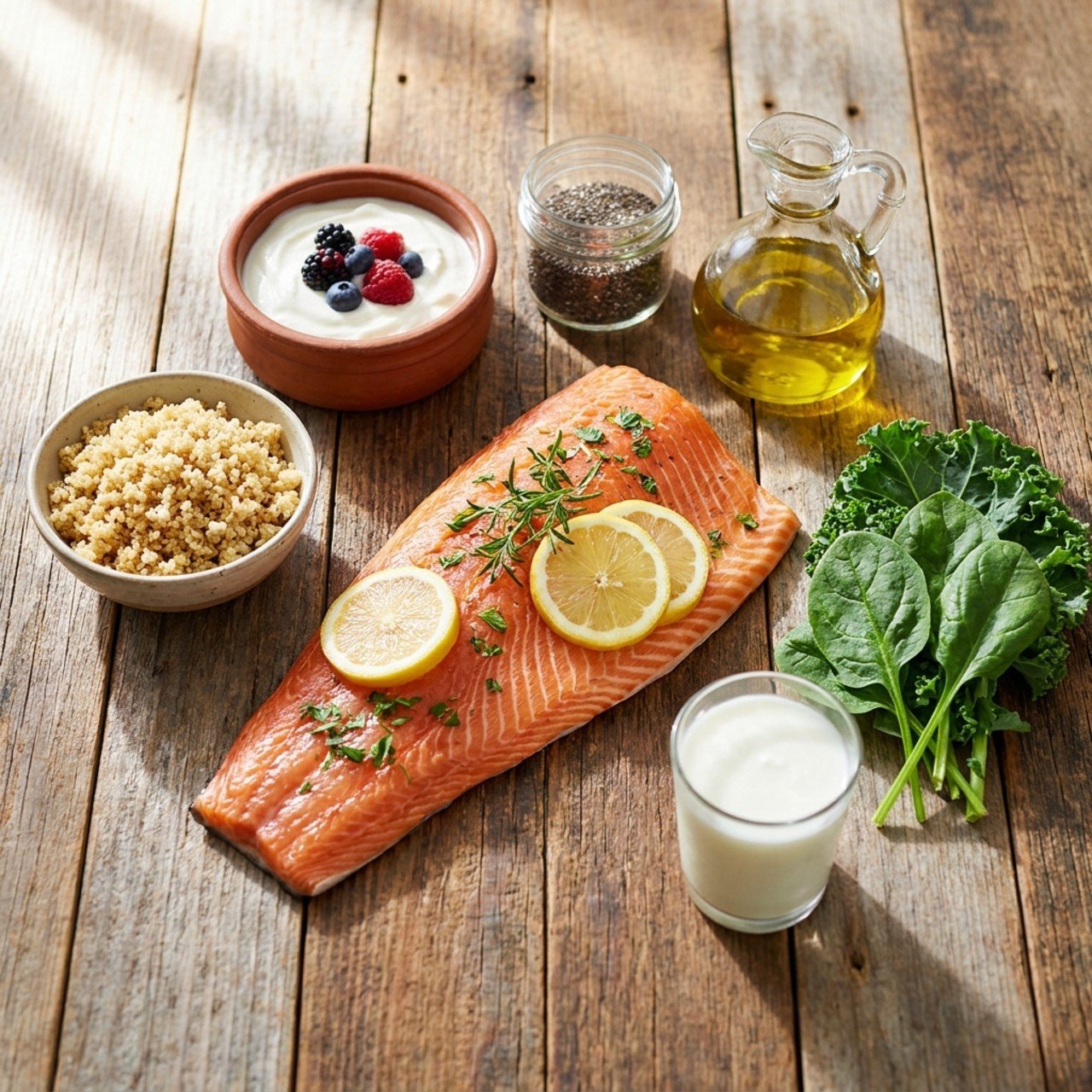
What Actually Makes A Food A “Superfood”? (And Why That Should Make You A Little Skeptical)
“Superfood” is a marketing term, not a scientific one — there is no regulatory body that decides which foods qualify.
As Harvard T.H. Chan School of Public Health’s Nutrition Source puts it plainly: “there’s no scientifically based or regulated definition for superfood,” and the term is “more useful for driving sales than it is for providing optimal nutrition recommendations.”
Harvard’s researchers even point out that foods get promoted as disease-fighters “even if the science was weak” — and that chasing the hyped picks can mean overlooking equally nutritious foods that never got the marketing budget.
That doesn’t mean the category is worthless. It means the label tells you nothing on its own — you still have to ask what a food actually does inside your body, and whether that’s backed by real research or just a good Instagram photo. That’s the whole point of the framework below.
A few signs a “superfood” claim is doing more marketing than medicine:
- It’s sold as a powder, pill, or expensive imported extract rather than something you can buy in the produce aisle — whole foods almost always beat processed versions of the same nutrients.
- The claim is vague and sweeping (“detoxifies your body,” “melts fat”) rather than specific and testable.
- There’s no dose, no study, and no comparison — just an adjective. Real nutrition science almost always comes with a “how much” and “compared to what.”
- It’s marketed as a stand-alone fix for a problem (hormones, metabolism, “toxins”) that actually requires a whole eating pattern, not one ingredient.
You’ll notice we’re not recommending a single powdered “nutritional cleansing” product anywhere in this guide. Every food below earns its place through real, cited mechanisms — not a marketing claim.

The 5-Lever Superfood Method: A Smarter Way To Choose
Instead of one long list, sort superfoods by the specific weight-loss lever they pull: satiety, lean muscle, hormonal balance, metabolism, or gut health.
Pick based on what you actually need. Most generic articles repeat the same five or six foods across seven different headings, which is padding, not strategy. The table below is the map; the sections after it go deep on each lever.
| Lever | What It Targets | Signature Foods | Evidence Snapshot |
|---|---|---|---|
| 1. Satiety | Feeling full on fewer calories | Chia seeds, lentils, oats | Fiber source changes the effect — oat/rye beat others |
| 2. Lean Muscle | Preserving muscle during fat loss | Greek yogurt, wild salmon, quinoa | Higher protein % modestly raises fullness ratings |
| 3. Hormonal Balance | Working with perimenopause/menopause shifts | Flaxseed, extra-virgin olive oil, leafy greens | Mediterranean-pattern eating measurably lowers inflammatory markers |
| 4. Metabolism | Small, real metabolic nudges | Chili peppers, green tea (see our dedicated deep dive) | Real but modest — not a substitute for the basics |
| 5. Gut Health | A more diverse gut microbiome | Kefir, sauerkraut, garlic, asparagus | Low microbial diversity is linked to higher obesity risk |
Lever 1 — Satiety: Fiber-Rich Superfoods That Keep You Full
Fiber helps you feel full on fewer calories, but not all fiber works equally well — the source matters.
A 2026 systematic review in Nutrition Reviews found that cereal fiber intake produced “favorable effects on satiety and other measures of appetite,” with real variation by source: oat and rye fibers showed the strongest appetite-suppressing benefits, while wheat, barley, and some functional fiber additives showed only weak effects.

The same review was candid that those satiety gains had only a limited effect on how much people actually ate afterward — a useful reminder that feeling fuller and eating less don’t always move together. In plain terms, a fiber-fortified snack bar and a bowl of lentils are not nutritionally interchangeable, even if the label says the same gram count.
Chia seeds, lentils, and other fiber-rich vegetables and legumes earn their place here because they combine fiber with real protein and healthy fat — not just bulk. A cup of cooked lentils delivers roughly 15–16 grams of fiber and close to 18 grams of protein, doing double duty across two of the five levers at once.
- Swap one refined-grain side for lentils or beans at dinner two or three nights a week — same plate, meaningfully more staying power.
- Add a tablespoon of chia or ground flaxseed to yogurt, oatmeal, or a smoothie instead of a fiber supplement.
- Leave the skin on when you eat apples, pears, and potatoes — that’s where a large share of the fiber lives.
Lever 2 — Lean Muscle: High-Protein Superfoods For Women Over 40
Getting enough protein helps preserve muscle while you lose fat, and muscle loss accelerates in perimenopause. That makes this lever more urgent for women 40+ than most generic advice acknowledges.
A controlled trial published in Nutrients found that a 30% protein diet produced modestly higher daily fullness ratings than a 10% protein diet during a calorie-restricted weight-loss phase.
That’s a real, honest effect, worth knowing about, but a much smaller one than the “protein burns fat” claim you’ll see on supplement packaging. Interestingly, the source of the protein (meat versus soy/legumes) mattered far less than simply getting enough of it.
Good picks: plain Greek yogurt, wild salmon, quinoa, lentils, and eggs. Quinoa in particular is worth the hype it does get — a full cup cooked runs about 222 calories with 8.1 grams of protein and 5.2 grams of fiber, a genuinely efficient combination for a plant-based option.
This lever matters even more once you account for what’s actually happening physiologically — see our deeper breakdown on strength training and muscle preservation during perimenopause for the full mechanism.
Join Our Mailing List
Join thousands of women inside our community and receive our free guide, 10 Actions That Support Permanent Weight Loss — the exact behavioural shifts that make the difference between a two-week attempt and a lasting transformation.
No restriction plans. No guilt. Just what actually works — for real women with real lives.
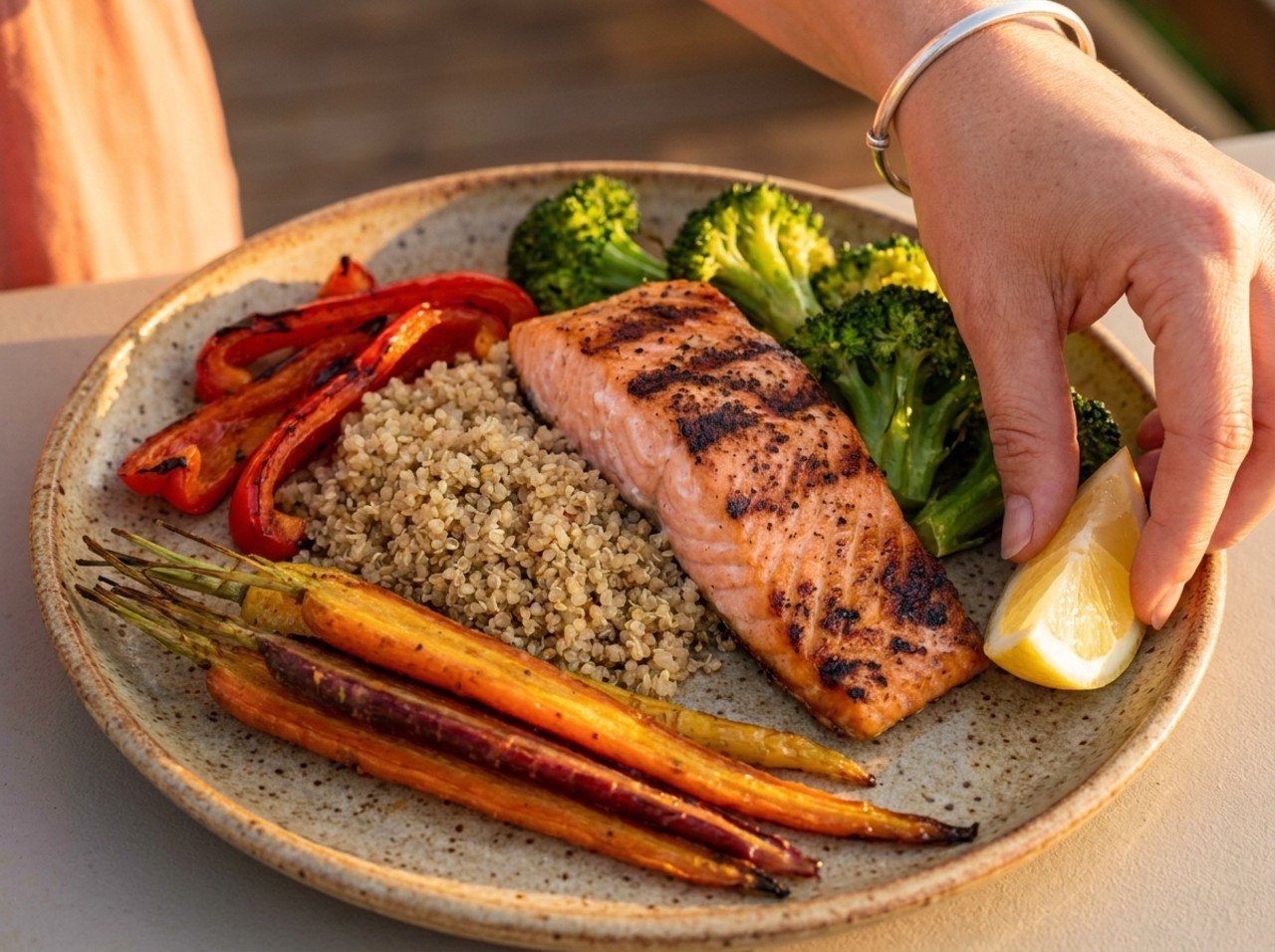
Lever 3 — Hormonal Balance: Anti-Inflammatory Superfoods For Perimenopause And Menopause
Chronic low-grade inflammation rises during perimenopause and menopause, and an anti-inflammatory eating pattern is one of the few dietary levers with real research behind it for this life stage.
A three-year Mediterranean-diet intervention published in Biomedicines found statistically significant reductions across a whole panel of blood markers doctors use to measure inflammation, compared to a standard low-fat diet. The improvement didn’t come from one miracle ingredient. It came from a consistent pattern built around extra-virgin olive oil, leafy greens, fatty fish, and legumes.
Flaxseed deserves an honest mention here rather than a hyped one. A randomized controlled trial in the journal Menopause found hot flashes were somewhat less severe with flaxseed than placebo, but the researchers were candid that flaxseed did not significantly improve overall menopause-specific quality of life or hot flash frequency over the 16-week trial.
That’s the honest version: a modest supporting player, not a cure, and worth including in your rotation for its lignans and fiber — not as a stand-alone fix.
One pattern I’ve noticed watching women navigate this stage is that the frustration usually isn’t about not knowing what to eat — it’s the sense that the rules quietly changed and nobody told them. If food choices that used to work suddenly don’t, that’s not a willpower problem.
For the deeper mechanism behind hormonal weight gain specifically around the midsection, see our full breakdown on which foods drive belly fat in perimenopause — this section is deliberately the short version.
- Unexplained weight gain around the midsection despite no real change in diet or activity
- Cravings and hunger that feel less predictable than they used to, especially around your cycle or its absence
- Sleep disruption that’s making consistent eating and exercise harder to maintain


Lever 4 — Metabolism: Where This Gets Its Own Deep Dive
A handful of foods do produce small, measurable metabolic effects — but the effect size is modest, and we’ve already covered this lever in far more depth elsewhere on the site.
Chili peppers, green tea, and a few other genuine metabolism-boosting meals earn a real (if honest) mention: they nudge your metabolic rate; they don’t override it. Rather than repeat that research here, we’ll point you to it — our full metabolism deep-dive, including the research strength behind each food and a 6-week “Metabolic Stack” plan, covers this lever properly.
Lever 5 — Gut Health: Superfoods That Feed Your Microbiome
A more diverse gut microbiome is consistently linked to healthier weight regulation. Fermented and prebiotic-rich foods are the most direct way to support it through diet.
A review in Lipids In Health And Disease notes that “subjects with obesity have consistently demonstrated a reduction in diversity and richness in microbial populations,” and that low bacterial richness has been linked to both obesity risk and low-grade inflammation — tying this lever directly back to Lever 3.
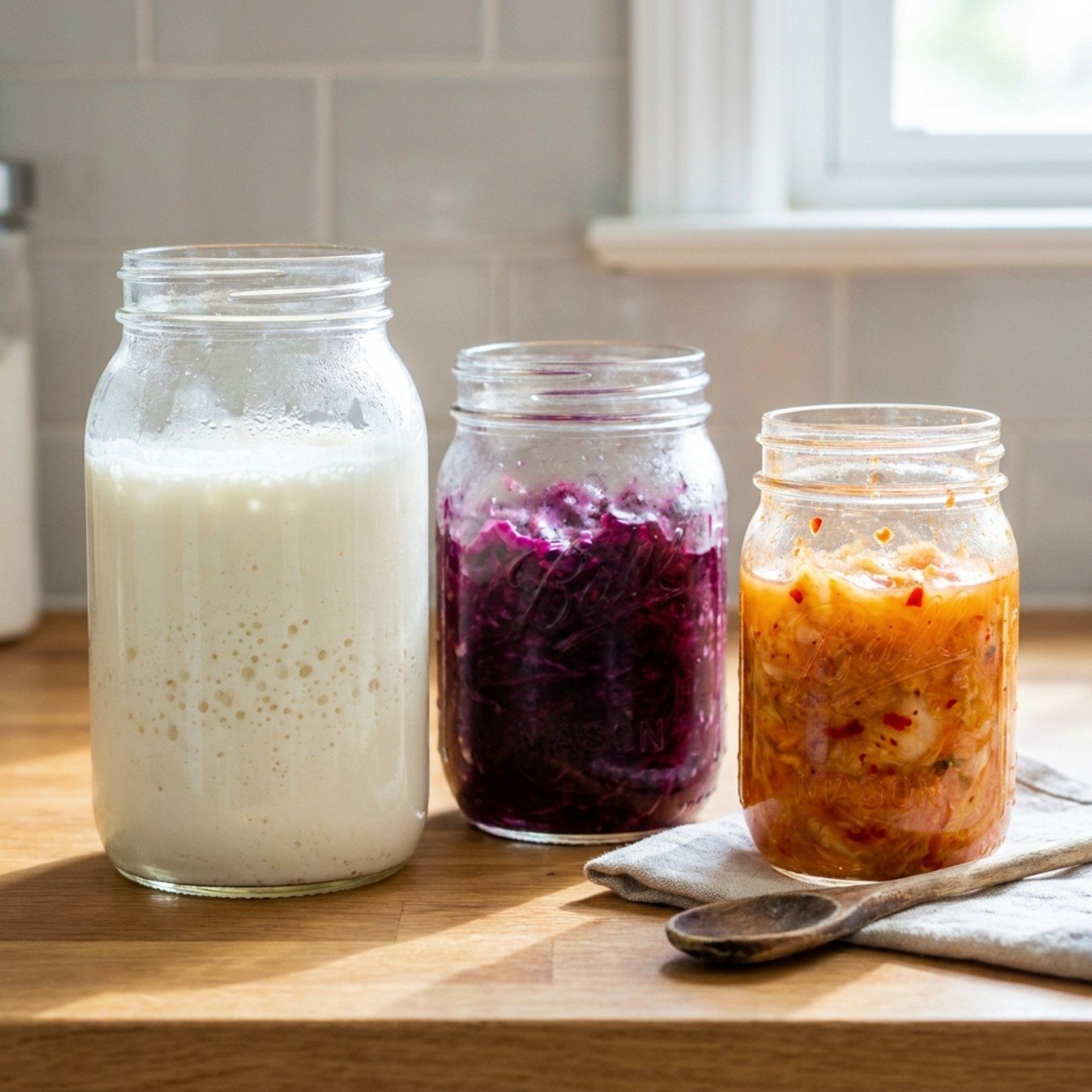
Fermented foods like plain kefir, sauerkraut, and kimchi introduce live cultures; prebiotic-rich foods like garlic, onions, leeks, and asparagus feed the beneficial bacteria already in your gut. Neither requires a supplement aisle — a forkful of sauerkraut alongside dinner does the job a $50 probiotic capsule is trying to imitate.
Nutrition Snapshot: How These Superfoods Actually Compare
Seeing the numbers side by side makes it easier to build a plate instead of memorizing a list. These are typical values for common serving sizes. Treat them as a reference point, not a rulebook.
| Food | Typical Serving | Calories | Standout Nutrient | Primary Lever |
|---|---|---|---|---|
| Quinoa, cooked | 1 cup | ~222 | 8.1g protein, 5.2g fiber | Satiety / Lean Muscle |
| Lentils, cooked | 1 cup | ~230 | ~18g protein, ~15g fiber | Satiety / Lean Muscle |
| Wild salmon | 3 oz | ~175 | ~17g protein, omega-3s | Lean Muscle / Hormonal Balance |
| Plain Greek yogurt | 6 oz | ~100 | ~17g protein | Lean Muscle / Gut Health |
| Chia seeds | 1 oz (2 tbsp) | ~137 | ~10g fiber | Satiety |
| Extra-virgin olive oil | 1 tbsp | ~120 | Anti-inflammatory fats | Hormonal Balance |
| Kefir, plain | 1 cup | ~110 | Live probiotic cultures | Gut Health |
Putting It Into Practice: Your Superfood Smoothie And Simple Daily Habits
You don’t need to overhaul every meal. One well-built smoothie and a few consistent swaps cover most of the five levers at once. This version updates the classic combination with a protein and fat source, so it works as a meal rather than a snack.
| Ingredients | Amount |
|---|---|
| Spinach or kale | 1 cup |
| Frozen blueberries | 1/2 cup |
| Banana | 1/2 |
| Plain Greek yogurt | 1/2 cup |
| Ground flaxseed or chia seeds | 1 tablespoon |
| Unsweetened almond milk | 1/2 cup |
Blend until smooth. That single glass touches Lever 1 (fiber), Lever 2 (protein), Lever 3 (flaxseed’s lignans and leafy greens), and Lever 5 (if you swap in kefir for the almond milk).
For the days a smoothie isn’t practical, and you’re trying to keep grocery costs realistic, frozen and canned versions of these foods (frozen berries, canned salmon, dried lentils) carry nearly identical nutrition to fresh at a fraction of the price — don’t let “fresh only” marketing talk you out of the budget option.
Staying Consistent: Realistic Habits That Actually Stick
The five-lever framework only works if you actually eat this way most weeks — and consistency beats intensity every time. A few practical anchors:
Practice Mindful Eating, Not Perfect Eating
Mindful eating — slowing down, noticing actual hunger and fullness cues — does more for long-term sustainable fat loss than any single food choice. Build the levers into meals you already enjoy rather than treating this as a separate diet plan bolted onto your life.


Set Specific, Trackable Goals
“Eat healthier” is not a goal you can measure. “Add a fiber-forward food to lunch four days this week” is. See our full weight loss goal-setting guide for a framework that holds up past week one.
Track What Changes — Not Just The Scale
Energy, sleep, digestion, and how your clothes fit are all real signals that these habits are working, often well before the scale reflects it.
Ready For The Next Step?
You’ve got the framework — now put it to work without overthinking every meal. Our free guide, 10 Actions That Support Permanent Weight Loss, translates exactly this kind of research-first approach into daily habits you can actually keep, built specifically around how women’s bodies respond to food, stress, and hormonal change. No powders, no 30-day resets, no shame — just the next honest step after this one.
The Bottom Line
The most useful thing you can take from this guide is a filter, not a shopping list. Before you spend money on the next trending “superfood,” ask which of the five levers it actually pulls, and whether that claim has real research behind it or just a good marketing photo.
Most of the time, the highest-value answer is sitting in the produce aisle already: lentils, salmon, leafy greens, plain yogurt, oats. Building a genuinely balanced diet around these five levers — consistently, not perfectly — will outperform any single ingredient, however impressive its marketing.
Glossary Of Key Terms
- 5-Lever Superfood Method: A framework that organizes nutrient-dense foods by the specific weight-loss mechanism they support: satiety, lean muscle, hormonal balance, metabolism, and gut health.
- Anti-Inflammatory Eating Pattern: A dietary habit—often modeled on the Mediterranean diet—designed to lower chronic low-grade inflammation through the consumption of healthy fats, leafy greens, and legumes.
- Cereal Fiber: It derived specifically from grains like oats, rye, wheat, and barley; research indicates that the specific grain source significantly impacts its ability to induce satiety.
- Fermented Foods: Foods like kefir, sauerkraut, and kimchi that have undergone a process of fermentation and contain live probiotic cultures to support gut health.
- Lignans: Polyphenols found in plants like flaxseed that are studied for their potential (though sometimes modest) impact on hormonal symptoms like hot flashes.
- Mediterranean Diet: An eating pattern built around extra-virgin olive oil, fatty fish, leafy greens, and legumes, shown to measurably lower inflammatory markers.
- Microbiome Diversity: The variety and richness of microbial populations in the gut; higher diversity is linked to better weight regulation and lower inflammation.
- Mindful Eating: The practice of slowing down and noticing internal hunger and fullness cues, rather than following rigid external diet rules.
- Prebiotics: Specific food components (found in garlic, onions, and leeks) that serve as a source of nourishment for beneficial gut bacteria.
- Satiety: The feeling of fullness and satisfaction after eating, which helps regulate appetite and total calorie intake.
FAQ
What Are The Best Superfoods For Women’s Weight Loss?
There’s no single “best” superfood — the strongest picks are the ones matched to what your body needs. Lentils and chia seeds for satiety, salmon and Greek yogurt for lean muscle, flaxseed and olive oil for hormonal balance, and kefir or sauerkraut for gut health cover the five levers this guide is built around.
Is “Superfood” A Real Scientific Term?
No. According to Harvard T.H. Chan School of Public Health, there is no scientifically based or regulated definition for the term — it’s a marketing category, not a nutrition science one.
Can Superfoods Really Boost Metabolism?
A few foods, like chilli peppers and green tea, produce small, real, measurable metabolic effects, but the effect is modest, not dramatic. See our dedicated guide on metabolism-boosting superfoods for the full research breakdown.
What Foods Help Balance Hormones During Perimenopause And Menopause?
An anti-inflammatory eating pattern — extra-virgin olive oil, fatty fish, leafy greens, and legumes — has measurable research behind it for reducing inflammatory markers during this life stage. Flaxseed offers a modest, honestly studied benefit for hot flash severity specifically.
How Much Fiber Do I Actually Need For Weight Loss?
Most women benefit from working toward 25–30 grams of fiber daily from whole food sources, prioritizing oats, legumes, and vegetables. Research shows the fiber source affects the appetite benefit, not just the total gram count.
Are Expensive Superfood Powders And Cleanses Worth It?
Generally, no. Whole foods deliver the same (and often more) nutrients at a fraction of the cost, with the added benefit of fiber and satiety that powders and juices strip out. Save the money for groceries, not marketing.
How Quickly Will I See Results From Eating More Superfoods?
Digestion and energy often shift within one to two weeks of adding more fiber and protein consistently; visible weight changes typically take four to eight weeks of consistent habits, in line with how sustainable fat loss actually works.