The Best Exercises For A Flat Stomach Work From The Inside Out, Starting With The Deep Core Muscle Most Ab Workouts Skip
Mary Tyler Moore
Actress, producer, & social advocate
Take chances, make mistakes. That's how you grow. Pain nourishes your courage. You have to fail in order to practice being brave.
Summary (TL;DR)
You’ve done the work. You eat well most days; you walk; maybe you’ve even lost weight. And still, the lower part of your belly sits there like it never got the message. If that sounds familiar, you’re in good company.
One popular lower-belly thread on Reddit, with nearly 300 replies, comes from a woman who knows you can’t spot reduce and knows the calorie-deficit basics, yet says her lower belly is always the last thing to change.
Maybe you’ve tried fixing it with more ab work. Hundreds of crunches, a plank challenge, a “flat tummy” video every night. Nothing moved, so it started to feel like your body is the problem. It isn’t. After 40, hormones change where fat lands, and the deep core muscles that hold your belly in are often the ones nobody taught you to use.
So we’re going to do this differently. We’ll look at what’s actually pushing your lower belly out, which exercises for a flat stomach change that, and what's simply normal. Then you’ll get a simple weekly plan you can run at home. Let’s start!
Medical & Referral Disclaimer
This article is for informational and educational purposes only. It is not a substitute for professional medical advice, diagnosis or treatment. Always consult your physician or qualified health provider before starting any new diet or exercise program, especially if you’re postpartum, have back pain, a hernia or a known abdominal separation, or notice new swelling, pain or a lump in your abdomen.
Key Takeaways
- Spot reduction is a myth. Ab exercises build muscle under the fat; whole-body fat loss is what reveals it.
- A gentle curve below your belly button is normal, even at a healthy weight.
- Deep core training (breathing, dead bugs, side planks) improves how your midsection is held and supports your back.
- Two strength sessions a week plus daily walking is more likely to change your waist than daily crunches.
- Persistent doming, pain or a bulge that won’t settle is a reason to see a doctor or pelvic floor physical therapist.

Why Don’t Ab Workouts Flatten Your Lower Belly?
Because ab exercises build muscle, and fat doesn’t leave from the spot you’re working. You lose fat from all over, so the muscle you build only shows once your overall body fat comes down.
In a six-week randomized trial, people did seven ab exercises, five days a week, while keeping their diet steady. Their belly fat, body fat and waist size didn’t change compared with people who did nothing.
A study in women went longer. Forty overweight women followed a diet for 12 weeks, and half added abdominal resistance training. Both groups lost belly fat and waist size, but the ab training added nothing extra. The fat came off because of the diet, not the crunches.
So doing lots of crunches won’t just remove belly fat, and no single exercise is a belly fat burner. That doesn’t make ab work useless, though. Mayo Clinic puts it plainly: crunches can strengthen and tone your abs, but those exercises alone won’t get rid of belly fat. If you want the full story on why, our guide to targeted fat loss walks through it.
What Is Actually Pushing Your Lower Belly Out After 40?
Usually it’s a mix of three things: more fat stored around your middle as estrogen falls, a core that has lost its “hold” and some normal anatomy. Bloating can add a fourth, but it comes and goes.
The hormone part is well documented. A four-year study that scanned women as they went through the menopausal transition found that only the women who became postmenopausal had a significant rise in visceral fat, the deep fat around your organs. Their physical activity also dropped in the two years before menopause and stayed low.
Mayo Clinic adds that many women see more belly fat with age even without gaining weight, likely because estrogen affects where fat is stored. That doesn’t mean it’s “all your hormones” or that your metabolism is broken. The same habits just land differently on your waist than they did at 30.
If your belly changes a lot between morning and evening, bloat may be a bigger player than fat. Our fat, bloat or core check helps you sort out which one is yours before you pick a fix.
The Contrarian Take: Some Lower-Belly Curve Is Normal Anatomy
A small curve below your belly button is not a flaw you need to exercise away. Women naturally carry more body fat than men, and even women who have never been pregnant have a normal gap between their ab muscles.
Most “flat tummy” content skips this. Women generally carry more body fat than men: at the same healthy BMI, women have about 25 to 30% body fat compared with 10 to 20% in men. That’s biology, not failure.
Your ab wall isn’t one solid sheet either. The two sides of your “six-pack” muscle meet at a band of connective tissue called the linea alba. An ultrasound study of 150 women who had never given birth found that this band is normally up to 16 mm wide just below the belly button and up to 22 mm wide above it. Some separation is just how you’re built.
So is a perfectly flat lower belly the right target after 40? For many women, probably not. Your waist is a more useful number. Mayo Clinic notes that for women, a waist over 35 inches (89 cm) signals an unhealthy amount of belly fat. Below that, the goal shifts from “flat” to strong, comfortable and well supported.
Here’s how to tell a normal curve from something worth checking:
- Likely normal: A soft curve below the belly button that’s been there for years, flatter in the morning and fuller after meals.
- Likely trainable: Your belly sags forward when you stand tall and relax, then flattens noticeably when you gently draw your belly button in.
- Worth a check: A ridge or dome down the middle when you lift your head, especially after pregnancy.
- See a doctor: New, persistent swelling, a lump, pain or bloating that doesn’t settle.
Why Core Strength Matters Beyond Aesthetics
A strong core is important for more than just looks. It helps you stand straight, move well and protect your back, and the deepest layer is what holds your belly in.
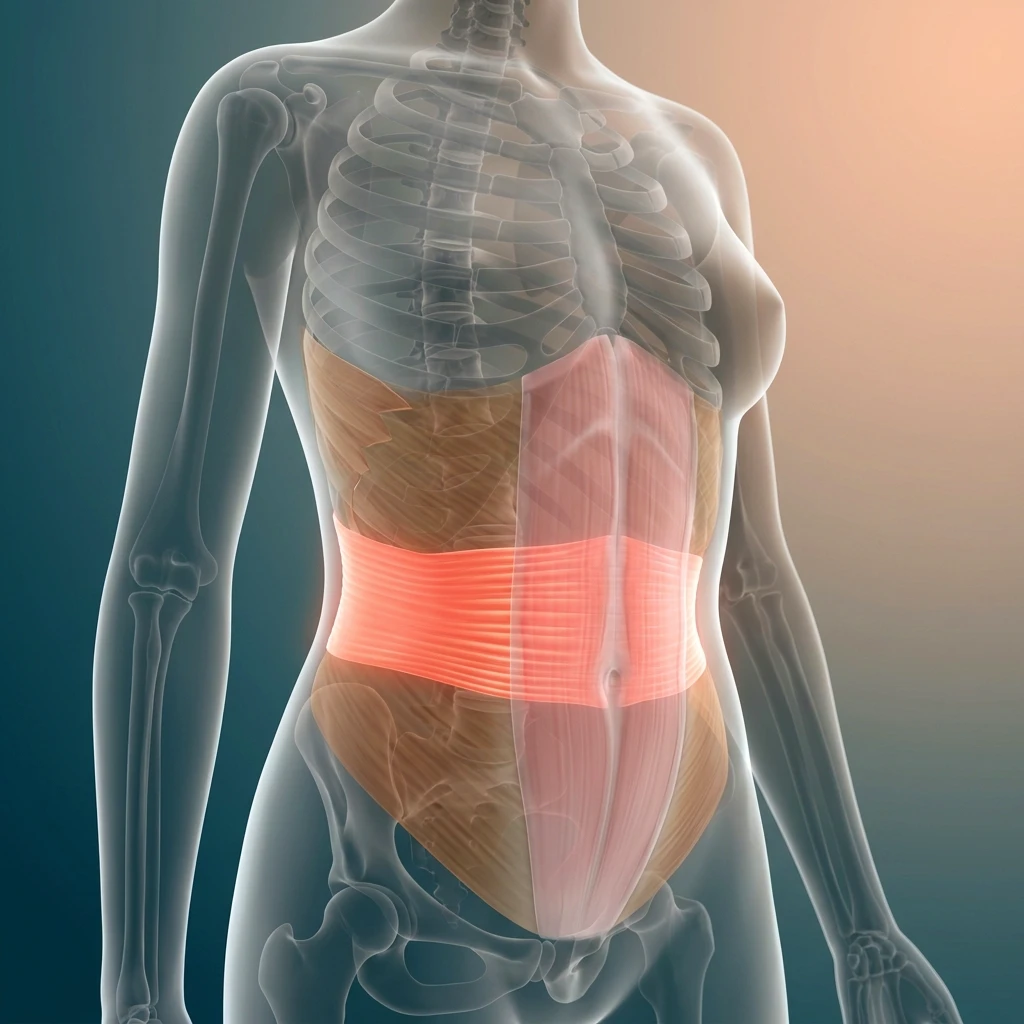
Your core is a team. The rectus abdominis (the six-pack) bends you forward, the obliques twist you, and underneath sits the transverse abdominis, wrapped around your middle like a wide belt.
Core strength training is what lets you carry groceries, lift a suitcase or garden without your lower back taking the strain. That’s why a good flat-stomach routine is really a core stability routine first.
Meet The Transverse Abdominis, Your Built-In Corset
The transverse abdominis is your deepest ab muscle, and when it contracts, it pulls your waist in. Researchers who scanned it with MRI described it tightening “like a corset.”
In an MRI study, gently drawing the belly in thickened the transverse abdominis and significantly shrank the cross-section of the trunk. The muscle formed a band that tightened around the middle and most likely helped stabilize the lower back and pelvis. The subjects were young male athletes, so this shows how the muscle works, not a result for women over 40.
Here’s the honest part. Training this muscle won’t burn the fat on top of it. What it can change is the “hold,” so a belly that drops forward when you relax can sit closer in. That’s why this muscle starts the plan below.
The Pooch Protocol (3-2-1): Your Weekly Flat Stomach Plan
The Pooch Protocol is three deep-core drills every day, two strength sessions a week and one daily movement habit. Each part targets a different cause of the lower-belly pooch, so together they cover hold, muscle and fat loss.
Most flat-stomach plans throw everything at your abs. This one splits the job, because the pooch has more than one cause. All you need is a mat, a resistance band and a pair of dumbbells or a kettlebell.
Want a full week laid out day by day? Our flat stomach workout plan builds on the same ideas, and total beginners can start with these flat stomach exercises for beginners.
| Part | What You Do | Time | What It Targets |
|---|---|---|---|
| 3: Deep-core drills | Belly-breath draw-in, dead bug, side plank (or bird dog) | 8 to 10 minutes, daily | Deep core hold, posture, lower-back support |
| 2: Strength sessions | Squats, hinges or swings, rows, presses, carries, plus one plank progression | 30 to 40 minutes, twice a week | Muscle, body recomposition, overall fat loss |
| 1: Daily habit | Walk most days, building toward 7,000 to 8,000 steps | Spread through the day | Calorie burn, energy and an active lifestyle |
The “3”: Three Deep-Core Drills For Every Day
Do these three core stability drills daily, in order, for about ten minutes. Move slowly and breathe out on the hard part; this is control work, not a burn.
A 2024 ultrasound study compared seven popular core moves and found that bird dogs and side planks, done with a gentle belly draw-in, gave the biggest increase in deep core muscle thickness. Drawing the belly in also activated the transverse abdominis more than bracing hard. Here’s the sequence:
- Belly-Breath Draw-In (1 to 2 minutes): Lie on your back with knees bent. Breathe in so your ribs widen. As you breathe out, gently draw your lower belly in toward your spine, about 30% effort. Hold for a breath, then release. Repeat 8 to 10 times.
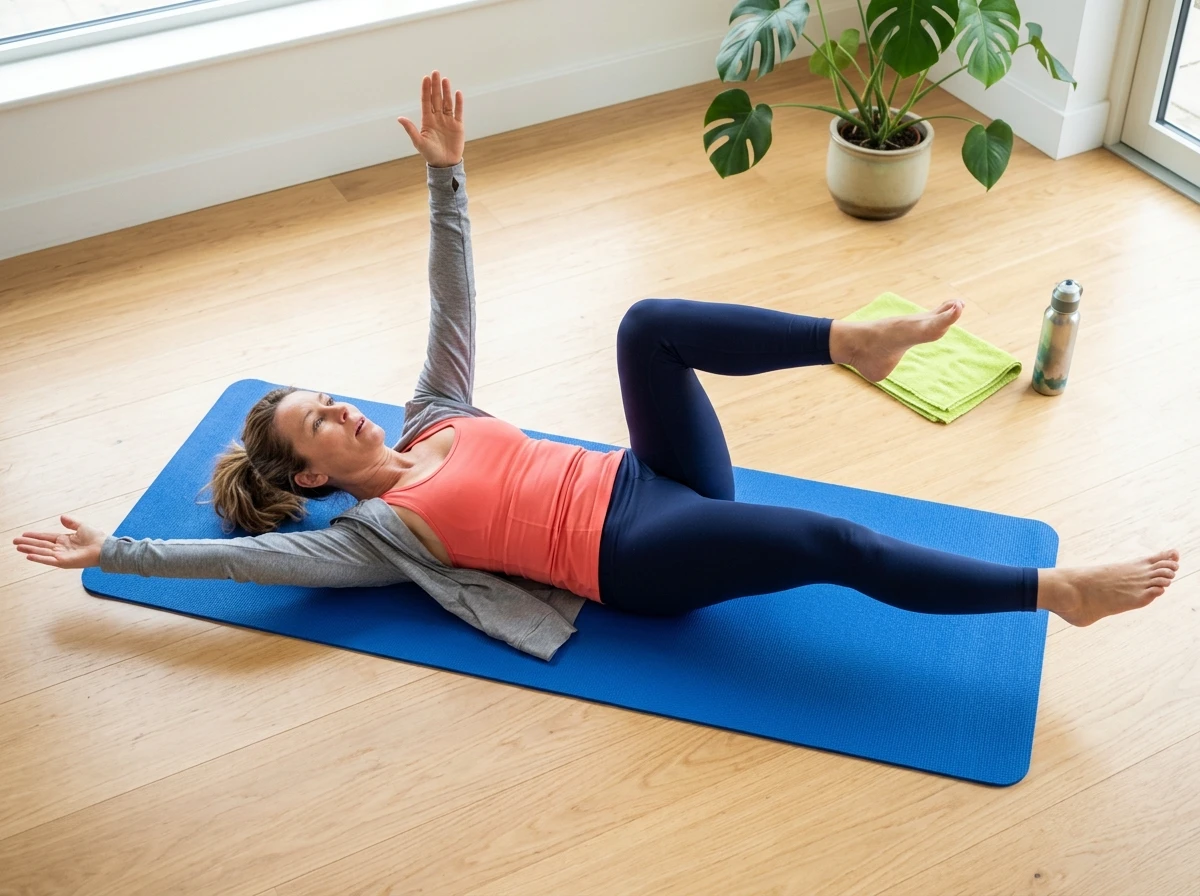
- Dead Bug (3 sets of 6 to 8 per side): Arms up, knees bent over hips. Keep that gentle draw-in and slowly lower the opposite arm and leg toward the floor without letting your back arch. Too hard? Lower just one leg.
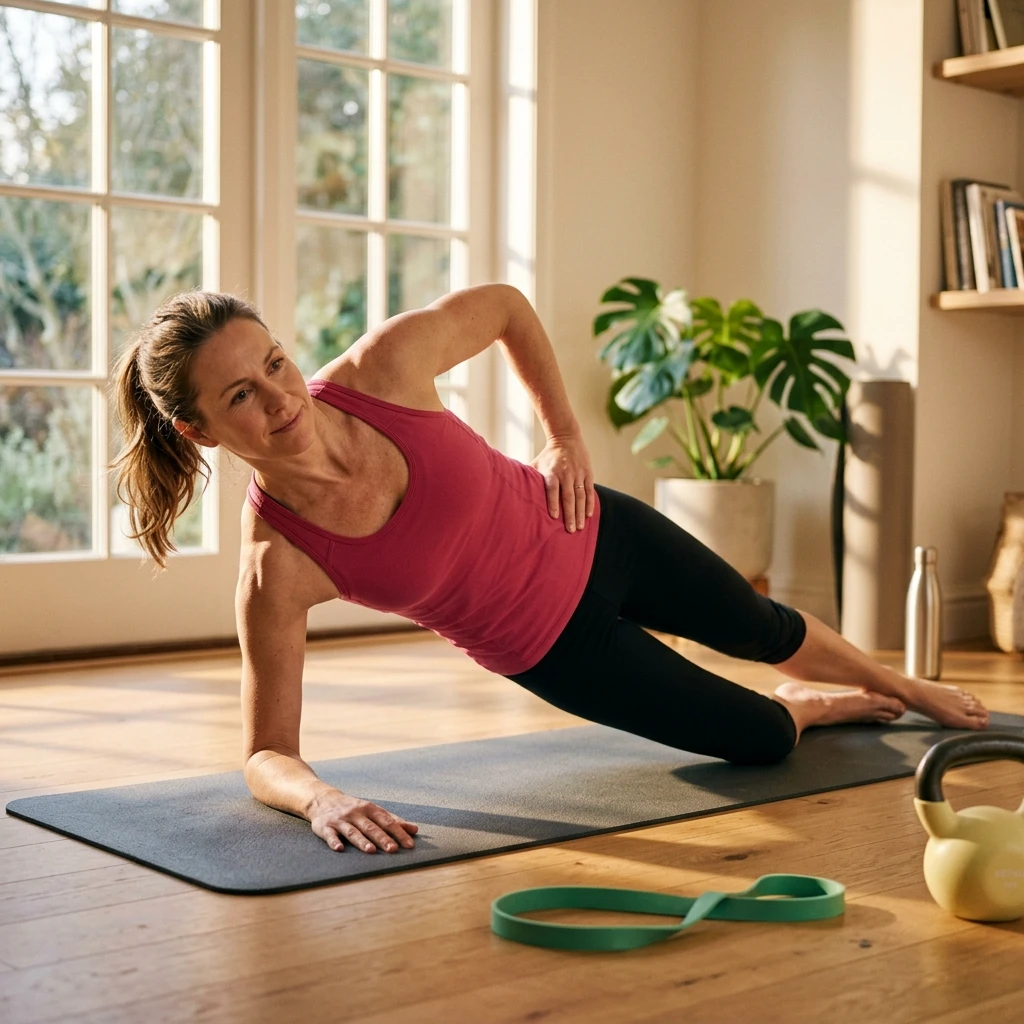
- Side Plank (3 holds of 15 to 30 seconds per side): Start on your knees and forearms. Lift your hips so your body makes a straight line. Hold yourself up and keep breathing. Swap in a bird dog if your shoulder complains.
Always breathe deep and keep your core tight but not rigid. Can’t talk? You’re bracing too hard.
Plank Variations That Progress Your Core
The plank builds a stable core, but the version matters. Small changes like longer arms and a tucked pelvis make the same hold work your lower abs much harder.
Start with your forearms on the ground and elbows under your shoulders. Keep your body straight and engage your core while holding this pose. Once 30 seconds feels easy, make it harder rather than longer.
One study tested a plank with the elbows placed further forward and the pelvis gently tucked under. Compared with a standard plank, this long-lever, posterior-tilt plank significantly increased activity in the upper abs, the lower abdominal stabilizers and the obliques. The longer lever did most of the work.
| Level | Front Plank | Side Plank | Band Or Bodyweight Option |
|---|---|---|---|
| Start here | Incline plank, hands on a counter | Side plank from knees | Belly-breath draw-in on all fours |
| Build | Forearm plank, 20 to 30 seconds | Side plank from feet, top foot in front | Resistance band Pallof press, standing |
| Challenge | Long-lever plank with a pelvic tuck | Side plank with top leg lifted | Reverse plank, hips lifted, 15 to 20 seconds |
For a reverse plank, sit down with your legs straight, hands on the floor by your hips, and lift your hips. The band moves turn this into a resistance band core session for home. Move up one row only when you can hold the current level with steady breathing and no sagging. For a ranked list of classic ab moves, see our best exercises for flatter abs.
The “2”: Two Strength Sessions A Week
Two full-body strength sessions a week are a better bet for a toned midsection than daily crunches. They build the muscle that shapes your waist and help bring overall body fat down.
It’s the official minimum too. The CDC’s adult guidelines call for at least two days of muscle-strengthening activity each week. And it works on fat. A large review of 58 studies found that full-body resistance training reduced body fat percentage by about 1.5 points compared with not training.
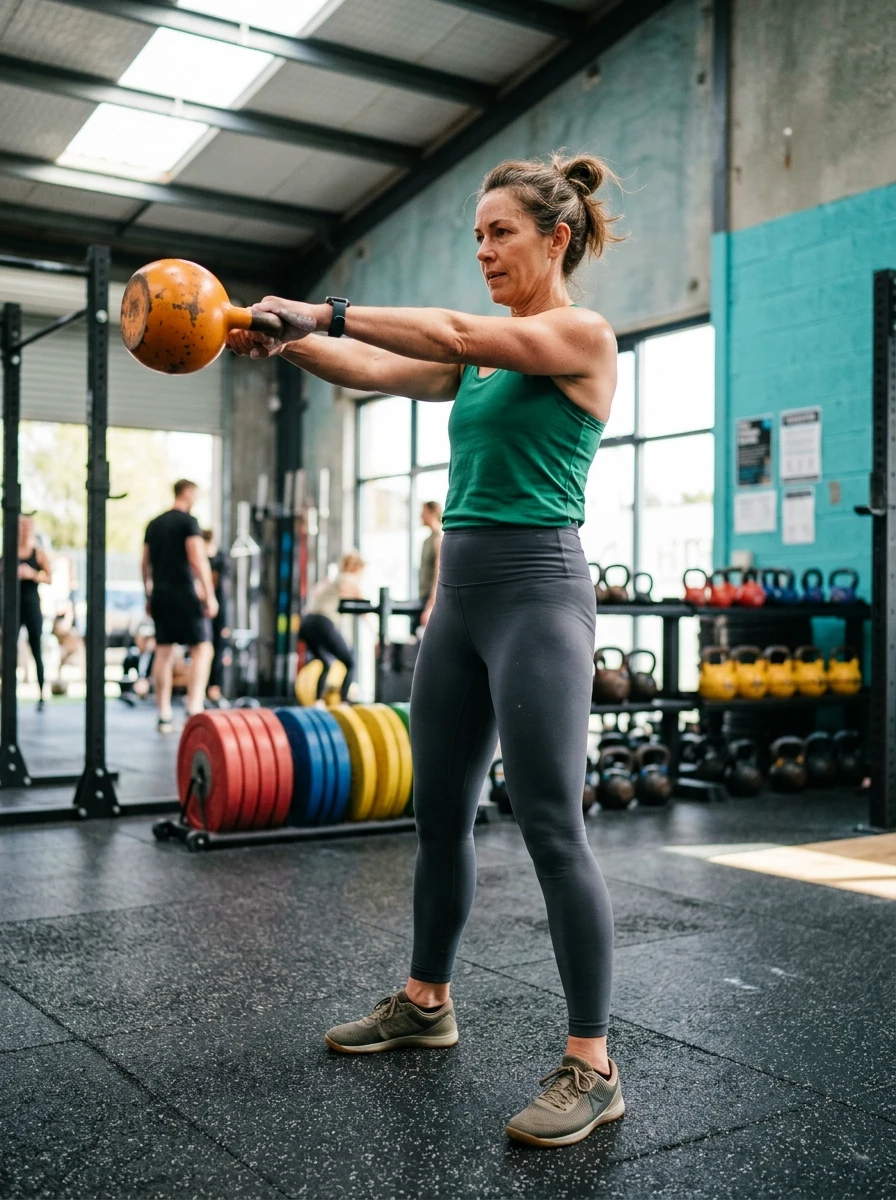
Squats, deadlifts and overhead presses involve many muscles, including the core. The kettlebell swing is great for this. Start with a straight back, swing the kettlebell back between your legs, then push your hips forward as you swing it up to chest height. Always use light weights at first and focus on your form to prevent injury.
Add a row, a carry (walk holding a weight in one hand) and one plank progression. New to lifting? Our guide to strength training for women over 40 shows you where to start, and body recomposition after 40 explains why the scale may not move while your waist does.
The “1”: One Non-Negotiable Daily Habit
Pick one daily movement habit you will actually keep. For most women, that’s walking, building toward about 7,000 to 8,000 steps a day.
Why steps? A meta-analysis of 15 studies and more than 47,000 adults found that death risk kept falling as daily steps rose, leveling off around 6,000 to 8,000 steps for adults 60 and over and 8,000 to 10,000 for younger adults. That’s not a fat-loss number, but it shows how much daily movement counts.
Walking adds steady calorie burn without draining your recovery for strength days. At 3,000 steps now? Add 1,000 a week. Fat loss still runs through what you eat, without strict rules, and our flat stomach nutrition tips cover the food side.
Where Do HIIT, Cardio And Pilates Fit For Abs?
They’re useful extras, not requirements. HIIT and cardio help with overall and visceral fat loss, and Pilates is a good way to train your deep core.
HIIT (high-intensity interval training) mixes short, hard efforts with recovery. A meta-analysis of 39 studies found that HIIT reduced total, abdominal and visceral fat mass, with no difference between men and women. That’s whole-body visceral fat loss, not spot reduction. Our breakdown of which exercises reduce belly fat ranks the options by dose.
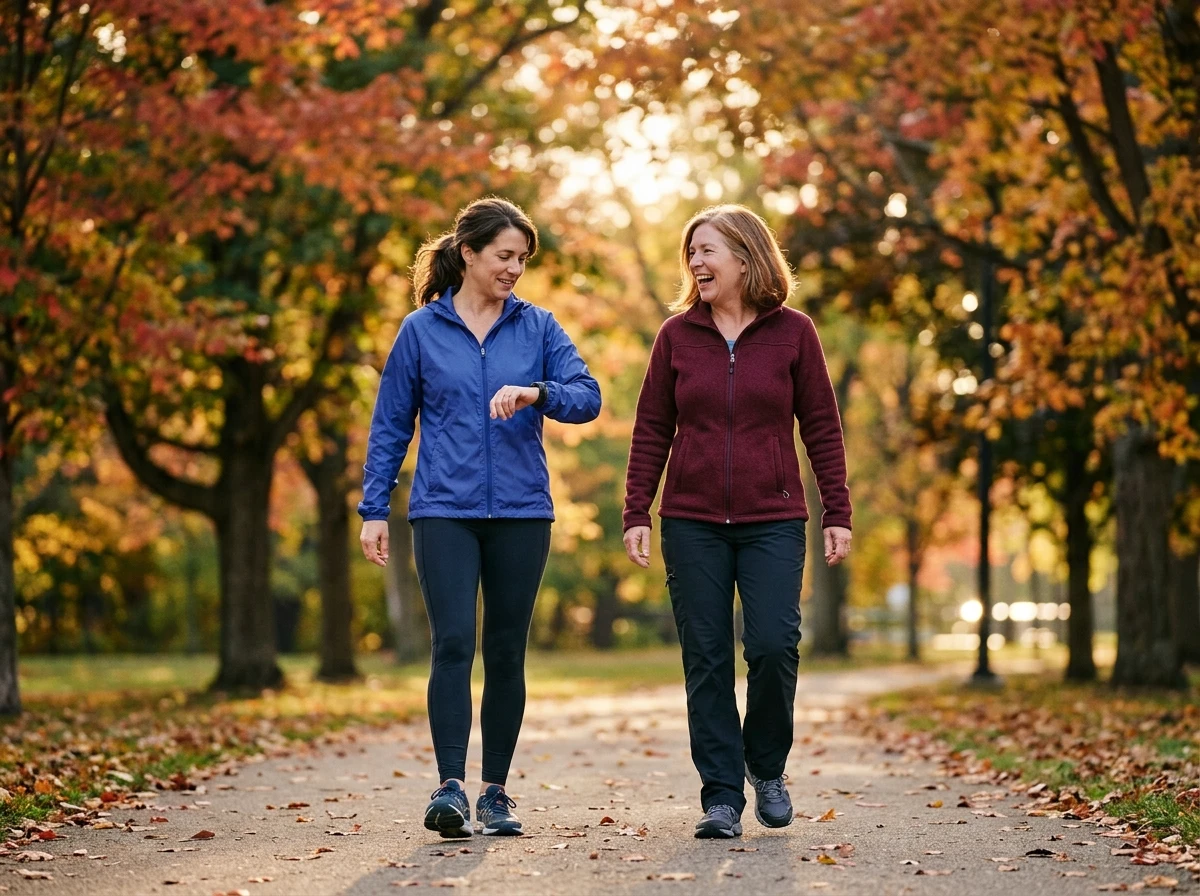
Pick the cardio you like, whether that’s running, cycling, swimming or dancing, and build toward the CDC’s 150 minutes of moderate activity a week (or 75 vigorous). Your walking counts. Here’s how to balance cardio and strength training.
Pilates for abs deserves a mention too. In a small trial of women aged 30 to 50, eight weeks of Pilates (three 90-minute sessions a week) lowered body fat percentage and waist, abdomen and hip measurements in the Pilates group. It’s a fair swap for one deep-core session. Our Pilates for fat loss guide covers what it can and can’t do.
Want the habits that make this stick? Our free PDF, 10 Actions That Support Permanent Weight Loss, turns the research into small habits you can start this week. No restriction plans. No guilt. Get the free guide here.
Posture And Your Deep Core: The All-Day Brace
Standing tall is low-level core training you can do all day. It will not burn belly fat, but it trains the deep muscles that hold your midsection in.
Your transverse abdominis wraps around your middle like a natural corset, and it helps stabilize your spine. When you slump, it switches off. When you stack your ribs over your hips, it switches on. After 40, long hours of sitting and weaker glutes can tip your pelvis forward, which makes your lower belly look rounder than it really is.
Add these posture moves two or three times a week, after your Pooch Protocol sessions:
- Band or seated rows: 2 sets of 12 to strengthen your upper back.
- Shoulder blade squeezes: 10 slow squeezes, holding each one for 2 seconds.
- Side planks: 2 holds of 15 to 30 seconds per side, with your knees down if you need to.
- Bird dogs: 8 slow reps per side, keeping your hips level.
A Beginner Core Progression For Your First Four Weeks
If you are new to core work, start with control, not crunches. Do one short circuit three times a week on non-consecutive days, and add a round only when every rep feels steady.
- Weeks 1 and 2: Pelvic tilts (10 reps), dead bugs (2 sets of 8 per side), toe taps (30 seconds) and a forearm plank from your knees (20 to 30 seconds).
- Weeks 3 and 4: Bird dogs (10 per side), a bear plank hold (20 to 30 seconds), half roll downs (8 reps) and a full forearm plank (30 seconds).
Rest about 15 seconds between moves. Breathe out as you brace, and if your belly domes down the middle, go back to the easier version (see the diastasis section below). Once the circuit feels easy, move up to the full 3-2-1 Pooch Protocol above. Want a full program? Our 6-week flat stomach workout plan for women over 40 puts it all together.
Diastasis Recti Safe Core Training
If your belly forms a ridge or dome down the middle when you lift your head, your ab muscles may be separated. Start with the deep-core drills; skip full crunches until you can control the dome and get it checked.
Abdominal separation is common. In a study that followed 300 first-time mothers, about one in three still had it 12 months after giving birth. The same paper notes that it also occurs in postmenopausal women, so it isn’t only a new-mom issue.
Can exercise close the gap? Maybe a little. A systematic review found only very low-quality evidence for any specific program, with transverse abdominis training narrowing the gap by about 6 mm on average. Aim for control and comfort, not a zero gap.
Follow these swaps while you build control:
- Watch for doming: If a ridge pops up, make the move easier until it stays flat.
- Breathe out on effort: Exhale as you lift, push or stand up. Holding your breath raises the pressure in your belly.
- Roll to stand up: Get out of bed by rolling to your side first instead of sitting straight up.
- Choose dead bugs over crunches: Dead bugs, side planks and bird dogs train the deep core with less forward pressure.
- Get assessed: A pelvic floor physical therapist can measure the gap and tailor a plan, especially if you also leak or feel heaviness.
Preventing Common Mistakes In Exercises For Flat Stomach
The biggest mistakes are doing only crunches, rushing your form and repeating the same routine for months. Each one stalls progress for a fixable reason.
None of these is about effort. Bad form is a big no-no because it can cause injuries and stop you from seeing results. Here’s what to watch for:
| Mistake | Why It Stalls You | Try This Instead |
|---|---|---|
| Only doing crunches | Works one layer and adds no extra fat loss | Mix in dead bugs, side planks and strength days |
| Bracing so hard you can’t breathe | Pushes your belly out and strains your pelvic floor | Gentle draw-in, breathe out on effort |
| Arching your back in planks | Shifts the work away from your lower abs | Tuck your pelvis slightly, drop to an easier level |
| Same routine for months | Your body adapts and progress slows | Move up the plank table every few weeks |
| Judging by the mirror each morning | Bloat changes your shape day to day | Measure your waist once a week |
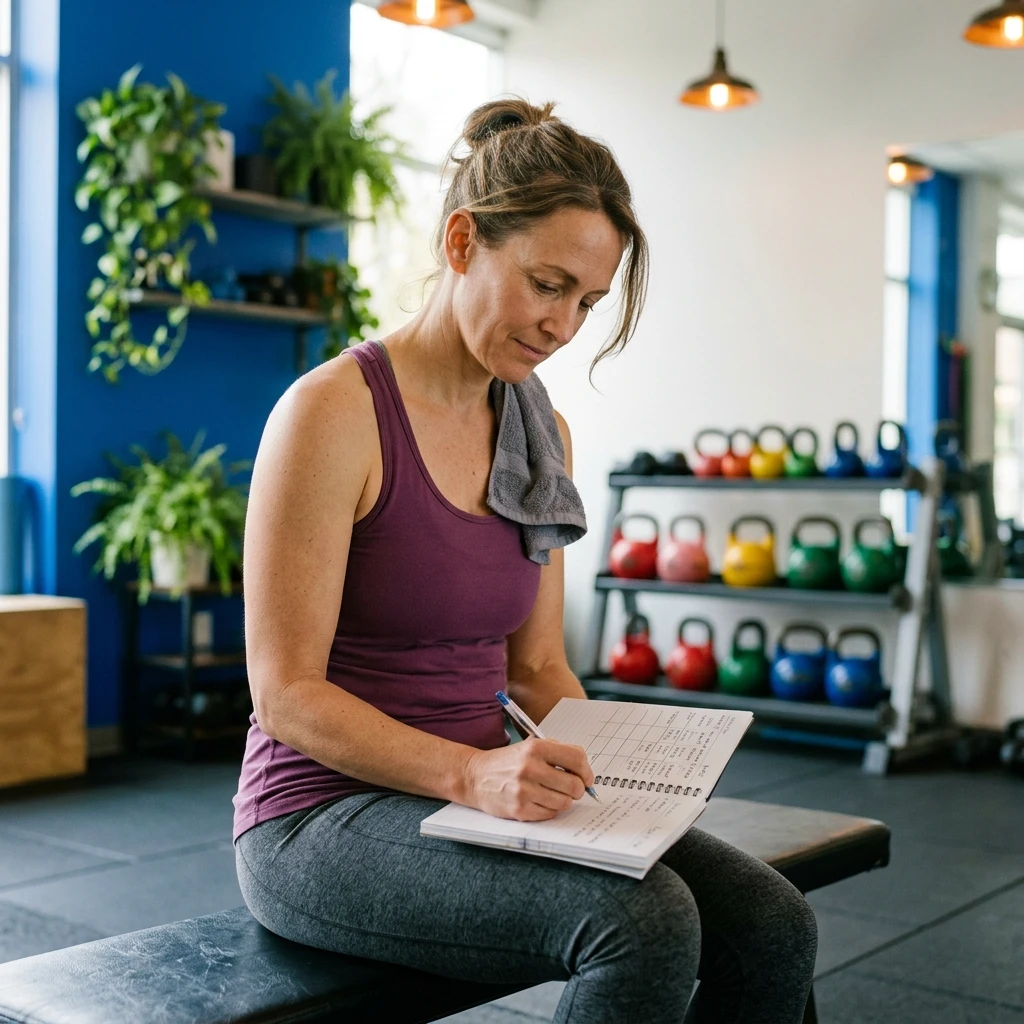
Spice up your routine with new moves to keep your interest high. Not sure your form is right? One or two sessions with a qualified trainer can check it.
Expert Commentary: What The Research Actually Shows
The research shows that flat-stomach results come from two separate jobs: losing fat across your whole body and training the deep core that holds your belly in. Most ab routines do neither well.
The fat-loss side is clear. Ab exercises alone didn’t change belly fat in either trial, while resistance training and HIIT both reduced body fat in large reviews.
The researchers behind the four-year menopause scan study concluded that “menopause per se was associated with an increase in total body fat and VAT,” meaning visceral fat. In plain English, getting older adds fat, and menopause adds fat deeper inside.
The deep-core side is about mechanics, not fat. Imaging shows the transverse abdominis pulling the waist in, but the evidence that core exercise closes an ab separation is weak. Expect better support, not a dramatic change in the gap.
Where do the studies fall short? Many are small, and several core studies used young adults or athletes. Treat the deep-core work as a low-risk bet for comfort and posture improvement, and strength plus walking as the part that changes your waist.

The Bottom Line
Exercises for a flat stomach after 40 work best as a system: deep-core drills for hold, strength training for muscle and fat loss, and daily walking for everything else. Some curve will stay, and that’s normal.
There are no shortcuts. To see changes, you have to put in time, effort and patience. But you don’t need hundreds of crunches either. Run the Pooch Protocol for eight weeks and measure your waist every Sunday.
Setbacks will happen. Take chances, try the harder plank, make mistakes and adjust. And if a soft curve stays once your waist is in a healthy range, that’s not failure. That’s anatomy.
Your core plan is set. Now make the rest of your week easier. 10 Actions That Support Permanent Weight Loss is a short free PDF built for women whose bodies have changed since their 30s, covering the habits that help fat loss last beyond an eight-week plan. Send me the free guide.
Glossary Of Key Terms
- Transverse Abdominis: Your deepest ab muscle, which wraps around your middle and pulls your waist in.
- Linea Alba: The band of connective tissue where the two sides of your “six-pack” muscle meet.
- Diastasis Recti: A wider-than-normal gap at the linea alba, common after pregnancy.
- Visceral Fat: Fat stored deep inside the abdomen around your organs, linked to higher health risks.
- Spot Reduction: The myth that exercising one body part burns the fat on that spot.
- Calorie Deficit: Taking in fewer calories than your body uses, which leads to fat loss over time.
- Core Stability: Your ability to keep your spine and pelvis steady while your arms and legs move.
- Posterior Pelvic Tilt: Gently tucking your tailbone under so your lower back flattens slightly.
- HIIT (High Intensity Interval Training): Short bursts of hard exercise alternated with recovery periods.
FAQ
What Are The Best Exercises For A Flat Stomach After 40?
Deep-core drills like the dead bug, side plank and bird dog, plus two full-body strength sessions a week and daily walking. The core moves improve how your belly is held, while strength training and walking help reduce overall body fat.
Can Exercises Get Rid Of A Lower Belly Pooch?
Partly. Exercise can reduce overall body fat and improve your deep core hold, which can make a pooch smaller. But some lower-belly curve is normal female anatomy, so a completely flat lower belly isn’t a realistic goal for everyone.
Can I Get A Flat Stomach By Just Doing Crunches?
No. In controlled trials, ab exercises alone didn’t reduce belly fat. Crunches strengthen your abs, but you need whole-body fat loss for those muscles to show.
Do I Need Cardio To Get A Flat Stomach?
Not necessarily. Strength training and daily walking can do the fat-loss part, alongside your eating habits. HIIT and other cardio are helpful extras for visceral fat and heart health if you enjoy them.
How Often Should I Do Core Exercises?
Gentle deep-core drills can be done daily in about ten minutes. Harder plank progressions fit well into two strength sessions a week, with rest days in between.
Are Planks Safe If I Have Diastasis Recti?
Often, yes, if you start at an easier level like an incline plank and stop if your belly domes. A pelvic floor physical therapist can check your separation and tell you which version is right for you.
How Long Does It Take To See A Flatter Stomach?
Better core control may show up within a few weeks and can change how your belly sits. Fat loss from the midsection usually takes longer, often months. Measure your waist weekly rather than checking the mirror daily.