
A Science-Backed Flat Stomach Diet Built On The F.L.A.T. Plate, For Real Women With Real Lives
Steve Maraboli
Speaker, author, athlete, & veteran
By choosing healthy over skinny you are choosing self-love over self-judgement.
Summary (TL;DR)
You swapped the pastries for salads, you walk most days, and the scale has even moved a little. But your lower belly hasn’t budged, and since your 40s arrived, the old rules seem to have stopped working.
That isn’t in your head. Your body handles fat differently around menopause, and most flat stomach diets online blur two separate problems: bloat and belly fat. Treat them as one, and you cut the very foods that help.
This guide untangles the two: the F.L.A.T. Plate framework, a food list with portions, what to limit and why, and a 7-day plan. No crash diets, no detox teas, no banned foods.
Medical & Referral Disclaimer
This article is for informational and educational purposes only. It is not a substitute for professional medical advice, diagnosis, or treatment. Always consult your physician or a qualified health provider before starting any new diet or exercise program, especially if you have a digestive condition, are on medication, or are pregnant or breastfeeding.
Key Takeaways
- A sustainable flat stomach diet is a pattern, not a 7-day fix.
- Bloat and belly fat need different fixes; beans can bloat you until your gut adjusts.
- Soluble fiber and lean protein both have research linking them to less belly fat.
- Sodium, fizzy drinks, large late meals and eating fast are the biggest everyday bloat triggers.
- Intermittent fasting is optional; it didn’t beat ordinary calorie control in a year-long trial.
- A waist under 35 inches matters more for health than looking “flat”.

What Is A Flat Stomach Diet, Really?
A flat stomach diet is a way of eating that reduces belly fat over months and keeps bloating low day to day, built on fiber, protein, fewer ultra-processed foods and sensible portions. It’s not a special food list or a one-week cleanse.
“Flat” is really three layers: fat (under the skin and around your organs), gut contents and gas, and your core muscles. Diet has a big say in the first two. Not sure which one drives your shape? The B.F.C. Belly Check sorts it in minutes.
The other thing plans skip is time. Weight loss usually goes early loss, plateau, then progressive regain, a pattern researchers call near-ubiquitous. So this plan is built to be boring in the best way: something you can still be doing next spring.
Why Your Stomach Changes After 40
Your stomach changes after 40 because the menopausal transition is linked to more fat stored in the deep visceral layer and a dip in daily energy use. Same habits, different result.
In a four-year study of 156 women who started out premenopausal, only the women who became postmenopausal had a significant increase in visceral fat. Their fat oxidation (how much fat the body uses for fuel) dropped by 32%, and their energy expenditure fell too.
Read that the other way round: your belly didn’t change because you failed. The inputs changed, so the plan has to change with them. Hormones shift the odds; your plate still moves them.
Visceral fat matters for health, not just jeans. The National Heart, Lung, and Blood Institute (NHLBI) says a waist of more than 35 inches in women increases risk of heart disease and type 2 diabetes. A tape measure tells you more than a mirror.
The F.L.A.T. Plate: A Flat Stomach Diet Framework For Women Over 40
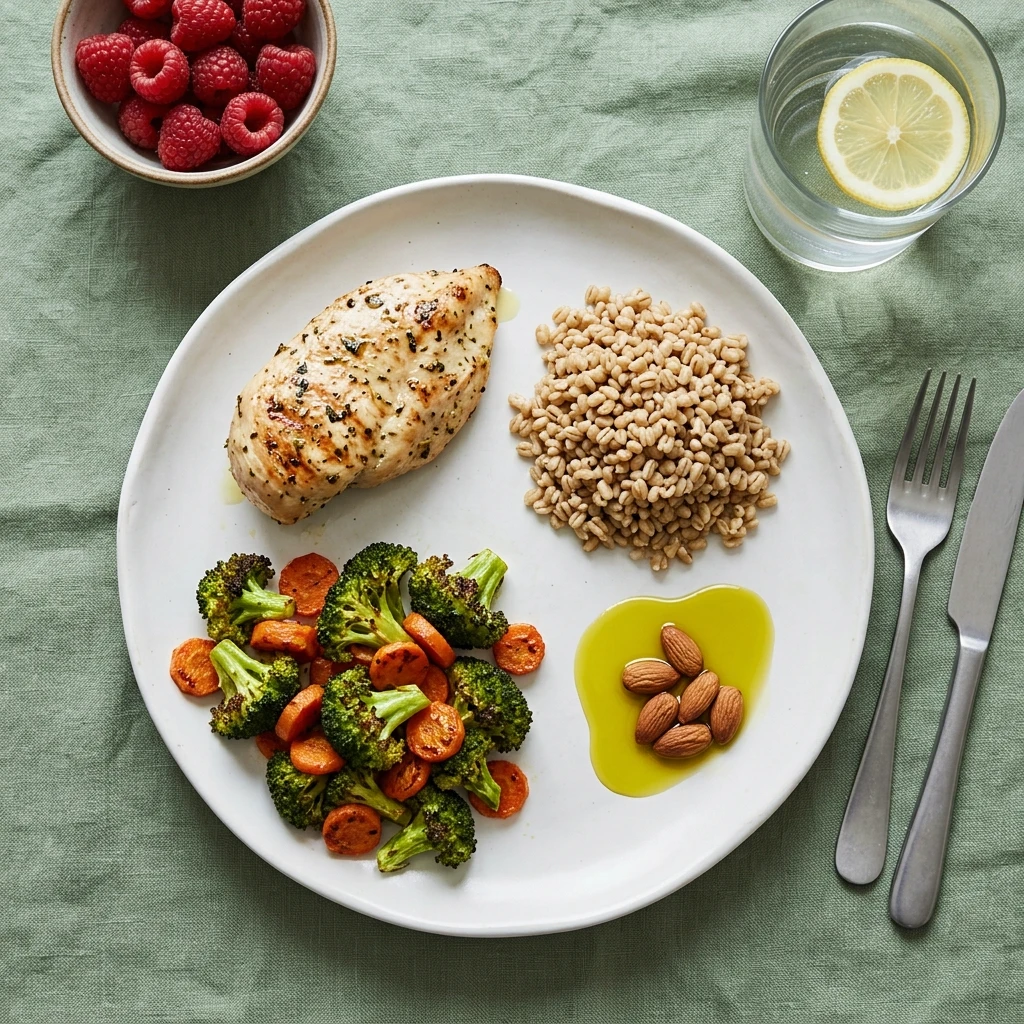
The F.L.A.T. Plate turns a flat stomach diet into one rule you can apply to every meal: Fiber first, Lean protein, Anti-bloat swaps, Timing and portions. Hit all four most days, and you’ve covered both the bloat clock and the fat clock.
| Letter | What It Means | Daily Target | Which Clock It Moves |
|---|---|---|---|
| F: Fiber First | Soluble fiber food at every meal, increased gradually | About 25 g (ages 31 to 50) or 22 g (51+) | Fat clock |
| L: Lean Protein | A palm-sized portion of protein-rich food at each meal | Roughly 25 to 30 g per meal | Fat clock |
| A: Anti-Bloat Swaps | Less sodium, fewer fizzy drinks, less ultra-processed food | Under 2,300 mg sodium | Bloat clock (and fat clock via fewer calories) |
| T: Timing And Portions | Eat slowly, smaller evening meals, regular eating times | Slow, seated meals | Both |
The fiber and sodium numbers come straight from the Dietary Guidelines for Americans 2020 to 2025. The protein figure comes from the research covered in the L section below.
F: Fiber First, Built Up Slowly
Fiber comes first because soluble fiber is linked to less visceral fat over time. In one five-year study, every extra 10 g of soluble fiber a day went with a 3.7% slower rate of visceral fat gain.
That comes from the Insulin Resistance Atherosclerosis (IRAS) Family Study, which CT-scanned 1,114 African American and Hispanic American adults five years apart. It shows a link, not proof, but soluble fiber tracked with less deep belly fat, not with fat under the skin. It’s also why fiber sits at the center of gut health nutrition: the bacteria in your gut feed on it.
The catch: fiber can bloat you before it helps you. Mayo Clinic advises you to add fiber slowly over a few weeks, since too much too fast causes gas and bloating, and to drink plenty of water, because fiber works best when it absorbs water.
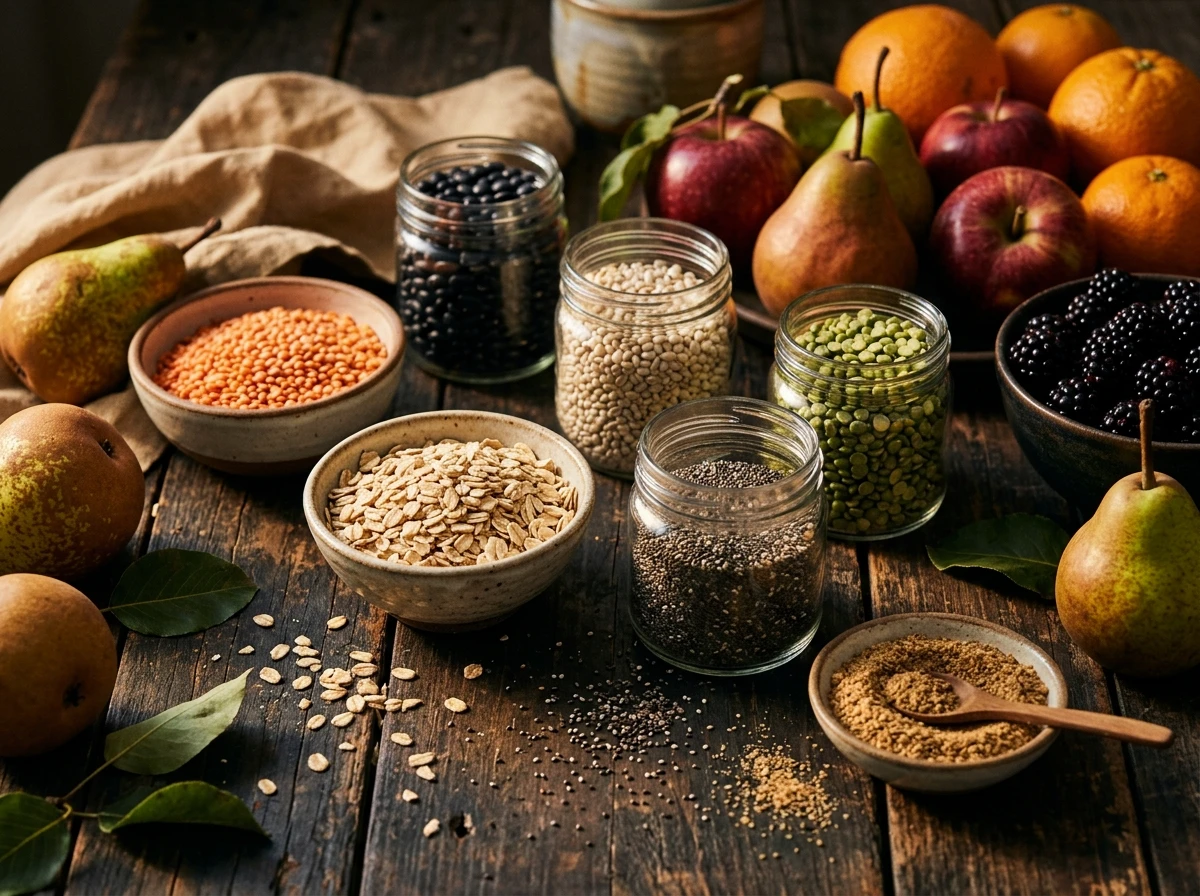
Good soluble fiber foods to rotate through:
- Oats and barley: the easiest breakfast base.
- Beans, lentils and split peas: 6 to 8 g of fiber per half cup. Start with a quarter cup if they usually bother you.
- Chia and ground flax: about 4 g and 3 g per tablespoon, easy to stir into yogurt.
- Apples, pears, oranges and berries: fiber plus sweetness.
- Avocado, carrots and sweet potato: fiber with healthy fats or slow carbs.
L: Lean Protein At Every Meal
Lean protein belongs at every meal because higher-protein diets led to more fat loss and better muscle preservation than lower-protein diets in controlled studies, with benefits seen at roughly 25 to 30 g per meal or more.
A review in the American Journal of Clinical Nutrition found greater fat loss, better muscle preservation and smaller waists on higher-protein diets in controlled studies. The authors put the useful range at 1.2 to 1.6 g per kilogram of body weight a day, potentially with at least 25 to 30 g per meal.
The recommended dietary allowance (RDA) for women is 46 g a day, a baseline rather than a goal. After 40, protein keeps you full and helps you hold on to muscle while you lose fat. You’ll see lists of metabolism-boosting foods. Skip them and put protein on every plate instead; that’s lean body nutrition at its simplest.
Protein-rich foods that fit the plate:
- Greek yogurt or skyr: no-cook breakfast protein.
- Eggs: two or three, plus vegetables.
- Salmon, sardines and white fish: protein plus healthy fats.
- Chicken, turkey and lean beef: batch-cook once, eat three ways.
- Tofu, edamame and lentils: protein and fiber together.
A: Anti-Bloat Swaps
Anti-bloat swaps target the bloat clock: less sodium, fewer fizzy drinks and fewer large late meals. In a controlled feeding trial, high-sodium diets raised the risk of bloating by about 27% compared with low-sodium versions.
That’s the DASH-Sodium feeding trial, reanalyzed by Johns Hopkins researchers using 412 adults with high blood pressure. The high-fiber DASH diet also raised bloating risk by about 41%. That’s why you build fiber slowly and cut salt fast.
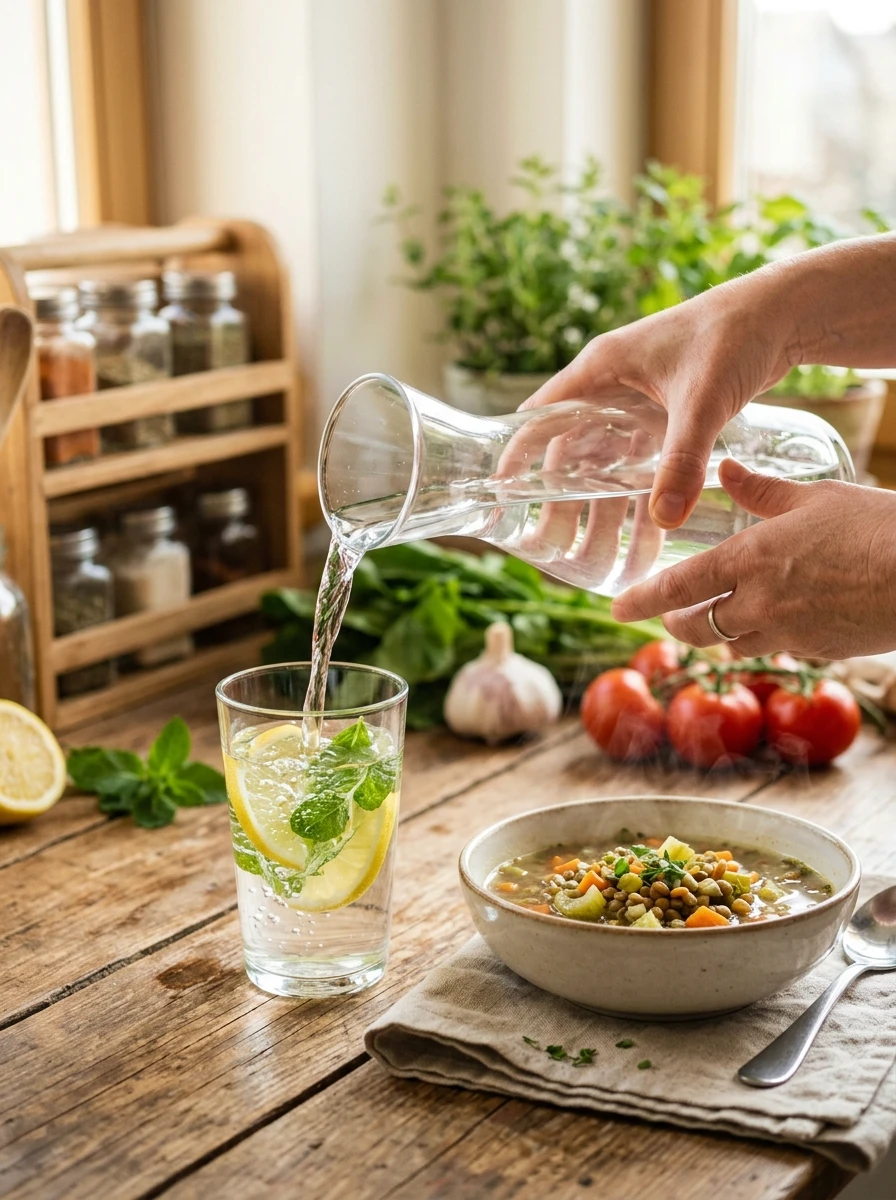
Per the NHS, gas is the most common cause of bloating, and fizzy drinks, alcohol, lots of caffeine, large late meals and swallowing air make it worse. Lists of de-bloating foods get shared a lot, but these swaps target the known triggers. Try still water with lemon instead of sparkling, low-sodium recipes instead of packaged soups, and an earlier, smaller dinner.
Water counts too. Hydration for weight loss isn’t about flushing anything out; it’s about giving fiber the water it needs to work. Here’s how much water you should drink to keep things moving.

T: Timing And Portions
Timing and portions matter because eating slowly helps you feel full on less. Women who ate the same meal slowly ate about 67 fewer calories and felt more satisfied than when they ate it quickly.
That’s from a randomized study of 30 healthy women: 579 calories eaten slowly versus 646 eaten quickly, with higher satiety in the slow condition. It’s small, but mindful eating costs nothing and means swallowing less air, which helps the bloat clock too.
Portion control doesn’t need a scale: a palm of protein, a fist of slow carbs, two fists of vegetables, a thumb of healthy fats. To anchor your daily caloric intake, see how many calories you should be eating, or try weight loss without counting calories.
What To Eat On A Flat Stomach Diet: The Food List
The best foods for a flat stomach are soluble fiber foods, protein-rich foods and healthy fats that keep you full on fewer calories. Think beans, oats, berries, Greek yogurt, eggs, fish, olive oil and nuts.
Fiber values below come from the Dietary Guidelines food sources of fiber table, per standard portion.
| Food | Portion | Fiber | F.L.A.T. Job |
|---|---|---|---|
| Split peas, cooked | 1/2 cup | 8.2 g | Fiber plus plant protein |
| Raspberries | 1 cup | 8.0 g | Fiber, sweet craving fix |
| Lentils, cooked | 1/2 cup | 7.8 g | Fiber plus plant protein |
| Blackberries | 1 cup | 7.6 g | Fiber |
| Black beans, cooked | 1/2 cup | 7.5 g | Fiber plus plant protein |
| Brussels sprouts, cooked | 1 cup | 6.4 g | Fiber, volume for few calories |
| Sweet potato, cooked | 1 cup | 6.3 g | Slow carb plus fiber |
| Pear | 1 medium | 5.5 g | Fiber, portable snack |
| Avocado | 1/2 cup | 5.0 g | Healthy fat plus fiber |
| Chia seeds | 1 Tbsp | 4.1 g | Soluble fiber booster |
| Almonds | 1 ounce | 3.5 g | Healthy fat, snack |
| Barley, cooked | 1/2 cup | 3.0 g | Soluble fiber grain |
Round it out with protein and a drizzle of olive oil. If fats still feel scary, here’s why healthy fats support weight loss.
Foods To Limit On A Flat Stomach Diet (And Why)
The foods to limit are the ones that drive overeating or bloating: ultra-processed snacks and meals, salty packaged foods, sugary and fizzy drinks, and alcohol. Limit them; you don’t have to ban them.
Ultra-processed food is the big one for the fat clock. In an NIH inpatient study, 20 adults ate about 500 more calories a day on an ultra-processed diet than on an unprocessed one, and gained about 2 pounds in two weeks. Here’s what to keep to a minimum:
- Packaged snacks and ready meals: easy to overeat and usually high in sodium.
- Fizzy drinks (even diet ones): carbonation adds gas straight to your gut.
- Sugary drinks and juices: calories that don’t fill you up.
- Alcohol: on the NHS list of bloat triggers, and extra calories on top.
- Very large late dinners: a common reason the stomach looks fuller at night.
If you’re in perimenopause and want the deeper version of this list, see what foods cause belly fat in perimenopause. And before cutting whole food groups, check the foods you should never cut from your diet.
A 7-Day Flat Stomach Diet Plan
This 7-day flat stomach diet plan pairs a protein anchor with a soluble fiber food at every meal and keeps dinners lighter than lunch. Adjust portions to your hunger and calorie needs.
You don’t need fancy clean eating recipes. Every meal below uses supermarket staples, and leftovers are planned in on purpose.
| Day | Breakfast | Lunch | Dinner | Snack |
|---|---|---|---|---|
| Mon | Oats, chia, yogurt, raspberries | Lentil soup, chicken | Salmon, Brussels sprouts | Pear, almonds |
| Tue | Eggs, spinach, whole-grain toast | Black bean bowl, avocado | Turkey and broccoli stir-fry | Skyr, blackberries |
| Wed | Skyr, flax, blackberries | Stir-fry over barley | White fish, sweet potato | Apple, peanut butter |
| Thu | Overnight oats, kiwi | Chickpea and tuna salad | Tofu vegetable curry | Edamame |
| Fri | Veggie omelet, orange | Split pea soup, cottage cheese | Chicken, carrots, barley | Yogurt, chia |
| Sat | Protein pancakes, berries | Salmon and bean salad | Low-sodium beef chili | Pear, pumpkin seeds |
| Sun | Eggs, avocado, toast | Leftover chili, greens | Roast chicken, vegetables | Skyr, raspberries |

Meal Prep For Weight Loss: The Sunday Hour That Runs Your Week
A plan only works if you can follow it on Wednesday night. These habits make meal planning worth it:
- Meal Planning: pick three dinners and two lunches to repeat.
- Grocery Shopping: keep it close to a whole foods diet: produce, beans, oats, eggs, fish and yogurt fill most of the cart.
- Meal Preparing: cook one protein and one grain in bulk, portion the snacks.
- Mindful Eating: plate your food, sit down and give each meal about 20 minutes.
- Intuitive Eating: check your hunger before seconds. The plan is a guide, not a rulebook.
Want The Habits Behind Lasting Weight Loss? Get the free guide: 10 research-backed habits that help women lose body fat and keep it off, with no extreme diets. Send Me The Free Guide.
Why Won’t My Lower Belly Pooch Budge?
A lower belly pooch often stays after weight loss because some lower-belly curve is normal for women, and the fat under the skin there can be slow to change. It shrinks with overall fat loss, not with a special food.
You’re in good company. Reddit threads are full of women who’ve lost real weight and still “carry that last little bit in the bottom of my stomach”, as one woman who’d lost over 100 pounds put it. Patience is part of the plan. See what a realistic flat stomach after 40 looks like.
Judge progress by your waist and how your clothes fit over weeks. If the pooch is more about core control, especially after pregnancy, the deep-core exercises for a flat stomach are the right next step. No amount of crunching targets the fat itself, which is why spot reduction doesn’t work.
When Bloating Isn’t About Your Diet
Sometimes it isn’t food. The NHS says to see a doctor if you’re bloated regularly or still bloated after changing your diet, and sooner if bloating comes with:
- Unintentional weight loss
- Blood in your stool
- A swelling or lump in your tummy
- Bloating that doesn’t go away (rarely, a sign of something more serious such as ovarian cancer)

Flat Stomach Diet Myths And Realities
Most flat stomach diet myths promise speed: a week, a cleanse, a single food or skipping breakfast. The research keeps pointing to the same slower answer: steady habits that hold up for months.
| Myth | Reality |
|---|---|
| Crash diets give lasting results. | Early loss is usually followed by a plateau and regain. A pattern you can keep is what lasts. |
| A 7-day diet can flatten belly fat. | A week is far more likely to change bloat and water than fat. Fat runs on a months-long clock. |
| Cut beans and fiber to stop bloating. | Build fiber slowly instead. It’s linked to less visceral fat over time. |
| Intermittent fasting is required. | In a 12-month trial, it didn’t beat plain calorie control. |
| Crunches get rid of belly fat. | Fat loss happens across the whole body. Core work builds the muscle underneath. |
| Flat stomachs are only for a lucky few. | Some lower-belly curve is normal. A waist under 35 inches matters more for health. |
Does Intermittent Fasting Flatten Your Stomach?
In the best long trial so far, intermittent fasting didn’t flatten stomachs any better than ordinary calorie control. Over 12 months in adults with obesity, adding an 8-hour eating window to a calorie-controlled diet made no significant difference to weight or waist size.
The New England Journal of Medicine (NEJM) trial randomized 139 adults with obesity to calorie restriction, with or without eating only between 8 a.m. and 4 p.m. After a year, they’d lost 8.0 kg and 6.3 kg, a difference that wasn’t significant, and waist results matched.
If a shorter window stops late-night snacking, use it. If it leaves you overeating at dinner, skip it.
What About The Flat Belly Diet?
The Flat Belly Diet is a branded plan from Prevention magazine built on a monounsaturated fat serving at every meal and 1,600 calories a day. Evidence that it targets belly fat specifically comes only from small, short studies.
U.S. News describes the plan, by Liz Vaccariello and dietitian Cynthia Sass, as a four-day “anti-bloat” jumpstart plus a four-week plan. It’s loosely modeled on Mediterranean-style eating, often called an anti-inflammatory diet, but whether the plan delivers the same benefits is unproven. Its useful parts already sit inside the F.L.A.T. Plate.

Do Supplements Help A Flat Stomach After 40?
No supplement flattens your stomach on its own. Probiotics may help some women with digestion and bloating, but food, fiber and protein do the heavy lifting.
Your gut bacteria help regulate blood sugar and appetite by producing short-chain fatty acids, so a gut-friendly diet supports everything else on this page. Some probiotic strains have been studied for weight and belly fat, including Lactobacillus gasseri, but the effects are small and vary from person to person. Others, such as Lactobacillus rhamnosus GG and Bifidobacterium lactis, are better known for digestive comfort.
Start with food first: yogurt or kefir with live cultures, sauerkraut or kimchi. If you choose a supplement, remember that supplements are not regulated as strictly as medicines, so pick a reputable brand and check with your doctor or pharmacist, especially if you take other medication. Skip anything sold as a fat burner.
Where Exercise, Sleep And Stress Fit In
Diet does most of the work on belly fat reduction and bloat, but a full workout and diet plan, decent sleep and stress management decide how well you stick to it. Think of them as the support crew for your plate.
In the same five-year study, moderately active people had a 7.4% slower rate of visceral fat gain. Core fitness builds the muscle underneath; overall activity helps the fat on top.
Start with the best exercises for belly fat and why strength training matters after 40. If stress and short nights are part of your story, read cortisol belly vs hormonal belly.
Expert Commentary: What The Research Actually Shows
The research behind a flat stomach diet points to three ways: soluble fiber and protein are linked to less belly fat, sodium and gas drive bloating, and results depend on whether people actually follow the plan.
Johns Hopkins epidemiologist Noel Mueller, PhD, MPH, put it simply: “Bloating is one of the leading gastrointestinal complaints in the U.S.” His team’s analysis is why sodium sits in the A of the F.L.A.T. Plate.
NIH researcher Kevin Hall said of his inpatient trial, “This is the first study to demonstrate causality”: the ultra-processed diet caused the overeating.
And when the protein reviewers asked why long-term trials disagreed, their answer was: “Dietary compliance appears to be the primary contributor to the discrepant findings.” Benefits showed up in people who followed the higher-protein plan. That’s a good argument for a plan simple enough to follow.
The Contrarian Take: Bloat Isn’t Fat, And Most “Flat Stomach Diets” Only Fix Bloat
Most quick flat stomach diets work by reducing bloat (gas, water and gut contents), not belly fat. That’s why the results can vanish in a weekend, and why the foods that shrink fat can make you look puffier at first.
Look at the evidence side by side. High salt raised bloating risk by about 27%, and a high-fiber diet raised it by about 41%. Yet soluble fiber was also linked to slower visceral fat gain over five years. Judge your diet by how flat you look after three days, and you’ll drop the fiber doing the long-term work.
So run two scoreboards. Score the bloat clock daily: less salt, fewer fizzy drinks, smaller late meals, slower eating. Score the fat clock monthly: your waist, your energy, your clothes. Mix them up, and you’ll quit the right plan for the wrong reason.

The Bottom Line
The flat stomach diet that lasts is the F.L.A.T. Plate: fiber first and built up slowly, lean protein at every meal, anti-bloat swaps and slower, smaller evening eating. Expect bloat to ease in days and belly fat to change over months.
After 40, your body plays by slightly different rules, but it still responds to healthy eating habits done consistently. That’s sustainable fat loss in practice: measure your waist instead of judging the mirror at night, give fiber a few weeks to settle, and pick the version of this plan you could still follow next year.
You’ve got the plate. Now get the habits that keep it there. Our free guide, 10 Actions That Support Permanent Weight Loss, turns this plan into daily habits that stick. No restriction plans. No guilt. Just what actually works. Get Your Free PDF Guide.
Glossary Of Key Terms
- Bloating: Fullness or swelling in the abdomen, most often from gas in the gut.
- Calorie Deficit: Eating less energy than your body uses, which drives fat loss.
- F.L.A.T. Plate: Fiber first, Lean protein, Anti-bloat swaps, Timing and portions.
- Mindful Eating: Eating slowly, paying attention to hunger and fullness.
- Portion Control: Matching serving sizes to your needs, for example by hand size.
- Soluble Fiber: Fiber that absorbs water, found in oats, beans, barley and apples.
- Subcutaneous Fat: The pinchable fat just under the skin.
- Time-Restricted Eating: Intermittent fasting that limits eating to a daily window.
- Ultra-Processed Food: Industrially made foods with long ingredient lists, like packaged snacks.
- Visceral Fat: Deep fat around the abdominal organs, linked to heart disease and diabetes risk.
FAQ
What Is The Best Diet For A Flat Stomach?
The best diet for a flat stomach is one you can keep: high in soluble fiber and lean protein, low in ultra-processed and salty food, eaten slowly in sensible portions.
What Foods Make Your Stomach Flat?
No single food flattens your stomach, but beans, lentils, oats, berries, pears, Greek yogurt, eggs, fish, avocado and nuts support it by adding fiber or protein and keeping you full.
How Long Does A Flat Stomach Diet Take To Work?
Bloat can ease within days of cutting sodium, fizzy drinks and large late meals. Belly fat takes weeks to months, and added fiber needs a few weeks before your gut settles.
Does Intermittent Fasting Help You Get A Flat Stomach?
Not more than regular calorie control, based on current evidence. In a 12-month NEJM trial in adults with obesity, adding an 8-hour eating window to a calorie-controlled diet made no significant difference to weight or waist size.
Why Do I Still Have A Lower Belly Pooch After Losing Weight?
Some lower-belly curve is normal, and the fat under the skin there can be slow to change. Keep the habits going, track your waist, and add deep-core work if core control is part of it.
How Much Protein And Fiber Do Women Over 40 Need For A Flat Stomach?
About 25 g of fiber a day at 31 to 50, or 22 g at 51+, built up gradually. For protein, research supports roughly 25 to 30 g per meal; the 46 g daily minimum is a floor.
Can A Flat Stomach Diet Reduce Visceral Fat?
It can support visceral fat reduction. Higher soluble fiber intake was linked to slower visceral fat gain over five years, and higher-protein diets led to more fat loss in controlled studies. Add regular activity for the best odds.