9 Fitness Myths About Women, Rated By The Research, Plus What Really Changes After 40
Marie Curie
Nobel prize-winning physicist & chemist
Nothing in life is to be feared, it is only to be understood.
Summary (TL;DR)
The most common fitness myths about women say that lifting makes you bulky, light weights “tone,” crunches burn belly fat, cardio beats strength work, and it’s too late to lift after menopause. The research says otherwise.
Women build muscle at a similar relative rate to men but have far less testosterone. You can’t spot-reduce fat, and lifting heavy is safe and effective well past 50. Use the Myth Meter below to sort fact from fiction, then train two to three days a week with progressive strength work.
Have you ever picked up the tiny pink dumbbells because the heavy ones felt like they were “for the guys”? I did, for years. I believed that lifting anything heavier than 3 pounds would make me bulky, that endless cardio was the only way to get lean, and that I could crunch my way to a flat stomach. None of it was true, and it cost me a lot of time.
You’re not alone if you’ve believed the same things. Fitness myths about women are everywhere, from gym floors to social media feeds. They matter because they keep women away from the training that protects muscle, bone, and metabolism.
Right now, only about 31% of US women aged 18 to 44 meet the muscle-strengthening guideline, according to CDC survey data from 2022 and 2024.
In this guide, I’ve rated nine common myths with a simple scoring system called the Myth Meter. Each one gets a verdict, an evidence rating, and a note on what changes after 40. Because perimenopause is exactly when bad advice starts costing the most.
Medical & Referral Disclaimer
This article is for educational and informational purposes only. It isn’t medical advice and doesn’t replace a consultation with your doctor or a qualified health professional. If you have osteoporosis, a heart condition, joint pain, an injury, or you’re new to exercise, please get personalized guidance before starting or changing a training program.
Key Takeaways
- Lifting won’t make you bulky: men have more than 15 times the circulating testosterone of women, which is the main driver of big muscle size.
- Women build muscle at a similar relative rate to men when they follow the same program, according to a 2025 meta-analysis of 29 studies.
- Light and heavy weights build similar muscle size when sets are taken close to failure. Heavy loads still win for strength.
- You can’t spot-reduce fat. Six weeks of daily ab work didn’t shrink belly fat in a controlled trial.
- Strength training alone cut body fat by about 1.46% on average across 54 studies, with no extra cardio.
- Your metabolism doesn’t crash at 40. Adjusted daily energy use stays stable from roughly age 20 to 60.
- Heavy lifting after menopause is safe and helpful when it’s supervised and progressive. It raised spinal bone density in women with low bone mass.
Why Fitness Myths About Women Spread (And Hit Harder After 40)
Fitness myths survive because they sound reasonable. They’re also repeated by people we trust: friends, trainers, and influencers with huge followings.
The problem is getting bigger. A 2026 review in the Proceedings of the Nutrition Society checked popular social media claims aimed at active women, such as strict protein timing rules and “never train fasted” warnings. The researchers found that overall intake, energy availability, and training goals matter far more than any rigid sex-based rule.
Women over 40 often feel this confusion most. In perimenopause communities like Reddit’s r/Menopause, the same questions come up again and again: “Does cardio spike cortisol?” “Is it too late to start lifting?” “Should I train around my cycle?” Too many conflicting answers lead to the worst outcome of all, which is doing nothing.
How The Myth Meter Works
Instead of calling every myth “debunked,” I’ve graded each one on two scales. Some popular myths contain a grain of truth, and you deserve to know which part.
- Verdict: Busted (the claim is wrong), Mostly Busted (wrong, with a small caveat), Half-True (part of it holds up), or Depends On Context (it varies by person or situation).
- Evidence strength: Strong (multiple meta-analyses or large trials), Moderate (solid trials with some gaps), or Emerging (early or mixed research).
- The 40+ twist: what changes during perimenopause and beyond, because hormones, recovery, and bone health all shift.
Myth 1: Will Lifting Heavy Weights Make Women Bulky?
No. Lifting heavy weights won’t make most women bulky. Women have far less testosterone than men, and testosterone is a major driver of large muscle size. Women gain strength and lean muscle from lifting, which usually looks firmer and more defined, not bulky. Building a lot of muscle takes years of deliberate training and eating.
Myth Meter: Busted. Evidence: Strong.
The numbers are clear. A review in Endocrine Reviews found that after puberty, men’s circulating testosterone is more than 15 times higher than women’s at any age. That gap explains most of the difference in muscle mass between the sexes.
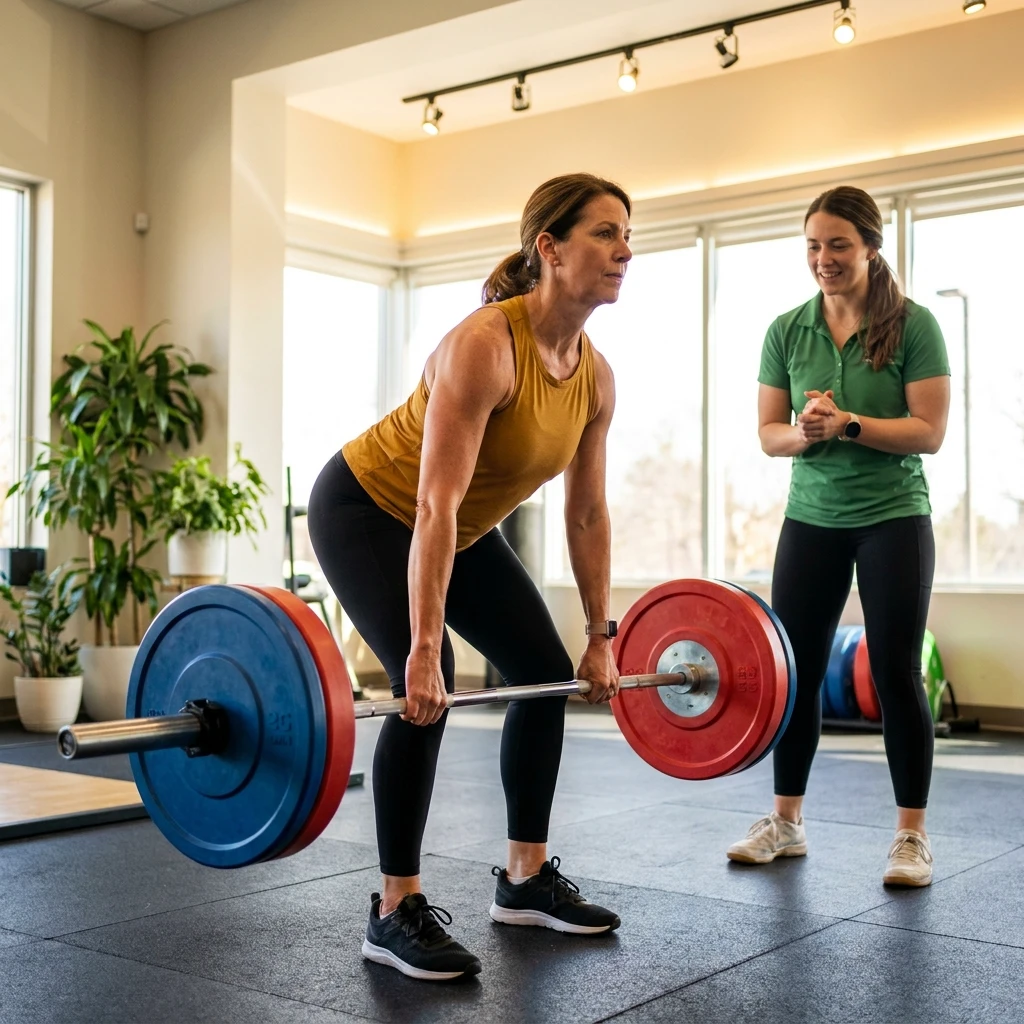
Here’s the encouraging part. A 2025 Bayesian meta-analysis of 29 studies found that women and men gain muscle at a similar relative rate when they follow the same program. You’ll get stronger and leaner. You just won’t wake up looking like a bodybuilder.
The 40+ twist: The SWAN study of midlife women (the Study of Women’s Health Across the Nation) found that lean mass starts to decline at the start of the menopause transition. That makes lifting more important after 40, not less. Our guide to strength training for women over 40 shows how to build lean muscle without bulking, and if your thighs are the worry, read how to strength train without bigger thighs.
Myth 2: Do Light Weights And High Reps “Tone” Muscle Better?
Partly. Light and heavy weights build similar muscle size when you take each set close to failure. But heavier loads build more maximal strength. “Toning” isn’t a separate process. A toned look comes from building some muscle and losing some fat, whatever weight you use.
Myth Meter: Half-True. Evidence: Strong.
A 2017 meta-analysis of 21 studies compared low-load training (60% of your one-rep max or less) with high-load training. Muscle growth was similar between the two. Gains in one-rep-max strength, though, were greater with heavy loads.
So light weights aren’t useless. The catch is effort. Twenty easy reps you could do forty of won’t change much. The last few reps need to feel genuinely hard. For the full breakdown, see toning vs. building muscle.
The 40+ twist: If your joints ache with heavy loads, lighter weights taken close to failure are a smart, research-backed option. Just make sure you’re progressing over time.
Myth 3: Can You Spot-Reduce Belly Or Arm Fat?
No. You can’t burn fat from one specific area by exercising that area. Your body draws on fat stores across your whole body, not just near the muscle you’re working. Crunches strengthen your abs, but they won’t shrink the fat covering them on their own.
Myth Meter: Busted. Evidence: Strong.
In one randomized controlled trial, adults did seven ab exercises, five days a week, for six weeks. Their ab endurance improved. Their belly fat, waist size, and body fat percentage didn’t change compared with the control group.

That doesn’t make core work pointless. A strong core supports your back, posture, and lifting form. It just isn’t a fat-loss tool. We cover the details in the truth about spot reduction.
The 40+ twist: In the SWAN study, the rate of fat gain doubled once the menopause transition began. Overall fat loss plus full-body strength training is what moves the needle, not more crunches.
Myth 4: Is Cardio Better Than Strength Training For Fat Loss?
Not exactly. Cardio burns more calories during the session, but strength training reduces body fat too, and it builds the muscle that shapes your body. A 54-study meta-analysis found lifting alone cut body fat by about 1.46%. The best results come from combining both with a sensible eating plan.
Myth Meter: Half-True. Evidence: Strong.
The 2022 meta-analysis in Sports Medicine compared full-body resistance training with no exercise. Lifting reduced body fat percentage, fat mass, and visceral fat (the deep belly fat linked to health risks). Results didn’t differ by sex.
Cardio still earns its place for heart health and your daily calorie burn. Resistance training benefits go beyond fat loss, too: stronger bones (more on that in Myth 8) and easier everyday movement. The myth is the idea that cardio is the only path to leanness. Learn more about how strength training burns fat compared with cardio.
The 40+ twist: Lean mass starts to decline during the menopause transition. Cardio-only plans don’t protect it, so they can leave you lighter on the scale but weaker.
Myth 5: Is HIIT Always The Fastest Way To Burn Fat?
No. High-intensity interval training (HIIT) gives similar fat loss to steady, moderate cardio, in roughly 40% less time. It’s a great time-saver, not a magic fat burner. Very hard sessions also raise cortisol for a short while, so more HIIT isn’t always better, especially when sleep and recovery are poor.
Myth Meter: Half-True. Evidence: Moderate.
A 2017 meta-analysis of HIIT versus moderate continuous training found no significant difference in fat loss or waist size. HIIT simply took about 40% less training time.
What about the cortisol fear? In a 2008 study, 30 minutes at 80% intensity raised cortisol by about 83%, while easy exercise at 40% didn’t raise it significantly. That rise is a normal, temporary stress response, not damage. The study was done in men, so it’s a guide rather than the final word for women.
The 40+ twist: Keep HIIT to one or two short sessions a week, and protect your sleep. If stress and belly fat are on your mind, read cortisol belly vs. hormonal belly.

Myth 6: Does Your Metabolism Crash After 40?
Mostly no. A large 2021 study of over 6,400 people found that daily energy use, adjusted for body size and composition, stays stable from about age 20 to 60. Midlife weight gain usually comes from muscle loss, lower activity, sleep changes, and hormonal shifts, not a sudden metabolic crash.
Myth Meter: Mostly Busted. Evidence: Strong.
The study in Science used doubly labeled water, a gold-standard method for measuring calorie burn. Energy expenditure was stable through adulthood, even during pregnancy, and only declined after about age 60.
This is good news. The factors that do change are ones you can influence, especially muscle mass. Dig deeper in our guide to understanding female metabolism.
The 40+ twist: What does change is body composition. The SWAN study found that during the menopause transition, women gained fat faster and lost lean mass, even though the rate of weight gain didn’t change. Protecting muscle is your best metabolic insurance.
Myth 7: You Must Train According To Your Menstrual Cycle
Myth Meter: Depends On Context. Evidence: Emerging.
Cycle syncing is popular, and listening to your body is always wise. The research, though, is less dramatic than social media suggests.
A 2020 meta-analysis of 78 studies found that exercise performance might be trivially lower in the early follicular phase (your period). The effect was so small, and the studies so varied, that the authors said general cycle-based rules can’t be set. They recommended a personal approach instead.
What this means in practice:
- Track how you feel: note energy, sleep, and performance for two or three cycles.
- Adjust, don’t abandon: on low days, cut volume or intensity rather than skipping training entirely.
- Don’t force a template: perimenopausal cycles can become irregular, so rigid phase-based plans often stop fitting.
If you enjoy a cycle-aware approach, our cycle syncing guide shows how to do it flexibly.
Myth 8: Is It Too Late (Or Unsafe) To Lift Heavy After Menopause?
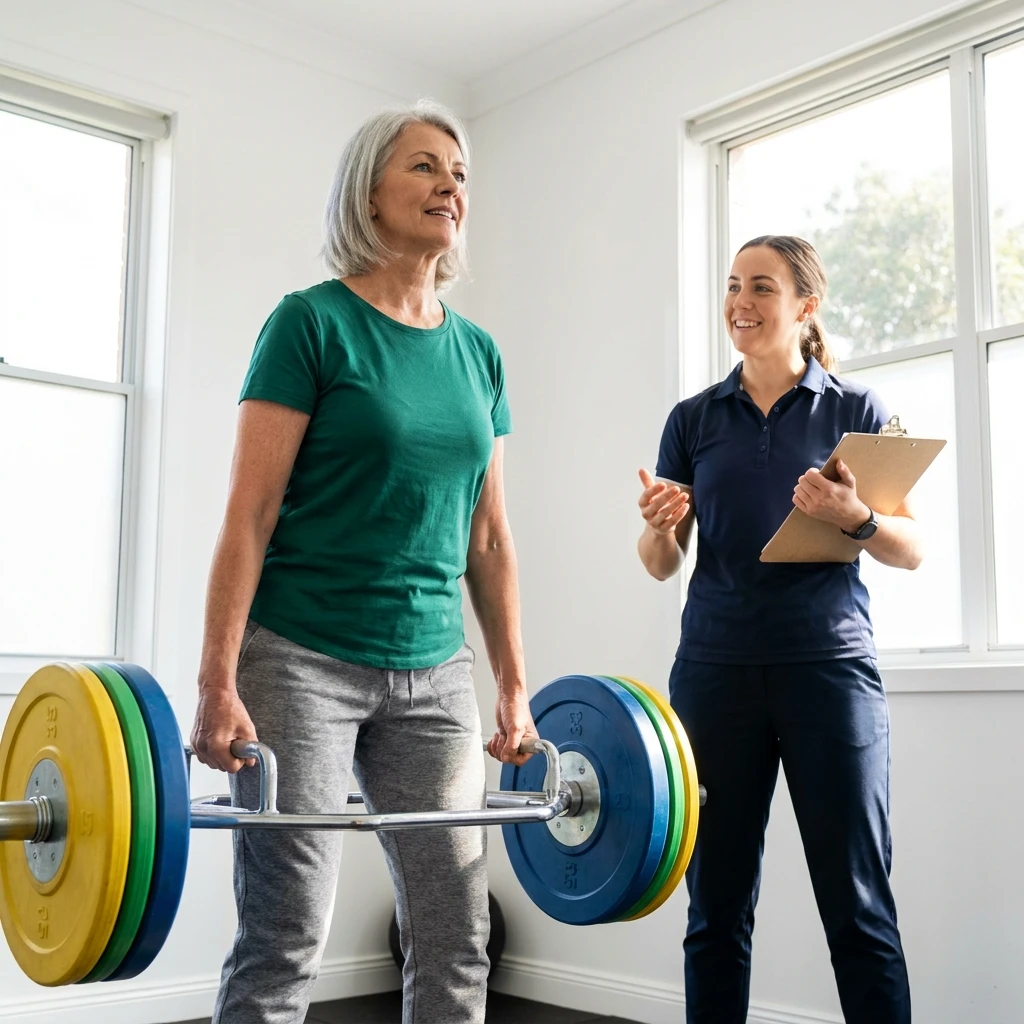
No. Supervised, progressive heavy lifting is effective for women after menopause, including those with low bone density. In one trial, women in their 60s lifting at over 85% of their maximum twice a week improved spine bone density and physical function, with only one minor adverse event.
Myth Meter: Busted. Evidence: Moderate.
The LIFTMOR randomized controlled trial followed 101 postmenopausal women with low bone mass for eight months. The lifting group did 30-minute supervised sessions of deadlifts, squats, and overhead presses. Their lumbar spine bone density rose by 2.9%, while it fell by 1.2% in the low-intensity group.
Women in this trial built up to heavy loads gradually and with expert coaching. That part matters. Start where you are, learn the movements, and progress steadily.
The 40+ twist: This is the myth that costs women most. Our guide to strength training in perimenopause walks you through a safe starting point.
Myth 9: Women Need Less Protein, And Only In A 30-Minute Window
Myth Meter: Busted. Evidence: Strong (amount), Moderate (timing).
Many women under-eat protein because they worry it will make them bulky. Others panic if they miss a post-workout shake. Neither fear holds up.
A meta-analysis of 49 trials found that protein boosted strength and muscle gains from training, with benefits leveling off around 1.6 grams per kilogram of body weight per day. That’s roughly 100 grams for a 140-pound (64 kg) woman.
Meanwhile, a review on nutrient timing found that the “anabolic window” is much wider than 30 minutes. Your total daily protein matters more. Most of these trials included both men and women, and the same principles apply to women’s protein intake.
The 40+ twist: The same meta-analysis found that protein’s extra benefit shrank with age, so older muscles may need more deliberate intake. Spreading protein evenly across your meals is a practical way to hit your total. Our high-protein plan for women shows you how to build meals around it.
The Myth Meter Scorecard: All 9 Fitness Myths At A Glance
Save this table. It’s your quick reference the next time a “rule” pops up on your feed.
| Myth | Verdict | Evidence | The 40+ Twist | Do This Instead |
|---|---|---|---|---|
| Lifting heavy makes women bulky | Busted | Strong | Muscle loss speeds up in perimenopause | Lift challenging weights 2 to 3 times a week |
| Light weights “tone” better | Half-True | Strong | Lighter loads can spare sore joints | Take every set close to failure, any load |
| You can spot-reduce fat | Busted | Strong | Midsection fat rises with hormonal shifts | Focus on full-body training and overall fat loss |
| Cardio beats strength for fat loss | Half-True | Strong | Cardio-only plans can cost muscle | Combine both, with strength as your base |
| HIIT always burns the most fat | Half-True | Moderate | Recovery needs grow with age | Use 1 to 2 short HIIT sessions weekly |
| Metabolism crashes after 40 | Mostly Busted | Strong | Muscle loss, not metabolism, drives change | Protect muscle with lifting and protein |
| You must train by your cycle | Depends On Context | Emerging | Cycles may become irregular | Track your own response and adjust |
| Too late to lift after menopause | Busted | Moderate | Bone density benefits are a major win | Progress gradually with good coaching |
| Less protein, 30-minute window | Busted | Strong / Moderate | Older muscles may need more deliberate intake | Aim for about 1.6 g/kg daily, spread across meals |
What Actually Works: A Myth-Free Training Week For Women Over 40
Knowing the truth only helps if it changes what you do on Monday morning. Here’s a simple, flexible week built on the evidence above.
It’s built around the CDC’s adult activity guidelines: at least 150 minutes of moderate aerobic activity plus two or more days of muscle strengthening each week. Stretch the walks a little, or add a short walk after dinner, to reach the full 150 minutes.
| Day | Session | Time | Why It Works |
|---|---|---|---|
| Monday | Full-body strength (squat, push, pull, hinge) | 40 min | Builds muscle and bone |
| Tuesday | Brisk walk or easy cycle | 30 to 40 min | Heart health and recovery |
| Wednesday | Full-body strength | 40 min | Second muscle-building stimulus |
| Thursday | Short HIIT or rest | 15 to 20 min | Time-efficient cardio, if well recovered |
| Friday | Full-body strength (optional third day) | 30 to 40 min | Faster progress if recovery allows |
| Saturday | Long walk, hike, or swim | 45 to 60 min | Daily calorie burn and mood |
| Sunday | Rest, mobility, or gentle yoga | As you like | Post-workout recovery |
A few rules make this week work:
- Progress slowly: add a little weight or one more rep when the last set feels easier.
- Prioritize exercise form: good technique protects your joints and makes every rep count.
- Sleep comes first: on a bad-sleep day, swap HIIT for a walk.
- Celebrate partial wins: two strength sessions in a busy week is still a win.
When I finally put the pink dumbbells down and started progressing my lifts, the biggest change wasn’t in the mirror. It was carrying all the groceries in one trip and feeling steady on the stairs.
That’s the kind of progress the scale never shows. If body shape is your goal, our guide to body recomposition after 40 explains how strength and fat loss work together.
How To Spot A Fitness Myth Before It Costs You Months
New myths appear every week. Instead of memorizing them all, use this quick filter on any claim you see online:
- Is there a source? Look for a named study, not just “research shows.”
- Who was studied? Results from young men don’t always apply to women over 40.
- Does it sell something? Be extra sceptical when the “fix” is a product or program.
- Is it absolute? Words like “never,” “always,” and “toxic” are red flags in exercise science.
- Does it make you afraid? Good advice should help you act, not freeze.
The Bottom Line
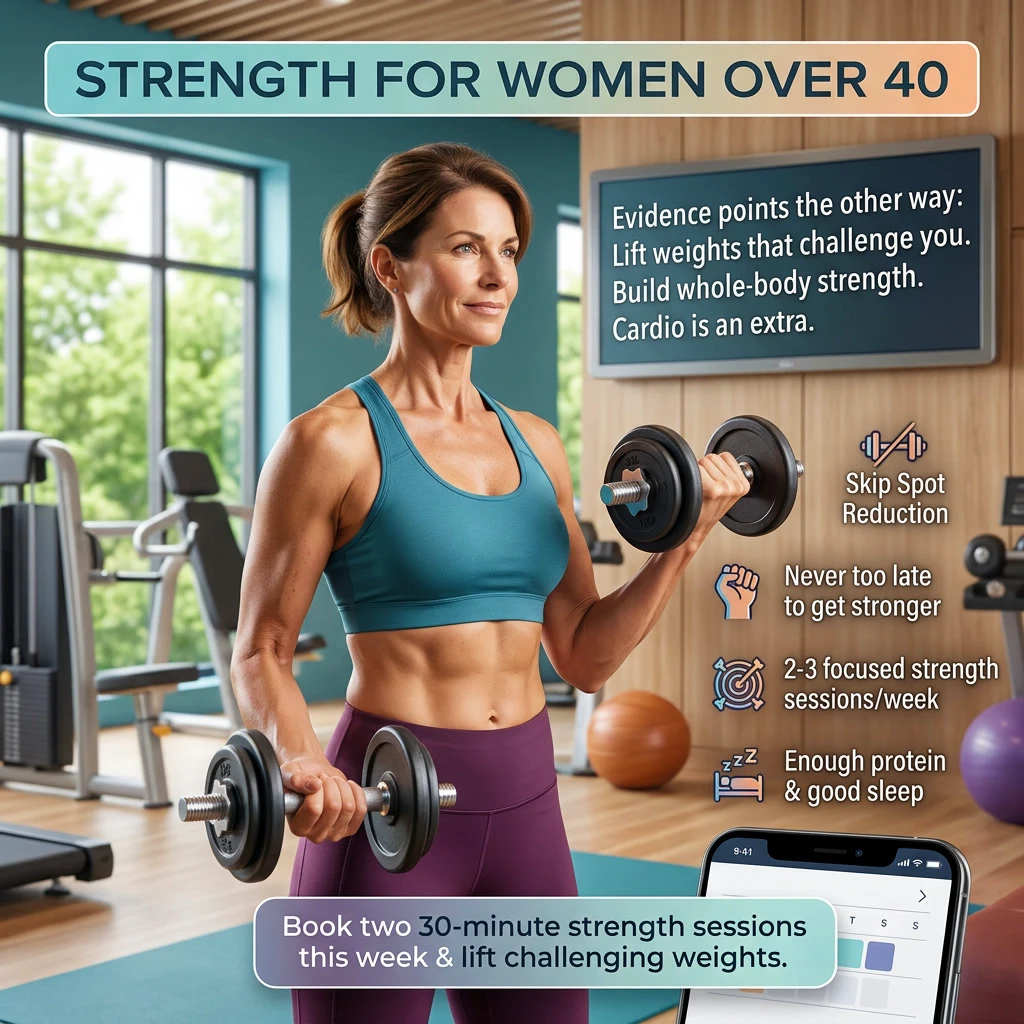
Most fitness myths about women share one thing: they push you toward less effective training. The evidence points the other way. Lift weights that challenge you, because you won’t get bulky. Skip the spot-reduction routines and build strength across your whole body. Use cardio and HIIT as useful extras, not the main event.
After 40, these truths matter even more. Your metabolism isn’t broken, and it’s never too late to get stronger. Two or three focused strength sessions a week, enough protein, and good sleep will do more than any trend. Start where you are.
This week, book two 30-minute strength sessions in your calendar and pick a weight that makes the last few reps feel hard. That’s the first step toward carrying every grocery bag in one trip.
Your Myth-Free Starting Point: You’ve cleared out the myths. Now get the plan that replaces them. Join the free WLBF newsletter and get research-backed weightlifting and nutrition guidance written for women’s bodies, delivered straight to your inbox. Every tip comes with the study behind it, so you’ll never have to wonder whether it’s another myth.
Glossary Of Key Terms
- Body Composition: the proportion of fat mass to lean mass (muscle, bone, water) in your body.
- Caloric Deficit: eating fewer calories than your body uses, which leads to fat loss over time.
- Cortisol: a stress hormone that rises temporarily during hard exercise and helps your body respond to effort.
- Early Follicular Phase: the first days of your menstrual cycle, during your period, when estrogen and progesterone are low.
- HIIT (High-Intensity Interval Training): short bursts of very hard effort alternated with recovery periods.
- Hypertrophy: an increase in muscle size from training.
- One-Rep Max (1RM): the heaviest weight you can lift once with good form.
- Progressive Overload: gradually increasing weight, reps, or difficulty so your muscles keep adapting.
- Spot Reduction: the false idea that exercising one body part burns the fat in that area.
- Visceral Fat: deep abdominal fat around your organs, linked to higher health risks.
FAQ
What Are The Most Common Fitness Myths About Women?
The most common fitness myths about women are that lifting makes you bulky, light weights “tone” better, and crunches burn belly fat. Others claim cardio beats strength training, metabolism crashes at 40, and lifting after menopause is unsafe. Exercise science shows each is wrong or only partly true. Together, they steer women away from effective strength training.
Will Lifting Weights Make Me Bulky As A Woman?
No, lifting weights won’t make most women bulky. Men have more than 15 times the circulating testosterone of women, which is a major driver of large muscle size. Women do build muscle at a similar relative rate, which leads to a firmer, stronger, more defined look. Getting genuinely big requires years of targeted training and a calorie surplus.
Can I Lose Belly Fat By Doing Crunches?
No, crunches alone won’t reduce belly fat. In a six-week controlled trial, daily ab exercises improved ab endurance but didn’t change belly fat or waist size. Your body loses fat from all over, not just from the muscle you work. Combine full-body strength training, regular activity, and a modest caloric deficit for real change.
Is Cardio Or Strength Training Better For Women Over 40?
For women over 40, strength training should be the foundation, with cardio as its partner. Lifting reduces body fat, protects muscle, and supports bone density, all of which matter more as estrogen declines. Cardio supports heart health and adds to your daily calorie burn. A balanced week includes two to three strength sessions plus regular walking or other moderate cardio.
How Much Protein Do Active Women Need?
Active women who strength train benefit from roughly 1.6 grams of protein per kilogram of body weight per day. A meta-analysis of 49 trials found that extra muscle gains leveled off around that point. Spreading protein across your meals helps, especially after 40. Total daily intake matters more than a 30-minute post-workout window.
Should I Train Differently During My Period?
You don’t have to, but you can if you feel better doing so. A 2020 meta-analysis found only a trivial dip in performance during the early follicular phase, and it varied a lot between women. The researchers recommended a personal approach over strict rules. Track your energy and adjust intensity on low days rather than skipping training entirely.
How Many Days A Week Should A Woman Strength Train?
Most women should strength train at least two days a week, which matches CDC adult activity guidelines. Two or three full-body sessions of 30 to 45 minutes are enough to build strength, muscle, and bone. Focus on big movements like squats, presses, rows, and hinges. Add weight or reps gradually as exercises start to feel easier.