
A Realistic, Research-Backed System For Building Exercise Motivation Without Partner Support

No one can make you feel inferior without your consent.
Eleanor Roosevelt ‧ Former First Lady of the United States
Summary (TL;DR)
If your partner doesn't support your workouts, you're not broken, and you're not alone. Exercise motivation without partner support comes from building your own system: a personal reason, a substitute accountability partner, habits anchored to your identity, and calm boundaries that don't require permission. This guide covers the research on why partners resist change, an original five-step framework called the SPARK Method, and scripts for the hard conversations. Your consistency was never supposed to run on someone else's enthusiasm.
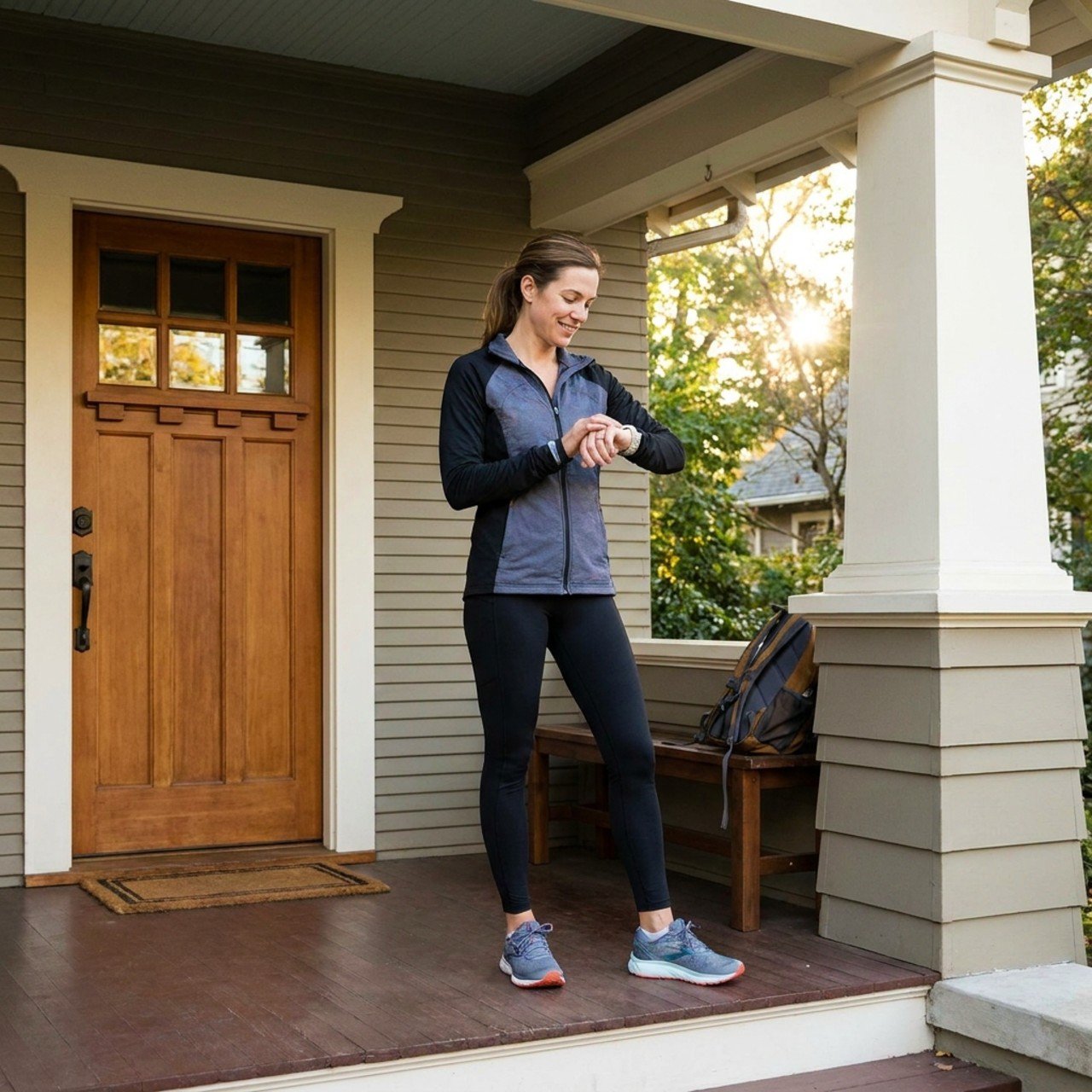
Exercise motivation without partner support is what you're searching for right now, and I get it. I used to set my alarm for 5:45 a.m., slip out of bed, and lace up my shoes in the dark so I wouldn't wake anyone.
When I got back, sweaty and a little proud, I'd get a half-asleep "again?" instead of a high five. That specific kind of quiet isn't dramatic. Nobody hid your sneakers. It's just indifference, and indifference drains you slower than outright conflict.
Here's what the research says, and it's more encouraging than you'd think: partner support helps, but it isn't required. Researchers who reviewed 66 studies on self-determination theory found that motivation you generate for yourself, not motivation borrowed from someone else's approval, predicts long-term exercise adherence (Teixeira et al., 2012).
This guide gives you an original, five-part system for building that internal motivation on purpose, plus honest answers about why your partner might be resisting, how to set boundaries without a fight, and when "unsupportive" crosses into something you shouldn't have to manage alone.
Medical & Referral Disclaimer
This article is for general informational and educational purposes only. It is not a substitute for personalized medical, fitness, or relationship advice. Talk with a qualified healthcare provider before starting a new exercise routine, and consider a licensed couples or individual therapist if conflict around health goals feels ongoing or distressing. Women's Lean Body Formula does not diagnose or treat any condition.
Key Takeaways
- Partner resistance to your health changes is common enough to have a name: partner undermining, documented in a 2023 study of 241 people trying to lose weight (Dailey et al., Journal of Health Psychology).
- The CDC lists lack of social support as one of eight major barriers to physical activity, alongside lack of time and lack of motivation (CDC).
- A 2013 study of 169 newlywed couples found that the more satisfied spouses were in their marriage, the more weight they tended to gain, likely because comfort lowers the pressure to change (Health Psychology).
- Autonomous motivation (exercising because it matters to you, not because someone is watching) predicted exercise adherence across a 24-month follow-up in controlled studies, while pressure-based motivation did not hold up (self-determination theory review).
- In a small pilot study, romantic partners who exercised together and those who exercised separately saw comparable improvements in body fat and waist circumference. Working out solo is not a lesser path (Journal of Racial and Ethnic Health Disparities).
- Nearly 4 in 10 women (39.2%) in a 2025 survey said they feel more intimidated exercising around men, which is one more reason a home routine can remove pressure entirely instead of adding it (PLOS ONE).
- The SPARK Method, introduced below, gives you five concrete anchors so your motivation runs on your own systems, not someone else's mood.
- Setting a boundary about your workout time is not the same as asking permission. You can be firm and warm in the same sentence.

Why Won't My Partner Support My Fitness Goals?
Most partners who resist your fitness changes aren't reacting to you personally. Research on relationship dynamics points to something researchers call relational equilibrium: your change disrupts a shared routine, and some partners unconsciously push back through criticism or quiet interference, a pattern formally studied as partner undermining.
A 2023 study in the Journal of Health Psychology followed 241 people cohabiting with a partner while trying to lose weight. Researchers identified two categories of undermining: verbal criticism (comments about the effort) and behavioral interference (scheduling conflicts or bringing home food that works against the goal).
The motivations varied: some partners believed the change was unnecessary, some feared what a changed partner might mean for the relationship, and some genuinely saw the new gym schedule as a burden on shared time (Dailey et al., 2023).
There's an older but strikingly relevant data point here too. A 2013 study of 169 newlywed couples tracked marital satisfaction and weight change over four years. The more satisfied spouses were with the marriage, the more weight they tended to gain.
Researchers linked this pattern to reduced pressure to maintain appearance once a relationship starts to feel secure (Health Psychology, 2013). Translation: your partner's resistance to your changing routine might have nothing to do with your body and everything to do with comfort. Comfortable people resist disruption, even good disruption.
None of this means your frustration is overblown. It means the reasons are usually more human, and more fixable, than "he just doesn't care about me." Common, often unconscious, reasons a partner resists your fitness goals:
- They feel threatened by the version of you that's changing.
- Your new schedule interrupts a shared routine they relied on, like a lazy Sunday or a nightly show.
- They're projecting their own relationship with exercise or body image onto you.
- They genuinely believe you're fine as you are and don't understand why change feels urgent to you.
- They're avoiding a reflection on their own habits, not attacking yours.
If you want the fuller picture of how relationships shape weight management, WLBF's guide on how relationships affect your weight loss efforts breaks down the food and household side of this dynamic. This article focuses specifically on the exercise piece.
Does Exercise Motivation Really Require Social Support?
Social support does help exercise adherence, but the research doesn't say it has to come from a spouse.
A 2026 analysis of nearly 80,000 people linked group exercise to lower depression, and separate research on self-determination theory shows that motivation you generate yourself, called autonomous motivation, predicts consistency just as reliably as any workout buddy.
The group-exercise research is real and worth taking seriously. Writing about that same meta-analysis, published in the British Journal of Sports Medicine, positive psychology researchers Suzie Pileggi Pawelski and James Pawelski note that shared movement "boosts mood, builds resilience, and deepens our sense of belonging" (Psychology Today, 2026).
The same research roundup points to a Stanford study on synchronized movement, finding that acting in rhythm with others can strengthen cooperation and social bonding. That's not nothing.
Here's the reframe: none of that research says the "others" have to be your partner. The 2012 self-determination theory review of 66 studies found something specific: autonomous motivation, meaning you exercise because you value the outcome or genuinely enjoy it, predicted adherence at 24-month follow-up.
Motivation based on outside approval consistently failed to hold up over time (Teixeira et al., 2012). And in a pilot study of romantic couples who exercised together versus separately, both groups saw statistically similar improvements in waist circumference and body fat (Journal of Racial and Ethnic Health Disparities, 2020). Your results don't require his presence in the room.
Social connection still matters for most women. It just doesn't have to be sourced from the one person currently uninterested in supplying it. You can build it from a friend, a class, an app, or a community, and you'll find exactly how in a moment.
If you want a head start on the mental side of finishing what you start once you're moving, WLBF's guide to finishing workouts, not just starting them, pairs well with everything below.



The SPARK Method: Your System For Partner-Independent Motivation
Most motivation advice assumes a built-in support system is standing by. When that's not your reality, you need a system that doesn't depend on anyone opting in. The SPARK Method is a five-part framework, built from the research above, for exercise motivation without partner support.
| Letter | Stands For | What You Do |
|---|---|---|
| S | Source Your Why | Write down the reason this matters to you, separate from your partner's opinion or approval. |
| P | Pick A Proxy | Choose a substitute accountability source: a friend, an app, a class, or a coach. |
| A | Anchor The Habit | Tie the workout to your identity and your environment, not your willpower. |
| R | Reward The Loop | Build in a small, immediate payoff so your brain wants to repeat the behavior. |
| K | Keep Boundaries Calm | State your workout time as a fact, not a request for permission. |
Source Your Why means writing an honest, private answer to "why does this matter to me?" with nothing to do with anyone else's reaction. Autonomous, self-sourced reasons (health, energy, clarity, strength) consistently outperform external ones. If your current "why" is "so he'll notice," rewrite it. That version was never going to survive an unsupportive audience.
Pick A Proxy replaces the accountability your partner isn't offering. This doesn't need to be dramatic. A group text with one friend who also wants to move more counts, and so does a fitness app that tracks streaks: research on 721 women using fitness apps found that app-based support boosted adherence largely by strengthening self-efficacy and personal control, the exact ingredients a resistant partner usually fails to provide (Frontiers in Psychology, 2026).
Anchor The Habit borrows from identity-based habit research. Author James Clear puts it simply: "your current behaviors are simply a reflection of your current identity." Instead of chasing an outcome, become "the type of person who moves every day" and let small, repeated proof build that identity (James Clear). Attach the workout to an existing routine, like right after coffee, so it doesn't rely on a mood or a green light from anyone else.
Reward The Loop means giving yourself something immediate, not just a distant reward months away. A favorite playlist reserved for workouts, a few minutes of a good podcast, or simply checking off a habit tracker all work.
Keep Boundaries Calm is the piece most women skip, and it's the one that prevents burnout. You'll find exactly how in the boundaries section below.

Practical Ways To Stay Consistent Without An Accountability Partner
You don't need a spouse next to you to build a consistent routine. You need a system that removes decision fatigue and gives the accountability your partner isn't supplying somewhere else to go.
Start by naming which barrier is actually in your way. The CDC names eight common barriers to physical activity, and social support is only one of them.
| Barrier | What It Looks Like | A Fix That Doesn't Need Your Partner |
|---|---|---|
| Lack of time | "I can't find 30 minutes" | Break it into two 15-minute blocks; anchor one to an existing routine |
| Lack of social support | No one to go with | Join an app community, a walking group, or a virtual class |
| Lack of energy | Too tired after work | Move your slot to mornings, before energy is depleted |
| Lack of motivation | Can't make yourself start | Use the SPARK Method's identity anchor instead of willpower |
| Fear of injury | Worried about hurting yourself | Start with a beginner-guided program or a trainer consult |
| Lack of skill | Unsure how to do it "right" | Follow a structured program, like a guided strength training plan built for your stage of life |
| High cost | Gym memberships feel expensive | Bodyweight or resistance-band home workouts remove the fee entirely |
| Weather | Rain or heat blocks outdoor plans | Keep a rainy-day home routine ready to go |
Source: CDC, Overcoming Barriers to Physical Activity.
A few accountability substitutes tend to work well when a partner isn't available:
- A friend outside the relationship, even one who just notices if you go quiet.
- A local class or run club, since a set group time removes the "do I feel like it" decision.
- A fitness app with a community feature, which the self-efficacy research above supports.
- A coach or trainer, even for one session. Paying for expertise creates its own accountability.
- A family member who isn't your partner, like a sibling, parent, or adult child.
If you're starting from zero because life derailed your routine entirely, WLBF's guide to restarting a fitness routine with zero motivation walks through the same rebuild process in more depth.

How Do I Set Boundaries With An Unsupportive Spouse?
State your workout time as a plan, not a question. Boundaries around your health don't need your partner's approval to be valid. Name the time, keep it brief, and don't wait for agreement before you follow through.
Boundary-setting itself is a documented mental health strategy, not just a relationship tactic. Therapists interviewed for their own 2025 boundary practices consistently connect protected personal time to daily mood and energy, describing the alternative as "resentful or constricted energy" building up over time (TIME, 2025).
That resentment is exactly what happens when you keep asking permission for something that's genuinely just for you.
A few scripts that hold the line without starting a fight:
- "I'm walking at 6. I'll be back by 6:45."
- "I'd love it if you joined me, and I'm doing this either way."
- "This isn't a comment on you. It's 40 minutes for me."
- "I'm not asking you to change. I'm telling you what I'm doing."
Notice what these scripts don't do: they don't over-explain, apologize, or wait for a green light. Over-explaining tends to invite debate. A short, warm, matter-of-fact statement usually gets a better reaction than a justification does, because it doesn't sound like you're building a case.
If your partner reacts badly to a calm boundary every single time, that reaction itself is useful information, and it's covered in the next section.
When "Unsupportive" Crosses Into Sabotage
There's a real difference between a partner who's simply not enthusiastic and one who's actively working against you. The 2023 undermining study drew a clear line between the two.
Passive lack of support looks like disinterest: your partner doesn't ask about your workout or join you, and doesn't really engage. It's frustrating, but it isn't targeted.
Active undermining is different: the research identified patterns like repeatedly scheduling things during your workout window, discouraging comments about your effort or body, or intentionally introducing obstacles to your progress (Dailey et al., 2023). Verbal criticism carried real weight in the data, correlating directly with worse weight management outcomes.
Join Our Mailing List
Join thousands of women inside our community and receive our free guide, 10 Actions That Support Permanent Weight Loss — the exact behavioural shifts that make the difference between a two-week attempt and a lasting transformation.
No restriction plans. No guilt. Just what actually works — for real women with real lives.

Signs worth paying attention to:
- Comments that frame your effort as vanity, obsession, or a rejection of them.
- A pattern of "forgetting" plans that conveniently block your workout time.
- Bringing home food or planning meals specifically around what undermines your goals.
- Dismissive jokes about your progress, especially in front of other people.
One instance of any of these doesn't mean sabotage. A repeated pattern does. If you're recognizing a pattern here rather than a single bad week, that's a conversation worth having with a licensed couples therapist, not something to white-knuckle through alone. This guide can help you build the exercise habit; it isn't a substitute for relationship support when the conflict runs deeper than fitness.
Is It Normal To Feel Lonely Working Out Alone?
Yes, and it doesn't mean you're doing it wrong. Loneliness during solo exercise is common, especially for women who also feel watched or judged in shared gym spaces. The fix isn't forcing your partner to join. It's building connection somewhere else on purpose.
A 2025 survey of 279 women found that 39.2% felt more intimidated exercising around men, and 60% said skin or body concerns affected their gym confidence (PLOS ONE, 2025). If part of your loneliness is actually a quieter form of gym anxiety, working out at home or in a women-focused space might solve two problems at once. WLBF's guide to building fitness confidence when you hate the gym goes deeper on exactly this.
The other piece is simpler than it sounds: loneliness during exercise usually means you're missing the social layer, not the partner specifically. An app community, one reliable friend, or a recorded class with a favorite instructor can supply that layer just as well.
And on the days it still feels lonely anyway, that's allowed. Progress doesn't require you to feel great about every session. Showing up at 70% enthusiasm still counts as showing up. None of this requires your partner to change first. It requires you to stop waiting for permission you were never supposed to need.
Want The Habits Behind Lasting Weight Loss? Get the free guide: 10 research-backed habits that help women lose body fat and keep it off, with no extreme diets. Send Me The Free Guide.
The Bottom Line
Your partner's enthusiasm was never the only fuel source available to you. Self-sourced motivation predicts long-term consistency better than motivation borrowed from someone else's approval, and results hold up whether you train alone or with company.
What moves the needle is a system: source a reason that's yours, pick a proxy for the accountability you're missing, anchor the habit to your identity instead of your willpower, and keep your boundaries calm and non-negotiable.
Glossary Of Key Terms
- Autonomous Motivation: Motivation derived from internal values or personal enjoyment of an activity, rather than external rewards or pressure.
- Behavioral Interference: A form of undermining where a partner intentionally creates obstacles, such as scheduling conflicts, to prevent exercise.
- Identity-Based Habits: The practice of focusing on who a person wishes to become (their identity) rather than the outcome they want to achieve, as popularized by James Clear.
- Partner Undermining: A pattern where a partner discourages or obstructs another's health goals through verbal criticism or behavioral interference.
- Proxy Accountability: The use of external sources—such as apps, coaches, or friends—to provide the support and discipline a partner does not offer.
- Relational Equilibrium: The state of balance in a relationship's shared routines; disruptions to this balance can cause resistance from the partner not initiating change.
- Self-Determination Theory: A psychological framework suggesting that autonomous motivation is the primary predictor of long-term adherence to behaviors like exercise.
- Self-Efficacy: A person’s belief in their ability to succeed in specific situations; often bolstered by fitness apps or community support.
- SPARK Method: A five-part framework (Source your why, Pick a proxy, Anchor the habit, Reward the loop, Keep boundaries calm) designed for partner-independent motivation.
- Verbal Criticism: Direct comments that frame a partner’s fitness efforts as unnecessary, obsessive, or vain.
FAQ
Can I Still Reach My Fitness Goals If My Partner Never Supports Me?
Yes. Autonomous motivation, meaning self-sourced reasons for exercising, predicts long-term adherence better than motivation that depends on someone else's approval. A pilot study also found comparable body composition results between couples who exercised together and those who exercised separately, so your outcomes don't depend on his participation. Your results come from consistency, not from who's cheering you on. Build your system around yourself first, and let your partner opt in whenever he's ready, if ever.
How Do I Stop Resenting My Partner For Not Exercising With Me?
Resentment usually builds when needs go unspoken. Name the need directly, like "I'd love company, and I understand if that's not your thing," then build accountability elsewhere so the need isn't riding entirely on him. Removing the dependency tends to lower resentment faster than waiting for him to change. Resentment often fades once you stop needing one person to meet a need that a friend, a class, or a good app can meet just as well. Give the frustration somewhere else to go before it settles into your relationship.
Should I Ask My Partner To Get A Gym Membership With Me?
You can ask once, clearly, without pressure. If the answer is no, treat it as information rather than rejection, and move forward with your own plan. Repeated asking tends to create the exact resistance the research on partner undermining describes. A single honest invitation respects both of you; repeating it starts to feel like a campaign, which is when people tend to dig in. Let the door stay open without you standing in it.
What If My Partner Actively Mocks My Workouts?
That's worth naming directly and calmly: "That comment isn't helpful to me." If mocking repeats rather than happening once, it fits the profile of active undermining rather than simple disinterest, and it's a reasonable topic for a couples therapist rather than something to absorb quietly. Mockery tends to escalate when it goes unaddressed, so naming it early, calmly and without a big reaction usually works better than waiting it out. You deserve a home base that doesn't require armor.
Is It Selfish To Prioritize My Workouts Over Family Time?
No. A short, protected block of exercise time is self-care, and self-care research links protected personal time to better mood and energy for everyone around you, not just yourself. A few sessions a week isn't neglecting your family. A calmer, steadier version of you tends to show up better for the people you love, not worse. Protecting 30 to 45 minutes a few times a week is a small trade for that.
How Long Does It Take To Build A Consistent Solo Workout Habit?
There's no universal number, and be wary of anyone who promises one. Habits anchored to identity and existing routines, rather than motivation alone, hold up far better over months and years than habits that rely on willpower or someone else's encouragement. Focus less on a deadline and more on repetition: each time you follow through without waiting for outside encouragement, the identity gets a little more solid. Give yourself credit for weeks that are 70% consistent, not just perfect ones.
When Should I Consider Couples Counseling Instead Of Handling This Alone?
If you're seeing a repeated pattern of criticism, interference, or mockery rather than simple disinterest, the issue has moved beyond fitness and into the relationship itself. A licensed couples therapist can help you address it directly, instead of letting it quietly wear down your consistency. This guide can help with the habit side of things, but it isn't designed to resolve deeper relationship conflict, and needing more support isn't a failure on your part. Bringing in outside help early is usually easier than waiting until resentment has built up on both sides.