High-Protein Diet Plan For Women: Lose Fat, Keep Muscle, And Stay Full
Ann Wigmore
Holistic health pioneer, Food Is Medicine
The food you eat can be either the safest and most powerful form of medicine or the slowest form of poison.
Summary (TL;DR)
For women seeking sustainable weight loss, a high-protein diet, with 25–35% of daily calories from protein, can be highly effective. Consuming 0.7–1.0 grams of protein per pound of body weight helps reduce hunger hormones and preserves lean muscle.
Lean sources like chicken, Greek yogurt, and tofu offer satiety and boost metabolism through the thermic effect of food. This approach helps to burn fat and control appetite, leading to sustainable results without extreme calorie restriction, making fat loss more attainable. Meal prep is essential for success.
You've cut calories. You've followed the plan — at least until Thursday. And yet the scale barely moved, the hunger was relentless, and you ended up eating three times as much on the weekend to compensate.
Here's what most nutrition advice misses: it isn't your discipline that failed. It's the macronutrient ratio that was never working for your body in the first place.
A well-structured high-protein diet plan changes the biological equation. It tells your body to burn fat and spare muscle at the same time. It flattens hunger signals for hours without requiring you to eat less volume. And for women specifically — where hormonal cycles, muscle loss after 30, and postpartum recovery create challenges no generic diet plan accounts for — protein is the nutritional lever that shifts outcomes.
This is your complete guide: how much protein you actually need, the best food sources, a practical 7-day meal plan, and the systems that make this sustainable — not just for a month, but permanently.
Medical & Referral Disclaimer
This article is for informational and educational purposes only. It is not a substitute for professional medical advice, diagnosis, or treatment. Always consult your physician or qualified health provider before starting any new diet or exercise program.
Key Takeaways
- Women targeting fat loss need 0.7–1.0g of protein per pound of body weight daily — significantly above the standard RDA, which covers basic survival, not body composition goals.
- Protein triggers satiety hormones and suppresses ghrelin (the hunger signal), which means you naturally eat less — without white-knuckling your way through cravings.
- The thermic effect of protein is 20–30%: your body burns up to a third of protein calories just digesting them, giving your metabolism a passive daily boost.
- Lean protein sources — chicken breast, Greek yogurt, egg whites, tofu, lentils — let you hit your targets without excess saturated fat or processed additives.
- Prepping two or three protein staples on Sunday eliminates the daily decision fatigue that derails most nutrition plans by Wednesday.
- A high-protein eating plan is not a high-meat diet. Plant-based protein sources work just as well when varied across the day — and they bring fiber, antioxidants, and gut health benefits with them.
What Is a High-Protein Diet Plan and Why Does It Work for Women?
A high-protein diet plan is an eating approach in which protein accounts for 25–35% of total daily calories — typically 90–150g per day, depending on body weight and goals. For women, it works by reducing hunger hormones, accelerating fat metabolism, and preserving lean muscle during a caloric deficit, creating conditions for sustainable fat loss rather than the muscle-depleting results of typical calorie restriction.
Unlike approaches that eliminate food groups or rely on sheer willpower, a high-protein plan adds structure, adds satiety, adds metabolic efficiency. The restriction follows naturally from how full you feel.
How Protein Reduces Hunger at the Hormonal Level
When you consume protein, your digestive system releases satiety hormones — GLP-1, PYY, and CCK — while simultaneously suppressing ghrelin, the hormone that signals hunger to your brain. This hormonal shift is why two eggs and Greek yogurt at breakfast keep you genuinely full until noon, while a carbohydrate-heavy bowl of cereal triggers hunger within two hours.
A landmark study published in the American Journal of Clinical Nutrition found that increasing protein intake from 15% to 30% of total calories caused participants to consume an average of 441 fewer calories per day — without tracking a single calorie. The reduction in appetite was automatic, driven by biology, not effort.
For women managing work, family, and a hundred other competing demands, this hormonal appetite regulation removes willpower from the equation entirely. You don't fight cravings on a high-protein plan. You simply stop having as many.
The Thermic Effect of Food — Why Protein Burns More Calories to Digest
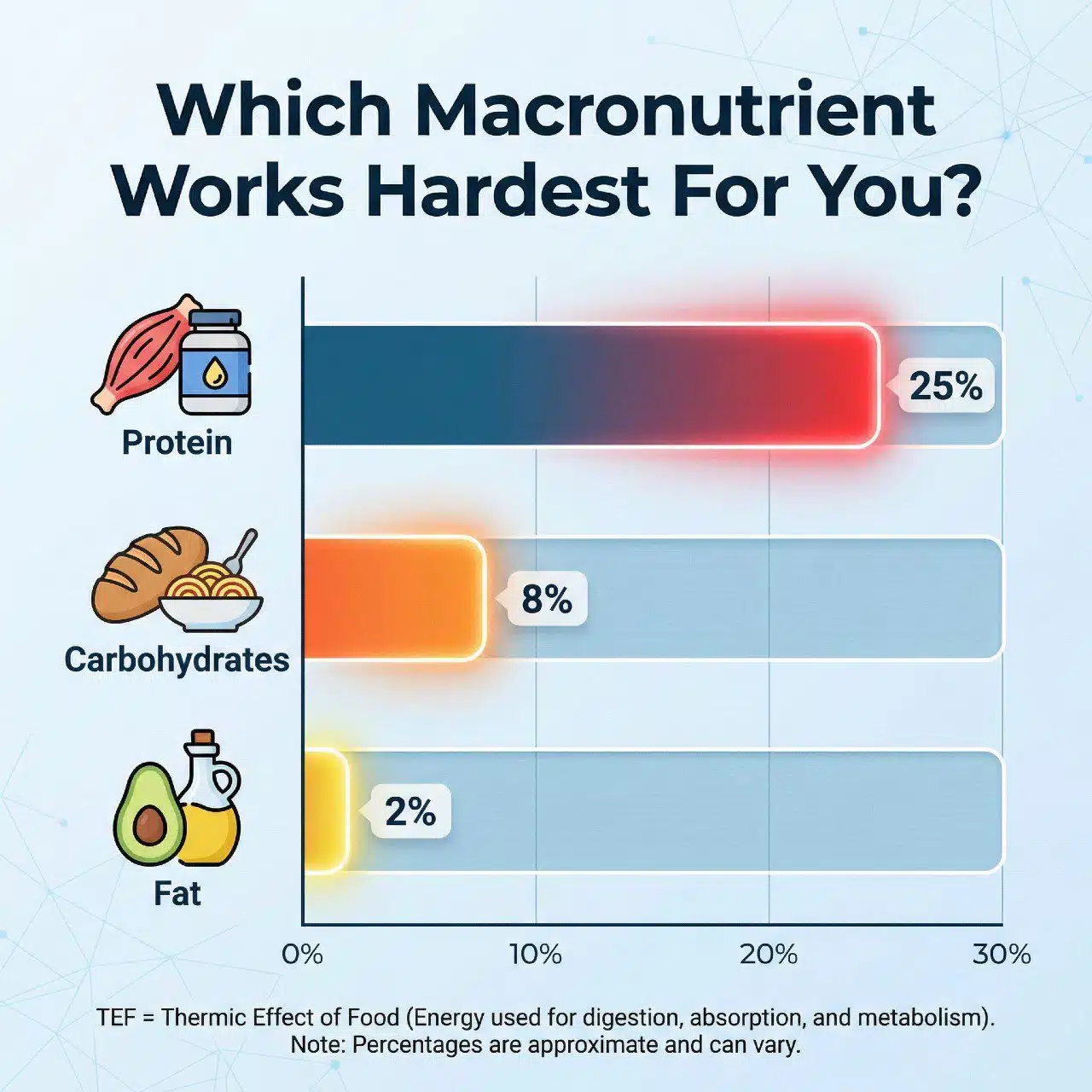
Every macronutrient requires energy to digest, absorb, and process. This is called the thermic effect of food (TEF). Protein's TEF is 20–30%, compared to 5–10% for carbohydrates and just 0–3% for fat.
In practical terms, for every 100 calories of protein you eat, your body uses 20–30 calories just to process it. Over a full day of high-protein eating at 130g of protein, this metabolic cost adds up to a real, compounding caloric burn — without changing a single thing about your exercise routine.
How Much Protein Do Women Need to Lose Weight?
Women aiming for sustainable fat loss need approximately 0.7–1.0 grams of protein per pound of body weight per day (1.6–2.2g per kg). For a 150-pound woman, that translates to 105–150 grams of protein daily — well above the standard RDA of 46g, which reflects the minimum needed for basic metabolic function, not an optimal target for fat loss or body composition.
The higher end of this range applies if you strength train regularly, are in a significant caloric deficit, or are over 40, when muscle preservation becomes progressively harder without deliberate nutritional support.
Daily Protein Targets by Body Weight and Goal
Use the table below to find your starting protein target. Then use the calorie calculator on Women's Lean Body Formula to establish your daily energy needs, and set protein as the first nutritional priority before distributing remaining calories across carbohydrates and fats.
| Body Weight | Moderate Fat Loss (0.7g/lb) | Active Fat Loss (0.85g/lb) | Accelerated Fat Loss (1.0g/lb) |
|---|---|---|---|
| 120 lbs | 84g | 102g | 120g |
| 140 lbs | 98g | 119g | 140g |
| 160 lbs | 112g | 136g | 160g |
| 180 lbs | 126g | 153g | 180g |
| 200 lbs | 140g | 170g | 200g |
| 220 lbs | 154g | 187g | 220g |
If you are significantly above your goal weight, use your goal body weight to calculate targets — this prevents unnecessarily high protein requirements during the early stages of fat loss.
Research published in the British Journal of Sports Medicine confirms that protein intakes in the range of 1.6–2.2g per kg of body weight produce superior fat loss outcomes compared to lower protein intakes, while also protecting lean muscle mass during a caloric deficit.
What Are the Best High-Protein Foods for Women Losing Weight?
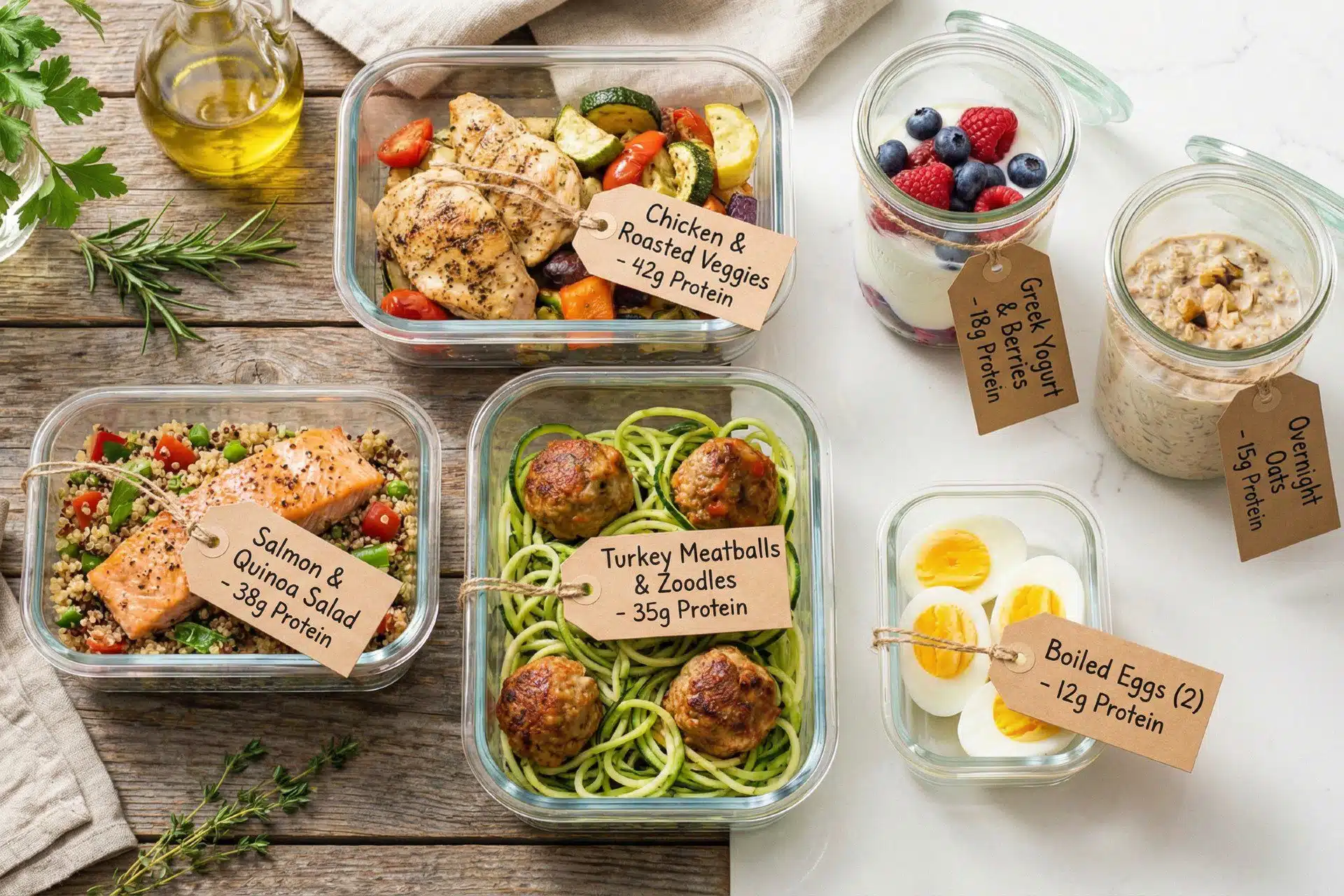
The best high-protein foods for women combine a high protein-to-calorie ratio, nutrient density beyond protein alone, and practical versatility in everyday cooking. Top choices include chicken breast, Greek yogurt, eggs, cottage cheese, tuna, tofu, lentils, edamame, and hemp seeds — most delivering 15–30g of protein per serving with minimal processing.
Variety is not optional here. Eating the same protein source every day leads to food fatigue — the number-one reason women abandon a high-protein approach within two weeks. The goal is rotating sources so eating never feels like punishment.
Animal-Based Lean Protein Sources
These foods deliver complete protein — all nine essential amino acids — in high concentrations with minimal saturated fat:
- Chicken breast — 31g protein per 100g. Baked, grilled, or shredded, it forms the backbone of countless high-protein meals.
- Greek yogurt (plain, 2% fat) — 17g per 170g serving. Works as a breakfast, snack, or a creamy sauce base.
- Egg whites — 26g protein per 100g, near-zero fat. Ideal for high-volume eaters who want protein without caloric density.
- Canned tuna — 25g per 100g. Budget-friendly, zero prep time, extremely portable.
- Cottage cheese — 11g per 100g. Slow-digesting casein protein makes it ideal as an evening snack to support overnight muscle repair.
- Salmon — 20g per 85g serving, with the added benefit of omega-3 fatty acids that support hormonal health and reduce inflammation.
- Turkey breast — 29g per 100g, leaner than most beef cuts and highly underrated as a meal prep protein.
For preparation tips and buying guidance on each of these, see our dedicated guide to 5 Powerful Protein Foods for Dieting.
Plant-Based Protein for Women Losing Weight
Plant-based protein is equally effective for fat loss. The old rule about combining complete proteins at every meal has been largely debunked — what matters is consuming a variety of plant proteins across the day, not at the same sitting, to cover all essential amino acids.
A 2020 review in Nutrients confirmed that varied plant protein sources meet amino acid needs just as effectively as animal sources when total daily intake is adequate.
Best Plant Proteins by Protein Density
| Plant Protein | Protein per 100g | Notable Benefit |
|---|---|---|
| Hemp seeds | 31g | Complete protein, rich in omega-3s |
| Tempeh | 19g | Fermented, supports gut health |
| Nutritional yeast | 50g per 100g dry | Complete protein, B12, cheesy flavor |
| Edamame | 11g | Complete protein, high in fiber |
| Lentils (cooked) | 9g | High iron, excellent blood sugar support |
| Black beans (cooked) | 8.9g | High fiber, steady energy |
| Firm tofu | 8g | Absorbs any marinade, very versatile |
A Simple Plant-Protein Day
You don't need to overthink it. A varied day might look like:
- Breakfast: Greek-style coconut yogurt with hemp seeds and berries
- Lunch: Lentil soup with a whole grain roll
- Dinner: Tempeh stir-fry with edamame over brown rice
- Snack: Hummus with sliced vegetables
This single-day example delivers approximately 95–110g of protein from entirely plant-based sources.
Best Protein Powder for Women's Weight Loss
Protein powder is a practical supplement for closing daily protein gaps — not a replacement for whole food sources, but a reliable tool for busy days when meal prep falls short.
Best options by goal and preference:
- Whey protein isolate — 24–27g per scoop, fastest-absorbing, best consumed post-workout when muscle protein synthesis is highest.
- Casein protein — slow-release over 5–7 hours, ideal taken at night to support overnight repair.
- Pea protein — plant-based, shown by published research to produce comparable muscle preservation to whey when matched for leucine content, with a low allergen profile.
- Collagen peptides — 10–18g per serving; beneficial for joints, skin, and connective tissue, but best paired with a more complete protein source to cover full amino acid needs.
When evaluating any protein powder, look for: fewer than 5 ingredients, no added sugar, at least 20g of protein per 150-calorie serving, and third-party testing certification.
For a broader view of supplements that support fat loss goals, see our guide to Fat Loss Supplements for Faster Results.
How Does Protein Help Women Preserve Muscle While Losing Fat?
Protein preserves lean muscle during fat loss by supplying the amino acids your body would otherwise pull directly from muscle tissue when energy intake is restricted. Without adequate protein, women in a caloric deficit can lose as much muscle as fat — slowing metabolism, reducing strength, and making long-term weight maintenance significantly harder.
This is not a theoretical concern. A 2018 systematic review in the British Journal of Sports Medicine found that high-protein diets during caloric restriction produced substantially better muscle preservation outcomes compared to moderate or low-protein intakes across 49 randomized controlled trials.
Why Muscle Matters for Metabolism in Women
Muscle tissue is metabolically active — it burns calories even at rest. One pound of lean muscle burns approximately 6 calories per day at baseline, compared to 2 calories per pound of fat. That gap is modest in isolation, but preserving or adding 5–10 pounds of lean mass meaningfully elevates your resting metabolic rate over time.
Women lose muscle mass at roughly 3–8% per decade after age 30, accelerating through perimenopause and after menopause. High protein intake, paired with strength training at home or in the gym, is the most consistently evidence-backed strategy for slowing this decline and maintaining a metabolism that works with you rather than against you.
Does Protein Timing Matter for Muscle Preservation?
Research suggests that distributing protein across 3–4 meals is more effective for muscle protein synthesis than front-loading or back-loading your intake. Your muscle cells can utilize approximately 30–40g of protein per meal for repair and growth; excess protein beyond that is oxidized for energy.
Practical application for busy women:
- Aim for 25–35g of protein per main meal (breakfast, lunch, dinner)
- Do not skip breakfast protein — morning protein sets satiety and metabolic tone for the entire day (see What Women Should Eat in the Morning for Hormone Balance and Fat Loss).
- A protein-rich evening meal or snack — cottage cheese, casein shake, or Greek yogurt — supports overnight muscle repair during sleep.

What Does a 7-Day High-Protein Meal Plan for Women Look Like?
A practical 7-day high-protein meal plan for women targets 120–140g of protein daily across three meals and one to two snacks, within a moderate caloric deficit of 300–500 calories below maintenance. The plan below is structured for real life — minimal unique ingredients, maximum protein return per preparation effort.
The 7-Day Meal Plan
| Day | Breakfast (~30g) | Lunch (~35g) | Dinner (~40g) | Snack (~20g) | ~Daily Protein |
|---|---|---|---|---|---|
| Mon | 3 scrambled eggs + Greek yogurt | Tuna salad lettuce wraps | Grilled chicken breast + roasted vegetables | Cottage cheese + mixed berries | 130g |
| Tue | Protein smoothie (pea protein, spinach, banana, almond butter) | Lentil soup + whole grain roll | Baked salmon + steamed broccoli | 2 hard-boiled eggs + apple | 125g |
| Wed | Overnight oats + hemp seeds + almond butter | Shredded chicken breast salad with avocado | Turkey meatballs + zucchini noodles | Greek yogurt + walnuts | 135g |
| Thu | Egg white omelette + sautéed peppers and spinach | Tempeh stir-fry with edamame and brown rice | Shrimp tacos (corn tortillas, salsa, cabbage) | High-quality protein bar (20g+) | 128g |
| Fri | Cottage cheese bowl + sliced peaches + cinnamon | Grilled chicken quinoa bowl | Baked cod + roasted sweet potato | Celery + natural peanut butter | 122g |
| Sat | Smoked salmon + avocado on rye toast | Turkey and white bean soup | Chicken thighs + green salad | Casein protein shake | 138g |
| Sun | Banana protein pancakes (2 eggs + 1 banana + protein powder) | Chickpea and spinach curry + brown rice | Lean beef + roasted root vegetables | String cheese + apple | 130g |
Shopping list approach: This plan uses 6 core proteins (chicken, eggs, Greek yogurt, canned tuna/salmon, lentils, protein powder) that appear across multiple days — minimizing waste and maximizing batch-cooking efficiency.
For extended meal planning frameworks with grocery lists and prep timelines, see our complete guide to Weight Loss Meal Prep Ideas for Women.
How Do You Start a High-Protein Diet Without Feeling Overwhelmed?
Starting a high-protein diet is most sustainable when you make one change at a time: add a deliberate protein source to every meal before changing anything else. This single adjustment naturally crowds out lower-nutrient foods without requiring calorie counting or explicit restriction. Most women find their intake normalizes within two weeks.
Meal Prep Strategies That Actually Work for Busy Women
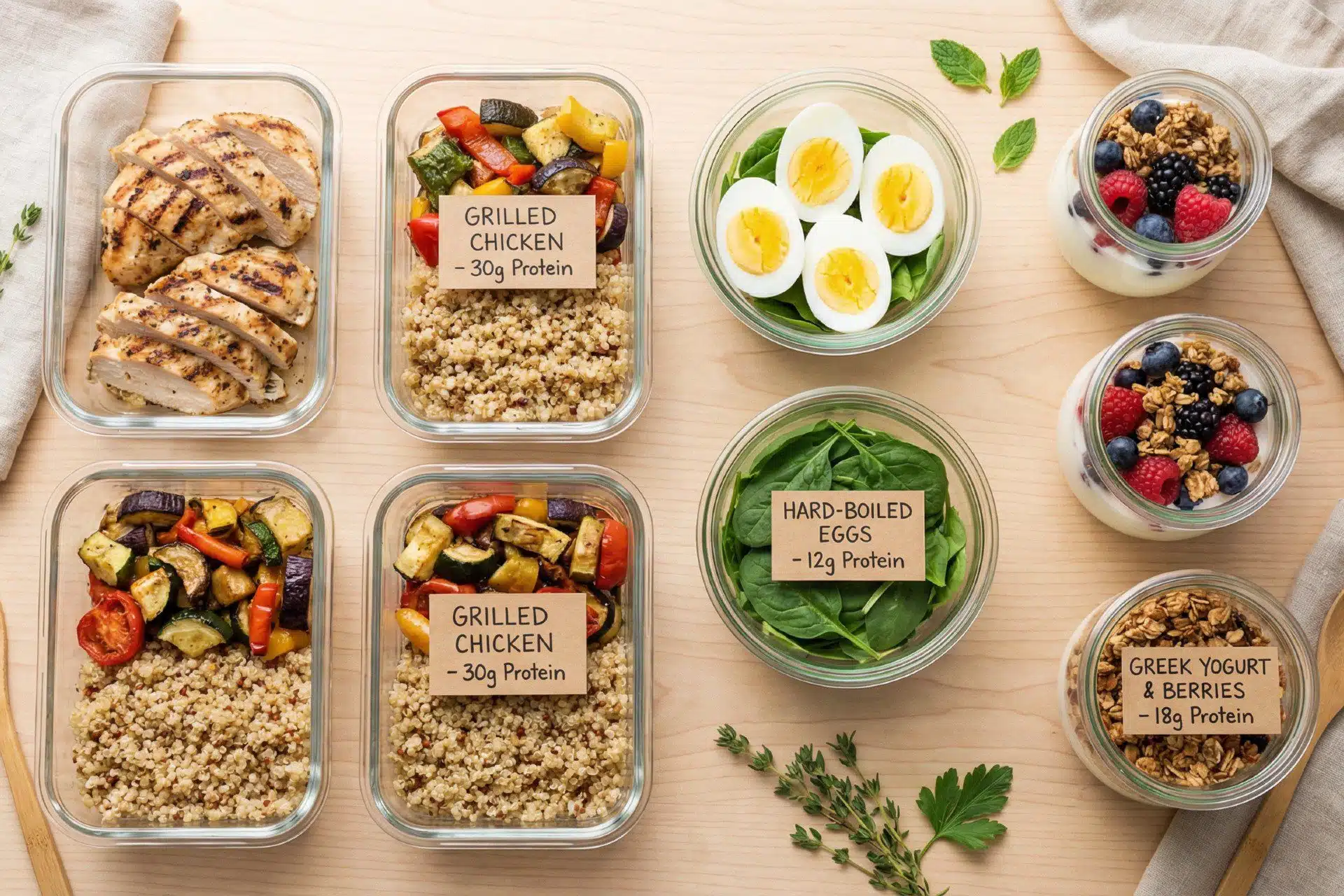
The single strongest predictor of diet consistency for busy women is having ready-to-eat protein in the refrigerator at all times. Women who prep protein on Sunday succeed at substantially higher rates than those who plan to cook from scratch each day — because decision fatigue is real and hunger is not patient.
A 90-minute Sunday prep routine that sets up the entire week:
- Bake 6–8 chicken breasts (season in batches, refrigerate sliced).
- Hard-boil 10–12 eggs.
- Cook a large pot of lentils or quinoa (works across multiple meals).
- Portion Greek yogurt into individual containers with toppings.
- Build protein smoothie bags (frozen fruit + spinach + measured protein powder, stored in freezer).
This system mirrors the approach in our Healthy Diet Meal Plans for Busy Lives guide — designed for women who cannot spend hours in the kitchen, and do not need to.
How to Hit Your Daily Protein Goals Without Obsessing Over Numbers
You do not need to weigh every gram of food indefinitely. The most efficient approach: track your intake in an app like MyFitnessPal for 2–3 weeks to calibrate your portion awareness, then step back from daily logging. Most women quickly learn to estimate within 10–15g of their actual protein intake, which is accurate enough to stay consistently on track.
Quick portion-to-protein reference:
- Palm-sized chicken, fish, or meat portion ≈ 25–30g protein
- 170g Greek yogurt ≈ 17g protein
- 2 whole eggs ≈ 12g protein
- 1 scoop protein powder ≈ 25g protein
- 100g firm tofu ≈ 8g protein
- 150g cooked lentils ≈ 13g protein
- 30g hemp seeds (3 tablespoons) ≈ 9g protein
High-Protein Snacks for Weight Loss Between Meals
When hunger strikes between meals, these options deliver 12–20g of protein without derailing your daily caloric target:
- Cottage cheese + sliced cucumber — 14g protein, light and filling.
- Turkey roll-ups (2 slices deli turkey + cream cheese + spinach) — 15g protein, zero cooking.
- Shelled edamame (150g) — 17g protein, plus substantial fiber for satiety.
- Protein bar — choose options with ≥20g protein, <10g sugar, recognizable ingredients.
- Tuna on rice cakes — 20g protein, satisfying texture.
- Greek yogurt + chia seeds — 19g protein, slow-digesting.
For more snack ideas categorized by prep time and portability, visit Healthy Snacks for Weight Management.
What Common Mistakes Do Women Make on a High-Protein Diet?
The most common mistake women make on a high-protein diet is not eating enough protein — consuming 60–80g per day and labeling it "high protein" when evidence-based fat-loss targets require 90–150g. The second most common error is concentrating protein intake at dinner, when the muscle protein synthesis benefit is lower than it would be if spread across all three meals.
The full list of mistakes that stall results:
- Under-eating protein at breakfast. A carbohydrate-only morning sets off a blood sugar cycle that drives hunger and cravings before noon. Adding 25–35g of protein at breakfast is one of the highest-impact single changes you can make.
- Ignoring plant proteins entirely. Relying exclusively on chicken and eggs leads to micronutrient gaps, food boredom, and the kind of rigid eating that collapses under normal life.
- Choosing "protein-labeled" processed foods. Many protein bars, cereals, and shakes have high sugar content and minimal actual protein. Always check: is the protein-to-calorie ratio at least 1g of protein per 5 calories?
- Skipping dietary fiber. Protein and fiber work synergistically for satiety. Protein without fiber slows digestion uncomfortably and misses a major appetite-suppression mechanism. Pair every protein source with vegetables.
- Not drinking enough water. Higher protein intake increases the body's nitrogen excretion load, raising hydration requirements. Aim for 2.5–3L of water daily on a high-protein plan.
- Expecting results in days instead of weeks. Visible body composition changes take 4–8 weeks minimum. The hunger reduction and energy improvements come first — and those arrive much faster.
For a broader look at what derails women's fat loss progress, see 5 Weight Loss Mistakes Women Often Make.

How Does a High-Protein Diet Affect Hormonal Balance in Women?
A high-protein diet supports hormonal balance in women by stabilizing blood sugar, reducing insulin spikes, and providing the amino acids required to synthesize key hormones and neurotransmitters — including thyroid hormones, estrogen-metabolizing enzymes, serotonin, and dopamine. This makes protein intake directly relevant not just to fat loss, but to mood, energy, sleep quality, and menstrual regularity.
Protein and Blood Sugar Balance in Women
Protein slows gastric emptying — the rate at which food leaves your stomach — which flattens the post-meal blood sugar spike that follows carbohydrate consumption. Women with insulin resistance, PCOS, or blood sugar dysregulation see particular benefit from pairing protein with every carbohydrate source throughout the day.
The practical rule: never eat a carbohydrate in isolation. A piece of fruit with Greek yogurt. Toast with eggs. Oatmeal with protein powder stirred in. Rice with chicken. These combinations are not complicated — but they are the foundation of stable energy, reduced cravings, and consistent progress.
For the full picture on how female hormones interact with fat loss, read our in-depth guide on hormones and weight loss for women.
Protein and Postpartum Weight Loss
Postpartum women have elevated protein needs for three compounding reasons: tissue repair from pregnancy and delivery, breastfeeding (which adds approximately 25g per day to baseline protein requirements), and the muscle loss that commonly occurs during pregnancy without adequate nutritional support.
A high-protein eating plan is one of the safest and most effective strategies for postpartum fat loss — and when breastfeeding, adequate protein directly supports the nutritional quality of breast milk.
Practical postpartum protein targets:
- Breastfeeding women: target protein at the higher end of the 0.85–1.0g/lb range.
- Non-breastfeeding postpartum: standard 0.7–1.0g/lb based on activity level.
- Prioritize whole food sources over supplements during breastfeeding.
Always consult your healthcare provider before starting any structured nutrition plan during the postpartum period.
Your Next Step
Understanding the framework is step one. Building the habit — consistently, across weeks and months — is where the real transformation happens.
The Lean Body Formula Special Report walks you through a complete women-first nutrition and fat loss framework: the exact actions that create permanent results, the mindset shifts that make them stick, and the strategies designed specifically for the female body. It's free.
Download the Free Special Report →
No restriction gimmicks. No eliminated food groups. Just a practical, evidence-based system for eating in a way that supports the body — and the life — you want.
Want The Habits Behind Lasting Weight Loss? Get the free guide: 10 research-backed habits that help women lose body fat and keep it off, with no extreme diets. Send Me The Free Guide.
The Bottom Line
A high-protein diet plan is not a trend. It is one of the most consistently supported nutritional strategies in women's health research — and unlike calorie restriction alone, it works with your biology instead of fighting it.
You are not supposed to feel perpetually hungry, fatigued, or white-knuckling your way through the week. That experience is a symptom of an eating plan that wasn't built for your body — not evidence that you lack discipline.
When you consistently hit your protein targets, something shifts. The cravings quiet down. Energy stabilizes. The muscle you build through movement stays — and your metabolism reflects that. Progress stops feeling like something that only happens to other women.
You do not have to overhaul everything at once. Start with one meal. Add a meaningful protein source to breakfast tomorrow — eggs, Greek yogurt, cottage cheese, a protein smoothie — and notice what happens to your hunger by mid-morning. That single change, repeated consistently, is how a high-protein lifestyle begins.
The 7-day meal plan, the protein targets, the prep strategies — they are all here when you need them. Come back, use what fits, adapt what doesn't. Sustainable eating is never rigid.
Glossary Of Key Terms
- Casein: A slow-digesting dairy protein that provides a steady release of amino acids over several hours, often used to support muscle repair during sleep.
- Ghrelin: Known as the "hunger hormone," it is produced in the digestive system and signals the brain to increase appetite.
- Glucagon-like Peptide-1 (GLP-1): A satiety hormone released by the digestive system after eating protein that signals fullness to the brain.
- Muscle Protein Synthesis: The biological process by which the body uses amino acids from protein to repair and build new muscle tissue.
- Nitrogen Excretion: The process by which the body removes waste products from protein metabolism; high protein intake requires increased water consumption to support this function.
- Pea Protein: A high-quality, plant-based protein supplement that research shows is comparable to whey in its ability to preserve muscle mass.
- Satiety: The state of feeling full or satisfied after eating, which is heavily influenced by the intake of protein and fiber.
- Thermic Effect of Food (TEF): The caloric cost of digesting and processing nutrients; protein has the highest TEF at 20–30%.
- Whey Protein Isolate: A highly filtered form of dairy protein that is rapidly absorbed by the body, making it ideal for post-exercise recovery.
- Essential Amino Acids: The nine amino acids that the body cannot produce on its own and must be obtained through a variety of protein-rich foods.
FAQ
What Is The Best High-Protein Diet Plan For Women Specifically?
The best high-protein diet plan for women targets 0.7–1.0g of protein per pound of body weight daily, distributes intake across three meals and 1–2 snacks, and includes a mix of animal and plant proteins. Unlike one-size-fits-all plans, it accounts for hormonal fluctuations, muscle preservation needs, and sustainable whole-food sources over processed protein products.
How Much Protein Do Women Need To Lose Weight?
Women aiming for fat loss need 0.7–1.0g of protein per pound of body weight per day — approximately 105–150g for a 150-pound woman. This range is significantly higher than the standard RDA of 46g, which reflects minimum survival needs rather than optimal fat loss or body composition targets.
Can Eating Too Much Protein Be Harmful For Women?
For healthy women, intakes up to 2.2g of protein per kg of body weight are safe and well-tolerated. Women with existing kidney disease should consult a physician before significantly increasing protein intake. Healthy kidneys process high protein without issue under normal circumstances.
Do I Have To Give Up Carbohydrates On A High-Protein Diet?
No. A high-protein plan is not synonymous with low-carb eating. Carbohydrates remain important for energy, thyroid function, exercise performance, and hormonal health. The goal is to prioritize protein first, then distribute remaining daily calories between quality carbohydrates and healthy fats.
How Long Before I See Results On A High-Protein Diet?
Most women notice significantly reduced hunger and more stable energy within 3–7 days. Visible changes in body composition — leaner arms, flatter stomach, clothes fitting differently — typically appear after 4–8 weeks of consistent adherence. Learn more about how long it takes to see results from working out and changing nutrition.
What Are The Best High-Protein Breakfast Ideas For Women?
Three-egg scramble with vegetables, overnight oats with protein powder and hemp seeds, Greek yogurt parfait with berries, cottage cheese with fruit and cinnamon, or a protein smoothie with pea protein, spinach, and nut butter. Each delivers 25–35g of protein at breakfast — the meal with the highest leverage for setting hunger patterns for the rest of the day.
Is A High-Protein Diet Safe While Breastfeeding?
Yes, with an appropriate total calorie intake. Breastfeeding adds approximately 500 calories and 25g of protein to daily needs. Focus on whole food protein sources, stay well hydrated, and consult your provider for personalized guidance.