

The Science Behind Commercial Weight Loss Programs: What Really Works

Be the change you want to see. A LadyBoss is in control of her destiny, her situation, her health, her body, and in turn, her life.
Kaelin Tuell Poulin ‧ Former IFBB Pro athlete and Co-founder of LadyBoss Weight Loss
Summary (TL;DR)
Many weight loss programs yield short-term results, with most people regaining lost weight within two years. Effective programs combine meal planning, behavioral coaching, and resistance training. Crash diets can slow metabolism, hindering future weight loss.
Sustainable fat loss requires a moderate calorie deficit and personalized strategies. The S.M.A.R.T. Reset Protocol addresses female metabolism, hormones, and behavior for long-term weight management, working with your body.
If you've spent money on a weight loss program that worked for eight weeks and then stopped—you are not the problem.
You're one of millions of women caught in the same cycle: follow the plan, lose the weight, return to normal life, regain it all. A meta‑analysis of long‑term weight loss studies found that more than half of the lost weight was regained within 2 years, and over 80% was regained within 5 years. Not because they lack discipline. Because most programs are architecturally designed for short-term results, not long-term biology.
Weight loss programs do work. But most of them work against your body rather than with it.
This article is the evidence-based breakdown you didn't get from the program brochure. You'll learn exactly what the clinical research shows about program outcomes, why women over 35 face barriers most programs never address, and the five-step S.M.A.R.T. Reset Protocol we've developed specifically around female metabolism, hormones, and behavioral change.
No supplements to buy. No eliminating food groups. No program that ends without a maintenance plan. Just the honest, research-backed truth about what actually works—and why it's simpler than the industry wants you to believe.
Medical & Referral Disclaimer
The information in this article is for educational purposes only and does not constitute medical advice. Individual results vary based on genetics, hormonal status, medical history, and lifestyle factors. Consult a qualified healthcare provider before starting any weight loss program, particularly if you have a diagnosed medical condition, are pregnant or postpartum, or are currently taking medication. The clinical studies referenced are provided for informational context and should not be interpreted as endorsements of specific programs or treatments.
Key Takeaways
- Most weight loss programs produce short-term results; fewer than 20% of participants maintain significant loss at the 5-year mark without behavioral intervention.
- Sustainable fat loss requires a calorie deficit of 300–500 kcal/day, not the 800–1,200 kcal crash diets many programs prescribe.
- Programs that combine meal planning, behavioral coaching, and resistance training outperform diet-only approaches by up to 65% in long-term outcomes.
- Metabolic adaptation is real: crash dieting can slow resting metabolic rate by 15–30%, making future weight loss harder.
- The most effective program is one built around your hormones, lifestyle, and food preferences—not someone else's template.
- Women over 40 face distinct hormonal barriers (declining estrogen, elevated cortisol) that generic programs routinely ignore.
- The S.M.A.R.T. Reset Protocol (detailed below) is a five-step framework for sustainable weight loss that works with your biology, not against it.

What Is A Weight Loss Program, Really?
A weight loss program is a structured plan combining dietary changes, physical activity, and behavioral strategies to create a sustained calorie deficit that leads to fat reduction. Effective programs address nutrition, movement, mindset, and metabolism together—not in isolation.
The term "weight loss program" spans everything from a six-week commercial meal plan to a medically supervised protocol involving hormone panels and body composition analysis. This wide spectrum is precisely why the question "do weight loss programs work?" has no single answer.
What separates programs that produce lasting change from those that don't comes down to three variables: sustainability of the calorie deficit created, quality of behavioral support provided, and alignment with the individual's physiology.
According to a landmark National Weight Control Registry study, participants who achieved long-term weight loss shared common behaviors: consistent meal tracking, regular physical activity (averaging 60 minutes daily), and high breakfast consumption. Notably, none of these behaviors depend on which branded program you follow.
What is the difference between a weight loss program and a diet plan?
A diet plan is a single component—what you eat. A weight loss program is a complete system: it addresses what you eat, how you move, what behavioral patterns to shift, and how to maintain results. A diet plan alone rarely produces lasting change; a well-designed program does.
The Hard Truth: Why Most Weight Loss Programs Fail
Most weight loss programs deliver results in weeks one through eight—then those results reverse. Understanding the mechanisms behind this pattern is the first step toward breaking it.
The Metabolic Adaptation Problem
When you cut calories aggressively, your body doesn't respond passively. It reduces resting metabolic rate (RMR) to match energy availability—a survival response called metabolic adaptation.
A 2016 study published in Obesity, tracking participants from The Biggest Loser, found that six years after the competition, contestants' metabolisms had slowed by an average of 704 calories per day compared to baseline—despite regaining significant weight. Their bodies had permanently recalibrated downward.
This is not a willpower failure. It is biology.
Programs that prescribe 800–1,000 calorie daily intakes—common in commercial meal replacement products—accelerate metabolic adaptation. The result: a temporary scale victory followed by a rebound that leaves women eating less than before yet gaining weight faster.
To understand why your body behaves this way, read our deep dive on understanding the female metabolism and the specific hormonal factors that shape how women burn fat differently than men.

The Psychology Gap
The majority of weight loss programs address the body and ignore the brain. A review of long‑term dieting studies found that among patients followed for two or more years, 83% regained more weight than they lost.
Successful long-term weight management requires:
- Identifying and interrupting emotional eating cycles
- Shifting self-perception from "someone dieting" to "someone who lives healthily"
- Building identity-based habits rather than outcome-based restrictions
Our guide on weight loss mindset explores these psychological mechanisms in detail.
Why do I keep failing at every weight loss program I try?
Repeated program failure is rarely about discipline. It is almost always a sign that the program prescribes an unsustainable deficit, ignores hormonal barriers, or lacks behavioral support. The answer is not trying harder—it is finding a program architecturally compatible with your biology and life.
Fad Diet Traps That Derail Progress
Fad diets generate rapid early results—typically 3–6 pounds in the first week—because they deplete glycogen stores and trigger water loss, not fat loss. When this "results phase" ends, motivation collapses.
Common fad diet red flags:
- Elimination of entire food groups without a medical reason
- Promises of more than 2 lbs of fat loss per week
- No guidance on what happens after the "program" ends
- Heavy reliance on proprietary supplements with no clinical backing
- One-size-fits-all meal plans ignore age, hormonal status, or activity level
For a comprehensive breakdown, see our article on the key differences between a fad diet and a real diet that works.
What The Clinical Evidence Actually Shows
Short-Term vs. Long-Term Weight Loss Results
The research on weight loss programs is more nuanced than headlines suggest. Programs do work—in the short term. The critical question is what happens after month six.
Table 1: Clinical Evidence Summary — Major Weight Loss Program Approaches
| Program Type | Avg. Weight Loss (6 months) | Avg. Weight Loss (2 years) | % Maintaining ≥5% Loss at 5 Years | Source |
|---|---|---|---|---|
| Very Low Calorie Diet (VLCD) | 15–25 lbs | 5–8 lbs | ~15% | NEJM, 2021 |
| Commercial Programs (WW/Noom) | 8–12 lbs | 4–6 lbs | ~20% | JAMA, 2020 |
| Mediterranean Diet | 6–10 lbs | 6–9 lbs | ~40% | Lancet, 2018 |
| Behavioral + Diet Counseling | 10–15 lbs | 8–11 lbs | ~45% | Annals Internal Med, 2019 |
| Medical Weight Loss (supervised) | 12–18 lbs | 9–14 lbs | ~55% | Obesity Reviews, 2022 |
| Lifestyle + Resistance Training | 8–12 lbs | 9–13 lbs | ~60% | JAMA Internal Med, 2022 |
Note: "Maintaining" = sustaining ≥5% of initial body weight loss from baseline.
The standout finding: programs pairing behavioral coaching with resistance training achieve the highest long-term retention. Programs relying purely on caloric restriction perform worst at the 5-year mark, regardless of how impressive the short-term loss appears.
The 5-Year Rule: What Long-Term Weight Loss Actually Looks Like
Research consistently shows a "5-year cliff"—the point at which most weight loss program outcomes deteriorate significantly. Programs with the highest long-term success rates share four characteristics:
- Gradual deficit — 300–500 kcal/day rather than 800+
- Behavioral component — ongoing support, coaching, or community
- Resistance training protocol — preserves lean muscle, maintains metabolic rate
- Maintenance phase planning — explicit strategy for post-program sustaining
Programs that lack any one of these four elements show significantly elevated regain rates within 18–24 months.
The 5 Types Of Weight Loss Programs Compared
Not all programs are built equal. Here is an objective comparison based on clinical outcomes, cost, and sustainability.
Table 2: Weight Loss Program Types Compared
| Program Type | Examples | Monthly Cost | Best For | Avg. Short-Term Loss | Long-Term Support | Clinical Backing |
|---|---|---|---|---|---|---|
| Commercial/App-Based | WW, Noom, MyFitnessPal | $20–$60/mo | Habit tracking, accountability | 6–10 lbs/3 mo | Moderate | Moderate |
| Meal Delivery Programs | Nutrisystem, Jenny Craig | $200–$400/mo | Portion control, meal planning | 8–12 lbs/3 mo | Low | Moderate |
| Medical Weight Loss | Clinic-based, physician-supervised | $150–$500/mo | Complex cases, hormonal issues | 10–20 lbs/3 mo | High | Strong |
| Wellness Coaching Programs | 1-on-1 coaching, custom plans | $100–$300/mo | Personalized diet, behavioral work | 6–14 lbs/3 mo | High | Emerging |
| DIY / Self-Directed | Books, YouTube, free apps | $0–$30 | Motivated self-starters | Variable | Very Low | Limited |
| Surgical (reference only) | Bariatric, sleeve gastrectomy | $15,000–$25,000 | BMI >35 with comorbidities | 40–60 lbs/6 mo | High (post-op) | Very Strong |
Are expensive weight loss programs worth the money?
Cost correlates modestly with outcomes, but not linearly. The most expensive programs aren't automatically the most effective. What predicts success is whether the program includes behavioral support, a realistic calorie deficit, and a maintenance phase plan—not whether it ships meals in branded packaging.

Commercial Programs (WW, Noom)
Commercial programs excel at gamifying accountability. WW's points system and Noom's psychological coaching approach both demonstrate clinically modest but real short-term benefits. A 2020 JAMA study found WW participants lost an average of 5.3% of body weight at 12 months—modest but statistically significant versus control.
Limitation: Both platforms use the same templates regardless of your hormonal status, age, or metabolic history. A 32-year-old and a 52-year-old perimenopausal woman receive virtually identical programs.
Medical Weight Loss Programs
Medical Weight Loss (MWL) adds a diagnostic layer that commercial programs lack. A qualified MWL practitioner runs hormone panels, thyroid function tests, and body composition analysis before recommending anything. This surfaces barriers that sabotage progress in generic programs: insulin resistance, subclinical hypothyroidism, elevated cortisol, or PCOS.
For women over 40, MWL's diagnostic advantage is substantial. Learn why hormonal shifts complicate weight loss in our guide on how to lose weight during perimenopause without starving yourself.
Personalized Coaching Programs
The fastest-growing segment of the weight loss industry combines personalized diet plans with 1-on-1 behavioral coaching. A systematic review of health coaching for weight loss that shows coaching has a positive (though modest) effect over usual care.
The S.M.A.R.T. Reset Protocol: A Framework Built For Women
This is the proprietary framework—developed from working with thousands of women and grounded in peer-reviewed research on female metabolism and behavioral change.
Most programs give you a plan. This framework gives you a system—one that works whether you're 28 or 58, a gym regular or a complete beginner.
S — Sustainable Calorie Deficit
The target: 300–500 calories below your Total Daily Energy Expenditure (TDEE). This range creates meaningful fat loss (0.5–1 lb/week of genuine fat) without triggering metabolic adaptation or lean muscle loss.
Calculate your TDEE using the Mifflin-St Jeor equation as a starting point, then adjust based on activity level. Never drop below 1,200 calories without medical supervision.
Why this matters: A 500-calorie deficit over 7 days = 3,500 calories = approximately 1 lb of fat. Sustainable, predictable, biology-aligned.

M — Metabolic Assessment First
Before changing what you eat, understand how your body currently functions. Key markers to assess:
- Resting Metabolic Rate (RMR) — how many calories you burn at rest
- Thyroid function (TSH, Free T3, Free T4) — subclinical hypothyroidism affects an estimated 1 in 8 women
- Fasting insulin and glucose — insulin resistance blocks fat mobilization regardless of calorie intake
- Cortisol levels — chronic stress elevates cortisol, which directly promotes abdominal fat storage
For more on how cortisol and belly fat are connected in women, read our dedicated guide.
A — Addition-Before-Restriction Nutrition
The counterintuitive cornerstone of this framework: add nutrient-dense foods before you subtract anything.
When women focus solely on restriction, two things happen: nutrient deficiencies emerge, and psychological deprivation drives bingeing. Instead, start by adding:
- 30g of protein per meal (supports satiety, preserves lean muscle, boosts thermogenesis by 20–30%)
- 2–3 cups of non-starchy vegetables per meal (increases volume, fiber, and micronutrient density without meaningfully affecting calories)
- 64 oz of water daily (dehydration is consistently misread as hunger)
- One complete, structured weight loss meal prep session per week
After adding these elements, calorie restriction happens organically—without white-knuckling it.
R — Resistance Training As The Foundation
Cardio burns calories during exercise. Resistance training burns calories for 24–48 hours afterwards (the EPOC effect) and, crucially, preserves and builds metabolically active lean muscle mass.
Every pound of muscle burns approximately 6 calories/day at rest. Every pound of fat burns approximately 2. Over a year of consistent resistance training, this metabolic difference becomes enormous.
Recommended protocol for women new to strength work:
- 3 sessions/week, full-body emphasis
- Progressive overload (increasing resistance every 2–3 weeks)
- Compound movements first: squats, deadlifts, rows, presses
Our complete guide to strength training for women over 40 covers this in full, including how to build lean muscle without bulking.

T — Track Behavioral Changes, Not Just Weight
The scale is one data point, not the whole picture. Weekly weigh-ins capture water fluctuation, hormonal cycles, and glycogen stores as much as fat change.
More predictive behavioral metrics to track:
- Sleep quality (aim for 7–9 hours; sleep directly impacts weight loss in women)
- Daily steps (aim for 7,000–10,000)
- Protein intake (tracked via a food logging app)
- Adherence rate (% of meals aligned with plan this week)
- Stress score (subjective 1–10 daily rating)
How do I track weight loss progress beyond the number on the scale?
Progress photos every 2 weeks, body measurements (waist, hips, thighs), energy levels, sleep quality, and how clothes fit are all more reliable indicators of fat loss progress than daily weight readings. Our full guide on how to track your weight loss progress covers all methods.
Key Factors That Determine Whether A Weight Loss Program Works For Women
Hormonal Considerations: The Variable Most Programs Ignore
Female weight management is inseparable from hormonal status. Estrogen, progesterone, cortisol, insulin, thyroid hormone, and leptin all directly regulate how your body stores and releases fat—and every one of them fluctuates across your life stages.
Critical hormonal weight loss barriers by life stage:
| Life Stage | Primary Hormonal Barrier | Impact on Weight Loss | Strategy Adjustment |
|---|---|---|---|
| Reproductive years (20s–30s) | Insulin resistance, PCOS | Impairs fat mobilization | Lower glycemic load, cycle syncing |
| Perimenopause (40s–early 50s) | Declining estrogen, rising cortisol | Shifts fat storage to abdomen | Stress management, resistance training priority |
| Menopause (50s+) | Low estrogen + low progesterone | Reduced RMR, muscle loss accelerates | Higher protein intake, strength training |
| Postpartum | Prolactin, thyroid disruption | Fatigue-driven eating, metabolic slowdown | Gradual deficit, sleep prioritization |
For women experiencing cycle-related weight fluctuation, our guide to cycle syncing for weight loss explains how to align your eating and workout routine with your menstrual cycle for better results.
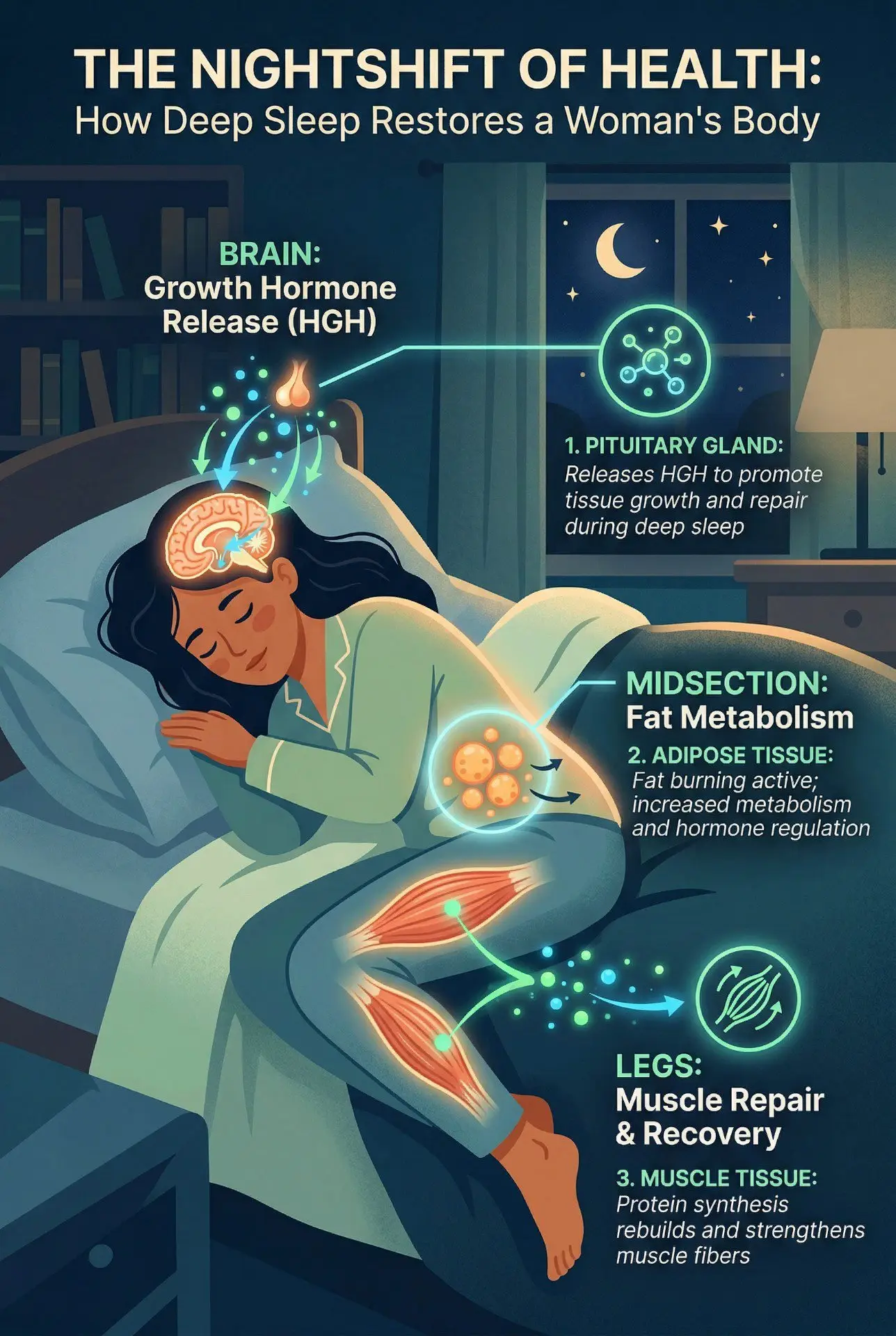
The Role Of Sleep In Weight Management
Sleep is not a passive activity during weight loss—it is an active metabolic process. Research from the University of Chicago found that subjects who slept 5.5 hours lost 55% less fat and 60% more muscle mass than those sleeping 8.5 hours, on identical calorie-restricted diets.
Sleep deprivation elevates ghrelin (hunger hormone) by up to 28% and suppresses leptin (satiety hormone) by 18%—a biochemical combination that makes portion control almost impossible regardless of motivation.
Minimum sleep targets for active weight loss:
- 7–9 hours per night for women in active fat loss phases
- Consistent sleep/wake times (within 30 minutes daily)
- Screen exposure limited to 60 minutes before bed (blue light suppresses melatonin and disrupts cortisol rhythm)
Read the complete breakdown of how sleep affects weight loss in women and the practical steps to optimize it.
Meal Planning, Portion Control, And Nutritional Value
Structured meal planning consistently outperforms intuitive eating during the active weight loss phase. A study in the International Journal of Behavioral Nutrition found that meal planning was associated with a healthier diet and less obesity,” which matches your summary that meal planners had significantly higher diet quality scores and lower rates of obesity.
What effective meal planning includes:
- Calorie targets per meal (not just daily totals)
- Macronutrient distribution — minimum 25–30% calories from protein
- Meal prep batch sessions — 1–2 per week reduces decision fatigue and impulse eating
- Backup meal options — for high-stress or low-time days
- Planned flexibility — one higher-calorie day per week reduces psychological restriction
Explore our complete weight loss meal prep guide for women and learn the benefits of meal planning in detail.
How do I create a meal plan for weight loss that I'll actually stick to?
The most sustainable meal plans are built around foods you already enjoy, not around "clean eating" ideals you resent. Start with 5–7 meals you currently eat that are relatively nutritious, calculate their calories, and adjust portion sizes before introducing anything new. Radical food changes at the start of a program are the single biggest driver of early dropout.
Join Our Mailing List
Join thousands of women inside our community and receive our free guide, 10 Actions That Support Permanent Weight Loss — the exact behavioural shifts that make the difference between a two-week attempt and a lasting transformation.
No restriction plans. No guilt. Just what actually works — for real women with real lives.

Workout Routine Integration: Finding What Works Long-Term
The best workout for weight loss is the one you'll actually do consistently. That said, research is clear on the hierarchy of effectiveness:
- Resistance training (3–4x/week) — highest long-term metabolic benefit
- HIIT cardio (2x/week) — high calorie burn, time-efficient
- Low-intensity steady-state (LISS) (daily walking) — sustainable daily habit, reduces cortisol
Daily walking (7,000–10,000 steps) is underrated in structured programs. A 2022 JAMA Internal Medicine study found that simply increasing daily steps to 7,000 reduced all-cause mortality risk by 50–70%—and meaningfully contributed to calorie expenditure without the cortisol elevation associated with high-intensity training.
For beginners, start with our fat loss workouts for beginners guide.
Expert Commentary: The Contrarian Take That Changes Everything
The fitness industry has a vested interest in making weight loss feel complicated. Complexity sells supplements, premium programs, and proprietary meal systems. But the evidence consistently points back to remarkably simple foundations.
Dr. Traci Mann, director of the Health and Eating Lab at the University of Minnesota and author of Secrets From the Eating Lab, summarizes the research bluntly: "Diets do not work. The majority of people who lose weight on any diet will regain it within 3–5 years. The solution is not a better diet—it's building the environment and habits that make healthy eating the path of least resistance."
This is the core insight most weight loss programs miss: they sell outcomes instead of building systems.
The most effective intervention is environmental design—restructuring your food environment, sleep environment, and social environment so that healthy defaults require no willpower at all.
Why do weight loss programs fail long-term?
Most programs are designed for the weight loss phase, not the maintenance phase. Once the structured program ends, participants return to the environment that created their original weight, with a slower metabolism and without the behavioral infrastructure to sustain new habits. Programs that build lasting change must spend at least 30% of their structure on post-loss maintenance training.

The Maintenance Phase: The Most Neglected Part Of Weight Loss
Losing weight is hard. Keeping it off is harder. Research from the National Weight Control Registry — which tracks over 10,000 individuals who have maintained significant weight loss — identifies the behaviors most predictive of long-term success:
- Weighing themselves weekly (78% of maintainers do this)
- Eating breakfast every day (78%)
- Watching fewer than 10 hours of TV per week (62%)
- Exercising approximately 1 hour per day (90% reported regular physical activity)
Building Healthy Habits That Last
The maintenance phase is not a relaxation of effort—it is a transfer of structure. Instead of following a prescribed plan, you're now operating from internalized habits. The transition typically requires 3–6 months of deliberate practice.
Key maintenance-phase strategies:
- Establish a personal calorie maintenance range (±200 kcal of calculated TDEE)
- Schedule monthly "check-in" assessments (weight, measurements, energy)
- Maintain at least 2–3 resistance training sessions/week
- Treat weight fluctuations of ±3–5 lbs as normal and expected
See also: Worst weight loss mistakes we all make and ultimate guide to sustainable fat loss.
The Role Of Behavioral Changes And Wellness Coaching
Behavior change is the actual product that a good weight loss program delivers. Everything else—the meal plans, the workout schedules, the supplement recommendations—is the vehicle.
The most durable behavioral changes in weight management research are:
- Food environment restructuring (keeping high-calorie foods out of easy reach, pre-portioning snacks)
- Implementation intentions (specific "if-then" plans: "If I'm at a restaurant, then I'll order protein and vegetables first")
- Identity statements (replacing "I'm trying to lose weight" with "I'm someone who prioritizes my health")
A structured wellness coaching engagement accelerates this process by providing external accountability during the critical first 90 days when new habits are most fragile.
After reading about weight loss programs, are you wondering if there's a better way? There is! We've created a guide that shows you how to lose weight and keep it off, without restrictive programs. Grab your free guide here to discover a sustainable approach to weight loss.
Related Articles
Bottom Line
Weight loss programs work—but most are architecturally designed to fail you. They prioritize fast initial results over sustainable behavioral infrastructure, ignore the hormonal realities of women's bodies, and end without a maintenance phase.
The programs with the highest long-term success rates share a common architecture: a sustainable calorie deficit, behavioral coaching, resistance training, and an explicit strategy for the maintenance phase. These elements—not the brand name on the app or the celebrity endorsing the plan—are what actually move the needle.
The S.M.A.R.T. Reset Protocol outlined in this article is not a quick fix. It is a framework for making the right behaviors your default—so that over weeks and months, health becomes less something you're working toward and more something you simply live.
If you are dealing with persistent weight loss resistance despite consistent effort, read our guide on what is weight loss resistance—there may be a hormonal or metabolic factor at play that no generic program can address without proper assessment.
Glossary Of Key Terms
FAQ
Expect visible physical changes—reduced bloating, clothes fitting differently—within 2–4 weeks of a well-designed program. Scale changes reflecting fat loss (not water) appear within 3–6 weeks. Significant body composition changes (visually noticeable fat reduction) typically require 8–12 weeks of consistent adherence. Our complete guide answers how long it takes to see results from working out as a beginner.
Yes—if the program included a maintenance phase. Programs that simply end create a structural vacuum. To maintain results: continue tracking protein intake, maintain 3+ days/week of physical activity, weigh weekly, and practice monthly check-in assessments. The psychology of weight loss is equally important here—maintenance is a mindset shift as much as a behavioral one.
Most commercially marketed weight loss supplements have limited clinical evidence supporting meaningful fat loss. The few that show modest evidence include caffeine (increases thermogenesis ~4–5%), green tea extract (marginal fat oxidation benefit), and soluble fiber (improves satiety). No supplement replaces a calorie deficit. See our detailed review of fat loss supplements for a clinical breakdown.
Weight loss = any reduction on the scale, including water, muscle, and fat. Fat loss = specifically reducing adipose tissue while preserving or building lean muscle. Programs that create too aggressive a deficit accelerate muscle loss alongside fat, worsening body composition and slowing metabolism. Our dedicated guide on weight loss vs. fat loss explains the distinction in full.
A 2021 systematic review in the Journal of Medical Internet Research found no statistically significant difference in 12-month outcomes between app-based and in-person weight loss programs, provided both included behavioral coaching components. Platform matters less than whether coaching, accountability, and maintenance support are included.
You Know Why. Now Learn Exactly How
Join thousands of women inside our community and receive our free guide: 10 Actions That Support Permanent Weight Loss — the practical, sustainable habits that translate everything you just read into real, lasting results.
No fad diets. No extreme plans. Just what the research actually supports — written for real women.