

The Complete Fitness Motivation Guide For Winter: Stay Active, Strong, And Sane
Stay Fit And Fabulous With Our Ultimate Fitness Motivation Guide For Winter

The difference between the impossible and the possible lies in a person’s determination.
Tommy Lasorda
Summary (TL;DR)
Winter drops fitness motivation through three biological mechanisms: reduced serotonin from less daylight, higher melatonin that makes you genuinely sleepier, and elevated cortisol from cold-weather stress. Up to 20% of people experience sub-threshold winter mood changes that directly undermine exercise consistency.
The fix isn't more willpower — it's structure. This guide covers the WARM Method (an original framework for winter fitness), cold-weather gear basics, the best indoor workouts, temperature safety guidelines, and identity-based motivation strategies that outperform "just start with 5 minutes" for most active women.
Some winters you lose four months. Not from injury. Not from illness. Just from the slow accumulation of early sunsets, cold mornings, and the couch winning every single time the alarm goes off.
If that sounds familiar, you're not lazy. You're human. And you're fighting biology that was built for a world where winter meant rest, not running.
Here's what I've learned working with women on their fitness through every season: the strategies that work in July do not work in January. Winter needs a different approach — one that works with your body's seasonal shifts instead of trying to bulldoze through them.
This guide is that approach. It covers what's actually happening in your brain during winter, why the popular "just start with 5 minutes" advice can backfire for active women, and the WARM Method — a framework I built based on what consistently helps women maintain their fitness through the coldest months.
You'll find real data, science-backed strategies, and honest takes on what the research actually says. Winter doesn't have to be a fitness write-off. But it does require a plan.
Medical & Referral Disclaimer
This article is for general informational purposes only and does not constitute medical advice. If you are experiencing symptoms of Seasonal Affective Disorder or persistent mood changes during winter, consult a qualified healthcare provider. Always get medical clearance before starting a new exercise program, particularly if you are new to outdoor cold-weather exercise or have existing cardiovascular, respiratory, or circulatory conditions (including Raynaud's phenomenon). Individual nutritional and supplement needs vary — consult your doctor before beginning vitamin D supplementation.
Key Takeaways
- Winter motivation drops for biological reasons — reduced serotonin, elevated melatonin, higher cortisol — not personal failings.
- SAD affects approximately 5% of people clinically; winter blues affect up to 20%; exercise has comparable evidence to mild antidepressants in multiple RCT reviews.
- The WARM Method addresses the four specific failure points of winter fitness: a winter-specific plan, accountability structure, a calibrated reward system, and a mindset reset.
- Use the three-layer system for outdoor cold-weather workouts; dress as if it's 10–15°F warmer than the actual temperature.
- Avoid outdoor exercise when the wind chill drops below 18°F; wet cold is more dangerous than dry cold at the same temperature.
- Cold air adds minimal calorie burn; winter terrain activities (snowshoeing, snow hiking) add real demand.
- Strength training in winter delivers outsized returns when outdoor options shrink — and benefits women over 40 especially.
- Sleep directly drives motivation — one night of poor sleep reduces next-day exercise motivation by a measurable margin.
- Identity-based motivation ("I'm someone who trains in winter") outperforms goal-based and effort-reduction strategies for winter adherence in women with existing fitness habits.
- Vitamin D supplementation has solid evidence for women with limited winter sun exposure — worth discussing with your doctor.
Why Does Winter Kill Your Fitness Motivation?
Winter reduces fitness motivation through three biological mechanisms: lower serotonin from reduced sunlight, elevated melatonin that increases fatigue, and cortisol rises from cold-weather stress. Up to 20% of people experience sub-threshold winter mood changes that directly undermine exercise consistency, even without a clinical diagnosis.
Winter motivation loss is not a character flaw. It's a body clock issue.
Reduced daylight hours lowers serotonin production — the neurotransmitter most closely linked to mood regulation and drive. At the same time, longer nights increase melatonin, which makes you genuinely sleepier earlier in the evening. The result is a real neurochemical drag on energy and motivation, not something you can simply decide your way out of.
For around 5% of U.S. adults, this tips into Seasonal Affective Disorder (SAD) — a clinically diagnosable form of depression with a seasonal pattern, according to the American Psychiatric Association. For another 10–20%, it produces what researchers call subsyndromal SAD, or "winter blues" — which doesn't meet the clinical threshold but still noticeably affects energy, mood, and motivation.
What this means practically: when your alarm sounds in December before sunrise, and it's 28°F outside, your reluctance isn't weakness. Your brain is running exactly the program it's supposed to under low-light winter conditions. The goal isn't to overpower that response — it's to structure your environment so that following through becomes easier than skipping.
Elevated cortisol plays a role here, too. When stress loads are already high in winter — end-of-year work pressure, holidays, disrupted sleep — motivation reserves deplete faster. This connection between cortisol and body composition matters more in winter than most fitness content acknowledges.
The Link Between Sunlight, Exercise, And Seasonal Mood
Bright light therapy — high-intensity artificial light at 10,000 lux — has solid research support for SAD and winter blues. But regular outdoor exercise, even in grey winter weather, provides meaningful light exposure on top of movement benefits.
A 2015 meta-analysis in Depression and Anxiety found that exercise interventions produced effects comparable to antidepressant medication for mild-to-moderate seasonal depression. Harvard Health has documented the same pattern across multiple RCT reviews on exercise as a treatment for depression. This doesn't mean skip the doctor — it means exercise isn't optional in winter, it's protective.
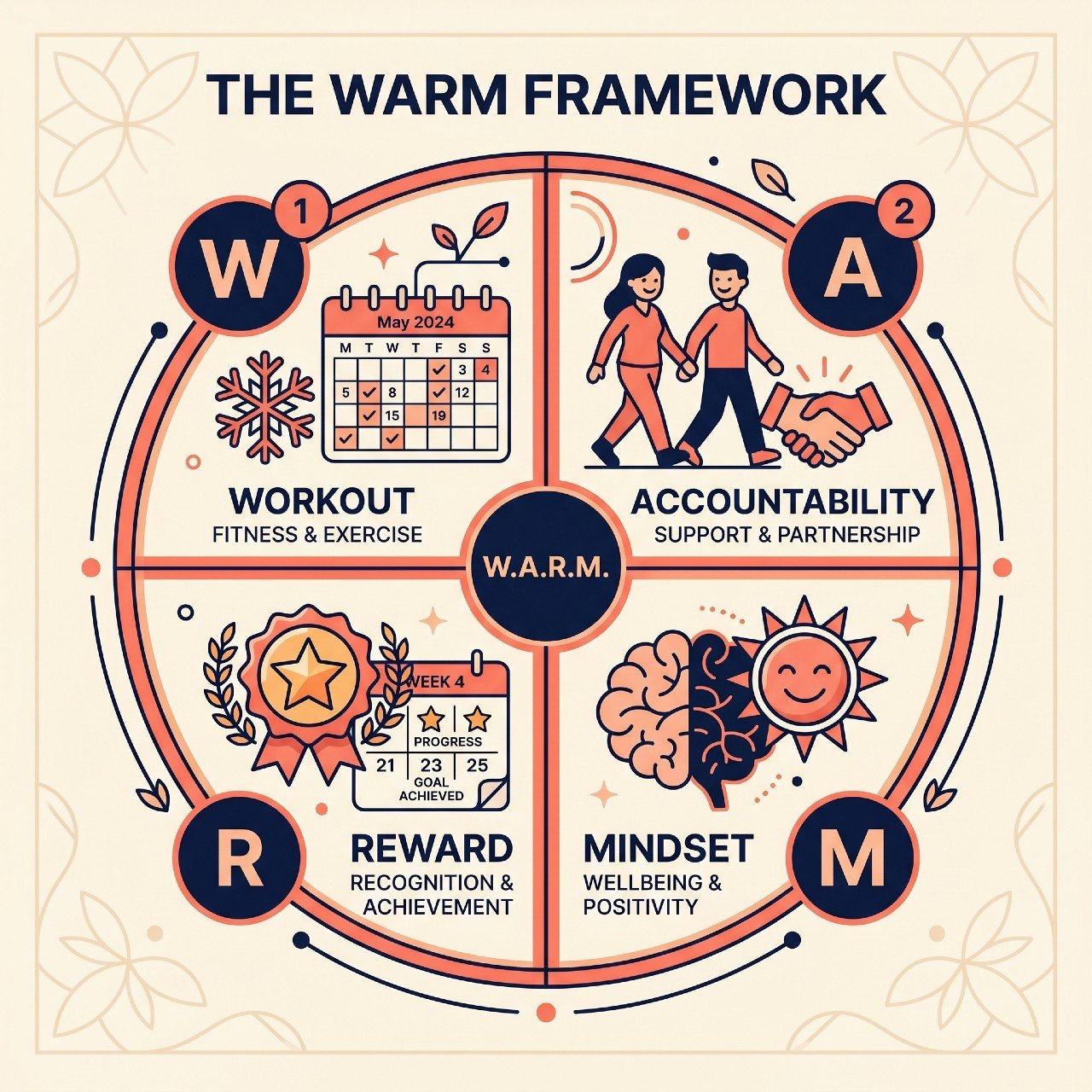
What Is The WARM Method For Winter Fitness Motivation?
The WARM Method is a four-part framework for winter fitness motivation: Winter-specific Workout planning, Accountability structures, a calibrated Reward system, and a Mindset reset for seasonal change. Applied together, these four elements address the specific reasons winter disrupts exercise habits that work fine the rest of the year.
After working with hundreds of women on their fitness routines, a consistent pattern emerged: the women who maintained fitness through winter weren't necessarily more disciplined. They had better systems.
Generic fitness advice ignores seasonal shifts. The WARM Method accounts for them.
Table 1: The WARM Method — What Each Element Solves and How to Apply It
| Element | Problem It Solves | How to Apply It |
|---|---|---|
| W — Winter-Specific Plan | Generic plans break down in winter because they don't account for cold, darkness, and shifted schedules | Build a winter-specific plan in October, before motivation drops. Include 2–3 indoor fallback options for bad-weather days. |
| A — Accountability Structure | Solo training is fragile in winter — the couch wins when nobody's watching | Set a weekly check-in with a workout partner or community. Virtual accountability works nearly as well as in-person. |
| R — Reward System | Long-term fitness goals feel abstract when you're cold and depleted | Assign small, specific non-food rewards to weekly workout completion: a new podcast episode, a bath, a film you've been saving. |
| M — Mindset Reset | "I'll pick back up in spring" is winter's most dangerous thought pattern | Reframe winter as active maintenance. Maintaining your fitness through winter is a real achievement — not a consolation prize. |
Why "Just Push Through It" Doesn't Work In Winter
The most honest feedback I give women: willpower is not a reliable winter strategy. Research on cognitive load and self-regulation consistently shows that willpower depletes through the day, and winter conditions drain it faster. Cold, reduced light, schedule disruption, and elevated cortisol all increase the cognitive demand of daily life. Relying on willpower alone under those conditions is building on sand.
Systems outlast willpower. The WARM Method is a system.
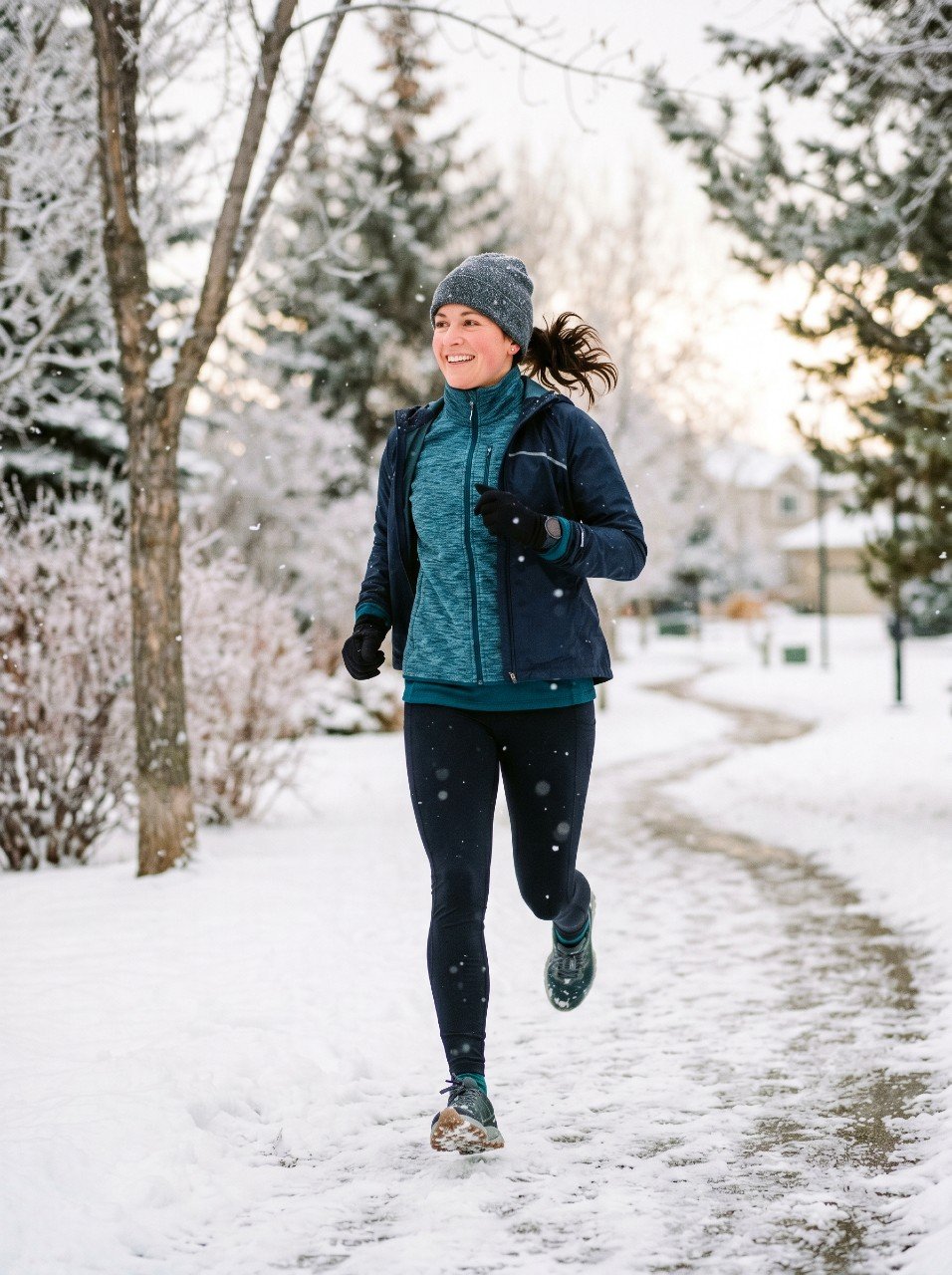
What Should You Wear For Cold-Weather Workouts?
For cold-weather workouts, use a three-layer system: a moisture-wicking base layer, an insulating mid-layer, and a wind-resistant outer shell. Dress as if it's 10–15°F warmer than the actual temperature, since body heat builds quickly once you start moving. Cotton kills — it retains sweat and turns cold against your skin.
Getting this wrong is one of the fastest routes to permanently hating outdoor winter workouts. Too warm and you're soaked within 10 minutes. Too cold and you're miserable before you hit the end of the block.
The Three-Layer System For Winter Exercise
The American Council on Exercise recommends the same layering approach that cold-weather athletes have used for decades:
- Base layer (against skin): moisture-wicking synthetic fabric or merino wool. Never cotton — it retains sweat and chills you fast. Look for polypropylene or merino specifically.
- Mid-layer (insulation): fleece or a lightweight down jacket for genuinely cold conditions. On milder winter days, skip this entirely.
- Outer shell (protection): wind-resistant and ideally water-resistant. A lightweight wind shell handles most running and walking workouts without the bulk of a full waterproof jacket.
Don't forget: gloves, a thin hat or headband (significant heat loss occurs through the head and ears), and moisture-wicking socks. If you're running in low light, reflective elements on the outer layer are non-negotiable.
What Temperature Is Too Cold To Exercise Outside?
This is a common question with a more nuanced answer than most winter fitness articles provide. According to Mayo Clinic's cold-weather exercise guidance, the primary risks at very low temperatures are frostbite and hypothermia — both serious, but preventable with the right clothing, awareness of wind chill, and knowing when to move the workout indoors.
Table 2: Temperature and Wind Chill Safety Guide for Outdoor Exercise
| Temperature (°F) | Wind Chill Risk Level | Exercise Guidance |
|---|---|---|
| 32°F and above | Minimal | Normal outdoor workout; standard layering |
| 20°F to 32°F | Low–moderate | Full three-layer system; cover ears, hands |
| 0°F to 20°F | Moderate–high | Cover face; limit exposed skin; extend warm-up to 15 min |
| Below 0°F | High | Frostbite risk within 30 min of exposed skin; consider moving indoors |
| Any temp with wind chill below -18°F | Dangerous | Move the workout indoors |
Two Overlooked Cold-Weather Exercise Factors
- Wet conditions make cold significantly more dangerous than dry cold at the same temperature reading.
- Your core temperature drops faster when you stop moving — if your workout includes standing rest intervals, dress slightly warmer than the temperature alone suggests.
Embrace The Power Of Exercise
How Can You Stay Motivated To Exercise When It's Dark And Cold?
To maintain fitness motivation for winter during dark months, shift workouts toward midday when possible, schedule sessions in advance like non-negotiable appointments, and use identity-based motivation — thinking of yourself as "someone who exercises in winter" — rather than relying on goal-setting or effort-reduction strategies. Bright morning light (natural or 10,000 lux therapy light) also helps stabilize the circadian rhythm that winter disrupts.
Darkness is underrated as a motivation killer. It's not just mood — it physically disrupts your circadian rhythm, shifts your energy curve, and changes when your body wants to move.
Should You Change What Time Of Day You Work Out In Winter?
Possibly, yes. Your peak energy window often shifts in winter. If you're genuinely struggling with early-morning workouts from November through February, switching to a lunchtime or early-evening session isn't taking the easy way out — it may actually mean working with your winter energy pattern rather than fighting it.
The research on optimal workout timing is less decisive than popular fitness culture suggests. What matters most for long-term adherence is consistency, not the specific hour on the clock.
The Identity Shift That Changes Winter Exercise
Here's the contrarian take — and the evidence actually supports it.
Most winter motivation advice focuses on lowering the barrier. Start with 5 minutes. Do anything. Reduce your standards until action feels possible. The logic has merit for someone who hasn't exercised in months.
But for women who have functioning fitness habits that winter is eroding, a meaningful body of research suggests something different: identity — how you describe yourself — is a more durable motivator than goal-setting or effort-reduction, especially under difficult conditions.
James Clear argues in Atomic Habits that people who frame exercise as part of who they are — "I'm someone who works out" rather than "I'm trying to work out" — maintain the habit more consistently when motivation dips. It's a distinction backed by exercise identity research, which consistently finds that a strong exercise identity is one of the most reliable predictors of long-term physical activity.
Research on habit formation shows that missing occasional repetitions doesn't derail the process — automaticity builds along a curve, with the early weeks being most critical (Lally et al., 2010). Separately, exercise identity research finds that people who see themselves as "someone who exercises" maintain the behaviour more reliably when disruption hits (Rhodes et al., meta-analysis of 32 studies).
The practical application is simpler than it sounds: instead of "I'm going to try to exercise this winter," try "I'm someone who trains even in winter." Write it down. Say it to someone. It sounds almost too simple to work. It isn't.
How To Build An Identity-Based Winter Workout Practice
- State your workout identity out loud or in writing (not your goal — your identity).
- Design your environment around who you are, not what you're trying to achieve: gear visible, bag packed, schedule blocked.
- Use the workout completion strategies in this guide when follow-through drops.
- Reflect after each workout with one sentence: "That's what someone who trains in winter does".

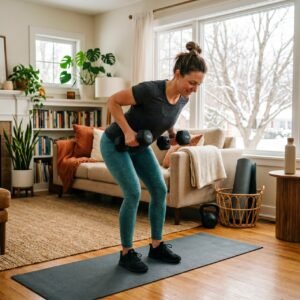
What Are The Best Indoor Workouts For Winter?
The best indoor workouts for winter are strength training (most efficient for lean muscle maintenance and body composition), yoga and Pilates for flexibility and stress recovery, and HIIT circuits for cardiovascular fitness without equipment. Virtual classes and fitness apps provide accountability and structure when in-person gym motivation drops.
Winter is actually an underused window for building real fitness. Without competition from outdoor activities, summer sports, and active social plans, consistent indoor training over 3–4 months can deliver results that change how spring fitness feels.
Why Strength Training Is The Best Winter Investment
Cold months are ideal for strength training in a way that summer rarely is. Your schedule has more natural indoor time. Distractions are fewer. And progressive overload over a winter cycle produces measurable lean muscle gains — which means spring endurance activities feel noticeably better from a foundation that wasn't there the year before.
For women over 40 specifically, this matters more than any other season. Muscle mass loss accelerates in perimenopause, and winter is often when training consistency drops the most. Strength training programming for women over 40 covers this in more detail, including how to structure progressive overload without bulk.
If you want a starting point for fat-burning strength circuits, this collection of fat-burning workout options works well for home setups.
Pilates And Yoga For Winter Recovery Days
Pilates and yoga serve a specific winter function beyond flexibility: they're lower-intensity options for days when motivation is depleted, but movement still matters. Having a 20-minute Pilates or yoga session in your winter toolkit gives you a meaningful option on grey days when the alternative to low-intensity movement would otherwise be nothing at all.
Virtual Classes And Apps Worth Using
The virtual fitness market has matured considerably since 2020. Options that work well:
- Peloton App (no bike required) — strong for cycling, strength, yoga, and walking.
- Nike Training Club — free, broad library, well-suited for home workouts.
- YouTube fitness channels — Sydney Cummings Houdyshell and similar channels offer full programming at no cost.
- ClassPass — useful for studio accountability without committing to a single gym contract.
The specific platform matters less than finding one that makes starting easy. The fewer decisions between you and the first movement, the more likely you are to actually do it. Women who work from home face a version of this barrier that's worth addressing directly — fitness motivation strategies for remote workers cover this specifically.

Does Exercising Outside In Winter Have Real Benefits?
Outdoor winter exercise provides natural light exposure that helps regulate serotonin production and circadian rhythms — even on overcast days. Cold-weather terrain activities like snowshoeing and winter hiking also burn significantly more calories than flat-surface equivalents due to increased stabilization demands, even though cold air alone adds only minimal calorie expenditure.
There's a real reason to keep some outdoor workouts in winter, even when staying inside is far more comfortable.
Daylight Exposure And Why It Matters More Than You Think
Even on overcast winter days, outdoor light typically reaches 1,000–10,000 lux — compared to 200–500 lux in a typical room. That difference is still dramatic, and it matters for serotonin regulation and circadian rhythm stability.
A 2024 study in JAMA Network Open found that greater exposure to bright light was associated with fewer depressive symptoms among US adults, with sleep regularity playing a mediating role.
Practically, a 20–30 minute outdoor walk in the morning, even in grey February weather, provides more mood-regulatory benefit than the same walk on a treadmill under fluorescent lighting. This matters for fitness motivation for winter because mood is one of the primary drivers of whether you show up to exercise at all.
The Calorie Burn Question — Answered Honestly
Cold air itself burns marginally more calories. Research puts the figure at roughly 2–5% above baseline — essentially measurement noise for most practical purposes. What does burn significantly more:
- Exercise in snow or uneven winter terrain (greater stabilization demands).
- Snowshoeing, cross-country skiing, winter trail hiking.
- Activities that naturally involve more total-body muscle engagement than flat-surface equivalents.
Shivering does burn calories — up to 400 kcal/hour in extreme cases — but shivering during a workout means you're underdressed, not cleverly thermogenic.
Don't choose outdoor winter workouts because of the calorie math. Choose them for the daylight, the mental freshness, and the identity reinforcement that you exercise in any weather.
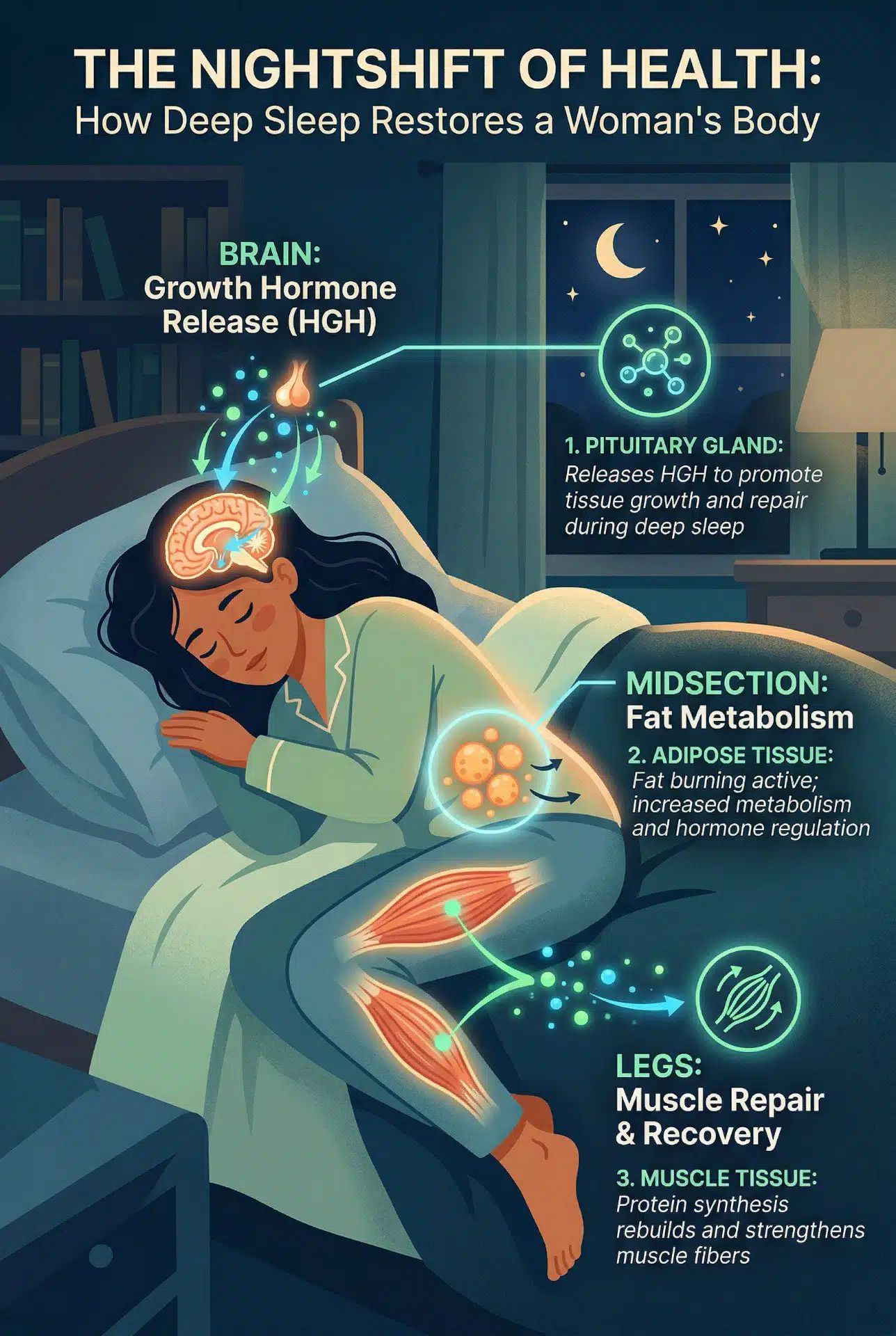
How Does Sleep Affect Your Winter Fitness Motivation?
Poor sleep directly undermines fitness motivation for winter by elevating cortisol, reducing growth hormone secretion (which drives muscle repair), and lowering dopamine sensitivity — making the reward of exercise feel less compelling. The recommended 7–9 hours for adults becomes especially important in winter when circadian disruption and social demands already compromise sleep quality.
The sleep-motivation link is underrepresented in winter fitness discussions, and it's more important than gear or scheduling.
Research on adolescent athletes finds that sleeping fewer than 8 hours per night is associated with 1.7 times the injury risk compared to those meeting sleep recommendations — a finding from a retrospective study of 112 student-athletes published in the Journal of Pediatric Orthopaedics (Milewski et al., 2014).
In winter, sleep quality often deteriorates due to:
- Disrupted circadian rhythms from reduced daylight exposure
- Increased alcohol consumption at social events
- Holiday-period stress elevates cortisol during sleep hours
- Irregular schedules between December and January
Managing sleep in winter is not separate from managing fitness motivation — it's central to it. This deep-dive on how sleep affects weight loss and energy in women covers the practical strategies.
Sleep Habits That Support Winter Training
- Maintain a consistent wake time even on weekends — this single habit has the highest impact on sleep quality.
- Limit screen exposure for 60 minutes before bed; blue light suppresses melatonin production.
- Keep bedroom temperature between 65–68°F — cooler than most people default to.
- Use a 10,000 lux light therapy lamp for 20–30 minutes each morning to anchor your circadian rhythm during short winter days.
Join Our Mailing List
Join thousands of women inside our community and receive our free guide, 10 Actions That Support Permanent Weight Loss — the exact behavioural shifts that make the difference between a two-week attempt and a lasting transformation.
No restriction plans. No guilt. Just what actually works — for real women with real lives.

What Should You Eat To Fuel Winter Workouts?
Winter workout nutrition should prioritize adequate protein (0.7–1g per pound of bodyweight for active women), complex carbohydrates for sustained energy in cold conditions, and vitamin D supplementation where sunlight is limited. Hydration is frequently underestimated in winter — cold air is dry, and sweat still occurs even when it doesn't feel obvious.
Cold weather doesn't reduce your body's fuel requirements. Thermal regulation in cold conditions slightly increases them. But winter also brings specific nutritional challenges: serotonin-driven carbohydrate cravings increase, alcohol consumption typically rises in the social calendar, and protein is often the first thing to slip when appetite patterns shift toward warm comfort foods.
The Protein Priority In Winter
Maintaining lean muscle through winter requires consistent protein intake, and it's the first nutritional element to deteriorate when routines change. Women who've tracked their nutrition through winter consistently report protein as the macro that drops most when structure loosens. A high-protein eating plan built for women helps with the structural planning needed to stay consistent when convenience food pulls harder.
Vitamin D — The Winter Supplement With The Strongest Evidence
The research for vitamin D supplementation is among the strongest in nutritional science for women with limited sun exposure. Deficiency is linked to muscle weakness, reduced bone density, lower immune function, and reduced dopamine receptor sensitivity — which directly affects exercise motivation.
The UK NHS recommends that everyone consider taking a daily vitamin D supplement (10 micrograms / 400 IU) during autumn and winter, with year-round supplementation advised for those who spend little time outdoors.
In the US, the National Academy of Medicine sets the recommended daily intake at 600 IU for adults under 70 and 800 IU for those over 70 — though clinical guidance for those at higher risk of deficiency may suggest more. Individual needs are worth discussing with your doctor.
Why The "Start With 5 Minutes" Advice Can Make Winter Motivation Worse
The popular "just start with 5 minutes" strategy can backfire for women with existing fitness habits by reinforcing a low-effort identity rather than rebuilding the habit cues that winter disrupts. Research on habit formation suggests that identity-based approaches — combined with environmental cue design — produce more durable winter exercise consistency than effort-reduction alone.
This is the contrarian take, and it's grounded in the research rather than opinion.
The "just do 5 minutes" approach has real value for people starting from zero — getting off zero matters, and the completion effect is real. But for women who had functioning exercise habits that winter is quietly dismantling, consistently doing minimal courtesy workouts can reinforce the wrong internal narrative: I'm someone who struggles to exercise in winter.
Habit research from Lally et al. (2010) found that context disruption — precisely what seasonal change creates — weakens habit cues significantly. The fastest way to rebuild disrupted habits under new conditions isn't minimizing effort; it's reconstructing the environmental and identity cues that made the habit automatic in the first place.
What that looks like in practice:
- Lay workout clothes out the night before (environmental cue reconstruction).
- Schedule workouts in your calendar with a reminder (trigger cue).
- Tell one person you're working out that day (social accountability cue).
- After the workout, note one specific thing that went well — not "I did it," but something concrete (reward cue).
These aren't psychological tricks. They're the actual mechanisms habit science identifies as driving consistency under disrupted conditions. They work better in winter than trying to reduce the workout until the bar is low enough to clear.
For working moms navigating this with less time and more competing demands, these practical accountability strategies apply directly to the winter context.
Enjoyed the winter fitness tips? If you want a done-for-you plan to implement everything you just read in "The Complete Fitness Motivation Guide For Winter: Stay Active, Strong, And Sane", then we've got you covered. Grab your free guide here and make this your fittest winter yet.
The Bottom Line
Winter is where most fitness journeys quietly unravel. Not from one dramatic decision to quit, but from a hundred small gives — the alarm ignored, the walk skipped, the workout swapped for one more Tuesday on the couch.
The WARM Method isn't about forcing your way through winter on willpower. It's about building the kind of structure — a real plan, real accountability, a reward system that works when motivation is low, and a clear identity as someone who moves in winter — that makes showing up easier than not.
Your winter body is building your spring momentum. Don't waste it.
Glossary Of Key Terms
- WARM Method: A proprietary framework for winter fitness consistency consisting of a Winter-specific plan, Accountability, Rewards, and Mindset.
- Serotonin: A neurotransmitter linked to mood regulation and drive; its production is often reduced in winter due to limited sunlight.
- Melatonin: A hormone that regulates sleep; higher levels in winter can lead to increased fatigue and earlier sleepiness.
- Cortisol: A stress hormone that can rise due to cold weather and holiday pressures, potentially depleting motivation reserves.
- Seasonal Affective Disorder (SAD): A clinically diagnosable form of depression that follows a seasonal pattern, typically occurring during winter.
- Identity-Based Motivation: A psychological strategy where exercise is framed as a core part of one’s self-definition rather than a goal to be achieved.
- Three-Layer System: A clothing strategy for cold weather involving a wicking base layer, an insulating mid-layer, and a protective outer shell.
- Vitamin D: A critical nutrient often deficient in winter; supplementation is linked to improved bone density, immune function, and dopamine sensitivity.
- Circadian Rhythm: The body’s internal 24-hour clock that regulates sleep-wake cycles; it is often disrupted by the reduced daylight of winter.
- Progressive Overload: A training principle involving the gradual increase of stress placed upon the body during exercise, highlighted as a key benefit of winter strength training.
FAQ
How Do I Stay Motivated To Work Out In Winter When I'm Always Tired?
Winter fatigue has a biological basis — reduced serotonin and higher melatonin genuinely affect energy levels. The most effective approach is environmental: schedule workouts in advance, lay out your gear the night before, and establish an accountability check-in with someone. Also, examine your sleep quality and vitamin D levels, both of which have direct and measurable effects on daily energy.
Is It Safe To Exercise Outside In Winter?
Yes, for most people with proper preparation. The real risks are frostbite and hypothermia, which require very low temperatures or inadequate clothing to become genuine dangers. Use the three-layer system, follow the temperature guide above, and move workouts indoors when the wind chill drops below 18°F. People with asthma, heart conditions, or Raynaud's phenomenon should get medical guidance specific to their situation before training in cold conditions.
What Is The Best Workout For Winter At Home?
Strength training with bodyweight movements or dumbbells is the highest-value winter home workout — it builds lean muscle efficiently and needs minimal equipment or space. Pair it with yoga or Pilates for recovery days. For cardio in small spaces, jump rope, stair circuits, and HIIT bodyweight sessions work well without a treadmill.
How Do I Exercise When It's Dark Before And After Work?
A lunchtime workout is often the most underused option — consider shifting one or two sessions there if your schedule allows. For morning workouts, a 10,000 lux light therapy lamp used for 20–30 minutes before training can shift your energy curve earlier by anchoring your circadian rhythm. For evening sessions, bright indoor lighting and high-energy music compensate meaningfully for the psychological drag of post-sunset exercise.
Does Cold Weather Make You Burn More Calories?
Cold air alone adds approximately 2–5% above baseline calorie burn — negligible for practical purposes. What does add real demand: activities involving cold-weather terrain (snowshoeing, hiking in snow, cross-country skiing), which require greater stabilization and total-body muscle engagement than flat-surface equivalents. Choose outdoor winter activities for the daylight and identity benefits — not the marginal calorie math.
How Do I Avoid Gaining Weight In Winter?
The main winter weight-gain drivers are reduced activity volume, increased caloric intake from comfort eating and alcohol, and disrupted sleep — which elevates cortisol and hunger hormones significantly. Maintaining protein intake, scheduling structured workouts with the WARM Method, and treating sleep as a fitness variable are more effective than willpower-based food restriction.
Can Exercise Help With Seasonal Affective Disorder?
Exercise is among the most consistently supported interventions for mild-to-moderate SAD in current research. A 2015 meta-analysis in Depression and Anxiety found exercise effects comparable to antidepressant medication for mild-to-moderate seasonal depression. It's not a replacement for professional treatment in severe cases — and it shouldn't be used to avoid seeking help. Consult your doctor if symptoms are significantly affecting your daily life.